Anniversaries are both a time of looking backward and forward, taking a stock of what has been and anticipate what will be coming next. While the 1876 centennial celebrations were characterized by looking forward to America’s future, culminating in the Centennial Exposition in Philadelphia celebrating science and innovation, the bicentennial era in the mid-1970s was marked with a strong sense of nostalgia for earlier times.
The bicentennial celebrations happened during a time of political turmoil, war, and economic downturn. Longing for simpler times, Americans preferred to put behind them the Vietnam War, the Watergate scandal, and rising gas prices, instead immersing themselves in “The Spirit of ’76” — a slogan that captured the sentimental nostalgia for the colonial era and the American Revolution.
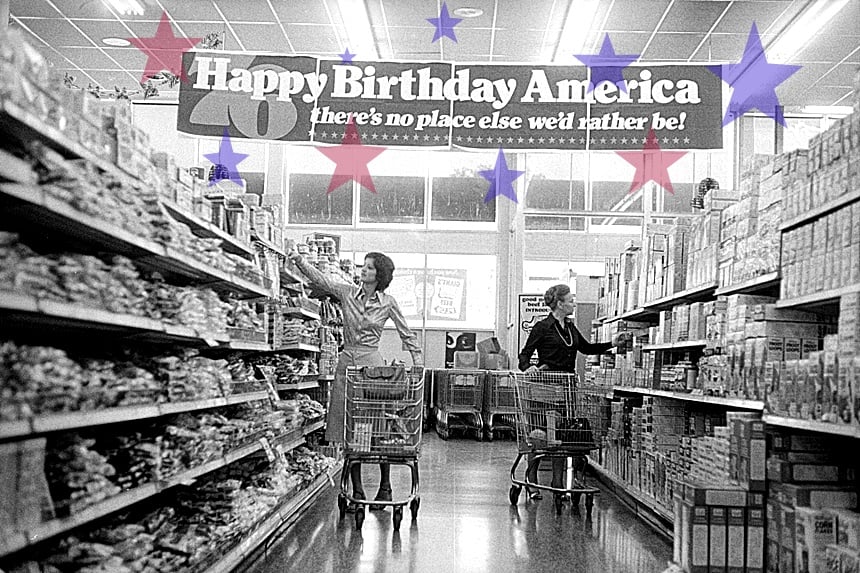
This longing manifested in myriad commemorations and events, such as the official U.S. Bicentennial Parade headlined by Johnny Cash and a Bicentennial Wagon Train Pilgrimage led by President Ford. It also featured a strong commercialized flare. Retail companies and advertisers inundated the market with “patriotic” consumer goods in red, white, and blue, and with images such as the bald eagle, flag, Liberty Bell, and George Washington.
Bicentennial Parade in Washington, D.C. (Uploaded to YouTube by CriticalPast)
Bicentennial merchandise was diverse, ranging from tissue paper and milk cartons to an Uncle Sam Pez dispenser and a 50-can “United We Stand” 7-Up special collection. It also included less predictable items such as door mats, toilet seats, condoms, and garage doors. The commercialization was so pervasive that many called the period the “Buy-centennial Sellabration,” a term coined by the People’s Bicentennial Commission (PBC), a protest group that objected to the anniversary’s monetization.
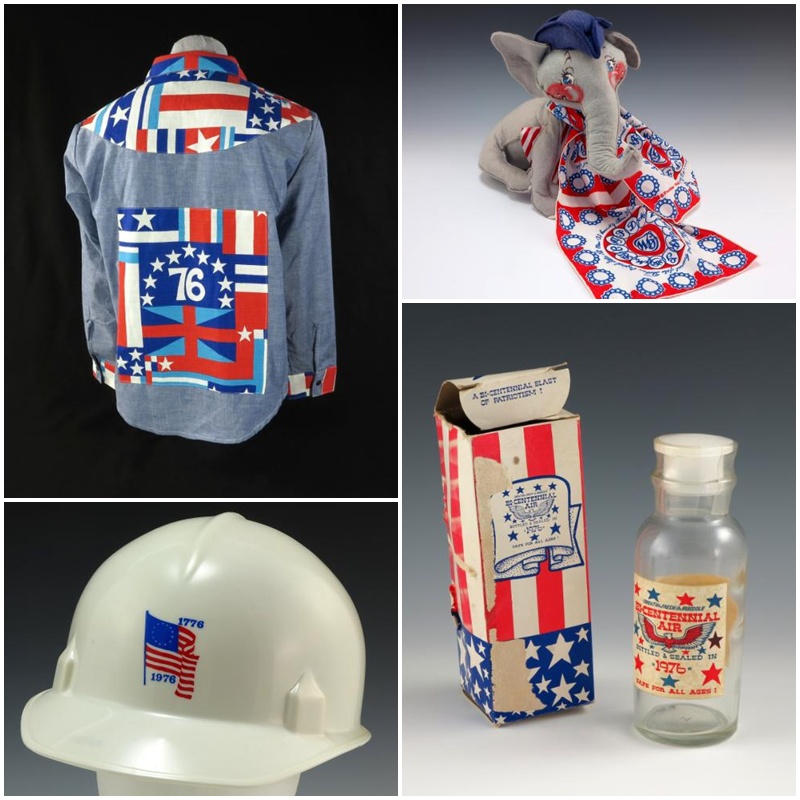
Even as the PBC called for a more meaningful commemoration, Americans remained eager to take an active part in the consumer effort. In particular, clothes and textiles became an important means to display one’s bicentennial spirt.
In addition to t-shirts that featured the face of George Washington or the American flag, fashion brands and pattern companies from Laura Ashley and Gunne Sax leaned into the nostalgia and offered Americans designs that evoked the American Revolution or early pioneer life. Inspired both by the bicentennial and the rising popularity of the TV show Little House on the Prairie, the fashion industry marketed a romantic vision of the past filled with bonnets and flowery dresses.
Opening theme from Little House on the Prairie (Uploaded to YouTube by TeeVees Greatest)
This nostalgia for an earlier time also brought with in a new interest in sewing. Companies such as McCall’s and Butterick provided easy patterns to make your own DIY versions of patriotic and revolutionary-inspired dresses, calling to mind the legacy of “homespun.”
The American art of quilting experienced a revival, as schools all over the country participated in memorial quilt projects that displayed familiar patriotic tropes and designs. Eighth grade history students from Glandorf Elementary School in Ohio, for example, created a quilt in patriotic colors, depicting images of Ben Franklin, the Liberty Bell, the drummers from Archibald Willard’s painting The Spirit of ’76, the first American flag, and even the “Don’t Thread on Me” flag. A Portland, Connecticut, Girl Scout quilt displayed notable Washington, D.C. monuments alongside the Presidential seal, Abraham Lincoln, and Paul Revere on his horse.
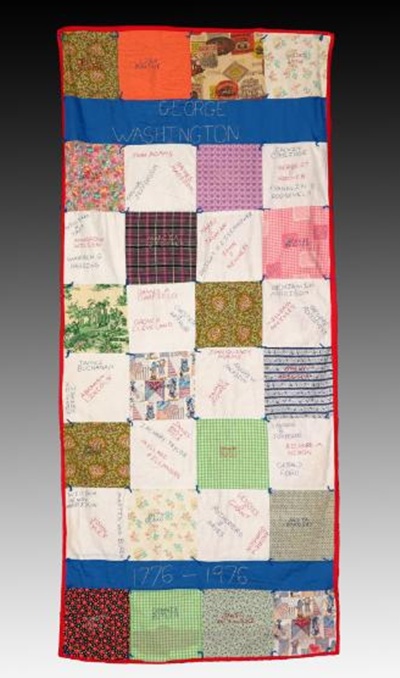
More than just a tangible way to participate in the bicentennial celebrations, clothing and textiles offered Americans a way to shape historical memory and their identities as citizens. Rather than grappling with a complex history of the country’s founding, or with its legacies as they played out in the 1970s, bicentennial fashions provided a nostalgic, simplistic, narrative from which activist women, African Americans, Native Americans, and other minorities were almost completely absent.
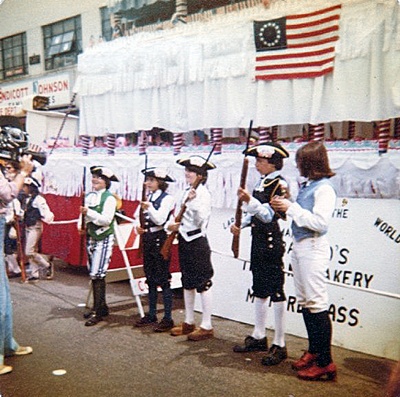
The “Spirit of ‘76” created a direct throughline that went from 1776 to 1976, bypassing the less convenient historical markers in the country’s history, and thus offering Americans a way to show pride in a selectively-remembered past without confronting their thorny present. The combination of patriotism and commercialization that the era provided came to symbolize not only the bicentennial celebrations but the essence of Americanism as whole.
As we face another anniversary and milestone in our country’s history, the echoes of both 1776 and 1976 are still with us, even though the commercial flair of the bicentennial is not as evident just yet. In 1976, Americans turned to fashion and textiles, as well as other consumer goods, to define, and sometimes even to protest, what the United States meant to them. Whether hand-made or mass-made, bicentennial fashions offered them a tangible way to interpret their history and to comment on their future. Maybe in 2026, Americans will do the same.
Become a Saturday Evening Post member and enjoy unlimited access. Subscribe now