This series by American studies professor Ben Railton explores the connections between America’s past and present.
As we commemorate and celebrate Pride month here in 2026, it’s not at all hyperbolic to argue that LGBTQ+ people are under attack in ways we haven’t seen in decades. That’s especially the case for transgender folks — when their very identities and existence aren’t being criminalized, they’re the subject of countless laws and Executive Orders seeking to ban them from public spaces, terrorize them when they’re young, and make their lives infinitely more difficult at every stage. And the laundry list of book and educational bans makes clear that these attacks are intended to be far more comprehensive and destructive.
The most important way to challenge these horrific trends is to remember that everyone living in the United States is guaranteed equal protection under the law. LGBTQ+ Americans have always been part of our society, and there have been fights for their rights throughout our history. One of the most groundbreaking such efforts was the 1920s Society for Human Rights.
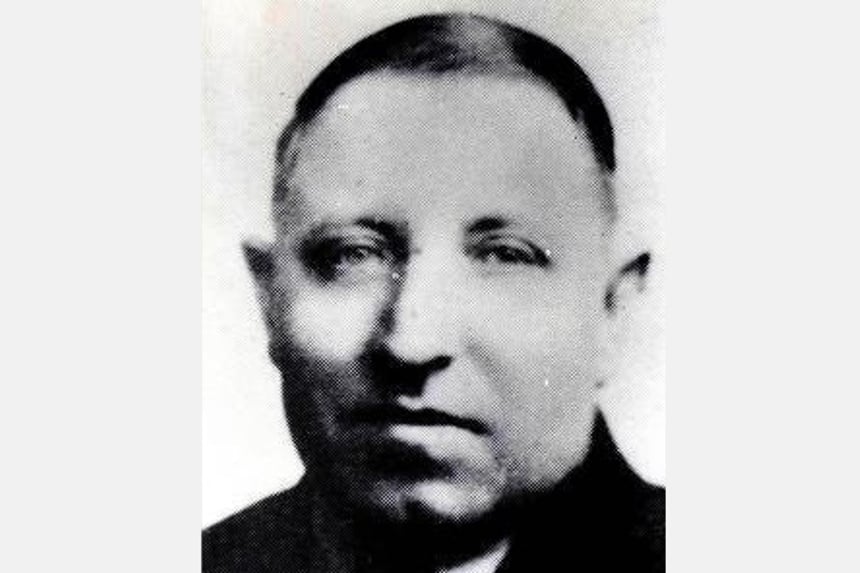
The story of Henry Gerber (1892-1972), the founder of the Society for Human Rights, itself embodies a number of defining American experiences. Born Heinrich Joseph Dittmar in Bavaria, Gerber changed his name when he immigrated to the U.S. with other family members in 1913, settling in Chicago amidst its sizeable German American community. His homosexuality led to him being committed to a mental hospital in 1917; when the U.S. entered World War I shortly after, he was given the choice of incarceration at a wartime internment camp or military service, and chose the latter. For the next few years Gerber served with the Allied Army of Occupation back in his native Germany, working as a printer and proofreader and learning of the groundbreaking gay rights work of Magnus Hirschfeld and his Scientific-Humanitarian Committee.
When Gerber returned to the United States in the early 1920s, he continued working for the federal government, taking a job as a postal service worker in Chicago. But he was also committed to serving the public in another way, by founding an organization that would, as he put it in the application for a non-profit charter in Illinois, “promote and protect the interests of people who…are abused and hindered in the legal pursuit of happiness which is guaranteed them by the Declaration of Independence, and to combat the public prejudices against them by dissemination of factors according to modern science among intellectuals of mature age.” After that charter was granted in December 1924, making the Society for Human Rights (SHR) the first documented American LGBTQ+ organization, Gerber made particular use of his skills as a printer as well as his connections at the post office to build the community, founding and editing the nation’s first LBGTQ+ publication, the newsletter Friendship and Freedom.
Gerber’s wasn’t the only strikingly American story among the Society’s founders. Another of the charter’s seven signatories, and the Society’s first and only president, was a Black clergyman, the Reverend John T. Graves. Little is known about Graves other than his general age (either 45 or 46 in 1924, per census info) and Gerber’s description of him as “a preacher who earned his room and board by preaching brotherly love to small groups of Negroes” at Chicago’s St. John African Methodist Episcopal Church. Given that Gerber himself was an atheist and highly critical of organized religion for its homophobic preachings, the inclusion of Graves among the Society’s leadership reflects the organization’s diversity.
Unfortunately, the Society for Human Rights was unable to achieve its goals, and it was dissolved only a year after its founding. Friendship and Freedom lasted two issues, as the Comstock Act of 1873 meant few SHR members were willing to risk receiving “obscene” material through the mail. Indeed, LGBTQ+ publications were legally defined as “obscene” by default until the Supreme Court’s 1958 decision in One, Inc. v Olesen, which ended that practice. (The Comstock Act remains on the books and has recently been invoked by those seeking to prohibit the mailing of abortion pills.)
The Society’s demise was hastened when the wife of one of its founding officers learned of SHR in the summer of 1925 and reported them to the authorities as “degenerates.” The police subsequently raided Gerber’s home and arrested him, confiscating his typewriter and personal papers in the process; they were accompanied by a Chicago Examiner reporter who wrote up the arrest under the salacious headline “Strange Sex Cult Exposed.” Gerber was tried three separate times on charges of obscenity and sodomy, and although he was eventually acquitted on all charges, the trials cost him his life savings and his job, as he was fired for “conduct unbecoming a postal worker.” His papers and typewriter were never returned, and the SHR ceased operations soon after.
Gerber would live for nearly 50 more years, and his profoundly American story continued to evolve in interesting ways. He enlisted for a second time in the Army in 1927 and spent the next two decades at Fort Jay on New York’s Governors Island, working as an editor and proofreader for military publications. In 1930, he founded a military pen pal service called “Connections” that linked hundreds of service members, including LGBTQ+ ones. In 1962, we wrote an article on the SHR for ONE magazine, the first nationally syndicated LGBTQ+ periodical in the U.S. and the subject of that 1958 Supreme Court case. When he received his honorable discharge in 1945, he moved to Washington, D.C., and there became an early member of the Mattachine Society, the oldest enduring American LGBTQ+ organization — and one whose founder, Harry Hay, would credit Heny Gerber and the Society for Human Rights as helping to inspire this next stage in the foundational battle for gay rights.
Become a Saturday Evening Post member and enjoy unlimited access. Subscribe now