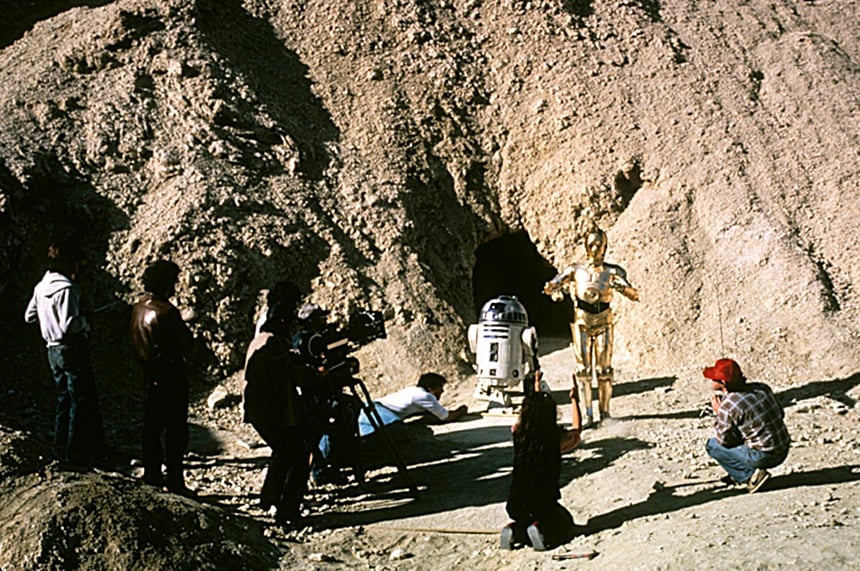
Contrary to what the opening of Star Wars: Episode IV — A New Hope says, Tatooine isn’t in a galaxy far, far away; it’s as close as Death Valley National Park. Although most of the Tatooine scenes were filmed in Tunisia, the park doubled for Luke Skywalker’s home planet in pickup shots meant to fill in story gaps noticed during editing.
I didn’t realize this when I arrived in Death Valley. Instead, I came for the unique desert landscapes and to stand at the lowest point in the nation, Badwater Basin. As soon as I learned about the Star Wars connection, I picked up a map at the Furnace Creek Visitor Center, not because I’m a hardcore fan but because I have nostalgic soft spot for the original Star Wars, which will celebrate its 50th anniversary on May 25, 2027.
The National Park Service map provides limited information — the point of interest, the movie it appeared in, the scene, and a brief description of what happened — but it was enough to get me to the film sites and give me a sense of what happened at each one.
Daniel Thompson, who posted video of his Death Valley Star Wars tour on his YouTube channel Dad Sees World, says visiting the film sites isn’t about standing where the actors stood, something that’s actually impossible since most major scenes were filmed elsewhere. It’s about standing in the place where Star Wars came to life.
“It’s just about being there,” says Thompson, who saw A New Hope as a three-year-old when it came out in 1977. “This is where my childhood began.”
You don’t have to be a superfan like Thompson to appreciate touring the film sites, though, or even feel nostalgic about it like me. Star Wars offers a different lens through which to experience most of the sites recommended for a half-day visit in the park. While the NPS suggests allocating five to seven hours for visiting all the film sites, you could easily spend longer, depending on how many Star Wars costume changes you plan to make at each stop.
Star Wars Filming Locations
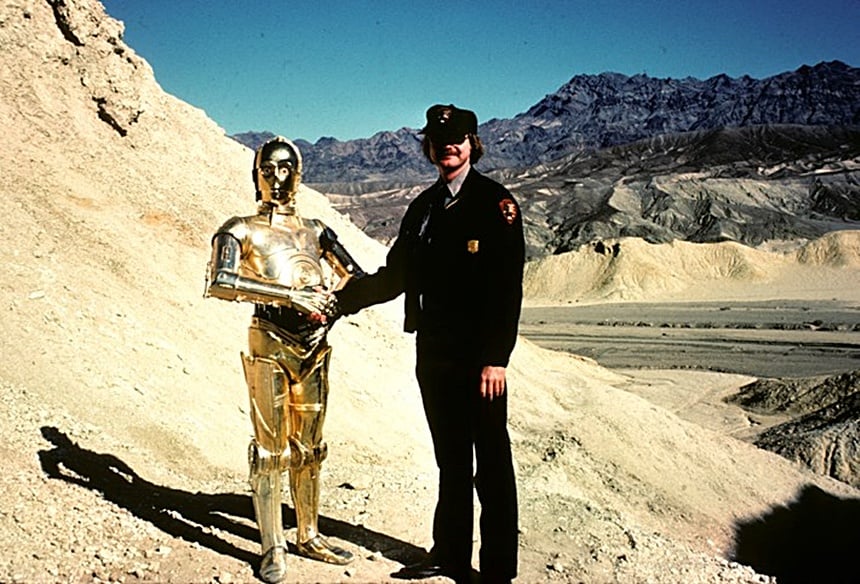
The NPS map starts at Zabriskie Point, the site closest to the visitor center, and continues to the next closest site, but you can plan a route based on whatever makes the most sense to you. Check online or with the park service to learn about any road closures before you go.
Mesquite Flat Sand Dunes
This location makes a good starting point for two reasons: It’s the northernmost filming site, and it’s the first Death Valley scene to appear in Star Wars: A New Hope. Before you visit, rewatch the scene where C-3PO and R2-D2 crash land on Tatooine and screen shot an image of R2-D2 heading towards remote mountains. Because the wind reshapes dunes over time, you won’t be able to find the exact place where the actors stood, but you can line up the shot.
Some fans set aside extra time to explore the dunes before they leave. The NPS discourages visitors from hiking at Mesquite Flat Sand Dunes after 10 a.m. and prohibits off-road vehicles, but you can sled, board, or ski the dunes here, if you bring your own equipment.
Star Wars: A New Hope Clip – “Droids in Tatooine” (1977) (Uploaded to YouTube by JoBlo Movie Clips)
Artists Palette
Bright oranges, yellows, pinks, and greens — the remnants of ancient volcanic activity — color the rocks at Artists Palette, but it’s the dull brown wash below and to the left of the parking lot that draws Star Wars fans. Here, R2-D2 entered the canyon where Jawas, hooded scavengers with glowing red eyes, captured him.
Jawas capture R2-D2 (Uploaded to YouTube by TheIronGAMING)
That’s not the only shot filmed at Artists Palette, though. Just south of the turn into the parking lot, you can see the rock-strewn rise where the Jawas hauled R2-D2 toward their sandcrawler. On film, the rusted vehicle appears to tower two stories above the sand; in reality, artists painted it into the scene.
Golden Canyon
Lucas filmed R2-D2 rolling into the canyon from Artists Palette, but he used Golden Canyon for the shots where the Jawas hide in crevices and peer around boulders. You don’t have to walk far into the canyon for the rock formations to look familiar, and with screenshots, you may be able to find the approximate hiding places of the seven Death Valley Elementary School students who played the Jawas.
Be careful as you search, though. Watch where you step and where you put your hand, especially near crevices or holes. Death Valley is home to scorpions and snakes, including Mojave desert sidewinders and rattlesnakes.
Desolation Canyon
The cast filmed Uncle Owen purchasing C-3PO and R2-D2 to work on his farm, R2-D2 running away, and the desert-dwelling Tusken Raiders spotting Luke and C-3PO all in Tunisia. However, the scene of the Tusken Raiders rushing to their banthas — elephants disguised for the movie by thick, shaggy fur and large, curling horns — took place in Death Valley’s Desolation Canyon.
Tusken Raiders rush to their banthas (Uploaded to YouTube by Shadow_Ninja)
The mouth of the canyon also appears as Luke looks through his binoculars and focuses on a bluish-grey image of Tusken Raiders and banthas in the distance. Thompson admits that, at times, it’s difficult to know where Tunisia ends and Death Valley begins in this scene.
Dantes View
This ridge overlooking Badwater Basin offers arguably the best view of Death Valley and, for Star Wars fans, of the fictional Mos Eisley spaceport. Of course, the city Obi-Wan describes as a “a wretched hive of scum and villainy” doesn’t actually exist, but you can easily identify where artists painted distant roads and buildings into the film.
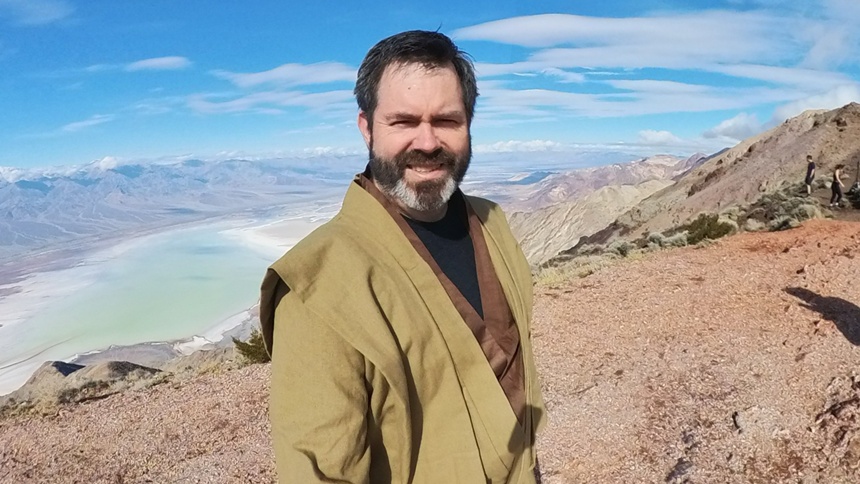
Unfortunately, as you wait your turn for a selfie, you won’t be standing in the dusty footprints of the cast; that shot was filmed in Tunisia. Also, because the road to Dantes View is narrow and winding, vehicles over 25 feet are prohibited.
Twenty Mule Team Canyon
Death Valley became Tatooine again in Return of the Jedi. As C-3PO and R2-D2 travel the primitive road to Jabba the Hutt’s palace, they are actually moving through Twenty Mule Team Canyon, named in honor of the mules that hauled borax out of the area’s mines.
R2-D2 and C-3PO visit Jabba’s Palace (Uploaded to YouTube by Binary Retro Clips)
To get to the filming location, you’ll need to drive a dirt road — passable by most vehicles, according to the NPS — and watch for an arroyo with mountains on either side cutting through the desert. The arroyo served as the “road” to the palace, and if you look closely, you may recognize rock formations from the scene.
Zabriskie Point
Film crews for The Mandalorian television series recorded stock footage of Death Valley to use as backgrounds, and from Zabriskie Point, you can see the wavy yellow and brown hills that Din Djarin’s ship flew over before landing in the series’ opening scene. According to pop culture site Fandom, the distant point Manly Beacon also appears in episode 5’s desert scenes.
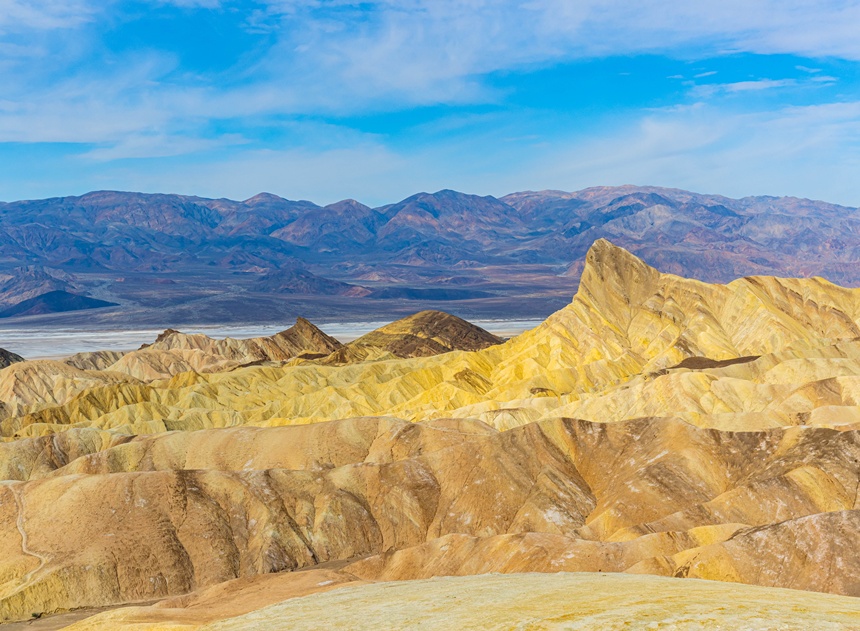
From Zabriskie Point, you can hike about 1.5 miles to the base of Manly Beacon or another half mile past it to the turn off to Red Cathedral (a total of roughly 2.5 miles from Zabriskie Point). This rock formation became a regular backdrop during season 2.
The Inn at the Oasis
Because Death Valley is so remote, the film crew would have stayed in the park while filming. The park has two properties, managed by Xanterra Travel Collection under the umbrella of The Oasis at Death Valley: The Inn at Death Valley and The Ranch at Death Valley. Aaliyah Habeeb, the properties’ guest event coordinator, says although the crew would have stayed at The Inn, none of the current staff recalls who stayed there or in what rooms.
On the other hand, the elephants — on loan at the time from a wildlife park near San Francisco — most likely stayed at The Ranch. A photo shows an Asian elephant dressed as a bantha at that property, then called Furnace Creek Ranch.
Tips for Visiting
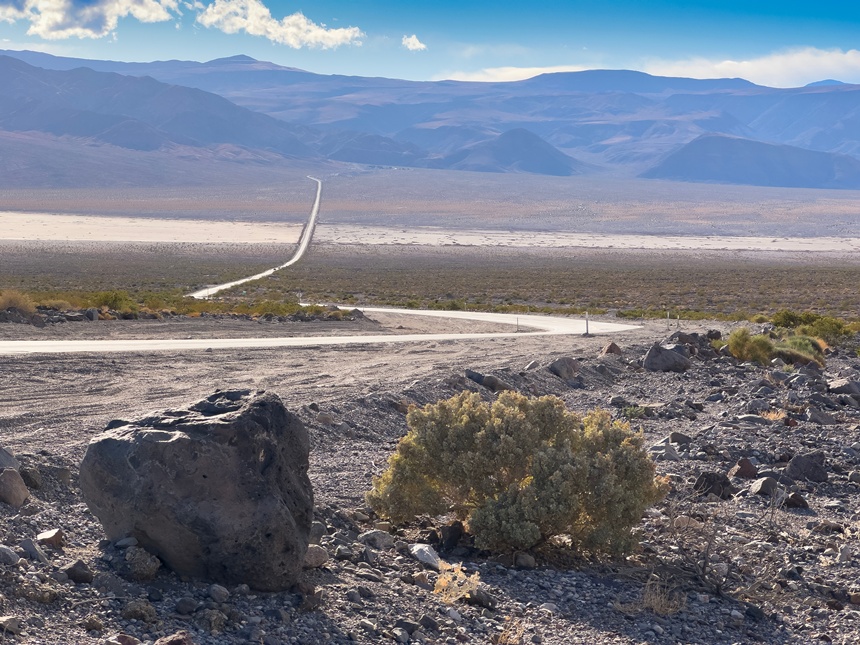
For the best experience, you’ll want a plan before heading to Death Valley in search of Jawas, Tusken Raiders, and droids. Keep these tips in mind.
Research before you go. The park’s website provides a Star Wars overview, but YouTube videos like Thompson’s provide visuals, with the best ones comparing photos and scenes from the movies to what you will actually see in the park. Getting a sense of what you’ll see before you go can help orient you and make it easier to find film sites.
Download the NPS app. The NPS app has a self-guided audio tour of Star Wars film locations, accessible by clicking on Self-Guided Tours under Death Valley. Because the park has limited cell service, download it before you enter the park. If it doesn’t work for you in the park, you can pick up a printed Star Wars tour map at the Furnace Creek Visitor Center.
Screenshot scenes. Diehard fans will want to rewatch the entire A New Hope and Return of the Jedi movies before going, but you can also watch the Death Valley scenes on YouTube. Either way, screenshot landscape and unique rock formations that might help you identify exact locations.
Create a paper backup. Print out a park map (or pick one up at the visitor center) in case you need to conserve your phone’s battery. Same with scenes from the movie. Screenshots that you can zoom in and out of are definitely better, but if you’re battery is getting low, you’ll at least have a hard copy.
Travel seasonally. Death Valley is the hottest place in the United States, recording a blistering 134-degree Fahrenheit-day in July 1913. While it doesn’t get quite that hot every summer, the highs often exceed 120 degrees. For a more comfortable visit when you can be outside longer, go in the fall (October to mid-December) or spring (February through April).
Hydrate and don’t overheat. Even in cooler temperatures, you need to stay hydrated. Drink at least one gallon of water per day, and bring snacks like trail mix, granola bars, fresh fruit, and vegetables on your hikes. If you feel dizzy, nauseous, or get a bad headache, get out of the sun and cool down.
Watch the weather. Heavy rain can cause serious injury and death in the desert when water and debris rush through canyons and washes. Don’t hike during a rain storm — even one several miles away. Park rangers know the area weather and topography, so it’s always best to check with them before hitting canyon trails.
Drive with caution. According to the NPS, more people die in single vehicle rollover accidents than for any other reason in Death Valley. Roads like the Artists Drive Loop can dip and twist suddenly causing you to lose control of your vehicle. Use extreme caution, and don’t drive over the speed limit.
Become a Saturday Evening Post member and enjoy unlimited access. Subscribe now


Comments
Fascinating. Never knew so much was filmed there. Thx!