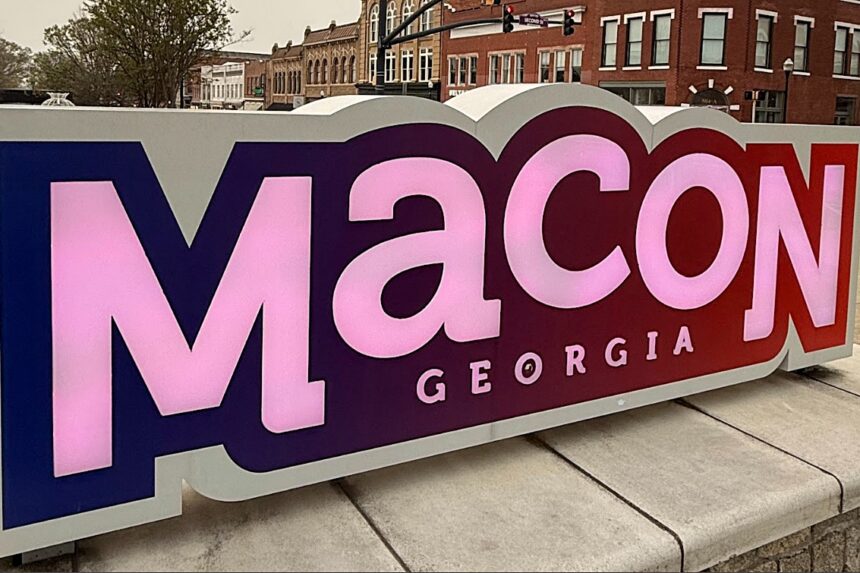
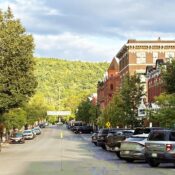
It was almost midnight when I pulled off I-75 and into downtown Macon. The streets were dark enough to belong to almost any small Southern city, but I searched the inky silhouettes of trees and brick buildings for something familiar anyway.
I hadn’t returned to this city in decades. My family packed up for Ohio when I was an infant, so Macon was simply a line on my birth certificate rather than a place I actually knew. Even so, I’ve long wondered what, if anything, might tether me to the city. If a part of me was still rooted here somehow.
I eased to a stop outside Hotel Forty Five, and across the street I noticed the Otis Redding Center for the Arts. My pulse quickened. I own the box sets. I know the deep cuts, not just “Try a Little Tenderness.” Suddenly, the music I’d loved for years had an address. It was right there, waiting for me on a street I’d never set foot on.
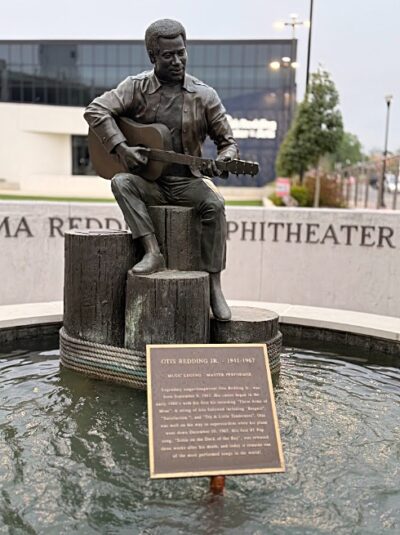
Whatever had pulled me back to Macon, this felt like the first note of it.
I’ve spent my whole life chasing music of every stripe: Delta blues, indie, soul, punk, weepy British pop, whatever’s playing in whatever club I happen to wander into on a given night. My record shelf doesn’t discriminate. But it had never once occurred to me that the town I was born in might have had a hand in shaping any of it.
By the next day, I knew exactly how wrong I’d been.
The City That Built American Music
Nashville has its honky-tonks. Memphis has Beale Street. New Orleans has a sound so layered you could dedicate years to picking it apart and still miss half of it. But Macon, Georgia played a defining role in giving America rock and roll, soul, and Southern rock — three of our most influential sounds — and is rarely mentioned in the same breath as any of those cities.
Little Richard grew up singing gospel here, years before he became one of the inaugural inductees into the Rock and Roll Hall of Fame. Otis Redding built his life in Macon, and his final resting place is just outside of town. James Brown was barely out of his teens when he cut a demo of “Please, Please, Please” at a local radio station in 1955, and a King Records scout happened to be listening.
Later in 1969, the Allman Brothers Band rolled up with hair too long for the neighborhood and hardly any money. By the time they left, Macon was the epicenter of Southern rock. Capricorn Records, the label that carried most of that story, was built four blocks from where its founder, Phil Walden, grew up.
But “Southern rock” almost undersells what was happening. Nobody around Capricorn was setting out to invent a genre. Soul players drifted into sessions with country pickers, gospel harmonies rubbed shoulders with blues riffs, all borrowing from one another until the lines softened and blurred. People eventually started calling it the Macon sound, but to the musicians making it, it was simply the way music happened there.
Where the Music Was Born
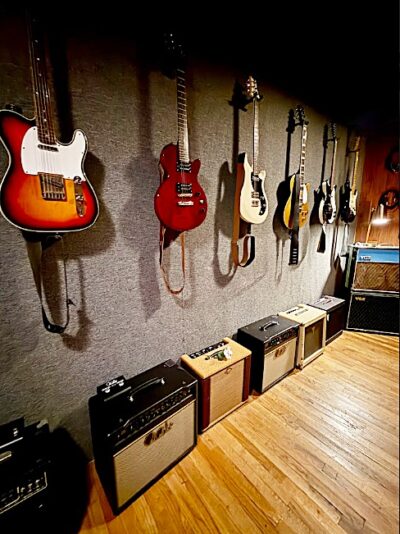
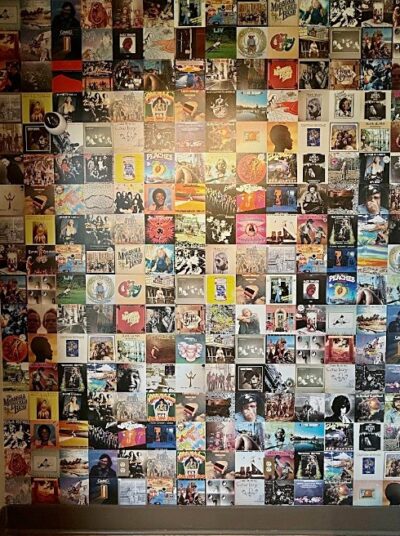
Capricorn Sound Studios still stands, restored through a partnership between Mercer University and the local development community. Now it’s both a working studio and a museum you can actually walk through. While visitors explore the artifacts and flip through virtual record crates, musicians are often recording (Chuck Leavell, the primary keyboardist for the Rolling Stones, was there the day of my visit). Studio A, where so much of Capricorn’s history was made, has been carefully preserved, and the room still carries the unmistakable feeling that magic can happen at any moment.
“The control room really hasn’t changed at all since 1972,” says studio manager Bob Konrad. “We just vacuumed the ’70s out of the carpet, loaded in the equipment, and it was ready to go. That’s what continues to bring musicians here today. You can feel the energy.”
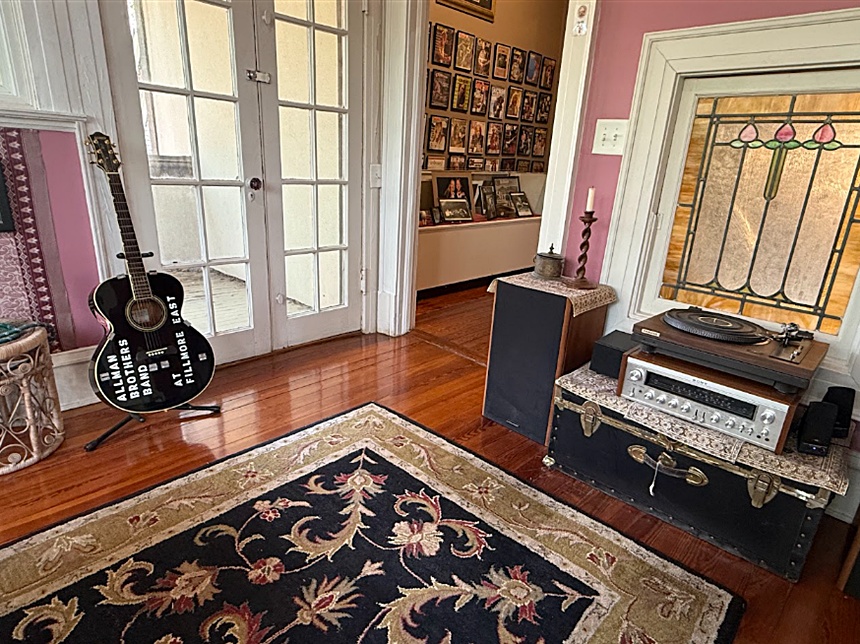
A short drive away on Vineville Avenue sits The Big House Museum, the Tudor home where various members of the Allman Brothers Band lived and wrote between 1970 and 1973. The rooms are arranged with an intimacy that makes it feel as though time has simply been paused. You can stand in the kitchen where “Ramblin’ Man” reportedly took shape, study Dickey Betts’s guitar among the personal artifacts, and wander through what’s billed as the world’s largest collection of Allman Brothers memorabilia.
Near my hotel, just a few steps from the Otis Redding Center for the Arts, sits the Otis Redding Museum, where family photographs, handwritten lyrics, stage clothes, awards, and other personal artifacts tell the story of one of soul music’s greatest voices. It’s a small but mighty museum that unfolds like a family scrapbook.
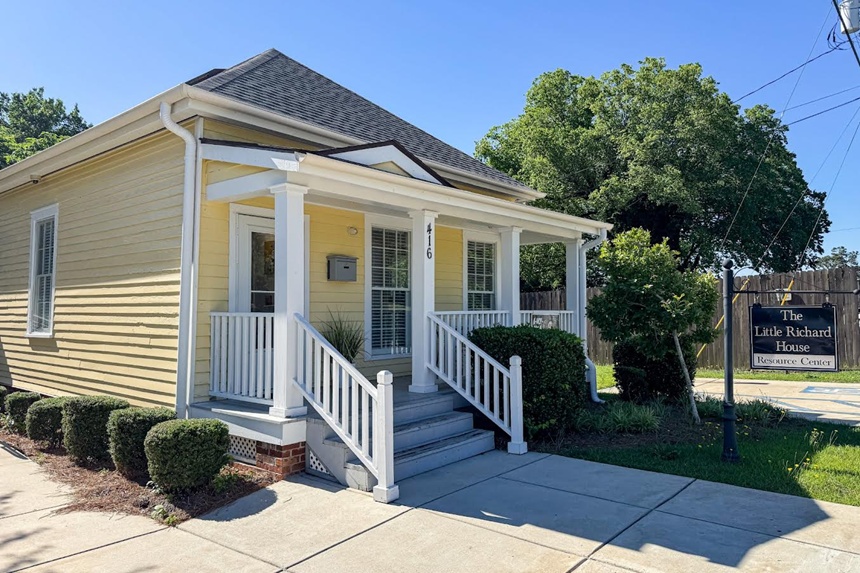
Elsewhere in Macon sits the Little Richard House. It’s no longer on its original lot in Pleasant Hill, but the house itself was saved from demolition and relocated nearby. It’s now a community resource center, a plain, modest place that stands in sharp contrast to the flamboyant music pioneer who once called it home.
Where the Scene Lives Now
These days, if you want to see the modern acts that are carrying this legacy forward, head to The Hummingbird Stage and Taproom. Open since 2005, it’s no monument to music nostalgia; rather, it’s just a great bar where artists play before they become household names. Jason Isbell, Marcus King, Old Crow Medicine Show, and Goose have all played there along the way.
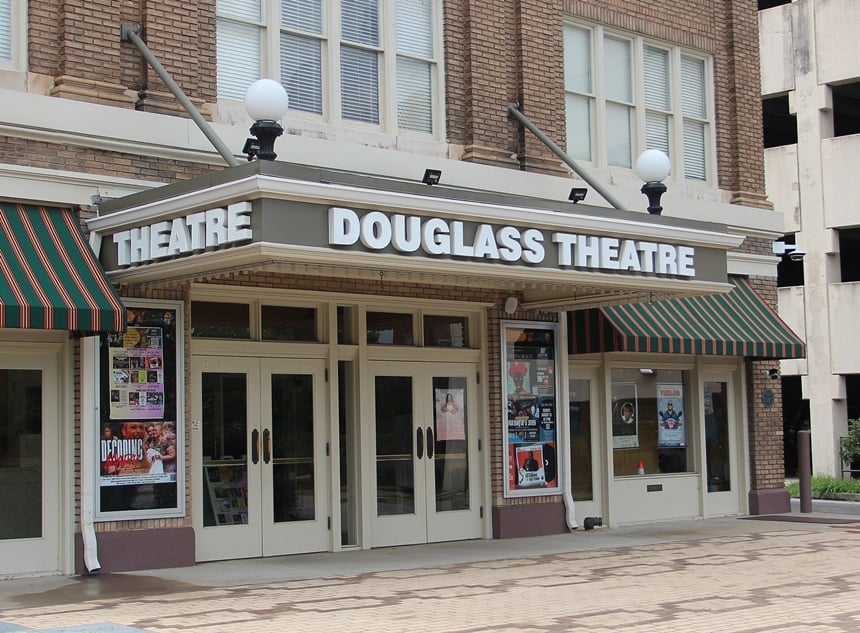
Downtown, the Douglass Theatre, where legends including Ma Rainey, Bessie Smith, Little Richard, James Brown, and Otis Redding all performed, remains a working venue rather than a roped-off relic you look at through glass.
And Grant’s Lounge — known as the birthplace of Southern rock — still books bands most nights of the week in the same brick room where the Allman Brothers and the Marshall Tucker Band once played.
Another essential stop is Fresh Produce Records on Cherry Street, a record shop that left my jaw on the floor. This place runs something like 25,000 to 30,000 records deep across two storefronts. They host in-store performances too, so you might walk in looking for a used Margo Price vinyl and catch an album release show instead.
If you want a little structure to your wandering, there’s a free Tour Macon app featuring a Macon Music Trail that’ll route you past dozens of fascinating markers, murals, and storefronts.
And if you can time your trip for the last weekend in July, you’ll catch Bragg Jam, a festival that takes over multiple downtown venues. The event began as a jam session tribute for local musician brothers, Brax and Tate Bragg, who were killed in a car accident in 1999. More than two decades later, that tribute has grown into one of Macon’s biggest music events, and has kept the same spirit — musicians, old friends, and strangers filling the city’s stages together. Along the way, it has funneled close to a million dollars in artist fees back into the local music community.
The Restaurant That Fed a Band
H&H Soul Food on Forsyth Street is where you go to taste what actually fueled Southern rock. Inez Hill and her cousin Louise Hudson opened the restaurant in 1959, a decade before a group of broke, shaggy strangers wandered in one afternoon and pooled what cash they had to split two plates six ways. Mama Louise, as everyone came to call her, noticed what they were doing, brought out six full plates instead, and told them to pay her whenever they could.
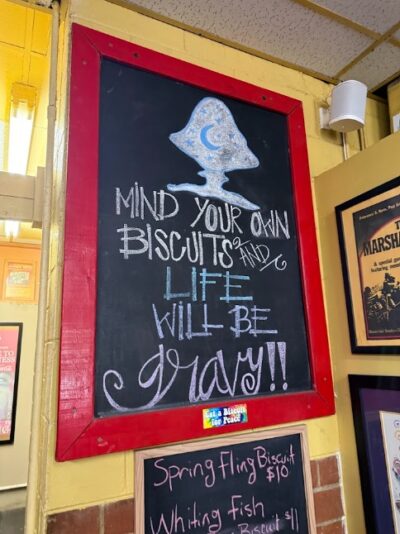
They never really stopped repaying her. The Allman Brothers thanked her in the credits of their second album, Idlewild South, with two words — “Vittles: Louise” — flew her out on tour with them in 1972, and kept returning long after they’d made it.
“There’s a very good possibility that without Mama Louise, there wouldn’t be an Allman Brothers Band,” said Gregg Allman in 2006.
Hudson passed away in 2022, but H&H still opens every morning on Forsyth Street, still cooking Mama Louise’s legendary food, still doing exactly what it was doing when nobody outside Macon had ever heard of the band she was keeping .
So did I ever find the thing that tethered me to Macon? Maybe.
I absorbed the city with every one of my senses, from the waxy scent of wood paneling in Studio A to the taste of an H&H biscuit slathered in housemade jam. I ran my hands across instruments that had shaped generations of music, stood in rooms where songs I’d loved for years took shape, and walked unknown streets that somehow felt familiar. But it was only when I felt the rhythm of Macon that I realized I’d been carrying a song I already knew.
Maybe that’s what a hometown is, even one you barely lived in. It’s not a street address. It’s a pulse you can always find if you know how to listen for it.
Become a Saturday Evening Post member and enjoy unlimited access. Subscribe now


.jpg)
Comments
Great article. But concerning the Allman Brothers, I would have thought you might have gone a bit deeper into Statesboro, where its really at.