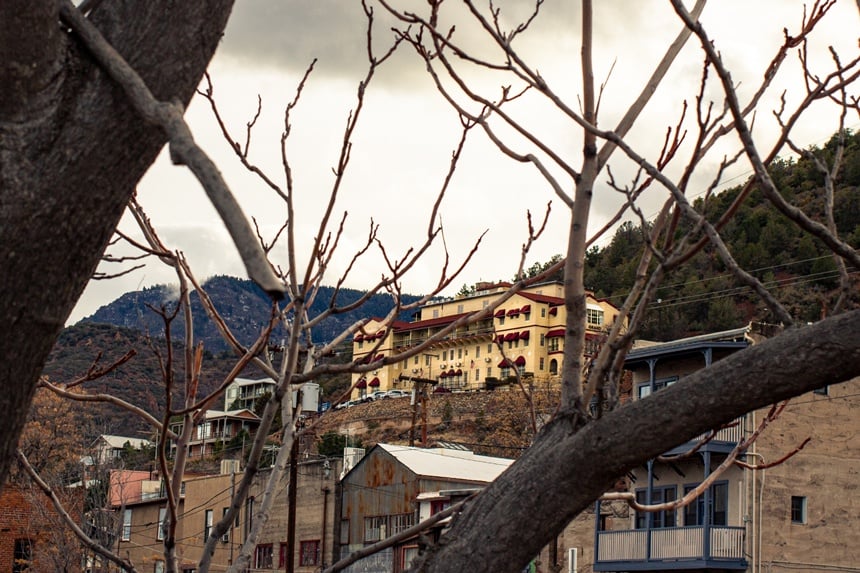
Arizona State Route 89A winds through some of northern Arizona’s most dramatic scenery. The 84-mile highway connects Prescott to Flagstaff, revealing views of towering red sandstone, buttes, and cliffs, enhanced by a vast blue sky. Then, along the southwestern edge of the Verde Valley, a smattering of buildings snakes up the side of Cleopatra Hill, isolated and proud, beckoning you in.
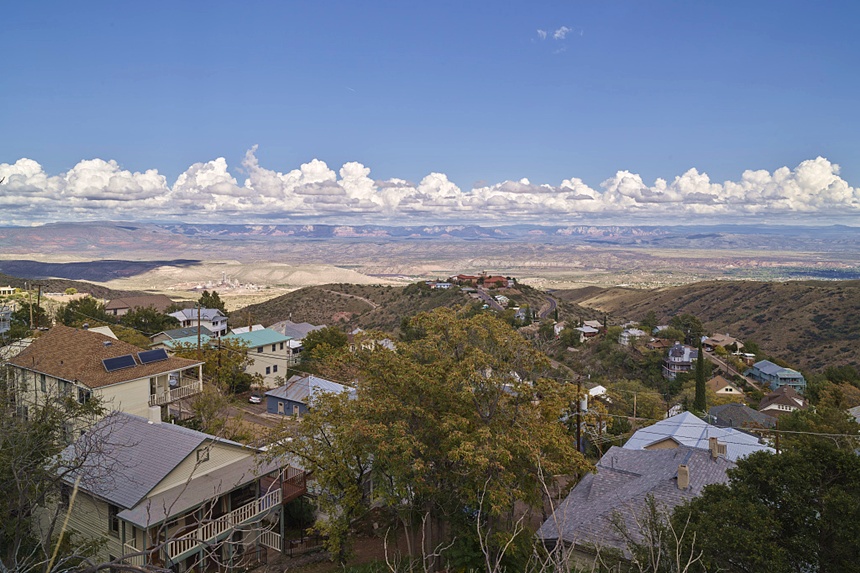
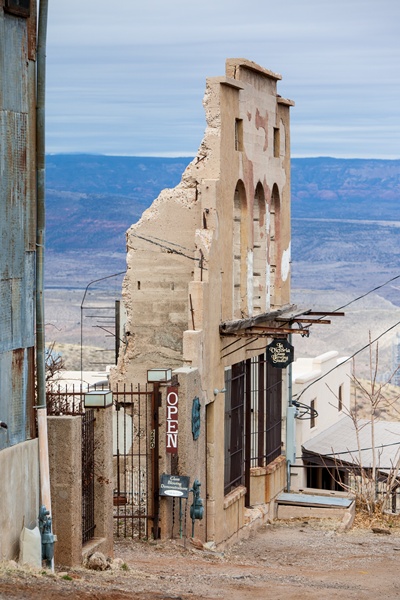
As you enter the town, an eerie juxtaposition emerges. Abandoned, crumbling brick buildings co-exist alongside art galleries, hotels, and wine-tasting rooms. Welcome to Jerome, Arizona — one of the country’s spookiest towns.
Jerome was established in 1875, when prospectors staked claims on rich copper deposits. A mining camp soon emerged, named for the project’s biggest investor, Eugene Jerome. But the town’s remote location made mining difficult and costly. That changed in 1888, when William Clark bought a majority stake in the United Verde Copper Company and brought trains and electricity to the isolated camp. With modern infrastructure in place, the mine flourished, and by the early 1900s, Jerome had become Arizona’s largest copper-mining boomtown.
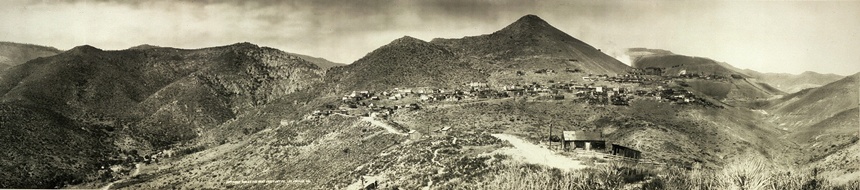
Immigrants from more than 30 countries flocked to Jerome in search of their fortunes. At its peak, the town’s population reached around 15,000, roughly 80 percent of them men. A rough-and-rowdy red-light district soon followed, with the Cuban Queen Bordello among its most notorious establishments. Legend has it that it was founded by Alabama-born Bessie Johnson, who operated under the persona Anita Gonzales, a colorful madam whose clients included jazz legend Jelly Roll Morton.
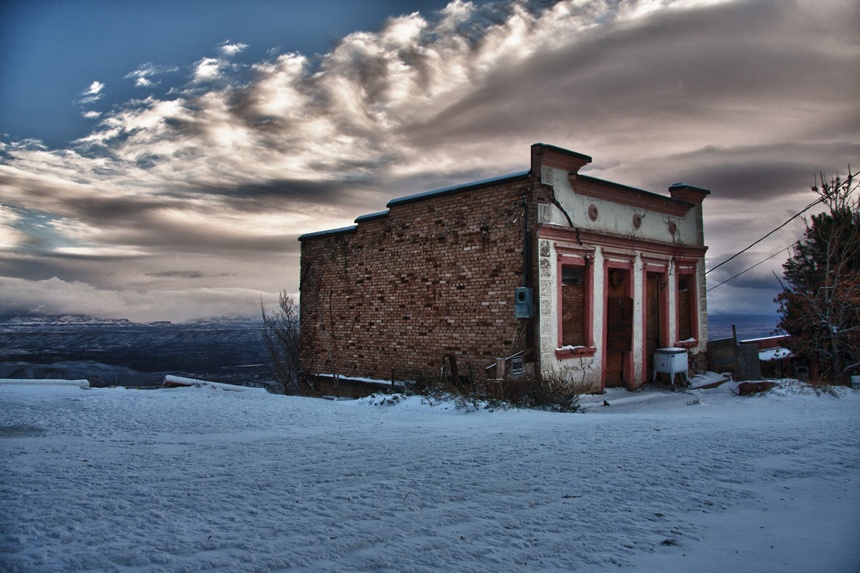
But Jerome’s wild reputation came with a darker side. Five separate fires tore through the town in the late 19th century, devastating its hastily constructed buildings. In 1899, Jerome petitioned Yavapai County for incorporation in an effort to better protect the town. Fire districts and building codes followed, but Jerome faced another threat no ordinance could contain: The ground beneath it was shifting.
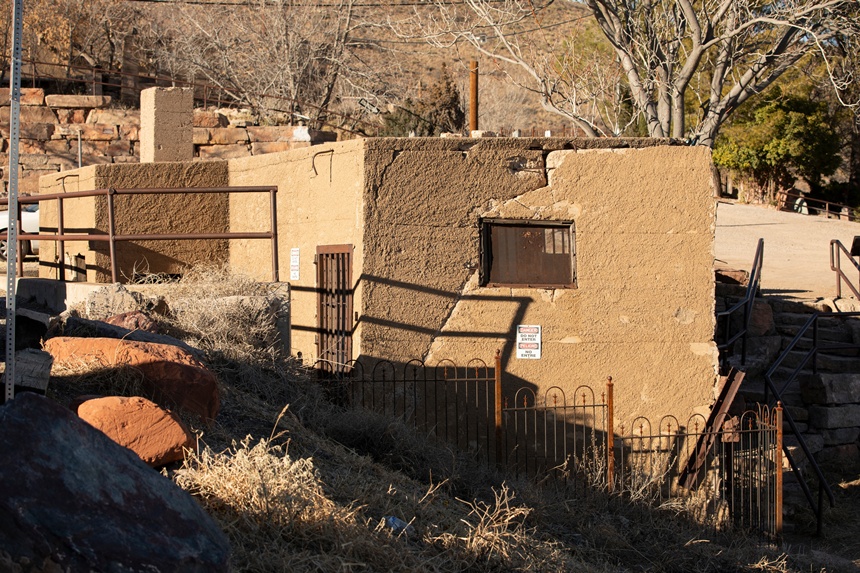
Jerome’s maze of working mines was built beneath the steep slope of Cleopatra Hill. As miners blasted deeper into the mountain, the ground began to move, sending buildings sliding downhill. The town jail moved 225 feet, coming to rest in the middle of Hull Street — coincidentally, the center of the town’s red-light district. Rather than remove the jail, the town simply rerouted the road around it. Today, the aptly named Sliding Jail sits in its final resting place, its broken walls and exposed flooring framed by barred windows and doors. In 2017, the Cuban Queen finally crumbled as well. Retribution? Or a haunting reminder of just how unstable Jerome remains?
In 1926, the United Verde Hospital was built high on the hill, designed to withstand slides, blasts, and fire. By 1930, it was considered one of the most modern hospitals in the West, equipped with patient call lights, X-rays, surgical rooms, and an Otis elevator. But then Jerome slid into a slow decline — first copper prices fell during the Great Depression, then by the end of World War II, much of the richest ore had been depleted. In 1950, the smelter that processed the ore closed, along with the hospital.
By 1953, with fewer than 100 residents remaining after the mine’s closure, the town was nearly bulldozed. Luckily, six residents banded together to form the Jerome Historical Society and managed to save its historic buildings. Still, Jerome had essentially become a ghost town.
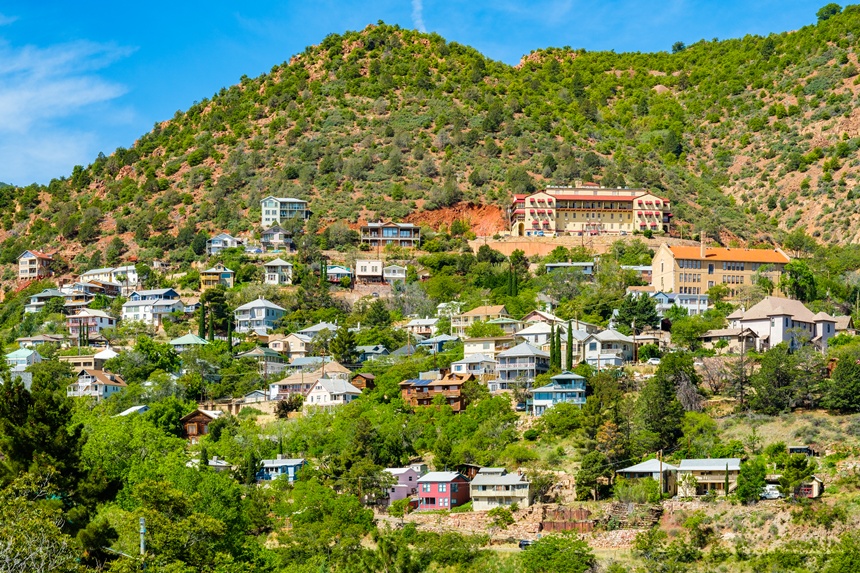
But alongside this vibrant new community, the ghosts of the past continue to haunt Jerome. Until it closed in 1950, the United Verde Hospital treated injured miners and residents, with an estimated 900 deaths occurring within its walls. Of course, all that death makes for some serious lore.
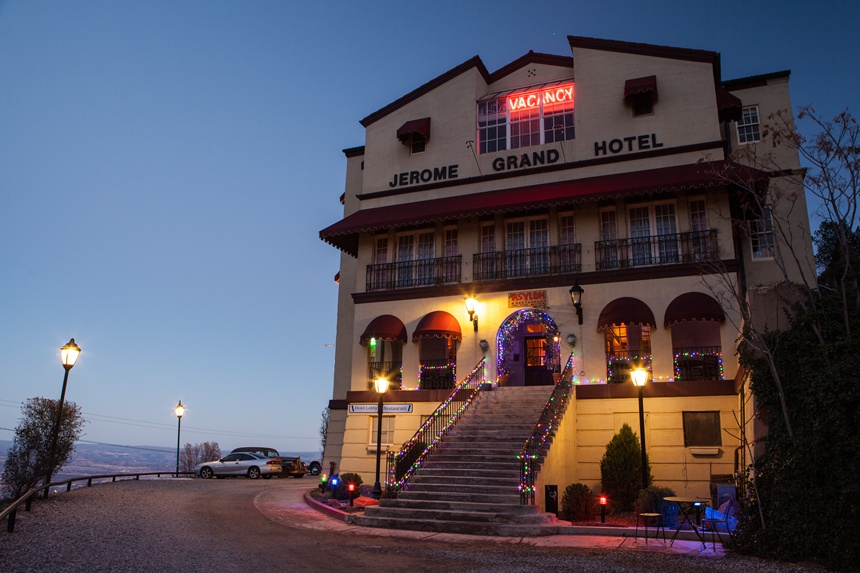
The building was purchased by Larry Altherr in 1994 — after sitting dormant for more than 40 years — and turned into the Jerome Grand Hotel. Almost immediately, reports of paranormal activity surfaced, including the sound of a phantom hospital gurney rolling along the third floor. New carpet was installed to stop it, but the noise continued.
Then there’s the tale of Claude Harvey, the hospital’s elevator technician, who was found dead beneath the Otis elevator in 1935. When Altherr brought in a team from the National Paranormal Association, some investigators claimed to have channeled Harvey, who reportedly said he had been murdered. Others swear they’ve seen a short, dark-haired man moving around the boiler-room office — the spot where the caretaker of the abandoned building hanged himself in the 1980s.
Today, paranormal enthusiasts still flock to the hotel, hoping to hear the ghost cat meow or experience some of the strange activity reported in the hotel’s most haunted rooms. Rumor has it that rooms 23 and 25 were “death rooms,” where terminally ill patients came to check in but never checked out; Room 32 is said to have been the site of two separate suicides. If you’re too scared to spend the night and investigate yourself, you can swing by for dinner at The Asylum, the hotel’s bar and restaurant, where a nurse is said to roam angrily ever since her desk was moved. Or you may choose to join Jerome Ghost Tours, which includes the Jerome Grand Hotel, along with Cuban Queen Bordello, among its scariest stops.
The town now has a population of roughly 450 people and more than 20 art studios and galleries. The best way to experience them is on the first Saturday of every month during the Jerome Art Walk, when you can meander from gallery to gallery while also visiting the world’s largest kaleidoscope store, Nellie Bly Kaleidoscopes, or the ghost-themed Haunted Hamburger.
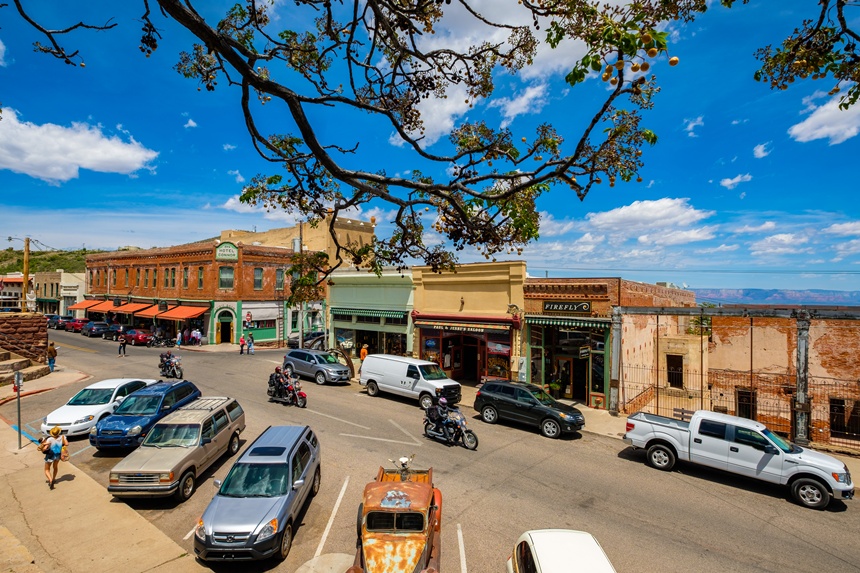
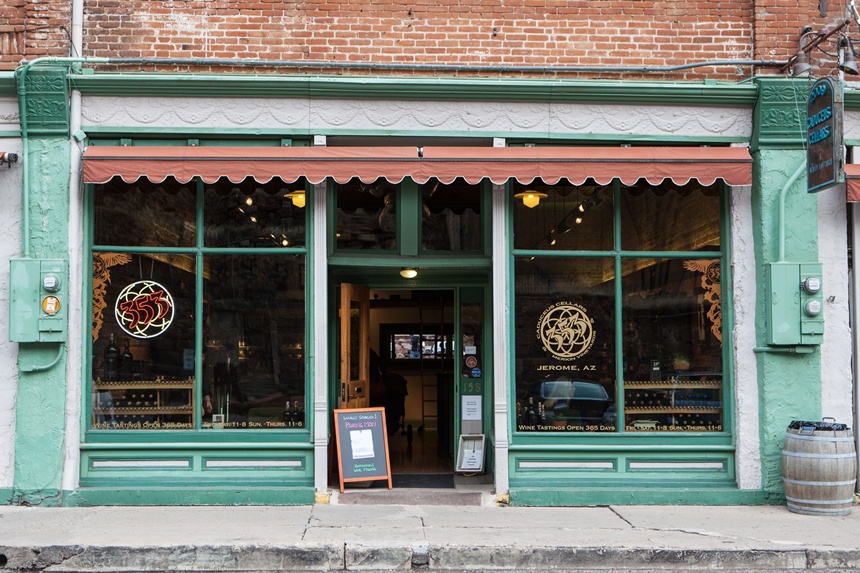
You can also enjoy a surprising amount of wine tasting. Thanks to its proximity to the Verde Valley, an up-and-coming Arizona wine region, Jerome has about half a dozen wine tasting rooms tucked among its galleries and shops. Two of the most notable are The Original Jerome Winery and Caduceus Cellars. Caduceus, founded by none other than Tool frontman Maynard James Keenan, is perhaps the perfect embodiment of Jerome’s strange ability to draw people from all walks of life. If an alternative metal singer can reinvent himself as a winemaker, why shouldn’t a ghost town become an artist haven?
Five More of America’s Spookiest Small Towns
Athens, Ohio
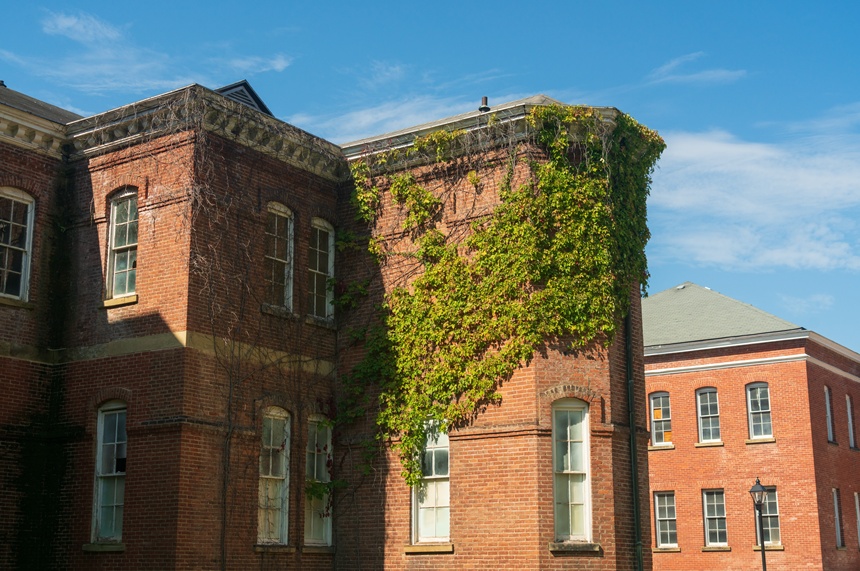
Athens, Ohio, is a charming college town — home to Ohio University — but more sinister secrets lie in the hills above it. The Athens Lunatic Asylum opened here in 1874, a 53,000-square-foot complex surrounded by gardens and grounds designed around the belief that fresh air and outdoor activity could aid recovery. But as the asylum became overcrowded — housing as many as 1,800 patients at its peak — and treatments grew more invasive, including hydrotherapy, electroshock therapy, and lobotomy, its history took a darker turn.
College students have long traded stories about the asylum, including the tale of Margaret Schilling, a patient who disappeared in 1978 and was found dead weeks later in an abandoned section of the building. Her body left a human-shaped stain on the concrete floor that reportedly remained despite attempts to clean it. The asylum closed in 1993, and Ohio University now owns the property. Renamed the Ridges, parts have been renovated into school and museum space, but much remains unused — and its reputation as a haunted place endures. Students scour the cemetery for graves marked with numbers rather than names, and they still tell stories of shadow people in mirrors and a woman in a yellow dress wandering the halls.
Adams, Tennessee
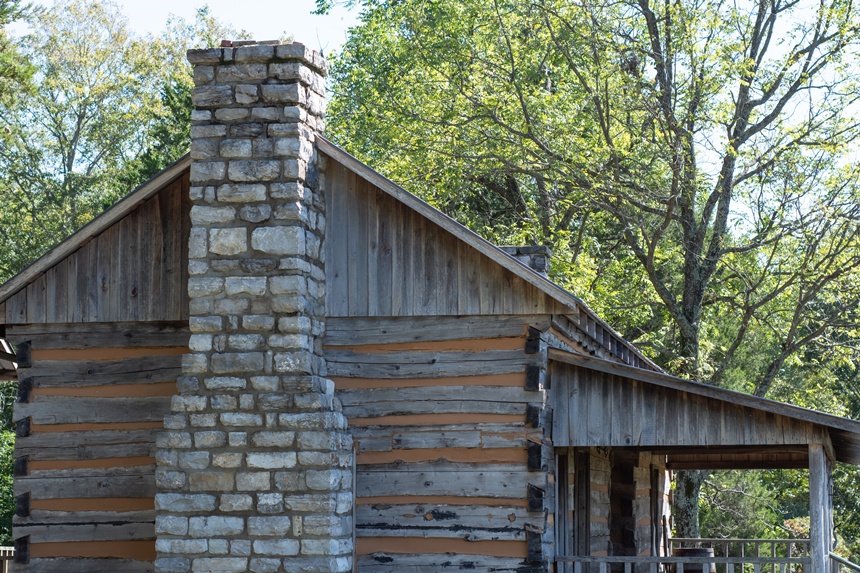
This blink-and-you’ll-miss-it town in rural Tennessee was established in the 1850s as a station on the Edgefield & Kentucky Railroad. It also sits along the Trail of Tears, the forced removal of approximately 100,000 Indigenous people by the U.S. government. But Adams is best known for the Bell Witch haunting, perhaps the 19th century’s most famous ghost story.
Legend has it that from 1817 to 1820, John Bell and his daughter Betsy were terrorized by an entity known as the Bell Witch, who pulled Betsy’s hair, threw objects, yanked bedclothes from sleeping family members, and mimicked voices. She repeatedly threatened to kill John Bell, who died in 1820 with a mysterious bottle of liquid beside his bed. The story became so notorious that it’s said even future president Andrew Jackson came to investigate. In 1937, a Nashville journalist declared it the “Year of the Witch,” predicting the Bell Witch’s return and sparking a renewed frenzy. Today, you can visit Bell Witch Cave, where the entity supposedly hid, and a reconstruction of the Bell family cabin — and see if you can feel the witch’s presence for yourself.
Staunton, Virginia
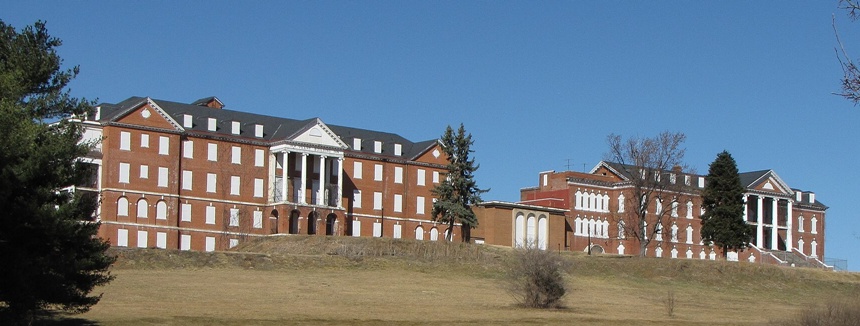
This sleepy Shenandoah Valley town, self-dubbed “Virginia’s most haunted town” by its tourism board, is steeped in spooky Civil War lore. There’s the American Hotel, a luxury hotel turned war hospital, where soldier spirits are said to haunt the basement, which served as the morgue. Directly across the street is the train station that Union General David Hunter and his troops set fire to in an effort to cut off Confederate supplies. When it was rebuilt, an incoming train derailed and tore through the new station just 20 years later. You can also visit Thornrose Cemetery and the mass grave for 1,700 Confederate soldiers who died at nearby battlefields.
But that’s not all. It has an abandoned insane asylum of its own — DeJarnette Sanitarium — along with the former Western State Hospital turned Blackburn Inn, each with their own set of spirits. There’s also a haunted college, Mary Baldwin University, where stories of several ghosts, including actress Tallulah Bankhead and founder Mary Julia Baldwin, roam the campus. Or visit Victorian Spotts-Coffman House in Staunton’s Gospel Hill neighborhood, home of Charlotte Coffman, nicknamed the “Black Widow” after the deaths of two of her husbands.
Bodie, California
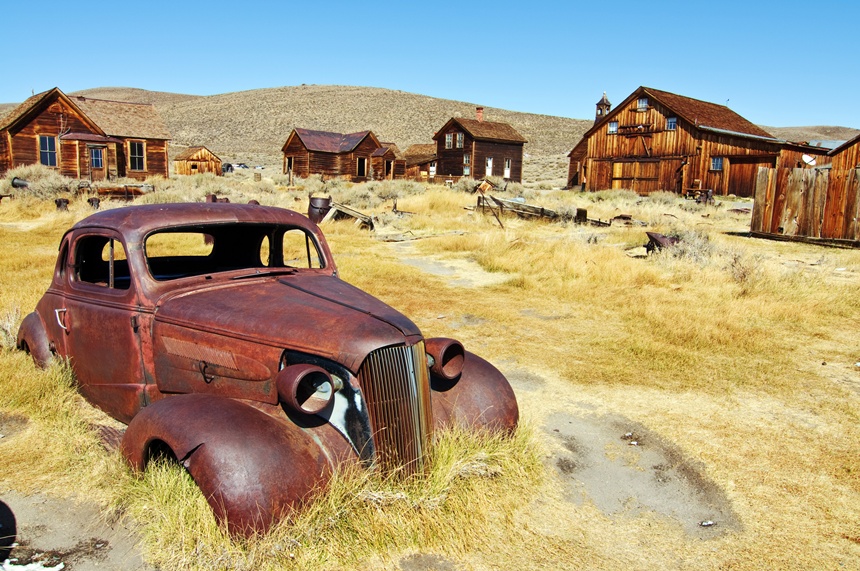
High in the Sierra Nevada Mountains stands a ghost town frozen in time. One hundred buildings are preserved in “arrested decay,” a whisper of a once-thriving California mining town with a mean reputation. When gold was discovered in 1859, its population exploded to around 10,000 residents and more than 2,000 buildings, including saloons, brothels, and gambling halls. The town became so violent that the phrase “a bad man from Bodie” became shorthand for an especially unpleasant person. But fires in 1892 and 1932 destroyed most of the town, and the end of mining in 1942 sealed its fate.
Today, Bodie is a State Historic Park, where you can wander in and out of structures containing artifacts from rough-and-tumble Western life. But don’t try to steal any souvenirs. There’s a “Bodie curse” alleging that visitors who take artifacts will suffer bad luck, and the park receives regular letters from people returning items in the hopes that their luck will change. There are also reports of unexplained footsteps and voices, strange lights, and apparitions in the old buildings and cemetery. But don’t visit during the winter — the town gets snowed in and can only be accessed by ski, snowshoe, or snowmobile.
Atchison, Kansas
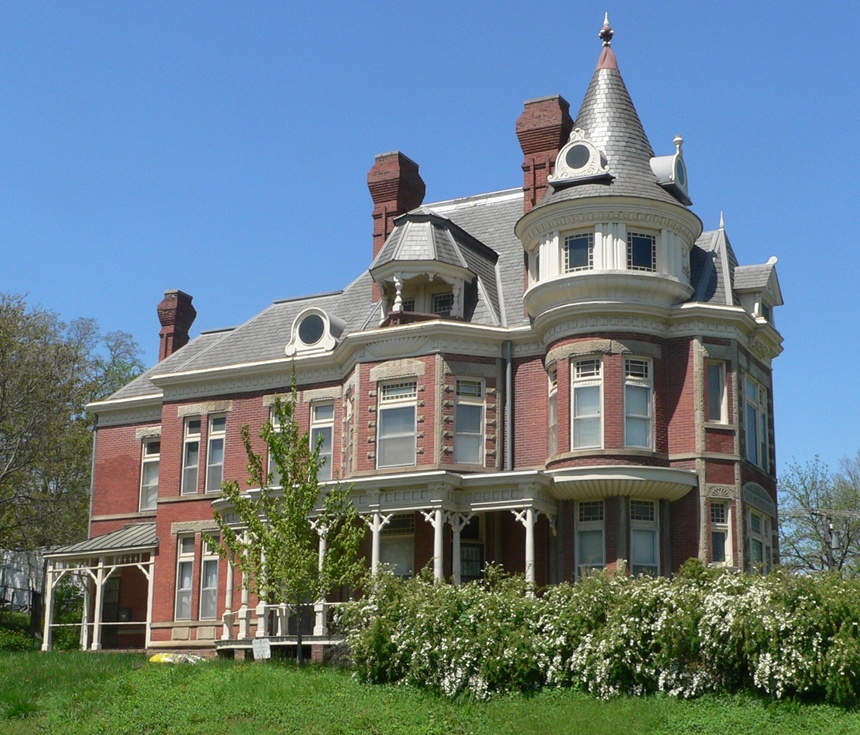
Atchison, a picturesque town on the Missouri River, has a whole roster of haunted Victorian houses of its own. The most famous is the Sallie House, where a little girl of the same name is said to have died during an emergency appendectomy before tormenting a couple who lived there in the 1990s. Their reports of scratches, apparitions, unexplained cold spots, moving objects, and other phenomena turned the house into a national paranormal attraction. Unlike many “haunted” houses, you can actually spend the night there to search for Sallie’s ghost yourself.
Then there’s RavenHearse Manor, built in 1884. Its current owners offer a “Dead Time Stories” tour that includes the third floor, where a room was reportedly used to quarantine people during the 1918 influenza pandemic. McInteer Villa, a beautiful Queen Anne-style brick mansion, spent 25 years as a rooming house and was the site of nine documented deaths, followed by decades of haunting stories. And visitors to the Rose Trunk Building, a former factory known for making specialty trunks, have reported seeing floating orbs — ensuring you’ll find no shortage of buildings for a ghost hunt.
Become a Saturday Evening Post member and enjoy unlimited access. Subscribe now



_from_SE_1.JPG)
Comments
I like visiting ghost towns and it’s not that I am a ghost hunter or paranormal investigator. I just find them quite intriguing. I have visited ghost towns scattered on and around Route 66. And though some are called “ghost towns” there are still inhabitants and maybe even a bank or post office or a general/convenience store serving the area. I’ll definitely put Jerome and Atchinson on my bucket lists. Great article.