Linda King is serving me and some friends the same dinner she’d prepare for her husband, Lamar, and their seven children.
Well, in a way, we’re serving ourselves: Dinner tonight, in a dining room just off Linda’s home in Shipshewana, Indiana, is a traditional Amish “Haystack,” a do-it-yourself meal that allows diners to stack the ingredients to their particular taste.

Bottom level: crumbled Ritz crackers. Above that, lightly seasoned ground beef. Then rice, tomatoes, peppers (no onions, thank you), pumpkin seeds, sour cream, lettuce, crumbled Doritos and, as a crowning glory, melted cheese. Lots and lots of melted cheese.
Yes, you’re right: This traditional family meal, an Amish staple for the better part of a century, is pretty much an open-face taco. For me, it’s a surprising Amish acknowledgement that there is a big world outside this decidedly insular community.
Some attribute elements of faith-infused meaning to the haystack’s various layers (the bottom level represents the world, the sunflower seeds new life, the layer of cheese the daily miracle of sunrise), but Linda suspects the genesis, as with many Amish customs, is considerably more down-to-earth.
“It’s a great way to serve a lot of people,” she says with a shrug. “Everybody gets what they want, the way they want it.
“And always,” she hastens to add, “always, there’s fresh bread.”
Linda and Lamar offer dinners to non-Amish visitors through A Taste of Shipshewana, named for the northern Indiana town that has, since the 1840s, been a center of Amish community. It’s their way of combining a family business with their desire to help outsiders experience the quiet pleasures of Amish fellowship.
I have come to this one-square-mile town of 840 full-time residents – which swells to tens of thousands during the summer tourist season – to get a sense of everyday Amish life beyond the decades of TV series, reality shows, and movies that have largely shaped the way the Amish are perceived by the “English” (as the Amish refer to anyone not of their religious denomination).
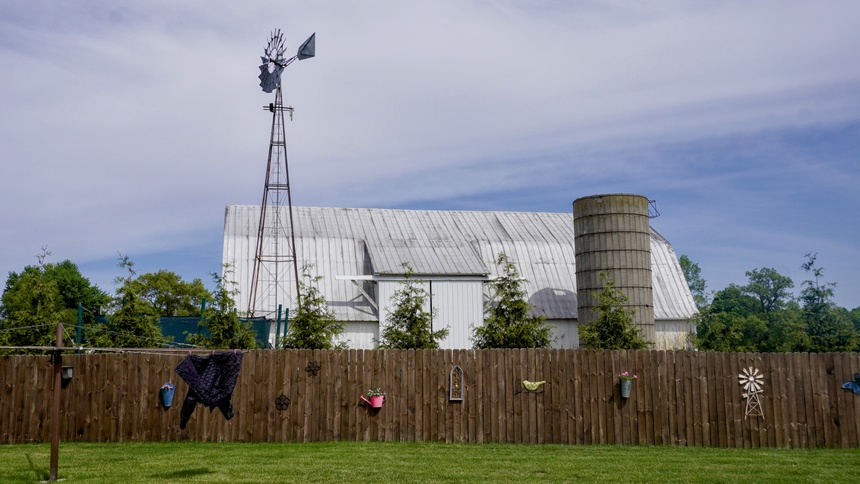
I suppose I’ve driven through Lancaster, Pennsylvania – America’s most celebrated Amish enclave – a dozen or more times. I’ve even stayed there occasionally. The trademark horse-drawn carriages and lines of hanging, muted-color laundry were always evident, of course. But amidst the theme parks and outlet malls, I’ve always felt the Amish of Lancaster dwell behind an unbreachable invisible wall; always observed, seldom encountered.
In Shipshewana, the vibe feels considerably different: The Amish have linked arms with the English to not only welcome visitors, but also to explain themselves – on their own terms – to a historically curious world.
For anyone seeking a window into Amish history and culture, their first stop has to be Shipshewana’s barn-shaped . If the name is something of a mouthful (“Menno” was the first name of Menno Simons, a German leader of the Anabaptist movement, which gave rise to the Amish church; “Hof” is German for “farmstead”), the immersive walk-through exhibits succinctly spell out the sometimes-convoluted history of the Amish.
Our tour guide, a soft-spoken, bespectacled fellow named Al, leads our little group from gallery to gallery, each one containing an elaborate walk-through historical setting. The exhibits narrate the emergence of the reform-minded Anabaptists in 16th century Germany, the fierce prosecution they faced, and their eventual three-way split into the Mennonites, the Hutterites, and the Amish (each of which imposed varying – but always highly restrictive – levels of domestic simplicity).
The groups’ core beliefs – and rejection of Rome as the ultimate authority of all things Christian – led to some pretty extreme resistance.
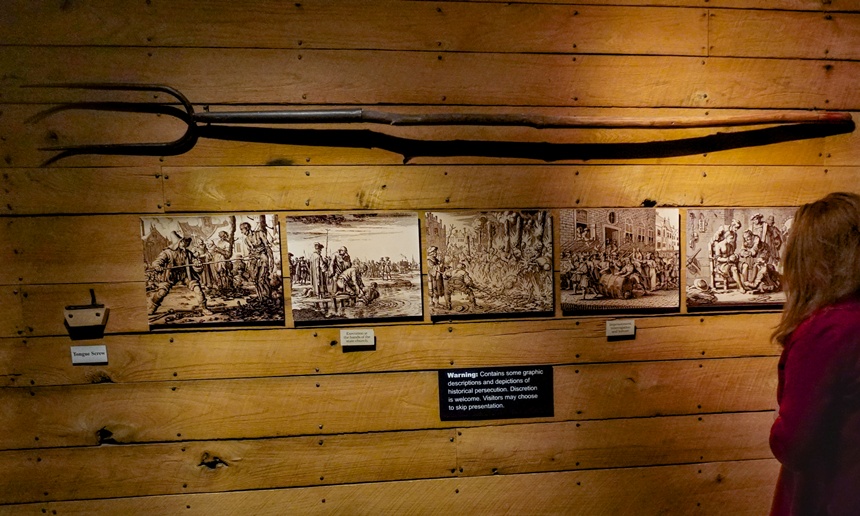
“Some of you may want to skip this room,” warns Al, leading us into what could easily be mistaken for the set of a 1950s Hammer Studios horror movie. “Some people do. I have to tell you, it gets a little gory.”
Of course, that gets everyone’s attention.
Mounted on the walls are the sorts of implements Catholic officials used to, let’s just say, try and convince Anabaptists to alter their point of view. Among them is a devilish little device called the tongue screw, which was used to clamp a condemned heretic’s tongue in place to keep them from preaching while being burned at the stake. Elsewhere hang illuminated images from a 17th century book, Martyrs’ Mirror, illustrating unspeakable evils foisted upon the religious outsiders in the name of Christianity.
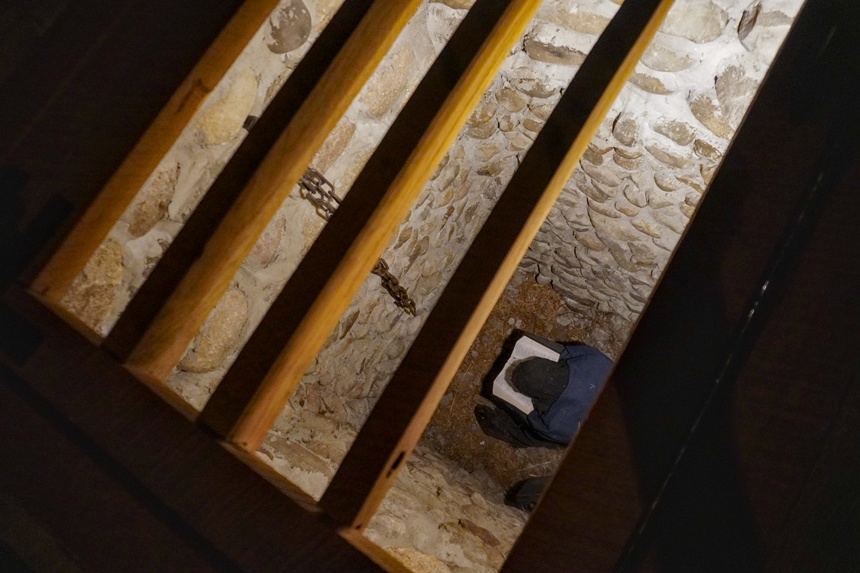
Dominating the room, at its center, is what looks like a rectangular well. Peering down through its grated lid, I can make out the figure of a robed mannequin, representing an Anabaptist hurled into this no-exit dungeon.
Al shakes his head.
“It was not good to be an Anabaptist,” he says mournfully.
A subsequent room is dominated by a full-size sailing ship, representing the Anabaptists’ ultimate deliverance: an invitation from William Penn to come to the American colonies, where they would be free to observe their religion without repercussions.
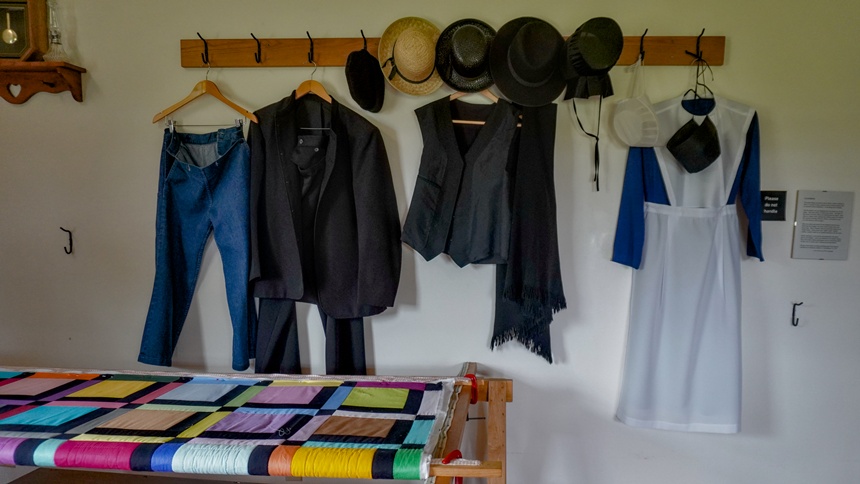
In America, the Amish and Mennonites flourished – which is to say they were free to refrain from flourishing in just about all the ways most people define the term “flourish.” The Mennonites – whose modest fashions and lacy women’s caps still echo the style of their Amish brethren – continued to live simply, but also chose to enter the mainstream to become professionals and establish colleges and universities. The Amish, on the other hand, doubled down on the whole notion of withdrawing from the world: To this day they largely shun any technology that post-dates the mid-1800s, and cease formal education after the 8th grade.
Still, a visit to Shipshewana serves as a cautionary tale for those who feel they can pin down precisely what it means to be Amish.
A cool Indiana spring breeze whistles through my bike helmet as I pedal along the Pumpkinvine Nature Trail, a 25-mile route following an old railroad track bed. On both sides, violet flowers called dame’s rocket, as lovely an invasive species as you will find, zip by in a beautiful blur.
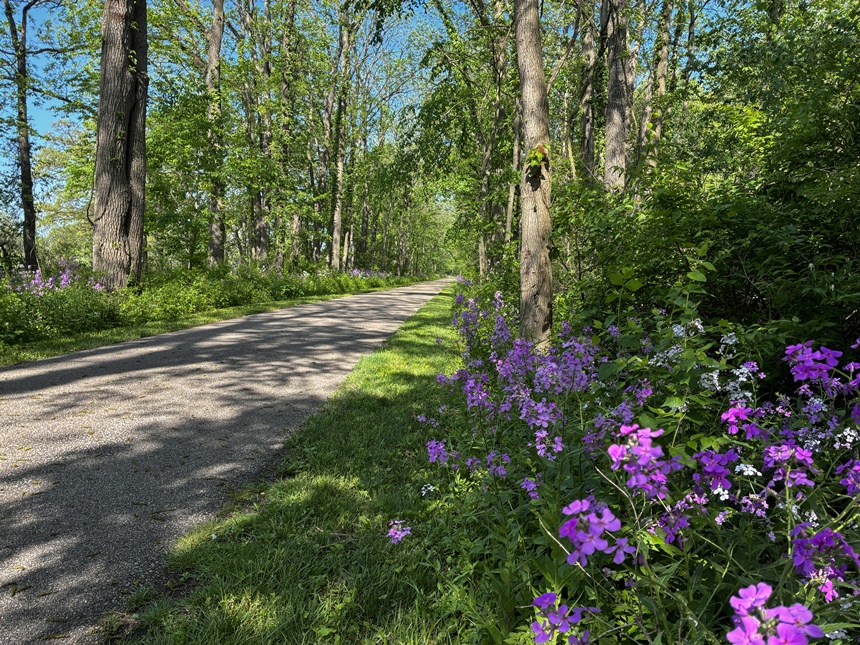
Beyond the trees that line the trail, the fields of dairy farms and cattle ranches reach to distant barns, some bright red, others gleaming white. Nearby stand farm houses that have, over a century or so, sprouted sizeable, if awkwardly attached, additions.
I stop to look both ways at the point where the trail crosses a rolling two-lane county road. The clatter of machinery draws my attention; my eyes follow the sound to the sight of four chestnut horses pulling a mechanical tiller – essentially a gas-powered digging mechanism propelled across the field by real horsepower instead of an engine. Sitting atop the contraption is a farmer, not in overalls and a baseball cap, but black pants, a crisp-looking white shirt and a wide-brimmed black hat.
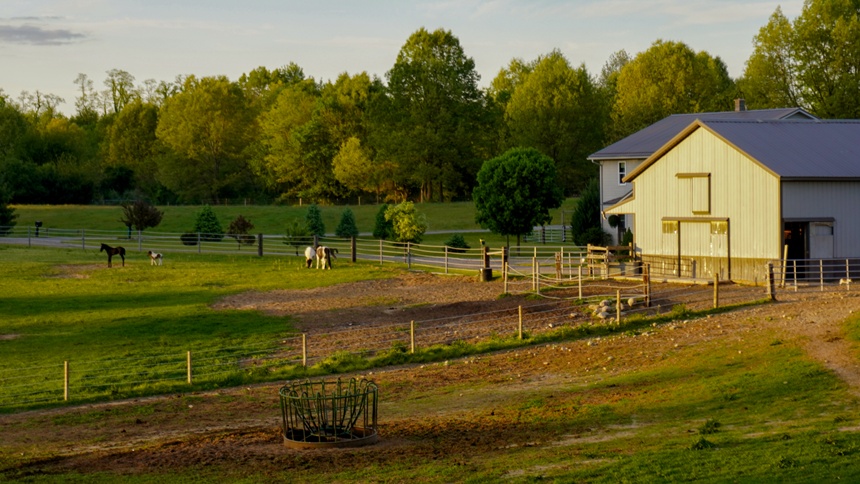
That Amish farmer is, within context, among one of the more progressive of his clan (although he would surely shudder at the notion): Not far from here, more strictly observant fellows are standing atop tillers that are smaller, completely horse-powered – and much slower.
That dichotomy informs the most eye-opening realization of my brief time in Indiana Amish country: There is a seemingly infinite number of gradations when it comes to pursuing the simple life.
Take my current mode of transportation: I’m riding this 13-mile stretch of the Pumpkinvine, from Shipshewana to Middlebury, on an e-bike, rented from a business called Otto’s Bicycle Repair & Water Shop. Otto, a quiet man with a sweet smile, is Amish, but the elders of his particular church have decided that while the universally forbidden automobile has an intolerable tendency to literally drive families apart, e-bikes are not a threat to the family unit.
“So, do you have an e-bike?” I ask the shop employee who meets me upon my return.
He smiles and shakes his head.
“My church doesn’t allow them…yet,” he says. “I can work on them, and I can ride one around the parking lot to make sure it’s working right. But I can’t go out and ride one.”
I try mightily to fight back a sympathetic smile. It seems wrong for me to be enjoying something that is forbidden to the very man helping me have the experience.
“Someday soon, maybe,” he adds, and I’m afraid he’s just trying to make me feel better.
But here is the important thing: The two of us, from very different worlds, are sharing slivers of our existence in ways that, I suspect, seldom occur outside the friendly confines of Shipshewana.
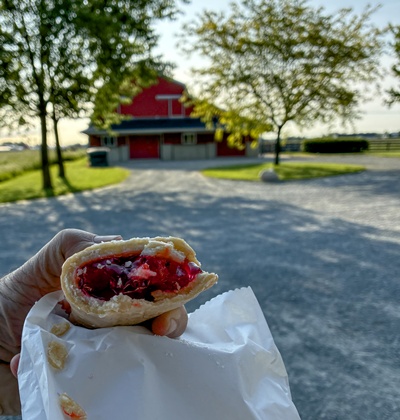
In the course of two days in Shipshewana, I find myself immersed in the soft rhythms of life in the analog lane. Inside the sprawling shed that houses the splendidly random, 104-year-old Shipshewana Trading Place, every Wednesday fast-talking auctioneers move everything from antique signs to cast metal toys to 1980s stereo equipment (pro tip: Do be careful not to absentmindedly nod your head – or you may accidentally signal a new bid to the auctioneer). At Teaberry Wood Products in downtown Shipshewana, third-generation woodworker LaVern Miller patiently guides a tourist group through the steps of creating a handsome handcrafted basket. Early one morning I make the trek to nearby Millersburg for a local rite of passage: buying a just-out-of-the vat pastry at Amish Kuntry Fried Pie (cherry, please). That evening at the Blue Gate Music Hall, I sit with a wildly appreciative audience at an original Amish-themed musical – A Simple Sanctuary, based on a best-selling novel with music by a team from Nashville.
Master Amish furniture maker Delmar Bontrager walks me around his at-home workshop, proudly explaining the intricacies of creating bedroom sets and entire kitchens with wood planks recycled from demolished barns.
“You never really know what kind of wood you’re going to get from a barn,” he tells me, surveying a four-foot-high stack of gray, century-old planks. “But I like working with what life gives me.”
Just north of town, in her modest shop at the end of a tree-shaded drive, Leanna Fry stands by a stack of hand-made Amish quilts, helping fold back the layers that resemble pages of some enormous picture book: an array of multicolored maple leaves, a tight pattern of concentric squares in wildly varied colors, a stately flower design set against a quilted white background. Amish and Mennonite quilt makers from miles around trust Leanna’s Quilts as a reliable clearing house for their work.
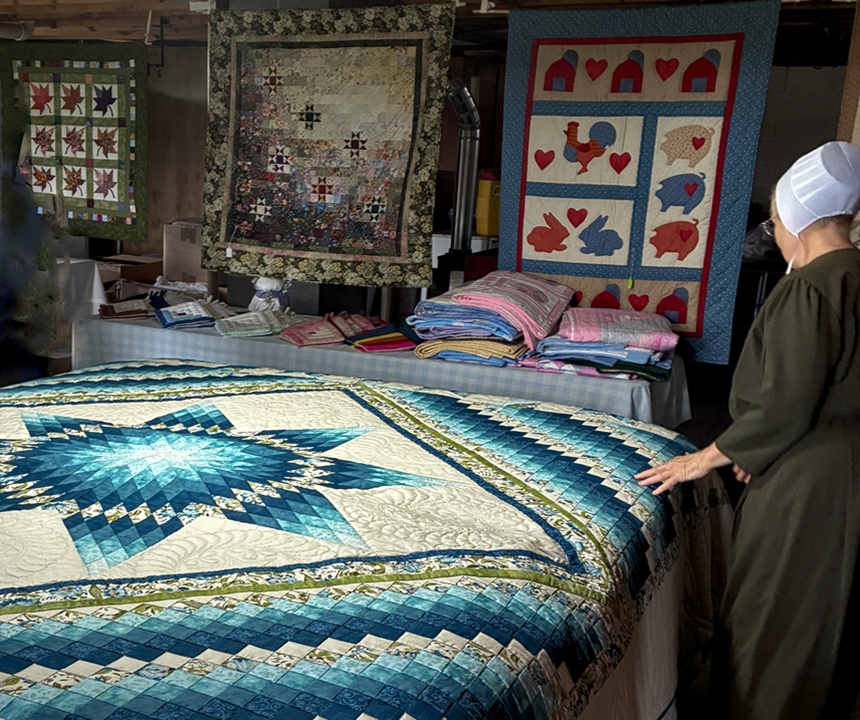
“Look closely at the needlework,” Leanna tells me, gesturing toward the back side of one quilt. “Every quilt maker has a unique pattern. If the needlework is the same all the way across, then you know this was made by a single quilt maker. Different needlework means it was made by a group of women.”
Leanna hastens to add that distinction does not define the quality of a quilt: Artistic collaboration often leads to uniquely unexpected designs.
I ask if I could take a photo of Leanna with her quilts.
“I’d rather you not,” she says sweetly – words that have been repeated to me, almost verbatim, everywhere I’ve gone in and around Shipshewana. The Biblical caution against graven images, it seems, is very much alive for 21st century Amish.
A final stop introduces me to Ben Miller, co-founder (with his wife, Elizabeth) of Ben’s Soft Pretzels, where each year, in a dedicated room behind his flagship shop, thousands of visitors learn the ropes of folding dough into a traditional pretzel shape. Raised Amish, the couple married at age 20 and, for reasons still unclear even to them, went into the pretzel business.
“We knew nothing about pretzels,” says Ben. “I mean, nothing! Elizabeth came up with the recipe all by herself. We started selling them at the auction place and a couple of other spots.”
They’ve stuck with it for 20 years. Today he and Elizabeth have 200 franchises in 28 states.
Ben deftly demonstrates how to fold a pretzel (the distinctive shape, created centuries ago by European monks, is meant to represent arms folded in prayer). I do my best to copy his work. Into an oven my creation goes, and in remarkably short order, it is done: brown, raised, and smelling like Heaven’s kitchen. A coating of butter, a pinch of salt, and it’s ready.
“Go ahead, take a bite!” he almost whispers. “It’s the best pretzel you’ve ever had.”
And you know what? He’s right. Maybe it’s the fresh-from-the-oven thing, but these pretzels also seem extra light and flaky. My compliments to Elizabeth the chef.
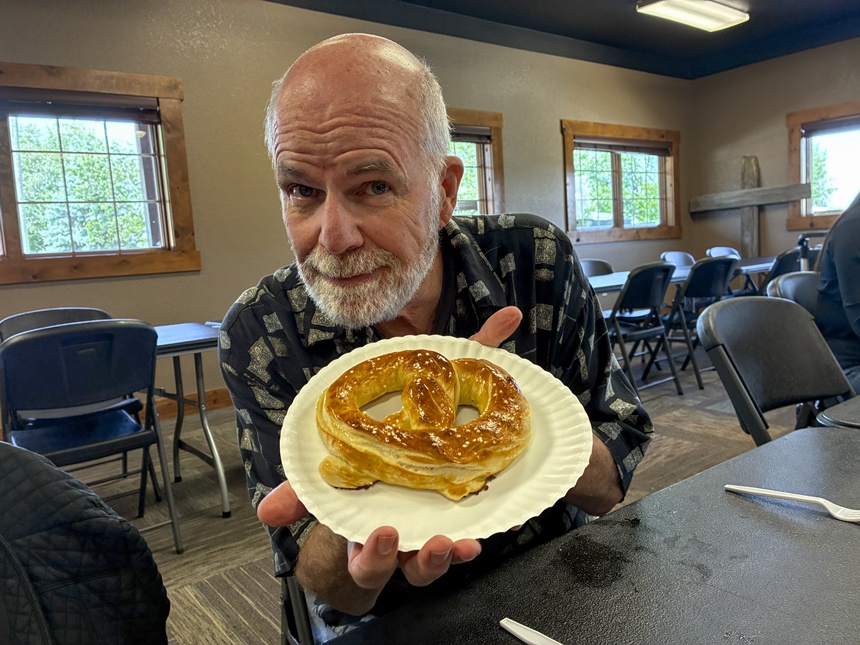
Ben smiles recalling the day a couple of decades ago when first he shared some of those early pretzels with a non-Amish hunting buddy.
“He said, ‘You should really focus on building up your pretzel business,’” Ben recalls. “And at the time I was so Amish I didn’t even have electricity!”
It’s hard to miss the fact that Ben does not have the below-the-chin beard common to Amish men, and there is, of course, a story there: A decade or so ago, he and Elizabeth and their six children left the Amish church, about 25 miles north of Shipshewana, that had always been their home. They have since joined a non-Amish church – which to many in the Amish community is akin to heresy.
Ben still has good relationships with his Amish family; Elizabeth, whose father was a church leader, has been shunned by hers.
Ben’s eyes brighten, though, when he talks about their reception among the Amish of Shipshewana.
“The people down here, they could not be more friendly,” he says. “They’re helpful and supportive toward all of us. It’s really special; a real welcoming community.”
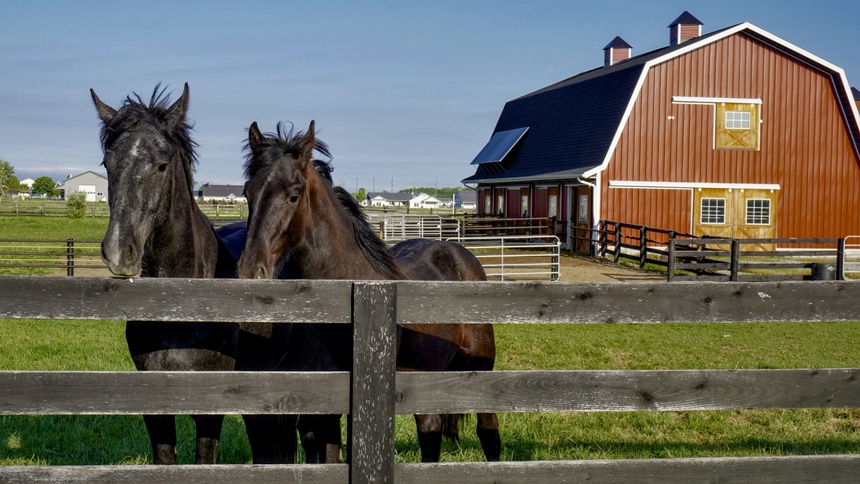
The sun is just about to dip beyond a farm field to the west as I emerge from Linda King’s Amish dinner. Across the yard, near a stable, her husband, Lamar, is standing next to the family’s black horse-drawn carriage. His hand is resting on the neck of their horse, named Buzz.
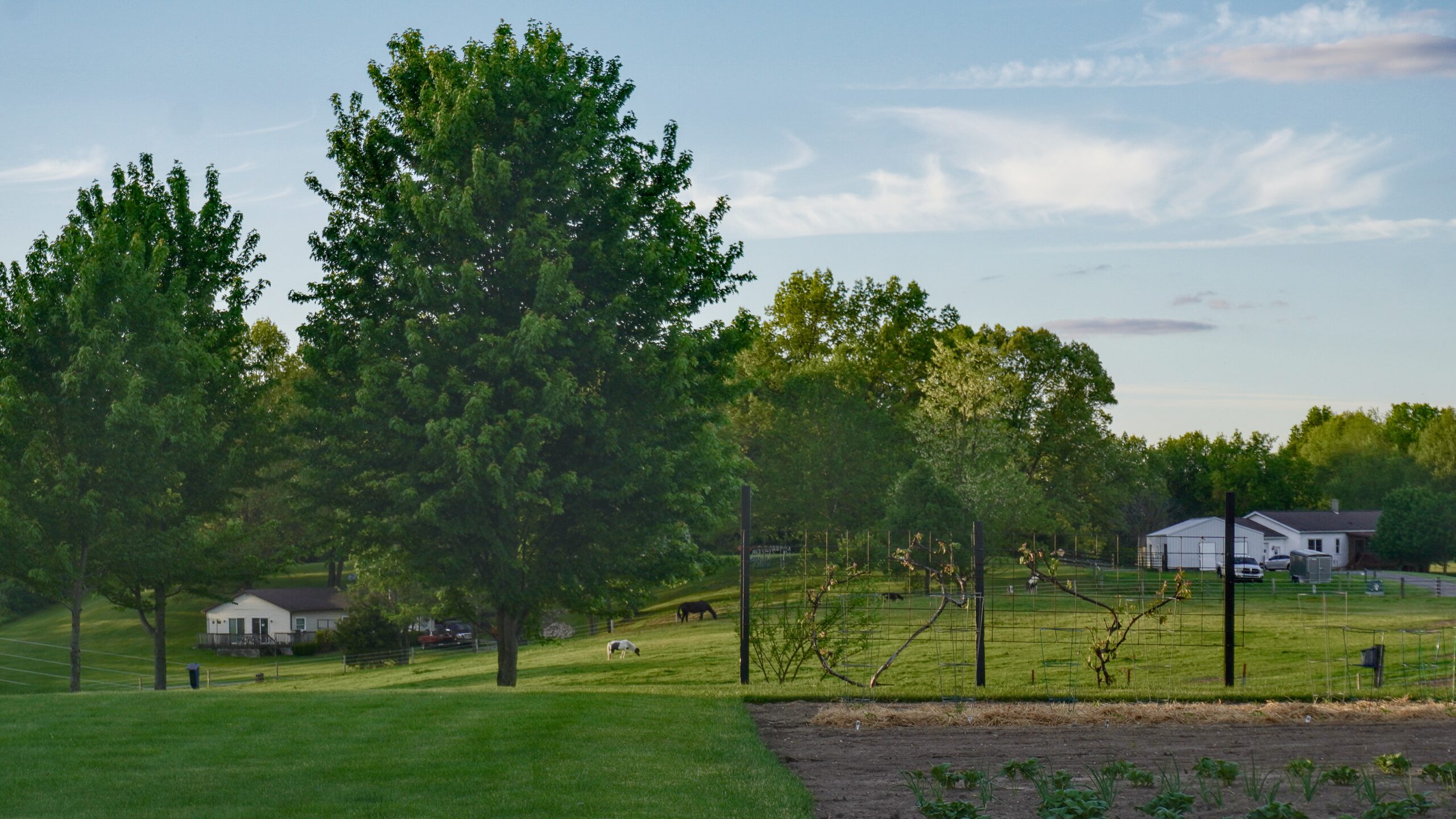
Scuffling and throwing his head around, Buzz seems ready to get going.
“Want to go for a ride?” Lamar grins. The answer, of course, is yes.
A minute later we are clopping along the paved road that runs along the King family’s farm. The only traffic out here seems to be another carriage, coming the other way. Lamar and the driver nod wordlessly. Buzz does not acknowledge his opposite number. He’s pushing anxiously ahead.
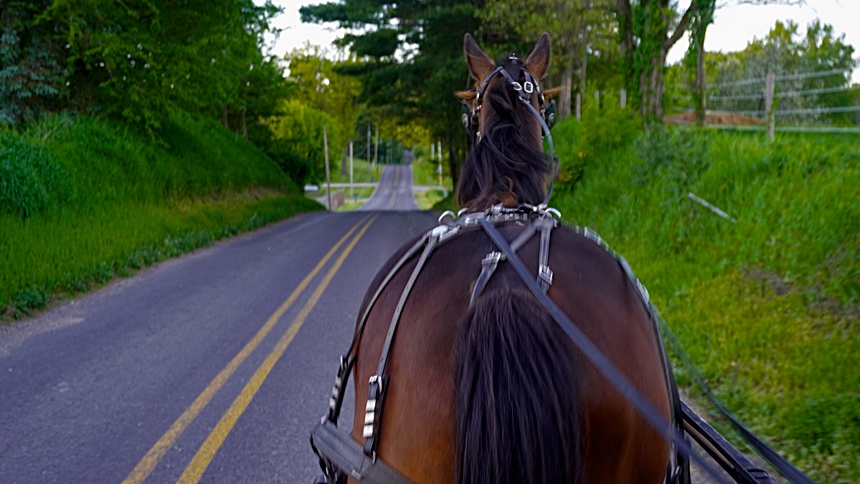
“Oh, I think he wants to run,” says Lamar. Wordlessly, Buzz gets the memo, and we are off.
My instinct is to try to gin up a conversation with Lamar. But his eyes are straight ahead; his mouth is fixed in a tight smile. He’s loving this as much as I am, and really, there seems to be nothing to say.
To our right, up a hill, a colt races to a low wooden fence and pokes his head over it.
Lamar glances up at him. That same nod. One of these days, it will be his turn.
Out here, there’s no rush.
Become a Saturday Evening Post member and enjoy unlimited access. Subscribe now

Comments
Bill,
I loved the article. I can picture being there. Would really like to try the pretzel.
Liz
We live in the Shipshewana area. The Amish of the area are wonderful to do business with. They have a core belief in honesty a strong work ethic. So they produce good products at fair prices. (Sadly there are some English that will commercialize and exploit that vibe to make a bigger profit.)
They take their faith seriously, and much of their misunderstood ways are in place to keep the family unit and the church family strong. A lesson we would all benefit from. Mark