Thomas Jefferson had the right idea: One hot August day in 1767, Jefferson stood where I’m standing now, looked straight up at a craggy natural stone arch soaring more than 200 feet above his head, and thought, “I want this!”
And so, Jefferson bought the place from England’s King George for the equivalent of $160 – which would just about cover the entry fee for the fifth-grade class that is now swarming around my legs, oohing and aahing at the world-famous feature Jefferson dubbed Natural Bridge.
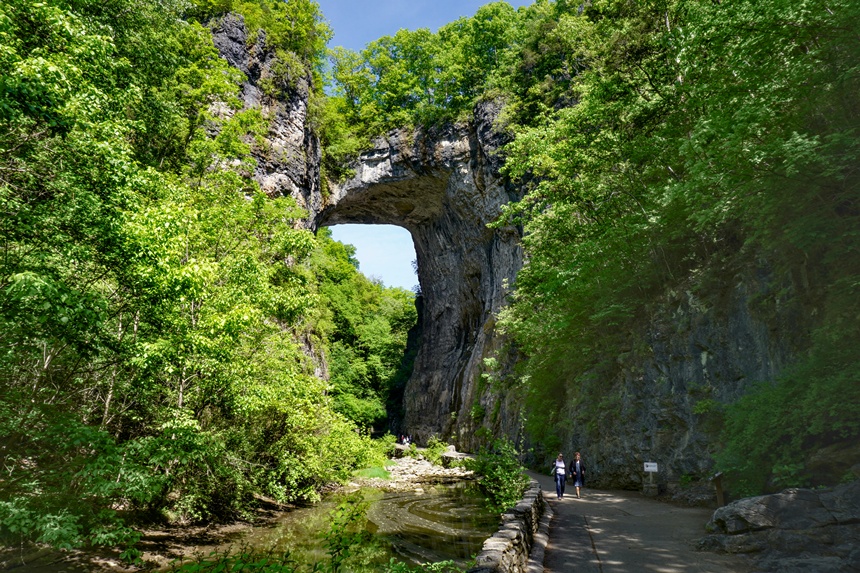
No photo really does justice to the scope of Natural Bridge, unless your eyesight is sharp enough to spot the ant-like people passing under it on a concrete trail that lines Cedar Creek, the modest stream that carved this behemoth. From down here, a cluster of full-size trees at the top resembles a hedgerow (shielding the view from US Route 11, which crosses the arch, totally legitimizing the “Natural Bridge” moniker).
“What you see here is the intersection of water and time,” says Isaac Fairchilds, a disarmingly poetic interpretive ranger at what has been, only since 2016, a Virginia State Park.
Prior to that, all the way back to Jefferson’s time, the place passed from one private owner to another, almost always with tourism in mind. For most of the 19th century, when European visitors came to America, the top two must-see destinations were Niagara Falls and Natural Bridge.
“Water can destroy,” Fairchilds rhapsodizes, “but it can also create. Water created this bridge, and this gorge, and also a habitat for wildlife and plants like these northern white cedars, which are normally found on mountaintops.”
The floor of the gorge, he explains, is about 10 degrees cooler than the ridge above, providing just about the only survivable place for a tree that has been endangered in Virginia since the glaciers retreated 12,000 years ago.
That’s a lot of history, but then again, this part of Virginia is all about history. Almost from the time those glaciers left, indigenous people hunted these lands. Europeans came to hunt the animals, fell the forests, and farm the clearings. And in 1778, a cluster of Virginians christened their little town just 13 miles up the road from Natural Bridge Lexington, in honor of the Massachusetts village where the first shots of the American Revolution had been fired just three years earlier.
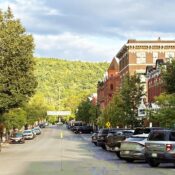
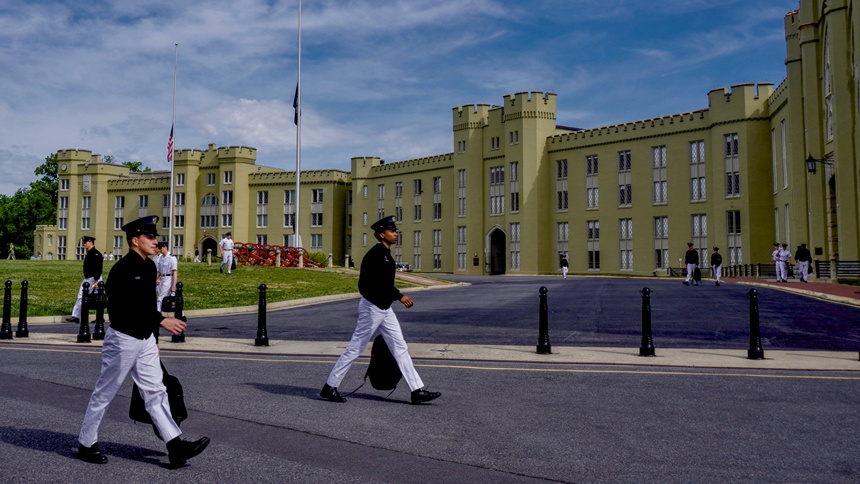
In a country where more than 25 other places are called Lexington, the Virginia version is known mostly as the home of Virginia Military Academy (VMI) and Washington and Lee University. On any given afternoon, Lexington’s historic main street, lined with stone and brick houses, restaurants and businesses, churns with young men and women ducking into town during a break in classes.
“I kind of come here in disguise,” confesses a VMI cadet in jeans and a floral blouse, casually glancing over her shoulder. “I love being in uniform at the Institute – it helps define a big part of who I am.
“But sometimes it’s good to just, you know, kick back a little bit.”
VMI has dominated life in Lexington since 1839, when it was founded as America’s first state-sponsored military college. Abe Lincoln called it the West Point of the South – of course, that was before Virginia seceded from the Union, VMI professor Stonewall Jackson became a leading Confederate general – and 247 teenaged VMI cadets marched 80 miles to fight in the Battle of New Market.
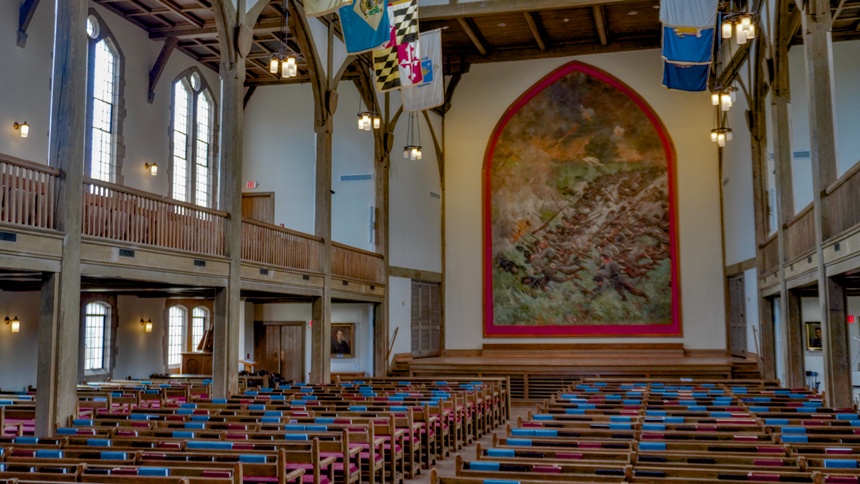
That moment of student body bravery is commemorated at the front of VMI’s Jackson Memorial Hall, in an epic painting that depicts the student soldiers pushing back a Union advance. Five youngsters died in the battle.
Downstairs from the hall, Col. Keith Gibson, VMI class of 1977, is showing me around the VMI museum – a prodigious collection of class rings, uniforms, battle flags, and ephemera the school has been collecting for nearly two centuries.
“We’re already commissioning officers for the Space Force,” says Gibson, the museum’s director, gesturing toward a lineup of flags representing all branches of the U.S. Military. He smiles faintly.
“I have to confess I was a little leery of the Space Force at first,” he says. “I didn’t want to invest in a flag if it wasn’t going to be a real thing, so I waited several years. But now we proudly show it!”
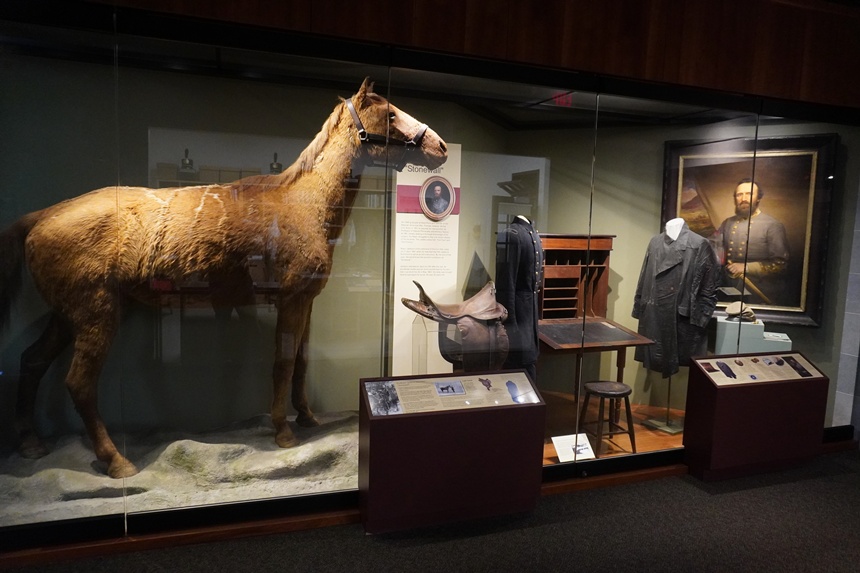
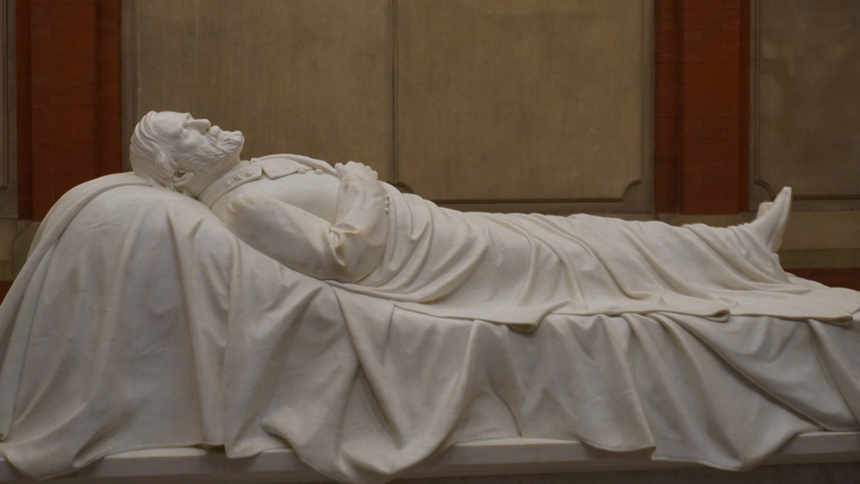
In one glass case, seemingly ready to smash through and gallop up the stairs to the parade ground, stands Little Sorrel, Stonewall Jackson’s favorite steed. Following Jackson’s death – mistakenly shot by his own men at Chancellorsville – Sorrel became something of a personality, making personal appearances at state fairs. He died after a gig at the 1885 New Orleans World’s Fair, having outlived his master by better than 20 years. Sorrel was immediately mounted and sent to VMI, where today he stands facing the bullet-pierced raincoat Jackson was wearing that fateful night.
It’s a short walk from the grounds of VMI, across the tree-shaded campus of Washington and Lee University (where Robert E. Lee lived out his years as president) to Lexington’s downtown. I pop my head into the various small businesses: Sweet Things, an ice cream shop where they’ve been hand-rolling fresh waffle cones for more than 30 years…Pure Eats, a defiantly informal eatery in a former Pure Oil gas station, started 15 years ago by Kasey Potter, downtown’s youngest female business owner…and Seasons Bakery and Café, a stylish establishment co-owned by Daniel Shear, a guy who returned from Special Forces work in Afghanistan and, with no experience whatsoever, decided to become a baker.
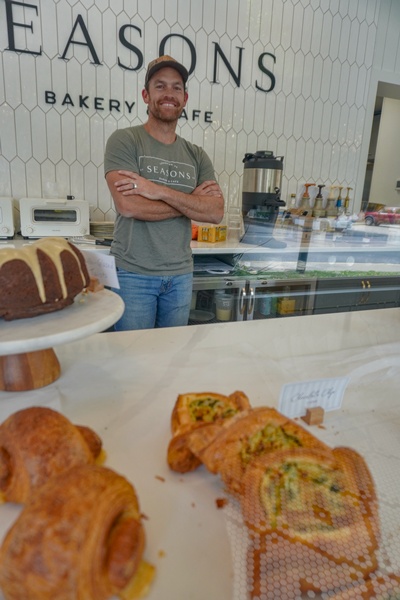
“It started while I was still over there,” he says, leaning over a table in the brightly window-lit restaurant. “My wife, Fawn, sent me a book called Tartine (named for a gourmet toast, made from artisan bread and covered with creative toppings), by a San Francisco baker named Chad Robertson. She just did it on a whim.”
He pauses at the recollection, narrowing his eyes as if squinting into the Afghan desert sun.
“We were in a really contested area of the country. My life was on the line every hour of every day. And I would come back from combat patrol and just read Tartine, and I mean religiously.
“It was my way of escaping this world and going to a world away; a world of possibility.”
Returning home in 2016, Shear threw himself first into farming (another skill set he, as a military kid, had never before sought to develop) and then, shortly afterward, full-time baking.
A server arrives with lunch: an open-faced sourdough BLT tartine, smothered in smoked pork belly, tomatoes, arugula, chipotle mayonnaise and balsamic glaze. Shear’s eyes dart from the plate to my eyes.
“You’re welcome,” he smiles.
Woody and Weepy don’t seem to be breaking a sweat as they pull this carriage, peopled with a half-dozen passengers, up what seems to be a pretty steep hill toward Lexington’s Main Street. Even when our driver pauses outside the brick house of Stonewall Jackson to discuss its evolving exhibits about the home’s complicated history of the soldier and the enslaved, neither horse seems happy to take a breather. Instead, they fidget nervously, seemingly anxious to get on with the journey.
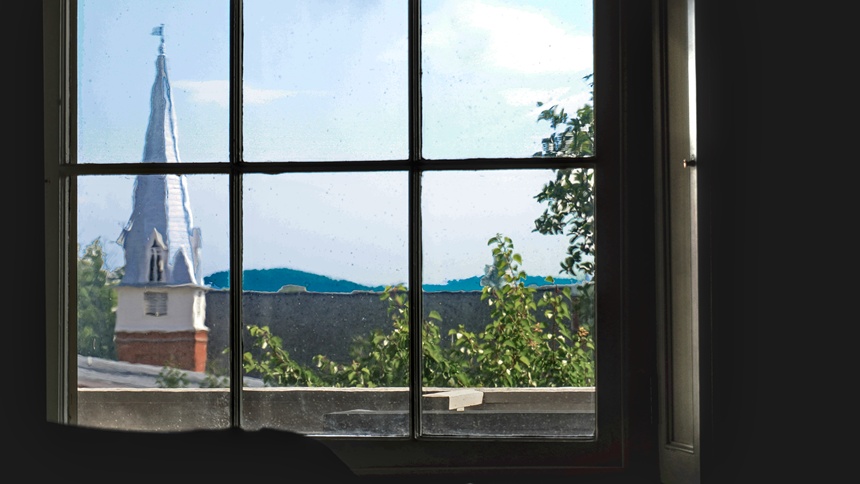
You’ll find almost no wood-framed structures in Lexington due to the simple fact that nearly all of them burned to the ground in the Great Fire of 1796. Not ones to let an object lesson escape them, the townsfolk responded by rebuilding with nothing but stone and brick.
As Woody and Weepy cross Lexington’s Main Street, though, I get a distinct sense that there’s something, well, odd about the solidly built structures. For some reason, they all have second stories that strongly resemble first-floor levels.
“That’s because,” our driver explains, “those second stories used to be the first stories.”
And so begins the story of what has to be among the most oddball and ambitious grass-roots civil engineering projects of 19th century America. Because Lexington was established on a steep-sided ridge of the Blue Ridge Mountains, it was often impossible for horse-drawn wagons to climb the dirt roads that ascended to the town. So, Lexington embarked on what became known as The Great Lowering: For two years, 1851 to 1852, the people of Lexington spent virtually every spare minute digging away at Main Street, removing the soil and relocating it on the sides of the ridge, reducing the incline to a more horse-friendly grade.
The result was an easier commute into town – but Main Street was lowered up to 10 feet. As a result, former basements became first-floor living spaces. And building owners were obliged to either convert their former front doors into large windows or place balconies where the sidewalk used to be.
Even today, as I walk into the lobby of The Georges Hotel – a very comfy establishment that is currently spreading its footprint among five historic buildings – it’s easy to feel like I’m sneaking in through the cellar door. The owners have turned that to their advantage, though, creating a low-ceilinged, speakeasy-like vibe at their ground-floor bar, Taps.
On this visit, I’m staying not at The Georges, but at the nearby Hampton Inn. Don’t let the hotel chain appellation fool you regarding the Lexington iteration: Many of the rooms are tucked into the brick Georgian-style Col Alto Manor House, built in 1827. The ceilings are high, the windows are huge, and the wood stairs creak when you try to sneak in late. Perfect.
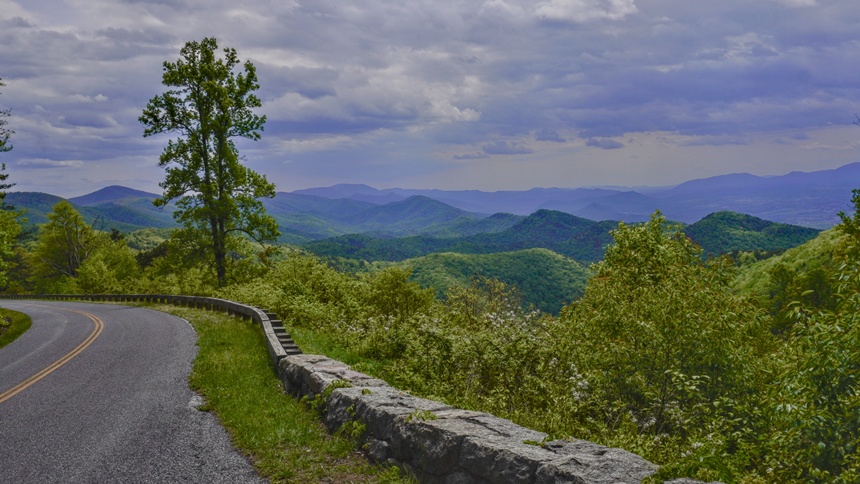
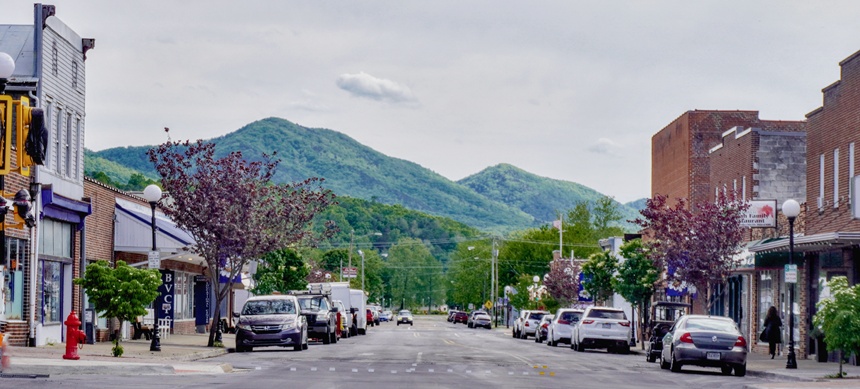
There are all kinds of good reasons to stay put right in Lexington, but the environs are kind of irresistible. The curvy wonders of the Blue Ridge Parkway are just 10 miles to the east. On the way there, stop in the Mayberry-like burg of Buena Vista and impress one of the natives by pronouncing it the way they do: Bee-you-na Vista. Most of the thriving businesses along the main drag, 21st Street, seem to be run by women: Be sure to visit the delightful trio who own and operate Leaf & Lore, an irresistible indie book-and-gift store, and the women behind the counter (and success) of the Asunder coffee shop and BeeVee ice cream.
A bit farther out of town, it’s well worth the drive up a winding hillside road to visit Brian and Penny Ross at their fragrant 54-acre homestead, Tantivy Lavender Farm. Wander the trails, discover the gurgling waterfalls, sniff the gardens – but do set aside time to sit down with Brian and Penny to chat about their own long and winding road to this place.
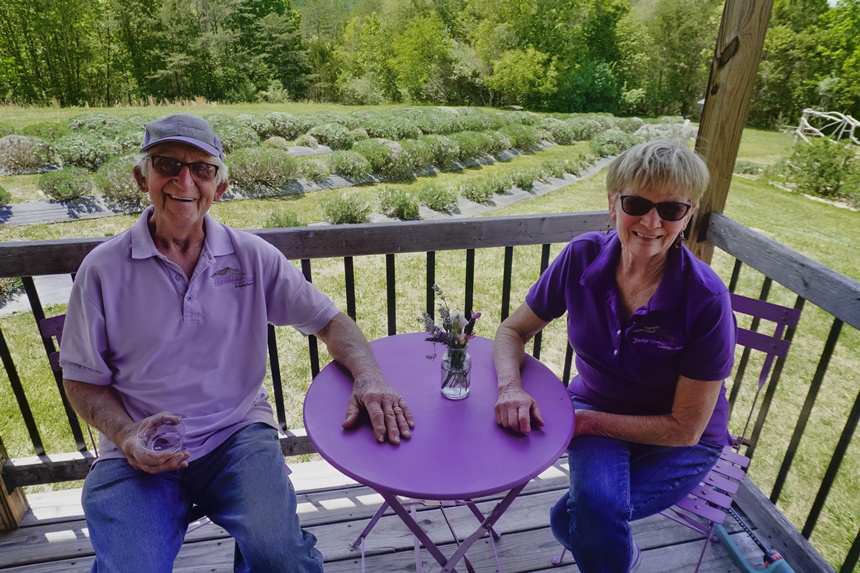
Born in England, Brian spent 50 or so years of his pre-lavender career working with show horses. He eventually became a sought-after horse show judge; Penny managed horse shows – often at the nearby Virginia Horse Center.
“Then I got cancer,” says Brian, siting with me on the back porch of the gift shop – formerly the couple’s cabin, which he built himself. “We realized we were both burned out from all the horse travel, and we wanted to do something.”
He gestures toward the neat lines of gently waving lavender – some 40 different kinds – rolling down the hillside.
“Well, this is it,” he laughs.
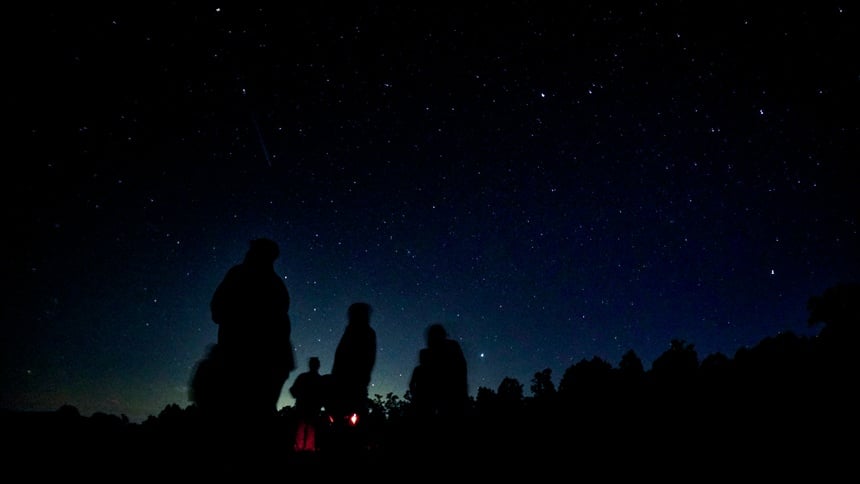
Dark skies are vanishingly rare in the eastern United States, but Natural Bridge State Park happens to be one of the country’s newest International Dark Sky Parks. An hour or so after sunset, I gather with a handful of fellow star enthusiasts and climb aboard a tractor-drawn wagon. We bounce toward a hilltop clearing, disembark, and wait for the lingering twilight to fade away.
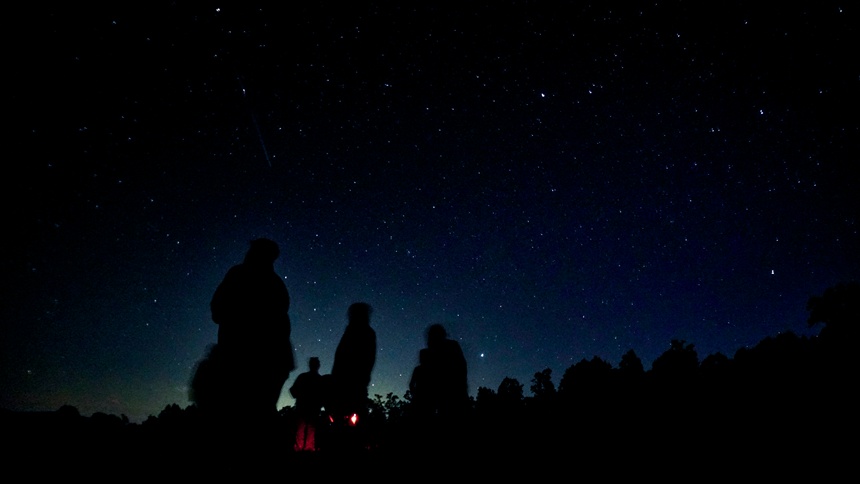
There are some clouds to the east, but above and to the west, first a couple of brilliant planets, then some bright stars, and finally a sparkling blanket of diamond-like pinpoints appear. The air is still, and at our feet a scattering of fireflies vie for our attention.
The lights of Roanoke, some 50 miles away, are doing their best to ruin the effect, but here, at least for now, the universe is winning. On my last evening in Lexington, the face of infinity seems to rest on the surrounding hills, kissing the world good-night.
Become a Saturday Evening Post member and enjoy unlimited access. Subscribe now