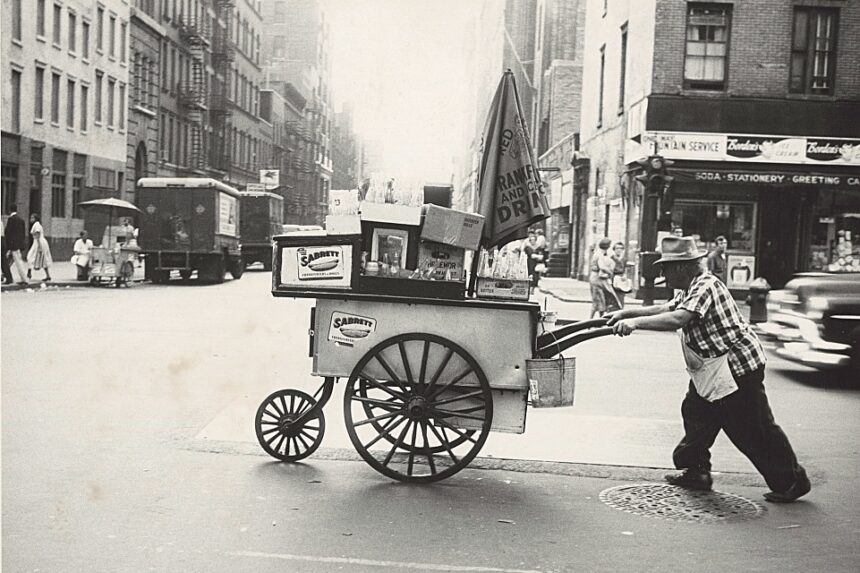
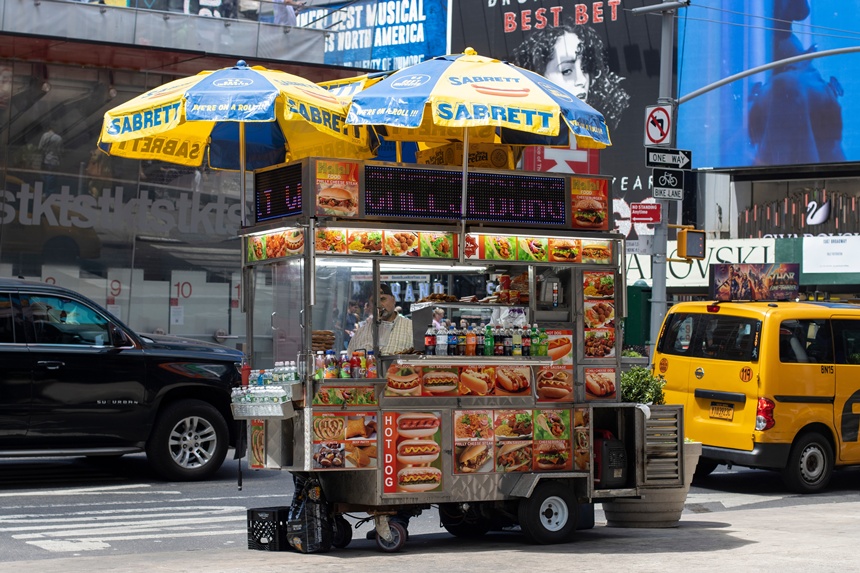
When I was a kid, one of my dear friends had an above-ground pool at her house in middle-of-nowhere, Indiana. It was magnificent: I learned to swim there; we painted our toenails on the deck; and I fell off said pool deck to make my first childhood ER visit. Arguably the most memorable moment was when I learned how I liked to eat my hot dog – relish with extra mustard. What’s a more quintessential American summer than eating a dog hot off the grill, poolside, on a hot sunny day? Or maybe your defining hot dog memory is outside the ball park, from a cart in Times Square, or boiled by your babysitter. We all have that one moment we carry from our childhood.
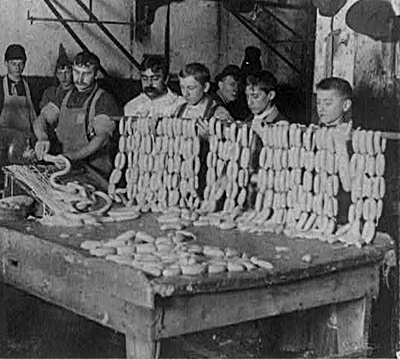
And, just as magical as those memories is the glorious mythology to the birth of the hot dog. According to legend, in ancient Rome, a cook named Gaius discovered an unexpected use for a roasted pig’s intestines. Because pigs were traditionally starved before slaughter, the intestines were empty and had expanded during cooking. Intrigued, Gaius came up with the idea to fill them with a mixture of ground game meat, spices, and wheat. The result was what is now recognized as one of the first sausages. It’s a fascinating story that could very well be true, but it’s more likely this meat product is rooted in more mundane European history.
I had the opportunity to interview Jamie Loftus, the author of the book Raw Dog: The Naked Truth About Hot Dogs, a Best Book of the Year from NPR and Vulture, on her in-depth research on this culinary creation. “The hot dog’s origins are mainly Eastern European and brought over from Polish, Greek, and Austrian sausage traditions, then refined by industrialization,” she says. That refinement has become so extensive that today the hot dog is even legally defined. According to the USDA Food Safety and Inspection Service, a hot dog must be a comminuted (finely reduced) semisolid product made from one or more kinds of skeletal muscle from livestock, such as beef or pork, and may also contain poultry. But the story extends far beyond its origins and federal regulations, with its own fully American lore originating on New York City’s Coney Island.
In 1867, Charles Feltman, an entrepreneurial baker from Brooklyn, began selling hot dogs from a converted pie cart on Coney Island. It was here that Feltman invented what we know today as the hot dog bun. This fateful move would change the course of history of the hot dog forever. He hired a bun slicer named Nathan Handwerker, since there were no machines back then to do the job. According to the tale, Nathan Handwerker began working at a Coney Island hot dog stand in 1915, earning $11 a week cutting buns, since machines to do so were not invented yet. Living frugally on hot dogs and sleeping on the kitchen floor, he saved $300 within a year, which was enough to open his own stand. By selling hot dogs for five cents, half the price of his former employer’s, he quickly outperformed the competition and laid the foundation for what would become Nathan’s Famous.
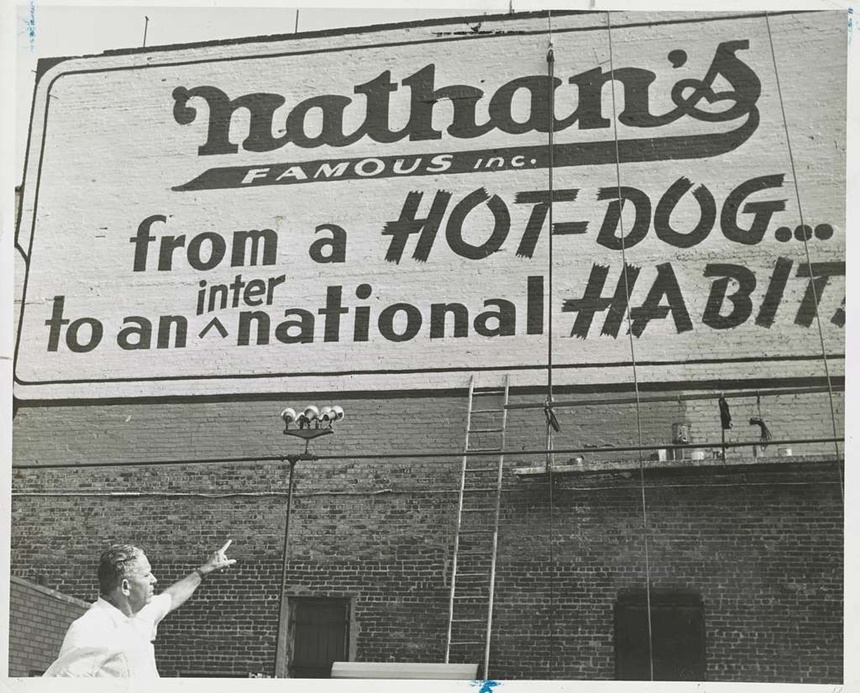
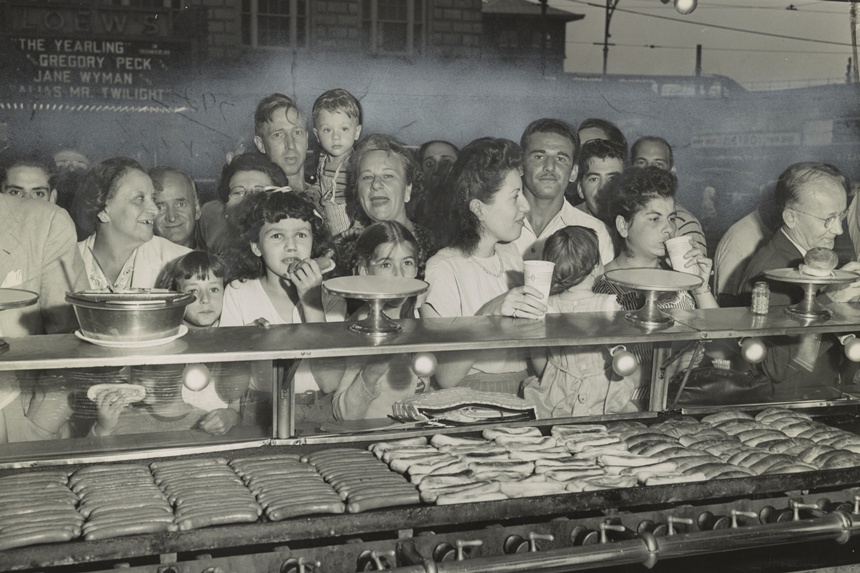
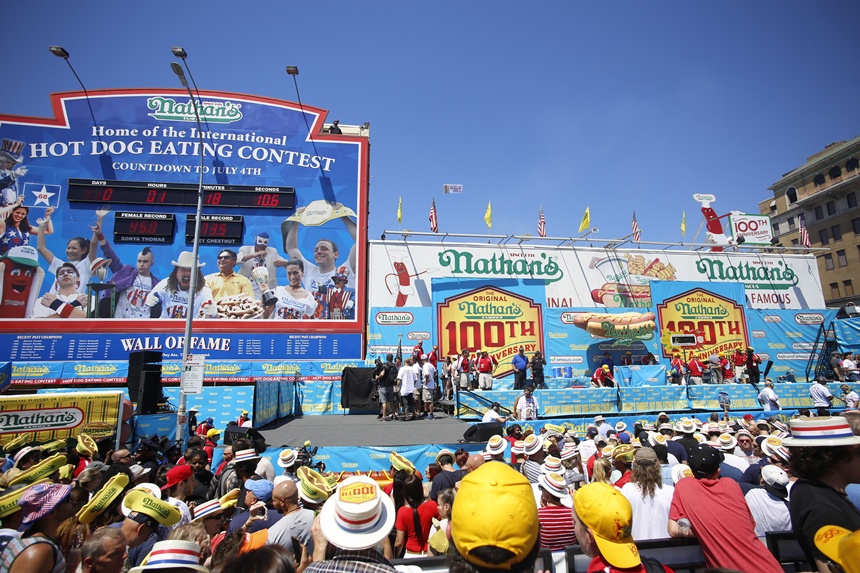
Nathan Handwerker not only oversaw the rise of the American hot dog, but also birthed the hot dog eating contest. As the legend goes, on July 4, 1916, four immigrants gathered at the original Nathan’s Famous and bet on who was the most patriotic – by seeing who could eat the most hot dogs. Thus, the Famous Hot Dog Eating Contest took hold, gained national attention, and still runs to this day.
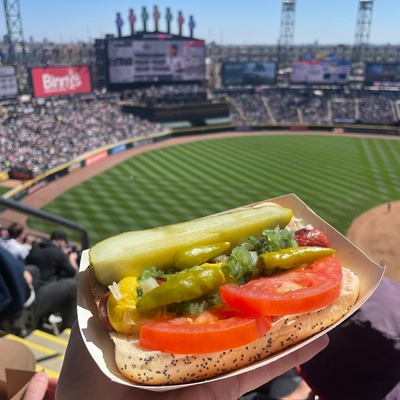
“Hot dogs were spread around the country as immigrants spread to different regions,” Eric Mittenthal, president of the National Hot Dog and Sausage Council, told CNN. During the Depression, hot dogs were affordable and easy to dress up with additional toppings that then launched different styles of hot dog like Chicago and New York style hot dogs. And this evolution is continuing today for good and sad ways. Loftus says, “Now, we’re seeing immigrant communities continue to innovate the hot dog in the U.S., and it’s worth mentioning, are disproportionately targeted by police and ICE specifically when working as street vendors.”
Food is tied to memory and oftentimes is what makes us turn to the same dishes over and over. Loftus says, “I wouldn’t have written this book if I didn’t so heavily associate it with the place, the class, and the memories I associated with it, mostly spending time with my couldn’t-really-cook Dad. Oscar Meyer commercials were ones that explicitly tied hot dogs to childhood, along with the Wienermobile, and that combined with the affordability of the food itself has really ingrained it into American childhood.”
An Oscar Mayer wiener commercial from 1965, with their iconic song (Uploaded to YouTube by AlwaysGutom)
Today, hot dogs are still reflect their humble beginnings, but are also found in higher-end eateries, giving rise to the gourmet dog. This is causing some conversation on what makes a hot dog “good,” which involves not only the subjectivity of our taste buds, but also the element of our class status. Just ask any Chicagoan — or pool deck kid with wet toenail polish — to put ketchup on their dog. Loftus says, “I think hot dogs are a constant source of mirroring where culture is, whether that’s escalating gentrification (you can get a hot dog for $15 now), and how undervalued the labor that makes our most beloved foods still is. And for the layman, that you should always buy your hot dog at the carts outside the sports stadiums, never inside.”
Become a Saturday Evening Post member and enjoy unlimited access. Subscribe now



Comments
Dear Editor:
President Teddy Roosevelt popularized the eating of a hot dog with the then “new” bun, when he took in a baseball game between the New York City team and the St. Louis team when he visited the 1904 St. Louis Fair in August that year.
The ice cream cone was new, but, of course, ice cream had been around well before that.
The soda drink, Dr. Pepper became popular then, as did Canada Dry gingerale.
Cracker Jack became popular at that game though it was not overly new, but, sales soared to the moon., then afterward.
The hamburger was also not new, but, the bun for it was. All came out of that baseball series, which New York City won two of the three games.
Presidential forced him to miss the third game for the prefunctory visit of the Fair’s exhibits which had large Canadian theme.
Trust this will be of interest.
Sincerely.
Gord Young- Peterborough Canada [still not in the 51st state]
A Hebrew National hot dog, simmered in my kitchen or hot off the grill, a Martin’s Pennsylvania Dutch potato roll, yellow mustard and sweet relish. Bliss!!!