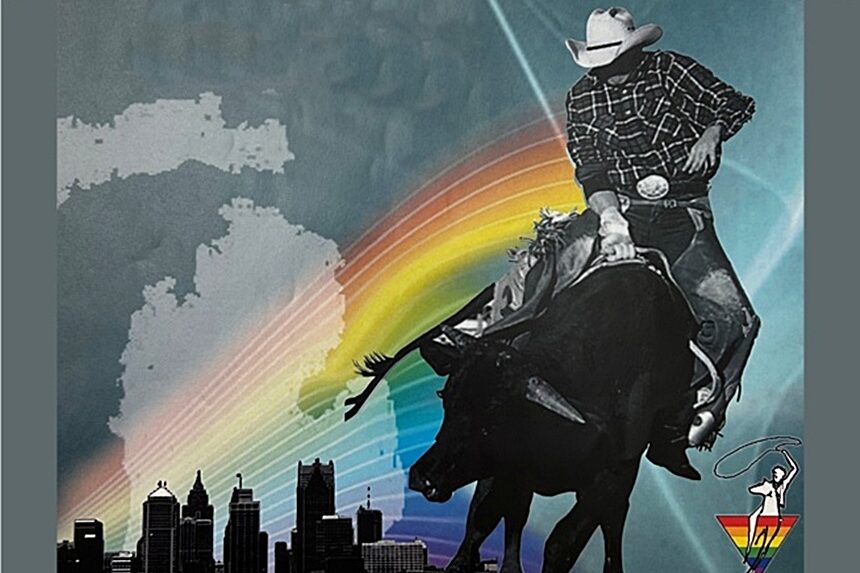
From that first rodeo with just over 100 attendees, gay rodeos and the local associations that supported them developed throughout the West in Colorado, Texas, California, and Arizona. Because of the need for uniform competition and safety rules and the support of an overarching governing body, these local groups formed the International Gay Rodeo Association (IGRA) in 1985 with Wayne Jakino of Denver as their first president. By the early 2000s, nearly 5,000 people were part of IGRA in the United States and Canada.
This past year, the National Museum of American History (NMHA) acquired materials from the International Gay Rodeo Association (IGRA) — 3.2 cubic feet of posters, programs, and newsletters from IGRA and dozens of local gay rodeo associations throughout the United States.
An Important Connection to American History
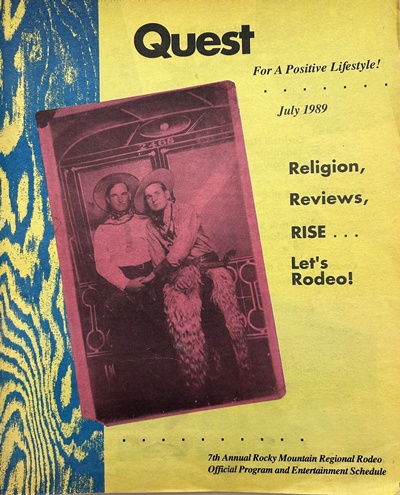
Franklin Robinson, the archivist responsible for the Archives Center Lesbian, Gay, Bisexual, and Transgender Collection at NMHA, was eager to take the IGRA’s collection because of its critical connection to the history of the American West. In the 1800s, male ranchers pushing into what became the western United States often relied on one another to survive. As a result of these strong bonds and long-term isolation from women, some cowboys did develop relationships with one another. But as researchers point out, sexual orientation as an identity did not exist in the 1800s as it does today, so having an intimate same-sex relationships didn’t necessarily mean that a cowboy viewed himself any differently.
Over the next century, the cowboy became a mythologized figure in American culture, as queer historian Chris Packard writes in Queer Cowboys. Packard describes the cowboy, the “lone ranger” popularized by Hollywood Western films in the 20th century, as an both an icon of American masculinity and a connection to LGBTQ+ communities on the frontier — from James Fenimore Cooper’s The Leatherstocking Tales (1823-1841) to Brokeback Mountain (2005).
“Given the instant and undying popularity of cowboys in U.S. popular culture during a period of rapid national expansion, to identify a homoerotic core in its myth about the supremacy of white American masculinity is to imply that American audiences want their frontiersmen to practice nonnormative desires as part of their roles in nation building,” Packard writes in Queer Cowboys.
“In other words, if there is something national about the cowboy (and other frontier heroes of his ilk), and if there is something homoerotic about American national identity as it is conceived in the literary West.”
Gay Rodeos Were Founded to Support the Community
Amid the rise of the cowboy as the prototypical Western hero, gay rodeos were created to support the LGBTQ+ community. In the 1970s, the “Imperial Court System” was an organizational model where a “court” spearheaded fundraising efforts for a charitable cause. While many courts focused on helping people with HIV/AIDS, Phil Ragsdale, then president of the Reno Imperial Court, had something different in mind. In 1975, he suggested supporting senior citizens at Thanksgiving by hosting the first gay rodeo. Ragsdale struggled to gather the necessary animals because as soon as local ranchers heard that the LGBTQ+ community would be sponsoring the rodeo, they refused to contribute. A writer in one of the IGRA’s programs quipped, “One wonders if they [the farmers] feared the cattle might become Gay by association!” But Ragsdale and his court pushed on and managed to host that first gay rodeo on October 2, 1976.
In the years that followed, Ragsdale started a new fundraiser — the Mr., Ms., and Miss National Gay Rodeo Association. Other rodeo enthusiasts followed suit by creating local organizations. By 1981, the Colorado Gay Rodeo Association’s members represented the majority of the 1982 National Gay Rodeo contestants. The 400 contestants, including a mounted drill team, were cheered on by over 10,000 attendees and Grand Marshal Joan Rivers.
Over the next ten years, gay rodeo exploded with associations founded in Texas, Arizona, Kansas, Missouri, New Mexico, Idaho, Louisiana, and Nebraska. And gay rodeo wasn’t just limited to the West — the Atlantic States Gay Rodeo Association flourished along the East Coast.
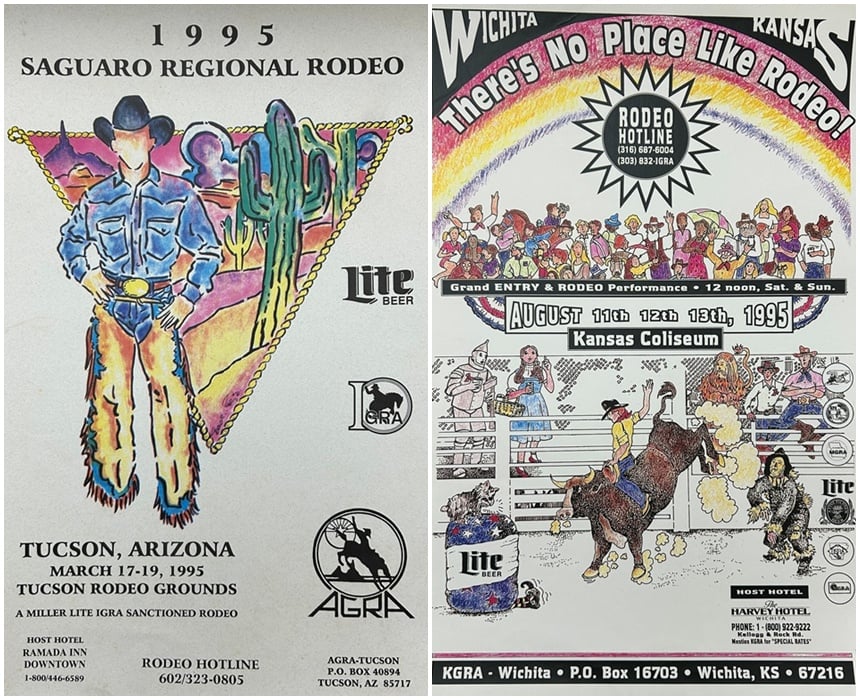
Rivers wasn’t the only celebrity who graced the gay rodeo ring either; Sharon McNight and Ed Bruce also attended over the years, and programs in the IGRA collection include welcome notes from state governors and city mayors.
But despite this support from celebrities and local officials, gay rodeo organizers repeatedly faced the same homophobic backlash that Ragsdale grappled with in the 1970s. In 1988, six rodeos were held, but the finals scheduled in Reno did not occur after the venue cancelled its contract with the association and the Nevada Supreme Court failed to stop an injunction from the Nevada District Attorney that prevented the rodeo from being held. Along with anti-LGBTQ+ politics and the effects of HIV/AIDS, animal rights objections also contributed to a decline in the rodeo’s popularity.
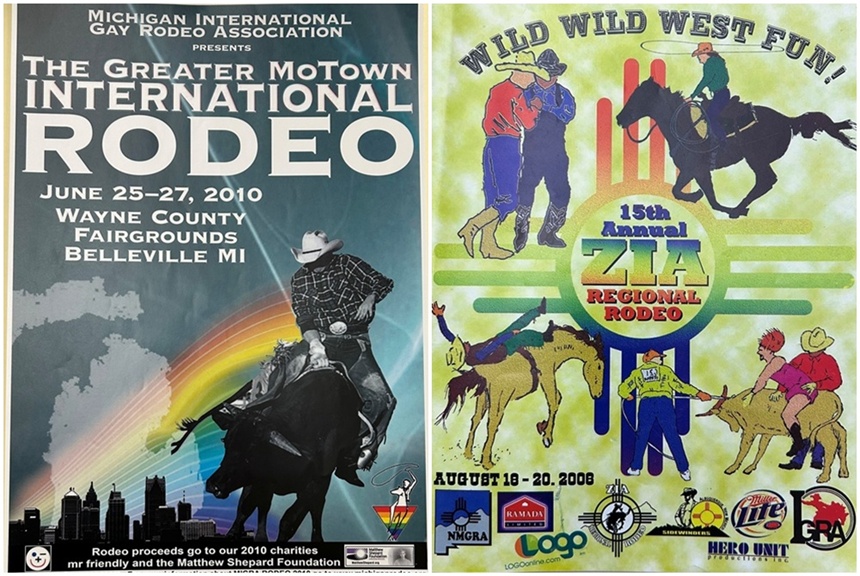
But gay rodeo persisted because it was often one of the only LGBTQ+ communities in these locales. Queer people gathered for bull riding, chute dogging, steer wrestling, calf roping, and clowning around. Like national LGBTQ+ publications, rodeo association newsletters and programs offer a unique look into rural LGBTQ+ communities — from gay bars to personal ads to vital physical, emotional, and spiritual resources during the HIV/AIDS epidemic in the 1980s and ’90s.
Creating Communities and Sharing Resources
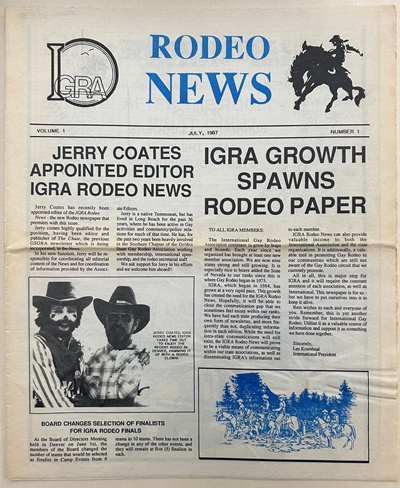
IGRA’s popularity even led to the creation of Rodeo News in 1987. Les Krambeal, then president of IGRA, wrote that Rodeo News provided the association with a new source of income and was “a valuable tool in promoting gay rodeo to our communities which are still not aware of the gay rodeo circuit that we currently promote.”
Rodeo association materials in the IGRA collection highlight the original intention of the rodeos: to raise money for people with HIV/AIDS. But a closer look inside reveals not just resources for people with HIV/AIDS but also information for local LGBTQ+ community centers and LGBTQ+-affirming religious groups, including Dignity — an LGBTQ+ Catholic organization and one of the oldest faith-based affirming communities in the country.
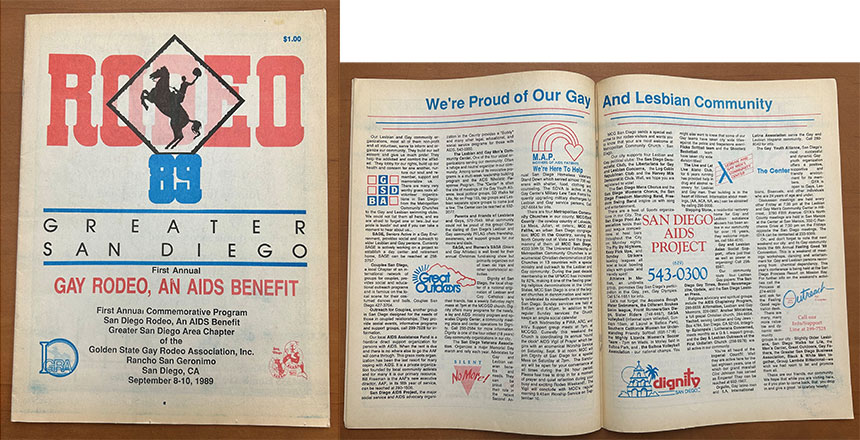
Possibly because of their uniqueness in rural America, rodeo associations were strikingly diverse, welcoming in lesbian and queer cowgirls, as opposed to many other LGBTQ+ organizations that were mostly made of up of white gay men at the time. Women were key founders and leaders of gay rodeo associations since their very beginning, including Sande Miller, who joined IGRA in 1987 and encouraged other female contestants; and Candy Bell, who participated in rodeos for over 10 years. Both were inducted into the IGRA Hall of Fame in 2005 and 2006, respectively.
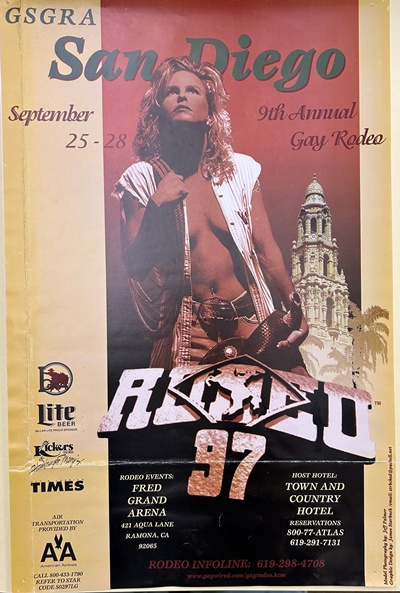
This past October, LGBTQ+ folks celebrated 50 years of gay rodeo with the World Gay Rodeo Finals in Reno, Nevada. However, long-time rodeo participants wonder how long these groups will continue to exist. The COVID-19 pandemic and an aging community has made it difficult to sustain, and several associations have shuttered. For young queer people today, keeping, training, and riding a horse is increasingly cost prohibitive. This dynamic is why Robinson believes it’s critical to document IGRA’s history sooner rather than later.
Robinson hopes that this newly acquired collection will inspire all Americans to consider how gay rodeo associations not only affected American rodeo culture but also united vital LGBTQ+ communities in isolated, rural spaces during times of intense hardship to foster solidarity, strength, and joy.
As Wayne Jakino, IGRA’s 1988 Membership Chairman, wrote, “conceived for charity, Gay Rodeo has now become a source of Gay Pride, education and the best in country/western entertainment.”
Become a Saturday Evening Post member and enjoy unlimited access. Subscribe now