This article was originally published by The Fulcrum.
From the founding, Americans understood that a republic depends on the character and judgment of its citizens. In the years after the Revolution, that insight took shape in what later came to be called “republican motherhood,” the belief that the success of the new nation required raising children with the virtue, knowledge, and discipline necessary for citizenship. The concept reflected the limits of its time, assigning that responsibility narrowly to mothers. But it also captured a deeper truth. Constitutions do not sustain themselves. Self-government endures only when each generation is prepared to understand, value, and uphold its principles.
For much of our history, preparing young people for citizenship was a shared responsibility. Families, schools, and civic institutions reinforced one another, creating a culture where civic learning was woven into daily life.
Today, that balance has broken down.
We have steadily placed more responsibility on schools to prepare young people for citizenship, even as we have reduced the space devoted to civic learning within them. At the same time, the broader ecosystem that once supported this work has weakened. In some communities, these institutions have disappeared altogether, creating what researchers describe as “civic deserts.” In others, they still exist but are no longer central to daily life. Participation in community organizations, religious institutions, and even cultural spaces like museums and historical sites has declined, leaving fewer shared spaces where people regularly encounter one another, engage across differences, and connect to our civic story.
Research from the Brookings Institution estimates that 60 percent of rural youth and 30 percent of urban and suburban young people now live in areas lacking these traditional civic institutions. Civic learning has steadily diminished in schools, even as expectations for what schools should deliver in preparing citizens have grown. Fewer than one-quarter of eighth graders perform at or above proficiency in civics, and many adults cannot name all three branches of government.
We are asking schools to do more, with less, while the institutions that once reinforced that learning have grown weaker or more distant from everyday life. It is an imbalance we can no longer ignore.
The responsibility once described as republican motherhood now belongs to all of us. Parents, caregivers, and families of every kind share in preparing the next generation for life in a constitutional democracy. This is the work of civic parenting.
Civic parenting is not a formal program. It lives in the ordinary rhythms of daily life. It is the intentional practice of welcoming children into the American story and helping them develop the habits that self-government requires.
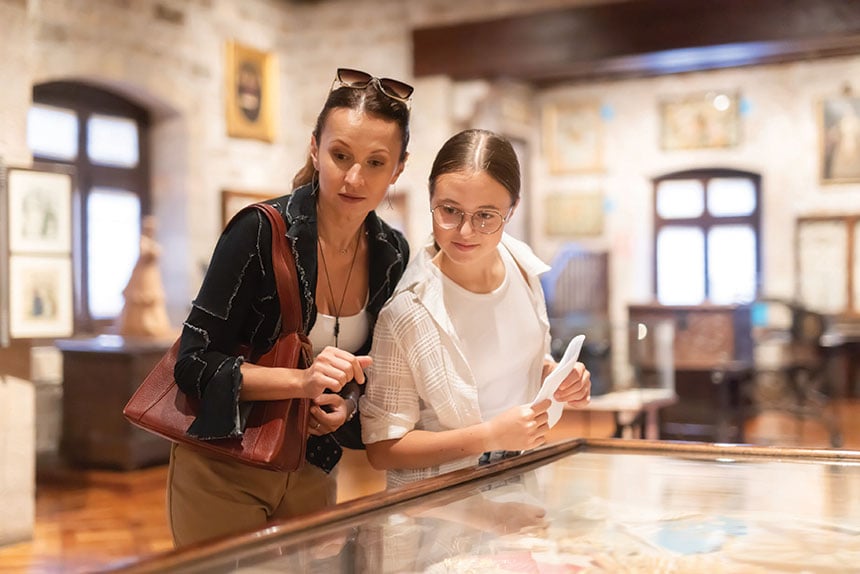
When a parent reads a book about the American Revolution with a child, that is civic formation. When a family visits a museum or attends a historical program together, that is civic formation. When a parent asks a child to take responsibility at home, that is civic formation. When a parent encourages a child to explain their thinking or works through disagreement with patience rather than dismissal, that too is civic formation.
These moments may seem small, but they are where the habits of citizenship begin. Listening. Reasoning. Exercising restraint. Engaging across difference. These are not learned in a single civics class. They are developed over time, in families, schools, and communities.
If we want a citizenry capable of self-government, we must rebalance the system.
That means continuing to support teachers and schools, while also recognizing that they cannot carry this responsibility alone. It means rebuilding the connections between classrooms, homes, and communities. It means creating accessible entry points that spark curiosity and invite participation. And it means meeting families where they are, with tools and experiences that make civic learning part of everyday life.
Institutions have a role to play here, not as replacements for families, but as partners. At the National Constitution Center, we are working to support this effort by creating pathways that begin with moments of curiosity and lead to deeper constitutional learning, whether in classrooms, online, or around kitchen tables.
The nation’s 250th anniversary this year is not simply a moment to look back. It is an invitation to decide what we will carry forward. It marks the beginning of a civic decade leading to the Constitution’s 250th anniversary in 2037, a period that calls for reflection, renewal, and recommitment.
It should be the decade we correct this imbalance. A decade that makes civic parenting a cultural expectation, not an afterthought. A decade that restores a founding understanding that families, schools, and civic institutions must work together to prepare each new generation for self-government.
This work is not beyond reach. It requires intention. And it can be meaningful and even joyful. When families are supported in it, the impact is profound. It strengthens the nation by preparing citizens capable of self-government. It helps young people develop judgment, curiosity, and civic confidence. And it deepens connections within families themselves.
The Constitution promises the blessings of liberty to “ourselves and our posterity.” That promise depends on what we choose to pass on.
The civic decade calls us to meet that responsibility together and to make civic parenting not the exception, but the expectation.
Julie Silverbrook is chief content and learning officer at the National Constitution Center and host of the new podcast Civic Parenting. This article was originally published by The Fulcrum as “At 250, America Needs Civic Parenting, Not Just Civics Classes.”
This article is featured in the November/December 2026 issue of The Saturday Evening Post.
Become a Saturday Evening Post member and enjoy unlimited access. Subscribe now



Comments
Thank you Amy S for backing me up on this. It is so true what you say. It seems like all major team sports and the involvement therein of the students takes precedence over anything academic. It really is disheartening. Also, it seems they don’t welcome any real-time life-experience teaching from people like me who have either lived through much of the history that may be taught or know how to manage financially to plan ahead in preparation for the future life or career they intend to pursue. You really can’t teach anywhere where you are not appreciated or respected. That is the reason I hung it up after ten years as a substitute teacher which I did after I completed a thirty-five year career as an Information Systems Manager/Programmer-Analyst for rural telecommunications. It seems the schools want to emphasize the athletics and nonsense (I’m sure you know what I refer to here.) than actual classroom teaching of skills/careers that will serve them after their high school days are done.
“Midnight Rider” is absolutely right and it is not just Civics taking a back seat, it is all subjects. Football is given precedence over everything at the high school where I teach.
In my state’s Gubernatorial election last week, only 40% of eligible adults bothered to vote.
I’m going to go out a step further regarding “Civics.” It needs to be taught again in our middle & high schools. “Government” is being taught in its place often by those who also coach a sports team and where classroom teaching is not their number one priority. Being a former substitute teacher in a rural high school I have witnessed this firsthand.