“There’s a lot to be said for making people laugh. Did you know that’s all some people have? It’s not much, but it’s better than nothing in this cockeyed caravan.”
— Joel McCrea, Sullivan’s Travels
“Don’t you know everyone wants to laugh?”
—Donald O’Connor, Singin’ in the Rain
“Dying is easy, comedy is hard.”
—Peter O’Toole quoting Edmund Kean, My Favorite Year
You want to read something funny? Not funny ha-ha, but funny as in, you’ve got to be kidding: There are a reported 31,144 museums in the United States, and until 2018, not one was devoted exclusively to preserving comedy’s cultural history.
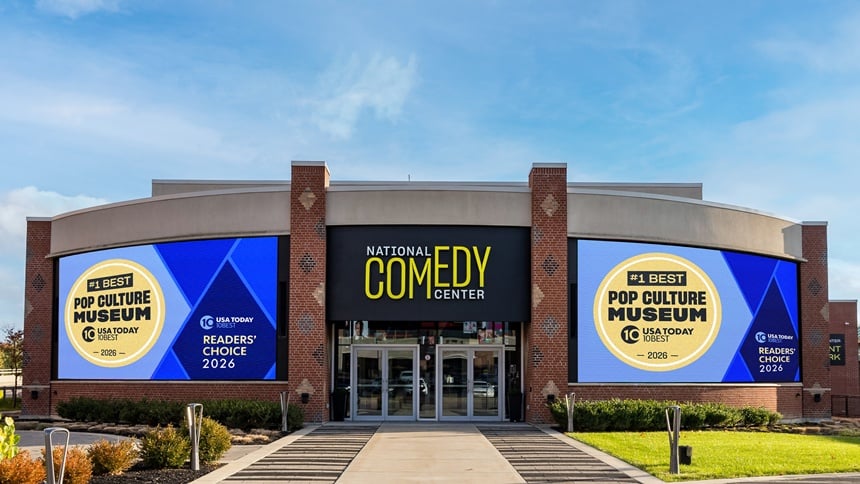
That was the year the National Comedy Center in Jamestown, New York, opened its doors. It is, according to executive director Journey Gunderson, “a national archive and museum that is home to hundreds of thousands of objects, documents, photographs, and recordings that preserve this art form’s history and celebrates the artists whose comedy has had an indelible impact.”
Why Jamestown? Why not New York, Los Angeles, Chicago, or some other metropolis where comedy is king? We have some ’splainin’ to do: Jamestown is the birthplace of Lucille Ball. There is in fact a Lucille Ball and Desi Arnaz Museum that the Comedy Center operates. But Lucy planted the seeds for the National Comedy Center herself by advocating for Jamestown to become a national destination for comedy.
Comedy is the Rodney Dangerfield of genres. Comparatively speaking, it gets less respect. In nearly a century of Academy Awards, a flat-out comedy has rarely claimed Best Picture.
So, the National Comedy Center was something of a hard sell when Gunderson was writing its initial funding grants. “I would often say that if we have museums and Halls of Fame dedicated to baseball and rock and roll, then certainly comedy is long overdue,” she says.
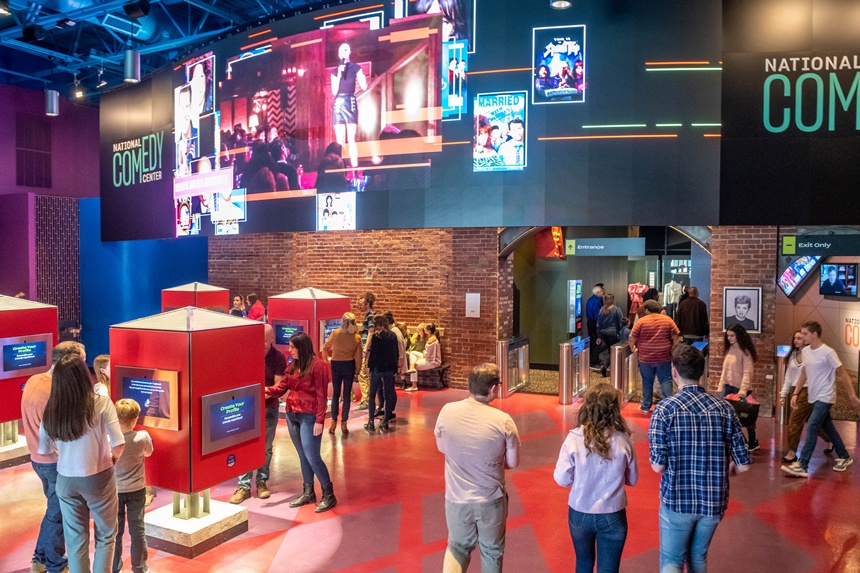
Comedy is subjective; we don’t all find the same things to be funny. To enhance each visitor’s experience, they are asked to identify favorite comedians, movies, TV shows, cartoons, and podcasts. Based on these, a “sense of humor profile” personalizes exhibit content through an RFID-enabled wristband.
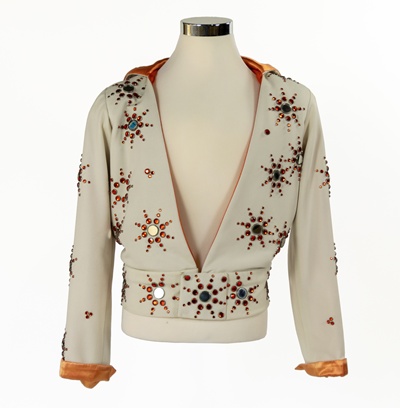
The center’s immersive exhibits and archival treasures offer something for everyone. For example, who can’t get behind a couch that acts as a whoopee cushion when a visitor sits on it? For the nostalgic, there are wardrobes from I Love Lucy, Wayne’s World, and Anchorman: The Legend of Ron Burgundy and the rainbow-colored backdrop from the Johnny Carson era of The Tonight Show.
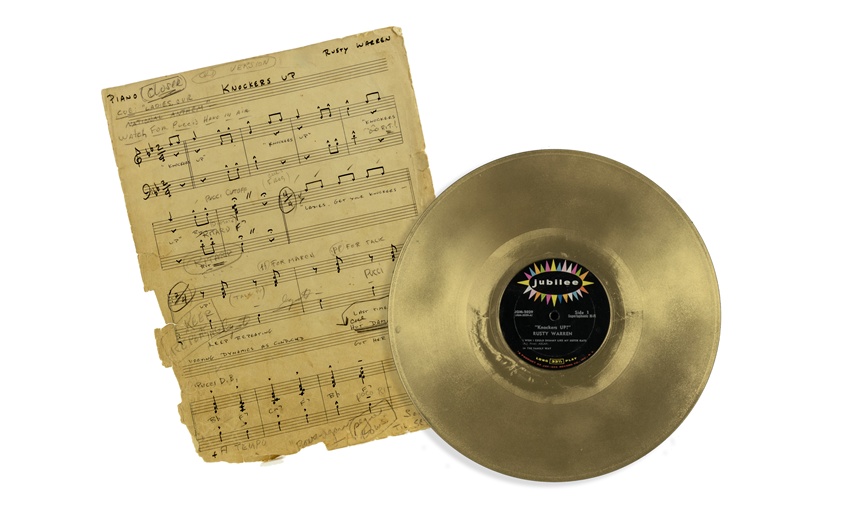
One revelatory exhibit invites visitors to watch a clip from a classic comedy movie or TV show such as Groundhog Day or M*A*S*H and compare them to an annotated script page to see how it changed from page to screen.
The “Ham It Up” exhibit is just plain silly and invites visitors to mimic classic funny faces and expressions of legendary comedians and actors ranging from Donald O’Connor to Red Skelton to Bill Hader.
For the more serious comedy geek, there is the Comedy Continuum, a 60-foot-wide interactive wall that takes visitors down the rabbit hole of comedy’s evolution and traces the influence of pioneering comedians on today’s comic artists.
The Comedy Continuum is just one facet of the Comedy Center’s mission to instill in future generations an understanding and appreciation of comedy’s elders. “Mel Brooks’ response to a world grappling with atrocities during and after WWII was to fearlessly satirize it and to not let darkness overtake us,” Gunderson says. “We shouldn’t assume generations who didn’t grow up with his work won’t also need to be inspired by it. That’s the playbook we want them to have. That’s fundamental to the American spirit and survival.”

The Comedy Center delivers lots of laughs, but it also fosters an appreciation for the craft of creating comedy. George Carlin’s extensive joke files and career papers were among the Center’s early acquisitions that put the institution on the map. Joan Rivers’ massive card catalog containing thousands of jokes serves as a 20th century time capsule. So does a much-marked-up page of jokes Rodney Dangerfield carried with him.
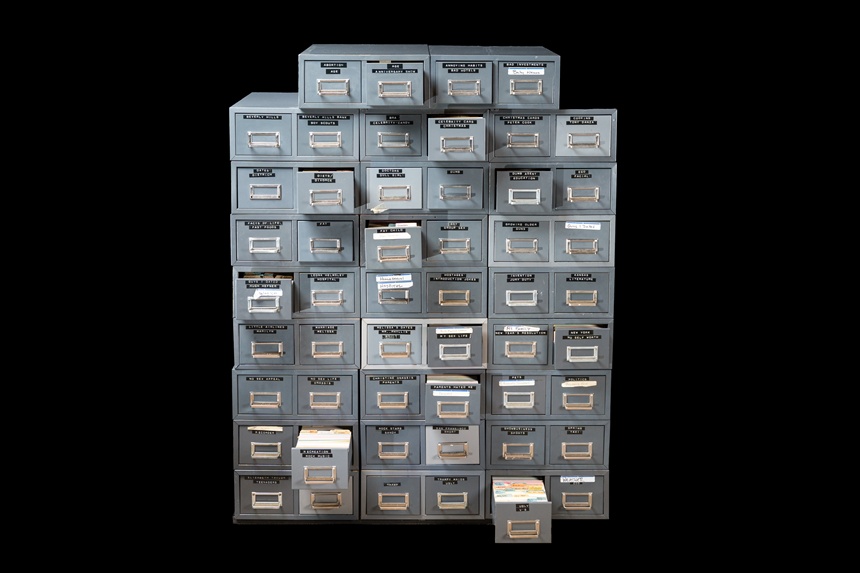
“On the stage, it looks like Rodney is winging it,” Gunderson says. “You see the level of precision right down to the syllable. We recently acquired Mel Brooks’ archives. We’re asked, ‘Do you have the script for Spaceballs,’ and the answer is, ‘We have dozens.’ The work is painstaking, and perhaps that’s one reason comedy doesn’t always get the respect afforded other art forms: The best comedians make it look easy.”
For those who disagree with Edmund Kean about the whole “comedy is hard” thing, the Comedy Center has something of a comedy karaoke lounge where budding comics can perform established comics’ routines or freestyle their own material.
The National Comedy Center will celebrate its 10th anniversary in 2028. It enters its second decade as the nation’s No. 1 pop culture museum, as anointed by USA Today’s “10 Best Reader’s Choice Awards.”
Through her work at the museum, Gunderson has personally gained an appreciation not just for what and how comic artists do what they do, but why. She has spoken at many events on behalf of the Center, sometimes for A-list audiences. At a memorial for Shelley Berman, Gunderson reflected on the Berman archives entrusted to the museum, including the iconic red stool on which he famously sat while doing his act. “I was concerned,” she told the crowd, which included Larry David, “when I learned we would be preserving Shelly’s stool.”
“That got a big laugh,” she recalls, “which gave me a taste of the rush comedians get. And I thought, ‘I totally get it.’”
Become a Saturday Evening Post member and enjoy unlimited access. Subscribe now


Comments
I would hope the violin of perhaps the best comedian of all time Jack Benny is included in this museum. I can watch his reruns over and over and never get tired of them. Just as I do when watching “Dennis the Menace” reruns from the late 1950s-early 1960s over and over especially when Joseph Kearns portrayed “Mr George Wilson” in the show. I would hope they pay much tribute to the early comedy TV shows of the 1950s/1960s including “Meet Corliss Archer,” “Blondie,” “Ozzie & Harriet,” “The Life of Riley,” and so many others. Having acted in several productions over the years I find it is more difficult to engage the audience with laughter than to play a dirty, cut-throat villian. A museum recognising comedians and comedy in general is long overdue.