Christmas Presence
There comes a time in every kid’s life when that dark question arises: Is Santa Claus real or just a four-ply fraud, like Pinocchio or Reddy Kilowatt?
At the age of 8, I’d already uncovered some pretty damaging evidence for the tall-tale theory. First of all, I never noticed an actual chimney on any of the Mathews flats on Putnam Avenue, just those tiny vent stack things that O’Reilly the plumber said had something to do with the “sanitary facilities.” No way! Besides, I was a rotten kid but got presents galore anyway.
Also, a lot of the stuff was marked “Made in Occupied Japan.” Had Santa ditched his elves and gone offshore to save a few bucks? It was an academic question, though. My heart was set on something the fat man in the red suit probably didn’t have in stock anyway.
Could any ordinary gift top TeeVee Time’s Deluxe 65-piece Unbreakable Plastic Outer Space Figure Play Set? I thought not! The best is the enemy of the good, and this was a true classic. Oh, rapture! I shamelessly dreamed of thwarting the miscreant, bird-beaked Venusians’ plans to conquer Earth; yearned to command a platoon of green reptilian Martians with their little Woody Woodpecker topknots; and longed to decipher cosmic secrets held by the bulgy-eyed purple Jovians, who bore an odd resemblance to Mr. Cardelli down at the laundromat.
The set came free with a new television, but I doubted Santa would mess with that. Did they even have TV at the North Pole? In Occupied Japan? Should I write to the Big Guy directly and plead my case? Probably not. Old Mr. Nagelpilz down the hall said it was common knowledge that the Post Office carted off “Santa Claus letters” straight from Brooklyn to some shredding graveyard in Manhattan. Morons!
All wasn’t lost, though. Mrs. Geiger, who taught third grade at P.S. 13, had latched onto one of the prized play sets up on Fresh Pond Road at the questionably named Bargains Galore Appliance Store owned by one Ernie “How can I make a dime when I hand out deals like this?” Papadakis.
Turned out our beloved teacher didn’t even want this gem now in her possession; she was going to give it away! But there was a catch.
“This will be given to whomever brings the most interesting item to show-and-tell on Friday,” Mrs. Geiger said sweetly. “Try to select something that will appeal to everyone.” That was it! I’d bring the fake shrunken head that the Old Man had ordered from the Johnson Smith catalogue. Why, Uncle Henry nearly lost his upper plate when I hid it in the medicine cabinet last month! How could I lose?
When the big day arrived, I was more confident than ever. Mrs. Geiger’s little dog and pony show had attracted some pretty feeble competition. Cara Duffy dragged in some boring dolls’ clothes she’d sewn, the McSween brothers brought a corroded Zippo lighter their uncle supposedly carried at Guadalcanal, and Jimmy Elgin’s entry was a dorky bag of marbles. Mrs. Geiger smiled politely.
Now it was my turn! Aiming for a dramatic theatrical effect, I yanked the shrunken head from its genuine Carpathian oak carrying case and plopped it straight onto Charlotte Cernik’s desk. Charlotte wailed like a banshee, flailing her arms and sending the “precious” Elgin Marble Collection flying.
Mrs. Geiger wasn’t the least bit amused. “William,” she said icily, “that was not a suitable item for show-and-tell. Please collect all the marbles and return them to Jimmy.” There must have been a thousand marbles; it took a half-hour to police them up.
Even worse, Danny “Mr. Know-It-All” Squadron had charmed the prize of a lifetime from Mrs. Geiger with some crummy seashells he’d collected at his grandfather’s place in Florida. Danny’s pockets were filled with shells, and Mrs. Geiger fawned all over him as he parceled them out to the kids in class. “Oh, how lovely and colorful,” she gushed. “Thank you for sharing them with us.” Gag!
Phooey on seashells! Phooey on Florida! And especially phooey on Danny Squadron!
When school let out, I encountered my newfound enemy slurping down a chocolate egg cream at Goldie’s candy store. I wanted nothing more than to make him feel like a complete worm’s turd.
“You know, Squadron, I really wanted that outer space set,” I said, venom dripping from each word. “I guess at least you’ll have a merry Christmas.”
He looked at me oddly. “We don’t celebrate Christmas at my house.” What? I’d never heard of such a thing. I trolled the depths of my legendary reservoir of tactfulness to hook just the right reply. “Boy!” I sniffed,” that’s about the dumbest thing I’ve ever heard!”
A smile flickered across my classmate’s face, but I barely noticed. I could think of nothing but the treasure box cradled under his arm. “Billy, you know I —” he started to say. But I held up the palm of my hand. “I’d better get going now. I might have to write that letter after all.”
It snowed Christmas morning, and “Santa Claus” was good to all of us. My mother was delighted with her new book, “Potato Salad Recipes from Around the World,” and the Old Man got his wish, too: a gallon of his favorite aluminum radiator paint and a new brush to go with it. He turned to my mother with a big smile. “Oh, hon, it’s natural bristle! You shouldn’t have!”
As for me, a Chemcraft set filled with containers of evil-looking powders and liquids filled the bill perfectly — almost. “Merry Christmas, Billy!” the Old Man laughed. “Just don’t blow up the house.”
I was checking out a vial of sodium ferrocyanide — which sounded a lot more promising than it turned out to be — when there was a loud knock at the door. I thought it might be the D’Angelos with their stupid dog in a Christmas hat. But the front stoop was bare — except for a box wrapped in plain brown paper, and a set of footprints headed toward Knickerbocker Avenue.
Could it be? Yes! I tore the wrapping paper to shreds, and there it was — the TeeVee Time Deluxe 65-piece Unbreakable Plastic Outer Space Figure Play Set in all its Technicolor glory! But how did it get there?
As I turned to go back inside, something crunched under my heel, something hard and brittle like a Christmas ornament. I poked my finger into the snow and retrieved not a broken ornament but a yellow-orange seashell crushed to bits. What the … ? I toyed with the tiny shards for a moment, then pitched them back into the snow. Suddenly, it was all very clear. Not every holiday spirit had a white beard or slid down chimneys. Hot dog!
“Honey, you’re letting out all the heat!” my mother yelled from the kitchen. “Who was at the door?”
“I’m not sure,” I yelled back. “But I think it was Santa Claus.”
“The Good Provider” by Fannie Hurst
Fannie Hurst’s writing career began in the pages of The Saturday Evening Post. The all-but-forgotten author was one of the highest paid writers in the United States after World War I. Of Hurst, it was said that “no other living American woman has gone so far in fiction in so short a time.” Her novels Back Street and Imitation of Life were best-sellers of their day, but now her work is mostly out of print.
Published on August 15, 1914
Like a suckling to the warmth of the mother, the township of Newton nestled pat against the flank of the city and drew from her through the arteries of electric trains and interurban, elevated roads and motor cars.
Such clots coagulate round the city in the form of Ferndales and Glencoves, Yorkvilles and Newtons; and from them have sprung, full-grown, the joke paper and the electric lawn mower and the five-hundred-dollars down bungalow.
The instinct to return to Nature lies deep in men like music that slumbers in harpstrings, but the return to Nature via the five-forty-six accommodation is fraught with chance.
Nature cannot abide the haunts of men — she faints on the asphaltic bosom of the city; but to abide the haunts of Nature men’s hearts bleed. Behind that asphaltic bosom and behind faces too tired to smile, hearts bud and leaf when millinery and open street cars announce the spring. Behind that asphaltic bosom the murmur of the brook is like an insidious underground stream; and when for a moment it gushes to the surface men pay the five hundred dollars down and enclose return postage for a flower-seed catalogue.
The commuter lives with his head in the rarefied atmosphere of his thirty-fifth-story office, his heart in the five-hundred-dollars-down plot of improved soil, and one eye on the timetable.
For longer than its most unprogressive inhabitant dared hope, the township of Newton lay comfortable enough without the pale, until one year the interurban reached out steel arms and scooped her unto the bosom of the city. Overnight, as it were, the inoculation was complete. Bungalows and one-story, vine-grown real estate offices sprang up on large light-brown tracts of improved property; traffic sold by the book.
The New Banner Store, stirred by the heavy three-trolley interurban cars and the new proximity of the city, swung a three-color electric sign across the sidewalk and instituted a trading-stamp system; but, in spite of the three-color electric sign and double the advertising space in the Newton Weekly Gazette, Julius Binswanger felt the suction of the city drawing at his strength, and at the close of the second summer took an inventory and frowned at what he saw there.
The frown remained an indelible furrow between his eyes. Mrs. Binswanger observed it across the family table one Saturday and paused in the epic rite of ladling soup out of a tureen, a slight pucker on her large, soft-fleshed face.
“Honest, Julius, when you come home from the store nights, right away I get the blues!”
Mr. Binswanger glanced up from his soup and regarded his wife. Late sunshine percolated into the dining room through a vine that clambered up the screen door and flecked a design like coarse lace across his inquiring features.
“Right away you get what, Becky?”
“Right away I get the blues. A long face you’ve had for so long I can’t remember.”
“Ya, ya, Becky; something you got to have to talk about! A long face she puts on me yet, children.”
“Ain’t I right, Poil? Ain’t I, Izzy? Ask your own children!”
Mr. Isadore Binswanger shrugged his custom-made shoulders until the padding bulged like the muscles of a heavyweight champion and tossed backward the mane of his black pompadour.
“Ma, I keep my mouth closed. Every time I open it I put my foot in it.”
Mr. Binswanger waggled a rheumatic forefinger.
“A dude like you, with a red-and-white shirt like I wouldn’t keep in stock, ain’t — ”
“See, ma; you started something!”
“Sh-h-h, Julius! For your own children I’m ashamed! Once a week Izzy comes out to supper, and like a funeral it is! For your own children to be afraid to open their mouths ain’t nothing to be proud of. Right now your own daughter is afraid to begin to tell you something — something what’s happened. Ain’t it, Poil?”
Miss Pearl Binswanger tugged a dainty bite out of a slice of bread and showed the white of her teeth against the clear gold-olive of her skin. The same scarf of sunshine fell across her shoulders and lay warm on her little bosom and across her head, which was small and dark as La Gioconda’s.
“I ain’t saying nothing, am I, mamma? The minute I try to talk to papa about — about moving to the city or anything, he gets excited like the store was on fire.”
“Ya, ya; more as that I get excited over such nonsenses.”
“No; to your papa you children say nothing. It’s me that gets my head dinned full. Your children, Julius, think that for me you do everything what I ask you; but I don’t see it. Pass your papa the dumplings, Poil. Can I help it that he carries on him a face like a funeral?”
“Na, na, Becky; for why should I have a long face? Tomorrow I buy me a false face like on Valentine’s Day and then you don’t have to look at me no more.”
“See, right away mad he gets with me! Izzy, them noodles I made only on your account. In the city you don’t get ’em like that, huh? Some more Kartoffelsalat, Julius?”
“Ya; but not so much! My face don’t suit my wife and children yet — that’s the latest!”
“Three times a day, Izzy, I ask your papa if he don’t feel right. ‘Yes,’ he says; always ‘Yes.’ Like I says to Poil, what’s got him since he’s in the new store I don’t know.”
“Ach, you — the whole three of you make me sick! What you want me to do — walk the tight rope to show what a good humor I got?”
“No; we want, Julius, that you should come home with a long face on you till for the neighbors I’m ashamed!”
“A little more Kartoffelsalat, Becky. Not so much!”
“Like they don’t talk enough about us already! With a young lady in the house, we live out here where the dogs won’t bark at us!”
“I only wish all girls had just so good a home as Pearlie.”
“Aw, papa. I’ d rather live in a coop in the city, where a girl can have some life, than in a palace out in this hole.”
“Hole, she calls a room like this, when a dining room set she sits on what her grandfather made with his own hands out of the finest cherry wood, a — ”
“For a young girl, can you blame her? She feels like, if she lived in the city, she would meet people and Izzy’s friends. Talk for yourself, Poil.”
“I — ”
“Boys like Ignatz Landauer and Max Teitlebaum, what he meets at the Young Men’s Association. Talk for yourself, Poil.”
“I — ”
“Poil’s got a tenant for the house, Julius. I ain’t afraid to tell you.”
“I don’t listen to such nonsense.”
“From the real estate office they sent ’em, Julius, and Poil took ’em through. Furnished off our hands they take it for three months, Julius, till their bungalow is done for ’em. Forty dollars for a house like ours on the wrong side of town, away from the improvements, ain’t so bad. A grand young couple; no children. Izzy thinks it’s a grand idea, too, Julius. He says if we move to the city he don’t have to live in such a dark little hall room no more. To the hotel he can come with us on family rates just so cheap. Ain’t it, Izzy?”
Mr. Isadore Binswanger broke his conspiracy of silence gently, as a skeptic at breakfast taps his candle-blown egg with the tip of a silver spoon — once, twice, thrice;, then opens it slowly and suspiciously.
“I said, pa, that with forty dollars a month rent from the house and — ”
“In my own house where I belong and can afford, I stay! I’m an old man and — ”
“Not so fast, pa; not so fast! I only said that with forty dollars from the house for three months, this winter you can live almost as cheap in the city as here. And for me to come out every Saturday night to take Pearlie to the theater ain’t such a cinch, neither. Take a boy like Max Teitlebaum: he likes her well enough to take her to the theater hisself; but by the time he gets out here for her he ain’t got no enjoyment left in him.”
“When a young man likes well enough a young lady a forty-five minutes’ street-car ride is like nothing.”
“Aw, papa, in storybooks such talk is all right; but when a young man has got to change cars at Low Bridge and wait for the Owl going home, it don’t work out so easy — does it, Izzy? Does it, mamma?”
“For three years, pa, even before I got my first job in the city, always mamma and Pearlie been wantin’ a few months away.”
“With my son in the city, losing every two months his job, I got enough city to last me so long as I live! When in my store I need so bad a good young man for the advertising and stock, to the city he has to go for a salesman’s job. When a young man can’t get along in business with his old father I don’t go running after him in the city.”
“Pa, for heaven’s sakes, don’t begin that! I’m sick of listening to it. Newton ain’t no place for a fellow to waste his time in.”
“What else you do in the city I like to know?”
“Julius, leave Izzy alone, when one night a week he comes home.”
“For my part, you don’t need to move to the city. I only said to Pearlie and ma when they asked me, that a few months in a family hotel like the Wellington can’t bust you. For me to come out home every Saturday night to take Pearlie in to the theater ain’t no cinch. In town there’s plenty grand boys who live at the Wellington-Ignatz Landauer, Max Teitlebaum, and all that crowd. Yourself I’ve heard you say how much you like Max.”
“For why, when everybody is moving out to Newton, we move away?”
“That’s just it, papa; now with the interurban boom you got the chance to sublet. Ain’t it, mamma and Izzy?”
“Sure it — ”
“Ya, ya; I know just what’s coming, but for me Newton is good enough.”
“What about your children, Julius? You ain’t the only one in the family.”
“Twenty-five years I’ve lived in this one place, since the store was only so big as this room; and on this house we didn’t have a second story. A home that I did everything but build with my own hands I don’t move out of so easy. Such ideas you let your children pump you up with, Becky!”
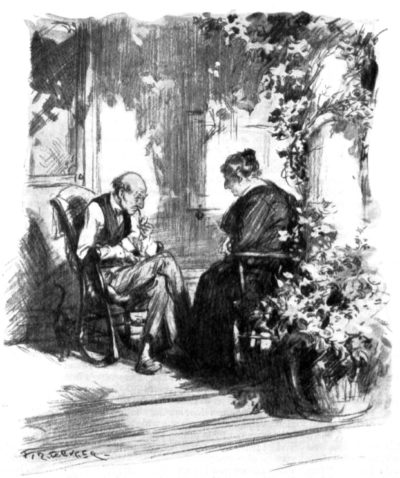
“See, children! You say he can’t never refuse me nothing. Listen how he won’t let me get in a word crossways before he snaps me off! If we sublet, Julius, we — ”
“Sublet we don’t, neither! I should ride forty-five minutes into the city after my hard day’s work, when away from the city forty-five minutes everyone else is riding! My house is my house; my yard is my yard. I don’t got no ideas like my high-toned son and daughter for a hotel, where to stretch your feet you got to pay for the space.”
“Listen to your papa, children! Even before I got my mouth open good how he talks back to a wife that nursed him through ten years of bronchitis! All he thinks I’m good enough for is to make poultices and rub on his chest goose grease.”
“Here, Billy! Here, Kitty! Kitty! See, Becky; even the cat won’t come, so fussy with me you are.”
“Ain’t I asked you often enough, Julius, not to feed on the carpet a piece of meat to the cat? Sh-h, Billy! Scat! All that I’m good enough for is to clean up. How he talks to his wife yet!”
Miss Binswanger caught her breath on the crest of a sob and pushed her untouched plate toward the center of the table; tears swam in a heavy film across her eyes and thickened her gaze and voice.
“This — ain’t — no — hole for — for a girl to live in!”
“All I wish is you should never live in a worse.”
“I ain’t got nothin’ here, papa, but to sit and sit and sit on the porch every night with you and mamma. When Izzy comes out once a week to take me to a show how he fusses and fusses you hear for yourselves. For a girl nearly — twenty — it ain’t no joke.”
“It ain’t, papa; it ain’t no joke for me to have to take her in and out every week, lemme tell you.”
“Eat your supper, Poil; not eating don’t get you nowheres with your papa.”
“I — I don’t want nothin’.”
A tear wiggle-waggled down Miss Binswanger’s smooth cheek and she fumbled at her waistline for her handkerchief.
“I — I — I just wish sometimes I — was dead!”
Mr. Binswanger shot his bald head outward suddenly, as a turtle darts forward from its case, and rapped the table noisily, his tight fist clutched round an upright fork and his voice climbing to a falsetto:
“I — I wish in my life I had never heard the name of the city!”
“Now, Julius, don’t begin!”
“Ruination it has brought me! My boy won’t stay by me in the store so he can galavant in the city; my girl won’t talk to me no more, for madness because we ain’t in the city; my wife eats out of me my heart because we ain’t in the city! For supper every night when I come home tired from the store all I get served to me is the city! I can’t swallow no more! Money you all think I got what grows on trees just because I give all what I got. You should know how tight — how tight I got to squeeze for it.”
Mrs. Binswanger threw her arms apart in a wide gesture of helplessness.
“See, children; just so soon as I say a word mad like a wet hen he gets, and right away puts on a poor mouth.”
“Mad yet I shouldn’t get with such nonsense. Too good they both got it. Always I told you how we spoilt ’em!”
“Don’t holler so, pa!”
“Don’t tell me what to do! You with your pretty-man suit and your hair and finger nails polished like a shoeshine! You go to the city, and I stay home where I belong, in my own house.”
“His house — always his house!”
“Ya; a eight-room house and running water she’s got if she wants to have company. Your mamma didn’t have no eight rooms and finished attic when she was your age. In back of a feed store she sat me. Too good you got it, I say! New hardwood floors downstairs didn’t I have to put in and electric light on the porch, so your company don’t break his neck? Always something new; and now no more I can’t eat a meal in peace.”
“Sh-h-h, Julius!”
“I should worry that the Teitlebaums and the Landauers live in a fine family hotel in Seventy-second Street. Such people with big stores in Sixth Avenue can buy and sell us! Not even if I could afford it would I want to give up my house and my porch, where I can smoke my pipe, and my comforts that I worked for all my life, and move to the city in rooms so little and so far up I can’t afford to pay for ’em. I should give up my chickens and my comforts!”
“Your comforts — always your comforts! Do I think of my comforts?”
“Ma, don’t you and pa begin now with your fussing. Like cats you are one minute and the next like doves.”
“Don’t boss me in my own house, Izzy! So afraid your papa is that he won’t get all the comforts what’s coming to him! I wish you was so good to me as you are to that cat, Julius! Twice I asked you not to feed him on the carpet. Scat, Billy!”
“Pass me some noodles, ma.”
“Good ones, eh, Izzy?”
“Fine, maw!”
“I ask you, is it more comfortable, Julius, for me to be cooped up in the city in a room that all together ain’t so big as my kitchen? No; but of my children I think, too, besides my own comforts.”
“Ya, ya! Becky, don’t get excited. Look at your mamma, Pearlie! Shame on her, eh? How mad she gets at me till blue like her wrapper her face gets.”
“My house and my yard so smooth like your hand, and my big porch and my new laundry, with patent wringer, is more to me as a hotel in the city; but when I got a young lady daughter with no attentions and no prospects I can’t think always of my own comforts.”
“Ya, ya, Becky; don’t get excited.”
“Don’t ya-ya me, neither!”
“Ach, old lady, don’t you know that only means how much I love you?”
“We got a young-lady daughter. Do you want that she should sit and sit and sit till forever we got a daughter — only she ain’t young no more? I tell you out here ain’t no place for a young goil. What has she got?”
“Yes, papa, what have I got? The trees for company!”
“Do you see, Julius, in the new bungalows any families moving.in with young ladies? Would even your son Isadore, what ain’t a young lady, stay out here when he was old enough to get hisself a job in the city?”
“That a boy should leave his old father like that!”
“Wasn’t you always kickin’ to me, pa, that there wasn’t a future in the business after the traction came — wasn’t you?”
“No more arguments you get with me!”
“What chance, Julius, I ask you, has a goil like Poil got out here in Newton? To sit on the front porch nights with Meena Schlossman don’t get her nowheres; to go to the moving pictures with Eddie Goldstone, what can’t make salt for hisself, ain’t nothing for a goil that hopes to do well for herself. If she only looks out of the corner of her eye at Mike Donnelly three fits right away you take!”
“Gott! That’s what we need yet!”
“See! Even when I mention it, look at him, Poil, how red he gets! But should she sit and sit?”
“Ach, such talk makes me sick! Plenty girls outside the city gets better husbands as in it. Na, na, mamma! Did you find me in the city?”
“Ach, Julius, stop foolin’. When I got you for a husband enough trouble I found for myself.”
“In my business, like it goes down every day, Becky, I ain’t got the right to make a move.”
“See, the poor mouth again! Just so soon as we begin to talk about things! A man that can afford only last March to take out a new five-thousand-dollar life-insurance policy — ”
“Sh-h-h, Becky!”
“For why shouldn’t your children know it. Yes; upstairs in my little green box, along with my cameo earrings and gold watch chain, I got it put away. A new life-insurance policy, children, on light blue paper, with a red seal, I put away only last week. When a man that never had any insurance before takes it out so easy, he can afford it.”
“Not — not because I could afford it I took it, Becky; but, with business low, I squeeze myself a little to look ahead.”
“Only since we got the new store you got so tight. Now you got more, you don’t let it go so easy. A two-story brick, with plate-glass fronts now, and always a long face!”
“A long face! You should be worried like I with big expenses and big stock and little business! Why do you think I take out a policy so late at such a terrible premium? Why? So when I’m gone you got something besides debts!”
“Just such a poor mouth you had, Julius, when we wanted on the second story.”
“I ask you, Becky, one thing that you and the children ever wanted ain’t I found a way to get it for you? I ask you.”
“Ya; but a woman that was always economical like me you didn’t need to refuse. Never for myself I asked for things.”
“Ach, ma and pa, don’t begin that on the one night a week I’m home.”
“So economical all my life I been, till Izzy was ashamed to go to school in ’em I made him pants out of yours. You been a good husband, but I been just so good a wife — and don’t you forget it!”
“Na, na, old lady; don’t get excited again. But right here at my own table, even though I hate you should have to know it, Becky, in front of your children I say it: I — I’m all mortgaged up! Even on this house I’m — ”
“On the old store you was mortgaged too. In a business a man has got to raise money on his assets. Didn’t you always say that yourself? Business is business.”
“But I ain’t got the business no more, Becky. I — I ain’t said nothing, but — but next week I close out the trimmed hats, Becky.”
“Papa!”
“Trimmed hats! Julius, your finest department!”
“For why should I keep a department that don’t pay its salt? I ain’t like you three; looks ain’t everything.”
“I know! I know! Ten years ago, the biggest year what we ever had, you closed out the rubber coats, too, right in the middle of the season. A poor mouth you’d have, Julius, if right now you was eating gold dumplings instead of chicken dumplings!”
“Na, na, Becky; don’t pick on your old man!”
“Since we been married I — ”
“Aw, ma and pa, go hire a hall!”
Suddenly Miss Binswanger clattered down her fork and pushed backward from the table. Tears streamed toward the corners of her mouth.
“That’s always the way! What’s the use of getting off the track? All we want to say, papa, is, we got a chance like we never had before to sublet. Forty dollars a month and no children! For three months we could live in the city on family rates, and maybe for three months I’d know I was alive. A — a girl’s got feeling, papa! And, honest, it — it ain’t no trip, papa. What’s forty-five minutes on the car with your newspaper? Honest, papa, it ain’t!”
Mr. Isadore Binswanger drained a glass of water.
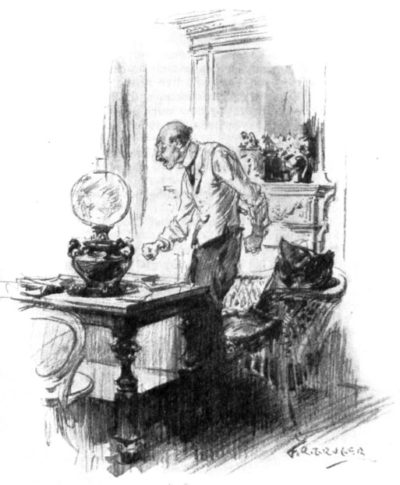
“Give ’er a chance, pa! The boys’ll show her a swell time in the city — Max Teitlebaum and all that crowd. It ain’t no fun for me traipsin’ out after her, lemme tell you!”
Mr. Binswanger pushed back his chair and rose from the table. His eyes, the wet-looking, red-rimmed eyes of age and asthma, retreated behind a network of wrinkles as intricate as overhead wiring.
“I wish,” he cried, “I was so far as the bottom of the ocean away from such nonsense as I find in my own family. Up to my neck I’m full. Like wolfs you are! On my neck I can feel your breath hot like a furnace. Like wolfs you drive me till I — I can’t stand it no more. All what I ask is my peace — my little house; my little pipe; my little porch — and not even my peace can I have! You — you’re a pack of wolfs, I tell you! Even your fangs I can see; and — and I — I wish I was so far away as the bottom of the ocean.”
He shambled toward the door on legs bent to the cruel curve of rheumatism. The sun had dropped into a bursting west that was as red as a mist of blood. Its reflection lay on the smooth lawn and hung in the dark shadows of quiet trees, and through the fulvous haze of evening’s first moment came the chirruping of crickets.
“I wish I was so far away as the bottom of the ocean!”
The tight-springed screen door sprang shut on his words and his footsteps shambled across the wide ledge of porch. A silence fell across the little dining table and Miss Binswanger wiped at fresh tears; but her mother threw her a confident gesture of reassurance.
“Don’t say no more now for a while, children.”
Mr. Isadore Binswanger inserted a toothpick between his lips and stretched his limbs out at a hypotenuse from the chair.
“I’m done! I knew the old man would jump on me.”
“Izzy, you and Poil go on now; for the theater you won’t catch the seven-ten car if you don’t hurry. Leave it to me, Poil. I can tell by your papa’s voice we got him won. How he fusses like just now don’t make no difference. You know how your papa is. Here, Poil; lemme help you with your coat.”
“I — I don’t want to go, mamma.”
“Ach, now, Poil, you — ”
“If you’re coming with me you’d better get a hustle on. I ain’t going to hang round this graveyard all evening.”
Her brother rose to his slightly corpulent five-feet-five and shook his trousers into their careful creases. His face was a soft-fleshed, rather careless replica of his mother’s, with a dimple-cleft chin and a delicate down of beard that made his shaving a manly accomplishment rather than a necessity.
“Here on the sideboard is your hat, Poil. Powder a little round your eyes. Just leave papa to me, Poil. Ach, how sweet that hat, with them roses out of stock, looks on you. Come out here — the side way. Ach, how nice it is out here on the porch! How short the days get; dark nearly already at seven. Goodbye, children. Izzy, take your sister by the arm; the whole world don’t need to know you’re her brother.”
“Leave the door on the latch, mamma.”
“Have a good time, children. Ain’t you going to say goodbye to your papa, Poil? Your worst enemy he ain’t. Julius, leave Billy alone — honest, he likes that cat better as his family! Tell your papa goodbye, Poil.”
“I said goodbye.”
“She should say goodbye to me only if she wants to. Izzy, when you go out the gate drive back that rooster out of that mulberry tree. I’ll wring his little galavantin’ neck!”
“Goodnight, children. Take good care on the cars.”
“Goodnight, mamma — papa!”
The gate clicked shut and the two figures moved into the mist of growing gloom. Over their heads the trees met and formed across the brick sidewalk a roof as softly dark as the ceiling of a church. Birds chirped.
Mrs. Binswanger leaned her wide uncorseted figure against a pillar and watched them until a curve in the avenue cut off her view; then she dragged a wicker chair across the veranda.
“We can sit out on the porch a while yet, Julius. Hot like midsummer it is for your rheumatism.”
“Ya, ya. My slippers, Becky.”
“Here.”
“Ya, ya.”
“Look across the yard, will you, Julius? The Schlossmans still at the supper table! Fruit gelatin they got; I seen it cooling on the fence. We got new apples on the side-yard tree — you wouldn’t believe, Julius! Tomorrow I make pies.”
The light of early evening hung like a veil, and through it the sad fragrance of burning leaves, which is autumn’s incense, drifted from an adjoining lawn.
“Sh-h-h, chicky! Sh-h-h! Back in the yard I can’t keep that rooster roost, Julius. And today for thirty cents I had that paling in the garden fence fixed too. Honest, to keep a yard like ours going is expense all the time. People in the city without yards is lucky.”
“In all Newton there ain’t one like ours! Look, Becky, at that white rosebush flowering so late, just like she was a bride.”
“When Izzy was home at least we didn’t have the expense of weeding.”
“Now when he comes home all he does is to change neckties and make trouble.”
“Ach, my moon vines! Look how those white flowers open right in your face — one by one, like big stars coming out.”
“Um-m-m-m! And smell, Becky, how good!”
“Here, lemme pull them heavy shoes off for you, papa. Listen! There goes that oriole up in the cherry tree again. Listen to the trills he’s got in him. Pull, Julius; I ain’t no derrick!”
“Ah-h, how good it feels to get ’em off! Now light my pipe, Becky. Always when you light it better it tastes. Hold! There — make out of your hand a cup — there! [Pu-pu-pu] There! Now sit down by me, Becky!”
“Move over.”
“Ach, Becky, when we got our little home like this, with a yard so smooth as my hand, where we don’t need shoes or collars, and with our own fruit right under our noses — for why ain’t you satisfied?”
“For myself, Julius, believe me, it’s too good; but Poil, we — ”
“Look at all what you can see right here from our porch! Look there, through the trees at the river; right in front of our eyes it bends for us. Look, what a street we live on! We should worry it ain’t in the booming part! Quiet like a temple, with trees on it older as you and me together.”
“The caterpillars is bad this year, Julius. Trees ain’t so cheap, neither. In the city such worries they ain’t got.”
“For what, with a place like this, Becky? With running water and — ”
“It’s Poil, Julius; not a thing a beau-ti-fool girl like Poil has out here.”
“Nonsense! It’s a sin she should want a better place as this. Ain’t she got a plush parlor and a piano, and — ”
“It’s like Izzy says, Julius — there’s too many fine goils in the city for the boys to come out here on a forty-five-minute ride. What boys has she got out here? Mike Donnelly and — ”
“Ach!”
“That’s what we need — just something like that should happen to us. But, believe me, it’s happened before when a girl ain’t got no better to pick from. How I worry about it, you should know.”
“Becky, with even such talk you make me sick.”
“Mark my word, it’s happened before, Julius! That’s why I say, Julius, a few months in the city this winter and she could meet the right young men. Take a boy like Max Teitlebaum. Yourself you said how grand and steady he is. Twice, with Izzy, he’s been out here; and not once his eyes off Poil did he take.”
“Teitlebaums, with a store twice so big as ours, on Sixth Avenue, don’t need to look for us — twice they can buy and sell us.”
“Is that so! To me that makes not one difference. Put Poil in the city, where it don’t take an hour to get to her and — ach! — almost anything could happen. Not once did he take his eyes off her; such a grand, quiet boy too.”
“When a young man’s got thoughts a forty-five-minutes street-car ride don’t keep him away.”
“Nonsense! I always say I never feel hungry till I see in front of me a good meal. If I have to get dressed and go out and market for it I don’t want it. It’s the same with marriage. You got to work up in the young man the appetite. What they don’t see they don’t get hungry for. They got to get eyes bigger as their stomachs first.”
“Such talk makes me sick! Suppose she don’t get married, ain’t she got a good home and — ”
“An old maid you want yet! A beau-ti-fool goil like our Poil he wants to make out of her an old maid! Or she should break her parents’ hearts with a match like Mike Donnelly — ”
“Becky!”
“Aw, Julius, now we got the chance to rent for three months! Say we live there three months at the Wellington Hotel! Say it costs us a little more — everybody always says what a grand provider you are, Julius. Let them say a little more, Julius.”
“I — I ain’t got the money, Becky, I tell you. For me to refuse what you want is like I stick a knife in my heart; but I got poor business, Becky.”
“Maybe in the end, Julius, it’s the cheapest thing we ever done.”
“I can’t afford it, Becky.”
“For only three months we can go, Julius. What’s three months?”
“I got notes, Becky — notes already twice extended. If I don’t meet ’em in March, God knows where — ”
“Ya, ya, Julius; all that talk I know by heart.”
“I ain’t getting no younger, neither, Becky: Hardly through the insurance examination I could get. I ain’t so strong no more. When I get big worries I don’t sleep so good. I ain’t so well nights, Becky.”
“Always the imagination sickness, Julius!”
“I ain’t so well, I tell you, Becky.”
“Last time, when all you had was the neuralgia and you came home from the store like you was dying, Doctor Ellenburg told me hisself right here on this porch that never did he know a man so nervous of dying like you.”
“I can’t help it, Becky.”
“If I was so afraid like you of dying, Julius, not one meal could I enjoy. A healthy man like you, with nothing but the rheumatism and a little asthma! Only last week you came home pale like a ghost, with a pain in your side, when it wasn’t nothing but where your pipe burnt a hole in your pants pocket to give me some more mending to do.”
“Just for five minutes you should have felt that pain!”
“Honest, Julius, to be a coward like you for dying, it ain’t nice — honest, it ain’t.”
“Always, Becky, when I think I ain’t always going to be with you and the children, such a feeling comes over me!”
“Ach, Julius, be quiet! Without you I might just as well be dead too.”
“I’m getting old, Becky — sixty-six ain’t no spring chicken no more.”
“That’s right, Julius — stick knives in me!”
“Life is short, Becky — we must be happy while we got each other.”
“Life is short, Julius; and for our children we should do all what we can. We can’t always be with them, Julius. We — we must do the right thing by ’em, you and me, Julius. Like you say, we — we’re getting old — together, Julius. We don’t want nothing to reproach ourselves with.”
“Ya, ya, Becky.”
Darkness fell thickly, like blue velvet portières swinging together, and stars sprang out in a clear sky. They sat in silence. The gray cat, with eyes like opals, sprang into the hollow of Mr. Binswanger’s arm.
“Billy, you come to sit by mamma and me? N-i-c-e Bil-ly!”
“We go in now, papa; in the damp you get rheumatism.”
“Ya, ya, Becky. Hear how he purrs, like an engine.”
“Come on, papa; damper every minute it gets.”
He rose, with his rheumatic jerkiness, placed the cat gently on all fours on the floor and closed his fingers round his wife’s outstretched arm.
“When — when we go — go to the city, Becky, we don’t sublet Billy; we — we take him with us — not, Becky?”
“Yes, papa.”
“Ya, ya, Becky.”
The chief sponsors for the family hotel are neurasthenia and bridge whist — the inability of the homemaker and the debility of the housekeeper. Under these invasions, Hestia turns out the gas logs, pastes a To Let sign on the windows, locks the front door behind her and gives the key to the auctioneer.
The family holds out the dining room clock and a pair of silver candlesticks that came over in the stupendously huge cargo that time and curio dealers have piled on the good ship Mayflower, engages a three-room suite on the ninth floor of a family hotel, and inaugurates the sly American paradox of housekeeping in non-housekeeping apartments.
The Wellington Hotel was a rococo haven for such refugees; its doors flew open and offered them family rates and an excellent cuisine. Excellent cuisine, however, is a clever but spiceless parody on home cookery.
Mr. Binswanger read his evening menu with the furrow deepening between his eyes.
“Such a soup they got! Mulli-ga-what?”
“Sh-h, papa — mulligatawny! Barley soup.”
“Mulligatawnee! Fine mess!”
“Sh-h, Julius! Don’t talk so loud. Does the whole dining room got to know you don’t know nothing?”
Mrs. Binswanger took a nervous resume of the red-and-gold, bright-lighted dining room.
“For a plate of noodles soup, Becky, they can have all their mulligatawny! Fifteen cents for a plate of soup, Becky, and at home for that you could make a whole potful twice so good.”
“Sh-h, papa!”
“Don’t sh-h-h me no more, neither, Pearlie! Five months, from October to February, I been shooed like I was one of our roosters at home got over in Schlossman’s yard. There! You read for me, Izzy; such language I don’t know.”
Isadore took up a card and crinkled one eye in a sly wink toward his mother and sister.
“Rinderbrust und Kartoffelsalat, pa, mit Apfelkuchen und Kalteraufschnitt.”
“Ya, ya! Make fun yet! A square meal should happen to me yet in a highway-robbery place like this!”
Mrs. Binswanger straightened her large-bosomed, stiff-corseted figure in its black basque, and pulled gently at her daughter’s flesh-colored chiffon sleeve, which fell from her shoulder like an angel’s wing.
“Look across the room, Poil. There’s Max just coming in the dining room with his mother. Always the first thing he looks over at our table. Bow, Julius! Don’t you see across the room the Teitlebaums coming in? I guess old man Teitlebaum is out on the road again.”
Miss Binswanger flushed the same delicate pink as her chiffon and showed her teeth in a vivid smile.
“Ain’t he silly, though, tonight, mamma? Look When he holds up two fingers at me it means first he takes his mother up to her pinochle club and then by nine o’clock he comes back to me.”
“How good that woman has got it! Look, Poil — another waist she’s wearing again.”
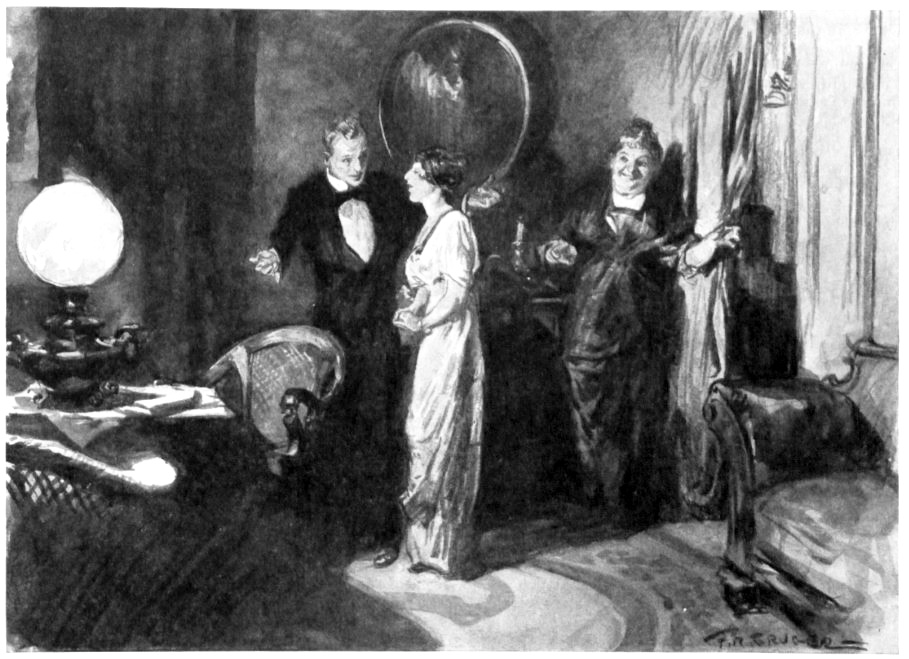
“Look how he pulls out the chair for his mother, Izzy. It would hurt you to do that for mamma, wouldn’t it?”
“Say, missy, I learnt manners two years before you ever done anything but hold down the front porch out on Newton Avenue! I’d been meetin’ Max Teitlebaum and Ignatz Landauer, and that crowd, over at the Young Men’s Club before you’d ever been to a movie with anybody except Meena Schlossman.”
“I don’t see that all your good start got you anywheres.”
“Don’t let swell society go to your head, missy. You ain’t got Max yet, neither. You ought to be ashamed to be so crazy about a boy! Wait till I tell you something when we get upstairs that’ll take some of your kink out, missy.”
“Children, children! Hush your fussing. Julius, don’t read all the names off the bill of fare.”
Miss Binswanger regarded her brother under level brows and threw him a retort that sizzed across the table like drops of water on a hot stove top.
“Anyways, if I was a fellow that couldn’t keep a job more than two months at a time I’d lay quiet! I wouldn’t be out of a job all the time and beggin’ my father to set me up in business when I was always getting fired from every place I worked!”
“Children!”
“Well, he always starts with me, mamma.”
“Izzy, ain’t you got no respect for your sister? For heaven’s sakes, take that bill of fare away from your papa, Izzy! He’ll burn a hole in it. Always the prices he reads out loud, till so embarrassed I get. No ears and eyes he has for anything else. He reads and reads, but enough he don’t eat to keep alive a bird.”
Mr. Binswanger drew his spectacles off his nose, snapped them into a worn leather case and into his vest pocket; a wan smile lay on his lips.
“I got only eyes for you, Becky, eh? All dressed up, ain’t you? — black lace yet! What you think of your mamma, children? Young she gets — not?”
“Ach, Julius!”
The little bout of tenderness sent a smile round the table, and behind the veil of her lashes Miss Binswanger sent the arrow of a glance across the room. “Honest, mamma, I wonder if Max sees anything green on me.”
“He sees something sweet on you, maybe, Poil. Izzy, pass your pa some radishes. Not a thing does that man eat, and such an appetite he used to have!”
“Radishes better as these we get in our yard at home. Ten cents for six radishes! Against my appetite it goes to eat ’em when in my yard at home — ”
“Home — always home!”
“Papa, please don’t put your napkin in your collar like a bib. Mamma, make him take it out. Honest, even for the waiter I’m ashamed. How he watches us, too, and laffs behind the tray!”
“Leave me alone, Pearlie. My shirt front I don’t use for no bib! Laundry rates in this hold-up place ain’t so cheap.”
“Mamma, please make him take it out.”
“Julius!”
“Look, papa, at the Teitlebaums and Schoenfeldts laughing at us. Look now at him, mamma! Just to spite me he bends over and drinks his soup out loud out of the tip of his spoon — please, papa!”
Mr. Binswanger jerked his napkin from its moorings beneath each ear and peered across at his daughter, with his face as deeply creased as a raisin.
“I wish,” he said low in his throat and with angry emphasis, quivering his lips behind the gray and black bristles of his mustache, “ten times a day I wish I was back in my little house in Newton, where I got my comfort and my peace. You children I got to thank for this — you children!”
Mr. Isadore Binswanger replaced his spoon in his soup plate and leaned back against his chair.
“Aw now, papa, don’t begin!”
“You good-for-nothing, you! With your hair combed up straight on your head like a girl’s, and a plaited shirt like I’d be ashamed to carry in stock — you got no putin! If I give you five thousand dollars for a business for yourself, you don’t care so much what kind of manners I got. Five thousand dollars he asks me for to go in business when he ain’t got it in him to keep a job for six months.”
“The last job wasn’t — ”
“Right now, in this highway-robbery hotel you got me into, I got to pay your board for you. If you want five thousand dollars from me you got to get rid of me some way for my insurance policy, is all I can say. And sometimes I wish you would — easier for me it would be.”
“Julius!”
His son crumpled his napkin and tossed it toward the center of the table. His soft, moist lips were twisted in anger, and his voice, under cover of a whisper, trembled with that same anger.
“For what little board you’ve paid for me I can’t hear about it no more. I’ll go out and — ”
“Sh-h, Izzy! Sh-h, papa! All over the dining room they can hear you. Sh-h!”
“Home I ain’t never denied my children — open doors they got always in my house; but in a highway-robbery hotel, where I can’t afford — ”
“We got the cheapest family rates here in this hotel. Such rates we get here, children, and highway robbery your father calls it!”
“Five months we been in the city and two months already a empty house standing out there waiting, and nothing from it coming in — a house I love like my life; a house what me and your mamma wish we was back in every minute of the day!”
“I only said, Julius, for myself I like my little home best; but — ”
“I ain’t got the strength for the streetcar ride no more. I ain’t got appetite for this sloppy American food no more. I can’t breathe no more in that coop upstairs. Right now you should know how my feet hurt for slippers; a collar I got to wear to supper when like a knife it cuts me! I can’t afford this. I got such troubles with business I only wish for one day you should have ’em. I want my little house, my porch, my vines and my chickens. I want my comforts. My son ain’t my boss!”
Isadore pushed back from the table, his jaw low and sullen.
“I ain’t going to sit through a meal and be abused like — like I was a — ”
“You ain’t got to sit. Stand up then!”
“Izzy! Hush, Izzy! The people! Julius, so help me if I come down to a meal with you again! Look, Julius! The Teitlebaums are watching us. Smile at me, Poil, like we was joking. Izzy, if you leave this table now I — I can’t stand it! Laugh, Poil, like we was having our little fun among us.”
The women exchanged the ghastly simulacrum of a smile and the meal was resumed in silence. Only small Leads sprang out on the shiny surface of Mr. Binswanger’s head, like dewdrops on the glossy surface of leaves; and twice his fork slipped and clattered from his hand.
“So excited you get right away, Julius! Nervous like a cat you are.”
“I — I ain’t got the strength no more, Becky. Pink sleeping tablets I got to take yet to make me sleep. I ain’t got the strength.”
“Sh-h, Julius; don’t get excited! In the spring we go home. You don’t want, Julius, to spoil everything right this minute. Ain’t it enough the way our Poil has come out in these five months? Such a grand time that goil has had this winter! Do you want that the Teitlebaums should know all our business, and spoil things?”
“I — I wish sometimes that name I had never heard in my life. In my days a young girl — ”
“Sh-h, Julius; we won’t talk about it now — we change the subject.”
“I — ”
“Look over there, will you, Poil? Always extras the Teitlebaums have on their table. Paprika and — what is that red stuff? Chili sauce! Such service we don’t get. Pink carnations on their table too! Tomorrow at the desk I complain. Our money is just so good as theirs.”
Miss Binswanger raised her harried eyes from her plate and smiled at her mother; she was like a dark red rose, trembling, titillating, and with dewy eyes.
“Don’t stare so, mamma.”
“Izzy, are you going to be home tonight? One night it won’t hurt you to stay. Like you run round nights to dance halls ain’t nothing to be proud of.”
“Now start something, mamma, so papa can jump on me again! If Pearlie and Max are going to use the front room this evening, what shall I do — sit in a corner till he’s gone and I can go to bed?”
“I should care if he goes to dance halls or not! What I say, Becky, don’t make no difference to my son. Look how I begged him to hold on to his job!”
“If you’ve done your dessert wait till we get upstairs, papa. The dining room knows already enough of our business.”
Miss Binswanger pushed back from the table and got to her feet. Tears rose in a sheer film across her eyes; but she smiled with her lips and led the procession of her family from the gabbling dining room, her small dark head held upward by the check-rein of scorched pride and the corner of her tear-dimmed glance for the remote table with the centerpiece of pink carnations.
By what seemed demoniac aforethought the Binswanger three-room suite was rigidly impervious to sunlight, air and daylight. Its infinitesimal sitting room, which the jerking backward of a couch cover transformed into Mr. Isadore Binswanger’s bedchamber, afforded a one-window view of a long, narrow air shaft, which rose ten stories from a square of asphalt courtyard, up which the heterogeneous fumes of cookery were wafted like smoke through a flue.
Mr. Binswanger dropped into a veteran armchair that had long since finished duty in the suite de luxe. He was suddenly old and as withered as an aspen leaf trembling on its rotten stem. Vermiculate cords of veins ran through his flesh like the chirography of pain, written in the blue of an indelible pencil; yellow crow’s-feet rayed outward from his eyes as deep as clawprints in damp clay.
“Becky, help me off with my shoes; heavy like lead they feel.”
“Poil, unlace your papa’s shoes. Since I got to dress for dinner I can’t stoop no more.”
Miss Binswanger tugged daintily at her father’s boots, staggering backward at each pull.
“Ach! Go ’way, Pearlie. Better than that I can do myself.”
“See, mamma! Nothing suits him.”
Mrs. Binswanger regarded her husband’s sallowness with anxious eyes; her large bosom heaved under its showy lace yoke and her short, dimpled hands twirled at their rings.
“Tonight, Julius, if you don’t do like the doctor says, I telephone him to come. That a man should be such a coward! It don’t do you no good to take only one sleeping tablet; two he said is what you need.”
“Too much sleeping powder is what killed old man Knauss.”
“Ach, Julius, you heard yourself what Doctor Ellenburg said. Six of the little pink tablets he said it would take to kill a man. How can two of ’em hurt you? Already by the bed I got the box of ’em waiting, Julius, with an orange, so they don’t even taste.”
“It ain’t doctors and their gedinks, Becky, can do me good. Pink tablets can’t make me sleep. I — Ach, Becky, I’m tired — tired!”
Isadore rose from the couch bed and punched his headprint out of the cushion.
“Lay here, pa.”
“Na, na; I go me to bed. Such a thing full of lumps don’t rest me like a sofa at home. Na; I go me to bed, Becky.”
Isadore relaxed to the couch once more, pillowed his head on interlaced hands, yawned to the ceiling, blew two columns of cigarette smoke through his nostrils and watched them curl upward.
“This ain’t so worse, pa.”
“I go me to bed.”
“For a little while, Julius, can’t you stay up? At nine o’clock comes Max to see Poil. I always say a young man thinks more of a young goil when her parents stay in the room a minute.”
Isadore fitted his thumbs in his waistcoat armholes and flung one reclining limb over the other.
“What Max Teitlebaum thinks of Pearlie I already know. Today he invited me to lunch with him.”
“Izzy!”
“Izzy! Why you been so close-mouthed?”
Mrs. Binswanger threw her short heavy arm at full length across the table top and leaned toward her son, so that the table lamp lighted her face with its generous scallop of chin and exacerbated the concern in her eyes. “You had lunch today with Max Teitlebaum and about Poil you talked?”
“That’s what I said.”
Miss Binswanger leaned forward in her low rocker, suddenly pink, as though each word had been a fillip to her blood; and a faint terra cotta ran under the olive of her skin, lighting it.
“Like fun you did!”
“All right then, missy; I’m lyin’ and I won’t say no more.”
“I didn’t mean it, Izzy!”
“Izzy, tell your sister what he said!”
“Well, right to my face she contradicts me.”
“Please, Izzy.”
“Well, he — he likes you all righty — ”
“Did he say that about me — honest, Izz?”
Her breath came sweet as thyme between her open lips, and her eyes could not meet her mother’s gaze, which burned against her lids.
“See, Poil? See, papa? Wake up a minute and listen. When I mentioned Max Teitlebaum you always said a grand boy like one of the Teitlebaum boys, with such prospects, ain’t got no time for a goil like our Poil. Always I told you that you got to work up the appetite. See, papa, how things work out? See, Poil? What else did he have to say, Izzy? He likes her, eh?”
Isadore turned on his side and flicked a rim of ash off his cigarette with a manicured fourth finger.
“Don’t get excited too soon, ma. He didn’t come out plain and say anything; but I guess a boy like Max Teitlebaum thinks we don’t need a brick house to fall on us.”
“What you mean, Izzy?”
“What I mean? Say, ain’t it as plain as your nose? You don’t need two brick houses to fall on you, do you?”
Mrs. Binswanger admitted to a mental phthisis and threw out her hands in a gesture of helplessness.
“Believe me, Izzy, maybe I am dumb, so bad my head works when your papa worries me; but what you mean I don’t know.”
“Me neither, Izzy!”
“Say, there ain’t much to tell. He likes Pearlie — that much he wasn’t bashful to me about. He likes Pearlie and he wants to go in the general store and ladies’ furnishing goods business. Just clothing like his father’s store he hates. Why should he stay in a business, he says, like his father’s, that is already built up? His two married brothers and his father, he says, is enough in the one business.”
“Such an ambitious boy — always anxious to do for hisself! I wish, Izzy, you had some of his ambition. You hear, Poil? In the same business as papa he wants to go.”
Mrs. Binswanger rocked complacently, a smile crawled across her lips, and she nodded rhythmically to the tilting of her rocking chair. Her eyes closed softly in the pleasant phantasmagoria of a dream. Mr. Binswanger slumped lower in his chair.
“A good head for business that Max Teitlebaum has on him. Like your mamma says, Izzy, you should have one just half so good.”
“There you go again, pa — pickin’, pickin’! If you’d give a fellow a start and lend him a little capital — I’d have some ambition, too, and start for myself.”
Mr. Binswanger leaped forward at full stretch, as a jet of flame shoots through a stream of oil.
“For yourself! On what? From where would I get it? Cut it out from my heart? Two months already I begged you to come out by me in the store and see if you can help start something to get back the trade. Now we need young blood in the store to get — ”
“Aw, I — ”
“Five thousand dollars I give you for to lose in the ladies’ ready-to-wear! Another white elephant we need in the family yet. Not five thousand dollars outside my insurance I got to my name; and even if I did have it I wouldn’t — ”
“Julius!”
“I mean it, so help me! Even if I did have it, not a cent to a boy what don’t listen to his old father!”
“For heaven’s sakes, pa, quit your hollering! If you ain’t got it to your name I’m sorry for Pearlie.”
“For me?”
“You think, pa, a boy like Max Teitlebaum — a boy that Banker Finburg’s daughter is crazy after — is getting married only because you got a nice daughter?”
“What do you mean, Izzy?”
“The woods are full of ’em just as fine. I didn’t need no brick house to fall on me today at lunch. He didn’t come right out and say nothing, but when he said he wanted to get in a business he could build up, I seen what he meant.”
“What?”
“Sure, I seen it. I guess his father gives him six or seven thousand dollars to get his start, and just so much he wants from the girl’s side. He can get it easy too. If — if you’d fork over, pa, I — him and I could start maybe together; and — “
“You — you — ”
“Your papa, Izzy, can do for his girl just like the best can do for theirs. Julius, can’t you!”
“Gott in Himmel! I — I — you — you pack of wolfs, you!”
“Such names you can’t call your wife, Julius. Just let me tell you that! Such names you can’t call me!”
Anger trembled in Mrs. Binswanger’s vocal cords, like the electric current running over a wire; but Mr. Binswanger sprang suddenly to his feet and crashed the white knuckles of his clenched fists down on the table with a force that broke the flesh. The red lights of anger lay mirrored in the pools of his eyes, as danger lanterns on a dark bridge are reflected in black water.
“Wolfs! Wolfs, all of you! You — you — tonight you got me where I am at an end! Tonight you got to know. I — I can’t keep it in no more! You got to know tonight — tonight!” His voice caught in a tight knot of strangulation; he was quivering and palsied. “Tonight you — you got to know!”
A sudden trembling took Mrs. Binswanger.
“For heaven’s sakes, know what, Julius? Know what?”
“I’m done for! I’m gone under! Till it happened you wouldn’t believe me. Two years I seen it coming; two years I been fightin’ and fightin’ — fightin’ it by myself! And now for yourselves you look in the papers two weeks from tomorrow, the first of March, and see! I’m done for! I’m gone under — I — ”
“Julius! You — you ain’t, Julius! You ain’t!”
His voice rose like a gale:
“I’m gone under — I ain’t got twenty cents on the dollar! I’m gone, Becky! Beat up! Tomorrow two weeks the creditors, they’re on me! My last extension expires and they’re on me. I been fightin’ and fightin’. Twenty cents on the dollar I can’t meet, Becky — I can’t, Becky; I can’t! I been fightin’ and fightin’, but I can’t, Becky — I — can’t! I’m gone!”
“Pa!”
“Julius! Julius! You — you don’t mean it, Julius! You — don’t mean it! You’re fooling us! Julius!”
Small, cold tears welled to the corners of his eyes.
“I’m gone, Becky! And now he — he wants the shirt off my back! He can have it, God knows; but — but — ach, Becky! — I wish I could have saved you! But that a man twice so strong as his father, ach, Gott! What — what’s the use? I’m gone, Becky — gone!”
Mr. Isadore Binswanger swung to his feet and regarded his parent with the dazed eyes of a sleepwalker wakening on a perilous ledge.
“Aw, pa, why didn’t you tell a fellow? I — we — aw, pa, I — I can knuckle down if I got to. Gee-whiz! How was a fellow to know? You — you been cuttin’ up about everything since — since we was kids. Aw, pa, please — gimme a chance, pa! I can knuckle down, pa! Pa!”
He approached the racked form of his father as though he would throw himself a stepping-stone at his feet; and then, because his voice stuck in his throat and he ached until the tears sprang to his eyes, he turned suddenly and went out of the room, slamming the door behind him.
“I — I’m gone, Becky! What you want for Poil I can’t do. I’m gone under! We got to start over again. It was the interurban done it, Becky. I needed new capital to meet the new competition. I — I could have stood up under it then, Becky; but — but — ”
“Ach, my husband — for myself I don’t care. Ach, my husband!”
“I — I’m gone, Becky — gone!”
He rose to his feet and ambled feebly to his bedroom, his fingers feeling of the furniture for support and his breath coming in the long wheezes of dry tears. And in the cradle of her mother’s arms Miss Binswanger wept the hot tears of black despair.
“Oh, my baby! Ach, my husband! A good man like him! A good man like him!”
“Don’t cry, mamma; don’t — cry!”
“Nothing he ever refused me — and now, when we should be able to do for our children, and — ”
“Don’t cry, mamma; don’t cry!”
“If — if he had the money — for a boy like Max — he’d give it, Poil. Such a good husband! Such — ach, I go me in to papa now — poor papa! I’ve been bad, Poil; we must make it up to him. We — ”
“Sh-h-h!” “We got to start over again, Poil — to the bone I’ll work my fingers. I — ”
“Sh-h, mamma — sh-h-h! Somebody’s knocking.”
“It’s — it’s Izzy, baby. See how sorry he gets right away. He ain’t a bad boy, Poil, only always I’ve spoilt him. Come in, my boy — come in and go in to your papa.”
The door swung open and fanned backward the stale air in the sharp gust — and the women sprang apart mechanically as automatons, the sagging, open-mouthed vacuity of surprise on Mrs. Binswanger’s face, the tears still wet on her daughter’s cheeks like dew.
“Mr. Teitlebaum!”
“Max!”
Mr. Teitlebaum hesitated at the threshold, the flavor of his amorous spirit tasty on his lips and curving them into a smile.
“That’s my name! Hello, Pearlie-girlie! How-d’ye-do, Mrs. Binswanger? What — what — ”
He regarded them with dark, quiet eyes, the quick red of embarrassment running high in his face.
“Ah, excuse me! I might have known — I’m too early. Like my mother says, I was in such a hurry to — to get back here again I — I nearly got out and pushed the Subway. I — you must excuse me. I — ”
“No, no; sit down, Mr. Teitlebaum. Pearlie ain’t feelin’ so well this evening; she’s all right now, though. Such a cold she’s got — ain’t you, Poil?”
“Yes — yes. Such a cold I got. Sit — sit down, Max.”
He regarded her, with the rims of his eyes stretched wide in anxiety.
“Down at supper so well you looked, Pearlie. I says to my mother like a flower you looked.”
A fog of tears rose sheer before her.
“Her papa, Mr. Teitlebaum, he ain’t so well, neither. Just now he went to bed and he — he said to you I should give his excuses.”
“So! Ain’t that too bad now!”
“Sit down, Max — there, next to mamma.”
He leaned across the table toward the little huddle of her figure, his emotion written frankly across his features.
“Pearlie — ”
“She’ll be all right in a minute, Mr. Teitlebaum — like her papa she is, always so afraid of a little sickness.”
“Pearlie, ain’t you going to look at me?”
She sprang from his light hand on her shoulder and the tears formed in little globules, trembled, fell; and a sudden rod of resolution straightened her back.
“We — I been lying to you, Max. I ain’t — sick!”
“Poil!”
“I — I think I know, little Pearlie!”
“Poil!”
“No, no; it’s best we tell the truth, mamma.”
“Ya, ya! Oh, my — ”
“We — we’re in big trouble, Max. Business trouble. The store, ever — ever since the traction — it ain’t been the same.”
“I know, little Pearlie. I — ”
“Wait a minute Max. We — we ain’t what you maybe think we are. Tomorrow two weeks we got to meet creditors and extension notes. We can’t pay even twenty cents on the dollar. We’re gone under.”
“I — ”
“We ain’t got it to meet them with. Papa — if a man like papa couldn’t make it go nobody could — ”
“Such a man, Mr. Teitlebaum; so honest; so — ”
“Sh-h, mamma!”
“It’s our — my fault, Max. He was afraid even last year; but I — even then I was the one that wanted the expense of the city. Mamma didn’t want it — he didn’t. It was me. I — I — ”
“My fault, too, Poil. Ach, Gott, my fault! How I drove him! How I drove him!”
“We — we got to go back home, Max. We’re going back and help him to begin all over again. We — we been driving him like a pack of wolves. He never could refuse nobody nothing. If he thought mamma wanted the moon he was ready to go for it. Even when we was kids, he — ”
“Ach, my husband! Such a grand provider! Such a husband!”
“Always we got our way out of him; but tonight — tonight, Max, right here in this chair all little he looked, all of a sudden. So little! His back all crooked and all tired; and — and I done it, Max. I ain’t what you think I am. Oh! I done it!”
“Ach, my — ”
“Don’t cry, mamma. Sh-h! Ain’t you ashamed, with Mr. Teitlebaum standing right here! You must excuse her, Max, so terrible upset she is. Sh-h, mamma!”
“Pearlie!” Max came closer to the circle of light and his large features came out boldly. “Pearlie, don’t you cry, neither, little girl — ”
“I — I ain’t.”
“All what you tell me I know already.”
“Max!”
“Mr. Teitlebaum!”
“You must excuse me, Mrs. Binswanger; but in nearly the same line of business news like that travels faster than you think. Only today I heard for sure how shaky things stand. You got my sympathies, Mrs. Binswanger; but — but such a failure don’t need to happen.”
Mrs. Binswanger clutched two hands round a throat too dry to swallow.
“He can’t stand it. He isn’t strong enough. It will kill him!”
“Sh-h, mamma! Do you want papa should hear you in the next room? Sh-h-h! Please! You must excuse her, Max.”
“Pearlie,” he placed his hand lightly on her shoulder — “Pearlie! Mrs. Binswanger, you must excuse me, too, but I got tasay it while — while I got the courage. Can’t you guess it, little Pearlie? I’m in love with you! I’m in love with you, Pearlie, since the first month you came to this hotel to live!”
“Max!”
“Ach, Gott!”
“I only got this to say to you: I love you, little Pearlie! Today when I heard the news I was sorry, Pearlie, and — and glad too. It made things look easier for me. Right away I invited Izzy to lunch so, like a schoolboy, I could hint. I — two years I been wanting to get out of the store, Pearlie, where there ain’t a chance for me to build up nothing. Like I told Izzy today, I want to find a run-down business that needs building up, where I can accomplish things.”
“Max!”
“I wanted him to know what I meant; but, like — like a schoolboy, so mixed up I got! Eight thousand dollars I got waiting for an opening. This failure — this failure don’t need to happen, Pearlie. With new capital and new blood we don’t need to be afraid of tractions and competitions. With me and Izzy, and my eight thousand dollars put in out there, we — we — But this ain’t no time to talk business. I — you must excuse me, Mrs. Binswanger. but — but — ”
“Poil, my baby! Max!”
“I love you, Pearlie-girlie! Ever since we been in the same hotel together, when I seen you every day fresh like a flower and so fine, I — I been heels over head in love with you, Pearlie. You should know how my father and my married brothers tease me! I — I love you, Pearlie!”
She relaxed to his approaching arms and let her head fall back to his shoulder, so that her face, upturned to his, was like a dark flower; and he kissed her where the tears lay wet on her petal-smooth cheeks and on her lips that trembled.
“Max!”
“My little girlie!”
Mrs. Binswanger groped through tear-blinded eyes.
“This — this — ain’t no place for a old woman, children. This — this — Ach! What I’m sayin’ I don’t know! Like in a dream I feel.”
“Me, too, mamma; me too! Like a dream! Ah, Max!”
“I tiptoe in and surprise papa, children. I surprise papa. Ach, my children — my children! Like in a dream I feel.”
She smiled at them, with the tears streaming from her face like rain down a windowpane; then opened the door to the room adjoining gently, and closed it more gently behind her. Her face was bathed in a peace that swam deep in her eyes, like reflected moonlight trailing down on a lagoon; her lips trembled in the hysteria of too many emotions. She held the silence for a moment and remained with her wide back to the door peering across the dim-lit room at the curve-backed outline of her husband’s figure, hunched in a sitting posture on the side of the bed.
Beside him, on the white coverlet, a green tin box, with a convex top like a miniature trunk, lay on one end, its contents — bits of old-fashioned jewelry and a folded blue document with a splashy red seal — scattered about the bed.
She could hear him wheeze out the moany, long-drawn breaths that characterized his sleepless nights, his face the color of old ivory, wry, and etched in the agony of carrying his trembling palm closer, closer to his mouth.
Suddenly Mrs. Binswanger cried out — a cry that was born in the unexplored regions of her heart, wild, primordial, full of terror.
“Jul — Jul — ius! Jul-ius!”
His hand jerked from his lips reflexly, so that the six small pink tablets in the trembling palm rolled to the corner of the room. His blood-driven face fell backward against the pillow and he relaxed frankly into short dry sobs, hollow and hacking, like the coughing of a cat.
“Becky — it — it’s all what I — I could do! It’s — it — ”
She dragged her trembling limbs across the room to his side. She held him to her so close that the showy lace yoke transferred its imprint from her bosom to the flesh of his cheek. She could feel his sobs of hysteria beating against her breast, and her own tears flowed.
They racked her like a storm tearing on the mad wings of a gale; they scalded down her cheeks into the furrows of her neck. She held him tight in the madness of panic and exultation, and his arm crept round her wide waist and his tired head relaxed to her breast; her hands locked tight about him and would not let him go.
“We — we’re going home, Julius! We — we’re going home!”
“Ya, ya, Becky! It’s — it’s all right. Ya, ya, Becky!”
“It’s Always Tomorrow” by Charles Hoffman
Published on November 26, 1938
I will tell you this about September. You can have it. September, I give you. While I’m giving things away, I might as well give you Sam Worthman, and if you get Sam Worthman you also get Magno Studios, thirty-one weeks of mother — at two grand a week — and a first option on me. I would like you to have Jerry Morgan, who is our agent, and if you get Jerry, you might as well have Pete Roselli, who handles the publicity. You can have the entire section of Beverly Hills bounded by Santa Monica, Sunset, Doheny and Whittier, and while I’m tossing out land grants, I might as well whip in Malibu, Brentwood, Santa Anita and Arrowhead, reading from left to right. I think you should have the Grove, the Troc, the Derbies, LaMaze and like canteens, caravanserai y posados, and as long as I’ve gone this far, I suppose I should toss in a little agenda, including the Bowl, mufflers, Snow White, lunch and the Goodyear blimp.
I give you lunch advisedly. Everything happens out here over lunch. You dabble with your sole meunière (at the Vendome on Tuesdays. Or is it Thursdays?) and Jerry Morgan sits across from you and tells you that Magno doesn’t want you any more, and that as far as Hollywood is concerned, you might just as well be back on the Orpheum circuit in 1926, following that seal act.
He doesn’t say it that way, of course (“ … don’t think you’re quite the man for the job. They want — Well, frankly, old man, they’re putting Mantino on it. Want that Coward touch. We know what we think of Mantino, so I told them that my property was no bootlicker … ”). But it is said, day after day, week after week, year after year, on Vine or on Sunset or on Wilshire, over lettuce salads and over hamburgers and over corn-beef hash and over lobster thermidor. Mantino on the job. Want that Coward touch. And you can’t give it to ’em. You haven’t got that thing. You can’t give it that umph.
That is a tangent, and I didn’t mean to get out on it. But this is my Hollywood story. Every writer writes a Hollywood story. This is not a Hollywood story to end all Hollywood stories, and it may not end even all of mine, so if I get out on a tangent again, overlook it. It’s in my hair. It dances in the lenses of the dark glasses I wear. It pinches my fingers when I put the top down on the car. It’s in the Scotch they offer me, and the rye they offer me, and the martinis-manhattans they offer me on Christmas and Easter and other religious holidays. It’s at the two-dollar windows at Santa Anita and the fifty-dollar windows at Inglewood. It’s in the spare ribs at Chasen’s and the silver furs tossed over chairs at La Conga. It’s in the air, this air that hangs here between the Tehachapis and Catalina, and it’s what makes the place run, and I give it to you.
It started on the third of September. I was having lunch with Jerry Morgan.
When we went into the place, I waved to my mother, who was with Danny Ketron, the producer; and my sister Lucille, who was with Craig Seaver, the towhead MGM discovered ushering at a track meet last fall; and my brother Zane, who was with Pierre, the designer; and my father, who was with Stella Moon. We slapped six producers on the back, “hi”-d four directors, nodded to two story editors, winked at a makeup girl who had attached herself to an earl, and ordered lunch.
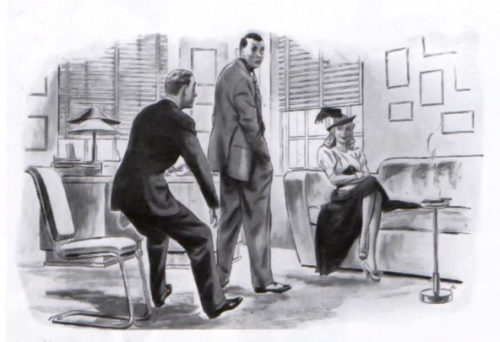
Jerry said, “This looks like a field day for the unlimited Lavondars.”
I said, “The first family of the screen? We get around.”
“What’s your old man doing with Stella Moon?”
I said, “Maybe he’s found something, I don’t know. She’s looking for a leading man.”
Then we got to the point. “Look,” I said, “I can’t do it for five hundred, Jerry.”
“They won’t give us a cent more.”
I said, “We have a swimming pool to think of.”
“How about Lucille?”
“Six weeks at Warners’,” I said. “But that was in 1935.”
“And your brother?”
“He stood next to a horse in The Plainsman. Ten dollars a day. Both days. That paid the light bill.”
“Your father?”
“What is this?” I asked. “You ought to know. He had six weeks at Grand. They cut him out with a pair of scissors.”
“Your mother?”
I said, “Jerry. This isn’t today, this is tomorrow. It’s always tomorrow. Yesterday we ate crab Newburg in a fancy place on Sunset, which is today, and tomorrow we go out and eat ice plant, which is also today which is tomorrow. Get it?”
Jerry said, “I’ve heard of whole families getting along on four thousand a month.”
“Jerry, dear,” I said. “There’s father. There’s mother. There’s Lucille. There’s Zane. Funny thing, they eat. They wear clothes. They turn on lights, and they use water. There’s the swimming pool, and the tennis court, and four cars, and six servants, and eleven rooms, not counting the guest house. There’s a place at Malibu, and the place in the mountains. And then there’s Cousin Harriet in Omaha and her six children, and Aunt Maude in Phoenix and her little brood of five, and mother’s brother Bill in — ”
“O.K.,” said Jerry, “so what?”
“So I can’t do it for five hundred, Jerry.”
Jerry said, “This is a sick world. A sick world.”
I dropped him off at his office, and went home out Sunset in my yellow roadster. Lucille took Seaver to the studio and doubled back on Santa Monica and turned in the driveway, two minutes after me, in her long gray coupe. Dad left Stella Moon off at her apartment, and whipped out Beverly in his green phaeton. Mother had the town car, and she and Ketron went back to the studio and went over the script for Angel in Distress, while Hans, our chauffeur, stood out in the lot and smoked cigarettes at two hundred a month (not including uniforms).
“Well?” Lucille asked, as we stood in the driveway.
“No soap,” I said. “Not a cent over five hundred. How about you?”
“I sparkled until you could count carats, but it didn’t work. Mentally, Seaver’s still selling programs at the track meet. Besides, they’re going to give him Garbo.”
I said, “Who’s she?”
Father skidded in behind us. He had on a pair of my white shoes, one of Zane’s sport coats, one of mother’s mufflers, and Lucille’s beret.
“Hi, you two!”
We said, “Hi.”
“Well, Jake, yes or no?”
I said, “No. Let’s not stand out here on this big wide driveway.”
We went in.
“What’s the trouble?” father asked.
“No trouble,” I said. “I’m just not Noel Coward, that’s all. Simple.”
“Incidentally,” Lucille put in, “how about you and that Moon number?”
There was a letter on that table in the hall — the one Haines found for us at Genoa — and Lucille started to rip it open.
“Did you like it?”
I said, “Fidler will get it. That’s something.”
“That’s all,” said father.
“You mean?”
“She wants to do Peter Pan.”
I said, “If she sees fifty again, I’m Seabiscuit.”
“Anyway,” father asked, “how do you think I’d be as Wendy?”
“Guess what?” said Lucille, reading the letter.
“Go on.”
“We’re being augmented.”
“Go on,” I said.
“Cousin Harriet’s daughter, Minerva, is — ”
I said, “That’s enough. How old is she?”
“The last time anyone mentioned her, she was five.”
“When does this thing happen to us?”
“Tomorrow morning.”
“Why couldn’t I have been born with two heads,” I said, “and just spent my life in a bottle?”
“That reminds me,” said father, and disappeared.
I was lying on my stomach on a mattress on the loggia, wondering what Noel Coward had that I et cetera, when Fuzzy turned up. It was ten minutes after three, and he was ten minutes late. Usually he hits three on the dot.
“Hi-ya,” said Fuzzy, “where’s Lucille?”
I was almost afraid to look up, for fear it wouldn’t be there, but it was. The nice white letter on the nice red sweater on the broad chest. “S,” for State. Fuzzy is a letter man. He is big. He has big hands and big feet and a lot of white teeth and his hair is like cotton above his brown forehead, and he is h-e-a-l-t-h personified.
He is a D. Tau, and he knows a lot about the damndest things, like what Benny Goodman’s drummer’s hometown is, and who ran the 440 for Ohio State in 1928, and what the name of Li’l Abner’s pig is. I, myself, having been born in a trunk backstage in a New Orleans theater one sultry afternoon in 1908 (profile) didn’t get to college, and it is interesting to note from time to time what “the system” is turning out. I suppose Fuzzy is a product, and Fuzzy may also be indicative of a trend, don’t know. I do know that Fuzzy is lyrical about Lucille — which is euphonious and which I may try to sell to Sam Worthman — and also that he gets in her hair just the way Hollywood —
I said, “She’s someplace on the acreage.”
He said, “Say, d’ja hear what Marvin did?”
I turned over on my back and looked up at the bright California sun through purple glasses. “No, what did Marvin do?”
“Kicked ninety-eight yards!”
“No … ”
“Yeh! Some kick, eh?”
I said, “Boy, I’ll say.”
He said, “Well, guess I’ll go find Lucille.”
I said, “O.K.”
I took a deep breath, and closed my eyes, and started to hum I’ll Follow My Secret Heart. Take Gertrude Lawrence, take a Swiss chalet, take that line from Private Lives about the ear trumpet and the shrimps, take —
Fuzzy stayed for dinner. Remember, this is still the third of September. Mother was in one of her moods, trailing sleeves through things and talking through a lorgnette. Father was a little tight (“So I said to John Drew — Jack, I said — I always called him Jack — Jack, I said … ”). Lucille was rather pale, and quiet, and once when Fuzzy said, “You know what that guy Marvin’s got?” (I said, “No, what has that guy Marvin got?”) and he said, “Guts!” — she choked on something and had to leave the table for a minute.
The next morning, we drew straws on Minerva, and I drew the long one and had to meet her. “Look,” I said, “as long as I have a job, and you’re — well, say ‘at liberty,’ Lucille, I think you might — ” We were having breakfast. Mother had on a pink negligée and was having hot water and the Hollywood Reporter. Father had on a Chinese dressing gown and was having a sedative and Variety. Lucille had on something blue and fluffy that kept getting in her grapefruit. I had two cups of coffee and a headache (“Whenever spring breaks through again … ”).
Lucille said, “I can’t, darling. Not possibly. Larue wants me for some fittings, and — ”
“Buying clothes, dear?”
“Oh, one or two little things.”
“That’s lovely. Something for winter?”
Lucille gave me a look and went back to her grapefruit.
“If I may lapse into the pastiche,” I said, “what are we going to use for money?”
Mother said, “Jake, please!”
I looked at her. “How much longer have you to run?”
She arched. “Thirty-one weeks.”
“At two thousand a week,” father put in quickly.
I said, “That’s sixty-two thousand dollars.”
“It’s a lot of money,” said father.
“It was a lot of money,” I reminded him. “Only it’s spent. Already.”
“Well,” said Lucille, “you can’t expect me to walk down Vine Street naked!”
“No,” said mother, “you certainly can’t!”
“No,” father murmured, “of course not. Naked! Most ridiculous thing.”
I said, “OK. OK. OK.”
Just then Block S came in. “Having breakfast?”
I said, “We’re trying to preserve an illusion.”
“Say,” he said, “hear about Marvin? Pretty tough.”
I said, “What happened to Marvin?”
“Broke his toe. Last night. His kicking toe.”
Lucille looked at him, and then at me, and then at her grapefruit, and then she got up and left. And just then I got an inspiration. Fuzzy, Minerva, station. Just like that.
When I got to the studio I went into the commissary and had a cup of coffee and talked to Witherstein about a treatment he was going to do on Ladies in the Saddle. Then I went up to my office and told Pearl she could go have a cup of coffee, and sat and listened to that buzzing sound you hear up there, and finally went down to Foster’s office and talked about a treatment he was going to do on Mrs. Manners Runs Wild, and went and had a cup of coffee. About one o’clock, Jerry came in and we went over and had a cup of coffee, and at one-thirty I walked into the Vine Street Derby, and was worn out.
I waved to mother, who was with Toby Forrester, and to Lucille, who was with someone quite short and without any neck, and to father, who was with Eva O’Neil (remember Eva?), and to my brother Zane, who was with Pierre, the designer. I slapped six producers, and so forth, and ordered coffee and a telephone, and relaxed.
Sam Worthman had “planed out,” and the studio was tout court, so I went home about three o’clock and spread out on my stomach on a mattress on the loggia. I suppose I had been there about half an hour, when this thing floated before my vision.
I looked up. It had long yellow hair — not Westmore yellow; more on the sun-on-cornfields side — and a very red mouth and a little parade of freckles across something that should have been a nose, and it had on a bright green sunsuit and little green sandals.
“Hello,” I said.
It sat down on the hammock next to the mattress and took a white cigarette case out of the big beach bag it carried. “Smoke?”
I said, “No, thanks. I don’t drink either. I’m Jake.”
“I’m Jake, too, thanks,” it said.
I sat up and pulled my knees up under my arms and said, “Been here long?”
“If you mean do I know my way around, yes.”
Things were happening around us. Cotton clouds floated across the sun for a minute. Something chirped in a tree. Block S darted out of nowhere and slithered into the pool like a seal in white trunks.
I said, “I take it for granted you’re Minerva.”
“Do tell!” it said.
I turned over and spread out on my stomach again, and pretty soon Block S heaved himself out of the pool and came over and dripped on my legs.
“Well,” he said, “I got her, all right, all right.”
I said, “You sure did,” into the crook in my elbow.
I don’t know what would have happened then, if Lucille hadn’t come in. I mean, we might have reached an impasse.
“I’m Lucille,” Lucille said. “I suppose you’re Minerva.”
“I’m Minerva, all right,” said Minerva, “but I thought you’d be so much younger.”
Block S said, “Come on, honey. Two laps,” and Minerva jumped up, and with one swift movement took off her sandals and her glasses, put out her cigarette, pulled on her cap, and was across me in a leap and into the pool.
“Two lapse,” I said.
“Insidious little thing, isn’t she?” said Lucille.
I said, “Particularly for a girl of five.”
Block S stayed for dinner. Jerry Morgan was there (if he doesn’t get his ten percent that way, he gets it another), and the President of the Lavondar Family (“The First Family of the Screen”) Fan Club of Terre Haute — in purple chiffon and a daze, who had won a trip to Hollywood collecting soap coupons — was there. Lucille was there, and Minerva was there in something flowered.
Mother did a Bernhardt, and knocked over a glass of champagne (Salinas, 1938) and father got — shall we say “mellow”? — and Block S demonstrated, with a hard roll, how Marvin broke his toe (“Crunch,” said Block S, “like that”). The P. of the L.F.F.C. of Terre Haute had the jitters, and the only time Minerva opened her mouth was when I said, “Did you have a good trip out?” and she said, “There wasn’t a man under sixty on the whole train.”
On our way out of the dining room — when the Lavondar family moves in a group, the only thing missing is a calliope — mother touched my arm.
“Who is the one in that print?”
I said, “The one in that print is what we drew straws for at breakfast.”
“What was her name again?”
I said, “Her name is Minerva, again. You remember, Cousin Harriet’s error?”
“What’s she doing here?” mother asked.
I said, “She’s visiting.”
“Who?”
“Us.”
“Well I must speak to her.”
I should have known what was going to happen the next morning. I should never have gotten up or, better still, I should have gotten up early and gone out to Santa Monica and walked into the ocean and just kept walking. Then I would have washed up on Marion Davies’ stoop, and The First Family of the Screen would have had one out on second. But oh, no, there was little Jake at the breakfast table, and sure enough, just when I was finishing my coffee, in comes Minerva in mufti.
She said, “Well, I’m ready.”
Mother said, “Father, this is Minerva. Minerva dear, this is father.”
Minerva said, “Whose?”
She had on a blue dress and it was just exactly the color of her eyes. And she had on a blue hat, from which the tail feathers of a Nebraska rooster waved gaily in a morning breeze in California. And she had on white shoes and carried a white bag, and if she looked five, they dug me up someplace in Egypt. (Jake Ankh Ahman.)
I said, “Where you off to?”
“Oh,” she said, “I’m ready to see Hollywood.”
Lucille tried to vanish, but I caught her by one sleeve. “What are you doing today, darling?”
“I’m dreadfully sorry,” said Lucille, “I’m absolutely heartbroken, but — ”
“Skip it,” said Minerva.
“Mother?”
“Yes, Jake?”
“Mother, Minerva — ”
“Oh, yes. Minerva.”
“Mother, could you — ”
“I’m so sorry,” said mother, “but we’re going on location today. To Omsk.”
“Father?”
“Uh?”
“Father, Minerva — ”
“That’s all right. Just run along, Minerva. That’s quite all right.”
Minerva looked at me. I said, finally, “O.K. Come on with me, and we’ll run off Birth of a Nation for you.”
When we got to the office, I said, “Pearl, this is Minerva. Minerva has never been on a lot before. In fact, Minerva has never been to Hollywood before.”
Pearl said, “I get it. So what?”
“So take her out and show her what makes it tick.”
I was reading the Racing Form when Pearl came back and came in and sat up on my desk.
“Look,” she said, “I’ve been around Hollywood 29 years and did anyone ever notice me?”
I said, “Bring it out in the open, and I’ll run it down.”
“Did Lou Sardin ever look at me?”
Lou Sardin is the main producer on our lot.
I said, “I don’t know. Did he?”
Pearl got down off the desk and snorted, “No! But just let some Omaha houri — ”
You know that way light comes through. You know that way it falls in a shaft to the floor, with little things dancing in it. Little things began to dance in me. Dawn broke.
I said, “Oh, so that’s it, is it?”
She said, “Did you ever hear of Cinderella?”
And I said, “I wrote it,” and dashed out.
“Look, dear,” I said to Sardin’s secretary. “I have to see Sardin. It’s a matter of life and death. It’s worse than that. It’s vital.”
She said, “Mr. Sardin’s out. He’s at Malibu. He’s in the East. Far East. China. He’s in conference.”
“Honey,” I said, “I’ve been here too long for that one. There hasn’t been a conference on this lot since Booth shot Lincoln.”
“Didn’t see it,” she said. “Who was in it?”
“Look,” I said. I put my hand down on the desk with the palm up — you know — I ran the other hand through my hair. “I have to see Sardin. It is quite important. It is important to me and it is important to the studio and it is important to Mr. Sardin. I found gold on Stage C. I hit oil in my inkwell. Shirley Temple — ”
“You,” she said, “are getting purple in the face.”
Just then Sardin opened the door of his private office and saw me. “Lavondar!” he called. “Just the man I wanted to see! Come in! Come in, Jake, old man!”
“Bah!” I said to his secretary, and went into the square modern room, and there was Minerva.
“Oh, hello.”
“What do you mean,” said Sardin, “by letting Miss — Miss — this young lady wander around alone on the lot?”
I said, “I’m sorry. I couldn’t help it. It’s like keeping chipmunks. It’s like keeping some of those little lizards that — ”
He said, “Jake, this is a valuable piece of property. I’m trying to get her to sign up with us.”
I sat down, and luckily there was a chair there. Minerva lit a cigarette and smiled sweetly at me and adjusted things on her shoulders.
I said, “That’s — that’s — ”
He said, “I wish you’d bring a little pressure to bear. You see, she — ”
I said, “I’m sure that won’t be necessary.”
“Oh, but it is,” said Sardin. “The young lady — doesn’t seem to want to — to be in the movies. Shall I put it that way?”
Minerva said, “That way’s as good as any.”
I said, “What?”
Minerva said, “I’m sorry. I — I really don’t want to be in the movies.”
He said, “I can get you a grand a week. On this lot. I — ”
One thousand a week. Forty-two weeks a year. And it wasn’t spent. We already had a swimming pool. We already had the place at Malibu. Forty-two thousand a year. No ten percent. No nothing. Just the money, the rhino, the mopus, the dibs.
“Honey — ” I began.
Minerva said, “On Wednesdays, where’s the place to eat lunch?”
I don’t know what it was, I’ll be damned if I do. Maybe it was something someone sprinkled on us. Maybe a wand waved, off there. Maybe it was just the rooster feathers. But this time there was no slapping producers on the back. Producers were slapping me. On the back. Me. Jake Lavondar. I give it to you.
We drove out Sunset to the beach. “Minerva — ” I started, someplace along the way. I made a picture of it you could have hung in the Louvre. I brought all of them out here — those blondes from Jersey, those brunettes from the cotton states, those redheads from the Rockies. I walked them until there were holes in the soles of their shoes, up Vine, down Gower, out Santa Monica, and then I spread them out in a thin layer over town — hash houses, bars, drive-ins, restaurants, beauty shops, theater exits, glove counters. I gave it glamour, I gave it romance, I gave it heartache. I went into statistics.
Someplace, I stopped the car and said, “Minerva, I don’t do this for everyone. But — ”
“What does he do?”
“Sardin? He’s one of the biggest shots — ”
She got a look, just kind of a simple soft little look. “No, not him.”
I said, “Milt Grosman?” (Milt had wandered in on us at lunch.) “Milt’s one of the hottest — ”
“No,” said Minerva. “Not him.” Now impatience shadowed her words. “That one who’s around your house so much. The one with the letter.”
“Oh?” I said — the road ahead of me rolled dizzily. I whipped my window down and put my head out and breathed in some cold air. “Him?”
“He’s awfully cute,” said Minerva.
When we got back to the house, Block S, The Constant, took over — Minerva said, “Hello, stupid”; I said, “She’s yours, you can have her, I give her to you”; he said, “Thank you, sir. Come on, gorgeous” — and I went out by the pool. I had been thinking. I was older then.
Pretty soon, Lucille wandered in.
“Home early.”
I said, “That’s right.”
“Nothing doing at the studio?”
“That’s right.”
She sank down on the hammock beside me. She took off her little felt hat and ran her hands through her hair, and leaned back, closing her eyes.
“You know,” she said, “sometimes it isn’t funny out here.”
I said, “That’s right.”
Pretty soon she opened her eyes and just looked up at the top of the hammock, and her lower jaw came out and the white teeth in it sort of bit her scarlet upper lip.
“I’m tired out, Jake. I worked on Lenny Deveaux for three hours and forty-seven minutes for a part in Sing to the Sky, but — ”
I said, “I know. It’s lousy.”
“It’s Gehenna.”
“It’s Sheol.”
“It’s Purgatory.”
“It’s Limbo”
“It’s — oh, nuts!”
I said, “Magno wants Minerva at a grand a week.” I said it just like that. I kept my voice on a nice even plane, and I tried to make the words sound pleasant. A hummingbird, of all things, danced along the box hedge beyond the lawn. A swallow tipped the pool in flight. “You remember Minerva.”
“You mean — ”
I said, “Life is a black widow spider. Under the wood in the garage.”
“And?”
“And she said thanks, but she didn’t want any. She wasn’t interested in pictures. A thousand a week was so much corn meal.”
“You,” said Lucille, standing up and looking at me, “must think I’m an awful fool.” She turned and walked into the house, and I shrugged my shoulders and sat there and grinned, bansheely, at the hummingbird. They found me there, hours later.
The next morning I got up at five o’clock, and went out and drove around until it was time to go to the studio. That way, I avoided taking Minerva with me.
Mother got caught. In a way, it was really terrific. I saw them at lunch — Minerva and mother and A.E. Andrews, the producer at Goliath Studios. A.E. was talking to Minerva, and mother was just sitting there. When I went in, I waved to her, and she gave me kind of a sick little smile. You could tell that A.E. was being very positive about something — as it happened, he was offering Minerva one-fifty a week on a five-year contract and to hell with the New York office — and Minerva was all sort of sweet and cool and dumb, in pink.
They passed me, on the way out.
A.E. said, “Try and pump some sense into this girl, Jake.”
Minerva said, “Oh, Jake, could Fuzzy and I borrow your car this afternoon?”
Mother said, “The moving picture is a peculiar form of art.”
I said, “I am reserving a suite for us at Patton.”
That afternoon I went around to see Jerry. At Magno, I was coming to an end.
“Jake! Just the man I wanted to see!”
I said, “That’s fine. Got something red-hot for me?” That fear that had been gnawing down there, stopped gnawing and sat still for a minute.
“You’ve got something for me,” Jerry said. “Who is this gal Minerva?”
“Oh. Her.” Fear started feeding again. “A cousin from Omaha. Why?”
“The whole town’s after her. Warners’ called. Said they’d heard you knew her. They’ll give us a thousand a — ”
I said, “I know. Jerry, look. Tomorrow is my last day at Magno. I’ll take that five hundred — ”
He said, “Where is she? Why isn’t she here? Why didn’t you bring — ”
“I’ll take that five hundred, Jerry. I’ll come down. I’ll be a good guy.”
Jerry said, “Man, let’s get that dame signed up! That’s a gold mine!”
“Jerry,” I said gently, “it’s no go.”
“Wattdyamean ‘no go’? It’s a sensation! We’ll spread her name from — ”
“Jerry, dear. She doesn’t want to be in pictures.”
“She what?”
“She doesn’t want to be in pictures.”
“Don’t be a fool, Jake. There isn’t a woman in the United States who wouldn’t — ”
I said, “Minerva wouldn’t. I know. Life is a black widow spider. Under your shoes in the closet.”
Jerry said, “Jake, old man, you wouldn’t do this thing to me.”
I said, “I’m sorry. I don’t like it. But it’s the truth. She’s blond. She has blue eyes. She has a neat little figure. And she doesn’t want to be in pictures.”
Jerry sat there shaking his head like one of those little papier-mache dragons you can buy in Chinatown.
“But, Jerry,” I said. “Take me. Now, I am absolutely aching to be — ”
He drew into a shell. “Sorry, Jake. They filled that job.”
“You mean — ?”
“If Shakespeare walked in here now, I couldn’t get him a job. Depression. Recession.”
I said, “Who’s he?” But it wasn’t funny. Fear finished the first course, and went into the entree.
The telegram reached our house the next morning about ten. I was at the studio, cleaning out my desk. People were coming in and saying goodbye and then going over to the commissary. The good old commissary!
Millie, our second girl, read it to me over the phone. I might have known — when they didn’t come back, Fuzzy and Minerva, and when my car didn’t come back. Anyway, it was from Nevada, and it wasn’t a very clever telegram, but somehow you could see those two youngsters standing there at the counter and writing it out, sort of giggling and sort of clean and sort of American. With a capital A. Life goes to a party.
I said, “Thank you, Millie,” and hung up, and told Pearl to get Lucille on the phone, for me. Lucille was in a beauty shop in Westwood.
I said, “You’re back in circulation again.”
She said, “Go on. I’m having a shampoo.”
I said, “Minerva and Fuzzy were married in Reno this morning. Tum, tum, te-ump, tum tum tum.”
For a minute, she didn’t answer. Then she said, “I was going to marry him.” It wasn’t bathos. It was sort of a little complaint. Her voice sounded as if she had soap in her eyes.
I said, “I don’t know what to say to that. I can’t think of any bright cracks.”
She said, “Well, to a certain extent it thins out Hollywood.”
I said, “OK, heartbroken, go back to your basin,” and hung up.
Pearl came in, and I said, “Remember Minerva?”
“At night I wake up and hate her,” said Pearl. “You want your typing paper?”
I said, “Well, you don’t need to hate her any more. She’s married. Yes, I want my typing paper.”
“Look,” said Pearl, “I’ve been in Hollywood twenty-nine years, and am I married?”
I said, “I don’t know, are you?”
“No,” said Pearl.
The line formed at the left, and I paid off. Two hundred to Epstein for that bet on Farr. One-fifty to Movet for that loan in August. Six hundred to Jimmy Nebeker for that night at the Clover Club. Eventually, the office was empty, and I stood there and looked down at the lot through the Venetian blinds, and I felt very bad. Even that buzzing noise was lovable. Pearl came in and wiped tears away and said it had been fun to work with me, and I borrowed three dollars from her for lunch. You have to keep up appearances.
When I got there, I fixed my tie in the car and smoothed down my hair and adjusted my coat. “This is tomorrow,” I said to myself in the rear-view mirror — which was kind of symbolical — and went in. I sat down alone at a table next to the wall and looked at the menu, but I wasn’t very hungry. After the waiter had taken my order, I folded my hands on the cloth and looked around.
Mother was sitting in a corner with someone I didn’t recognize, and father was at one of the center tables with a woman who looked a little bit like Equipoise. Lucille wasn’t there yet, but my brother Zane was there, with Pierre, the designer. When I caught his eye, I waved to him. That ties the story together.
Daughter Pain
She could be seen, Anna, in her later years, fair weather or not, walking up and down streets that might’ve been bridges of wafer, so tentative were her steps. The straw hat, the woollen jacket — as characteristic as her gray eyes, her strong English chin.
Fifty years earlier, her father had served as veterinarian, dentist, and doctor to the town’s thousand-or-so residents. In no extraordinary day would he thrust his hands into darkness and, like some red-gloved magician, procure a colt, a tooth, a swollen appendix — and all before a light lunch of biscuits and tea.
Doctor Pain, people called him. He opposed anaesthesia “on moral grounds,” preferring, in the midst of prying out a tricky wisdom tooth, or setting a broken limb, to chastise one for writhing, as if agony were a blemish of character.
When he passed away in his 60th year, the population crushed into the Baptist Church for his service, though the man was no Baptist, and never set foot in a church of any flavor, as far as anyone could remember. Dr. Pain had few relations, fewer friends, so the greater number of those gathered must have been present, as Mrs. Hillier (something of a gossip) confirmed, “Just to make certain.”
Living as he did, a retiring widower, spending little on himself or anyone, the good doctor was whispered to be rich. Rumors are sometimes true. His will stipulated that Anna, his only child, on her marriage, would inherit his entire estate of close to a million dollars. A sum, in those days.
One of the plainer faces in town, reappraised, was now found to possess, after all, a certain peculiar charm. Affections will settle, and Anna’s landed comfortably on a young man — younger, about 20 — by the name of Robert Allen.
Robert, too, had a peculiar charm. Passing him on the street, one might remember, if anything, the practical non-existence of his upper lip. Or his odor, which, by no fault of his own (his parents were sausage-makers), had a bias towards sage and garlic.
For several years prior, it had been no rarity for Robert to appear on Anna’s doorstep — in the capacity of deliveryman for the family business. But when he began to make a daily appearance every evening at a punctual half-past six, it became obvious that Anna had either grown unusually fond of sausage, or unusually fond of Robert. Public opinion settled on the latter.
They married the following June. Enigmatically, again, in the Baptist Church (the bridegroom was Catholic). Though the abundance of Allens, so many sausages crammed into the front few rows, lent the small church, in the summer heat, an unfortunate odor, everything else went smoothly, “Both with and without a hitch,” as Mrs. Hillier noted, as often as possible. As the couple ran out of the church, half the children threw rice, half held their noses.
A month later, they separated.
A month after that, Robert was dead.
To plot out the tragedy’s hows and whys is to draw on hearsay, guesswork, outright lies, a construct of cobwebs, only. The truth of the matter was something that not even Mrs. Hillier, in all her omniscience, could divine.
The only definite facts are these. After the funeral — during which, it’s said, Anna showed little emotion (though it was difficult, with the veil, to tell) — she turned hermit for a time, emerging briefly, over the next few months, on a handful of occasions, only. And then slowly, she resumed her usual routines, and seemed, to those who knew her best (not many, and not well), to be unchanged by the events of the previous months.
Nothing, in the short interval of their matrimony, had seemed to anyone amiss. There were no overheard rows, no unpleasantness. The young couple walked most evenings, and seemed, to all who stopped and spoke to them, chronically cheerful.
But one night, Robert returned home from work to find the front door — locked. No amount of pleading or persuasion could induce Anna to open it, nor could an explanation be gained. At last, exhausted, he returned to his family home, intending to stay a night or two, until whatever chance affront which offended his young wife was forgotten or forgiven.
It was there that, the following week, a severe-looking man in green called on Robert, presented him with a thick document, nodded, and turned on his heels.
Robert shuffled through the pages in disbelief.
They were divorce papers.
The mental steadiness of the young man declined rapidly after that. By the end of the first week, he’d become sullen and reticent. By the second, he’d given up washing, and left the house only to bang fruitlessly on his wife’s door, or walk about the neighborhood aimlessly, eyes on his feet. There were doctor’s visits, which became more and more frequent, and whispers of insanity — a family trouble, it was said, for several generations. When a failed attempt at his own life was followed, days later, by a successful one, people were, by that point, if saddened, hardly surprised.
As for the sudden about-face in affection, there was, of course, no shortage of theories. Perhaps married life, speculated many, didn’t suit a woman already accustomed to being her own master. Some sexual inability on Robert’s part was proposed also. Overwhelmingly, though, it was believed that Anna had no intention of remaining married to anyone. She wanted her inheritance — nothing more, nothing less.
Daughter Pain, someone chanced to call Anna during this period. The name stuck for months, during which time public sentiment so opposed the woman that it was a wonder it didn’t congeal, wield pitchforks, and drive her out of town. But small towns, and small-towners, aren’t as medieval as they once were. If people were stiff towards her, it was a stiffness that time, by and large, massaged away.
A final theory. This one came years later, making its first appearance on the lips of some insignificant person, at the local café.
“I was thinking,” said the insignificant person, “about Anna.” As she was the only Anna in town, there was no need to clarify.
“Yes?” said Mrs. Hillier.
“Well,” pausing for coffee. “Supposing you or I were in the same situation. I mean, in the position to inherit a bundle. But at the same time, not ready, or willing, to marry just yet.”
“Mmm hmm,” drinking.
“And let’s say you or I decided, logically enough, on a quickie hitch-and-annulment. You couldn’t very well let the man in on it. He’d only want his cut — and no small one, at that.”
“I suppose. Men are like that.”
“And wouldn’t a thoughtful person choose someone who had something to fall back on? When everything went poof?”
“I suppose so.”
“So instead of picking some hapless fellow, you pick someone like Robert, poised to inherit the family business and —”
“Helen,” (that was her name).
“How could she have known he’d go off his rocker? It might’ve happened anyway. After all, there was his uncle.”
“Helen.”
“And his grandfather.”
“Helen.”
“And a few cousins, too, that —”
“Helen. I see your point, dear. It’s an idea. We all have our theories. But I don’t think it very likely, not in this case. There may be some doubts, a few unanswered questions, true. But one thing, to me, is absolutely certain.” Mrs. Hillier emptied her cup, and set it down, for effect, with a surplus of force. “The woman is a monster.”
She could be seen, Anna, for the next 50 years, in her hat, her woollen coat, walking on wafers, first with a cane, then a walker, then crawling across pavement, to the churchyard, lying by her mother and father, not far from her one-time husband. And for all the contention, the talk, no fewer crowded themselves into the Baptist Church to pay their last regards than would have for the saintliest. Throughout the service, the burial, the afterwards tea, there wasn’t a shadow of disrespect, a word. If monster she was, the public had, apparently, long since forgiven her.
But people will forgive almost anything.
“They Grind Exceeding Small” by Ben Ames Williams
Mississippi-born and Dartmouth-educated Ben Ames Williams published 38 novels and nearly 400 short stories in his lifetime, many of the latter appearing in The Saturday Evening Post. His stories were adapted into movies like The Strange Woman with Hedy Lamarr and Adventure’s End, starring John Wayne. Many of his stories take place in the fictional town of Fraternity, Maine. In “They Grind Exceeding Small,” a miserly lender goes about his cynical existence until he meets a shocking, ironic fate.
Published on September 13, 1919
I telephoned down the hill to Hazen Kinch. “Hazen,” I asked, “are you going to town today?” “Yes, yes,” he said abruptly in his quick, harsh fashion. “Of course I’m going to town.”
“I’ve a matter of business,” I suggested.
“Come along,” he invited brusquely. “Come along.”
There was not another man within 40 miles to whom he would have given that invitation.
“I’ll be down in 10 minutes,” I promised him; and I went to pull on my Pontiacs and heavy half boots over them and started downhill through the sandy snow. It was bitterly cold; it had been a cold winter. The bay — I could see it from my window — was frozen over for a dozen miles east and west and 30 north and south; and that had not happened in close to a score of years. Men were freighting across to the islands with heavy teams. Automobiles had beaten a rough road along the course the steamers took in summer. A man who had ventured to stock one of the lower islands with foxes for the sake of their fur, counting on the water to hold them prisoners, had gone bankrupt when his stock in trade escaped across the ice. Bitterly cold and steadily cold, and deep snow lay upon the hills, blue-white in the distance. The evergreens were blue-black blotches on this whiteness. The birches, almost indistinguishable, were like trees in camouflage. To me the hills are never so grand as in this winter coat they wear. It is easy to believe that a brooding God dwells upon them. I wondered as I plowed my way down to Hazen Kinch’s farm whether God did indeed dwell among these hills; and I wondered what He thought of Hazen Kinch.
This was no new matter of thought with me. I had given some thought to Hazen in the past. I was interested in the man and in that which should come to him. He was, it seemed to me, a problem in fundamental ethics; he was, as matters stood, a demonstration of the essential unrightness of things as they are. The biologist would have called him a sport, a deviation from type, a violation of all the proper laws of life. That such a man should live and grow great and prosper was not fitting; in a well-regulated world it could not be. Yet Hazen Kinch did live; he had grown — in his small way — great; and by our lights he had prospered. Therefore I watched him. There was about the man the fascination which clothes a tightrope walker above Niagara; an æronaut in the midst of the nose dive. The spectator stares with half-caught breath, afraid to see and afraid to miss seeing the ultimate catastrophe. Sometimes I wondered whether Hazen Kinch suspected this attitude on my part. It was not impossible. There was a cynical courage in the man; it might have amused him. Certainly I was the only man who had in any degree his confidence.
I have said there was not another within 40 miles whom he would have given a lift to town; I doubt if there was another man anywhere for whom he would have done this small favor.
He seemed to find a mocking sort of pleasure in my company.
When I came to his house he was in the barn harnessing his mare to the sleigh. The mare was a good animal, fast and strong. She feared and she hated Hazen. I could see her roll her eyes backward at him as he adjusted the traces. He called to me without turning:
“Shut the door! Shut the door! Damn the cold!”
I slid the door shut behind me. There was within the barn the curious chill warmth which housed animals generate to protect themselves against our winters.
“It will snow,” I told Hazen. “I was not sure you would go.”
He laughed crookedly, jerking at the trace.
“Snow!” he exclaimed. “A man would think you were personal manager of the weather. Why do you say it will snow?”
“The drift of the clouds — and it’s warmer,” I told him.
“I’ll not have it snowing,” he said, and looked at me and cackled. He was a little, thin, old man with meager whiskers and a curious precision of speech; and I think he got some enjoyment out of watching my expression at such remarks as this. He elaborated his assumption that the universe was conducted for his benefit, in order to see my silent revolt at the suggestion. “I’ll not have it snowing,” he said. “Open the door.”
He led the mare out and stopped by the kitchen door.
“Come in,” he said. “A hot drink.”
I went with him into the kitchen. His wife was there, and their child. The woman was lean and frail; and she was afraid of him. The countryside said he had taken her in payment of a bad debt. Her father had owed him money which he could not pay.
“I decided it was time I had a wife,” Hazen used to say to me.
The child was on the floor. The woman had a drink of milk and egg and rum, hot and ready for us. We drank, and Hazen knelt beside the child. A boy baby, not yet two years old. It is an ugly thing to say, but I hated this child. There was an evil malevolence in his baby eyes. I have sometimes thought the gray devils must have left just such hate-bred babes as this in France. Also, he was deformed — a twisted leg: The women of the neighborhood sometimes said he would be better dead. But Hazen Kinch loved him. He lifted him in his arms now with a curious passion in his movement, and the child stared at him sullenly. When the mother came near the baby squalled at her, and Hazen said roughly:
“Stand away! Leave him alone!”
She moved back furtively; and Hazen asked me, displaying the child: “A fine boy, eh?”
I said nothing, and in his cracked old voice he mumbled endearments to the baby. I had often wondered whether his love for the child redeemed the man; or merely made him vulnerable. Certainly any harm that might come to the baby would be a crushing blow to Hazen.
He put the child down on the floor again and he said to the woman curtly: “Tend him well.” She nodded. There was a dumb submission in her eyes; but through this blank veil I had seen now and then a blaze of pain.
Hazen went out of the door without further word to her, and I followed him. We got into the sleigh, bundling ourselves into the robes for the six-mile drive along the drifted road to town. There was a feeling of storm in the air. I looked at the sky and so did Hazen Kinch. He guessed what I would have said and he answered me before I could speak.
“I’ll not have it snowing,” he said, and leered at me.
Nevertheless, I knew the storm would come. The mare turned out of the barnyard and plowed through a drift and struck hard-packed road. Her hoofs beat a swift tattoo; our runners sang beneath us. We dropped to the little bridge and across and began the mile-long climb to the top of Rayborn Hill. The road from Hazen’s house to town is compounded of such ups and downs.
At the top of the hill we paused for a moment to breathe the mare; paused just in front of the big old Rayborn house, that has stood there for more years than most of us remember. It was closed and shuttered and deserted; and Hazen dipped his whip toward it and said meanly:
“An ugly, improvident lot, the Rayborns were.”
I had known only one of them — the eldest son. A fine man, I had thought him. Picking apples in his orchard, he fell one October and broke his neck. His widow tried to make a go of the place, but she borrowed of Hazen and he had evicted her this three months back. It was one of the lesser evils he had done. I looked at the house and at him, and he clucked to the mare and we dipped down into the steep valley below the hill.
The wind had a sweep in that valley and there was a drift of snow across it and across the road. This drift was well packed by the wind, but when we drove over its top our left-hand runner broke through the coaming and we tumbled into the snow, Hazen and I. We were well entangled in the rugs. The mare gave a frightened start, but Hazen had held the reins and the whip so that she could not break away. and set it upon the road again. I remember that it was becoming bitter cold and the sun was no longer shining. There was a steel-gray veil drawn across the bay.
When the sleigh was upright Hazen went forward and stood beside the mare. Some men, blaming the beast without reason, would have beaten her. They would have cursed, cried out upon her. That was not the cut of Hazen Kinch. But I could see that he was angry and I was not surprised when he reached up and gripped the horse’s ear. He pulled the mare’s head down and twisted the ear viciously. All in a silence that was deadly.
The mare snorted and tried to rear back and Hazen clapped the butt of his whip across her knees. She stood still, quivering, and he wrenched at her ear again.
“Now,” he said softly, “keep the road.”
And he returned and climbed to his place beside me in the sleigh. I said nothing. I might have interfered, but something had always impelled me to keep back my hand from Hazen Kinch.
We drove on and the mare was lame. Though Hazen pushed her, we were slow in coming to town and before we reached Hazen’s office the snow was whirling down — a pressure of driving, swirling flakes like a heavy white hand.
I left Hazen at the stair that led to his office and I went about my business of the day. He said as I turned away:
“Be here at 3.”
I nodded. But I did not think we should drive home that afternoon. I had some knowledge of storms.
That which had brought me to town was not engrossing. I found time to go to the stable and see Hazen’s mare. There was an ugly welt across her knees and some blood had flowed. The stablemen had tended the welt, and cursed Hazen in my hearing. It was still snowing, and the stable boss, looking out at the driving flakes, spat upon the ground and said to me:
“Them legs’ll go stiff. That mare won’t go home tonight.”
“I think you are right,” I agreed.
“The white-whiskered skunk!” he said, and I knew he spoke of Hazen.
At a quarter of 3 I took myself to Hazen Kinch’s office. It was not much of an office; not that Hazen could not have afforded a better. But it was up two flights — an attic room ill lighted. A small air-tight stove kept the room stifling hot. The room was also air-tight. Hazen had a table and two chairs, and an iron safe in the corner. He put a pathetic trust in that safe. I believe I could have opened it with a screwdriver. I met him as I climbed the stairs. He said harshly:
“I’m going to telephone. They say the road’s impassable.”
He had no telephone in his office; he used one in the store below. A small economy fairly typical of Hazen.
“I’ll wait in the office,” I told him.
“Go ahead,” he agreed, halfway down the stairs.
I went up to his office and closed the drafts of the stove — it was red-hot — and tried to open the one window, but it was nailed fast. Then Hazen came back up the stairs grumbling.
“Damn the snow!” he said. “The wire is down.”
“Where to?” I asked.
“My house, man! To my house!”
“You wanted to telephone home that you — ”
“I can’t get home tonight. You’ll have to go to the hotel.”
I nodded good-naturedly.
“All right. You, too, I suppose.”
“I’ll sleep here,” he said.
I looked round. There was no bed, no cot, nothing but the two stiff chairs. He saw my glance and said angrily: “I’ve slept on the floor before.”
I was always interested in the man’s mental processes.
“You wanted to telephone Mrs. Kinch not to worry?” I suggested.
“Pshaw, let her fret!” said Hazen. “I wanted to ask after my boy.” His eyes expanded, he rubbed his hands a little, cackling. “A fine boy, sir! A fine boy!”
It was then we heard Doan Marshey coming up the stairs. We heard his stumbling steps as he began the last flight and Hazen seemed to cock his ears as he listened. Then he sat still and watched the door. The steps climbed nearer; they stopped in the dim little hall outside the door and someone fumbled with the knob. When the door opened we saw who it was. I knew Marshey. He lived a little beyond Hazen on the same road. Lived in a two-room cabin — it was little more — with his wife and his five children; lived meanly and pitiably, groveling in the soil for daily bread, sweating life out of the earth — life and no more. A thin man, racking thin; a forward-thrusting neck and a bony face and a sad and drooping mustache about his mouth. His eyes were meek and weary.
He stood in the doorway blinking at us; and with his gloved hands — they were stiff and awkward with the cold — he unwound the ragged muffler that was about his neck and he brushed weakly at the snow upon his head and his shoulders. Hazen said angrily:
“Come in! Do you want my stove to heat the town?”
Doan shuffled in and he shut the door behind him. He said: “Howdy, Mr. Kinch.” And he smiled in a humble and placating way.
Hazen said: “What’s your business? Your interest is due.”
Doan nodded.
“Yeah. I know, Mr. Kinch. I cain’t pay it all.”
Kinch exclaimed impatiently: “An old story! How much can you pay?”
“Eleven dollars and 50 cents,” said Doan.
“You owe 20.”
“I aim to pay it when the hens begin to lay.”
Hazen laughed scornfully.
“You aim to pay! Damn you, Marshey, if your old farm was worth taking I’d have you out in this snow, you old scamp!”
Doan pleaded dully: “Don’t you do that, Mr. Kinch! I aim to pay.”
Hazen clapped his hand on the table.
“Rats! Come! Give me what you’ve got! And Marshey, you’ll have to get the rest. I’m sick of waiting on you.”
Marshey came shuffling toward the table. Hazen was sitting with the table between him and the man and I was a little behind Hazen at one side. Marshey blinked as he came nearer, and his weak nearsighted eyes turned from Hazen to me. I could see that the man was stiff with the cold.
When he came to the table in front of Hazen he took off his thick gloves. His hands were blue. He laid the gloves on the table and reached into an inner pocket of his torn coat and drew out a little cloth pouch and he fumbled into this and I heard the clink of coins. He drew out two quarters and laid them on the table before Hazen, and Hazen picked them up. I saw that Marshey’s fingers moved stiffly; I could almost hear them creak with the cold. Then he reached into the pouch again.
Something dropped out of the mouth of the little cloth bag and fell soundlessly on the table. It looked to me like a bill, a piece of paper currency. I was about to speak, but Hazen without an instant’s hesitation had dropped his hand on the thing and drawn it unostentatiously toward him. When he lifted his hand the money — if it was money — was gone.
Marshey drew out a little roll of worn bills. Hazen took them out of his hand and counted them swiftly.
“All right,” he said. “Eleven-fifty. I’ll give you a receipt. But you mind me, Doan Marshey, you get the rest before the month’s out. I’ve been too slack with you.”
Marshey, his dull eyes watching Hazen write the receipt, was folding the little pouch and putting it away. Hazen tore off the bit of paper and gave it to him. Doan took it and he said humbly: “Thank’e, sir.”
Hazen nodded.
“Mind now,” he exclaimed, and Marshey said: “I’ll do my best, Mr. Kinch.”
Then he turned and shuffled across the room and out into the hall and we heard him descending the stairs.
When he was gone I asked Hazen casually: “What was it that, he dropped upon the table?”
“A dollar,” said Hazen promptly. “A dollar bill. The miserable fool!”
Hazen’s mental processes were always of interest to me.
“You mean to give it back to him?” I asked.
He stared at me and he laughed. “No! If he can’t take care of his own money — that’s why he is what he is.”
“Still it is his money.”
“He owes me more than that.”
“Going to give him credit for it?”
“Am I a fool?” Hazen asked me. “Do I look like so much of a fool?”
“He may charge you with finding it.”
“He loses a dollar; I find one. Can he prove ownership? Pshaw!” Hazen laughed again.
“If there is any spine in him he will lay the thing to you as a theft,” I suggested. I was not afraid of angering Hazen. He allowed me open speech; he seemed to find a grim pleasure in my distaste for him and for his way of life.
“If there were any backbone in the man he would not be paying me 80 dollars a year on a 500-dollar loan — discounted.”
Hazen grinned at me triumphantly.
“I wonder if he will come back,” I said.
“Besides,” Hazen continued, “he lied to me. He told me the 11.50 was all he had.”
“Yes,” I agreed. “There is no doubt he lied to you.”
Hazen had a letter to write and he bent to it. I sat by the stove and watched him and considered. He had not yet finished the letter when we heard Marshey returning. His dragging feet on the stair were unmistakable. At the sound of his weary feet some tide of indignation surged up in me.
I was minded to do violence to Hazen Kinch. But — a deeper impulse held my hand from the man.
Marshey came in and his weary eyes wandered about the room. They inspected the floor; they inspected me; they inspected Hazen Kinch’s table, and they rose at last humbly to Hazen Kinch.
“Well?” said Hazen.
“I lost a dollar,” Marshey told him. “I ‘lowed I might have dropped it here.” Hazen frowned.
“You told me 11.50 was all you had.”
“This here dollar wa’n’t mine.”
The money-lender laughed.
“Likely! Who would give you a dollar? You lied to me; or you’re lying now. I don’t believe you lost a dollar.”
Marshey reiterated weakly: “I lost a dollar.”
“Well,” said Hazen, “there’s no dollar of yours here.”
“It was to git medicine,” Marshey said. “It wa’n’t mine.”
Hazen Kinch exclaimed: “By God, I believe you’re accusing me!”
Marshey lifted both hands placatingly.
“No, Mr. Kinch. No, sir.” His eyes once more wandered about the room. “Mebbe I dropped it in the snow,” he said.
He turned to the door. Even in his slow shuffle there was a hint of trembling eagerness to escape. He went out and down the stairs. Hazen looked at me, his old face wrinkling mirthfully.
“You see?” he said.
I left him a little later and went out into the street. On the way to the hotel I stopped for a cigar at the drug store. Marshey was there, talking with the druggist.
I heard the druggist say: “No, Marshey, I’m sorry. I’ve been stung too often.”
Marshey nodded humbly.
“I didn’t ‘low you’d figure to trust me,” he agreed. “It’s all right. I didn’t ‘low you would.”
It was my impulse to give him the dollar he needed, but I did not do it. An overpowering compulsion bade me keep my hands off in this matter. I did not know what I expected but I felt the imminence of the fates. When I went out into the snow it seemed to me the groan of the gale was like the slow grind of millstones, one upon the other.
I thought long upon the matter of Hazen Kinch before sleep came that night.
Toward morning the snow must have stopped; and the wind increased and carved the drifts till sunrise, then abruptly died. I met Hazen at the post office at 10 and he said: “I’m starting home.”
I asked: “Can you get through?”
He laughed.
“I will get through,” he told me.
“You’re in haste.”
“I want to see that boy of mine,” said Hazen Kinch. “A fine boy, man! A fine boy!”
“I’m ready,” I said.
When we took the road the mare was limping. But she seemed to work out the stiffness in her knees and after a mile or so of the hard going she was moving smoothly enough. We made good time.
The day, as often happens after a storm, was full of blinding sunlight. The glare of the sun upon the snow was almost unbearable. I kept my eyes all but closed, but there was so much beauty abroad in the land that I could not bear to close them altogether. The snow clung to twigs and to fences and to wires, and a thousand flames glinted from every crystal when the sun struck down upon the drifts. The pine wood upon the eastern slope of Rayborn Hill was a checkerboard of rich color. Green and blue and black and white, indescribably brilliant. When we crossed the bridge at the foot of the hill we could hear the brook playing beneath the ice that sheathed it. On the white pages of the snow wild things had writ here and there the fine-traced tale of their morning’s adventuring. We saw once where a fox had pinned a big snowshoe rabbit in a drift. Hazen talked much of that child of his on the homeward way. I said little. From the top of the Rayborn Hill we sighted his house and he laid the whip along the mare and we went down that last long descent at a speed that left me breathless. I shut my eyes and huddled low in the robes for protection against the bitter wind, and I did not open them again till we turned into Hazen’s barnyard, plowing through the unpacked snow.
When we stopped Hazen laughed.
“Ha!” he said. “Now, come in, man, and warm yourself and see the baby! A fine boy!”
He was ahead of me at the door; I went in upon his heels. We came into the kitchen together.
Hazen’s kitchen was also living room and bedroom in the cold of winter. The arrangement saved firewood. There was a bed against the wall opposite the door. As we came in a woman got up stiffly from this bed and I saw that this woman was Hazen’s wife. But there was a change in her. She was bleak as cold iron and she was somehow strong.
Hazen rasped at this woman impatiently: “Well, I’m home! Where is the boy?”
She looked at him and her lips moved soundlessly. She closed them, opened them again. This time she was able to speak.
“The boy?” she said to Hazen. “The boy is dead!”
The dim-lit kitchen was very quiet for a little time. I felt myself breathe deeply, almost with relief. The thing for which I had waited — it had come. And I looked at Hazen Kinch.
He had always been a little thin man. He was shrunken now and very white and very still. Only his face twitched. A muscle in one cheek jerked and jerked and jerked at his mouth. It was as though he controlled a desire to smile. That jerking, suppressed smile upon his white and tortured countenance was terrible. I could see the blood drain down from his forehead, down from his cheeks. He became white as death itself.
After a little he tried to speak. I do not know what he meant to say. But what he did was to repeat — as though he had not heard her words — the question which he had flung at her in the beginning. He said huskily: “Where is the boy?”
She looked toward the bed and Hazen looked that way; and then he went across to the bed with uncertain little steps. I followed him. I saw the little twisted body there. The woman had been keeping it warm with her own body. It must have been in her arms when we came in. The tumbled coverings, the crushed pillows spoke mutely of a ferocious intensity of grief.
Hazen looked down at the little body. He made no move to touch it, but I heard him whisper to himself: “Fine boy.”
After a while he looked at the woman. She seemed to feel an accusation in his eyes. She said: “I did all I could.”
He asked: “What was it?”
I had it in me — though I had reason enough to despise the little man — to pity Hazen Kinch.
“He coughed,” said the woman. “I knew it was croup. You know I asked you to get the medicine — ipecac. You said no matter — no need — and you had gone.”
She looked out of the window.
“I went for help — to Anne Marshey. Her babies had had it. Her husband was going to town and she said he would get the medicine for me. She did not tell him it was for me. He would not have done it for you. He did not know. So I gave her a dollar to give him — to bring it out to me.
“He came home in the snow last night. Baby was bad by that time, so I was watching for Doan. I stopped him in the road and I asked for the medicine. When he understood he told me. He had not brought it.”
The woman was speaking dully, without emotion.
“It would have been in time, even then,” she said. “But after a while, after that baby died.”
I understood in that moment the working of the mills. And when I looked at Hazen Kinch I saw that he, too, was beginning to understand. There is a just mercilessness in an aroused God. Hazen Kinch was driven to questions.
“Why — didn’t Marshey fetch it?” he asked.
She said slowly: “They would not trust him — at the store.”
His mouth twitched, he raised his hands.
“The money!” he cried. “The money! What did he do with that?”
“He said,” the woman answered, “that he lost it — in your office; lost the money there.”
After a little the old money-lender leaned far back like a man wrenched with agony. His body was contorted, his face was terrible. His dry mouth opened wide. He screamed!
Halfway up the hill to my house I stopped to look back and all round. The vast hills in their snowy garments looked down upon the land, upon the house of Hazen Kinch. Still and silent and inscrutable. I knew now that a just and brooding God dwelt among these hills.
