You’ve probably seen the video of Miss Universe pageant host Steve Harvey mistakenly naming Miss Colombia as the winner of the crown instead of the real winner Miss Philippines. It’s cringe-inducing live television at its best, and it certainly livened up a show that a lot of people probably don’t care about anymore. Here’s the moment if you missed it:
The latest? There are people who actually think the whole thing was staged, for ratings and attention. I don’t doubt things like that happen — especially in this day of viral videos and hashtags — but I really don’t think that’s the case here.
What I would like to know is why did Harvey add that line about the audience not blaming the contestants? Why would anyone blame them for Harvey’s mistake? Sounds like he was trying to deflect blame a little there.
Donald Trump says that if he were still in charge of the pageant this wouldn’t have happened (because when he had the pageant he personally typed up the cards the host used, or something), and many say they should let both women share the title. I think that’s a terrible idea, but I think we can expect to see a TV commercial soon with one or both of the women spoofing what happened.
A Betty White Christmas
Betty White at The 2005 Writers Guild Awards, February 19, 2005 Everett Collection / Shutterstock.com
For the past week or so, the game show channel Buzzr has had a marathon of Betty White game show episodes, showing everything from black-and-white episodes of What’s My Line? in the ’50s to later shows like Match Game and Super Password. Today they’re doing a full-blown Betty White Christmas 24-hour marathon. Instead of watching basketball or that A Christmas Story marathon for the 9,000th time, how about teaching the kids about this incredible woman Betty White?
It’s amazing the longevity White has had, isn’t it? Someone who had her own TV show in 1952 is still on the air. Wow.
James Burrows Hits 1,000
Speaking of amazing TV achievements, director James Burrows just directed his 1,000th episode of television, an episode of NBC’s new sitcom Crowded. You may remember seeing Burrows’s name in the credits of many TV shows because he has directed, well, practically every TV show you could name. Besides directing almost every episode of Cheers, Taxi and Will & Grace and many episodes of The Mary Tyler Moore Show and The Bob Newhart Show, he directed the pilot episodes of Friends and Newsradio and The Big Bang Theory and Mike and Molly and …
You know what? I could list all of the shows Burrows has directed but there’s not enough room on this site. Check out his IMDb page.
The Most Uninteresting Story of the Week
I think we’re all impressed that Star Wars: The Force Awakens has made so much money, breaking records left and right. It made $248 million in the U.S. opening weekend and $529 million worldwide. It also broke several single-day and preview-day records. But is this really an interesting story?
Is there anyone who predicted that the movie would fail or not break records? This is Star Wars we’re talking about, not Sisters or Alvin and the Chipmunks: Road Chip. We’re talking about a franchise that’s been massively popular for decades. Sure, pop culture websites and magazines have to report the news that the movie did so well, but the coverage has been so breathless and filled with exciting, over-the-top phrasing that they’re making it sound like this is a case of man-bites-dog instead of dog-bites-man. Now, if Star Wars: The Force Awakens had bombed at the box office or was universally panned, that would have justified 50,000 social media posts.
Here’s a prediction I’ll make a few years in advance and you can quote me: The next Star Wars movie is going to make a ton of money.
Sarah Palin’s Revenge
Tina Fey brought back her Sarah Palin impersonation on last week’s Saturday Night Live and now Palin has her revenge, starring in a 30 Rock spoof titled 31 Rock. She even got John McCain, Lindsey Graham, and 30 Rock’s Kevin Brown to appear in the fake trailer. It really is uncanny how Fey can play Palin and Palin can play Fey and you actually believe it for a few moments.
And while we’re posting SNL holiday clips, this sketch from last week made me laugh out loud (or LOL, as they say).
Sometimes I wonder if younger people know what the hell people are talking about when they hear certain words and phrases. Do they know what “half-past the hour” means or even what “hands” are on an analog clock if they’re used to a digital readout on their computers and phones? I still use the word “tape” when I talk about recording a TV show, even though I now use a DVR instead of a VCR. I just can’t seem to make myself use the word “record.”
Can you think of any others? I agree with most of what he says, but I think kids do know what albums are because so many live disc jockeys still use them and so many ads still play that record album “scratchy” sound.
The Great American Novel Map
What novel is your state famous for? Check out the Great American Novel Map, a chart that lists several famous American novels and puts them inside a map of the United States so we can see it visually. This is one of those Web things that is equal parts “cool” and “irritating.” You know that people in New York are going to be upset that their favorite novel doesn’t represent their state. The same with California and Florida.
The map is incomplete. I mean, I’m from Massachusetts and could list other Massachusetts novels besides Moby Dick, but even beyond that, if you’re going to do a fun map like this and want everyone to be interested in it, wouldn’t you make sure every state is represented at least once? What, no classic novels have been set in Maine, New Hampshire, Vermont, the Dakotas, Montana, or Iowa?
Christmas Leftovers
(Shutterstock)
You’re probably reading this on Christmas night or maybe even a day or two after Christmas. That’s okay. I know you’re busy and have things to do and places to go and things to eat. But by this time you probably have a lot of leftover turkey and you want to do something with it besides make the usual sandwich (though there’s nothing at all wrong with a good turkey sandwich). Here are a few different things you can try.
Or maybe you’d like a turkey dessert? And I don’t mean a dessert that happens to be shaped like a turkey. This Thanksgiving Turkey Cake looks like a typical cake with frosting, but it’s actually made out of turkey, mashed potatoes, cranberry sauce, and gravy. Put it on the table next to the pumpkin pie and cookies and brownies and see if anyone freaks out.
Merry Christmas and Happy Holidays from everyone here at The Saturday Evening Post.
President Woodrow Wilson born (December 28, 1856)
The 28th president brought back the spoken State of the Union Address in 1913. It had started as a speech in 1790 but between 1801 and 1912 it was written and delivered to Congress.
President Andrew Johnson born (December 29, 1808) Johnson became the 17th President after President Lincoln’s assassination.
Roberto Clemente dies in plane crash (December 31, 1972) The baseball great was on a small plane headed to Nicaragua to help with earthquake relief when the plane crashed into the water.
Ricky Nelson dies in plane crash (December 31, 1985)
The accident that killed the singer and five others was probably caused by a heater on board the plane.
An 1895 political cartoon by Amelia B. Moore depicting American temperance activist Carry Nation glaring at a terrified bartender as she holds a hatchet in a saloon.
On December 27, 1900, six men in the Hotel Carey bar looked up from their drinks, surprised to see a big woman dressed in black striding purposefully into the room. Women weren’t allowed in respectable bars in those days, and the Carey bar had the best claim to respectability of any saloon in Wichita, Kansas.
The men’s surprise turned to alarm as the six-foot-tall woman reached into her valise, drew out a rock, and threw it at the mirror behind the bar. More rocks followed, and more mirrors shattered. Carry Nation was a woman who knew how to throw. She even sent several rocks through a large painted nude above the bar.
The men, along with the bartender, scurried from the room as Nation drew out an iron bar and began smashing bottles. “Glory be to God!” she cried. “Peace on earth, good will to men!” When a police detective entered the room moments later, he found Carry beating the beautiful cherrywood bar with a large brass spittoon.
The Beginning
Prohibitionist Carry Nation
Carry (aka Carrie) Nation had wanted to strike a blow for the Temperance Movement since joining the Women’s Christian Temperance Union in her 50s. As president of the chapter in Medicine Lodge, Kansas, she’d knelt outside saloons and prayed for drinkers to give up drinking. When this failed to slow the traffic, she stood by the saloon doors with her accordion and sang hymns. Still men walked into and staggered out of saloons. So one day she entered a saloon with an armload of rocks and let fly. By day’s end, she’d damaged three bars in Kiowa, Kansas.
On December 27, 1900, her assault on the Hotel Carey gained national attention. It was just the sort of story news editors love, and accounts of the attack made front-page headlines as far away as New York and Boston.
Though jailed, Nation was soon released. The Wichita prosecutor dropped charges out of concern for her mental health. But hundreds of telegrams and letters of praise and support for Nation may have helped sway his decision.
Heartened by the notoriety and encouragement, Nation moved on to the state capitol. Along with two other women, she marched through a snow storm into Topeka’s Senate Bar at 6:00 a.m. There she smashed bottles and mirrors with a hatchet—which became her signature weapon.
Jailed and released again, Nation moved on, taking her message to Des Moines, St. Louis, Chicago, and Detroit. Unlike the bars in Kansas, bars were legal in these states, so, while she brandished her hatchet, she refrained from smashing. Continuing eastward and drawing crowds in her wake, she confronted drinkers and bar owners in Philadelphia, Atlantic City, and New York City. In New York she marched into the establishment owned by heavyweight champion John L. Sullivan. The champ had threatened to throw her down a sewer if she entered his saloon. But when she appeared, Sullivan, who lived above the bar, sent down a message that he was sick in bed. He remained in hiding until Nation left.
A year later, Nation’s exploits were still making news, prompting the famous Kansas journalist William Allen White to consider the Carry Nation phenomenon. In the April 4, 1901, issue of the Post, he wondered why was this woman allowed to get away with destruction. How was she able to attract supporters?
White questioned Nation’s intelligence, judgment, and character. “She is argumentative,” he wrote, “and given to much wrangling. Like many persons of limited mental capacity she is sure of her distinctions between right and wrong.”
But White was, in fact, writing to defend Nation, and he offered several arguments justifying her action.
The first was Kansas law. Making and selling alcohol had been illegal in the state since 1881. Yet half-hearted enforcement allowed many of the state’s taverns to stay in business. Every Kansas bar defied the law and the public will.
“The saloonkeeper who enters Kansas to ply his trade does so upon terms of exact equality with the pickpocket and the chicken thief,” White wrote.
Now the bars of Kansas were starting to take on an air of permanence and prosperity. “The joint was growing bolder and bolder,” White wrote. “It was coming nearer and nearer to the main street. The saloon infection was spreading. Saloonkeepers became more and more insolent.”
Kansans grew impatient for someone to challenge the alcohol industry. Carry Nation was doing what law enforcement wouldn’t.
White’s second argument in Nation’s favor was the cause of temperance. Like many Americans of the time, he believed alcohol a great social evil. The supporters of temperance believed drinking led to poverty, immorality, crime, and death. “The saloon is an evil,” wrote White. “It is in business to promote violence and crime; to injure the public health. … It kills and maims men and tortures women like a malicious spirit.”
At least Carry Nation was doing something to fight “demon rum.”
White briefly mentioned a third justification for Carry Nation. “It is well to note in passing that her first husband, whom she probably married for love and whose wrongs she has never forgotten, died a drunkard.” White didn’t know the full extent of Carry Nation’s troubles. Her grandfather was also a heavy drinker and her mother was a psychotic who believed herself to be Queen Victoria of England.
Nation married her first husband against her delusional mother’s objections, but soon realized her husband was drinking himself to death. Within six months, he died, and three months later, Nation gave birth to a daughter. The girl suffered from a disfiguring illness and a psychosis that eventually required hospitalization.
White couldn’t have known that Carry Nation would enjoy little of her fame. She saw herself mercilessly mocked by newspaper editors and cartoonists. When she delivered temperance lectures across the U.S. and Great Britain, she was sometimes received with rotten eggs and vegetables. As celebrity faded, she was reduced to lecturing as a carnival sideshow attraction.
While she didn’t close America’s saloons (most of the bars she destroyed actually enjoyed a boost in business afterward) she achieved some success in righting the damage done by alcohol abuse. She bought a house in Kansas City with the money she’d earned lecturing. For years, until she ran out of money, she used it as a shelter home for the wives and widows of alcoholics. She might have indulged her anger and sense of outrage in smashing bars, but she ultimately realized some good from her temperance work.
Editor’s note: In 1941 the Post reported on the then-obscure group known as Alcoholics Anonymous. Since that time these self-rehabilitated men — and women — have sobered up an astonishing number of America’s heaviest drinkers. This is how they do it.
When a farmer in Aroostook County, Maine, announces that he is going to bake a cake, he is speaking figuratively. What he means is that he is bored with the loneliness of Aroostook’s vast reaches, with the county’s most famous product, potatoes, and with life in general; and that, to relieve his boredom, he is going on a vanilla-extract bender. In order to buy liquor he might have to drive as much as a hundred miles, over drifted or rutted roads, to reach a town uninhibited by local option. He tipples on vanilla, which is rich in alcohol, because it is easily and legally obtainable, in quantity, at the nearest grocery store. Grocers in local-option towns ordinarily do a thriving vanilla business with alcoholically inclined agrarians, but of late the strange society known as Alcoholics Anonymous has taken root in Aroostook and a disturbing effect on the vanilla turnover has been observed.
“You wouldn’t believe it, Ned,” one storekeeper lamented to a drummer on a gray day last November, “but my vanilla sales is almost down to normal.”
The impact of Alcoholics Anonymous upon a community is not always that striking, but it is doing quite well at its self-appointed task, which, as almost everyone knows by now, is that of helping confirmed drunks to quit drinking. The help is provided solely by alcoholics who, through adhering to a specified program of living, have managed to arrest their own disastrous drinking habits. (AA members never call themselves ex-alcoholics, regardless of the length of their sobriety, the theory being that they are ineradicably alcoholics by temperament, and are therefore always vulnerable to a relapse.)
During the past few years Alcoholics Anonymous has extended its influence overseas, and one of its more dedicated workers is the honorable secretary of the Dublin group. A Sandhurst graduate and a veteran of twenty-six years in the British Army, he is still remembered in some portions of the Middle East for his inspired work with the bottle. Now an abstainer, he lives off his major’s pension and the profits of a small retail business. Like all faithful members of AA, he spends much of his spare time in shepherding other lushes toward total abstinence, lest he revert to the pot himself.
The honorable secretary is a man of few spoken words, but he carries on a large correspondence within the fraternity. His letters, which are notable for their eloquent understatement, are prized by fellow AAs in this country and are passed around at meetings. One of his more fascinating communiqués, received here in October, described a missionary trip to Cork, in company with another AA gentleman. The purpose of the trip was to bring the glad tidings of freedom to any Corkonians who might happen to be besotted and unshriven, and to stimulate the local group, which was showing small promise. This was the honorable secretary’s chronological report:
8 p.m. The chairman and myself sat alone.
8:05 One lady arrived, a nonalcoholic
8:15 One man arrived
8:20 A County Cork member arrived to say he couldn’t stay, as his children had just developed measles.
8:25 The lone lady departed.
8:30 Two more men arrived.
8:40 One more man arrived, and I decided to make a start.
8:45 The first man arrival stated that he had to go out and have a drink.
8:50 He came back.
8:55 Three more arrived.
9:10 Another lady, propped up by a companion, arrived, gazed glassily around, collected some literature and departed unsteadily.
9:30 The chairman and I had finished speaking.
9:45 We reluctantly said good night to the new members, who seemed very interested.
In summing up, the secretary said: “A night of horror at first, developing quite well. I think they have good prospects, once the thing is launched.”
To a skeptic, the honorable secretary’s happy prognosis in the face of initial discouragement may sound foolishly hopeful. To those already within the fraternity and familiar with the sluggardly and chaotic character of AA local-group growth in its early stages, he was merely voicing justifiable optimism. For some years after its inception, in 1935, the Alcoholics Anonymous movement itself made slow progress. As the work of salvaging other drunks is essential to maintaining the sobriety of the already-salvaged brethren, the earnest handful of early salvagees spent some worrisome months. Hundreds of thousands of topers were prowling about in full alcoholic cry, but few would pause long enough to listen.
Six years after it all began, when this magazine first examined the small but encouraging phenomenon (Post, March 1, 1941), the band could count 2000 members, by scraping hard, and some of these were still giving off residual fumes. In the nine years which have intervened since that report, the small phenomenon has become a relatively large one. Today its listed membership exceeds 90,000. Just how many of these have substantial sobriety records is a matter of conjecture, as the movement, which has no control at the top and is constantly ridden by maverick tendencies, operates in a four-alarm-fire atmosphere, and no one has the time to check up. A reasonable guess would be that about two thirds have been sober for anywhere from six months to fifteen years, and that the rest have stretched out their periods of sobriety between twisters to the point where they are at least able to keep their jobs.
The intake of shaky-fingered newcomers, now at its highest in AA history, is running at the rate of around 20,000 a year. The number that will stick is, again, a matter of conjecture. If experience repeats, according to AA old-timers, about one half will stay sober from the start, and one fourth will achieve sobriety after a few skids; the other one fourth will remain problem drinkers. A problem drinker, by definition, is one who takes a drink for some compulsive reason he cannot identify and, having taken it, is unable to stop until he is drunk and acting like a lunatic.
How Many of the Four Million Will Join?
It is tempting to become over sanguine about the success of Alcoholics Anonymous to date. Ninety thousand persons, roaring drunk or roaring sober,
are but a drop in the human puddle, and they represent only a generous dip out of the human alcoholic puddle. According to varying estimates, between 750,000 and 1,000,000 problem drinkers are still on the loose in the United States alone. Their numbers will inevitably be swelled in future years by recruits from the ranks of between 3,000,000 and 4,000,000 Americans who, by medical standards, drink too much for their own good. Some of these millions will taper off or quit when they reach the age at which the miseries of a hangover seem too great a price to pay for an evening of artificially induced elation; but some will slosh over into the compulsive-drinker class.
The origins of alcoholism, which is now being widely treated as a major public-health problem, are as mysterious as those of cancer. They are perhaps even harder to pin down, because they involve psychic as well as physical elements. Currently, the physical aspect is being investigated by universities and hospitals, and by publicly and privately financed foundations. Some large business and industrial firms, concerned about reduced productivity and absenteeism, are providing medical and psychiatric aid to alcoholic employees. The firms’ physicians are also digging into the alcoholic puzzle. The most plausible tentative explanation that any of these investigative efforts has come up with is that alcoholism is a sickness resembling that caused by various allergies.
Psychiatry has its own approach to the problem; it is successful in only a small percentage of cases. Clergymen, using a spiritual appeal, and the beset relatives of alcoholics, using everything from moral suasion to a simple bat in the jaw, manage to persuade a few chronics to become unchronic. So does one school of institutional treatment, which insists that alcoholism is solely the result of “twisted thinking” and aims at unraveling the mental quirks.
But the Alcoholics Anonymous approach — which leans on medicine, uses a few elementary principles of psychiatry and employs a strong spiritual weapon —is the only one which has done anything resembling a mop-up job. Whatever one’s attitude toward AA may be, and a lot of people are annoyed by its sometimes ludicrous strivings and its deadpan thumping of the sobriety tub, one can scarcely ignore its palpable results. To anyone who has ever been a drunk or who has had to endure the alcoholic cruelties of a drunk—and that would embrace a large portion of the human family — 90,000 alcoholics reconverted into working citizens represent a massive dose of pure gain. In human terms, the achievements of Alcoholics Anonymous stand out as one of the few encouraging developments of a rather grim and destructive half-century.
Drunks are prolific of excuses for their excessive drinking, and the most frequent alibi is that no one really understands what a struggle they have. With more than 3,000 AA groups at work in the United States, and every member a veteran of the struggle, this excuse is beginning to lose its validity, if it ever had any validity. In most cities of any size the fraternity has a telephone listed in its own name. A nickel call will bring a volunteer worker who won’t talk down to a drunk, as the average nonalcoholic has a way of doing, but will talk convincingly in the jargon of the drunk. The worker won’t do any urging; he will describe the Alcoholics Anonymous program in abbreviated form and depart. The drunk is invited to telephone again if he is serious about wanting to become sober. Or a drunk, on his own initiative or in tow of a relative, may drop in at the AA office, where he will receive the same non-evangelistic treatment. In the larger cities the offices do a rushing trade, especially after weekends or legal holidays. Many small-town and village groups maintain clubrooms over the bank or feed store; in one Canadian town the AAs share quarters with a handbook operator, using it by night after the bookie has gone home. Some of these groups carry a standing classified advertisement in the daily or weekly newspaper. If they don’t, a small amount of inquiry will disclose the meeting place of the nearest group; a local doctor, or clergyman, or policeman will know.
To some extent, the same easy availability obtains in the twenty-six foreign countries where AA has gained a foothold. This is especially true of the nations of the British Commonwealth, particularly Canada, Australia and New Zealand, which together list more AA members than the whole movement could boast nine years ago; and of the Scandinavian countries, where membership is fairly strong. At a recent AA banquet in Oslo, Norway, 400 members celebrated their deliverance, drinking nothing stronger than water. Throughout Scandinavia the members bolster the program by using Antibuse, the new European aversion drug. This practice is deplored by some AA members as showing a lack of faith in the standard AA program, but, of course, nothing is done, or can be done, about it, since the program is free to anyone who thinks he needs it and he may adapt it in any way that suits him.
More often than not, though, disregard of the standard admonitions backfires. A bibulous Scottish baronet found this out when, returning from London, where he caught the spark from a local group, he set out ambitiously to dry up Edinburgh, a hard-drinking town. But he tried it by remote control, so to speak, hiring a visiting American AA to do the heavy work. This violated the principle that the arrested drunk must do drunk-rescuing work himself in order to remain sober. Besides, the Scottish drunks wouldn’t listen to a hired foreign pleader. In no time at all, and without getting a convert, the baronet and his hireling were swacked to the eyeballs and crying on each other’s shoulders. After the American had gone home the baronet stiffened up, abandoned the traditions of his class and started all over again, cruising the gutters himself, visiting drunks in their homes and in hospitals and prisons. Edinburgh is now in the of win column, and there are also groups in Glasgow, Dundee, Perth and Campbeltown, all offshoots of Edinburgh.
Alcoholism on a large scale seems to be most common in highly complex civilizations. These tend to breed the neuroses of which uncontrolled drinking is just one outward expression. A man in a more primitive setting, bound closely to earthy tasks and the constant battle with Nature, is apt to again. It is treat his frustrations by ignoring them or by working them off.
Alcoholics Anonymous has nevertheless caught on in some out-of-the-way places. A liquor salesman for a British firm, who was seduced by his own merchandise, started a group in Cape Town, South Africa, which now has ninety members. There are also groups in Johannesburg, Pretoria, Bloemfontein, Durban and East London, and in Salisbury and Bulawayo, Southern Rhodesia. The group at Anchorage, Alaska, which started in a blizzard, has a dozen-members, including one slightly puzzled Eskimo, and there are small groups in Palmer and Ketchikan. There is a small group in his the leper colony at Molokai, nurtured by AAs from Honolulu, who fly there occasionally and conduct meetings.
The figures perhaps give too rosy a picture of the turbulent little world of Alcoholics Anonymous. Most of the a members of any standing seem to be exceptionally happy people, with more the serenity of manner than most non-alcoholics are able to muster these jittery days; it is difficult to believe that they ever lived in the drunk’s bewitched world. But some are still vaguely unhappy, though sober, and feel as if they were walking a tight wire. Treasurers occasionally disappear with funds and wind up, boiled, in another town. After this had happened a few times, groups were advised to keep the kitty low, and the practice now is to spend any appreciable surplus on a cake-and-coffee festival or picnic. This advice does not always work out; last year the members of a fresh and vigorous French-Canadian unit in Northern Maine, taking the advice to heart, debated so violently about how to spend their fifty-four dollars that all hands were drunk within 24 whole series of rebuffs. It is difficult at first for the recruit to achieve serenity.
As most groups are mixtures of men and women, a certain number of unconventional love affairs occur. More than one group has been thrown into a maelstrom of gossip and disorder by a determined lady whose alcoholism was complicated by an aggressive romantic instinct. Such complications are no more frequent than they are at the average country club; they merely stand out more baldly, and do more harm, in an emotionally explosive society. Special AA groups in 66 prisons around the nation are constantly trickling out graduates into the civilian groups. The ex-convicts are welcomed and are, for some reason, usually models of good behavior. A sanitarium or mental hospital background causes no more stir in an AA group than a string of college degrees would at the University Club; the majority of AAs are alumni of anywhere from one to fifty such institutions. Thus Alcoholics Anonymous is something of a Grand Hotel.
The ability of the arrested drunk to talk the active drunk’s language convincingly is the one revolutionary aspect of the AA technique, and it does much to explain why the approach so often succeeds after other have failed. The rest of the technique is a synthesis of already existing ideas, some of which hare centuries old. Once a community of language and experience has been established, it acts as a bridge over which the rest of the AA message van be conveyed, provided the subject is receptive.
Across the bridge and inside the active alcoholics’ mind lies an exquisitely tortured microcosm, and a steady member of Alcoholics Anonymous gets a shudder every time he looks into it again. It is a rat-cage world, kept hot by alcohol flame, and within it lives, or dances, a peculiarly touchy, defiant, and grandiose personality.
There is a sage saying in AA that “an alcoholic is just like a normal person, only more so.” He is egotistical, childish, resentful, and intolerant to an exaggerated degree. How he gets that way is endlessly debated, but a certain rough pattern is discernible in most cases. Many of those who ultimately become alcoholics start off as an only child, or as the youngest child in a family, or as a child with too solicitous a mother, or a father with an over-severe concept of discipline. When such a child begins getting his lumps from society, his ego begins to swell disproportionately – either from too easy triumphs or, as compensation, from being rebuffed in his attempts to win the approval of his contemporaries.
He develops an intense power drive, a feverish struggle to gain acceptance of himself at his own evaluation. A few of the power-drive boys meet with enough frustrations to send them into problem drinking while still in college or even while in high school. More often, on entering adult life, the prospective alcoholic is outwardly just about like anyone else his age, except that he is probably a little more cocky and aggressive, a little more hipped on the exhibitionistic charm routine, a little more plausible. He becomes a social drinker – that is, one who can stop after a few cocktails and enjoy the experience.
But at some place along the line his power drive meets up with an obstacle it cannot surmount – someone he loves refuses to love him, someone whose admiration he covets rejects him, some business or professional ambition is thwarted. Or he may encounter a whole series of rebuffs. The turning point may come quickly or it may be delayed for as long as 40 or 50 years. He begins to take his drinks in gulps, and before he realizes it he is off on a reeler. He loses jobs through drunkenness, embarrasses his family and alienates his friends. His world begins to shrink. He encounters the horrors of the “black-out,” the dawn experience of being unable to remember what he did the night before— how many checks he wrote and how large they were, whom he insulted, where he parked his car, whether or not he ran down someone on the way home. In the alcoholic world a nice distinction is made between the “black-out” and the simple “pass-out,” the latter being the relatively innocuous act of falling asleep from taking too much liquor. He jumps nervously whenever the doorbell or telephone rings, fearing that it may be a saloonkeeper with a rubber check, or a damage-suit lawyer, or the police.
He is frustrated and fearful, but is only vaguely conscious that his will, which is strong in most crises, fails him where liquor is concerned, although this is apparent to anyone who knows him. He nurses a vision of sobriety and tries all kind of self-rationing systems, none of which works for long. The great paradox of his personality is that in the midst of his troubles, his already oversize ego tends to expand; failure goes to his head. He continues, as the old saying has it, to rage through life calling for the headwaiter. In his dreams he is likely to see himself alone on a high mountain, masterfully surveying the world below. This dream, or some variant of it, will come to him whether he is sleeping in his own bed, or in a twenty-five-dollar-a-day hotel suite, or on a park bench, or in a psychopathic ward.
If he applies to Alcoholics Anonymous for help, he has taken an important step toward arresting his drink habit; he has at least admitted that alcohol has whipped him. This in itself is an act of humility, and his life thereafter must be a continuing effort to acquire more of this ancient virtue. Should he need hospitalization, his new friends will see that he gets it, if a local hospital will take him. Understandably, many hospitals are reluctant to accept alcoholic patients, because so many of them are disorderly. With this sad fact in mind, the society has persuaded several hospitals to set up separate alcoholic corridors and is helping to supervise the patients through supplying volunteer workers.
To the satisfaction of all concerned, including the hospital managements, which find the supervised corridors peaceful, more than 10,000 patients have gone through five-day rebuilding courses. The hospitals involved in this successful experiment are: St. Thomas’ (Catholic) in Akron, St. John’s (Episcopal) in Brooklyn and Knickerbocker (nonsectarian) in Manhattan. They have set a pattern which the society would like to see adopted by the numerous hospitals which now accept alcoholics on a more restricted basis.
Early in the game the newcomer is subjected to a merciful but thorough deflating of his ego. It is brought home to him forcefully that if he continues his uncontrolled drinking—the only kind he is capable of—he will die prematurely, or go insane from brain impairment, or both. He is encouraged to apologize to persons he has injured through his drunken behavior; this is a further step in the ego-deflation process and is often as painful to the recipient of the apology as it is to the neophyte AA He is further instructed that unless he will acknowledge the existence of a power greater than himself and continually ask this power for help, his campaign for sobriety will probably fail. This is the much-discussed spiritual element in Alcoholics Anonymous. Most members refer to this power as God; some agnostic members prefer to call it Nature, or the Cosmic Power, or by some other label. In any case, it is the key of the. AA program, and it must be taken not on a basis of mere acceptance or acknowledgment, but of complete surrender.
This surrender is described by a psychiatrist, Dr. Harry M. Tiebout, of
Greenwich, Connecticut, as a “conversion” experience, “a psychological event in which there is a major shift in personality manifestation.” He adds: “The changes which take place in the conversion process may be summed up by saying that the person who has achieved the positive frame of mind has lost his tense, aggressive, demanding, conscience-ridden self which feels isolated and at odds with the world, and has become, instead, a relaxed, natural, more realistic individual who can dwell in the world on a live-and-let- live basis.”
The personality change wrought by surrender is far from complete, at first. Elated by a few weeks of sobriety, the new member often enters what is known as the “Chautauqua phase” — he is always making speeches at business meetings on what is wrong with the society and how these defects can be remedied. Senior members let him talk himself out of this stage of behavior; if that doesn’t work, he may break away and form a group of his own. If he does this, he gradually becomes a quiet veteran himself and other Chautauqua-phase boys either oust him from leadership of his own group or break away themselves and form a new group. By this and other processes of fission the movement spreads. It can stand a lot of outstanding foolishness and still grow.
Drunks, as such, are too individualistic to be organized, and there is no top command in Alcoholics Anonymous to excommunicate, fine or otherwise penalize irrational behavior. However, services—such as publishing meeting bulletins, distributing literature, arranging for hospitalization, and so on – are organized in the larger centers. The local offices, which are operated and financed by the groups thereabouts, are autonomous. They are governed by representatives elected by the neighborhood groups to a rotating body called the Inter-group. There are no dues; all local expenses are met by a simple passing of the hat at group meetings.
A certain body of operational traditions has grown up over the years, and charged with maintaining them— by exhortation only — is something called the Alcoholic Foundation, which has offices at 415 Lexington Avenue, New York City. For a foundation it acts queerly about money; much of its time is consumed in turning down proffered donations and bequests. One tradition is that AA must be kept poor, as money represents power and the society prefers to avoid the temptations which power brings. As a check on the foundation itself, the list of trustees is weighted against the alcoholics by eight to seven. The nonalcoholic members are two doctors, a sociologist, a magazine editor, a newspaper editor, a penologist, an international lawyer and a retired businessman.
Preserving the principle of anonymity is one of the more touchy tasks of the foundation. Members are not supposed to be anonymous among their friends or business acquaintances, but they are when appearing before the public—in print or on radio or television, for example—as members of Alcoholics Anonymous. This limited anonymity is considered important to the welfare of the movement, primarily because it encourages members to subordinate their personalities to the principles of AA There is also the danger that if a member becomes publicized as a salvaged alcoholic he may stage a spectacular skid and injure the prestige of the society. Actually, anonymity has been breached only a few dozen times since the movement began, which isn’t a bad showing, considering the exhibitionistic nature of the average alcoholic.
By one of the many paradoxes which have characterized its growth, Alcoholics Anonymous absorbed the “keep it poor” principle from one of the world’s wealthiest men, John D. Rockefeller, Jr. The society was formed in 1935 after a fortuitous meeting in Akron between a Wall Street broker and an Akron surgeon, both alcoholics of long standing. The broker, who was in Akron on a business mission, had kept sober for several months by jawing drunks — unsuccessfully — but his business mission had fallen through and he was aching for a drink. The surgeon, at the time they got together, was quite blotto. Together, over a period of a few weeks, they kept sober and worked out the basic AA technique. By 1937, when they had about fifty converts they began thinking, as all new AAs will, of tremendous plans—for vast new alcoholic hospitals, squadrons of paid field workers and the literature of mercy pouring off immense presses. Being completely broke themselves, and being promoters at heart, as most alcoholics are, they set their sights on the Rockefeller jack pot.
Rockefeller sent an emissary to Akron to look into the phenomenon at work there, and, receiving a favorable report, granted an audience to a committee of eager-eyed alcoholics. He listened to their personal sagas of resurrection from the gutter and was deeply moved; in fact, he was ready to agree that the AAs had John Barleycorn by the throat. The visitors relaxed and visualized millions dropping into the till. Then the man with the big money bags punctured the vision. He said that too much money might be the ruination of any great moral movement and that he didn’t want to be a party to ruining this one. However, he did make a small contribution—small for Rockefeller — to tide it over for a few years, and he got some of his friends to contribute a few thousand more. When the Rockefeller money ran out, AA was self-supporting, and it has remained so ever since.
Although AA remains in essence what it has always been, many changes have come along in late years. For one thing, the average age of members has dropped from about forty-seven to thirty-five. The society is no longer, as it was originally, merely a haven for the “last gaspers.” Because of widespread publicity about alcoholism, alcoholics are discovering earlier what their trouble is.
As AA has achieved wider social acceptance, more women are coming in than ever before. Around the country they average 15 per cent of total membership; in New York, where social considerations never did count for much, the AAs are 30 per cent women. The unmarried woman alcoholic is slow to join, as she generally gets more coddling and protection from her family than a man does; she is what is known in alcoholic circles as a “bedroom drinker.” The married-woman alcoholic has a tougher row to hoe. The wife of an alcoholic, for temperamental and economic reasons, will ordinarily stick by her erring husband to the bitter end. The husband of an alcoholic wife, on the other hand, is usually less; a few years of suffering are enough to drive him to the divorce court, with the children in tow. Thus the divorced-woman AA is a special problem, and her progress in sobriety depends heavily upon the kindliness shown her by the other AA women. For divorcees, and for other women who may be timid about speaking out in mixed meetings, special female auxiliary groups have been formed in some communities. They work out better than a cynic might think.
Another development is the growth of the sponsor system. A new member gets a sponsor immediately, and it is the function of the sponsor to accompany him to meetings, to see that he gets all the help he needs and to be on call at any time for emergencies. As an emergency usually amounts only to an onset of that old feeling for a bottle, it is customarily resolved by a telephone conversation, although it may involve an after-midnight trip to Ernie’s gin mill, whither the neophyte has been shanghaied by a couple of unregenerate old drinking companions. As the membership of AA cuts through all social, occupational and economic classes, it is possible to match the sponsor with the sponsored, and this seems to speed up the arrestive process.
During the past decade or so, the society, whose original growth was in large cities, has strongly infiltrated the grass-roots country. Its arrival in this sector was delayed largely because of the greater stigma, which attaches to alcoholism in the small town. Because of this stigma and the effect it has on his business, professional or social standing, the small-town alcoholic, reveling in his delusion that nobody knows about his drinking—when actually it is the gossip of Main Street — takes frequent “ vacations” or “business trips” if he can afford it. He or she — the banker, the storekeeper, the lawyer, the madam president of the garden club, sometimes even the clergyman — is actually headed for a receptive hospital or clinic in the nearest large city, where no one will recognize him.
The pattern of small-town growth begins when the questing small-towner seeks out the big-city AA outfit and its message catches on with him. To his surprise, he finds that half a dozen drinkers in towns near his own have also been to the fount. On returning to his home, he gets in touch with them and they form an inter-town group; or there may be enough drinkers in his own town to begin a group. Though there is a stigma even to getting sober in small towns, it is less virulent than the souse stigma, and word of the movement spreads throughout the county and into adjoining counties. The churches and newspapers take it up and beat the drum for it; relatives of drunks, and doctors who find themselves unable to help their alcoholic patients, gladly unload the problem cases on AA, or AA is glad to get them. The usually intra-fellowship quarrel over who is going to run the thing inevitably develops and there are factional splits, but the splits help to spread the movement, too, and all the big quarrels soon become little ones, and then disappear.
Nowhere is Alcoholics anonymous carried on with more enthusiasm than in Los Angeles. Unlike most localities, which try to keep separate group membership small, for easier handling, Los Angeles likes the theatrical mass meeting setting, with 1000 or more present. The Los Angeles AAs carry their membership as if it were a social cachet and go in strongly for square dances of their own. Jewelry bearing the AA monogram, though frowned upon elsewhere, is popular on the Coast. After three months of certified sobriety a member receives a bronze pin; after one year he is entitled to have a ruby chip inserted in the pin and, after three years, a diamond chip. Rings bearing the AA letters are widely worn, as well as similarly embellished compacts, watch fobs and pocket pieces.
Texas takes AA with enthusiasm too. In the ranch sector, members drive or fly hundreds of miles to attend AA square dances and barbecues, bringing their families. In metropolitan areas, such as Dallas-Fort Worth — there are upwards of a dozen oil-millionaire members here — fancy club quarters have been established in old mansions and the brethren and large families rejoice, dance, and drink coffee, and soda pop amid expensive furnishings. One Southwestern group recently got its governor to release a life-termer from the state penitentiary for a weekend, so that he could be the guest of honor of the group. “We have a large open meeting,” a local member wrote a friend elsewhere in the country, “and many state and country officials attended in order to hear from Herman (the lifer) had to tell about AA within the walls. They were deeply impressed and very interested. The next night I gave a lawn party and buffet supper in Herman’s honor, with about 50 AAs present. This was the first occasion of this kind in the state and to our knowledge the first in the United States.”
Some AAs believe that this group carried the joy business too far. Others think that each section of the country ought to manifest spirit in its own way; anyway, that is the way it usually works out. The Midwest is businesslike and serious. In the Deep South the AAs do a certain amount of Bible reading and hymn singing. The Northwest and the upper Pacific Coast help support their gathering places with the proceeds from slot machines. New York, a catchall for screwballs and semi-screwballs from all over, is pious about gambling, and won’t have it around the place. New England is temperate in its approach, and its spirit is characterized by the remark of one Yankee who, writing a fellow AA about a lake cottage he had just bought, said, “The serenity hangs in great gobs from the trees.”
The serene mind is what AAs the world over are driving toward, and an epigrammatic expression of their goal is embodied in a quotation which members carry on cards in their wallets and plaster up on the walls of their meeting rooms: “God grant me the serenity to accept things I cannot change, courage to change things I can, and wisdom to know the difference.”
Originally thought in Alcoholics Anonymous to have been written by St. Francis of Assisi, it turned out, on recent research, to have been the work of another eminent non-alcoholic. Dr. Reinhold Nieburh, of Union Theological Seminary. Dr. Niebuhr was amused on being told of the use to which his prayer was being put. Asked if it was original with him, he said he thought it was, but added, “Of course, it may have been spooking around for centuries.”
Alcoholics Anonymous seized upon it in 1940, after it had been used as a quotation in the New York Herald Tribune. The fellowship was late in catching up with it; and it will probably spook around a good deal longer before the rest of the world catches up with it.
“The Drunkard’s Best Friend” by Jack Alexander, The Saturday Evening Post, April 1, 1950
Editor’s note: AA had its beginnings in 1935 when a doctor and a layman, both alcoholics, helped each other recover and then developed, with a third recovering alcoholic, the organization’s guiding principles. By 1941, the group had demonstrated greater success in helping alcoholics than any previous methods and had grown to about 2,000 members. But for most of North America, AA was still unknown. Following the March 1, 1941, publication of an article in The Saturday Evening Post describing AA’s extraordinary success, inquiries began to flood in, leaving the small staff of what was then a makeshift headquarters overwhelmed. Alcoholics Anonymous tripled in size in the next year and continued to grow exponentially. Today, 75 years later, AA claims 2 million members worldwide, 1.2 million of them in the U.S. Following is the original Post article that many credit for AA’s success. (Click here to read Alexander’s follow-up article, “The Drunkard’s Best Friend,” which ran nine years later.)
Three men sat around the bed of an alcoholic patient in the psychopathic ward of Philadelphia General Hospital one afternoon a few weeks ago. The man in the bed, who was a complete stranger to them, had the drawn and slightly stupid look that inebriates get while being defogged after a bender. The only thing that was noteworthy about the callers, except for the obvious contrast between their well-groomed appearances and that of the Patient, was the fact that each had been through the defogging process many times himself. They were members of Alcoholics Anonymous, a band of ex-problem drinkers who make an avocation of helping other alcoholics to beat the liquor habit.
The man in the bed was a mechanic. His visitors had been educated at Princeton, Yale and Pennsylvania and were, by occupation, a salesman, a lawyer and a publicity man. Less than a year before, one had been in shackles in the same ward. One of his Companions had been what is known among alcoholics as a sanitarium commuter. He had moved from place to place, bedeviling the staffs of the country’s leading institutions for the treatment of alcoholics. The other had spent twenty years of life, all outside institution walls, making life miserable for himself, his family and his employers, as well as sundry well-meaning relatives who had had the temerity to intervene.
The air of the ward was thick with the aroma of paraldehyde, an unpleasant cocktail smelling like a mixture of alcohol and ether, which hospitals sometimes use to taper off the paralyzed drinker and soothe his squirming nerves. The visitors seemed oblivious of this and of the depressing atmosphere that clings to even the nicest of psychopathic wards. They smoked and talked with the patient for twenty minutes or so, then left their personal cards and departed. If the man in the bed felt that he would like to see one of them again, they told him, he had only to put in a telephone call.
They made it plain that if he actually wanted to stop drinking, they would leave their work or get up in the middle of the night to hurry to where he was. If he did not choose to call, that would be the end of it. The members of Alcoholics Anonymous do not pursue or coddle a malingering prospect and they know the strange tricks of the alcoholic as a reformed swindler knows the art of bamboozling.
Herein lies much of the unique strength of a movement which, in the past six years, has brought recovery to around 2,000 men and women, a large percentage of whom had been considered medically hopeless. Doctors and clergymen, working separately or together, have always managed to salvage a few cases. In isolated instances, drinkers have found their own methods of quitting. But the inroads into alcoholism have been negligible and it remains one of the great unsolved public-health enigmas.
“Alcoholics Anonymous” by Jack Alexander, March 1, 1941
By nature touchy and suspicious, the alcoholic likes to be left alone to work out his puzzle, and he has a convenient way of ignoring the tragedy which he inflicts meanwhile upon those who are close to him. He holds desperately to a conviction that, although he has not been able to handle alcohol in the past, he will ultimately succeed in becoming a controlled drinker. One of medicine’s queerest animals, he is, as often as not, an acutely intelligent person. He fences with professional men and relatives who attempt to aid him and he gets a perverse satisfaction out of tripping them up in argument.
There is no specious excuse for drinking which the trouble shooters of Alcoholics Anonymous have not heard or used themselves. When one of their prospects hands them a rationalization for getting soused, they match it with half a dozen out of their own experiences. This upsets him a little and he gets defensive. He looks at their neat clothing and smoothly shaved faces and charges them with being goody-goodies who don’t know what it is to struggle with drink. They reply by relating their own stories — the double Scotches and brandies before breakfast; the vague feeling of discomfort which precedes a drinking bout; the awakening from a spree without being able to account for the actions of several days and the haunting fear that possibly they had run down someone with their automobiles.
They tell of the eight-ounce bottles of gin hidden behind pictures and in caches from cellar to attic; of spending whole days in motion-picture houses to stave off the temptation to drink; of sneaking out of the office for quickies during the day. They talk of losing jobs and stealing money from their wives’ purses; of putting pepper into whisky to give it a tang; of tippling on bitters and sedative tablets, or on mouthwash or hair tonic; of getting into the habit of camping outside the neighborhood tavern ten minutes before opening time. They describe a hand so jittery that it could not lift a pony to the lips without spilling the contents; of drinking liquor from a beer stein because it can be steadied with two hands, although at the risk of chipping a front tooth; of tying an end of a towel about a glass, looping the towel around the back of the neck and drawing the free end with the other hand, pulley fashion, to advance the glass to the mouth; of hands so shaky they feel as if they were about to snap off and fly into space; of sitting on hands for hours to keep them from doing this.
These and other bits of drinking lore usually manage to convince the alcoholic that he is talking to blood brothers. A bridge of confidence is thereby erected, spanning a gap that has baffled the physician, the minister, the priest or the hapless relatives. Over this connection, the troubleshooters convey, bit by bit, the details of a program for living which has worked for them and which, they feel, can work for any other alcoholic. They concede as out of their orbit only those who are psychotic or who are already suffering from the physical impairment known as wet brain. At the same time they see to it that the prospect gets whatever medical attention is needed.
Many doctors and staffs of institutions throughout the country now suggest Alcoholics Anonymous to their drinking patients. In some towns the courts and probation officers co-operate with the local group. In a few city psychopathic divisions the workers of Alcoholics Anonymous are accorded the same visiting privileges as staff members. Philadelphia General is one of these. Dr. John F. Stouffer, the chief psychiatrist, says: “The alcoholics we get here are mostly those who cannot afford private treatment, and this is by far the greatest thing we have ever been able to offer them. Even among those who occasionally land back in here again we observe a profound change in personality. You would hardly recognize them.”
The Illinois Medical Journal, in an editorial last December, went farther than Doctor Stouffer, in stating: “It is indeed a miracle when a person who for years has been more or less constantly under the influence of alcohol and in whom his friends have lost all confidence, will sit up all night with a ‘ drunk’ and at stated intervals administer a small amount of liquor in accordance with a doctor’s order without taking a drop himself.”
This is a reference to a common aspect of the Arabian Nights’ adventures to which Alcoholics Anonymous workers dedicate themselves. Often it involves sitting upon, as well as up with, the intoxicated person, as the impulse to jump out a window seems to be an attractive one to many alcoholics when in their cups. Only an alcoholic can squat on another alcoholic’s chest for hours with the proper combination of discipline and sympathy.
During a recent trip around the East and Middle West I met and talked with scores of AAs, as they call themselves, and found them to be unusually calm, tolerant people. Somehow they seemed better integrated than the average group of nonalcoholic individuals. Their transformation from cop fighters, canned-heat drinkers and, in some instances, wife beaters, was startling. On one of the most influential newspapers in the country I found that the city editor, the assistant city editor and a nationally known reporter were AAs, and strong in the confidence of their publisher.
In another city I heard a judge parole a drunken driver to an AA member. The latter, during his drinking days, had smashed several cars and had had his own operator’s license suspended. The judge knew him and was glad to trust him. A brilliant executive of an advertising firm disclosed that two years ago he had been panhandling and sleeping in a doorway under an elevated structure. He had a favorite doorway, which he shared with other vagrants, and every few weeks he goes back and pays them a visit just to assure himself he isn’t dreaming.
In Akron, as in other manufacturing centers, the groups include a heavy element of manual workers. In the Cleveland Athletic Club I had luncheon with five lawyers, an accountant, an engineer, three salesmen, an insurance man, a buyer, a bartender, a chain-store manager, a manager of an independent store and a manufacturer’s representative. They were members of a central committee which coordinates the work of nine neighborhood groups. Cleveland, with more than 450 members, is the biggest of the AA centers. The next largest are located in Chicago, Akron, Philadelphia, Los Angeles, Washington and New York. All told, there are groups in about 50 cities and towns.
Self-Insurance Against Demon Rum
In discussing their work, the AAs spoke of their drunk-rescuing as “insurance” for themselves. Experience within the group has shown, they said, that once a recovered drinker slows up in this work he is likely to go back to drinking, himself. There is, they agreed, no such thing as an ex-alcoholic. If one is an alcoholic — that is, a person who is unable to drink normally — one remains an alcoholic until he dies, just as a diabetic remains a diabetic. The best he can hope for is to become an arrested case, with drunk-saving as his insulin. At least, the AAs say so, and medical opinion tends to support them. All but a few said that they had lost all desire for alcohol. Most serve liquor in their homes when friends drop in and they still go to bars with companions who drink. The AAs tipple on soft drinks and coffee.
One, a sales manager, acts as bartender at his company’s annual jamboree in Atlantic City and spends his nights tucking the celebrators into their beds. Only a few of those who recover fail to lose the feeling that at any minute they may thoughtlessly take one drink and skyrocket off on a disastrous binge. An AA who is a clerk in an Eastern city hasn’t had a snifter in three and a half years, but says that he still has to walk fast past saloons to circumvent the old impulse; but he is an exception. The only hangover from the wild days that plagues the AA is a recurrent nightmare. In the dream, he finds himself off on a rousing whooper-dooper, frantically trying to conceal his condition from the community. Even this symptom disappears shortly, in most cases. Surprisingly, the rate of employment among these people, who formerly drank themselves out of job after job, is said to be around 90 per cent.
One-hundred-percent effectiveness with non-psychotic drinkers who sincerely want to quit is claimed by the workers of Alcoholics Anonymous. The program will not work, they add, with those who only “want to want to quit,” or who want to quit because they are afraid of losing their families or their jobs. The effective desire, they state, must be based upon enlightened self-interest; the applicant must want to get away from liquor to head off incarceration or premature death. He must be fed up with the stark social loneliness which engulfs the uncontrolled drinker and he must want to put some order into his bungled life.
As it is impossible to disqualify all borderline applicants, the working percentage of recovery falls below the 100 percent mark. According to AA estimation, 50 percent of the alcoholics taken in hand recover almost immediately; 25 percent get well after suffering a relapse or two, and the rest remain doubtful. This rate of success is exceptionally high. Statistics on traditional medical and religious cures are lacking, but it has been informally estimated that they are no more than 2 or 3 percent effective on run-of-the-mine cases.
Although it is too early to state that Alcoholics Anonymous is the definitive answer to alcoholism, its brief record is impressive and it is receiving hopeful support. John D. Rockefeller, Jr., helped defray the expense of getting it started and has gone out of his way to get other prominent men interested.
Rockefeller’s gift was a small one, in deference to the insistence of the originators that the movement be kept on a voluntary, nonpaid basis. There are no salaried organizers, no dues, no officers and no central control. Locally, the rents of assembly halls are met by passing the hat at meetings. In small communities no collections are taken, as the gatherings are held in private homes. A small office in downtown New York acts merely as a clearinghouse for information. There is no name on the door and mail is received anonymously through Box 658, Church Street Annex post office. The only income, which is money received from the sale of a book describing the work, is handled by The Alcoholic Foundation, a board composed of three alcoholics and four non-alcoholics.
In Chicago 25 doctors work hand in hand with Alcoholics Anonymous, contributing their services and referring their own alcoholic patients to the group, which now numbers around 200. The same co-operation exists in Cleveland and to a lesser degree in other centers. A physician, Dr. W. D. Silkworth, of New York City, gave the movement its first encouragement. However, many doctors remain skeptical. Dr. Foster Kennedy, an eminent New York neurologist, probably had these in mind when he stated at a meeting a year ago: “The aim of those concerned in this effort against alcoholism is high, their success has been considerable and I believe medical men of good will should aid.”
The active help of two medical men of good will, Drs. A. Wiese Hammer and C. Dudley Saul, has assisted greatly in making the Philadelphia unit one of the more effective of the younger groups. The movement there had its beginning in an offhand way in February, 1940, when a businessman who was an AA convert was transferred to Philadelphia from New York. Fearful of backsliding for lack of rescue work, the newcomer rounded up three local bar flies and started to work on them. He got them dry and the quartet began ferreting out other cases. By last December 15, 99 alcoholics had joined up. Of these, 86 were now total abstainers — 39 from one to three months, 17 from three to six months, and 25 from six to ten months. Five who had joined the unit after having belonged in other cities had been nondrinkers from one to three years.
At the other end of the time scale, Akron, which cradled the movement, holds the intramural record for sustained abstinence. According to a recent check-up, two members have been riding the AA wagon for five and a half years, one for five years, three for four and a half years, one for the same period with one skid, three for three and a half years, seven for three years, three for three years with one skid each, one for two and a half years and thirteen for two years. Previously, most of the Akronites and Philadelphians had been unable to stay away from liquor for longer than a few weeks.
In the Middle West the work has been almost exclusively among persons who have not arrived at the institutional stage. The New York group, which has a similar nucleus, makes a sideline specialty of committed cases and has achieved striking results. In the summer of 1939 the group began working on the alcoholics confined in Rockland State Hospital, at Orangeburg, a vast mental sanitarium which gets the hopeless alcoholic backwash of the big population centers. With the encouragement of Dr. R. E. Blaisdell, the medical superintendent, a unit was formed within the walls and meetings were held in the recreation hall. New York AAs went to Orangeburg to give talks and on Sunday evenings the patients were brought in state-owned busses to a clubhouse which the Manhattan group rents on the West Side.
Last July first, eleven months later, records kept at the hospital showed that of 54 patients released to Alcoholics Anonymous, seventeen had had no relapse and 14 others had had only one. Of the rest, nine had gone back to drinking in their home communities, twelve had returned to the hospital and two had not been traced. Doctor Blaisdell has written favorably about the work to the State Department of Mental Hygiene and he praised it officially in his last annual report.
Even better results were obtained in two public institutions in New Jersey,
Greystone Park and Overbrook, which attract patients of better economic and social background than Rockland, because of their nearness to prosperous suburban villages. Of seven patients released from the Greystone Park institution in two years, five have abstained for periods of one to two years, according to AA records. Eight of ten released from Overbrook have abstained for about the same length of time. The others have had from one to several relapses.
Why some people become alcoholics is a question on which authorities disagree. Few think that anyone is “born an alcoholic.” One may be born, they say, with a hereditary predisposition to alcoholism, just as one may be born with a vulnerability to tuberculosis. The rest seems to depend upon environment and experience, although one theory has it that some people are allergic to alcohol, as hay-fever sufferers are to pollens. Only one note is found to be common to all alcoholics—emotional immaturity. Closely related to this is an observation that an unusually large number of alcoholics start out in life as an only child, as a youngest child, as the only boy in a family of girls or the only girl in a family of boys. Many have records of childhood precocity and were what are known as spoiled children.
Frequently the situation is complicated by an off-center home atmosphere in which one parent is unduly cruel, the other overindulgent. Any combination of these factors, plus a divorce or two, tends to produce neurotic children who are poorly equipped emotionally to face the ordinary realities of adult life. In seeking escapes, one may immerse himself in his business, working twelve to fifteen hours a day, or in sports or in some artistic sideline. Another finds what he thinks is a pleasant escape in drink. It bolsters his opinion of himself and temporarily wipes away any feeling of social inferiority which he may have. Light drinking leads to heavy drinking. Friends and family are alienated and employers become disgusted. The drinker smolders with resentment and wallows in self-pity. He indulges in childish rationalizations to justify his drinking—he has been working hard and he deserves to relax, his throat hurts from an old tonsillectomy and a drink would ease the pain, he has a headache, his wife does not understand him, his nerves are jumpy, everybody is against him, and so on and on. He unconsciously becomes a chronic excuse maker for himself.
All the time he is drinking he tells himself, and those who butt into his affairs, that he can really become a controlled drinker if he wants to. To demonstrate his strength of will, he goes for weeks without taking a drop. He makes a point of calling at his favorite bar at a certain time each day and ostentatiously sipping milk or a carbonated beverage, not realizing that he is indulging in juvenile exhibitionism. Falsely encouraged, he shifts to a routine of one beer a day, and that is the beginning of the end once more. Beer leads inevitably to more beer and then to hard liquor. Hard liquor leads to another first-rate bender. Oddly, the trigger which sets off the explosion is as apt to he a stroke of business success as it is to be a run of bad luck. An alcoholic can stand neither prosperity nor adversity.
Curing by Catharsis
The victim is puzzled on coming out of the alcoholic fog. Without his being aware of any change, a habit had gradually become an obsession. After a while, he no longer needs his rationalizations to justify the fatal first drink. All he knows is that he feels swamped by uneasiness or elation, and before he realizes what is happening he is standing at a bar with an empty whisky pony in front of him and a stimulating sensation in his throat. By some peculiar quirk of his mind, he has been able to draw a curtain over the memory of the intense pain and remorse caused by preceding stem-winders. After many experiences of this kind, the alcoholic begins to realize that he does not understand himself; he wonders whether his power of will, though strong in other fields, isn’t defenseless against alcohol. He may go on trying to defeat his obsession and wind up in a sanitarium. He may give up the fight as hopeless and try to kill himself. Or he may seek outside help.
If he applies to Alcoholics Anonymous, he is first brought around to admit that alcohol has him whipped and that his life has become unmanageable. Having achieved this state of intellectual humility, he is given a dose of religion in its broadest sense. He is asked to believe in a Power that is greater than himself, or at least to keep an open mind on that subject while he goes on with the rest of the program. Any concept of the higher Power is acceptable. A skeptic or agnostic may choose to think of his Inner Self, the miracle of growth, a tree, man’s wonderment at the physical universe, the structure of the atom or mere mathematical infinity. Whatever form is visualized, the neophyte is taught that he must rely upon it and, in his own way, to pray to the Power for strength.
He next makes a sort of moral inventory of himself with the private aid of another person — one of his AA sponsors, a priest, a minister, a psychiatrist, or anyone else he fancies. If it gives him any relief, he may get up at a meeting and recite his misdeeds, but he is not required to do so. He restores what he may have stolen while intoxicated and arranges to pay off old debts and to make good on rubber checks; he makes amends to persons he has abused and, in general, cleans up his past as well as he is able to. It is not uncommon for his sponsors to lend him money to help out in the early stages.
This catharsis is regarded as important because of the compulsion, which a feeling of guilt exerts in the alcoholic obsession. As nothing tends to push an alcoholic toward the bottle more than personal resentments, the pupil also makes out a list of his grudges and resolves not to be stirred by them. At this point he is ready to start working on other active alcoholics. By the process of extroversion, which the work entails, he is enabled to think less of his own troubles.
The more drinkers he succeeds in swinging into Alcoholics Anonymous, the greater his responsibility to the group becomes. He can’t get drunk now without injuring the people who have proved themselves his best friends. He is beginning to grow up emotionally and to quit being a leaner. If raised in an orthodox church he usually, but not always, becomes a regular communicant again.
Simultaneously with the making over of the alcoholic goes the process of adjusting his family to his new way of living. The wife or husband of an alcoholic, and the children, too, frequently become neurotics from being exposed to drinking excesses over a period of years. Re-education of the family is an essential part of a follow-up program, which has been devised.
Alcoholics Anonymous, which is a synthesis of old ideas rather than a new discovery, owes its existence to the collaboration of a New York stockbroker and an Akron physician. Both alcoholics, they met for the first time a little less than six years ago. In 35 years of periodic drinking, Doctor Armstrong, to give the physician a fictitious name, had drunk himself out of most of his practice. Armstrong had tried everything, including the Oxford Group, and had shown no improvement. On Mother’s Day, 1935, he staggered home, in typical drunk fashion, lugging an expensive potted plant, which he placed in his wife’s lap. Then he went upstairs and passed out.
At that moment, nervously pacing the lobby of an Akron hotel, was the broker from New York, whom we shall arbitrarily call Griffith. Griffith was in a jam. In an attempt to obtain control of a company and rebuild his financial fences, he had come out to Akron and engaged in a fight for proxies. He had lost the fight. His hotel bill was unpaid. He was almost flat broke. Griffith wanted a drink.
During his career in Wall Street, Griffith had turned some sizable deals and had prospered, but, through ill-timed drinking bouts, had lost out on his main chances. Five months before coming to Akron he had gone on the water wagon, through the ministrations of the Oxford Group in New York. Fascinated by the problem of alcoholism, he had many times gone back as a visitor to a Central Park West detoxicating hospital, where he had been a patient, and talked to the inmates. He effected no recoveries, but found that by working on other alcoholics he could stave off his own craving.
A Doctor for a Patient
A stranger in Akron, Griffith knew no alcoholics with whom he could wrestle. A church directory, which hung in the lobby opposite the bar, gave him an idea. He telephoned one of the clergymen listed and through him got in touch with a member of the local Oxford Group. This person was a friend of Doctor Armstrong’s and was able to introduce the physician and the broker at dinner. In this manner Doctor Armstrong became Griffith’s first real disciple. He was a shaky one, at first. After a few weeks of abstinence, he went East to a medical convention and came home in a liquid state. Griffith, who had stayed in Akron to iron out some legal tangles arising from the proxy battle, talked him back to sobriety. That was on June 10, 1935. The nips the physician took from a bottle proffered by Griffith on that day were the last drinks he ever took.
Griffith’s lawsuits dragged on, holding him over in Akron for six months. He moved his baggage to the Armstrong home, and together the pair struggled with other alcoholics. Before Griffith went back to New York, two more Akron converts had been obtained. Meanwhile, both Griffith and Doctor Armstrong had withdrawn from the Oxford Group, because they felt that its aggressive evangelism and some of its other methods were hindrances in working with alcoholics. They put their own technique on a strict take-it-or-leave-it basis and kept it there.
Progress was slow. After Griffith had returned East, Doctor Armstrong and his wife, a Wellesley graduate, converted their home into a free refuge for alcoholics and an experimental laboratory for the study of the guests’ behavior. One of the guests, who, unknown to his hosts, was a manic depressive as well as an alcoholic, ran wild one night with a kitchen knife. He was overcome before he had stabbed anyone. After a year and a half, a total of ten persons had responded to the program and were abstaining. What was left of the family savings had gone into the work. The physician’s new sobriety caused a revival in his practice, but not enough of one to carry the extra expense. The Armstrongs, nevertheless, carried on, on borrowed money. Griffith, who had a Spartan wife, too, turned his Brooklyn home into a duplicate of the Akron ménage. Mrs. Griffith, a member of an old Brooklyn family, took a job in a department store and in her spare time played nurse to inebriates. The Griffiths also borrowed, and Griffith managed to make odd bits of money around the brokerage houses. By the spring of 1939 the Armstrongs and the Griffiths had between them cozened about one hundred alcoholics into sobriety
In a book which they published at that time the recovered drinkers described the cure program and related their personal stories. The title was Alcoholics Anonymous. It was adopted as a name for the movement itself, which up to then had none. As the book got into circulation, the movement spread rapidly.
Today, Doctor Armstrong is still struggling to patch up his practice. The going is hard. He is in debt because of his contributions to the movement and the time he devotes gratis to alcoholics. Being a pivotal man in the group, he is unable to turn down the requests for help which flood his office.
Griffith is even deeper in the hole. For the past two years he and his wife have had no home in the ordinary sense of the word. In a manner reminiscent of the primitive Christians they have moved about, finding shelter in the homes of AA colleagues and sometimes wearing borrowed clothing.
A Self-Starting Movement
Having got something started, both the prime movers want to retire to the fringe of their movement and spend more time getting back on their feet financially. They feel that the way the thing is set up it is virtually self-operating and self-multiplying. Because of the absence of figureheads and the fact that there is no formal body of belief to promote, they have no fear that Alcoholics Anonymous will degenerate into a cult.
The self-starting nature of the movement is apparent from letters in the files of the New York office. Many persons have written in saying that they stopped drinking as soon as they read the book, and made their homes meeting places for small local chapters. Even a fairly large unit, in Little Rock, got started in this way. An Akron civil engineer and his wife, in gratitude for his cure four years ago, have been steadily taking alcoholics into their home. Out of thirty-five such wards, thirty-one have recovered.
Twenty pilgrims from Cleveland caught the idea in Akron and returned home to start a group of their own. From Cleveland, by various means, the movement has spread to Chicago, Detroit, St. Louis, Los Angeles, Indianapolis, Atlanta, San Francisco, Evansville and other cities. An alcoholic Cleveland newspaperman with a surgically collapsed lung moved to Houston for his health. He got a job on a Houston paper and through a series of articles which he wrote for it started an AA unit which now has thirty-five members. One Houston member has moved to Miami and is now laboring to snare some of the more eminent winter colony lushes. A Cleveland traveling salesman is responsible for starting small units in many different parts of the country. Fewer than half of the AA members have ever seen Griffith or Doctor Armstrong.
To an outsider who is mystified, as most of us are, by the antics of problem drinking friends, the results which have been achieved are amazing. This is especially true of the more virulent cases, a few of which are herewith sketched under names that are not their own.
Sarah Martin was a product of the F. Scott Fitzgerald era. Born of wealthy parents in a Western city, she went to Eastern boarding schools and “finished” in France. After making her debut, she married. Sarah spent her nights drinking and dancing until daylight. She was known as a girl who could carry a lot of liquor. Her husband had a weak stomach and she became disgusted with him. They were quickly divorced. After her father’s fortune had been erased in 1929, Sarah got a job in New York and supported herself. In 1932, seeking adventure, she went to Paris to live and set up a business of her own, which was successful. She continued to drink heavily and stayed drunk longer than usual. After a spree in 1933 she was informed that she had tried to throw herself out a window. During another bout she did jump, or fall—she doesn’t remember which—out of a first-floor window. She landed face first on the sidewalk and was laid up for six months of bone setting, dental work and plastic surgery.
In 1936 Sarah Martin decided that if she changed her environment by returning to the United States, she would be able to drink normally. This childish faith in geographical change is a classic delusion which all alcoholics get at one time or another. She was drunk all the way home on the boat. New York frightened her and she drank to escape it. Her money ran out and she borrowed from friends. When the friends cut her, she hung around Third Avenue bars cadging drinks from strangers. Up to this point, she had diagnosed her trouble as a nervous breakdown. Not until she had committed herself to several sanitariums did she realize, through reading, that she was an alcoholic. On advice of a staff doctor, she got in touch with an Alcoholics Anonymous group. Today she has another good job and spends many of her nights sitting on hysterical women drinkers to prevent them from diving out of windows. In her late thirties, Sarah Martin is an attractively serene woman. The Paris surgeons did handsomely by her.
Watkins is a shipping clerk in a factory. Injured in an elevator mishap in 1927, he was furloughed with pay by a company that was thankful that he did not sue for damages. Having nothing to do during a long convalescence, Watkins loafed in speak-easies. Formerly a moderate drinker, he started to go on drunks lasting several months. His furniture went for debt and his wife fled, taking their three children. In eleven years, Watkins was arrested twelve times and served eight workhouse sentences. Once, in an attack of delirium tremens, he circulated a rumor among the prisoners that the county was poisoning the food in order to reduce the workhouse population and save expenses. A mess-hall riot resulted. In another fit of DTs, during which he thought the man in the cell above was trying to pour hot lead on him, Watkins slashed his own wrists and throat with a razor blade. While recuperating in an outside hospital, with eighty-six stitches, he swore never to drink again. He was drunk before the final bandages were removed. Two years ago a former drinking companion got him into Alcoholics Anonymous and he hasn’t touched liquor since. His wife and children have returned and the home has new furniture. Back at work, Watkins has paid off the major part of $2000 in debts and petty alcoholic thefts and has his eye on a new automobile.
At twenty-two, Tracy, a precocious son of well-to-do parents, was credit manager for an investment-banking firm whose name has become a symbol of the money-mad 20’s. After the firm’s collapse during the stock-market crash, he went into advertising and worked up to a post which paid him $23,000 a year. On the day his son was born Tracy was fired. Instead of appearing in Boston to close a big advertising contract, he had gone on a spree and had wound up in Chicago, losing out on the contract. Always a heavy drinker, Tracy became a bum. He tippled on canned heat and hair tonic and begged from cops, who are always easy touches for amounts up to a dime. On one sleety night Tracy sold his shoes to buy a drink, putting on a pair of rubbers he had found in a doorway and stuffing them with paper to keep his feet warm.
The Convivial AAs
He started committing himself to sanitariums, more to get in out of the cold than anything else. In one institution, a physician got him interested in the AA program. As part of it, Tracy, a Catholic, made a general confession and returned to the church, which he had long since abandoned. He skidded back to alcohol a few times, but after a relapse in February, 1939, Tracy took no more drinks. He has since then beat his way up again to $18,000 a year in advertising.
Victor Hugo would have delighted in Brewster, an adventurer who took life the hard way. Brewster was a lumberjack, cow hand and wartime aviator. During the postwar era he took up flask-toting and was soon doing a Cook’s tour of the sanitariums. In one of them, after hearing about shock cures, he bribed the Negro attendant in the morgue, with gifts of cigarettes, to permit him to drop in each afternoon and meditate over a cadaver. The plan worked well until one day he came upon a dead man who, by a freak of facial contortion, wore what looked like a grin. Brewster met up with the AAs in December, 1938, and after achieving abstinence got a sales job which involved much walking. Meanwhile, he had got cataracts on both eyes. One was removed, giving him distance sight with the aid of thick-lens spectacles. He used the other eye for close-up vision, keeping it dilated with an eye-drop solution in order to avoid being run down in traffic. Then he developed a swollen, or milk, leg. With these disabilities, Brewster tramped the streets for six months before he caught up with his drawing account. Today, at fifty, and still hampered by his physical handicaps, he is making his calls and is earning around $400 a month.
For the Brewsters, the Martins, the Watkinses, the Tracys and the other reformed alcoholics, congenial company is now available wherever they happen to be. In the larger cities AAs meet one another daily at lunch in favored restaurants. The Cleveland groups give big parties on New Year’s and other holidays, at which gallons of coffee and soft drinks are consumed. Chicago holds open house on Friday, Saturday and Sunday—alternately, on the North, West and South Sides—so that no lonesome AA need revert to liquor over the weekend for lack of companionship. Some play cribbage or bridge, the winner of each hand contributing to a kitty for paying off entertainment expenses. The others listen to the radio, dance, eat or just talk. All alcoholics, drunk or sober, like to gab. They are among the most society-loving people in the world, which may help to explain why they got to be alcoholics in the first place.
“Alcoholics Anonymous” by Jack Alexander, The Saturday Evening Post, March 1, 1941
There’s nothing I despise more than a braggart, so trust me when I tell you that what I’m about to say isn’t bragging. I’m simply reporting the facts as they stand. I have a wonderful family, have written 22 books while serving as a Quaker pastor, traveling around the country to speak and teach. I’ve been busy with other things, too. Along with my wife and siblings, I care for my elderly parents. In the past four years, I’ve gutted and restored two homes. To be sure, there have been stressful moments, though by and large I have handled my responsibilities faithfully and well, or so I’ve been told by those in a position to assess my labors. But I am reaching a breaking point, facing a challenge likely to undo me. Christmas is fast approaching, and I have no idea what to get my granddaughter.
Madeline will be turning 1 year old at Christmastime, and likely doesn’t even know about Christmas, but I can’t take that chance. I wouldn’t be worried, except that I’m competing for the Best Grandfather in the World Award against Madeline’s other grandfather, Dale, and I hate to lose. It’s not exactly a level playing field. Dale has 13 grandchildren, a wealth of experience I don’t have, and isn’t above a dirty trick or two, not that there are rules in the Best Grandfather in the World contest, which there aren’t. Still, one would think the contestants would play fair, and Dale clearly isn’t.
Whenever Madeline sees Dale, he’s accompanied by 12 of his grandchildren; all of whom are bent on making sure Madeline enjoys herself. They laugh and roll on the ground and play in the wading pool with her. I’ve seen the pictures. A day at Dale’s house is like Disney World. That Dale would use his other grandchildren to enhance his chances of winning the Best Grandfather in the World Award is ungentlemanly, if not outright devious.
At our house, there are just the two of us, the wife and me. Madeline is our only grandchild so far, so we’re the whole program. Rolling on the floor makes us dizzy and we don’t have a wading pool. Mostly we sit in the living room and hold her and make stupid faces at her. She smiles at us, but we’re starting to think she’s just humoring us. She can’t talk yet, but we’re afraid her first words will be “Get me out of here.”
We have two dogs who try their best to entertain Madeline, but they’re old and arthritic, and don’t know any tricks. Mostly, they just stagger into the living room, all bow-legged and stiff, and collapse on the rug. Do you remember when you were a kid and your parents dragged you to a nursing home to visit your great-aunt Hazel? That’s what a day at our house probably feels like to Madeline.
This Christmas season, Dale will pull on the Santa suit that hangs in his guest bedroom closet, stick a pillow under his coat, and bounce Madeline on his knee, ho-ho-hoing, forging a link in her impressionable mind between himself and the greatest holiday ever invented for kids. At our house, Madeline will get to eat my aunt Doris’ fruitcake and listen to my brother Doug play “The Little Drummer Boy” on spoons. Aunt Doris died five years ago, bequeathing us a decade’s supply of fruitcake. Madeline will spend the day banging her head against the fruitcake in an effort to render herself unconscious.
Despite this, I refuse to give up hope. The Best Grandfather in the World Award is still within my grasp, because I have something Dale doesn’t — a potbelly gut that Madeline can bounce on when we’re watching The Three Stooges. Moe gives Curly a two-fingered poke in the eyes. I start laughing and my stomach shakes, causing Madeline to bob up and down and laugh. Bouncing up and down on a big fat belly is a joy the grandchildren of a skinny grandfather will never know.
Of course, it’s a distinct possibility Madeline will grow up to love both of her grandfathers, believing each of them to be the Best Grandfather in the World, which would take all the fun out of the contest I have going with Dale.
Longtime Today weatherman Willard Scott retired this week after 65 years (!) at NBC. For the past several years he has been doing his birthday wish segments from his home in Florida. On Tuesday the cast and crew of Todaypaid tribute to Scott , a tribute that includes an appearance by someone you probably haven’t seen in many years … Gene Shalit!
And if being on NBC for 65 years wasn’t enough of a career, Scott was also the very first Ronald McDonald. A very odd, very scary Ronald McDonald:
Hopefully one day Scott will be honored with his own tribute and Smucker’s jar on Today when he reaches the age of 100.
The Words of the Year
What happens when you get a word that isn’t actually a word? You get the Word of the Year.
Merriam-Webster has announced their word of the year, and it’s “-ism”. That’s not a typo, that’s the whole word. It isn’t really a word, of course, it’s a suffix, the ending of many of the most-searched-for words from 2015, like socialism (thanks, Bernie Sanders!), racism, terrorism, and fascism.
Meanwhile, Dictionary.com picked “identity” as their word of the year. I guess we can be thankful that Merriam-Webster and Dictionary.com didn’t pick an emoji as the word of 2015.
For the Love of God, That’s Not a Hoverboard!
Shutterstock
We’ve seen the words of the year, but what’s the worst toy of the year? It’s Barbie!
That’s according to the Campaign for a Commercial-Free Childhood, who picks the worst toy of the year every year. The 2015 award didn’t go to the Sky Viper Video Drone, the Bratz Selfie Stick Doll, the Nerf Rebelle Charmed Dauntless Blaster, the Tube Heroes Collector Pack, or the Brands We Know book series, which teaches kids about famous companies and products. It went to Hello Barbie. That’s the Barbie that you can talk to and will talk back to you (ah, the magic of computers and “the cloud”). In the words of CCFC’s Josh Golin: “It’s the perfect storm of a terrible toy, and threatens children’s privacy, well-being, and creativity.”
While we’re on the subject of toys, can we talk about the hoverboards that seem to be sweeping the country this Christmas season? First, several airlines have banned the toys on flights because there have been several reports that they actually catch on fire, and Amazon has stopped selling many of them until companies can prove that they’re safe.
But I wanted to mention one important thing in this discussion: THEY AREN’T HOVERBOARDS! There’s nothing about them that “hovers.” Maybe companies want to tie Back to the Future 2 into their products somehow, but real hoverboards don’t have wheels. These are more like mini hands-free Segways.
Star Trek Beyond Trailer
There’s a really big movie opening today. That’s right, Sisters, the new comedy with Tina Fey and Amy Poehler premieres! (You can see that Star Wars movie when it comes out on DVD — little artsy movies like that always look better on the small screen anyway).
In other movie news, the trailer for Star Trek Beyond debuted this week, and if you’ve always wondered what Star Trek would be like with a Beastie Boys soundtrack, well, here you go:
Too Much Sleep, Too Much Happiness
Shutterstock
I was reading recently about a guy who sets his alarm clock to wake him up in the middle of the night. He doesn’t have to get up at that time, he just likes the feeling of being awakened in the middle of the night and being able to turn off the alarm and go back to sleep, knowing he still has several hours of sleep ahead of him.
I thought of that person when I read these two stories, about how too much sleep isn’t good for you and how too much happiness actually doesn’t make you live longer. In fact, experts say that getting too much sleep can be as bad for you as smoking cigarettes! It’s best to get less than 9 hours of sleep a night. And don’t sit a lot either. People who sit and sleep a lot are four times as likely to die young.
So I guess the takeaway from these studies is this: Stand around and smoke more cigarettes and strive to be as miserable as possible.
Sliced Chocolate?
So you love chocolate, but you’ve always been frustrated that you haven’t been able to buy it in a form like Kraft wrapped cheese slices? Well, you’re in luck. Introducing sliced chocolate! A Japanese company called Bourbon created the dessert product and there are a lot of uses for it. You can eat it just as it is or you can put it in desserts or in crepes, or even on white bread with some ham and mustard (note: I’m not responsible if you actually try that last one). They’re available in Japan, but you can also get them online.
Now we just need to see cheese in the shape of Santa Claus every holiday season, so we can put them in stockings.
Pickles and Pine Trees
I love television this time of year. Not only do we get Christmas specials to watch, we also get Christmas episodes of our favorite TV shows.
CBS has been doing something interesting the past few holiday seasons. They’ve been showing classic, colorized episodes of I Love Lucy, and they get good ratings every year. This year the network is doing a little more for Christmas. On December 23 at 8 p.m., they’re going to show the I Love Lucy Christmas Special, which will include the 1956 Christmas episode and also the classic episode where Lucy does a commercial for Vitameatavegamin (which I watched again recently, and it’s still very funny). Then on Christmas night, the network is going to show two colorized episodes of The Andy Griffith Show: “The Christmas Story” (the one where the gang has to deal with Mayberry’s Scrooge-like department store owner) and “The Pickle Story,” which happens to be the favorite episode of several Andy Griffith Show cast members (and mine too). It’s the one where Aunt Bee enters a pickle contest but her pickles taste like kerosene.
I’d love to see more networks do this, air episodes of classic TV shows from decades ago. Looking at the ratings, viewers love to see stuff like that, and not just on Me-TV or TV Land.
Christmas Recipes
I don’t know what the weather is like where you are, but it has been in the 50s (and some days almost 60) here in Massachusetts. So maybe it has been hard for you to get into the Christmas spirit. But it’s only a week away so you don’t have much time to get into that spirit. Here are some recipes that might help.
The ______ (Comes before second – 5 letters) crossword puzzles appeared in ______ (Country where Winston Churchill was born – 7 letters) in the 19th ______ (Another word for 100 years – 7 letters).
Home for Christmas was painted for McCall’s December 1967 issue. The little secret of the painting is the house with black shutters on the far right with all the windows illuminated and smoke coming out of its chimney — that was my grandfather’s home, with his barn red studio next to it, where we spent every Thanksgiving and Christmas. I still dream of that house. (Image courtesy the Norman Rockwell Family Agency)
Christmas Day is on December 26. That’s what I thought my whole childhood, and even as an adult I continued to confuse it with the 25th. It’s because every year we went up to Pop’s house in Stockbridge, Massachusetts, the day after Christmas. Christmas at my grandfather Norman Rockwell’s was the highlight of that special season. They were the most magical Christmases of my life.
The memories are accompanied with such a vivid sensory awareness. We’d be greeted by Pop and my step-grandmother, Molly, at the kitchen door. The comforting smells of their cook Virginia’s food would surround and embrace us instantly. I would rush in to see the Christmas tree, running through the pantry, then through the hall with the creaky floorboard under the Arthur Rackham pen and ink, into the living room where I would stand in silence before the tree with its fresh pine scent. My favorite ornament was the little, gold guitar with actual strings and rhinestones, and I would search for it every year. The scent of the crackling fireplace in the library — where the adults would have their whiskey sours and the children would have ginger ale — hung in the air throughout the comfortable colonial house. I loved the after-dinner “job” of putting the candles out with the snuffer and watching the smoke mysteriously drift upwards from the extinguished flame. But what stays with me the most powerfully is the intoxicating scent of Pop’s pipe after he lit it, sitting in his big red armchair to the left of the fireplace. To this day on the rare occasion that I happen upon that scent, I am arrested by it and instantly taken back.
People would send my grandfather gifts every year. I remember winding up a music box in the bottom of a Scotch bottle and being entranced by the tiny Scottish dancer in a kilt turning to the tune of “Loch Lomond.” The Russian nesting dolls in the library were my favorite toy that I would play with faithfully, taking each doll out carefully and putting them together in a perfect lineup.
Little Boy Reaching in Grandfather’s Overcoat
Norman Rockwell
January 25, 1936
Norman Rockwell’s Christmas paintings are some of his most charming and heartening. His connection to Christmas was deepened in his childhood by his Uncle Gil, an eccentric inventor and scientist. Uncle Gil would bring firecrackers at Christmas to celebrate the Fourth of July, Christmas presents on Easter, and chocolate rabbits on Thanksgiving. The next year he would turn things upside down again and bring chocolate rabbits hidden in his pockets for the children on Christmas. Uncle Gil was a character straight out of Charles Dickens [https://www.saturdayeveningpost.com/2015/12/09/art-entertainment/art-and-artists/rockwells-dickensian-series.html], the great storyteller that had such a profound influence on my grandfather and his work. And I think somehow Uncle Gil became the embodiment of the Christmas spirit and this always stayed with Pop. He painted his memory of Uncle Gil in Little Boy Reaching in Grandfather’s Overcoat for The Saturday Evening Post cover, January 25, 1936. The little boy is my father, Thomas.
Home for Christmas (or, Stockbridge Main Street at Christmas) was painted for McCall’s December 1967 issue. It is one of my favorites. The main street of Stockbridge today still looks much the same. The little secret of the painting is the house with black shutters on the far right with all the windows illuminated and smoke coming out of its chimney — that was my grandfather’s home, with his barn red studio next to it, where we spent every Thanksgiving and Christmas. I still dream of that house.
It is easy to get lost in the details of this painting. It is full of life, movement and Yuletide festivity: children playing, shoppers with packages rushing home, cars in transit, people going into the library. But it is the less noticeable details that have always captured my interest. Some windows have candles in them, others don’t but instead have their blinds drawn. Some cars are parked correctly; others are a bit askew, presumably because the snow has erased the lines. I love the visible car tracks in the snow and all the different makes and models of automobiles; the newest one of that Christmas looks a bit like the Volkswagen Beetle, the blue car just left of the darkened inn.
The Red Lion Inn was closed at this time because it had fallen into neglect after one owner, Robert Wheeler, had misguidedly attempted to refashion it as a “motor lodge.” His endeavor failed and the inn went dark, intended for demolition in 1968; a gas station was planned in its place. It was saved by the Fitzpatrick family who purchased the inn that same year; they have run it ever since. Stockbridge is a small town of tradition and neighborly kindness and community — it is what Pop loved about it. That, and the wonderful townspeople he found to paint.
My grandfather’s first studio in Stockbridge was in the building with the big plate glass window with the Christmas tree. It was his studio from 1953–1957. He had the picture window installed to get the north light. At the very far left of the painting is The Old Corner House, the original site of the Norman Rockwell Museum, the white colonial with porch windows.
Pop painted the landscape with a delicate, primitive feel, choosing to layer somber transparent tones of grays and browns. The sky is the perfect cold winter sky after the sun has quickly set. All of these bleak colors serve as a contrast to the brilliant yellow light of the bustling town and vibrant Christmas decorations. It is through this important sense of contrast that the meaning of the holiday season is quietly illuminated — finding the light at the peak of the darkest month.
Many holiday blessings to everyone for a wonderful Christmas and Hanukkah! May the light we find in this season carry us through this next year and usher in a time of increased kindness and peace — in spite of everything we are facing around the world right now.
Warmest wishes,
Abigail
P.S. I just gave the Norman Rockwell Museum Archives my finalized, detailed list of the numerous errors and omissions in the recent fraudulent biography of Norman Rockwell, American Mirror, published in 2013. As many of you know, it is because of this biography that I was compelled to start my “Rescuing Norman Rockwell” Facebook page. The extensive list is not just a refutation of falsifications based on my investigation of the primary sources — it presents a true portrait of my grandfather and his life, including many details and memories that I learned from my father, Thomas Rockwell, Pop’s middle son. It will serve as a guide for future Norman Rockwell biographers and scholars. I am happy that this page that started out as a fight to have the truth heard has ended up being a celebration of Norman Rockwell and his work.
Special thanks to Laura Claridge for her comprehensive research in her 2001 biography, Norman Rockwell, A Life. Her biography was a considerable help to me in my investigation.
My wife would assume primary responsibility for policing our youngest daughter, Penny, who had declined a place in the chorus of angels in favor of a seat in the audience with us. (Annemarie Broeders/Shutterstock)
I can’t swear that I was actually in the annual Christmas pageant at the Hungarian Reformed Church in Trenton, New Jersey, in 1982. I can conjure a hazy memory of my childhood self on stage, wearing a homemade shepherd’s costume and doing my best to look sore afraid, but who’s to say that I’m not thinking of 1979, or 1984? Maybe if we’d worshiped at a WASP-y church in Princeton, some tech-savvy dad might have recorded the whole thing on his new Betacam, but early adopters were in short supply below Cass Street. Most of our congregation had fled the Old World after the failed revolution of 1956, real-life Cold Warriors who liked to eat kifli and drink Tokaji and expound on the evils of communism. Men like that didn’t buy video cameras just so they could record Sunday School plays.
Things will be different for my kids. We’re documenting everything, so when they win an Oscar someday, they’ll be able to bring clips of their earliest acting gigs to all their talk show appearances. At the very least, they’ll never have to wonder where they were or what they were doing at any particular point in their childhood. The handy date stamps on those digital videos will take care of that.
Before this year’s Christmas pageant, my wife issued each of us an assignment like we were planning a bank heist. Our oldest daughter was in the production, so her only job was to remember her lines. I was responsible for videography. My wife undertook to handle the still photography herself.
That division of labor was fair enough. Taking video was more demanding than snapping pictures, but our tacit understanding was that my wife would assume primary responsibility for policing our youngest daughter, Penny, who had declined a place in the chorus of angels in favor of a seat in the audience with us. That was the only way that I’d be able to shoot a proper movie. I’m not sure that Scorsese pulls off that tracking shot in Goodfellas if he’s trying to reason with a 5-year-old on his set.
When we took our seats in the chapel, I leaned down toward Penny and asked, “You’re going to be good during the show, right?”
She just stared at the floor and kicked the back of the chair in front of her.
“Right?” I repeated.
“I cannot,” she replied, with a heavy, resigned air, as if she regretted the fact that I had asked the impossible of her.
Before I could educate her on the nature of free will, one of the other parents stepped up and announced the start of the show. I trained my lens on the second-grader playing Caesar Augustus and zoomed in on his face as he proclaimed that all the world should be taxed. It was a lovely opening shot.
My wife tapped me on the shoulder and pointed toward an empty seat in the front row, letting me know that she was planning on abandoning us for the sake of finding a better vantage point for her pictures. I gave her a quick nod, and she tiptoed away without a word. Our little girl’s demeanor seemed tranquil enough.
No longer outnumbered, Penny immediately launched her opening gambit by announcing, “Daddy, I’m hungry.” Her voice was only slightly louder than normal conversational level, but in that quiet chapel, she might as well have been shouting into a bullhorn.
“We’ll eat right after the show,” I whispered back, hoping that she’d take my cue and lower her own volume in turn.
If anything, her response was even louder, and veered into a whine. “I’m hungry now. Just give me a snack, please.”
I appreciated her use of the p-word, but it didn’t change the fact that I didn’t have any food. I told her as much, and repeated my promise to take her to lunch immediately after the pageant.
“Where are we going to eat?” she asked, still not whispering.
“We’ll go that nice Mexican restaurant over by the …”
“I hate Mexicans!” she roared.
I was reasonably certain that she was professing her distaste for enchiladas rather than championing any sort of xenophobic worldview, but I couldn’t be sure that the rest of the audience had taken it in the same spirit. Doing my best to hold the camera steady, I twisted so that I could survey the crowd behind me. To a person, they all looked to be doing their best to pretend that we didn’t exist.
I exhaled and turned back to the performance. Meanwhile, Penny had removed her right shoe so that she could play with its Velcro strips. I was skeptical of the shoe’s value as a long-term distraction, but by my reckoning, we were only minutes away from my older daughter’s star turn. I offered up a silent prayer and asked the Lord to let peace reign just a little bit longer.
Affirming His well-documented sense of humor, He just about granted my request. I was treated to a whole 45 seconds of blissful silence before I felt a tiny finger poking into my thigh, followed by the sound of a little voice whispering, “Daddy?”
“Good job using your quiet voice, Penny,” I replied, embracing the opportunity to dispense some positive reinforcement. “What is it?”
“Do they have a potty here?”
“Yup. In the back.” I pointed vaguely toward the corner of the room.
“Take me to the potty, please.” Her volume had increased somewhat, but remained within acceptable limits.
My older daughter was going to take the stage at any moment. “Okay,” I told Penny, “but can you wait just a minute? Your sister is about to …”
She cut me off. “I have to poop!” she announced, loud enough for everyone within a 10-seat radius to hear.
“Okay,” I repeated, straining to keep my own voice at a whisper. “As soon as your sister’s done with her part, we’ll go.”
A ragtag group of shepherds began to make their way toward the altar. Once they were in place, my kid would give them the Good News and I would have my documentary footage. I only needed another half-minute or so.
It was as if Penny sensed that her window for disruption was closing, because it was precisely then that she chose to deliver her coup de grace. With my attention focused on my viewfinder, I didn’t notice that she’d stood up on her chair until she started yelling, “I! NEED! TO! POOP! NOW!” punctuating each word by thudding the sole of her shoe against the top of my bald head, Nikita Khrushchev-style.
Judging by the raucous laughter echoing around the chapel, the audience had abandoned their pretense of politely ignoring us. I looked down and saw the offending Mary Jane, which Penny had dropped into my lap before she’d taken a flying leap into the aisle and scampered away. Only then did I remember the camera in my right hand, which was still rolling and which I’d managed to keep pointed more or less at the stage. Of course it didn’t matter, because the performance had ground to a halt while Penny skipped around the chapel in her one remaining shoe. “C’mon, Dad!” she called. “This is fun!”
From across the room, my wife just smiled and shrugged. Feeling the eyes of the entire congregation on me, I set the camera down on Penny’s empty seat and went to collect my child.
Once we’d reached the sanctuary of the restroom, I began peeling off the layers of Penny’s special Christmas outfit. As I struggled to wriggle her out of her tights, I could hear the pageant through the door. I was pretty sure that my eldest was in the process of proclaiming the birth of the Savior to the world, but the sound was just muffled enough to make it impossible to tell.
I had barely gotten Penny situated on the toilet when she hopped to her feet and started pulling up her underwear.
I eyed her with suspicion and asked, “You didn’t go yet, did you?”
She shrugged. “I don’t have to go anymore.”
“Hold on. Maybe you should just wait a second and see.”
“No thank you,” she replied.
Maybe I should have scolded her, or made her sit there a while longer, but it all seemed so futile. Our match was over, and I’d lost. I simply knelt next to her and did my best to get all of her bows and ribbons back into their places.
We emerged just in time to catch the finale, a rousing chorus of “We Wish You a Merry Christmas.” I made my way back to our seats and saw the video camera, sitting uselessly where I’d left it, devoid of any record of my daughter’s performance. For all I knew, she’d just served notice that she was the next Meryl Streep, but her achievement would live on only in the memories of those who’d witnessed it. If you’re reading this, M., I apologize for not preserving your performance for posterity. I suppose that the true nature of live theatre has always been ethereal. At least the microphone picked up a few choice bits that we’ll be able to work into Penny’s wedding someday. And I’m pretty sure there’s a way to date stamp those still photos.
Whether or not they know it, the temperamental rock star, imperious diva, and bad-boy vocalist all owe their public persona to the man who unwittingly created it: Beethoven. (Willibald Wolf Rudinoff, 1823 etching)
In the March 25, 1826, issue, the Post printed a traveler’s account of a visit to Beethoven in Germany.
By this time, the 55-year-old composer was completely deaf and suffering from physical ailments that left him irritable, impatient, and moody. He had revolutionized the symphony, and was taking chamber music to new heights of expressiveness. And he was famous enough for American readers of the Post to have heard of him.
But Beethoven had also built a reputation for eccentricity. The author describes him as filthy, with “bearish” manners, yet capable of a brilliant, impromptu performance on the piano.
Today, many performers adopt a personality that’s based on the romantic notion of the musician is someone possessed by genius and living by his or her own rules. Whether or not they know it, the temperamental rock star, imperious diva, and bad-boy vocalist all owe their public character to the man who unwittingly created it: Beethoven.
Beethoven
Originally published on March 25, 1826
He is very deaf, and therefore has always a small paper book with him and what conversation takes place is carried on in writing. In this, too, he instantly puts down any musical idea which strikes him. These notes would be utterly unintelligible even to another musician, for they have thus no comparative value, he alone has in his mind the thread, by which he brings out this labyrinth of dots and circles the richest and most astonishing harmonies.
The moment he is seated at his piano, he is evidently unconscious that there is anything in existence but himself and his instrument and considering how very deaf he is, it seems impossible that he should hear all he plays. Accordingly, when playing very piano, he often does not bring out a single note. He hears it himself in the “mind’s ear;” while the eye, and the almost imperceptible motion of his fingers, show that he is following out the strain in his own soul, through all its flying gradations, though the instrument is actually as dumb as the musician is deaf.
I have heard him play; but to bring him so far required some management, so great was his horror of being anything like exhibited. Had he been plainly asked to do the company that favor, he would have flatly refused. He had to be cheated into it; every person left the room except Beethoven and the master of the house, one of his most intimate acquaintance. These two carried on a conversation in their paper book about bank stock. The gentleman, as if by chance struck the keys of the open piano, beside which they were sitting; gradually began to run over one of Beethoven’s own compositions, made a thousand errors, and speedily blundered one passage so thoroughly that the composer condescended to stretch out his hand and put him right.
It was enough: the hand was on the piano; his companion left him on some pretext, and joined the rest of the company, who, in the next room, from which they could see and hear every thing, were patiently waiting the issue of this tiresome conjuration.
Beethoven, left alone, seated himself at the piano. At first he only struck now and then a few hurried and interrupted notes, as if afraid of being detected in a crime; but gradually he forgot every thing else, and ran on during half an hour, in a phantasy [sic], in a style extremely varied, and marked above all by the most abrupt transition. The amateurs were enraptured; to the uninitiated it was more interesting to observe how the music of the man’s soul passed over his countenance.
He seems to feel the bold, the commanding, and the impetuous, more than what is soothing and gentle. The muscles of the face swell, and its veins start out; the wild eye rolls doubly wild; the mouth quivers: and Beethoven looks like a wizard overpowered by the demon whom he himself has called up.
The day after Christmas, the year Daddy Jim’s truck caught on fire, I was 8 and the only kid on the farm. You’d think it would be heaven — two grandparents, two parents, two uncles, an aunt, and a great-grandmother, all giving me presents at once, but I didn’t like it.
Of course, on Christmas Day, being the only one wasn’t bad. But after opening up all the packages, I was also the only one to pick up the bright paper and put it in the recycling bag and pull the ribbons off and save them for next year. Plus, my parents, who were usually pretty good at playing with me, were busy.
When I asked Mom if she would help me put together the model dinosaur I got, she put her hands on her hips like she does and said, “Honey, you know I’ve got this big meal to prepare.”
Well, I didn’t know.
She put a warm hand on my back and gently pushed me towards Dad, who was watching football with my uncles and aunt. I figured he would play with me because we didn’t even have a television at home, and I didn’t think he liked football. That’s what he told Mom anyway. But when I asked him, he said kind of quiet like, “After the game, kiddo.”
Daddy Jim saw I was bored, so he started in teasing me.
“How’s school, Little Lady?” Daddy Jim would ask, his booming voice filling the room. “You break any hearts yet with that pretty face and sweet smile?” Of course, he usually asked the question in front of my two uncles who had these goofy grins on their faces waiting for my answer.
“Oh, Daddy Jim,” I would say, flipping my long brown hair back so he could see my pretty face, “you know I’m not interested in boys, yet.”
“Glad to hear it. But you didn’t answer my question about school, now. How do you like third grade?”
So I’d tell all about third grade and how I especially liked math, but hated writing, not really writing, I wished they would let me write on the computer because I liked that but handwriting was a pain, really. My hands all cramped, and how come I have to hand write when I’m going to be writing on a computer all the time when I grow up? I told him all that and he just laughed. I guess at the way I said the things I said.
When I told him all these things, when he laughed, he seemed younger somehow. I thought even he might play with me, with the walkie-talkies he gave me for Christmas. “Maybe later” was all he said as he settled back to watch the game.
Bored, I went into the kitchen to ask Mama Sue for a drink. I just asked her for a drink, one drink, so she pulled out cranberry juice, which she should have known by then I can’t stand, and apple juice which I liked okay and regular milk which I still can’t drink because I’m lactose intolerant and soy milk which is, well, soy milk. My mom put chocolate in it so it was okay, I guess.
“Can I have that Coke?” I asked hopefully.
“I don’t think your mama lets you drink caffeine, darlin’.”
“How about that Sprite?”
“Well, okay, but don’t tell your mother. She doesn’t want you drinkin’ many, you know.” She pulled the drink down from the shelf and popped the top for me, leaning down to get to my level. I knew what was coming. “How’s school, sugar?”
So I told her. The story was a little different this time. I told Mama Sue about reading and how much I loved it. Mama Sue was a librarian at the public library, so she liked to hear about that. I also told her about my teacher and how I felt that I had been unjustly treated by being punished with all the talkers when I hadn’t been one of the ones to talk. I always told Mama Sue about the injustices in my life because she listened and didn’t lecture me about it being just life and everything like my mother did.
I had to answer the “How’s school?” question a few more times before it was done, but when it was finally finished and nobody would play with me, I settled into a little corner behind the Christmas tree to read the books I got from Mama Sue. Next thing I knew, my mom was calling me. She always waited until I was busy doing something before she ever called my name.
“Ellen!” She called and I didn’t answer. “Ellen?” I still didn’t answer. “I know you’re in there by the tree readin’. Now, come on. You want to go with Daddy Jim to get the horse feed, don’t you? He wants to go now during halftime.”
That was it. Finally, something to do. I was out of my cubby like a shot and putting my riding boots and coat and hat that I kept by the door. “Why didn’t you say so, Mom?”
“Well, I thought I just did say so.”
I tugged on the left boot and huffed. It was always the tough one. “He hadn’t left yet has he?”
Mom paused from taking out the butter and putting it on the counter to put her hands on her hips. “Do you think Daddy Jim would go anywhere without you if he could help it?” she said, smiling.
I smiled back and opened up the door, rushing out the door so fast I forgot to let the screen door close easily and it banged shut. I heard Mom yelling to close the door lightly, like she always did, but it was muffled by the door and I ignored her. Daddy Jim was waiting in the old truck and reached over to open the door.
“Come on, little girl,” he said smiling, “The horses are hungry, and I want to get back for the second half.”
I grabbed the doorframe and seat and grunted as I swung up in the big truck. The vinyl on the sides of the doors and the carpet covering on the seats were faded and ripped. On the floor lay little mounds of moldy looking hay.
“It smells kind of funny in this old truck,” I said, wrinkling my nose.
Daddy Jim sniffed the air. “Funny? I don’t smell anything.” With that, he put the truck in gear. I looked down to watch his big hands, wrinkled and covered with dark spots, jerking the stiff stick around. The truck finally moved, bucking, before it settled into a steady rhythm, and we headed down the gravel drive.
I moved around uncomfortably in my seat, feeling a spring sticking up through the cracked vinyl. “Are you ever going to get a new truck, Daddy Jim?”
“Not if I can help it.”
“Why not?”
“Don’t want to spend the money. Besides I kind of like this old gal. She’s been faithful for 30 years.” He patted the dashboard.
“Oh,” I said, moving closer to the window where the padding was thicker.
We were quiet then, and I leaned close to the window, my breath fogging up the glass. I was amazed as usual how green everything was here in the winter. My mom told me it was winter grass the farmers planted; you had to live far enough south for it to grow. The black cattle stood bold against the bright green grass and the evergreens crowded the side of the road, dressed in a darker green.
It seemed like a long time, the trip to Dodson, the closest town that was big enough to have a feed store. Gray’s Feed and Seed was an old yellow building in the center of town. It still had wooden floors, and I usually went in just to hear the sound of them beneath my feet, but Daddy Jim told me to stay in the truck, of course. Soon he was back, though, followed by a tall man in dirty overalls who slung the 50-pound sacks easily into the back of the truck. It didn’t seem to bother him that the tailgate on Daddy Jim’s truck didn’t work anymore.
“Merry Christmas,” said Daddy Jim, shaking the man’s hand.
The man smiled, his teeth white against his dark, leathery skin. Then he sniffed the air, putting his hands on his hips. “Mr. Jim,” he said, “do you smell somethin’ kind of funny?”
Daddy Jim turned and sniffed. “Why, I suppose it smells kind of smoky, don’t it?”
“Yeah, it does.”
“Reckon somebody’s got a wood fire. It is right chilly.”
“I reckon so. It doesn’t take much to make a skinny man cold,” said the man and the two stood there, laughing and talking a while.
I squirmed in my seat, getting bored.
“That’s a fine young man,” Daddy Jim said, finally climbing into the truck. He had to slam the door a couple of times before it stayed closed. “He always has a handshake and a smile for me.” He slapped me on the knee, told me to buckle up, and we were on our way.
Daddy Jim talked a lot going back, about how much he liked the sun catcher I painted for him that said, “Granddads are Special.” But when I told him that I thought the walkie-talkies were the greatest and could we go out in the pasture and play with them when we got back, he said he’d be watching the second half of the game. I tried not to be too disappointed.
After that I started noticing the smell again. But it was stronger this time. “Daddy Jim?” I said, “It smells like maybe something’s burnin’.”
“I don’t smell anything,” he said, but sniffed the air anyway.
He drove on, but I squirmed down into my seat and stared out the window at the trees.
Suddenly, the truck lurched. I grabbed the dashboard. Looking ahead of me, I saw smoke billowing out of the sides of the truck. “Daddy Jim!” I cried.
“I see it! I see it! Truck’s on fire!” He turned the wheel hard and stopped with a jerk, yelling, “Get out of the truck, baby! Get out!”
I started crying and fumbling with the door handle but in my panic couldn’t open the door. “Daddy Jim! Daddy Jim! I can’t get it open.” Then, the door was open and my grandfather was pulling me from the truck. He was breathing hard, and when I looked in his face, it was white.
“You okay?” He asked, pushing back my hair from my face. “You all right?” He carried me away from the truck.
I couldn’t speak so I nodded, then looked back at the car. The smoke was just barely curling up through the sides of the hood now. I saw something moving and tried to get closer. Daddy Jim pulled me back. “No, baby, we got to stay away.”
“But there’s something moving. See?” I pointed at the truck. The smoke had lessened now, and we crept closer to the vehicle.
Daddy Jim stopped suddenly and peered close to the truck. Then, he laughed out loud. “Well, I’ll be,” he said, “The wee beasties.” Then, he sniffed the air. “Smell that, honey.”
“Uh, huh,” I said, sniffing the air too. “I do. It’s what I smelled before. Smells like when Daddy burns leaves.”
“That’s right. Look now!” He pointed to the truck. “There’s another one.”
“Another one what?” I asked, trying to follow his finger as it pointed. Then I saw it, a little brown body against the rusted silver truck, scrambling for its life. Climbing down the tires now, it dropped onto the green grass and headed for the pines. “It’s a mouse!” I squealed with delight.
Daddy Jim chuckled. “I know what was burning. Leaves. Those mice made themselves a nice little home in that old truck they did. Made a bed of leaves.”
I shook my head. “What silly mice!”
“I don’t know,” Daddy Jim said, “I guess it was right smart. Till I started up the old truck to get horse feed.” He kneeled beside me, putting an arm around me. “The best laid plans of mice and men…” His voice trailed off. He just stared at the smoldering truck as his breath, his heart, slowed.
“But why did it take them so long, I wonder. Why didn’t they run out right away?”
I looked up at Daddy Jim, the color coming back in his face. “Maybe they were just scared,” I said.
Daddy Jim nodded. “Maybe,” he said. “Maybe.” He got back up, slowly, holding a hand to his side. “All I know is it’s a miracle they survived. Don’t see how they could have, but they did, didn’t they?”
“They sure did,” I said giggling, and Daddy Jim just laughed.
He looked back at the truck. “Looks like it’s gone totally out now. Let’s take a look.”
“Be careful,” I said, sounding like Mom.
“I will. It was just those leaves burning, but it gave me a start. Enough to get the blood pumping that’s for sure.”
“Uh huh,” I said, feeling my own heart still thumping wildly against my chest.
He went around the truck; I covered my ears and ducked my head. “Be careful,” I whispered so he couldn’t hear. “Be careful.” I heard him pop the hood and looked up to watch him walk around to it. The smoke had stopped now. I took my hands from my ears. Daddy Jim’s head disappeared under the hood.
“Yep, yep. It was those mice all right. Bunch of leaves caught on fire. That’s all.” He looked down around him on the ground and moved to pick up a long, sturdy stick. Then, he came back and using the stick, removed the remaining leaves. “That ought to do it. Bye, bye, Mickey.”
“Daddy Jim,” I said, my hands on my hips. “Poor little mice, losing their home on the day after Christmas.”
“At least they didn’t lose their lives,” he said and climbed into the truck. “And I still got my truck.” He gestured for me to follow.
“Is it safe?” I wasn’t too sure I wanted to climb into an old truck that was just on fire.
He leaned over and opened the door. “It’s safe. Don’t you trust me?” Then, he smiled. I still hesitated. “When we get home, maybe we could take those walkie-talkies out in the pasture after all. We can plan our mission on the way back.”
“Yeah!” I said, thinking of the adventures ahead and climbing into the truck. The smoky, moldy smell greeted me. “It smells worse than ever,” I said, holding my nose and waving my hand in front of my face
“I know,” Daddy Jim said, “I know.” He took a deep breath of the smoky air and cranked the engine. It started up without a sputter. “But she still runs smooth, don’t she?
It’s really hard to pick my favorite Sinatra song. He recorded so many albums that I’ll be listening to the Siriusly Sinatra channel on SiriusXM and I’ll hear a song I’ve never heard before, which is amazing after listening to him for so many years. If I had to pick one? The live version of Cole Porter’s “I’ve Got You Under My Skin” with Count Basie.
Who First Sang ‘Silver Bells’? Fred Mertz!
He was no Sinatra, but the very first person to sing the classic Christmas song “Silver Bells” was Lucy and Ricky’s friend and landlord on I Love Lucy. Well, okay, it was the actor who played him, William Frawley. He sings the first part of the song (with his own lyrics) in the 1951 movie, The Lemon Drop Kid, where the song made its debut:
Most of the song was sung by Bob Hope and Marilyn Maxwell, but it’s a cool little piece of trivia that Frawley actually started it. It’s such a classic song that it seems like it has been around a lot longer than the 1950s.
The Lemon Drop Kid is a fun movie, by the way. It’s one of those movies that doesn’t get mentioned enough as a Christmas movie.
RIP, Robert Loggia
A lot has already been written about the veteran actor, who passed away last week at the age of 85. He was fantastic in everything he did, from his roles in TV shows like T.H.E. Cat and Mancuso, FBI to dancing on the keys with Tom Hanks in the movie Big. He also did a TV commercial many years ago that is still one of my favorites:
I remember seeing it for the first time and thinking, What the hell? Why is Robert Loggia doing an orange juice commercial? It’s one of the few times I’ve laughed out loud at a commercial because it’s so clever and perfect.
All right, the woman who will grace the cover of the final Playboy that will feature nude photos is actually Pamela Anderson. The January/February 2016 issue will be Anderson’s 14th time on the cover, which is a record. The issue will include an interview with Anderson conducted by James Franco along with a 12-page photo spread (with Anderson, not Franco).
We told you a while back that Playboy will stop having nude models in the print edition. That’s what the Internet is for.
How does a brick-and-mortar bookstore survive in the age of Amazon? Maybe sell a lot more than books.
New Barnes & Noble CEO Ron Boire has a plan to change the retail chain, which has been going through some tough times the past several years facing store closings and online competition. He wants to make Barnes & Noble not just a place you can get books but also a “lifestyle brand,” a place where you can get toys, gadgets, games, and other gifts (in addition to the non-book products they already sell). Oh, and coffee and lunch too, for the Barnes & Noble locations that have cafés.
As I’ve mentioned before here, I was in a Barnes & Noble recently and saw that they’re now selling vinyl albums and turntables. Maybe that’s part of this new strategy. This could be a great thing, but I hope it doesn’t mean that some day Barnes & Noble will change into a place that sells toys and gifts and, oh yeah, we have some books too.
As if you didn’t have enough problems to worry about with real Christmas trees, from their price to the trees drying out to having to drag them to the curb in January, here comes a new one: ticks! Seems that some of the trees from the Northeast might have some unwelcome inhabitants because of the warm weather we’ve had the past few months. Don’t spray it with insecticide though. It’s flammable. Instead, shake the tree a lot before you bring it in the house.
Now when people ask me how I can possibly prefer an artificial tree to a real one, I’ll just say, “Hey, no ticks!”
Nick Offerman Nipping at Your Nose
The Internet is filled with superlatives. It’s not enough that something is good and enjoyable, everything has to be THE BEST THING THAT HAS EVER BEEN ON THE INTERNET or THE GREATEST VIDEO YOU’VE EVER SEEN or YOU WON’T BELIEVE WHAT HAPPENS NEXT IN THIS VIDEO CLICK HERE! It has gotten to the point of being silly, inaccurate, and just plain ridiculous.
Having said that, this video might just be THE GREATEST VIDEO YOU’VE EVER SEEN. You know those Yule logs that we see on various TV stations during the Christmas season, just an endless video of a crackling fire on our screens that give our living rooms a warm glow and a sense of the holiday season? Here’s a new entry, with a twist: 45 minutes of actor Nick Offerman sitting next to the Yule log, enjoying some Lagavulin.
It’s best if you know Parks and Recreation and picture Offerman as his character Ron Swanson, deciding to just sit in his chair and stare straight ahead while drinking his single-malt Scotch whisky, waiting for his hearty steak dinner to be ready. Expand the video to full-screen and turn up the volume and leave it on while you’re wrapping gifts.
National ‘Have a Bagel’ Day
It’s today, and it shouldn’t be confused with National Bagel Day, which was February 9. I don’t know what the difference is. Maybe on National Bagel Day you can celebrate the bagel as long as you don’t actually “have” one.
How about some Christmas bagels? Here’s a recipe from the Eclectic Recipes site that turns ordinary bagels into Pizza Bagel Wreaths, with broccoli or spinach for the greenery and red peppers for the bow.
I don’t know what you can do if your kids don’t like broccoli or spinach. Maybe a little pesto? Just don’t tell them about the basil leaves.
Editor’s note: The following excerpt is taken from “Thus Man Learned to Fly,” a 1928 interview with Orville Wright, published in The Saturday Evening Post on the 25th anniversary of the brothers’ historic first flight. The full article traces the brothers’ lives from their early days when the inquisitive youths built their own printing press to their young adulthood as bicycle manufacturers. Then they caught the flying bug. “We were aware, of course, that people generally knew that it could not be done,” Orville recalled. “When one said, ‘A man might as well try to fly,’ he expressed the popular notion of impossibility. And yet so many strange creatures could fly — birds, fish, insects, reptiles, and even some mammals. Why not man?”
By Howard Mingos This excerpt from “Thus Man Learned to Fly” was originally published July 7–14, 1928
We placed the track 150 feet up the side of the slope and put the machine on it, facing the wind. We had no doubt about being able to get up flying speed. Our chief concern was whether we could balance the machine while it was on the track, but moving. It could not start out until the pilot himself released a wire which held it to the rail; so he would have time to have the engine running properly. Wilbur and I tossed a coin to determine who should make the first test. Wilbur won.”
But Wilbur was not destined to make the first flight. Orville held one end of the wings to help balance the machine as it ran down the track. Wilbur had taken his place in the machine, lying flat, face down, just as they had done while gliding. The engine was purring as smoothly as could be expected with that type of motor. The propellers were churning the air. Waving his hand as a signal that he was ready, he released the wire that restrained the plane.
It started down the track so quickly that Orville could not keep up with it; so it ran on the track free, and about 40 feet from the start, left the rail, climbed a few feet, stalled, and then settled to the ground at the bottom of the hill, about 100 feet distant. It had been up just three and a half seconds. As it landed, the plane swung around; the skids tore into the sand; one was broken. Other minor parts were damaged, but on the whole the accident was not serious. The plane could be repaired easily. The flight had failed because the machine had been permitted to turn up too much on the take-off. It had pleased the brothers, however, for they knew then that their system of launching was practical.
They spent two days repairing the airplane, and on the afternoon of December 16 it was again ready. That night the north wind howled about the camp and thumped the roof under which the brothers, buried in blankets, were speculating on their chances for the morrow.
Next morning, on the 17th, they found the wind blowing at about 27 miles an hour. They remained inside until about 10 o’clock, hoping that it would die out, but when it continued, they decided to fly despite it. The men from the life-saving station [there to serve as witnesses] were to be summoned by a flag flown as a signal. This was put up. Orville and Wilbur talked things over. If they could face the machine into that wind there would be no trouble launching it from the level ground in front of their camp. They decided to try it.
We have liftoff! Orville mans the controls in this photo of the first powered flight in history. Seconds earlier, Wilbur (right) had released his steadying grip on the wing. Photo by John T. Daniels/Library of Congress
The wind was so cold that they had to interrupt operations at short intervals to warm their hands over the stove, which was nothing more than a large carbide can. Their friends arrived as they were ready. They found the brothers discussing the wind. Obviously it was dangerous to set out in a machine of that size against a 27-mile wind. But then, thought the brothers, the force of the wind should make a slow landing, which would compensate for the danger in flight.
There was no question as to the pilot. Wilbur had tried on the 14th. It was now Orville’s turn. He took his place in the machine. “After running the motor for a few minutes until it had heated,” said Orville, “I released the wire and we started forth into the wind. Wilbur ran alongside holding one of the wings to balance it on the track. The start was different from that other day when the air was calm. The wind held back the plane so that it started slowly. Wilbur could remain with it until it lifted free of the track 40 feet from the start. One of the men from the station snapped the camera for us just as the machine had risen about 2 feet.
More in the Post archive on the innovators of aviation:
September 17, 1910—The story of Samuel Pierpont Langley, secretary of the Smithsonian, who was “unquestionably the first man to fly a heaver-then-air machine driven by its own power” in 1896.
December 7, 1912—The American trailblazer defends the prototypical “birdman” and the future of flight
“From there on the flight was erratic, because of the bumpy air and, too, because of inexperience in handling the machine. The front rudder was balanced too near the center and I found it difficult to control. It turned itself when once started, so that it turned too far to one side and then too far to the other. This made the machine rise up about 10 feet and then lunge toward the ground. During a sudden lunge it touched the surface, thus ending the flight.”
But it was a flight, and it had lasted 12 seconds. The machine was in the air for a distance of a little more than 120 feet. It had attained a speed of about 35 miles an hour. It had lifted about 63 pounds for each horsepower of its engine.
Three more flights were made that day, though the wind was so cold that now and then all hands had to visit the stove to warm up. Shortly after 11 o’clock that morning Wilbur went up. Like the first, his course was up and down, but the wind had slackened and he flew faster. Though in the air less than a second longer than the first flight, he flew about 75 feet farther.
Orville went up again 20 minutes later; his flight was steadier, until a gust of wind carried the machine up about 15 feet and turned it sidewise. As it slid off to the left, Orville warped the wings to retrieve the lateral balance and at the same time pointed the plane down so as to reach the earth quickly. His time was 15 seconds and the distance covered more than 200 feet. Wilbur then went up again at 12 o’clock. For 300 feet he flew an erratic course, then, apparently having the machine under better control, he flew straight without much undulation, until several hundred feet farther on, when it commenced darting up and down again, and Wilbur landed. He had flown a total distance of 852 feet. On examination they found that this had been a rather hard landing, for the front rudder frame was broken.
Back in camp and while they were standing about the airplane discussing the last flight, the wind hurled itself upon the little group, as if bent on wreaking vengeance for man’s conquest. Then and there an angry gust struck the machine, caught under the wings and turned it over. Wilbur tried to seize it in front. Orville and Mr. Daniels [one of the onlookers] tried to hold the rear supports. The plane rolled over. Daniels, who had held on, was thrown in between the wings and carried along. When they got him out he was badly bruised, for he had been shaken up and down. His body, tumbling about, had smashed the ribs of the wings, hurt the engine, and bent the chain guides. That ended the flights of 1903.
Soon after the first day’s flying the Wrights packed up their belongings and returned to Dayton. There they made arrangements to retire from the bicycle business and devote themselves to developing their flying machine.
David McCullough has been writing bestsellers for nearly 50 years, yet every new book is an adventure for him. Maybe that explains why he is widely acclaimed as a “master of the art of narrative history.” His books on such diverse subjects as George Washington, Harry Truman, and the Brooklyn Bridge have brought him a slew of awards, from the Pulitzer Prize to the Presidential Medal of Freedom. Many of us also know him for his erudite narration of Ken Burns’ the Civil War series and Gary Ross’ movie Seabiscuit. But his greatest pride, McCullough tells me, is to be able to reach new generations with his writing. He reminds me that every single book he has published is still in print.
I expected a scholarly point of view from the man who brings American history to life for me, but I was as much taken with his youthful enthusiasm. In each of his books, there’s the grand picture and the details that allow readers to get inside the experience of the events and feel what it was like, but what makes his books so readable is what I’ll call the human factor, the reminder that our heroes are far from perfect.
McCullough’s most recent bestseller, published earlier this year, is The Wright Brothers. He takes us on the journey with Wilbur and Orville as they pursue their crazy dream of making humans fly. We ride the triumphant first piloted flight in 1903 that took “four years … accidents, one disappointment after another, public indifference or ridicule, and clouds of demon mosquitoes.”
Like many of the other historical figures whose stories he has told, the Wright brothers had the determination to succeed in the face of long, seemingly impossible odds. What about McCullough himself? Where and when did he get his love of writing? Why is he so mesmerized by looking back through the years, and what does he think we are missing today that history could teach us all?
The Saturday Evening Post:If someone was planning to write the history of David McCullough, where should they start?
David McCullough: In Pittsburgh during my boyhood growing up at the time of the Second World War. The Sunday of the attack on Pearl Harbor came when I was at a concert hall in Pittsburgh where I’d gone with my older brother to see a ballet. I was only 8 years old, and I remember there was a crowd out on the street all looking very serious and talking intensely because the Japanese had attacked us. That was my first sense that there was a world beyond Pittsburgh.
SEP:What was your childhood like?
DM: I grew up in a wonderful neighborhood full of action. We’d play softball and street hockey on roller skates, and I had one of my teeth knocked out when I hit the curb one day. We raised hell at Halloween time, and that was a ball. The biggest difference between then and now is that we weren’t watched over much. We were free to go our own way, have our own adventures, make our own mistakes, get in trouble, and learn from it. At night, this is when the war was going on and the mills were going full blast, the skies would pulse red from the flash furnaces.
SEP:What influenced you to become a writer?
DM: I was one of four boys, and we gathered at the dinner table every night with my parents and sometimes my grandmother, and there were always stories being told. I think that storytelling is part of my DNA. My father, particularly, loved to tell stories and told them very well. He would talk about the famous floods and fires and strikes and the peculiar characters in our family — my favorite part of it. So in school whenever the teacher would ask if someone wanted to tell a story, my classmates seemed to always pick me, and the reason they did is because I told my stories in such a way that it took up the whole hour.
SEP: When you pick a subject for a book it’s a big commitment. When did you decide that the story of the Wright brothers was worth telling?
DM: I was researching my previous book The Greater Journey, which is about ambitious Americans who traveled to Paris in the 19th century to improve their skills in medicine and architecture and art. Along the way, I was astonished to discover Wilbur and Orville Wright and their sister, Katharine. I knew they were bicycle mechanics and flew at Kitty Hawk, North Carolina. I knew as much as what all of us learned in 10 minutes in high school. I found out Wilbur had a very strong interest in art and architecture. The brothers were extremely well-self-educated people with a lot of curiosity about many subjects. The more I read about them, the more I realized that this would make a terrific book, particularly the human side of their story, not just the aeronautical accomplishments.
SEP:It’s usually just Orville and Wilbur. Until your book, not many of us were aware of Katharine’s role in their story.
DM: The brothers were very reluctant to be public figures, particularly Orville, who was quite shy. But Katharine loved being interviewed by the press and being the center of attention. She was a powerhouse, only about 5-foot-1, and with her gold-rimmed glasses and her hair tied back in a bun, she could be mistaken for the typical schoolmarm of the day, but she was much more than that. She was full of beans and opinionated and energetic and had a temper but was always there when they needed her. As for the brothers, they were always very gentlemanly, but they were screwballs and wackos because everyone always knew that you couldn’t fly. It was impossible. When the brothers offered to bring their flying machine to Washington to demonstrate, they got the door slammed in their faces four times.
SEP:I get a feeling that you’re attracted to them and some of the other people you’ve written about because they fought against the odds.
DM: Absolutely. They would not give up. Look what George Washington faced in the year 1776. Everything was going wrong. There was not a chance that they would win that war, but he never gave up. Look at Harry Truman in 1948, everybody knew perfectly well that he didn’t have a chance to get elected president, but he wouldn’t give up. That’s an admirable quality and one that we need to instill in our young people. When you get knocked down, don’t lie there and whimper and blame other people. Get up, get back on your feet, keep going, and learn from what went wrong — learn from your mistakes. Failure is part of life. Setbacks are inevitable. The Wright brothers figured it all out and did it all on their own, and there’s so much to be learned from that. They were very smart engineers and ingenious builders, but every time they went up in one of their test flights, each of them knew that he was running a very big risk of being killed.
Never Give Up: Wilbur clings to his damaged Wright Flyer after an unsuccessful trial on December 14, 1903. Three days later, Orville would make the first successful flight in history. Photo by Orville Wright/Library of Congress
SEP:You’ve been writing for five decades, book after book, does it come easy to you?
DM: I don’t think most people know how hard it is to write a book. I think they’ve got this image of writers as sort of sitting down and tossing it off for two or three hours before lunch and then taking a walk or whatever. It isn’t that way. I work every day, all day, and happily. I am never happier than when I’m working. I think that writing focuses the mind in a way that nothing else does. You find yourself having a thought, an insight, an idea that you would have never had if you weren’t writing. That can be quite exciting. I’ve never undertaken a book where I didn’t find something new — something nobody knew until then. It’s very exciting. That’s like finding treasure.
I have a saying that I had a calligrapher do for me, and it’s framed on the mantelpiece of the room where I work. It’s from the English author Jonathan Swift, written in 1738, that says, “May you live all the days of your life.” It’s that simple. I feel that life is given a lift through the love of learning, and each of my books has been, for me, a powerful learning experience — an adventure. I’ve never undertaken a book about a subject that I knew a lot about because if I knew all about it, I wouldn’t want to write the book. It’s the discovery, the hunt, the process, setting foot on a continent you’ve never been to before — a real lesson in not just history but life. Each one of them has been that for me.
SEP:We all sort of spout the cliché about history repeating itself and learning from the past. Do you believe that, and are we as a whole losing a sense of history because we’re in such an instant-news environment?
DM: Well, that’s part of it, but we’re also not teaching history as well or as much as we should. Eighty percent of the colleges and universities in this country — 80 percent — no longer require a course in history to graduate. That’s a very serious mistake. We learn from those people who went before, and we owe so much to them that to have no interest in them is a terribly gross expression of ingratitude. How much we have that we didn’t bring about — it was just handed to us — that those who went before us strived, worked, often struggled and died to make possible. We talk about how much we love our country, and we’re great patriots, but how can you love your country and take no interest in your country’s story? Why limit your knowledge and experience of life to the relatively brief time allotted by our lifetimes when the whole reach of the human experience going back thousands of years is open to us through the medium of history?
SEP:So, how do we change things?
DM: There’s no trick to getting people interested in history. Tell stories. We can’t begin too soon. It should begin in grade school and be heavily emphasized all the way through high school and college.
SEP:A lot of people say they’re disappointed in our leaders today. Do you think part of the problem is that our leaders have lost historical perspective?
DM: Yes, I do. I feel, in part, it’s because so many of the people that represent our interests in Congress and government have no sense of history or very little. Not much is accomplished alone. It’s a joint effort. That’s exactly what Congress has forgotten. You have to make it a joint effort and both sides have to work together to achieve things that are essential. You have to have knowledge of how you got to where you are in order to have some reasonable idea about where we should be headed.
More in the Post archive on the inventors and innovators of aviation:
September 17, 1910—The story of Samuel Pierpont Langley, secretary of the Smithsonian, who was “unquestionably the first man to fly a heaver-then-air machine driven by its own power” in 1896.
In 1920, Norman Rockwell approached George Horace Lorimer, the Post editor at the time, with a series of Christmas covers spanning an entire decade. Typically, Lorimer would not have been in favor of such a committed move but the theme of these covers centered on the stories of Charles Dickens. Rockwell happened to know his boss was a huge Dickens fan and even went so far as to dedicate the first picture to Lorimer; a bold and heartfelt move, for sure. Thanked with a handshake from his boss, Rockwell trailed ahead with the green light and brought forth this famous Christmas series.
Merrie Christmas
Merrie Christmas Norman Rockwell December 3, 1921
Here we have the first picture of the Dickensian series. As previously mentioned, this jocular man wearing a 19th-century hat and holding a cane was dedicated to the Post editor at the time, George Horace Lorimer.
Christmas Trio
Christmas Trio Norman Rockwell December 8, 1923
Dickens’ portrayal of Victorian society in London captivated Rockwell. He especially admired the street-corner musicians, talented ragamuffins who depended on the kindness of strangers. Interestingly enough though, in spite of how convincing their talent might appear, not one of the models could sing or play!
Couple Dancing Under Mistletoe
Couple Dancing Under Mistletoe Norman Rockwell December 8, 1928
The light of Christmas spirit here could enliven even the gloomiest heart. Inspiration for this cover came from the scene in A Christmas Carol when Mr. Fezziwig, the benevolent master of young Ebenezer Scrooge, shows his guests how to dance.
Coachman with Whip
Coachman with Whip Norman Rockwell December 7, 1929
Although this joyful taskmaster appears to be without a care in the world, America was heading for troubled times. The stock market crashed on October 29, 1929. Some were unsure if the magazine would survive the downtrodden economy, but Lorimer believed it would. Sure enough, when the issue hit newsstands people lined up to buy it with their precious nickels in hand.
Merrie Christmas—Norman Rockwell
Merrie Christmas Norman Rockwell December 10, 1932
Inspired by the generosity of his neighbors after the birth of his son a year prior, Rockwell depicted a Dickensian character cradling two heaping baskets of food. Lorimer signed off on the sketch, undoubtedly moved by the image of plenty as America still faced the turmoil of the Great Depression.
God Bless Us Everyone—Norman Rockwell
God Bless Us Everyone Norman Rockwell December 15, 1934
Tiny Tim’s feature on the Post hit stands one day before the release date of the movie A Christmas Carol. Although competitors of The Saturday Evening Post had a name for the magazine’s uncanny cover timing — “Post Luck!” — this didn’t happen just by chance. Lorimer caught wind of when the movie would appear on the big screen and contacted Rockwell 11 months before the issue’s publication date to propose this cover.
Under the Mistletoe—Norman Rockwell
Under the Mistletoe Norman Rockwell December 19, 1936
Here, the story of a traveling cavalier at a friendly tavern, armed with an even friendlier sprig of mistletoe, unfolds…
Merrie Christmas
Merrie Christmas Norman Rockwell December 17, 1938
Are you beginning to notice a trend in the titles? With instructions from the new Post editor to represent Dickens’ stories literally, Rockwell had to ditch his creative interpretations. This third Merrie Christmas cover depicts Pickwick patiently waiting for the Muggleton Stagecoach.
All roads don’t lead to Rome: “At breakfast, our driver confessed what was obvious by now, that he’d never been to this part of his country before.” (Shutterstock)
Our driver greeted us at the Pisa Airport, where we arrived after an overnight flight from New York to learn our bags were lost. “My name is Joe,” he said in heavily accented English, offering his hand and a demure bow of his head. “I have cousins in Brooklyn,” he added.
“I’m from Philadelphia,” I replied.
He told me his cousins’ names anyway. From halfway around the world, the odds were narrower. We climbed into the van and proceeded 20 minutes down the highway past stone Etruscan foundations, varicolored fields, a viaduct, and a lot of other fine scenery that we might have appreciated more if we weren’t feeling so tired and bitter about the lost luggage.
The highway, it transpired, was closed, so Joe made a U-turn. A half-hour passed.
“Joe,” I called, sensing we were lost. One of my travel companions, also named Joe, answered. “Not you, Joe,” I said. “Uncle Joe.” But Uncle Joe, the driver, didn’t answer. It occurred to me that he’d Anglicized his name for our benefit. “Giuseppe?” I tried. His dark eyes appeared in the rearview mirror. “How much longer?”
“A few minutes.” He turned and smiled. I could not guess his age and would not have been surprised to hear he was 32 or 48. He had very white teeth beneath a well-edged, shoe-polish black mustache, but his smile, despite its gleam and eagerness, did not inspire confidence that he himself knew what a “few minutes” really meant. Minicars, Mercedes, and trucks whizzed past us like we were parked.
If there’s one thing you want in a driver, it’s that he knows the way.
At last we arrived in Montecatini, an ancient Tuscan spa town with square shuttered buildings that have no open spaces between them. Uncle Joe was probably relieved to have arrived, but finding the hotel was another matter. We navigated block after block with Joe craning his neck over the steering wheel to read street signs. Finally he turned around and asked if any of us knew the way.
“You’ve got to be kidding,” I said.
He tried to say he was, and mustered a feeble smile to the effect that he wasn’t. The driver’s side door was broken, so he wriggled his lithe frame across the bench seat to the passenger door, got out, and shambled into a pharmacy to get directions.
Our group had come to Italy to play golf. It need hardly be said that Italy is not known for its golf, but that was part of the appeal. We thought we’d duff through the patchwork and terraced fields of Tuscany and Lombardy, see works of art, and eat and drink gustily and gluttonously. There’d be an adventure in it, for sure, but as things turned out, this wouldn’t be an adventure about golf.
We reached the hotel late in the day and, with our luggage somewhere in the netherworld of baggage handling, asked Uncle Joe to take us into town to a department store. We were tired and, having worn the same clothes for going on two days, possibly bacterial.
We piled back into the van, and about a block from the hotel, Uncle Joe stopped for directions. At the second light, he stopped again for a refresher course. His short-term memory seemed good for exactly two blocks or one turn, whichever came first. He asked cops, shopkeepers, couples pushing strollers, and another fellow with whom he stopped and passed some minutes in amiable conversation. Finally, he announced with triumph that he had found it, and pulled into the parking lot of a supermarket.
“No!” we screamed in unison. “Not for food — clothes! Clothes!”
He smiled and said, “Ah,” as though we could have avoided the whole excursion if we’d only told him that in the first place. We fled the van on foot, and found our way. We did not see Joe until the next morning.
At breakfast, he confessed what was obvious by now, that he’d never been to this part of his country before. He promised to do better, but the first hours were a prelude to what would become a daily misery. It did not matter how simple or complicated the route was or how far we had to go. We got lost in villages, cities, and on country roads. Twice we got lost on highways.The others tried to be good-natured about it. “Just relax,” my companions would counsel me. Whenever people tell me to relax, it causes the muscles in my neck to spasm. But I found it impossible to be breezy about spending my waking hours in Italy in the back of a not very comfortable van. It was not just the lost time, nor even the sheer environmental impact of the excess fuel we were burning, that bothered me. It was Uncle Joe’s imperturbability. His radiant smile was disaster-proof. Sometimes it would become meek but would always snap back into shape.
Why didn’t he consult a map? Why didn’t he plan a route in advance? I wanted signs of distress. I wanted him to say, “I know you were only able to play six holes today instead of 18, and that because I drove around the perimeter of Florence six times you only got into the city in time to see the Uffizi Gallery close. Alas, I am a donkey in the wrong line of work.”
But there was just the smile. “Relax,” my companions would counsel me.
When he wasn’t driving, Uncle Joe had a certain sweetness. He’d touch my shoulder and ask if I was having a good time. And I’d say yes, in the same spirit that I tell waiters everything’s fine even when the food is barely edible. We showed each other pictures of our children. Like me, he had three, his were all girls, and the way they smiled into the camera, it was clear they were well loved.
In spite of his driving, we had some marvelous moments. If we didn’t get in much golfing, we enjoyed food and wine that worked like a temporary antidote to the poison of frustration accumulating in my veins. If you are going to be miserable, Italy’s not the worst place for it. And by the way, our bags did eventually arrive. But just as I would start to relax, the time would come to get back into the van.
On the fourth day, having traversed from Tuscany to Lake Como, Uncle Joe wound up in my hotel room. No one had made a reservation for him, and the hotel had no rooms. “It’s okay,” Uncle Joe volunteered. “I will sleep in the van.” He made a game effort to smile, but his mouth wouldn’t cooperate. In the day it was warm, but nighttime offered strong hints of winter.
“All right,” I said. “You can sleep in my room.” I couldn’t very well let him freeze to death.
So he stayed in my room on the sofa, though he made himself scarce and only appeared late at night.
The next day we made a long drive out to the lake district. Starting out, none of us realized quite how far away it was, and some hours later, it was becoming clear that Uncle Joe had made some wrong turns.
“This is really too much,” I barked. “Don’t you have a map?”
He saw a police car and chased it down. At last, I thought, he is turning himself in for impersonating a driver. They consulted. One of the carabinieri cupped his chin in his palm, as though pondering a route, while the other started pointing into the distance, bending his wrist here and there in a slalom motion, squaring his shoulders to point north, then squaring them against west, and east, and south. These directions might have challenged Amerigo Vespucci, let alone Uncle Joe.
The carabinieri drove away and Uncle Joe started up the van. The vehicle, like a good horse, could feel its master’s uncertainty and seemed to sputter. We rolled weakly into a gravelly lot, and as we idled, the throttle burbled as though ready to make a last confession. “Why are we stopping?” I asked, my voice rising. “He just got directions. Someone tell me why are we stopping?”
“Just relax,” the others said, though they didn’t look too relaxed themselves.
Suddenly Uncle Joe killed the engine, wriggled across the bench seat and out the passenger door, and started walking away. One of my travel mates jumped out of the van and followed him. She had been the first to notice how whenever we arrived somewhere people treated him like an unwanted appendage, rarely acknowledging his presence, and how, after the first fiascos, he’d stopped taking meals with us and started eating pizza outside with other cabbies. So there she was, chasing him across the parking lot, and when she reached him, I realized what had happened.
Uncle Joe was crying. He was using two fingers as pincers at the bridge of his nose in a failed attempt to dam the flowing tears.
Even from a distance, I recognized the look because I’d seen it before — in the mirror. Five years earlier, I had been in a job I hated and wasn’t good at. One day, I made a mistake, and my boss dressed me down brutally in front of my co-workers. After that, I made more mistakes or I tightened up and couldn’t perform at all. The once-high expectations of me plummeted, and I lived down to them. The world seemed cruel, and I couldn’t get it right. It took a resignation and months of self-abasement to recover. You like to think you learn from experience. And you do. It’s just that you forget, and sometimes it takes a man breaking down in a parking lot — a breakdown you may have contributed to — to remind you.
That night, our last, we went back to a bar in Como called Hemingway that had pictures of Papa all over the walls. It was cold, and a man from Munich joined us and told us Hemingway had lived here for 10 years. To celebrate the trip, we had many toasts, and mixed drinks we knew with drinks some other fellows recommended, and stumbled back to the hotel very late.
Uncle Joe was asleep on the pullout sofa. The room was cold, but he had covered himself with only thin papery sheets. I guess he felt like an unworthy guest and hadn’t wanted to move things around in search of another blanket. Even in his somnolence, he had the look of a sad, defeated man.
I thought of the picture of his three adorable girls with their amber skin and bright smiles, and I could easily imagine that when he’d left them they were terribly proud of their father who was going north, to a part of Italy he’d never seen before, to guide visitors from far away. And I knew then that if his company sent me an evaluation form, I was going to lie and betray all future travelers intent on this same journey, and say he was a fine driver indeed.
I searched the closet for extra blankets, and when I found one, I laid it over him.
The official lighting of the White House Christmas tree was last night, but if you weren’t there you didn’t see it live. For the first time in 33 years there was no Christmas in Washington special on television. The producers couldn’t find a TV network to air it in time. The event had been on TBS for the past 15 years but 2014 was the last year. Here’s the video:
Of course, people are upset and have taken to social media, armed with the hashtags #ReesesTree and #ReesesChristmasTrees. The Hershey Company has apologized and says that it “isn’t the perfect experience we want for our fans.” But come on. They look nothing like trees. They look more like eggs. Maybe that makes things easier for the company when they have to do peanut butter cups that look like Easter eggs come April but it’s not very merry. But if it tastes the same as their regular cups that’s the most important thing. Or as Today’s Willie Geist says, “stop tweeting and start eating.”
The Return of the Cassette Tape
(Shutterstock)
One of the interesting aspects about technology is that old technology eventually comes around again, either as a niche thing or maybe even as a mainstream one. Some people still love pencils and manual typewriters and landline phones and vinyl albums (which even Barnes & Noble is selling, along with turntables) and will never give them up, and now it looks like some people are starting to love cassette tapes all over again.
In this Boston Globe piece, we see that it isn’t something that only unknown bands are putting out or people are creating in their garages. Major bands and major record labels are actually putting out their music on cassettes and vinyl albums again. I remember cassette tapes well. Besides buying them, I used to swap albums with friends and we’d record vinyl albums on the cassette tapes and make mixes, and the quality of the versions we made were often better than the manufactured cassettes. As the article says, beyond portability and nostalgia, I’m not sure what the appeal of cassettes is over other old tech like CDs or vinyl.
Meanwhile, millennials are looking at these things as if they’re quill pens and powdered wigs. I predict the next comebacks we’ll see will be handkerchiefs and movie rental stores.
Batman v. Superman: Dawn of Justice
I’m still not sure about this movie. I’m pretty sure Superman could beat Batman if they got into an actual fight. Batman is just a man, after all, even if he can fight and has some neat gadgets, Superman could just punch him, crush him, set him on fire with his laser eyes, or pick him up and fly him to an ice flow in the Arctic and leave him there until he promises to behave. Maybe the “v” in the title refers to them being on opposite sides of the law in this film. Or maybe Batman has a lot of kryptonite stashed in the Batcave, who knows. I’m assuming they become friendly at some point and join forces because Lex Luthor wants to destroy Gotham and/or Metropolis.
Here’s the new trailer, which debuted this week on Jimmy Kimmel Live:
I like how Superman says to Batman at one point “If I wanted it, you’d be dead already!” so even he knows he could take him.
Now I just want to know why Wonder Woman has to be in this. Isn’t the first meeting between Batman and Superman enough for one movie?
Are You Doing Laundry the Wrong Way?
I’m tempted to just say probably not! and end things there, but hey, maybe you are doing your laundry wrong.
In this video I found on Lifehacker, the Sklar Brothers — whom you might know from their 2004-2006 ESPN show Cheap Seats — explain all of the things that we’re doing with our laundry that we shouldn’t be doing.
Honestly, I think a lot of those are pretty obvious and they’re things we already do or don’t do. Don’t use too much detergent? Don’t overstuff the washer? Wear clothes multiple times? I think we all know these things. I would also add “don’t try to clean your clothes with Listerine” and “don’t throw fish sticks into the dryer to stop static cling.”
I do have a problem with my white socks though. The bottoms are getting blue for some reason. It’s not happening to any of my other clothes when I wash them and it’s only on the bottom of the socks not the top or sides or the inside. Weird.
Game Show Googling
(Shutterstock)
I have a new hobby.
In my obituary for game show host Jim Perry last week, I mentioned that I’ve become obsessed with the game show channel Buzzr. I’m so obsessed with it that I’ve started to watch classic game shows from the 1950s, ’60s, and ’70s like What’s My Line?, To Tell the Truth, and I’ve Got a Secret and Googling the names of the contestants to see what happened to them/if they’re still alive, etc. I didn’t say it was a productive hobby, but it is an interesting one.
For example, a 1956 episode of To Tell the Truth had contestant Korczak Ziolkowski, a sculptor who worked on Mount Rushmore and was also at the time working on another project. He was sculpting a giant Crazy Horse memorial on private land in the Black Hills of South Dakota.
I decided to jump online and Google his name, and here’s the interesting thing. The project started in 1948 and is still going on! Besides being a massive undertaking in general, Ziolkowski didn’t want to take any government grants, instead relying on charging admission to the site to fund it. He passed away in 1982 and is actually buried in a tomb at the base of the sculpture. His wife Ruth took over the project, and she passed away in 2014. Their children are now in charge. Here’s the official site for the project, and there’s even a live webcam so you can follow the progress.
How big is it going to be when it’s finished? The four heads of the presidents on Mount Rushmore would all fit into the head of Crazy Horse.
(By the way, if you’ve never seen the above game shows or haven’t seen them in a while, take another look. They’re not just game shows but a fascinating look at the advertising, celebrities, and culture of the time. And Buzzr leaves the old commercials and intros/outros intact in each episode, which is a fantastic thing I hope they never change.)
(Shutterstock)
Ordinary pie just can’t cut it anymore, and ordinary cake is just too boring. Cronuts? They’re sooooooo 2010.
Now we have … piecaken! And yes the name says it all: it’s a pie baked inside of a cake! Personally, I think that just calling it PieCake would be enough, but it’s a play on Turducken and you have to keep things consistent.
Pastry chef Zac Young has created one that’s 1/3 pumpkin pie, 1/3 pecan pie, and 1/3 apple turnover cake. It looks great, but I wonder what happens if you don’t like one of the layers? What if you love apple turnovers but hate pumpkin pie? I guess you have to turn the cake on its side and just carefully eat what you like.
Note: If you’re on Weight Watchers or some other diet plan, please be advised that this dessert will probably use up all of your points until April 2016.
National Cookie Day
(Shutterstock)It’s today, and to celebrate how about cookies shaped like something I mentioned above? And no I’m not talking about cookies shaped like laundry. I’m talking about Christmas trees.
I also mentioned cassette tapes above, and I bet you think I couldn’t find a way for you to make cookies shaped like cassette tapes. Oh, you’d be so wrong.
President Roosevelt’s “A day that will live in infamy” speech (December 8, 1941)
The speech came the day after the attack on Pearl Harbor and officially ushered the U.S. into World War II. (You can also read about Norman Rockwell’s Four Freedoms series, inspired by another speech Roosevelt gave earlier that year.
James Thurber born (December 8, 1894)
Read the short story “You Could Look It Up” that Thurber wrote for The Saturday Evening Post in 1941.


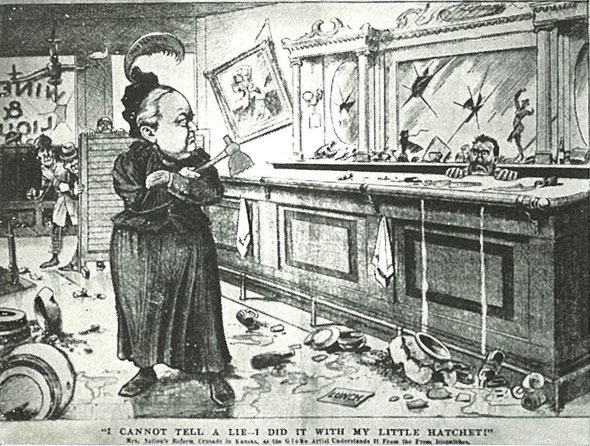
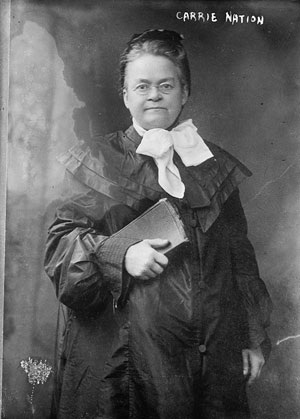
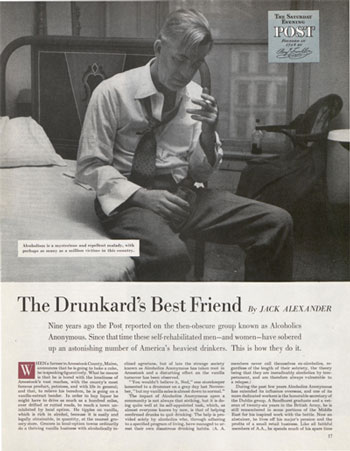
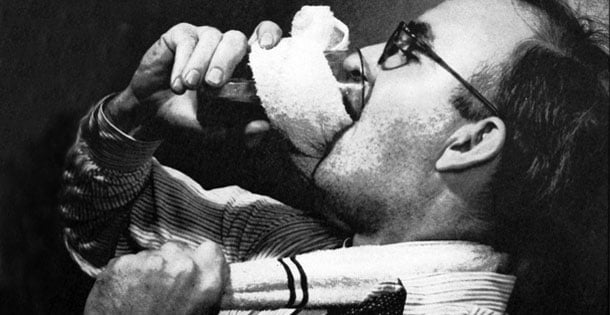
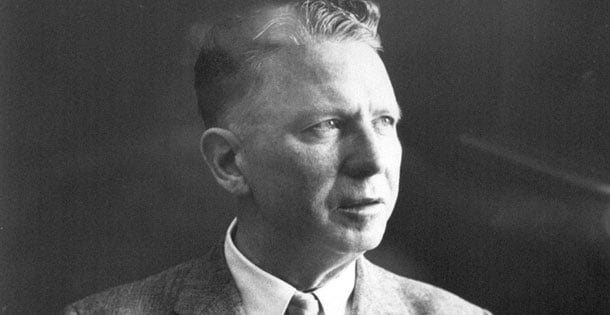
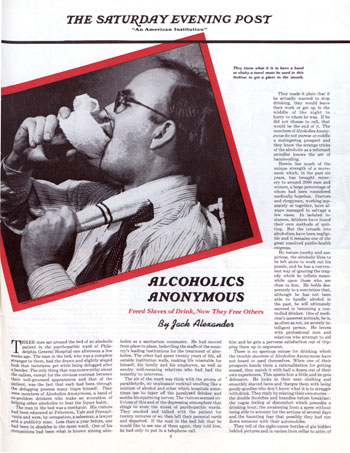
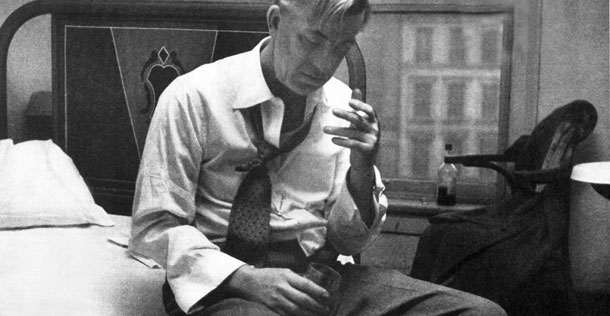













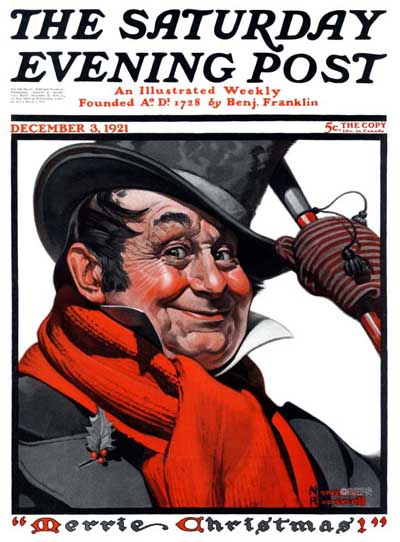



 At breakfast, he confessed what was obvious by now, that he’d never been to this part of his country before. He promised to do better, but the first hours were a prelude to what would become a daily misery. It did not matter how simple or complicated the route was or how far we had to go. We got lost in villages, cities, and on country roads. Twice we got lost on highways.The others tried to be good-natured about it. “Just relax,” my companions would counsel me. Whenever people tell me to relax, it causes the muscles in my neck to spasm. But I found it impossible to be breezy about spending my waking hours in Italy in the back of a not very comfortable van. It was not just the lost time, nor even the sheer environmental impact of the excess fuel we were burning, that bothered me. It was Uncle Joe’s imperturbability. His radiant smile was disaster-proof. Sometimes it would become meek but would always snap back into shape.