Seriously Good Summer Films
If superhero flicks leave you defeated and sequels seem stale, Bill Newcott has a few recommendations that will perk up your summer screen time.
Boundaries (June 22)
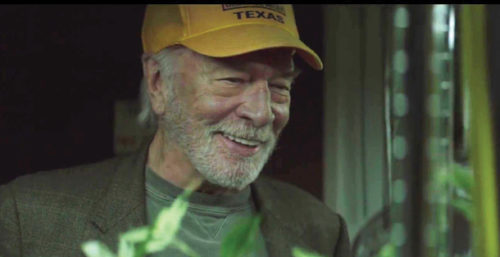
Christopher Plummer continues his string of superb late-career performances, this time as the cranky ne’er-do-well father of a single mom (Vera Farmiga) on a road trip from Washington State to L.A. Plummer has mastered the role of the charming rascal, and the pair are surrounded by a top-notch supporting cast that includes Kristen Schaal, Bobby Cannavale, Peter Fonda, and the always wondrous Christopher Lloyd.
Woman Walks Ahead (June 29)

The Wild West is no place for a woman — or so they tell Brooklyn painter Caroline Weldon (Jessica Chastain), who ignores everyone’s warnings and heads to Dakota Territory, determined to get Chief Sitting Bull (Michael Greyeyes) to sit for a portrait. Sparks fly, of course, and not just from the campfire. Sam Rockwell is perfect as a racist but conflicted officer, and Bill Camp is infuriatingly charming as a duplicitous Army bigwig.
Yellow Submarine (July 8)
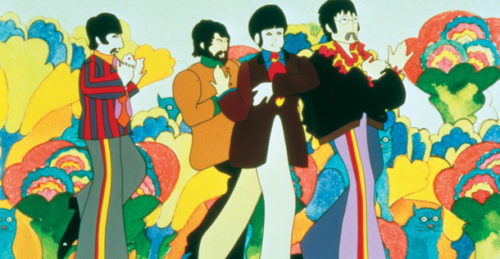
For two generations, the Beatles’ hallucinogenic toon trip has been confined to home screens. Now, for the film’s 50th anniversary, the animated lads are setting sail in theaters nationwide. Disney was the only big-screen cartoon game in town in 1968, so absolutely nobody was prepared for the mind-blowing impact of this Peter Max-inspired kaleidoscope of Blue Meanies, Apple Bonkers, and acid-laced imagery. If you don’t see it on as large a screen as possible, you’re nowhere, man.
For biweekly video reviews of the latest films, go to saturdayeveningpost.com/movies or check out Bill Newcott’s website, moviesfortherestofus.com.
This article is featured in the July/August 2018 issue of The Saturday Evening Post. Subscribe to the magazine for more art, inspiring stories, fiction, humor, and features from our archives.
“A Piece of Steak” by Jack London
Jack London’s short stories in the Post concerned adventurers, criminals, workingmen, society folks, and — sometimes — wild animals. In “A Piece of Steak,” from 1909, a desperate, aging boxer is pitted against a young pugilist in a fight for his dignity. London’s work examines human nature on the edge of survival, and his keen perception of competition reveals a different kind of toil: “not like a modern workingman going to his machine grind, but in the old, primitive, royal, animal way, by fighting for it.”
Content Warning: Racial slur
With the last morsel of bread Tom King wiped his plate clean of the last particle of flour gravy and chewed the resulting mouthful in a slow and meditative way. When he arose from the table he was oppressed by the feeling that he was distinctly hungry. Yet he alone had eaten. The two children in the other room had been sent early to bed in order that in sleep they might forget they had gone supperless. His wife had touched nothing, and had sat silently and watched him with solicitous eyes. She was a thin, worn woman of the working class, though signs of an earlier prettiness were not wanting in her face. The flour for the gravy she had borrowed from the neighbor across the hall. The last two ha’pennies had gone to buy the bread.
He sat down by the window on a rickety chair that protested under his weight, and quite mechanically he put his pipe in his mouth and dipped into the side pocket of his coat. The absence of any tobacco made him aware of his action and, with a scowl for his forgetfulness, he put the pipe away. His movements were slow, almost hulking, as though he were burdened by the heavy weight of his muscles. He was a solid-bodied, stolid-looking man, and his appearance did not suffer from being overprepossessing. His rough clothes were old and slouchy. The uppers of his shoes were too weak to carry the heavy resoling that was itself of no recent date. And his cotton shirt, a cheap, two-shilling affair, showed a frayed collar and ineradicable paint stains.
But it was Tom King’s face that advertised him unmistakably for what he was. It was the face of a typical prizefighter; of one who had put in long years of service in the squared ring and, by that means, developed and emphasized all the marks of the fighting beast. It was distinctly a lowering countenance, and, that no feature of it might escape notice, it was clean-shaven. The lips were shapeless and constituted a mouth harsh to excess, that was like a gash in his face. The jaw was aggressive, brutal, heavy. The eyes, slow of movement and heavy-lidded, were almost expressionless under the shaggy, indrawn brows. Sheer animal that he was, the eyes were the most animal-like feature about him. They were sleepy, lionlike — the eyes of a fighting animal. The forehead slanted quickly back to the hair, which, clipped close, showed every bump of the villainous-looking head. A nose, twice broken and moulded variously by countless blows, and a cauliflower ear, permanently swollen and distorted to twice its size, completed his adornment, while the beard, fresh-shaven as it was, sprouted in the skin and gave the face a blue-black stain.
Altogether, it was the face of a man to be afraid of in a dark alley or lonely place. And yet Tom King was not a criminal, nor had he ever done anything criminal. Outside of brawls, common to his walk in life, he had harmed no one. Nor had he ever been known to pick a quarrel. He was a professional, and all the fighting brutishness of him was reserved for his professional appearances. Outside the ring he was slow-going, easy-natured, and, in his younger days when money was flush, too open-handed for his own good. He bore no grudges and had few enemies. Fighting was a business with him. In the ring he struck to hurt, struck to maim, struck to destroy; but there was no animus in it. It was a plain business proposition. Audiences assembled and paid for the spectacle of men knocking each other out. The winner took the big end of the purse. When Tom King faced the Woolloomoolloo Gouger, twenty years before, he knew that the Gouger’s jaw was only four months healed after having been broken in a Newcastle bout. And he had played for that jaw and broken it again in the ninth round, not because he bore the Gouger any ill will, but because that was the surest way to put the Gouger out and win the big end of the purse. Nor had the Gouger borne him any ill will for it. It was the game, and both knew the game and played it.
Tom King had never been a talker, and he sat by the window, morosely silent, staring at his hands. The veins stood out on the backs of the hands, large and swollen; and the knuckles, smashed and battered and malformed, testified to the use to which they had been put. He had never heard that a man’s life was the life of his arteries, but well he knew the meaning of those big, upstanding veins. His heart had pumped too much blood through them at top pressure. They no longer did the work. He had stretched the elasticity out of them, and with their distention had passed his endurance. He tired easily now. No longer could he do a fast twenty rounds, hammer and tongs, fight, fight, fight, from gong to gong, with fierce rally on top of fierce rally, beaten to the ropes and in turn beating his opponent to the ropes, and rallying fiercest and fastest of all in that last, twentieth round, with the house on its feet and yelling, himself rushing, striking, ducking, raining showers of blows upon showers of blows and receiving showers of blows in return, and all the time the heart faithfully pumping the surging blood through the adequate veins. The veins, swollen at the time, had always shrunk down again, though not quite — each time, imperceptibly at first, remaining just a trifle larger than before. He stared at them and at his battered knuckles, and, for the moment, caught a vision of the youthful excellence of those hands before the first knuckle had been smashed on the head of Benny Jones, otherwise known as the Welsh Terror.
The impression of his hunger came back on him.
“Blimey, but couldn’t I go a piece of steak!” he muttered aloud, clenching his huge fists and spitting out a smothered oath.
“I tried both Burke’s an’ Sawley’s,” his wife said half apologetically.
“An’ they wouldn’t?” he demanded.
“Not a ha’penny. Burke said — ” She faltered.
“G’wan! Wot ‘d he say?”
“As how ‘e was thinkin’ Sandel ud do ye tonight, an’ as how yer score was comfortable big as it was.”
Tom King grunted, but did not reply. He was busy thinking of the bull terrier he had kept in his younger days to which he had fed steaks without end. Burke would have given him credit for a thousand steaks — then. But times had changed. Tom King was getting old; and old men, fighting before second-rate clubs, couldn’t expect to run bills of any size with the tradesmen.
He had got up in the morning with a longing for a piece of steak, and the longing had not abated. He had not had a fair training for this fight. It was a drought year in Australia, times were hard and even the most irregular work was difficult to find. He had had no sparring partner and his food had not been of the best nor always sufficient. He had done a few days’ navvy work when he could get it, and he had run around the Domain in the early mornings to get his legs in shape. But it was hard training without a partner and with a wife and two kiddies that must be fed. Credit with the tradesmen had undergone very slight expansion when he was matched with Sandel. The secretary of the Gayety Club had advanced him three pounds — the loser’s end of the purse — and beyond that had refused to go. Now and again he had managed to borrow a few shillings from old pals, who would have lent more only that it was a drought year and they were hard put themselves. No — and there was no use in disguising the fact — his training had not been satisfactory. He should have had better food and no worries. Besides, when a man is forty it is harder to get into condition than when he is twenty.
“What time is it, Lizzie?” he asked.
His wife went across the hall to inquire and came back. “Quarter before eight.”
“They’ll be startin’ the first bout in a few minutes,” he said. “Only a tryout. Then there’s a four-round spar ‘tween Dealer Wells an’ Gridley, an’ a ten-round go ‘tween Starlight an’ some sailor bloke. I don’t come on for over an hour.”
At the end of another silent ten minutes he rose to his feet.
“Truth is, Lizzie, I ain’t had proper trainin’.”
He reached for his hat and started for the door. He did not offer to kiss her — he never did on going out — but on this night she dared to kiss him, throwing her arms around him and compelling him to bend down to her face. She looked quite small against the massive bulk of the man.
“Good luck, Tom,” she said. “You gotter do ‘im.”
“Ay, I gotter do ‘im,” he repeated. “That’s all there is to it. I jus’ gotter do ‘im.”
He laughed with an attempt at heartiness, while she pressed more closely against him. Across her shoulders he looked around the bare room. It was all he had in the world, with the rent overdue, and her and the kiddies. And he was leaving it to go out into the night to get meat for his mate and cubs — not like a modern workingman going to his machine grind, but in the old, primitive, royal, animal way, by fighting for it.
“I gotter do ‘im,” he repeated, this time a hint of desperation in his voice. “If it’s a win it’s thirty quid — an’ I can pay all that’s owin’, with a lump o’ money left over. If it’s a lose I get naught — not even a penny for me to ride home on the tram. The secretary’s give all that’s comin’ from a loser’s end. Goodbye, old woman. I’ll come straight home if it’s a win.”
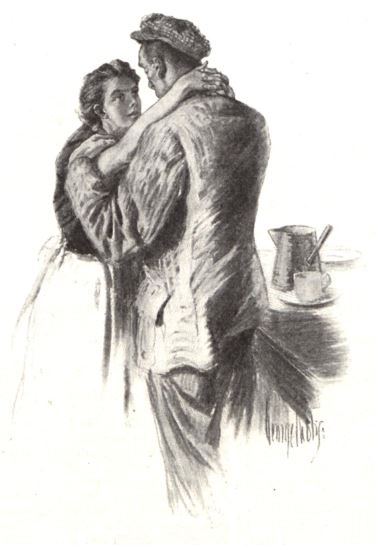
“An’ I’ll be waitin’ up,” she called to him along the hall. It was a full two miles to the Gayety, and as he walked along he remembered how in his palmy days — he had once been the heavyweight champion of New South Wales — he would have ridden in a cab to the fight, and how, most likely, some heavy backer would have paid for the cab and ridden with him. There were Tommy Burns and that Yankee nigger, Jack Johnson — they rode about in motor cars. And he walked! And, as any man knew, a hard two miles was not the best preliminary to a fight. He was an old un, and the world did not wag well with old uns. He was good for nothing now except navvy work, and his broken nose and swollen ear were against him even in that. He found himself wishing that he had learned a trade. It would have been better in the long run. But no one had told him, and he knew, deep down in his heart, that he would not have listened if they had. It had been so easy. Big money — sharp, glorious fights — periods of rest and loafing in between — a following of eager flatterers, the slaps on the back, the shakes of the hand, the toffs glad to buy him a drink for the privilege of five minutes’ talk — and the glory of it, the yelling houses, the whirlwind finish, the referee’s “King wins!” and his name in the sporting columns next day.
Those had been times! But he realized now, in his slow, ruminating way, that it was the old uns he had been putting away. He was Youth, rising; and they were Age, sinking. No wonder it had been easy — they with their swollen veins and battered knuckles and weary in the bones of them from the long battles they had already fought. He remembered the time he put out old Stowsher Bill, at Rush-Cutters Bay, in the eighteenth round, and how old Bill had cried afterward in the dressing-room like a baby. Perhaps old Bill’s rent had been overdue. Perhaps he’d had at home a missus an’ a couple of kiddies. And perhaps Bill, that very day of the fight, had had a hungering for a piece of steak. Bill had fought game and taken incredible punishment. He could see now, after he had gone through the mill himself, that Stowsher Bill had fought for a bigger stake, that night twenty years ago, than had young Tom King, who had fought for glory and easy money. No wonder Stowsher Bill had cried afterward in the dressing room.
Well, a man had only so many fights in him, to begin with. It was the iron law of the game. One man might have a hundred hard fights in him, another man only twenty; each, according to the make of him and the quality of his fiber, had a definite number, and when he had fought them he was done. Yes, he had had more fights in him than most of them, and he had had far more than his share of the hard, grueling fights — the kind that worked the heart and lungs to bursting, that took the elastic out of the arteries and made hard knots of muscle out of youth’s sleek suppleness, that wore out nerve and stamina and made brain and bones weary from excess of effort and endurance overwrought. Yes, he had done better than all of them. There was none of his old fighting partners left. He was the last of the old guard. He had seen them all finished, and he had had a hand in finishing some of them.
They had tried him out against the old uns, and one after another he had put them away — laughing when, like old Stowsher Bill, they cried in the dressing room. And now he was an old un, and they tried out the youngsters on him. There was that bloke, Sandel. He had come over from New Zealand with a record behind him. But nobody in Australia knew anything about him, so they put him up against old Tom King. If Sandel made a showing he would be given better men to fight, with bigger purses to win; so it was to be depended upon that he would put up a fierce battle. He had everything to win by it — money and glory and career; and Tom King was the grizzled old chopping-block that guarded the highway to fame and fortune. And he had nothing to win except thirty quid, to pay to the landlord and the tradesmen. And, as Tom King thus ruminated, there came to his stolid vision the form of Youth, glorious Youth, rising exultant and invincible, supple of muscle and silken of skin, with heart and lungs that had never been tired and torn and that laughed at limitation of effort. Yes, Youth was the Nemesis. It destroyed the old uns and reeked not that, in so doing, it destroyed itself. It enlarged its arteries and smashed its knuckles, and was in turn destroyed by Youth. For Youth was ever youthful. It was only Age that grew older.
At Castlereagh Street he turned to the left, and three blocks along came to the Gayety. A crowd of young larrikins hanging outside the door made respectful way for him, and he heard one say to another: “That’s ‘im! That’s Tom King!”
Inside, on the way to his dressing room, he encountered the secretary, a keen-eyed, shrewd-faced young man who shook his hand.
“How are you feelin’, Tom?” he asked.
“Fit as a fiddle,” King answered, though he knew that he lied, and that if he had a quid he would give it right there for a good piece of steak.
When he emerged from the dressing room, his seconds behind him, and came down the aisle to the squared ring in the center of the hall, a burst of greeting and applause went up from the waiting crowd. He acknowledged salutations right and left, though few of the faces did he know. Most of them were the faces of kiddies unborn when he was winning his first laurels in the squared ring. He leaped lightly to the raised platform and ducked through the ropes to his corner, where he sat down on a folding stool. Jack Ball, the referee, came over and shook his hand. Ball was a broken-down pugilist who for over ten years had not entered the ring as a principal. King was glad that he had him for referee. They were both old uns. If he should rough it with Sandel a bit beyond the rules he knew Ball could be depended upon to pass it by.
Aspiring young heavyweights, one after another, were climbing into the ring and being presented to the audience by the referee. Also, he issued their challenges for them.
“Young Pronto,” Ball announced, “from North Sydney, challenges the winner for fifty pounds side bet.”
The audience applauded, and applauded again as Sandel himself sprang through the ropes and sat down in his corner. Tom King looked across the ring at him curiously, for in a few minutes they would be locked together in merciless combat, each trying with all the force of him to knock the other into unconsciousness. But little could he see, for Sandel, like himself, had trousers and sweater on over his ring costume. His face was strongly handsome, crowned with a curly mop of yellow hair, while his thick, muscular neck hinted at bodily magnificence.
Young Pronto went to one corner and then the other, shaking hands with the principals and dropping down out of the ring. The challenges went on. Ever Youth climbed through the ropes — Youth unknown, but insatiable — crying out to mankind that with strength and skill it would match issues with the winner. A few years before, in his own heyday of invincibleness, Tom King would have been amused and bored by these preliminaries. But now he sat fascinated, unable to shake the vision of Youth from his eyes. Always were these youngsters rising up in the boxing game, springing through the ropes and shouting their defiance; and always were the old uns going down before them. They climbed to success over the bodies of the old uns. And ever they came, more and more youngsters — Youth unquenchable and irresistible — and ever they put the old uns away, themselves becoming old uns and traveling the same downward path, while behind them, ever pressing on them, was Youth eternal — the new babies, grown lusty and dragging their elders down, with behind them more babies to the end of time — Youth that must have its will and that will never die.
King glanced over to the press box and nodded to Morgan, of the Sportsman, and Corbett, of the Referee. Then he held out his hands, while Sid Sullivan and Charley Bates, his seconds, slipped on his gloves and laced them tight, closely watched by one of Sandel’s seconds, who first examined critically the tapes on King’s knuckles. A second of his own was in Sandel’s corner, performing a like office. Sandel’s trousers were pulled off and, as he stood up, his sweater was skinned off over his head. And Tom King, looking, saw Youth incarnate, deepchested, heavy-thewed, with muscles that slipped and slid like live things under the white satin skin. The whole body was acrawl with life, and Tom King knew that it was a life that had never oozed its freshness out through the aching pores during the long fights wherein Youth paid its toll and departed not quite so young as when it entered.
The two men advanced to meet each other and, as the gong sounded and the seconds clattered out of the ring with the folding stools, they shook hands with each other and instantly took their fighting attitudes. And instantly, like a mechanism of steel and springs balanced on a hair trigger, Sandel was in and out and in again, landing a left to the eyes, a right to the ribs, ducking a counter, dancing lightly away and dancing menacingly back again. He was swift and clever. It was a dazzling exhibition. The house yelled its approbation. But King was not dazzled. He had fought too many fights and too many youngsters. He knew the blows for what they were — too quick and too deft to be dangerous. Evidently Sandel was going to rush things from the start. It was to be expected. It was the way of Youth, expending its splendor and excellence in wild insurgence and furious onslaught, overwhelming opposition with its own unlimited glory of strength and desire.
Sandel was in and out, here, there and everywhere, light-footed and eager-hearted, a living wonder of white flesh and stinging muscle that wove itself into a dazzling fabric of attack, slipping and leaping like a flying shuttle from action to action through a thousand actions, all of them centered upon the destruction of Tom King, who stood between him and fortune. And Tom King patiently endured. He knew his business, and he knew Youth now that Youth was no longer his. There was nothing to do till the other lost some of his steam, was his thought, and he grinned to himself as he deliberately ducked so as to receive a heavy blow on the top of his head. It was a wicked thing to do, yet eminently fair according to the rules of the boxing game. A man was supposed to take care of his own knuckles, and if he insisted on hitting an opponent on the top of the head he did so at his own peril. King could have ducked lower and let the blow whiz harmlessly past, but he remembered his own early fights and how he smashed his first knuckle on the head of the Welsh Terror. He was but playing the game. That duck had accounted for one of Sandel’s knuckles. Not that Sandel would mind it now. He would go on, superbly regardless, hitting as hard as ever throughout the fight. But later on, when the long ring battles had begun to tell, he would regret that knuckle and look back and remember how he smashed it on Tom King’s head.
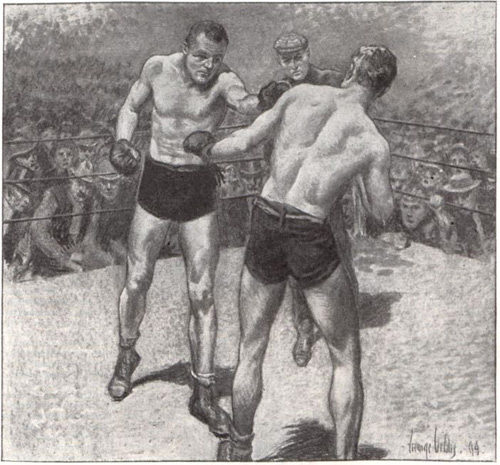
The first round was all Sandel’s, and he had the house yelling with the rapidity of his whirlwind rushes. He overwhelmed King with avalanches of punches, and King did nothing. He never struck once, contenting himself with covering up, blocking and ducking and clinching to avoid punishment. He occasionally feinted, shook his head when the weight of a punch landed, and moved stolidly about, never leaping or springing or wasting an ounce of strength. Sandel must foam the froth of Youth away before discreet Age could dare to retaliate. All King’s movements were slow and methodical, and his heavy-lidded, slow-moving eyes gave him the appearance of being half asleep or dazed. Yet they were eyes that saw everything, that had been trained to see everything through all his twenty years and odd in the ring. They were eyes that did not blink or waver before an impending blow, but that coolly saw and measured distance.
Seated in his corner for the minute’s rest at the end of the round, he lay back with outstretched legs, his arms resting on the right angle of the ropes, his chest and abdomen heaving frankly and deeply as he gulped down the air driven by the towels of his seconds. He listened with closed eyes to the voices of the house. “Why don’t yeh fight, Tom?” many were crying. “Yeh ain’t afraid of ‘im, are yeh?”
“Muscle-bound,” he heard a man on a front seat comment. “He can’t move quicker. Two to one on Sandel, in quids.”
The gong struck and the two men advanced from their corners. Sandel came forward fully three-quarters of the distance, eager to begin again; but King was content to advance the shorter distance. It was in line with his policy of economy. He had not been well-trained and he had not had enough to eat, and every step counted. Besides, he had already walked two miles to the ringside. It was a repetition of the first round, with Sandel attacking like a whirlwind and with the audience indignantly demanding why King did not fight. Beyond feinting and several slowly-delivered and ineffectual blows he did nothing save block and stall and clinch. Sandel wanted to make the pace fast, while King, out of his wisdom, refused to accommodate him. He grinned with a certain wistful pathos in his ring-battered countenance, and went on cherishing his strength with the jealousy of which only Age is capable. Sandel was Youth, and he threw his strength away with the munificent abandon of Youth. To King belonged the ring generalship, the wisdom bred of long, aching fights. He watched with cool eyes and head, moving slowly and waiting for Sandel’s froth to foam away. To the majority of the onlookers it seemed as though King was hopelessly outclassed, and they voiced their opinion in offers of three to one on Sandel. But there were wise ones, a few, who knew King of old time and who covered what they considered easy money.
The third round began as usual, one-sided, with Sandel doing all the leading and delivering all the punishment. A half-minute had passed when Sandel, overconfident, left an opening. King’s eyes and right arm flashed in the same instant. It was his first real blow — a hook, with the twisted arch of the arm to make it rigid, and with all the weight of the half-pivoted body behind it. It was like a sleepy-seeming lion suddenly thrusting out a lightning paw. Sandel, caught on the side of the jaw, was felled like a bullock. The audience gasped and murmured awestricken applause. The man was not muscle-bound, after all, and he could drive a blow like a trip hammer.
Sandel was shaken. He rolled over and attempted to rise, but the sharp yells from his seconds to take the count restrained him. He knelt on one knee, ready to rise, and waited, while the referee stood over him, counting the seconds loudly in his ear. At the ninth he rose in fighting attitude, and Tom King, facing him, knew regret that the blow had not been an inch nearer the point of the jaw. That would have been a knockout, and he could have carried the thirty quid home to the missus and the kiddies.
The round continued to the end of its three minutes, Sandel for the first time respectful of his opponent and King slow of movement and sleepy-eyed as ever. As the round neared its close King, warned of the fact by sight of the seconds crouching outside ready for the spring in through the ropes, worked the fight around to his own corner. And when the gong struck he sat down immediately on the waiting stool, while Sandel had to walk all the way across the diagonal of the square to his own corner. It was a little thing, but it was the sum of little things that counted. Sandel was compelled to walk that many more steps, to give up that much energy and to lose a part of the precious minute of rest. At the beginning of every round King loafed slowly out from his corner, forcing his opponent to advance the greater distance. The end of every round found the fight maneuvered by King into his own corner so that he could immediately sit down.
Two more rounds went by, in which King was parsimonious of effort and Sandel prodigal. The latter’s attempt to force a fast pace made King uncomfortable, for a fair percentage of the multitudinous blows showered upon him went home. Yet King persisted in his dogged slowness, despite the crying of the young hotheads for him to go in and fight. Again, in the sixth round, Sandel was careless, again Tom King’s fearful right flashed out to the jaw, and again Sandel took the nine seconds’ count.
By the seventh round Sandel’s pink of condition was gone and he settled down to what he knew was to be the hardest fight in his experience. Tom King was an old un, but a better old un than he had ever encountered — an old un who never lost his head, who was remarkably able at defense, whose blows had the impact of a knotted club and who had a knockout in either hand. Nevertheless, Tom King dared not hit often. He never forgot his battered knuckles, and knew that every hit must count if the knuckles were to last out the fight. As he sat in his corner, glancing across at his opponent, the thought came to him that the sum of his wisdom and Sandel’s youth would constitute a world’s champion heavyweight. But that was the trouble. Sandel would never become a world champion. He lacked the wisdom, and the only way for him to get it was to buy it with Youth; and when wisdom was his, Youth would have been spent in buying it.
King took every advantage he knew. He never missed an opportunity to clinch, and in effecting most of the clinches his shoulder drove stiffly into the other’s ribs. In the philosophy of the ring a shoulder was as good as a punch so far as damage was concerned, and a great deal better so far as concerned expenditure of effort. Also, in the clinches King rested his weight on his opponent and was loth to let go. This compelled the interference of the referee, who tore them apart, always assisted by Sandel, who had not yet learned to rest. He could not refrain from using those glorious flying arms and writhing muscles of his, and when the other rushed into a clinch, striking shoulder against ribs and with head resting under Sandel’s left arm, Sandel almost invariably swung his right behind his own back and into the projecting face. It was a clever stroke, much admired by the audience, but it was not dangerous, and was, therefore, just that much wasted strength. But Sandel was tireless and unaware of limitations, and King grinned and doggedly endured.
Sandel developed a fierce right to the body, which made it appear that King was taking an enormous amount of punishment, and it was only the old ringsters who appreciated the deft touch of King’s left glove to the other’s biceps just before the impact of the blow. It was true, the blow landed each time; but each time it was robbed of its power by that touch on the biceps. In the ninth round, three times inside a minute, King’s right hooked its twisted arch to the jaw; and three times Sandel’s body, heavy as it was, was leveled to the mat. Each time he took the nine seconds allowed him and rose to his feet, shaken and jarred, but still strong. He had lost much of his speed and he wasted less effort. He was fighting grimly; but he continued to draw upon his chief asset, which was Youth. King’s chief asset was experience. As his vitality had dimmed and his vigor abated he had replaced them with cunning, with wisdom born of the long fights and with a careful shepherding of strength. Not alone had he learned never to make a superfluous movement, but he had learned how to seduce an opponent into throwing his strength away. Again and again, by feint of foot and hand and body he continued to inveigle Sandel into leaping back, ducking or countering. King rested, but he never permitted Sandel to rest. It was the strategy of Age.
Early in the tenth round King began stopping the other’s rushes with straight lefts to the face, and Sandel, grown wary, responded by drawing the left; then by ducking it and delivering his right in a swinging hook to the side of the head. It was too high up to be vitally effective; but when first it landed King knew the old, familiar descent of the black veil of unconsciousness across his mind. For the instant, or for the slightest fraction of an instant rather, he ceased. In the one moment he saw his opponent ducking out of his field of vision and the background of white, watching faces; in the next moment he again saw his opponent and the background of faces. It was as if he had slept for a time and just opened his eyes again, and yet the interval of unconsciousness was so microscopically short that there had been no time for him to fall. The audience saw him totter and his knees give, and then saw him recover and tuck his chin deeper into the shelter of his left shoulder.
Several times Sandel repeated the blow, keeping King partially dazed, and then the latter worked out his defense, which was also a counter. Feinting with his left he took a half-step backward, at the same time uppercutting with the whole strength of his right. So accurately was it timed that it landed squarely on Sandel’s face in the full, downward sweep of the duck, and Sandel lifted in the air and curled backward, striking the mat on his head and shoulders. Twice King achieved this, then turned loose and hammered his opponent to the ropes. He gave Sandel no chance to rest or to set himself, but smashed blow in upon blow till the house rose to its feet and the air was filled with an unbroken roar of applause. But Sandel’s strength and endurance were superb, and he continued to stay on his feet. A knockout seemed certain, and a captain of police, appalled at the dreadful punishment, arose by the ringside to stop the fight. The gong struck for the end of the round and Sandel staggered to his corner, protesting to the captain that he was sound and strong. To prove it he threw two back air springs, and the police captain gave in.
Tom King, leaning back in his corner and breathing hard, was disappointed. If the fight had been stopped the referee, perforce, would have rendered him the decision and the purse would have been his. Unlike Sandel, he was not fighting for glory or career, but for thirty quid. And now Sandel would recuperate in the minute of rest.
Youth will be served — this saying flashed into King’s mind, and he remembered the first time he had heard it, the night when he had put away Stowsher Bill. The toff who had bought him a drink after the fight and patted him on the shoulder had used those words. Youth will be served! The toff was right. And on that night in the long ago he had been Youth. Tonight Youth sat in the opposite corner. As for himself, he had been fighting for half an hour now, and he was an old man. Had he fought like Sandel he would not have lasted fifteen minutes. But the point was that he did not recuperate. Those upstanding arteries and that sorely-tried heart would not enable him to gather strength in the intervals between the rounds. And he had not had sufficient strength in him to begin with. His legs were heavy under him and beginning to cramp. He should not have walked those two miles to the fight. And there was the steak which he had got up longing for that morning. A great and terrible hatred rose up in him for the butchers who had refused him credit. It was hard for an old man to go into a fight without enough to eat. And a piece of steak was such a little thing, a few pennies at best; yet it meant thirty quid to him.
With the gong that opened the eleventh round Sandel rushed, making a show of freshness which he did not really possess. King knew it for what it was — a bluff as old as the game itself. He clinched to save himself, then, going free, allowed Sandel to get set. This was what King desired. He feinted with his left, drew the answering duck and swinging upward hook, then made the half-step backward, delivered the uppercut full to the face and crumpled Sandel over to the mat. After that he never let him rest, receiving punishment himself, but inflicting far more, smashing Sandel to the ropes, hooking and driving all manner of blows into him, tearing away from his clinches or punching him out of attempted clinches, and ever, when Sandel would have fallen, catching him with one uplifting hand and with the other immediately smashing him into the ropes where he could not fall.
The house by this time had gone mad, and it was his house, nearly every voice yelling: “Go it, Tom!” “Get ‘im! Get ‘im!” “You’ve got ‘im, Tom! You’ve got ‘im!” It was to be a whirlwind finish, and that was what a ringside audience paid to see.
And Tom King, who for half an hour had conserved his strength, now expended it prodigally in the one great effort he knew he had in him. It was his one chance — now or not at all. His strength was waning fast, and his hope was that before the last of it ebbed out of him he would have beaten his opponent down for the count. And as he continued to strike and force, coolly estimating the weight of his blows and the quality of the damage wrought, he realized how hard a man Sandel was to knock out. Stamina and endurance were his to an extreme degree, and they were the virgin stamina and endurance of Youth. Sandel was certainly a coming man. He had it in him. Only out of such rugged fiber were successful fighters fashioned.
Sandel was reeling and staggering, but Tom King’s legs were cramping and his knuckles going back on him. Yet he steeled himself to strike the fierce blows, every one of which brought anguish to his tortured hands. Though now he was receiving practically no punishment he was weakening as rapidly as the other. His blows went home, but there was no longer the weight behind them, and each blow was the result of a severe effort of will. His legs were like lead, and they dragged visibly under him; while Sandel’s backers, cheered by this symptom, began calling encouragement to their man.
King was spurred to a burst of effort. He delivered two blows in succession — a left, a trifle too high, to the solar plexus, and a right cross to the jaw. They were not heavy blows, yet so weak and dazed was Sandel that he went down and lay quivering. The referee stood over him, shouting the count of the fatal seconds in his ear. If before the tenth second was called he did not rise the fight was lost. The house stood in hushed silence. King rested on trembling legs. A mortal dizziness was upon him, and before his eyes the sea of faces sagged and swayed, while to his ears, as from a remote distance, came the count of the referee. Yet he looked upon the fight as his. It was impossible that a man so punished could rise.
Only Youth could rise, and Sandel rose. At the fourth second he rolled over on his face and groped blindly for the ropes. By the seventh second he had dragged himself to his knee, where he rested, his head rolling groggily on his shoulders. As the referee cried “Nine!” Sandel stood upright, in proper stalling position, his left arm wrapped about his face, his right wrapped about his stomach. Thus were his vital points guarded, while he lurched forward toward King in the hope of effecting a clinch and gaining more time.
At the instant Sandel arose King was at him, but the two blows he delivered were muffled on the stalled arms. The next moment Sandel was in the clinch and holding on desperately while the referee strove to drag the two men apart. King helped to force himself free. He knew the rapidity with which Youth recovered and he knew that Sandel was his if he could prevent that recovery. One stiff punch would do it. Sandel was his, indubitably his. He had outgeneraled him, outfought him, outpointed him. Sandel reeled out of the clinch, balanced on the hairline between defeat or survival. One good blow would topple him over and down and out. And Tom King, in a flash of bitterness, remembered the piece of steak and wished that he had it then behind that necessary punch he must deliver. He nerved himself for the blow, but it was not heavy enough nor swift enough. Sandel swayed but did not fall, staggering back to the ropes and holding on. King staggered after him and, with a pang like that of dissolution, delivered another blow. But his body had deserted him. All that was left of him was a fighting intelligence that was dimmed and clouded from exhaustion. The blow that was aimed for the jaw struck no higher than the shoulder. He had willed the blow higher, but the tired muscles had not been able to obey. And from the impact of the blow Tom King himself reeled back and nearly fell. Once again he strove. This time his punch missed altogether, and, from absolute weakness, he fell against Sandel and clinched, holding on to him to save himself from sinking to the floor.
King did not attempt to free himself. He had shot his bolt. He was gone. And Youth had been served. Even in the clinch he could feel Sandel growing stronger against him. When the referee thrust them apart, there, before his eyes, he saw Youth recuperate. From instant to instant Sandel grew stronger. His punches, weak and futile at first, became stiff and accurate. Tom King’s bleared eyes saw the gloved fist driving at his jaw and he willed to guard it by interposing his arm. He saw the danger, willed the act; but the arm was too heavy. It seemed burdened with a hundredweight of lead. It would not lift itself, and he strove to lift it with his soul. Then the gloved fist landed home. He experienced a sharp snap that was like an electric spark and, simultaneously, the veil of blackness enveloped him.
When he opened his eyes again he was in his corner, and he heard the yelling of the audience like the roar of the surf at Bondi Beach. A wet sponge was being pressed against the base of his brain and Sid Sullivan was blowing cold water in a refreshing spray over his face and chest. His gloves had already been removed and Sandel, bending over him, was shaking his hand. He bore no ill will toward the man who had put him out, and he returned the grip with a heartiness that made his battered knuckles protest. Then Sandel stepped to the center of the ring and the audience hushed its pandemonium to hear him accept young Pronto’s challenge and offer to increase the side bet to one hundred pounds. King looked on apathetically while his seconds mopped the streaming water from him, dried his face and prepared him to leave the ring. He felt hungry. It was not the ordinary, gnawing kind, but a great faintness, a palpitation at the pit of the stomach that communicated itself to all his body. He remembered back into the fight to the moment when he had Sandel swaying and tottering on the hairline balance of defeat. Ah, that piece of steak would have done it! He had lacked just that for the decisive blow, and he had lost. It was all because of the piece of steak.
His seconds were half-supporting him as they helped him through the ropes. He tore free from them, ducked through the ropes unaided and leaped heavily to the floor, following on their heels as they forced a passage for him down the crowded center aisle. Leaving the dressing room for the street, in the entrance. to the hall, some young fellow spoke to him.
“W’y didn’t yuh go in an’ get ‘im when yuh ‘ad ‘im?” the young fellow asked.
“Aw, go to hell!” said Tom King, and passed down the steps to the sidewalk.
The doors of the public house at the corner were swinging wide, and he saw the lights and the smiling barmaids, heard the many voices discussing the fight and the prosperous chink of money on the bar. Somebody called to him to have a drink. He hesitated perceptibly, then refused and went on his way.
He had not a copper in his pocket and the two-mile walk home seemed very long. He was certainly getting old. Crossing the Domain he sat down suddenly on a bench, unnerved by the thought of the missus sitting up for him, waiting to learn the outcome of the fight. That was harder than any knockout, and it seemed almost impossible to face.
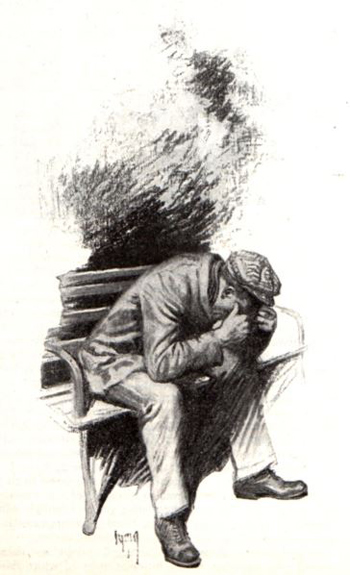
He felt weak and sore, and the pain of his smashed knuckles warned him that, even if he could find a job at navvy work, it would be a week before he could grip a pick handle or a shovel. The hunger palpitation at the pit of the stomach was sickening. His wretchedness overwhelmed him, and into his eyes came an unwonted moisture. He covered his face with his hands and, as he cried, he remembered Stowsher Bill and how he had served him that night in the long ago. Poor old Stowsher Bill! He could understand now why Bill had cried in the dressing room.
Summer Lunch by Curtis Stone
In some ways, I prefer lunch to dinner — especially on the weekend. Making light food that’s incredibly tasty and serving it in the middle of the day sets the stage for great conversation. And with temperatures on the rise, take the midday meal outdoors for a picnic in a park or a barbecue in your own backyard.
Pan Bagnat is my take on a classic French make-ahead sandwich that travels well and is ideal for a picnic. Use good-quality tuna packed in oil, not water, or substitute in chunks of freshly grilled tuna. Make the recipe a few hours ahead, then cover in plastic and store in the fridge, allowing the flavors to meld before serving. But if you’re hungry and can’t wait, it’s delicious served straightaway. The tangy basil-lemony spread coupled with the salty capers folded into the tuna creates a bright balance of flavors that scream spring.
Fire up the backyard grill and add a little spice to the menu with Grilled Chili-Rubbed Flank Steak Tacos. Flank is a nice, lean cut of meat that grills quickly and is easy to dice or cut into strips for tacos. The marinade of cumin, garlic, and chili powders gives it a nice zip. Make it easy on yourself by placing the taco accompaniments — cabbage, carrots, scallions, and other seasonal vegetables — in bowls and let family and guests assemble their own. Interactive eating is always fun and takes some of the pressure off the host.
Pan Bagnat
(Makes 6 servings)

½ cup low-fat mayonnaise
¼ cup low-fat sour cream
½ cup fresh basil leaves, torn
Grated zest and juice of 2 lemons
2 5-ounce cans tuna packed in olive oil, drained
¼ cup pitted kalamata olives, coarsely chopped
2 tablespoons capers, drained, chopped
1 14-ounce loaf ciabatta bread, split horizontally
2 cups (not packed) arugula leaves
1 cup torn radicchio leaves
4 hard-boiled eggs, sliced
2 small Persian cucumbers or ½ English (hothouse) cucumber, thinly sliced lengthwise
½ red onion, thinly sliced
In food processor, combine mayo, sour cream, basil, and half lemon zest and juice and process for 20 seconds, or until basil is coarsely chopped but not pureed. Season basil mayonnaise with salt and pepper. In small bowl, gently fold tuna, olives, capers, and remaining lemon zest and juice to combine, keeping tuna in large chunks as much as possible. Lay ciabatta cut side up on cutting board and spread basil mayonnaise over both pieces. Scatter arugula and radicchio over bottom piece. Lay slices of egg atop lettuces and follow with tuna mixture, cucumbers, and onion. Top with other piece of bread. Cut into 6 sandwiches and serve.
Make-Ahead: The sandwich can be made up to 2 hours ahead, wrapped in plastic, and refrigerated to allow flavors to marry.
Per serving
Calories: 380
Total Fat: 12 g
Saturated Fat: 3 g
Sodium: 931 mg
Carbohydrate: 42 g
Fiber: 4 g
Protein: 25 g
Diabetic Exchanges: 2 starch, 2 ½ lean meat, 1 ½ vegetables, 1 fat
Grilled Chili-Rubbed Flank Steak Tacos
(Makes 4 servings)

Steak
1 ½ teaspoons chili powder
1 teaspoon ground cumin
1 teaspoon garlic powder
¾ teaspoon kosher salt
½ teaspoon freshly ground black pepper
1 16-ounce flank steak
2 teaspoons extra-virgin olive oil
Tacos
½ head napa cabbage, halved lengthwise and shredded crosswise (about 3 cups)
1 large carrot, cut into 2-inch-long matchstick-size strips
8 scallions (white and green parts), thinly sliced on sharp diagonal
½ cup lightly packed fresh cilantro sprigs
8 6-inch corn tortillas
Accompaniments: guacamole, lime wedges, hot sauce (such as Cholula)
To prepare steak: In small bowl, mix the chili powder, cumin, garlic powder, salt, and pepper to blend. Generously sprinkle 4 teaspoons of spice mixture all over steak; reserve any remaining spice mixture for another use. Cover steak and refrigerate for at least 2 hours.
Prepare barbecue for medium-high heat. Drizzle oil over steak and grill until brown on both sides and cooked to desired doneness, about 4 minutes per side for medium-rare. Transfer steak to carving board and let rest for 5 minutes.
Meanwhile, to prepare tacos: In large bowl, toss cabbage, carrots, scallions, and cilantro together. Heat tortillas on grill, turning occasionally, for about 1 minute, or until hot. Transfer to serving bowl and cover to keep warm.
To serve, cut steak across grain into ¼-inch-thick slices. Transfer steak slices and any carving juices to platter. Let each guest fill two
tortillas with some steak and cabbage mixture and top with avocados, lime, and hot sauce.
Per serving
Calories: 394
Total Fat: 14 g
Saturated Fat: 4 g
Sodium: 572 mg
Carbohydrate: 32 g
Fiber: 6 g
Protein: 35 g
Diabetic Exchanges: 1 ½ starch, 4 ½ lean meat, 2 vegetables, ½ fat
Curtis Stone is the award-winning chef and owner of Maude and Gwen restaurants in Los Angeles.
Excerpted from What’s for Dinner? by Curtis Stone. Copyright © 2013 by Curtis Stone. Excerpted by permission of Ballantine Books, a division of Random House LLC. All rights reserved. No part of this excerpt may be reproduced or reprinted without permission in writing from the publisher.
This article is featured in the May/June 2018 issue of The Saturday Evening Post. Subscribe to the magazine for more art, inspiring stories, fiction, humor, and features from our archives.
7 Gardening Tips for Procrastinators
Now that spring is giving way to scorching summer days, you can take a step back from your garden and relish the fruits of your handiwork. That is, unless you spaced it and you’re gazing at an empty plot that you forgot to plant.
Although you may have missed out on some serious spring garden work, it’s not too late to cultivate some glee this year. Here are some ways you can catch up on the gardening game this season if you dropped the ball.
1. Plant some herbs

Basil, cilantro, and oregano will all sprout from seed in the summer heat with some care. Before long, you can start harvesting for your summer salsa and bruschetta.
2. Warm up to winter squash

The time is right to sow some acorn, butternut, or pumpkin squash seeds, if you have the space. The fast-spreaders will take over in no time, and you’ll have a decent bounty for Halloween décor or Thanksgiving dishes.
3. Water, water, water

As summer heat sets in, strategic watering will be paramount to a June garden’s success. Drench new plants in the morning or evening (or at night in particularly dry climates) so that new roots can establish before it evaporates.
4. Take up composting

It’s always a good time to invest in your gardening future with a compost bin. Put your kitchen scraps (vegetables, eggshells, and coffee grounds), leaves, and twigs to good use feeding your flowers and vegetables next year.
5. Rejuvenate your perennials

Deadheading roses, coneflowers, and daylilies will keep the color coming all summer. After a bloom is spent, prune the stalk from the plant (remove individual spent flowers if more buds appear on the same stalk) to allow it to devote energy into new blooms instead of seed production.
6. Prepare for fall crops

Getting a head start on cool-weather crops like spinach, beets, kale, and brussels sprouts will make your autumn all the sweeter. Kale and collards taste even better after a light frost.
7. Take advantage of discounted plants

Gardening centers and department stores put steep discounts on flowers and vegetable starts this time of year. You can take your chances with some cheap peppers or tomatoes, or you can lay the groundwork for a striking display next spring by snatching up leftover perennials. Even if lilies and peonies are spent for the season, some foresight will make the bargain well worth it.
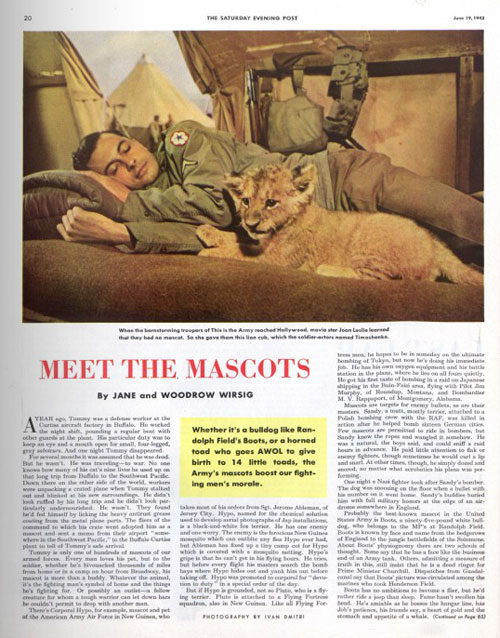
75 Years Ago: Meet the World War II Mascots
The news coming out of World War II was often grim, but every once in a while, The Saturday Evening Post found a way to lighten the mood. This article from our June 19, 1943, issue shared the stories of animal mascots that were keeping soldiers company during the war. From Randolph Field’s bulldog, Boots, to the Las Vegas Army Gunnery School’s horned toad, Machine-Gun Pete (later renamed Petricia after some toad babies showed up), these companions found themselves stowing away on transports, jumping out of planes, and even occasionally earning a military promotion. Many of them (mostly dogs) brought the soldiers moments of joy and levity, and maybe something more. As the authors write, “Whatever the animal, it’s the fighting man’s symbol of home and the things he’s fighting for.”
The Saturday Evening Post History Minute: The Air Mail Stamp that Was a Bad Omen
The first air mail stamp was printed with a huge mistake that soon became reality.

See more History Minute videos.
8 Fashions From the Past With No Future
Aviator glasses from the 1940s. Bell-bottom jeans from the ’60s. Scrunchies from the ’80s. They’ve all gone out of fashion and returned. Nothing, it seems, ever goes irreversibly out of style. But there have been fashion trends that are so dated, so uncomfortable, or so dangerous that they have little chance of being revived. Here are eight that we hope never make a comeback.
1. The Crinoline
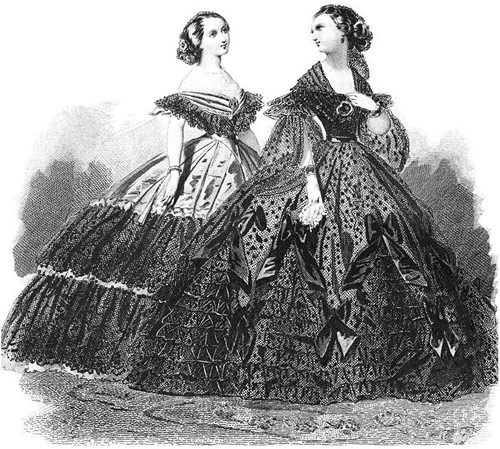
Even though the hoop skirt was extraordinarily impractical, it didn’t make it any less popular. In the 1850s, almost all women wore some version of this style. The trend began with stiff crinoline petticoats made of horsehair, which flared out the skirt. This was followed by the “cage crinoline,” a contraption that wasn’t as heavy or as hot as horse hair and supported an even wider skirt. Women had to learn how to sit, enter a carriage, bend over, or even walk in a stiff wind without revealing more of themselves than any Victorian would want. Thankfully, as women in the 1900s demanded more freedom of movement and realized that this style was not only impractical but also uncomfortable, they abandoned this monstrosity.
2. The Bustle
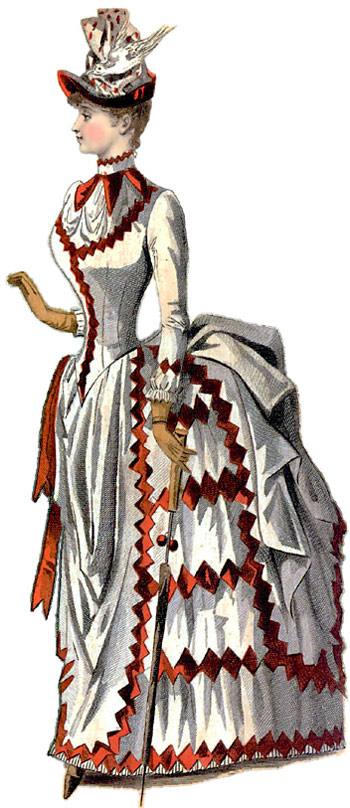
The second gone-forever fashion is the bustle, a device worn at a woman’s waist to extend her figure posteriorly, achieving a profile that anticipated Kim Kardashian. The bustle came into being when designers started reducing the wide circumference of the hoop skirt. This new style flattened the front of these very full, highly decorated skirts. The extra material was pushed to the rear. The bustle propped up this material, enabling a woman to wear more skirt than a normal figure would allow. When skirts became less extravagant, the bustle was no longer needed. It faded away and hasn’t reappeared since.
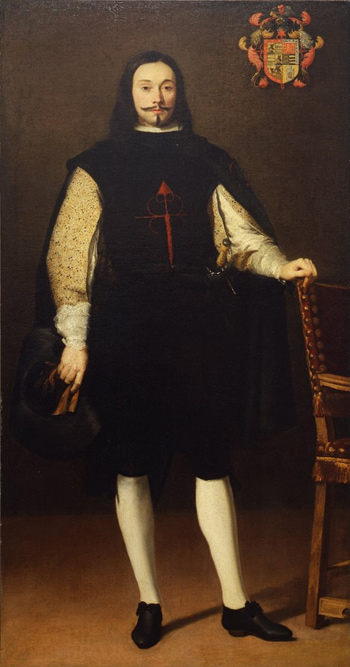
3. Knee Breeches
They were all the rage in the 18th century. Paintings of the founding father show all the men wearing those curious half pants. They evolved from the short pants of Roman men, which became long enough to reach the knee. In time, wealthier men added the hose that covered the lower part of the leg. Knee breeches seem to have fallen out of fashion in the early 19th century, a victim of the romantic style of the Regency period. Men now wear shorts or full length pants; there has been no serious effort to revive the awkward breech-length for men.
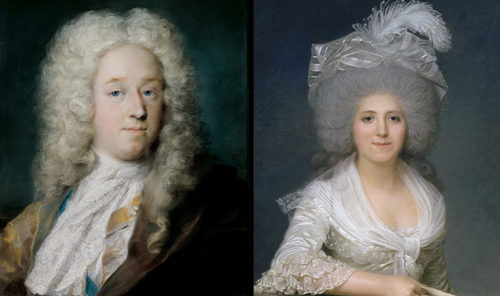
4. Powdered Wigs
A fashion trend for both men and women throughout the 18th century was the powdered wig. In addition to being extremely expensive and fragile, these wigs were not cleaned and would become homes to lice, insects, and even rodents. To make matters worse, these towering headpieces were tall enough to brush against low chandeliers, whose candles could easily set one of these wigs alight. The wigs fell out of favor when the British government started taxing wig powder in 1795. In France, elaborate wigs, along with French royalty who wore them, met their end during the French Revolution. Fortunately, we haven’t yet seen a return of these unsanitary and dangerous hair pieces.

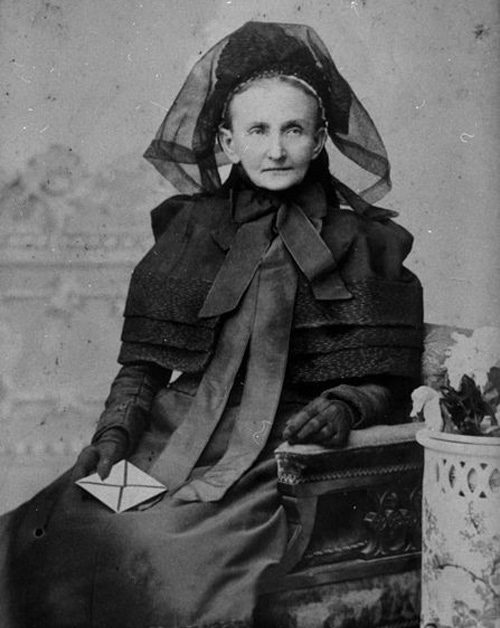
5. Mourning Wear
Mourning wear was extremely popular in the Victorian Era. Following a family member’s death, women would only wear somber, black outfits, often with dark veils, after the death of a husband or child. Several “household manual” publications would advise them what styles were appropriate and how long they should wear black. For a first cousin, mourning wear could be worn for as little as four weeks. If your husband died, you were expected to be in black for two years. In time, the tradition gave way to a preference for more personal, private expressions of grief.
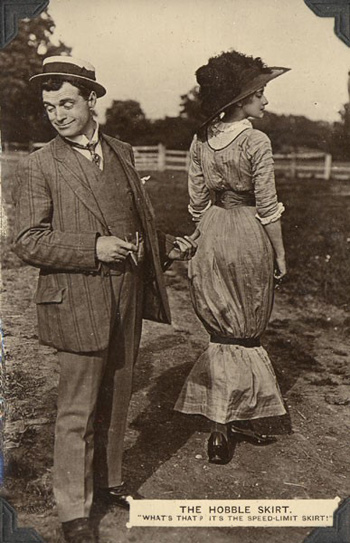
6. Hobble Skirt
The “hobble skirt” was a short-lived fashion trend of the early 19th century. The slim-fitting skirt was not only extremely uncomfortable, but also made it nearly impossible for women to walk, which is how it earned its nick name “hobble skirt” and “the speed limit skirt”. Women wearing these skirts had trouble climbing onto street cars or darting out of the way of traffic. In one extreme incident, a woman at a horse race ended up getting trampled because her skirt didn’t allow her to flee from a runaway horse. Thankfully, as women became more active in play and in work, there was a corresponding upsurge of common sense that booted the hobble skirt into permanent absence.
7. Celluloid Collars
While women were binding their feet together with tightly hemmed skirts, men were squeezing their necks cruelly with celluloid collars. These tall, rigid collars, which could be washed separately from the shirt, were made of an early form of plastic. Men wore them so tightly that multiple cases of choking were reported. Moreover, celluloid is extremely flammable, and more than once proved dangerous to a wearer who got too near an open flame. Men’s collars have become more and more open since those turn-of-the-century times. Nowadays it’s nearly impossible to get men to wear a tie, let alone a tight, uncomfortable collar.
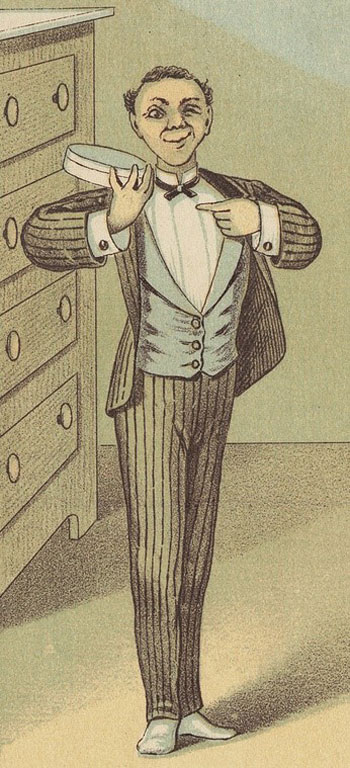
8. The Mullet
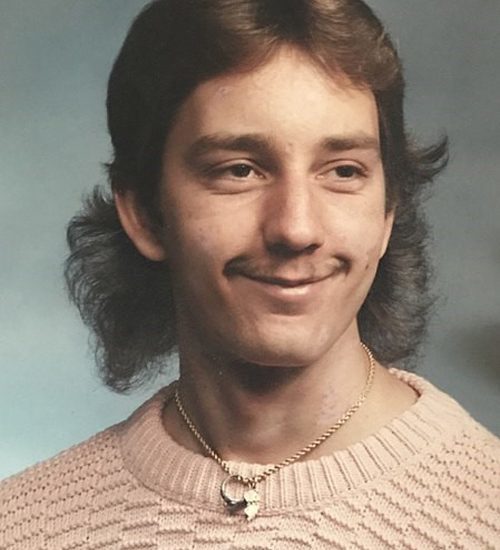
And could we forget the mullet? The old description of this unfortunate mutant of a short/long haircut was described as “business in the front, party in the back.” They could have added “awful on both sides.” But it was surprisingly popular in its heyday of the 1980s. Stars like Paul McCartney, Mel Gibson, and George Clooney fell victim to the treacherous charms of the mullet. Thankfully, we have been “mullet-free” since about the ’90s. Billy Ray Cyrus, father of Miley Cyrus, recorded a song called “I want my mullet back,” but we hope that the mullet — or any of the styles above — is gone for good.
North Country Girl: Chapter 57 — Broken-Hearted in Chicago
For more about Gay Haubner’s life in the North Country, read the other chapters in her serialized memoir.
My accidental career as a part-time model and part-time pornographer for Oui, a men’s magazine, paid the bills, including my half of the rent on the Art Nouveau apartment my illustrator boyfriend Michael and I now shared, and I was even stashing a bit of money in my bank account.
I had enough saved that after two winter-y months of dragging my modeling portfolio through Chicago blizzards and howling hawk wind, showing up at go-sees with chapped cheeks, runny mascara and frozen feet, I put one of those icy feet down and told Michael we had to take a vacation someplace warm, like the rest of civilized Chicago did. Michael looked horrified at this extravagance; I don’t think his own parents, who had met in a camp for displaced persons at the close of World War II, ever took Michael and his brother on a family vacation.
“I’ll pay for the whole thing,” I mollified him, and set about looking for the cheapest tropical vacation package I could find. A sympathetic travel agent sent us to a “resort” on a tiny off island of the Bahamas, a trip that required one jet, one Piper Cub, and one ancient powerboat that chugged for hours through the waves at the perfect angle to completely soak us and our luggage.
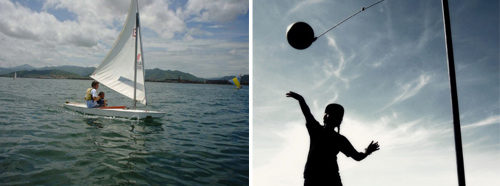
Cheapskate Key had a tetherball, a small sailboat, and a bar. The tetherball and Sunfish were included with the price of the room, the bar was not. The bar was where Michael retreated, after getting smacked in the face with the tetherball, stranded out in the ocean on the Sunfish (that was my fault, how hard can it be to sail a little boat, I thought?), and being sick to his stomach at the only tourist attraction on the island: watching the fish cannery dump its chum into the shark-infested waters at sunset.
By the end of the week, I was tanned and rested, Michael was pale and suffering from a seven-day hangover and anxious to get back to work and his kids. He had run up a stupendous bar tab. One by one, I tore out all my American Express travelers’ checks, signed them, and handed them over to the hotel manager. “Do you have any money?” I asked Michael, who pulled out a few crumpled ones, which got us on the airport bus to the El and then back home to Burton Place, where Michael swore he would never leave the city again.
Winter eventually eased Chicago out of its icy grip, and spring and summer smiled on the new lovers. Michael and I were creating a sweet, cozy life together, tucked away in our Hobbit apartment. We were much richer in love than money and rarely went out, even for a cheap curry. I tried to make us romantic dinners in a kitchen that contained a sink, a small fridge, and a stove, but absolutely no counter space, drawers, or cabinets. I guess artists are not supposed to cook.
At night, Michael searched the Chicago TV stations for old black and white movies; he was a great fan of Frank Capra and cried every time he heard Jimmy Stewart say, “Zuzu’s petals.” We cuddled and kissed on the sofa, watching Mr. Deeds go to Washington or Sergeant York go to war or Lillian Gish and Robert Mitchum face off in The Night of the Hunter. My young dream of love, being half of a couple that needed nothing and no one but each other, had come true, except it was with a different Michael.
I was finally allowed to meet Michael’s kids who were both adorable moppets, even though the younger kid left the front door open and my little Yorkie Groucho ventured out into the Chicago night, never to return, and the older one took my bike out for an unauthorized spin, making it less than a block before a bigger kid shoved him off and stole it. All was forgiven. I was crazy about their father, whose “I love yous” and kisses soothed and tingled me at the same time.
In the midst of all this bliss, on a day I thought I looked especially cute in a Betsy Johnson pink-flowered minidress bought from a toothpick-chewing guy who sold designer clothes out of the trunk of his car, I flounced into the Oui offices to drop off my newest brilliant submissions and pick up a small check. The moment I walked in the door, I intuited something weird in the atmosphere, like the oxygen had been sucked out, or someone had set a small fire. Everyone in the office had a different odd expression, from grim death on the secretaries’ faces to editor Gerald Sussman’s ape-like grin as he bounced about on his tiny feet.
John beckoned me into his office. “We’re moving to Los Angles,” he said.
“Who? You? Oui?” I sounded like a deranged songbird. “What’s happening?”
“Everyone’s going. Well, the editors, art directors…” John rambled on, stacking up papers without looking at them, talking about how unhappy his wife was about leaving her friends and her family, how he’d have to buy a car, find a place to live. He worried if there were any fellow poets in L.A., that most unpoetic of cities, or just television studios and endless freeways.
Yes, yes. But what about me?

“I can still write for you though? We could mail stuff back and forth?” I tried to plant a look on my face that was both writerly and too cute to turn down.
John shook his head. “Not going to work. It would take too long, everything’s going to be crazy after the move…”
I handed him my hysterically funny short humor pieces, my best yet, and hoped that he would wait until I left to toss them in the bin. John found my check in a drawer and said, “I’m sorry.”
I autopiloted the walk home, my head full of mental arithmetic and plans: how much money was in my bank account, rent, electric, phone, what conventions were coming up, what photographers I hadn’t seen for a while.
Big events in my life never arrive by themselves, they insist on bringing along a friend.
My news — no more writing assignments, no more Oui modeling jobs, and we can say goodbye to our pal and neighbor, George, who was headed for L.A. with the rest of Oui’s art department — went unheard by Michael, who was waving a letter in my face.
“Esquire! Esquire magazine! They want me to illustrate Harry Crews’ column!”
Crews was a southern humorist who wrote about moonshine, coonhounds, hunting for squirrels, and bass fishing; his column in Esquire was called “Grits.”
Michael was a Chicago Jew who hated the outdoors, was afraid of trees, and had never seen a grit. Somehow an art director had decided these two would be perfect together. Michael was holding a contract from Esquire for a year’s worth of illustrations.
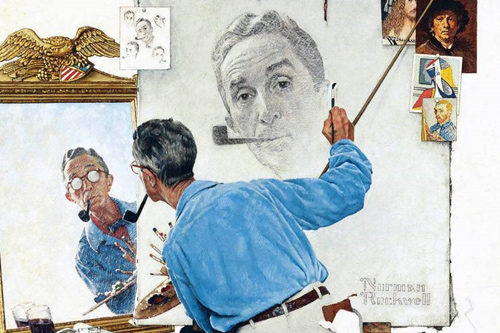
For Michael, this recognition from New York, from a magazine famous for its art and design, was the celestial sign he had been waiting for all his life, the confirmation he was following in the footsteps of his idols, Norman Rockwell and J.C. Leyendecker.
I was so happy for Michael that I could put aside my disappointment at the early death of my own writing career. After his first burst of exhilaration, however, Michael turned moody; one day I caught him brooding over a drawing, pencil posed unmoving over the paper, sad songs from Derek and the Dominos filling the apartment.
“C’mon,” I said as I kissed and stroked his balding head. “Let’s go out! Indian food. My treat.” I got a mumbled “Okay,” and Michael flipped the record over and went back to not drawing.
It was not the romantic, celebratory dinner I had imagined. The curry house was our special place, where I had first realized that I had fallen in love with this funny looking guy who made me laugh and claimed to adore me. He didn’t look so adoring now, as he shoved his vindaloo around his plate with a piece of naan and called the waiter over for his fourth Kingfisher beer. My attempts at happy conversation fell flat. I ate, and Michael drank in silence until he announced, “I’m moving to New York.”
Why was everything and everyone leaving for the coasts, after Chicago had finally generously bestowed on me a boyfriend, a semi-steady income, and a love nest apartment that was like living in a work of art?
“And me?” was my first and only thought. “Am I going with?” I asked.
Michael looked down and said, “I don’t know,” which was not the answer I had hoped for. My eyes prickled; I felt betrayed and angry and abandoned. In my mind I was shouting, “I didn’t want this! You wanted this! You told me you loved me!” but “I don’t understand,” was all I could say.
Michael did not understand either. We spent miserable hours that night plumbing his swirling thoughts and emotions: He loved me, felt desperately guilty about leaving his kids; he was worried about earning enough to pay child support and live on; he was moving to an unseen studio apartment sublet from a friend of a friend; and back, always returning to “I love you Gay, it’s just…”
The bottom line was he had to move to New York. That was all he knew and all he could deal with at the moment. We did not talk about my own crushed and battered feelings. And I was too self-centered and selfish to understand how leaving his adored children to follow his art was tearing Michael apart; his separation from his sons would be a wound he never recovered from. How could he leave his kids in Chicago and take his Playboy model girlfriend with him to New York?
In between our unhappy discussions of his tortured psyche, Michael packed up his apartment and said goodbye to his kids, weeping harder than they did and promising to fly them to New York as often as possible. I wandered up and downstairs, trying to stay out of the way of this family disunion. I picked at the few possessions I had kept with me over all the moves of the past three years and wondered what to do next. It would break my heart even more to live with just the memory of Michael in that magical Burton Place apartment, even if I could have afforded it on my own.
Suddenly I didn’t want to be in Chicago at all. I didn’t want to drag my portfolio around town in the freezing, blustering winter and the soupy, sticky, summer, or fight off handsy photographers, or murder my feet standing for hours on the cement floor of the convention center passing out brochures for power tools.
I called my old friend Mindy in Minneapolis, gave her my abridged story, and asked if I could stay with her for a few weeks.
I had last seen Mindy on her one and only visit to Chicago when I was still living with James, whom she took a deep dislike to after he offered her a Quaalude while I was in the shower and hinted that a threesome would be fun. Since then we kept touch through sporadic phone calls and lines scribbled inside funny greeting cards.
My friends are all generous spirits. Even though we had not spoken for months and months, Mindy said yes, come on up, she had room for me.
Michael and I said our goodbyes amid floods of tears. “What the hell am I doing?” Michael wept. I wondered that too. I gave him Mindy’s phone number and address and we parted, Michael off to conquer the illustration world in New York, me to do who the hell knew what in Minneapolis.
Considering History: Uncle Tom’s Cabin and Imagining Slavery’s Family Separations
This column by American studies professor Ben Railton explores the connections between America’s past and present.
As historians and journalists such as Martha Jones, Anthea Butler, DeNeen Brown, and others have eloquently reminded us in recent weeks, one of the core practices of the American system of chattel slavery was the separation of children from their parents (among other purposeful and consistent family divisions). Even when parents and children were not sold away from each other (an all-too common way to achieve the separation), they were often kept apart so fully by their slave-owners that neither this foundational human relationship nor its crucial influences on the children’s identities and lives were allowed to develop or flourish.
In the opening chapter of his monumental Narrative of the Life of Frederick Douglass, An America Slave, Written by Himself (1845), escaped slave turned abolitionist activist Frederick Douglass recounts what such forced separations meant for his relationship with his mother: “I never saw my mother, to know her as such, more than four or five times in my life; and each of these times was very short in duration, and at night. … She died when I was about seven years old, on one of my master’s farms, near Lee’s Mill. I was not allowed to be present during her illness, at her death, or burial. She was gone long before I knew any thing about it. Never having enjoyed, to any considerable extent, her soothing presence, her tender and watchful care, I received the tidings of her death with much the same emotions I should have probably felt at the death of a stranger.”
Despite Douglass’s narrative and other contemporary depictions of such horrors of slavery, in 1850 most white Americans were either unaware of or indifferent to slavery’s inhumane practices and effects. For many white Americans, of course, African American slaves were more property than full fellow humans, an attitude enshrined in the Constitution’s 3/5th clause and legally reified by the Supreme Court’s 1857 Dred Scott v. Sandford decision. Even for those Americans who were inclined to see slaves as human, there were a number of widespread narratives and myths that made it more difficult for white Americans to understand or be outraged about the horrors: slavery was a regional issue and largely unfamiliar to the rest of the nation; slaves were generally well treated and stories of horror were rare and overstated; slaves had never known other circumstances and were unaffected by situations and emotions that might impact other communities or cultures.
One of the most popular and influential American cultural works of all time would soon change those myths and perspectives for many Americans, however. On June 5, 1851, the abolitionist newspaper The National Era began publishing in weekly installments Harriet Beecher Stowe’s anti-slavery novel Uncle Tom’s Cabin; after a 40-week serialization, the novel was published in book form on March 20, 1852. Over the course of its serialization Uncle Tom’s Cabin became a national phenomenon (on the few occasions when Stowe missed a weekly issue the newspaper was inundated with letters of protest), and the success carried over into its publication: the book sold 3,000 copies on the day of its release, sold out its first printing almost immediately, and went on to become the second best-selling American book in the 19th century (after only the Bible) and one of the nation’s most enduring and influential cultural works.
Uncle Tom’s Cabin is a sizeable novel with many characters and plotlines, but at its heart are the stories of three slaves whose lives are consistently defined by family separations and their profoundly human effects. The loving couple (who define themselves as husband and wife, although they cannot be legally married under slavery) Eliza and George Harris learn that their beloved young son Harry is going to be sold away from them and choose to run away instead, producing a series of harrowing sequences such as Eliza and Harry’s famous escape across the icy Ohio River. And the title character Tom Shelby is sold “down the river,” away from his wife and children, and spends the rest of the novel trying to survive the horrors of slavery and find a way to be reconnected with that family. His famous connection with young Evangeline “Little Eva” St. Clare, the angelic daughter of his second owner, clearly serves as a replacement parental relationship for the patient and paternal Tom.
Stowe’s success in creating these deeply human slave characters and stories is the novel’s greatest achievement, made all the more impressive by the fact that she had spent no time in the slave south prior to writing the book (which she largely completed while living in Maine). Stowe did live for a time in Cincinnati, just across the Ohio River from the slave state of Kentucky, and encountered escaped slaves there as part of the city’s Underground Railroad efforts. She highlighted those and other contemporary influences on the novel — including the slave narrative The Life of Josiah Henson (1849) and Theodore Weld’s edited collection American Slavery as It Is: Testimony of a Thousand Witnesses (1839) — in her follow-up book A Key to Uncle Tom’s Cabin (1854).
Yet while those works do complement and support Stowe’s book, biographers and historians have discovered that she read many of them only after completing Uncle Tom’s Cabin. The novel was instead primarily a work of imaginative empathy, of constructing African American slave characters — and many others, but especially these central characters — with multi-layered human identities and perspectives that contribute to believable and moving stories of the horrors of the system of slavery. And Stowe’s empathetic imagination clearly produced the same effect for thousands of her fellow Americans, readers across the country for whom this cultural representation of slaves and slavery opened up new ways of thinking about the lives and experiences of their fellow Americans in bondage. Eliza, George, Tom, and others came to vivid life for Stowe’s readers, and through them new images of slavery and its defining savagery became possible and widespread.
While the novel remains an important part of 21st century American society, we have other cultural forms today that more closely mirror the immediacy of the 19th century novel’s communal impact: photography and photojournalism, multi-media news features, and social media activism. As we are seeing every day, such cultural forms help Americans imagine and respond to unfolding horrors. Where we go from there is, as it was in Stowe’s era, an open and crucial question.
50 Years Ago: Taking On the Weapons Industry
Nuclear physicist Ralph Lapp helped to develop the atomic bomb before petitioning against its use in 1945. Lapp toured the country in the 1950s and ’60s lecturing about nuclear radiation and civil defense, but in 1968 he penned the Post editorial “The Weapons Industry Is a Menace,” taking acute aim at the so-called military-industrial complex. Lapp decries the burgeoning “defense socialism” in the U.S., claiming Eisenhower’s famous 1961 warning had come to bear in a nation whose welfare was “permanently tied to the continued growth of military technology and the continued stockpiling of military hardware.” Lapp’s rebuke of defense spending during the Cold War highlights the problems with weapons excess that are still debated 50 years later.
“The Weapons Industry Is a Menace” by Ralph E. Lapp (June 15, 1968)
The United States is becoming a weapons culture. The health of our entire economy has come to depend on the making of arms. The machinery of defense, lubricated by politics and technology, has become a juggernaut in our society. Pressures exerted by the giant corporations that compose our military-industrial apparatus are felt in the Pentagon, in the White House and in Congress. Congressmen are re-elected depending on their success in winning defense contracts for their constituencies; government funds support vast military research projects on campuses across the country; the scientific community has been largely corrupted or silenced by military domination.
President Eisenhower warned of this ominous trend in his farewell address back in 1961: “In the councils of Government we must guard against the acquisition of unwarranted influence, whether sought or unsought, by the military-industrial complex. The potential for the disastrous rise of misplaced power exists and will persist.”
That warning has become the present reality. Since the end of World War II, and especially since Korea, the manufacture of arms has ceased to be an emergency measure whereby private firms do their bit for Uncle Sam. Instead. many U.S. corporations have become primarily arms makers. Their business and their profits depend on winning more and bigger contracts from the Department of Defense. Some companies, like North American Rockwell, General Dynamics and McDonnell Douglas, exist almost entirely on government arms contracts. Without this money many of them would go bankrupt. and places like Southern California or the state of Washington would become economic disaster areas.
Consider, for example, a single company — Lockheed Aircraft. In the past seven years this California-based concern has won a total of $10.6 billion in defense contracts. Uncle Sam provides 86 cents of every dollar of its corporate sales. Lockheed is not just an isolated example. During these same seven years 38 companies each have done more than one billion dollars of business with the Pentagon.
No nation can devote so much of its ingenuity, manpower and resources to the works of war without being deeply changed in the process. Our commitment to weapons making has distorted the free enterprise system of our economy into a kind of “defense socialism.” a system in which the welfare of the country is permanently tied to the continued growth of military technology and the continued stockpiling of military hardware.
This massive “peacetime” commitment to arms is new to the American experience. When one looks back and surveys the postwar years. one startling fact emerges: During these years the United States has devoted one trillion dollars to its national security! And half of this vast expenditure occurred during the Kennedy-Johnson Administrations.
These billions of dollars have meant jobs for many Americans — for electronics specialists in Boston’s Route 128 necklace of defense plants; for rocket men in factories spread out over Utah’s broad valleys; for aircraft workers in Southern California. Texas. Georgia, Washington. Kansas and Missouri.
President Eisenhower omitted any reference to political influence in his indicting phrase, “the military-industrial complex.” but it is the crux of the matter. Powerful members of Congress champion defense systems out of self-interest. Georgia’s defense bounty may be traced, for example, to the power of its Senator Richard B. Russell. who is chairman of the potent Armed Services Committee. Our senators and representatives approve the appropriations that control the fate of many a defense plant. It takes a brave legislator to vote against funds that mean jobs for some of his constituents. He becomes vulnerable not just to the unemployed defense worker but to campaign charges that he failed to support the national security program.
The power of the military-industrial complex has been greatly aided by advanced technology. Science has become the key to modern arms. Today’s weapons systems, especially those involved in hurling nuclear warheads at intercontinental range, are incredibly complex. Nuclear research has fashioned compact packages carrying the explosive power of a million tons of TNT. Chemical and electronic ingenuity have combined to perfect rockets like Minuteman and Poseidon that can carry from 3 to 10 warheads, each dispatched to a separate target. More and more our great national decisions involve complex technology and secret data about weapons.
Consider, for example, the recent decision to build a thin Sentinel system to defend against ICBM’s fired by Red China. This $5 billion project may escalate to $40 billion. Yet the public had precious little to say in this momentous decision. In a sense, even a democracy as modern as ours is dictated to by technology. When a weapons system becomes “ripe,” then it dominates its makers. In the case of ballistic-missile defense, the United States spent $4 billion in research and development, so before the decision to deploy it was made, powerful forces urged its production. Robert S. McNamara, who recently resigned as head of the Pentagon, put it bluntly: “There is a kind of mad momentum intrinsic to the development of all new nuclear weaponry. If a weapons system works — and works well — there is strong pressure from many directions to procure and deploy it out of all proportion to the prudent level required.”
One way to pressure the American people into supporting larger defense outlays is to sound the alarm about Soviet strength. Thus in the 1950s it was alleged that there was a “bomber gap,” and public support was whipped up for mass production of B-47s and B-52s.
Even before the bomber gap vanished into thin air, a “missile gap” was born. John F. Kennedy hammered away at the missile-gap issue in his 1960 campaign, decrying Eisenhower’s years in office as “years the locusts have eaten.” Yet when Kennedy became President and had time to study the available information about Soviet missiles, he discovered that the missile gap was in our favor. Nonetheless, Kennedy pressed Congress for authorization of more Minuteman and Polaris missiles.
Now a new gap is in the making — a “megaton gap.” A megaton means a million tons of TNT, or 75 times more power than the A-bomb that eviscerated Hiroshima. At some time in the future the Soviet Union may be able to hurl more megatons at the United States than we can fire back in return. This does not and cannot alter the fact that a small fraction of the present United States nuclear firepower can knock the Soviet Union out of the 20th century. Having excess kill power — overkill — is not militarily meaningful.
The heart of our strategic policy is our capability to inflict unacceptable losses on the enemy’s homeland. It’s damage, not megatons, that counts. I have calculated that as few as 45 ballistic missiles can strike at 60 million Russians living in 200 Soviet cities. No, my arithmetic is not nutty — each missile can be armed with from 3 to 10 nuclear warheads targeted on individual cities. The total megatonnage in this hypothetical attack amounts to only 21 megatons — roughly one thousandth of that once carried by our SAC bombers. But 21 megatons is the equivalent of 21 million tons of TNT, or 620 times the explosiveness of the combined power of the Hiroshima and Nagasaki bombs.
If my figure of 45 missiles seems too low, then let’s triple it. That figure would amount to less than a tenth of the actual number of missiles in our strategic strike force. Adding more ICBM’s to the U.S. arsenal, or magnifying the megatonnage, does not really alter the nuclear balance of power.
But the very concept of “enoughness” in military power is a punishing blow to the solar plexus of the military-industrial-political complex. Defense affluence is based on open-endedness on there never being enough of anything, even megatons. The United States has already stockpiled over 50,000 nuclear weapons and has a capacity to double this number rather quickly.
The man in the street is not supposed to question matters of national security. But whose judgment is he to trust? The politicians are themselves deeply implicated in the military-industrial complex; the generals traditionally don’t know what the word “enough” means, and industrialists covet contracts.
There is sound reason for gloomy forecasts about defense socialism. The United States cannot afford to lay down its nuclear arms until it is safe to do so — and that day is far from dawning. Force of arms still rules, and the United States has no choice but to maintain its armed vigilance. Moreover, it cannot become complacent about its power to deter war by depending on the status quo. For this reason, military research and development should never cease.
But the need for weapons improvement should not be viewed as a carte blanche for defense industry. Rational determination of force levels is of paramount importance to the nation’s security. Excessive weapons deployment may not only be wasteful, it may provoke competitors to unplanned arms increases, and thus escalate the arms race with no real gain in our national security. But “how much is enough” is the perplexing question that this country has avoided facing squarely.
I admit that precise definition of “enoughness” is impossible. No single person or computer can be relied on to spell out how much is enough. There must always be an insurance factor — a margin for error, but not for irrational excess. Even if by some magical process we could find a neat answer to how much military power is enough, we lack the mechanism in our democracy for a techno-military consensus. Our democracy depends on a system of checks and balances, but such restraints are lacking for the military industrial complex. Our Congress is ever ready to vote for larger defense appropriations; not once since Hiroshima has the Congress failed to fund a weapons system. It has even pushed some that the Defense Department did not want. Under congressional insistence the U.S. spent about $1.5 billion on a nuclear-powered airplane — against the best advice of scientists. When the project was finally abandoned, the money turned out to be a complete loss.
Both Presidents Eisenhower and Kennedy were pressured by Congress to deploy a ballistic-missile defense system. Had they yielded and authorized the system in the late ’50s or early ’60s, the resulting radars, computers and missiles would have had to be scrapped as useless. Yet when more advanced systems gave some hope of a thin defense shield, and the Sentinel system was authorized, what did members of Congress do? They immediately demanded a “thick” system — one which Defense Secretary McNamara was careful to point out would he worthless against a massive Soviet attack. Furthermore, McNamara warned it would encourage the Soviets to accelerate their ICBM program, and thus add a new spiral to the arms race.
Twenty-three years of the postwar era have failed to educate the Congress in the realities of nuclear power. We should be considering arms cutbacks, not increases, but this prospect frightens Congress and terrifies the aerospace industry, which is becoming a kind of national industrial welfare program.
There is no easy panacea for correcting America’s techno-military ills. But we must begin by recognizing the inherent dangers to our society if we do not control our arms industries. Public exposure of the problem is essential. The Congress must provide itself with authoritative independent advice on techno-military problems. To this end I would urge the creation of a National Analysis Council to study and report on many of the problems that Congress is now handling in a horse-and-buggy manner. For example, the Congress may soon be asked to fund a new Advanced Manned Strategic Bomber. I would urge that it subject this proposal to a concentrated and objective analysis by a National Analysis Council. so that its full significance and value can be determined for the benefit of all members of Congress.
I would urge that the growth of defense socialism be curtailed by applying geographic and contract controls to all new prime military awards. For example, it might be feasible to limit a corporation’s involvement with defense work by prohibiting the awarding of new contracts when a company already does more than half of its business with the Defense Department.
These are, I admit, inadequate approaches to the overall problem. We cannot treat a cancerous condition so superficially, but we must begin somewhere — and soon. If we perpetuate our weapons culture, we will turn ourselves into a veritable Fortress America, questing for evanescent security and, in the words of John F. Kennedy, “forever racing to alter that uncertain balance of terror that stays the hand of mankind’s final war.”
An Interview with Marcia Gay Harden
O

scar and Tony winner Marcia Gay Harden has thrilled audiences with her surprising range of performances on screen and on stage. She is proud that the emotions she’s shared in over 50 films — including Pollock, The First Wives Club, and Mystic River — reflect passion for her work and deep attachment to her family.
On TV, Harden plays Dr. Leanne Rorish, a key figure in the highly pressured life-and-death atmosphere of the E.R., on the popular CBS drama Code Black. She can be a tough and rough voice amid the chaos where seconds count and she must make flash decisions in a room full of pros who don’t always appreciate her style. In this third season of the series, Leanne decides to adopt a teenage girl. Harden knows that world too; three kids at home have taught her about teen push-back.
“They’re exploring a softer side of me, but I don’t really want her to become safe. It’s more fun to play someone who is slightly unsafe. What I liked was her cowboy attitude. I really like the badass side of her. Leanne can be a nurturing mother and still be as strong as she needs to be.”
Marcia Gay’s own nurturing and outspoken personality are now exposed off the stage and screen, in her first book. The Seasons of My Mother: A Memoir of Love, Family, and Flowers, is bold, funny, and sensitive. In it, Harden reveals the agony of watching her beloved mother, Beverly, suffer with Alzheimer’s.
Jeanne Wolf: It took strength for you to write about your mother as she weakens and also to share your own joys and struggles.
Marcia Gay Harden: I wanted you to laugh but also to cry. I thought, “You have to include your divorce, your mom’s Alzheimer’s, the deaths in the family. If you don’t, then it becomes everything you hate as an actress: about being cast in a bad role that has no real downsides or weaknesses.” I want my audience to relate to the moments when we’re not the hero — when we think we’re cowards. I think that’s what audiences relate about in me. I’m the toughest person on myself ever. My mother kept trying to teach me to be gentle and forgiving, mildly disapproving but never outright harsh. I couldn’t always live up to her image of what I should be because I liked to curse and drink and smoke. That’s who I am. And, I admit, sometimes I was a bully.
JW: You don’t hide your rage and frustration as you watch your mother suffer and you learn about her horrible condition.
MGH: Alzheimer’s is a thief, a cowardly thief because it sneaks in and steals your mind. With my mother, it was literally a realization that it could happen to anybody. She was the poster child of what to do not to get Alzheimer’s. She never drank, never smoked, ate well, exercised, was mentally active. I know now that Alzheimer’s lives in you 10, 20 years before it shows signs.
What affected me so much was the repetition of her forgetting. I could see her anguish as she would forget. The look on her face as I realized that she just wanted to have a sequence of moments strung together where she would remember what happened the few moments before. It was that realization that she’s not in control of her memory, and that was scaring her. It’s frightening because the disease leads you into abject loneliness. There are no survivors.
Now what I want to help do is create a world where there are survivors and research and a drug that allows you to live with the disease. We need to figure out what’s causing it and get rid of that.
JW: While you were facing your mother’s illness, your marriage was also falling apart. Your mother may not have understood what you were going through, but we can feel it on the pages of The Seasons of My Mother. You and the father of your children, Thaddaeus Scheel, were splitting up.
MGH: I decided that we would be friends for the kids — just because it makes sense. Like my mother says, “Filling your head with good, loving thoughts is a thousand times better than carrying on the animosity of loss.”
There were a lot of things I didn’t include in the book that I could have. What I really talked about was my hurt, and my ex-husband knew that our break-up was very painful to me. I always saw people who loved each other, but when the marriage fell apart, they forgot that they loved each other and turned it into hatred for the rest of their lives. But I realized it just doesn’t make any sense if you’re a parent. Try to remember what you loved and move on. Forgiving is a powerful thing to do, but it didn’t mean that I wasn’t in pain.
My children knew what was going on. I’m pretty straight up with my kids; I don’t waste a lot of time sugar-coating events. I think kids can handle truth far easier than we imagine.
As for being a single mom, there’s a lot to be said about being single. It’s really wonderful. I do have a hard time making time for other people because I’m lucky that I love my work and also love going home and making jam with my kids. There’s a part of me that I don’t really want to be sharing right now. I don’t really want to be in a dysfunctional relationship or think, “I can’t sleep because you’re snoring.” I like my single life, but I would open up to love. I think when you do open up to love, there’s a myriad of things that you find you can make room for, including, I guess, snoring.
This article is featured in the July/August 2018 issue of The Saturday Evening Post. Subscribe to the magazine for more art, inspiring stories, fiction, humor, and features from our archives.
How Keeping a Gratitude Journal Can Literally Heal Your Heart
The idea of a gratitude journal is nothing new. After all, Oprah famously kept one for a full decade without fail and urged her viewers to do the same. And science has shown that placing greater emphasis on the positive aspects of life can lead to everything from reduced anxiety to improved relationships. But could thanks help heal our hearts, too?
Findings published in Psychosomatic Medicine suggest the answer is yes. Half of the study’s participants were asked to write down two or three things they felt grateful for most days of the week, while the others received their usual care. “The group that we’re looking at is pre-heart failure,” says lead author Laura Redwine, a researcher at the University of South Florida. They have a cardiovascular structural abnormality and “are at risk of getting full-blown heart failure.”
Those who took part in the journaling over a span of two months experienced improvements in sleep, mood, and heart health. By merely pondering the appreciation they have for whatever they chose to write about, these patients altered their physiology and psychology, says Paul Mills, professor of family medicine and public health at the University of California, San Diego. In other words, cultivating gratitude cultivates well-being, too.
Sounds great, right? But for many, starting and sticking with this practice is easier said than done. Initially, it can be helpful to focus on whatever is making your life comfortable at that moment in time, suggests Emiliana Simon-Thomas, science director of the Greater Good Science Center at the University of California, Berkeley. This could be anything from the scent of your morning cup of joe to the reassurance of a roof over your head.
Another useful technique is to connect that goodness in your life to the people responsible for it. Did a barista serve up the coffee that’s now warming your belly? Does a partner’s hard work help keep that roof over your head?
For some, the act of setting pen or pencil to paper is a crucial part of the process. For others, digital tools like thnx4.org may work best. And if you discover that journaling just isn’t your thing, then consider alternative methods for fostering gratitude, Simon-Thomas says, like reflecting in your mind over the course of three or four deep breaths or engaging more readily in the simple act of saying “thank you” to others.
This article is featured in the May/June 2018 issue of The Saturday Evening Post. Subscribe to the magazine for more art, inspiring stories, fiction, humor, and features from our archives.
Your Weekly Checkup: The Controversy Around the HPV Vaccine
“Your Weekly Checkup” is our online column by Dr. Douglas Zipes, an internationally acclaimed cardiologist, professor, author, inventor, and authority on pacing and electrophysiology. Dr. Zipes is also a contributor to The Saturday Evening Post print magazine. Subscribe to receive thoughtful articles, new fiction, health and wellness advice, and gems from our archive.
Order Dr. Zipes’ new book, Damn the Naysayers: A Doctor’s Memoir.
Two weeks ago I wrote about the need for vaccinations to prevent common infections with viruses such as measles, mumps and whooping cough. I didn’t have space to discuss vaccination against a highly important and more controversial infection: the human papillomavirus (HPV). More than 200 related HPV viruses exist, with about 40 having potential transmission through sexual contact.
HPV infection remains one of the most common sexually transmitted diseases in both males and females. Many infections do not cause symptoms, and nine out of ten disappear spontaneously in two years. However, HPV types 16 and 18 have been implicated in causing cancers and HPV 6 and 11 in causing warts. Worldwide, HPV infection is responsible for half a million cases of cancer and more than a quarter of a million deaths every year, with the highest incidence in developing countries lacking resources to promote prevention or provide treatment. Nearly 80 million Americans (about one in four) are infected with HPV, with over 6.2 million new cases annually. HPV causes 32,500 cancers in American men and women each year. HPV vaccination can prevent about 30,000 from ever developing.
Effective HPV vaccines have been available for almost a decade. More than one hundred countries have adopted vaccine programs for females, and many are extending the indications to include males. However, widespread adoption of vaccination remains controversial.
While state-mandated immunization programs have increased the number of children vaccinated, many state legislatures do not require universal HPV vaccination. Objections include the concern that the vaccine might encourage sexual contact at earlier ages or promote higher risk sexual practices. To me, the argument that the vaccine will prevent sexually related cancers appears far more persuasive.
The Centers for Disease Control and Prevention (CDC), together with other professional associations, recommends that children 11 or 12 years old get two shots of HPV vaccine six to twelve months apart. In general, HPV vaccine is recommended for young women through age 26, and young men through age 21. The overwhelming evidence favors administration of the vaccine to prevent the precancerous and malignant disease conditions caused by HPV infection. The risks of the vaccine are within the range of complications noted with other vaccination programs and should not prevent vaccine administration. Parents and health care workers need to be educated that the benefits of HPV vaccination far outweigh any risks.
Still Flying: Superman Turns 80
The Man of Steel. Strange Visitor. The Man of Tomorrow. The Ultimate Immigrant. He is Superman, and his quest for Truth, Justice and the American Way turns 80 this month.
It’s easy to forget that there was a time when Superman was new. Before he exploded from the colorful pages of National Periodical Publications, he sparked into the minds of two young men from Ohio. School friends Jerry Siegel and Joe Shuster met in 1928 and understood what it was like to be different. Both were Jewish children of immigrants, with Siegel’s parents having moved to America from Lithuania and Shuster born in Toronto to a Dutch father and Ukrainian mother.
Combining a mutual love of science fiction with their creative talents (Jerry wrote; Joe drew), they began to dream up characters that could find their way into the pulps and comics they themselves devoured. Some of those characters, like supernatural investigator Doctor Occult, stick around today. But nothing had the staying power of the refugee from Krypton, the first costumed super-hero.
The duo pitched Superman to a number of syndicates and publishers before National finally bit. Their character commanded the June 1938 cover of Action Comics #1 with one of the most iconic images in popular culture. There he stood, lifting an automobile over his head as people fled and his cape flapped behind him. In no time, Action was selling more than a million copies a month; a veritable legion of costumed characters would follow in Superman’s wake, such as Batman, Wonder Woman, and thousands more.
Even with that early success, the formation of what we consider “Superman” today played out gradually. He didn’t fly at first, though his prodigious leaps made it into the opening narration of the subsequent radio and TV programs. His array of vision powers developed over time, as did the degree of his invulnerability and the measure of his strength. But the core of his character, the honesty and virtue, those were present immediately.
Kids and adults alike loved Superman because he was a hero that seemed to genuinely care about everyone. He didn’t just fight obvious criminals and monsters. In the early days, Superman was just as likely to tangle with a corrupt politician or an abuser as he was to fight alien robots and mad scientists. He rescued kittens from trees, helped out firefighters, and raced other heroes for charity. He represented the best in people.
Superman could also claim one of the best supporting casts in American entertainment. Tough-as-nails reporter Lois Lane was there right from the start, her appearance based on that of Joanne Carter, a model who later married Jerry Siegel. The radio program introduced blustery editor Perry White and Superman’s pal, Jimmy Olsen in 1940. The comics themselves presented an endless parade of mad invention, from arch-enemies like Lex Luthor and Brainiac to Superman’s cousin, Supergirl. We’d even meet his dog, Krypto.
Of course, as fantastic as the powers and the abilities and the cast were, nothing made Superman super quite as much as Clark Kent. Fans wanted to imitate the hero, but they empathized with his secret identity. Found and raised by honest, hard-working farmers Jonathan and Martha Kent, baby Kal-El learned his moral code in the American heartland. By the time that the young man realized the extent of his powers, his human parents had already done the work that would make him into a selfless protector of the weak.
People often wonder why Superman pretended to be Clark when he could be, well, Superman all the time. The key is in his values. When he puts on the cape and uses the heroic identity, Superman is still really just that ethical Kansas farm boy with a broader reach. It’s a sharp contrast to his friend Batman, where Bruce Wayne is just a mask that the Dark Knight hides behind.
As ComicBook.com columnist and Superman scholar Russell Burlingame puts it, “Superman endures in large part because of the simplicity that drives him: he intuitively understands what is right and just, and he acts accordingly, without hesitation. The darker, edgier, and more complex our pop culture heroes become, the more brightly Superman shines as a beacon to light the way.”
That shining beacon became even more important in the 1940s, as America watched the rise of Hitler in Europe. In June of 1941, The Saturday Evening Post gave readers a look into the early days of the growing allure of Superman in the article, “Up, up and Awa-a-y! The Rise of Superman, Inc.” Interviewing Siegel and Shuster, writer John Kobler attempted to get to the heart of Superman’s appeal. He wrote, “…Superman accomplishes with casual ease feats that are common to every boy’s daydreams.”
All of these various factors remain the engine that drives the popularity of Superman. He’s also proven to be incredibly adaptable to other media. Along with the radio show of the ‘40s and the Adventures of Superman television series of the ‘50s, Superman made deep impressions in movie serials, the influential Max Fleischer animated shorts, other made-for-television cartoons, and even on Broadway in It’s a Bird…It’s a Plane…It’s Superman.
It’s appropriate that the modern super-hero movie age truly began with Superman as well. Richard Donner’s 1978 Superman: The Movie made good on its tagline, “You will believe a man can fly.” Christopher Reeve’s portrayal synthesized everything we knew about Superman’s character, from his boyish charm to his clumsy Clark Kent to his righteous anger at Lex Luthor’s disregard for human life.
In April, Action Comics published its 1,000th issue. DC also launched a new, ongoing The Man of Steel title written by comics superstar Brian Michael Bendis (who himself was born in Cleveland). These books and other recent work by the likes of Dan Jurgens and Peter Tomasi have put the focus on a heroic, experienced Superman. He’s married to Lois these days, and their son Jonathan has his own adventures as Superboy (alongside best buddy, Robin) in the Super Sons comics.
For 80 years and counting, Superman continues to reflect what we consider to be the best of American values. He stands for the truth and justice. He’s about inclusiveness and acceptance. He, most simply, tries to make the wrong things right. Perhaps it’s no wonder that he continues to soar.
Healthy Weight, Healthy Mind: 5 Ways to Resist Snacking After Dinner
We are pleased to bring you this regular column by Dr. David Creel, a licensed psychologist, certified clinical exercise physiologist and registered dietitian. He is also credentialed as a certified diabetes educator and the author of A Size That Fits: Lose Weight and Keep it off, One Thought at a Time (NorLightsPress, 2017).
Do you have a weight loss question for Dr. Creel? Email him at [email protected]. He may answer your question in a future column.
Reader Question: No matter how hard I try, I just can’t seem to resist snacking after dinner. A handful of chips turns into a bag, or a piece of chocolate turns into 10 pieces. What are some strategies I can use to control my evening binging?
This is a great question about a common challenge. There is no best approach for everyone, but here are five possible ways to curb your late-night eating. You may choose to combine several of these strategies to make them work for you.
- Keep unhealthy foods out of the house. I know this sounds simple, but it almost always works. In the evening, we are looking for something tasty and convenient. We are unlikely to leave the comfort of our home for a snack. This out-of-sight-out-of-mind approach also helps avoid feeling deprived. Not eating tempting foods that are in front of us often requires a lot of restraint and mental energy. So don’t make it so hard — save your energy for times when you have less control of the food that is within arm’s reach.
- Enlist support from other family members. If other household members resist this idea of keeping trigger foods out of the house, talk to them about it. At a minimum you can usually convince them to store things out of sight. On more than one occasion, patients have told me that their spouse stores trigger foods in their car, the garage, or an out-of-reach cabinet.
- Plan your snacks and enjoy them — in moderation. Most of the time we want to focus on eating something that is healthy and tasty -— fruit, vegetables with dip, etc. Make these foods extra appealing with their presentation. Place them on a plate, in bite-size portions, and focus only on eating (sort of like snack-time for young children). To be more intentional with this approach, try eating only at the table rather than in front of the TV or other electronic device.
- Practice eating not-so-healthy foods. I realize this doesn’t work for everyone. But in my experience, all-or-nothing approaches are usually unsustainable when it comes to snacking on foods you have determined you don’t want to live without. Although keeping tempting unhealthy foods out of the house is a good idea, this doesn’t mean you can never have a pleasurable indulgence. I have actually asked patients to bring chocolate or other snacks to our sessions. During our meeting I guide them through a mindful eating practice where they eat a small amount slowly, savoring each bite. I ask them to let go of guilt and simply enjoy the food. Learning to eat highly pleasurable foods in this way can build confidence to occasionally consume a favorite snack in moderation. It can also make foods less appealing when we remove the “forbidden” label.
- Determine the function of food and find an alternative. Late night eating can be related to boredom, stress, or simply habit. If you are eating out of boredom, what else could you do? I would encourage you to literally make a list and plan to do something from your list each evening. It should usually be something fairly simple. Food is easily accessible and highly pleasurable, and so your alternative should be, too. Is there a book you’ve been wanting to read or an instrument you want to learn to play? Is there a trip you would enjoy planning or some music you could listen to while knitting, crafting, or working on a home-improvement project? If you are eating to deal with the stress of your day, consider calling a friend, writing in a journal, or walking the dog.
Movies for the Rest of Us with Bill Newcott: Christopher Plummer, Mr. Rogers, and Jerry Lewis
Film critic Bill Newcott reviews Boundaries, a shaggy dog story starring the always-excellent Christopher Plummer; and Won’t You Be My Neighbor?, Morgan Neville’s documentary about children’s television legend Fred Rogers. He also reviews the latest home movie releases, including The box set of Elvis Presley movies, 5 Films; the 1952 film that introduced the world to the wide-screen viewing experience, This Is Cinerama, now fully restored in Blu-ray; the gritty biblical epic, Paul, Apostle of Christ; the box set, Jerry Lewis: 10 Films; and the moody, powerful Russian film, Loveless.