How to Host a Real-Life Group Chat Like Ben Franklin
Think about the last political discussion you took part in, and answer one question: Would the founding fathers be proud?
If it was a rage-fueled spat over 52 Facebook comments, you probably know the answer.
The political divide appears to run deeper than ever, but perhaps more troubling is the decreasing association between people on either end of the spectrum. “We’re becoming a nation of people who go to work and go shopping,” says Michael Barsanti, the director of The Library Company of Philadelphia, “Instances where different races and classes would come into contact with one another are disappearing. How do we create a new civic commons?”
To gain a renewed perspective on civic engagement, some are looking back to a model almost 300 years old started by Benjamin Franklin himself. The Leather Apron Club — also called the Junto Club — was a group of 12 tradesmen that met weekly in Philadelphia starting in 1727. Franklin’s group discussed philosophy, self-improvement, business, and community involvement.
This January, Barsanti met with a group of 12 Philadelphians for the first meeting of their Ben Franklin Circle. The program originated from New York’s 92nd Street Y, and it has spread to cities and towns across the country. In a Ben Franklin Circle, a potentially diverse, yet small, group convenes each month to discuss one of the 13 virtues for self-improvement Franklin outlined in his autobiography — temperance, silence, order, resolution, frugality, and so on — for 13 months.
“The Ben Franklin Circles aren’t really about Franklin,” Barsanti says, “It’s about taking these virtues he mapped out in his autobiography and trying to see how they resonate with us today.”
Is it difficult, though, to relate to the morality of the colonial period in current times? Barsanti says it can be. Franklin is a problematic figure in today’s world — he owned slaves and made disparaging remarks about Native Americans — but the program doesn’t aim to venerate Franklin or his ideas. Barsanti believes the founding father, and his inconsistency with the 13 virtues, can be a foil that people feel comfortable pushing back against in a discussion.
In the case of the virtue of silence, Barsanti says his circle took issue with the idea of holding one’s tongue, particularly in the face of injustice. The recent #MeToo movement has highlighted the systemic abuse that can occur when silence is observed. “If you feel you’re not heard or recognized widely in society, what use is silence to you?” Barsanti says.
Despite Franklin’s flaws, the simple premise of his Junto — bringing people together in a physical space — is the most valuable aspect of the modern Ben Franklin Circle. When members are asked about the discussion topic that surfaces most often in their circle, the answer isn’t Trump; it’s technology.
Jacob Greenstein facilitates a circle in Sacramento, and his members make pledges at each meeting to practice the virtue in question in their own lives. He says the discussion of temperance prompted several people to commit to breaks from social media or cell phone use in general. “I use my smartphone for work, but I find that creeps into recreational use as well,” Greenstein says. Although Franklin prescribed temperance as “Eat not to dullness, drink not to elevation,” Greenstein’s group found that more mindful use of technology was a goal more applicable to their own lives.
“I think it’s part of the intention of the Franklin Circle to push against the forces in contemporary society that isolate people into demographic cohorts,” says Barsanti. Segregation of races, classes, and ideologies might seem like an enormous issue for a discussion group to tackle, but Barsanti believes it can be a good start. After all, Franklin’s original Junto was responsible for the creation of the first lending library in the colonies. The members pooled their collections together and created the Library Company, a model for public institutions in the U.S. As the current director of the Library Company, Barsanti sought to revitalize that story and make the organization into the learning community that it had been: “Our work with scholars and academics doesn’t exactly reach out to the broader public.”
Building a diverse group can be a slow process, though. Barsanti says the demographics of their Ben Franklin Circle, admittedly, do not reflect the demographics of Philadelphia: “Unless you’re really making an attempt to diversify the group, you can tend to recreate the problem.”
The same is true of Seattle’s circle. Seattle member Thomas Moore says their Ben Franklin Circle started meeting in spring of 2016 with 11 or 12 “typical Seattle progressives.” On a Thursday evening each month, the group would meet to share — and vent — about the national outlook. “We were really struggling with what was happening politically,” Moore says, “A lot of the discussions were about how to maintain a level of calm and perspective, and generosity to the people in America that we didn’t agree with.”
Moore recalls a collective dumbfoundedness and despair in the group following the election: “It helped to have a virtue to focus in on, and it helped take the edge off to put the situation into a new context with the language of Franklin.” During each meeting, the group discussed ways its members could become involved in one another’s pursuits, from art events to public demonstrations. Moore says the circle functioned to foster connections between people, personally and professionally. “Staying connected to our neighbors, coming back to the things we did have control over,” he says, “There was so much wrong, in our minds, with the national issues we didn’t have control over.”
The prospect of mutual-improvement is at the heart of every Ben Franklin Circle: improving oneself to help improve the world. Greenstein, of Sacramento, became involved because he wanted to challenge his values and ideas and become more aware of his own beliefs and biases. For others, networking and grassroots community-building is a priority. While it may not be likely that group discussions of chastity and tranquility alone can reshape our national dynamic, Ben Franklin Circle attendees report the refreshing effects of meaningful face-to-face communication can combat technological isolation, and turning inward can cultivate a better understanding of others.
If you’re interested in joining a Ben Franklin Circle, there might be an existing group near you. If not, you can create one. While the central organization tracks the active groups around the country, you don’t need any special training to facilitate your own. With a diverse handful of eager people and pleasant meeting spot, you can take part in bringing back the Junto.
News of the Week: Allergy Season, the First Man on the Moon, and Why Lobsters Are Gross
My God, the Pollen!
I’ve been coughing so much this past week I feel like I should sprinkle the word COUGH throughout this column just to convey to you how much I’m doing it. Endless yacking from pollen, which brings on headaches and a burning throat and just exhausts me, both physically and mentally.
There are remedies, of course, including medications and herbs. I always get a kick out of experts who tell you to avoid allergy triggers by staying inside and closing all the windows and doors. In weather that’s 80 degrees and humid? That’s like when they tell you to wear long-sleeve shirts and long pants tucked into your socks to avoid mosquito bites. Hey, why not walk around in June wearing a suit of armor and a hazmat suit? It’s logical, but not feasible.
I wouldn’t wish this coughing on my worst enemy. Well, maybe my worst enemy, because I don’t see the need for people I dislike to be comfortable. But not anyone else.
Humidity, bugs, sunburns, allergies. Tell me again why people like the warm weather months?
First Man
Ryan Gosling plays astronaut Neil Armstrong in the upcoming movie First Man, which of course refers to Armstrong being the first man to set foot on the moon in 1969. Here’s the trailer. The movie opens on October 18.
Woman vs. NASA
I didn’t think there would be two stories about Armstrong this week, but there are, and one of them involves a moon dust lawsuit.
Laura Murray Cicco received a vial of moon dust from Armstrong himself when she was 10 years old. Her father and Armstrong were both members of an aviation club, and Armstrong gave the vial as a gift to the girl. She even received a handwritten note from him along with it. But NASA says it’s their policy that anything from the moon is the property of the U.S. government, so Cicco has decided to pre-empt any lawsuit that the space agency might bring to her by suing them first.
Oddly, this is the second lawsuit involving moon debris in the past year. In 2017, a woman won another lawsuit against NASA and got to keep a bag of moon dust from Apollo 11 that she won in an auction for $1.5 million. She auctioned off the bag at Sotheby’s.
Breaking News: The Raccoon Is Safe
If you’re not on social media and don’t have a Google Alert for “raccoons,” you may have missed the news this week that a raccoon was trapped on the side of the UBS building in St. Paul, Minnesota. There was even a live stream of the animal’s adventure watched by the entire world. I’m happy to report that the animal made it to the roof like Spider-Man and was taken in by wildlife experts, who fed it and then released it into the wild.
We now return you to your regularly scheduled non-raccoon programming.
Happy Birthday, George H.W. Bush
The former president hit a milestone that no other president in history has ever reached before: he turned 94 on June 12 (Gerald Ford and Ronald Reagan both died at the age of 93). This was great to see after so many recent health problems for the 41st commander-in-chief.
The Bush family also celebrated the June 8 birthday of H.W.’s wife of 73 years, Barbara Bush, who died on April 17 at the age of 92.
He won’t be alone at that age for long, though. Former president Jimmy Carter turns 94 on October 1.
RIP Anthony Bourdain, David Douglas Duncan, Eunice Gayson, Danny Kirwan, Maria Bueno
There probably isn’t much left about food and travel writer/TV host Anthony Bourdain that you haven’t already read in the various obituaries, so I’ll talk about something that hasn’t been mentioned that much in all of the tributes written this past week: his fiction. Bourdain is known and rightly praised for nonfiction books like Kitchen Confidential, A Cook’s Tour, and The Nasty Bits, but he also released two crime novels that are worth reading, Bone in the Throat and Gone Bamboo. Bourdain also has a collection of short crime fiction titled The Bobby Gold Stories and co-wrote two graphic novels.
And here’s the 1999 New Yorker story that pretty much started Bourdain’s writing and TV career, “Don’t Eat before Reading This.”
David Douglas Duncan was an acclaimed photographer known for his iconic photos of World War II, the Korean War, and the Vietnam War. He died last Thursday at the age of 102.
Eunice Gayson was the first Bond girl. She was 007’s girlfriend Sylvia Trench in the first two films, Dr. No and From Russia with Love. She didn’t do any more Bond films after that, but went on to appear in other movies and TV shows, including The Avengers and The Saint. She died last Friday at the age of 90.
Danny Kirwan was one of the early members of Fleetwood Mac. He played guitar for the band’s albums from 1968 to ’72. He died last Friday at the age of 68.
Maria Bueno was a professional tennis player who won 19 Grand Slam titles and 589 tournaments overall. She was ranked No. 1 four times in her career and carried the torch for Brazil during last year’s Summer Olympics. She died last Friday at the age of 78.
This Week in History
Judy Garland Born (June 10, 1922)
The Post’s Cameron Shipp wrote a terrific profile of the troubled star for the April 2, 1955, issue, “The Star Who Thinks Nobody Loves Her.” If you do indeed love Garland, it’s a must-read.
Shipp, by the way, was dead himself only 6 years later, on August 20, 1961. He was 57.
President Reagan’s “Tear Down This Wall” Speech (June 12, 1987)
This week’s meeting between President Trump and North Korean president Kim Jong Un in Singapore took place on the 31st anniversary of Reagan’s speech in Berlin.
This Week in Saturday Evening Post History: Bike Riding Lesson (June 12, 1954)
Several years ago, I was walking to the train station through a residential neighborhood. A group of kids on bikes rode past me, laughing and being generally boisterous. As I walked past a house a moment later, I noticed a young boy sitting on his front steps, his bike sitting on the ground next to him. He saw me coming and waved to me. I waved back and he asked me, his lip quivering, “Mister … can you teach me … how to ride a bike?” My heart broke, because I knew that the only thing in the world this kid wanted at that moment was to know how to ride a bike so he could go off and have fun with the other kids. I explained to him that I was late for the train and couldn’t stop, but maybe he could get someone in his family or a friend to teach him.
I thought of that after finding this cover by George Hughes.
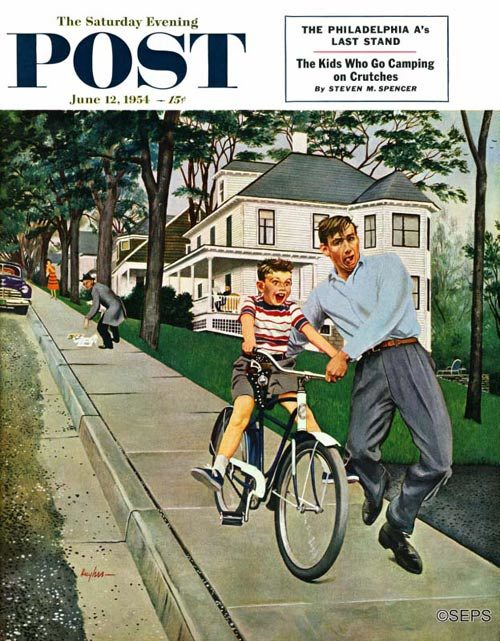
George Hughes
June 12, 1954
Today Is National Lobster Day
I don’t understand lobsters. Actually, that makes it sound as if they speak and I don’t understand what they’re saying, so let me clarify: I don’t understand why people enjoy lobsters.
This makes me an anomaly where I live, a coastal town known for its seafood, water, and beaches. But at least I’m consistent, because I don’t like beaches, and I don’t know how to swim either.
I worked in restaurants for many years and often had to deal with lobsters and their equally gross cousins, shrimp. I hated dealing with and cooking lobsters when people ordered them, and I particularly hated cleaning shrimp. I couldn’t understand why people would want to eat these bug-like things that not only didn’t taste good to me, but were pretty disgusting in their pre-cooked form. (They’re pretty disgusting in the cooked form too.) Some day, remind me to tell you all about the veins of shrimp and how I almost sliced my finger off cleaning one.
But by all means, I hope you enjoy today, in whatever form you like your lobster: Newburg, bisque, roll, or lobster salad. You can even put lobster in your mac and cheese, or as I call it, “how to ruin mac and cheese.”
COUGH.
Next Week’s Holidays and Events
Father’s Day (June 17)
If you really want to give your dad something special, and you don’t want to go the usual tie/cologne route, how about some baubles he can put in his beard, a yodeling pickle, or a membership to the Salami of the Month Club?
Of course, Father’s Day is this Sunday, so these gifts will arrive late, but as the old saying goes, I’d wait forever for a yodeling pickle.
Summer Starts (June 21)
If you hate summer, the countdown to fall begins now. Only 93 days!
National Selfie Day (June 21)
Isn’t every day Selfie Day? What we really need is a No Selfies Day. Oh wait! We have that, too.
Five Delicious Meals for Backyard Cookery
Here are five delicious meal plans from 1948 for fans of outdoor dining:
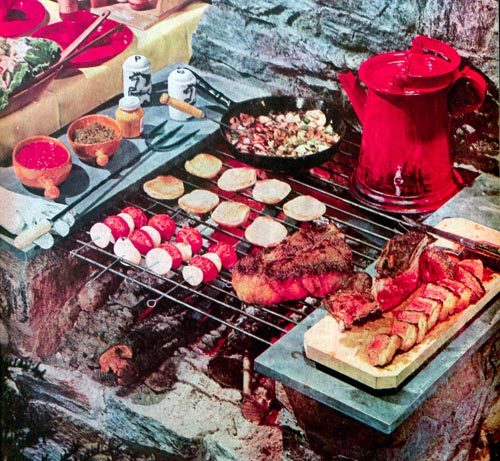
Cook It Outdoors
By Sara Hervey
Originally published in The Country Gentleman, September 1, 1948
Cooking at an outdoor grill is fun for the entire family. Everyone will want to lend a hand, but keep the menus simple, the preparation easy. One thing you can always be sure of — appetites will be enormous. So, no matter how simple the food, have plenty.
First in the heart of any outdoor chef is broiled steak, and when its natural flavor is enhanced by wood smoke, what could be better?
Outdoor Chef’s Special
- grilled T-bone, porterhouse, or club steaks
- onion brochettes
- cottage fried potatoes
- meat sauce
- pickle relish
- toasted buns
- salad bowl
- honeydew melon with lime juice
- boiled coffee
Grilling Steaks … Even though each [chef] may have a different thought on seasonings or sauces, most all will agree that a steak, to be worthy of the name, should be cut at least 1 1/2 inches thick. Over hot coals a steak of this thickness will need about 10 minutes to be cooked rare, 15 minutes for medium, and 20 for well-done.
The steaks shown in the photograph measured 3 inches by the ruler. They were cooked 35 minutes to reach the medium-rare stage. We scored the fat along the edges to prevent curling, and brushed the meat with butter before cooking. The seasoning took place when the steaks were turned. To serve our ravenous crew, we removed the steaks to a wooden cutting board, and carved off 3/4-inch vertical slices
On the fancier side of outdoor cooking comes this menu suggestion featuring barbecued spareribs. Here the chef has a chance to cut some real culinary capers, and you can be sure the audience will be appreciative.
Supper from the Barbecue Grill
- barbecued spare ribs with savory sauerkraut
- squaw corn
- horseradish applesauce
- rolls
- butter
- fresh peaches
- cookies
- iced tea
Barbecue Spare Ribs … Better allow at least 1 pound of spare ribs for each person, and have them cracked into serving portions. Brush with your favorite barbecue sauce, and broil over a rather slow fire for 10 to 12 minutes on each side, or until the ribs are crisp and browned. They should be basted frequently with additional sauce as they cook.
Sauerkraut … Just right with barbecued spareribs is sauerkraut, saucily seasoned with chopped onion and bits of chopped cooked bacon.
Horseradish Applesauce … Try adding freshly grated horseradish to your applesauce for an extra taste teaser. Half a cup of horseradish to 2 cups of applesauce are the proportions.
Long a favorite of outdoor-cookery fans are kabobs — small pieces of food impaled alternately on green sticks or metal skewers.
Cook Your Own
- kabobs
- French bread
- tossed green salad
- potatoes baked in the coals
- skillet peach cobbler
- lemonade
Kabobs … The combinations of foods which may be used are almost endless. Some of the most popular include
- steak, mushrooms, and bacon
- ham and apple slices
- liver and bacon
- our suggested combination: lamb, onion, and tomato
Cubes of lamb marinated in olive oil and garlic, small white onions, and tomatoes. The meat should be cut into cubes of about an inch. The procedure is for each person to fill their stick to whatever length their appetite may indicate. Then, squatting before the fire, each person broils their kabob over the coals, making sure to turn it frequently for even cooking. Most combinations will be cooked in 15 to 20 minutes
Skillet Peach Cobbler … Have biscuit mix prepared ahead. Add 1/3 cup of milk or water to 1 cup of the biscuit mix to make a soft dough. Mix well and spread in a well-greased heavy skillet. Arrange 2 1/2 cups of fresh sliced peaches (or 1 No. 2 can of sliced peaches) over the dough. Sprinkle a mixture of 1/4 cup of sugar, 1/4 teaspoon of cinnamon, and 2 tablespoons of biscuit mix over the peaches.
Cover tightly and cook over a rather slow fire 25 minutes or until done. Serve while still warm. This recipe makes enough for 6 generous servings.
Pizza (pronounced peet-sa) is another old stand-by for picnics. Biscuit mix is again the foundation for this temptingly seasoned concoction. Pizza is so good, you won’t need much else to round out the menu.
Camper’s Choice
- campfire pizza
- combination vegetable salad
- canned shoestring potatoes, heated
- assorted relishes
- toasted marshmallows and apples
- campfire coffee
Campfire Pizza … Add 2/3 cup of milk or water to 1 1/2 cups of prepared biscuit mix, and beat 1 minute. Spread in a well-greased 10-inch skillet. Cover with 1 cup of cooked tomatoes, and sprinkle with 1/2 cup of cubed American cheese, 1/2 cup of grated Parmesan cheese, and 1/4 cup of salad oil. Season with salt and pepper.
Cover and cook over a rather slow fire 20 to 25 minutes, or until lightly browned on the underside, and the cheese is melted. Cut into pie-shaped pieces for serving. Serve while still hot to 6 hungry campers.
When you’re in the mood to do your eating alfresco without aid of an outdoor grill, prepare picnic meat pies. They may be wrapped individually in waxed paper and carried to your favorite picnic spot.
Backyard Alfresco
- picnic meat pies
- Hawaiian baked beans
- tomato cabbage slaw
- carrot sticks
- olives
- pickles
- ice cream cups
- chocolate sauce
- chilled fruit punch
Picnic Meat Pies … Sift together 2 cups of sifted flour, 3 teaspoons of baking powder, and 1 teaspoon of salt. Cut in 1/4 cup of shortening. Add 2/3 to 3/4 cup of milk to make a soft dough. Turn out on a lightly floured board and knead gently 1/2 minute. Roll out 4-inch thick into a rectangular sheet, 12 by 16 inches. Cut 16 rectangles, 3 by 4 inches.
Mix together 1 cup of ground cooked meat, 1/4 cup of chili sauce, 1 teaspoon of prepared mustard, 1 tablespoon of grated onion, and 2 tablespoons of water. Place 2 tablespoons of the meat mixture on each of 8 rectangles. Top with remaining rectangles. Crimp edges together and bake on an ungreased baking sheet in a hot oven (450° F) 12 to 15 minutes. Makes 8 meat pies.
Hawaiian Baked Beans … Along with the meat pies, we’re suggesting that you take individual casseroles of Hawaiian baked beans. The Hawaiian feature is achieved by adding several cubes of pineapple to the canned beans, and drizzling a tablespoon of honey over the top of each casserole. The beans are then heated in a hot oven (400° F) for about 25 minutes.
75 Years Ago: Requiring Patriotism
In 1942, America was in peril.
It was immersed in a war for survival and faced powerful enemies to the east and west. It had already suffered a sneak attack at Pearl Harbor and faced a long, bloody road to victory. For many, it was a time to demonstrate their patriotism and support for their country.
The West Virginia Board of Education chose to do so by enacting a rule that required children to salute the flag. Students who failed to salute would be subject to disciplinary action, which included the possibility of being expelled or sent to reform school. The parents could be prosecuted for contributing to juvenile delinquency.
At the time, Germany was sending thousands of Jehovah’s Witnesses to concentration camps for refusing to salute the Nazi flag. Jehovah’s Witnesses were forbidden by their religion to salute flags, which they consider a form of idolatry.
Walter Barnette was a Jehovah’s Witness in West Virginia who instructed his two daughters not to salute the flag or recite the pledge of allegiance. The girls were duly expelled, and Barnette took the matter to court, asserting that the salute violated the principles of freedom of religion and of speech.
The case eventually made its way to the Supreme Court.
Three years earlier, the Court had ruled that a Pennsylvania school board had the right to require Jehovah’s Witnesses to salute the flag. These enforced demonstrations, one justice argued, were a means of creating national unity.
On June 14, 1943, the justices reversed this earlier decision. Justice Robert Jackson wrote, “Freedom to differ is not limited to things that do not matter much. The test of its substance is the right to differ as to things that touch the heart of the existing order.”
The Post editors applauded the decision. They recognized that the freedom to express one’s patriotism was one of the things America was fighting to defend.
As the Constitution Center recently noted about the ruling, “Patriotism and free speech still collide now and then. Such debates remind us that individual expression can be criticized and yet still protected by the First Amendment.”
-From a July 10, 1943, editorial in The Saturday Evening Post:
Score for Freedom No. 2
The Supreme Court happened to select Flag Day to hand down the opinion that it had been wrong in an earlier decision in a Jehovah’s Witnesses flag-salute case. The court, in reversing itself, declared that state statutes calling for salutes to the flag by school children were in violation of the Bill of Rights unless they took account of the religious convictions of minorities.
In Justice Jackson’s words: “If there is a fixed star in our constitutional constellation, it is that no official, high or petty, can prescribe what shall be orthodox in politics, nationalism, religion or other matter of opinion, or force citizens to confess by word of mouth their faith therein.”
The principles of Jehovah’s Witnesses can be pretty annoying to the majority of citizens. They insist on propagating their beliefs at the most inconvenient times and places, and they make no concessions to the sensibilities of the majority. To our way of thinking, this makes all the more impressive the action of the court, taken in time of war, when hysteria can so easily be directed toward eccentric minorities, to protect the elementary rights of unpopular individuals.
The majesty of the flag will not suffer because it has been permitted to remain the symbol of a willing loyalty. While the honest convictions of American citizens are protected by judicial authority from the zeal of well-meaning but often impatient officialdom, the flag, which symbolizes our hard-won privileges, waves more proudly than before over the land of the free. Love of country is not in danger. It springs, to quote Justice Douglas, “from willing hearts and free minds.”
Featured image: Wikimedia Commons
8 Weirdest Presidential Nicknames
“Tricky Dick,” “Big Steve,” and “Dude” aren’t the type of nicknames you’d expect to hear in the Oval Office, but these are just a few of the names that have been given to our heads of state. Here’s a list of eight weird presidential nicknames and the stories behind them.
1. Abraham “The Grand Wrestler” Lincoln
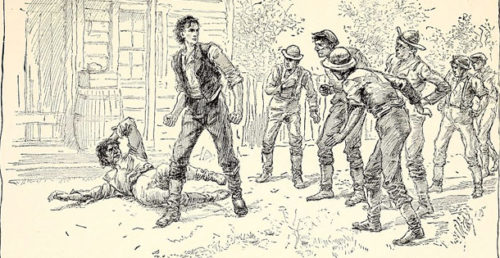
Lincoln is known not only for his unmatched honesty but for his successful wrestling career as well — which earned him the nickname “The Grand Wrestler.” He was so successful, historians have found only one instance of Lincoln losing a wrestling match. He also helped create a move called the “choke slam” after he picked up his opponent by the throat and literally slammed him onto the ground.
Honest Abe was inducted into the National Wrestling Hall of Fame in 1992.
2. Chester “The Dude President” Arthur
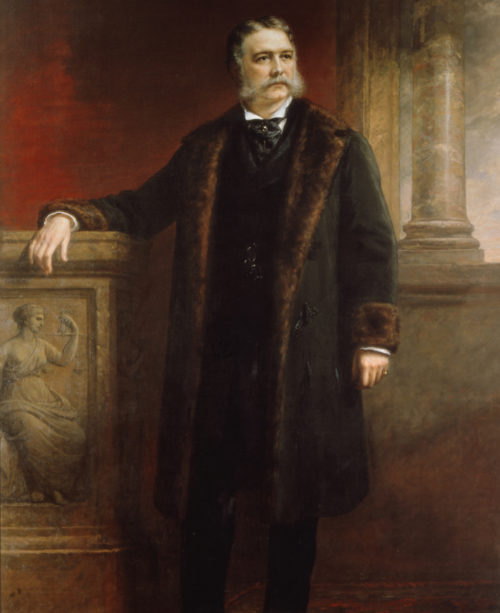
In the late 1800s, the word dude was, in the words of linguist Arika Okrent, “a term of mockery for young men who were overly concerned with keeping up with the latest fashions.” Chester A. Arthur got his unusual nickname because of his lifestyle and love for fashion, sometimes at taxpayer expense. For example, after he became president following James Garfield’s assassination in 1881, he wasted no time spending over $30,000 ($2 million in today’s money) renovating the White House to better accommodate his parties.
Arthur was also no workaholic. He openly voiced his distaste for living in the place he worked and refused to work on Sundays and Mondays.
3. Benjamin “The Human Iceberg” Harrison
Benjamin Harrison was the polar opposite of the socialite President Arthur, so much so that some derisively called him “The Human Iceberg.” He got his nickname because, although he could warmly engage with a crowd during speeches, he was said to be very cold and detached in person. He wasn’t often described as a mean or aggressive man, simply aloof, even among his staff.
4. Richard “Tricky Dick” Nixon
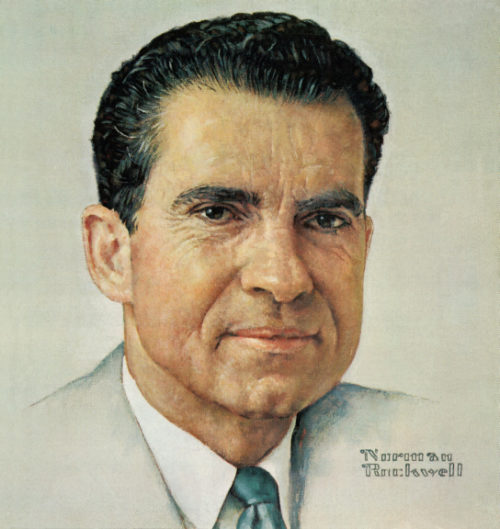
Richard Nixon earned the nickname “Tricky Dick” 22 years before Watergate in a 1950 Senate election. He was running against Helen Gahagan Douglas, a new age democrat who had been a Broadway star in the ’20s. At the height of the McCarthy era, Nixon centered his campaign not on Douglas’ platform, but on her affiliation with actors who had been accused of engaging in communist activities. This tactic was enough to win Nixon the seat and the nickname.


_(14764577784).jpg)
5. Lyndon “Light Bulb” Johnson
Lyndon B. Johnson took being a president “for the people” to the extreme. He was known among White House officials for running around every night and shutting off every unnecessary lights so that he wasn’t “wasting the tax payers’ money.”
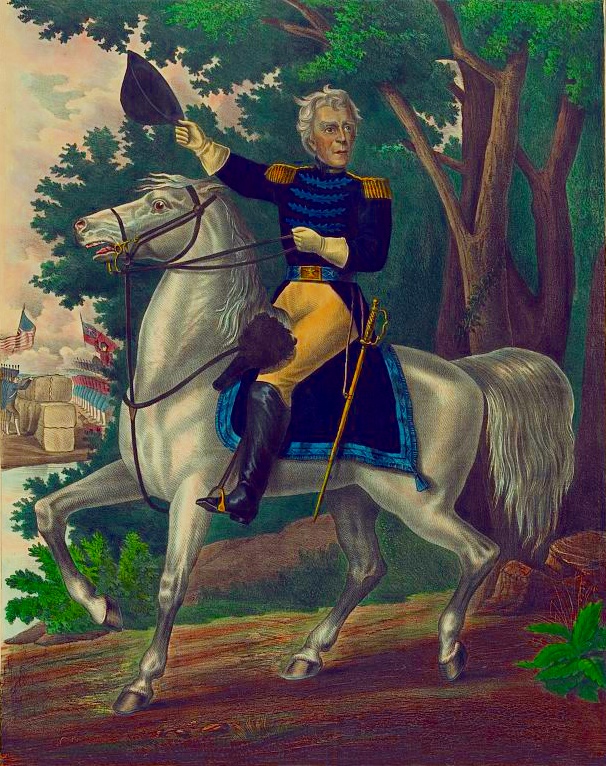
6. Andrew “Old Hickory” Jackson
Andrew Jackson had an impressive military career before he became president. His nickname comes from his time in the service and was given to him by his troops. After the War of 1812, Andrew was ordered to disband his regiments. Instead of stranding them where they were, Jackson committed his own finances and time to get his troops home. He and his fellow generals offered their horses to the sick and walked alongside their men for much of the journey. This dedication led to the nickname “Old Hickory” because hickory is one of the strongest and hardest woods native to the United States.
7. Grover “Big Steve” Cleveland
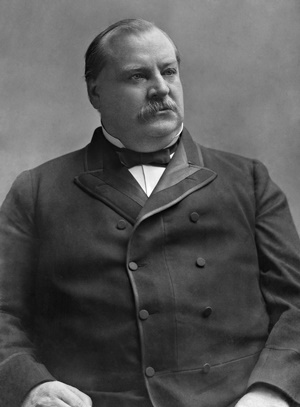
Stephen Grover Cleveland ditched his first name in 1881 after his friends adopted the nickname “Big Steve.” The 250-pound Cleveland couldn’t escape the public’s fat-shaming for long, though: During his time as governor of New York, he acquired the name “Uncle Jumbo.” This avuncular epithet helped create an image that appealed to voters, family, and friends alike, and due to his ever-increasing weight, the name followed him throughout his life.
8. Herbert “The Great Humanitarian” Hoover
Herbert Hoover is arguably one of the most disliked presidents in American history. He had the misfortune of being president during the Great Depression, and for the most part, it seemed he did little to help. Before his presidency, though, he was seen as a generous man who gave to the poor and helped feed the hungry. He did everything from risking his life to save a couple of Chinese children to helping finance feeding the entire country of Belgium after it was overrun by Germany.
However, Hoover also refused to fund large-scale relief programs during the Depression that could have alleviated hunger and suffering for hundreds of American citizens, so there is debate over how genuine his selflessness was.
Still There: A Flag Day Quiz
Did you know that June 14 is designated as Flag Day because on that date the resolution describing the flag was adopted? Here are ten questions about the history, composition, and proper display of Old Glory. Answers are at the bottom. (Quiz originally published June 15, 1946.)
- By what body was the flag resolution adopted?
- The Continental Congress
- The Constitutional Convention
- Joint session of both Houses of Congress
- In what year was it adopted?
- 1774
- 1777
- 1793
- Who designed the present form of the American flag?
- Timothy Pickering
- Betsy Ross
- Samuel Reid
- The blue part of the flag, without the stars, is called the field. Give two names for it after the stars have been added.
- The 48 stars are arranged in:
- Six horizontal rows of eight stars
- Eight horizontal rows of six stars
- Is there a Federal law against having gold fringe on the flag?
- Who wrote the poem that gives significance to the title of this quiz?
- If the flag is displayed over a street running north and south, the field should be at
- East side
- West side
- Who wrote the pledge of allegiance to the flag?
- Dolly Madison
- Robert Baden-Powell
- Francis Bellamy
- The following are among the days on which the flag should be displayed.* Name the days.
- February 12
- February 22
- April 6
- May 30
- September 27
- November 11
Answers: 1. a. 2. b. 3. c. 4. union, canton. 5. a. 6. No. 7. Francis Scott Key (Star-Spangled Banner). 8. a. 9. c. 10. Lincoln’s birthday, Washington’s birthday, Army Day, Decoration Day (now called Memorial Day), Constitution Day, Columbus Day, Navy Day, Armistice Day*
*Since this quiz was published in 1946, the number of days that the flag should be displayed has changed. The current list of days, according to the U.S. Code, includes New Year’s Day (January 1); Inauguration Day (January 20); Martin Luther King Jr.’s birthday (third Monday in January); Lincoln’s Birthday (February 12); Washington’s Birthday (third Monday in February); National Vietnam War Veterans Day (March 29); Easter Sunday (variable); Mother’s Day (second Sunday in May); Armed Forces Day (third Saturday in May); Memorial Day (half-staff until noon —last Monday in May); Flag Day (June 14); Father’s Day (third Sunday in June); Independence Day (July 4); National Korean War Veterans Armistice Day (July 27); Labor Day (first Monday in September); Constitution Day (September 17); Columbus Day (second Monday in October); Navy Day (October 27); Veterans Day (November 11); Thanksgiving Day (fourth Thursday in November); Christmas Day (December 25); and such other days as may be proclaimed by the President of the United States; the birthdays of States (date of admission); and on State holidays.
Dead Wrong: Let’s End Late-Life Suffering
My father was a farmer. He was rugged, hard-working, not afraid to get his hands dirty. On most days, he was up and in his work truck before the rest of us opened our eyes, while the skies were still dark. And after a long, hard day, he came home and fixed the house and coached my softball team and attended church every Sunday without fail. To him, going to a doctor was something you did if you had a bone sticking out or needed stitches. Otherwise, you took care of your own problems — either with a shot of something from the liquor cabinet or a hit of something loaded with spices to clear the sinuses — and then off you went to do whatever was next on the agenda.
He and Mom went on adventures, living in farming communities all over California, Hawaii, and finally, upon retiring, as expatriates in Panama. In his “retirement,” of course he had to have a “small” garden, which eventually expanded beyond their property to the empty lots around them. In his 70s, he was still up first thing in the morning and out to the fields of artichokes, kale, and potatoes.
We joked that I got my stubborn nature from him. Occasionally that stubbornness had us butting heads — like the last time he came to visit. I brought up his and Mom’s healthcare, asking how long it had been since they’d had a physical. He responded in the quintessential Dad way: with a rude noise and a dismissive wave of his hand. Doctors were for sick people, and Dad was fit and trim and in better shape than I was.
All his life Dad cherished his freedom and independence, but what do you do when you lose your independence and that most basic freedom — the freedom to choose?
In November 2016, I got the call from Mom. Something was wrong with Dad. They were heading to Panama City for tests after the initial visit — to a dentist of all things — had come up with worrisome results.
Those tests revealed stage IV stomach cancer.
We were fortunate to have one of the nation’s best oncology hospitals in Pittsburgh, where I lived, so we decided they should come stay with me so I could look after Mom while he underwent cancer treatment.
Only 10 days had passed from the first sign of a problem to the day Dad got off the plane in Pittsburgh. He was shockingly thin and jaundiced, bent over and in obvious pain. He was exhausted. I pretended nothing was wrong as I hugged him and Mom. It’s how we handle these things.
We got Dad into the hospital right away. I could tell even without the hesitancy from his team that his outlook was not good. Further tests discovered the cancer was attacking his blood cells, thickening his blood and causing multiple and continuing strokes that were literally killing his brain. The disease was taking Dad away before he even had the chance to fight it.
It progressed, and he deteriorated, with shocking speed. Every day he was less able to speak, until he was unable to do so at all. And every day he made it clear he just wanted to be home with us. One night, he even fell while attempting to get out of bed on his own in his usual stubborn-Dad way. When I asked him why, all he had to say was “Go home.”
As his ability to communicate failed, Dad issued four last instructions for me:
1. Take care of Mom.
2. Take me out back and just shoot me.
3. I really want to have a sip of beer one last time.
4. Home. I want to die at home.
Eventually, the doctors agreed: There was nothing they could do. They would send him home with us and he would be made comfortable. I thought my years of experience as a caregiver would serve me well. I had taken care of the elderly for a number of years for very little compensation, but I liked it and felt I was doing a good thing.
We had a hospital bed brought in. Shortly after, Dad was brought in by an ambulance service. We used small sponge sticks to moisten his mouth and lips, as he was no longer able to drink anything. His eyes were open and he was looking at me, and I took care of instruction No. 3 by dipping the sponge in a beer from the fridge and placing it on his tongue. I like to think he was aware enough to enjoy the taste of it.
We arranged care with a hospice provider, but the most they could schedule was one visit a day from a nurse and once a day from a caregiver. My mind boggled, but I told myself I could do it — I had experience, after all. So I tried to remember how to change diapers and wet bedding with a person still in the bed, and how to calm someone writhing in pain and distress — someone who was unable to do anything for himself.
But this time it was Dad. And that made it all different. Mom was there, of course, but she was helpless and traumatized and unable to physically help in any case. Hiring other caregivers would have been too costly, and insurance wouldn’t pay more. Besides, I could do this last thing for my dad. As I said, I got my stubbornness from him.
As it became worse by the hour, I wrangled phone calls with doctors and the hospice agency. I called when the catheter fell out, and when he was in obvious pain and the meds were not enough. Sometimes the response was timely; other times it was not.
The nurses themselves were lovely — gentle with him and careful and soft spoken, sensitive to our grief and imminent loss. But they were frazzled and ridiculously overworked. One nurse told me she was the only nurse for all the cases in a service area that spanned two counties. She had a two-hour commute to see us from her last case. When I called the office to try to get more help, often I was made to feel I was being a pain by pestering them.
I was given the bottles of medicine to administer. It was hard keeping track of the different cycles for all the different meds in between changing diapers and bedclothes. If I was late with the morphine, he would be up moaning and crying out and thrashing in pain. The nurse told me, “It’s close now. Apply the medication as needed.”
This was never how I imagined it when I allowed my mind to wander the path of what would happen when a loved one was terminal — which, let’s admit, is something most of us shy away from in our musings. After reading about others who had gone through this, I always imagined a serene, peaceful process. I anticipated sitting by a bed and holding hands, meaningful final communication, and a chance to say goodbye amid conscientious nurses there for my loved one’s slightest twinge or need.
I know that was unrealistic, but after all I had heard about hospice care, I truly did expect there to be no pain. I expected my father to be spared embarrassment and shame. I did not expect to be so caught up in the minutiae of managing this process largely on my own, and that the caregivers I was able to access would be so overworked and frazzled, unable to invest themselves here in the moment with us. I never thought we would be just one stop on a long list for the day.
Perhaps, like almost everything else in our “healthcare” system, it all comes down to money. If I had more or better insurance, perhaps many of my expectations would have been met. But that is so wrong.
It was over in four days. Exhausted, I crashed hard. While I was sleeping, Mom had gone to administer Dad’s morphine and found he was not breathing. I walked into the bedroom and right away I could sense the difference. My dad had finally slipped away and was peaceful.
It’s a year later now. These are the lessons I learned from my experience — and everyone should heed them: keep having yearly physicals; make certain your final wishes are legally filed along with your will; please talk with your loved ones about what you want for your funeral and try to see it is paid for. Make sure your insurance is intact and is the best you can possibly afford. Your passing should be as easy as you can make it for your loved ones.
Though I’m glad Dad is at peace, I’m also left with a lot of anger. I am angry that Dad was never given the option to arrange his own end in a way he would have preferred. For a fiercely independent and iron-willed man, there was no option to take a pill and go to sleep to end the suffering. I am angry that his final days were so agonizing and ugly after he had led such an amazing, beautiful life. And I am filled with grief that so many in this country are left to watch loved ones suffer and die like this — usually for much longer than four days — with inadequate care from an industry staffed by some of the most compassionate, undercompensated, underappreciated, and overworked folks I know.
As Americans, we pride ourselves on our freedoms. It seems to me that we should also have the basic freedom to decide to pass as peacefully as possible when confronted by the fact that there is no hope for recovery. It’s how we “humanely” free our beloved pets from their pain. How can we deny that freedom from our human loved ones — and from ourselves?
What’s happening now is just wrong. All of it.
Dawniel Kupsch is a wife and mother of two boys; she has served as caregiver for the elderly and provided therapy support for autistic children.
This article is featured in the May/June 2018 issue of The Saturday Evening Post. Subscribe to the magazine for more art, inspiring stories, fiction, humor, and features from our archives.
North Country Girl: Chapter 56 — The Accidental Pornographer
For more about Gay Haubner’s life in the North Country, read the other chapters in her serialized memoir.
To my astonishment, I had fallen in love with an impoverished, unlovely artist. I was equally amazed that I was able to support myself and my elderly Yorkie, Groucho, in a very modest way by modeling, mostly at trade shows and conventions, passing out pens and pins and smiling at salesmen. One weird modeling job, posing as a girl baseball player for promotion material for a men’s magazine, had sent me on a trajectory to my new love, Michael.
I had almost forgotten about my shortstop gig for Oui, when George, the art director who cast me and then introduced me to Michael, told me to come by his office to pick up my baseball card. I was eager to showcase this photo in my modeling portfolio in case another client ever wanted to hire the world’s most unathletic girl to pose as lady baseball player, or any other job that required me to bend over and stick my butt in the air.
Oui magazine was tucked away on a single floor of the intimidating Playboy building. I found George in his cluttered office, bending over a lightbox with a thing stuck in his eye. After moving several stacks of papers and magazines and portfolios he found my baseball card. After admiring my own sporty ass, which the card claimed belong to “Pam,” I turned the card over to read my bio, along with stats about Oui readers, their youth, their salaries, and the impressive amount of money they spent on cigarettes, liquor, and cars.
“Did you write the stuff on the back?” I asked, which George found amusing. No, he told me. They gave the photos to a freelance writer, along with the reader demographics; the assignment was to fill the rest of the card with amusing, sophisticated fluff.
I was baffled how this hoohaw would sell ad space in a magazine, but I knew that I could write better copy than this, an opinion I shared with George, which he found hilarious. I needed to make more money than I was earning modeling. Michael had asked me to move in with him; for some reason he sweetened his pitch by confessing that after paying this month’s rent and child support he was flat broke. If I wanted any more Indian food dinners, they would have to be on my dime.
I argued my case with George. “Look at what the writer made up for me. My name is Pam? Pam? Why not Babe or The Say Yes Kid? Why didn’t he write that I liked to play the field, or that my favorite stadium snack was foot-long wieners? Or since Oui is so European-flavored, that I preferred playing soccer goalie because of my ball-handling skills?”
George, now laughing even harder, took me over to meet one of the Oui editors, John Rezak, who was equally bemused by the Model Who Mistook Herself for a Writer, but who had plenty of time to talk to a cute girl. It turned out that John was also a poet, and I had enough years of English Lit behind me to be able to listen to him discuss in great detail the inspiration behind his epic poem “Laika,” about the first dog to orbit the earth. After he finished reading me several of his verses, the conversation turned to our favorite poets. I won John over with the fact that John Berryman had leapt to his death into the Mississippi River the first day of my freshman winter semester; had I woken earlier (my dorm window faced the fatal bridge), I might have seen him jump.

I left John Rezak’s office with my own copy of “Laika” to read when I had an hour or two to kill, and with color Xeroxes of what was officially known as a pictorial, but which was always referred to as a “girl set:” photos of a willowy blonde, nude in pearls, nude sipping a glass of champagne, nude gazing pensively in a mirror. I was to come up with a hot European name for Blondie and write something cleverly erotic (or erotically clever) about her, using the characters that ran below the photos (called greek type) as my gauge for length. In about 250 words, I had to make the model exotic, but approachable, sexy, but not slutty. If John liked what I wrote, I would be paid $200. If not, I would be back to standing next to refrigerators and running scams at car shows and trying to figure out how to cook dinner for Michael and me in a tiny kitchen with a single pot.
I showed up in John’s office the next day, with three names, three nationalities, and three different personalities. I gave all of them raging libidos and bestowed on each a sexy quirk: “Would you kick me out of bed for eating croissants?” “I like a spicy meatball.” “Kiss me. What’s the wurst that could happen?
“It was fun,” I told John. “It’s like writing a sonnet: it has to be pretty and it has to fit in an exact number of lines.”
John sat me down across from him, swept up the piles of paper that covered his desk, and dropped them on the floor. He spread out Blondie’s photos and my typewritten sheets and explained what worked and what didn’t, pulling together the final copy from all three versions. John admitted that he didn’t think that there was a single Oui reader who would even glance at what I wrote, but we had to pretend as if they did and pretend to take it seriously. No wurst jokes. No Dutch girls putting their fingers in dikes.
When we were done, John signed a purchase order for me and sent me down to accounting to request my $200 check. I was now a professional pornographer.
I was a professional in the sense that I — occasionally — got paid. All my work was on spec; sometimes John would read what I wrote, throw it all in the wastebasket, and hand me a different set of photos.
Even with the thrill of those first paychecks for writing, it became harder and harder to come up with sparkling new personalities and exotic backgrounds for the models, who were basically interchangeable: perfect bodies, dewy skin, pouty lips, big sunhats, eyes cast coyly upward — or downward, as if surprised at what they saw between their legs.

I was one of several freelance writers; every issue had at least four different girl sets, each six to ten pages. All of us freelancers scrambled to get anything out of the ordinary, anything but nude girl in garden with watering can, topless girl biting her bead necklace, girl stroking feather boa. One day I pulled out of the pile of photos something shockingly different: a guy-and-girl set. This was an anomaly, as the male reader was supposed to look at the photos and picture himself with Miss Oui, not some random dude. (This experiment was short lived; a misguided editor thought that couples might want to look at Oui together.)
The photos were sepia-toned, the setting an old time-y photography studio. The male model kept most of his clothes on, including his hat and spats, while the girl model stripped down to a laced corset, garters, and stockings. I took the mocked-up pages home and had a ball making up a funny, sexy little story to go with the photos and brought everything back to Oui the next day. I couldn’t wait to show John how creative, how talented I was. He read my copy, while I gleefully waited for the compliments and the two hundred dollars. John looked up sheepishly at me and confessed he had given the photos to another freelancer and preferred his version. Of course David Mamet was a better writer of girl copy than I was.
John said, “Sorry. I’ll make it up to you. Pick out something from the front of the book pile.” This was a coup for me. Between the salacious “Letter to the Editor” (“Amelia is one hot piece of ass,” was a typical letter from a sophisticated Oui reader) and the first girl set were six to eight pages of short, supposedly witty pieces usually illustrated with a bikinied or bare-breasted girl. There were also funny photos with clever captions and a handful of reviews.

I pawed through the piles of stuff on John’s radiator and pulled out a few I thought might be fun. I struck out with my first submissions, but eventually started getting a few pieces published each month. I wrote captions for photos of topless girls playing volleyball or in a string quartet, a bunch of dancing Arabs, a dog smoking a cigar, and I finally scored my first review on a book of album cover art. Funny was encouraged but titillating was mandatory.
Freelancers who were higher up on the food chain got first crack at the books and records that came into the Oui office, or John would write a review himself if it were something by a favorite musician or author. I was never going to be allowed to write a Bruce Springsteen review; even Boston’s album Boston was reserved for a writer with more refined tastes than I had.
But I was accumulating a small jumble of my published efforts, and a few pieces actually carried my byline. I was most proud of my rave review of an English book of humorous sketches, some of which left me scratching my head. (“Minutes from the Annual Labor Conference at Blackpool”?) But it was not my own witticisms that got my review published; it was because John and George loved the book’s cover, which featured a large black swastika appearing under the title Golfing for Cats (apparently the best-selling book subjects are golfing, cats, and Hitler).
“Keep tear sheets of all your writing,” advised John. “It will help you get other freelance jobs.” I had no idea what those jobs would be or how one would go about getting them, but I took his advice.
Michael was thrilled that he could stop introducing me as “My girlfriend the model” and start saying “My girlfriend the writer.” He never mentioned that what I wrote was deathless prose such as “Giselle’s ideal man is a combination of Jean-Paul Sartre and Jean-Paul Belmondo,” running under a photo of a naked brunette holding a book no one but my editor and I noticed was upside down.
Michael, perhaps a bit oblivious to the fact that his ex-wife was an actress, signed me up for a class on Writing Theatrical Reviews, taught by a red-headed roly-poly jester of a man, Michael VerMeulen (the Michaels keep coming). The class was challenging and fascinating; it was like being back in college. Every week, VerMeulen escorted his six students to small, inexpensive theaters to watch plays, including David Mamet’s “The Water Engine,” and then he reviewed our reviews (still mad that he had beaten me out on girl copy, I gave Mamet’s play a well-deserved panning).
It was almost as thrilling as getting a check to once again be handed a bunch of my typewritten sheets with “Excellent! Well done!” scribbled across the top in red ink. I knew these two Michaels, Trossman and VerMeulen, would get along like a house on fire; from the moment I introduced them they were trading quips, engaging in intellectual one-up-manship, and trying to outdrink each other.
Michael VerMeulen had a prodigious appetite for everything. After watching him hoover up an entire cheese plate, I began referring to him as “The Cheese Engine.” His idea of a Bloody Mary was half vodka and half hot sauce, with a splash of tomato juice. He guzzled these as if he enjoyed them, his pale moon face growing ruddier and ruddier as beads of sweat popped about his forehead. When I saw him after he had spent a week in New Orleans, I didn’t recognize him: “VerMeulen, what happened?” I cried out in shock.
Michael shook his three new chins. “Breakfast, midmorning beignets, lunch, afternoon oysters, happy hour, dinner, midnight po’ boys…” Michael VerMeulen went on to have a successful career in magazines, landing a plum spot as the editor of British GQ; then he was found dead with over two and half times the lethal amount of cocaine in his system.
What These 4 Words Reveal about Our Changing Language
You don’t have to be some sort of woke neoliberal technocrat to see how a slew of new words have entered the English language in your lifetime. That already massive unabridged dictionary is only getting larger as we gain new words. But less obvious — and far more interesting — is how we lose words.
Now, to say that we lose words isn’t entirely accurate. The English language doesn’t lose words — not really. Open to any page in an unabridged dictionary, and you’ll find not only words you’ve never heard before, but words you’re likely never to hear in a conversation — absume, hogling, whurl, words that are marked as either archaic or obsolete.
Why do so many useful and colorful words fall into obscurity while others flourish? The following four words illustrate some of the evolutionary forces that work upon our language.
Phlogiston: Science Moves On
In 1669, the German physician and alchemist J.J. Becher formulated what came to be known as the Phlogiston Theory to explain how things burned. The theory stated that all materials contain a substance called “combustible earth” — which later scientists renamed phlogiston — that is released during combustion. Wood, for example, was believed to be made up of ash and phlogiston, and when it burned, the phlogiston was released and the ash left behind.
As odd as this sounds today, it was the prevailing theory for more than a century. Scientists running tests based off this theory of combustion (later also applied to metal corrosion) made a number of advancements in chemistry, ultimately leading to the discovery, in 1774, of what English chemist Joseph Priestley called dephlogisticated air.
Thankfully, French chemist Antoine Lavoisier separately identified the element shortly after, and he gave it the name that stuck: oxygen.
The discovery of oxygen put an end to the Phlogiston Theory, as well as to the vocabulary that went along with it. Outside of historical contexts, we don’t get much call to use the word phlogiston in our daily lives anymore, much less dephlogisticated.
It’s happened before, and it will happen again: Words created to explain various scientific and philosophical theories disappear when the theories themselves are disproven through a better understanding of the world. Unless the vocabulary from these disproven theories finds new life in other disciplines (as, for instance, melancholic and sanguine did), they are liable to disappear from the common tongue, consigned to dwindling use in articles about historical oddities. (Like this one.)
Knocker-upper: Upgrading Your Tech
The crowing rooster waking the farm family at the crack of dawn has been a cliché for centuries. It also happens to be true. But as the industrial revolution took off, people left the farm and packed into cities, and they didn’t bring their roosters with them. Before the invention of the adjustable mechanical alarm clock in 1847, and long before the invention of the wake-up call, people needed some other way to make sure they got up in time for work.
Enter the knocker-uppers (also called knocker-ups).
Clients hired a knocker-upper to come to their home at a certain hour and tap on the bedroom window, usually using a long pole with a knob attached to the top, until they woke up. Affordable alarm clocks and the proliferation of electricity ultimately ended knocker-upping as a viable profession — and took the word knocker-upper with it — though the job did survive well into the 20th century.
Although we readily accept the idea that the forward march of technology renders old equipment obsolete, rarely do we stop to think about the vocabulary that we lose along with it. And that’s a long list of lost words, including some beauts like arquebus (a precursor to the musket); rarebrace, poleyn, and vambrace (parts of a suit of armor); and chatelaine (a sort of tool belt for a head housekeeper).
In a few generations — or perhaps just a few years — historians and logophiles may be explaining the obsolete words beeper, modem, and dot-matrix.
Mulatto: Social Pressures on Language
During the centuries that the enslavement of black Africans was considered an acceptable and profitable enterprise, the white European and American men in power developed their own vocabulary to simplify their ability to write oppression into law. Some localities developed complex hierarchal racial classification systems based on how much one’s “pure” blood was “diluted” by races considered inferior.
And that’s where the word mulatto — a person with one white and one black parent — comes from. And it didn’t stop there. The powers that be established a wide lexicon to label people with a mixed-race background, including the words mestizo, griffe, quadroon, and octaroon, this last used to describe a person with one great-grandparent of color.
Sometimes, social and political pressures act deliberately to remove words from the common tongue. The fact that some of these words have effectively disappeared is proof that language obsolescence isn’t always a bad thing.
Today, we’re seeing the same type of downward pressure on the word niggardly and its even more dysphonic noun form niggard. Originally a neutral word meaning “stingy,” niggardly has, after several high-profile incidents involving lawsuits and resignations, become a dog whistle for racists, providing a thin veil of plausible deniability with appeals to etymology. (We see the same with the word uppity.)
Instead of using niggardly, writers are encouraged to reach for a synonym: miserly, tight-fisted, penurious, stingy, and Malthusian could all fit the bill.
Nice: Don’t Be Silly
Santa Claus’ naughty and nice lists were quite different 700 years ago. When nice entered the language in the late 13th century, it meant “foolish” or “stupid.” It’s derived from the Latin nescius, literally “not-knowing.” In the late 1300s, the meaning shifted to indicate a person or actions considered excessively luxurious and then, by 1400, to denote someone who was finely arrayed, shy, or reserved, or something that was precise (as in the phrase “nice and slow”).
By the 1500s, nice was a word used to describe polite society — without any subtext of ignorance or foolishness. And the meaning of nice continued to shift with such rapidity through the 16th, 17th, and 18th centuries that the writer’s intended meaning for the word was not always clear.
Naughty, too, has seen a great change. It was originally an adjective meaning “poor” or “needy.” It described someone who had naught — nothing.
In the evolution of a language, sometimes the words remain but the meaning of the word changes, and it has happened more often than you might think: A computer used to be a person who did calculations. Girl used to describe a child of any gender. In the 16th century, bully was a gender-neutral term of endearment.
“The Child Who Was Thrown Away” by Stewart Toland
She hadn’t meant to be a thief. But then none of us do, and all of us are, stealing time and taxes and other people’s laughter, if nothing worse. Thieves. For “What is mine is mine and what is thine is mine” wasn’t written of angels, but of men. And women. And children.
It began with her growing up. For seven is grown up when all you’ve been before is six or five or even four. So she was grown up more than she’d ever been, and she was wondering about things, and wanting things, not toys that any dime might buy, but things unseen, unknown, like grownups want. She wanted to know who she was, for how can you grow up to be someone you don’t know? All she was the little girl in the third bed from the fire door, a little girl in the looking glass. And that isn’t enough to be. But it was all she was, for herself was the only family she knew.
Laurie went to the washstand and looked at the little girl in the looking glass. She had big, green eyes and black, black hair; there wasn’t any curl to it, but it had a shine like shoes on Sunday. She knew her eyes would be green always, and her hair black and straight, but her face was the face of a stranger. She couldn’t see the lady in it that she was going to grow to be. She pounded on the glass with her fists. She said, “Who are you? Are you pretty or ugly, fat or thin? Don’t you love your little girl, or are you sick or lost? Why can’t I know you? For I want to, I want to belong to you!”
But the little girl in the looking glass only pounded back with her fists that were as cold and hard and senseless as glass.
And Laurie knew she couldn’t wait another day, and she ran to ask Miss Hanacher about her mother. For Miss Hanacher would have to answer her now that she was old. She couldn’t say, as she had before, that Laurie was too little to understand. For Laurie knew about being poor, and sick, and lost; she was as old as that. So Miss Hanacher would have to say if Laurie’s mamma was too poor or too sick. That was what most of the mothers were. They had to work, or they had to lie in hospitals, so their children lived in The Home until they got well or rich, except those who belonged to someone called The Court. But whatever it was, the children knew whom they belonged to. And Miss Hanacher knew, for she was head of The Home and knew everything about everyone.
The big girls said you couldn’t have the smallest secret without Miss Hanacher’s finding it out. It seemed that she could look right through you with the gray sharpness of her eyes — and if she couldn’t see the secret, she could smell it with the sharpness of her nose that was so pinched it was like a finger pointing. Miss Hanacher looked like a witch, and she wasn’t anybody’s mother. She was just bells to tell you what to do, and rules to tell you what not to do, and she discovered secrets. And this day she told a lie.
She looked at Laurie looking at her, and said, “Laurie, your mother is dead.”
Laurie knew it was a lie. She pounded on Miss Hanacher. “Why do you keep me from her? All the other little girls have mothers! Why can’t I have mine?”
“Oh, Laurie!” Miss Hanacher tried to take Laurie in her arms. She said, “You’re not old enough to understand how things can’t always be the way we want them. But if I could give you your mother, I would!”
Which was the worst lie of all. For Laurie knew Miss Hanacher knew where her mother was. She was in the filing cabinets. Laurie looked over Miss Hanacher’s shoulder at the rows and rows, a whole wall of little tin drawers. That was where the mothers were kept, and the fathers too. There were all the words in there that it took to make a mother and father. And Laurie said to Miss Hanacher, “No!” And it was hate.
It was so quick and deep a hate; it was as though it came natural to her. Miss Hanacher shivered, and Laurie twisted free and ran out the door and out of The Home and across the lawn to where the weeds began about a troubled little path leading into the willow forest that was only two trees big. But they were so great their branches swept the ground, and inside you couldn’t see from their beginning to their ending, so surely it was a forest. It was a dark and secret place, where the children always came to hide when they were hurt.
Miss Hanacher went to the window and watched as Laurie disappeared beneath the trees. She said, “I must learn to lie better.”
Laurie didn’t cry very long. For she knew what she was going to do. The only trouble was, she couldn’t read. So she sat on the edge of the willow forest and watched the big girls walking by to see if any carried a book too small and thick to be a picture book. For today was Saturday, and if someone carried a reading book when they didn’t have to, it must be because they could read real good. By and by Gladys came with a book.
Gladys was ten, and she was here because her mother was sick in the hospital, but in two years they said her mother would be well, and Gladys could go home. Gladys was matter-of-fact. She said, “Of course I can read. I’m ten.”
“Can you read the big words like `mother’ and street numbers?”
“Of course I can, stupid.”
“Can you keep a secret?” Gladys looked interested. “From whom?”
“From everybody.”
“That can’t be done. Miss Hanacher would find out.”
“Would you tell her?”
“No.”
“Then how would she find out?”
“Because she always does.”
“Who says so? You only know about the secrets she’s found out about; you don’t know the secrets that are so secret she hasn’t found out. I have secrets she hasn’t found out.”
“You have?” Gladys sat down in the lace of leaves. “What are they?”
“Cross your heart and hope to die and never visit the moon if you tell?”
Gladys crossed her heart and hoped to die and never visit the moon.
“I have the secret that I want to know who I am, and I’m going to. I have the secret that every night when Miss Hanacher takes her bath she lays her keys on the bed table, and I’m going to take them and look in the filing cabinet where the mothers are and find out who I am.”
Gladys was aghast. “You’d be skinned alive!”
“Why? My mother is mine, isn’t she? I have a right to her, don’t I? I’m her little girl!”
“But the keys are Miss Hanacher’s!”
“She won’t know. She takes long baths, and it won’t take you long to read my mother’s name and address.”
“Me?”
“Sure. That’s why I’m telling you!”
Gladys rocked back and forth and thought about that. She was bored and homesick, and it would be fun to have a secret; but the best would be fooling Miss Hanacher. For how could she find out, for ladies in the bathroom always closed the door.
“When do you want to do it?”
“Tonight; she takes her longest baths on Saturday. You wait by the cabinets. Do you think you can find me in them?”
“Of course, stupid, you’ll be under L.”
“Why?”
“For Laurie, that’s why. And if we get caught, I’ll kill you.” Gladys got up and walked away. She didn’t want her friends to see her with someone only seven.
Laurie was first in bed that night. Miss Hanacher noticed that, for she always came to say good night to everyone. She kissed Laurie to see if she had fever, but all she had was eyes — they sparkled and looked everywhere but at Miss Hanacher. They were the eyes of a little girl with a delicious secret, and Miss Hanacher was so pleased she kissed her again. That was the wonder of being only seven; yesterday’s tears truly belonged to yesterday. Miss Hanacher tucked every one of the twenty little beds and turned out the lights, and by and by she said good night to the big girls, and all The Home settled down dark and still. Only Miss Hanacher couldn’t settle down; she couldn’t forget Laurie’s eyes — the ones when she said, “No!” and the ones she took to bed with her. Maybe a nice hot bath would help.
Miss Hanacher laid her keys on her night table, just so they covered the crack in the marble, like she always did, and tested her flashlight. Then she got her slippers and gown and robe and a new book on child psychology that was supposed to answer any problem in only 560 pages, and she went into the bathroom and closed the door.
Laurie heard the door shut. She had had to pinch herself so many times to keep from falling asleep that she just about hurt all over. But she was awake, and she heard the door and the water running like a train going down a hill and then the swishing like a storm. Then she hardly dared breathe as she slipped down the hall and into Miss Hanacher’s bedroom, where she nearly died of fright. As thieves often do. For there wasn’t any noise in the tub. She almost turned and ran, but first she peeked through the keyhole, and Miss Hanacher was reading a book, which was a very odd thing to do in a tub, but it was a fine thing, for it was a very big book. Only suddenly Miss Hanacher looked around, as if sniffing the air for secrets. Laurie closed her eyes and held her breath, and in’a moment she heard the soft swish of water as Miss Hanacher went back to reading. Laurie tiptoed to the table and got the keys and flashlight, and made sure the watchman wasn’t coming; then she ran to Miss Hanacher’s office. Gladys was waiting by the cabinets.
“Well, it’s about time! Did you get the keys?”
Laurie held them out.
Gladys was a little scared, but this was the first excitement that had happened since her mother had gone to the hospital.
Besides, it really wasn’t stealing, for the little individual drawer, or box, had Laurie’s name on it, and if your name was on a thing, surely that made it yours — really yours.
The sixth key opened it. Laurie snatched it right out of Gladys’s hands. “It’s mine!” She pulled the little drawer out, and sat down on the floor and laid it in her lap, carefully, carefully, as though it weren’t made of tin but glass and would break. And Gladys knelt and held the light on the box as though that were the only thing in the world that mattered, just the box and the glow it laid upon their faces, for the inside of the box was white. It was goods. Laurie picked it up; it was a baby’s slip. And on each shoulder was a little pin with four pretend pearls.
Laurie counted each one out, they were little drops of loveliness in her fingers; her hands moved so gently around them, for they were the first things she had ever known that her mother had known. For this was such a little slip it must be her mother who had pinned it on her, for she couldn’t have been old enough to know anyone else.
Laurie said, “A mother would have to love her baby very much to buy such fine pins.”
And Gladys said yes. “I’ve seen them in the five-and-dime; you only get two for twenty cents, while the regular ones are thirty for fifteen cents.”
“She must be a pretty lady to love pretty things.” And suddenly the little girl in the looking glass wasn’t a stranger. She was pretty like her mother, with pearls on everything.
Laurie looked to see what else was hers. The next white was a diaper with two pink diaper pins pinned in it. And underneath the diaper was stiff paper, and she was so excited she just sat looking at it for a moment, for it was on paper that writing would be.
She touched it, and it made a little crackling sound, a sort of angry sound, as if it were something that mustn’t be touched.
But Laurie picked it up and unfolded it until it became a shopping bag, and she stuck her head inside to see if there was anything in there. There wasn’t. On the outside there was printing. And slashed beneath in black letters were the words, NOBODY BUT NOBODY. Gladys read them out, then she read the paper that had been under the shopping bag in the very bottom of the drawer.
July 23, 1953. Infant, female, Caucasian, about three days old, weight 6 pounds 3 ounces, found abandoned in a shopping bag against the N.E. lamppost of 37 Street and Park at 3 :20 A.M. The baby wore a white lawn slip with two shoulder pins of imitation pearls and a white diaper with pink diaper pins. There was no note or identification. Officer Logan gave the report. On admission to the hospital the child was listed as No. 1376421. On admission to The Home she was named Laurie.
Gladys read it very slowly, for some of the words were strange, but she knew what they said. She had read The Little Prince, and she knew what the word “abandoned” meant.
“What does it mean?” Laurie beat on her arm. “What does it say about my mother and father?”
“It doesn’t. They aren’t here. They didn’t tell on themselves at all. They only threw you away. That’s what ‘abandoned’ means, something you don’t want and you throw it away like trash. You were put in a bag like trash too. I guess this one, and that’s why it’s here.” She stuck her head in to see how it was for size. “You were left in the street against a lamppost, and your mother and father didn’t put their names on you, for if they’d wanted you back, they wouldn’t have thrown you away.” Gladys was fascinated by the thought; she kept saying it over and over in different ways and looking at Laurie. This was the biggest secret ever.
Gladys fingered the slip, “There isn’t any lace on it, so your mother must have been very poor. I guess that’s why she threw you away. My baby things have lace and embroideries.”
Laurie’s lips were trembling so she couldn’t speak. She pointed to the bag, to the printing on the outside that she wouldn’t believe didn’t belong to her.
Gladys said no. That was the name of a store. Her mother had taken her there once when she was little to see Santa Claus. And NOBODY BUT NOBODY wasn’t a mother, it meant — Gladys looked at Laurie, and all of a sudden she didn’t see trash or even a secret. For the first time she saw a little girl who had wanted to know her mother, and knew her mother had thrown her away. And Gladys didn’t know what to do about it. But then, Miss Hanacher hadn’t known what to do about it either.
She stood there now in the doorway watching the darkness of the room, and the darkness of truth. For she had got there too late to stop the reading of the note, and what is read can’t be unread. The flashlight lay on the floor and made a small slash of white in the night. It made ghosts of two little girls; one who didn’t know what to do, just sat there hiding her mouth with her hands and staring terrified at Laurie; one who didn’t do anything, just sat there with the tears running down her cheeks and making no sound at all. Miss Hanacher wanted to take her in her arms and tell her it was all right, but those weren’t words you could tell to thieves in the night, or even to broken hearts.
Infinitely slowly Miss Hanacher moved back and away and out of her door. She tiptoed to her bathroom, and set up a great sloshing in the tub, for she was the one who discovered the secrets and told the lies. And after a little while, when she peeked and saw the keys back on her table, she came out and listened to the crying of the little girl who was the third bed from the fire door, a girl in a looking glass and a little girl who had been thrown away. And that was too much to know.
Miss Hanacher waited until the crying stopped. Then she went and held Laurie in her arms, not tight enough to waken her, but maybe enough so she would know in some secret place inside that there had been arms around her. And Miss Hanacher thought and thought. How could you tell a little girl who knew she had been thrown away that that was a good thing to be? How could you make a lie as big as that sound true?
Miss Hanacher laid Laurie in bed, and went and pulled the blind so the streetlamp light couldn’t touch her. Then she went to her room and threw the book she had been reading into the tub and drowned it, as if it were alive and could feel and be dead. Then she cried herself to sleep, for she really was too young to have seventy children, and she was sure she was not wise enough.
Laurie had fever the next day. Miss Hanacher said she guessed it was a cold coming, but not a bad one, so she didn’t make Laurie go to the infirmary, she only made her put on a sweater and told her to stay all day in the sun and drink lots of warm milk and cold juice, and she kept sending them out to her all day and the day after. Laurie didn’t say she had fever only because she cried so much. She couldn’t tell about the tears without telling the why, and she wouldn’t tell that. Not even to Gladys would she ever tell it again. Not the word “mother.” For she hated it. Hated it as much as her mother must have hated her. That was the lady in the looking glass. Hate.
And Laurie hated street lamps. Everywhere she looked she saw them, for The Home was a block square, and all around it were the lamps. Before she had thought of them as lollipops, but now she saw them as watching eyes watching her, because they knew who she was. She ran into the willow forest to hide.
That is how it happened that it was Laurie who found the kittens, because all the other children were in school. She found them in a nest of leaves, three black babies without even their eyes open, but their mouths wide and pink and yelling, with the tiniest, sharpest prickles of white teeth and real whiskers all around. Laurie knelt and was afraid even to touch them. But she did, and the baby hissed! A lion hiss just half a kitten big. It was so precious, so tiny and fierce and helpless. And all around it a great, strange world waited to pounce upon it, as worlds do on the very young.
Laurie poked the second kitten, and it hissed. She poked the third kitten, but it sniffed and grabbed her hand with all four paws and needle claws, and it sucked and sucked on her fingers, for it was the tiniest and the hungriest. Laurie had been drinking milk, and when Laurie drank milk it was sort of as if all of her were drinking it. Laurie dropped some on her hand; the drops ran down her fingers in rivers of milk, and the kittens screamed and tumbled and fought, and there were three little kittens sucking on three little fingers. Then the purring began, real cat purring just kitten size. It was like a song singing in the shadows. They sucked and sang and fell asleep, a pile of warm softness in the puddle of her lap.
Laurie waited most all day, but the mamma cat didn’t come for her babies, and on account of The Home dog running loose, Laurie didn’t dare leave them in the willow forest. And on account of their crying so much, for they were hungry all the time, she had to take them to bed with her, which was a warm and wonderful thing to do. Only the beds were just a table apart, and the children around heard them mewing, and they made such happy noises that Miss Hanacher came out of her room.
Everyone popped into bed, and Laurie curled about the kittens, which began to purr so loud she was sure Miss Hanacher would hear. Only Miss Hanacher had a handkerchief in her hand and was blowing her nose as she came in the door, and she saw twenty little girls lying stiff and still, and all looking at her with great, frightened eyes as though she were a witch or a man from outer space. Or as though they had a secret. Miss Hanacher blew her nose again and pulled the blinds.
“I think I’m getting a cold, so I’m not kissing anyone good night. Have you said your prayers?”
“Yes, Miss Hanacher!” It was a deafening chorus.
Miss Hanacher stopped by Laurie’s bed. “How do you feel, Laurie?”
Laurie was twisted in a knot, and her eyes were about to pop out of her head, and she talked very loud and quick. “I feel fine, Miss Hanacher, and I’m sleepy, I’m almost asleep already, and I said my prayers twice and drank all the milk, and I’ll just go to sleep now, thank you.”
Miss Hanacher looked as if she were going to burst, but she only choked and turned out the lights and went to her room and slammed the door. It was such a loud sound it had the whole building listening, and nineteen little girls popped out of bed to crawl on Laurie’s bed, and the kittens crawled over everybody’s toes and tasted a few. And one little girl, whose mother had worked so hard and long she was almost rich and could give her foolish things, ran and got her doll’s bottle that had a real rubber nipple with a hole in it, and they filled it with the milk Laurie hadn’t drunk but hid behind her bed, and the littlest kitten lay on its back and nursed it just like a drink-and-wet doll. They put doll diapers on it, and it even wet them, and the excitement was so great one of the big girls came to see, and she knew where there were two more bottles and diapers, and before morning the entire Home knew about the kittens in Laurie’s bed. And yet it was a secret!
For Miss Hanacher did have a cold. Her door never opened except to let the doctor in and great trays of warm milk and juice. And sometimes if you walked down the hall real slow you could hear sneezing, and sometimes coughing and blowing. And it was wonderful, for with her eyes watering like they must be, she couldn’t see secrets; and with her nose stopped up, she’ couldn’t smell them; and with her door closed and her inside, the whole Home was free. Because the housekeepers didn’t care about secrets, so long as you didn’t bother them.
So seventy little girls learned to know and love three little kittens. But the third day the biggest kitten died. It had opened one little blue eye, and it had tried to go around and see the world. It had walked the length of the dormitory where the cleaning woman had scrubbed; then it crawled into Laurie’s lap and washed its feet so it would be a clean kitty, as kittens like to be. But in just a little while a terrible pain seemed to come to it. and it screamed and twisted and then lay very still. Laurie was alone, for she hadn’t been sent back to classes yet, so she held the little one in her hands, trying to keep the cold that was coming from coming to it.
Then the cleaning woman came and said it was dead. She took Laurie and the kittens right into her lap and covered them with her apron, and said, “Honey, baby, The Home isn’t a place for kittens. We have to keep it clean. and we have to use the things the city sends us, for none of us are rich, and the cleaning things we use are fine for cleaning floors, but they can kill kittens if they wash them off their feet. I’ll tell you what, I’ve got a wooden box in my closet, and we’ll make a little house out in the yard for them! Yards is where kittens love most of all to be.”
“But the dog! What about the dog?”
“Oh, he’s a nice old dog; besides you can put him on leash, and with all of you girls watching, the kittens will be safe.”
Only they weren’t. For even with everyone watching a thing, sometimes someone forgets. The day after the day of the funeral of the first kitten, the second kitten lay torn and dead.
Laurie couldn’t stop crying. She cried so that the big girls got frightened and ran to get the nurse. All except Gladys, who once upon a time had shared a secret with Laurie. And she had thought about it a lot; she had even got up in the night to look out at the street lamp and see if there might be a shopping bag by it. But most of all she hadn’t told.
Gladys dug a quick hole and buried the kitten. She snatched the last one and stuffed it down her dress. She said, “It’s our secret.” And she disappeared in the shadows of the willow forest.
The nurse put Laurie to bed in her own bed and called the doctor, and the doctor gave her something to make her sleep. But first he asked for an extra blanket to make her warm; only all the blankets were being used, until the nurse remembered a new one brought into the supply room that very day, and she sent one of the girls for it. It was so new it still had the price tags and pins and was in a shopping bag. The nurse threw the tags and the bag in the wastebasket and pinned the pins in her collar. Then she spread the blanket; Laurie went to sleep.
It was past midnight when Laurie woke. She watched the fire-door light watching the night. She looked at the floor shining red as blood beneath it, and so clean it could kill. She sat up. What if Gladys hadn’t understood! Laurie ran down the hall and up the stairs, and she found Gladys asleep and the kitten wandering around the floor. Laurie snatched it and ran and washed its feet in the washstand. She all but drowned it washing it and all but choked it drying it. But she waited and waited, and it didn’t die. It only snuggled in the curve of her neck as if it knew it belonged there and was safe. And Laurie held it close and loved it with a heart that had waited seven years to belong to someone, and have someone belong to it. It was a fierce and powerful love, as loves that have been hurt can be. As loves that know they can’t be, are.
For Laurie knew it couldn’t be. That was why she had cried so. The moment she held the second dead kitten she knew there was no safe place in all her world for the little one that was left, the littlest one that had needed her more than any other. No matter how much she loved it, she couldn’t keep it safe. And the strangest stirring stirred within her as she thought that out, how love isn’t enough.
She would have to give the kitten away, but there wasn’t anyone to give it to. She didn’t know any grown person who could just keep a kitten because they wanted to but Miss Hanacher. But Miss Hanacher was the one who made the floors be so clean, and she was only rules and don’ts and filing cabinets.
Laurie sat very still as she thought of a tiny baby that had to be given away not because it wasn’t loved, but because there were worse hurts to come to it than being thrown away. But it was so small it would be lost in any dark. And she thought about that. She thought of a place where there wasn’t ever any night. She really didn’t think it all up on her own, for she was too young to do big things like that. She could only think of things she knew. But she knew about street lamps, how they watched the night, and about babies in shopping bags.
Laurie sat cross-legged on her bed and stared at the wastebasket where, thrown half in and out and upside down, there was a shopping bag. It was new and strong. Very slowly Laurie climbed down off her bed and got the bag. She folded her sweater in the bottom, put in a doll bottle of milk and ran out the fire door.
The night was so big and dark outside that Laurie was afraid to be in it. But it wasn’t as dark as the brightest day would be if the third kitten lay dead in her hand. She hugged it closer and ran across the grass to the gate she thought she would have to climb — only it was unlocked! So she slipped out to the street lamp, where the night was gone. She kissed the kitten, kissed it so hard its eyes opened, just little cracks that looked at her as though they wanted to remember how she was. Only just then there was noise. It was the watchman with his big feet and lantern, and he would find the fire door open! Laurie laid the kitten in the shopping bag and the shopping bag against the lamppost, and ran for the fire door. She didn’t see Miss Hanacher standing in her window. She didn’t hear her dial a number on the telephone and say one word. She said, “Now.”
But Laurie didn’t see or hear, she was crying so. She just ran down the dark of her room and raised the blind, and watched a shopping bag sitting by a lamppost in the middle of a night. And the strangest thing — in just a minute or so a young lady came walking down the street, even though it was so late. She was such a pretty lady, with curling hair and real high heels. She was walking so fast she would have walked by anything in the dark, but the light was so bright she stopped and looked and felt, and brought out a tiny black kitten. The lady was so surprised she laughed out loud. And she kissed it! There where anyone might see, she kissed it, and then she found the doll bottle and put it in the little mouth, and she said, “Oh, you precious, precious child!” She said it out loud, as though the night might be listening and like to hear. She let it nurse for a little, then she cuddled it in the sweater, where it would be warm and safe, and she walked on down the street and out of sight, slowly, as though the kitten slept.
Laurie was still standing there when Miss Hanacher came and put her arm around her. “Laurie, are you all right?”
Laurie said, “Oh, yes!” And she was. She could feel it inside, how all the hurt was gone, for she understood how things aren’t always what they seem. She looked at Miss Hanacher, who was so rosy and rested she didn’t look like she’d had a cold at all. She looked soft and pretty in the lamplight. Laurie said, “Miss Hanacher, could you leave the blind up, for with it up the light comes clear across to touch my bed, and I like to see it there.”
“Do you like street lamps too?” Miss Hanacher was so pleased that Laurie could tell she liked them, and, without half thinking, Laurie hugged her, and Miss Hanacher hugged her back and picked her up, even though she was so big, and carried her to bed. She pulled the new blanket close and said, “My, this is a lovely blanket! It’s soft as kitten’s ears. I think we’ll have to let you keep it for your very own.”
Laurie petted the blanket. She touched the satin border that was softly white, as pearls shining in the night, like pearls all around her. She watched Miss Hanacher tucking it about her, and she saw her mother pinning pearls on her baby shoulders because they were the nicest things she had. She could see her mother shining in that shining light, a lovely, sparkling someone holding back the night. Her mother who had loved her as much as that, to take her from the hurts that must have been and leave her where even as tiny a baby as she couldn’t ever be lost. Laurie lay there smiling, for it made such a pretty picture.
Miss Hanacher said, “Do you know, Laurie, you look lovely tonight. You’re going to grow up to be a very pretty girl.”
Laurie smiled and said, “Yes, I know. I’m going to grow up to be a lovely lady who loves her family.”
And Miss Hanacher said, “I’d like to be that too. I’d like it most of all.”
And they laughed. For they both knew Miss Hanacher was already grown and old, and she wasn’t anybody’s mother.
Your Weekly Checkup: Suicide Rates Are on the Rise — What Can We Do?
Recent suicides by accomplished and successful people such as Robin Williams, Anthony Bourdain, and Kate Spade have dominated news headlines. The tragic events vividly demonstrate that fame and fortune do not necessarily make living more enjoyable, and that celebrities experience life and death stress issues just as the rest of us.
Even more distressing is that suicide by such prominent people triggers copycat suicides: the U.S. suicide rate jumped nearly ten percent in the four months following Robin Williams’ death. Suicide contagion occurs in the military as well, often associated with post-traumatic stress disorder (PTSD). Suicide rates in the military had been about half those in civilian population until around 2009 when they exceeded the civilian population, and now total about 20% of annual suicide deaths in the U.S.
Overall suicide rates have increased in 44 states from 1999 through 2016, when nearly 45,000 suicides occurred. The number of suicides now exceeds automobile deaths, increasing almost 25% in the past two decades and ranking as one of the top ten causes of death in the U.S. and one of the top three for adolescents. Teen causes may relate to increased depression, more student debt, more uncertainty about their future, and worries about school safety.
Though more than half of those who took their own lives had no known diagnosis of a mental health problem, suicide rarely occurs “out of the blue.” People don’t change from being perfectly healthy one day to having suicidal thoughts the next, just as they don’t transition from being perfectly healthy one day to having late-stage heart failure the next. Risk factors such as a family history of suicide or child maltreatment, previous suicide attempts, history of mental disorders, history of alcohol or substance abuse, feelings of hopelessness or isolation, irreparable loss, or physical illness can help identify those at risk.
Mental health problems associated with increased risk of suicide include bipolar disorders, depression, psychotic disorders like schizophrenia, and PTSD. Drug abuse or addiction adds to this mix.
Suicides are often impulsive; reducing the opportunity can help. For example, barriers added to the Golden Gate Bridge reduced San Francisco suicides. Improved gun control in Australia lowered their suicide rate and might have a similar effect in the U.S. since half of the suicides involve a firearm.
Unfortunately, no vaccine exists for suicides, but help is available from multiple sources to provide effective clinical care for mental, physical, and substance abuse disorders; access to a variety of clinical interventions and support; family and community support (connectedness); support from ongoing medical and mental health care relationships; skills in problem solving, conflict resolution, and nonviolent ways of handling disputes; and cultural and religious beliefs that discourage suicide and support instincts for self-preservation.
For those with suicide thoughts, seek help! Talk to someone!
- In the U.S., call the National Suicide Prevention Lifeline, available 24/7 at 1-800-273-TALK (8255)
- The Trevor Project— 866-488-7386 — is a hotline for LGBT youth
- The International Association for Suicide Prevention and Befrienders Worldwide also provides contact information for crisis centers around the world
People who are considering suicide may struggle to seek help. The Suicide Prevention Lifeline offers five steps that you can take to communicate with someone who may be suicidal:
- Ask: Asking “Are you thinking about suicide?” shows that you’re open to talking with them about it.
- Keep Them Safe: Finding out if they have a detailed timeline or method can help you gauge the level of danger they are in and take steps remove them from immediate harm. Reducing a person’s access to their means of suicide is an important part of prevention.
- Be There: Limiting someone’s isolation can be a protective factor.
- Help Them Connect: Help them find means of support, such as one of the hotlines, listed above. You can also help them develop a safety plan they can use if they start to have suicidal thoughts.
- Follow up: Check in with them and see how they’re doing. Ongoing support and connectedness can potentially reduce the risk of suicide.
Post Travels: Behind the Scenes with the Captain of a Cruise Ship
Whether you’re new to cruising or a seasoned sailor, you learn something new with every ship and destination. From streamlining packing skills to booking shore excursions to taking advantage of what’s included on your sailing, once you get your rhythm down, the excitement of waking up to a new location every day kicks in full gear.
But really getting to know a ship, and the destinations to which she sails, takes time and experience, so when you have a question, there’s no better resource than the captain. Holland America Line Captain Henk Draper has been showing excited travelers the world for a quarter of a century. Born and raised in The Netherlands in a family of seamen, Draper has spent his career at sea, first on cargo ships and then with Holland America.

“I must admit Holland America Line was not my first choice of a job, but after 25 years I think I have the best job ever,” says Draper.
Every week or so, thousands of new people make the Noordam their home away from home. As Captain, Draper is responsible for the safety and security of around 2,800 passengers and crew members on a daily basis.
“I think as a Captain that you are responsible for everything that is going on, on the bridge and on the ship. I think as the Captain you should regularly walk around on the ship and be visible. You should be in the engine room, you should be in the laundry, you should be in the kitchen, because it is important that both guests and employees see you are taking care of business,” says Draper.
Most people have no idea about what goes on behind the scenes of a cruise ship. From water desalination, to stabilizers, to keeping an eye out for whales.
“As soon as we see whales, we have to slow down,” says Draper. “We are trained in how to predict the movement of the whales, and personally I’ve never had any whale strikes. Holland America Line developed the interactive, computer-based training program designed to avoid whale strikes in cooperation with NOAA and the National Parks Service. All deck officers on Holland America Line vessels have taken the course, and the program is being shared with the cruise and maritime community.”

It seems simple enough, but fluctuating speed can make keeping to a schedule and getting to port on time challenging.
“When we go to Alaska, the whale population is growing so fast out there,” says Draper. “You have to slow down for those pods of whales and you still want to be on time in Ketchikan.”

Whether in Alaska, or in the South Pacific, constantly changing weather and tides have to be considered throughout cruise journeys. On a recent sailing into Akaroa, New Zealand, the Noordam had just six and a-half-feet (2 meters) under the keel. When docking in Sydney, Austrailia, Captain Draper had the same amount of space atop the ship as she sailed under the Sydney Harbour Bridge.
The ship’s bridge is equipped with the most recent technology, but experience can never be replaced and comes into play in situations most cruisers don’t realize, like reporting swell height.
“It is all estimated. It is just experience. We cannot really meter it from the ship. It’s all by eye,” says Draper.
As a Captain, Draper works three months on, and then has three months off. Picking a favorite port at sea is tough, but for a variety of reasons, Draper has a fondness for Port Chalmers, New Zealand.
“I think it’s just awesome when you go in, and when you sail out I’m always amazed by the albatross colony on the starboard side. And I always enjoy watching and for me it is kind of the highlight of the whole cruise,” says Draper.

And when the opportunity allows, he doesn’t hesitate to head into town, to enjoy a meal The Portsider restaurant.
“He (the owner) makes the best Bitterballen I’ve ever eaten,” says Draper. (A traditional Dutch snack, Bitterballen is a ragout of slow cooked beef shoulder coated in bread crumbs and deep fried.)
What’s one of the Captain’s favorite things to eat on the ship? Draper’s a big fan of the steel cut Oatmeal. So if your travels take you aboard Noordam, you know what to order for breakfast.
The Art of the Post: What Happens When You Put Hundreds of Cartoonists in One Room?
Read all of art critic David Apatoff’s columns here.
The first time I attended the annual convention of the National Cartoonists Society I looked around suspiciously. The artists seated in the hotel ballroom all looked pretty normal to me. They each had only one head and dressed like ordinary human beings. Yet, these were the creative oddballs responsible for the hilarious and offbeat comics that we see in newspapers, comic books, and magazines.
Then one of the cartoonists stood up. “As many of you are aware, he began soberly, “this year we lost our dear friend and long-standing member, Roy. In his memory, we will observe a moment of… complaining.” The room erupted: “The air conditioning in this hotel sucks!” called out one voice. “Your room is better than mine!” complained another. Pandemonium descended as, for a full minute, Roy was administered a cartoonist’s version of last rites.
Clearly there was going to be nothing conventional about a convention of cartoonists.
Every year, cartoonists from all around the country (and a few from overseas) gather at the NCS convention to renew friendships, swap stories, and celebrate the achievements of their peers. Many groups hold conferences in hotels or convention centers, but one year the NCS took over Elvis Presley’s mansion, Graceland, for their event. We were watching “the King” on a big screen dancing with a Vegas showgirl in a sparkly bikini when a voice called out from behind me, “Hey!! That’s my wife!!!” With cartoonists, nothing surprises me anymore.

When the cartoonists gather, they bestow an award called “The Reuben” on the outstanding cartoonist of the year. The Reuben is the cartoonist’s equivalent of an Oscar, except it looks a little different.
The Reuben is named after cartoonist Rube Goldberg. As this year’s invitation noted, “Everyone knows the name of NCS co-founder Rube Goldberg — cartoonist, humorist, sculptor, author, engineer, and inventor — but it’s been almost 50 years since his death, and his output has slowed down considerably.”
Comics, like jazz, are one of the few genuine American art forms. Like jazz, comics were disparaged for years, but critics have grudgingly come to recognize that comics are responsible for some of the best pen and ink drawing of the 20th century. Original drawings by cartoonists are now praised as legitimate art in distinguished museum collections. This year, the comic strip Krazy Kat was honored in a major exhibition in Spain at one of the leading contemporary art institutions in the world. Comics are also responsible for many of our cultural icons; they’ve shaped our vocabulary and provided much of our folklore, myths and legends.
Great Americans have aspired to be cartoonists but could not make the grade, so they had to find employment elsewhere. These include Hugh Hefner, Pulitzer prize-winning novelist John Updike, comedian Jonathan Winter, CNN news anchor Jake Tapper, and actors Ginger Rogers, Jane Powell, and Jackie Gleason. None of them was good enough.
On the other hand, several cartoonists who did become successful got their start submitting gag cartoons to The Saturday Evening Post. Three of the greatest, most popular cartoonists in history — Charles Schulz who went on to create Peanuts, Mort Walker who created Beetle Bailey, and Hank Ketcham who created Dennis the Menace — all worked in their early days for The Saturday Evening Post and went on to make fortunes with their own syndicated strips.
In 1935, when women cartoonists were still a rarity, Marjorie Henderson Buell created the irrepressible character Little Lulu for the Post.
Lulu became a smash hit, and she was especially popular with nascent feminists who admired her moxie.
Decades later, a group calling itself “Friends of Lulu” would convene in her name to celebrate her spirit.
Today, conditions are much better, and some of the most popular cartoons are written and drawn by talented and enterprising women cartoonists. They banded together for a group photo after this year’s panel on “Women Pioneers of Cartoon Art”:
Another popular group this year were the cartoonists from MAD, the irreverent magazine that has influenced the taste and sense of humor of an entire generation.
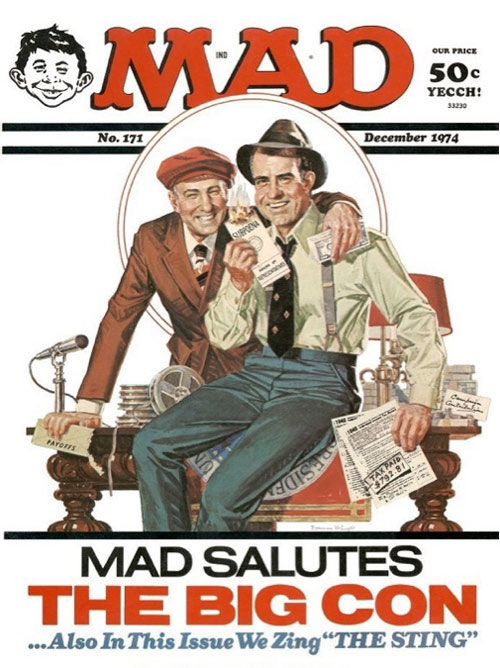
Some of the creative talents responsible for MAD conducted a popular panel along with fans and collectors at the convention.
It has been said that producing a daily comic strip is like “running in front of a train.” Many cartoonists write and draw new material every day of the week, with larger installments on Sunday. Cartoonists work long hours hunched over a drawing board trying to meet deadlines, so it’s no surprise that when they get out into the public and have an opportunity to socialize, some of them become enthusiastic.
This year’s convention included a two hour trivia contest with questions about the history of cartoons that ranged from obscure to surreal. At least a dozen teams competed in a hard fought battle, but in the end, the team “The Shmendricks” emerged triumphant.
I now make a point of going to the NCS convention every year. There is no place on earth quite like it. For one thing, there are doodles everywhere, made by artists whose fingers itch to draw. While it is not always clear where a cartoonist’s head is, there is no doubt where their hearts are. Every year members of the NCS set aside substantial time for charitable work in their host city, visiting and entertaining sick children in local hospitals, using their talents to work with public libraries, the USO, and veterans’ hospitals. There is no more meaningful use of a cartoonist’s funny drawing skills than to cheer up a child with a serious illness.
Next year the convention will be held in Huntington Beach, California.
Healthy Weight, Healthy Mind: The Problem with Emotional Reasoning
We are pleased to bring you this regular column by Dr. David Creel, a licensed psychologist, certified clinical exercise physiologist and registered dietitian. He is also credentialed as a certified diabetes educator and the author of A Size That Fits: Lose Weight and Keep it off, One Thought at a Time (NorLightsPress, 2017).
Do you have a weight loss question for Dr. Creel? Email him at [email protected]. He may answer your question in a future column.
In the last few posts we’ve been reviewing thoughts that might interfere with achieving health goals, including catastrophic predictions and labeling, all-or-nothing thinking, mind reading, and filter focus. This week we will explore emotional reasoning.
Most of the thought patterns we’ve looked at in the last few articles are based on emotional reasoning. This type of reasoning occurs when we think or feel something so strongly that we believe it must be true. In other words — we’re fooling ourselves.
Emotional reasoning can stem from positive or negative emotions. Imagine an engaged couple who can’t keep their hands off each other. We’ll call them Jack and Susie. Everything about their communication with each other indicates they’re madly in love. Although he wouldn’t admit it to his friends, Jack has learned to like chick flicks because Susie loves to snuggle up close to him and watch them. Susie’s phone is full of cute selfies of the two of them just hanging out. One day you get a chance to talk to the couple.
“I’m just curious. The two of you are obviously in love, but every couple has problems. Susie, can you tell me one thing about Jack that sort of gets on your nerves?”
Susie looks at you and then back at Jack and sort of giggles while brushing the side of his cheek with the back side of her slightly bent index finger. With a glimmer in her eyes she says, “Really, there’s nothing about Jack I don’t absolutely love. He is my everything; we’re soulmates.”
You try to keep a straight face as Jack gently leans forward and kisses Susie on the forehead. Then you ask Jack the same question. “How about you, Jack? There must be something about Susie that sort of bothers you.”
Jack responds, “I guess nobody is perfect, but I think Susie is perfect for me. I mean look at her, she is absolutely beautiful and she treats me like a king.”
This interaction is an example of being blinded by love, which in short is emotional reasoning. These powerful feelings influence their reasoning. Let’s fast-forward five years. Susie and Jack are now in marital therapy because things have turned sour in their relationship. Jack sits at the end of the sofa and Susie is as far away from him as the furniture will allow. Their bodies lean away from each other and their eyes no longer sparkle. In fact, Susie’s eyes seem to squint with anger and Jack’s are constantly rolling into the back of his head as Susie unleashes her laundry list of complaints. The therapist asks Susie a simple question.
“Tell me what attracted you to Jack, why you fell in love with him in the first place.”
With her arms folded she sighs, and says, “Honestly, I can’t tell you. I don’t know if we were truly ever in love. We have just really never connected like some couples.”
The therapist poses the same question to Jack. “What about you, Jack? Why did you fall in love with Susie?”
“That’s a hard question. We were working at the same company and neither of us was in a relationship. Maybe we got together because it was convenient.”
Let’s compare the two conversations with the couple. Before they were married, Jack and Susie were blinded by love. Now they’re blinded by anger and negative feelings toward each other. In both situations they weren’t thinking rationally because their feelings got in the way. Somewhere in between these two extremes lies a happy medium for Jack and Susie. Perhaps the therapist can help them reach that point.
Emotional reasoning permeates many areas of our lives, including relationships, career, self-image, and certainly weight management. Having a strong emotional reaction each time you see the scale move in the wrong direction may cause a surge of negative emotions that leads to irrational thinking. Maybe you vow to eat nothing all day forgetting that each time you try this it ends in disaster. Or perhaps you feel strongly that you’ll never succeed and, as a result, you stop trying to eat right or stay active.
Forever the Music Man: Robert Preston’s Legacy at 100 Years
If you were a child in the 1960s or ’70s, you might remember singing the rousing “Chicken Fat” exercise song, a recording commissioned by Kennedy’s fitness initiative in 1962. The song was written by the creator of the hit musical The Music Man, and the lyrics (“Go, you chicken fat, go!”) were sung by the star, Robert Preston, who had won a Best Actor Tony for portraying the salesman Harold Hill. Preston had already made a name for himself in Hollywood, and Broadway seemed to be his for the taking. Preston would be 100 years old today.
Perhaps the most surprising turn in the actor’s career occurred in 1964 when the Music Man legend started shaving his head for a new Broadway role. The leading man let go of his thick mane for a chance to play Benjamin Franklin.
Ben Franklin in Paris never gained the same recognition as The Music Man. Although Preston sought to shed his Harold Hill reputation by playing a founding father, The New York Times review of Ben Franklin was less than charitable to the new musical: “Not even Mr. Preston’s superb salesmanship can con one into thinking that there is magic in this musical’s pitch.” Preston’s career sustained, however, on stage and screen, throughout the rest of his life.
Preston was interviewed for this magazine during his stint as Franklin (“That Brassy Music Man Returns to Broadway as Poor Richard”). While his closest circle opposed Preston’s portraying a septuagenarian at 46 years old, he claimed the driving force behind his decisions was a pursuit of lively, fascinating characters rather than some prediction of star power.
Preston’s passion for theatrical performance was rooted in a romantic outlook on Shakespeare. After studying at the Pasadena Playhouse, he found himself stationed in London as an intelligence officer during World War II: “It was, as it was for almost every G.I., the first trip. But I knew it, I knew it. I had worn Lincoln Green; I had been in Bushy Park when the signs did not read KEEP OFF THE GRASS, but DON’T SHOOT THE KING’S DEER; I knew the fable of the Dunmow Flitch. I didn’t have to visit the Tower. I’d already been flanked on the stage by beefeater costumes. I already knew all the forests we rode through. I’m a fellow with little formal education, and my nostalgia is that of a man for places that no longer exist as they did.”
The actor sometimes became so committed to a show’s success that he bankrolled the production, as he did with the doomed Mexican Revolution musical We Take the Town. Not even doctor’s orders could keep Preston away from the theater, coaching his stand-in Pancho Villa. Producers noticed his dedication to the art of performance, and his leading ladies — from Ulla Sallert to Carol Burnett to Bernadette Peters — noted his intensity and professionalism.
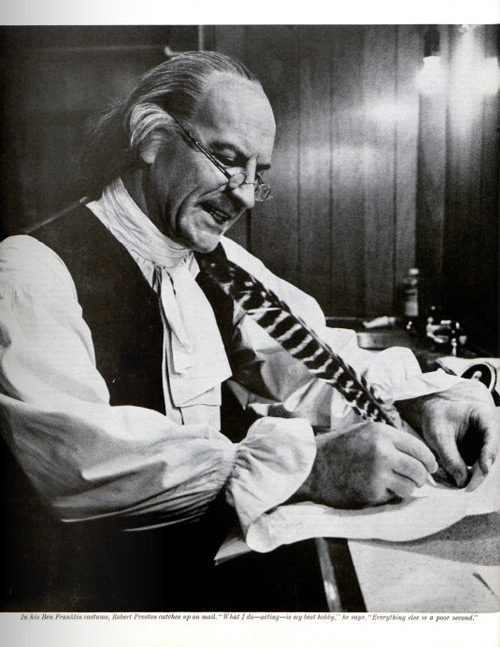
Montana
I met Debbie the summer after I dropped out of college. I was 19. I was working part time at a laundromat, and helping a man named Roger who owned a granite business, driving once a week to Anaconda where he was building a home for his recently widowed son.
Debbie was two semesters from her master’s degree in social work. She’d left her husband that winter, had sworn off men and partying, until the two of us ran into each other several times at the farmer’s market where her niece ran a coffee stand.
Finally one Saturday in June (hot, gray, cloudy) Debbie invited me to a potluck.
“Where?” I asked.
“The park — it’s at Kiwanis Park,” Debbie said.
We were standing near the entrance to the farmer’s market, near the footbridge, across the street from a newly remodeled bank with a cobblestone fountain in front.
“I’ll go,” I said.
“It won’t be weird,” Debbie said. “I promise.”
That summer I was convinced there was a dead animal somewhere in the shrubbery bordering my apartment complex. On several occasions I returned from work to find cats swarming the bushes, sniffing, looking for something.
One night Jim, my upstairs neighbor, and his boyfriend, Terry, found me (Nike shorts, flashlight, a cigarette) scanning the area by the storage sheds.
“I don’t mean to laugh,” Jim said, “but you’re ridiculous.”
“Dude, there’s something rotting,” I said.
A K-Mart team leader and photographer, Jim was one of my favorite people. Before I bought a truck, and before Jim started dating Terry, when I’d first moved into The Oaks, he’d been a godsend — reworking my resume, giving me studded snow tires for my bicycle, and always inviting me to watch baseball at the bar his uncle owned on Milwaukee Way.
“Where you been?” Jim asked.
Terry, a published poet, ran the Rosen Gallery on campus, and had likely seen Debbie and I together when we met there for lunch.
Beneath their porchlight, beneath their stained-glass wind chimes, they smiled at me and I felt truly cared for — not parents, or lovers, or people I would know forever, but people in my life I was glad I did know.
“Hey,” Terry said, “are you going to sleep with that woman? She’s beautiful.”
If I wasn’t working or Debbie was in class, I played basketball at the park behind Providence Hospital. I had played growing up and considered trying to walk-on at the University of Montana. But that was before I went home to Portland for winter break — my mother having left, my father drinking and connecting with a woman he went to high school with on Facebook — returning to Missoula for a half-assed semester of film classes, therapy, and intramural soccer.
So basketball, like any vestige of my childhood, became less a game and more an errand I enjoyed, half-jogging to the courts, listening to music, buying a Red Bull, shooting free throws until I got frustrated with my touch and quit. And eventually middle schoolers showed up (confident, newer shoes, energy) taking advantage of my offer to rebound and keep score for them as they pushed and shoved each other into the early evening sun.
Debbie Daniels, raised on the Blackfeet Indian Reservation, born to a Vietnam veteran and a woman named Martha who died shortly after giving birth to her only child, was beautiful, 42 when I met her, and perpetually looking for the perfect summer outfit.
“I want us to float the river sometime,” she’d said.
The two of us would hold hands crossing the parking lot towards the mall, spend weekday afternoons rushing from one department store to the next, lone rangers, yet peaceful in each other’s company.
“You have such nice clothes,” I said once.
“What?”
“You have enough clothes,” I said.
Debbie, turning to me and smiling, her right hand on a rack of blouses, said, “Sam, that’s not the point.”
I said that before I realized Debbie rarely bought anything (an anklet, or bra, maybe, food-court pretzels) and wanted only to be with me, or not to be studying. Maybe as a man, 6-feet-6 inches, the grandson of a Norwegian immigrant-gone-logger out of Union County, Oregon, I felt obligated to tease Debbie or make it seem that I thought her perusing was petty. I said that before I was comfortable telling Debbie that my greatest memories of childhood involved me and my mother shopping in downtown Portland, or at the Nordstrom on Pine Street in Seattle, somewhere busy or loud. My mother would use any excuse to flee the house when my father was traveling for work, an escape, a different town, seas of expensive shoes and handbags she couldn’t afford, loud voices she didn’t have to answer to, me in tow, her faithful assistant.
“My brother is sad,” Terry said.
Jim rolled down the passenger side window of my truck.
We were on our way home from Albertsons (ice cream, Bud Light, DVDs from Redbox). Driving down Russell Street, I noticed my headlights were weak.
“Are my lights even on?”
“I would have said something,” Jim said.
Through the rearview mirror, I smiled at Terry. “What’s wrong with your brother?”
Terry shook his head.
I thought he looked silly then, a small dude not typically active, wearing a baby-blue workout tank and aviator glasses.
“He’s lost,” Terry said. “He’s so kind and smart. He never has work, though.”
Jim nodded, half listening, eyes glued to his phone.
Stopped at a red light, I watched a family of deer dart across someone’s front lawn. It was almost evening, fires burning somewhere, college kids trickling in and out of town — a feeling of calm wanting so badly to wash over me.
“Do you have brothers or sisters, Sam?” Terry asked.
“No,” I said.
“Right — I knew that,” Terry said.
“What does your brother do?”
“He has a degree in physical therapy, I think. There’s always work in that.”
I had heard Jim and Terry arguing late the night before. For part of the evening, one of them was playing guitar, then one of them was singing. Someone did the dishes, someone ran the washing machine, and then bickering.
Jim had his eyes closed as I pulled up to the Oaks.
I considered making a joke to Terry about his brother picking up shifts at Sparkle Laundry, where I worked the middle of my week. But he wasn’t in the mood. If Terry’s mind was wandering, or he seemed sad, and you rushed him back to the moment, he’d be annoyingly literal. He would have shaken his head, maybe, and reminded me that his brother lived in California.
Terry’s brother struggling to utilize his degree, struggling to find meaning, became a kind of thread that summer. If the three of us were hanging out, we usually talked about the poems Terry had sent a publisher, Jim getting a real estate license, or Debbie.
In the same way a teen driver texting, or a drunk drifting home, never imagines they will hit someone or crash into a Douglas fir, I never imagined I would get Debbie pregnant.
Walking by the river, en route to the potluck, I didn’t feel like I was going on a date. Debbie had sent me a text message about the potluck being “an annual thing her program did.” When I arrived, Debbie handed me a beer and kissed me on the cheek. I played Frisbee with some of Debbie’s professors. I set up a volleyball net for kids whose parents I never met. I watched flies hover over a fruit platter.
I remember loving that Debbie was so close to everyone in her program, yet nothing like them.
“These people take themselves too seriously,” she said. “God bless them.”
After a light rain started, most of the potluck attendees were gone. Debbie and I had helped a woman stuff her van with Rubbermaid bins and blankets before standing beneath a gazebo for a cigarette.
“Anything going on in their lives, they somehow relate back to work. The guy you played Frisbee with, he’ll bring it up in class.”
I laughed. “Dude was a trip.”
“He’ll lecture about the value of meeting new people on a neutral ground, no expectations, and how —”
I kissed Debbie (Pepsi, lipgloss, something minty).
In a dream, I’m passing through Livingston, Montana, with my son. It’s dark and cold, stores closing, municipal trash cans overflowing, and my son has to pee.
“Dad, I’m sorry,” he says.
I know if I pass through town and find a rest stop off I-90, by then it might be too late. My son, prone to Batman apparel, chocolate milk, and a litany of aches and pains, is not the most forthright copilot.
“I can hold it, definitely,” he says. “No problem.”
“You sure?”
“Oh, I am,” he says.
Normally when I have this dream, it ends there — I go to his room, feel around the dinosaur print bed sheets for wet spots, accidentally wake him, kiss him on the forehead, then go.
But this time, I can’t find my way around Livingston so my son and I end up at a bar.
“I could use a snack,” my son says.
A bartender-gone-hostess leads us through a crowd. I end up on a cold metal stool, looking at my watch, while my son takes a piss. There’s a band playing. Formerly a gallery for Western art, “Eat Drink, Be Merry” in giant neon letters above a mural of Yellowstone.
Suddenly cold hands touch my cheeks, and by the time I turn around, Terry is already crying.
“I can’t believe it,” I say.
Terry folds his arms across his chest, lets out a sigh, and then looks over my shoulder.
My son, my little human, ski gloves poking out of the kangaroo pocket of his hoodie, waves at me before running off.
The first time I slept with Debbie it was a hot, relentless afternoon — following a week of rain — when the Missoula valley, rich in color, looks fake, a video game landscape.
I’d worked late the night before, Roger and I finishing the kitchen countertops at his son’s new home, leaving Anaconda well after midnight. I’d slept a few hours after Roger dropped me off but woke up hungry. I biked to Perkins, hoping pancakes and an omelet would put me down. But there was no hope. At my apartment, the sun coming up, a shave, diner coffee, a beer — I was wired. I loved cash, loved knowing Roger thought I was good help, the internet and Geico paid, a lifetime of hours to waste.
I took a walk at Fort Missoula, originally built out of fear to protect townspeople from Western Montana Indian tribes, and for the first time in my life I wished I had a camera. I was stunned and a little creeped out by the old barracks, buried behind wheatgrass and the burning sun.
Walking back to my truck, Debbie called.
“Sam, would you come by?”
I pictured Debbie studying (volleyball shorts, hair up, lap desk). I imagined the airflow in her house on Rattlesnake Drive was good, and that she wanted to wrap her arms around me.
Before a First Response test was purchased at Walgreens, before Google searching “pregnancy power foods,” reenrolling at the university, Debbie and I renting a small cottage on the Northside, there was a drive to Browning to spend the 4th of July with her father. There was a sherbet-orange sky, a bag of Burger King between us, my truck on its last leg.
“So happy,” Debbie said, “this will be great.”
“I want to meet your dad,” I said.
“He’ll love you.”
I laughed. “I’ll love him.”
Her father, barely mobile, down to argue about basketball while Debbie studied, fed me beers, and grilled me with questions about Portland.
“I was there once,” he said. “For something, not a concert or anything.”
At some point, both of us wanting something to eat, Debbie’s father and I crossed the front lawn towards my truck. There was something said between us about Debbie and whether or not she was hungry too. I wanted to get her flowers. Her father also suggested we get some “decorative items.”
“The Fourth should be fun,” he said.
But more than anything said, there was a weird, palpable understanding that our trip to town wouldn’t be our last. And I realized, suddenly, that I’d been waiting for this my whole life, for pine needles on floorboards, a chance to love, for fireworks blasting through Browning like a beautiful air raid.