Lost in Kinsale
Source: Shutterstock.com
And why shouldn’t I go to Kinsale? says Jan as we cross over the River Liffey for the third, maybe the fourth time, muddling our way out of Dublin in our wee rental car. What occurred there was years ago, says she.
I don’t ever think about it.
I’m just saying we don’t have to go there, says I. We could go to Cork. Or Galway.
Worst idea I’ve ever had, this side trip to Kinsale. A lovely week in Dublin, getting things between us back on track, and then this idjit–me–suggests renting a car and driving down to Kinsale. You’ll love it, says I. Very romantic. Gawd, what an arse.
Watch the road now! yells Jan. You’re crossing the line again!
I will yeah, thanks, says I sarcastically.
Silence the rest of the way.
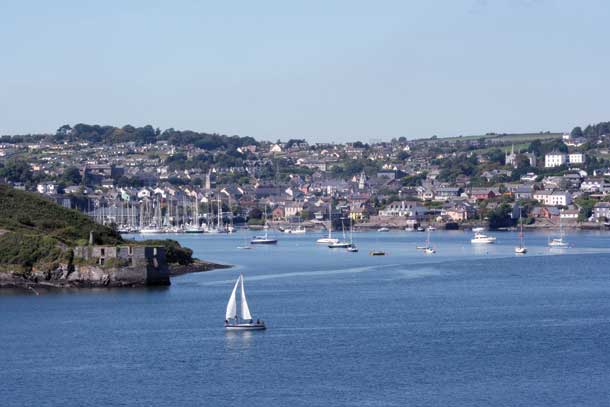
We pull into Kinsale five hours later, eventually find our hotel, and, though worn out, decide before dinner to go for a walk just to get out of the room. It’s a fine summer evening. Calm, brisk, moist. Seagulls swoop through a pale blue sky. Children play along the low wall of the harbor. An older gent sitting in a sunken lawn chair on the bow of his decrepit sailboat sips a whiskey. Red face, purple nose, threadbare sweater the color of new hay. Drinking by himself. Still. Not a half-bad life.
I wouldn’t mind doing something like that, I say, trying to make peace.
Not with me, says Jan. I could never live on a boat. Everything damp, wet. Closed quarters.
Anyway, the drink looks inviting, I say. Shall we find a bar before dinner? Jan shrugs.
On the corner is a white building with a little mural of a waiter in black vest and bow tie carrying a glass of wine. Apéritif, says the sign. Pop in. Nice-looking place. But nobody here. What time is it, anyway? After five. When do they start drinking in Kinsale?
The lone woman inside, standing behind the bar holding a glass of white wine, has the most shocking bright red hair I’ve ever seen. The color of a candy apple. Pale, freckled skin. Maybe 40. Maybe 50. Never good at guessing women’s ages. Twinkle in her green eyes.
Do you serve wine by the glass? I ask.
We’d better; we’re a wine bar, she says, laughing. Sticks her thin, pale hand out. Kate, she says. I run the place, although there’s not much to run at the moment. Laughs at her own joke, takes a sip of wine.
What is it you’re drinking? I ask her.
Pinot gris. It’s not much but it’s all right. Fancy a glass?
Why not.
Kate grabs a bottle stuck in a tub of ice and gives us hefty pours.
Awfully quiet in town, I say.
It’s a bit early, says Kate. Not for me, of course, she says, sipping her wine. Where are you from then?
California, says Jan.
I love California, says Kate. Palm Springs! Lived there for a year with husband No. 2. Or maybe it was No. 3. Doesn’t matter, does it!
This brings a smile to Jan’s face. The three of us get to talking and suddenly Jan is telling stories about how I got us lost today just looking for our hotel in town, even though you could walk the whole thing from one end to the other in 10 minutes. Kate laughs and slaps the bar. Says, I don’t believe you! Lost in Kinsale?
It’s true, it’s true, says Jan and the two of them look at me and laugh, conspirators already. We finish our drinks and I ask for the bill. Kate grabs the bottle of wine from behind the bar and says, Let me just top this off a bit–on the house. What are you doing in Kinsale, then?
We came to Dublin to celebrate our anniversary, says Jan. Then this one decided we should come to Kinsale because he once met a girl here.
No! says Kate. I don’t believe you!
It’s true, says Jan. Kate makes a horrified face and shakes her head. Oh, I don’t mind, says Jan. It’s nothing to me.
I tell Jan we should probably be going. Kate puts a hand on top of Jan’s arm and tops off both of our glasses again.
More stories pass between Jan and Kate. More wine. An hour later I tell Kate we really do have to go or I’ll never make it through dinner since I’m already half-sozzled.
Oh, that’s a good one, isn’t it? says Kate. Sozzled! Haven’t heard that in ages! Listen, she says, giving Jan a long hug, if you haven’t anything to do after dinner, there’s a trad session at Daltons tonight. Good craic. You might even find me there.
What’s a trad session? asks Jan.
Traditional Irish music. The real thing. Not something brought in for tourists. Good craic, she says again.
Damn if I can understand how it is I keep getting us lost in a small town where I spent an entire summer. We walk up a hill over the harbor, neighbors sitting on their stoops smoking a fag or just enjoying the fine evening. I ask one old gent taking the air how to get to Max’s restaurant. Down them stoney steps, he says. Pass that house there.
I thought you knew this town? says Jan.
I did then, says I. Now I’m a bit lost.
Purchase the digital edition for your iPad, Nook, or Android tablet:

To purchase a subscription to the print edition of The Saturday Evening Post: 
Destination Nowhere: The Dark Side of the Cruise Industry
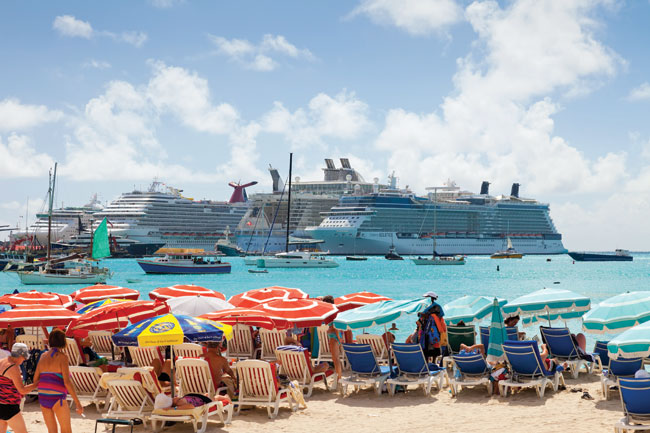
Behind the carefree holiday of a cruise—the dancing waiters, the constant shows and events, the spreads of great food, and the escape from daily drudgery—is a serious industry that has changed what people expect out of a vacation. It was built by several entrepreneurs who took advantage of changes in American lifestyles, married the design of a resort with the rhythm of a theme park, put it on a boat, and won sweet deals through giant loopholes in American laws.
As a business model, the cruise industry has been phenomenal, a $40 billion business in the United States alone, and the fastest-growing segment of the global tourist industry. Cruises are the future.
But cutting corners and avoiding laws have had serious downsides. Cruise ships are not subject to the requirement for federal permits covering sewer and waste disposal systems that are de rigueur for the resorts and hotels on land. As a result, all of those millions of passengers and crew members dining and defecating and showering on the oceans have left filthy discharges in their wake. On land, the cruise crowds streaming into foreign ports by the thousands have disfigured beaches and plazas, building resentment among many locals. Many ports have taken on the life of a strip mall. St. Mark’s Square in Venice is now a field of kiosks selling cheap imports and lines of tourists waiting to visit the basilica.
Having fun on a ship sailing in the middle of the ocean requires prosaic essentials recreating all of the systems hotels on land take for granted as well as the underpinnings of the ship: the navigation system, engines, power plant, water filtration and purification plants, sewage plants, photography plants, laundry and dry-cleaning facilities, kitchen galleys, a morgue, and storage lockers for the 100,000 pounds of food required to feed 3,000 people every day on a cruise. Also hidden from view are the below-sea-level accommodations for the 1,200 crew members.
These fun ships grew ever larger to incorporate all the services necessary to run a miniature town, becoming megaships with space for elaborate playthings like the skating rinks and climbing walls. And the passengers keep coming. It is no anomaly that cruises singularly turned a profit in the recent Great Recession of 2008. While Las Vegas and its casinos suffered and the airline industry went into the doldrums, the cruises were the financial rock star of the tourism industry, remaining the most profitable sector of tourism.
One key is the very cheap wages cruise ships pay.
After World War II, American shipping companies began flying foreign flags and registering in foreign lands. They saw this as a lifeline for becoming competitive by circumventing American minimum wages, which meant paying their sailors far less money. Under strong pressure from the shipping industry and its friends, the U.S. Congress upheld the legality of foreign registration.
This supposedly temporary fix to reduce labor costs and avoid expensive regulations became a fixture in the world of maritime transportation. So what if these maritime rules were meant for ships transporting goods, not floating hotels? A ship is a ship. Even though Carnival was an American corporation headquartered in Miami with an American client base, Carnival decided to register and flag its ships in foreign countries that had nothing to do with their business. It didn’t matter where the ships traveled or where they established home ports. Cruise companies could register and flag their ships wherever it was best for their bottom line.
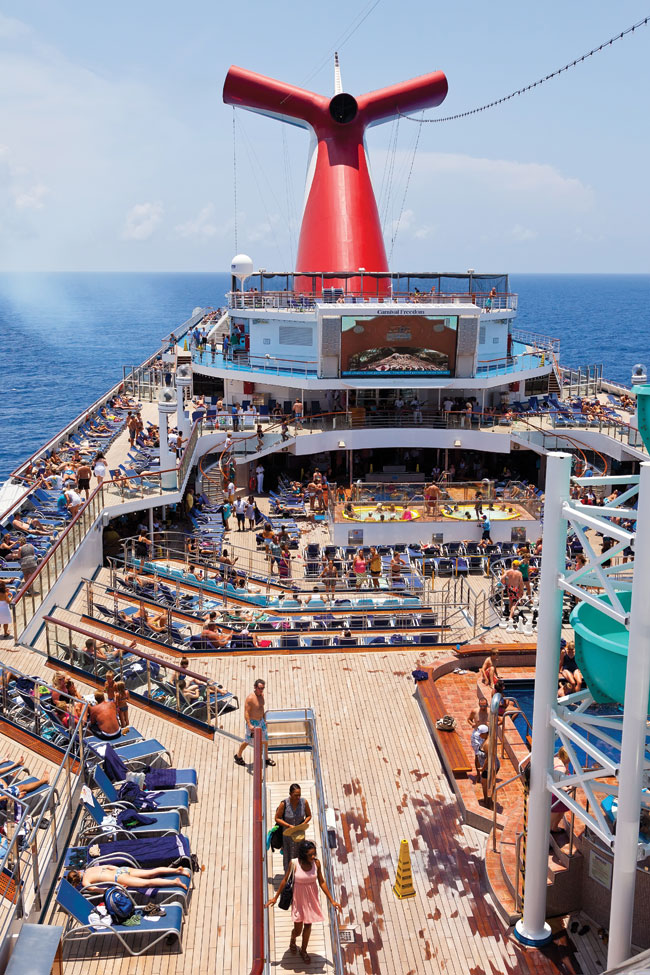
Today the majority of ship owners are based in wealthy maritime nations like the United States, Great Britain, Norway, Greece, and Japan, but their ships are registered and flagged in foreign countries with “open registries” — that essentially have no minimum wages, labor standards, corporate taxes, or environmental regulations and only a flimsy authority over the ships flying their flags. All these countries require is that ship lines pay a handsome registration fee.
Carnival registered its fleet in Panama. Royal Caribbean registered its ships in Liberia. (During its two-decades-long civil war, Liberia earned at least $20 million every year by acting as the off-shore registry for foreign ships.)
Cruise lines gain another enormous advantage by registering as a foreign corporation. The Internal Revenue Code exempts any income from airlines or ships from taxation as long as the foreign nation gives the same benefit to American corporations. Neither Liberia nor Panama nor any other open-registry country levies a corporate income tax.
This business model is every corporation’s dream. Indeed it has been so successful that Carnival and Royal Caribbean have been able to buy out their smaller competitors while expanding their fleets with new ships. Today the two firms account for 66 percent of the global market; Carnival at 45 percent and Royal Caribbean at 21 percent.
As the American lines expanded to the United Kingdom and the rest of Europe and then into Asia, annual passenger load tripled from 500,000 in 1970 to 1.5 million in 1980, and then grew exponentially to 4 million in 1990 to over 13 million in 2010. The cruise industry reached the phenomenal growth rate of 1,000 percent in four decades.
Meanwhile, workers on these ships earned third-world salaries, or worse: many crew members working 10- to 12-hour days with no overtime pay and no days off for months; hourly wages as low as 53 cents; waiters living on tips because their monthly salaries were a token $50.
For decades, American unions tried to fight back against these practices. With a fleet of over 300 ships, the industry employed a lot of waiters, busboys, housekeepers, and laundry workers. When they weren’t happy with the working conditions, crew members jumped ship and told their stories at American ports.
Eventually, Congress held hearings. Representative William Clay Sr., then serving as a Democrat from Missouri, introduced legislation in the early 1990s to require cruise ships to pay minimum wages and provide other U.S. labor protections to workers on cruise ships operating out of American ports.
But the industry won the war over labor handily. Congress even helped the industry’s bottom line by reducing fees paid to the Immigration and Naturalization Service. The industry also blocked early bipartisan opposition to cruise companies avoiding corporate income taxes. Representative John Duncan, Republican from Tennessee, argued that “it is totally unfair to let Carnival Cruise Lines pay nothing on profits just because it was incorporated in Panama. … Foreign flag lines are, in effect, getting an indirect subsidy from the U.S. government.”
The industry refuted those charges, saying it pumped billions of dollars into the American economy — upward of $40 billion in 2010 — and created thousands of jobs in the United States.
Adam M. Goldstein, president and CEO of Royal Caribbean International, also responds to critics by citing the popularity of cruises. “The single most important driver of our success is how happy we make our customer. So you can talk about other things, you can talk about legal or tax regimes and you can have that conversation, but if we didn’t make our customers really happy on a regular basis at the highest level that we know of in travel and leisure, none of the rest of it would matter.”
Goldstein said that it was wrong to compare cruise wages to American pay. Rather, he said, the pay should be compared to what crew members would receive in their home countries — the Philippines, Turkey, Serbia, or India.
“Typically what they are able to earn from us is significantly greater than what they are earning if they would have stayed where they were,” he said. “So our view, not surprisingly, is that we provide fantastic employment opportunities to people from around the world that would not otherwise exist.”
Goldstein’s argument is what academics call the “race to the bottom” justification, a throwback to the early 20th century before societies mandated minimum wages, improved labor conditions and the right to collective bargaining. While those rights were codified in national laws and are enforced within national boundaries, they are laws that the cruise companies can ignore.
Another great source of revenue, according to Ross A. Klein, the author of several books on the cruise industry, is onboard sales, which “is becoming more profitable than ticket sales. On average, each passenger provides $43 in profits each day to the big cruise companies,” he said. “If you include all the onboard spending, it is now less expensive to stay in an upscale Caribbean resort than to sail there on a cruise ship.”
Falling for Jackie Kennedy
This is the sixth installment of our series “Reconstructing Kennedy.”
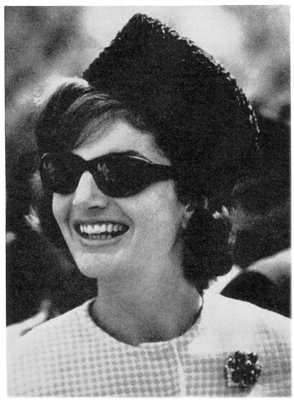
Hollywood couldn’t have dreamed up two better characters than John and Jacqueline Kennedy to portray America’s ideal, romantic couple. She was elegant, poised, and incredibly well dressed. He was the newly elected president of the United States. Young, sophisticated and good looking, they seemed like the polar opposites of the previous residents of the White House, Dwight and Mamie Eisenhower. The Kennedy’s attractiveness quotient rose even higher just two weeks after the election when Jacqueline gave birth to a son.
Many Americans only got their first look at Jackie during the inaugural ceremonies. She’d remained at home during the campaign under her obstetrician’s order, though she was still giving interviews, taping TV commercials, and writing a weekly newspaper column called “Campaign Wife.”
In the following months, Americans read about the dazzling receptions she hosted, how she put international visitors at ease with her command of French and Spanish, and even got on the good side of Soviet premier Nikita Khrushchev. Newspapers and magazines also ran stories on Jackie’s wardrobe and her French-influenced look. Copies by several domestic designers soon appeared on American women across the country.
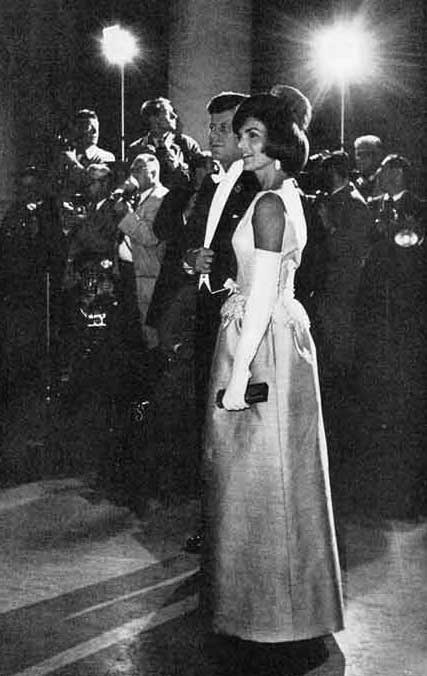
But Jackie made her most memorable impression as first lady in 1962, when she conducted a televised tour through the recently refurbished White House.
The makeover had been sorely needed. As the Post reported in 1963 (“How Jackie Restyled the White House”), President Truman had ordered massive renovations to the White House’s structure in 1945 to prevent the building from collapsing. But the interior design had been an afterthought, entrusted to a hotel contractor who gave the rooms a bland, institutional look. One Washington reporter wrote, “The White House is safe, all right, but it has completely lost its charm. The restoration took the heart out of the building…Now it has no more appeal than the Pentagon.”
Arriving at the White House, the Kennedys discovered most of the furnishings dated back only as far as 1902. The paintings were all forgettable works that previous presidents hadn’t bothered to take with them when they left.
What Jackie proposed was more than just a refurnishing. Her intention was to build a collection of White House furnishings that would reflect the long heritage of American design. Under her direction, the Executive Mansion acquired 500 items of furniture and art. Some were former White House furnishings that she bought back from private ownership. Many other items came from wealthy collectors, but several were donated from average Americans who offered up their antique silverware, wallpaper, and chamber pots. When completed, the collection was protected by a law, proposed by Jackie, that would forbid the removal of any items from the White House.
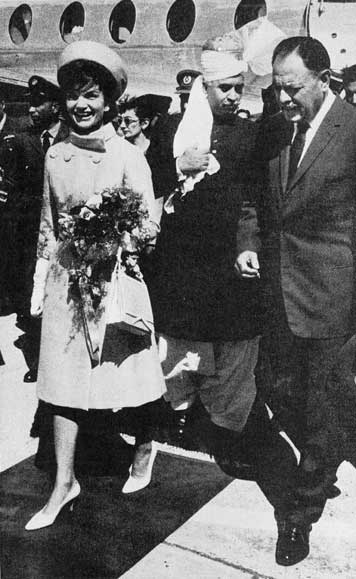
The tour of the completed project was televised on February 14 when Jackie showed the new acquisitions and explained how each room was furnished in the style of a different era. The Lincoln room, for example, contained only furniture of the Civil War period and included Lincoln’s own portrait of Andrew Jackson and a table purchased by his wife, Mary. Jackie was seen that night by over 80 million Americans.
Jackie made her most enduring impression when she was no longer first lady. She remained in the public eye from the death of her husband right up to his burial at Arlington Cemetery. Throughout that time, she displayed a fortitude and courage that few had suspected in her.
Looking back at articles about her in the Post, it’s surprising to see how good a job she did as first lady even though it was a job she never wanted. Interviewed for the Post by an old friend (“An Exclusive Chat With Jackie Kennedy”), she admitted to a chronic shyness. “I can’t stand being out in front. I know it sounds trite, but what I really want is to be behind [John] and to be a good wife and mother.”
It wouldn’t have surprised John Kennedy. His wife had always impressed him with her quiet strength. Years earlier, he told a friend, “My wife is a shy, quiet girl, but when things get rough, she can handle herself pretty well.”
It’s no surprise that even today, Jacqueline Bouvier Kennedy remains an icon in American history.
3 Questions for Harry Dean Stanton
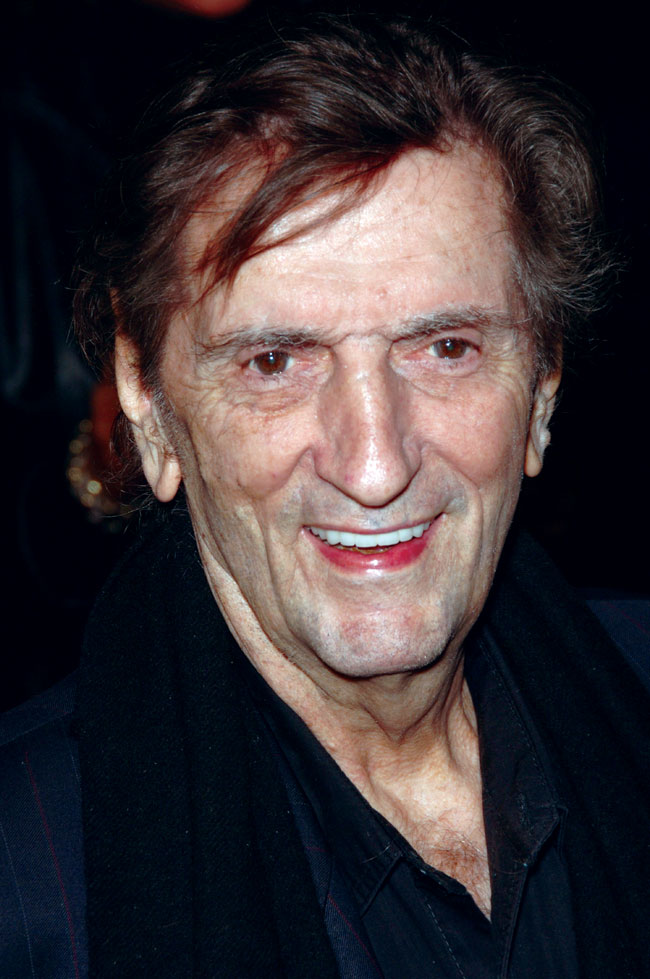
Harry Dean Stanton: Partly Fiction, a documentary about the legendary character actor, has recently been released by Swiss filmmaker Sophie Huber. It’s an intimate portrayal of the man who was born in Kentucky in 1926, and went west to become a familiar face in such TV shows as Rawhide, Gunsmoke, Bonanza, The Rifleman, Have Gun Will Travel, Bat Masterson, The Adventures of Rin Tin Tin, The Fugitive, The Untouchables, Alfred Hitchcock Presents, and HBO’s Big Love. Among his films are Cool Hand Luke; Alien; Repo Man; Paris, Texas; Pretty in Pink; The Godfather, Part II; The Last Temptation of Christ; and The Green Mile. In the documentary, David Lynch, Wim Wenders, Sam Shepard, Kris Kristofferson, and Deborah Harry talk about working with him, and Stanton responds to questions tersely. But the heart of the documentary is his singing, as he looks straight into the camera with his well-worn face and soulful eyes.
Question: You recently celebrated your 87th birthday—what have you learned, and have you given up any of the old vices?
Harry Dean Stanton: That we’re not in charge of our lives and there are no answers to anything. It’s a divine mystery. Buddhism, Taoism, the Jewish Kabbalah—it’s all the same thing, but once it gets organized it’s over. You have to just accept everything. I’m still smoking a pack a day.
I only drink when I go out, which is rarely. And I miss sex, which is down to hardly ever. But I’m
in good shape. No problems yet.
Q: Was it Jack Nicholson who gave you your acting credo?
HDS: Yeah. Be yourself and let the wardrobe do the character. [Laughs.] That was good. I’ve been doing it for over 50 years. I’m tired of movies. But I like to do it when I do it. The best directors leave you alone. They know when they hire you what you can do. I used to talk to Marlon Brando for hours on the telephone. He taught me a couple of Shakespeare monologues over the phone. Sometimes he’d hang up on me. Just screwing with me. He had a class he taught with young actors, and he had me teach it one time when he wasn’t there. I was his substitute teacher. What made Brando and Monty Clift so great was they played themselves. That’s what I do, too. It’s easy. No matter what I’m doing, I’m still Harry Dean Stanton. Even if you’re Olivier, you’re still yourself.
Q: How are you spending your days?
HDS: I watch TV a lot. Game shows. The History Channel. Court TV. Biographies. Once in a while sports. I used to play poker but I stopped because
I was in this game every week for a long time and I lost a whole lot of money—a couple of hundred thousand dollars over four years. I shouldn’t have played in it. I don’t think the game was all that straight. But it is what it is. There are no answers.
Dodging Diabetes

S
helley Kubaney didn’t know what was wrong. For months, the 45-year-old oncology nurse from Fairview, Pennsylvania, had not been herself. For starters, she was exhausted. After a day at work it was all she could do to flop into bed where she slept for hours. In addition to relentless fatigue, she started to experience blurriness on the fringe of her vision. It got so bad that she could hardly drive at night when the glare of headlights compounded the problem.
After Kubaney made several trips to different doctors, her perplexed primary care physician ordered a full range of blood tests in February. The results delivered unexpected news—she had type 2 diabetes.
“I was completely stunned,” says Kubaney, a married mom of two teenagers. Stunned because she had no family history of the disease and she considered herself to be in decent shape and was not significantly overweight—all factors that typically play a role in developing type 2 diabetes. Yet as Kubaney quickly learned more about the disease and how it manifests over time, she became convinced that some simple lifestyle changes might have prevented or delayed the onset of full-blown diabetes.
“It was definitely a wakeup call,” she says. “I don’t really like meat and vegetables, so what does that leave? Carbs and sugar. I let myself cry for one night and then the next morning started a new way of eating and living.”
For many of us, diabetes lurks in the shadows, waiting to strike. The number of Americans with diabetes increased from 5.6 million in 1980 to 20.9 million in 2011, according to the CDC. Experts predict it will only get worse. The American Diabetes Association says 26 million adults and children are living with diabetes today. Another 79 million Americans are pre-diabetic, and likely headed for the full-blown disease unless they take swift action to change their health and nutrition habits.
It’s a fate worth avoiding.
Once diagnosed, your risk of heart attack and stroke jumps by more than 50 percent. You’re vulnerable to the leading cause of blindness among adults. And, if diabetes is not managed effectively, your day-to-day quality of life will decline as you grapple with fatigue, blurred vision, more-frequent infections, and slow-healing sores.
Yet, the latest research lays the foundation for a simple diabetes prevention plan that doesn’t require hours at the gym or drastic diet changes. The steps are easy–starting with a healthy breakfast and ending with a good night’s sleep. Taken together, the approach can go a long way toward avoiding diabetes or—if you already have it—managing the disease.
Personal Essay | Next Stop: Back Bay
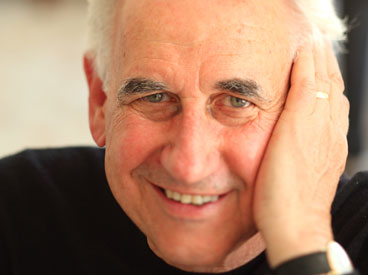
Hugh Delehanty is a best-selling author whose latest work, Eleven Rings: The Soul of Success, written with Phil Jackson, debuted in June at number one on The New York Times bestseller list. This essay originally appeared in a slightly different form in Our Boston: Writers Celebrate the City They Love, a new collection of stories by John Updike, Susan Orlean, Leigh Montville, and others. The publisher, (Houghton Mifflin Harcourt) is donating $5 for every book purchased to The One Fund to help the victims of the Boston Marathon bombing.
It was supposed to be our most excellent adventure. My best friend, Glenn, and I–both eleven years old at the time–had talked our parents into letting us go into Boston on our own to see the movie West Side Story, which had just opened downtown. We lived in South Weymouth, a quiet, Norman Rockwell-esque village on the South Shore, then one of the safest towns in America, according to Reader’s Digest. The actor Hal Holbrook, who once lived near my house, said that the primary reason he was able to recreate the character of Mark Twain so well was that he grew up in a world that was remarkably similar to Twain’s hometown, Hannibal, Missouri.
Glenn was a quirky guy. It was no surprise that he later became a biology professor. He was always conducting whacky experiments. Once he carved his name into his arm with a razor blade to see what would happen. (He stopped, thankfully, after the letter L.) Then he almost blinded himself trying to examine the spots on the sun–with binoculars! His nuttiest stunt, however, was firing his brand new BB gun at a hall where a bunch of World War II vets were gathered. I must admit it was fun watching dozens of pot-bellied ex-soldiers, in parade uniforms, running out the door and scurrying for their cars as if they were under attack by a division of Nazis. But the next day the police showed up at Glenn’s house and confiscated his gun.
Glenn and I arrived early at the movie theatre in Boston so we decided to head for the red-light district known as the Combat Zone nearby to see if we could catch a glimpse of the go-go dancers. But while we were ogling the posters in one of the porn houses, three thugs from South Boston sidled up to us and asked where we were from. They seemed friendly enough, but as we moved down the street away from the crowds, they strong-armed us and asked for money. When I told them we didn’t have any, the scariest of the three pressed his body against mine and said, “What’s in your pockets, Weymouth?”
Luckily I had purchased a pair of trick dice at a joke store down the street. When I pulled the dice out, our assailants were so transfixed by them that Glenn and I were able to slip away down a back alley.
As we ran away, Glenn suddenly flashed a switchblade out of his pocket and said, “I should have used this on them.”
“What’s that?” I asked, appalled.
“It’s the knife my grandmother gave me for protection before I left home.”
“Are you nuts? Those guys would’ve killed us.”
* * *
This wasn’t the exactly the Boston I’d expected to find when our family moved to the area a few years earlier. The image my father painted for my brothers and me was that of a refined “city on the hill,” the epitome of culture and higher learning that also coincidentally had some of the best sports teams in the country. What intrigued Dad most about Boston, however, was its vibrant Irish culture. For a man who had the intense pride–and nagging inferiority complex–of many second-generation Irish-Americans, Boston was a place he could call home. Unlike his native New Haven, which had a broad mix of ethnic groups, Boston had a disproportionally large Irish-American population and a long tradition of charismatic politicians with names like Fitzgerald, Curley, and Kennedy. We had moved to Boston from Hamden, a small suburb of New Haven, because Dad had been offered a good executive job in the post office. Nothing short of returning to the old sod in County Claire could have made him happier.
My mom had a good feeling about the Boston area as well, but for a different reason. Her father, who was of Scottish descent, had grown up in Thomaston, Maine, and we had ancestors who had emigrated to Massachusetts from Cheshire, England, in the 1630s. Mom was intrigued with the idea of deepening her Yankee roots in the Land of the Bean and the Cod. In fact, she was so obsessed that during our first year in South Weymouth, we visited Plymouth Rock and the Mayflower no fewer than twenty-five times. What fascinated her about the Puritans was not their charming fashion sense or their love affair with the turkey, but their strong tradition of moral rectitude. Mom felt like a Pilgrim at heart. That’s why she became a second-grade teacher: so she to get students young and fill their heads with her Puritanical views of right and wrong before the dark forces of mass culture and raging hormones put them on the road to perdition.
As for me, I wasn’t so sure. I loved Hamden and I didn’t want to leave. It was my little corner of paradise. Behind our house there was a sprawling, mostly empty cemetery that my friends and I transformed into our private playground. In one section we built a regulation baseball diamond complete with white-line base paths and a makeshift outfield fence. In another section, marked by rolling hills and newly planted spruce trees, we played war games in Army-Navy store camouflage uniforms.
The day we left for Boston I was so upset I jumped out of the car, ran around the house screaming, and wrapped my arms around a tree in the front yard, swearing never to move. Eventually my mother talked me back into the car. But I was bereft for days.
Massachusetts seemed like a foreign country to me. Everybody spoke in a funny accent and used the word “wicked” to describe everything from food to music to pretty girls. And the pizza tasted like glop compared to New Haven’s divine Neapolitan-style pizza.
The main thing I couldn’t understand was why everybody deified Ted Williams and the hapless Red Sox so much. To my eye, Williams was a mean-spirited prima donna more interested in fine-tuning his batting average than winning games. He was a far cry from my hero, Jackie Robinson, who just two years earlier had led my team, the Brooklyn Dodgers, to its first World Series win.
It wasn’t until I was in high school and got a chance to explore the city beyond the confines of Fenway Park and the Combat Zone that I began to understand why Oliver Wendell Holmes had dubbed Boston “the hub of the universe.” My guide was my 10th grade English teacher, Miss Toomey, who, for reasons that escaped me, had made it her life mission to turn me into a writer.
Long Live The Beatles!
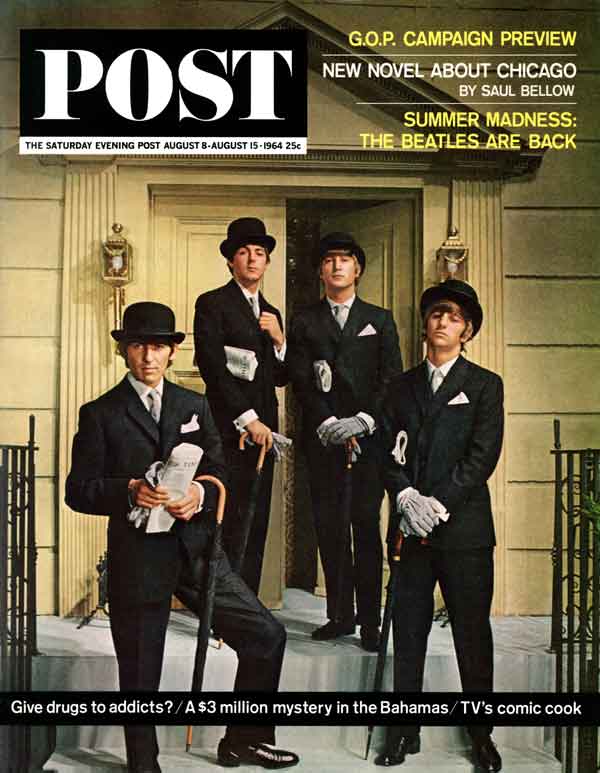
THIS IS HOW WE FIRST SAW THEM: as four British lads bounding from a Boeing 707 at Kennedy International Airport, just past lunchtime on a blustery February day in 1964. The fresh-faced visitors were impossibly neat and charming, all toothy grins. They clutched their blue Pan Am bags as if they were the bloodiest best gifts ever. Press photographers snapped away amid the din of 3,000 teenage fans shouting their brains out.
And this is how we remember them today: as a masterful, ever-morphing rock band that dazzled us for eight years; a band that composed and recorded some 200 songs unlike any we’d heard before; a band whose arrival on these shores less than three months after President Kennedy’s assassination afforded Americans an excuse to hold hands, to love, and to imagine happier times during a profoundly turbulent era in our political evolution.
Day Tripper. In My Life. Eleanor Rigby. The Long and Winding Road. Ah, and Sgt. Pepper—of course. It was a ticket to ride, all right. These fellas were nothing if not revolutionaries.
Then … they were no more. Except, that is, for the poetry and the melodies and the iconic marketing images they bequeathed to us—millions of psychedelic/quixotic/ambiguous/shocking images. Like Bob Dylan, whom the Beatles greatly admired, they created a template for the ways musicians could entertain an audience while simultaneously, if gently, rejecting its wars.
Five decades after the Beatles touched down in New York—aboard a jet aptly nicknamed Clipper Defiance—there are those who regard them still as quasi-spiritual figures who came to heal us Yanks at the exact moment we most needed a liniment for our broken spirit. Are they, then, somehow sacred? To some, the answer is an unequivocal yes. (Others do not share in this exalted view, but more on that later.)
America was simultaneously confused and frolicsome during the early ’60s–a “hot mess,” to use the current vernacular. The Vietnam conflict, delivered to us in crude TV video, split the country apart. Everyone owned a small transistor radio–for listening not to news, but music; among the top-charting songs the day the Beatles arrived was the raucous Louie Louie by the Kingsmen. The Ford Mustang, which would go on to become the most iconically cool American ride, rolled into dealerships just nine weeks after the Beatles performed on The Ed Sullivan Show. NASA was getting its Saturn rocket engines ready to propel men to the moon. Air pollution? There was none. Climate change? What’s that? In some ways, all our troubles–even the war–seemed so far away.
But in the aftermath of the November 1963 killing of the president, ours was suddenly a less innocent nation. Perhaps a more emotionally vulnerable one. As history would record, we were more than ready for a quartet of young rule-breakers who could provide a bright new beat for the times.
And so on February 7 came the Beatles, aboard Pan American Flight 101 from London, to begin their odyssey in the colonies.
From the start, the band sang to us–occasionally at us–in unforgettable and often discordant harmonies. It Won’t Be Long. Here Comes the Sun. Get Back. Remember? Help! All My Loving. Eight Days a Week. A remarkable canon by any account. With these extraordinary songs–ballads, tales of love, protests against normality–they gave us, among other things, permission to finally move past the idle brainlessness of surfer-think.
There had been other big pop acts before them, but these guys reset the cultural clock in an instant. Where once we could draw a squiggly line between Ella Fitzgerald and Frank Sinatra and Buddy Holly and Elvis, now we had…well, a near obliteration of everything pre-1964. It’s no surprise that Apple co-founder Steve Jobs, one of very few others of the past half-century to make the planet wobble, often cited the Beatles’ singular influence on his life.
As 2014 dawns — ironically, with a man in the White House who does a pretty good impression of soul singer Al Green–the musical landscape is once again confused and splintered, with no dominant voice. The glory of Beatlemania has long since faded. Yet in scores of ways, the band plays on.
A small army of scholars, American and British, continues to research the meaning of the lads’ midcentury moment. Read all of it if you wish. Or you can take heed of Cher, who recently turned to David Letterman while a guest on his show, and perfectly summarized the fabulousness of John, Paul, George, and Ringo: “The Beatles,” she said nasally, “changed everything.”
JOHN LENNON AND YOKO ONO’S APARTMENT atop the Dakota looks exactly as it did the day John was murdered outside the building’s main entrance.
A longtime friend of Yoko’s, who visited with her not long ago, tells me that “in the living room there is a white piano. On the top of the piano are photographs of Yoko and John. There are no pictures of the Beatles. There are no awards, no trophy case. There never was. John didn’t need to be reminded.”
From the windows of the apartment, across Central Park West, one can just about see Strawberry Fields, the parklet dedicated by the City of New York to the life of John Lennon. Over time, the little triangle of land has transformed into the physical place one visits to pay homage not only to John, but to the memory of the rock band he created back in Liverpool. Each day, thousands of tourists stroll through.
On the afternoon I stop by, a guitarist named Baron Sydney is sitting on a bench, singing a medley of Beatles’ numbers as acolytes mill about and genuflect on the famous “Imagine” mosaic. Sydney performs here almost daily, he says, observing the never-ending parade. Sometimes he mixes in a little Bob Marley or the Police, just to keep things unpredictable. “People bring mementoes here–teddy bears and stuff. I see people cry,” he tells me.
I approach a stylishly dressed 30-something couple from Rome and ask why they have come to Strawberry Fields. “Because the Beatles represented the feeling of the masses against political power,” they say, struggling for the right words in their heavily broken English.
A 25-year-old French tourist is about to climb aboard a bike and exit the park. Why had she made the pilgrimage? “Back home,” she says, “in the evenings, at every party, we listen to Come Together. To us, the music is not old.”
Finally, a boomer from Cincinnati, on vacation. “Well, the Beatles are just part of America,” he replies tartly, as if to suggest, “Why would anyone even ask such a stupid question?”
After a while, I leave the park, walk uptown, and make a couple of calls to help me appreciate the Beatles from the perspective of those whose livelihood is dependent on their continuing popularity. First, I ring up Joe Johnson, host of an all-Beatles radio show. There are dozens of such programs around the country. His, called Beatle Brunch, has aired for 22 years and is currently heard on about 100 stations. He quickly recites several Beatles “firsts”: the first band to print lyrics on their album sleeves; George Harrison was the first rock star to front a fundraising concert (for Bangladesh, in 1971); they were the first rock band to feature four completely distinct and likable personalities.
But mainly they are still so warmly embraced, Johnson tells me, because “more than half their songs were about love. When they strayed from that, they always tried to get back to it.”
Afterward, while still just blocks from the tiny memorial park, I dial up Joe Stefanelli, who for 20 years has “been” John Lennon in a touring tribute band called the MopTops. (Stefanelli, who views himself more as an actor than a singer, also played the part of Lennon in the movie Forrest Gump.) “There’s an optimism in those songs,” he says. “When you go onstage and bring those characters to life, you should see the look on the people’s faces. They want to buy into all of it.”
THERE’S SOMETHING IN THE WAY THEY MOVED that moved us. From the very first time we heard them, or watched them toss their smartly cropped hair on our black-and-white TV screens (oh, how the young girls swooned!), it was totally clear: These guys had it. “Their music is so mysteriously engaging that musicians still want to make that sound,” says Matt Hurwitz, a well-known Beatles historian. “For many people, looking back, they will say the one happy thing they had going in their lives was the Beatles.”
In those days, Ben Stein was but an ambitious young man who piloted a red Corvette and admired pretty girls. He would grow up to serve presidents Nixon and Ford as a top-tier speechwriter, and he subsequently discovered a second career as an actor (“Bueller…Bueller…”). “I became aware of the Beatles,” he tells me, “because in their early songs they had a fantastically good beat to dance to, the best ever in songs like I Want to Hold Your Hand and Love Me Do.” And let’s be clear, it wasn’t just about dancing. “In their psychedelic phase, listening to their music became a merit badge of hipness and a membership card for the cool kids’ table,” Stein says. “Trying to decode their drug and sex messages was a guaranteed good means of seduction.” Indeed, no rock ’n’ rollers have ever risen to stardom without nailing the element of seduction.
“They set the standard in so many ways,” observes David Browne, a veteran music writer whose latest book, Fire and Rain: The Beatles, Simon and Garfunkel, James Taylor, CSNY, and the Lost Story of 1970, was recently reissued in paperback. “To this day, new bands record pop songs that recall the early Beatles — tight, crisp, harmony-driven, hooky tunes.” However, Browne says, it’s possible that in the distant future the Beatles may be remembered as much for their “basic, simple songs like I Want to Hold Your Hand” as for their more mature work, including Sgt. Pepper, Yesterday, Hey Jude, and Let It Be. He’s half concerned that those catchier tunes could “become the Oh! Susannas” to generations yet unborn.
Less worried about this prospect is Jeff Ressner, a former senior writer at Rolling Stone, who thinks the Beatles’ legacy is assured because of the simple, unambiguous lyrics of their formative years. “The whole ‘Love is all you need thing’ has worked for other prophets even before these guys came along,” Ressner says to me one afternoon. Plus they had, to quote Ressner, “exuberance and determination,” as demonstrated on their memorable Sullivan Show appearance eight days after arriving in the U.S.
Well, they indisputably had that–a showy, almost robotic energy–in ample amounts.
Also in abundance–although some fans prefer not to linger on this aspect of the Beatles’ legacy–were recreational pharmaceuticals. “They were salesmen for it, they gave it their blessing,” Ressner says. “The message was: If you smoke pot, it’ll give you a twinkly view of the world.”
There’s no gainsaying that drugs played a significant role in the Fab Four’s creative output–and in their lifestyle as well. While it’s been many years since she hosted John, Paul, George, and Ringo at a fundraiser in her Beverly Hills house, Monica Lewis, who was labeled “America’s Singing Sweetheart” in the ’40s and ’50s, recalls hours of heroic-level partying. The Beatles, she tells me, camped out in one room much of the night. At some point the morning after, as she surveyed the condition of her home, Lewis discovered that part of a “$100,000 Joan Miró sculpture was filled to the top with marijuana butts.” Oh, those crazy musicians, she thought. And by then the Brits were gone, presumably twinkly-eyed.
THEY HAD BEEN NOWHERE MEN FROM A small city in the United Kingdom. Then suddenly, it seemed, they were everywhere. Today, their cultural fingerprints survive across the pop-culture continuum.
For example, a few months ago I opened my mailbox and found that the cover of Bloomberg Businessweek was a total visual parody of the Sgt. Pepper album. Do the modern-day industrialists who read Businessweek connect with the band’s period of triumphal psychedelics? Obviously, the magazine’s editors believe they do.
In fashion, too, the Beatles made a lasting impression. Their fashion-forward (or was it backward?) statements, and what that all meant, remains an area of dispute to this day. Some cultural anthropologists claim that the group, by their choices of apparel, feminized American society, or at least rejiggered our ideas about gender appropriateness. At the very least, their sartorial splendor (one year they wore body-hugging suits, the next it was embroidered Edwardian uniforms!) did wonders for the garment trade.
Although technically not actors, the Beatles had a strong influence on moviemaking, too. Most of us have since forgotten, but the success of the Beatles’ 1964 film, A Hard Day’s Night, was a huge influence on musicians and filmmakers, who found in its groundbreaking structure a fresh way to tell stories. “Everyone went to see it,” says Browne, author of Fire and Rain. “Almost overnight, the folk musicians forgot the coffee houses.” He mentions David Stills, the Byrds, and the Springfields. “They responded on so many levels–the hairstyles, the electric guitars.”
Perhaps even more paradigm-shifting, in terms of how we view the world in this age of high-def celebritydom, was the way the Beatles changed photography. “They were to rock and roll photography what John F. Kennedy was to political imagery,” I am told by David Hume Kennerly, the Pulitzer Prize-winning shooter later handpicked by Gerald Ford to document his White House years. “The Beatles, very much like JFK, seemed to know how they came across in pictures, and it was part of their success. They understood the value of the still photo.”
Kennerly, widely regarded as one of the world’s leading news photographers, specializes in the political realm. He’s forever rubbing shoulders with heads of state. Somehow, though, he never got to meet the Beatles, which for him remains a deep regret. What if he had? “I’ve always wondered,” he muses, “would I have said ‘Screw the news biz’ and thrown in with the Fab Four, hitched onto their Mad Hatter’s ride?”
Another area where the Beatles may have made a mark is tourism, unlikely as that sounds. CBS News travel editor Peter Greenberg insists that those iconic images of the Beatles emerging onto the Pan Am stairway at JFK actually “ushered in the jet age. They sent a message to the world that it was OK to jump on a plane and travel.” A stretch? Greenberg has devoted his career to studying such matters, so we’ll take his word for it.
In any event, it’s almost as if the band had decided from their start that in every way possible they would, with apologies to Steve Jobs, “think different.”
THE BEATLES ARE NOT UNIVERSALLY ADMIRED
It didn’t help that Charles Manson credited Paul McCartney’s Helter Skelter as an inspiration. There are holdouts. Many of them are Gen Xers, born between 1960 and 1980. By the time they heard the Beatles, their recordings sounded a bit like cheapjack hand-me-downs. Jeff Gordinier, author of X Saves the World (and currently a New York Times writer on the food beat), stated it to me this way: “They recorded a lot of stupid shit. It hasn’t aged well. They were basically children’s songs: Octopus’s Garden, Maxwell’s Silver Hammer,Rocky Raccoon. Quirky and cutesy, but they grate on you.” Gordinier is 47. “It just doesn’t seem suitable for someone my age to listen to those songs,” he tells me.
Having made that point, he wants it known that “I am not immune to the Beatles’ charms.” He adds this as if to inoculate himself against the predictable blowback from unregenerate Beatles nuts. “My reservations,” he explains, “have more to do with generational exposure.”
A couple of days later, Gordinier sends me a camera-phone picture of a New York billboard promoting some sort of commercial tie-up between Bloomingdale’s and the Beatles brand. “Here is another reason some of us have grown weary of the mythologizing of the Beatles,” he writes in an attached message. “You can’t help but think, Seriously? We’re going back there again? It’s so monotonous and repetitive.”
NO MATTER WHAT, THEIR MUSIC KEEPS SELLING
“It’s exponentially bigger than ever, astronomical,” says music journalist Ressner. The profits are in the licensing and publishing of the group’s digital archives. Even their vinyl is hot. Abbey Road was the second best-selling vinyl album of 2012. Moreover, every year we learn of additional Beatles’ music that’s been held in storage. Apparently there is lots and lots. A second edition of On Air–Live at the BBC, featuring a trove of previously unheard material, including in-studio banter, has just shipped. “There’s still a half dozen to a dozen albums to be released,” Ressner tells me.
However, let it be acknowledged that some aspects of 1960s Beatledom fails to excite modern-day audiences. While Love, a Cirque du Soleil Beatles production, has had a long run in Las Vegas, the Broadway show Let It Be closed early last year, and several movies based on the Beatles have experienced disappointing box office numbers. Not everything translates; America is currently in the grip of a Gaga and a Bieber. Those who cannot abide the realization that the actual Beatles will never again record a song can file under “Very Long-Odds Possibilities” the prospect that John Lennon might one day return to the stage. How so? A Canadian dentist who spent $31,000 for one of Lennon’s teeth is hoping he can extract enough DNA to clone the musician. Seriously. “I am nervous and excited at the possibility,” the dentist told a reporter several months ago. There’s been no word on this since.
I GET ON THE PHONE WITH MARTHA QUINN
now a radio host, who became famous as one of the original MTV VJs–the cute one. To this day, she says, she has a “very deep commitment to the Beatles.” As a young New Yorker, she stood at the gate to the Dakota the night Lennon was shot, weeping “with a mass of other heartbroken fans.”
“Why do the Beatles still matter?” I ask Quinn.
“They transcended music,” she says. “They were about fashion; they were about movies; they were about trends. The term ‘rock star’ wasn’t even around” until the band burst onto the scene. “They became what it was to be rock stars.”
Sure, but we already know all that. “What else?” I prompt. What separates them from, say, the Rolling Stones? She ponders for a moment. OK, she says, this is the correct answer: “The Beatles brought social consciousness to pop culture, and that’s something that has never gone away. When you had a cause and the Beatles endorsed it, that was the ultimate.”
A day or so later, about midnight, I find myself talking to Elliot Mintz, a one-time broadcast personality in L.A. who had befriended John Lennon and went on to host a radio series called The Lost Lennon Tapes, based on his many conversations with the Beatles founder. Mintz speaks eloquently, as if doing voice-overs for earnest documentaries. When he discusses the Beatles, he brings a great sense of deliberateness.
I put to him the very same question I had earlier put to Martha Quinn. What made the Beatles the Beatles?
“I think it’s about the cultural, sociological, anthropological impact they had over our hearts and minds. They electrified us,” he says.
Yeah, yeah, but what exactly does that mean? It’s really not that difficult to understand, Mintz explains in a halting half-whisper befitting the hour: “They made us come alive. They altered our mind frame of how it felt to be in love. ‘I want to hold your hand’ is a prophetic statement that’s eternal.” A long radio-host-style pause. “They were the lovers we never met.”
I pull up the lyrics of the band’s first song to hit number one in the States:
Yeah, you got that something
I think you’ll understand
When I feel that something
I wanna hold your hand
Might it be that the Beatles’ magical mystery code was hidden in plain sight almost from the moment of their creation? Really, all they ever wanted to do was touch us.
For more Beatles photos and articles from our archives, click here.
More Privacy, Now! Five Steps to Enhance Your Privacy Online
The U.S. National Security Agency (NSA) last year admitted to operating a massive data-collection program, PRISM, after former NSA contractor Edward Snowden revealed the existence of the top-secret effort. PRISM, launched in 2007, enables the NSA to collect stored online communications, including chat sessions, emails, file transfers, and search histories, from Internet giants such as Apple, Facebook, Google, and Microsoft.
PRISM’s main purpose is to collect foreign intelligence information on suspected terrorists. The program targets Internet users, including American citizens, who reside outside the U.S. and may be communicating with bad guys abroad. The NSA claims the controversial spying program has been successful at preventing acts of terrorism.
Now, you may be thinking, “Hey, I’m no terrorist. Why should I care if the NSA snoops around a bit to catch bad guys?” Well, as you know, history has taught us that authorities don’t always have our best interests at heart, and power has a nasty habit of corrupting the very people we’ve entrusted to protect us. It’s no wonder privacy advocates are up in arms, demanding an end to PRISM and other surveillance programs like it.
“People have a right to exist unobserved, to be left alone,” says Justin Brookman of the Center for Democracy & Technology (CDT), a nonprofit based in Washington, D.C., that advocates stronger legal standards to limit government surveillance. “But it’s getting tougher and tougher for everyday people to take steps to exist unobserved online,” Brookman adds. “Practically speaking, it’s really hard to turn off all the spigots of information about yourself. It’s unmanageable today. There aren’t easy ways to exist unobserved.”
That’s certainly true, but with a little effort you can enhance your privacy and make it harder for government, commercial, and even criminal entities to monitor your online activities.
To read the rest of the article, pick up a copy of the Jan/Feb 2014 issue of The Saturday Evening Post on newsstands, or
Purchase the digital edition for your iPad, Nook, or Android tablet:
Subscribe to the print edition of The Saturday Evening Post:
The A-Rod Factor: Cheating in America’s Favorite Pastime
No one set out to make baseball the great national metaphor. It was just a game that involved a bat and a ball, played under a variety of rules and names, like “rounders,” “base,” or even “four-old-cat.” By 1828, it was being called “baseball” in newspapers, and by the 1840s there were league games in New England. It was played up to, and through, the Civil War. With the fighting ended, men who had learned the game while in uniform took it home with them, and its popularity grew throughout the states.
The growth of baseball was a welcome sign after the war. Americans yearned for indications that the nation was reuniting. They were encouraged by the growing number of baseball clubs, playing with roughly the same rules, that sprang up in both northern and southern states.
Even before the war, the U.S. had relatively few traditions and symbols that were valued in all states. Americans noted how European nations were united by common ancestries and ancient histories when their own country, in contrast, had an immigrant population that seemed to lack a distinctive character. And their national heritage was based on just one century of history.
Many of these same Americans looking for a national symbol thought it could be found in baseball. It seemed to reflect the principals of life in America–tough, but fair. It offered the boys and men (and sometimes ladies) who played the game a sense of achievement, cooperation, and friendly competition. And it was fun.
In 1902, the Post editors—clearly great fans of the game—were inspired to rhapsodize on the glories of baseball. “It is a manly game,” they said. And it was “a clean game. With a single exception, professional baseball has never been found to be dishonest.”
That single exception, they wrote, occurred in 1877, when players in the National League were “found guilty of throwing games.” They were expelled and have never since been permitted to play in or against a regularly organized team.” (They might have been referring to two St. Louis players, who gamblers had identified as their accomplices in a racket of throwing games.)
“The expulsion of the players above referred to took place,” the editorial continued, “and, with this, gambling became almost unknown in connection with baseball.”
“There is no use in blinking at the fact that at that time the game was thought, by solid, respectable people, to be only one degree above grand larceny, arson and mayhem, and those who engaged in it were beneath the notice of decent society.”
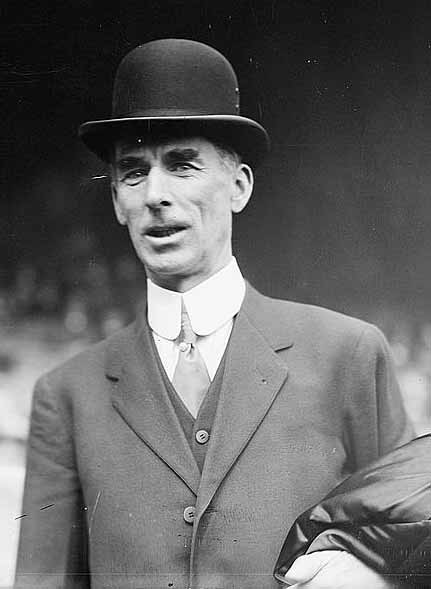
Source: Library of Congress
So said the Post’s editors. But that’s not the way Cornelius McGillicuddy heard it. The man who later became known as Connie Mack, the widely respected manager of the Philadelphia Athletics, started his career as a ball player in Connecticut. And this is how he remembered that ‘clean’ game:
“There is no use in blinking at the fact that at that time the game was thought, by solid, respectable people, to be only one degree above grand larceny, arson and mayhem, and those who engaged in it were beneath the notice of decent society.
The late A. G. Spalding estimated that about 5 per cent of the players were crooks in the early days of professional ball. To quote Spalding: ‘Not an important game was played on any grounds where pools on the game were not sold. A few players became so corrupt that nobody could be certain whether the issue of any game in which they participated would be determined on its merits.’
Liquor selling, either on the grounds or in close proximity thereto, was so general as to make scenes of drunkenness and riot everyday occurrences, not only among spectators but now and then among the players themselves. Almost every team had its ‘gushers,’ and a game whose spectators consisted for the most part of gamblers, rowdies, and their natural associates could not attract honest men or decent women to its exhibitions.”
All this was unknown, forgotten, or ignored by the Post’s editors in the 1900s. In a 1908 editorial, for example, they broadly claimed that baseball represented the highest ideals of the nation—“our one, perfect institution.” It was “above reproach and beyond criticism…one comparatively perfect flower of our sadly defective civilization—the only important institution, so far as we remember, which the United States regards with a practically universal, critical, unadulterated affection.”
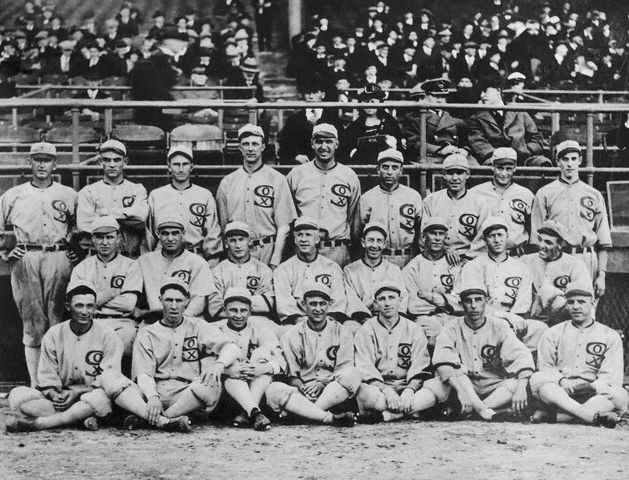
But just more than a decade later, the country learned that several players on the Chicago White Sox roster had conspired with gamblers to throw the World Series. The nation was stunned. Baseball fans might claim that players or umpires were throwing a game; it was the birthright of anyone who supported a losing team. But news of an actual conspiracy, by several players, to throw not just one game but the World Series, was outrageous.
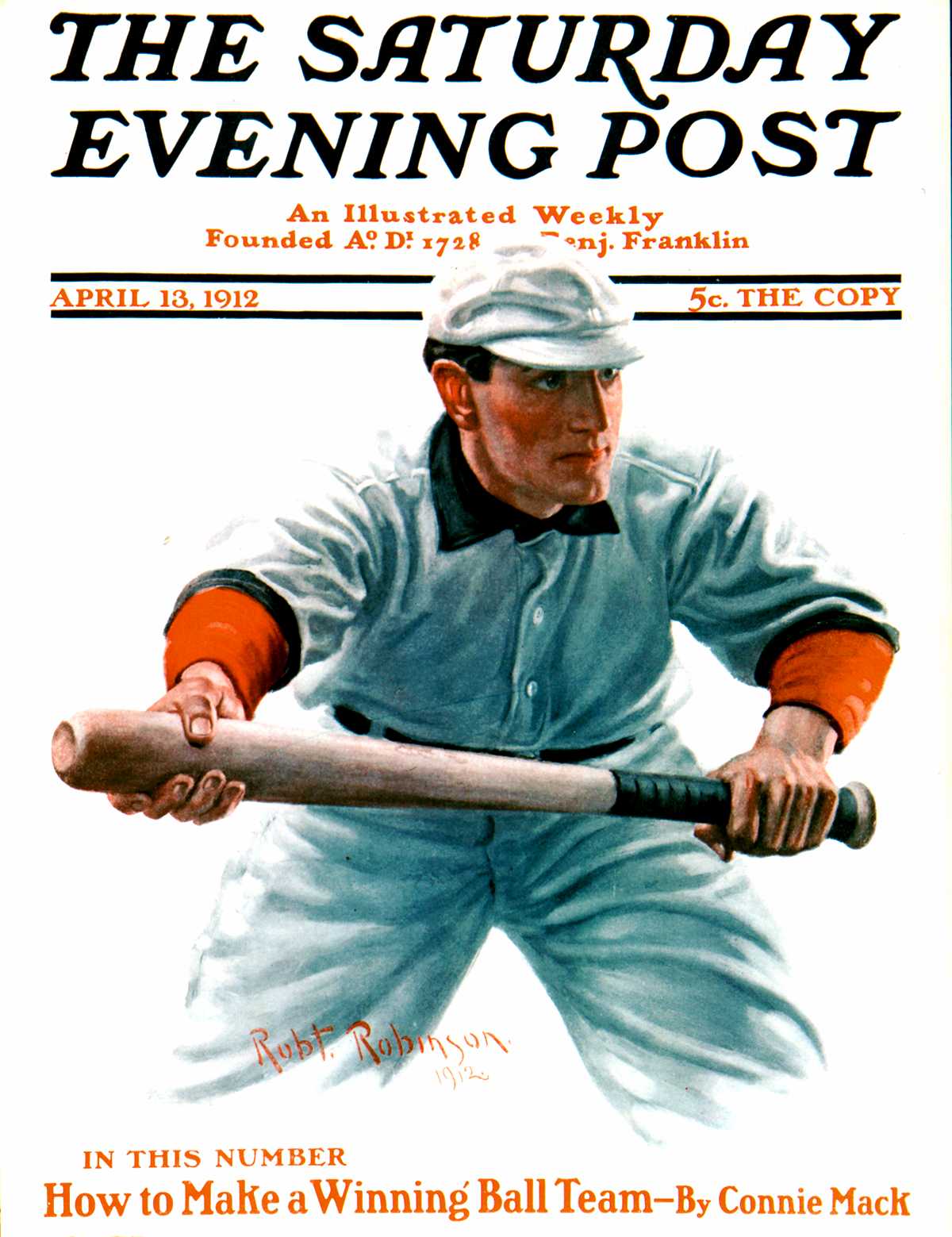
Recalling those times in 1938, sports writer John Lardner wrote in the Post, “It nearly wrecked baseball for all eternity… It touched off a rash of scandal rumors that spread across the face of the game like measles. A hundred players and half a dozen ball clubs were involved in stories of sister plots. Baseball was said to be crooked as sin from top to bottom.
And people didn’t take their baseball lightly in those days. They threw themselves wholeheartedly into the game when World War I ended, so much so that the sudden pull-up, the revelation of crookedness, was a real and ugly shock. It got under their skins. You heard of no lynchings, but Buck Herzog, the old Giant infielder, on an exhibition tour of the West in the late Fall of 1920, was slashed with a knife by an unidentified fan who yelled: “That’s for you, you crooked such-and-such.” Buck’s name had been mentioned by error in a newspaper rumor of a minor unpleasantness in New York…[He was] as innocent as a newborn pigeon, but rumors were rumors, and the national temper was high.
It’s a fact that some of the White Sox, after the scandal hearings, were unwilling to leave the courtroom for fear of mobs.
That anger at the game’s betrayal was seen recently when a ballplayer was charged with long-time abuse of performance-enhancing drugs. Some fans were outraged, and called for brutal punishment of the offender. Other fans merely shrugged their shoulders and accepted the fact that cheating was an ineradicable part of the game.
Corruption will always be a possible factor in the game. Even the Post’s 1902 editorial, while praising the purity of the game, recognized “the instant a sport reaches the professional stage it is beset by temptations which appeal to avarice, and must then begin a constant struggle to preserve its integrity and true sporting spirit.”
The struggle continues, with the suspension of Alex Rodriguez today and, no doubt, with future investigations, scandals, and penalties in the future. There will always be people looking to cheat at professional baseball, enriching themselves and impoverishing the game. And there will always be officials and players who work at stopping them and protecting the value of the game. It is this endless contest of corruption and restoration that makes professional baseball a true symbol of the United States.
Five things you need to know about Super Bowl XLVIII
As one of the pinnacle events in the sports world, we have compiled a list of six things we think you should know about Super Bowl XLVIII. The game airs Sunday on Fox at 6:30P.M.
1. Best defense vs. Best offense
The Denver Broncos go into Sunday’s game with a top-ranked offense led by quarterback Peyton Manning. Manning has had a record-setting year for the Broncos. His 55 touchdown passes this season are the most in NFL history, and he set a league record with 5,477 passing yards. As a team, the Broncos offense scored 606 points this season. Meanwhile, the Seahawks defense has been a force to be reckoned with all season long. Led by the outspoken Richard Sherman, one of the top corners in the league, the Seahawks’ defense have forced 28 interceptions (eight of those credited to Sherman), committed 44 sacks, and allowed opponents to score just 231 points. Despite this historic matchup, experts predict the outcome of the game will be determined on the other side of the game: the Broncos defense against the Seahawks offense. Either way, this game is bound to be a classic.
2. Weather
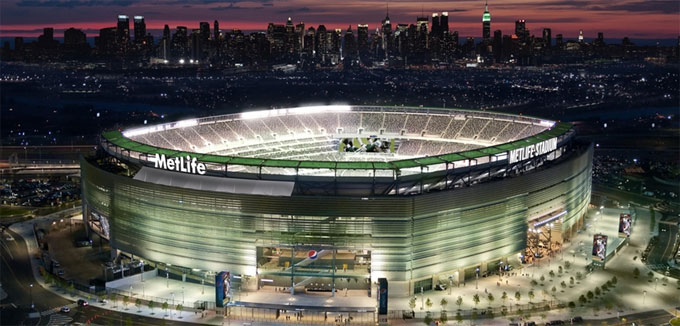
For the first time in Super Bowl history, the game will be played in Met Life Stadium, just outside of New York City. Since the site announcement, speculation of bad weather has been a featured storyline. For days leading up to the event, hundreds of workers have been removing snow and ice from the stadium. The coldest Super Bowl on record was back in 1972 in New Orleans when the temperature was a mild 39 degrees. Meteorologists are predicting this year’s game day temperature to be 37 degrees with a 20 percent chance of precipitation. New York has been blasted with frigid temperatures this winter due to the Polar Vortex, so a high of 37 may feel toasty to locals.
3. Commercials
Every year there’s a big fuss about the companies that will pay millions of dollars to run a 30-second commercial during the Super Bowl. And every year, lists of the best and the worst are compiled and scattered across the Internet Monday morning. This year, there are commercials teasing out commercials that will air during the big game. The adorable Budweiser ad with the puppy and the clydesdale has already gone viral a week before it officially airs on TV. Scarlett Johansson has been under criticism for a racy, un-rated ad for SodaStream which prompted her to resign from her position as global ambassador of Oxford International, a company that fights poverty.
4. Peyton Manning’s Legacy
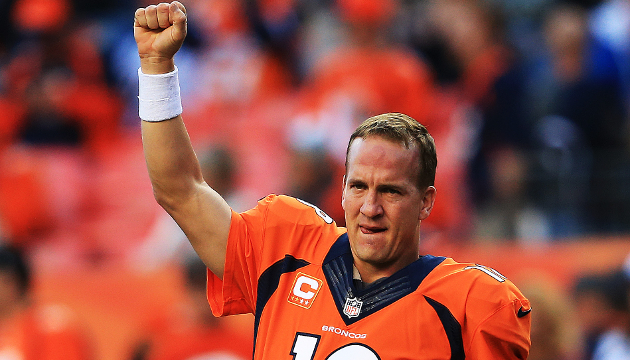
It may be hard to believe, but Peyton Manning has been in the league since 1998. During his illustrious career, he has carefully danced around the conversation of being named the “Greatest Quarterback of all Time.” As he approaches the outcome of his third Super Bowl appearance and looks for his second Super Bowl ring, the conversation has intensified. Can Peyton Manning really be the greatest of all time if he only has one ring? Manning will turn 38 in March, and although he has just completed his best regular season of his career, the clock is ticking as retirement looms. Will this be Manning’s last chance for another ring?
5. Super Bowl Alternatives
We aren’t all sports fans, so perhaps Sunday evening will be spent watching something other than the Super Bowl. If so, you have some options. Every year, Animal Planet airs the ultimate spectacle of cuteness in the Puppy Bowl. Puppy Bowl X airs during the Super Bowl Sunday evening. This year, the NFL got in on the action and put together a Puppy Bowl Fantasy League! Downton Abbey is brand new on PBS at 9pm on Sunday evening, and AMC will be playing a marathon of The Walking Dead all day Sunday in anticipation for the mid-season premiere the following week. NBCSports will be airing the Olympic Speed Skating trials, and there is an array of movies on other cable networks for non-sports fans.
6. The Halftime Show
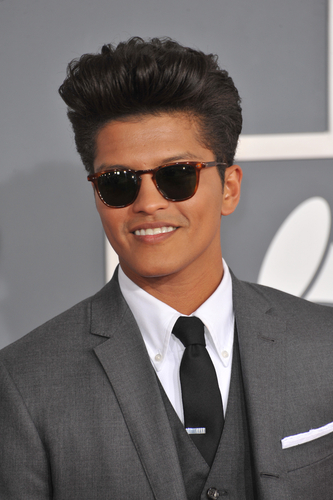
Since Janet Jackson’s wardrobe malfunction ten years ago, the halftime show at the Super Bowl demands almost as much attention as the game itself. This year, pop star Bruno Mars will perform on the big stage joined by rock band The Red Hot Chili Peppers. Expect an electric, creative, and upbeat performance from the vocalist.
Shirley Temple Black Dies at Age 85
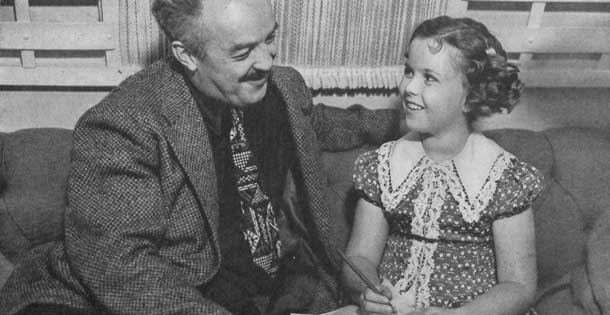
She was known for her curly hair and radiating smile, and, of course, as one of the very first child stars. Shirley Temple sang and danced her way into the Hollywood history books back in the 1930s with movies like Curly Top, Bright Eyes, and The Little Colonel. In her adult years, Temple would become a diplomat and political ambassador. In July 1946, Shirley Temple sat down with The Saturday Evening Post to talk about the role she liked best:
“Of all the pictures I’ve made, including those with adult roles, the one I enjoyed most was when I was eight years old and I played soldier as Wee Willie Winkie. In Kipling’s story, Wee Willie, mascot of a famous Scottish regiment in India, was a freckled six-year-old boy, but my studio saw no reason why the character couldn’t be a girl, granddaughter of the commandant. So I got the part.
It was fun to parade around with brawny, six-foot men, and wearing those Black Watch plaid kilts was better than going to a costume party…The fascinating sword swallowers in the picture added to my fun–and the camels, which looked so silly when they yawned. As I marched with the soldiers I felt very grown-up and important, although I barely came up to their waists.
I liked everybody in the cast, but my special favorites were C. Aubrey Smith and Victor McLaglen…I also remember gratefully the gentleness of director John Ford; outwardly he is a rugged type of person, but inside he’s kindly and even sentimental. He did so much to make Wee Willie Winkie my favorite role.”
On the Whiskey Trail
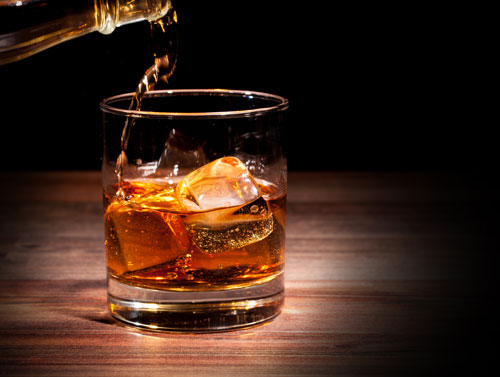
Given that Dominic Roskrow is from the U.K., he might seem an unlikely advocate of American whiskey. “Yours is made to a vastly higher standard than Scotch,” says Dominic, author of The World’s Best Whiskies and editor of Whiskeria, Britain’s largest whiskey magazine. “There are rules governing what’s in the bottle, which we don’t have in Scotland. You have something really, really special. But makers of American whiskey haven’t been good at telling its story, which is amazing considering how loud and aggressive Americans can be.”
I decide to let this backhanded compliment slide, since Dominic has been such good company for the past few days and is so enthusiastic about our culture in general. We had met prior to our guided tour of America’s whiskey trail at a hotel bar in Nashville, Tennessee, where, to get in the spirit, we’d sampled several flights of Jack Daniel’s. We started with the Old No. 7, then Single Barrel and Gentleman Jack—and along the way discovered our common enthusiasm for quality spirits. While Dominic rhapsodized about America and the quality of its water and distilleries, we drifted figuratively from the deep smoky forests of Tennessee to the rolling, bluegrass-clad horse country of Kentucky, moving up the map like vapors of alcohol rising through a copper still.
Has America failed to tell its whiskey story? Well, someone’s getting the word out. Sales of super-premium American whiskies have doubled in five years while exports of U.S. spirits of all kinds have doubled over 10. And in recent years, the most storied brands have been joined by artisanal distillers from Florida to Alaska. There are now some 250 regional small-batch distillers compared with fewer than 50, 10 years ago.
“I don’t think there’s any question that we’re in bourbon’s heyday,” says Rich Ruth, former co-owner of Sidebar at Whiskey Row, a restaurant-bar in Louisville. “Ten years ago people would come into a bar and order vodka. Now we have people coming in and naming the brand of bourbon they want in a Manhattan.”
If that sounds like a contemporary trend, well, it may well be. But American whiskey is anything but trendy in the here-today-gone-tomorrow sense of the word. Indeed, whiskey (usually spelled without an “e” on the other side of the pond) has deep roots in American history. To tell the story, the Distilled Spirits Council mapped a route it calls the American Whiskey Trail that runs in an arc from Washington, D.C., through Pennsylvania and Kentucky into Tennessee, and Dominic and I and a few other passionate whiskey-philes set out to follow it.
The trail officially starts in Mount Vernon, Virginia, the home of America’s first president. George Washington was himself a whiskey maker and a whiskey drinker, but just to complicate things, during his presidency, he instituted the nation’s first tax on whiskey. In 1791, this triggered the Whiskey Rebellion in western Pennsylvania. The conflict pushed distillers west into Kentucky and Tennessee, where new state governments were giving settlers land grants and shielding them from the whiskey tax. It didn’t hurt that these new locales also had superb water thanks to a deep limestone bedrock that filtered out impurities.
“People say water’s water, but it’s not,” says John Lunn, the master distiller at George Dickel Whisky in Tullahoma, Tennessee, where we pick up the trail. (Dickel is one of the very few American manufacturers to follow the Scottish spelling.)
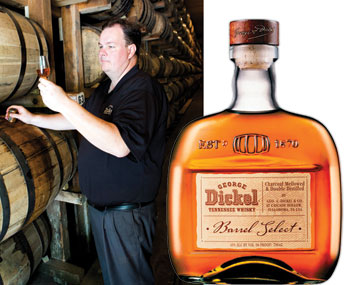
Sam Scrimm/George Dickel Whisky
As John walks us through the Dickel plant, describing the water and the mash, the stills and the barreling, it becomes clear that Dickel distills not just whiskey but a kind of heritage. The entire town of Tullahoma is a delightful throwback, set deep in a lush valley surrounded by a forest of the same sugar maples that Dickel uses for its charcoal. There’s a post office and a “Provisions & General Merchandise” store, and the distillery itself is housed in a building made of old wooden planks. Inside, you’ll find no banks of electronic monitoring systems controlling the process. “Computers can’t make good whiskey,” John says. “People make good whiskey.”
Next stop is Lynchburg, Tennessee, home of Jack Daniel’s. Its black label Old No. 7 is the world’s best-selling whiskey, its distillery the most visited. The company’s target market is wide, or as one executive puts it, “from the LDAs to the DNDs — the legal drinking age to the damn-near-dead.” About half is sold in America and half in 135 other countries.
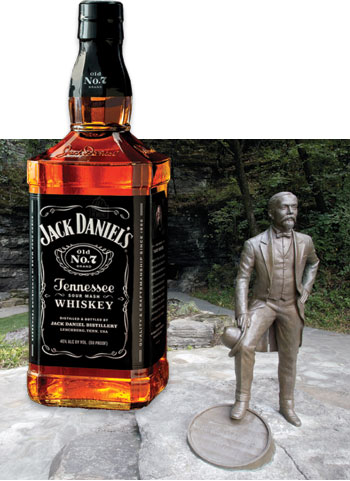
Photo courtesy of Jack Daniel’s
The Jack Daniel’s tour is crafted around its eponymous founder. Here, too, the water gets a lot of play, and our guide, attired in jeans and a cap, invites us to the mouth of a limestone cave where we gaze in like parents looking at newborns, except that while we all know where babies come from, no one has yet solved the hallowed mystery of the source of the water.
It’s a good story. So is the life of Jack, though it’s not as darkly peculiar as his death. He arrived at his office one day, couldn’t unlock his safe, and in his frustration put a boot to the heavy metal box. His injured foot became severely infected, and weeks after he kicked the safe, he kicked the bucket.
By the time we get to Lexington, Kentucky, the landscape has opened up, and we enter some of Kentucky’s most expensive real estate, with undulating fields anchored by horse paddocks and framed by plank fences and fieldstone walls.
They say the same limestone that makes for good whiskey also makes for strong bones, hence Kentucky’s famed racehorses. It seems fitting, then, that prior to our distillery tour, we head for the iconic Keeneland race track.
“Who are you taking?” Dominic asks as we step up to place bets.
“Voodoo Dancer to show,” I say. Voodoo is handicapped at 15:1. I’m handicapped by not knowing anything about horses. But I like the name.
Lo and behold, Voodoo shows.
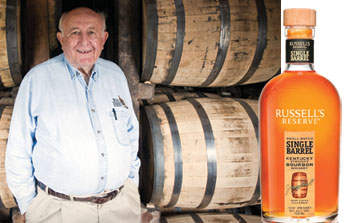
Photo courtesy of Wild Turkey
It’s like capturing magic in a bottle, and we look for more of it later at Wild Turkey. Master distiller Jimmy Russell, the grand old man of the Kentucky bourbon establishment, greets a group that has gathered at the distillery. His speech is all Kentucky — the speech of smart guys whose accent and manner of speaking is by itself a reason to visit. “More men drinks bourbon than women,” Jimmy says. “Lotta people puts it in coffee.”
Lotta people are also liking Wild Turkey’s higher-end cousins. After decades of producing just one whiskey, the company not long ago started rolling out a whole line. At the time of my visit, their Wild Turkey 81 had just won a double-gold medal in San Francisco. My favorite is Russell’s Reserve — named after Jimmy, of course — Single Barrel, which has a full but gentle mouth feel and rolls back into a spicy-sweet finish.
Jimmy invites more impressions. One fellow noses a snifter, swirling the amber nectar under his right nostril with one eye pinched. Like he’s doing an oral defense of a Ph.D. dissertation, “Macadamia,” he intones, and adds, “red apple.” I have no idea what he’s talking about, but what it does show is how bourbon is bringing people, a continuum from plain-spoken to downright effete, into one room.
If the big distillers are experiencing a revival, it’s the little guys, the small-batch artisanal distillers, who are nudging whiskey into the 21st century. They’re whiskey’s “Facebook generation,” since it’s social media that enabled them to reach an audience that previously would have been inaccessible. Many of these newcomers are making their mark by reviving heirloom recipes.
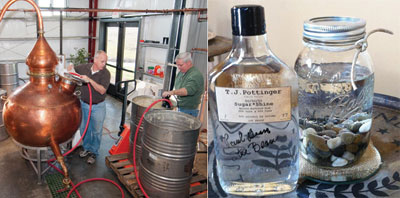
Photos courtesy of Limestone Branch Distillery
Take Steve and Paul Beam, brothers from a branch of the Beam family that left distilling, and one generation later wanted to get back in. They founded Limestone Branch Distillery and produce T.J. Pottinger’s Moon Shine Kentucky Corn Whiskey (88 percent corn, 12 percent malted barley) and Sugar Shine (uncooked mash of 50 percent heirloom white corn and 50 percent sugar cane). “We are reviving the art and craft of pre-Prohibition distilleries,” Steve says. “Prior to Prohibition there were thousands of small distilleries, some turned out rot gut, but the majority took great personal pride in turning out quality spirits. My great-grandfather grew his own grain, chose specific oak to make his own barrels, and was very particular about the entire process.”
In the morning we go to Bardstown, Kentucky, and eventually find the Talbott Tavern, a place that Dominic wanted to see, next to the Jailer’s Inn, now a B&B with the original iron bars on the windows and 30-inch-thick stone walls.
We enter and ask the way to the bar, but we’re too early. Perhaps it’s just as well, after all we’ve consumed over the past few days, that it’s still closed.
American Whiskey: A Primer
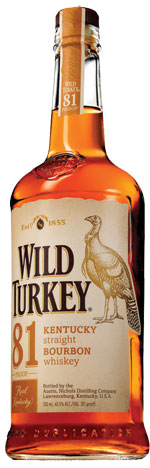
Bourbon can be made anywhere in the United States, but to be called by that name certain rules have to be observed. The mash, or mix of grains, has to be at least 51 percent corn, and it has to be casked in new charred oak barrels, from which the liquid, which goes in clear, leeches out color and flavors like vanillin and toffee. The corn mash itself is de-flavored. Other flavors come from malt barley and either rye or wheat, and the recipes, the fermenting process, and other factors that reflect the distiller’s style and intention will make whiskeys smoother or spicier or sweeter. (Tennessee whiskey goes through an additional step of being filtered through charcoal.)
The narrow list of approved ingredients means that American whiskey doesn’t have the bold and striking flavor varieties of Scotch. (An Islay Scotch is so different from a Highlands Scotch that it can be hard to know you’re in the same spirit category.) Instead, you get different levels of sweetness, spice, and smoothness. If some expert’s tasting notes can seem esoteric to less experienced drinkers, some flavor notes are easy enough to discern: vanilla, caramel, toffee, white pepper, and banana. And as with Scotch, it’s not necessary to drink it neat. Water can cool down a whiskey’s heat and draw out different flavors.
Interestingly, most American whiskeys don’t make age claims. When iconic master distiller Jimmy Russell of Wild Turkey says, “We don’t age it, we go by when it’s ready,” he is voicing an industry-wide tradition.
Todd Pitock has written for The Atlantic, ForbesLife, and The New York Times, among others.
Censorship in American Filmmaking
“There’s too much sex and violence in film!” This is an argument we’re used to hearing today, but did you know this accusation has been levied against Hollywood as early as the 1920s?

In what is commonly referred to as the “pre-code” era, American cinema had no restraints on objectionable content.
But in 1915, the Supreme Court decided that film was not art, because it was meant to generate profit and thus should not be protected by the first amendment.
In the case of Mutual Film Corporation v. Industrial Commission of Ohio, the judges reached a 9-0 decision that “The exhibition of moving pictures is a business, pure and simple, originated and conducted for profit…not to be regarded, nor intended to be regarded by the Ohio Constitution, we think, as part of the press of the country, or as organs of public opinion.”
Realizing that this ruling could mean government oversight of the film industry’s as-yet unregulated operations, the studios moved to head off a federal censorship board. In 1922, they created the Motion Picture Producers and Distributors of America (MPPDA) organization.
William Hays, the former Postmaster General and head of the Republican National Committee, was chosen to lead the organization, a calculated move to provide sway with leaders in Washington. The MPPDA intended to show D.C. politicians that federal censorship wasn’t necessary, as the studios were censoring themselves. Yet through the early 1930s, the MPPDA made little attempt to regulate film.

As the Great Depression started and expendable incomes all but depleted, American filmmakers struggled to fill the seats. To coax the public back the the theaters, filmmakers resorted to increased use of sex, violence, and other not-necessarily-wholesome gimmicks in their movies.
When the MPPDA did nothing to clean up the new sensationalism in cinema, other groups sprang up to take matters into their own hands. State and city censorship boards were already scattered across the country, but they began to flex more power. And then the Catholic Church decided to take action.
Fed up with the lack of censorship in Hollywood, Catholic bishops founded the Catholic Legion of Decency in 1934. Their self-anointed task was to clean up cinema with a three-tiered rating system, and churchgoers across the country were told that all good Catholics must adhere to the standards set forth by the CLD. The ratings: an “A” film was deemed “morally unobjectionable” ; a “B” film was deemed “morally objectionable in part” ; a “C” film was “condemned.”
Negative press from boycotts on some films and the financial losses that followed finally pushed the MPPDA to act. Though a code of decency–often referred to as the Hays Code, named for the head of the organization–had been written in 1930, a loophole in policy had kept the rules from ever being enforced on the film industry. Now, thanks largely to the actions of the Legion of Decency, the years of the MPPDA turning a blind eye had come to an end.
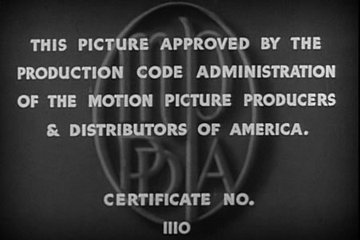
In 1934, the MPPDA established the Production Code Administration (PCA) to be the enforcement arm of the establishment, headed by Joseph Breen.
The code comprised a list of “Do’s” and “Do Not’s” for filmmakers, and any film that didn’t adhere to the standards would be denied an MPPDA stamp by the PCA. Since the studios, all members of the MPPDA, owned the vast majority of theaters at the time, any film without a MPPDA stamp was barred from being shown at almost every theatre in the country.
Thus the MPPDA, the PCA, and the National Legion of Decency (they replaced “Catholic” with “National” in 1934) coexisted harmoniously for decades. A film with a C rating from the NLD was rejected by the PCA, and vice-versa.
Film stars known for their sexuality like Mae West were virtually put out of business, the gangster genre was forever altered, and political and social pressure eased. State censorship boards stopped making changes almost all together. Then everything changed again.
In 1952 the Supreme Court heard yet another case regarding cinema. In the case of Joseph Burstyn, Inc. v. Wilson, the judges ruled that New York could not ban the commercial exhibition of a film because of sacrilegious content, as film was an artistic medium, protected by the 1st amendment.
The decision, more famously known as the “Miracle Decision,” made the 1915 ruling null and void. Films now had teeth to defend themselves individually against federal censorship, but this did not mean the end of the overseeing MPPDA.
By 1945, the new head of the organization, Eric Johnston, rebranded the MPPDA to what is known as today the Motion Picture Association of America (MPAA). With mounting pressure from the industry, the next head of the MPAA, Jack Valenti, did away with the production code in 1968.
Though the threat of Federal censorship had faded away, Hollywood was still wary of boycotts and state and city censorship boards, so Valenti implemented a voluntary rating system to replace the now defunct production code: “G” for “general audiences” ; “M” for “mature audiences” ; “R” for “restricted” ; and “X” for “adults only.” In 1970, “M” was changed to “GP” which meant “all ages admitted, but parental guidance suggested.” This was switched to “PG” in 1972.

At the suggestion of Stephen Spielberg, “PG-13” was introduced in 1984. And finally, when a lack of trademarks led to it being co-opted by the pornography industry, “X” was replaced with “NC-17,” in 1990. Originally, the MPAA provided no reasoning for the ratings of any individual film, but since 1990, a brief explanation has been attached to each rated piece.
To this day, it is the exhibitors who enforce the MPAA policies–there is no federal or state law that bars people who are underage from viewing any film. Instead, the MPAA is left to police its own terms, and producers voluntarily have their films rated (though all 7 major studios and most independent films that get distribution still go through this practice).
Over the years, filmmakers have levied criticisms at the perception that the MPAA has an innate policy of rating independent films more severely than they have rated studio films.
Along with complaints about seemingly arbitrary decisions regarding what can and can’t be shown in an R-rated film versus an NC-17-rated film, South Park creators Matt Stone and Trey Parker have publicly lamented about their contemptuous dealings with the ratings board when working on their independent film, Orgasmo, compared to the relatively easy time they had in dealing with the organization for their studio film, South Park: Bigger, Longer, and Uncut–films with content arguably similar in language, sexual overtones, and adult themes.

In 2004, the MPAA appointed former Senator Christopher Dodd as its new head, maintaining their appointment of leaders with political ties in Washington, largely because the MPAA plays a central role in lobbying for the interests of the film industry. This includes supporting such bills as the “Stop Online Piracy Act,” or “SOPA.” (Since SOPA was defeated, Dodd has urged a more friendly approach to dealing with online entertainment media.)
While the MPAA is still going strong, the same cannot be said for the National Legion of Decency. In 1966, it was rebranded as the National Catholic Office for Motion Pictures.
It then became a part of the United States Catholic Conference, which was then incorporated into the United States Conference of Catholic Bishops in 2001.
The rating newsletter stopped all together. The state and city boards of government censorship began the long process of shutting down in the latter half of the 20th century.
Lindbergh Re-examined
Louis, Missouri, in the mid-to-late 1920s, while Bell waits in the plane.
On a soft April morning in 1939, Charles Lindbergh was summoned to the White House to meet President Franklin D. Roosevelt, arguably the only person in America who equaled him in fame. The images of the two men had been indelibly impressed on the nation’s consciousness for years–Lindbergh, whose solo flight across the Atlantic in 1927 had mesmerized and inspired his countrymen, and Roosevelt, whose energetic, confident leadership had helped jolt a Depression-mired America back to life.
When Lindbergh was ushered into the Oval Office, he found FDR seated behind his desk. It was their first face-to-face encounter, but no one would have guessed that from the president’s warm, familiar manner. His head thrown back, with his trademark cigarette holder tilted rakishly upward, Roosevelt exuded charm, joie de vivre, and an unmistakable air of power and command. During his 30-minute chat with Lindbergh, he gave no sign of the many grave problems weighing on his mind.
He was, in fact, in the midst of one of the greatest crises of his presidency. Europe was on the brink of war. The month before, Adolf Hitler had seized all of Czechoslovakia, violating the promise he had made at the 1938 Munich conference to cease his aggression against other countries. In response, Britain and France had promised to come to the aid of Poland, the next country on Germany’s hit list, if it were invaded. Both Western nations, however, were desperately short of arms, a situation that FDR was trying to remedy. But he was faced with a dilemma. Thanks to the provisions of neutrality legislation passed by Congress a few years earlier, Britain and France would be barred from buying U.S. weapons once they declared war on Germany. As Roosevelt knew, his chances of persuading the House and Senate to repeal the arms ban were close to zero.
But he mentioned none of that in his conversation with Lindbergh. Nor, in the course of his genial banter, did he betray any hint of the considerable suspicion and distrust he felt for the younger man sitting opposite him.
Less than seven years after his history-making flight, the 32-year-old Lindbergh had become a divisive, controversial figure. In 1935 he had taken his family to live in England, then France. During his three-year stay in Europe, he made several highly publicized trips to Nazi Germany, where he inspected aircraft companies and air force bases–and made clear he thought that the German air force was invincible and that Britain and France must appease Hitler.
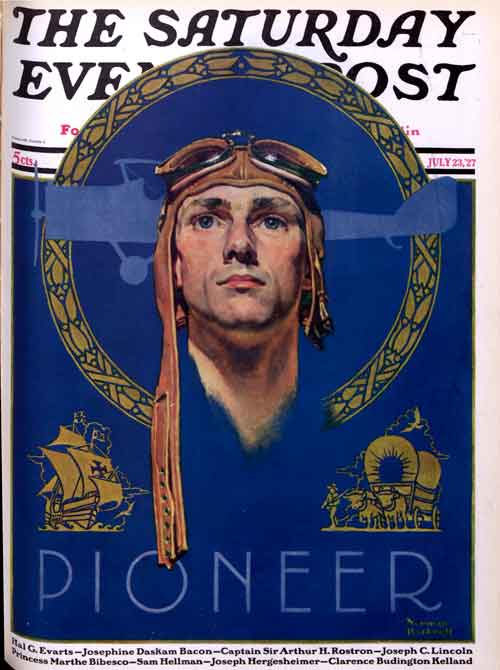
And now he was home, ostensibly to join General Henry “Hap” Arnold, head of the Air Corps, in an effort to build up America’s own airpower as quickly as possible. But was he plotting something else? The last thing Roosevelt needed was a campaign to stir up public opposition to the idea of arms sales to Britain and France. He had invited Lindbergh to the White House to get a sense of the man, to try to figure out how much of a problem he might pose in the turbulent days to come.
During his session with Roosevelt, Lindbergh was well aware that the president was scrutinizing him closely. Writing later in his journal, he noted, “Roosevelt judges his man quickly and plays him cleverly.” Although he thought FDR “a little too suave, too pleasant, too easy,” Lindbergh still enjoyed the encounter. “There is no reason for any antagonism between us,” he observed. He would continue to work with the administration on ways to improve the nation’s air defenses, but, he added, “I have a feeling that it may not be for long.”
He was right. In early September, just five months later, Hitler invaded Poland, and Britain and France declared war on Germany. The following spring, German troops swept through Western Europe, vanquishing France and threatening Britain’s survival. As unofficial leader and spokesman for America’s isolationist movement, Lindbergh emerged as Franklin Roosevelt’s most redoubtable adversary in what would become a brutal, no-holds-barred battle for the soul of the nation.
But all that changed after the Japanese attacked Pearl Harbor in December 1941 and Germany and Italy also immediately declared war on the United States. In the days following, Charles Lindbergh, hoping all would be forgiven, did his best to return to active duty in the Army Air Forces. Naively, as it turned out, he believed that his earlier opposition to Roosevelt might make him “of more value [to the administration] rather than less. It seems to me that the unity necessary for a successful war demands that all viewpoints be presented in Washington.”
It became increasingly obvious that the administration had no intention of granting Lindbergh’s request. The chief naysayer was Secretary of the Interior Harold Ickes, who, in a memo to Roosevelt in early 1942, insisted that Lindbergh was intent on overthrowing the government and that if he were allowed to become a war hero, “this loyal friend of Hitler’s” would emerge as a rallying point for all of Roosevelt’s opponents. “It would be a tragic disservice to American democracy,” Ickes argued, “to give one of its bitterest and most ruthless enemies a chance to gain a military record. …He should be buried in merciful oblivion.” In his response, the president said he agreed “wholeheartedly” with “what you say about Lindbergh and the potential danger of the man.”
Henry Stimson was handed the assignment of giving Lindbergh the bad news. In a tense meeting in Stimson’s office, the secretary of war informed Lindbergh that he was loath to bestow a position of command on someone “who has shown…no faith in the righteousness of our cause,” adding that he didn’t believe such a person could “carry on the war with sufficient aggressiveness.” In reply, Lindbergh said he would not retract his view that entering the war was a mistake. But, he added, now that the decision for war had been made, he supported it and was eager to help in any way he could. Stimson, however, remained adamant. Nothing could or would be offered to a man whose loyalty, in the eyes of many, was still in question.
Beyond the Canvas: April Showers by J.C. Leyendecker
Click here to purchase artwork from J.C. Leyendecker.
Click here to license this and other covers from J.C. Leyendecker.
J.C. Leyendecker’s illustrations of infants and toddlers are renowned both for ringing in the New Year and as cherubic annunciations of calendar holidays.
His April 25th, 1914 cover, April Showers, takes a unique perspective on an unappreciated time of the year. This illustration celebrates the pseudo-holiday of seasonal change itself, from the dead of Christmas winter to the blossoming rebirth of Easter spring.
The artistic composition is simple, recycling the same white, canvassed background of so many other Leyendecker covers. Negative white space contrasts the cover’s dark font and the black umbrella. The girl’s black and white socks and shoes, along with the synonymous fur pattern of the loyal pup by her feet, replicate the cover’s lighting contrast.
The black-white color scheme is important to the overall composition of the work and to the story told in illustration. Black and white dogs are actually the most common canines in all of western art history. They are the symbols of Dominican Friars who wear black and white robes. The founder of their order, St. Dominic, found his way into the clergy after witnessing a harsh Spanish famine due to lack of rain. From as far back as the medieval era, the black and white dog has represented fidelity to God in images of Dominican saints and martyrs staring up at the heavens. The dog is an old Dominican biblical pun of Dominicanus, combining the Latin name of their Dominican order and “Domini-Canes,” or their nickname, “God’s dogs,” in Latin.
This issue, published the week after Easter, holds an important message about the power of spring, rebirth, and blossoming from the dead of winter. The innocence of the cherub-like child standing with her pup, looking to the sky and pondering the life-giving rains of spring, could easily awake heavenly questions.
The toddler stands out in her red dress. Her pale skin, rosy cheeks, and pure white undergarments barely distinguishable from the background embellish her childhood innocence. The umbrella too big, the girl too small, our infant merely wears the umbrella on her shoulder rather than hold it firmly by the Christian symbol of the shepherd’s crook handle.
Without the artist’s inclusion of rain, we viewers would be left out in the cold, out of seasonal context. Rather than illustrate rain in the work’s white, negative space, Leyendecker purposefully depicts droplets running off the umbrella’s edge. The glassy teardrops fall in front of the black backdrop of fabric, illuminating the objects that so transfix the eyes of a child.
The image in its entirety is bold, so bold that it’s allowed to partially cover the staple text indicating the Post’s lineage, leaving only “enj. Franklin” to express our publication’s pre-American foundations. A simple message permeates this cover; while we may dread the drench of April showers, and shield ourselves from the deluge, we ought to take a moment to appreciate the season’s arrival. Each spring in a new year is a singular experience for celebration, complete with new life, a new holiday, and new moments for reflection.
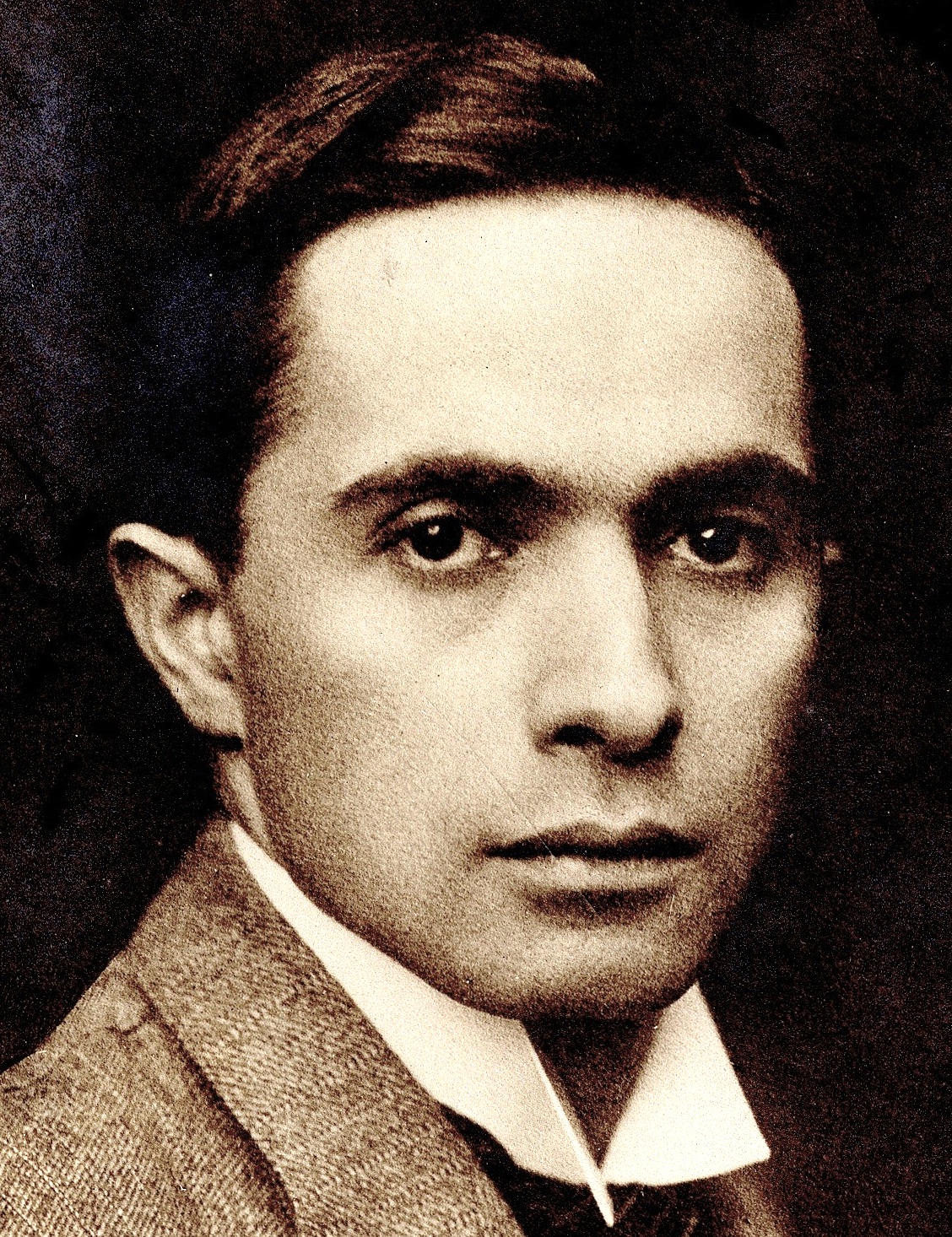
The Myth of America’s Decline
Halfway into the last century, America was finished. Or so it seemed. On October 4, 1957, the Soviet Union became the first space power in history, launching its Sputnik (“satellite”) into orbit and striking terror into the American soul.
This was “a shock which hit many people as hard as Pearl Harbor,” recalled a commentator for the Mutual Broadcasting System, then one of the Big Four networks. It was “a frightful blow.” America had grown “soft and complacent,” believing that it was “No. 1 in everything.” Yet now the country had been upstaged by its mortal rival.
Sputnik stopped transmitting after three weeks, tumbling out of the sky two months later. Short-lived as it was, the wobbly contraption–a mere 23 inches across–had a devastating impact on the American psyche. Soul-searching and self-deprecation turned into a national obsession–and into a chronic reflex. The October surprise gave birth to a school of thought that would outlive Sputnik and regularly return to torment the American imagination all the way into the 21st century. Let’s call it “Declinism.”
The basic theme–America as has-been–is recycled about every 10 years. “It’s decline time in America,” the stock drama trumpets, and it is staged anew at the end of each decade–typically, as the sun is about to set on an administration while presidential candidates begin jockeying for position. As in the hand-wringing over Sputnik, the alarm does in fact spring from real trouble, be it economic hardship or military misfortune.
Economically, this first wave of Declinism bears an uncanny resemblance to the last, which rose after the Crash of 2008. In the fall of 1957, the economy shrank by 4 percent; in the spring of 1958, by an appalling 10 percent. The numbers for 2008 and 2009 were minus 5 percent and minus 6 percent. So there is always a rational basis for this kind of angst attack. Just as regularly, though, anxiety expands into visions of foreordained decay. A crisis is not just a crisis but a portent of doom in an almost biblical model: Having gone astray, America will be called to account for the sin of pride or sloth.

As this is a secular saga, punishment will be handed down not by the deity but by other nations. Meaner and leaner, they will dethrone the “last best hope of earth,” to recall Lincoln’s famous words in the worst days of the Civil War. The Soviet Union was first in this tale of woe. It would be followed by Europe, Japan, India, and China. The characters changed, but the drama became part of the American repertoire.
In the Year of the Sputnik, a presidential panel produced a top-secret report, “Deterrence and Survival in the Nuclear Age,” which went down in history as the Gaither Report. Though focusing on the Soviet Union, the language of doom could easily be applied to China today, the most recent challenger touted as more dynamic and disciplined than the United States. The economy of the USSR, warned the panel, is just a bit “more than one-third of that of the United States,” but “it is increasing half again as fast.”
So how long would it take for the Soviet Union to demote the United States? Careening along on its straight-line projection, the report predicted that by 1980 Moscow’s annual military spending “may be double ours,” unless, of course, the United States finally woke up to the deadly threat. Today’s doomsters similarly point to the double-digit annual expansion of Chinese defense spending, and the more strident Cassandras target 2025 as the year when China will leave the United States in the dust economically. Others give the United States until 2050 to drop to second or even third place in the GDP race.
Worse, the Gaither Report claimed, the Soviets had “probably surpassed us in ICBM development”–missiles of intercontinental reach. “Probable” is another word for “don’t know,” but in the annus horribilis of 1957 the report found a grateful reader in the freshman senator from Massachusetts, John F. Kennedy. Eying a presidential run two years later, he began to stoke the national angst. For him, the day of America’s disgrace was practically at hand. By 1960, “the United States will have lost…its superiority in nuclear striking power.” The slothful policies of President Eisenhower and his Republicans would produce “great danger within the next few years,” ran his mantra.
This was the fabled “Missile Gap” that never existed; it would take years before Soviet missiles based at home could effectively hit the continental United States. Whether by number or technology, the United States was far ahead of the USSR. But facts, unfortunately, don’t deliver prophetic punch. So Kennedy painted Armageddon in the most gruesome colors.
The Russians were forging ahead, and the Missile Gap would deliver to them a “new shortcut to world domination.” In the presidential campaign, Kennedy orated like a fully blown Declinist: “That is what we have to overcome…[the sense] that the United States has reached maturity, that maybe our high noon has passed, maybe our brightest days were earlier, and that now we are going into the long, slow afternoon.”
Henry Kissinger, then a young professor at Harvard, concurred: “Only self-delusion can keep us from admitting our decline to ourselves.” He would return to this theme again and again.