The Kennedy-Wallace Showdown on Integration
All baby boomers can tell you exactly where they were and what they were doing on November 22, 1963. The murder of John F. Kennedy was a defining moment of their childhood, just as Pearl Harbor was for the preceding generation, and 9/11 was for the millennials.
A half-century of books and movies related to the assassination have made that afternoon in Dallas the most frequently recalled event of 1963. Unfortunately, its prominence in public memory overshadows other events that eventually shaped our lives far more than the death of the president.
Black Americans’ fight for equal rights had become hard to ignore in 1963. It had broadened from the 1957 confrontation at Little Rock Central High School where federal troops had enforced the right of black students to attend a previously all-white high school. And this action had arisen from the Supreme Court’s decision in 1954, outlawing segregated schooling, which would separate children into all-white or decidedly inferior all-black schools.
A Post editorial in February 1963 (“Bad words and good words down South”) observed the varying responses to black protest and legal challenges among southern states. In Alabama, they noted, there was no talk of compromise or acceptance. George Wallace, then governor of Alabama, had chosen to be sworn into office standing precisely where Jefferson Davis stood when he was sworn as the Confederacy’s first president. “As far as Wallace was concerned,” Post editors wrote, “the interval since Jeff Davis might just as well not have occurred. ‘I draw the line in the dust and toss the gauntlet before the feet of tyranny,’ Gov. Wallace said. ‘I say segregation now, segregation tomorrow, segregation forever.’”
In contrast, the governors of South and North Carolina were talking of life beyond segregation.
In South Carolina, the new governor announced he would pursue “a sensible approach” to racial problems, which the state would work out “according to our standards of justice and decency.” In North Carolina, Gov. Terry Sanford had told the press, “The time has come to quit unfair discrimination and to give the Negro a full chance to earn a decent living for his family and to contribute to higher standards for himself and all men.”
These were reassuring words for white Americans who wanted to believe state governments would finally start implementing the end of “separate but equal” schools.
However, Carl T. Rowan wasn’t reassured. The journalist, then working with the secretary of state on public affairs, had seen little change in the nine years since the Brown v. Board of Education decision. Writing “The Travesty of Integration” (January 19, 1963) for the Post, he argued that what little change had taken place was, in fact, a carefully built illusion of progress. “Scores of communities have, by devious means, pretended to comply with the letter of the law while ignoring the spirit of justice and decency that the law embodies.”
Of North Carolina’s 173 school districts, only 16 had ended segregated schooling. “In those 16 supposedly integrated districts last year, only 901 Negro children were in school with white youngsters. The other 77,404 colored pupils … were still in all-Negro schools.”
Rowan also referred to Prince Edward County, Virginia, where, in 1959, the board of supervisors withdrew all funding from the public schools rather than comply with an integration order. For the next five years, all schools in the county remained closed—except for private, foundation-operated schools that admitted only white children.
“In Texas, they may boast about the ‘peaceful transition’ to ‘integration’ in Dallas or Houston,” Rowan added, “but the meaningful thing to me is that a ‘whopping’ 2.16 percent of the Negro children in that state attended integrated schools last year.”
Even where integration had begun, administrators were suggesting policies that only reinforced racial stereotypes.
“In Little Rock, some ‘moderates’ argued at first that all the Negroes in the first group to be admitted to white schools ought to be light-skinned. In other communities there have been demands that all Negroes in the token delegation be girls—so as to preclude the ‘wrong kind’ of interracial romances.”
Rowan couldn’t understand why the federal government could enforce its tax laws so effectively but prove so ineffectual in guaranteeing civil rights for all its citizens. He believed Americans would either have to push their government to enforce the laws or live with the change that came in response to sit-ins, demonstrations, possible violence, and near anarchy.
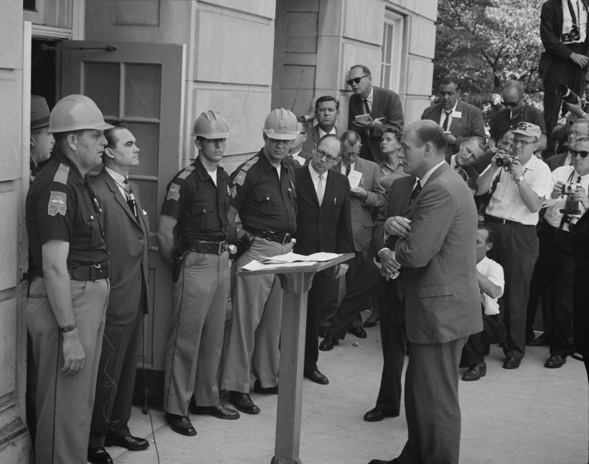
Wallace believed there was a third choice, which was to stubbornly resist all change. On June 11, 50 years ago, he stood in the doorway of Foster Auditorium at the University of Alabama. In an event staged for the media, he refused to step aside and allow Vivian Malone Jones and James Hood, two black students, to enter and register for enrollment. The U.S. deputy attorney told Wallace to move. Wallace refused and launched into a speech about states’ rights. The deputy attorney phoned the White House. In response, President Kennedy ordered the National Guard to clear the doorway. Wallace moved out of the way.
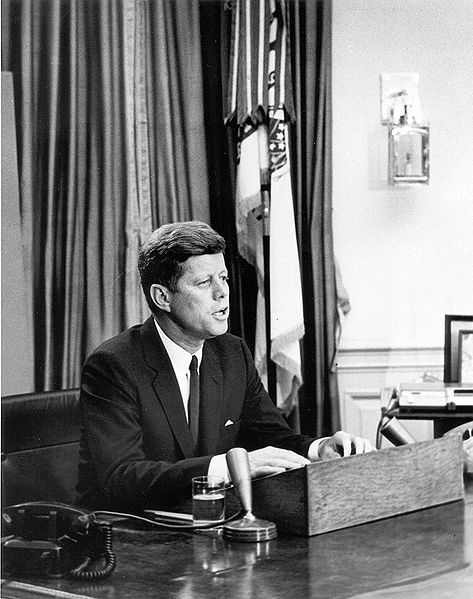
Later that same day, the president addressed the nation to announce that the federal government would finally undertake a legislative initiative to ensure civil rights. Kennedy asked for legislation to outlaw racial discrimination and segregation, ensure voting rights, and guarantee equal protection under the law for all citizens. His proposal was realized in the Civil Rights Act, which was eventually signed into law by Lyndon Johnson in 1964.
After hearing the news from Alabama and Washington, Americans might have gone to bed that night with a sense that, finally, the country was seeing the end of the protests, anger, and violence in the fight for civil rights.
The next day, June 12, civil rights activist Medgar Evers was shot in the back and killed as he returned home from a meeting with NAACP lawyers. His killer was Byron De La Beckwith, a member of the White Citizens’ Council, who eluded punishment for 21 years. The fight was far, far from over.
Summer Veggie Soup
In this summer soup, onion and garlic provide the underlying flavor. The medley of carrots, yellow squash, zucchini, asparagus, tomatoes, potatoes, and corn provides an earthy blend of flavors and cancer protective nutritional value: low in calories, high in fiber, and packed with potassium, beta-carotene, and vitamin C. Once the chickpeas are in the mix, they add subtle nutty taste. Chickpeas, aka garbanzo beans, are rich in fiber and a good source of protein. Garnish with basil and chives, imparting a pleasant Mediterranean quality to this dish.
Summer Veggie Soup
(Makes 6 servings)

Ingredients
- 1 tablespoon extra virgin olive oil
- 1 medium onion, chopped
- 4 cloves garlic, minced
- 2 carrots, sliced into ¼-inch pieces
- 32 ounces reduced-sodium chicken broth (vegetable broth may be substituted)
- 1 (15-ounce) can chickpeas, drained and rinsed
- 2 medium yellow squash, sliced into ¼-inch pieces
- 1 medium zucchini, sliced into ¼-inch pieces
- 2 medium potatoes, diced into ½-inch pieces
- 1 cup corn kernels, fresh or frozen
- Salt and freshly ground black pepper to taste
- 6 asparagus spears, cut into 1-inch pieces
- 2 plum or Roma tomatoes, coarsely chopped
- ¼ cup fresh basil, finely chopped
- ¼ cup of fresh chives, coarsely chopped
Directions
- In soup pot, heat oil over medium heat. Add onion and garlic and sauté about 6-8 minutes. Add carrots and cook until softened, about 5 minutes.
- Stir in broth, chickpeas, squash, zucchini, potatoes, corn, salt, and pepper. Bring to boil. Reduce heat and simmer about 5 minutes. Stir in asparagus and cook 2 minutes or until squash and potatoes are tender, but not mushy. Then stir in tomatoes and cook 2 minutes.
- Place in bowls, garnish with basil and chives and serve.
Nutrition Facts
Per Serving:
Calories: 210
Total fat: 3.5 g
Saturated fat: 0 g
Carbohydrate: 38 g
Fiber: 7 g
Protein: 9 g
Sodium: 340 mg
Remembering Swimmer and Movie Star Esther Williams
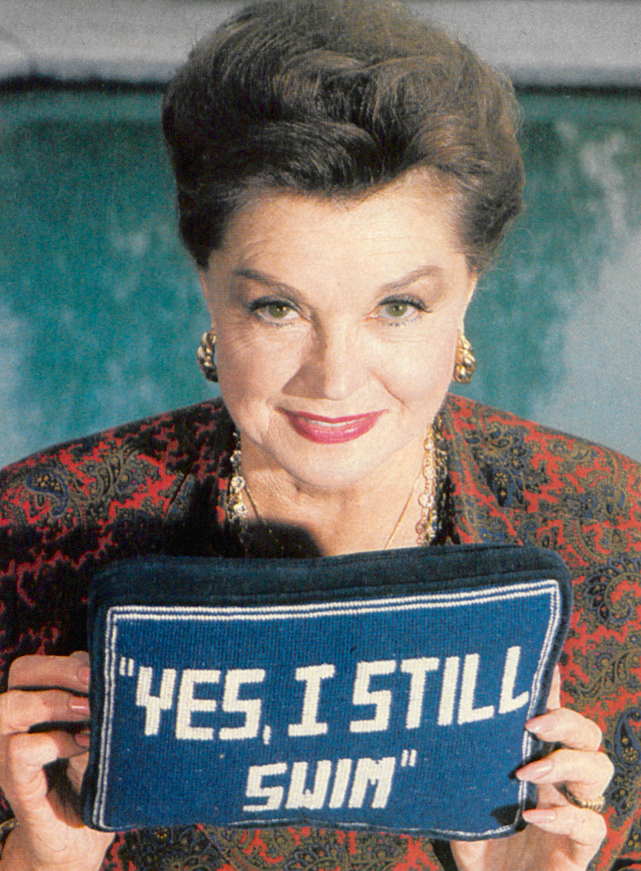
Esther Williams didn’t plan on swimming into history as America’s most memorable mermaid. Blame it on Hitler. The pretty high school athlete had qualified for three berths on the 1940 Olympic team heading to Finland. But while Williams was busy lapping the pool and perfecting her strokes, Hitler was terrorizing Europe and occupying Scandinavian countries. The 1940 Olympic Games were canceled.
What Williams didn’t know was the showman Billy Rose was scouting for a performer to star in his San Francisco Aquacade. He noticed the young athlete’s picture in the local newspaper and invited her to try out. With her shot at the gold medal canceled along with the games, she accepted Rose’s challenge and became an Aquacade headliner opposite Johnny Weissmuller of Tarzan-movie fame.
Read More: Editor Pat Perry interviewed the vivacious swimmer who brought a lifelong love of water to America in “Esther Williams: Still in the Swim” (January/February 1998).
Pork Primavera
Here’s a meal made for spring: garden-fresh vegetables with sautéed garlic and pork over pasta. Serve with focaccia bread, and enjoy fresh fruit for dessert.
Pork Primavera
(Makes 4 servings)
Prep Time: 15 minutes
Cook Time: 15 minutes

Ingredients
- 1 pound pork tenderloin, cut into 2-by-½-by-8-inch strips
- 2 cloves garlic, minced
- 1 tablespoon olive oil
- 4 green onions, sliced
- 1 zucchini, grated into coarse pieces
- ½ pound fresh pea pods
- 8–10 cherry tomatoes, halved and drained
- ½ teaspoon oregano
- ½ cup dry white wine
- ¼ cup Romano cheese or Parmesan cheese, grated
- 2 cups fettucine, cooked
Directions
- In large frying pan, sauté garlic and pork strips in oil until lightly browned.
- Add vegetables and seasonings. Simmer for 4–5 minutes, stirring, until moisture is almost gone.
- Add wine and simmer to reduce liquid. Pour over pasta.
- Toss together with cheese. Serve immediately.
Nutrition Facts
Per serving
Calories: 350
Total fat: 10 g
Saturated fat: 3 g
Carbohydrate: 80 g
Fiber: 4 g
Protein: 32 g
Sodium: 140 mg
Recipe and photo courtesy of the National Pork Board.
Bug Off Naturally

Do they work? The short answer: yes, but some better than others. Plant-based insect repellents that contain oil of lemon eucalyptus do a better job protecting against mosquito bites than similar products made with citronella, cedar, or soybean oils, according to the CDC.
Additionally, studies show that lemon eucalyptus oil (look for p-menthane-3,8-diol on product labels) performs as well as chemical repellents with low concentrations of DEET. Of course, even natural products may have side effects. Allergic reactions to essential oils are rare but can occur. Oil of lemon eucalyptus should not be used on kids under 3. To find the right repellent for your area and outdoor activity, go to cfpub.epa.gov/oppref/insect/index.cfm.
Lemon Brown Rice Pilaf
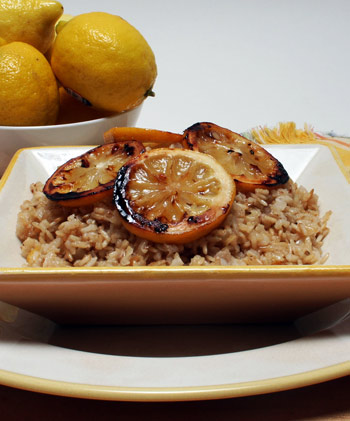
I eat only whole-grain rice, particularly fragrant brown basmati. This pilaf shows off its nutty flavor, fluffy lightness, and versatility. Roasting the lemon slices brings out the flavor in the lemon zest while making it nice to eat, and caramelizing the fruit’s natural sugar gives the slices, and the rice, just the right zing.
Make it a meal: Serve this pilaf with grilled or broiled salmon, shrimp or other fish, or roasted chicken. For an almost vegetarian main course, mix in chopped steamed asparagus or sugar pea pods and cubed baked marinated tofu.
Lemon Brown Rice Pilaf
(Makes 6 servings)
Ingredients
- 1 tablespoon extra virgin olive oil, divided
- 6 lemon slices, ¼-inch thick
- 1 cup brown basmati rice
- ½ medium onion, cut into thin crescents
- 2 ½ cups fat-free, reduced-sodium chicken broth
- Salt and freshly ground black pepper
Directions
- Preheat oven to 350°F. Line small baking sheet with parchment paper.
- In large saucepan, preferably wider than deep, place 1 teaspoon of oil. Add lemon slices and coat with oil. On prepared baking sheet, arrange coated lemon slices. Set saucepan aside.
- Roast lemons for 20 minutes, or until rind is golden brown in places. Thin sections of slices may blacken. Coarsely chop 2 lemon slices, then set all roasted lemon aside.
- Set saucepan over medium-high heat, and add remaining oil. Add rice, stirring to coat grains well. Spread rice to cover bottom of pot and cook stirring rice frequently, until rice is fragrant and lightly browned in places, then starts to crackle, 5 minutes. Add onions and cook, stirring constantly, until translucent, 3 minutes. Pour in broth, add chopped lemon, and bring liquid just to boil.
- Reduce heat, cover tightly and simmer for 20 minutes. Check to see if liquid is needed, adding ½ cup water. Continue cooking, covered, until liquid is absorbed and rice is fluffy but still slightly al dente. Set aside, covered, for 10 minutes. Season to taste with salt and pepper. Fluff pilaf with a fork.
- To serve, spoon rice onto platter or into wide serving bowl and top with remaining lemon slices.
Nutrition Facts
Per Serving:
Calories: 150
Total fat: 3 g
Saturated fat: 0.5 g
Carbohydrate: 27 g
Fiber: 2 g
Protein: 3 g
Sodium: 190 mg
Stuck in the Internet Slow Lane

A 1999 television commercial encapsulated the telephone industry’s promise of the future along the information superhighway. A grizzled salesman drops his bag in the sparse lobby of Roy’s Motel.
“You got room service?”
“Doughnuts and coffee,” replies the receptionist.
“Got entertainment?”
“All rooms have every movie in every language, anytime, day or night.”
Astonished, the man asks, “How is that possible?” As his words die away in voice-over, the actor Willem Dafoe answers the question. “Could your business use the bandwidth to change everything? Ride the light. Qwest.”
Qwest was just one of the telephone companies that shaped the promise of connecting us to the World Wide Web. To fulfill this promise, telephone companies said they needed money to upgrade the copper wires that had been used since the first commercial telephone call was placed in 1878. The best new technology now was fiber-optic cables. While the biggest copper cables carried 4,000 conversations, AT&T said its fiber-optic cables could handle more than a million calls simultaneously. Experts on telephone economics calculated that this new technology meant the cost of calls would fall by 99 percent or more.
There was just one problem: Who was going to pay for the creation of the new network? The obvious source of revenue was customers, and, in the two decades from 1992 to 2012, Bruce Kushnick, a former telephone industry consultant, estimates that $360 billion moved from the pockets of customers to AT&T, Verizon, and the runt of the Baby Bell family, Qwest, which in 2010 was acquired by CenturyLink.
When you do the long division, Kushnick’s estimate works out to a toll of $3,300 paid by every household in America to access the superfast electronic highway. Although that cash was enough to speed the development of two national cell telephone systems, owned by AT&T and Verizon, the industry now cautions journalists that the term “information superhighway” is best not used anymore. That they want us to regard the term as archaic is not surprising, because its use is a reminder of their unfulfilled promise. The high-speed data lanes in most of America are among the slowest electronic highways in the world; in many places in the United States, the promised highway has yet to materialize at all and, under current policies, never will.
The United States invented the Internet, so it ranked number one when the first file was transferred between distant computers in 1969. Taxpayers financed that project through DARPA, the Defense Advanced Research Projects Agency of the Department of Defense. But by 2011, America’s Internet leadership was strictly historical. Today, South Korea has taken the lead in average Internet speeds. In 2011 its average download rate was 18 megabits per second. Romania came in second at 15 Mbps, Bulgaria was next at 13 Mbps with Lithuania and Latvia tied at 11 Mbps. America has settled well back in the pack—in 29th place. And thanks to government policies that foster the status quo and discourage real competition we’re likely to be stuck in the slow lane for a very long time.
Instead of increased competition between the telephone and cable companies, a new cartel emerged in the first decade of this century. While telephone and cable companies posed in public as rivals, Verizon made a deal to sell its branded services over cable company Comcast’s lines, and vice versa. And Verizon said it anticipates similar deals with other cable providers to sell over their systems. This cross-marketing deal between Verizon and Comcast reinforces the economic interests of telephone and cable companies by not extending lines to rural areas or poor neighborhoods and not wiring apartment buildings where few people could afford the new services.
Cable companies jacked up prices, too. Since 1995, average cable prices have been rising 2.6 times faster than the cost of living, reaching an average of almost $53 a month for basic, no-frills service in 2009, Federal Communications Commission reports show. The strongest evidence that the cable companies exert monopoly power to raise prices comes from a survey of prices for basic service plus the most commonly purchased extra features such as handheld remotes and premium channels like HBO. In 2008, the worst economic year since the Great Depression, when the national economy shrank and millions lost their jobs, cable prices rose.
In the 21st century, economic growth requires the ability to move huge volumes of information instantly. The Internet is to economic growth in the digital age what highways and airports were to economic growth in the 20th century. America prospered in its first two centuries because of massive public investments in the common modes of transportation that business needed to carry its goods. As it proceeds into its third century, the United States suffers from massive overcharging for poor-quality telecommunications services that carry its information.
The average broadband download speed in the United States is just 5 Mbps. That means that a large file someone in Seoul could download in one minute would require closer to four minutes in the United States. For an extra fee, American companies like Time Warner do offer some urban and suburban customers souped-up service with speeds up to 50 Mbps. However, the qualifier “up to” remains a big caveat. When lots of people use the same connection point, speeds can slow to 15 Mbps.
So while the United States falls behind almost 30 other nations in service, we do consistently rank at or near the top in one category: price. The average American consumer pays 60 percent more than a South Korean user. Americans who buy a triple-play package (cable television, Internet, and telephone bundled together) typically pay four times what the French pay. The French get live television from around the world, not just domestic shows. The French Internet is 10 times faster downloading and 20 times faster uploading than what most Americans can buy. For all this the French pay a total of 29.99 euros (about $40) per month.
Millions of Americans pay $160 or more for a triple-play package. Taking into account the much more expansive and faster services the French get, Americans pay six to 10 times as much for triple-play packages. But more important is that in this digital age American jobs, and how well they pay, will be determined in good part by whether America climbs back from 29th place in Internet speed or continues to slip further behind countries with lower wage scales and superior Internet.
The few places in America where local government leaders recognized this years ago are now prospering because they are attracting digital businesses. Places like Chattanooga, Tennessee; Glasgow, Kentucky; Lafayette, Louisianna; and Scottsboro, Alabama, that have built their own municipal systems are attracting new industries and enjoying savings at the same time. But instead of emulating such successes, the cable monopolists seek rules that let them force their captive customers onto the slow digital lanes while charging heavy tolls.
So what has happened to that promise so brilliantly packaged in the Qwest ad from Roy’s Motel? Instead of universal service, we are getting a retrenchment made possible by companies selling the public on one idea and then getting laws written that let them serve only those customers who can afford high prices. Worse yet, the system as constructed is so behind the times that, while highly profitable for the telecommunications monopolists, it retards the growth of the American economy. It operates outside the reach of market forces that could discipline the market and punish companies that abuse customers.
In short, our Internet-telephone-cable cartel has left us with the worst possible outcome. The promise captured in that Qwest commercial of universal, high-speed Internet access has proved to be nothing more than a mirage.
Reprinted by arrangement with Portfolio, Penguin Group (USA) Inc., from The Fine Print © 2012 by David Cay Johnston; Photo: Shutterstock
1812: We Didn’t Give Up the Ship
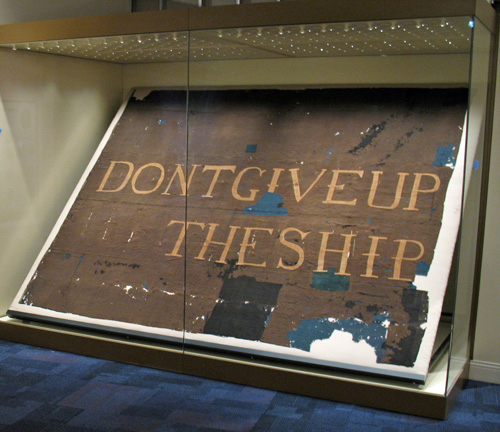
Among the most memorable lines in American history, “Don’t give up the ship” is remembered because it still strikes a chord in the hearts of Americans. Yet few can recall who said it or why.
Who was Captain James Lawrence, and the why was his fear that his officers would surrender his ship, the USS Chesapeake, to the British. He uttered this phrase shortly after 6 p.m. on June 1, 1813, as he lay dying from his wounds on the floor of his cabin. Meanwhile, above decks, his crew engaged in hand-to-hand fighting with British sailors and marines who had boarded the American vessel.
Soon after, the Americans lost the Chesapeake. As Lawrence had ordered, no officer surrendered the ship. No officers were left standing to do the surrendering. The British simply took down the American flag and ran up their Union Jack. While Lawrence’s words weren’t able to save the Chesapeake, they inspired a remarkable victory. As we show, “Don’t give up the ship” inspired Commodore Oliver Perry during the Battle of Lake Erie in the War of 1812.
Like Lawrence’s phrase, the War of 1812 might stir only vague memories when recalled today. But in the 1820s, the war was a source of great pride to many Americans, for it proved that their nation was a military match for the great British Empire.
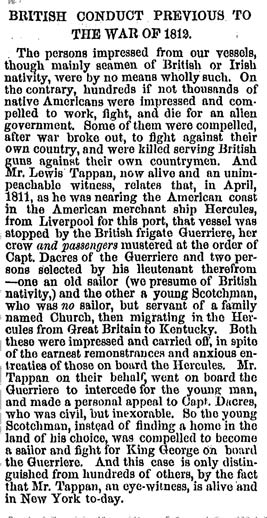
Memories of that war were revived during the Civil War when Great Britain threatened to intervene on behalf of the Confederacy and break the naval blockade of the Southern states. In January 1862, the Post printed “British Conduct Previous to the War of 1812” to remind its readers why they should still resent Great Britain 50 years after that war ended.
Back in 1812, when America declared war with Great Britain for the second time, the Royal Navy had already been fighting France for more than 15 years. It was using over 600 ships to blockade against all shipping into, and out of, French ports. To keep its ships fully crewed, the navy had resorted to seizing and ordering citizens to serve on their ships. Then, in 1807, it discovered a new source of able seamen on American merchant vessels. It began blocking our ships and taking away sailors it claimed were British subjects and putting them into service on British vessels.
The War of 1812 was only partly concerned with Britain commandeering U.S. sailors, however. The two countries were also engaged in an economic war, which was complicated by American refusal to honor the British embargo on trade with France. In addition, there were long-standing disputes between American settlers and British-supported Native Americans over land in the upper Midwest. And behind these issues was the Americans’ unstated desire to prove by arms that they deserved a place among the leading nations.
They got their proof in New Orleans when General Andrew Jackson defeated a British army. And the American Navy distinguished itself in the Battle of Lake Erie under the command of Perry.
Perry had been a friend of Lawrence. After he learned of the captain’s death, Perry had made a commemorative battle flag for his command ship: a plain cloth on which the words “Dont Give Up the Ship” were attached. (Perry’s flag, as you might notice, has no apostrophe in “don’t.) On September 10, 1813, Perry hoisted this flag above his ship, the USS Lawrence, and sailed with eight other American ships to challenge six British ships for control of Lake Erie.
Perry’s Lawrence, along with the USS Niagara, headed for the two largest British ships, the HMS Detroit and Queen Charlotte. Due to unfavorable winds, the Lawrence was reduced to a slow approach, which enabled the long-range fire from the British to hit Perry’s ship long before he could strike back. By the time the Lawrence had come close enough to strike at the British ships, it had been severely damaged. More than 80 men of its 103-man crew were out of action and its guns could no longer be fired.
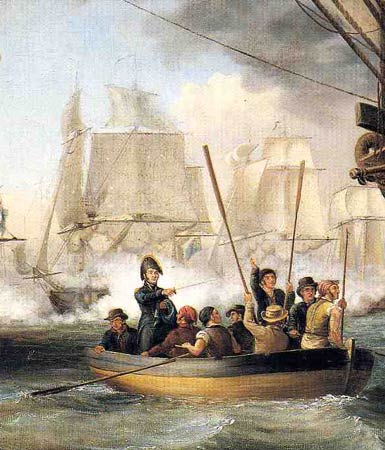
Fortunately, Perry had not been hit. He lowered his battle flag and, holding it tightly, took to the water in a lifeboat. While the British fired down at him with rifle and cannon shots, he and his crew rowed upwind to the USS Niagara, where he raised his flag, effectively moving his command to a new boat. Now, with a fresh crew and intact ship, he returned to the fight.
Soon afterward, the Detroit and Queen Charlotte became entangled while defending themselves from the Niagara’s cannon. They lost any ability to maneuver or effectively return fire. By the time they separated, they had been hit hard by the Niagara and were in no condition to continue the fight. Both captains surrendered to Perry. He promptly wrote to the American commander, “We have met the enemy and they are ours. Two ships, two brigs, one schooner, and one sloop.”
Out of this victory, the Americans gained control of Lake Erie, which enabled them to regain Detroit and protect Ohio, Pennsylvania, and New York from British invasion.
It is interesting that the expression, “Don’t give up the ship,” remains in Americans’ memories though they may have no idea about its origin. Yet the occasion for the phrase is not as important as the spirit it captures: the instinctive, indomitable spirit, when facing anything from terrorism to tornadoes, never to give in.
Rockwell Painting Inspires Movie
Norman Rockwell
April 29, 1950
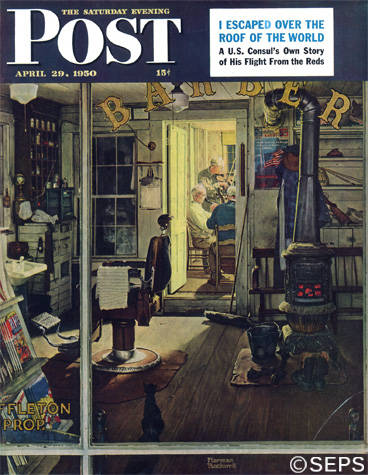
The painting is one of the most intricately detailed works from an illustrator with a mania for minutiae: faithfully reproduced ironwork scrolling on the barber chair and cozy stove, comic books on the rack, and chipped paint on a windowpane molding. The painting “stands as one of the finest displays of Norman Rockwell’s talent as an artist,” says Jeremy Clowe of the Norman Rockwell Museum.
For all the painting’s detail and masterful lighting and composition, it is the after-hours peek into the back room that draws us, as barber trades his scissors and razor for a cello to make music with his friends.
Echoes of Rockwell’s painting appear in the new movie A Way Back Home, a Hallmark Movie Channel original starring four-time Emmy nominee Danny Glover as barber Charlie Shuffleton and Austin Stowell as Trey Cole, a celebrity coming to the realization that he has lost himself along the way.
Trey has severed ties with his past and didn’t even return home when his brother died serving in the military. But now memories are stirring, like that old barbershop and his first haircut in the brown leather chair and how Charlie (Glover) took him under his wing when he was a boy, when his own father was cold and often absent. Returning to the barbershop in one of the film’s opening scenes, Trey notices a trio of musicians playing in a dimly lit back room as in Rockwell’s original painting.
“For his cover illustration for the April 29, 1950, issue of The Saturday Evening Post, Rockwell turned to Rob Shuffleton’s barbershop in East Arlington, Vermont,” said Clowe.
Yes, Shuffleton’s Barbershop was a real place; it was where America’s favorite artist went for a trim. “Similar to how he employed both neighbors and family as subjects for his work, Rockwell also found artistic inspiration from his surroundings,” Clowe explains.
The cello player sitting in the interior room is Rob Shuffleton, whom Rockwell once called “a tonsorial virtuoso who always trims his locks exactly the right length.” Shuffleton’s Barbershop was a place, like the little town of Arlington, Vermont, itself, where a world-famous artist could go and be treated like everyone else—just the way he liked it.
As you watch the movie, which premiered Saturday, June 1, look for ways Rockwell’s painting inspired the feature-length film.
Purchase a print of Norman Rockwell’s Shuffleton’s Barbershop at Art.com.
Life in Jeopardy: A Brain Disorder Often Missed
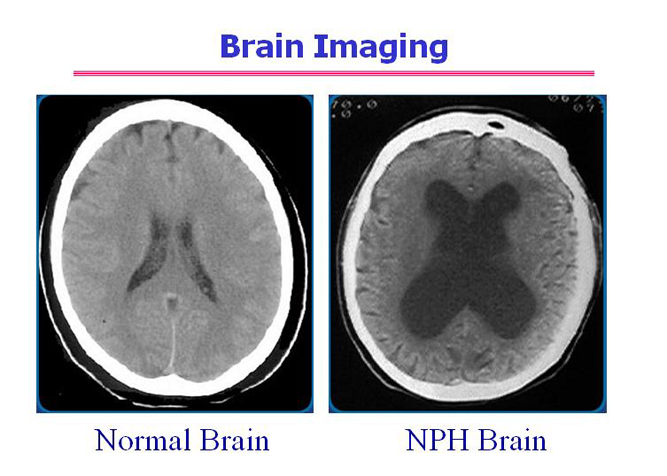
“Doctors diagnosed me with Parkinson’s disease in the late ’90s and I was just fading away—but they were wrong,” says J.D. Cain, a retired stone-cutter living in Indiana. “My real problem was water on the brain—a condition called normal pressure hydrocephalus. After treatment, my tremors and dementia went away, and I told my grandsons ‘the Jeopardy champ is back!’”
Normal pressure hydrocephalus (NPH) can cause disturbing changes in a person’s ability to think and walk, symptoms that are all-too frequently misdiagnosed as dementia, Alzheimer’s, Parkinson’s disease, or attributed to age.
The good news is that, unlike Alzheimer’s and Parkinson’s, NPH can potentially be reversed with proper treatment. But an accurate diagnosis is the first step.
According to the Hydrocephalus Association (hydroassoc.org), 375,000 people—or 5 percent—diagnosed with Parkinson’s and dementias, including Alzheimer’s disease, may actually have NPH.
MRI scans help diagnose adults with NPH, an often progressive condition that occurs when excess cerebrospinal fluid (a clear fluid that surrounds the brain and spinal cord) builds up within the brain and disrupts memory, walking, mood, and bladder control. In some patients, like Cain, surgery to route extra fluid out of the brain and into the abdomen can dramatically reverse or improve symptoms within weeks.
“Right now, people out there are shaking, stumbling, and unable to control their bladder,” says Cain. “My grandfather, a good ol’ country doctor, once said to listen to your body and keep looking for help if you’re not satisfied. That’s what I did, and I encourage others to do it, too. I still get teary-eyed thinking of all those years that NPH took away from me and my wife. But now my NPH symptoms are completely gone, and it’s great to enjoy life again.”
Resources:
- Life NPH: Take a screening quiz, watch a video, and request a free information kit.
- National Institutes of Health: Get a detailed overview and link to clinical trials.
- Alzheimer’s Organization: Learn about 10 types of dementia.
- Search YouTube for ‘normal pressure hydrocephalus’ to view inspiring stories of lives regained.
Photo credit Codman
Cypriot Chicken Kebabs
These kebabs were inspired by the eastern Mediterranean island of Cyprus, which has long been a crossing point between Europe, Asia, and Africa. So it’s not surprising that Cypriot cuisine is a unique blend of many influences.
Tip: Get a jump-start on this great dish by marinating the chicken overnight (marinating the chicken ensures flavorful and juicy kebabs). Then simply assemble the kebabs the following day.
Make it a meal: Serve the kebabs with a garden salad dressed with a simple vinaigrette. Add a side of seasoned black beans. All you have to do is sauté some finely chopped green onions and diced tomato along with minced garlic. Mix this with cooked beans and heat through. The result is a healthy, colorful, and appetizing meal.
Cypriot Chicken Kebabs
(Makes 4 servings)

Kebab Ingredients
- 12 ounce chicken breast, boneless, skinless, cut into 12 even pieces
- 1 zucchini, cut into 8 slices
- 1 medium red bell pepper, cut into 8 pieces
- 8 cherry tomatoes
Marinade Ingredients
- 1 tablespoon extra virgin olive oil
- 2 tablespoons apple cider vinegar
- 1 teaspoon Dijon mustard (spicy brown may be substituted)
- ½ teaspoon dried oregano
- 2 cloves garlic minced
- 2 tablespoons fresh parsley, chopped
- Salt and freshly ground black pepper to taste
Dressing Ingredients
- 12 fresh mint leaves
- 1 cup frozen peas, cooked
- 1 tablespoon extra virgin olive oil
- 1 clove garlic, minced
- ¼ teaspoon cumin
- Juice of one lemon
Directions
- Whisk together marinade ingredients and set aside 1 tablespoon for basting later. In shallow dish, cover chicken with marinade until well coated. Cover and marinate in refrigerator for at least 2 hours.
- Using four kebab skewers, arrange 3 pieces of chicken and 2 pieces each of zucchini, pepper, and tomatoes per skewer. For easier grilling, start and end each skewer with chicken.
- Coat grill lightly with oil to prevent sticking. Place skewers on medium-hot grill. Turn frequently and brush with reserved marinade. Cook for 18-25 minutes or until juices run clean. Cooking time will depend on size of chicken pieces and temperature.*
- In meantime, for dressing, place ingredients in food processor or blender. Puree and set aside.
- After removing kebabs from grill, let stand 5 minutes. Serve with dressing on side.
*An alternative cooking method is to preheat oven to 400°F. Place skewers on shallow baking dish on center rack. Bake 10 minutes. Baste and turn over, baste and bake for additional 10-15 minutes or until chicken is cooked through.
Nutrition Facts
Per serving
Calories: 200
Total fat: 8 g
Saturated fat: <1 g
Carbohydrate: 10 g
Fiber: 3 g
Protein: 21 g
Sodium: 105 g
The Presidents and the Press
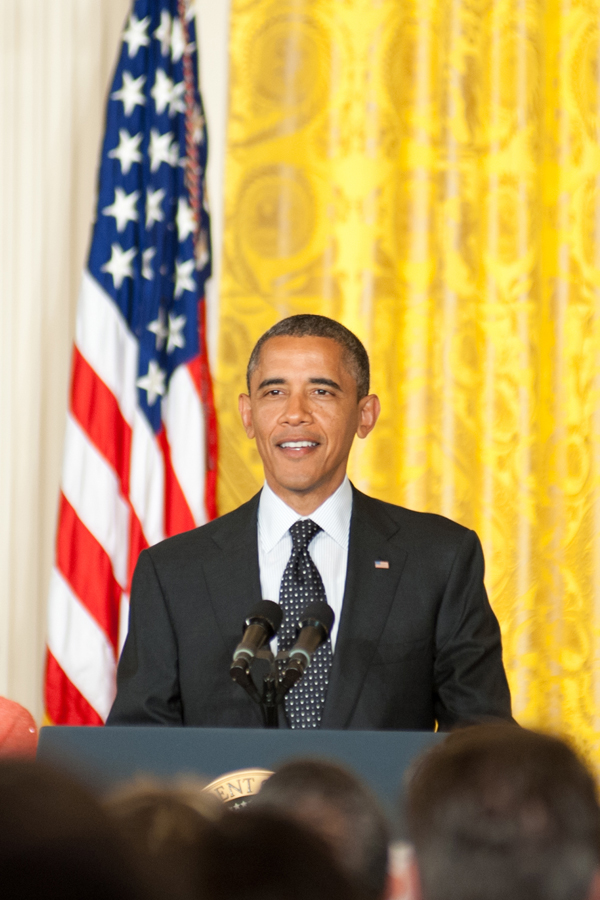
President Obama isn’t the first president to incur the wrath of America’s media. For most of his first term, he had a fairly good relationship with the press. If he was relentlessly attacked by some networks, he was given fairly friendly coverage from others. But all that goodwill flew out the window when the press learned that the Department of Justice had been trying to track down leaks of sensitive information by subpoenaing the phone records and emails of reporters.
As we look back at former presidents’ relations with the press, we realize how different it was in the days before our defense relied so heavily on secret intelligence.
Coming into the 20th century, newspapers were on fairly good terms with the president, according to reporter Herbert Corey. His 1932 Post article “The Presidents and the Press” explains that the media got their stories from a small handful of reporters selected by the chief executive.
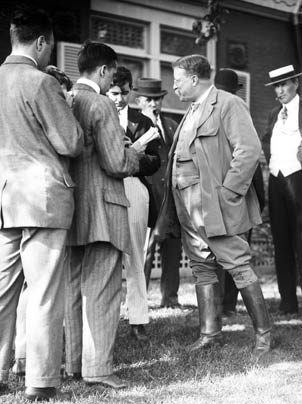
President Theodore Roosevelt added a new feature to this arrangement. He would announce an impending action to a reporter on Sunday, knowing there would be little news in the Monday morning newspapers to compete for readers’ attention.
When the story appeared the next day, he watched the reactions from Congress, the press, and the public. If the response was too critical, Roosevelt would abandon the idea. And he would deny the story, leaving the friendly reporter alone to face the public.
President William Howard Taft came to the White House assuming that this pleasant arrangement would continue. His favorite reporter would arrive daily at the White House. Taft would chat with him and pass on whatever news he felt like sharing.
Soon other reporters were clamoring for the same access. Taft relented and invited in a select number for informal briefings. But when one of these newly admitted reporters published an “impertinently personal” story about Taft, the president was enraged. He petulantly canceled every appointment he had that day and refused to attend a state dinner in the evening. Eventually the first lady, Helen Herron Taft, pressured him into attending the dinner, but he arrived late. The story behind his late arrival was widely shared among Washington’s reporters, but none dared to print it for fear of causing another presidential outburst.
President Woodrow Wilson realized Taft’s methods of communicating with the press wouldn’t meet modern demands for more timely and more detailed news. He believed the American public wanted to know everything the president was doing. And so, one hundred years ago, he held the first press conference. At first, things went well; Wilson had already shown a talent for handling the press when he was governor of New Jersey. As president, he assumed reporters would appreciate his openness and would eagerly pass on his message to the public. He soon realized that they were straying from his points and was incensed when a reporter printed a personal story about his daughter. When he appeared before the correspondents, according to Corey, he said what many presidents have wanted to tell the press, “I am about to address you as Woodrow Wilson and not as the president. … This must stop. On the next offense I shall do what any other indignant father would do. I will punch the man who prints it in the nose.”
Wilson enjoyed generally enthusiastic support from the press as he sent American troops to fight in the First World War. But after the war, the newspapers were highly critical of Wilson’s Peace Treaty and his League of Nations, which would involve the United States in a global peacekeeping body. With many newspapers bitterly attacking what he felt was the only way of preventing future wars, Wilson lost his trust in the press. In 1919, he stopped holding press conferences.
By the time he left the White House, Wilson was so disillusioned with the press, according to Corey, he warned his successor, Warren G. Harding, “Be careful what you say to the press.”
But Harding was a newspaperman. He’d successfully run Ohio’s Marion Daily Star for 30 years. Corey reports that Harding said, “I know all about reporters. They will not throw me down.” Which, of course, they went and did.
“He had assumed they were friendly. Most of them were friendly to him, personally, but professionally they were cold as snakes,” writes Corey. In 1922, Harding made an uninformed remark about a naval treaty, implying that Japan was not covered by the mutual-protection agreement. “Instead of warning Mr. Harding, they printed the story. It was hardly on the streets before the Secretary of State was in the White House to offer his resignation.”
From this point on, Harding insisted that all questions from the press be submitted in writing, which might prevent him from making careless remarks. And when Congress began investigating the illegal sale of government oil by Harding’s secretary of the interior, he found he had very few friends in the press corps.
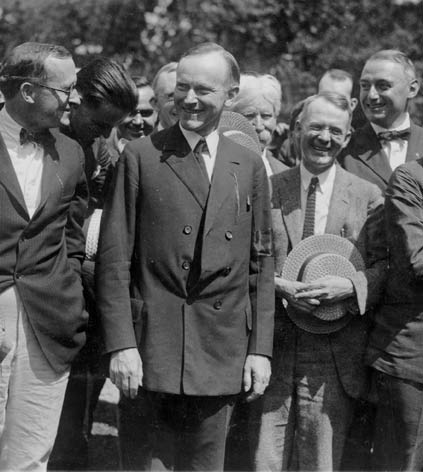
President Calvin Coolidge had an easier time than Harding, not because the press had suddenly become more respectful, but because he entered the White House during a time of peace and prosperity. The press was less inclined to dig into his remarks for an exposé. Also, ‘Silent Cal’ was not given to talking too freely; he made no embarrassing slips of the tongue that reporters could turn into news items.
The good times that prompted the press to take it easy with Coolidge ended seven months after his successor took office. The American press had sung the praises of President Herbert Hoover when he’d saved war-torn Belgium from starvation, and he’d been secretary of Commerce during the Coolidge prosperity. But when the economy collapsed and unemployment rose to 25 percent, the press became highly critical.
President Franklin Roosevelt got better treatment from the press simply for not being Hoover. In time, however, the criticism grew, particularly when Roosevelt pushed hurried new legislation and—especially—when he proposed expanding the Supreme Court with a few, administration-friendly judges. Yet, even with all the hostility, the press never mentioned Roosevelt’s paralysis, or printed pictures of the president in his wheel chair. It was a courtesy never requested by the White House but extended nonetheless.
All the way up to the time of President Harry Truman, the press conferences had been off the record. If the president misspoke, he had the chance to offer a corrected quote. So when Truman told reporters in 1950, “I think the greatest asset that the Kremlin has is Senator [Joseph] McCarthy,” he worked with reporters to issue a more acceptable do-over: “The greatest asset that the Kremlin has is the partisan attempt in the Senate to sabotage the bipartisan foreign policy of the United States.”
Dwight Eisenhower was the first president to speak entirely on record in the press conferences. He was also the first to televise the event. In 1960, the press’s regard for the war-hero president changed after it learned the government had lied about the U-2 spy planes that had been flying over the Soviet Union. That scandal ushered in a new era of heightened suspicion and mistrust, which President John F. Kennedy inherited. A new spirit of adversity grew as the administration began launching covert operations. The Bay of Pigs, the attempts to assassinate Castro, and the introduction of American ‘advisors’ to Southeast Asia—all increased the skepticism and, at times, outright hostility of the media.
We’ve come a long way from the days when the White House could safely pass war news to the public because it was weeks, or months, old. Today’s conflicts are, more than ever before, wars of time-sensitive intelligence. We shouldn’t be surprised that there are conflicts between our government, whose job is the gathering of intelligence, and our press, whose job is to broadcast it.
Classic Art: Sporty Race Cars

by Frank Leon Smith
Illustration by Peter Helck
Click image to enlarge.
“Motors roaring around the track, skidding on the turns, battles for position, shouting crowds—could even these make the heart of the girl from Boston beat faster?” Frank Leon Smith asks in the 1946 story “Keep the Girl on the Fence.” We don’t know about the girl in the story, but it works during race season every year, in recognition of which, we bring you some midcentury illustrations of race cars.
Auto racing stories were popular in the Post in the ’40s and ’50s, and although the titles were sometimes melodramatic — “Murder Car,” “The Crowd Screamed” — a common denominator was the exciting illustrations by artist Peter Helck (1893-1988).

by William Campbell Gault
Illustration by Peter Helck
Click image to enlarge.
“The black job roared into second place, but its driver wasn’t trying to win. He wanted to kill the man ahead,” declares the intro to 1951’s “Murder Car” by William Campbell Gault. Although some of the fiction was overly theatrical, Helck was serious about the fast-paced scenes. He was also earnest about car racing, a passion honed as a young man when he witnessed the historic 1906 Vanderbilt Cup Race, featuring an American car built to beat the Europeans. Known as “Old 16,” the car won the Vanderbilt two years later in 1908.

from “Keeping Posted”
December 28, 1946
Click image to enlarge.
“Old 16 was built when the American automobile, then only a fast-growing youngster, first challenged the European builders,” wrote Post editors in 1946. “Motoring was just becoming something more than a fashionable—and pretty daring—sport. Two things were at stake: prestige and the booming American automobile market. Citizens of substance, if they had decided to trust their lives in one of these smelly new gas buggies, liked to buy European cars. There was a feeling that nothing built on this side of the water could equal such swank European cars.”
Helck acquired the legendary race car in the early ’40s. “Every time I take Old 16 out for a run, I recall the men who handled cars of that era—under the road and tire conditions they faced — and my admiration for their capabilities becomes a bit fanatic.”

by William Campbell Gault
Illustration by Peter Helck
Click image to enlarge.
“It was the last lap of 100 miles of murder that he saw a car broadsiding in front of him,” the lead-in to this 1952 story declares, “ready to spill—and [here comes the title], ‘The Crowd Screamed.’” Melodrama aside, this is an all-but-live-action illustration.
Though Helck was best known for these fast-action scenes, he did a great deal of industrial commercial art as well. One testament to the variety of his illustrative skill is his work for Post sister publication, Country Gentleman, with scenes of a more bucolic nature.
[You can view Helck’s rustic scenes here, or visit Art.com to purchase.]
During his life, Helck described himself as an “auto addict” and wrote two books on racing—“The Checkered Flag” in 1961 and “Great Auto Races” in 1976—in addition to numerous magazine articles on the topic.

by A. Stanley Kramer
Illustration by Peter Helck
Click image to enlarge.
Learn more about the life and works of Peter Helck at Peter Helck, American Artist, a website maintained by the artist’s son and grandson.
Saturday Evening Post Staff Visits with Mad Men’s Matt Weiner
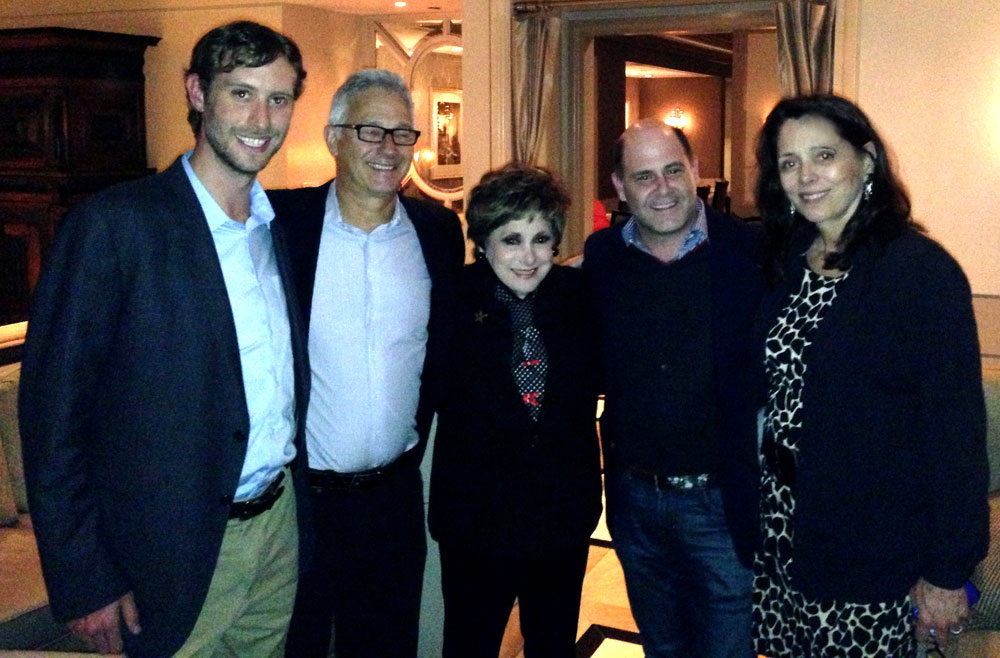
In a recent trip to Los Angeles, The Saturday Evening Post’s executive team and entertainment journalist Jeanne Wolf met with Mad Men creator Matt Weiner to discuss his recent profile in the publication. In the article, Weiner, interviewed by Hollywood legend Jeanne Wolf, detailed his rise from wannabe scriptwriter who couldn’t get a nibble of interest in his Mad Men pilot show to runner of one of the most influential series of recent memory. At the gathering, he described his upcoming film project, You Are Here, starring Zach Galifianakis, Owen Wilson, and Amy Poehler.
Don’t miss: Wolf’s exclusive interview with Weiner.
Diet Drink Debate

Diet drinks don’t cause diabetes directly. But, in an ironic twist, these beverages sometimes trigger greater-than-normal cravings for real sugar. Studies show that people who choose diet soda tend to dish up extra helpings of sugary foods to compensate. Doing so overtaxes the body’s ability to maintain a healthy weight and manage blood sugar, and it could lead to an increased risk of diabetes, says Mary Beth Robinson, a dietitian with the Texas A&M Health Science Center.
The healthiest drink? Good old water. If you must indulge your sweet tooth, Dr. Felicia Stone, host of the TLC show Honey, We’re Killing the Kids, says, “I’d rather see someone consume one daily soft drink (sweetened with sugar, high fructose corn syrup, or agave) than any drink with a non-nutritive sweetener. But there is no substitute for what we know works best: Eat less, drink more water, and increase daily physical activity.”
Quinoa Risotto Primavera
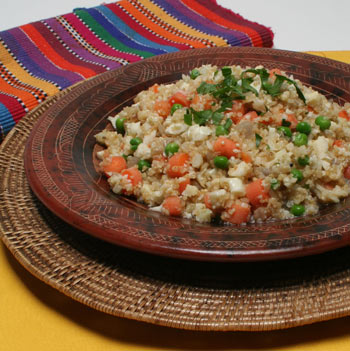
Primavera means spring in Italian. In Italy, risotto primavera, creamy rice studded with colorful baby vegetables, includes slender carrots, the season’s first green peas, and zucchini the size of your little finger. Served slightly al dente, it is a traditional springtime dish. But making risotto requires constant attention for the better part of an hour to get the rice to the right creamy texture. So looking through a stack of recipes, I noticed one for a quinoa risotto that cooked in 20 minutes and required minimal stirring. Another recipe in my pile combined finely chopped cauliflower florets with bulgur. What about mixing finely chopped cauliflower with the risotto-style quinoa? I thought. Cauliflower could give the quinoa some of the creaminess that makes risotto appealing. So on a day when spring was in the air, I combined elements of these two dishes, and quinoa primavera blossomed.
Quinoa Risotto Primavera
(Makes 8 servings)
Ingredients
- 2 ½ cups cauliflower florets, cut in 1-inch pieces, stems well-trimmed
- 1 ½ tablespoons extra virgin olive oil
- ½ cup finely chopped onion
- 2 tablespoons finely chopped shallot
- ⅔ cup quinoa, rinsed and drained
- 3 ½ cups fat-free, reduced-sodium chicken broth, divided*
- ⅓ cup thinly sliced baby carrots
- ½ cup frozen baby green peas
- ¼ cup grated Parmesan cheese
- Salt and freshly ground black pepper
- ⅓ cup chopped flat leaf parsley
*Using chicken broth gives this dish a rich flavor. I wish I could say “or use vegetable broth,” but in most commercially made vegetable broths, carrots dominate and the flavor overwhelms the sweetness of the vegetables. If you are vegetarian, try substituting warm water for the broth and adding extra cheese at the end for a better result.
Directions
- Place cauliflower in food processor. Pulse until cauliflower resembles crumbled feta, about 15-20 pulses; there should be 2 cups chopped cauliflower to set aside. Use leftover to add to soup or salad.
- In heavy, wide, large saucepan, heat oil over medium-high heat. Add onion and cook, stirring often, for 3 minutes. Add shallots and cook until golden, about 3 minutes, stirring occasionally. Add quinoa and cook, stirring constantly, until grain makes constant crackling, popping sound, about 5 minutes. Carefully add 2 cups broth, standing back as it will spatter. Cover, reduce heat and simmer quinoa for 10 minutes.
- Add cauliflower, carrots and ½ cup hot broth and simmer, uncovered, for 5 minutes, stirring often. Add peas and enough broth to keep risotto soupy, about ¼ cup. Cook 8–10 minutes, or until quinoa is al dente or to your taste and vegetables are tender-crisp, adding broth ¼ cup at a time, as needed. Risotto is done when liquid is mostly absorbed and mixture is slightly wet, but not soupy. Off heat, stir in cheese and season to taste with salt and pepper. Garnish with parsley and serve. Leftover risotto keeps for three days, covered in refrigerator, and can be served at room temperature as a whole-grain salad.
Nutrition Facts
Per serving
Calories: 120
Total fat: 4.5 g
Saturated fat: 1 g
Carbohydrate: 14 g
Protein: 5 g
Fiber: 3 g
Sodium: 280 mg