Paris in the Twenties

I did not eat much the winter of my last year in high school. I read compulsively and rarely slept. I didn’t know what I felt when my classmate Ginger Graham died three months after coming to school one day with a bump on the underside of her chin, several months before we were to hear which of the Seven Sisters had accepted or rejected us, and two days after my father hurled a heavy crystal glass across the living room of our penthouse over East 73rd Street, shattering the windowpane in a thousand pieces, and marking one of his last nights in what had been, for all these years, our home.
Miraculously, the heavy tumbler in which he drank Scotch and water, then Scotch and Scotch, bounced back into the room and landed on the grand piano no one played.
It was early 1972, and my parents were good Democrats who opposed the war in Vietnam, supported civil rights, and hated Richard Nixon. It was not politics that pulled them apart, but the political moment—the previous decade of protest, war, burning cities, burning bras—that gave my father the idea that marriage did not have to be a lifetime obligation. And the fact that I, the youngest of three children, was about to leave home. Why couldn’t we all just leave?—that must have been his thinking.
“Are you out of your mind?” my mother shrieked from the armchair that held her, a few beats after the crescendo, once we could see that the drinking glass had boomeranged back to the living room.
“No more than usual.” He did not shriek in return. No need to; evidence of his feelings was everywhere. Bits of glass covered the surfaces like confetti. The air was hushed, electric, and frigid. Cold air blew in through the jagged hole in the pane, and the wind threatened to dislodge even more pieces of glass.
It was her way to shriek and his to respond in dulcet tones, an effort of many years, to make her sound like a madwoman. It didn’t work that night. I felt a sliver of something on my cheekbone, and I could see that my mother was afraid to move. For one thing, she would have to cross my father’s path and feel, from close up, how much distance there was between them.
“Anybody want a refill,” my father said, “besides me?”
She didn’t look up. When he disappeared into the kitchen, she turned to me, her expression as flat and hopeless as I had ever seen it. In 1972 she was a pretty 47-year-old woman—I’m startled by her loveliness in the snapshots I see now, the bright brown eyes and soft smile, her abiding kindness laced with deep despair—but to me that night, she was old and haggard.
“I’m sorry,” she said softly. “Since you’ve got shoes on, would you go to my closet and get my slippers and a pair of socks? I’m afraid to get up.”
When I returned, my father had a broom, a dustpan, and a brown paper bag. He wasn’t a liberated man doing his share of the cleaning, nothing like that—more like he’d made a mess building a cabinet or drilling a hole in the wall, and it was part of the project to tidy up afterward. But to do it properly, he’d need a vacuum cleaner, even I knew that—and he wouldn’t go that far. That was women’s work.
He had chosen the apartment for the view of Manhattan’s skyline that unfurled and glistened through the oversize windows that circled the living and dining rooms and that he hired someone to clean every two weeks. Through them, he could see from high above what he had come to conquer all those years before.
Now he was all out of dreams, out of rage, expectations, and money too. And it was impossible to see the skyline through the web of broken glass.
My mother put on her slippers as my father picked up what he could with his fingers, and I stood watching until I saw that I could retreat to my room, crack open the window to smoke a cigarette, and read a book of letters from F. Scott Fitzgerald to his daughter. They were mostly written when she was at Vassar, and she was so alienated from her frequently soused father that when they arrived, she’d check them for money and news and toss them into a drawer—“these gorgeous letters,” she says decades later, full of regret at not having been a better daughter. I blew smoke rings out into the cold, keeping the tip of the cigarette in the night air. They knew I smoked, but the rule was that I couldn’t do it in the apartment. It was the only thing they agreed on anymore, maybe the only rule left in our household.
We’d moved to the city when I was 8 and my brothers were 11 and 12. The first year, my father ordered Christmas catalogs from Tiffany and Harry Winston, and we played a game with them well into the spring. One of us would cover the prices of things with our hands, and the others would guess how much they cost. He was schooling us in the ways of the rich for future reference.
It wasn’t until my last year of high school that I learned he usually had more credit than money and now had very little of either. He had made bad investments in real estate. He drank too much and made deals with people like himself. That winter a check that was supposed to come any day now did not come, and we ate a lot of spaghetti and were not allowed to charge anything at Bloomingdale’s.
He ate, when he ate with us at all, in a trance, and did not speak unless asked a question. But there must have been someone he liked, because he spent many nights out and returned as I left for school in the morning. We met sometimes at the front door of the apartment and maneuvered around each other silently.
The doorman on duty in the mornings had begun to say “Good morning” to me in a full, somber voice and dash to open the door, which he knew annoyed me. He must have thought I needed caretaking, and I suppose I did, but I wouldn’t know it for many years.
That winter was also the season of my floor-length navy-blue cashmere coat, which I’d bought for $3 in a thrift store and loved to feel billow around my ankles as I charged through the city. When the hem fell and I mended it with safety pins, my mother said I couldn’t leave the house unless it was sewn. My father said, “Since when are we so poor you have to buy your clothes in a thrift store?”
I wasn’t a fighter like my brother Daniel, but a peacekeeper. If I’d been combative, I’d have zinged back a barb: “Since when? All you ever do is complain that you don’t have any money.” Enter pandemonium.
Why the Senate Can’t Fix the Filibuster
 Maybe we should blame Frank Capra. Or blame his fictional creation, Jefferson Smith. In Capra’s movie Mr. Smith Goes To Washington, the idealistic young senator single-handedly blocks a corrupt law in the Senate by talking nonstop for 24 hours. The movie puts Senate filibustering in such a flattering light that many Americans regard the practice as a valuable, if quirky, protector of our liberties. Without that image of a lone senator holding up all business in the U. S. Senate as long as he continues talking, Americans might have demanded the Senate abandon this archaic practice.
In recent months, there has been a sharp increase in filibustering. Republican senators have used the filibuster to block the appointment of federal judges and cabinet members, and oppose the use of surveillance drones in the U.S. What was once a last resort is becoming the rule, and Senate business has nearly ground to a halt.
Some Democratic senators say it’s time to reform Senate rules and curb the dependency on the filibuster. But as you can see in “Reform Of The Senate Rules,” people have been saying the same thing for at least 88 years.
The article was written back in 1926, when it was the Democrats who were filibustering. Vice President Charles Dawes warned Americans that the filibusters worked an “evil influence” over the county’s laws.
He believed the filibuster made it impossible to seriously consider lawmaking. He asked readers to imagine they were in a group that had to discuss and act on an important matter. However, “in this meeting any one of us may talk as long as he pleases, whether relevant to the subject we are considering or not. If anyone desires he may use up all the time we have at our disposal, even if he has the purpose of depriving us as a body of the right to act.”
Such an arrangement would be met with “scorn and derision,” except in the U.S. Senate. By permitting the right of unlimited debate, he wrote, “it has surrendered to the whim and personal purpose of individuals and minorities.”
Filibusters, he added, caused delays in business so that other bills couldn’t be properly debated. Generally they didn’t defeat legislation but pressured the senators to change laws shaped by public interest to favor personal and sectional interests. The result of all these amendments, Dawes says, is a spiraling increase in the number of laws.
Of course, the Senate has always had the means to end filibusters. If enough senators vote for cloture, the filibusterer has to yield. In Dawes’ time, cloture required the approval of two-thirds of the senate’s 96 members. Because of the difficulty in obtaining the consent needed, Dawes wrote, “the Senate has amended the Constitution as to make it possible for a 33 per cent minority to block legislation.” He proposed that cloture votes require a simple majority: 51 percent instead of 66 percent.
Today, the rules for ending filibusters are slightly easier. A cloture vote can be carried by three-fifths of the members. But it’s hard to get 60 senators to agree in a Senate polarized between 53 Democrats and 45 Republicans.
Will the current move to reform the filibuster rules be successful? There are two reasons why it’s unlikely. First, changing Senate rules would take the approval of 66 senators at a time when it seems impossible even to get agreement among 60. Second, there are the practical considerations of politics: filibusters can work for either party. The Democrats may find the filibuster very convenient when they are next in the Senate minority.
In the meantime, though, senators will continue talking about the need to reform the rules. And Americans will keep hoping to see a new Senator Smith stage a solitary fight on the Senate floor.
Classic Covers: Yard Work
From mowing and tree planting to a neighborhood nonconformist, 1950s-style, these timeless covers are just in time to inspire you to tackle that yard.
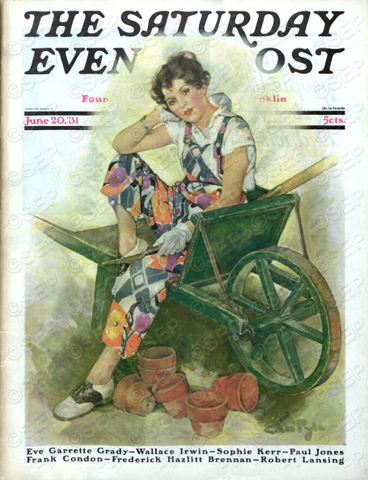
Woman in Wheelbarrow
Ellen Pyle
June 20, 1931
Ellen Pyle (1876-1936) was known for her beautiful use of color. In 1927, she received a note from fellow cover artist Norman Rockwell about how much he liked her Post covers. “They are dandy. So full of color and so broadly painted. Believe me I envy you the latter quality particularly,” he wrote, according to Delaware Art Museum’s Illustrating Her World: Ellen B. T. Pyle.
As in many of her 40 covers for the Post, the model is one of Pyle’s children. In this case, teenage daughter Caroline is taking a wheelbarrow break from gardening duties.
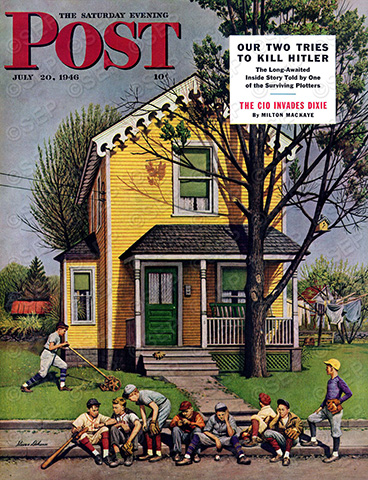
Baseball Player Mowing the Lawn
Stevan Dohanos
July 20, 1946
“When summer rolled around,” wrote Post editors of this 1946 cover, “and the grass in Westport, Connecticut, began to grow as fast as a small boy’s hair, Stevan Dohanos recalled one of the duties of his youth and how mowing the lawn can ball up a man’s more important engagements.”
The frame house, however, was not in Connecticut, but back in artist Dohanos’ (1907-1994) hometown of Lorain, Ohio. Editors noted that he sketched it a couple years before it appeared on the cover. “Obviously it was a good stage, a good setting, but he never had decided just what story to tell against this background. Now he uses it to tell of a common summertime crisis—when the star pitcher has to work,” Post editors wrote.
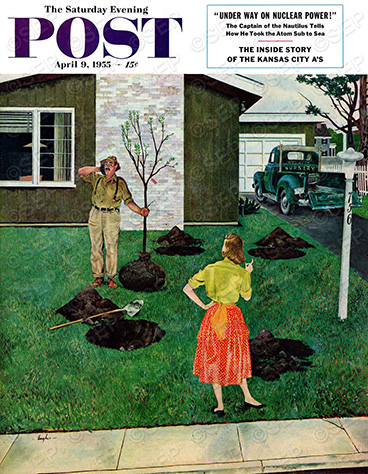
Put the Tree There?
George Hughes
April 9, 1955
Illustrator George Hughes (1907-1990) was an avid outdoorsman, but we’re not sure how he felt about planting trees. He would probably feel the same as the poor guy from the local nursery on this 1955 cover, if he had to deal with an indecisive homeowner.
Hughes painted 115 Post covers, and was especially productive in the 1950s. Typical output for the more popular illustrators was around 40 to 50 covers during a decade. Hughes’ friend Norman Rockwell, for example, did 44 during this period. Hughes did 80 in this timeframe; mostly fun, slice-of-life scenes from midcentury suburban life.
View more in the George Hughes gallery.
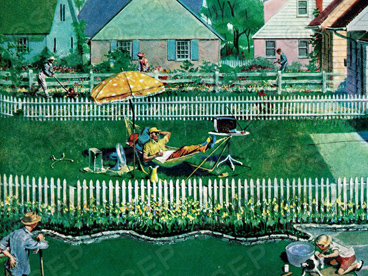
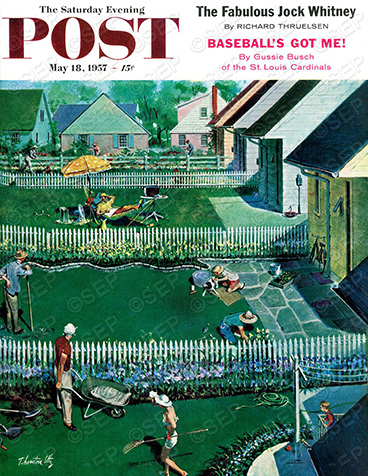
Artist Thornton Utz (1914-2000) enjoyed gently bucking the trend and depicting the neighborhood nonconformist. Mr. Leisure in this 1957 cover uses his backyard purely for relaxation, not caring how high the grass gets.
Meanwhile, in nearby yards, neighbors are flummoxed by Mr. Leisure’s indifference—at least those who can spare a second from their suburban chores.
Spring Yard Work
Thornton Utz
May 18, 1957
Even the little girl in the middle yard wastes no time as she tends to her dog’s bath. Post editors mused that the cover might start a debate “about whether people should nourish their backyards or let their backyards nourish them.” We’ll let the reader decide.
Grilled Salmon and Spinach Salad
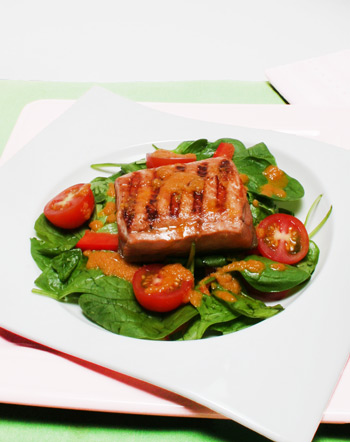
Few things are better and more nutritious than salmon combined with fresh baby spinach. You get the taste of the sea and a treat from the spring garden. The salad dressing in this dish adds layers of flavor: Orange juice adds sweetness and acidity; honey balances vinegar; and sesame and ginger impart a subtle Asian accent, while garlic and shredded carrots create a refreshing and tantalizing texture.
You can make it a meal by adding wild rice topped with lentils. Simply place warm rice on a plate and top with several heaping tablespoons of lentils heated with a bit of water or vegetable broth. Of course, you can always serve up some sides of any vegetable leftovers you have handy.
Grilled Salmon and Spinach Salad
(Makes 4 servings)
Ingredients
- 1 pound salmon, cut in four fillets
Marinade ingredients
- ¼ cup reduced-sodium soy sauce
- ¼ cup rice vinegar
- 1 teaspoon mustard powder or 1 teaspoon prepared mustard
Dressing ingredients
- 3 tablespoons orange juice
- 3 tablespoons rice vinegar
- 2 tablespoons honey
- 1 teaspoon extra virgin olive oil
- ½ teaspoon roasted sesame oil (or regular sesame oil)
- 2 cloves garlic
- 1 teaspoon minced fresh ginger
- Salt and freshly ground black pepper to taste
Salad ingredients
- 5 ounces baby spinach, rinsed clean
- 8 cherry tomatoes, halved
- 1 red bell pepper, sliced thin
Directions
- Whisk together marinade ingredients to combine well. In shallow dish, coat both sides of salmon with marinade. Cover dish and refrigerate for at least one hour.
- Coat grill lightly with oil to prevent sticking. Remove salmon from marinade and discard remaining marinade. Place salmon, skin side down, on medium-hot grill. Cook about 6 minutes until skin is browned and crisp. Gently turn fillets over and cook additional 2-3 minutes until desired degree of doneness. Remove and set aside.
- Combine dressing ingredients in food processor or blender and pulse or blend until well combined, about 1 minute.
- Arrange salad ingredients on four serving dishes. Drizzle half the dressing on salad. Place salmon on top and drizzle remaining dressing. Serve.
Nutrition Facts
Per serving
Calories: 270
Total fat: 13 g
Saturated fat: 2.5 g
Carbohydrate: 20 g
Protein: 21 g
Fiber: 3 g
Sodium: 400 mg
How to Shake Off a Chill
We’ve all heard the saying: Cold hands, warm heart. But people who want to feel warm all over can get simple blood tests to check thyroid hormone, vitamin D, and iron levels to help rule out any medical problems that need attention. When test results are normal, as is usually the case, try shaking off the chill with these strategies to step up circulation to hands and feet:
Friction. Clap your hands, stomp your feet, or give them a mini-massage. But you already know that one, so consider…
Yoga. Lie on your back with legs against wall, perpendicular to the floor for as long as comfortable. When leg muscles relax, blood vessels open up and circulation improves.
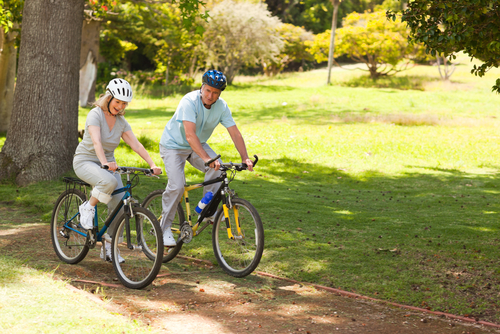
Aerobic exercise. Take a walk, ride a bike, or do jumping jacks—anything that makes you work up a sweat.
Still feeling frosty? Consider thermal bio-feedback, a natural therapy that trains patients to warm their hands and feet in about 20 sessions. For a referral, talk to your care provider or go to bcia.org.
Why You Don’t See Steam Locomotives Anymore

Photo courtesy Library of Congress.
The age of the great locomotives ended in the early 1960s, and yet they are still missed—even by people who have never seen one in operation. Something about these massive, steam-breathing engines captures the imagination and impresses us in ways that a Boeing 747 can’t.
Many Americans who have only known interstate highways and airports yearn to see a locomotive pulling out of a station in a cloud of smoke and steam. Or hear the mournful cry of a distant steam whistle in the night. And they wonder what prompted the railroads to replace these magnificent machines with the grimy, boring diesel engines.
Fortunately, we have a Post article from the 1930s—the time when railroads introduced diesel power. “The Articles of Progress” by Garett Garrett offers a good explanation of why railroads abandoned their steam engines.
It begins with a description of Burlington Railroad’s new, fully streamlined Zephyr train and its maiden journey on May 26, 1934, across the Great Plains from Denver to Chicago.
News of the train’s passing drew crowds to the rail line in Colorado, Nebraska, Iowa, and Illinois. People gathered on hills, embankments, and rooftops to see this sleek, futuristic train race past them at speeds up to 112 mph.
“Parents held out their infants in arms, exhorting them to look,” Garrett writes. “Women threw kisses wildly. Men leaped and waved their arms. Some who had come to make pictures saluted instead and forgot to turn their camera cranks.”
It wasn’t just the shining, streamlined engine and cars that excited the crowds. It was the sight of tangible change and progress in the depths of the Depression.
The 1930s were a bad time to pour money into experimental trains, but the railroad had little choice. Revenues had sunk to a dangerous level just because of struggling economy. But profits had also been declining steadily since 1920.
The only way to survive was to reduce costs and improve efficiency. Diesel power seemed to promise both.
According to the designers, diesel engines could run faster and work longer than steam locomotives. They were more fuel-efficient; they didn’t require frequent stops to replenish coal and water. Instead of generating steam in an enormous boiler, the diesel burned oil to power a generator that, in turn, powered electric motors on the wheels.
Locomotives, in comparison, had a low thermal efficiency.
They used a vast amount of energy to build up steam pressure, which had to be discarded whenever the locomotive stopped or shut down. In every week of operation, a locomotive consumed its own weight in coal and water.
“They ate too much for what they did,” Garrett wrote. “Only about one-twentieth, or 5 per cent, of the potential energy in what a steam locomotive devours is delivered to the wheels in the form of effective driving power.” In contrast, a gasoline engine could deliver more than 25 percent of its potential energy to the wheels.

Steam locomotives also required costly maintenance. Once a month, by law, the boilers had to be cleaned out. Furthermore, each engine required a regular, extensive overhaul, which meant it was available for work just 35 percent of the time. Diesel engines, which needed less maintenance, had 95 percent availability.
Because the manufacturer was using a new design for the Zephyr, the manufacturer decided to take advantage of a new construction method that used extra-light, electronically welded stainless-steel frames. Traditionally, the railroad companies had believed that adding weight to cars and engines made a train ride more comfortable. Heavier trains were also safer, they believed, because they would absorb lethal impact when collisions occurred. But as the weight of cars increased, so did the strain on rails and bridges, and with each added ton of weight, the fuel efficiency of the train dropped even farther.
The Burlington Northern railway planned to run the lightweight Zephyr train between Kansas City, Kansas, and Omaha, Nebraska, replacing a train made up of two locomotives and six heavy passenger cars. The old train weighed 1,618,000 pounds. The Zephyr would weigh just 200,000 pounds.
Two years after this article appeared, another Post article on America’s railroads reported the Burlington line had achieved a remarkable drop in operating costs. Their standard, steam-driven train had been running with an operating cost of 70 cents a mile. The Zephyr’s per-mile cost was 31 cents. The decline in rail travel had turned around. The railroads were becoming profitable again. But the steam locomotive had begun disappearing from the rail yards, taking with them the coaling stations, water towers, and the thousands of jobs that had been necessary to operate these high-maintenance engines.
As much as railroaders loved the old locomotives, they were doomed. Even as early as that first run of the Zephyr, a railway superintendant riding with Garrett confided to him, “I love the locomotive. God knows, I hate to see anything like this happen to it. But I’m a mechanic too. A machine is for what it will do. This thing skins the locomotive alive.”
Read more about the first sprint of the Zephyr and how it changed the railroad world in “The Articles of Progress” by Garet Garrett, July 28, 1934.
Vintage Gatsby-Era Art
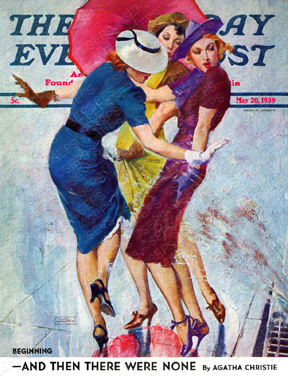
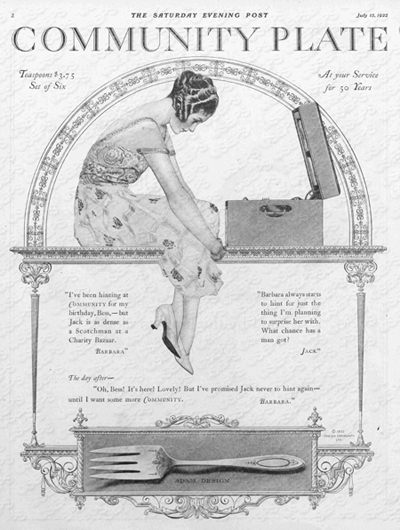
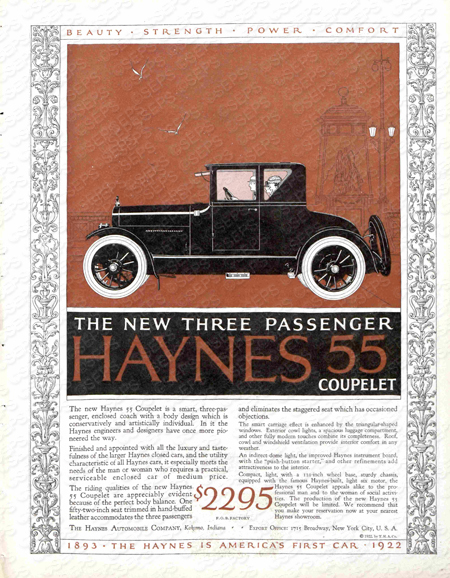
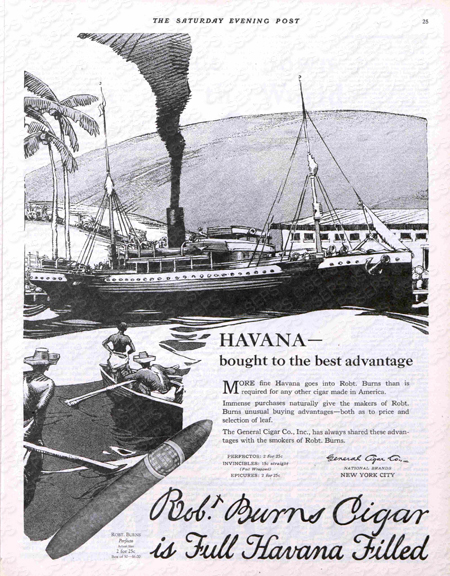
Before he penned The Great Gatsby, F. Scott Fitzgerald earned his fame and wealth from short stories he wrote for The Saturday Evening Post. His earnings brought the lavish parties, flapper culture, and glittering jazz of the Roaring ’20s to life.
Here’s a look at some of the Post‘s Gatsby-era artwork. For more original illustrations and beautiful cover images, check out Gatsby Girls, available for purchase in print and digital editions.
John LaGatta
May 20, 1939

John LaGatta
January 6, 1934
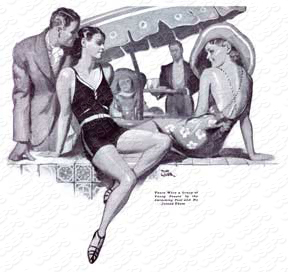
Illustration by Thomas Webb
The Saturday Evening Post
August 6, 1932
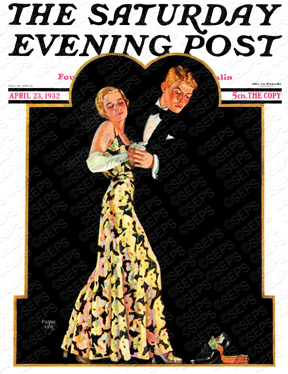
Frank Lea
April 23, 1932
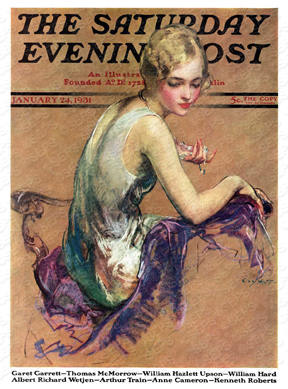
Guy Hoff
January 24, 1931
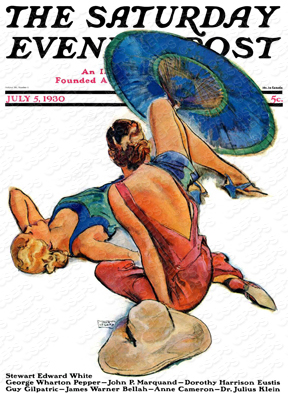
John LaGatta
July 5, 1930
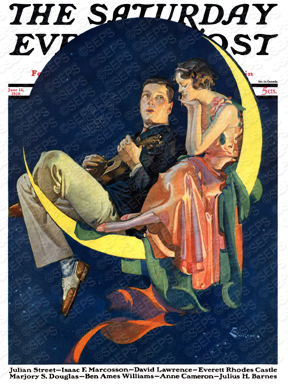
E.M. Jackson
June 14, 1930
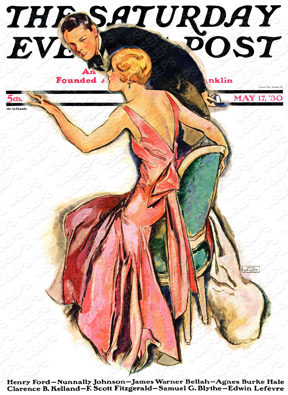
John LaGatta
May 17, 1930
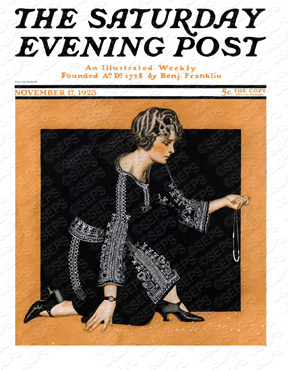
Coles Phillips
November 17, 1923
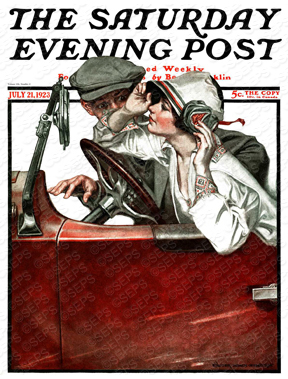
Walter Beach Humphrey
July 21, 1923
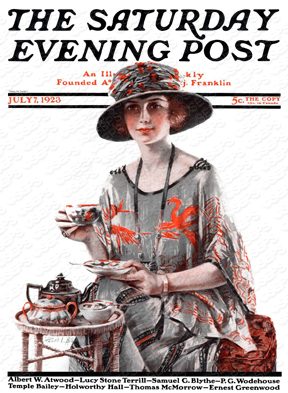
Pearl L. Hill
July 7, 1923

Neysa McMein
May 5, 1923
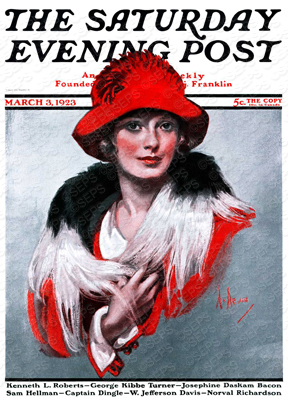
Neysa McMein
March 3, 1923
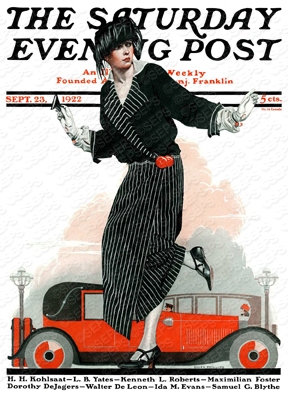
Coles Phillips
September 23, 1922
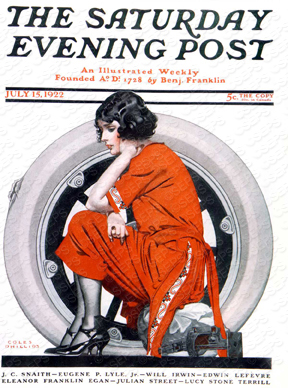
Coles Phillips
July, 15 1922
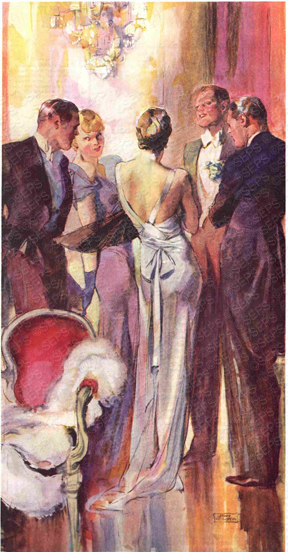
Illustration by John LaGatta
The Saturday Evening Post
March 4, 1933
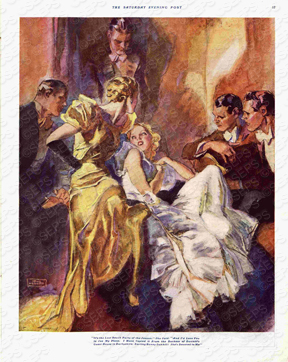
by Marian Spitzer
Illustration by John LaGatta
The Saturday Evening Post
December 10, 1932
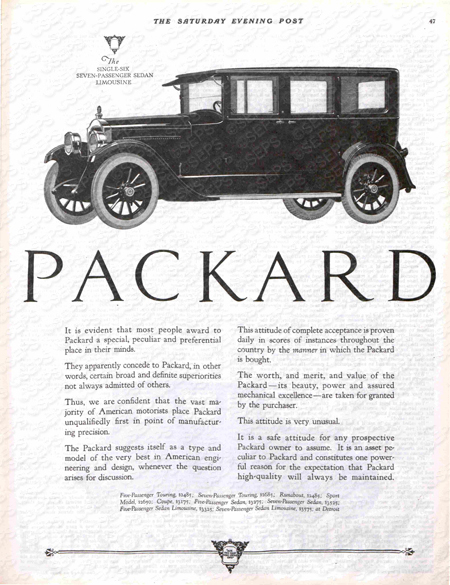
The Saturday Evening Post
December 23, 1922
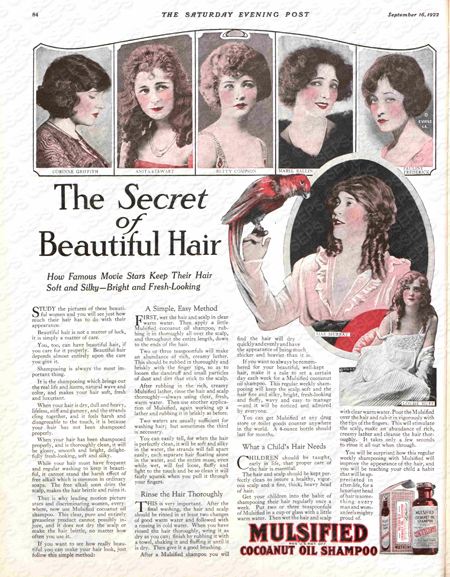
The Saturday Evening Post
September 16, 1922

The Saturday Evening Post
August 12, 1922
The Saturday Evening Post
July 15, 1922

The Saturday Evening Post
April 22, 1922
The Saturday Evening Post
April 1, 1922

The Saturday Evening Post
February 25, 1922
The Saturday Evening Post
February 18, 1922

Illustrated by Frank X. Leyendecker
The Saturday Evening Post
January 28, 1922
Classic Covers: 1950s Moms

Celebrate Mother’s Day with 1950s covers from popular Post illustrators Richard “Dick” Sargent (1911-1978) and John Falter (1910-1982). And if any of these covers remind you of your own childhood … you might want to order a bigger bouquet.
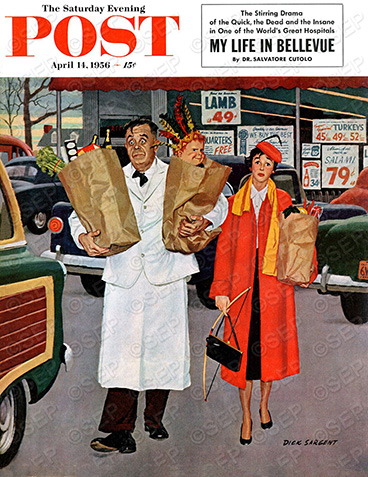
Sack Full of Trouble
Richard Sargent
April 14, 1956
Moms today may not have to reenact the American Indian Wars with junior in the store aisles, but that doesn’t mean multitasking with a grocery list and an active toddler is any easier than it was 50 years ago.
Popular artist Dick Sargent was a master of what art experts have come to call “sitcom covers.” Editors noted of this 1956 cover that Sargent, just to prove it could be done, borrowed a little boy to fit into a paper bag. “He let the boy’s father do it to assure that he himself would not get scalped.”
Sargent’s adeptness with facial expressions told the story: the mom’s weariness, the shell-shocked look of the grocer, and an expression on the boy’s face that says, “My work is done here.”
Learning to Fly
John Falter
June 20, 1953
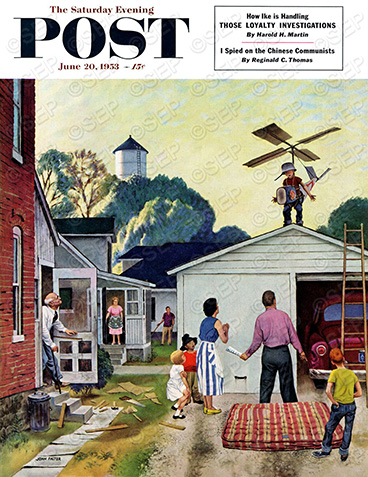
“Once upon a time a very small boy stood on the roof of the garage behind his home,” Post editors wrote of 1953’s Learning to Fly (at right). “He had made every reasonable arrangement to fly down. He had carefully studied the aerodynamics of the situation and met them with the most scientific equipment available.”
The cover was a flashback to a Nebraska afternoon when artist John Falter himself was on the roof of his boyhood home, as his own mother agonized below. And the boy, who grew up to recreate the comical events of his childhood for the enjoyment of Post readers everywhere, eventually found his wings.
Crashing Mom’s Card Party
Richard Sargent
December 20, 1952
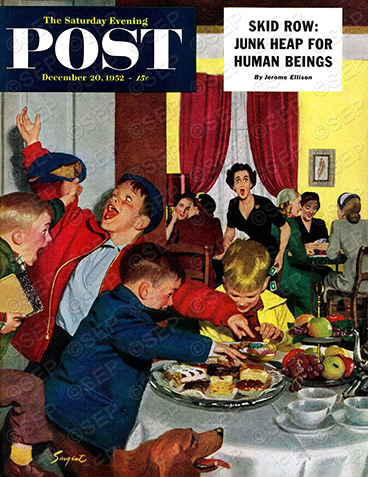
“What is lovelier than the glow of carefree joy in the faces of happy children?” asked Post editors of this 1952 illustration. “Will the lady on the cover have the heart to defend her food and change those expressions to the pinched melancholy of starvation? She will if she can make it across the room in time.”
Sargent had set the scene for Crashing Mom’s Card Party in his dining room with real pastries, testing the self-restraint of his three sons. “The mouths of those sons began to water,” wrote the editors, “They watered for a week. Two weeks. Three. Then the sons were released at the pastry. They ate it so fast they apparently did not notice it was petrified, claims the fiendish father.”

Mother’s Little Helpers
John Falter
April 18, 1953
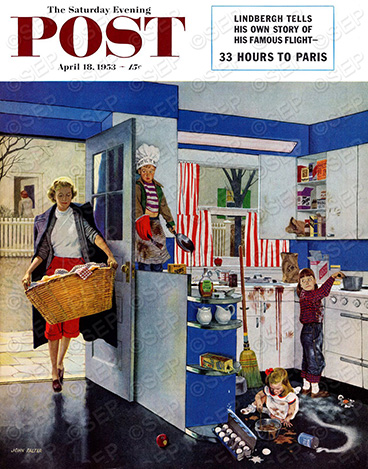
There is much to be said about good intentions, besides the road to you-know-where being paved with them. Adding to the tension in this piece, an apple waits in the unsuspecting Mom’s path (no doubt left by one of her good-intentioned little helpers).
“My main concern in doing Post covers was trying to do something based on my own experiences,” illustrator John Falter said. “I found my niche as a painter of Americana with an accent on the Middle West. I brought out some of the homeliness and humor of Middle Western town life and home life.”
Overflowing Tub
John Falter
December 3, 1955
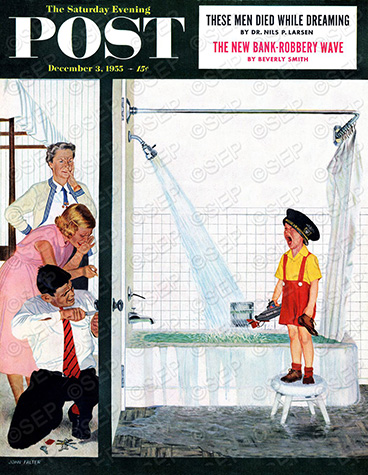
Like Learning to Fly, this Falter cover is fraught with enough anxiety to make the viewer cringe for Mom (and Dad). While the artist conveys enough despair for us to recognize that the situation is distressing, the overall effect is humorous.
In addition to childhood’s predicaments, Falter depicted a wide range of subjects, including nature’s beauty and intricate bird’s eye views of cities.
Visit our Artists Gallery and tell us which is your favorite Post cover by John Falter, Richard Sargent, or other artists. For a chance to be featured in our next Readers’ Favorites series, send your email to [email protected]. Remember to include your name, along with the title and date (or just a good description) of your favorite piece.
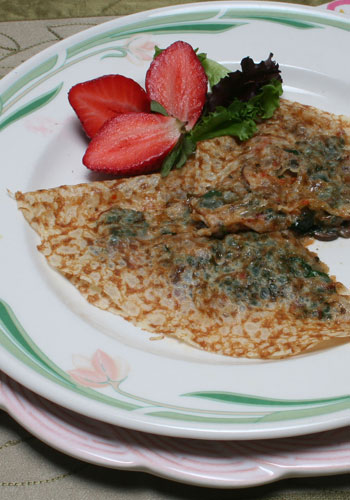
Chickpea Crepes with Spinach, Mushroom, and Pesto
Deluged by requests from friends who want good gluten-free dishes, I thought first of farina, a substantial chickpea pancake made in northern Italy, and soccer, a thinner version eaten in Nice. Memories of these dishes helped me arrive at this crepe recipe. All you need is olive oil, water, and flour made from dried chickpeas, aka garbanzo beans. The beige flour used to be available only in Italian markets and South Asian stores, where it is also called besan or gram flour. Lately though, you may find it with other gluten-free products in supermarkets as well as natural food stores.
My favorite filling is this savory combination of spinach, red onion, sweet bell pepper, and mushrooms, which you can make ahead, then reheat in a skillet, adding a splash of broth to prevent burning. A generous spoonful of prepared pesto stirred into the filling adds bold flavor.
Chickpea Crepes with Spinach, Mushroom, and Pesto
(Makes 6 servings)
Crepe Ingredients
- 1 cup chickpea flour
- 2 tablespoons extra virgin olive oil
- 1 teaspoon finely chopped fresh rosemary
- ¾ teaspoon salt
- 2 teaspoons soft buttery spread, if using skillet
Filling Ingredients
- 2 teaspoons extra virgin olive oil
- ¼ cup finely chopped red onion
- ⅓ cup finely chopped red bell pepper
- 6 ounces (about 2 cups) Cremini mushrooms, thinly sliced
- 1 (5-ounce box) baby spinach
- 2 tablespoons prepared pesto
- Salt and freshly ground black pepper
Directions
- In medium bowl, whisk chickpea flour, oil, rosemary, and salt with water until mixture is smooth. Let batter sit 20–30 minutes to thicken slightly. Before cooking, stir to loosen any clumps.
- For crepes, set non-stick crepe pan over medium-high heat until drops of water flicked into pan ball up and bounce. With one hand, hold pan up at 45-degree angle. Pour ¼ cup batter near top of pan, rotating pan as you pour so batter flows into 6- to 7-inch round crepe. Cook until crepe is golden on bottom, 1-2 minutes. Using large spatula, turn and cook until crepe is lightly golden on bottom, about 30 seconds. Transfer crept to large plate. Cover each crepe with wax paper. If using a regular skillet instead of non-stick crepe pan, coat hot pan with ½ teaspoon spread before first crepe and repeat as needed between crepes.
- If not filling crepes immediately, cool to room temperature and cover plate with plastic wrap. Hold crepes at room temperature for up to 8 hours, refrigerate for up to 24 hours.
- For filling, in medium skillet heat oil over medium-high heat. Add onion and cook, stirring, 2 minutes. Add red peppers and cook, stirring, until onions are translucent, 5 minutes. Add mushrooms and cook, stirring occasionally, until mixture looks wet, 5–6 minutes. Add spinach, stirring to wilt leaves. Cook, stirring often, until most of moisture has evaporated and filling is tender, 8 minutes.
- If crepes have been made ahead, wrap them in foil and warm in 250°F oven, 20 minutes. To assemble crepes, in small bowl, mix pesto with 2 tablespoons warm water. Stir pesto into filling. Arrange a crepe on a plate. Spoon ⅙ filling over bottom half of each crepe, then gently fold crepe in half over filling. Repeat with remaining crepes and filling. If desired, garnish plate with some mesclun leaves and strawberries. Serve immediately.
Nutrition Facts
Per serving
Calories: 170
Total fat: 11 g
Saturated fat: 1.5 g
Carbohydrate: 15 g
Protein: 6 g
Fiber: 4 g
Sodium: 400 mg
Jan/Feb 2013 Limerick Laughs Contest Winner and Runners-Up
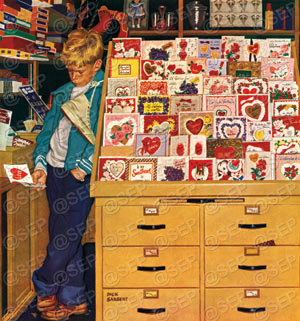
My Loveliest Annabel Lou,
This love note is perfect for you—
“Love” is here written,
An arrowed-heart’s splittin’—
But Edgar has bought you one, too.
—Patrick Murtha, Saint Marys, Kansas
Congratulations to Patrick Murtha! For his poem describing the illustration by Dick Sargent, Patrick wins a cash prize—and our gratitude for a job well done.
If you’d like to enter the Limerick Laughs Contest for our upcoming issue, you can submit your limerick via the entry form here.
Of course, Patrick’s limerick wasn’t the only one we liked! Here are some of our favorite runners-up, in no particular order:
Old Cupid had hit his mark true,
But Romeo did not have a clue.
Hand in his pocket,
Heart like a rocket,
This strange thing called love was brand new.—Randy Imwalle, Hillard, Ohio
The lad’s plagued by a problem quite dire,
Since impressing that girl will require
That he spend from his stash
At least some of the cash
That he’d saved for a brand new bike tire.—Patrick McKeon, Pennington, New Jersey
Though young, he finds himself smitten.
Perhaps that old love bug has bitten?
He stays out of the way
Before Valentine’s Day,
And ponders some words sweetly written.—Kathie Rosier, East Aurora, New York
The words in the card are risky.
She might find them much too frisky.
Yes, spells delight;
No, would sure bite.
Stuff like this drives men to whiskey.—John Dischinger, Spring Valley, California
A romantic card that just couldn’t miss.
He fantasized about their first kiss,
But when push came to shove,
Said, “I may be in love,
But I ain’t wasting a quarter on this!”—Ken Elinsky, Solon, Ohio
Sweethearts in verse made him pause,
Linger and read them because
Cards showed one’s heart
And reading that part
Made him wonder just what love was.—Dietre McCormick, Carlisle, Iowa
The young man was thoughtfully weighing
The sentiment this card was conveying.
For he needed to find
Just the right Valentine
To say what he thought needed saying.—Paul H. Madsen, Columbia Heights, Minnesota
Oh, what a dilemma for Billy!
The mushy cards strike him as silly.
His feelings are true,
So what should he do?
He may pick a card—but will he?—Elizabeth Silverthorn, Salado, Texas
A Valentine card is a feature
To send to a beautiful creature.
But his mother was firm
That he pass school this term,
So he has to send love to his teacher.—Ruth Porter, Albany, Oregon
8 Easy Crafts for Mother’s Day
Thinking about Mom, but not sure what to get her this Mother’s Day? Here are some DIY projects sure to please almost any mother.
If she’s an art lover:
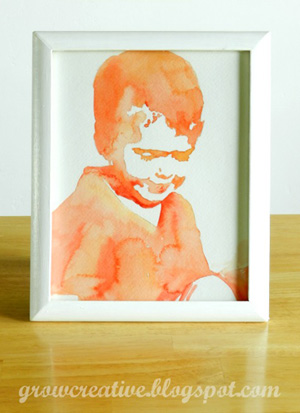
of the grandkids.
Click the image above or go to growcreative.blogspot.com for the tutorial now.
If she’s a wine lover:
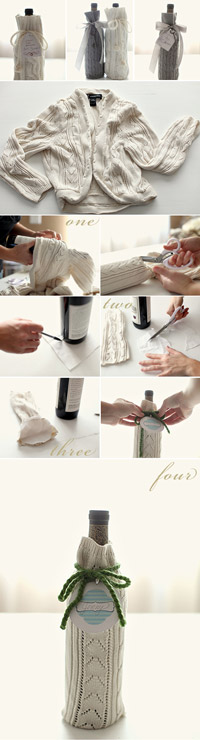
in a sweater sleeve.
Click the image above or go to greylikesweddings.com for the tutorial now.
If she’s a bookworm:
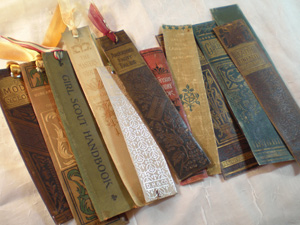
Click the image above or go to greenpaper.com for the tutorial now.
If she’s a recycler:

Click the image above or go to michlinla.com for the tutorial now.
If she’s always on the go:
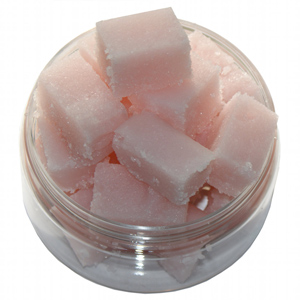
Click the image above or go to soapdelinews.com for the tutorial now.
If she’s outdoorsy:
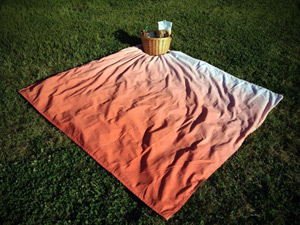
Click the image above or go to inkmeetspaperpress.com for the tutorial now.
If she’s a romantic:

for candlelit dinners.
Click the image above or go to cupcakesandcashmere.com for the tutorial now.
If she’s got a green thumb:
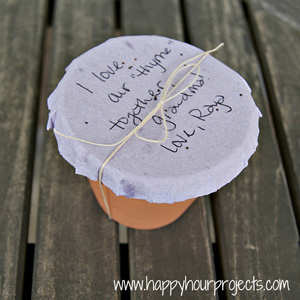
Click the image above or go to greylikesweddings.com for the tutorial now.
Insidious Power Drains

Beware. Your tech gear is costing you money while you sleep. Sure, the stuff looks innocent enough: cable box, HDTV, computer monitor, and sundry other electronic gadgets that consume power even when in “sleep” mode. While their energy-sucking ways may seem harmless, they cost you big bucks over time.
How much? U.S. households spend about $100 per year to power devices in low-power mode, around 8 percent of home electricity expenses, according to the government’s Energy Star program. Your water heater, lighting, air conditioner, and heater are the biggest energy hogs. The good news is that you can cut your energy bills without spending a fortune to do it.
First, you need to know which home appliances are the biggest power hogs. The P3 International P4400 Kill A Watt is an inexpensive electricity usage monitor that plugs into a standard wall outlet. Simply connect a suspected energy hog—an old refrigerator, for instance—to the Kill A Watt, which measures the appliance’s power consumption by the kilowatt-hour and shows the results on its LCD display. Priced at just over $17 online, Kill A Watt displays amps, volts, and wattage.
The twilight of the incandescent light bulb is upon us, and most versions of the venerable (and highly inefficient) bulb won’t be available in the U.S. by next year. Fluorescent, LED, and even new “hybrid” incandescent lights save energy and money but are sometimes hard to find for chandeliers, vanity lights, and other unique items. Measurements on bulb packages can be confusing when you’re unsure which size is right for your fixture. Light Bulb Finder is a free mobile app (Apple or Android) that helps you find the right energy-saving bulb. Enter your zip code, and it automatically determines the average electricity rate for your region. Then, scroll through images of lighting fixtures, and choose the type of incandescent bulb you want to replace. The app generates a list of recommended power-efficient bulbs and shows images and tech specs for each product.
Desktop computers and monitors are notorious energy wasters, particularly in home offices where tech gear is often left on 24/7. Many low-cost power-saving devices can stop the power drip and cut your electric bill. The Belkin Conserve Switch Surge Protector with Remote ($40), for instance, is a power strip with six switchable (on/off) outlets, and two additional outlets that are always on. The wall-mountable wireless remote works up to 60 feet from the power strip. To turn off up to six devices—a computer, monitor, printer, speakers, and external hard drive—simply flip the switch. The two always-on outlets are great for gadgets that need power 24/7, such as an Internet router or cordless phone.
And for the technophiles among us, there’s the amazing Nest, a programmable, power-saving thermostat you can install. The $250 Nest Learning Thermostat can cut your heating and cooling bill by up to 20 percent, the company claims. The Nest thermostat studies your heating/cooling habits and adjusts itself accordingly. For instance, if you raise the temperature in your home on a single occasion, Nest will ignore the change. But if you raise it two Mondays mornings in a row at 7 a.m., Nest will learn from your behavior and start making the change automatically. Created by a former Apple executive, Nest is sleek and stylish. And you can control Nest with your smartphone, PC, or tablet via a Wi-Fi connection.
More economical alternatives include the Honeywell Wi-Fi 7 Day Programmable Thermostat, which includes a free app for Apple and Android mobile devices. It’s more affordable at $100 to $120 online.
Of course, you don’t need new energy-saving light bulbs or power-cutting gizmos to reduce your utility bill (although they help). The U.S. Environmental Protection Agency offers some simple suggestions, such as remembering to unplug mobile phones, tablets, and MP3 players once they’re charged. And remember to remove power adapters from wall outlets too. If you don’t, these insidious power drains will continue to cost you money.
The New No-Car Garage
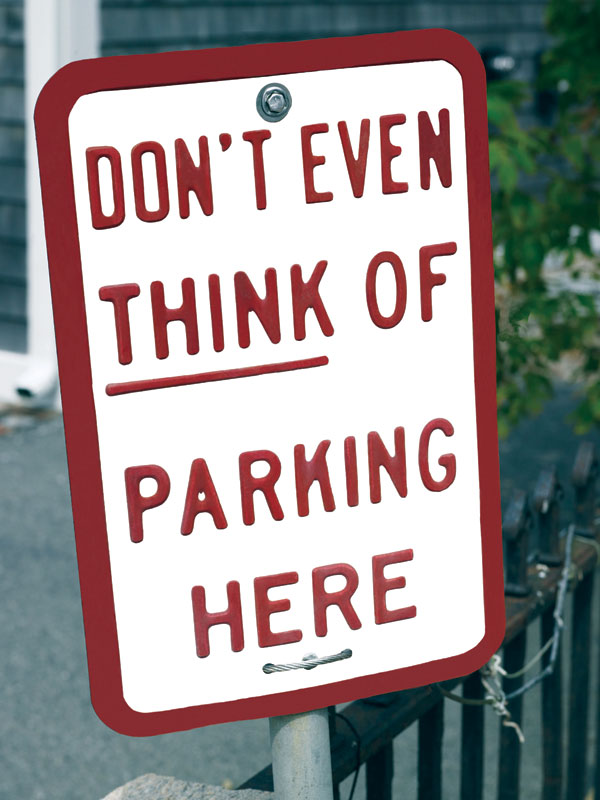
The house I grew up in was built in 1913, in that murky era between horses and cars, when a homebuilder had to decide which way the transportation winds were blowing. The man who built the house evidently believed cars were a fad, so he constructed a barn behind the house. My father was always trying to park his too-big car in a too-small stall, like someone struggling into a too-tight pair of pants. Half the back end hung out. While the barn was a bust, storage-wise it was ideal, handily absorbing the flotsam and jetsam of my parents’ lives. Growing up, I spent many a rainy Saturday in that old barn mining for gold.
When my wife and I bought our first home, I began to fill the garage with all manner of useful items over my wife’s objections. We have five bicycles. Their tires are flat, their frames coated with dust, their chains rusted to the sprockets. But it’s nothing a bicycle pump and a squirt of WD-40 can’t fix. I have four bicycle pumps and three cans of WD-40. Supplies aren’t the problem; expectations are. If I fix the bikes, my wife will expect me to repair everything else and sell it all on Craigslist, which I have no intention of doing. There’s no sense raising her hopes only to see them dashed.
I have four lawn chairs I intend to fix just as soon as I find the time to get the webbing to repair them. I bought them 20 years ago at a garage sale. The lady selling them apparently didn’t understand their value. The seats need to be replaced, but it’s nearly impossible to find a good old-fashioned lawn chair anymore. I wouldn’t be surprised if they’ve tripled in value. With CD interest rates running around 2 percent, I can’t afford not to keep them.
As a general rule, my wife avoids the garage. But every now and then she wanders in, poking around. She invariably sees something she thinks I don’t need and quizzes me about it. Like the time she came upon my watering can.
“Why do we need that?” she asked. “There’s a hole in it.”
“It’s nothing that a little duct tape can’t fix,” I said. I have six rolls, and possibly more, in an old refrigerator.
Her efforts to reform me reach a fever pitch each spring, a season customarily associated with putting things in order. Spring is my least favorite time of year.
In April my wife hints at her intentions. “Wouldn’t it be nice if there were room in the garage to park our cars,” she says. I let her remark pass. It’s only the warm-up.
In early May, always on a Saturday morning, she reminds me the town dump is having a free community day, and that we can throw away anything we want for free.
As if she has to remind me! It’s my favorite day of the year. I drive to the dump and bring back a truckload of perfectly fine stuff other people have discarded. That’s how I got my three-wheeled lawn mower with the blown engine. I’m going to fix it one of these days.
Not long ago, my wife and I were watching television at my parent’s house and a show about hoarders came on. Their houses are stacked from floor to ceiling. A psychiatrist was saying it’s a mental illness, an excuse we trot out when we don’t want to face the truth. Let’s put the blame where it belongs, on architects who 70 years ago stopped designing houses with adequate storage. My parent’s house had a full basement, a full attic, a two-story barn, and three extra rooms with no specific purpose, to be used at the homeowner’s discretion. As a consequence, my parents got along just fine. If the architect who designed our house 22 years ago knew what he was doing, my wife and I wouldn’t have to argue every spring.
Pasta Salad with Salmon, Peas, and Herbs
Imagine a decadently rich creamy pasta salad that’s actually good for you. Well, here you have it. The secret is in the dressing, which has a base of tangy thickened yogurt that’s the ideal foil for the rich salmon. Sweet peas stud the dish with beautiful color, and dill and scallion make it delightfully fragrant and flavorful.
Pasta Salad with Salmon, Peas, and Herbs
(Makes 4 servings)

Ingredients
- ⅔ cup plain Greek-style nonfat yogurt
- 3 tablespoons fresh lemon juice
- 3 tablespoons mayonnaise
- 2 teaspoons finely grated lemon zest
- 1 teaspoon minced fresh dill, or 2 teaspoons dried
- ½ teaspoon salt
- ½ teaspoon freshly ground black pepper
- 1 (14-ounce) can wild red salmon, drained, skinned and boned, and cut into chunks
- 1 (10-ounce) package frozen peas, defrosted
- ½ pound bowtie or corkscrew pasta, cooked according to package directions and cooled
- 2 scallions (white and green parts), minced (about ¼ cup)
- 8 cups chopped red-leaf lettuce
Directions
- Combine yogurt, lemon juice, mayonnaise, lemon zest, dill, salt, and pepper in bowl and whisk to incorporate.
- Add salmon, peas, pasta, and scallions and toss to incorporate.
- Pasta salad will keep up to 2 days in an airtight container in refrigerator.
- To serve, mound 2 cups of lettuce onto each plate or into to-go containers and scoop about 1 ¾ cups of pasta salad on top.
Nutrition Facts
Per Serving (1 ¾ cups pasta salad and 2 cups lettuce)
Calories: 490
Total fat: 14 g
Carbohydrate: 56 g
Fiber: 6 g
Protein: 35 g
Sodium: 730 mg
Diabetic Exchanges: ~2 ½ starch, 2 nonstarchy vegetable,
3 ½ lean meat, 1 ½ fat
Recipe and photo from So Easy: Luscious, Healthy Recipes for Every Meal of the Week, by Ellie Krieger. www.elliekrieger.com © 2009 by Ellie Krieger. Used with permission. All rights reserved.
Bird Nerds Unite!

Photo courtesy Floridastock/Shutterstock.
America loves its birds. We spend a fortune on them—$4 billion a year just to feed wild ones and another $1 billion annually on feeders, birdbaths, and birdhouses. All told, 46.7 million Americans consider themselves birders, according to the most recent U.S. Fish and Wildlife Service survey. As astoundingly large as this number is, the activity continues to surge, growing faster than mountain biking or skiing. Bird watchers, ahem, birders (the preferred modern term) have their pick of well over 200 festivals devoted to birds each year.
[Want to test your bird knowledge? See how many bird calls you recognize in this audio quiz.]
What exactly is it about our winged friends that makes them so appealing? Well, they’re pretty, for one. “Everybody loves birds,” ornithologist John Fitzpatrick tells me. He’s director of the Cornell Lab of Ornithology, popularly known as the Bird Lab, which is ground zero for most things avian in North America. “You don’t need to know a thing about them to enjoy them. They enjoyed birds in the days of the ancient Egyptians and in caveman days.”
Fitzpatrick goes deeper than your average backyard enthusiast. He’s helped discover seven species of birds in South America and is a central player in the ongoing controversy over whether the ivory-billed woodpecker, long believed extinct, has been rediscovered in Arkansas. But he gets the purely visceral appeal of birding: “Birds are colorful. They sing and fly and migrate so they join us in different parts of the world. They move enough annually so they mean seasonally different things for us.”
Another part of birding’s pull is social. “People want to share what they’ve seen with other people,” Fitzpatrick says. “That makes it a communal action. At Cornell now, we’re getting dozens of freshmen every year coming here because of the Bird Lab. Many of these are teenagers who are just superb birders.”
Take Luke Seitz, for example, a 19-year-old Cornell freshman who was an accomplished bird photographer and painter (lukeseitzart.com) before he went to college. When he was 16, Seitz graduated early from high school and landed a job on a whale-watching boat. He socked away money all summer to finance the first of several trips to photograph birds—in Ecuador, Peru, Chile, and Argentina. He then volunteered as a guide at eco-lodges that cater to birders. Sometimes, he would offer one of his paintings in exchange for a few nights lodging. “Birding makes me feel like I have a connection to nature,” he says.
Just as important to birding’s appeal is the sheer joy of being out in the wild with a purpose—namely to track, record, and study wildlife. “Experiences are becoming more valuable than things,” says Courtney Buechert, a birder who has led the Christmas Bird Count in southern Marin County, California, since the 1970s. (His day job is CEO of Eleven Inc., one of the top ad agencies in San Francisco.) “People realized you can buy stuff, but other people can buy stuff too. Experiences are something that are uniquely yours.”
It doesn’t hurt that birding is a lot easier to get into than many other pursuits—you don’t need to be in great physical shape, invest in a lot of equipment, travel far, or wait for the right kind of weather. “I can do this anytime, anywhere I am,” says Buechert. “I was once sitting in a conference room having a meeting with a client and a red-tailed hawk came and landed on the railing. You’re talking about a bird that is a foot high with a can opener attached to the front of its face.”
Birding, like the environmental movement, is largely a product of the 20th century and has run parallel to the country’s rapid urbanization. In 1900, less than 40 percent of Americans lived in an urban setting, and birding—often done with a shotgun rather than binoculars—was still largely the domain of naturalists, artists, and egg collectors. More than a century later, nearly 80 percent of Americans are urban dwellers, and birding provides us a perch in the world of plants and animals.

Photo courtesy Luke Seitz/lukeseitzart.com.
To better understand the possibilities of urban birding, I drop in on Dominik Mosur, a 35-year-old Polish emigré who works as an animal care attendant at San Francisco’s Randall Museum and as a volunteer for the Golden Gate Audubon Society. In 2011, Mosur set a single-year record (what birders call a “big year”) by spotting 273 species in the county of San Francisco, everything from an American avocet to a common yellowthroat. He invites me to join a monthly bird walk that starts at the museum and meanders through the surrounding parkland.
We meet at the entrance at 8 a.m., a dozen early-risers led by Mosur and his Audubon colleague Brian Fitch. It is a crystal-clear autumn morning, but it also happens to be one in which Bay Area birds would share the sky with space shuttle Endeavour. (It is scheduled to fly, piggyback on a 747, over the Golden Gate Bridge and around the city on its final journey before heading to the California Science Center in Los Angeles.)
We spend the first 15 minutes sweeping the nearby trees and telephone lines, spotting an American goldfinch, a pair of pine siskins, and a young red-shouldered hawk, among others. But the action doesn’t really take wing until we arrive at a large patch of poison oak that occupies a spot near the top of Corona Hill. A Lincoln’s sparrow perches on a branch, and then someone spots a savannah sparrow. Mosur, excited, stage whispers, “It’s picking up.” A warbling vireo lands in a bush near a golden-crowned sparrow. “That’s a pretty good sparrow flock right there, even if it’s only three birds,” Mosur says, noting that each of the sparrows is the first of fall for Corona Hill. “Good variety!”
At that point, more and more people armed with binoculars and long-lens cameras start trudging up the hill. These late arrivals are what birders might call accidentals or strays. They are here to see the Endeavour.
The birders, unflappable, stay focused on their LBJs—little brown jobs. While most of the day’s visitors to Corona Hill will view but one flying object, our little group of birders tally 46 avian species and the Endeavour.
The walk unequivocally demonstrates one other facet of birding, which I call connoisseurship—not in the sense of ever-more rarefied taste, but in the sense of a densely layered appreciation for nuance and subtlety. Wine enthusiasts like to ponder the importance of terroir and to argue over whether the 2005 Bordeaux will be the match of the 1982s. Long-time baseball fans can expound on the details of the infield fly rule and debate which left-handed pitcher has the best move to first base. Avid birders, as I had seen, have the expertise and enthusiasm to differentiate between the Lincoln’s sparrow and the savannah sparrow and to get excited about it. They can deftly juggle the differences between the immature and adult plumage of hundreds of species or passionately discourse on the benefits of roof prism binoculars over Porro prism pairs; they can look at a bay full of rafting ducks, as Buechert did when 12 years old, and notice the one tufted duck among the thousands of locals, even though they have never seen one outside of a book before. Connoisseurship, I think, is a field mark of passion.
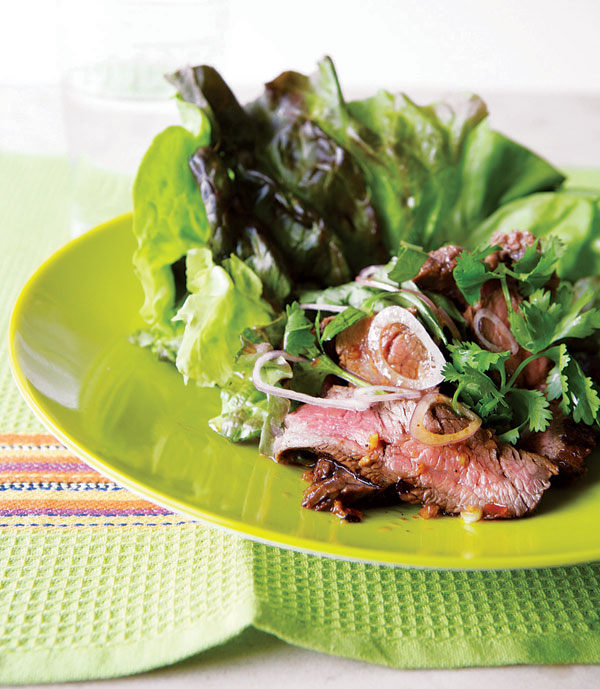
Grilled Thai Beef Salad
If you like full-frontal flavor, you are going to love this dish. The steak is marinated in a mixture that covers every angle—spicy, sweet, tangy, and salty—then it is grilled to caramelized perfection, sliced thin, and tossed with tender lettuce and fresh herbs.
The robust marinade flavors are used in the dressing to give the salad a one-two punch. The result is so powerfully mouth-watering, it is sure to knock you out.
Grilled Thai Beef Salad
(Makes 4 servings)
Ingredients
- 1 pound top-round London broil or flank steak, 1 to 1 ½ inches thick
- 3 tablespoons fresh lime juice
- 3 tablespoons low-sodium soy sauce
- 3 tablespoons canola oil
- 2 tablespoons firmly packed dark brown sugar
- 1 clove garlic, minced (about 1 teaspoon)
- 1 ½ teaspoons peeled and minced fresh ginger
- 1 ¼ teaspoons red curry paste or chili-garlic sauce
- Cooking spray
- ½ head red-leaf lettuce, torn (about 5 cups lightly packed)
- 3 shallots, thinly sliced (about ½ cup)
- ½ cup coarsely chopped fresh cilantro leaves
- 1 cup fresh basil leaves, sliced into ribbons
Directions
- Rinse meat and pat dry and place in sealable plastic bag or small glass dish.
- In medium bowl, combine 1 tablespoon of the lime juice, soy sauce, oil, brown sugar, garlic, ginger, and red curry paste.
- Pour half of mixture into bag with meat. Add remaining 2 tablespoons lime juice to bag. Seal tightly and marinate meat in refrigerator for at least 4 hours or overnight, turning occasionally.
- Reserve rest of mixture to dress salad.
- Coat a grate or grill pan with cooking spray and preheat over medium-high heat until hot.
- Grill steak until medium-rare, about 5 minutes per side or to your desired degree of doneness.
- Let it rest for 5 minutes until room temperature, then slice thinly against grain.
- Combine lettuce, shallots (reserving a few slices for garnish), cilantro, basil, and beef in large salad bowl.
- Add reserved dressing and toss to coat.
- Divide salad among 4 plates and garnish with sliced shallots.
Nutrition Facts
Per Serving (2 ½ cups)
Calories:345
Total fat: 18.5 g
Carbohydrate: 12 g
Fiber: 1 g
Protein: 33 g
Sodium: 440 mg
Diabetic Exchanges: ½ starch,
1 nonstarchy vegetable,
~3 ½ lean meat, 2 fat
Recipe and photo from The Food You Crave: Luscious Recipes for a Healthy Life, by Ellie Krieger. www.elliekrieger.com © 2008 by Ellie Krieger. Used with permission. All rights reserved.