What Are You Looking At?
Otto shudders to think what will happen to his body after he dies. Having endured decades of people staring, whispering behind his back, and asking intrusive questions, he’s braced himself for the worst.
Barring complete disintegration in a spectacular mid-air collision, he expects his corpse to be enveloped in a black bag and whisked to the morgue for identification (should he drop dead of a heart attack in the middle of the street) or courteously draped in a white sheet by a nursing home attendant (should he be one of the lucky few who dodges accident and disease to make it to an old age death bed). Collecting his remains will be the easy part, but how will his handlers treat him in light of his short stature?
First, Otto doubts he’ll be given a freezer drawer of his own. Less than half the height of the average cadaver, the morgue attendant will probably look at Otto and think, Why waste space? before sliding his corpse into the same drawer they keep the miscellaneous body parts — mysterious arms found in the woods or the odd foot that washes up out of the lake. Otto dreams of lying in cold steel drawers without a stitch of modesty, surrounded by random body parts.
His arms will present a challenge. Given a choice, Otto would prefer the morgue attendant fold them across his chest, giving himself a comforting embrace and avoiding his fingers coming in contact with those strange body parts, but he doubts his handlers will treat him to such a poetic, borderline spiritual arrangement. Most likely, his mismatched arms will be stretched along his sides — the gnarled left arm coming to rest at his waist, and the bamboo-thin right arm reaching all the way to his kneecap. Assuming, of course, the morgue is able to lay him on his back. That could be tricky.
At the rate his back continues to hunch, Otto expects to celebrate his 40th with a spinal curvature the size of a basketball. When his chin is pushing into his chest, will the morgue lay him on his side like a dead ox, or worse, on his stomach, with his lips mashed against the steel floor and his fat, hairy ass the first thing to greet whoever opens the drawer? Just one final, embarrassing spectacle.
“First of all,” his fiancée, Olivia, said, setting her wine glass onto the restaurant’s elegant tablecloth. “They don’t throw a bunch of random body pieces into a morgue drawer. That’s sick. And I’m sure it’s illegal.”
This did not reassure Otto. He had read about deals cut between hospitals and funeral homes, where medical waste such as amputated arms and legs were taken off the surgeon’s hand by funeral directors, who slipped the extra appendages into coffins prior to burial.
“Just think,” Otto said. “A thousand years from now archaeologists could discover an old cemetery and say, ‘Holy cow! They were walking around with three legs back then!’”
Otto’s entire life, people gawked over his appearance. Why expect better treatment after death? He knew his postmortem caretakers wouldn’t be able to resist showing him off. Doctors would make their way down to the morgue under the guise of small talk, and say, “Oh, I understand Mr. MacDougall was brought down last night,” and with a conspiratorial wink the attendant would roll open the drawer and cast a spotlight on Otto’s misshapen remains, tangled buck naked all in a heap. The situation might be tolerable, a bit of unprofessional courtesy between two professionals, but Otto knew the opportunity would go to the attendant’s head and relishing their small window of popularity they would start calling nurses, security guards, maybe even cafeteria workers, and rolling out his bones again and again to give everyone a cheap look.
Hijinks would ensue. Otto didn’t believe the pranksters would be so bold as to snap pictures, but he could see some wag putting sunglasses on him and sticking a cigar in his mouth. Maybe even plopping one of those Mickey Mouse ear hats on his head.
“Otto, stop it! Can you listen to how ridiculous you sound? I mean, in what morgue do you think they have a pair of Mickey Mouse ears lying around?”
The skeleton in Dr. Janowski’s practice, Otto reminded Olivia, wore one of those Mickey Mouse hats.
“Dr. Janowski is 80 years old. He will be gone a long time before you, so you don’t have to worry about him bringing his Mickey Mouse ears to joke it up at the morgue. And I think he would be really hurt if he heard you say that.”
Otto speared his steak with his short arm and reached for the serrated knife with his long one. “He doesn’t strike me as overly sensitive.” Dr. Janowski’s bedside manner rated little better than a cranky supermarket checker. Otto had seen more than one patient leave his examination room in tears.
Olivia stood on her chair and reached across the candle-lit table for Otto’s hand. The adjacent diners watched them, likely thinking patronizingly about how lovely it was the two little people had found one another. Otto suspected one texting woman was actually snapping a surreptitious picture to slap on her Facebook. “I promise sweetie-feetie, I’ll make sure no one takes advantage of your body after you’re gone.”
A week later, Otto received a late-night summons to Olivia’s apartment.
“I can’t figure it out. Look and tell me what you think.”
Although unaccustomed to deciphering the hieroglyphics of a home pregnancy test, Otto took the stick from Olivia, ashamed by the faint voice in the back of his mind urging, Don’t forget to wash your hands after!
The window of the test displayed two blue lines sandwiching a pink dot. The image looked to Otto like a stick-figure man drowning; only his head visible above the surface, red with panic, while his arms flailed above his head. Otto shared this man’s sense of doom.
Otto shook the test like a thermometer, but the image did not settle. “What are we looking at?”
“I’m not sure. The box says two blue lines means positive and a red dot means negative.”
“Give me the instructions.”
“Some tests don’t use pictures. They just say, ‘You are pregnant,’ but the cashier didn’t think they were as good as this one.”
“Why is the cashier butting in about what kind of test you buy?”
“Excuse me, I’ve never bought one before. I took a couple different ones to the counter and asked which she thought was the best. You’re allowed to do that.”
He pictured Olivia in the middle of the bright pharmacy aisle, dwarfed by the shelves, picking different brands of pee sticks for examination, squeezing them to test their ripeness, and then walking through the store with a whole armload for everyone to gawk at.
“You ask the pharmacist. The cashier doesn’t know anything.” Otto crumpled the shoddy, generic packaging. “Look at this. She told you to buy the store brand. No wonder it doesn’t work.”
Olivia smoothed the box and removed the second test. “It’s not the store brand. There’s nothing wrong with it. I’m going to try again.”
As soon as possible, Olivia and Otto met with Dr. Janowski for what Olivia termed “a proper rabbit test.”
Otto was surprised anyone still used the term “rabbit test.” The procedure was
already obsolete by the 1950s, replaced by the “frog test.” After injecting a woman’s urine into a rabbit, the rabbit had to be killed in order to examine its ovaries to determine if the woman was pregnant, but the frog got to live, as the woman’s pregnancy was determined if the frog lay eggs immediately or not. The change wasn’t about ceasing animal cruelty but practicality. One rabbit was only good for one test, but a doctor could use the same frog over and over again. Unfortunately, frogs were not cute and fuzzy, which was why “rabbit test” succeeded in becoming the euphemism. Made sense. Otto couldn’t imagine a home pregnancy kit using a cartoon frog as their mascot, but wouldn’t be surprised to find one with an anthropomorphic rabbit on the box.
Olivia lay on the paper sheeted examination table, covered by a child’s polka-dot gown. Otto waited in the corner, trying to ignore the gaze of Dr. Janowski’s skeleton, wearing its Mickey Mouse ears and grinning like an imbecile.
“Are the two of you trying to have a baby?” Dr. Janowski asked.
“God no!” Otto regretted his response, which he recognized sounded more tactless than truthful.
“No,” Olivia said, salving the moment with a bit of dignity. “We’re not trying to have a baby just yet.”
“The two of you are regularly sexual active?”
Olivia giggled. “Yes. It’s not like I had a couple too many cocktails at dinner and Otto decided this was his big chance.”
“And if you are pregnant would it be welcome news?”
“Again, it would be premature, but we’ve decided a family is in the cards.”
Otto frowned. Maybe Olivia made flippant decisions about having children, but without consulting him first. For Otto, discussion of kids took place in the far away land of “What if we won the lottery?” or “If you could sleep with one celebrity, who would it be?” He didn’t want to ask in front of Dr. Janowski, but Otto didn’t even know if Olivia was capable of carrying a child. For all he knew, a baby would tear out of her before the ninth month like a watermelon through a paper bag.
“Let’s see if you get your period first. The amniocentesis can’t take place until —”
“No,” Olivia said. “We aren’t doing that.”
Dr. Janowski smiled and patted her knee. “I think it’s best if we all wait a little. Not wanting to upset you, but even if the egg has been implanted it is not uncommon this early for it to be flushed out, appearing like a late period. Many women have that happen without ever knowing they were pregnant. Women not as vigilant as yourself.”
Otto drove them home. Olivia stayed quiet most of the trip.
“I get the impression the idea I’m pregnant bothers you.”
“It’s a bit of a shock. I mean what, we get to be the two percent with condom failure?” He wanted to insinuate foul play on her part, itching for provocation to air his conspiracy theories about pin holes in the rubber, but he knew saying such a thing would be unforgivable.
“Are you unhappy I’m pregnant?”
“You don’t even know you’re pregnant yet. For real.”
Tears leapt from Olivia’s eyes like the first spurt out of a garden hose. She held them back since the doctor’s office, but once Otto pulled his finger out of the dike, they sprung free.
Otto tried to beat the red light but failed. Caught at the intersection, some blowhard with a Bluetooth stared at them, probably describing to his friend the two midgets in the next lane, one of them crying her eyes out while the other gritted his teeth like a psychopath.
Otto felt ashamed of himself, treating Olivia no better than Dr. Janowski. Maybe he ought to set up practice in the empty examination room next to the old crumb. Between the two of them, no patient would escape the violation of Hippocrates’ first rule.
“Would it be so terrible, for me to have a baby?”
“Right now? Yeah, it would.”
“It would be nine months. The baby isn’t going to come this week.”
“I’m too old to be a father.”
“Seriously? Thirty-two is not too old, and I don’t feel like my ovaries have turned to stone.”
“I’m getting wrinkles around my eyes. I’m losing my hair …”
Olivia laughed, a series of involuntary snorts made louder by her mucus. “You think anyone looks at you and says, Wow, he’s bald? You’re short, your arms are messed up, you’re all hunched over, and you’re vain about your hairline?” She put a hand to her chest. “You gotta be putting me on.”
Rather than feeling diminished, Otto relished Olivia’s blunt assessment of his physicality. She was more truthful than tactless. He flipped the sun visor and used the mirror to brush his hair over his forehead, checking out the widening crater of scalp taking over the top of his head. She was right, all things considered, crow’s feet and male pattern baldness were small fries to be concerned about.
“Besides,” Olivia said, “If you think you’re getting old now then what’s the sense in waiting?”
Risking death in case of a collision, Otto cast off his seatbelt and pulled Olivia into his long arm. The light changed, but they idled, wasting gas, blocking the lane. Angry cars pulled around them, the drivers hitting their horns, a few gesturing obscenely, but Otto pretended to be oblivious to the spectacle he had created, unconcerned the entire time that people were staring at them.
Bread Pudding Recipes for Mardi Gras
If you can overlook the gossip on the farmer’s wife in this 1913 article, you’ll get to the good stuff. Bread puddings made with “butter the size of an egg” and a savory dessert featuring cheese, bread crumbs, and onion juice — yum!
—
Old Bread in New Puddings
Originally published in Country Gentleman, June 28, 1913
Every housewife knows how rapidly bread scraps accumulate and the careful housewife knows also that if not looked after they form one of the small leaks in the household management. They are too small to be considered by some, for recently a farmer’s wife who prides herself in her culinary ability remarked in our hearing: “Oh, I just throw my stale bread to the chickens. We do not care for puddings and things made with bread.” And we happen to know that she feeds her family daily on pie and cake and that they all have stomach trouble of one kind or another and are more or less anemic.
It seems to us that if, instead of the inevitable pie and cake so constantly served on some farm tables, the farm housewife, when concocting desserts for her family, would oftener utilize some of the fragments of bread that usually go to waste, in connection with the abundant milk and eggs always to be had on the farm, there would be better nourished bodies and less stomach trouble, and consequently fewer doctor bills.
In the first place, it is seldom necessary to have a quantity of old bread on hand, even in a small family. A half-loaf may be freshened by being placed in a hot oven for 10 minutes, and it will be more digestible than when first baked. The outside will be crisp and crusty, which is an improvement rather than otherwise.
Most people are familiar with the breakfast dish known as fried toast—slices of stale bread dipped in beaten egg and milk and browned on a griddle. We find the egg superfluous, however, just dipping the slice quickly in sweet milk and placing it at once on the hot, buttered griddle, frying slowly until it browns and loosens easily before turning. If fried too quickly it will be soft and sticky instead of crisp. Serve with butter and sirup.
All clean bread scraps should be thoroughly dried in the oven without being browned, and then put in a tight can kept for the purpose. They are then ready for many things. Pulverized they are fully equal to cracker crumbs for breading chops, oysters, eggplant and croquettes, and are also available for other things if soaked in cold water a moment and then pressed dry.
Stale bread cut in small squares and lightly browned in the oven — crofitons — are a fine addition to soup and an excellent substitute for crackers when eaten with butter and milk. Broken up and eaten with sugar and cream they form the breakfast dish known as “rusks” in New England and are fully as palatable and nourishing as many of the commercial breakfast foods.
About the only use some housekeepers can devise for stale bread is the homely bread pudding. We use the word “homely” advisedly, for bread pudding as it is made in the average household is neither sightly nor palatable, and even when well made, if it is always the same, it grows monotonous; but there are so many possibilities, even in bread puddings, for the ingenious cook who takes a little trouble that there is no excuse for lack of variety in that direction.
Chocolate Bread Pudding
- 1 cupful of crumbs
- 1 pint of milk
- 1/2 cupful of sugar
- pinch of salt
- yolks of 2 eggs
- 3 tablespoonfuls of grated chocolate
Bake until set, then cover with a meringue of the whites of two eggs and two tablespoonfuls of sugar, and brown. Serve cold with cream or a cornstarch sauce.
Prune Pudding
Cook three cupfuls of prunes as for the table, sweetening very slightly, drain off the juice, remove the stones and sprinkle the prunes with lemon juice.
- Take 2 cupfuls of fine crumbs
- 2 cupfuls of milk
- 1/2 cupful of sugar
- 1 teaspoonful of butter
- 1/2 teaspoonful of grated lemon rind
- 1 beaten egg
- pinch of salt
Mix and pour in a pudding pan, then drop in the prunes evenly and bake until set. Serve hot or cold with cream or a sauce made of the prune juice heated and thickened.
Apricot Pudding
Pour one pint of hot milk over one quart of stale crumbs, add one tablespoonful of butter and soak half an hour.
Stir 2 beaten eggs, 1 cupful of sugar, and 1/4 teaspoonful each of salt and cinnamon into the milk and crumbs, then add half a can of apricots or peaches — drained from their juice and cut in pieces. Pour in a buttered mold and cook in boiling water 2 hours. The mold may be set in a steamer over hot water.
Serve cold with cream, or hot with sauce made of the fruit sirup, heated and thickened with cornstarch, and 1 tablespoonful of butter
Brown Betty
The dried bread may be used, first being soaked and then pressed as dry as possible.
The proportions are one part crumbs to two of apples, either chopped or sliced.
Put alternately a layer of apples, sugar, cinnamon, and bits of butter, and then one of crumbs in a buttered pudding pan until it is full, a layer of crumbs being on top. Add a little water unless apples are very juicy, and bake for an hour in a steady oven, removing the cover during the last 15 minutes. Serve cold with cream.
Rhubarb Betty Is Also Good
Mix one-fourth cupful of melted butter with two cupfuls of solidly packed soft crumbs.
Cut one pound of rhubarb in small pieces without peeling. Butter a pudding pan, put in a layer of rhubarb, a dozen seeded raisins, a grating of lemon peel and a few drops of juice. Scatter sugar liberally, then a layer of crumbs, and so on until everything is used. Cover the dish and bake an hour, removing the cover during the last 15 minutes so that the crumbs on top may brown.
Queen of Puddings
- 1 quart of milk
- 4 eggs
- 1 pint of soft crumbs
- 1 cupful of sugar
- pinch of salt
Beat the egg yolks with the sugar, add to the milk, crumbs, and salt, and bake until firm.
Then spread over the top the contents of a can of strawberries drained from their juice — or the fresh crushed and sugared fruit in season. Over this spread a meringue of the whites of four eggs beaten with two tablespoonfuls of sugar. Brown and serve cold with cream.
Any other fruit fresh or canned may be used.
Plain Bread Pudding
- 1 quart of milk
- 1 pint of crumbs
- 1 cupful of sugar
- pinch of salt
It is good eaten cold with cream or hot with a sweet sauce. A handful of raisins or some jelly spread over the top when eaten with cream is an improvement.
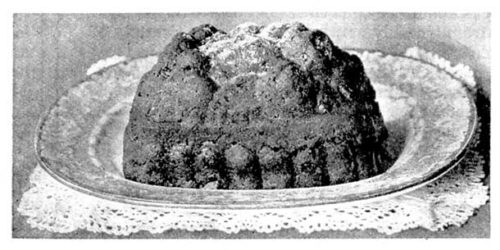
Children’s Plum Pudding
- 1 cupful of raisins
- 2 cupfuls of milk
- 2 cupfuls of crumbs
- butter the size of an egg
- 1/2 cupful of molasses
- 1 egg
- 1 teaspoonful of cinnamon
- pinch of salt
Beat the egg and mix all the ingredients. Bake one hour in a slow oven until firm and serve hot with a sweet liquid sauce.
Cornmeal Pudding
- ingredient list
Two cupfuls of cornbread crumbs soaked one hour in one quart of sweet milk. Add three beaten eggs, three table- spoonfuls of sugar, a pinch of salt, a little grated nutmeg or cinnamon if preferred. Bake an hour in a moderate oven.
Cheese Custard with Bread Sauce
- 4 eggs
- 3/4 cupful cold water
- 1/2 heavy cream
- 2 1/2 teaspoonfuls melted butter
- 3 tablespoonfuls grated cheese
- 1/2 teaspoonful pepper
- Few drops onion juice
Beat the eggs slightly and add the remaining ingredients. Turn into buttered timbale molds, set in pan of hot water and bake until brown. Remove to hot platter and cover with the following bread sauce:
- 1 1/4 cupfuls milk
- 1 onion
- 5 whole cloves
- 1/2 cupful stale bread crumbs
- 1 1/2 tablespoonfuls butter
- few grains of pepper
- 1/2 cupful coarse stale bread crumbs
- 1/2 teaspoonful salt
Cook ingredients 25 minutes. Pour over the cheese custard and sprinkle with the coarse crumbs browned in a frying pan in about a tablespoonful of butter.

Post Puzzlers: February 8, 1873
Each week, we’ll bring you a series of puzzles from our archives. This set is from our February 7, 1873, issue.
Note that the puzzles and their answers reflect the spellings and culture of the era.
RIDDLER.
ENIGMA.
WRITTEN FOR THE SATURDAY EVENING POST.
I am composed of 6 letters.
Cut off my head and I form a portion of this republic.
Drop my two next letters and I am something we did yesterday.
My 5, 6, 4, is a beverage.
My 1, 4, 2, 3, is a point of the compass.
My 3, 4, 2, 5, 1, is an intellectual relish.
My 2, 6, 4, is a body of water.
My 2, 4, 3, 1, means to satisfy.
My whole is something all are willing to possess.
Baltimore, Md. EMILY.
ANAGRAMS.
WRITTEN FOR THE SATURDAY EVENING POST.
NAMES OF STATES.
- A south rain, Col.
- Land army.
- No car, I fail.
- Far Idol.
- A writ is given.
- No hail, Carrton.
- Anna Livy’s pen.
- Aid Nina.
Seaboard, N. C. EUGENE.
BURIED CITIES.
WRITTEN FOR THE SATURDAY EVENING POST.
- I shot the fox for Dan.
- During the gale, Nate was hurt.
- Do not nap lest they catch you.
- The dove rose up and flew.
- Did Hetty receive an answer?
- They encamed in a valley.
- He got the best one of all.
- Tell him what Roy said.
Pencoyd. CHARLEY H.
WORD SQUARES.
WRITTEN FOR THE SATURDAY EVENING POST.
I.
Extended, a well-known plant and its fruit.
Vegetable production.
A thrust.
To penetrate.
II.
To emit rays.
To relieve.
A country.
To design.
III.
A general term for the feathered kind.
A conception.
A quantity of paper.
A mistress of a family.
Pleasant Run, N. J. G. R. S.
ALGEBRAICAL PROBLEM.
WRITTEN FOR THE SATURDAY EVENING POST.
The less of two numbers is to the greater as 1 to 2, and the logarithm of the less is to the logarithm of the greater as 3 to 4. Required, the numbers.
ARTEMUS MARTIN. Erie, Erie Co., Pa.
CONUNDRUMS.
What is the nearest thing to a cat looking out of a window? The window.
Why are wheat and potatoes like Chinese idols? Because they have ears which cannot hear, and eyes which cannot see.
Why is chloroform like Mendelssohn? Because it is one of the greatest composers of modern times.
When is a lady’s cheek not a cheek? When it’s a little pale (pail.)
Why should a teetotaller refrain from marrying? Because, if he got a wife, his principles would not allow him to sup-porter.
ANSWERS.
ENIGMA—Estate, State, Ate, Tea, East, Taste, Sea, Sate.
ANAGRAMS—1. South Carolina; 2. Maryland; 3. California; 4. Florida; 5. West Virginia; 6. North Carolina; 7. Pennsylvania; 8. Indiana.
BURIED CITIES—1. Oxford; 2. Galena; 3. Naples; 4. Dover; 5. Tyre; 6. Ava; 7. Thebes; 8. Troy.
WORD SQUARES.—
I.
AMPLE
MELON
PLANT
LONGE
ENTER
II.
BEAM
EASE
ASIA
MEAN
III.
BIRD
IDEA
REAM
DAME
ALGEBRAICAL PROBLEM—8 and 16.
Movies for the Rest of Us with Bill Newcott: Movies to Watch with Your Valentine
Looking for a little silver screen romance for this Valentine’s Day? Bill Newcott serves up his favorite movies about love.
Alexander Woollcott and the Wild World of the Army’s First Newspaper
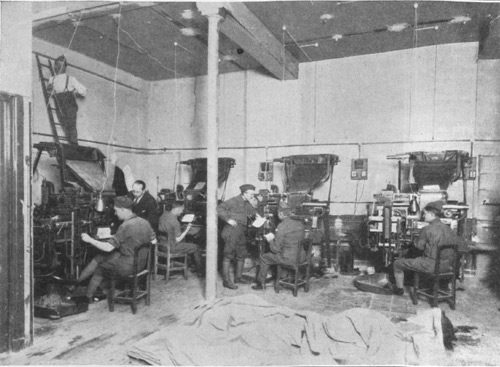
One hundred years ago today, on February 8, 1918, three U.S. Army privates turned out the first edition of Stars and Stripes, a military newspaper for soldiers in the American Expeditionary Force.
It was a new venture, hurriedly put together by the army, using a staff drawn from its pool of enlisted men. One of those first three privates was Harold Ross, a seasoned reporter who would later become the founder and editor of The New Yorker magazine. Another was famed sports writer Grantland Rice.
Another early member was Alexander Woollcott. He’d been the theater critic for the New York Times, but the army made him a war correspondent for the paper.
Ten years after Stars and Stripes’ first edition, Woollcott—who by then had become a notable member of the Algonquin Round Table—reminisced about his days at the paper in an article he wrote for The Saturday Evening Post on March 17 and 24, 1928. Of his first day there, he wrote, “there sat busily scribbling three of the strangest looking and, by strictly military standards, the least alarming soldiers I ever saw before or since.”
He was surprised at the paper’s success, assuming it “would presumably be received with the jeering distrust which the American mind instinctively accords all utterances handed down from on high.” However, in its first year of publication the weekly paper achieved a circulation of 550,000. It cost the soldiers ten cents (or fifty centime in French currency). So, not only did it not cost the American taxpayer a single dime, it turned in profits of about $500,000 to the Treasury Department when the war ended.
And it provided a critical service to the war effort. With troops scattered across the Western Front, communication was a challenge, as was Esprit de Corps. Soldiers wouldn’t have the faintest idea what the man in the next trench was up to, let alone his mates halfway across the country. Stars and Stripes allowed the A.E.F. to communicate the same message to all the troops, sharing important information with soldiers and creating a sense of unity in a chaotic environment.
The paper also proved handy for keeping soldiers in line. When the Army was having a problem with bored servicemen wandering away from their units and causing low-grade trouble in the French countryside as the war was ending, they asked the paper to publish a story claiming that all AWOL soldiers would be rounded up and required to repair French roads; they would be the last to be send home. Woollcott reported that “Within five days of publication 80 percent of the dare-devil absentees had tiptoed across France and contritely reported back to their outfits.”
Aside from managing the troops, Stars and Stripes also did its part to help war-torn France. Woollcott wrote:
I am…thinking especially of the windfall of francs that poured in when we started the notion that each outfit ought to adopt a French war orphan as its mascot, although that response took the hearty form of more than 2,000,000 francs in the first year, which sum—administered by the Red Cross—made things a little easier for some 3440 skinny, black-frocked kids who thereby got from their doughboy friends something even more lasting than the chewing gum for the sweet sake of which they swarmed around every detachment of American soldiers that put foot into a French village.
Stars and Stripes was revived for World War II and has been in publication ever since. Its reporters cover the experiences and concerns of G.I.s in their postings around the world.
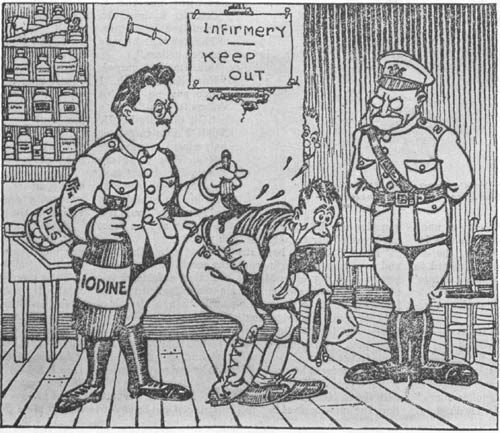
The newspaper is very much alive today. Though authorized by the Defense Department, the paper maintains editorial independence and is published free of censorship or outside control. It’s unlikely, though, that the publication resembles Woollcott’s band of rollicking journalists taunting Germans, ducking bombs, and tweaking generals. He wrote, “I should like to say, in conclusion, that I never knew the staff of any newspaper who worked so hard or whose hours of ease were so hilarious.”
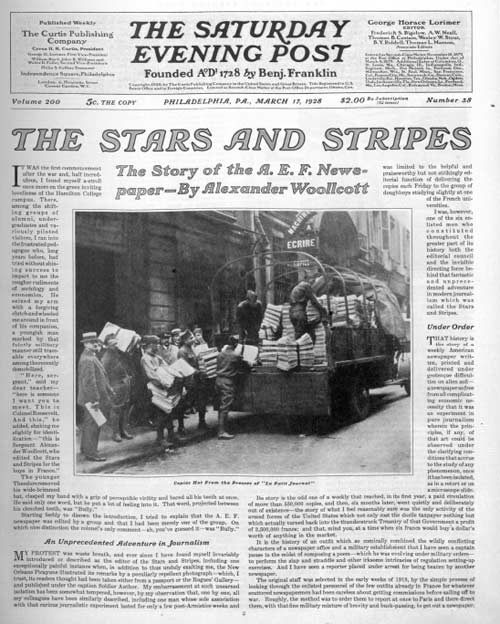
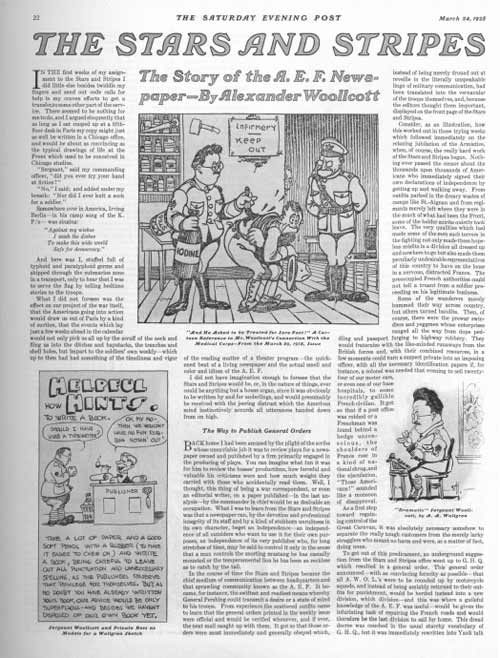
Featured image: from The Saturday Evening Post, March 17, 1928
When Charlton Heston Left the Party
Although the astronaut George Taylor lacked the biblical scope of Charlton Heston’s prior roles, audiences may have noted that the philosophical commentary of Planet of the Apes was somewhat aligned with the actor’s canon when the film was released 50 years ago. Heston played some of cinema’s most epic characters — Moses, Judah Ben-Hur, Michaelangelo — before wrangling with primates in the sci-fi classic.
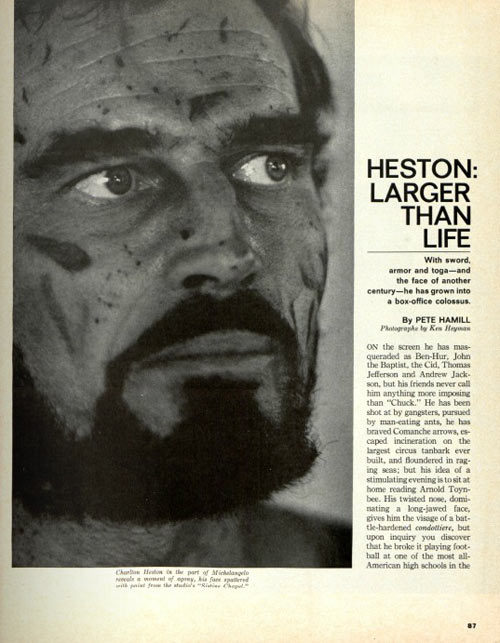
For Heston, acting was serious business. In the Post’s 1965 profile, “Heston: Larger Than Life,” the actor discusses his tendency to wear a toga or chainmail around his Hollywood home while blasting the score for a current movie. At the time, this was George Stevens’ The Greatest Story Ever Told. His strict diet and exercise routine, when considered alongside Heston’s self-inflicted isolation, made it easy to imagine him in the role of John the Baptist. Other actors considered “his prodigious work habits to be feats of enterprise so above and beyond the call of duty as to border on betrayal.”
Heston believed actors bore a more noble responsibility than that of research and interpretation, though. He explained his participation in the 1963 March on Washington, an unpopular decision to his older cohorts: “That march, which was an example of peaceful, lawful civil demonstration, was a responsible act. It was a democratic process, in a way, and if you believe in democracy, then you have to believe in the way it works. As for Hollywood, hell, this is no longer the bad old days.”
In the “bad old days” of Hollywood, as Heston bemoaned, studios wielded extraordinary power over their stars’ lives. The larger-than-life player would not be silenced, however, as he moved increasingly into the political sphere throughout the later century. Although Heston had started as a Democrat, he veered right for Nixon’s 1972 election and never looked back. Before his death in 2008, Heston served as the president of the National Rifle Association and spoke often of the “culture wars” of the American Left.
Heston wrote fondly about his and Reagan’s 1960 studio negotiations — for healthcare and residual payments — in National Review in 2004. Both actors had started their careers as liberal Democrats. Reagan famously said “I didn’t leave the Democratic Party. The party left me,” and he may as well have spoken for both of them. Heston was driven out, primarily, by the Democrats’ softened anti-communist stance as well as calls for affirmative action. He believed the party was giving in to a new whiny, entitled, multicultural block with whom he couldn’t fit.
As Steven J. Ross points out in Hollywood Left and Right, Heston’s most political films, like Planet of the Apes, “reflect his own complicated political sensibilities. Although the ideological messages of the films can be read as left-liberal, the highly individualistic solutions advanced by Heston’s characters prove far more conservative.”
In the course of his acting career, Heston’s sweeping, classical style of interpretation was superseded by the cerebral method-acting of leading men like Marlon Brando and Paul Newman. Similarly, in his politics, Heston was a constituent of the old guard resistant to the new ideas of progress hatched in the turbulent sixties. Although he ended up, perhaps, as the primary Republican darling of Hollywood, he always considered himself a Democrat deserted by a radical party.
The Russia Probe: Why Are There So Many Damn Committees?
Forty-five years ago in February, the Senate Select Committee was created to begin investigating the Watergate scandal.
America is currently watching the spectacle of four different government bodies investigating one case: Russian interference in the 2016 presidential election and possible collusion between the executive branch and the Russian government.
The reason for this curious duplication of efforts lies in way Washington works. Neither the House and Senate investigates wrongdoing as unified bodies. Instead all their work is divided between a bewildering array of committees, subcommittees, and commissions.
In addition, the Justice Department can conduct its own investigations through the FBI or special counsels.
So, who is actually investigating what? Let’s start with Congress.
Standing Committees, Select Committees, and Subcommittees
Congressional inquiries are run either by “standing committees” — permanent bodies focused on specific government functions— or “select committees” — ad hoc groups that address specific matters.
Even this distinction isn’t straightforward. Some select committees are treated by House and Senate rules as permanent, standing committees (such as the House Permanent Select Committee on Intelligence).
To add a little more confusion, “select committees” may also be called “special committees” (e.g., the Senate Special Committee on Intelligence).
Within these committees are subcommittees, which focus on specific matters within the parent committee’s purview.
The Senate currently has 20 committees and 68 subcommittees, covering topics from agriculture to veterans’ affairs. In addition, members of the House and Senate meet together in four joint subcommittees.
The House has 20 standing committees, 95 subcommittees, and one special committee.
Most committees spend their days studying proposed laws. Occasionally, though, some committees will set up special committees to look into the suspected illegalities.
As if there weren’t already enough possibilities for investigative bodies, Congress can also launch independent commissions, which will work outside of any committee. One example is the 9/11 Commission, which was specially created by Congress and charged with issuing a report on its findings. Usually, these commissions involve non-elected experts who are either bipartisan or nonpartisan, and they can’t prosecute anyone; they just issue a report. Currently, there is no special commission looking into Russian meddling.
Finally, there’s a third approach to federal investigations. The Justice Department — which answers to the president and not Congress — can appoint its own, independent investigator—often known as a special prosecutor—which is Robert Mueller’s current role.
Mueller’s name may be a familiar name on the nightly news, but not everyone may know about the rocky road of special prosecuters.
The President and Special Prosecutors: Who’s in Charge?
In 1973, President Nixon fired the Justice Department’s special prosecutor, Archibald Cox, who was looking into the president’s involvement in the Watergate scandal.
Later, after Nixon’s resignation, Congress passed the Ethics in Government Act to prevent similar moves by future presidents. The Act put special prosecutors beyond the reach of the president.
In 1983, the title was changed to “special counsel” to make the position sound a little less adversarial.
Congress allowed the Act to expire in 1999, possibly because of the controversy surrounding independent counsel Ken Starr’s investigation into President Bill Clinton’s involvement in the Whitewater real estate scandal. Even though the part of the Act that covers special counsels has expired, the Attorney General still has the right to appoint them.
Now that we’ve covered who does what, where exactly do we stand today?
Who Is Investigating Russian Interference?
Because the law allows so many groups to pursue investigations, four groups are looking into Russian interference in the 2016 election and possible coordination between the White House and the Kremlin:
- The House Permanent Select Committee on Intelligence, originally chaired by congressman Devin Nunes (R-California). Last April, in response to charges that he’d mishandled classified information, Nunes recused himself from the investigation. However, he continues to issue subpoenas and correspond with White House officials about the probe.
- The Senate Select Committee on Intelligence. The team of Chairman Richard Burr (R – North Carolina) and Mark Warner (D – Virginia) was originally regarded as a good example of a bipartisan inquiry. Lately, their efforts have been hampered by a lack of cooperation from the House Intelligence Committee.
- The Senate Judiciary Committee, chaired by Chuck Grassley (R- Iowa) with a panel including Dianne Feinstein (D – California). It has shown less collegiality than the Senate Intelligence group.
- Finally, there’s the Special Counsel Investigation headed by former FBI director Robert Mueller, who has the power to issue subpoenas, hire staff, request funding and prosecute related federal crimes.
While the Mueller inquiry hasn’t been hampered by the political stalemates of other investigation, it could be terminated at any time by the president, but only indirectly. The president can dismiss the acting Attorney General, Rod Rosenstein, and replace him with an official who could terminate the Special Counsel Investigation. According to federal regulations, the Special Counsel can be terminated for a “good cause,” which could include “misconduct, dereliction of duty, incapacity, [or] conflict of interest.”
Americans looking for a historical precedent for the current situation might see similarities to the Watergate investigation of 1973. One important difference between the two is that, back then, there was just one investigating body, the Senate Watergate Special Committee. Another big difference, which was recently pointed out by President Nixon’s counsel, John Dean, is that the current inquiry probably has a long way yet to go.
The Watergate investigation ran for two-and-a-half years.
Featured image: Representative Barbara Jordan of Texas sat on the House Judiciary Committee during the Watergate hearings. (U.S. House of Representatives)
Vintage Ads: Meat in a Can
You’ve heard of Spam, but what about Treet, Prem, Mor, and Bif? These ads from the 1930s – 1960s shows that, at least for a time, canned meats were all the rage.

August 23, 1930
Click to Enlarge
Early on the scene with jarred alternatives to meat was Heinz with its sandwich spreads. Peanut butter and mayonnaise are familiar; others less so. And while the apple butter cookies sound delicious, we’ll pass on the banana, mayonnaise, peanut butter, and olive salad.

July 23, 1938
Click to Enlarge
Although Spam was introduced in 1937, it didn’t take off until World War II, when canned meats were included in military rations. This early ad for Spam marketed the concept of swell Spamwiches.

June 29, 1940
Click to Enlarge
Whether served cold with pineapple and strawberries or broiled, fried, or baked—“Hot PREM is grand, too”— Swift assured homemakers that this Spam competitor would be a hit at their next party. Prem is still made today.

September 20, 1941
Click to Enlarge
Another pre-war canned meat choice was liver loaf, touted for its many health benefits. John Morrell & Co. has been in business since 1827, but it appears their smoothly blended liver loaf, “so vital for sound health, good appetite, and healthy nerves,” did not make it into the 21st century.

October 3, 1942
Click to Enlarge
This ad was created by the American Meat Institute, which was established in 1906 to help meat packers comply with the new Federal Meat Inspection Act. The Institute turned its attention to consumer advertising in the 1940s, including this wartime ad that encouraged housewives to include meat in their hard-working husbands’ lunches.

February 12, 1944
Click to Enlarge
Canned meat was a cornerstone of meals for the armed forces, but it wasn’t just for the troops. Many foods were being rationed, and canned meat was a less expensive alternative to fresh. Libby’s ad for deviled ham and Vienna sausage urged shoppers to consider that there was “no waiting for your points to accumulate—so few are needed!”

June 21, 1947
Click to Enlarge
After the war, GIs rejected the canned meat they were forced to eat overseas; ads such as this one did little good in making it a dinnertime staple for most Americans.

August 24, 1946
Click to Enlarge
After the war, canned meats were marketed as a quick and easy meal choice. Armour’s Spam competitor is Treet, a pork shoulder and ham concoction, which is still available. This serving suggestion is for a porch supper, a meal served outside and that requires little or no time in front of the stove.

June 29, 1957
Click to Enlarge
By the late 1950s, Hormel was still working hard to market Spam to the masses, as shown by this full-page ad in the Post. “Watch folks sail into these!”

April 22, 1961
Wilson’s went for some international flair with “continental” sandwich ideas for its Bif (chopped beef) and Mor (its Spam competitor). Wilson was one of the top three companies in America’s meat industry (along with Armour and Swift), but was bought and eventually dismantled by a conglomerate in the late 1960s.
North Country Girl: Chapter 38 — Cinderella Goes to the Disco
For more about Gay Haubner’s life in the North Country, read the other chapters in her serialized memoir.
Mindy and I had escaped the Acapulco Hotel of Horrors, and our trespass into the fancy pool at the El Presidente had earned us dates for the night and unlimited free drinks. We spent the rest of the day checking our shoulders hourly for tan lines, sucking up cocktails, and shooing off accounting and agricultural majors from various Midwestern universities. After meeting Fito, the Mexican Adonis, and his sidekick Jorge, those seniors from Madison or Ann Arbor were about as appealing as dry white toast.

Back at our crap hotel, we rummaged through our clothes to find outfits that didn’t mark us as the Minnesota hicks we were. I had a filmy, patchwork tulip-skirt that swirled about my knees. I hoped the three-inch cork platform clogs, a $9.99 Bakers Shoes splurge, made my legs look less stump-like.
How could we know we didn’t need to bother? We had tight butts and perky braless breasts that pointed north. We were garbed in our youth, the gift everyone receives yet no one truly appreciates. Mindy and I were as appealing as puppies, our skin glowing, our eyes bright; we were joyful and eager for whatever life brought us. We could have worn burlap bags.

But self-confidence is a long game, and easier lost than won. Despite what the mirror reflected, despite the cute skirt and shoes, I still felt like a four-eyed geek with an unflattering haircut. Mindy would have none of this and dragged me out of our room. I got a bit of a lift from the cat calls, whistles, and leers that followed us as we made our escape through our hotel’s dingy yet hellish lobby. But as we approached the gleaming El Presidente, my steps slowed, and I felt as if I was walking out of a wonderful dream.
A lounge singer? A guest list? How did we even know those two guys were who they said they were? Or what if they forgot to put our names on the list, or met two cuter girls and crossed our names out in favor of theirs? I’m afraid I infected Mindy with my doubts. We were deep in discussion of a back up plan in case our little Spring Break bubble popped as we walked into the El Presidente. Smack in the middle of the lobby was a huge poster proclaiming the International Singing Sensation, Fito Giron, was appearing there, a poster that featured a sexy, pouting head shot of the man from the pool. Mindy said, “At least he told the truth about that.”
We were still nervous as we climbed the red-carpeted spiraling stairs to the second floor and peered into the cocktail lounge, where couples sat at tiny tables just large enough for two drinks and a candle, tables smashed together in a tightly packed circle around a crimson-curtained stage. It looked like a nightclub scene from something I had seen on Saturday Night at the Movies, White Christmas, or Gentlemen Prefer Blondes.
We stood at the entrance, staring like the two rubes we were trying not to be. The maître d’ rushed to greet us and confirmed that yes, Gay and Mindy were on the guest list. He snapped his fingers and pointed down at the stage, and two waiters rushed in with a table, chairs, and ice bucket, shoving everything into a minuscule spot right in front. The maître d’ escorted us down to our table where a waiter stood, ready to pop the champagne and fill our glasses. I decided to stop trying to figure out when everything would go wrong and enjoy myself. Mindy raised her eyebrows and glass at me and downed her champagne in one gulp. I sipped mine and learned that there is a difference between Champale and champagne.
The lights were dimmed, and Fito made his entrance. Fito had been very handsome in daylight by the pool. On stage, Fito shimmered like a minor god, dressed in a piratical white shirt and alarmingly tight black pants. The spotlight glinted off his white teeth, the gleam of his hair, the beads of sweat on his brow, and his gold jewelry.
One of Fito’s songs.
For an hour, Fito alternated between Spanish and American pop songs, while Mindy and I worked our way through our bottle of champagne and exchanged pop-eyed Can You Believe This looks. At one point, Fito stepped over to the side of the stage and removed his soaked shirt, to the audible gasps of the females in the audience, including me. Jorge was there to hand him a fresh shirt and cart the laundry away.
Fito took his sweeping bows to a standing ovation and then immediately came back on stage to encore with Sam the Sham and the Pharaoh’s big hit, which got everyone up shouting along to “Wooly Bully!” and twitching their behinds. After the last round of applause died down, Jorge showed up at our table and asked us to wait while Fito changed. The maître d’ opened a second bottle of champagne, which I decided was going to be my drink of choice from then on.
Half an hour of stilted small talk later, Fito appeared, having showered away the alarming amounts of sweat he had generated on stage. He was wearing his third white shirt of the night, all of which seemed to have a single button placed an inch above his navel. Fito was now ready to go dancing, and the only place he danced was at Armando’s.
This is when I learned that in every town there may be dozens of discos and clubs, but there is only one place to go. There was Studio 54, and then there was everyplace else. In Acapulco, the only disco one should be seen at was Armando’s, where we were headed.
Outside the El Presidente, a valet was waiting for us with Fito’s car, a big boat of a thing with seats that smelled really nice and a dashboard that appeared to be made of wood. I had never seen a car like that. “Is this a Studebaker?” I asked Fito as he peeled out into the Avenida Costera traffic. “What is a Studebaker? No, mi amor,” he said with a thrilling purr in his voice. “This is a Mercedes Benz.”

At the entrance to Armando’s, another valet stood ready to whisk the car away. In front of us snaked a long line of applicants for admission, a mix of well-dressed Mexicans and tourists who thought they were well-dressed. A solemn doorman was surf-casting with his eyes for pretty girls; on seeing us, he cracked out a smile, handshake, and manly hug for Fito and Jorge. In front of hundreds of envious eyes, the four of us were escorted into paradise, a paradise made even more thrilling by the electric touch of Fito’s arm about my waist.
In Minneapolis, Liz and I had once gone to Uncles Sam’s, a downtown club dimly lit by neon beer signs where I tried to dance to Edgar Winter but could only lurch about like Frankenstein himself because my feet were stuck so firmly to the beer-soaked floor. All around me, Minneapolis youth were gamely trying to dance, standing in one place and flailing their arms while sploshing more beer on the cement floor and on me. That nightclub experience did not prepare me for Armando’s.
Walking into Armando’s, I felt like Dorothy opening the door of her farmhouse and entering Oz, if Dorothy had been accompanied by Errol Flynn. When I think of the times in my life I was happiest, I’d like to say when my sons were born, or my wedding day. But that would be a lie. It was that night at Armando’s.
Disco, which had yet to boogie its way north to Minneapolis, pulsed around us like a living, breathing thing, commanding that we Push Push in the Bush, Rock the Boat, Get on the Love Train. Swirling colored lights illuminated the dance floor like a kaleidoscope, with glints from the huge disco ball falling like blessings on the hundreds of sexy, ecstatic dancers. Men were in Cuban guayaberas worn open halfway to their navels, or Qiana Huk-A-Poos, or Nik Niks with garish, faux Roaring ‘20s scenes adorning the entire back of their shirts. The gorgeous women all had more hair than clothing, just a handful of cloth covering them from bust to butt. I marveled at them frugging like mad on top of tottering platform shoes, all of them twice the height of mine. On everyone, men and women, gold jewelry glittered against deeply tanned skin. As we crossed the room, a ton of confetti showered down on the dance floor, greeted by such whoops of delight you would have thought no one had seen confetti before, although it rained down every hour on the hour from midnight to four.
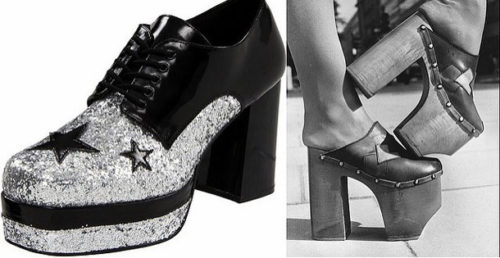
My inner geek gave one last squawk and rustled up an old chestnut from sophomore year in high school: “In Xanadu did Kubla Khan a stately pleasure dome decree…” (Stately? Why would you want your pleasure to be stately?) I ordered the thinking, rational side of my brain to shut down. I was transformed: I was Dorothy, I was Alice, I was Cinderella, I was Eliza Doolittle, I was every ragged, dusty fairy tale heroine who had been magically sprung out of the cowshed or attic of her colorless life and propelled into her true destiny, on the arm of a very handsome prince.

Our procession down to the one unoccupied table, which was nestled next to the dance floor and bore a prominent “Reserved” sign, took twenty minutes. Tuxedoed waiters toting ice buckets and trays of cocktails skillfully veered around us. Everyone we passed jumped up to greet Fito and check out his new girl. Glamorous couples were hopping off the dance floor to give Fito a handshake, hug, or double kiss. Except for plenty of side-eye from the women and appreciative looks from the men, I was ignored, but content to stand there and twinkle anonymously; it was way too loud for introductions.
At our ringside table, the waiter pulled out my chair out for me, and Fito shouted in my ear: “What do you want to drink?” I responded in the most sophisticated way I could imagine: “Whatever you’re drinking.”
I was hoping for more champagne. What I got was not a champagne goblet, but what looked like a glass of ice water. A healthy slug left me gasping and blinking; it took a second for me to realize I was drinking vodka on the rocks. This had to be a mistake, the bartender had forgotten to put in OJ or Bloody Mary mix. Before I could point this out, Fito emptied his drink and steered me by my elbow to the dance floor, my head reeling with vodka and lust and disbelief.
Twenty-four hours ago I had been trudging through a foot of snow, leaning into a blizzardly wind as if it were a wall, headed to my job serving hamburgers on paper plates. Without the help of a tornado or magic mirror, I had been transported to this dazzling pleasure palace. I was dancing with the best-looking, sexiest man I had ever seen. The flashes of “Is this really happening?” that shot through my brain did not help my dancing, as nothing short of knee-capping can help my dancing, but I must not have embarrassed myself too badly. My own giddy amazement and happiness made me smile and glow like a newly crowned Miss America. No makeup or jewelry could improve me; I was radiant with glee.
Fito, of course, was a regular disco Fred Astaire who could make a hat rack like me pass as a dance partner. Other couples scooted back to give Fito the room to snap his fingers and swivel his narrow hips, while I did the white girl shuffle while swinging my hair, a move I copied from the go-go dancers on “Shindig!” and “Hullabaloo.”
After enough dancing to make sure everyone at Armando’s saw that he was there, and with a new female accessory, Fito needed another drink. We headed back to our table, where Mindy and Jorge were yelling at each other in two different languages over the music. Fito declared that he was now too thirsty for anything but champagne; the Perrier Jouet arrived in its pretty bottle. We all had a drink, and then Fito and I fell on each other.
There is nothing more thrilling than making out with a very handsome man in a really swell nightclub. It was a roller coaster with no scary parts, a remembrance of twirling around and around like a top as a little kid, and a grown-up electric current of desire. Layered on top was my smug knowledge that we were being eyed by everyone there, who, no matter how much fun they were having, wished they were us. Donna Summer’s “Love to Love You” swelled on; the lights dimmed and became even more flattering. I had the sudden realization that kissing was the best thing ever: lips and tongue are transformed into your entire body, alive with turned-on nerve endings. Without coming out of our lip lock, Fito and I discovered secret ways to get into each others’ clothes, and every touch, every kiss, became more and more exciting. It was better than sex.
While Fito and I were feeding hungrily on each other, Jorge and Mindy were not similarly engaged. I was no prettier than the exotic, ink-eyed Mindy, but I was blonde, and I knew that it was my blondness that had initially attracted Fito’s fickle eye. Maybe he thought the contrast would be more attention-getting, him Heathcliff dark and brooding, me fair and corn-fed cheerful.
Mindy wasn’t engaged in tongue sex, but she was smiling and laughing. Who wouldn’t love the front row tables, the non-stop disco fun, and the free drinks? Every once in a while, I would look up from under Fito’s face to see Mindy dragging Jorge to the dance floor, her way of stopping the advance of his hands. She tried to make it clear to Jorge that she liked him fine but was not going to sleep with him. Jorge made it clear that he liked her a lot and would keep trying to get her to sleep with him. At one point when the music dropped to a dull roar, I heard Jorge wooing Mindy with the promise that if she moved to Acapulco, he could get her a waitressing job.
Fito timed everything perfectly; late, late into the night when we stepped out of the club and into his waiting car, Armando’s lights went on and the disco music went off. Despite much tugging and pleading from Jorge, Mindy insisted on being dropped off at our awful hotel, then Jorge was delivered to his apartment. At Fito’s place, our clothes removed themselves as we clutched our way to his big, satin-sheeted bed, where we stayed until noon the next day.
Considering History: Carter Woodson, Black History Month, and Reframing the American Story
This series by American studies professor Ben Railton explores the connections between America’s past and present.
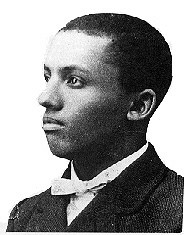
Although the first Black History Month was celebrated in February 1970, the original concept behind this commemoration of African American history and community is nearing its centennial anniversary. In 1926, pioneering African American educator, historian, and activist Carter G. Woodson (1875-1950) decided to designate the second week of February “Negro History Week.” That week features the birthdays of both Frederick Douglass and Abraham Lincoln, and so provided a perfect occasion in which public schools—the central emphasis of Woodson’s idea—could remember those figures specifically and African American history more generally.
But Woodson did so much more than designate a special week. Many of Woodson’s own experiences, achievements, and ideas make him a figure worthy of commemoration, but one of his most critical contributions was his argument that African Americans were not peripheral to the American story but instead at the very heart of it. Woodson essentially attempted to completely reframe American history.
Ironically, a man so fully associated with education achieved his own educational milestones through a strikingly alternative path. Born to former slaves in Reconstruction-era Virginia, Woodson grew up in significant poverty and was unable to attend school for more than brief periods. After his family moved to West Virginia, he went to work as a coal miner at the age of 17, and was only able to enroll in Huntington’s Douglass High School (a segregated school named after Frederick Douglass) when he was 20 years old. But he graduated in two years, began teaching at a nearby school for the children of African American miners, and at the age of 25 was named Douglass High’s principal.
Woodson’s personal and professional links to education continued to develop from there in unconventional but groundbreaking ways. He took classes part-time at Kentucky’s Berea College while working at Douglass and received a BA in Literature in just three years. He then worked as a school supervisor in the Philippines for four years, returning to the United States (after a semester of study at the Sorbonne in Paris) to complete a second BA at the University of Chicago and then a PhD in History from Harvard (making him the second African American to receive a doctorate in history, after W.E.B. Du Bois). He would go on to work as a professor and dean at multiple historically black colleges and universities (HBCUs), including Howard University and the West Virginia Collegiate Institute.
Those academic achievements—a doctorate and then faculty and administrative roles in higher education—might seem far removed from, if not opposed to, Woodson’s partial and haphazard educational first steps. But in his own lifelong arguments about African American education Woodson instead sought to link these disparate worlds, in two distinct ways: First, the realities of segregated education in America meant that African Americans could only achieve educational success through such haphazard opportunities, and Woodson argued that the highest levels of individual educational attainment could nonetheless stem directly from and build upon those opportunities. Second, educators and activists like Woodson worked in this era to create vital, collective resources for all African American students, families, and communities, from preparatory schools like Douglass to HBCUs like Howard, among many others.
Woodson’s experiences of community also inspired another of his most influential efforts and legacies. During his time in Chicago he stayed at the Wabash Avenue YMCA, a longstanding institution in the city’s historic African American Bronzeville neighborhood. It was that community, Woodson would later detail, that inspired him in 1915 to create the Association for the Study of Negro Life and History, an organization devoted to better remembering and documenting such communities and their histories and stories. The Association (still in existence today as the Association for the Study of African American Life and History) published The Journal of Negro History and the Negro History Bulletin, worked with educators and schools around the country, and promoted the consistent and rigorous study of African American history both within and outside of the educational system.
After founding the Association Woodson published his first two groundbreaking historical books, A Century of Negro Migration (1918) and The Education of the Negro Prior to 1861 (1919). He would go on to write and publish many more books over the next few decades, works that spanned academic disciplines, educational debates, and public conversations. But perhaps even more important than the works themselves was Woodson’s radical reframing of what African American history meant and should mean for American community and identity. As he succinctly put it in describing the central goal of Negro History Week, “We should emphasize not Negro history, but the Negro in history.”

That might seem like a small or semantic difference, but I believe it instead reflects a profound revision and reframing. African American history, Woodson consistently argued, was not separate from nor peripheral to American history—it was instead at the heart of it, a crucial thread without which the larger fabric would not hold together (if it would still exist at all). That argument focused first and foremost on education, as Woodson noted that African Americans had for too long been “overlooked, ignored, and even suppressed by the writers of history textbooks and the teachers who use them.” But it was just as much a reframing of our collective memories, an effort to make African American history meaningful and vital for every American community and story.
There are many reasons we should feature Carter G. Woodson in our Black History Month commemorations this year, from his originating role and communal activisms to his inspiring individual story and achievements. But most of all he reminds us that Black history matters because it is American history.
“The Busher’s Honeymoon” by Ring W. Lardner
CHICAGO, ILLINOIS, October 17.
FRIEND AL: Well Al it looks like as if I would not be writeing so much to you now that I am a married man. Yes Al I and Florrie was married the day before yesterday just like I told you we was going to be and Al I am the happyest man in the world though I have spent $30 in the last 3 days inclusive. You was wise Al to get married in Bedford where not nothing is nearly half so dear. My expenses was as follows:
License . . . . . . . . . . . . . . . . $ 2.00
Preist . . . . . . . . . . . . . . . . . . 3.50
Haircut and shave . . . . . . . . .35
Shine . . . . . . . . . . . . . . . . . . .05
Carfair . . . . . . . . . . . . . . . . . .45
New suit . . . . . . . . . . . . . . . .14.50
Show tickets . . . . . . . . . . . . . 3.00
Flowers . . . . . . . . . . . . . . . . .50
Candy . . . . . . . . . . . . . . . . . . .30
Hotel . . . . . . . . . . . . . . . . . . . 4.50
Tobacco both kinds . . . . . . . . .25
You see Al it costs a hole lot of money to get married here. The sum of what I have wrote down is $29.40 but as I told you I have spent $30 and I do not know what I have did with that other $0.60. My new brother-in-law Allen told me I should ought to give the preist $5 and I thought it should be about $2 the same as the license so I split the difference and give him $3.50. I never seen him before and probily won’t never see him again so why should I give him anything at all when it is his business to marry couples? But I like to do the right thing. You know me Al.
I thought we would be in Bedford by this time but Florrie wants to stay here a few more days because she says she wants to be with her sister. Allen and his wife is thinking about takeing a flat for the winter instead of going down to Waco Texas where they live. I don’t see no sense in that when it costs so much to live here but it is none of my business if they want to throw their money away. But I am glad I got a wife with some sense though she kicked because I did not get no room with a bath which would cost me $2 a day instead of $1.60. I says I guess the clubhouse is still open yet and if I want a bath I can go over there and take the shower. She says Yes and I suppose I can go and jump in the lake. But she would not do that Al because the lake here is cold at this time of the year.
When I told you about my expenses I did not include in it the meals because we would be eating them if I was getting married or not getting married only I have to pay for six meals a day now instead of three and I didn’t used to eat no lunch in the playing season except once in a while when I knowed I was not going to work that afternoon. I had a meal ticket which had not quite ran out over to a resturunt on Indiana Ave and we eat there for the first day except at night when I took Allen and his wife to the show with us and then he took us to a chop-suye resturunt. I guess you have not never had no chop-suye Al and I am here to tell you, you have not missed nothing but when Allen was going to buy the supper what could I say? I could not say nothing.
Well yesterday and today we been eating at a resturunt on Cottage Grove Ave near the hotel and at the resturunt on Indiana that I had the meal ticket at only I do not like to buy no new meal ticket when I am not going to be round here no more than a few days. Well Al I guess the meals has cost me all together about $1.50 and I have eat very little myself. Florrie always wants desert ice cream or something and that runs up into money faster than regular stuff like stake and ham and eggs.
Well Al Florrie says it is time for me to keep my promise and take her to the moveing pictures which is $0.20 more because the one she likes round here costs a.dime apeace. So I must close for this time and will see you soon.
Your pal, JACK.
CHICAGO, ILLINOIS, October 22.
AL: Just a note Al to tell you why I have not yet came to Bedford yet where I expected I would be long before this time. Allen and his wife have took a furnished flat for the winter and Allen’s wife wants Florrie to stay here untill they get settled. Meentime it is costing me a hole lot of money at the hotel and for meals besides I am paying $10 a month rent for the house you got for me and what good am I getting out of it? But Florrie wants to help her sister and what can I say? Though I did make her promise she would not stay no longer than next Saturday at least. So I guess Al we will be home on the evening train Saturday and then maybe I can save some money.
I know Al that you and Bertha will like Florrie when you get aquainted with her epesially Bertha though Florrie dresses pretty swell and spends a hole lot of time fusing with her face and her hair.
She says to me tonight Who are you writeing to and I told her Al Blanchard who I have told you about a good many times. She says I bet you are writeing to some girl and acted like as though she was kind of jealous. So I thought I would tease her a little and I says I don’t know no girls except you and Violet and Hazel. Who is Violet and Hazel? she says. I kind of laughed and says Oh I guess I better not tell you and then she says I guess you will tell me. That made me kind of mad because no girl can’t tell me what to do. She says Are you going to tell me? and I says No.
Then she says If you don’t tell me I will go over to Marie’s that is her sister Allen’s wife and stay all night. I says Go on and she went downstairs but I guess she probily went to get a soda because she has some money of her own that I give her. This was about two hours ago and she is probily down in the hotel lobby now trying to scare me by makeing me believe she has went to her sister’s. But she can’t fool me Al and I am now going out to mail this letter and get a beer. I won’t never tell her about Violet and Hazel if she is going to act like that.
Yours truly, JACK.
CHICAGO, ILLINOIS, October 24.
FRIEND AL: I guess I told you Al that we would be home Saturday evening. I have changed my mind. Allen and his wife has a spair bedroom and wants us to come there and stay a week or two. It won’t cost nothing except they will probily want to go out to the moveing pictures nights and we will probily have to go along with them and I am a man Al that wants to pay his share and not be cheap.
I and Florrie had our first quarrle the other night. I guess I told you the start of it but I don’t remember. I made some crack about Violet and Hazel just to tease Florrie and she wanted to know who they was and I would not tell her. So she gets sore and goes over to Marie’s to stay all night. I was just kidding Al and was willing to tell her about them two poor girls whatever she wanted to know except that I don’t like to brag about girls being stuck on me. So I goes over to Marie’s after her and tells her all about them except that I turned them down cold at the last minute to marry her because I did not want her to get all swelled up. She made me aware that I did not never care nothing about them and that was easy because it was the truth. So she come back to the hotel with me just like I knowed she would when I ordered her to.
They must not be no mistake about who is the boss in my house. Some men lets their wife run all over them but I am not that kind. You know me Al. I must get busy and pack my suitcase if I am going to move over to Allen’s. I sent three collars and a shirt to the laundrey this morning so even if we go over there tonight I will have to take another trip back this way in a day or two. I won’t mind Al because they sell my kind of beer down to the corner and I never seen it sold nowheres else in Chi. You know the kind it is, eh Al? I wish I was lifting a few with you tonight.
Your pal, JACK.
CHICAGO, ILLINOIS, October 28.
DEAR OLD AL: Florrie and Marie has went downtown shopping because Florrie thinks she has got to have a new dress though she has got two changes of cloths now and I don’t know what she can do with another one. I hope she don’t find none to suit her though it would not hurt none if she got something for next spring at a reduckshon. I guess she must think I am Charles A. Comiskey or somebody. Allen has went to a colledge football game. One of the reporters give him a pass. I don’t see nothing in football except a lot of scrapping between little slobs that I could lick the whole bunch of them so I did not care to go. The reporter is one of the guys that travled round with our club all summer. He called up and said he hadn’t only the one pass but he was not hurting my feelings none because I would not go to no rotten football game if they payed me.
The flat across the hall from this here one is for rent furnished. They want $40 a month for it and I guess they think they must be lots of suckers running round loose. Marie was talking about it and says Why don’t you and Florrie take it and then we can be right together all winter long and have some big times? Florrie says It would be all right with me. What about it Al? I says What do you think I am? I don’t have to live in no high price flat when I got a home in Bedford where they ain’t no people trying to hold everybody up all the time. So they did not say no more about it when they seen I was in ernest. Nobody cannot tell me where I am going to live sister-in-law or no sister-in-law. If I was to rent the rotten old flat I would be paying $50 a month rent includeing the house down in Bedford. Fine chance Al.
Well Al I am lonesome and thirsty so more later.
Your pal, JACK.
CHICAGO, ILLINOIS, November 2.
FRIEND AL: Well Al I got some big news for you. I am not comeing to Bedford this winter after all except to make a visit which I guess will be round Xmas. I changed my mind about that flat across the hall from the Allens and decided to take it after all. The people who was in it and owns the furniture says they would let us have it till the 1 of May if we would pay $42.60 a month which is only $2.60 a month more than they would of let us have it for for a short time. So you see we got a bargain because it is all furnished and everything and we won’t have to blow no money on furniture besides the club goes to California the middle of Febuery so Florrie would not have no place to stay while I am away.
The Allens only subleased their flat from some other people till the 2 of Febuery and when I and Allen goes West Marie can come over and stay with Florrie so you see it is best all round. If we should of boughten furniture it would cost us in the neighborhood of $100 even without no piano and they is a piano in this here flat which makes it nice because Florrie plays pretty good with one hand and we can have lots of good times at home without it costing us nothing except just the bear liveing expenses. I consider myself lucky to of found out about this before it was too late and somebody else had of gotten the tip.
Now Al old pal I want to ask a great favor of you Al. I all ready have payed one month rent $10 on the house in Bedford and I want you to see the old man and see if he won’t call off that lease. Why should I be paying $10 a month rent down there and $42.60 up here when the house down there is not no good to me because I am liveing up here all winter? See Al? Tell him I will gladly give him another month rent to call off the lease but don’t tell him that if you don’t have to. I want to be fare with him.
If you will do this favor for me, Al, I won’t never forget it. Give my kindest to Bertha and tell her I am sorry I and Florrie won’t see her right away but you see how it is Al.
Yours, JACK.
CHICAGO, ILLINOIS, November 30.
FRIEND AL: I have not wrote for a long time have I Al but I have been very busy. They was not enough furniture in the flat and we have been buying some more. They was enough for some people maybe but I and Florrie is the kind that won’t have nothing but the best. The furniture them people had in the liveing room was oak but they had a bookcase hilt in in the flat that was mohoggeny and Florrie would not stand for no joke combination like that so she moved the oak chairs and table in to the spair bedroom and we went downtown to buy some mohoggeny. But it costs too much Al and we was feeling pretty bad about it when we seen some Sir Cashion walnut that was prettier even than the mohoggeny and not near so expensive. It is not no real Sir Cashion walnut but it is just as good and we got it reasonable. Then we got some mission chairs for the dinning room because the old ones was just straw and was no good and we got a big lether couch for $9 that somebody can sleep on if we get to much company.
I hope you and Bertha can come up for the holidays and see how comfertible we are fixed. That is all the new furniture we have boughten but Florrie set her heart on some old Rose drapes and a red table lamp that is the biggest you ever seen Al and I did not have the heart to say no. The hole thing cost me in the neighborhood of $110 which is very little for what we got and then it will always be ourn even when we move away from this flat though we will have to leave the furniture that belongs to the other people but their part of it is not no good anyway.
I guess I told you Al how much money I had when the season ended. It was $1400 all told includeing the city serious money. Well Al I got in the neighborhood of $800 left because I give $200 to Florrie to send down to Texas to her other sister who had a bad egg for a husband that managed a club in the Texas Oklahoma League and this was the money she had to pay to get the divorce. I am glad Al that I was lucky enough to marry happy and get a good girl for my wife that has got some sense and besides if I have got $800 left I should not worry as they say.
Your pal, JACK.
CHICAGO, ILLINOIS, December 7.
DEAR OLD AL: No I was in ernest Al when I says that I wanted you and Bertha to come up here for the holidays. I know I told you that I might come to Bedford for the holidays but that is all off. I have gave up the idea of comeing to Bedford for the holidays and I want you to be sure and come up here for the holidays and I will show you a good time. I would love to have Bertha come to and she can come if she wants to only Florrie don’t know if she would have a good time or not and thinks maybe she would rather stay in Bedford and you come alone. But be sure and have Bertha come if she wants to come but maybe she would not injoy it. You know best Al.
I don’t think the old man give me no square deal on that lease but if he wants to stick me all right. I am greatful to you Al for trying to fix it up but maybe you could of did better if you had of went at it in a different way. I am not finding no fault with my old pal though. Don’t think that. When I have a pal I am the man to stick to him threw thick and thin. If the old man is going to hold me to that lease I guess I will have to stand it and I guess I won’t starv to death for no $10 a month because I am going to get $2800 next year besides the city serious money and maybe we will get into the World Serious too. I know we will if Callahan will pitch me every 3d day like I wanted him to last season. But if you had of approached the old man in a different way maybe you could of fixed it up. I wish you would try it again Al if it is not no trouble.
We had Allen and his wife here for thanksgiveing dinner and the dinner cost me better than $5. I thought we had enough to eat to last a weak but about six oclock at night Florrie and Marie said they was hungry and we went downtown and had dinner all over again and I payed for it and it cost me $5 more. Allen was all ready to pay for it when Florrie said No this day’s treat is on us so I had to pay for it but I don’t see why she did not wait and let me do the talking. I was going to pay for it any way.
Be sure and come and visit us for the holidays Al and of coarse if Bertha wants to come bring her along. We will be glad to see you both. I won’t never go back on a friend and pal. You know me Al.
Your old pal, JACK
CHICAGO, ILLINOIS, December 20.
FRIEND AL: I don’t see what can be the matter with Bertha because you know Al we would not care how she dressed and would not make no kick if she come up here in a night gown. She did not have no license to say we was to swell for her because we did not never think of nothing like that. I wish you would talk to her again Al and tell her she need not get sore on me and that both her and you is welcome at my house any time I ask you to come. See if you can’t make her change her mind Al because I feel like as if she must of took offense at something I may of wrote you. I am sorry you and her are not comeing but I suppose you know best. Only we was getting all ready for you and Florrie said only the other day that she wished the holidays was over but that was before she knowed you was not comeing. I hope you can come Al.
Well Al I guess there is not no use talking to the old man no more. You have did the best you could but I wish I could of came down there and talked to him. I will pay him his rotten old $10 a month and the next time I come to Bedford and meet him on the street I will bust his jaw. I know he is a old man Al but I don’t like to see nobody get the best of me and I am sorry I ever asked him to let me off. Some of them old skinflints has no heart Al but why should I fight with a old man over chicken feed like $10? Florrie says a star pitcher like I should not ought never to scrap about little things and I guess she is right Al so I will pay the old man his $10 a month if I have to.
Florrie says she is jealous of me writeing to you so much and she says she would like to meet this great old pal of mine. I would like to have her meet you to Al and I would like to have you change your mind and come and visit us and I am sorry you can’t come Al.
Yours truly, JACK.
CHICAGO, ILLINOIS, December 27.
OLD PAL: I guess all these lefthanders is alike though I thought this Allen had some sense. I thought he was different from the most and was not no rummy but they are all alike Al and they are all lucky that somebody don’t hit them over the head with a ax and kill them but I guess at that you could not hurt no lefthanders by hitting them over the head. We was all down on State St. the day before Xmas and the girls was all tired out and ready to go home but Allen says No I guess we better stick down a while because now the crowds is out and it will be fun to watch them. So we walked up and down State St. about a hour longer and finally we come in front of a big jewlry store window and in it was a swell dimond ring that was marked $100. It was a ladies’ ring so Marie says to Allen Why don’t you buy that for me? And Allen says Do you really want it? And she says she did.
So we tells the girls to wait and we goes over to a salloon where Allen has got a friend and gets a check cashed and we come back and he bought the ring. Then Florrie looks like as though she was getting all ready to cry and I asked her what was the matter and she says I had not boughten her no ring not even when we was engaged. So I and Allen goes back to the Balloon and I gets a check cashed and we come back and bought another ring but I did not think the ring Allen had boughten was worth no $100 so I gets one for $75. Now Al you know I am not makeing no kick
on spending a little money for a present for my own wife but I had allready boughten her a rist watch for $15 and a rist watch was just what she had wanted. I was willing to give her the ring if she had not of wanted the rist watch more than the ring but when I give her the ring I kept the rist watch and did not tell her nothing about it.
Well I come downtown alone the day after Xmas and they would not take the rist watch back in the store where I got it. So I am going to give it to her for a New Year’s present and I guess that will make Allen feel like a dirty doose. But I guess you cannot hurt no lefthander’s feelings at that. They are all alike. But Allen has not got nothing but a dinky curve ball and a fast ball that looks like my slow one. If Comiskey was not good-hearted he would of sold him long ago.
I sent you and Bertha a cut-glass dish Al which was the best I could get for the money and it was pretty high pricet at that. We was glad to get the pretty pincushions from you and Bertha and Florrie says to tell you that we are well supplied with pincushions now because the ones you sent makes a even half dozen. Thanks Al for remembering us and thank Bertha too though I guess you paid for them.
Your pal, JACK.
CHICAGO, ILLINOIS, Januery 3.
OLD PAL: Al I been pretty sick ever since New Year’s eve. We had a table at 1 of the swell resturunts downtown and I never seen so much wine drank in my life. I would rather of had beer but they would not sell us none so I found out that they was a certain kind that you can get for $1 a bottle and it is just as good as the kind that has got all them fancy names but this lefthander starts ordering some other kind about 11 oclock and it was $5 a bottle and the girls both says they liked it better. I could not see a hole lot of difference myself and I would of gave $0.20 for a big stine of my kind of beer. You know me Al. Well Al you know they is not nobody that can drink more than your old pal and I was all O.K. at one oclock but I seen the girls was getting kind of sleepy so I says we better go home.
Then Marie says Oh, shut up and don’t be no quiter. I says You better shut up yourself and not be telling me to shut up, and she says What will you do if I don’t shut up? And I says I would bust her in the jaw. But you know Al I would not think of busting no girl. Then Florrie says You better not start nothing because you had to much to drink or you would not be talking about busting girls in the jaw. Then I says I don’t care if it is a girl I bust or a lefthander. I did not mean nothing at all Al but Marie says I had insulted Allen and he gets up and slaps my face. Well Al I am not going to stand that from nobody not even if he is my brother-in-law and a lefthander that has not got enough speed to brake a pain of glass.
So I give him a good beating and the waiters butts in and puts us all out for fighting and I and Florrie comes home in a taxi and Allen and his wife don’t get in till about 5 oclock so I guess she must of had to of took him to a doctor to get fixed up. I been in bed ever since till just this morning kind of sick to my stumach. I guess I must of eat something that did not agree with me. Allen come over after breakfast this morning and asked me was I all right so I guess he is not sore over the beating I give him or else he wants to make friends because he has saw that I am a bad guy to monkey with.
Florrie tells me a little while ago that she paid the hole bill at the resturunt with my money because Allen was broke so you see what kind of a cheap skate he is Al and someday I am going to bust his jaw. She won’t tell me how much the bill was and I won’t ask her to no more because we had a good time outside of the fight and what do I care if we spent a little money?
Yours truly, JACK.
CHICAGO, ILLINOIS, Januery 20.
FRIEND AL: Allen and his wife have gave up the flat across the hall from us and come over to live with us because we got a spair bedroom and why should they not have the bennifit of it? But it is pretty hard for the girls to have to cook and do the work when they is four of us so I have a hired girl who does it all for $7 a week. It is great stuff Al because now we can go round as we please and don’t have to wait for no dishes to be washed or nothing. We generally almost always has dinner downtown in the evening so it is pretty soft for the girl too. She don’t generally have no more than one meal to get because we generally run round downtown till late and don’t get up till about noon.
That sounds funny don’t it Al, when I used to get up at 5 every morning down home. Well Al I can tell you something else that may sound funny and that is that I lost my taste for beer. I don’t seem to care for it no more and I found I can stand allmost as many drinks of other stuff as I could of beer. I guess Al they is not nobody ever lived can drink more and stand up better under it than me. I make the girls and Allen quit every night.
I only got just time to write you this short note because Morrie and Marie is giving a big party tonight and I and Allen have got to beat it out of the house and stay out of the way till they get things ready. It is Marie’s berthday and she says she is 22 but say Al if she is 22 Kid Gleason is 30. Well Al the girls says we must blow so I will run out and mail this letter.
Yours truly, JACK.
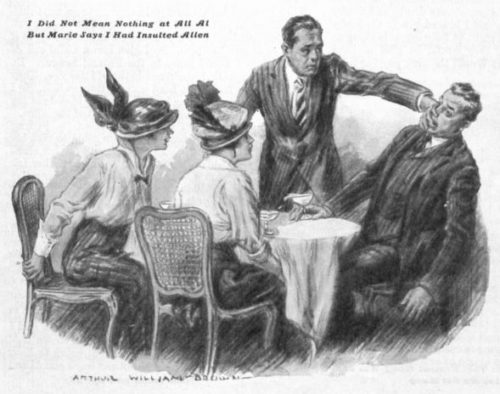
CHICAGO, ILLINOIS, Januery 31.
AL: Allen is going to take Marie with him on the training trip to California and of course Florrie has been at me to take her along. I told her postivly that she can’t go. I can’t afford no stunt like that but still I am up against it to know what to do with her while we are on the trip because Marie won’t be here to stay with her. I don’t like to leave her here all alone but they is nothing to it Al I can’t afford to take her along. She says I don’t see why you can’t take me if Allen takes Marie. And I says That stuff is all O.K. for Allen because him and Marie has been grafting off of us all winter. And then she gets mad and tells me I should not ought to say her sister was no grafter. I did not mean nothing like that Al but you don’t never know when a woman is going to take offense.
If our furniture was down in Bedford everything would be all O.K. because then I could leave her there and I would feel all O.K. because I would know that you and Bertha would see that she was getting along O.K. But they would not be no sense in sending her down to a house that has not no furniture in it. I wish I knowed somewheres where she could visit Al. I would be willing to pay her bord even.
Well Al enough for this time.
Your old pal, JACK.
CHICAGO, ILLINOIS, Febuery 4.
FRIEND AL: You are a real old pal Al and I certainly am greatful to you for the invatation. I have not told Florrie about it yet but I am sure she will be tickled to death and it is certainly kind of you old pal. I did not never dream of nothing like that. I note what you say Al about not axcepting no bord but I think it would be better and I would feel better if you would take something say about $2 a week.
I know Bertha will like Florrie and that they will get along O.K. together because Florrie can learn her how to make her cloths look good and fix her hair and fix up her face. I feel like as if you had took a big load off of me Al and I won’t never forget it.
If you don’t think I should pay no bord for Florrie all right. Suit yourself about that old pal.
We are leaveing here the 20 of Febuery and if you don’t mind I will bring Florrie down to you about the 18. I would like to see all the old bunch again and spesially you and Bertha.
Yours, JACK.
P. S. We will only be away till April 14 and that is just a nice visit. I wish we did not have no flat on our hands.
CHICAGO, ILLINOIS, Febuery 9.
OLD PAL: I want to thank you for asking Florrie to come down there and visit you Al but I find she can’t get away. I did not know she had no engagements but she says she may go down to her folks in Texas and she don’t want to say that she will come to visit you when it is so indefanate. So thank you just the same Al and thank Bertha too.
Florrie is still at me to take her along to California but honest Al I can’t do it. I am right down to my last $50 and I have not payed no rent for this month. I owe the hired girl 2 weeks’ salery and both I and Florrie needs some new cloths.
Florrie has just came in since I started writeing this letter and we have been talking some more about California and she says maybe if I would ask Comiskey he would take her along as the club’s guest. I had not never thought of that Al and maybe he would because he is a pretty good scout and I guess I will go and see him about it. The league has its skedule meeting here tomorrow and maybe I can see him down to the hotel where they meet at. I am so worried Al that I can’t write no more but I will tell you how I come out with Comiskey.
Your pal, JACK.
CHICAGO, ILLINOIS, Febuery 11.
FRIEND AL: I am up against it right Al and I don’t now where I am going to head in at. I went down to the hotel where the league was holding its skedule meeting at and I seen Comiskey and got some money off of the club but I owe all the money I got off of them and I am still wondering what to do about Florrie.
Comiskey was busy in the meeting when I went down there and they was not no chance to see him for a while so I and Allen and some of the boys hung round and had a few drinks and fanned. This here Joe Hill the busher that Detroit has got that Violet is hooked up to was round the hotel. I don’t know what for but I felt like busting his jaw only the boys told me I had better not do nothing because I might kill him and any way he probily won’t be in the league much longer. Well finally Comiskey got threw the meeting and I seen him and he says Hello young man what can I do for you? And I says I would like to get $100 advance money. He says Have you been takeing care of yourself down in Bedford? And I told him I had been liveing here all winter and it did not seem to make no hit with him though I don’t see what business it is of hisn where I live.
So I says I had been takeing good care of myself. And I have Al. You know that. So he says I should come to the ball park the next day which is today and he would have the secretary take care of me but I says I could not wait and so he give me $100 out of his pocket and says he would have it charged against my salery. I was just going to brace him about the California trip when he got away and went back to the meeting.
Well Al I hung round with the bunch waiting for him to get threw again and we had some more drinks and finally Comiskey was threw again and I braced him in the lobby and asked him if it was all right to take my wife along to California. He says Sure they would be glad to have her along. And then I says Would the club pay her fair? He says I guess you must of spent that $100 buying some nerve. He says Have you not got no sisters that would like to go along to? He says Does your wife insist on the drawing room or will she take a lower birth? He says Is my special train good enough for her?
Then he turns away from me and I guess some of the boys must of heard the stuff he pulled because they was laughing when he went away but I did not see nothing to laugh at. But I guess he ment that I would have to pay her fair if she goes along and that is out of the question Al. I am up against it and I don’t know where I am going to head in at.
Your pal, JACK.
CHICAGO, ILLINOIS, Febuery 12.
DEAR OLD AL: I guess everything will be all O.K. now at least I am hopeing it will. When I told Florrie about how I come out with Comiskey she bawled her head off and I thought for a while I was going to have to call a doctor or something but pretty soon she cut it out and we sat there a while without saying nothing. Then she says If you could get your salery razed a couple hundred dollars a year would you borrow the money ahead somewheres and take me along to California? I says Yes I would if I could get a couple hundred dollars more salery but how could I do that when I had signed a contract for $2800 last fall allready? She says Don’t you think you are worth more than $2800? And I says Yes of coarse I was worth more than $2800. She says Well if you will go and talk the right way to Comiskey I believe he will give you $3000 but you must be sure you go at it the right way and don’t go and ball it all up.
Well we argude about it a while because I don’t want to hold nobody up Al but finally I says I would. It would not be holding nobody up anyway because I am worth $3000 to the club if I am worth a nichol. The papers is all saying that the club has got a good chance to win the pennant this year and talking about the pitching staff and I guess they would not be no pitching staff much if it was not for I and one or two others — about one other I guess.
So it looks like as if everything will be all O.K. now Al. I am going to the office over to the park to see him the first thing in the morning and I am pretty sure that I will get what I am after because if I do not he will see that I am going to quit and then he will see what he is up against and not let me get away.
I will let you know how I come out.
Your pal, JACK.
CHICAGO, ILLINOIS, Febuery 14.
FRIEND AL: Al old pal I have got a big supprise for you. I am going to the Federal League. I had a run in with Comiskey yesterday and I guess I told him a thing or 2. I guess he would of been glad to sign me at my own figure before I got threw but I was so mad I would not give him no chance to offer me another contract.
I got out to the park at 9 oclock yesterday morning and it was a hour before he showed up and then he kept me waiting another hour so I was pretty sore when I finally went in to see him. He says Well young man what can I do for you? I says I come to see about my contract. He says Do you want to sign up for next year all ready? I says No I am talking about this year. He says I thought I and you talked business last fall. And I says Yes but now I think I am worth more money and I want to sign a contract for $3000. He says If you behave yourself and work good this year I will see that you are took care of. But I says That won’t do because I have got to be sure I am going to get $3000.
Then he says I am not sure you are going to get anything. I says What do you mean? And he says I have gave you a very fare contract and if you don’t want to live up to it that is your own business. So I give him a awful call Al and told him I would jump to the Federal League. He says Oh, I would not do that if I was you. They are haveing a hard enough time as it is. So I says something back to him and he did not say nothing to me and I beat it out of the office.
I have not told Florrie about the Federal League business yet as I am going to give her a big supprise. I bet they will take her along with me on the training trip and pay her fair but even if they don’t I should not worry because I will make them give me a contract for $4000 a year and then I can afford to take her with me on all the trips.
I will go down and see Tinker tomorrow morning and I will write you tomorrow night Al how much salery they are going to give me. But I won’t sign for no less than $4000. You know me Al.
Yours, JACK.
CHICAGO, ILLINOIS, Febuery 15.
OLD PAL: It is pretty near midnight Al but I been to bed a couple of times and I can’t get no sleep. I am worried to death Al and I don’t know where I am going to head in at. Maybe I will go out and buy a gun Al and end it all and I guess it would be better for everybody. But I cannot do that Al because I have not got the money to buy a gun with.
I went down to see Tinker about signing up with the Federal League and he was busy in the office when I come in. Pretty soon Buck Perry the pitcher that was with Boston last year come out and seen me and as Tinker was still busy we went out and had a drink together. Buck shows me a contract for $5000 a year and Tinker had allso gave him a $500 bonus. So pretty soon I went up to the office and pretty soon Tinker seen me and called me into his private office and asked what did I want. I says I was ready to jump for $4000 and a bonus. He says I thought you was signed up with the White Sox. I says Yes I was but I was not satisfied. He says That does not make no difference to me if you are satisfied or not. You ought to of came to me before you signed a contract. I says I did not know enough but I know better now. He says Well it is to late now. We cannot have nothing to do with you because you have went and signed a contract with the White Sox. I argude with him a while and asked him to come out and have a drink so we could talk it over but he said he was busy so they was nothing for me to do but blow.
So I am not going to the Federal League Al and I will not go with the White Sox because I have got a raw deal. Comiskey will be sorry for what he done when his team starts the season and is up against it for good pitchers and then he will probily be willing to give me anything I ask for but that don’t do me no good now Al. I am way in debt and no chance to get no money from nobody. I wish I had of stayed with Terre Haute Al and never saw this league.
Your pal, JACK.
CHICAGO, ILLINOIS, Febuery 17.
FRIEND AL: Al don’t never let nobody tell you that these here lefthanders is right. This Allen my own brother-in-law who married sisters has been grafting and spongeing on me all winter Al. Look what he done to me now Al. You know how hard I been up against it for money and I know he has got plenty of it because I seen it on him. Well Al I was scared to tell Florrie I was cleaned out and so I went to Allen yesterday and says I had to have $100 right away because I owed the rent and owed the hired girl’s salery and could not even pay no grocery bill. And he says No he could not let me have none because he has got to save all his money to take his wife on the trip to California. And here he has been liveing on me all winter and maybe I could of took my wife to California if I had not of spent all my money takeing care of this no-good lefthander and his wife. And Al honest he has not got a thing and ought not to be in the league. He gets by with a dinky curve ball and has not got no more smoke than a rabbit or something.
Well Al I felt like busting him in the jaw but then I thought No I might kill him and then I would have Marie and Florrie both to take care of and God knows one of them is enough besides paying his funeral expenses. So I walked away from him without takeing a crack at him and went into the other room where Florrie and Marie was at. I says to Marie I says Marie I wish you would go in the other room a minute because I want to talk to Florrie. So Marie beats it into the other room and then I tells Florrie all about what Comiskey and the Federal League done to me. She bawled something awful and then she says I was no good and she wished she had not never married me. I says I wisht it too and then she says Do you mean that and starts to cry.
I told her I was sorry I says that because they is not no use fusing with girls Al specially when they is your wife. She says No California trip for me and then she says What are you going to do? And I says I did not know. She says Well if I was a man I would do something. So then I got mad and I says I will do something. So I went down to the corner salloon and started in to get good and drunk but I could not do it Al because I did not have the money.
Well old pal I am going to ask you a big favor and it is this I want you to send me $100 Al for just a few days till I can get on my feet. I do not know when I can pay it back Al but I guess you know the money is good and I know you have got it. Who would not have it when they live in Bedford? And besides I let you take $20 in June 4 years ago Al and you give it back but I would not have said nothing to you if you had of kept it. Let me hear from you right away old pal.
Yours truly, JACK.
CHICAGO, ILLINOIS, Febuery 19.
AL: I am certainly greatful to you Al for the $100 which come just a little while ago. I will pay the rent with it and part of the grocery bill and I guess the hired girl will have to wait a while for hern but she is sure to get it because I don’t never forget my debts. I have changed my mind about the White Sox and I am going to go on the trip and take Florrie along because I don’t think it would not be right to leave her here alone in Chi when her sister and all of us is going.
I am going over to the ball park and up in the office pretty soon to see about it. I will tell Comiskey I changed my mind and he will be glad to get me back because the club has not got no chance to finish nowheres without me. But I won’t go on no trip or give the club my services without them giveing me some more advance money so as I can take Florrie along with me because Al I would not go without her.
Maybe Comiskey will make my salery $3000 like I wanted him to when he sees I am willing to be a good fellow and go along with him and when he knows that the Federal League would of gladly gave me $4000 if I had not of signed no contract with the White Sox.
I think I will ask him for $200 advance money Al and if I get it may be I can send part of your $100 back to you but I know you cannot be in no hurry Al though you says you wanted it back as soon as possible. You could not be very hard up Al because it don’t cost near so much to live in Bedford as it does up here.
Anyway I will let you know how I come out with Comiskey and I will write you as soon as I get out to Paso Robles if I don’t get no time to write you before I leave.
Your pal, JACK.
J. S. I have took good care of myself all winter Al and I guess I ought to have a great season.
J. S. Florrie is tickled to death about going along and her and I will have some time together out there on the Coast if I can get some money somewheres.
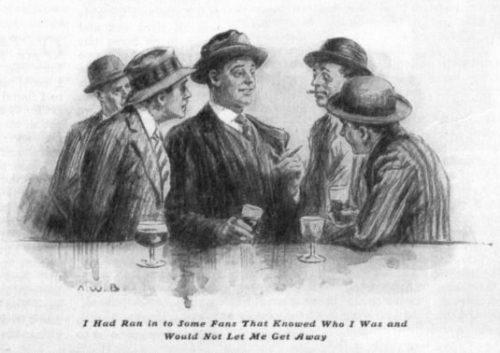
CHICAGO, ILLINOIS, Febuery 21.
FRIEND AL: I have not got the heart to write this letter to you Al. I am up here in my $42.50 a month flat and the club has went to California and Florrie has went too. I am flat broke Al and all I am asking you is to send me enough money to pay my fair to Bedford and they and all their leagues can go to hell Al.
I was out to the ball park early yesterday morning and some of the boys was there allready fanning and kidding each other. They tried to kid me to when I come in but I guess I give them as good as they give me. I was not in no mind for kidding Al because I was there on business and I wanted to see Comiskey and get it done with.
Well the secretary come in finally and I went up to him and says I wanted to see Comiskey right away. He says The boss was busy and what did I want to see him about and I says I wanted to get some advance money because I was going to take my wife on the trip. He says This would be a fine time to be telling us about it even if you was going on the trip.
And I says What do you mean? And he says You are not going on no trip with us because we have got wavers on you and you are sold to Milwaukee.
Honest Al I thought he was kidding at first and I was waiting for him to laugh but he did not laugh and finally I says What do you mean? And he says Cannot you understand no English? You are sold to Milwaukee. Then I says I want to see the boss. He says It won’t do you no good to see the boss and he is to busy to see you. I says I want to get some money. And he says You cannot get no money from this club and all you get is your fair to Milwaukee. I says I am not going to no Milwaukee anyway and he says I should not worry about that. Suit yourself.
Well Al I told some of the boys about it and they was pretty sore and says I ought to bust the secretary in the jaw and I was going to do it when I thought No I better not because he is a little guy and I might kill him.
I looked all over for Kid Gleason but he was not nowheres round and they told me he would not get into town till late in the afternoon. If I could of saw him Al he would of fixed me all up. I asked 3 or 4 of the boys for some money but they says they was all broke.
But I have not told you the worst of it yet Al. When I come back to the flat Allen and Marie and Florrie was busy packing up and they asked me how I come out. I told them and Allen just stood there stareing like a big rummy but Marie and Florrie both begin to cry and I almost felt like as if I would like to cry to only I am not no baby Al.
Well Al I told Florrie she might just is well quit packing and make up her mind that she was not going nowheres till I got money enough to go to Bedford where I belong. She kept right on crying and it got so I could not stand it no more so I went out to get a drink because I still had just about a dollar left yet.
It was about 2 oclock when I left the flat and pretty near 5 when I come back because I had ran in to some fans that knowed who I was and would not let me get away and besides I did not want to see no more of Allen and Marie till they was out of the house and on their way.
But when I come in Al they was nobody there. They was not nothing there except the furniture and a few of my things scattered round. I sit down for a few minutes because I guess I must of had to much to drink but finally I seen a note on the table addressed to me and I seen it was Florrie’s writeing.
I do not remember just what was there in the note Al because I tore it up the minute I read it but it was something about I could not support no wife and Allen had gave her enough money to go back to Texas and she was going on the 6 oclock train and it would not do me no good to try and stop her.
Well Al they was not no danger of me trying to stop her. She was not no good Al and I wisht I had not of never saw either she or her sister or my brother-in-law.
For a minute I thought I would follow Allen and his wife down to the deepo where the special train was to pull out of and wait till I see him and punch his jaw but I seen that would not get me nothing.
So here I am all alone Al and I will have to stay here till you send me the money to come home. You better send me $25 because I have got a few little debts I should ought to pay before I leave town. I am not going to Milwaukee Al because I did not get no decent deal and nobody cannot make no sucker out of me.
Please hurry up with the $25 Al old friend because I am sick and tired of Chi and want to get back there with my old pal.
Yours, JACK.
P. S. Al I wish I had of took poor little Violet when she was so stuck on me.
Patton Addresses the Troops
This is an except from “These Are the Generals: Patton” by Ted Shane, from our February 6, 1943, issue. Read the complete article, below.
Gentlemen,” Patton said in a squeaky but sharp voice, “Let me warn you that this may be the last time you will use blank ammunition. I therefore remind you that you are in a killing business. Kill the other — before he kills you. The quicker you kill him and the farther forward you go, the longer you will live.
“The idea is to hold the enemy by the nose and kick him in the rumble seat.
“Don’t be afraid of how you will act in battle. You will act with courage. You will do your duty. Being under fire will scare you, but it isn’t as terrible as you think it is.
“Thanks to you men, we are ready. I shall be delighted to lead you against any enemy anywhere.”
And a dozen thousand and more of his men jumped to their feet to give him a burst of spontaneous applause.
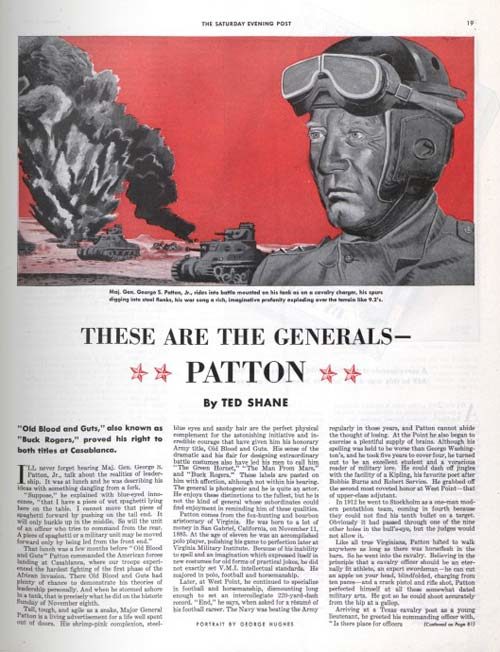
Your Weekly Checkup: Is Red Wine Good or Bad for You?
“Your Weekly Checkup” is our online column by Dr. Douglas Zipes, an internationally acclaimed cardiologist, professor, author, inventor, and authority on pacing and electrophysiology. Dr. Zipes is also a contributor to The Saturday Evening Post print magazine. Subscribe to receive thoughtful articles, new fiction, health and wellness advice, and gems from our archive.
Humans have been drinking wine for almost 10,000 years. We presently consume more than 6 billion gallons annually. (My wife and I add to those billions most evenings at dinner!) In addition to flavor, taste, “nose,” and relaxation properties, wine—and light/moderate alcohol consumption in general—has been associated with a reduced risk of heart disease and in particular, a reduction in ischemic heart disease, which is the atherosclerotic process that causes angina and heart attacks. But, like many things that are good for us, drinking wine is a two-edged sword: excessive alcohol consumption can trigger liver and heart damage, abnormal heart rhythms, and sudden death. The Holiday Heart is a well-known syndrome of heart rhythm problems on Monday after a weekend of excessive imbibing. Drinking patterns, diet, and lifestyle choices such as exercise are important variables for individuals to consider when seeking a healthy cardiovascular risk profile.
What is it in red wine that may be good for the heart? Red wine contains more than 500 chemical substances. One of them, polyphenols, appears to exert antioxidant and anti-inflammatory actions, both of which figure prominently in helping prevent development of ischemic heart disease. In addition, polyphenols reduce the bad (LDL) cholesterol, elevate the good (HDL) cholesterol, increase insulin sensitivity, and reduce blood pressure. There may be other unknown benefits as well.
How much wine should you drink? While adverse effects result with excessive or binge consumption of wine or alcohol, low to moderate intake appears to reduce ischemic heart disease and mortality. The American Heart Association recommends one to two drinks per day for men and one drink per day for women, with one drink defined as 12 ounces of beer, four ounces of wine, 1.5 ounces of 80-proof spirits or one ounce of 100-proof spirits. Perhaps Americans should contemplate moving to Canada because the Canadian Center for Addiction and Mental Health considers low-risk alcohol consumption to be up to three drinks per day for men and two for women, with one drink defined as 12 ounces of 5 percent beer, five ounces of 12 percent wine, and 1.5 ounces of 40 percent spirits.
These inconsistent guidelines make counselling difficult. Given the broad range noted above, I would recommend erring on the low side, but, as Oscar Wilde said years ago, “Everything in moderation, including moderation.”
Heroes of Vietnam: “I Escaped from a Viet Cong Prison”
 This article and other features about America in Vietnam can be found in the Post’s Special Collector’s Edition, The Heroes of Vietnam. This edition can be ordered here.
Originally published December 3, 1966.
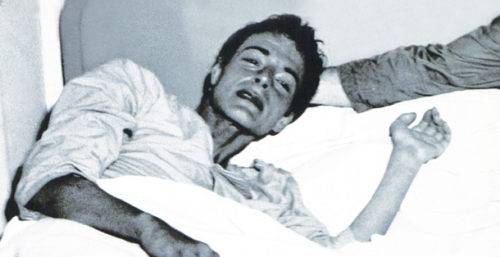
The morning sky was clear over the South China Sea, but the weather turned murky as we approached the coast of North Vietnam. Our group of four Skyraiders had taken off from the USS Ranger 45 minutes earlier — at 9:00 last February 1 — and we were flying in formation at 10,000 feet.
All at once, flak appeared as noisy smudges nearby. Then in my headset, I heard a pilot shout, “I got a target. There it is at nine o’clock.” I looked down and saw it — an anti-aircraft battery at a road intersection. I pulled the stick, rolled on my back and started into my dive.
Suddenly boom, boom, boom. A 57 mm shell knocked off part of my right wing. Another burst hit my engine. It sputtered and quit. I shouted, ‘‘Mayday! Mayday!” into my radio. I leveled out and aimed at the target quickly, then dumped all my ordnance. Miraculously, I hit the target. The anti-aircraft battery had gotten me, but I knocked it out.
As I came out of my bombing run I knew I was going to crash. The plane was hardly controllable, and the jungle flashing past beneath me was getting closer. The only clearing was less than 300 feet long, and the surrounding trees were about 150 feet high and 3 feet thick. I pulled back a little on the stick, and the plane began to shudder. I hit a tree, and my right wing sheared off; the plane veered wildly as my left wing hit another tree. The fuselage flipped over two or three times. There’s no padding at all in the cockpit, but I was strapped in tight. I lifted my legs and put my hands in front of my face. I must have been knocked unconscious during the crash, because I remember only struggling to open the jammed canopy and then being on my back 100 yards from the plane. A big plume of smoke was rising into the sky.
I tried to get my senses together. My knee was blue, and it hurt like hell. My Mae West [life jacket] was gone, my helmet was gone, and blood was running down my neck. My first thought was to get far away from the crash. I crawled across a little creek and must have traveled about half a mile when I heard voices. I hobbled into some bushes, and slowly the voices faded away. I broke off some little sticks and bound them to my knee with elastic bandages to make a splint. Then I started crawling away on my belly.
I knew my target had been in North Vietnam very near the Laotian border, but I didn’t know where I had come down. If I headed east through North Vietnam I might reach the ocean. But then what? I didn’t have a signaling device anymore, so nobody would pick me up. But suppose I went the other way, to Laos? The jungle there would be thicker and easier to hide in. I still had my compass, and I decided to head west.
For the rest of the first day, I kept walking, avoiding trails and clearings and occasional animal traps. That night I slipped into my sleeping bag. At dawn I started moving again, and soon I got careless. Back in the States, they’d told me “always avoid clearings, trails, and water holes.” Now I said the heck with that. Why should I walk in the bush when the trail is easy going?
They caught me 15 minutes later. A couple of guys jumped out of the bush. “Ute, ute,” they shouted. I guessed they were Pathet Lao troops — pro-communist Laotians. One of them held an M-1 at my head while the other searched me. They tied my hands and hit me in the head a couple of times with their fists. Then they took away my watch, my compass, and my ID cards.
For the rest of that afternoon, they ran me along the trail. About 5:00, we reached a clearing where they tied me to a tree. Then a pleasant-faced man in a brown uniform walked over to inspect me. He had a red star on his belt buckle, so I figured he was the leader. The guards had given this man my Geneva Convention card and my regular ID card, and he was trying to read them upside down. For a moment I had a crazy impulse to laugh. But four or five guards had rifles pointing at me.
The officer and his men talked for a while. Then they drove big stakes into the ground and spread-eagled me between them. I spent the night trying to shoo away the mosquitoes by moving my head. Then the leeches started crawling up my legs. A leech is about as long as a needle and not much thicker. Sometimes when it drops off, it’s sucked so much blood that it’s thick as your little finger. Then you just continue bleeding.
or the next several days we walked, four or five guards in front of me, another four or five behind me. The trails twisted up and down so many hills that we had to zigzag constantly in the relentless heat. Occasionally we stopped at small villages. Men, women, and children came out of their huts and clustered about me. The men wore loincloths, and some of them carried knives. They screamed at me and waved their fists, and I could see hate in their eyes.
On the afternoon of the fifth day, we went into a huge cave where soldiers were milling around some Russian jeeps. For the first time since my capture, I was able to communicate with someone. One of the Laotian officers started speaking French. At first he was friendly. He had a camera and took my picture. For nearly a week I’d been eating nothing but rice. He gave me some sugar and a couple of eggs, and he told me that I could write some letters. Then he pulled out a piece of paper and asked me to sign my name. It was typed and phrased in perfect English and it said, in effect, that the Americans were dropping bombs on innocent women and children and that, although I personally opposed this policy, I was forced to fly on these missions by the U.S. government. I wouldn’t sign that paper.
The friendly officer said something to the guards, and they beat me on the head with bamboo sticks, then pummeled my face and ears with their fists. Next morning, the officer shoved that paper in my face again. When I refused to sign it, he told the guards to bring a water buffalo to the mouth of the cave.
They tied my hands, then my feet, and ran the rope 15 or 20 feet to the buffalo’s collar. Laughing, they prodded the animal until it trotted. I was dragged headfirst over sharp roots sticking out of the trail. My clothes were tattered; the skin on my legs was shredded, and I was bleeding a lot. I got madder than hell and called them a lot of dirty names. Then I passed out.
Finally, on the morning of the 14th day, we reached the prison camp — it was just a collection of bamboo huts sitting on stilts about four feet high. They shoved me into one of them, clapped handcuffs on my wrists, and stuck my feet into wooden blocks that must have weighed 30 or 40 pounds. It was very dark in there, but the door was open about half a foot. I saw six other prisoners in another hut a few feet away. Several were in bad shape. I could see big sores on their bodies. I shouted to them, and right away a guard came and told me to shut up. When he left, I called softly to the other hut. One guy called back that his name was Duane Martin; he was an Air Force lieutenant, a helicopter pilot, and he had been captured nine months earlier. Some of the others had been there more than two years.
They were really interested in news from outside. What did cars look like now? What was happening in Europe, Cuba, and China? What could you see on television? I told them that President Kennedy was dead. Duane Martin had said that, too, but they hadn’t believed him.
After a week I was moved into the other hut. Until a month ago, the prisoners said, conditions hadn’t been too bad. They’d even been allowed to boil water at night. Then Little Hitler came and everything had changed.
I’ll never forget that guy. He was short — about 5 feet 2 inches — and he wore a blue-and-yellow loincloth. He had dark skin, little squirrelly eyes, and a big belly. He always carried a submachine gun. He did his best to torment us, and he succeeded lots of times. He knew, for example, that we wanted water desperately, so he’d bring some in a pot and place it just out of our reach. Then he’d pour the water on the ground and laugh. Another of his tricks was to stand one of us in footblocks outside the hut and take the man’s handcuffs off. Then he’d tell the other guards that the prisoner refused to wear handcuffs and should be punished. Right away they’d beat him and fire bullets at his feet.
Of all the guards, and there were 10 or 15 at all times, Little Hitler was undoubtedly the worst. Still, he had competition — Crazy Horse, for example. He really did have a face like a horse, and he really was crazy in a brutal way. Then there were Sot and Dam and Windy — he was a sly son of a gun who was always sneaking around corners, trying to catch us doing something. And Jumbo — I shouldn’t forget him — a fat, dreamy-faced guy who didn’t care about anything. It was hot as hell during the day and bitterly cold at night. Nobody had a match or a lighter — we just rubbed bamboo together to make fire.
One morning — I think it was eight days after I was brought to the camp — Crazy Horse entered our hut with a big smile. We were going to be set free, he said, free to go home. We just had to walk to another headquarters.
We started marching. All of us were stumbling along, tied to one another by handcuffs. We should have known that Crazy Horse was lying. We didn’t reach a headquarters, only another prison camp, like the first one but more heavily fortified.
Now we settled into monotonous routine. Every morning we’d wake up with the chickens. One guy would holler, “Kopa-tie-a-chow” — I have to go to the latrine. There was a hole in the ground 30 or 40 yards away. Five or six guards would remove his footblocks and escort him there. But if he stayed there longer than half a minute, the guards would start shooting. We soon decided it was safer to relieve ourselves in bamboo containers inside the huts. One of us would have to empty these containers every second or third day and would run the risk of being shot — but this was better than having all of us shot at every morning.
At about 9:00, the guards would give us rice. Sometimes all seven of us would be allowed to eat this morning meal at a table outside the main hut, and we’d have about 10 minutes to talk before the guards yelled “Kuo-kuo” and shoved us back inside. During the day, the heat was so unbearable that the guards not on duty simply went to sleep. In mid-afternoon they’d wake up, go out to check their traps for animals, and look for edible leaves and bark. Around five they’d let us out again for another 10-minute meal before putting us back in footblocks for the rest of the night.
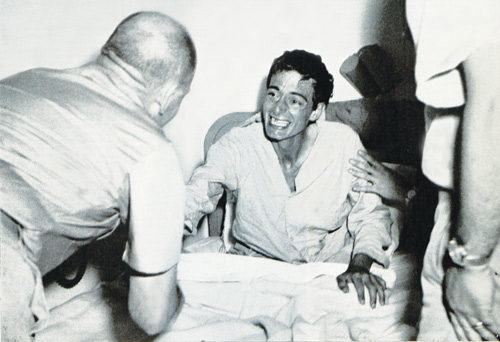
The most nerve-racking part of the routine was the singing. Every night the guards would sing the same propaganda songs, over and over. Now and then the guards would push us out of our huts and hang us upside down from trees or shoot bullets at our feet. One time a guard put an M-1 to my head, and I thought he was going to pull the trigger. Then he laughed and took it away.
After the first few weeks at the camp, we developed a routine of our own. Saturday night was our hoot-and-holler time. We tried to pick songs that all of us knew. On Sunday mornings we’d hold church services. We didn’t have a Bible, but some of us remembered Scripture, and we’d talk for an hour or so about God. Then we’d pray. The rest of the week we had nothing to do but sit inside those huts and wait for food or punishment.
Initially we had enough rice. Then, in March, about a month after we moved to the new camp, the food supply dried up. Once every four or five days the guards would go to check their traps. If something had been caught, it had probably been dead for a while; other animals had torn off its legs or head. For some reason, when they caught a pig, the guards would stick the raw meat into a bamboo container and let it rot there for several days. Maggots would crawl all over it, and it would stink so bad that the guards would hold their noses. But we never got sick from eating it. Most of the prisoners were already used to eating intestines, testicles, and eyes. I thought they were crazy at first, but after a while it didn’t bother me either. At mealtime, we’d take turns dipping coconut shells into a pot of cold food brought by a guard. If we had meat, we’d cut it up first to make sure that each of us got his fair share. One afternoon we found a frog under the floor of our hut. We divided it, raw, among the seven prisoners, and I got his heart. It was smaller than a watch stem, but at least it was food. At night the rats came. We caught them in traps baited with rice. The rats were very good eating. We’d cook them to the extent of searing off their fur, then eat the head, legs, tail, skin — everything. The snakes that we caught were small, but most of them had rats in their stomachs. That was a double feast.
We never had any medical attention. One of the prisoners had a badly infected tooth; pus was streaming out, and it hurt him a lot. He found a nail somewhere, placed it against his tooth, and hammered it with a rock. He chopped it off piece by piece, and that relieved the pressure. We all had diarrhea. We ate charcoal, and that would stop it a little bit, but some guys still had to defecate 20 or 30 times a night. Ants and bugs were crawling all around, and I can’t describe the smell.
There were times when I didn’t want to wake up. I figured the war would last another five years; I’d probably die anyway, so it wouldn’t make any difference. I knew I’d never get home.
From the beginning, we all talked about escape. We decided to wait for the rains which would begin in May. One of the guys made a crude calendar and scratched off the days with a piece of charcoal. D-Day was to be my birthday — May 22. That planning gave us hope and kept us alive.
In March, we started hiding rice in bamboo containers stashed above our heads. Now and then we picked up empty ammunition clips that the guards had discarded and stored them inside our huts. We rubbed bamboo together to make fire, heated the clips until they were soft, then pounded them with rocks into little knives. I tore up part of my sleeping bag and made a rucksack; another guy made a rucksack out of his shorts. I can’t describe the method we used to free ourselves from the footblocks and handcuffs — that information is now being given to other pilots — but I can say that by April we had perfected our technique. The guy who had the calendar kept crossing off the days.
But the rains didn’t come in May. The rice supply was almost gone; the guards caught fewer and fewer animals in their traps, and they began to get hungry too. In June we learned that Little Hitler had told the other guards that if they shot us in the back and dragged our bodies into the bush, they’d have all the food to themselves.
Now we couldn’t afford to wait for the rain. Our only chance for survival was to break out right away and try to make air contact. The guards were letting us out of the huts to go to the latrine once a week; our muscles were so stiff that we could hardly walk. If we delayed the escape any longer, we’d be much too weak.
About 5:00 each afternoon, the guards would walk to the kitchen, pick up their food in turtle shells, then walk back to their hut. Suppose one of us could wiggle through a hole in the floor of the hut and drop to the ground 3 feet below. He might be able to burrow under the 10-inch logs which surrounded the stilts and sneak across the open space to the guards’ hut. If he could grab a weapon, he could hold them up when they returned from the kitchen.
We didn’t have much time. I carved a hole in the floor of the hut, dropped to the ground, and dislodged one of the 10-inch logs with a rock and a bamboo stick. Another guy cut a hole in the wall so he could watch the kitchen. We didn’t have watches, but we could time ourselves by counting “one potato, two potato, three potato.” How long would it take us to get our knives and rice supply and rucksacks out of their hiding places? How long for us to get out of footblocks and handcuffs? How long for me to sneak out of the back of the hut, crawl across 15 yards of open space, and snatch a weapon? The guy with the charcoal added it up. Two minutes and seven seconds, he said.
The food supply was so critical that Little Hitler, Crazy Horse, and three or four others went to get rice in a village a few miles away. Only 10 guards remained. When the guards went to eat, I crept underneath our hut, edged past the logs again, and dashed across the open space. Two minutes and seven seconds — exactly what the guy had predicted. As soon as I reached the porch, the other prisoners started coming through the hole. I grabbed two M-1s, a carbine, and a couple of Chinese rifles. I loaded them quickly, passed them out to the other guys, and turned to face the kitchen.
All of a sudden, bang, bang, bang. The guards were running out — really coming at us. I felt the bullets fly by my head. We yelled, “Ute, ute” for them to stop, then returned their fire. Seven guards fell dead in their tracks. Three of them fled into the bush.
None of us had been hurt in the exchange of fire; still, we were in trouble. We knew there was a village only a mile or so from the camp. If these three guards had gone to get help, search parties would be after us in half an hour. We had rifles and machetes. Now one guy went back to the hut to get our signaling devices, rucksacks, and food.
Five minutes later we were moving out on the trail. Duane and I knelt down to pray. “Dear God, please let us get home. Help us now because we just can’t do it by ourselves.” Then two of the guys headed east, and we never saw them again. The other five of us walked south to the closest ridge. My feet were swollen and bleeding.
We spent the night near a creek. It rained, and leeches swarmed all over our bodies; we were too exhausted to care. We got up again at dawn and decided to split into groups of two and three. Duane and I would stay together. We gave the other guys 24 rounds of ammunition in return for one of their machetes. Then we shook hands and wished them luck.
We had no idea at all of our position, so we decided to follow the creek. It was rising now because of the rain; in some places it was only 5 feet wide; in others, more than 100 feet and very deep. On the third or fourth day, we built a raft of banana trees. It took us eight hours. We floated along for several hundred yards. Then we heard a waterfall. We jumped and swam as fast as we could to the shore. The raft swept over the falls and splintered.
We still had our machete, but we didn’t dare cut a trail. If we couldn’t go straight through a section of bush, we’d go around it or try to bend it or crawl under it on our stomachs. My arms were numb. The skin had been ripped from my feet and legs, and I could see bone.
Both of us were so damned weak. We kept passing out. At night we’d put our arms around each other and hug each other just to keep warm. We realized now that we might not make it. I promised Duane that if I ever got out, I’d visit his wife and family. He said he’d do the same for me.
Then Duane got malaria; his fever was very high, and he couldn’t walk. I helped him along, and finally we came to a deserted village. I laid him in a hammock. We were too weak to walk. Our food supply was almost gone, and our clothes were ripped to shreds. We didn’t have strength enough to carry our weapons and ammunition, so we had left them in the bush.
Next morning — this was the 14th day after our escape — I left Duane in his hammock and went back into the bush to find the ammunition we had discarded. I slept in the woods that night and then crawled back to the village. Duane was still there. And this was the greatest thing. He laughed, and I laughed, and we hugged each other. He was so happy that I’d found three rounds of ammunition, and I was so happy that he was still alive. We broke off the tips of the bullets, poured out the powder and rubbed the bamboo sticks together. Pffft — at last we had fire.
We boiled some leaves and tapioca; it was the first hot meal we’d had in months, and it really cheered us up. We kept the fire going then and tied some rags to bamboo sticks for signaling devices.
Late that night, we heard a plane. It circled over the village and dropped a couple of parachute flares. “Hey, he saw us,” Duane cried. “He’s gonna get us in the morning.” We stayed awake all night talking about what we’d eat tomorrow.
The plane never came back. We waited all that day before giving up. At dawn next morning — the 17th day after our escape — we stumbled away from the village. Suddenly, a black-haired guy in a loincloth started running toward us. He carried a long machete — curved at the end. “Amerikali, Amerikali,” he yelled. We nodded our heads and mumbled, “Sentai, Sentai” (“hello, hello”). But the man kept running. I jerked back and tried to stand up.
His knife was already moving through the air. Thuk, thuk. The first blow hit Duane on the leg; the second cut into his shoulder just below the neck. He screamed, and I threw up my hands as if to say “No.” I knew Duane was dead, but I couldn’t grasp it; I just stood there with my mouth wide open. Then he swung at me. The tip of his knife missed my throat by half an inch. I don’t know where I got the strength, because I moved, man, I really moved. I turned around and hit that bush and ran up a gully, and my legs didn’t hurt anymore.
That night I crawled back to the village. I thought it was their village, and I wanted to burn it down. I was angry and a little bit off in the head. I sat in front of a fire and threw everything on it. I didn’t care if they caught me.
Then I heard a plane. It circled over the village and dropped about 20 parachute flares. Next morning I waited and waited, but the plane did not return. “God,” I said. “What’s the matter with those guys?” I knew they wouldn’t save me now. I picked up one of the parachutes and tore the panels out. That afternoon, I crawled up to a nearby ridge. I saw a little hut there, and I said, “That’s where I’m going to die.” I prayed. “God, forgive me for the bad things I’ve done in life. I just can’t fight it anymore. Please let me die. I don’t want to wake up.”
But I did wake up. I was really thirsty, and I said, “To hell with it. Those guys aren’t gonna lick me.”
I stuffed the parachute panels into my rucksack and fell down the ridge. The skin had ripped off my feet and they were just bones. But there was no particular pain. I thought of all the things I’d missed. I wanted to go deep-sea fishing. I wanted to ski and build a chalet in the California mountains, and I wanted to buy a Porsche. All these hopes were gone. I remembered that once — back at Lackland Air Force Base six years before — I had thrown away a piece of bread. I swore that I’d never do that again.
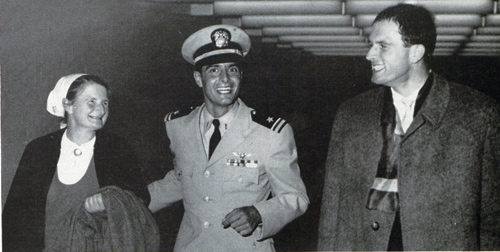
Next morning — this was the 22nd day after our escape — I took the parachute panels out of the rucksack, tied them end to end and laid out an SOS by the river. I wrapped another panel around a bamboo stick. Then I passed out again. When I came to, I thought I heard a plane. I gathered all my strength, started waving that bamboo stick and — zoom — the plane was past me and gone. But he came back several times and wiggled his wings. I was so happy that I started crying and shouting and rolling around on my back. Then I collapsed.
Suddenly I heard the helicopter, 200 feet above my head. The steel rope began falling slowly toward me. And there was the rescue harness; a slender device with three little arms folded into its side. I had to press the arms down to make a seat, but I couldn’t unzip the plastic cover. I clawed at the harness and finally wrenched one arm free and gave a little signal. I was hanging sideways; I didn’t know if I could hold on much longer. I said, “God, don’t let a bullet hit me now. Not after all this hell I’ve been through.” Then I saw a leg and green pants standing in the chopper door. An American leg! I grabbed onto it and cried.
I went back into shock at the hospital in Đa Năng. I weighed only 93 pounds. I couldn’t move my arms or legs or head. Yet everything was pleasant and nice. I thought that this was all a dream; I thought this was how it was after death.
Back in San Diego they treated me for kidney disease and liver disease. They fixed my teeth, and when I got malaria — right there in the hospital — they cured me of that as well. At first, I had to sleep on the floor; a bed was just too soft. I had lots of bad dreams, too, and I’d wake up three or four times a night sweating and screaming and yelling.
The doctors say I’m doing pretty well now. I weigh about 150 pounds, and I’ve got as much energy as anyone else. I still have some ringworm on my feet; there are a couple of bugs inside me that they have to take care of, and I’m losing all my hair. I feel pretty bad about that, but they tell me that it will just be temporary.
Anyway, my fiancée doesn’t seem to mind. We flew to Reno in early October and got married, and I have to admit I’m pretty happy about that. In a few more weeks I should be able to fly again. That will make me happy too.
—“I Escaped from a Red Prison,” December 3, 1966
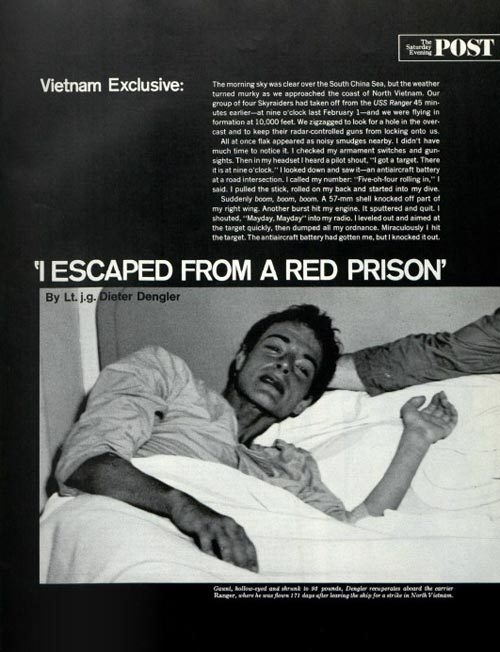
75 Years Ago: DeMille the Renaissance Man
 His jodhpurs and riding boots became emblematic of classic Hollywood directors, but, Cecil B. DeMille was an expert horseman too. John Durant’s 1943 profile of DeMille tells about the eccentric director’s variety of talents. As a filmmaker, DeMille found success in silents and talkies, with hit pictures like Union Pacific, The Ten Commandments, and The Greatest Show on Earth.
Herbert Hoover’s Meatless Wheatless World War I Diet
So you’ve started a vegetarian, gluten-free diet, but did you remember to complete your pledge card to send to the U.S. Food Administration? This is — of course — no longer a reality, but 100 years ago it was, when Herbert Hoover suggested changes to the American diet to support the war effort.
When Hoover became the “food czar” in April 1917 upon America’s entry into World War I, the U.S. Food Administration had been created to encourage patriotic conservation of certain ingredients for the war effort. Since his recent stint as chairman of the Commission for Relief in Belgium, Hoover understood the logistics behind a large-scale food operation. In order to supply hearty non-perishables — beef, wheat, and sugar — to American soldiers and Allies overseas, Hoover’s USFA asked for cooperative sacrifice from civilians.
Hooverizing Housewives
“Meatless Tuesdays” and “Wheatless Wednesdays” were part of the USFA’s Hooverization of America’s kitchens. By 1918, the administration claimed more than 10 million homes had submitted pledges to use potato flour, molasses, and chicken instead of wheat flour, sugar, or beef in their tried-and-true recipes.
Hoover’s culinary campaign also recommended its own recipes, cataloged by the National Archives. Pamphlets from the USFA urged homemakers that a pledge to their recommendations would not amount to skimpy cooking: “The word ‘save’ has been overemphasized in the public mind and the word ‘substitute’ overlooked.” A Hoover-compliant dinner in 1918 might include a shark steak, potato bread, and greens from a family victory garden. For dessert, the tempting Lintz Tart called for rye flour, lemon zest, and cinnamon with an almond paste filling.
Sharks, Snakes, and Snowballs
“Food Will Win the War” may have made for an apt title of a Herbert Hoover food blog featuring delicacies like the Financial Tart, Alcazar Cake, and Special Napoleon. One warning from the USFA was sure to challenge the allegiance of the most loyal war-foodies: “The ladies will probably protest and say that they will never, never eat snakes. But it is quite probable that snake meat will be considered a delicacy if the war long continues.” Luckily, the war ended before a Copperhead Quiche could be recommended.