In February of 1916, Post editor George Lorimer showed his support once again for the passage of the National Park Service Organic Act of 1916, which would establish the NPS as a bureau within the Department of the Interior. In the editorial “Parks for Posterity,” the author argues that the “wisdom of this plan is so self-evident that no room is left for argument.”
Parks for Posterity
February 12, 1916
Yellowstone National Park (Library of Congress)
A prime object in establishing the National Parks was to preserve their scenic attractions for future generations. They have been managed pretty exclusively to that end. The scenery is all there for future generations to enjoy. But scenery does not wear out with use, like clothing. The big travel to the San Francisco Exposition was only one of many signs that this generation has a lively interest in it; and not even Yellowstone Park has been made as available for present inspection as it might have been.
The trouble is that the National Parks, properly speaking, have not been managed at all. There has been no proper machinery for managing them. Each has been treated as a separate thing. The broad problems that affect all of them pretty much alike have never been handled as a whole. No expert staff has ever been available to handle them. The bill now before Congress for a National Park Service would remedy this at an expense that is trifling in view of the importance of the parks. The present situation is essentially that of a city with a dozen splendid but largely undeveloped parks, each of them under a separate management, which had to wrestle with the problems of that particular park as best it could without reference to any of the others. Of course no city would tolerate any such absurd arrangement. It would immediately establish a park board or bureau to manage all the parks coordinately.
That is precisely what the National Park Service Bill proposes to accomplish for the National Parks. The wisdom of this plan is so self-evident that no room is left for argument; in fact, the obstacle is not based on argument. It is based merely on inertia. Presidents, Secretaries of the Interior, and virtually all those who have really examined the subject favor unified management. Congress has simply put it off.
Let Congress do it now.
Read more about how the Post showed continued support for the National Park Service through George Lorimer’s editorials in “The Post and the Parks.”
In the Post of March 18, 1916, the Post compared the success of Canada’s national park system to the relative failure of America’s parks, adding a note of patriotism to the arguments in support of the creation of the U.S. National Park Service. The author contended that it wasn’t a question of quality, but of management.
National Park Service
March 18, 1916
Glacier Park at Sun Rise, c. 1916 (Photo by Jacob Neitzling, via Library of Congress)
We are told on what we believe to be good authority that there were more visitors to the national parks of Canada in 1915 than to those of the United States. The reason is very simple. It is not at all that Canada’s national parks are superior to ours in natural attractions. It certainly is not that there was more travel to the western part of Canada last year than to our Pacific Coast. It is just because Canada manages her parks intelligently, and we do not. The Canadian parks are managed as a whole, by one bureau, which not only studies their needs as a unit but takes good care that information about them is put in the way of Canadian people.
Each of our 14 splendid national parks is managed separately, appropriated for separately. There is no single person or body to supervise all of them. Naturally they get developed, so far as they are developed at all, in a haphazard, spasmodic manner.
Four years ago President Taft said, in a message to Congress recommending unified park management, that only in the single case of the Yellowstone “have we made anything like adequate preparation for the use of a park by the public.” That observation is still true. Probably it will remain true until all the parks are put under one management — which virtually means that the magnificent scenery of the other parks will be mostly locked away and kept under cover. Properly developed and exploited, the parks should presently yield enough revenue to pay for their own upkeep.
A bill for unified park management is before the present Congress. There is no question that it ought to pass.
Read more about how the Post showed continued support for the National Park Service through George Lorimer’s editorials in “The Post and the Parks.”
1 pound, 2 ounces (500 g) small carrots, tops trimmed
1 pound, 2 ounces (500 g) small parsnips, peeled and halved (if larger than the carrots)
3 tablespoons extra virgin olive oil
1 teaspoon cumin seeds
Salt and freshly ground black pepper
2 tablespoons apricot jam
2 teaspoons freshly squeezed lemon juice
1 tablespoon chopped fresh coriander
Preheat the oven to 400°F. Combine carrots and parsnips in large roasting tin and drizzle with olive oil. Scatter over cumin seeds, season with salt and pepper and toss everything together to coat evenly. Roast in oven for 40–45 minutes, tossing occasionally in oil during cooking, until tender and golden.
In the meantime, heat apricot jam and lemon juice for a few minutes in small saucepan, stirring until you have smooth, runny sauce. Pour this over carrots and parsnips for the last 10 minutes of cooking, tossing vegetables in sauce to coat evenly. Sprinkle with coriander just before serving.
1 large cooking apple, about 11 ounces (300 g) in weight
1 teaspoon ground cinnamon
Softly whipped cream, to serve
Preheat oven to 350°F. Butter 10-inch pie dish. Mix flour with baking powder. Rub in butter with your fingertips until texture resembles breadcrumbs. Add sugar, beaten egg and enough milk to form soft dough. Pat out half of dough in greased pie dish (don’t worry — it is supposed to be very wet).
Peel, core, and chop apple 3/4-inch cubes. Arrange apples on dough and sprinkle with 1 tablespoon sugar and cinnamon. Gently spoon out remaining dough on top of apples to cover them completely. Sprinkle with remaining sugar and cut a slit through middle of top dough. Bake for 40–50 minutes, until golden and crunchy on outside (apples should be soft on the inside). Serve with softly whipped cream.
Rachel’s Tip: If the butter is cold (just taken from the fridge), grate it into the flour and it will rub in within a couple of seconds.
Irish food has a rich history and tradition. Of course, our love for the potato is well known and very real, but with recipes such as colcannon, Irish stew, and our wonderful soda bread, there are so many distinctively Irish dishes that make our food ideal for home-cooked meals — wherever in the world you might live.
I grew up in Dublin and my mum was a very good cook. She would often have casseroles gently bubbling in the oven, filling the kitchen with their alluring aromas to make my sister and me ever more impatiently hungry. At 18, my interest in cooking became a passion. I traveled down to East Cork to study at the famous Ballymaloe Cookery School, at which I still teach to this day. On my first day at the school, I learned many of the principles we still teach students today: that the best food comes from the best ingredients. It opened my eyes to how much more important proper produce is than complicated or long-winded recipes.
Despite being around food all day, I never tire of cooking. Like everyone else, I find it useful to have a repertoire of homemade dishes that I know my children love eating, including Irish stew. The definitive recipe for Irish stew simply doesn’t exist because each household has its own family recipe. It is said, however, that people in the south of Ireland always add carrots, but people north of County Tipperary do not. When made well, it’s not hard to see why this is one of Ireland’s favorite dishes.
To read the entire article and get Rachel Allen’s delicious recipes for Irish stew and soda bread, pick up the March/April 2016 issue of The Saturday Evening Post on newsstands or …
Purchase the digital edition for your iPad, Nook, or Android tablet:
To purchase a subscription to the print edition of The Saturday Evening Post:
Bored dogs are bad dogs. Break the cycle with these four fun and stimulating activities from Claire Arrowsmith’s Brain Games for Dogs (Firefly).
Box o’ Fun. Fill cardboard box with scrunched-up paper, treats, and toys. Fido will do the rest. Tip: Use dry treats to keep mess from getting out of control.
Balancing Act. Ask Fido to sit. Balance flat treat on his nose, pick it up, and tell him to “take it.” Gradually increasing the time treat remains on nose teaches urge control and focus.
Treasure Hunt. Fill child-size swimming pool in your backyard with clean, fine sand, rubber toys, and large dog biscuits to allow insatiable diggers to burrow to their heart’s content.
Splash Down. Using the same pool, this time filled with water, toss in a toy for dogs to retrieve.
Pets aren’t the only ones who will benefit from these games: “Happy dog, happy owner. The more time you spend having fun training and playing with your pet, the stronger the bond between you will be,” Arrowsmith writes.
There was an olive tree at Peg and Willie Kidling’s cocktail party with a small girl in it. She was riding a high branch, like a horse. When she got out onto one of the smaller branches, her mother went over to the big tree.
“All right, Nicole. You’ve been up there long enough. Come on down now, and be very careful.”
“No,” the girl said. “I’m mad.”
I reached the party at half past six. I wanted to greet Peg anyway, so I went over to the tree, and she said, “How good to see you, Gunnar. Will you coax Nick out of the tree, please? I’m afraid she’s going to fall.”
Peg went off to greet some new arrivals, and I looked up. Nicole Kidling was looking straight at me.
“Who are you?”
“Gunnar Reykjavik.”
“What do you want?
“Your mother asked me to get you out of the tree.”
“Come and get me, then.”
I put my drink on the flagstone of the terrace and began to climb the tree.
“I know,” Nicole said. “You’re going to climb one or two branches and stop. You’re afraid to climb all the way up.”
“No, I’m not.”
“Yes, you are. You’re afraid you’ll fall.”
“No. This tree is perfectly safe. It’s very strong.”
“It’s over a hundred years old. My old mother told me. She’s over a hundred years old too. My old father’s over two hundred years old.”
I got up onto the second lowest branch and stood there.
Willie Kidling came over and began to laugh, and then half the people at the party came over too.
“Be careful, will you, Gunnar?”
“Hand me my drink, Willie.”
The ice-cold Scotch made me feel good, but I knew a lot of people were thinking, He must be crazy, whoever he is. I hadn’t kept up with Willie and Peg’s friends. I knew almost nobody at the party, certainly nobody in the crowd at the edge of the terrace. I handed the glass back to Willie.
“Take the people away, will you?”
Willie laughed again, and after a moment he took the people back to where the party was. I climbed up onto another branch and watched the party from there.
Everybody seemed happy except Peg. She kept trying to speak to her friends and at the same time to keep an eye on her daughter, a very plain little girl, nothing at all like her pretty mother. Peg was really worried about Nicole. I was a little worried myself, but I knew I’d have to go all the way up before she’d be willing to come down.
Peg came over quickly and said, “Be awfully careful, will you please, Gunnar? I didn’t expect you to climb the tree too.”
“I didn’t expect to either.”
“Della says if you don’t come down, she’s going to climb up.”
“Who’s Della?”
“Leonora Roma. But of course her real name is Della. It would be just too much if she started climbing the tree too.”
“Where is she?”
“All that tight purple over there.”
I saw Della, and, as luck would have it, she saw me and waved. Peg hurried back to Della—to stop her from coming to the tree, most likely.
“Is Della coming up too?” Nicole said.
“Do you know her?”
“Sure. Don’t you?”
“No, I don’t.”
“Don’t you know everybody?”
“Not by a long shot.”
“My mother does. She said so herself.
Is Della coming up too?”
Della came running over to the tree, with Peg chasing her.
Oh, no, Della, please! You can’t! You simply mustn’t!”
“But I want to.”
“No, please!” Peg took Della’s arm, while half a dozen men came along to watch and laugh as they sipped their drinks.
“I love climbing trees,” Della said.
“But you’ve seen this tree dozens of times and you’ve never before wanted to climb it.”
“But I never saw Nick in it before. And that other lunatic up there. Who’s he?”
“Gunnar Reykjavik,” Peg said. “Leonora Roma.”
“How do you do, Miss Roma.”
“Miss Roma my foot! My name is Della Harrigan. I’m from Arkansas, not Rome. And here I come.”
“Oh, no, please!” Peg said.
Della kicked off her high-heeled shoes. She grasped the lowest branch and planted her feet on the trunk of the tree. Then she swung up onto the lowest branch and stood there.
“How long have you been in America, Mr. Reykjavik?”
“I was born in San Francisco.”
“And you, Nick. How long have you?”
“All my life,” Nicole said.
“You coming up too?”
“I sure am.”
“No, you’re not.”
“Oh, yes, I am.”
“Why?”
“Because you’re up there,” Della said.
She glanced down at the men looking up, and then she said, “And because I can’t stand all those fat husbands down there. . . . Are you a husband, Mr. Reykjavik?”
“I was.”
“How long have you been divorced?”
“Two years.”
She swung up onto the second lowest branch. “What do you do?”
“Make a fool of myself, most of the time.”
“I know you do that. What work do you do?”
“If you climbed this tree to meet somebody important, Miss Roma —“
“Della Harrigan.”
“—you’ve made a mistake.”
“I don’t care if I have, Mr. Reykjavik. That’s that city in Greenland, isn’t it?”
“Iceland.”
“Yes. I knew it was one of those places. I can’t imagine why that silly publicity department at Universal gave me an Italian name. I’m an American, pure and simple.”
The small audience of husbands burst into loud laughter.
“Pure?” Della said. “Is that what you’re laughing at, you brutes? Well, I am pure, and I’ll thank you to go join your unhappy wives and let a girl from Little Rock try to meet a boy from San Francisco.”
She turned her handsome back to them quickly and almost slipped.
“You be very careful, Della,” Nicole said. “If you fall, I’ll really get the devil.”
“Don’t you worry about me, honey. I don’t fall—anywhere. Falling hurts my career . . . I’m a movie star, Mr. Reykjavik.”
“Everybody knows that,” Nicole said.
“He doesn’t.”
“Yes, I do.”
“Then why don’t you make a fuss over me, the way everybody else in America does? Fans, photographers, newspapermen, magazines, Prince Tournevire, Harry Hartington, and all those husbands down there on their way back to their wives at last. If you know I’m a movie star, why don’t you fall at my feet?”
“How can he, in a tree?” Nicole said.
“I don’t fall, either. Not any more, at any rate.”
“Were you terribly unhappy when you were married?”
“I was in love.”
“Oh, that’s the worst unhappiness of all.”
“I know, and never again.”
“Really?”
“Two years of marriage, two years of torching—that’s enough for me. Tree, terrace, town or country, I’m not falling any more.”
I swung up onto the second-highest branch and sat there, with Nicole a few feet away on a smaller branch.
“I never thought you’d climb all the way up.”
“Well, here I am, and let me have a look at you.”
“Why?”
“I like you.”
“You do not.”
“Yes, I do.”
“You’re just saying that. I’m not pretty. I know I’m not. And I don’t want to be, ever. My mother’s pretty. Her friends are pretty. Their little girls are pretty. Do you have a little girl?”
“No.”
“A little boy?”
“No.”
“How come?”
“Yes,” Della said. “You were married two years. How come?”
“It’s a long story.”
“Did you want a little girl?” the movie star said. She got up onto the next branch and stood there.
“I did.”
“All right. I’ve told you what I do, so now you tell me what you do.”
“Tell me, too,” Nicole said. “Are you a producer, like my father, or a director, or a writer, or an actor, or what?”
“Yes. Or what?” Della said.
“Hang on tight now—both of you.” They both hung on, and I told them: “I’m a cop.”
I’m a cop.”
“Oh, no!” Della said.
“Oh, yes!” Nicole said. “He is a cop. FBI.”
“No, motorcycle.”
“I don’t believe you,” Della said. “You don’t look like a cop and you don’t talk like one.”
“You can climb down now, Miss Roma. I told you I’m nobody.”
“I can climb up, too, but I’m going to stay right where I am for a minute. If you’re a cop, what are you doing at this party?”
“I came here from San Francisco twelve years ago to be best man at Willie’s wedding. I’ve been here ever since. Every once in a while, Peg and Willie invite me to one of their parties. I haven’t been to one in four or five years, but I thought I’d come to this one.”
“Why?”
“I hadn’t seen their kids in a long time and I thought I’d like to see them again. When they were little I used to know them quite well.”
“You did?” Nicole said. “Did you know me when I was little?”
“Yes, I did.”
“How come?”
“Well, your father was just getting started in those days, and whenever he wanted to take your mother to dinner with a lot of big movie people, he used to ask me to come over and baby-sit. I always said to myself, ‘This girl is a natural-born tree-climber.’”
“Bet your life I am,” Nicole said. “What does a motorcycle cop do—chase robbers?”
“Sometimes.”
“Money robbers?”
“Sometimes.”
“I think chasing robbers is the best work in the whole world. Not like being a silly old movie producer. Will you take me sometime?”
“Not when I’m chasing robbers, but I’ll take you for a ride sometime.”
“How about me?” Della said.
“Sure, if you want to go.”
“When?” Nicole said. “When will you take us? Both of us? Will you take us now? Right now?”
“I didn’t come to this party on a motorcycle.”
“Why not?” Della said.
“Nobody goes to a party on a motorcycle any more.”
“Well, how did you come?”
“I walked.”
“How far?”
“Oh, about six miles, I guess.”
“Can you go get your motorcycle and take us for a ride?” Nicole said.
“It’ll take me more than an hour to walk home and ride back.”
“No,” Della said. “I’ll drive you there, and we’ll all ride back together.” “
Will you, Della, really?” Nicole said.
“Of course, I will.”
“Well, what are we waiting for then?” Nicole said.
There were at least a hundred people at the party now. They were all so busy drinking and talking they didn’t notice us climbing down, except Peg, who began to move through the people on her way to the tree.
“Don’t let her punish me, will you, Della?” Nicole whispered.
“Your mamma’s not going to punish you,” Della said.
“That’s what you think. Wait and see.”
Peg was waiting for Nicole. She took her by the shoulders, looked at her a long time, and then said, “Oh, what’s the use? All right, Nick, join the party. A lot of people want to meet my daughter…. And thank you, Gunnar. How in the world did you get her down?”
“I came down to go for a ride on Gunnar’s motorcycle,” Nicole said.
“Me too,” Della said.
“What are you talking about?” Peg said. “Della, you’re the guest of honor. Everybody’s waiting to meet you.”
Della looked over at the people at the party. They weren’t waiting to meet anybody.
“Are you kidding?” she said. “Besides, there’s plenty of time.”
“Oh, no, Della. Please don’t go crazy on me just because my foolish daughter climbed that tree.”
“Crazy? Why, I’m having the best time I’ve ever had at a party.”
“Willie’s so proud you’re going to be in his new picture. He’s got dozens of important people he wants you to meet.”
“I’ve met them,” Della said. “I’ll meet them again too. Plenty of time.”
“We’ve got to go now,” Nicole said.
“This way, Della. I know a short cut around the pool. The other way you’ll run into all those people, and they’ll never let you go.”
“Nick, will you please shut up a minute?” Peg shouted. “I’ll be damned if you’re going to spoil every party your father gives! If you say another word, I swear I’m going to knock your head off!”
Nicole stood very straight, looking at her mother. Then she turned and fled, running around the pool, down the sloping lawn, to the fence, up the fence and over to the alley. As she ran she shouted, “I don’t want you! I don’t want your parties! I don’t want anything!” But of course nobody heard her and nobody saw her go, except the three of us standing under the tree.
“She’s a spoiled brat,” Peg said. Her lips trembled as she spoke.
When she tried to laugh, Della said, “Let’s go meet Willie’s friends, Peg.”
And that’s when I began to fall again. I wanted to go get Nicole, but I knew I had already gone a little too far, as usual. I like kids because they’re straight, and I like adults because it’s impossible for them to be straight and successful at the same time. I went over to where the drinks were being poured, got one, and waited for somebody I knew, so I could say something too. Anything. But nobody I knew showed up.
I went into the house, drinking on the way, but nobody I saw was anybody I knew, so I kept going until I got to the front door. I put the drink on the table there, went out and walked down the street to the alley. It was paved, with clean white board fences, most of them covered with ivy or honeysuckle. There was a mockingbird in a magnolia tree—Hollywood is full of them, bird and tree both—and the bird was mocking. Near the end of the alley where it comes to Benedict Canyon, I saw Nicole standing behind a mass of honeysuckle.
“Ask your mother to phone me sometime when it’s all right for you to go for a ride, and I’ll come and get you.”
I walked to Benedict Canyon, and then to Sunset, and before I knew it I was home, which is a two-room apartment over a garage on Franklin Avenue in Hollywood.
I hadn’t been upstairs three minutes when the doorbell rang. It was Nicole.
“How did you get here?”
“I followed you. Can I have a glass of water?”
I got her a glass of water. She drank it with the chopping sound of satisfaction only very thirsty kids have, so I got her another glass, and she drank that one too.
“Another?”
“No, thanks.” She looked around the apartment. “I had to see where you live. I guess I’d better get started back now. Good-by.”
“Good-by? You don’t think I’d let you walk back, do you?”
“I know my way.”
“I’ll take you back on my bike. And listen to me, will you, Nicole?”
“Yes, sir.”
“You and I behaved very badly this afternoon, and I’m very angry at myself.”
“I’m not angry at myself.”
“Well, all right, but when you get home, go to your mother and tell her you’re sorry. Everybody in a family has got to help everybody else.”
“O.K., but you don’t have to take me back. The party won’t end for hours. I know. They’re always supposed to be from five to seven, but they’re never over until long after I’ve gone to bed. Every time. I can walk back.”
“No; I promised you a ride, and this is my chance.”
“You don’t have to keep your promise.”
“Yes, I do.”
We went out onto the top of the stairway, and then down the wooden steps to the garage.
“Oh, golly!” she said when she saw the motorcycle. “Oh, what a beauty!”
I rolled the bike out of the garage to the driveway, placed her carefully on the front part of the seat, got on, and we were about to take off when a purple convertible with the top down rolled into the driveway with Della Harrigan at the wheel. She kept the convertible rolling slowly until it was alongside of us.
“I found Peg’s address book in the powder room. I want my ride.”
“Well, jump on, then. I’ve got to get you both back to the party.”
“It’s been a smashing success. I didn’t leave until I’d met everybody. They’ll all be there for hours.”
“Is Peg looking for Nicole?”
“Oh, no. The party’s going great. Nobody knows who’s still there or who’s gone. I’m sure everybody thinks I’m still there. We’ll all go back and have some more fun. What did you leave for?”
“I don’t know any of Peg’s and Willie’s friends these days.”
“I’m one of their friends. You know me.”
“Well, we’ve met.”
“Where do I sit?”
“Right behind me, and I’m afraid you’ll have to hang on real tight if you don’t want to find yourself sitting on the pavement.”
Della sat behind me and put her arms around me.
“A little tighter, I think.”
She tightened her grip, I started the bike, and we rolled down the driveway slowly to Franklin Avenue. Then we began to go. At the corner of Hollywood and Highland, there was Eddie Single- man on his bike, in uniform, on duty.
“Is that you, Gunnar?”
“Sure is, Eddie.”
“Sure is, Eddie.”
“Who are the pretty girls?”
“Tell him I’m your wife,” Della whispered.
“Mr. Singleman,” I said, “may I present my wife?”
“Pleased to meet you, Mrs. Reykjavik,” Eddie said.
“Likewise, I’m sure,” Della said.
“I’m their daughter,” Nicole said.
“Pleased to meet you, too, miss,” Eddie said.
“Miss Nicole Reykjavik,” Nicole said. “We’re all three of us part Icelanders. On my father’s side. On my mother’s we’re part Arkansas.”
“Taking the family out for a little Saturday-evening drive, Gunnar?”
“Yeah.”
“We could very easily buy a good secondhand car,” Della said, “but I always say don’t waste your money on luxuries, so you can afford another child. I’m quite pregnant right now.”
“Well, take care of yourself, Mrs. Reykjavik,” Eddie said…. “And, Gunnar, you drive careful now. Your wife’s pretty enough to be in pictures.”
“You’re very sweet to say that, Eddie,” Della said, “but I always say a woman’s place is in the home, taking care of her husband.”
“There ain’t many like you left,” Eddie said. “ Take it easy now.” He raced away.
“Oh, that was real nice,” Nicole said. “It was all lies, but it was fun just the same. Please don’t drive straight home.”
We rode down Highland to Sunset, and then up into the hills. When we were at the top of a hill we stopped to have a look at Hollywood away down there. Nicole took off to do a little exploring, and Della turned around, so I could have another look at her instead of Hollywood. I knew I’d better watch it, but I couldn’t. If a little girl is at the top of a tree and challenges me to get up there, I’ve got to get up there. If a big girl stands in front of me at the top of a hill in Hollywood and challenges me to take her in my arms, I’ve got to do it, movie star or no movie star.
“Again,” Della said.
“Don’t forget the little girl.”
“Well, kiss her too. She’s your daughter. And I’m your wife.”
“Don’t I wish you were, though?”
“Again.”
“No, enough’s enough, and here she comes, anyway.”
“Run to your mamma, please,” Della said.
Nicole ran with all her might into Della’s arms. Della hugged her, swept her off her feet, twirled her around twice and swung her out to me. I took the little girl and hugged her, and then Della hugged her while I was hugging her, and there we were. A family, almost.
We got back on the bike and started down the hill, winding around and around, the two women talking happily, and me trying to think, trying to figure out what to do about a thing like this because I was at their feet.
I stopped the bike two blocks from the Kidling house. “You’d better walk the rest of the way.”
They got off and Della kissed me the way a wife does when her husband’s going to work.
“You take good care of yourself now,” she said.
Then Nicole gave me a quick hug and they went off together.
I turned the bike around and drove to the station, in love again, tickled to death, and scared to death.
There was a five-handed game of stud in the back room, so I took a hand, got aces back to back, a third ace on the fifth card, against three kings, and took a big pot, almost three dollars, and this just isn’t my kind of luck at all. I generally lose.
At midnight I went on duty—Highway 101 Alternate from Santa Monica to the Ventura County line, straight through Malibu, Point Dume, Zuma Beach and Trancas.
The weekend traffic was still heavy and hectic. I could have stopped just about everybody and written out a ticket, but I didn’t because I had fallen again. All I did was ride along and hope nobody would crash or smash. I didn’t even stop a kid and his girl in a hotrod when he jumped a light.
I left the highway at Point Dume and rolled up and down the hills there. Nothing on the police radio was for me. And then, all of a sudden, it was. I looked at my watch—half past two—and took off as fast as I could go to Peg and Willie’s house.
“It’s all your fault!” Peg said. “You had no business climbing that tree. It’s three o’clock in the morning. Where’s my little girl?”
“Peg,” Willie said softly, “Gunnar’s my best friend.”
“I don’t care who he is,” Peg said. “My daughter’s been gone since half past six this evening, Mr. Reykjavik. Where is she?”
“Where’s Della?” I said.
“I don’t know and I don’t care. She had no business climbing the tree either. You people who don’t have kids are always making trouble for people who do.”
“Can you give me her address?”
Willie wrote the address on a card. I went out and got on my bike. I was on my way to Della’s when I thought I’d better go to my own place first. The purple car was still in the driveway.
I ran up the steps, went in, turned on the light, and there on the sofa was Della, fast asleep. She opened her eyes and sat up.
“What time is it?”
“Three, and what are you doing here?”
“1 had a little too much at the party, so when I came to get my car I thought I’d see if your door might be unlatched, and it was. I only expected to take a nap. I’m sorry if you’re annoyed. Are you?”
“Of course not. Not with you, at any rate.”
“You look annoyed. Who with, then?”
“Myself. Something’s happened, and it’s my fault.”
“Look, if you’re being blackmailed, I know a lawyer —“
“No, no. Listen, Della. Nicole’s disappeared. Now, please think back and think clearly. Tell me exactly what happened after Nicole and you got off the bike.”
“Why, we went back to the party, of course.”
“Did Nicole go to her mother?”
No. As a matter of fact, when we reached the front walk, she said she wanted to go around the back way. Under the circumstances, I agreed that that might be a good idea, so I went back to the party alone. Nobody noticed that I had been gone, even. I stayed quite a long time, too, and then Ricky Vale dropped me off here to pick up my car.”
“While you were at the party, did you see Nicole again?”
“No, come to think of it, I didn’t. I felt sure she was about, though. I can’t believe — What do you mean, she’s disappeared ?”
“I don’t get it, either, but there it is, and I’ve got to find her, that’s all.”
Della began to gather her things together. “What do you think’s happened to her?”
“I don’t know. Could be any number of things. As a cop, I know some of them could be pretty grim, but I’m not letting myself believe it might be any of them. I prefer to believe she’s hiding out somewhere.”
“Where?”
“Well, as a matter of fact, I thought it might be at your house, if she happened to know where it is.”
“She knows. She’s been there many times.”
“And then I thought it might be here. It’s probably nearer home, though. A school friend maybe. She could even be hiding somewhere in the house itself.”
“Would Nicole do a thing like that?”
“I don’t know. She might.”
“What are the bad things?”
“I’d rather not talk about them.”
“Are they that bad?”
“They are. It happens all the time. Feeling hurt, she might just go along with anybody. She followed me all the way from her house to this house, to give you an idea. Are you all right? Can you drive?”
“Of course,” Della said. “I’ll be home in ten minutes. Why do you leave your door unlatched?”
“There’s no reason to lock it.”
“No wife? No kids? Is that what you mean?”
“I guess so.”
“Why don’t you marry me?”
“The girl I married asked me that question, so of course I married her. I don’t know how to take that question with a grain of salt.”
“Is this part of the long story you didn’t want to tell me in the tree?”
“It’s all of it. The rest is, she divorced me.”
“Why?”
“Because I’m nobody. The only kind of girl who might possibly be happy with a man like that would have to be a nobody, too—like the girl you pretended to be when I introduced you to Eddie Singleman—and I don’t think I’d be willing to impose a girl like that on my sons. After all, I owe them something too.”
“How about your daughters?”
“My family doesn’t have daughters. I’m the last of six sons. My brothers are all married and they’ve all got two or three sons each. We’ve always wanted daughters. We just haven’t got ‘em, that’s all. Good night.”
“Well, look,” Della said. “If you want to kiss me good night, you can, you know.”
“No. I’m still having a bad time from the last time I fell.”
“Be sure to phone. At any hour. I won’t be able to sleep.”
“O.K.”
I went out and rode back to Willie Kidling’s. The house had been searched from top to bottom. Also, the garage and the garden. The floodlights had been turned on all around the pool. The police and the press had come and gone, and come and gone again. I got back on the bike and rode off, but I just didn’t know which way to go. When a kid is lost, nobody can think and nothing helps. The only thing that can help is for the kid to be found, with no harm done. I drove to the station, but there was no news there, either. Everything was quiet everywhere. Why wouldn’t it be? It was four in the morning. I left the station and rode back to Beverly Hills. At daybreak it came to me, and it was silly, that’s all. It made sense, but it was silly too. I raced to the Kidling house, around to the alley, and stopped there. Nothing. Nobody. 1 climbed the fence and went up the sloping lawn, past the pool to the tree.
I climbed the tree again, but quickly this time. Nicole was wedged between two small branches at the top of the tree, half asleep. The foliage was so thick there, it wasn’t easy to see her. I took her hand and said her name very softly.
“Time to come down. But be very quiet and very careful, will you?”
“Where we going?”
“You’re going to your bed.”
“No. I won’t come down. My mother’ll kill me.”
“How long have you been up here, Nicole?”
“From the time you brought Della and me home. Nobody even saw me climb back up. I watched the whole party from up here. I fell asleep, and I didn’t wake up until all the lights were turned on again after the party.”
“You mean you saw them looking for you?”
“Of course I did.”
“Well, why didn’t you come down?”
“Why didn’t they come up? Why didn’t my mother? Why didn’t my father? I’m not coming down if you’re going to take me into that house.”
“Where do you want me to take you?”
“To your house. Or to.Della’s house.”
“Come on down, then.”
“Your house or Della’s?”
“Della’s.”
We got out of the tree and went down the sloping lawn to the fence, and over to the alley.
On our way to Della’s, Chuck Englehart drew up on his bike.
“Is that the lost girl, Gunnar?”
“This is my daughter, Chuck. She gets up early and I give her a ride every Sunday morning.”
“Are you sure, Gunnar? I’ve listened to the description all night. She answers the description.”
“Little girls have a lot in common.”
“If you’re sure, Gunnar, anything you say.”
Chuck rode off, and now I was scared because I knew Chuck didn’t believe me. I don’t know why, but I just couldn’t grab a little girl out of a tree, whack her bottom and take her, crying, into her house to her mother. I just couldn’t do that. I just had to believe a child has the same rights as an adult.
Both of the Sunday-morning papers were outside Della’s door, and a paper-delivery boy was at the other end of the hall. I could only hope he wouldn’t turn around, but he did.
I pressed the button and heard a chime, and Della came to the door. “We’ve got to speak very quietly.”
“Yes, of course,” Della said, “but where did you find her?”
“Let Nicole tell you. I’ll fix her some breakfast.”
Della and Nicole went down a long hall to her bedroom, and I went to the kitchen. Orange juice. Boiled eggs. Bacon. Toast. I put the stuff on a tray and took it to Della’s bedroom.
Della brought Nicole out of the bath, wrapped in a heavy purple towel.
“There’s a hot breakfast for you, Nicole. Please eat it and get a little sleep—in a bed this time.”
“I’m wide awake,” Nicole said.
“Well, eat your breakfast and just rest in bed then.”
I went back to the kitchen, and after a few minutes Della came there too.
“Is she all right?”
“I think she’s a little scared.”
“Well, I’ve done it again.”
“You found her, didn’t you?”
“Yes, but I should have taken her straight to her mother and father.”
“Well, why in the world didn’t you?”
“She didn’t want me to.”
“You are a nut, aren’t you?”
“Yes, I’m afraid I am. Now, look,there’s a way of straightening this whole thing out without hurting anybody— Nicole, Peg, Willie, you, the police, the press, the people.”
“What people?”
“The people who like to read about the troubles of other people.”
“Oh, them,” Della said. “Well, this is none of their business.”
“It is now. Nicole Kidling, daughter of the famous producer, William Kidling, and the famous actress, Peggy Barker…. How do you like your eggs?”
“Scrambled, medium.” Della fetched the morning papers and spread them out on the kitchen table.
“Oh, no!” she said. “Two pictures of Nicole on the front page, one each of Peg and Willie, and the names of just about everybody who was at the party. Well, if Peg wanted a successful party, she certainly got it. And she can thank her daughter too. She’s always felt her parties haven’t gotten enough attention, not even from Louella Parsons and Hedda Hopper. This party’s on the wire services. If I didn’t know the truth, I’d say it was a publicity stunt. Listen to this: ‘The guest of honor at the party was the madcap Leonora Roma, who is to star in Mr. Kidling’s next picture, High as a Kite.’ I don’t understand where they get that madcap stuff. For six long years all I’ve done is work very hard.”
I put the plate of scrambled eggs and bacon in front of Della.
“What’s the matter with you? Aren’t you eating?”
“No, I can’t. Please try to help me, Miss Roma. What do we do? Do we call Willie and tell him, or what?”
“I don’t know why not. I’ll tell him plenty too. I’ve got half a mind to go on suspension. He’s got his nerve plugging his picture at my expense. And Nicole’s too.”
“Yes, we’d better not forget Nicole. Before you phone, we’d better talk to her.”
“What about?”
“The three of us have got to agree on a story that won’t hurt anybody.”
“Well, what’s the matter with the truth?”
“No, that won’t do at all.”
“Why not?”
“Well, for one thing, she was right there the whole time, and that’ll make the mother and the father look silly, and the police too. The truth’ll make it look even more like a publicity stunt than it already does too.”
“I do sympathize with Peg, though.”
“Of course. you do.”
“Oh, I don’t mean about Nicole. I mean about her career. It just came to a stop five or six years ago, and she just won’t quit. She gets one or two small parts a year and tries to believe she’s still a star. A party a month, she averages. A big party, I mean. Two or three little ones every week. Who’s important now? Who’s new? Get them over to the house, and maybe something’ll happen to her career. How can you expect the little girl not to be lost in an atmosphere like that? Peg just hasn’t got any time for Nicole.”
“Try not to be too critical of a mother until you’re one yourself.”
“Well, it’s the truth.”
“Only kids are entitled to live by the truth. The rest of us have got to live by lies.”
“You don’t.”
“I do my best.”
“By pretending to be a cop? You’re no cop.”
“I am, and I’m not pretending. Could you say you came home after the party and went to bed? Early in the morning Nicole walked into your bedroom and confessed that she had spent the night? Is there a place somewhere in the apartment where she might have slept?”
“Well, there’s a second bedroom— very small. I almost never look in there. The maid just keeps it clean and shuts the door.”
“Would that be all right with you?”
“Sure, if you think it’ll be all right with everybody else.”
“You’re very kind, Miss Roma.”
“Oh, now, look here. I asked you long ago to please lay off that Miss Roma stuff. I’m not an actress in my own home.”
“O.K. We haven’t got too much time. The sooner we let Peg and Willie know, the better. Do you think Nicole’s rested enough now to go over the story with us?”
“What for?”
“It might be too late later, but even if it weren’t, Nicole has got to agree to the story.”
“That’s silly. She’s just a little girl.”
“She isn’t going to be little forever. Will you see if she’s awake?”
“What’s the rush?” “The police are going to pay you a visit very soon. And when they do, I’d better not be here.”
“Why not?”
“I’m a cop, I’m not off duty until eight o’clock in the morning, and what am I doing here?”
“Visiting me—a friend.”
“Oh, just fine. That’ll be just fine, won’t it?”
“Well, won’t it?”
“A cop in uniform here with just about the most beautiful girl in the world?”
“More beautiful than the girl who divorced you?”
“Well, maybe not more beautiful, but certainly not less.”
“Are you in love with me?”
“Suppose I were?”
“I’d ask you to buy me a little house
with an adjoining olive tree.”
“What for?”
“So when we have a daughter, she can climb it, and we can climb up after her.”
“Nicole’s the only daughter you and I will ever have. The only one we’ll ever climb a tree about too. We’ve had her, and now we’ve got to get her back to her mother and father.”
“They won’t climb a tree about her.”
“They won’t have to because she won’t want them to, any more, after we agree on a story.”
“Are you in love with our daughter too?”
“Nicole? Of course I am. She’s the first daughter in six generations of the Reykjavik family.”
“No, not Nicole; our own.”
“I’ve already told you I can’t take talk like this with a grain of salt.”
“I believe you really do love me.”
“Yes, I believe I do.”
“And I believe you believe I don’t mean a word I’m saying.”
“Yes, I believe that too.”
“Well, marriage isn’t everything, and I’ve been married twice, as you know.”
“Yes, it’s like money all right. It isn’t everything.”
“It turns a good man into a husband overnight, and I just can’t stand them— mine or anybody else’s.”
“Well, in a way we’ve been married anyhow, we’ve had an eight-year-old daughter in a tree, and maybe that’s as good as we’d ever be likely to do, in any case.”
Della got up and came around the table. “Well,” she said, “let’s kiss our little marriage good-by, then, and go about our business, shall we?”
“Yes, I think that that’s the grown-up thing to do.”
I held her head in my hands a moment, and then I put one on her forehead just above her watching left eye. I felt proud of myself for watching it so well.
“Cold,” Della said. “Courteous and cold, as a good-by kiss should be from a man from Iceland.”
“Well, that takes care of the marriage.”
“Now,” Della said, “one to take care of our daughter—on the mouth.”
Well, she was there, with her mouth open in a little smile, so what could I do? I put one there, too, only I didn’t watch it very well, and there went four arms around two people all of a sudden—one of them Della Harrigan and the other myself, whoever I am, so far from Iceland, so many years later. I kept trying to watch it, but I just couldn’t. There just wasn’t anything else to do but let Iceland melt and go, and hold on to Della forever. I just might have done it, too, if I hadn’t heard a lot of car doors slamming, and there down in the street I saw the police and press getting out of cars and running into the building.
“Well, here they come, and we haven’t got Nicole’s approval of the story. Better use it just the same. I’ll go out the back.”
“There is no back,” Della said.
The door chime sounded, and then somebody knocked softly.
“You open it,” Della said.
I went to the door, trying to clear my head on the way. I opened the door and they came in—my boss Captain Salvi, Chuck Englehart, two other cops, the paper-delivery boy, three men with flash cameras, and three others—reporters, most likely.
“Can we please try to be quiet, Captain Salvi? The little girl’s asleep.”
Captain Salvi went to work asking me questions, and I tried my best to answer them without hurting anybody, especially Nicole and Della.
Captain Salvi said, “Reykjavik, if what you say is true, and the girl spent the nigh there,I’d like the press to see her. This case has created a great deal of public interest, and we owe it to the people to let them know the child is all right.”
Della looked at me. “If you’ll come with me, please,” she said, “you may bring her out.”
“Have I your permission, Captain Salvi?”
“Please do as Miss Roma says.”
Della led the way down the long hall to her bedroom. She opened the door and we went in. Nicole was not in Della’s bed. Della closed the door behind her quickly, bolted it, and I went to the night table and picked up a piece of letter paper on which a message had been printed in pencil.
I handed Della the message: “I herd what you said. Your just like all the others. Good by. Nicole K.” “Well, what in the world did we say?” “Who knows? Well, we’ve got to go back and tell ‘em the truth, that’s all. From the beginning to the end. Otherwise we’ll never get out of this. Come on.”
“But what about Nicole? Where is she now?”
“She’s probably back in the tree. Come on; the longer we stay in here the worse it is for you.”
“I can’t be bothered about that.”
Della began to dial the telephone on the night table. “Willie?” she said suddenly into the phone. “This is very important. Don’t ask any questions. Just do what I tell you. Run out into the garden to the olive tree and look up, and then run right back, will you? I’ll be waiting.” She put down the phone. “What do you think?”
“Well, I can only hope she is back in the tree, because then this whole thing will be worked out the way it ought to be—except, of course, for you. I mean, on account of me. What’s the press going to think about that?”
“I don’t know and I don’t care,” Della said. “Do you?”
“I certainly don’t want to involve you in a silly scandal.”
“So it turns out the whole world believes you’re a boy friend, as the saying is. So what?”
“If it’s O.K. with you, it’s O.K. with me. Boy friend it is, then.”
“If the worst came to the worst, we could even get married.”
“You don’t want to get married.”
“Of course I don’t, but we could just the same, couldn’t we?”
“I couldn’t marry somebody who didn’t want to get married. I’m no gigolo, or whatever they are.”
“Well,” Della said, “if the little girl’s safe at home, maybe I’ll want to get married.” She began talking into the phone again suddenly, “Willie? Yes, I’m here.” She listened a moment, and then she said, “Now, listen, will you? Go and wake up Peg, and both of you climb the tree, and meet your daughter. I think you’ll like her. Yes, you’ve got to do that! Both of you. But make it fast because half the world is going to be there in a few minutes.”
Della listened a moment, and then she said, “Of course he’s here. We’re going to be married.” She listened a moment again, and then she said, “What do you mean, I should think twice about a thing like that? I’ve already thought twice. If Grace Kelly can marry the Prince of Monaco, and Rita Hayworth can marry Aly Khan of India, why can’t Della Harrigan marry a man from Iceland? What do I care what it’ll do to the box office? Well, now, look, Willie, if you’re finished being worried about Nicole because she’s home again, and now you’re worried about High as a Kite, maybe you’d better get another girl, because I’m really a little tired of working, anyway. I might just like to go on a voyage to Iceland and have a look at the place, and if I like it, I might just want to stay too. I’m glad Nicole is safe in the tree again. Good-by.
She hung up.
“Would you like to take me on a voyage to Iceland?”
“I’ve never been there, but I certainly would. In the meantime, I believe there’s some people outside the door, listening.”
“Well, suppose we talk a little louder, then?”
“I’m game.”
“Well, then, ask me to be your wife,” Della whispered.
“Della,” I said in a loud clear voice, “will you be my wife?”
“Yes, I will, Gunnar. Will you take me to Iceland?”
“Yes, I will.”
“In that case,” Della said, “swing the door open and let’s embrace for the police and the press, and then you can carry me across the threshold of my boudoir. After that, I want to go to sleep, while you go and turn in your bike, your badge and your cap.”
I went to the door, unbolted it opened it, and there stood Captain Salvi, Chuck Englehart, three cameramen, three reporters, the paper-delivery boy and six or seven people I’d never seen before.
“Nicole Kidling is safe at home. Della Harrigan has consented to be my wife, and as soon as we’re married, I’m taking her on a voyage to Iceland, the land of my ancestors.”
I went to Della, who was standing at the window with her lovely back turned to police, press, publicity, pictures and people in general.
“Della?”
She turned around. “There’s always a first time, you know,” she said.
“Which first time are you thinking of?”
“That your family has a daughter.”
“Yes, it could happen.”
“Let’s kiss to that, then.”
I didn’t need to watch it any more, so I really kissed her this time. A lot of voices made strange human sounds, camera lights flashed, olive trees sprang up all over the place, with a little girl in every one of them, and I just couldn’t be bothered any more about Captain Salvi, police rules and regulations, or law and order.
I just couldn’t be bothered any more about anybody except Della Harrigan and the daughter we both hoped to find in a tree someday.
Well, the results are in, and apparently we’re all going to have to get used to the phrase “President Trump.” But something funny happened on the night of the New Hampshire primary, and it involved sandwiches.
MSNBC’s Chris Hayes, talking about Democrat winner Bernie Sanders, accidentally called him “Bernie Sandwich.”
Of course, social media loved it, and now many people are coming up with their own versions of a “Bernie Sandwich” My advice? You can sell it at your restaurant or deli, just make sure it’s affordable for everybody.
I’m not sure which primary night mistake was my favorite though. Over on Fox News, Megyn Kelly called him “Bernie Sandals.”
I’ll stick with Bernie Sandwich though, because sandals are gross. Besides … hey, sandwiches! It will go great with some Ben & Jerry’s ice cream.
Matt LeBlanc Is Doing Friend Again!
I wrote that headline that way for two reasons. One, it’s one of those obnoxious Internet headlines that’s supposed to catch your eye and maybe some hits from Google. Second, like most headlines online, it’s deceptive and a lie. Notice I said Friend and not Friends. Sorry, Friends isn’t coming back (even if they did have that recent semi-reunion).
LeBlanc has signed with CBS for a sitcom. The title? I’m Not Your Friend. I guess you can pretty much assume that this is a direct reference to his NBC show (I’m talking about Friends, not the spinoff Joey). The pilot will be directed by James Burrows, and it already has a 13-episode commitment from CBS.
LeBlanc is busy. He’s about to start filming the final season of his Showtime show Episodes, and this week it was announced that he’s going to be the co-host of the British version of Top Gear. But don’t believe the U.K. media reports that LeBlanc had a nervous breakdown after Joey was canceled.
Hey,to clarify,I never had a nervous breakdown nor did I do an interview with the Mirror in the UK. So don't believe the hype. But thanks
If Twitter went away or people stopped using it, I don’t know how people would let everyone know their ideas for the Bernie Sandwich. I guess there’s always Facebook. And websites. And telephones. And email. And texting. And face-to-face. And letters. Oh, I guess we do know how.
But the people who love Twitter really love Twitter, and this was one of those weeks where a rumor about the service was spread, and it kinda freaked people out. BuzzFeed reported that Twitter may soon change its entire structure, and instead of showing you on your timeline a reverse chronology of everyone’s tweets, it will instead be more like Facebook and use an algorithm of the tweets it thinks you want to see (you do know that you don’t see everything your friends post on Facebook, right?).
The hashtag #RIPTwitter soon exploded, with people letting everyone know how stupid/needless/unwanted this change would be and how it was going to RUIN EVERYTHING. It got so intense that Twitter CEO Jack Dorsey had to get on Twitter and assure everyone that Twitter was still going to be the same Twitter everyone (except the millions that don’t use it) knows and loves.
Hello Twitter! Regarding #RIPTwitter: I want you all to know we're always listening. We never planned to reorder timelines next week.
Of course, his explanation wasn’t exactly a denial of the rumors, so it didn’t make anyone relax at all. And on Wednesday, Twitter did indeed make a change to the timeline, though not as big a change as most feared. You have to turn it on yourself right now but it will soon be the default across all platforms. Twitter says you’ll be able to shut it off and leave Twitter the way it is if you don’t like it. Like most Web changes people will probably get used to it.
But let’s hope that users don’t have to turn it off every single time they go on Twitter, the way Facebook users have to change the “Top Stories” back to “Most Recent” every day. That’s when you’ll see another freakout on Twitter.
Telegrams, Part Two
(yanugkelid/Shutterstock)A couple of weeks ago I told you about The Atlantic writer Adrienne LaFrance’s attempt to send telegrams to her boss. One of the telegrams she sent did actually come (late), and now the second one has finally arrived (late, and like the first one, not really a telegram.
I’m the type of person who loves and uses older tech (landline phones, handwritten letters, typewriters), but I think real telegrams are a technology whose time has come and gone. #RIPTelegrams
National Potato Lovers’ Month
(stuart.ford/Shutterstock)I don’t know why, but I suddenly have sandwiches on my mind. Since February is National Potato Lovers’ Month, how about some that include some form of that popular vegetable?
There’s a song that goes along with the sandwich, titled “The Greasy Chip Butty Song.” It’s sung to the tune of John Denver’s “Annie’s Song” and originated with the Sheffield United football club.
And that’s probably the last time I will ever type a paragraph that includes John Denver, football, and french fries.
First NBC nightly news broadcast (February 16, 1948)
It was first called NBC Television Newsreel and used Movietone newsreels, then later became Camel News Caravanwith John Cameron Swayze as the on-camera host.
Prizes included in Cracker Jack for first time (February 19, 1912)
I didn’t know that they now come in bags and in more than one flavor.
In the autumn of 1965, children around the world were enjoying Dr. Seuss’s newest book, Fox In Socks. And in an interview with Post writer C. Robert Jennings, Dr. Seuss himself — 61-year-old Theodor Geisel — reminisced about the events of his own childhood that led him to become the author and illustrator that generations of parents and their children would come to know and love.
Dr. Seuss: ‘What am I doing here?’
By C. Robert Jennings
October 23, 1965 — A painfully shy former screenwriter and unsuccessful novelist named Geisel has become America’s best-known children’s writer — and he still can’t quite believe it.
“Dear Dr. Seuss,” an eight-year-old wrote one day. “You sure thunk up a lot of funny books. You sure thunk up a millian funny animals. Now this I want to know. Who thunk you up Dr. Seuss? ? ?”
The sordid truth is that the extraordinary Dr. Seuss was thunk up by a nervous, shy, ordinary-looking man who constantly worries about living up to his own creation. “I always have the feeling that people will take one look and recognize me as a fraud,” says 61-year-old Theodor Seuss Geisel. “Kids come to my door and say, ‘I want to meet Dr. Seuss.’ “I say, ‘I am Dr. Seuss,’ and they simply refuse to believe me. Sometimes they will just sit and stare until my wife passes the cookies and eases them out. If your nose doesn’t light up and you don’t look like a baggy-pants comedian, or at least have a bifurcated beard and horns, they are disappointed.”
When Geisel was 14 years old, Teddy Roosevelt came to his hometown of Springfield, Massachusetts, to address a War Bond rally and present medals to those Boy Scouts with the best sales records. Among them was Teddy Geisel, who waited nervously as T.R. read off the names. Unfortunately, someone had inadvertently left his name off the list, and when Roosevelt had finally finished, young Teddy was sitting alone on the stage. “There I was with Mr. Roosevelt asking, ‘What is this little boy doing here?’ and hundreds of people staring at me. I can still hear them whispering, ‘There’s little Teddy Geisel, he tried to get a medal.’ And to this day I keep asking myself, ‘What am I doing here?’”
Geisel blames this experience, and his unfortunate encounters with his skeptical readers, for his almost pathological fear of audiences. But while Geisel regularly turns down requests to appear in public, the works of Dr. Seuss turn up everywhere in America, his harum-scarum menagerie of golliwog-eyed animals forming a sort of mythology all their own. In cheerful colors they romp bonelessly through wise, simple, and amusing misadventures looking, says Geisel, “a little drunk,” and never once saying “Run, Spot, run.”
In 29 years, Dr. Seuss has had 26 best sellers, all but three in rollicking verse and every one still in print. Since its appearance in 1957, his Cat in the Hat has grossed more than $3 million and become the most influential first-grade reader since McGuffey. His manuscripts and illustrations are of such historic moment that they can be viewed only in a special collection of the UCLA library. In the archives of the library at Dartmouth College are original manuscripts by Sinclair Lewis, Booth Tarkington, Robert Frost, and Dr. Seuss’s 500 Hats of Bartholomew Cubbins. Seuss books have been dramatized on the air, put to music, and performed in Carnegie Hall. He receives 500 letters a week, and Random House, his publisher, receives up to five tons of Seuss mail in a single year. The passion for Seuss unites such varied readers as Princess Grace’s children and Clifton Fadiman.
The phenomenal appeal of Dr. Seuss lies partly in his fresh melding of the logical with the ludicrous. As uncountable urchins know, the outlandish world of Seuss stretches from the Kingdom of Binn to the Island of Sala-ma-Sond, from Lake Winnabangs to Who-ville, where a whole kingdom exists on a dust speck. It is preposterously peopled by Norval, the Bashful Blinket; Gowdy, the Dowdy Grackle; Chingo, the Noodle-topped Stroodle; by Ziffs, Zaffs, and a Zizzer-Zazzer-Zuzz — anatomically odd creations of infinitely more fancy than fact. But to the Popsicle set they are as real as animals at the zoo. For they start with the premise that children readily accept the ridiculous if, once stated, it is pursued with unremitting logic. “If I start out with the concept of a two-headed animal,” says Geisel, “I must put two hats on his head and two toothbrushes in the bathroom. A child will accept a tuttle-tuttle tree [the “T” in Dr. Seuss’s ABC] as a fact and a non-fact simultaneously. He knows you’re kidding, but he goes along with it.” It’s all what Geisel calls “logical insanity.”
Unlike the characters in much current juvenile literature, Seuss’s creations are mostly uncute. He deplores what he calls “bunny-bunny” or “fuzzy-wuzzy” books. Instead, Seuss animals are saucy, like the Cat in the Hat; or gentle, like Thidwick, the Big-Hearted Moose; disingenuous, like Yertle, the Turtle; or simply absurd as a Nerkle, a shapeless, wobbly critter with a feather-duster tail and a cork on the end of his pointed snout. They usually point a simple moral: The Sneetches is a palatable plea for equality. There are Star-Belly Sneetches, with stars on their bellies, who look down on Plain-Belly Sneetches, who have none. In the end, of course, the starless creatures realize they’re as good as anybody else.
Horton Hears a Who is a fable extolling minority rights and resulted from a Geisel visit to postwar Japan, where he was impressed “by a people trying to find a voice and make it known.” A colony of Whos, microscopic creatures who inhabit a grain of dust on a clover leaf, are about to be boiled in a Beezle-Nut stew because they cannot be heard by the outside world. Though scorned by others for his efforts, good old Horton, the elephant, comes to their aid, for “A person’s a person, no matter how small.”
In How the Grinch Stole Christmas, the Scrooge-like fellow of the title tries to keep Christmas from coming to Who-ville by stealing all its holiday bounty the night before. The little Whos cheerfully celebrate anyway, proving that “Maybe Christmas doesn’t come from a store, Maybe Christmas … perhaps … means a little bit more.”
“But these morals,” says Geisel, “are never put in as morals, and children don’t read them as such. Kids gag at having morals crammed down their throats. But there is a moral inherent in any damn thing you write that has a dramatic point. People change places, and with any resolution of conflict or narrative motion a moral is implied. Still I never set out to prove a point — except for Yertle the Turtle, a deliberate parable of the life of Hitler. But to say I am the biggest moralist since Elsie Dinsmore, as one reviewer did, is ridiculous.”
When young Geisel was growing up in Springfield, his grandfather was running the Kulmbach & Geisel Brewery, known to tavern tosspots as “Come back and guzzle.” But fortunately for Ted, his father was more partial to monkeys than malt. “Come on, son, let’s go over to Forest Park and count the animals” was the sort of invitation Ted remembers best. Eventually, his father, now 85, became supervisor of parks in Springfield, which gave him blissful dominion over the zoo.
In high school, Geisel’s art course ended abruptly after one lesson because, he says, “the teacher wanted me to draw the world as it is, and I wanted to draw things as I saw them.” This setback didn’t keep Teddy from caricaturing his friends and fellow students as funny animals. “Even now,” he says, “none of my animals are really animals. They’re all people, sort of.”
At Dartmouth, Geisel edited Jack 0’ Lantern, the campus humor magazine. One of his cartoons, typical of the genre, depicted two chimney sweeps about to make the plunge. First chimney sweep: “Shall I go down first?” Second chimney sweep: “Soot yourself.”
After graduation, Geisel went to Lincoln College, Oxford, and applied himself to English literature with the notion that he might return to teach at Dartmouth. “I was horrified, however, to find that while I loved Swift, Defoe, Shaw, and Beerbohm, I knew absolutely nothing about literature.” Happily, his next-desk neighbor in one course—who insists it was called “Punctuation in King Lear” — was a pretty Wellesley girl named Helen Palmer, now editor-in-chief of Dr. Seuss and, for 38 years, wife and business manager of Ted Geisel. “When I saw the funny-looking rabbits Ted was drawing in his notebooks,” says Helen, “I said it was silly to bury himself under Shakespeare’s semicolons.”
Ted agreed. “Helen brought me to the realization that I wasn’t soundly grounded in any subject, that I had merely been playing writer and scholar.” He took her for an outing on the back of his motorcycle, a contraption which was not allowed on campus but which Ted managed to keep by posing as a poultrymonger, carrying two plucked ducks in his basket. At the moment he proposed, a tire blew and they found themselves in a ditch—and engaged.
Before returning to America, Ted Geisel took a cattle boat to Corsica where, he says, he wrote “The Great American Novel. It ran to two enormous volumes, and when it wouldn’t sell I condensed it into one volume. When that didn’t sell, I boiled it down into a long short story. Next I cut it to a short, short story. Finally, I sold it as a two-line gag. Now I can’t even remember the gag.”
Back in Springfield, he sent a couple of cartoons to the old Judge and The Saturday Evening Post, which bought them for $25 apiece. For the first time, he signed himself Dr. Seuss (after his mother’s maiden name and the Ph.D. he never got), saving his patronymic for some great future achievement. His cartooning success resulted in marriage in 1927 and a move to New York’s Park Avenue, where for the next few years he turned out stacks of cartoons for Vanity Fair, Liberty, the Post, College Humor, and the old Life. Helen Geisel resisted attempts by magazine editors to send him to art school. “The wonderful thing about his drawing,” she says, “is that it’s not at all self-conscious. I was afraid that if Ted went to school, he’d find out that he was drawing the kangaroos all wrong.”
One of his cartoons showed a knight in armor lying on a canopied bed and being rudely awakened by the nuzzling of a dragon. “By gosh,” went the caption, “another dragon! And just after I’d sprayed the whole castle with Flit.” The wife of the advertising executive who handled the Flit account spotted it in a beauty parlor and prevailed upon her husband to hire the artist; Ted Geisel spent the next 15 years exterminating bugs with “Quick, Henry! the Flit!”
Returning from a European vacation on the Kungsholm in 1937, Ted Geisel found himself mumbling “da-da’s” over and over to the monotonous beat of the ship’s engines. “Finally Helen suggested I think up nonsense rhymes to be said to the rhythm of the damned engines — just to get rid of it.” The result was Geisel’s first book, And to Think That I Saw It on Mulberry Street. It was spurned by 27 publishers before a college crony, who had just been made juveniles editor of Vanguard Press, bought it. In 28 years, the book has gone through 20 editions and is still selling some 15,000 copies a year.
In 1939, he tried another book for adults, The Seven Lady Godivas, which also flopped. “I attempted to draw the sexiest babes I could,” he says, “but they came out looking absurd. I think maybe it all went to prove that I don’t know anything about adults — beyond the fact that they’re obsolete children.” That one, like his first novel, was by Geisel. The best-sellers continued to pour forth from the apparently bottomless well of Seuss’s ingenuity, and Geisel was rarely heard from again.
But if he had little success as a serious writer, he was taken seriously as a political cartoonist. In 1940, appalled by the bleating of U.S. isolationists, he joined the old New York daily PM as “angry cartoonist in charge of Lindbergh, Wheeler and Senator Nye” — whom he once pictured as the after-end of a horse. He portrayed Pierre Laval as a louse on Hitler’s finger, and drew an avalanche of protests from dog lovers after using a low-slung dachshund to symbolize a Nazi. “I’m not proud of the way the cartoons looked or of their overstatement,” says Geisel, “but I still believe in what I was saying.”
During the war, he was attached to Frank Capra’s famous U.S. Army documentary unit, for which he wrote and directed indoctrination films. They ranged from animated discourses on Hitler’s geopolitical theories to sermons on syphilis.
After the war, Geisel went to Hollywood, where, among other things, he wrote the script and lyrics and designed the sets and costumes for a Stanley Kramer disaster called The 5,000 Fingers of Dr. T, a live-action musical fantasy. Shortly afterward he quit the movies for good. “Hollywood is not suited for me,” he says now, “and I’m not suited for it. The problem there is that all these people work on things until even the author doesn’t know what’s his and what’s not. I realized my métier was drawing fish.”
But Geisel did take some honors home. He invented Gerald McBoing-Boing, the little boy who talked in sound effects and whose misadventures copped an Academy Award in 1950. One of his wartime documentaries, Your Job in Germany, was reissued after Germany surrendered as Hitler Lives?, of all things, and won an Oscar in 1945. A 1947 documentary about Japan, Design for Death, which he wrote with his wife, also won an Oscar. There were additional benefits. “I must confess I learned more about writing children’s books when I worked in Hollywood than anywhere else,” he says now. “For in films everything is based on coordination between pictures and words.” This facility is clearly evident in all his work.
In 1954, by which time he had written 10 children’s books, Geisel read an article in which John Hersey complained of the pitiful state of children’s primers and suggested that someone like Dr. Seuss give children a break. Seuss accepted the challenge and came up with Cat in the Hat, hailed by Hersey as “a gift to the art of reading.” It was the first time the arduous process of learning to read had ever seemed anything like fun.
Meanwhile, the Geisels had settled astride Mt. Soledad, the highest point in the resort town of La Jolla, California. “I wanted to live where I could walk around outside in my pajamas any season of the year,” he says. They have a pool (installed to speed Helen’s recovery from polio in 1955), a part-time secretary, one car, a 360-degree view, no pets, and no children. “You make ’em,” says Geisel, “I amuse ’em.”
Not surprisingly, Geisel is a highly disciplined craftsman. While he has severe, self-imposed rules, he writes to no set formula: “A formula is usually tantamount to writing down to children, which is something a child spots instantly. I try to treat the child as an equal and go on the assumption a child can understand anything that is read to him if the writer takes care to state it clearly and simply enough.”
For Seuss, writing simply means “no dependent clauses, no dangling things, no flashbacks, and keeping the subject near the predicate. We throw in as many fresh words as we can get away with. Simple, short sentences don’t always work. You have to do tricks with pacing, alternate long sentences with short, to keep it vital and alive. Virtually every page is a cliffhanger — you’ve got to force them to turn it.
“Most children’s books are not satisfactorily resolved. You’ve got to use adult writing to the extent you have a beginning, middle, and end. And you must have the happy ending. A child identifies with a hero, and it is a personal tragedy to him when things don’t come out all right.”
Geisel is dismayed at the “contempt for this market that most juvenile authors have. They think they can put down a lot of slop-twaddle and dismiss it as ‘just for kids,’” he says. “They don’t realize that every sentence is as important as a chapter in a novel, every word is really a page. You can’t just knock them out over the weekend; you have to sweat them out.”
A 60-page book, for which he produces some 500 illustrations and up to 1,000 pages of text, represents from 12 to 18 months of the most meticulous work. “I realize they look as if they’ve been put together in 23 seconds,” he says, “but 99 percent of what I do ends up in the scrap basket.”
If both writing and drawings are galloping along nicely, Geisel is apt to work all night, eventually seeing the sun come up on his pink-stucco hacienda. If not, he will sit and stare at the Pacific in controlled fury or throw himself on the nearest divan and groan.
When a Seuss book finally gets into the Random House mill in New York, Geisel spends far more time in the production department than any other author, “trying to perfect details right down to press time.” He once spent five hours in publisher Bennett Cerf’s office working over a single line of verse until he had removed an extra beat that bothered his ear; on another occasion he fussed over two pages for a full week in his Manhattan hotel room. After 100,000 copies of The Cat in the Hat Comes Back were already sold, he ordered a new jacket made up because he felt one line was too black.
Still, for all of the anguish, Geisel wouldn’t trade places with anyone, not even a Bipp-no-Bungus from the wilds of Hipp-no-Hungus or a tizzle-topped Tufted Mazurka from the Isle of Yerka. “Childhood is the one time in an average person’s life when he can laugh just for the straight fun of laughing — that’s the main reason I write for kids. As one grows older his humor gets all tied up and stifled by social, economic, and political rules that we learn from our elders, and before long our laughter gets all mixed up with sneers and leers. Kids react spontaneously to something ludicrous, so I have more freedom writing for them. They laugh at silly things their parents would feel embarrassed to be caught smiling at. I have a secret following among adults, but they have to read me when no one is watching.”
Geisel often wonders where Seuss will go from here, having worked more or less backward from older children’s books to phonetics primers like his latest, Fox in Socks, Hop on Pop, and his ABC book. “I’ve done everything but prenatal books,” says Dr. Seuss. “Now I’m trying to figure out a good alphabet soup for expectant mothers, where the child is born saying ‘Cat in the Hat.’ If that doesn’t work, I may become a gardener, and in my spare time study the heartbeat of whales.”
Dr. Seuss was a popular topic in the pages of the Post. To find out more about the man, his life, and his work, check out “The Unforgettable Dr. Seuss.”
In a Post interview from 1977, Theodor Geisel — better known to the world as Dr. Seuss — looks back on his life and legacy, musing on his successes, his failures, and the sometimes unbelievable reactions readers have had to his work. But even at 72, Geisel has no plans to slow down. “People of my age are all retiring,” he says, “I’ve got more things I want to do now than ever.” Those plans go beyond bookmaking and into movies, television, and even, of all things, a rock opera.
Dr. Seuss at 72 — Going Like 60
By Don Freeman
March 1, 1977 — The Who behind Who-ville is busier than ever, hurling papers and tossing drawings like a tormented Grinch, until he has wrought his next 50 pages of spellbinding magic.
With his crinkly-soft eyes, his grandly equine nose, and the loping mooselike walk, he looks for all the world as though he had sprung full-blown from his own drawing board. When you see Theodor S. Geisel plain, all that seems to be missing is his signature below, two words warmly familiar to millions of children the world over and their grateful parents. The two words are — Dr. Seuss.
They are, of course, one and the same — Ted Geisel of La Jolla, California, and Dr. Seuss, the pseudonym he has employed for over 40 years while writing and illustrating, very slowly and with the deepest pains of creation, his forty-odd children’s books that have sold over 70 million copies. A number of the Seuss stories have been adapted by Geisel himself into animated television musicals, one having brought him the prestigious Peabody Award.
“Counting Lewis Carroll and allowing for A.A. Milne,” an observer once noted, “Dr. Seuss has become the most important name ever pressed on a children’s book jacket.” The late Bennett Cerf, Seuss’s publisher at Random House, once declared: “I’ve published any number of great writers, from William Faulkner to John O’Hara, but there’s only one genius on my authors’ list. His name is Ted Geisel.”
Geisel shrugs off the compliment, whipping a hand through his unkempt silver-gray hair. “If I were a genius,” he demands, logically, “why do I have to sweat so hard at my work? I know my stuff all looks like it was rattled off in 23 seconds, but every word is a struggle and every sentence is like the pangs of birth.” Geisel, in the jargon of the writer’s trade, is a bleeder. Each of his illustrated books, none over 50 pages, requires a year or more of intense Seussian gestation.
Unconcerned about his genius standing, Dr. Seuss’s juvenile readers have responded through the years with their own brightly turned words of praise. “Dr. Seuss,” wrote one admiring child, “you have an imagination with a long tail!” (“Now there,” says Geisel, “is a kid who’s going places!”) “This is the funniest book I ever read in nine years,” a nine-year-old wrote to Seuss. Another wrote about a Seuss book: “All would like it from age 6 to 44 — that’s how old my mother is.” An eight-year-old wrote the letter that Geisel finds most perplexing: “Dear Dr. Seuss, you sure thunk up a lot of funny books. You sure thunk up a million funny animals . . . Who thunk you up, Dr. Seuss?”
Geisel admits that he thunk up Dr. Seuss with relative ease — Seuss is both his mother’s maiden name and his own middle name. The “Dr.” he lightly assumed in view of his postgraduate pursuit of a doctorate in literature, which he never obtained. The “Dr.” preceding Seuss still bestirs some confusion among those who are uncertain of his profession. Invited to a state dinner at the White House in 1970, Geisel was nonplussed to see himself on the guest list as Dr. Theodor Seuss Geisel.
The world of Seussiana, however, he thunk up only by that inexplicably mysterious process from which, over four decades, have flowed such classics as And to Think I Saw It on Mulberry Street and How the Grinch Stole Christmas and The Cat in the Hat and Horton Hears a Who and I Had Trouble in Getting to Solla Sollew and on and on and on to his latest, and one of his funniest, There’s a Wocket in My Pocket.
The years have also brought from Seuss such wildly fanciful creatures as the Drum-Tummied Snumm, who can “drum any tune you care to hum,” and Yertle the Turtle and Thidwick the Big-Hearted Moose and the sneetches and nerkles and nutches, “who live in small caves known as nitches for hutches,” and the Hippo-no-Bungus from Hippono-Hungus, not to mention Mrs. McCave and her 23 sons named Dave and the Tufted Mazurka from the Isle of Yerka and the Scrooge of a beast known as Grinch who very nearly stole Christmas. And, with the Seussian juices turned to fierce invective, in his musical version of The Cat in the Hat, on TV, a goldfish named Karlos K. Krinklebein sings out with soaring, yeasty chunks of language: “I’m a groffulous, griffulous groo. I’m a schoosler! A schminkler! And a poop-poodler, too! I’m a horrendous hobject which nobody loves … I’m untouchable unless you wear antiseptic gloves … I’m a punk! A kartungulous schnunck. Nobody loves me — not one tiny hunk!”
For another slice of Seuss invective, in the award-winning TV production of his How the Grinch Stole Christmas, he has a chorus lash out with: “You’re a bad banana with a greasy black peel. Your brain is full of spiders; you’ve got garlic in your soul. Your heart is full of unwashed socks; your soul is full of gunk.” And then the gleefully malevolent topper: “You’re a three-decker sauerkraut and toadstool sandwich with arsenic sauce!”
The style of his words, as with most writers, reflects the man himself, for inside Ted Geisel there resides a full complement of wry, restlessly impish demons that help him view the world from a special, charmingly eccentric tilt. What is the Seussian wellspring, the source of his ideas? Geisel shrugs. “I get my ideas,” he confides, mischievously, “in a little town near Zybliknov where I spend an occasional weekend.”
With his wife, Audrey, who has a smile that would surely bedazzle a snerkle or a grinch, Geisel lives and works in a pink stucco showplace of a home, once a World War II watchtower atop the highest hill in La Jolla, overlooking the Pacific. The Geisels have no children of their own, and kids, says Geisel, are invariably disappointed when they encounter him in the flesh. A shy man, although not as shy as the legend he has nurtured, Geisel tends to be at his shyest and most uneasy in the presence of children.
“Kids expect Dr. Seuss to be a baggy pants character,” says Geisel. “They expect big whiskers and a nose that lights up. Instead, I come to the door, a normal old poop. Some of the kids say, ‘Go on, you aren’t Dr. Seuss.’ It can be embarrassing. Frankly, I’m terrified of kids in a mass. Individually, some kids are nice, some are little stinkers. But I don’t hold with that nonsense that children are all little angels.”
At 72, still coltish and youthful, Ted Geisel says that he has heightened his pace with age. A late riser, he usually puts in an eight-hour day at the desk and drawing board in his expansive studio, with illustrations for his current project lining the walls. If the work is going well, he may press on for 10 or 12 hours, slowly, meticulously, painfully, and usually into the night. “At night,” he explains, “nobody calls you on the phone and tries to sell you insurance.”
Geisel views himself essentially as a writer who draws. “I’m a writer who throws in the drawings for free,” he says. “The drawing is fun, the writing is murder.” When the words won’t come, Geisel will stare morosely out at the Pacific. And if the creative well turns temporarily to dust, he may topple his lean, 6-foot frame on a nearby couch, groaning and thrashing the air. For every 60 pages of manuscript he deems usable, he hurls at least 500 pages into the wastebasket. Ninety-five percent of his drawings he tosses angrily on the floor. The efforts he would formerly throw away he now dispatches, at the university’s request, to the UCLA library, which also contains the original drawings and manuscripts of most of Seuss’s works.
He bristles at talk of retirement. “People of my age are all retiring,” he says, “which is something I would never want for myself. I’m afraid the average guy enjoys his retirement because he never enjoyed his work. I’ve got more things I want to do now than ever.”
Juggling several careers at once, Geisel laboriously churns out his children’s books — on the wall now were preliminary sketches for three new stories — and he’s an editor of the Beginner’s Books division of Random House. He administers charitable works through his Dr. Seuss Foundation, which provides money for various zoos and scholarships for worthy students and has underwritten the salary of a professor of humanities at his alma mater, Dartmouth. As a relief from the delicate drudgery of authorship, he paints with serious intent.
One of his future projects is the writing of a rock opera, a musical form he finds intriguing. Television also fascinates him, and recently one of the networks presented his animated TV rock musical called “The Hooberbloob Highway.” Geisel says: “Television is the biggest, the most exciting medium there is. I just want to live long enough to do something terrific on TV.” With his television commitments, Geisel must commute frequently by shuttle flight from San Diego to Hollywood. Recently, at the Los Angeles Airport, he was returning home after a working day at the TV studio and a Los Angeles Library Association luncheon at which he was presented a bronzed Flit gun, a vintage device for spraying insects.
Years ago, in the 1930s, Geisel worked in advertising in New York, and he conceived of one of the big promotional slogans of the day, with an accompanying Seussian drawing: “Quick, Henry, the Flit.”
“So I’m at the airport,” Geisel relates, “and the guard says, ‘What’s that you’ve got there?’ I said it was a bronzed Flit gun. ‘A gun?’ he said, ‘You can’t pass through here with a gun in your possession.’ He was about 20 years old and had never heard of Flit. I told him to call the next man in charge, who turned out to be about 25, and he hadn’t heard of Flit, either. ‘Please,’ I said, ‘there must be some old poop in charge here.’ They brought out the supervisor, who was an old poop. ‘Why, that’s a Flit gun,’ he said. ‘Haven’t seen one of them in years.’ Then he laughed and sent me on my way.”
Lately, to his bemused astonishment, Geisel has been the target of several women’s lib groups. At once, he says, he began receiving almost identically phrased letters (“with the same words misspelled”) from 15 cities scattered across the country. All complained about a line in his book And to Think That I Saw It on Mulberry Street, published in 1937. The story, a testimony to the power of a child’s imagination, dwells on a young boy who walks along Mulberry Street and sees a car and a horse. He continues to imagine other improbable occurrences, but one flight of fantasy he dismisses as too pedestrian. Referring to his little sister, the boy says: “Even Jane could think of it.”
“Suddenly, after all these years, I’m deluged with protests over that one line,” says Geisel. “They say that line will cause boys to grow up feeling superior to their sisters. They demanded that I change the line. I wrote back saying that I agree with some of their goals and I know their request may be well-intentioned. But the boy in my story did feel that way about his sister and I wasn’t about to change a word.”
Another letter brought a similar feminist complaint. It seems that the works of Dr. Seuss had been put through a computer and it was concluded that 99 percent of the animal creatures he drew in them were male. “The woman who wrote to me said this was demeaning and why didn’t I draw females?” says Geisel. “I wrote back that I was ashamed of my oversight but I’ve got this problem — I asked her, did you ever try to draw a female hippo-griff?”
Geisel concedes that he has never had the knack of drawing females of any kind. In 1939, he wrote a humor book for adults called The Seven Lady Godivas. As he recalls, thumbing through the pages, “I tried to draw my Godivas as very sexy babes. But look at them here — they’re neuter and sexless and they have no shape at all.”
On the door to the Geisels’ home is a small printed sign that warns, with typical Seussian waggishness: Beware of the Cat. There are no cats in the Geisel household unless one counts the 400 or so feline specimens in his various paintings. One painting contains 200 faces of cats in a cluster. Geisel calls it appropriately “A Plethora of Cats.” In contrast to another cherished writer-illustrator, the late James Thurber, whose specialty was wistful dogs, Geisel leans to cats, although he admits he has no particular affection for them. “The truth,” he says, “is that I like dogs better than cats but I don’t know how to draw a dog.”
It was a cat drawing, in fact, that led Geisel into a hitherto uncharted area of children’s books. In the mid-1950s, when parents were concerned that Johnny was unable to read, Geisel’s publisher urged him to fill the void with a book for six-year-olds. The story would be limited to a prescribed list of words, all of one syllable. After months of helpless thrashing, Geisel was rummaging through his discarded sketches one day when he saw a drawing of a roguish-looking cat. It was a true Seussian cat, wearing a stovepipe hat. Since both cat and hat were on the word list, and rhymed, Geisel parlayed them into The Cat in the Hat, a comic masterpiece now a supplementary text for first-graders.
Geisel’s feeling for animals can be traced to his boyhood in Springfield, Massachusetts, where he was born of German stock on March 4, 1904. His father’s duties as supervisor of public parks included the overseeing of the city’s zoo. Young Ted and his sister often romped with the animals, and they would listen to animal stories related by their mother.
One incident in his boyhood left Geisel with a permanent dread of audiences. He rejects all invitations to give speeches and he refuses to appear on television talk shows. There is still a haunted look in his eyes as he recalls the day when he was 13 and Theodore Roosevelt came to Springfield to address a World War I bond rally and to present medals to Boy Scouts with the best bond-selling records.
With the other boys, Geisel sat nervously as the names were called out and the medals given. Finally, young Ted was sitting alone with Roosevelt on the platform. Sadly, Ted Geisel’s name had been inadvertently omitted from the list. “I can still hear it now,” Geisel says. “Teddy Roosevelt looking around and asking, ‘What is this little boy doing here?’ And all those eyes from the audience staring right through me, people whispering, ‘Ted Geisel tried to get a medal and he didn’t deserve it.’ I can still hear them saying, ‘What’s he doing there?’ Even today, I sometimes find myself asking, ‘What am I doing here?’”
At Dartmouth, Geisel majored in literature and went on to Oxford for graduate work. His plan was to return to his beloved Dartmouth as a professor. At Oxford, he was chagrined to learn that he knew much less than his fellow British students, and he casually devoted his time to drawing. Subsequently, he spent a year at the University of Vienna and at the Sorbonne. In 1927, he returned to the United States, and his cartoons, with funny two-line captions, began to appear regularly in the top magazines, including The Saturday Evening Post. He chose to sign them “Dr. Seuss.”
“I used to tell myself I used ‘Dr. Seuss’ to save my own name for when I write The Great American Novel,” Geisel says. “What isn’t generally known is that I already wrote my Great American Novel. I wrote it over 40 years ago. It went unpublished and deservedly so. First, I wrote it in two volumes. Then I cut it to one volume, then to a long short story, then a paragraph. In the end, I sold it as a two-line caption for a cartoon.”
While he was involved in the advertising campaign to promote the Flit spray-gun, he learned that his contract specifically forbade outside writing. There was one exception— he could write for children. “It was not through any love of children that I began to write for them,” Geisel says. “It all happened through a loophole in my contract.” Then he wrote and illustrated And to Think That I Saw It on Mulberry Street, which was turned down by 27 publishers. The 28th was much more perceptive, and the book, by now accepted as a classic, has since appeared in over 20 editions. All of Geisel’s books are printed in a number of foreign languages and enjoy a vast international popularity, from Germany to Brazil to Japan.
In contrast to the heavy-handed sermonizing found in so many children’s stories, the Dr. Seuss tales reveal Geisel as a master of the subtle moral. “It’s impossible to write anything without making some kind of statement,” he insists. His tale of the Star-Belly Sneetches who are snooty to the Plain-Belly Sneetches is clearly a blow at snobbery. In How the Grinch Stole Christmas, the nasty Grinch makes off with all the presents in Who-ville, but the resourceful Whos celebrate without presents, saying for Seuss: “Maybe Christmas doesn’t come from a store. Maybe Christmas . . . means a little more.”
Aside from his Yertle the Turtle, a parable on Hitler, Geisel rarely aims for a moral. Shortly after producing a film documentary on Japan — it brought him one of his three Academy Awards — Geisel wrote Horton Hears a Who, wherein the tiny Whos symbolized the Japanese people, humiliated in World War II and searching now for their own kind of democracy. One line from the story: “A person is a person no matter how small.” Another exception was The Lorax, in which he lambasted the spoilers of the land.
Several years ago, Geisel campaigned against what he termed “linguistic untidiness” with a book called Fox in Socks, which included the following tongue twister: “Clocks on fox tick. Clocks on Knox tock. Six sick bricks tick. Six sick chicks tock.” An eminent English professor wrote in admiration: “Peter Piper has picked his last peck of pickled peppers.”
As a craftsman, Geisel has never set out consciously to write for children. He treats his young readers as equals. “Too many writers have only contempt and condescension for children, which is why they give them such degrading corn about bunnies,” Geisel says. “When you write for kids, you can’t lose them for one second. If you don’t take the child forward with each turn of the page you’re cooked. I write for myself at my own level first; then I go back and shorten and simplify the sentences. A kid can understand anything.”
As he looks back on a lifetime of creativity, Ted (Dr. Seuss) Geisel, a perfectionist with every stroke of the pen, sums up the body of his work with characteristic humility. “I just wish it were better,” he says. “But it’s all as good as I could do.” Is there anyone who could have done better, this side of Who-ville, not far from the River Wah-hoo, near the wilds of Hippo-no-Hungus, on the way to Solla Sollew?
The Post featured a number of stories about the great Dr. Seuss. Read more about the man and his work in “The Unforgettable Dr. Seuss.”
In “Life Without Limits” from our Jan/Feb 2016 issue, writer Roy Altman predicts what the world will be like in the near future when the computing power of machines is expected to exceed that of the human brain — a watershed moment known as The Singularity. In this short interview with editorial director Steven Slon, Altman explains the scientific underpinnings of his article.
When I was in the fourth grade in Danville, Indiana, I had three teachers, Mrs. Conley, Abraham Lincoln, and George Washington. Mrs. Conley did the heavy lifting, instructing, grading our papers, and collecting our lunch money. Abraham Lincoln and George Washington stood ready to assist, peering at us from over the chalkboard, Father Abraham with his kindly countenance, George Washington with his face twisted up, prune-like, his dentures pinching, curious to see what his country had become. I think he was pleased with Mrs. Conley, her dignity, her unflappability, her keen intelligence. Then he looked at us and frowned, worried for the nation to which he had devoted his life.
This was back in the olden days, before we lumped all the presidents together into Presidents Day, giving Millard Fillmore equal billing with Messrs. Lincoln and Washington. Back then, we confined our tributes to Abe and George. Mr. Lincoln, a fellow Hoosier, received the lion’s share of our attention. Mrs. Conley read the Gettysburg Address while we thought of the war dead piled high on the Pennsylvania fields. Rachelle Wiggam, an unusually sensitive child, wept into her handkerchief, while Bernie Fender sprawled in his seat, felled by an imaginary bullet, feigning a soldier’s death.
Mrs. Conley told how George Washington cut down his father’s cherry tree, then confessed his misdeed, hoping to one day inspire schoolchildren with his honesty, and so he did, until Bernie Fender said, “I would have blamed it on my brother.” And then we thought maybe Bernie had a point and that George Washington wasn’t that smart after all. We had doubts about George Washington anyway, wondering why any self-respecting man would wear a wig.
After the cherry tree story, Mrs. Conley led us to the cafeteria where Mrs. Sisk, the school cook, was waiting with a cake that vaguely resembled Abraham Lincoln. I was a big fan of cake, but this felt cannibalistic, so I gave Rachelle Wiggam my piece, hoping she would remember my kindness when we were older and marry me and bear my children, one of whom would grow up to be the president of the United States and let us live in the White House where I could have cake anytime I wished and not just on birthdays.
After visiting the cafeteria, we returned to our classroom where Mrs. Conley told us about John Wilkes Booth shooting Abraham Lincoln in the theater.
“I thought he shot him in the head,” Bernie Fender cackled, and was sent to the principal, Mr. Peters, who looked a bit like George Washington, if George Washington had worn a flattop and farm boots.
Mrs. Conley told about Lincoln’s funeral train rolling through Lebanon, 21 miles north of us, on State Road 39. People lined the railroad tracks, the women weeping, the men removing their hats and bowing their heads, the children mute, holding their parent’s hands. Mrs. Conley spoke as if she had been there, and for a moment I thought perhaps she had. She was old, well into her 40s, but not old enough.
I asked Mrs. Conley if there were anyone alive who had ever seen President Lincoln.
She thought, then said, “Probably not. But there might be someone alive in our town whose parents did.”
I thought of Mr. Hoban who lived down the street from us and was so old he had fungus on his neck. After school I stopped by his house to ask if his parents had seen Lincoln’s funeral train. If so, they hadn’t told him. Then he showed me his military gear from World War I, and told me about the trenches at Flanders, but that didn’t strike my fourth-grade mind as interesting, so I excused myself and went home and watched Batman, who everyone knew was a genuine hero, even though he wore leotards, which no self-respecting man would do.
Editor’s note: The following imagined account of life in the near future will, to some, have the ring of science fiction. But such leading thinkers as inventor Ray Kurzweil, Carnegie Mellon robotics professor Hans Moravec, and Google co-founder Larry Page have been making predictions since the 1990s about what the world will be like when computing power exceeds the capacity of the human brain. This inflection point, which some anticipate as the most important human development since spoken language, has come to be known in the scientific community as The Singularity.
Your brain on silicone: In the not too distant future, technology may allow humans to transfer their brains to a computer, one neuron at a time.
Ahhh, to be young again! Well … not really. The year is 2057, and I just turned 100. But I have the energy, strength, and looks of a 40-year-old. I’m running, playing tennis and golf just as I did decades ago. All those annoying aches and pains that were my constant companions starting in my 60s? Gone! I’ll explain my good fortune a bit later, but first let me explain how we all got here.
Predictions for the timing of The Singularity ranged from 2030 to 2060, though historians will note that it was actually reached in 2045.
As artificial intelligence (AI) got better and better, there was still debate in the scientific community as to whether computers could ever be self-aware. Many argued that machines couldn’t, because they don’t strive for what they desire. Well, now that The Singularity has passed, early experiments indicate that we may indeed be able to create machines with consciousness. Regardless, life has been changing dramatically. Here’s a snapshot of my own experiences.
I have a companion I call Oscar. Back when I was a youngster of 50 something, I owned a popular device known as the iPhone, which came with a crude personal digital assistant called Siri. Oscar is what’s known as an intelligent digital assistant, or IDA. He’s a distant cousin of Siri, but he operates on an entirely different level. Have you ever wondered what it’s like to have a genie do your bidding? That’s what living with Oscar is like. He reads my thoughts — well, just the ones I want him to hear — and he speaks to me via a microscopic device in my ear. I think of him as a person, not a thing, because for all intents and purposes he is nearly human.
Just the other day, I was taking in the Bleimann exhibit at the Metropolitan Museum of Art, and ran into a woman I had met at a conference a few years ago, but whose name I couldn’t remember. “Jessica,” whispered Oscar, as she approached, smiling. “There’s an 87 percent chance that she finds you attractive and would welcome the opportunity to get to know you better.” As we chatted over lattes, Oscar quickly correlated several data points from her profile that were available on the Web, and ascertained with a high degree of certainty her likes and dislikes. My personal Cyrano prompted me with the conversation topics that were points of compatibility.
As we parted (with plans for dinner arranged) my car was waiting for me as I scampered out of the coffee shop. Take me home, I thought, and silently off we went.
I’m old enough to remember when cars were driven manually, resulting in over 30,000 highway deaths a year in the U.S. Even when self-driving cars became commonplace decades ago, libertarians insisted on continuing to drive themselves, extending the legacy of bloodshed. Once human drivers were finally abolished, highway deaths and traffic jams became things of the past.
On the ride, Oscar briefed me on my work for the following day, set up a slew of virtual meetings, and queued up everything I needed to know in preparation. Intelligent machines perform most job functions these days, leaving only the creative and interpersonal tasks to us humans for whom it still makes sense to work.
Longevity technology became widely available about 20 years ago. The process involves microbots, tiny robots as small as a blood cell, coursing through your bloodstream, cleaning up the debris associated with aging, zapping cancer cells long before they cause symptoms, and removing plaque from arteries just as it forms.
It was a bizarre feeling getting younger as I got older. I had the distinct sensation of time going backwards. Imagine feeling just a little bit more youthful each waking day. This can’t go on forever, of course. My expected lifespan is about 150 years, according to Oscar. You see, even with rejuvenation, eventually the organs will wear out.
Meanwhile, having the extra years makes you infinitely more relaxed about your life. My 5th wife and I recently decided to split up, but we’re still great friends. After 25 years of marriage, we both wanted to explore other interests. Twenty-five to 40 years is the norm for a marriage contract these days — which corresponds roughly to the natural length of marriage in olden times when it was bookended by puberty and death.
In the 2050s, “amicable divorce” is not an oxymoron. With Oscar to help me, I’m never lonely. I think back not forlornly but fondly on my shyness when I was young — a testament to the geekiness that accompanied my technical acumen. Today, I’m no longer a techie. In fact, I’m on my third career. After what used to be a lifetime in the software field, I fulfilled my lifelong ambition to be a musician. That was a rewarding experience, but after a few decades it had run its course. Now, I’m a writer.
Reinvention became a buzzword at the turn of the millennium when the baby boomers suddenly found themselves with decades of “bonus years” following retirement from the workforce. The phrase has even more meaning now, when one is physically hale enough to restart one’s life, study a new field of endeavor, and apply oneself to it. And, of course, there’s plenty of time. As for me, I may move on from writing at some point, but I’ll never go back to a technical occupation — the machines these days design software better than I ever could.
As I mentioned, futurists have predicted The Singularity for decades. At the dawn of the computer age, Intel co-founder Gordon Moore observed that computing power doubled roughly every two years, a phenomenon that became known as Moore’s Law. Decades later, Moore’s Law remained constant and the doubling even speeded up a little. It was a simple matter to extend the lines and determine when computers would match the power of the human brain.
The Singularity represents a confluence of technologies. Brain scanning technology, for example, allows us to communicate with our devices (and occasionally other people), without having to mumble at our devices or touch them. It took a little practice to train my brain to communicate without revealing my deepest, darkest thoughts. Just as you can train specific muscles to perform tasks, you can teach your brain to send instructions while keeping those private thoughts walled off. That technology will eventually allow humans to transfer their brains to a computer, one neuron at a time. In effect, we will soon be able to reverse-engineer the brain, by scanning it and transferring all neural states to a computer, which would then contain the consciousness of the original person, with all memories up to that point intact. There are still some bugs to be worked out; but the potential to live forever as a conscious being, albeit without a body, is now within the realm of possibility.
It wasn’t an easy road to get to The Singularity, and not everyone was as fortunate as I was. Things really took off in the late teens and early ’20s as the amount of data produced exploded. With the growth of social media, people were increasingly willing to sacrifice their privacy for the sake of convenience and connectivity. Since there was so much data out there, it was easier for programs to identify correlations that can be extrapolated to make predictions about future behaviors. It all started innocently enough, when now defunct companies like Amazon started recommending books, movies, and other products based on a consumer’s past preferences. But things got out of hand in the ’20s when this technology was used to manipulate people, such as by requiring consumers to “opt out” if they didn’t want to purchase the computer-generated list of recommended products or by assessing their previous political leanings and then automatically casting votes for them. Soon, it became impossible to “get off the grid,” and, to this day, we leave a trail of data that can be used and manipulated by corporate interests — though we still tell ourselves those uses are benign.
“The Singularity is not something to fear”
—An interview with author Roy Altman
Smarter programming had a huge impact on the workforce. At first, these programs were useful, because they predicted who was likely to leave a job, or who might be successful in a particular role. These systems morphed into IDAs (like early versions of Oscar), which were useful in anticipating problems and offering solutions. But the software had the ability to “learn” from the experiences and quickly became able to master more sophisticated tasks previously done by humans, such as writing an earnings report or analyzing market trends. Employers loved it since they could get reliable work from automation with humans playing mainly supervisory roles. But the result was that the unemployment rate skyrocketed, not only for administrative jobs. The so-called “knowledge workers,” such as doctors, lawyers, accountants, computer programmers, and stockbrokers found themselves replaced by software and joined the chronically unemployable. Eerily, the mass unemployment of the 2030s echoed that decade of the Great Depression a century earlier. However, this era came to be dubbed the Painless Depression, as the increased productivity afforded by an automated workforce created enough value in the economy for a cushy safety net. Food was easy enough to synthesize, and the U.S. government — flush with cash due to the favorable balance of trade — recognized that it had to put some money in people’s pockets in order to maintain demand for the services the automated agents produced. The bottom line was that even the unemployed and the unemployable were afforded a comfortable lifestyle thanks to the government handouts. The psychological toll of feeling unneeded, though, was devastating, and we’re still working that one out.
With so many knowledge worker tasks automated effectively, businesses naturally began placing a high value on the kinds of things software still can’t do well. With science, engineering, and math jobs mostly automated, it’s gotten to the point where if you want to work, you’d better be able to show strength in such areas as intuitive interpretation, interpersonal skills, and good old-fashioned common sense. The high-value degrees are in education and humanities and the arts.
Back in the early part of this century, IBM’s Watson system beat human champions at Jeopardy. As he went down to defeat, Ken Jennings, holder of the longest winning streak in Jeopardy history, wrote: “I for one welcome our new computer overlords.”
He got that one wrong. Fifty years later, humans still rule. Artificial intelligence is approaching human capacity, but we’re not there yet. Which brings me back to Oscar. As I mentioned earlier, he’s a sub-sentient intelligence — sentience being defined as the ability to ask why. He’s magical, amazing, and I can’t imagine living without him, but he’s no threat. Think of him as the best employee imaginable who is not interested in taking your job.
Research continues on creating the right conditions for emergent intelligent digital life. These systems would, in theory, have the ability to learn as humans do but could do so at warp speed, quickly exceeding our capacities. So, what happens when computers can truly outthink us? The issue has been raised: If a machine is as fully intelligent as a human, should it have the same rights as a human? If not, wouldn’t keeping these humanlike machines in submission be akin to slavery? Some would argue that a machine is a machine, no matter how intelligent. But others fear, as Stephen Hawking once warned, “The development of full artificial intelligence could spell the end of the human race.”
Most people today have a more benign view. I myself am coming around to thinking that not only will we have fully intelligent machines in the near future, but they are the next evolutionary step for humanity and a necessary one if the species is to survive.
You see, these new “humans” will need only electricity to live, so they’re free to leave the earth in search of a new home. If we pass the point of no return on climate change or some crazy individual or nation provokes a nuclear holocaust, finding a new home planet may be the only way for the human race to endure. Humanity, freed from the bonds of corporeality can explore the galaxy, powered by the stars. Now that we are entering an age where the very definition of life is changing, my hope and expectation is that we will embrace our new humanity.
Ray Goulding and Bob Elliott razz other shows with props like the paper plate with newsprint (“so you can get the news while you eat”). (Photo by Larry Fried)Bob—with a table-tennis kit “for people who like to play the game alone.” He signs off the daily radio show by suggesting, “Hang by your thumbs.” (Photo by Larry Fried)
Modern comedy was born in the 1950s. It was an underground revolution in humor that took place while television and movies were still focusing on big-name comedians telling jokes about mothers-in-law and women drivers. The new comedy skewered the hyperbolic pronouncements of advertising, social conventions and pomposity in general. Arguably two of the most important exponents of the new humor were Ray Goulding (to give him top billing for once) and Bob Elliott, who passed away February 3, 2016.
Instead of telling structured jokes with punch lines, Bob and Ray developed an improvisation style that was gently zany and refreshingly unpredictable. If their delivery was soft spoken, the humor was powerfully subversive, particularly in the conformist ’50s.
Their growing number of fans relished their humor of the surreal, but also appreciated the satire beneath it, which parodied the tired conventions of the media: the cliché-ridden sportscaster, the unimaginative ads for products no one needed, and the tedious, overblown soap operas.
In December 25, 1954, the Post profiled the pair in a feature article, “Funniest Pair on the Air?”
As writer George Sessions Perry notes, despite their satirical bent, the pair were “never mean or vicious.” An even greater tribute is that the routines of Bob and Ray are still hilarious today. Following are some selections from the article describing their wry sense of humor.
No Script Whatsoever
Frequently on radio these two men play the parts of a whole stageful of characters, each with his or her own distinct and individual voice and personality. The feat appreciably adds to the enjoyment of those listeners who, with a sense of being on the inside, know that all those voices emanate from only two men. Their accomplishment becomes all the more incredible when you know that the performance, which is always smartly paced, is done with no script whatever. This flowering of multiple characters, adorned with an endless variety of human foibles, represents the natural spontaneous effervescence of two brilliantly creative young minds.
Ad Parodies
Philip Hamburger, television critic of The New Yorker, recently noted: “Bob and Ray generally finish up their programs with a plug for one of their seemingly endless supply of imaginary products. The other night it was Woodlo, a product ‘all America is talking about.’ Speaking rapidly. Bob and Ray said that Woodlo was the sort of product ‘that appeals to people who.’ Moreover, it was ‘immunized.’ ‘You can buy Woodlo loose!’ one of them cried. ‘Yes, mothers and dads!’ cried the other. ‘Available at your neighborhood!’ cried Bob. ‘Drop in on your neighborhood!’ cried Ray.”
Then, there are items which they wish to sell “at laughably low prices” from their “overstocked- surplus warehouse” —for example: sweaters with “O” on them. “If your name doesn’t begin with O, we can have it legally changed for you. Sweaters come in two styles: turtle neck or V-neck. State what kind of a neck you have.” Bob and Ray are concerned nowadays, among other things, with their “Make it Yourself” Kits. “Why buy an expensive, ready-made car, when from our kit, with parts numbered from 1 to 10,000, you can build a 1927 Jewett for $28.35?”
The “Mean Man Kit”
By October, 1951, they’d caused so much stir on the radio that they were offered an evening spot on NBC television. Here’s a sample sketch:
ORGAN THEME
ANNOUNCER: Bob Elliott and Ray Goulding take pleasure in presenting the National Broadcasting Company, which presents the Bob and Ray Show.
Well, friends, Bob and Ray have done it again! In the past, you bought their all-purpose kits … the Burglar Kit, the Amateur Doctor Kit … the Home Brain Surgery Kit … and others too numerous to mention. Now, tonight, direct from their laboratory, Bob and Ray introduce a conspicuous first.
BOB: Are you tired of being nice to people?
RAY: Are you fed up with being a sweetie pie?
BOB: Would you like to get back at people?
RAY: Would you really like to be mean, nasty and lowdown for just a while?
BOB: What you want, then … is the Bob and Ray Mean Man Kit.
RAY: With this you can really be mean … get a load off your chest, and feel good all over again.
BOB: First, is a thing so simple as to be ridiculous … yet very effective. A salt cellar. The point is … that when your hostess is not looking you sneak into the dining room and place this salt cellar, with the top carefully unscrewed, on the dining-room table. Then you say to your host, “Won’t you use the salt first?” (Hands salt cellar to Ray.)
RAY: Thank you very much, Lord Dufflebag. How kind of you. (Ray sprinkles imaginary plate and all salt comes out of cellar.)
BOB: This will cause no end of merriment and will also be the last invitation you’ll have to this house.
RAY: To be mean in the office, we devised this.
BOB: This item is seemingly elementary, but can cause havoc in a well ordered organization. This is what is called in business terms, “an incoming and outgoing mailbox.” A messenger appears in your office several times a day, deposits mail in the incoming section and removes mail from the outgoing section. All you do is to substitute this card for this card. This means that all incoming mail will go out . . . and all outgoing mail will come in.
RAY: Here’s a mean man’s “ phony report card.” Confuse the young ones! When they come home with fairly good report cards . . . say two A’s, four B’s and two C’s . . . you substitute this phony report card … flash it in front of the children’s eyes, and then really give it to them.
BOB: And there you are. Don’t be a good guy all your life. Be just plain mean and nasty once in a while. Get this Mean Man’s Kit by writing NASTY NBC NEW YORK 20, N.Y.
Abbott and Costello. Laurel and Hardy. Martin and Lewis. These are classic comedy teams. I’d add Bob Elliott and Ray Goulding to the mix too. As Bob and Ray, they did very smart and very funny comedy routines on stage and on television for four decades. Goulding passed away in 1990, and this week Bob Elliott died at the age of 92.
I could write something really long about Bob and Ray, but that TheNew York Times obit says a lot. You can also check out Bob and Ray’s official site, where you get recordings of their routines on CD, iTunes, even on a Flash drive.
Elliott was the father of comedian Chris Elliott, who has appeared on everything from Everybody Loves Raymond to David Letterman’s late night shows. Bob Elliott also starred with Chris in the short-lived but cult-favorite sitcom Get A Life on Fox in 1990. He leaves four other children as well as many grandchildren and great-grandchildren.
Maybe Bookstores Aren’t Going Away After All?
Did you know that Amazon has a brick-and-mortar bookstore? It’s called Amazon Books, and it’s located at Seattle’s University Village mall. But according to Sandeep Mathrani, CEO of mall-builder General Growth Properties, the online retail giant is planning on opening 300 to 400 more bookstores across the country. Of course, the next day, he released a new statement saying that his previous statement “doesn’t reflect Amazon’s plans.”
But if this is true, it’s one of the biggest retail stories of the year. What a plot twist it would be if Amazon, which has been accused of destroying large bookstore chains like Borders, would actually become a large bookstore chain itself. Suddenly, Barnes & Noble would be the plucky underdog!
Amazon hasn’t commented on the story yet, but people are already making jokes about it on social media. This might be my favorite:
You've Got Mail 2: An Amazon store opens across from a Barnes & Noble and the two store managers unknowingly begin a flirtation over Tinder
I haven’t watched FX’s animated spy spoof Archer since its first season, but this new promo for the seventh season of the show (which starts on March 27) makes me want to get back into it.
That’s real dedication by the artists. Compare it to the original:
Breaking Groundhog Day News
I wouldn’t necessarily go by the predictions of groundhogs Punxsutawney Phil and Staten Island Chuck, who both said this week that we’re going to have an early spring. For one thing, how can a regional groundhog give a forecast for an entire nation? Second, I don’t even think either of these animals have meteorology degrees. Though that’s never stopped Al Roker.
I wouldn’t necessarily go by the predictions of groundhogs Punxsutawney Phil and Staten Island Chuck, who both said this week that we’re going to have an early spring. For one thing, how can a regional groundhog give a forecast for an entire nation? Second, I don’t even think either of these animals have meteorology degrees. Though that’s never stopped Al Roker.
I wouldn’t necessarily go by the predictions of groundhogs Punxsutawney Phil and Staten Island Chuck, who both said this week that we’re going to have an early spring. For one thing, how can a regional groundhog give a forecast for an entire nation? Second, I don’t even think either of these animals have meteorology degrees. Though that’s never stopped Al Roker.
Google Buys Google.com
What’s the significance of $6006.13? More on that in a moment.
Have you ever forgotten to renew your domain name and when you go to do it you find out that someone has already grabbed it? That can also happen to multibillion-dollar international companies too.
For some reason, the Google.com domain was available to buy last September, so a former Google employee bought it for $12.00. And the funniest part is that he bought it on Google’s own registration page! It only lasted a minute though, as the system figured out what had happened and canceled the transaction.
This week Google disclosed that they did indeed pay the man to get the domain back. They bought it for $6006.13. If you look at that monetary amount closely you can see why they decided on that amount. It kinda spells out Google in numbers.
Do You Remember Remember WENN?
Mad Men is my favorite drama of all time, but it irritates me when people (including the people over at AMC) refer to that show and Breaking Bad as the network’s first forays into original scripted shows. There was actually a show on AMC long before those shows started. It was called Remember WENN. It was a half-hour comedy/drama set in the 1940s, about life at a Pittsburgh radio station, and it debuted in 1996. Even though the show ran for three seasons, it has almost been forgotten, except by hardcore fans. It’s not available to stream, and it’s not available on DVD either. Which is really odd, because it was a really good show. Here’s the first episode.
Rachel Syme remembers it though, and writes about it at The New York Times. The creator of the show, Rupert Holmes — yes, the man who did “Escape (The Piña Colada Song)” — even went to AMC a few years ago, to see if he could get a DVD set made. They weren’t interested.
How Do You Use the Oxford Comma?
The Oxford Comma, also known as the serial comma, is one of the more controversial punctuation topics (if punctuation can indeed be controversial). In this video, Mary Norris, proofreader and “Comma Queen” at The New Yorker and author of the fun memoir/language guide Between You & Me, explains how to use it correctly. Sometimes when you leave this comma out, it doesn’t just make the sentence less clear, it can change the entire meaning of the sentence. A lot.
Who is credited with the idea for the time change? Benjamin Franklin. By Laura Ingalls Wilder (scan from the Internet) [Public domain], via Wikimedia Commons
The email was signed, “Regards, His Excellency, President Kevin Baugh, Republic of Molossia.”
Come again?
No, you’re not forgetting your ex-Soviet bloc geography. Molossia is not on any world map. But what does exist — “everything a country has,” Baugh asserted earlier in his missive, “a bank, a post office, a railroad, and an active navy” — you’ll find on a dusty, sagebrush-pocked sliver of Nevada desert. It’s a “sovereign, independent nation” as far as His Excellency is concerned, and a bizarre, strange lark to most anyone else.
Welcome to the world of micronations, where everyone can be a benevolent dictator.
There was even a conference in April, MicroCon 2015, the first in the actual U.S. of A., held amid chalkboards and school chairs in a public rec room of California’s Anaheim Central Library. Baugh brought together 40 of the world’s most preeminent dignitaries of countries you’ve never heard of to tend to matters of state as avidly as Disney’s Imagineers tend to Mickey down the road.
Leaders dressed up in their military best and browsed table displays of royal regalia. The highlight, attendees agreed, was a choreographed battle performed by the Lamia Knights, a nonprofit team of amateur medieval sword fighters, in the name of the Kingdom of Shiloh. (It’s exactly what you think: grown men in chain mail LARP-ing in the middle of a public library.)
By all reports, it was a hoot.
“We wanted to come together, share our issues and successes, and get to know each other — just like the United Nations,” said His Royal Highness Travis McHenry, Grand Duke of Westarctica.
By definition, a micronation is any entity — physical or virtual — that purports to be or have the appearance of being a sovereign state, but, you know, actually isn’t. They do not enjoy governmental recognition, but that doesn’t stop them from trying. Almost all of MicroCon’s leaders have written letters to their home governments requesting diplomatic recognition.
“These people still want to be Americans. They just want to be Americans on their own terms,” said researcher Steven F. Scharff, who broke down the origins of micronations and their appeal in modern times via an inspirational keynote address (delivered to the conference via YouTube). The Nevada-based shipping clerk has been a student of the micronations movement since the 1990s, when learning about the Vatican and the UN post office ignited his interest in the whole countries-within-countries concept.
According to Scharff, MicroCon’s attendees are mostly peaceful, independent dreamers who get a kick out of printing their own stamps and minting their own money and “ruling” over their own tiny slivers of private property. He describes the current phenomenon as “a big fantasy role-playing game that involves a lot of self-aggrandizement.”
Yet micronational leaders haven’t always been so benevolent. The very first micronation, according to Scharff’s research, was the Upware Republic Society, which began as an exercise in fantasy way back in 1851. It was a literary group of Cambridge students who appointed themselves clerics and consuls, and followed Samuel Butler, author of science fiction novel Erewhon, an anagram for “nowhere.”
It wasn’t until the 1960s that the first “territorial” micronations — those aiming to establish new physical spaces — began to take root.
For the Republic of Rose Island, founded in 1968, it didn’t turn out so well. Italian Giorgio Rosa issued stamps and declared himself president of a floating platform in the Adriatic, all in a bid to draw visitors. But almost as soon as it was built, the Italian navy took dynamite to his dreams for failure to pay taxes.
In 1970, Australian farmer Leonard Casley used his personal property as a stage to protest the government’s wheat quotas. In declaring the Principality of Hutt River independent, he didn’t get out of paying taxes but his farm soon became a tourist attraction.
Residents of Key West, Florida, enacted a similarly cheeky secession in 1982 to protest a U.S. Border Patrol roadblock that was meant to stem an influx of Cuban immigrants. Although never legally recognized, the Conch Republic moniker still exists as a souvenir-selling curiosity today.
By the 1990s, the Internet’s democratizing force made it much easier to create virtual micronations, where anti-establishment eccentrics planted flags based on political protest. Almost half of MicroCon’s attendees, like the Kingdom of Hamland, exist solely on the Internet and are difficult to differentiate from other social networks or message boards.
Today, about 98 active micronations litter the globe from Australia to Antarctica. Micro-national movements even have their own archive file at the U.S. State Department, kept by the Office of the Geographer. It’s called the Ephemeral Nations File, and according to researcher Scharff, it consists mainly of micronations’ petitions for diplomatic recognition — and their subsequent rejection letters. (Fittingly, the Office of the Geographer did not respond to requests for comment.)
So what keeps these leaders going?
Underneath the status flags and shiny coins, three threads appear to run through the phenomenon: self-aggrandizement (yes, Your Grace), creative self-expression (flag and costume design), and/or passion for a cause (like the Kingdom of Überstadt, a socialist micronation in Washington state’s Puget Sound region whose five citizens attempt to buck U.S. capitalism by growing their own food, dyeing their own textiles, and “harvesting natural medicines”).
Micronational leaders have neither actual celebrity nor regal wealth, so they’re grabbing attention in the most official, self-important way possible: by running their own countries. It’s Renaissance fair meets model UN, with a hefty dose of political theory. And if you ask them, it’s also plain fun.
As Scharff eloquently said in his MicroCon 2015 keynote, “Dreamers and poets will always build castles in the sky, but only fools and lunatics will try to live in them.”
Here’s a sampling.
Republic of Molossia
Raison d’être: Hobbyist tourism
The Republic of Molossia sits on a 1.3-acre lot east of Reno, Nevada, that President Baugh purchased in 1998. Its bank is a wooden hut, which doesn’t safeguard real money, but rather houses a stash of Valora, a so-called currency made of poker chips. Its post office doesn’t circulate real mail, but its male mannequin, Postmaster Fred, sits ready just in case. Its railroad is a toy railroad, and the “active navy” consists of Molossia citizenry (Baugh’s 27 family members) taking kayak “expeditions” on Lake Tahoe with squirt guns.
You, too, can tour Molossia, or even join its navy, if you call ahead and give Baugh two weeks’ notice. “We’re inspired to a certain extent by theme parks. But there’s no real profit in having your own country,” said Baugh, who works full time in human resources and doesn’t charge visitors any immigration fees. But why? Why not. “You just want to have your own country — like Little Caesar.” In a commanding blue-green sash and full medals-of-questionable-honor jacket, the benevolent dictator is the embodiment of the self-reflective satire endemic to most micronations.
The Grand Duchy of Westarctica
Raison d’être: Nonprofit awareness
To meet the enterprising leader of Westarctica, you’ll have to travel to West Hollywood, California, where he works as a recruiter for a media company and advocates for climate change awareness. To reach the actual country — 620,000 frozen, uninhabitable square miles of western Antarctica — you’d need a boat and a really good reason (think: climatology research, penguin films).
“I have never been there myself, but we want to occupy that region,” says Grand Duke McHenry, who founded the country (population 300) in 2001 when he noticed that the land hadn’t been claimed by legitimized nations. McHenry registered Westarctica as a nonprofit in 2014 and nationalizes citizens who electronically pledge allegiance to “freedom with the goal of creating a new country in the frigid ice of Antarctica” — and sign up for his newsletter. Custom-made metal and wooden Westarctican coins might have no real value (other than the U.S. dollars they might garner from curious collectors on eBay), but the Grand Duke hopes their sale will eventually allow him to colonize. “If we put people there permanently, we’ll have a better platform to advocate for that melting ice,” said McHenry.
The Ambulatory Free States of Obsidia
Raison d’être: Political art
You won’t need a passport to visit Obsidia, you’ll just need to track down Carolyn Yagjian, the Grand Marshal of this mobile nation. A 29-year-old visual artist from Oakland, she resents the fact that most micronations are male-dominated monarchies. So when she found a volcanic obsidian rock on a hiking trail in California, she declared it a matriarchal micronation and made the rock its “mobile embassy.”
“I’ve always been attracted to the idea of statehood,” said Yagjian. “And this is an opportunity to question a lot of things people accept as normal about national identity.” Her nation-rock, unveiled in a bright-blue-and-hot-pink suitcase, wasn’t considered typical even by MicroCon standards. But she won a lot of points for her feminist chutzpah and general creativity.
“I’ll allow men to become citizens, but I don’t want them to have places in government,” added the Grand Marshal, who chose her title more for its authoritarian ring than for its textbook leader-of-military-states meaning. So far, Obsidia is a fake matriarchy of one. But it’s got 63 likes (and counting) on its Facebook page.
MicroCon Attendees
Kingdom of Ruritania
Ruritania is 0.34 acre in the U.S. state of Georgia, but Queen Anastasia calls it an “absolute monarchy based on divine right.”
Kingdom of Slabovia
Slabovia is an online micronation, which lays claim to 300 acres on Mars. Its official sport is Slabovian Rules Chess. It’s basically chess.
This nation’s founding mission is world domination. It currently claims 19 member states. Its national insect is the jumping spider.
Kingdom of Vikesland
Another cyber micronation, Vikesland has its own online souvenir shop and broadcasting channel (YouTube) dedicated to micronations.
Royal Republic of Ladonia
Ladonia lays claim to two standing sculptures made of driftwood on a small, rocky shore stretching less than half a mile in the Kullaberg Nature Reserve in southern Sweden.
West Who
This online micronation’s capital city is Whoville. The group makes its own stamps, and anyone can become a citizen.
Kingdom of Shiloh
This virtual micronation is home to a nonprofit sports team of amateur medieval-style sword fighters, called the Lamia Knights.
This online micronation is made up of one guy with a YouTube video, who streams photos of himself set to techno music.
Grand Duchy of Broslavia
Broslavia is located in Albuquerque. It is an “absolute monarchy” ruled by His Majesty Grand Duke Jacob Felts.
Empire of Gilead
Gilead‘s location in Rio Rancho, New Mexico, is unverified. But its motto (“valar morghulis”) is definitely cribbed from Game of Thrones.
House of Homestead
Homestead claims 16 acres in the European principality of Andorra. There, a banquet hall in a medieval castle is “in the making,” according to the website.
The Ambulatory Free States of Obsidia
Obsidia is a volcanic rock, which its leader describes as her “alter ego.”
Kingdom of Überstadt
Located in the state of Washington’s Puget Sound region, Überstadt is a socialist group claiming to export wild fruit, textiles, and “natural pharmaceuticals.”
California Republic
With its origins in the “Bear Flag Revolt” of 1846, the republic comprises 12 citizens and three acres of private property in California. The nation claims to be “at war with East Germany.”
Republic of Doria
This republic is a blog based out of Edmonds, Washington, which covers topics like making uniforms and the death of a parakeet named Lucille.
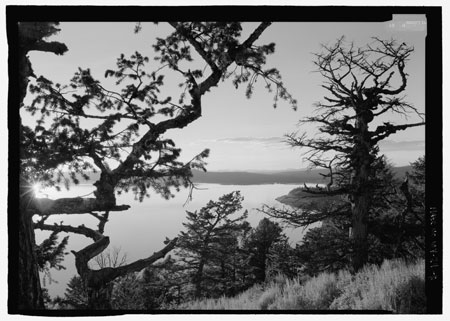




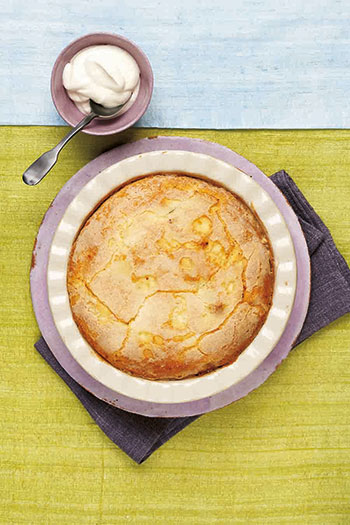

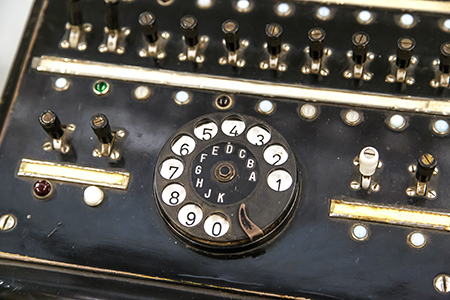
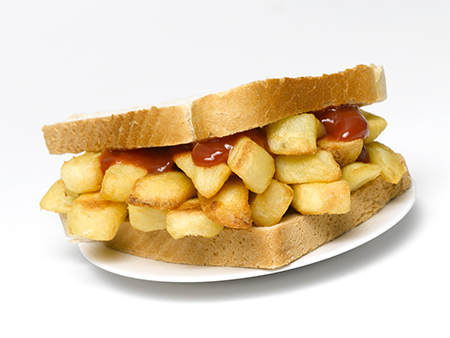
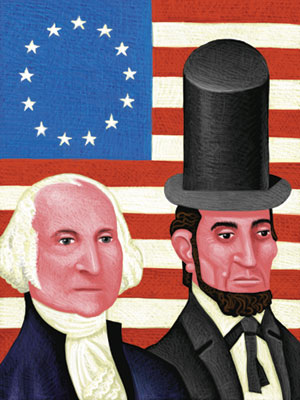

 It wasn’t an easy road to get to The Singularity, and not everyone was as fortunate as I was. Things really took off in the late teens and early ’20s as the amount of data produced exploded. With the growth of social media, people were increasingly willing to sacrifice their privacy for the sake of convenience and connectivity. Since there was so much data out there, it was easier for programs to identify correlations that can be extrapolated to make predictions about future behaviors. It all started innocently enough, when now defunct companies like Amazon started recommending books, movies, and other products based on a consumer’s past preferences. But things got out of hand in the ’20s when this technology was used to manipulate people, such as by requiring consumers to “opt out” if they didn’t want to purchase the computer-generated list of recommended products or by assessing their previous political leanings and then automatically casting votes for them. Soon, it became impossible to “get off the grid,” and, to this day, we leave a trail of data that can be used and manipulated by corporate interests — though we still tell ourselves those uses are benign.

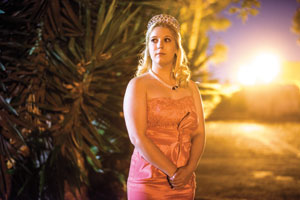

 Residents of Key West, Florida, enacted a similarly cheeky secession in 1982 to protest a U.S. Border Patrol roadblock that was meant to stem an influx of Cuban immigrants. Although never legally recognized, the Conch Republic moniker still exists as a souvenir-selling curiosity today.