Saving the Great American Road Trip
My faith in the American road trip was saved by a small town in Texas on the Fourth of July.
When that faith began to waver, and how far the road trip sank on my leaderboard of American pastimes—well, that’s harder to say. Below Putt-Putt golf, perhaps, and south of riverboat gambling. I knew that the highway had taken on an elegiac torpor. I knew that a line by the poet Louis Simpson filled my head: “the Open Road goes to the used-car lot.”
That’s a grim mantra, particularly if you take—or occasionally teach—the American road trip. I’m afraid I do both. In a syllabus I’ve peddled, mostly proudly, for a decade, I offer the road as a mobile entrée to generational angst (Jack Kerouac’s On the Road) and racial hierarchies (Colson Whitehead’s The Underground Railroad). I introduce dads in search of salvation (Cormac McCarthy’s The Road) and young women escaping abuse (Thelma & Louise).
This transcontinental whirlwind of texts implies that road trips are uniquely qualified to capture a country so enormous, beautiful, and flawed. That wanderlust is a defining facet of the American psyche. That we’ll find ourselves just over that hill.
For years I believed this, and with all the fervor of a convert to the cause. I could opine on the Interstate Highway System and the drive-thru window. I ascribed meaning to the car that NASA left on the moon. My course, just one of so many on the topic, gave my musings purpose, and joy.
But when my family and I drove from Oregon back home to Indiana in 2023, I had doubts. The West burned in our rearview, and our Camry’s combustive hum felt like another agent of ecological despair. We’d rolled up the windows and maxed out the AC until our sedan became a portable living room—all cars today are portable living rooms—that mostly succeeded in keeping the world at bay. Here were our snacks, and there were our pillows. Each passenger could pacify themselves with a screen.
This is where the road trip fails us—or we fail it. Ready access to digital detachments (and directions) have brought sameness to an experience that should be built on surprise. A good road trip is a series of discrete episodes (I did this, I did that) held together by the flimsiest of threads: I did them by car. It’s the smorgasbord of travel, the choose-your-own-adventure of American life.
Planning (and plot) are beside the point, as anyone who’s read On the Road knows—though that didn’t stop my wife and I from planning our cross-country trek. We visited the Mojave (lunar-like and Looney Tunes) and the Grand Canyon (OK, it’s breathtaking). We spied Jesse Pinkman’s house in Alburquerque and ate fudge from—forgive me—Uranus, Missouri. I loved alternating between the sublime and the profane. I loved the fudge, too.
But this felt more like sight-seeing than road-tripping, a notion that returned whenever I returned to the car. Sameness haunted that interior, but sameness stalked us down the highway too. This is an old complaint, mind you—old as Howard Johnson, old as Humbert Humbert—but corporate lodgings and chain restaurants flatten the road trip with their predictable cheer.
My reading, though, had taught me that people (not place) define a road trip. The Easy Riders and the Cheryl Strayeds. The Misfits or the Brad Pitts bouncing shirtless on a bed. And that the people of the road change constantly, stretching one’s fixed idea of these States. Unfortunately, this is where the worst of my road dread began: the American demos itself.
There’s no way to say this that doesn’t sound cynical or misanthropic, but I was over meeting the American people. With the promise of their unacknowledged insight. In the hope that they’re stockpiling some nuance lost to the polls. I’d date this disillusionment back to November 3, 2016—and simply note that I’m sorry.
Let me tell you then about Shamrock, Texas—or really the Shamrock Country Inn in Shamrock, Texas—where my bottomed-out belief in the road was restored. At least temporarily.
The Inn is just east of a famous art deco filling station that looks like a nail stuck in the ground. Shamrock sits at a symbolic crossroads where two border-to-border interstates converge. (We’d come along I-40.) Everything from the vape shop to the towing-agency-cum-pizza-parlor bore the name of Historic Route 66. This all lent our evening in the town a whiff of kismet, of cosmic truth.
A South Asian family lived on site and owned the motel; they were the warmest hosts we’d known all trip. A middle-aged woman led us to our room, one hand finding my wife’s shoulder as she unlocked the door. A man, the woman’s husband presumably, watered new flowers ringing the Inn’s sign. An elderly woman walked the breezeway, stretching her legs, collecting trash as she strolled.
They asked about our travels and noted the forecast, doing so with an air of protection that felt ancient, as if “shelter” meant more than clean sheets and cable TV. This quiet grace reminded me of the Latin word hospes, which can mean inn-keeper or stranger, but is the root for hospitality too. As we talked, the sunset gathered strength in the west.
I’m a poet and thus programmed to find meaning in the unlikeliest of places. But that evening, it arrived easy as fireflies. I could hold its small light in my hand. Take the Inn’s name, the town’s too, which is more than a token of luck, or an emoji. It’s a reminder of earlier immigrants who, following persecution, folded themselves into the U.S.
I thought of the Irish as I looked at the motel’s walls: white atop red, blue doors with a star, newly painted to evoke the Texas state flag. I thought of assimilation and acceptance. I wondered if my hosts had sought—and perhaps found—either, or both. I wondered if whiteness, a trait that had aided the Irish, would stand in their way.
As darkness fell, my family and I stepped into the breezeway. Fireworks had started rising like exclamation points in the east, each burst briefly muffling a legion of bullfrogs. Then one came hopping toward us, warty and enormous, to our son’s great delight. We coaxed it toward our motel room, one more gift—wholly undeserved—from a natural world we degraded each day.
A few guests arrived as we stood there. Good ole boys in pickups. A vanload of Swedes headed to the Grand Canyon. And our hosts remained, too, watching the sky as they fired up AC units for those who’d arrive later. In the morning they’d serve us breakfast: eggs, biscuits, and Texas-shaped waffles.
“I think whatever I shall meet on the road I shall like,” Walt Whitman writes in “Song of the Open Road.” It’s a line that I’ve loved for years without ever believing it held any broad truth. I know full well that I—a white guy who’d not heard of The Negro Motorist Green Book until researching for my class—should have been the likeliest reader to agree. On that evening, as sleep overtook me, I got close.
For a few hours there, I loved the American road trip. As the dreams of dissimilar people, dazzled and drowsy and dwelling together, filled a motel in rural Texas. As fireworks resolved into a sulfurous breeze. But sleep would also illustrate the tenuousness of that union. Soon we’d drive into the heat of tomorrow, and this evening—like the promise of our country—would disappear into the past.
Originally published on Zócalo Public Square. Primary Editor: Eryn Brown | Secondary Editor: Sarah Rothbard
Review: Shoshana — Movies for the Rest of Us with Bill Newcott
Shoshana
⭐️ ⭐️ ⭐️ ⭐️
Run Time: 2 hours 1 minute
Stars: Irina Starshenbaum, Douglas Booth, Harry Melling
Writers: Laurence Coriat, Paul Viragh, Michael Winterbottom
Director: Michael Winterbottom
The seemingly endless progression of terrorism, revenge terrorism, and revenge-revenge terrorism that defines geopolitics in Israel and Gaza commands our attention nearly daily. But this gritty and graphic historical drama, set in British-occupied Palestine between the world wars, drives home with awful clarity the dismal truth: Death’s Wheel of Misfortune was spinning there decades — and perhaps centuries — before anyone coined the term “news cycle.”
Directed by the ever-versatile Michael Winterbottom (The Trip, 24 Hour Party People), Shoshana is based on the true story of early Zionist activist Shoshana Borochov who, in the 1930s, we find working at a newspaper in the newly created sea town/Jewish enclave of Tel Aviv. Shoshana (Russian actress Irina Starshenbaum, in her first English-language role) promptly falls in love with a British intelligence officer named Tom (Douglas Booth of Netflix’s The Sandman); an inconvenient match since Tom’s job is to keep radical factions of the newly arriving Jewish population and the long-established Palestinians from killing each other; something they seem constitutionally determined to keep doing.
Indeed, by the time we reach Shoshana’s mid-point — with the hapless Brits vainly, and at times severely, striving to resolve a conflict that dates back thousands of years — we are instinctively bracing ourselves for the next street bomb; the next sniper’s shot; the next brazen killing.
It goes little better for the star-crossed lovers. Shoshana finds herself being drawn ever deeper into the armed resistance; Tom faces intensifying pressure from his boss, Geoffrey (Harry Melling) to turn up the heat on both factions. The radicals — Jewish and Palestinian alike — respond by ambushing and killing British representatives with alarming frequency.
Against the backdrop of seething resentment and explosive violence, life in Tel Aviv goes on with disorienting banality. The seaside cafes are teeming, the nightclubs are jamming, the VIPs still hobnob at lavish receptions where live bands play the latest Gershwin tunes.
Indelibly set in a particular time and place — expertly evoked through lovingly rendered costumes, authentic set design, and a fleet of remarkably preserved vintage vehicles — Shoshana nevertheless speaks most loudly when it sparks contemporary notes for its present-day audience. Those busy cafes defying the threat of a falling bomb could be on a street in Kiev. The faceless 1930s factions engaged in a ghastly escalating violence would immediately recognize the continuing bloody situation that defines today’s Israel and Gaza. The mounting sense of general hopelessness; a sense that society is careening toward a washed-out bridge with no one at the wheel, finds a chilling resonance in any number of 21st century countries.
Director Winterbottom — as comfortable directing a nerve-jangling war drama like Shoshana as he is tossing off the charming Trip films with Steve Coogan and Rob Brydon — uses the romance at the movie’s heart as a way to propel a story that, in its larger context, is going nowhere. In the title role, Starshenbaum brings smug confidence to her portrait of a pioneer who will become the prototype early-Israeli woman: resilient, strong-willed, and dangerous with a machine gun. As Tom, Booth evokes a young Brad Pitt, oozing charm and bureaucratic proficiency, but powerless in the presence of a woman who knows what she wants. In the thankless role of Tom’s by-the-book superior, Melling seems to be having fun jutting out his chin and staring daggers as he issues clipped, sometimes brutal, orders. Slight, slim and angular, scrunching up his face so that it at times seems too small for his head, Melling makes you forget we first saw him as Harry Potter’s rotund, beastly cousin Dudley Dursley.
A historical epic with present-day urgency, Shoshana offers a compelling reminder that, bad as things may be, they are never without precedent. The challenge is: How can we break cycles that seem as old as history itself?
Cartoons: Mountain Menaces
Want even more laughs? Subscribe to the magazine for cartoons, art, inspiring stories, fiction, humor, and features from our archives.
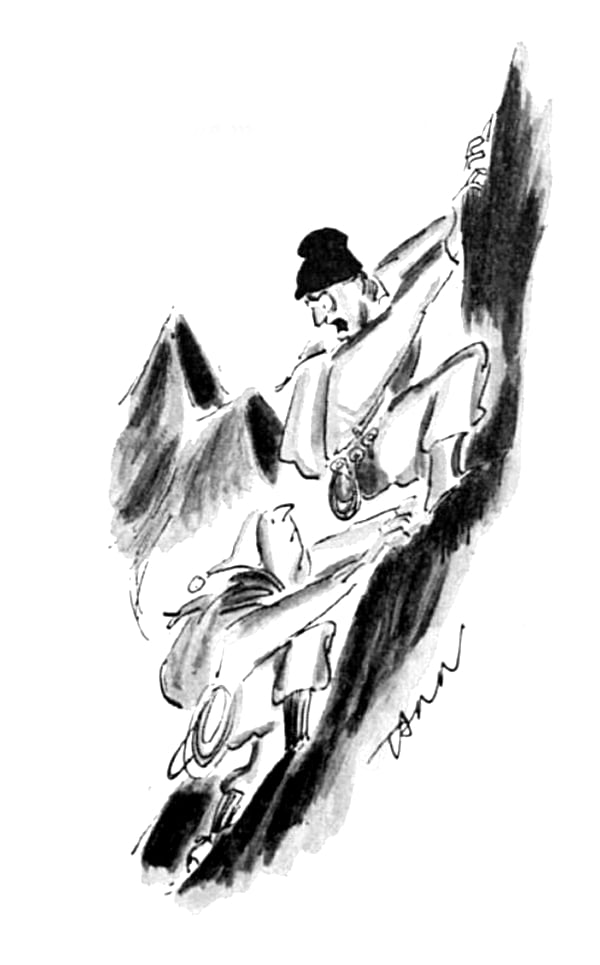
Marvin Tannenberg
May 25, 1963
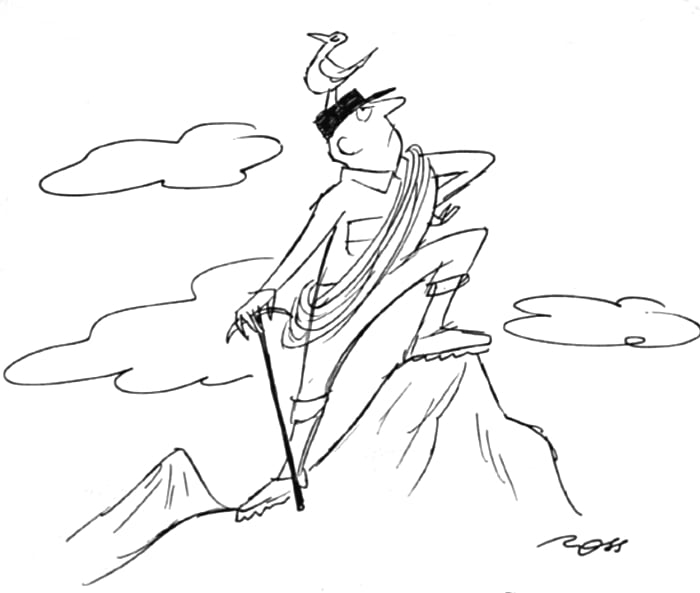
May 5, 1962
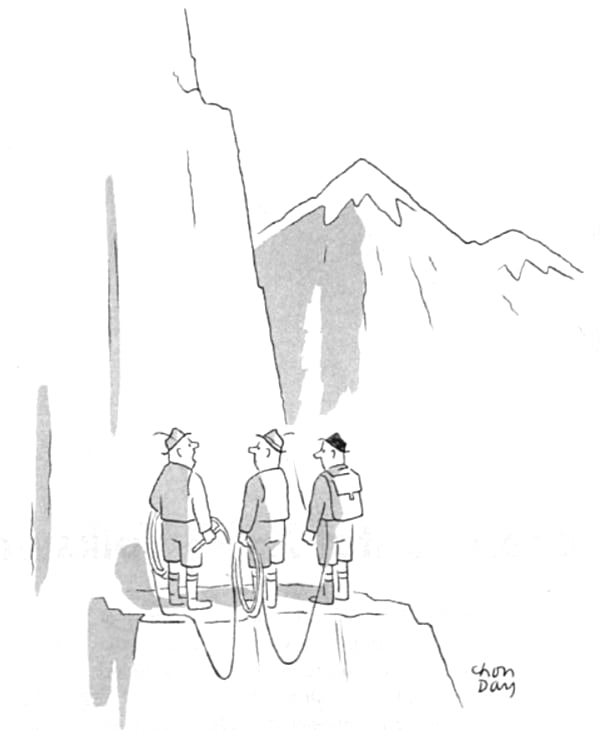
Chon Day
February 25, 1961

February 11, 1967
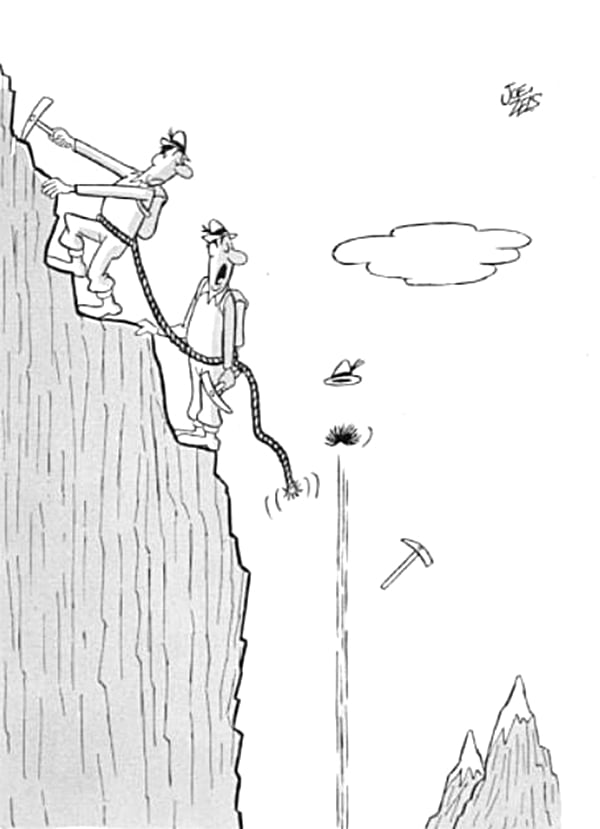
Joseph Zeis
November 30, 1963
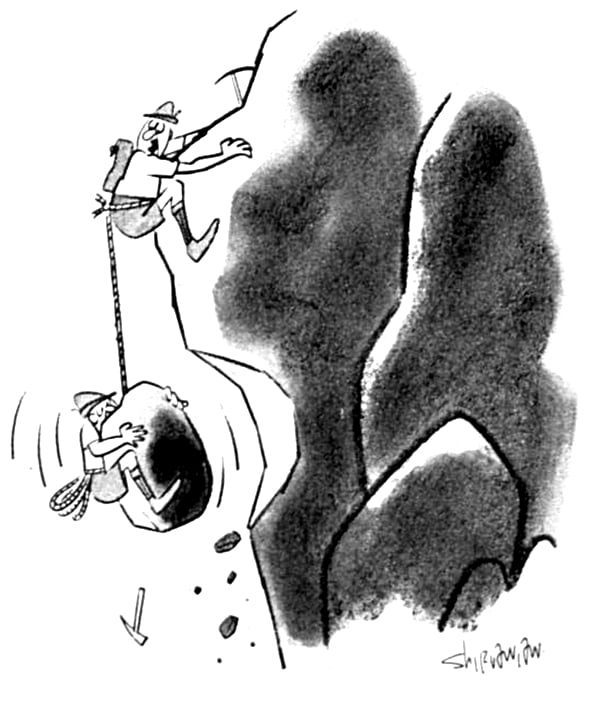
Vahan Shirvanian
November 5, 1966
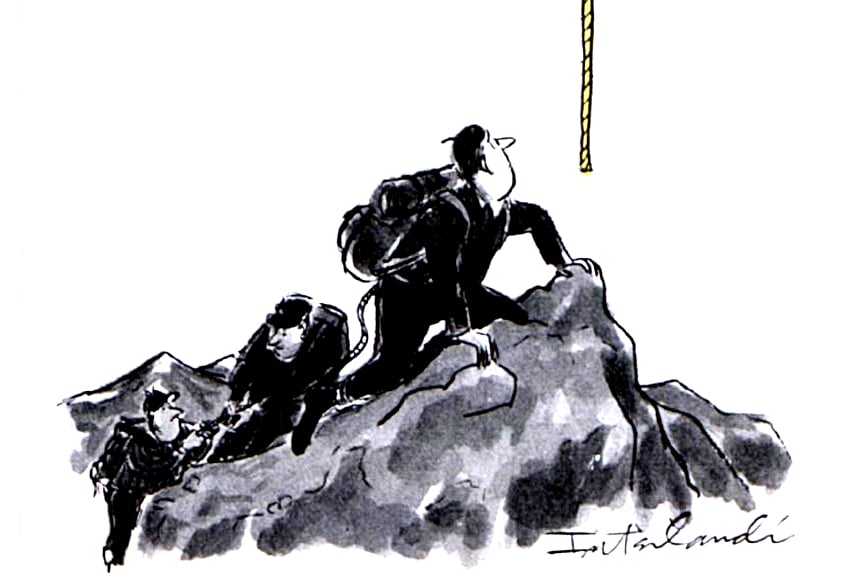
April 29, 1961
Want even more laughs? Subscribe to the magazine for cartoons, art, inspiring stories, fiction, humor, and features from our archives.
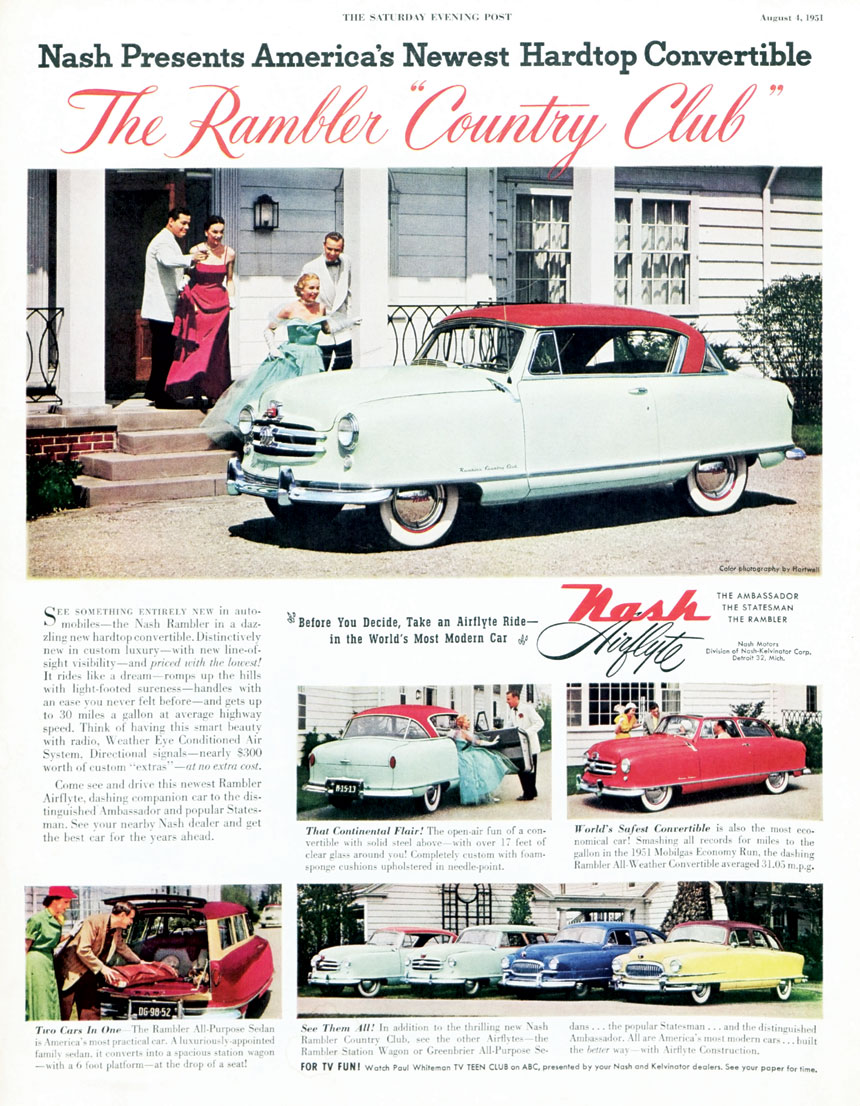
Nash Rambler: The Overlooked Classic
If you look up lists of the great cars of the 1950s, you probably won’t see the Nash Rambler. It’s a pity, because the design and features of the Rambler should permit it to share the stage with the Chevy Bel-Air and Corvette, the Ford Thunderbird and Buick Skylark, and the Cadillac Coupe De Ville.
The Rambler was intended to be America’s first modern, economical, compact car, which would be unlike anything else on the road. It offered a 100-inch wheelbase and a straight six, 82-horsepower engine. Nash helped popularize unibody construction in America, which gave the car greater stability, reduced the vehicle’s weight, and increased its mileage. It was available with several far-sighted options: power steering, power brakes, electrically powered convertible top, and inexpensive air conditioning. And on long journeys, the seats could even recline to form a bed for the family.
From the beginning, the Rambler stuck close to the rounded, aerodynamic style of the 1949 Nash Ambassador, which Nash called its Airflyte body. While the other carmakers were busily turning out angular, chrome-clad behemoths, Nash-Kelvinator was selling the first successful compact car in America and giving consumers a glimpse of their future.
This article is featured in the July/August 2025 issue of The Saturday Evening Post. Subscribe to the magazine for more art, inspiring stories, fiction, humor, and features from our archives.
Missing in History: Billie Burke’s Tumultuous Relationship with Florenz Ziegfeld
“It may have been a good thing that we eventually went bankrupt.”
—From Billie Burke’s autobiography, With Powder on My Nose
Billlie Burke, the beloved comedian, came to her profession naturally. After a childhood touring America and Europe with her famous father, the P.T. Barnum clown Billy Burke, and her mother Blanche Beatty Burke, the 19-year-old appeared in London’s 1903 play The School Girl. Audiences were so intrigued with the ingenue’s kittenish beauty and fashionable clothes, according to Ziegfeld and His Follies, that her name became synonymous with “adorable behavior” as well as a popular one-piece nightgown.
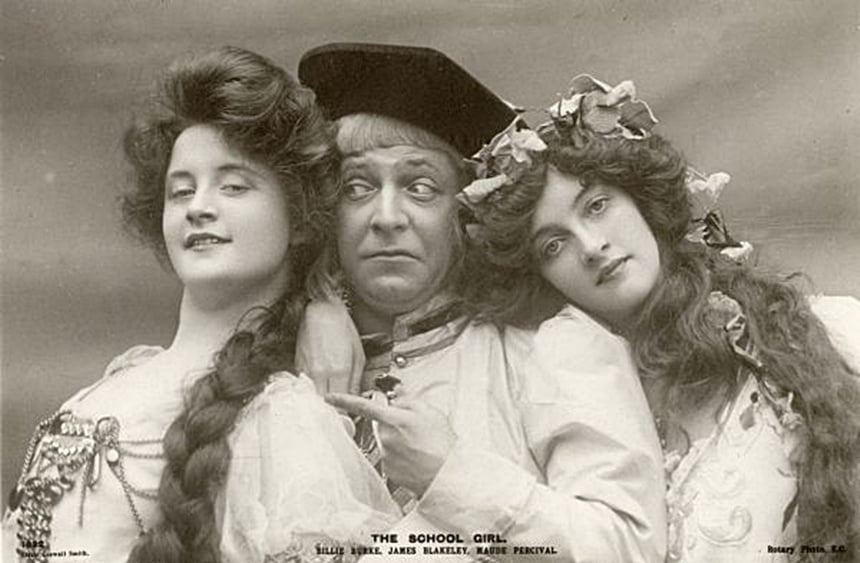

In 1905, when producer Charles Frohman planned to bring The Wife in New York, he asked Burke to join the show and soon became her devoted mentor and agent. After her successful debut in The Wife on Broadway, he assigned Burke a leading role in the 1908 light comedy Love Watches, which inspired a reviewer to call her a “real star,” reports Staging Fashion. But if “my acting did not set the Hudson on fire… there was always a gasp and a little flutter of surprise at my entrance,” Burke recalled in her first memoir, With a Feather on my Nose. Her subsequent stage appearances and high-fashion clothes were soon copied and marketed as “Billie Burke” dresses and accessories. “What I had to do was be as pretty as I could and as gay as I could be on the stage,” she recalled, according to Mrs. Ziegfeld: The Public and Private Lives of Billie Burke.
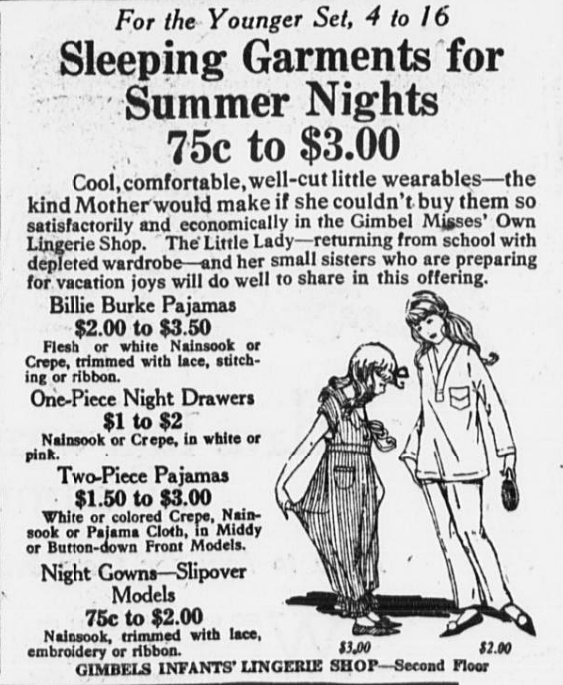
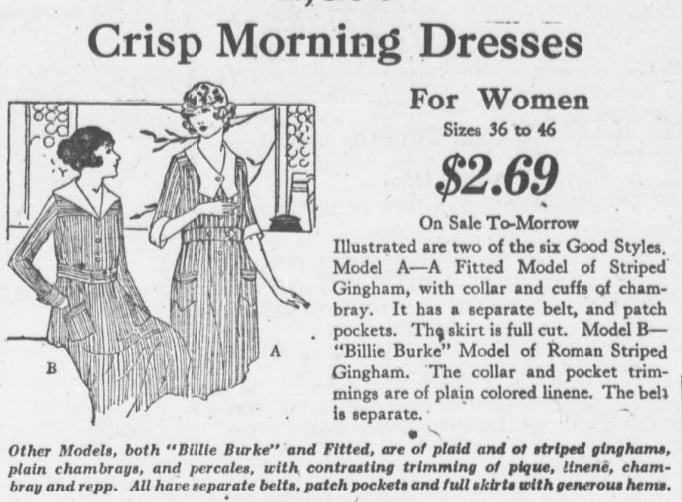
As a celebrity, Burke appeared in fashionable restaurants like Sherry’s and Delmonico’s, where she was escorted by famous men including Mark Twain, Somerset Maugham, and Enrico Caruso. In response to the opera singer’s attentions, “I said ‘Pouf’ to his rather overpowering brand of love-making.” Burke admitted in her in her first memoir.
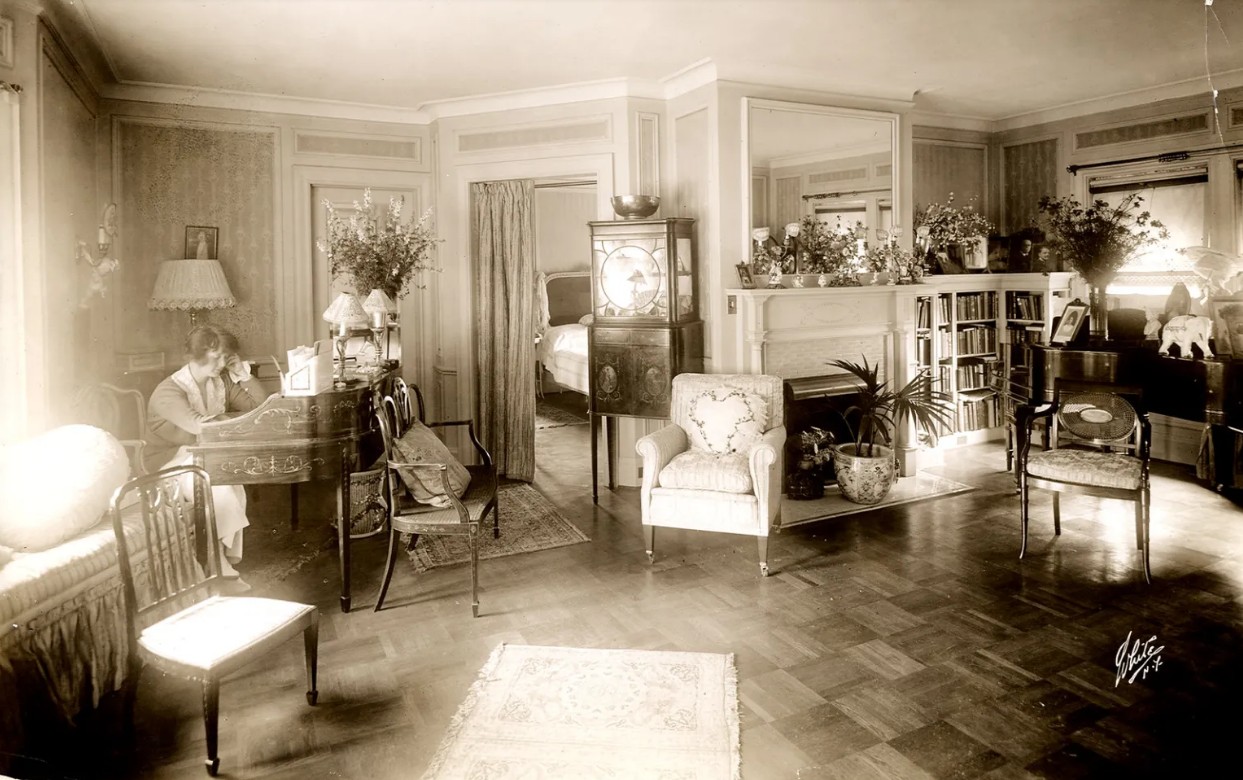
Born on August. 17, 1884, as Mary William Ethelbert Appleton Burke, in Washington, D.C., the actress adopted her famous father’s stage name but spelled it Billie instead of Billy. Despite her frothy on-stage appearances, Burke was a pragmatist. In 1911, she bought a mansion in Hastings, 30 miles north of Manhattan, and dubbed it Burkely Crest. Once when a reporter asked about marriage, Burke said an actress “cannot be happy if she is married and remains on the stage,” according to Mrs. Ziegfeld: The Public and Private Lives of Billie Burke; since she loved acting, only a very special man would make her give it up, “but I have never met such a man.”
That was before New Year’s Eve 1914, when Burke attended a costume ball at the Astor Hotel’s Sixty Club. “At the foot of the stairs stood this man,” she recalled. “He had this Mephistophelean look…and was in full evening dress rather than a costume.” When guests participated in a Paul Jones, or “mixer dance,” Burke was partnered with the man she had noticed at the stairs. Soon she felt “he had danced me into a world of swirling emotion, a new country full of awe and delight.” When another guest greeted her partner as Flo, Burke realized he was the legendary Broadway impresario Florenz Ziegfeld of the glamorous Ziegfeld Follies. She knew that his “reputation with women was dangerous,” she wrote in her memoir, but was still attracted to him.
A few days later she happened to bump into Ziegfeld on the street by chance, but he probably planned it, according to Mrs. Ziegfeld. She was wearing a sable jacket and carrying a chinchilla coat, leading Ziegfeld to comment, “I see you are the most extravagant person in the world, next to me,” according to Burke’s memoir.
Soon he was showering Burke with gifts. When her protective manager Frohman heard about their romance, he exploded and forbade her to date the showman. Burke ignored him, and continued to meet Ziegfeld in secret.
On Saturday, April 11, 1914, after the matinee performance of the light comedy Jerry, a “frantic and frightened” 29-year-old Burke wed 49-year-old Ziegfeld in the storage room of a New Jersey Lutheran church. To punish Burke, Frohman closed Jerry in New York and planned a road tour, presumably to keep the newlyweds apart.
On Burke’s birthday that August, Ziegfeld picked a rose from the garden at Burkely Crest, wrapped two $100 bills around it, and presented it to her with the apology, “All I got.” Only then did Burke realize the full extent of her husband’s roller coaster finances. Since her career was a dependable source of income, she reluctantly agreed to the 72-day road tour for Jerry. While she was on the road, friends mentioned rumors about Ziegfeld’s “attentions to other girls,” but Burke tried to ignore them.
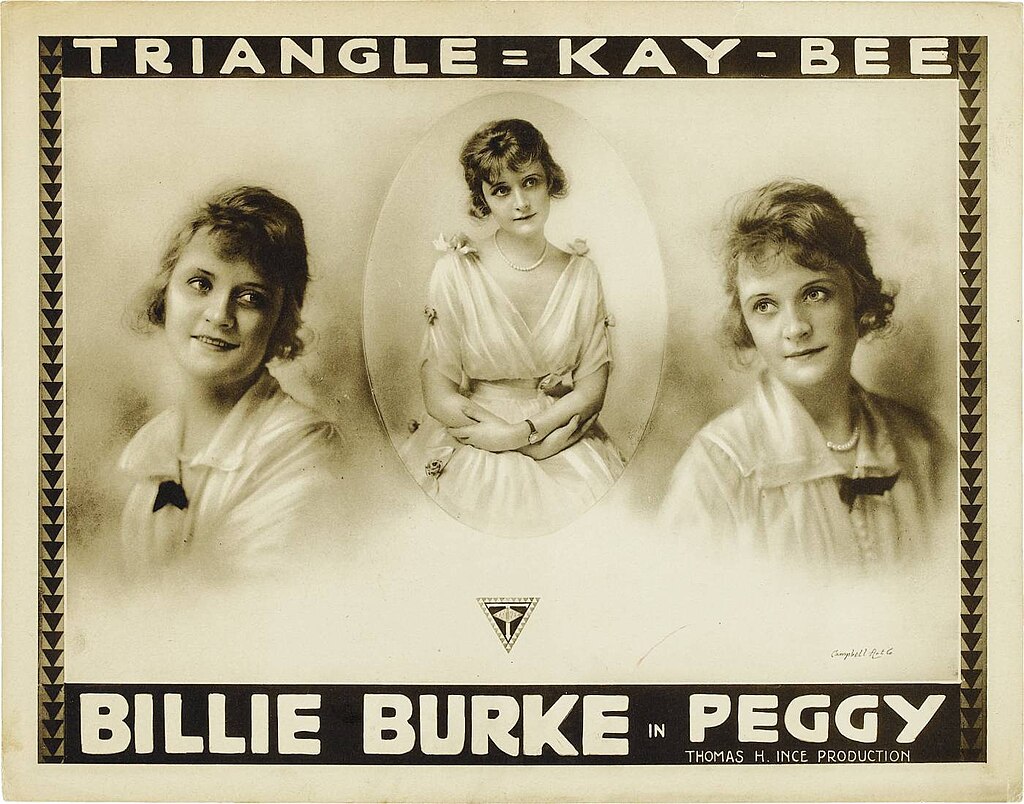
Burke then accepted Hollywood producer Thomas Ince’s offer for a $10,000 weekly salary for the silent movie Peggy. Still, the rumors abounded, among them one about her husband and Olive Thomas, 21-year-old Follies girl. At that time, Burke was in San Francisco and asked Ziegfeld to meet her there. In what she later described as a “fit of blazing red-headed jealousy” she lambasted him for his womanizing, then smashed dishes, tore down the drapes, and dissolved in tears.

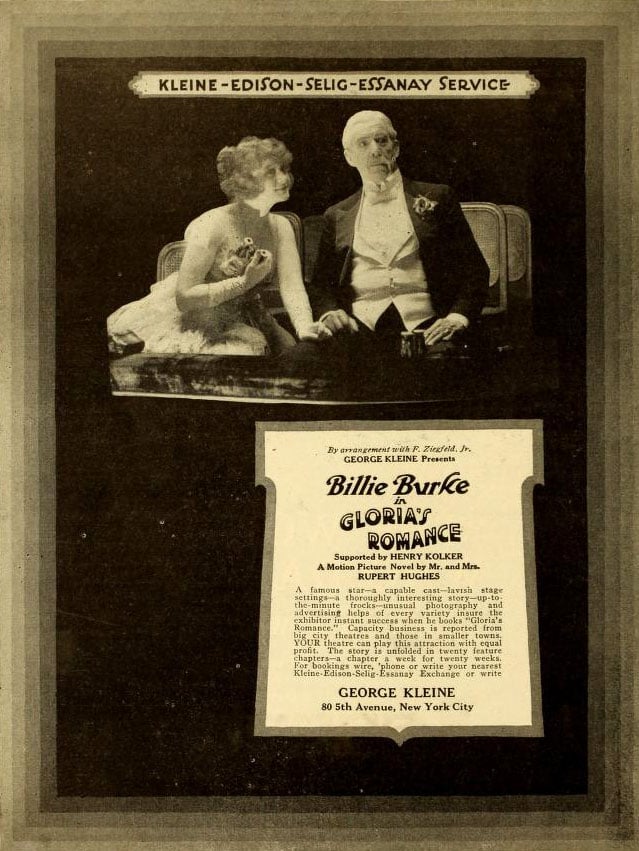

To pacify her, Ziegfeld arranged a role for her in the silent movie Gloria’s Romance. The producer, Max Annenberg, offered $75,000 for Burke’s role, but Ziegfeld demanded twice that sum — and got it, according to Mrs. Ziegfeld. Ultimately, the marriage survived, and on October 16, 1916, Burke gave birth to their daughter, Patricia.
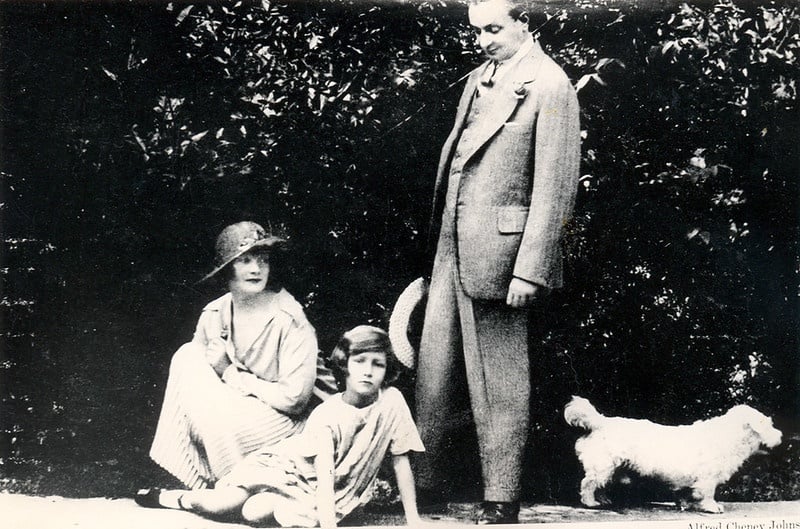
Over the next decade Burke declined several Hollywood roles, hoping that by remaining in New York she could keep Ziegfeld from wandering. During those years she appeared in several plays and 16 silent movies filmed locally, but as she recalled, “I chose my husband over my career.” Still, the rumors persisted. The most humiliating came from Follies ballet star Marilyn Miller, who claimed Ziegfeld wanted marry her, if only Burke would step out of the way.


Outraged, Burke confronted her husband once again. In response, Ziegfeld reached into his pocket and presented her with a $20,000 diamond bracelet from Tiffany’s, which she threw across the room. But Burke loved him, and eventually they reconciled.
On Thursday, October 24, 1929, when the stock market crashed, Ziegfeld lost all his money. “I must find another play and get back to work, that I must help my husband,” was Burke’s first reaction. Fortunately, the $500,000 she had saved in her name had not been invested in stocks, so it was used to pay off some debts, according to Ziegfeld and His Follies. Burke dismissed the servants and sold off many possessions to reduce costs at Burkely Crest.
By 1932, Ziegfeld was a broken man who often hid from his creditors. In desperation, Burke accepted a role in the play The Vinegar Tree at The Belasco Theater in Los Angeles. Director Geoge Cukor then cast her in A Bill of Divorcement with John Barrymore and young Katharine Hepburn. Learning that Ziegfeld was ill with a respiratory infection, Burke asked the producer to close The Vinegar Tree, returned to Manhattan, and by train brought the ailing Ziegfeld back to Los Angeles with her. On July 22, 1932, the 65-year-old Florenz Ziegfeld died.
Despite her grief, Burke reported for the filming of A Bill of Divorcement soon after the funeral. “I did it because I had to, and it was the best thing that could have happened,” she wrote in her second memoir, With Powder on my Nose. Paradoxically, Ziegfeld’s bankruptcy, significant debts, and subsequent death had forced Burke into accepting lucrative roles in the movies. As she told the Washington Post on August 8, 1937, “Motion Pictures tided me over the most difficult part of my life. They were a veritable port in the storm…”
A Bill of Divorcement (Uploaded to YouTube by Artflix – Movie Classics)
Burke’s life improved after Samuel Goldwyn of MGM offered to become her agent and placed her in many movies. Among the most memorable were her starring roles in Dinner at Eight, Topper, and Merrily We Live.
In 1938, after Goldwyn sold the screen rights to The Wizard of Oz to MGM vice president Eddie Mannix, and Burke was chosen to play Glinda the Good Witch. Burke recalled, “My favorite role was in The Wizard of Oz…in which I played Glinda, the Good Fairy. I never played such a being on stage, but this role is as close as I have come in motion pictures to the kinds of part I did in the theater,” referring to the glamorous stage roles she used to play.
While Burke eventually repaid Ziegfeld’s substantial debts, she never resented the challenges of their marriage. Despite the financial problems and how she always “looked at my husband’s beauties with green eyes,” she still missed “the gentle touch of a dear hand, which it seems to me touched me only yesterday,” according to With Powder on My Nose.
Even so, Burke always understood it was important for a woman to retain her own identity. Ziegfeld and His Follies notes that she told a Photoplay reporter, “Please tell Photoplay readers how important it is for a woman who has ever had a career to keep right on loving her work.”
Love at First Bite
Growing up, my favorite day of the week was Sunday. On Sundays, my mum would prepare a pork roast or lamb for dinner. Aussies enjoy lamb so much, it is often considered our national dish. There are countless ways to prepare it, and these recipes — loaded with seasonal ingredients — couldn’t be any easier.
Spice-Rubbed Lamb Rack with Vinegar-Mint Sauce and Zucchini-Feta Fritters is a perfect entree for a weekend dinner and elegant enough for a special occasion. Spices enhance the flavor of lamb, so be generous with the rub that includes fennel, smoked paprika, and cayenne pepper. Mint is refreshing and light and helps to balance the richness of the meat.
If you don’t cook lamb often, don’t be intimidated. Let meat sit out at room temperature for about 1 hour to take the chill off before cooking. Doing this reduces cook time and helps ensure the meat cooks evenly. Use a meat thermometer — the only foolproof way to avoid overcooking. After you pull it out of the oven, allow the meat to rest before slicing; resting allows the juices to redistribute throughout the meat.
Nothing says summer like Tomato and Bread Salad with Grilled Eggplant and Bell Peppers. A delicious combination of in-season summer produce and crunchy day-old bread is a perfect side dish for lamb or a crowd-pleasing summer salad on its own.
Spice-Rubbed Lamb Rack with Vinegar-Mint Sauce and Zucchini-Feta Fritters
(Makes 8 servings)
Vinegar-Mint Sauce
1 cup (not packed) fresh mint leaves
1/2 cup good-quality red wine vinegar
2 tablespoons sugar
Lamb
2 tablespoons black peppercorns
2 tablespoons coriander seeds
2 1/2 teaspoons fennel seeds
3/4 teaspoon cumin seeds
2 tablespoons smoked paprika
1 teaspoon cayenne pepper
2 lamb racks (about 2 1/2 pounds total), rib bones frenched, excess fat trimmed
1 tablespoon olive oil
Fritters
1 ½ pounds zucchini, coarsely grated
8 ounces feta, crumbled
1/4 cup chopped green onions
1/4 cup chopped dill
1/4 cup chopped mint
1/4 cup chopped flat-leaf parsley
2 large eggs, beaten to blend
1 cup (2 ½ ounces) panko breadcrumbs
1 tablespoon cornstarch
Grapeseed oil (for deep frying)
To make mint-vinegar sauce: Place mint in medium bowl. In small saucepan, bring vinegar, sugar, and ½ cup of water to boil over medium-high heat, stirring until sugar dissolves. Pour vinegar mixture over mint and steep for 30 minutes. Mix in ½ teaspoon salt and strain sauce.
To make spice rub: In small frying pan over medium-high heat, stir peppercorns, coriander seeds, fennel seeds, and cumin seeds for about 2 minutes, or until spices are toasted. Transfer to mini food processor and grind to fine powder. Pulse in 1 teaspoon salt. In small bowl, mix freshly ground spices with paprika and cayenne.
To cook lamb: Preheat air fryer oven to 400°F. Preheat grill pan over medium-high heat.
Coat lamb with oil and sprinkle spice mixture all over lamb. Sear lamb, turning as needed, for about 3 minutes per side, or until brown all over. Transfer lamb to small cookie sheet and cook in preheated air fryer oven for 10 to 15 minutes, or until instant-read thermometer inserted into center of lamb registers 125°F for medium-rare doneness. Remove and rest lamb on cutting board 8 minutes.
Meanwhile, to prepare fritters: In medium bowl, toss zucchini with 1 teaspoon salt. Set aside for 10 minutes. Transfer zucchini to center of clean tea towel. Gather corners of towel together to enclose, then squeeze excess moisture from zucchini. Return zucchini to bowl.
Stir feta, green onions, dill, mint, parsley, eggs, breadcrumbs, cornstarch, ¾ teaspoon salt, and ½ teaspoon freshly ground black pepper into zucchini. Divide mixture into 16 even portions.
Add enough oil to 5-quart casserole pot to reach depth of 2 inches and then heat oil to 350°F. Working in batches, deep-fry fritters for 5 minutes, or until crispy and golden brown.
Transfer to large plate lined with paper towels. Season with salt and pepper to taste.
To serve: Carve lamb racks into chops. Divide chops evenly among plates and serve with mint-vinegar sauce and fritters.
Make-Ahead: Spice rub can be made up to 3 days ahead and stored in airtight container at room temperature. Fritter patties can be formed up to 12 hours ahead, covered, and refrigerated.
Per serving:
Calories: 627
Total Fat: 42 g
Saturated Fat: 19 g
Sodium: 645 mg
Carbohydrate: 15 g
Fiber: 1 g
Protein: 43 g
Diabetic Exchanges: 0.5 starch, 6 lean meat, 0.5 vegetable, 6 fat
Tomato and Bread Salad with Grilled Eggplant and Bell Peppers

(Makes 8 servings)
2/3 cup extra virgin olive oil, divided
4 cups 3/4-inch pieces day-old bread
4 Japanese eggplants, halved lengthwise
1 red bell pepper, quartered, seeded
1 yellow bell pepper, quartered, seeded
1/3 cup plus 1 tablespoon red wine vinegar
3 garlic cloves, crushed
4 vine-ripened tomatoes, cut into 1-inch pieces
7 ounces grape tomatoes, halved
1 hothouse cucumber, cut into 1-inch pieces
1 long red chile, seeded, finely chopped
2/3 cup basil leaves
2 teaspoons oregano sprigs
Heat ⅓ cup oil in medium frying pan over medium-high heat. Cook half of bread, turning, for 2 minutes or until golden brown and crisp. Use tongs to transfer bread to wire rack. Repeat with remaining bread. Set aside to cool completely. Reserve oil in pan.
Prepare barbecue for medium-high heat. Brush eggplant and combined bell peppers with reserved oil from pan. Sprinkle with salt. Barbecue eggplant and bell peppers until lightly charred and tender. Transfer eggplant and bell peppers to clean work surface and cut into ¾- to 1-inch pieces.
In small bowl, whisk ⅓ cup vinegar with garlic and remaining ⅓ cup oil. Season with salt and pepper.
Just before serving, in medium bowl, toss bread with ¼ cup dressing and 1 tablespoon vinegar. Gently toss combined tomato, cucumber, chile, eggplant, and bell peppers in large bowl with enough of remaining dressing to coat. Season with salt and pepper. Fold in bread.
Transfer salad to large serving platter. Sprinkle with basil and oregano. Serve immediately with remaining dressing.
Per serving:
Calories: 249
Total Fat: 19 g
Saturated Fat: 3 g
Sodium: 103 mg
Carbohydrate: 19 g
Fiber: 3 g
Protein: 3 g
Diabetic Exchanges: 0.5 starch, 2 vegetable, 3.5 fat
Want more? Try Curtis Stone’s Turkey Burgers with Parmesan Wafer at saturdayeveningpost.com/turkeyburgers.
This article is featured in the July/August 2025 issue of The Saturday Evening Post. Subscribe to the magazine for more art, inspiring stories, fiction, humor, and features from our archives.
Behind Many a Great Male Writer Is a Woman Holding a Pen
Philosopher John Stuart Mill dedicated his book, On Liberty, to his wife, writing: “to the beloved and deplored memory of her who was the inspirer, and in part the author, of all that is best in my writings.” He’s not the only writer whose spouse played a significant role in his success. Some of the most beloved and acclaimed male writers had help from their wives when writing, and while some of them acknowledged those contributions, others let their spouses remain unappreciated. These women inspired, edited, typed, translated, or even partially wrote many influential works, but their names rarely appeared on the cover alongside their husbands’.
Zelda Fitzgerald


F. Scott Fitzgerald was one of the most successful and well-known writers of his time; his wife, Zelda, was less commercially and critically successful with her only novel, Save Me the Waltz. However, she likely played a bigger role in her husband’s success than he might have let on. F. Scott Fitzgerald based many of his characters on Zelda, even allegedly writing his character Rosalind Connage in This Side of Paradise to incorporate aspects of Zelda’s personality and experiences. He also lifted chunks of her diary and incorporated some of her ideas into his work. After the publication of F. Scott Fitzgerald’s first novel, This Side of Paradise, Zelda wrote: “I recognized a portion of an old diary of mine which mysteriously disappeared shortly after my marriage, and, also, scraps of letters which, though considerably edited, sound to me vaguely familiar.” Parts of The Great Gatsby also have similarities to Zelda Fitzgerald’s journal and spoken words, most notable Daisy Buchanan’s line — one of the most recognizable lines in American literature because of how it encapsulates women’s limited role in 1920s society: “I hope she’ll be a fool — that’s the best thing a girl can be in this world, a beautiful little fool.” Zelda had said after giving birth to their daughter, Scottie Fitzgerald, “I hope it’s beautiful and a fool—a beautiful little fool.”
Olivia Langdon Clemens
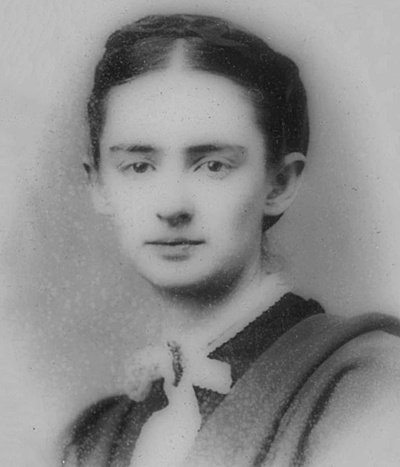

Mark Twain’s wife, Olivia Langdon Clemens, played a significant role in his work — both in his fiction and journalism. Biographer Laura Skandera-Trombley wrote in her book Mark Twain in the Company of Women. “When Clemens was introduced to her on December 31, 1867, he met a woman far better educated than he was.” — and he knew it. Twain often left pages of his manuscript by her bedside for her to proofread and edit. Skandera-Trombley also considers Clemens to be the reason Twain’s work became more accessible to a female audience. While Twain was often unpolished and humorous in his prose, Clemens encouraged him to take his work more seriously, and he always gave her credit for her contributions. Twain wrote, “I never wrote a serious word until after I married Mrs. Clemens. She is solely responsible — to her should go the credit — for any influence my subsequent work should exert.”
Sophia Tolstaya


Sophia Tolstaya was the copyist of her husband’s most successful novel, War and Peace, copying and editing the novel seven times. However, their arguments became more intense over the years, and while they never divorced, he abruptly left her out of anger at the age of 82. not only copied her husband’s work, but was also a writer herself, but her work was suppressed by Russian authorities during the Soviet era because they thought her criticism of Tolstoy would tarnish his reputation.
Anna Grigoryevna Dostoevskaya


When Fyodor Dostoevsky was looking for a stenographer to help him complete his novel The Gambler, Anna Grigoryevna Snitkina’s professor recommended her to him. Despite having a tight deadline, the two were able to complete the book — and fell in love in the process. She later became his financial advisor and got him to give up gambling.
Véra Nabokov


Besides being Vladimir Nabokov’s wife, Véra Nabokov was also his typist, editor, and literary agent. She supported their family by working as a secretary and translator and remained one of her husband’s biggest supporters, driving him where he needed to go, sitting in his lectures, and stopping him from burning what became his most acclaimed work, Lolita. Véra’s biographer, Stacy Schiff, states that one day, “[Véra] stepped outside to find her husband had set a fire… and was beginning to feed his papers to it. Appalled, she fished the few sheets she could from the flames” and announced that they were going to keep the manuscript. Nabokov certainly appreciated his wife’s role as his first reader, biggest supporter, and firmest critic, dedicating all his works to her. In her late 80s and after her husband’s death, she also translated his novel Pale Fire into Russian.
Tabitha King
In On Writing: A Memoir of the Craft, Stephen King advises every writer to have one ideal reader whose taste they tailor their work to and whose feedback they use when revising. For him, it is his wife, Tabitha King. While an unknown Stephen was writing full time and trying to get published in the early 1970s, his wife worked extra shifts at Dunkin’ Donuts to support their family financially. Stephen initially tossed the first three pages of his manuscript for Carrie in the trash, lacking confidence in its quality. He didn’t think he had enough knowledge to write Carrie, a novel about a high school girl and her struggles, realistically. Not only did Tabitha discover the pages in the trash and read them, but she also encouraged him to finish the novel and offered help with the female perspective he believed he lacked. Ever since, Tabitha has always been the first to read his work, both as his critic and as his dedicated supporter.
These are only six women whose contributions to literature often go unrecognized. Behind many successful male novelists are women who helped them achieve that success, some acknowledged and some unappreciated. These women were more than just partners, wives, mothers, sisters, daughters, and friends; they were also typists, editors, literary agents, advisors, supporters, critics, and muses for the writers we know, love, and praise today.
Our Better Nature: Nature’s Interconnections Are a Tapestry
In grade school, our class learned about nature’s food chain, a linear thing presumably made by surveyors who plan railroads and other really straight stuff. The example began with seaweed that got munched by salad-eating minnows that in turn got eaten by bigger kinds of fish (our textbooks failed to name these fish). It was a grim line of carnage where large fish dined on smaller species.


The chain came to a screeching halt with a top predator, which all the kids guessed was a shark. When it died of old age, its rotting carcass provided nutrients to aquatic plants back at the start of the food chain. Given all the bloodshed in the story, the ending was kind of a letdown.
In high school we got a different yarn. Someone realized life on Earth was more complex than straight lines, and we learned about the food web, which preceded the world wide web. The model aims to show the many ways various species are connected to one another.


For example, dragonflies eat biting insects, but they also consume bees and other pollinators. Since juvenile dragonflies spend one to two years underwater, chomping bugs and getting eaten by fish, their numbers could spike if the fish population dropped, which could then reduce pollination rates locally.

In 1911, Scottish-American naturalist John Muir, who helped create our National Park system, famously wrote “When we try to pick out anything by itself, we find it hitched to everything else in the universe.” If indeed every part of the natural world is connected, we might need a more elegant way to represent this, like a tapestry.
The corollary to Muir’s observation is that we never know for sure what consequences our actions will have when we pull on a thread in the fabric of nature. DDT seemed like a bright idea until we realized, almost too late, that it nearly wiped out eagles and other raptors.
In the mid-1990s, scientists developed a type of corn able to make a toxin that killed European corn earworms. As this new corn became dominant, the western bean cutworm, a bigger, more destructive pest that is impervious to the toxin, swept across the nation. It turned out that European corn earworms had been eating baby cutworms as soon as they hatched, in order to quash their competitors. In spite of our technical prowess, we’re often groping around in the dark, and not in the fun sense.
Although we’re a long way from mapping the countless threads of nature’s tapestry, even the simple connections we’ve traced are captivating, like the interplay between flowers and pollinators. We know most plants need a pollinator to reproduce, but we seldom think of the fact that pollinators rely on plants for food. This interdependence is called mutualism, which in some cases can be oddly specific.
The yucca plant, native to parts of California, Arizona, Utah, and Nevada, would go extinct if not for the aptly named yucca moth, a small, rather plain white moth. It’s the sole insect that has the right parts — in this case, mouth tentacles — to pollinate yuccas. A female chooses one yucca flower per plant in which to lay one egg, and then, her face coated in pollen, she moves to other yucca plants, thus assuring cross-pollination.

Yuccas reproduce thanks to the moths, and in return, the plants donate baby food for the moths’ wee caterpillars when they hatch. But the food they offer are their seeds, which sounds like it defeats the whole purpose. However, yuccas make 15 to 100 seeds per flower, and moth larvae only need a few to mature. Because the bell-shaped yucca flowers protect moth eggs and caterpillars from drying out or getting eaten, the moths need yuccas for their own survival.
Plants pollinated by birds tend to make bright-colored flowers, often red, and particular shapes as well. Bee balm, widely planted in gardens, is native to most of the U.S. east of the Rockies. The trumpet-like corolla of bee balm flowers are perfectly tailored to a hummingbird’s long bill and tongue. Bee balm entices hummingbirds with sugary nectar to fuel their speedy metabolisms, while the plant gets pollinated so it can make seeds. It’s not an equal partnership, though, as the birds can get nectar elsewhere, but bee balm’s corollas are so long and thin that most other pollinators can’t reach in far enough to do the job.

We know that flowering plants make nectar to pay pollinators for their services. But in some cases, sexual favors are exchanged. For this transaction, we look to North Africa, the Middle East, and parts of Europe where a group of bee orchid species grow. Their flowers don’t have nectar for pollinators. Instead, these orchid blooms look like female bees, to trick guy-bees into paying a visit.

Beyond their visual mimicry, bee orchids exude the same sex pheromone as female bees do, which is how males locate lady-bee decoy flowers. As a male mates with the sex-doll orchid, a bang-up pollination job ensues. Luckily, males seem to bump into enough real female bees to perpetuate their species.
The tapestry of life is pretty cool, whether one sees it from a scientific, philosophic, or comedic point of view.
The Quantum Herring
Time travel came late in life for Doris Zeitreiser, at a moment when she’d have much preferred a herring. The particular herring she had in mind had been pickled in cream, chopped, and garnished with red onions on lightly toasted Jewish rye. For 29 years, this vestigial meal had been a staple of her Sunday mornings, served with cultivated insolence by the same gnarled counterman at Loewenstein’s, and followed by a stroll to Schurz Park, where, weather permitting, she and Murray laid claim to a bench in the Peter Pan Garden and teamed up on the Sunday crossword. Until Murray, at only 67, had keeled over from an aneurysm, leaving her with a shattered heart and a kettle of carrion-eyed creditors. And now, only seven months later, Loewenstein’s itself was gone, replaced with a sterile cardboard sign thanking Upper East Siders for their patronage. One blow too many. But the universe seemed determined to test her further. Just as she was preparing to head to the park alone with a breakfast offering for the pigeons, her reclusive neighbor knocked to announce his arrival from the future.
“Please let me in,” he said. “I promise I’ll explain.”
She knew his surname to be Ryzyko from the mailbox in the lobby, yet in the long summer since she’d downsized to the faceless gray co-op on Second Avenue, her neighbor in 4B had limited his contact to muttered greetings in passing. He was presentable enough, in the rumpled way of the down-at-the-heel academic, his tweed jacket cut so loose that the elbow patches nearly reached his wrists, and in the elevator, he’d always appeared on the cusp of speaking to her, but he never did — his eyes either fixed on the certificate of operation, or darting awkwardly from his hands to his loafers and back. Yet now, on her threshold at 10 a.m., he’d discovered his tongue. Unnerved by the pounding at her door that followed the bell, and still in her bathrobe, Doris found herself inviting the man into her parlor and offering him tea. He appeared harmless enough, after all — possibly a potential nuisance, but not exactly the Boston strangler.
“I’ve got Lipton, Earl Grey, berry medley, and spearmint,” she said. “Or Sanka. We were never — I’m not much of a coffee drinker.” We was a hard habit to break.
“I know,” replied Ryzyko. “Your husband had stomach troubles.”
He dropped the words casually, matter-of-fact, as though a dead man’s ulcer were his business. If her neighbor’s overall bearing had been any less befuddled, Doris might have felt violated. Instead, she experienced her own flush of mild bewilderment. “You knew my Murray?”
“Goodness. I’m always saying the wrong thing. And traveling in time, I suppose it’s hard to remember when you’ve learned things.” Ryzyko wiped his spectacles on his handkerchief nervously while he spoke. He was younger than she’d first thought — closer to 50 than 60. “I guess I owe you an explanation.”
“I won’t object,” she said, placing the tea tray at his elbow.
“You see, Mrs. Zeitreiser,” he said. “I confess I’m something of a time traveler. From the future. Or maybe that’s an overstatement,” he added. “I’ve only done it once, after all.”
Doris didn’t need four decades as a psychotherapist to know the man was short a few marbles. Common sense told her to ask him to leave. And yet, watching him dance his teabag in the steaming water, his soft features flustered red, she shied away from calling out his claims overtly. “From the future,” she echoed. “In that case, are you willing to humor a foolish question? How far into the future are we talking here? Years? Millennia?”
Ryzyko’s gaze fell to his cup. “Nothing at all like that,” he said. “Although, naturally, you’d conclude …” He trailed off as though he’d lost his thread. “What I meant to say was …,” he continued. “Thursday.”
“Thursday?”
“Yes, Mrs. Zeitreiser,” he replied — “Doris, if I still may. I’ve come back from next Thursday.” And then he started choking on his tea.
* * *
Doris did not know the Heimlich maneuver — a realization that occurred to her while her guest coughed tea out his nostrils and his ruddy features turned crimson — so she was grateful when he managed to catch his breath. Add that to the list of things she’d learned too late: haggling with insurance companies and plumbers, slapping the microwave in precisely the right spot so it stopped whirring like a legion of drunken cicadas.
Ryzyko nearly spoke, then coughed again, before finally managing to gasp out an apology. “Never learned to swallow right as a kid,” he said.
“Can’t you go back into the past and fix that?” asked Doris, surprising herself with her own audacity. She was usually reflective, even reserved, which suited her well; Murray had wielded a sharp enough wit for them both. In any case, her guest took her quip for sincere.
“I’m not sure. I’m rather new at this,” said Ryzyko. “Or, at least, I think I’m new at this. It’s all very confusing.”
Something in his tone made Doris yearn to help him. That was the social worker in her, the do-gooder who hadn’t turned away a client in 30 years. Until June, at least, when she’d scaled back her practice — but those were extenuating circumstances. Tikkun olam, her mother had instilled into her and her sister. Repair the world. Only her mother was long gone, and her sister had succumbed to sepsis at 40 after a dog bite, but they’d been estranged by then anyway, so who could say whether it mattered? What was clear was that the planet desperately needed repairing — her neighbor included — and one had to start somewhere. The pigeons in Schurz Park stood at no risk of going hungry, after all, and she could use a distraction from the herring.
“Tell me all about it,” she said, refilling Ryzyko’s hot water.
So he did.
With coaxing, aided by a lifetime’s professional tricks, she managed to glean some architecture from his roundabout tale. His full name was Ojgen Boguś Ryzyko, but he went by Bog. His grandparents had been Silesian refugees — not Polish, he emphasized — he’d had great uncles who’d fought on either side in the war. Prior to that morning — or the following Thursday, depending upon how you viewed the matter — he’d led a rather unremarkable life. He was 49, unmarried, until recently adjunct faculty in the physics department at Hunter College. (Not laid off, he’d corrected her. Fired. For teaching a version of quantum gravity not consistent with classical formulations. Halfway into his description of the Casimir effect and two-mouthed wormholes, she steered him back to his story.) Basically, the man lived off an annuity from his late aunt, who’d never had offspring of her own, and he’d spent the last year developing a device to prove the merits of his contrarian theory of thermodynamics.
Doris found herself distracted by mention of the ill-fated aunt — although she had no reason to believe that woman had ever wanted children. But she had. Desperately. As had Murray. Alas, after six miscarriages and a pair of unexplained hypertensive crises, even the reproductive specialists had cried uncle. So here she was: widowed, alone. What term did one of her patients jokingly use in reference to her own fertility struggles? Reproductively challenged? Doris preferred barren with its overtones of biblical affliction. None of this, of course, could she explain to Bog Ryzyko, not even had she dared to try.
“And that’s the gist of it,” he said. “Until next Thursday. That’s when the gas leak occurred and you pounded on my door to warn me — I recognized your voice from the elevator — and I remember thinking, a gas explosion might actually have the force to trigger my machine — the Casimir effect, you understand — so I raced to the device and flicked on all of the reverse chargers simultaneously, and the next thing I knew it was 9:30 this morning and I was sitting on the stoop downstairs. Good thing I keep a copy of my door key around my neck.”
“I see,” replied Doris — but, candidly, she didn’t.
She’d been in the first cohort at the White Institute to accept MSWs, and she’d interviewed hundreds of delusional clients during her career — even the daughter of a prominent Orthodox rabbi who insisted her real father had been industrialist Howard Hughes. Doris could tell from delusions, as her grandmother might say. Her neighbor did not sound delusional. Life-long materialist that she was, she couldn’t help recognizing what Bog Ryzyko did sound like: A sane and well-grounded, albeit eccentric, individual who’d traveled four days backward in time.
“That’s some story,” she said with nonjudgmental regard. “It must be a lot to process.”
“I wouldn’t believe me either,” replied Ryzyko. “I hardly believe myself — and I understand the physics! But how else could I have known about Murray’s digestive issues? Or that he proposed to you on your third date, outside the gibbon exhibit at the Bronx Zoo? ‘The plaque says gibbons mate for life,’ he’d said. ‘How’d you like to make like a gibbon?’ And it took you a moment to realize his intentions.”
Doris dug her fingers into the arms of her chair, as though at the dentist, and she eyed the interloper with renewed suspicion. What was that Shakespeare quotation she’d memorized at Barnard: The devil can cite scripture to his purpose. But her guest looked as much like the devil as a sack of wet linen. “How did you know that?”
“I’m not sure. I imagine you’re going to share that story with me sometime between now and next Thursday morning,” explained Ryzyko. “I can’t remember the details of what will happen over the next few days, but sometimes scraps pop into my head.” He looked up at her expectantly, as though she might have a solution to an unspoken dilemma. “Honestly, I feel as though we’ve been through this loop a number of times before. …”
She wanted to resist his narrative — a pitfall that psychoanalyst Melanie Klein termed projective identification — but she found herself seduced by his script. “I guess that makes sense,” she agreed. “Because in four days, I’m going to wake you up for the gas leak again, and you’re going to flip your thingamabobs, and you’ll pop right back here to tell me about it. This could be the tenth time we’ve had this conversation. Or the thousandth …”
“And the amazing thing is that you always invite me in,” he said. “You never slam the door on my face.”
“Why would I do that?”
“Some people might,” he answered. “Most people.”
She sensed that many bouts of rejection lay behind this characterization of humanity, and she felt an unexpected urge to give the strange fellow a hug. She didn’t, of course.
“It’s an endless loop,” he continued. “And if you’re never going to shut the door on me, the only way out would be for you not to warn me about that gas leak, so then I wouldn’t flip on the reverse chargers, but then I’d …”
He waved his hands in the air to mimic an explosion, but he looked more like a jack-in-the-box gone haywire, and Doris bit her lip to stifle a grin. “Indeed,” she said. “That is a problem.”
“So what do we do now?” asked Ryzyko.
“We feed the pigeons,” replied Doris, gathering up the tea service. “Only please try not to interact with anyone until we figure this out.”
“But what if you run into somebody you know?”
“I won’t,” replied Doris. “I never do.”
* * *
The sun had already seared off the early mist, but even at mid-morning, Schurz Park lay nearly empty, its indigenous population estivating on Cape Cod and in the Hamptons. Doris and Ryzyko encountered a vagrant gathering cans, a jogger balancing a parrot on his shoulder, two ancient babushka seated at opposite ends of the same bench who as easily might have been sisters, strangers, or sworn mortal enemies. The old women shared the same perch every Sunday morning, reminding Doris of the dark years to come. As for the pigeons, nothing fazed them: not the overnight storm that had left emulsive pools on the walkways, not the rats who scampered from trash bins at the appearance of a human menace. “As a girl, I never saw the point of feeding birds,” said Doris. “They do fine on their own. But ever since I lost Murray, I find it strangely comforting — I can’t explain why.” She didn’t add that she’d come to accept the custom as part of the culture of widowhood, one of those pointless rituals that unmarried women of a certain age embraced to mark their territory. Like reading obituaries.
“When birds fly, their center of pressure diverges from their center of gravity,” replied Ryzyko, before adding, almost apologetically, “I didn’t discover that.” His words sounded familiar, reassuring — and though Doris was confident she’d never studied the mechanics of avian flight, she somehow knew to credit this breakthrough to Leonardo da Vinci.
Ryzyko reached into her sack tentatively and scooped up a handful of seeds. She watched as he strewed millet and sunflower kernels across the asphalt, his own eyes fixed on the pigeons in childlike wonder. She regretted not having spoken to him earlier in the elevator — not having invited him over for a neighborly snack. As a man, he was nothing like Murray, nothing, and she couldn’t see a way to finding him remotely attractive, if she had even been so inclined, but one of the aspects of marriage she missed most was taking care of someone, and here was a man who seemed in need of great care. Desperately so — whether he was aware or not. She enjoyed listening to him describe da Vinci’s Codex on the Flight of Birds, as he was now doing, with the zeal of a teenager describing his latest binge-watched show.
He cut himself short. “I’m boring you?”
“Not at all,” she replied. “I was just thinking that we can’t be the first human beings ever trapped in a time loop,” she said.
Ryzyko frowned. “So you think my invention is not original?”
She hadn’t considered her observation that way. “I just meant — ” but Doris was no longer certain what she’d meant. She recalled a Twilight Zone episode from her childhood in which a man accused of murder — Dennis Weaver or maybe Cliff Robertson — repeatedly faced trial and execution, only to wake up in the courtroom again. But that was TV.
“Do me a favor,” she said. “If you ever do go back in time again, can you bring me a pickled herring on rye from Loewenstein?”
She did not ask him to bring Murray. Life, she understood, was about settling.
* * *
That afternoon — following a lunch of pancakes and blintzes that Doris insisted on cooking and that Ryzyko nibbled at like a fawn — the pair settled down at the glass table in her parlor to develop a game plan. Ryzyko dared not return to his own apartment: presumably, another Ryzyko was busy at work on his thermodynamic contraption. What might happen if the two men met remained uncertain, but Doris didn’t wish to risk finding out. In hindsight, she regretted having had the physicist accompany her to the park. Logistics had never been her strong suit — she was an “ideas person,” as Murray had liked to say — but she determined to be more careful going forward. She even made a point of drawing the blinds, as they sat down to their war council, although she lived on the sixth floor and her parlor windows faced an airshaft. How she missed the panoramic view of the East River and Queens from the penthouse on York Avenue.
Their problem defied easy resolution. As Doris understood the matter, she had three options: First, she could do nothing until Thursday, then pound on Ryzyko’s door during the gas leak and set the whole loop in motion again. Alternatively, she might not warn him and allow the physicist to blow up with the building — but that prospect seemed unfathomable. Finally, of course, she had the option of phoning the gas company preemptively to prevent the blast. That idea struck her as the wisest course of action, but her companion objected vehemently: Without the explosion, his device would not activate and he’d be denied proof of his concept. “If Galileo and Giordano Bruno were willing to sacrifice their lives for science,” declared Ryzyko. “Why shouldn’t I?” Doris had never seen her neighbor so animated. She had many reasons to offer, but sensed that her arguments would prove fruitless, so she focused on gaming out other options.
By midnight, they’d made little progress, but as though by tacit understanding, they were back at the coffee table at dawn the next morning. Doris had already been awake for several hours, preparing breakfast. She was glad she hadn’t discarded her waffle iron with the move, and when Ryzyko appeared in the parlor — she’d had him sleep on a rollaway cot in her work den — he was greeted by a platter of Belgian waffles, as well as eggs scrambled with onions, freshly squeezed orange juice, and farmer’s cheese with diced tomatoes, which had been a favorite of Murray’s. To her delight, Ryzyko indulged heartily. “I wish you hadn’t gone to all the trouble,” he said — before adding, “but I’m also glad that you did.”
Then they went to work. At Doris’s suggestion, they assembled a list of instances of time loops in literature and film, hoping these might generate ideas. For some reason, their efforts made Doris think of John F. Kennedy’s security conclaves during the Cuban Missile Crisis — one of the last films she’d watched with Murray had been The Missiles of October — and she wished she could invoke the expertise of McGeorge Bundy or Paul Nitze for guidance. Calling upon a living expert of any sort was impossible, of course, because that would earn her a psychiatric evaluation at Bellevue. So they strategized and estimated risks, and shared stories along the way, and at some point Doris found herself relating the details of Murray’s proposal at the zoo. Doing so created a paradox of sorts: The more time Doris spent in Ryzyko’s company, the more she found herself growing attached to him — and the prospect of phoning the gas company, which indirectly meant erasing their connection, seemed all the less appealing.
“Gibbons travel through brachiation,” said Ryzyko. “From a purely mechanical perspective, they have the unique ability to convert gravitational energy into kinetic energy with very limited muscular input.” He added that their arm swings provided countless advanced word problems in the field of nonlinear dynamics.
“How do you know these things?” asked Doris.
“How does anybody know anything?” replied Ryzyko. Then his sad, light eyes caught her own, and he said, “You really loved your husband, didn’t you?”
Doris hadn’t been prepared for that. “More than anything,” she said.
“Love seems to be the only force that consistently breaks time loops,” said Ryzyko. “In books and movies, at least.”
Ryzyko’s gaze seemed suddenly different, deeper, and Doris wondered if his words carried a personal meaning. Love! How easy a solution that would be. But this wasn’t Brigadoon and she wasn’t in love with Ryzyko, although she increasingly felt that somebody should be. Alas, not her. So they continued their research until dinner — finding on the internet nearly 300 different cultural references to time loops — and then, after ordering in a veritable Chinese banquet, they sat at opposite ends of the sofa and watched Groundhog Day.
* * *
By Wednesday, much had changed between them — and much had not. The intensity of the situation, and their sequestration, had in many ways drawn them closer together. Increasingly, more of their time had been spent exchanging stories: She learned of Ryzyko’s childhood — his father’s regret that he did not share the military aspirations of his forebears, his mother’s frequent “vacations” that took her to a private asylum in Palm Springs. Ryzyko endured her countless anecdotes about Murray — the joyful times, of course, which were most of them, but also the rough patch at the end when he confessed he’d run his firm into the ground. As Thursday approached, she could no longer imagine how she’d braved the last half-year without this timid, perpetually bemused and scrupulously authentic misfit. His presence also reminded her of how isolated she’d become of late — how little effort his concealment required. At the same time, he remained unfamiliar to her, alien in a fundamental way, separated by a barrier of spirit and sensibility that her intuition warned even a lifetime of stories could never transcend.
By Wednesday night — the dinner plates on the draining board, a television flickering behind the drapes across the airshaft — they had reviewed every mechanism for terminating a time loop they could find described in print and on screen and they had ruled out one and all. Their most promising idea had been to cause a preemptive gas leak of their own in order to reactivate the device, and possibly launch themselves together into the next cycle, but Ryzyko feared that their combined mass might overload the chargers.
“We’d have a non-negligible chance of being vaporized,” he said.
They sat in silence for a moment. In the neighboring apartment, a clock radio erupted into static, then stopped abruptly. Ten o’clock. Ryzyko wore Murray’s favorite gray cardigan. “So where does that leave us?” she asked.
“Back where we started,” said Ryzyko.
“I was afraid you’d say that.”
“It’s not the end of the world,” he replied, matter-of-factly. “You’ll pound on my door in the morning and I’ll activate the device and we’ll have another chance again next week. Or last week, depending on how you look at it.”
He was right, of course. The one upside of a time loop was that it afforded an infinite number of opportunities to escape. Or not escape. Yet the prospect of starting over again, of watching the boulder roll back down the mountain, so to speak, left her on the brink of tears.
“I have a confession to make,” said Doris.
Ryzyko’s long features turned wary, but also expectant, like a baby giraffe caught by surprise — and she sensed with a twinge of dismay that she’d disappoint him. “It’s nothing, really,” she said. “Only that when you first showed up on Sunday, I kind of hoped that Murray had sent you. Not literally, of course … but somehow.” She let forth a sharp laugh. “I know that sounds foolish.”
“Not at all,” he said — and he did appear disappointed.
“But he didn’t, did he?” said Doris. “And you’re not carrying any secret messages?”
Ryzyko shook his head. “Not like that,” he said.
“No, not like that,” echoed Doris.
Then she rose from the sofa. “I guess it’s bedtime,” she said.
Ryzyko stood too, his reedy frame even thinner in Murray’s baggy sweater and slacks. His features, so recently glum, had turned stoic, and he was about to retreat into his makeshift bedroom when she commanded, “Come here” — either for the first time, or the millionth — and she enveloped his bones in a full-bodied hug.
* * *
Doris Zeitreiser did not set her alarm clock that night. Instead, she lay awake, wondering what had made this particular loop different. Maybe the ache she’d detected in Ryzyko’s eyes when he realized that she was still in love with Murray, that her ship had already sailed. Or some quantum property of the universe well beyond her understanding, some variation in a multi-mouthed wormhole that shifted the equilibrium of the cosmos ever so slightly. Had the fate of humanity depended upon her explanation, she could not have offered one. All she could say with confidence was that she’d felt her choice to be the right one at the moment — and afterward too, when she’d hung up the receiver and reflected upon her decision over a cup of peppermint tea. She’d had to lie about smelling gas, and she’d feared they might ask for details, but the Con Ed agent wasn’t particularly chatty at midnight. “We’ll send out a team,” he said.
They must have done so, but Doris didn’t know it. When she awoke in the morning, it was nearly eight o’clock — somehow, she’d forgotten to set her alarm. Workmen shouted in Spanish from the bottom of the airshaft; a warm breeze fluttered the curtains in the den. She didn’t have any set plans for the morning — she never did these days — but she found herself in brighter spirits than usual. Maybe she’d finally introduce herself to the neighbors, Doris told herself. She’d been living on Second Avenue for two months; it was about time. What she really wanted most that morning was a cream-pickled herring from Loewenstein’s, but Loewenstein’s had closed the previous week, leaving behind an empty storefront. On the way into the kitchen, she could have sworn she’d glimpsed a tin of chopped herring on the coffee table in the parlor — garnished with red onions and wrapped in Loewenstein distinctive yellow swaddling — but on second glance, what she’d seen had just been a trick of her imagination, a taste of a future not to be.
From the Archive: You’ve Got Mail
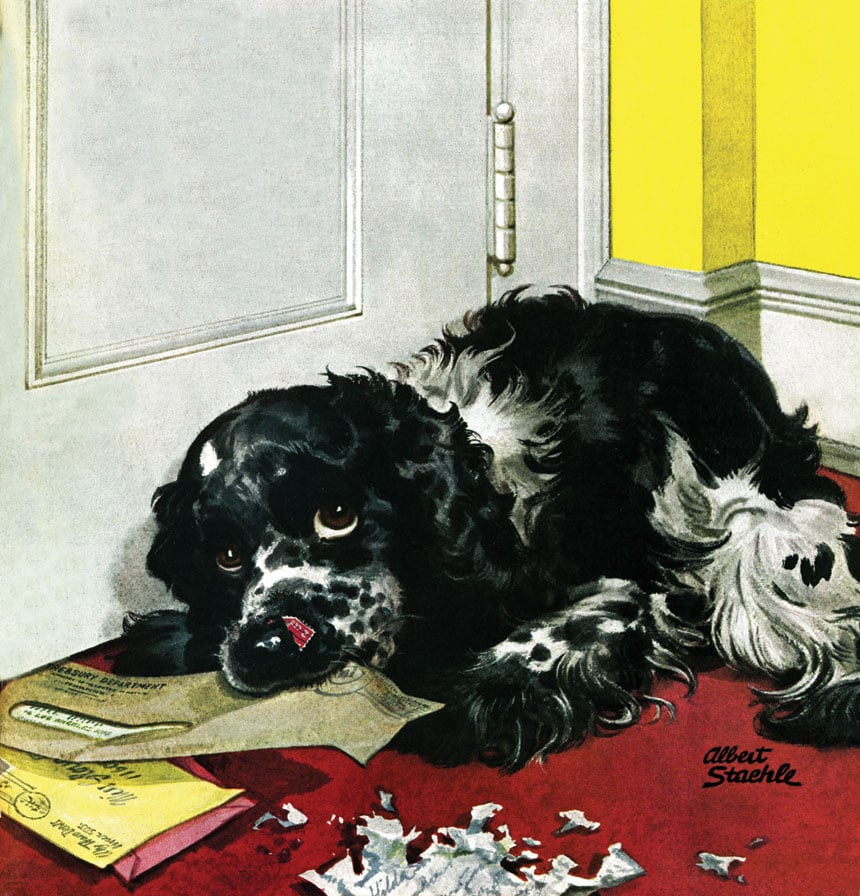
On July 26, 1775, three months after the battles of Lexington and Concord, the Second Continental Congress established a postal system for the United Colonies, naming Benjamin Franklin the first Postmaster General. Even before the nation was born, the Founding Fathers recognized the vital importance of a postal system — facilitating rapid and reliable communication between Congress and the Continental Army, as well as helping to unite the country in a common cause.
As the nation grew, so did its postal network.
Between 1790 and 1860, the population grew from 3.9 million to 31.4 million. During that same time, the number of post offices increased 380-fold — from 75 to 28,498. And as the United States expanded its territory, the modes of transport evolved as well. Throughout its storied history, the U.S. Postal Service has delivered the mail by horseback and stagecoach, steamboat and railroad, and later by truck, car, helicopter, subway, bicycle, and, of course, foot.
Every day, the USPS processes and delivers more than 380 million pieces of mail and packages to nearly 165 million addresses in the country — serving every state, city, and town. That’s a lot of footwork.
For two-and-a-half centuries, the Post Office has played a central role in American life and culture — and along the way, artists have captured priceless moments on the covers of The Saturday Evening Post.

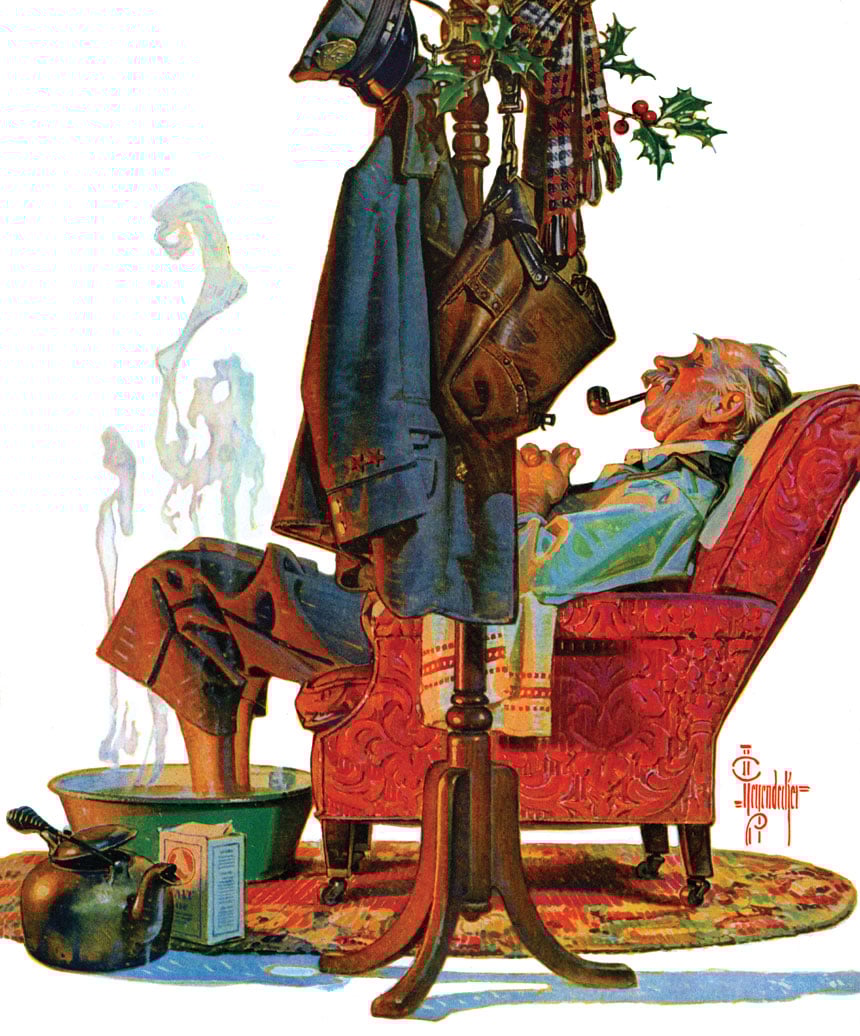

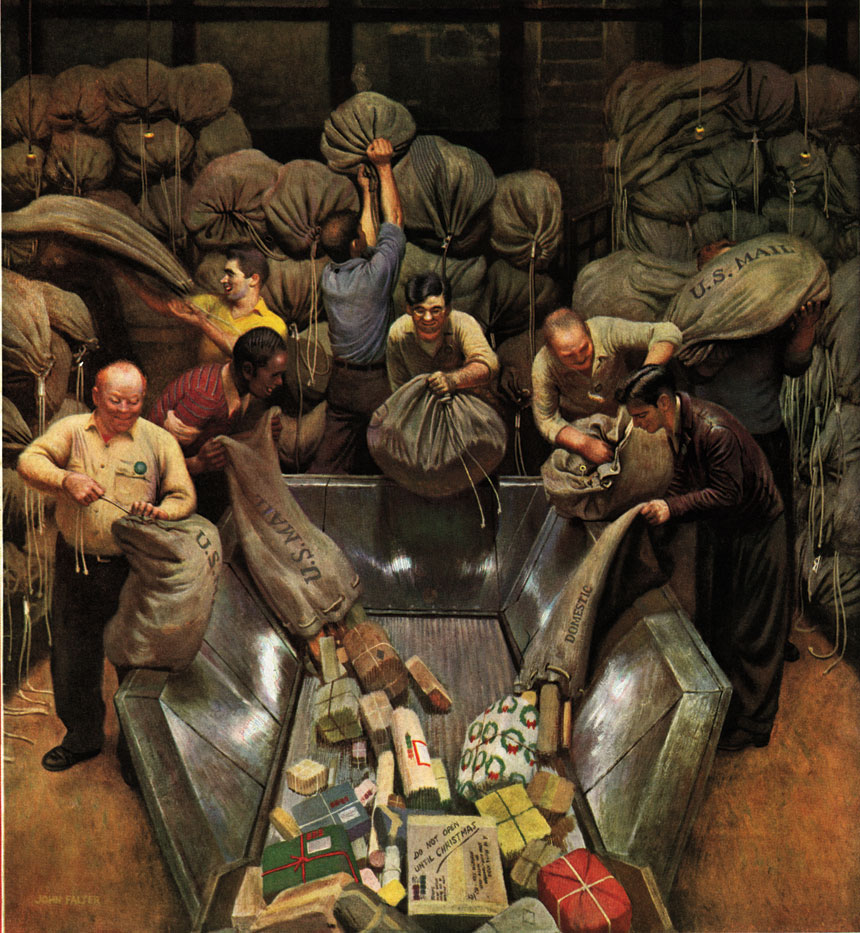

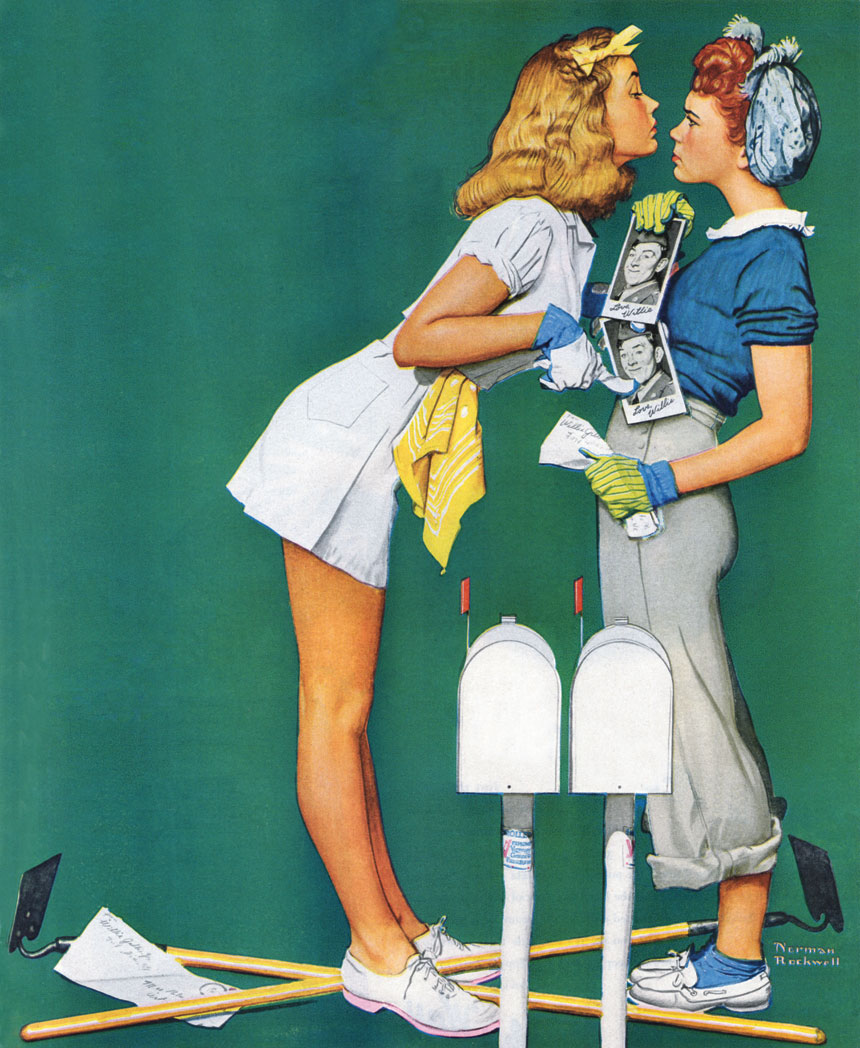
This article is featured in the July/August 2025 issue of The Saturday Evening Post. Subscribe to the magazine for more art, inspiring stories, fiction, humor, and features from our archives.
News of the Week: Shark Week, Corn Sweat, and the Joy of a Great Moon Pie
The Beginning of the End
The funny thing about the summer is, just when it begins, it almost immediately starts to end.
This happens in a few ways. First, we’ve been losing a minute (or more) of daylight every day since July 1. Just a week and a half after summer starts the days start to dwindle.
Then comes the Fourth of July, which is very early in the summer but is actually something that a lot of people – even people who love the summer – look upon as a marker that signifies that we’re on the back nine of the season.
And then there are the areas of the country where school starts the first week of August. The first week of August! I’ve mentioned this before, but as someone who grew up in the Northeast, where we start school just after Labor Day in September, it amazes me that school starts during the hottest time of the year, when there’s still so much summer time left. I have friends in the South whose kids start school in early August, and I feel bad for them. Hope their schools are air conditioned.
Sure, most of the kids who start school in August get out of school earlier, in late May. But I think if I were a kid I’d rather go to school for a couple of extra weeks in the spring than have to go back to school before September.
Here it is July 25 and I have already been seeing back-to-school commercials on television for the past week. Walton Goggins trying to get kids to buy backpacks and notebooks at Walmart. That’s cruel and unusual punishment for kids (to have back-to-school commercials in July I mean – I have nothing against Walton Goggins).
By the way, when I said that the days are getting shorter and we can sense that summer is ending, it wasn’t a complaint. Not at all. I can’t wait until Labor Day gets here, and I really can’t wait until we have 4 p.m. sunsets again. Summer is a young person’s game.
Shark Week!
I was reading this story of the teen surf instructor who had his foot chomped on by a shark at Florida’s New Smyrna Beach (“the shark bite capital of the world”) and I thought, wow, that’s an extreme way to market Discovery’s Shark Week.
It ends this weekend so there’s still time to celebrate. If “celebrate” is the word to use when talking about sharks.
What the Heck Is Corn Sweat?
No, it’s not the new Superman.
But it is one of the reasons why people in the Midwest can experience such high humidity.
You learn something new every day …
The Moon (and Moon Pies)
Jolene Handy writes one of my favorite newsletters, Time Travel Kitchen, and in the most recent edition she talks about the moon. Last Sunday was the 56th anniversary of a person landing on the moon, so she has CBS’s coverage of the landing and even talks about Mad Men. And since it’s a food newsletter there’s also moon pies!
Quote of the Week
“…a faux-quirky, manic pixie dream girl crossed with the Donner party vibe.”
The Above the Law site, describing how a summer intern at a large New York City law firm bit several co-workers on her first day.
RIP Ozzy Osbourne, Hulk Hogan, Malcolm-Jamal Warner, Chuck Mangione, Alan Bergman, Eileen Fulton, Felix Baumgartner, Jimmy Hunt, Vince Calandra, and Paulette Jiles
Ozzy Osbourne was the lead singer of the heavy metal band Black Sabbath, known for such songs as “Crazy Train” and “Paranoid.” He also had a very successful solo career, with songs like “Shot in the Dark” and “Flying High Again,” and had a popular reality show. He died Tuesday at the age of 76, just a few weeks after a farewell Black Sabbath reunion concert.
An interesting tidbit: Osbourne was good friends with Pat Boone.
Hulk Hogan – real name Terry Bollea – was one of the classic WWE wrestling superstars over the past 40+ years. He was also an actor, appearing in such films as Rocky III, No Holds Barred, and Mr. Nanny, as well as many TV shows and video games. He died yesterday at the age of 71.
Malcolm-Jamal Warner was best known for playing Theo Huxtable on The Cosby Show. He died Sunday at the age of 54.
Chuck Mangione was the trumpeter and flugelhorn player known for the hit 1970s instrumental “Feels So Good.” He released 30 albums and won two Grammys. He died Tuesday at the age of 84.
Alan Bergman was an Oscar-winning songwriter who, along with his wife Marilyn, wrote such songs as “The Way We Were,” “Nice ‘n’ Easy,” “Windmills of Your Mind,” and “You Don’t Bring Me Flowers,” as well as the theme songs to Maude, Alice, and Good Times. He died last week at the age of 99.
Uploaded to YouTube by Frank Sinatra
Eileen Fulton played Lisa Miller on As the World Turns for almost 50 years. She died last week at the age of 91.
Felix Baumgartner was a daredevil and pilot who got the world’s attention in 2012 by parachuting from space. He died last week at the age of 56.
Jimmy Hunt was a child actor who appeared in Invaders from Mars (and its 1986 remake), Cheaper by the Dozen, Pitfall, The Lone Hand, and Sorry, Wrong Number. He died last week at the age of 85.
Vince Calandra was the Ed Sullivan Show talent booker who helped bring the Beatles to the show and dealt with controversies involving Jackie Mason and Jim Morrison. He died Saturday at the age of 91.
Paulette Jiles wrote the novel News of the World, made into a film starring Tom Hanks. She was also an acclaimed poet. She died earlier this month at the age of 82.
This Week in History
Scopes Found Guilty of Teaching Evolution (July 21, 1925)
Here’s Ben Railton’s look at the historic trial.
First Test Tube Baby Born (July 25, 1978)
Louise Joy Brown was the first baby born via in vitro fertilization. She now has two kids of her own.
This Week in Saturday Evening Post History: SPAM (July 23, 1938)

The can says “A New Hormel Meat.” SPAM was introduced the year before this ad appeared and has inspired great recipes, annoying emails, and a Monty Python sketch.
National SPAM Day
It’s next Thursday, the 31st (I’m giving you a big heads up), and in addition to the recipes in the ad above, here are a few more you might want to try.
Eat Richly has a recipe for SPAM, Eggs, and Rice, while Allrecipes has a SPAM, Tomato, Cheddar Cheese, and Sweet Onion Sandwich. The Kitchn has this SPAM Hash, Food52 has SPAM Buns, and This Mama Cooks! has an Easy Slow Cooker SPAM Soup.
And if you’re really daring, you can make a SPAM-DY. It’s SPAM dipped in chocolate and covered in candied pecans. It’s from the official site so it must be good.
Next Week’s Holidays and Events
Parents’ Day (July 27)
Even if you’re not a test tube baby, get something for your parents.
Take Your Houseplants for a Walk Day/Take Your Pants for a Walk Day (July 27)
Yes, you can do both in one day! Just make sure you’re wearing the pants.
In a Word: Chyron: How a Centaur Got on Your Screen
Senior managing editor and logophile Andy Hollandbeck reveals the sometimes surprising roots of common English words and phrases. Remember: Etymology tells us where a word comes from, but not what it means today.
In practically every form of televised journalism — from cable news to local sports coverage — you’ll find a band across the bottom of the screen giving updates on other stories. As this digital ticker tape has become more widely used and recognized, so too has its name: chyron.
It’s a weird name, isn’t it? It doesn’t evoke the industry or purpose it serves: There’s no tele- or info- or journo-, no scroll or ticker or display in the name. So why is it called that?
The chyron’s story began in 1966, when Francis Mechner and Eugene Leonard founded a company called the System Resources Corporation, which was focused on the quickly growing digital industry. In the late 1960s, the SRC began developing a type of digital graphics generator that would allow controllers to insert text (and later images) over video on a TV screen.
SRC called this new technology Chiron, after the wisest and most just of the centaurs in Greek mythology. (Centaurs, if you don’t remember, are half-man, half-horse.) Why they chose Chiron over, say, Hermes (the messenger of the gods) or Hephaestus (who built clever technologies) I cannot deduce. Chiron is most associated with medicine.
Regardless, SRC continued to upgrade and innovate Chiron, making it the leading product for, among other things, running text along the bottom of the screen in a TV broadcast. The generic name for such technology is “character generator,” but people called it “the chiron,” because that brand was so ubiquitous.
In 1975, SRC merged with Computer Exchange, and they wanted to name their new company the Chiron Corporation, after their most successful product. However, there was already a Chiron Corporation registered in California, so to avoid trademark issues, they went with the Chyron Company, exchanging a y for an i. What people called the running text along the bottom of the screen changed with it.
Chyron, then, is another in a long line of genericized trademarks, or generonyms, words that start as company or brand names and then, through popularity and ubiquity, become generic names for things (though not always generic in the legal sense). Some people, in particular intellectual property lawyers, also refer to the loss of a trademark’s legal status as generocide.
If you’ve ever asked for a Kleenex, Band-Aid, or Crock-Pot, instead of a tissue, adhesive bandage, or slow cooker, you’ve used a generonym — capitalized here because they are still technically legally protected brand names. There are other words we use generically without realizing they are still trademarked. Here are a few:
- Bubble Wrap (generically bubble cushioning or bubble rolls)
- Frisbee, Hacky Sack, and Hula-Hoop (all owned by Wham-O)
- Jet Ski (generically personal watercraft)
- Mace (pepper spray)
- Musak (background music)
- Onesie (one-piece baby clothes)
- Popsicle (ice pop)
- Styrofoam (polystyrene)
- Tarmac (from a shortening of the generic tarmacadam, also used for asphalt, which largely superseded tarmacadam; some use the word for any paved roadway)
- Velcro (hook-and-loop fastener)
But there are plenty of common words that have become completely genericized — that is, the word is no longer “owned” as a trademark:
- Aspirin (owned by the Bayer company since 1899, though they’ve lost or sold the rights to the name in many countries)
- Cellophane
- Dry ice
- Dumpster (a trademark that expired only 2008)
- Escalator
- Granola
- Heroin
- Kerosene
- Laundromat
- Linoleum
- Teleprompter
- Trampoline
- Videotape
- Zipper (which, in 1925, began as the name of a type of boot that used what we think of as a zipper today)
The Chyron Corporation filed for bankruptcy and reorganization in 1991. In 2013, it merged with the Sweden-based Hego AB, becoming ChyronHego, but in 2021 announced a return to the original Chyron name. Many of the other graphics that appear on the screen during news or sportscasts were developed by the Chyron Corporation, too, but the name has only stuck to that one bottom-of-the-screen text-scrolling technology, and regardless of what happens to the company in the future, the generic chyron for “character generator” is probably here to stay.
Review: Mr. Blake at Your Service! — Movies for the Rest of Us with Bill Newcott
Mr. Blake at Your Service!
⭐️ ⭐️ ⭐️ ⭐️
1 hour, 50 minutes
Stars: John Malkovich, Fanny Ardant, Émilie Dequenne
Writers: Christel Henon, Gilles Legardinier
Director: Gilles Legardinier
In Theaters, Streaming August 5
Some years ago, attempting to impress my new father-in-law, I let him listen in on a phone interview I was doing with John Malkovich. It was easy to see just how highly Malkovich valued our time together, because he chose to speak with me while walking through the streets of Paris, shouting above sirens and once slipping into speaking French while, I could only imagine, buying a baguette at a corner bakery.
Still, always the pro, Malkovich gave me everything I needed for the article I was writing. I ended the call. My father-in-law, an information science professor who’d helped invent digital computer language in the 1950s, looked at me for a long moment and finally said, “And they pay you to do that?”
I thought of that episode more than once while watching Mr. Blake at Your Service!, a fun and frothy little film, set in the French countryside. Malkovich plays an Englishman who, except for a line or two, speaks French throughout. A proud Francophile, Malkovich lived in France for a decade and directed theater there, so he is as comfortable speaking the Gallic tongue as he is playing All-American villains in films like In the Line of Fire and Con Air.
There’s not a villain to be found, though, in Malkovich’s new film, and I think it’s part of a trend. I call it the “Ted Lasso” effect: Movies and TV series without any significant bad guys; stories that focus on a group of disparate people who — while some may at first appear antagonistic — ultimately, unanimously, want only what’s best for everyone.
Mr. Blake at Your Service! is just such a gentle comedy/drama; a welcome cloud of friendliness where the good people are golden, the gruff people are merely misunderstood, and the troubled will soon find relief.
Malkovich plays the titular Andrew Blake, a retired, super-successful London businessman who, grieving the loss of his wife, has shut himself off from his friends and longtime associates. Seeking solace in the past, he departs for France, and the chateau where he first met his beloved spouse.
Confusion ensues when he shows up at the place which, for reasons that remain unclear, he understands to be a bed and breakfast. He’s greeted at the door by Odile (Émilie Dequenne), the no-nonsense head of the household staff, who assumes he is there to apply for a job as a butler.
Andrew, with nothing else to do and no particular direction in his life, shrugs and leans into the misunderstanding (which, if nothing else, enables us to experience John Malkovich in a butler’s uniform).
While fumbling his way to bottom-line butler proficiency, Andrew also manages to solve the personal problems of virtually everyone he’s associated with: The estate owner, Nathalie (French screen legend Fanny Ardant) is struggling financially — how convenient that her new “butler” Mr. Blake is a business whiz. Housekeeper Manon (Eugénie Anselin) is pregnant and her boyfriend has taken off — Mr. Blake clues her in on the care and feeding of a terrified male. Magnier, the gardener (Philippe Bas), is stupid in love with Odile — Mr. Blake helps him sand down his rough edges in order to properly woo her.
And, of course, Mr. Blake himself — formerly adrift and lonely — comes to his own service by filling his life with new, endlessly good-natured friends.
First-time director/cowriter Gilles Legardinier — author of the best-selling novel on which the film is based — steeps his characters in the sumptuous settings of the villa, a real-life palace in Brittany. Moving from one elaborately furnished room to the next, walking the manicured grounds with the turreted villa dominating the background, Malkovich & Co. inhabit a fully realized world of timeless, if dwindling, aristocracy.
Ardant, regal and resilient as the chateau owner, glides through the proceedings like a guardian angel. Dequenne’s assured performance as Mr. Blake’s immediate superior is tempered by the sad fact that the actress, among France’s most beloved film stars since winning the Best Actress award at Cannes for Rosetta (1999), died of a rare form of cancer earlier this year at age 43.
The film’s glue is Malkovich, who has, in his long career, managed to raise portraying a vague sense of menacing quirkiness to the realm of high art. It’s fun to see his Andrew keep a stiff upper lip through various indignities, and the actor often finds a smooth, soothing tone of voice quite different from the strangulated, one-twitch-from-freaking-out one that helped make him a star.
He’s clearly having a ball with Mr. Blake and his buddies. And, yes, he gets paid for that, too.
Considering History: Ben Franklin, the U.S. Postal System, and Founding American Ideals
This series by American studies professor Ben Railton explores the connections between America’s past and present.
By late July 1775, the military conflict between American colonials and English troops that would come to be known as the American Revolution was fully underway. The April battles at Lexington and Concord had blossomed into a war on many fronts, including the even more substantial Massachusetts Battle of Bunker Hill, Ethan Allen and his Green Mountain Boys seizing New York’s Fort Ticonderoga, and George Washington being appointed Commander in Chief by the newly convened Second Continental Congress.
Amid the growing war, on July 26th, that same body voted to establish a national mail service, the U.S. postal system, with Ben Franklin as the first postmaster general.


That might seem like a profoundly mundane action to take during the fraught military battles and campaigns of an unfolding Revolution. But it represented an important way for the Continental Congress to amplify the emerging identity of a newly unified United States: It embodied a combination of individual and communal ideals that was at the heart of the American founding and that the USPS continues to exemplify today.
As we see in the official transcript of the Second Continental Congress, the creation of a national postal system was part of an important overarching conversation throughout the week of July 24-28, 1775; on Monday July 24th, “the Congress then resolved themselves into a committee of the whole to take into consideration the state of America.” Those considerations included establishing a medical department and new hospitals (which were connected to the war effort of course, but also comprised a communal good far beyond that immediate cause), printing currency out of a new continental treasury, and, as decided on Wednesday July 26th, responding to “the report of the Committee on the post office” by creating “a line of posts … from Falmouth in New England to Savannah in Georgia,” appointing a postmaster General for the United Colonies, and unanimously electing Benjamin Franklin, Esq. to serve in that role.


By 1775, Ben Franklin had been involved in the creation of mail services for nearly four decades, and as was so consistently the case with Franklin, those efforts reflected both his pursuit of individual self-interests and his dedication to the communal good. In 1737, when Franklin was only 30 years old, he was appointed postmaster of his adopted home city of Philadelphia. In his autobiography he freely admitted that he took the job largely to support his own newspaper, the Gazette, writing, “tho’ the salary was small, it facilitated the correspondence that improv’d my newspaper, increased the number demanded, as well as the advertisements to be inserted, so that it came to afford me a considerable income.” But even if Franklin was mercenary about this new role, he was too much of an inventor not to innovate in it as well, and his most lasting and collectively meaningful such innovation was printing in the newspaper lists of people who had letters waiting for them at the post office, a practice that many other papers would take up for decades to come.

After a decade and a half in that important local role, the ever-ambitious Franklin was ready to move up. When Postmaster General for the Crown Elliott Benger became ill in 1753, Franklin lobbied for his overarching role. Eventually both he and a friend and fellow journalist, Virginia public printer William Hunter, were chosen as Joint Postmasters for the Crown, a role that Franklin would hold for the next two decades. He would bring a number of his Philadelphian innovations to that national role, including the aforementioned printed newspaper lists (which he instructed postmasters around the country to do). But he would also add successful new ideas, such as implementing nighttime service that led to far faster mail delivery. Ever the successful businessman, Franklin had the British Crown Post registering its first profit by 1760.
In 1774, after more than 20 years in that role, Franklin was dismissed by the British government for being too sympathetic to the colonies. But as he seemingly always did, Franklin parlayed this temporary setback into even more substantial long-term success, securing the July 1775 election to Postmaster General for the United Colonies with (again quoting the Continental Congress transcript) its accompanying “salary of 1000 dollars per an. for himself.” In case Franklin wasn’t able to make this new national postal system as profitable as the Crown’s had become under his leadership, Congress protected both the system and Franklin financially, adding that “if the necessary expense of this establishment should exceed the produce of it, the deficiency shall be made good by the United Colonies, and paid to the postmaster general by the continental Treasury.”
At least since the posthumous 1791 publication of his mythmaking autobiography, Ben Franklin had somehow embodied both self-made individual success and selfless philanthropy for the communal good. But contradictory as that duality may seem, it is also at the heart of America’s founding, as reflected in the opening passages of our two most famous framing documents. The Declaration of Independence begins with the “self-evident truths” that among each individual’s “unalienable Rights” are “Life, Liberty, and the pursuit of Happiness.” While the Constitution’s Preamble focuses on collective goals for “We the People” that include “forming a more perfect Union” and “promoting the general Welfare.”
In order for a society to endure, I would argue that it has to genuinely ensure both of these founding American ideals: that each individual in that nation has the opportunity to pursue their own dreams; and at the same time that the communal good remains an overarching collective goal. Since its July 1775 establishment, the United States Postal Service has impressively embodied both layers: offering mail service to every individual, in every corner of this giant nation; and doing so not as a corporation, but as a non-profit public good. Here on its 250th anniversary, let’s celebrate this continued reflection of our founding ideals.
Cartoons: Doctor Talk
Want even more laughs? Subscribe to the magazine for cartoons, art, inspiring stories, fiction, humor, and features from our archives.

Chon Day
September 24, 1955

Joseph Zeis
July 2, 1960

J.B. Handelsman
June 23, 1962

William O’Brian
May 3, 1958

John Dempsey
October 4, 1958

Marvin Tannenberg
November 17, 1962

David Pascal
April 17, 1954
Want even more laughs? Subscribe to the magazine for cartoons, art, inspiring stories, fiction, humor, and features from our archives.
Walking a Glacier
At the spot where I am standing, there are my shoes, then there’s 300 feet of ice, then there’s solid rock all the way down to the Earth’s molten core.
It doesn’t get more starkly simple than that when you’re walking on a glacier, the most powerful bulldozer the world has ever seen; a brute force that scours mountain valleys down to their cores under billions of tons of blue ice.
Most of the world’s glaciers are in retreat, which makes getting to them more difficult than ever. But there is still this one, the Athabasca Glacier, a drive-to glacier north of Banff in Alberta, Canada — probably the most accessible one in all of North America — that draws nearly 500,000 visitors every year.
Athabasca Glacier and other sites mentioned in this article (Google Maps)
“I hope no one here is wearing high heels,” says our guide, Janna, as our 10-passenger all-terrain Ice Odyssey vehicle — also known as a “Fat Truck” — bounces along a road of moraine rock toward the white-and-blue expanse of glacier ahead.
“That would be the worst possible footwear choice for walking on a glacier,” she continues, and she sounds like she has first-hand knowledge. “And I wouldn’t recommend flip-flops, either.”

Actually, the ride seems smoother than I’d expected. The view from this cabin is better, too, thanks to large sliding windows on the sides and top. Those roof windows get slid open when we pause on a ridge overlooking the glacier. I stand up, poking my head out, and take in the panorama: A valley flanked by towering, jagged black rock mountains split at its bottom by a sheet of ice, its surface scarred by cracks and crevasses that, even from here, seem ready to swallow an unwary hiker (each year, in fact, more than a couple unescorted hikers meet a frozen end inside one of those crevasses). In the distance, at the high end of the valley, stands a wall of ice; beyond which this glacier joins its mother, the 125-square mile, 1,000-foot-thick Columbia Icefield.
Through the glacial glare, I spot what looks like a tightly packed line of ants making their way up the glacier. A look through binoculars shows them to be humans, of course — roped together, feet shod with spikes, gingerly hiking the 4-mile length of the glacier under the guidance of a local expert. A century ago, that walk would have been a mile longer, as the glacier reached nearly all the way back to the site of the Glacier View Lodge, the departure point for all Athabasca Glacier tours run by Pursuit Collection. (I’m lucky enough to be on one of Pursuit’s smaller, more exclusive Ice Odyssey vehicles. The company also offers more price-friendly visits to the ice field aboard larger, 56-passenger Ice Explorer vehicles.)

“Back inside, please,” chirps Janna. It’s time to continue our drive onto the glacier. We pass a small waterfall and a rushing stream — melt-off from the glacier. A final push of the Fat Truck’s diesel engine and we’re on the ice itself; 10 wheels, independently driven, rolling us onto an icescape that has me looking out for Superman’s arctic Fortress of Solitude.
A few minutes later, the engine shuts off, the rear door of our Ice Odyssey vehicle opens, and we’re invited to clamber down a metal ladder to the icy plain. Stepping off, I feel a little bit like Neil Armstrong: “That’s one small step for a man…and a long slide down if I lose my footing.”

Our guides make sure to let us off at a safe distance from any dangerous crevasses, but we still need to be careful as we avoid stepping into the countless rivulets streaming down the glacier. When the ever-present wind dies down, the air sings with the gurgle of newly melted ice water. The sight and the sound are beautiful, but they come with a somber reality: They are evidence that the glacier is bleeding to death. As if steadily increasing planetary temperatures aren’t doing enough damage, recent forest fires have deposited tons of black soot on the glacier surface, containing even more heat beneath.
“Take a look at this,” says Chris, our driver. He directs my attention to a line of perfectly circular holes that have melted into the surface. At the bottom of each: A deposit of pitch-black granular powder.
“Forest fire soot,” he says. “From last year’s fires.”
Around me, the cold air (not cold enough to sustain a glacier, but still pretty cold) rings with the laughter of people taking selfies and giddily narrated videos for the folks back home. Awestruck as I am by the sheer power and majesty that surrounds me, I can’t help but feel a sense of melancholy.
Janna encapsulates the source of my muted sorrow: “Our glacier has been here for the last 18,000 years,” she tells me. “And now it has just 40 or 60 years to live. In the span of a lifetime, we will lose this glacier.”
After 10 minutes or so, it’s time to clamber back up that metal ladder and into the rover. We rumble back toward home base, climbing the steep incline over the moraine, passing vehicles heading in the opposite direction.

In the coming days I’ll follow the flow of that freshly melted glacial water downstream. I’ll peer over the edge of the Columbia Icefield Skywalk, a glass-floored semicircle that extends over the 918-foot-deep gorge that carries the roaring Sunwapta River, almost entirely fed by the glacier. A bit farther downriver, I’ll walk the stone paths that frame Athabasca Falls, a spectacular cataract of glacial water that lifts a curtain of spray high in the Rocky Mountain air.
Athabasca Falls (Video by Bill Newcott)
I will marvel to see elk and moose feasting on the new growth that is already beginning to restore a forest devasted by wildfires. I’ll throw on the brakes of my car — again and again — disbelieving the craggy, snow-capped spectacle of Jasper National Park’s Icefields Parkway.

Sixty miles north of here, in the old mining town of Jasper, I’ll ride the Jasper Sky Tram — Canada’s longest and highest aerial tramway — to the top of Whistlers Mountain, from which I’ll trace the blue ribbon of the Athabasca as it winds its way north, its icy waters destined for the Arctic Ocean.

Just over a mountain range from the Athabasca Glacier, I’ll board a tour boat on long, mountain-bound Maligne Lake. After an hour afloat I’ll step ashore for a close look at tiny Spirit Island, so sacred to the Stoney Nakoda First Nation that visitors are forbidden to set foot on it. Still, as the towering nearby mountains reflect on the blue glacial lake waters and Spirit Island’s slender pine trees reach for the passing clouds, it’s not hard to sense the profound importance of this place to people who have lived on this land for millennia.

Tonight, though, I’m staying at the Glacier View Lodge, at the foot of Athabasca Glacier. The sun sets late behind Mount Kitchener, and the northern stars slowly blink into view. True darkness doesn’t fall until nearly midnight on this late spring night, but my patience is rewarded with a surprise appearance by the Aurora Borealis; fingers of green and violet reaching across the sky, occasionally coalescing into undulating, translucent sheets.
Bill Newcott shares images of the aurora borealis from Glacier View Lodge in Jasper National Park. (Video by Bill Newcott)
Yes, the glacier is melting. But nature is eternal.