This series by American studies professor Ben Railton explores the connections between America’s past and present.
This week, as we both celebrate Veterans Day and continue to commemorate Native American Heritage Month, I can think of no figure who more clearly offers an inclusive vision of American history and identity than does Ira Hayes. This heroic young Native American Marine became synonymous with World War II victories and propaganda before meeting a tragic end. Today, his legend endures through cultural works created by some of our most significant artists.

Ira Hayes was born in 1923 in the town of Sacaton, Arizona, located within the Gila River Indian Community, a reservation featuring members of both the Pima and Maricopa tribes (Hayes’ heritage was Pima). He was the oldest of the six children of Joseph Hayes, a World War I veteran and farmer, and Nancy Hayes, a Sunday School teacher. While still a teenaged student at the nearby Phoenix Indian School, Ira displayed skills as a carpenter and mastery of the English language (his family primarily spoke O’odham), and he had the chance to build on both of those attributes when he volunteered for the Civilian Conservation Corps in early 1942.

In August 1942, after a few months working with the CCC community, the 19-year-old Hayes enlisted in the Marine Corps and began his basic training in San Diego. He would go on to volunteer for Marine paratrooper training, becoming the first Pima to receive paratrooper wings when he graduated in late November. In early 1943, his 3rd Parachute Battalion shipped out to the Pacific Theater, and he would take part in the Battle of Bougainville in November and December, among many other stages of his ongoing service. But it was in the February-March 1945 Battle of Iwo Jima that Hayes would cement his iconic relationship to military victories and imagery alike.
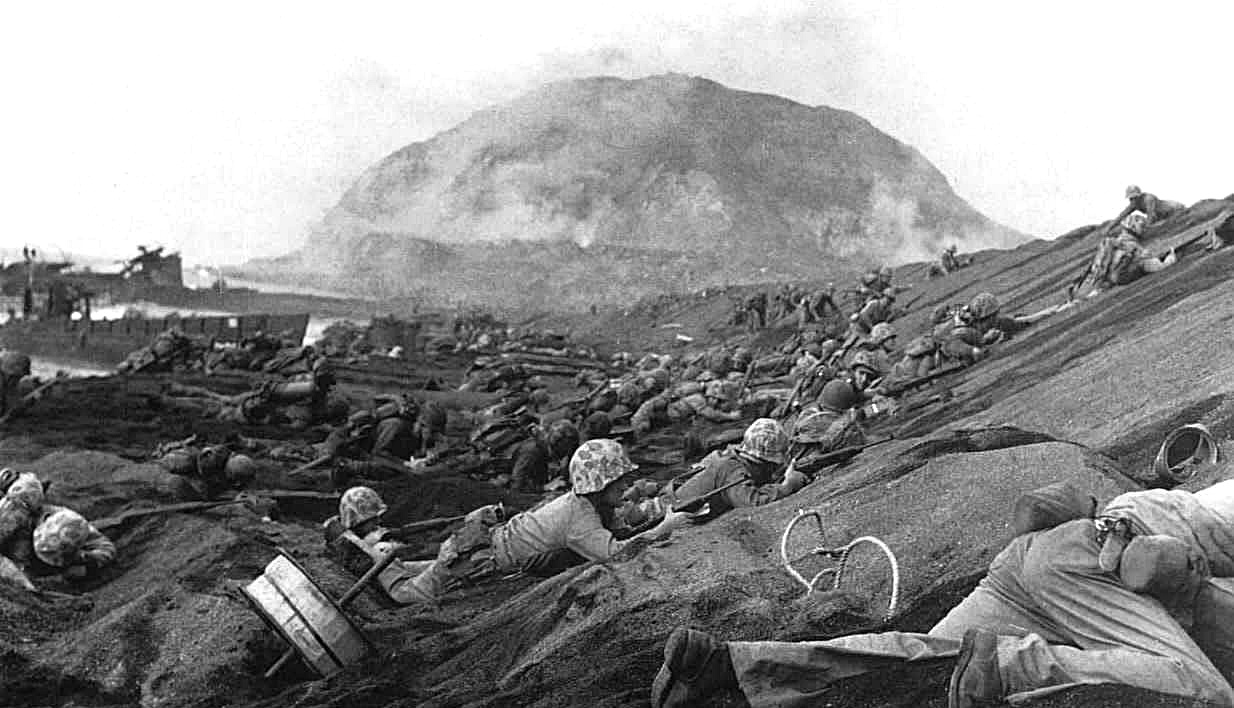
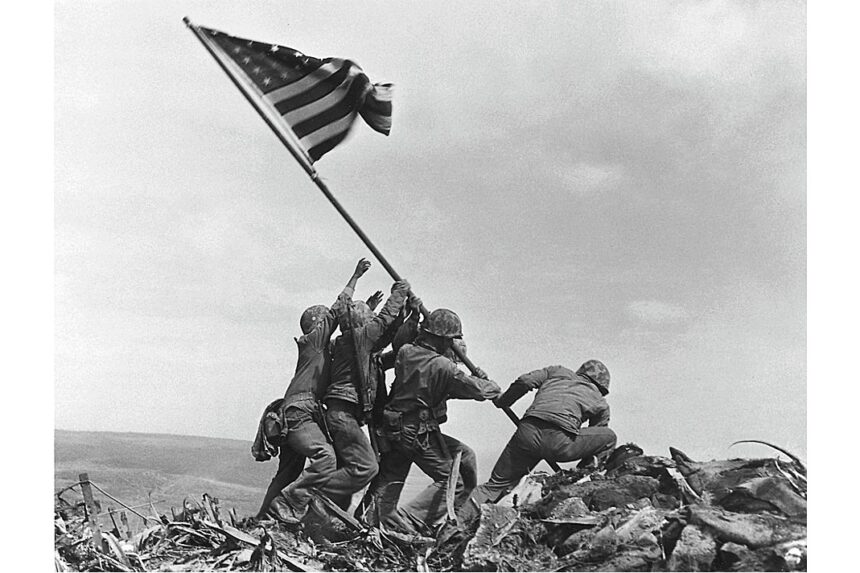
The battle on the tiny Pacific island of Iwo Jima, fought over five weeks between February 19 and March 26, 1945, was in many a culminating conflict in the World War II Pacific Theater. More than 60,000 U.S. soldiers would face 20,000 Japanese soldiers, nearly all of whom eventually fought to the death rather than surrender. U.S. leaders apparently recognized the battle’s significance at a very early point, as just four days in they ordered a patrol to climb to the island’s highest point, atop the inactive volcano Mount Suribachi, and raise the battalion’s flag. When that flag was deemed too small to be seen by Marines fighting across the island, a second flag-raising featuring a larger flag was ordered, and Ira Hayes was one of five Marines (along with a Navy corpsman) who took part in that event, which was captured and thus immortalized by AP photographer Joe Rosenthal.
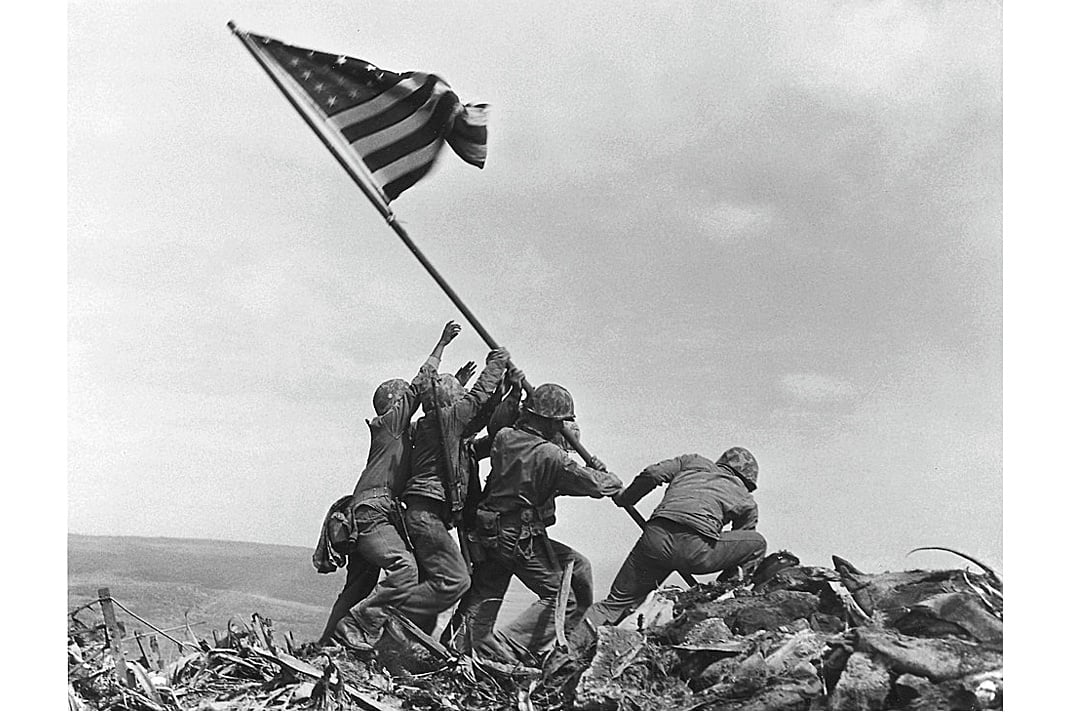
Hayes didn’t just take part in the flag-raising; he played an important and inspiring role in making sure that process of immortalizing the image unfolded accurately. When the battalion returned to Hawaii after securing Iwo Jima, President Franklin Roosevelt ordered the flag-raisers to be transported to Washington, D.C. to take part in morale and propaganda efforts. But the chaos of war and competing memories led to the misidentification of one of the soldiers involved, with Sergeant Harlon Block being left out and Sergeant Henry Hansen mistakenly included. Since both men had been subsequently killed in action at Iwo Jima, it seemed quite possible that the mistake would be made permanent, especially when Hansen was included in an April 1945 war bond fundraising drive organized by newly inaugurated President Truman.

Hayes was determined to correct the mistake, however. In May 1946, having returned to the Gila River Indian Community, Hayes hitchhiked the 1300 miles to Block’s childhood farm in Texas to tell his parents about his role in the flag-raising. Block’s mother Belle and Hayes would continue to correspond, and with his encouragement and corroboration she contacted Texas Congressman Milton West, who helped open a Marine Corps investigation in December 1946. That investigation would conclude that it was indeed Block and not Hansen who had been part of the flag-raising, and Block’s family was able to see him posthumously honored for that role in early 1947.
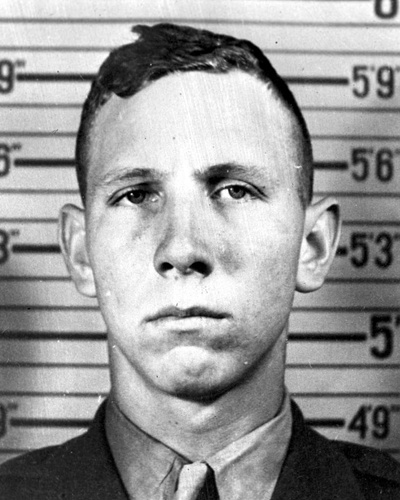
Hayes was likewise honored in the post-war years, including an appearance in the 1949 John Wayne film Sands of Iwo Jima (where he and two other flag-raisers are handed the actual surviving flag by Wayne’s character) and his featured participation in the November 1954 dedication of the Marine Corps War Memorial in Washington. But when asked by a reporter at that event how he liked “the pomp and circumstance,” Hayes replied simply, “I don’t.”
And indeed he struggled to reconcile such moments of fame with the far bleaker realities of his daily life, as he was likely suffering from PTSD, was most definitely suffering from alcoholism, and was unable to hold a steady job or otherwise imagine a meaningful post-war future. In late January 1955 he was found dead near his home in Sacaton, with the coroner’s report ruling that the 32-year-old had died from exposure and alcohol poisoning.

For the last 70 years, Hayes has largely been left out of our World War II memories, but a couple legendary artists have worked to correct that error. For his 1964 album Bitter Tears: Ballads of the American Indian, Johnny Cash covered folk singer-songwriter Peter La Farge’s song “The Ballad of Ira Hayes,” which opens with the lines “Gather round me people, there’s a story I would tell/About a brave young Indian you should remember well” and traces the heroism and tragedy of Hayes’s story, challenging its listeners to push past such stereotypical narratives as “drunken Ira Hayes.” Cash’s cover reached #2 on the Billboard country charts and remains one of the best historical ballads in the American musical canon.
Johnny Cash’s cover of “The Ballad of Ira Hayes” (Uploaded to YouTube by Johnny Cash)
And in 2006, Clint Eastwood directed a film adaptation of James Bradley and Ron Powers’ book Flags of Our Fathers (2000). Bradley was the son of Navy corpsman and flag-raiser John Bradley, and the book traces the story of all six flag-raisers before, during, and after the Battle of Iwo Jima. Eastwood’s film does the same, but its most central and powerful throughline is the story of Ira Hayes, portrayed with sensitivity and nuance by the indigenous actor Adam Beach. Film critic Richard Roeper argued that Flags “is a patriotic film in that it honors those who fought in the Pacific, but it is also patriotic because it questions the official version of the truth.” The same can be said of Ira Hayes, whose multilayered patriotism and profoundly telling American story deserves our commemoration.
Become a Saturday Evening Post member and enjoy unlimited access. Subscribe now


.jpg)
Comments
Thanks for that more supportive comment, Midnight. You know I agree, and I have to add that the president/administration you seem (from other comments here) to fully support have been working overtime to remove tributes to soldiers like Hayes–soldiers of color, many of them from WWII–both online and in-person, at home and abroad. See this recent, incredibly frustrating story for one of countless examples:
https://www.the-independent.com/news/world/americas/us-politics/black-soldier-display-removed-military-cemetery-b2864949.html
Let’s oppose together this administration’s attempts to whitewash the inspiring histories of our incredibly diverse military & heroes.
Ben
I remember the film actor Tony Curtis did about Ira Hayes. I affected me profoundly as a junior high student. I could never forget over 50 years later.
Now, this is a GREAT story! You know it’s sad that many of our American Indian brothers and sisters are omitted from historical accounts and books. This is a story that needs to be told over and over again. Johnny Cash’s tribute is icing on the “cake of truth.”