We all make surprising discoveries. Quite often they’re unpleasant, and they rarely change the course of human history. The old lady who swallowed a fly accidentally proved that ingesting live animals is bad for your health, although most of us knew this already. I once discovered, while replacing a light switch, that some of the breakers in our home’s electrical box were incorrectly labeled. It was a shocking revelation, but had no importance beyond our household.
On the other hand, you have people like Alexander Fleming who, without meaning to, discovered penicillin, an antibiotic that has saved countless lives. And while insulin itself was not found by mistake, the insight that the pancreas plays a key role in diabetes came as a big surprise, and led the way toward the development of insulin treatment for diabetes. Sure, these folks were scientists, but they simply noticed something they didn’t expect, and wanted to find out what caused it.
With a few of these unexpected breakthroughs, though, you have to ask what the heck scientists were thinking in the first place. In 1996, two researchers proved that female mosquitoes were equally attracted to Limburger cheese — renowned for its pungent odor — and stinky human feet. I wonder if they offered the skeeters a charcuterie board of foul-smelling fare like fermented fish, durian fruit, and Hákarl as well. Their findings eventually led to superior mosquito traps that have now been deployed in many parts of Africa to aid in the battle against malaria.
Flying saucers are the reason that American physicist Richard Feynman ended up sharing in the 1965 Nobel Prize for physics. Actually, he said that watching dinner plates being thrown across a cafeteria at Cornell University, where he taught at the time, is what got him curious about the way they wobbled as they spun. When he related this wobble-versus-spin observation to electrons, it helped him advance the field of quantum electrodynamics, which has helped produce better lasers, brain scans, and fiber-optic cables, among other things.
I don’t know who first wanted to study a wee insect-like critter called a snow flea in minute detail, but it’s a good thing they did. Snow fleas are a type of springtail, cute little arthropods in the taxonomic class Collembola. While they’re active year-round in the soil, the dark-colored snow fleas are most readily seen on sunny winter days on top of the snow, where they dance about and have sex in sub-freezing conditions.
Biologists were curious how snow fleas were able to bop around and mate on the snow, yet not freeze to death (no one has yet studied why snow fleas leave the relatively warm soil to mate in the cold, in case you’re looking for a project). Apparently, these critters have several unique glycine-rich proteins that they make, as well as a sugar called trehalose. Together, these act as antifreeze and keep ice from forming inside snow fleas’ cells.
Although scientists were looking for the chemicals that let snow fleas have cold sex, the surprise came in the follow-on applications. Evidence suggests that antifreeze compounds from snow fleas could greatly increase the availability of transplant organs, as organs could be frozen without tissue damage, allowing them to be transported greater distances over longer periods of time and still remain viable. Snow-flea proteins also look promising as a way to prevent ice cream from developing ice crystals, and to cure freezer burn in general.
Each year since 1991, many unlikely discoveries, some crossing the line into the ridiculous, have been recognized by the “Ig Nobel” prize, which is presented in various domains by real Nobel laureates at the Massachusetts Institute of Technology. According to the founder, the aim of the Ig Nobel prize is to make people smile, and then to think. The scientists who in 1996 found that malaria-laden mosquitoes love Limburger, a discovery that has undoubtedly saved lives, were “honored” with an Ig Nobel in 2006.
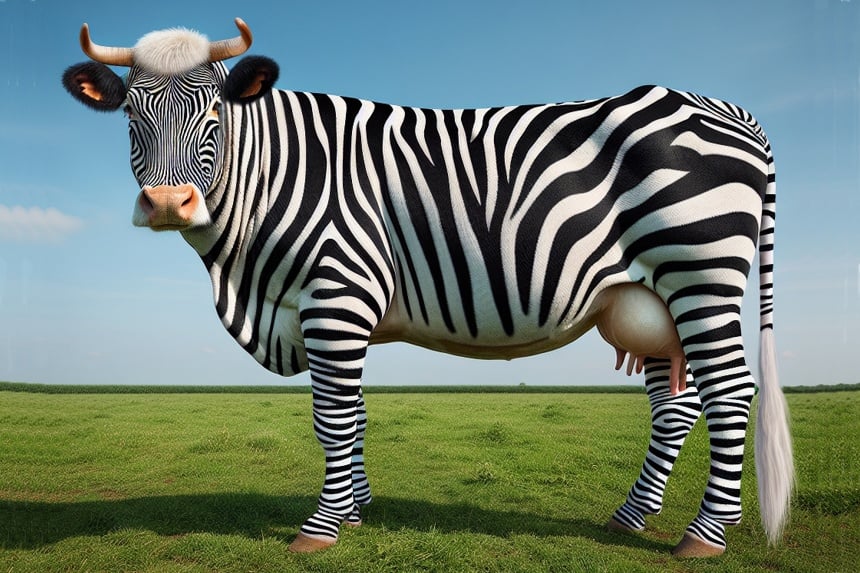
This year’s Ig Nobel winners include a team from Japan who showed that when you paint cows to look like zebras, they get far fewer bites from flies, thus reducing the need for insecticides. A pair of U.S. pediatricians were recognized for their work showing that when nursing mothers eat garlic, their babies drink more milk, which of course smelled like garlic.
Speaking of nutrition, another Ig Nobel went to the biologists who discovered that that rainbow lizards in Togo prefer four-cheese pizza over pizzas with other toppings. And a Dutch scientist won the Ig Nobel peace prize for demonstrating that drinking alcohol can enhance a person’s proficiency in a foreign language.
Finally, an Ig Nobel in aviation went to a research team that showed that fruit bats could not fly or echolocate as well after being given alcohol.
Given this last prize, I may apply for the Ig Nobel in transportation next year, as I have discovered that my new second-hand car will run out of gas before the gauge reads empty, which I definitely did not expect. Groundbreaking, really.
Become a Saturday Evening Post member and enjoy unlimited access. Subscribe now



Comments
Thank you for that correction, Mr. Young! I appreciate the information.
Sincerely,
Paul Hetzler
Val-des-Monts QC (right there with you)
Sir Alexander Fleming continues to be eroniously connected as the discoverer of penicillin, a notion he never corrected.
What he D I D discover was a controlled dosage of penicillin.
Penicillin was known about and used in the Civil War by the use of moldy bread and sour cream. [The sour cream helped keep the mold fresh and to continue creating penicillin] This same treatment was used by the British in their Crimean War, and, the Boer War, and, EVERY indication that it might have been used even earlier by medics.
It was used by my grandfather in WW-1 from his experience using it in the Boer War, when he served in
WW-1 with the Canadian Army Medical Corps as an Ambulance First Serjeant [the spelling is correct for this rank which vanished from the rolls after Nov.11 1918]
In any event, like many medicines, too much penicillin can be lethal, it was this that Fleming developed when it was determined to be killing a number of soldiers who were otherwise well on the road to full recovery.
Fleming is deserved credit for his work on AND discovery of diabetes however.
Sincerely.
Gord Young
Peterboro ON- Canada [still not the 51st state]