This series by American studies professor Ben Railton explores the connections between America’s past and present.
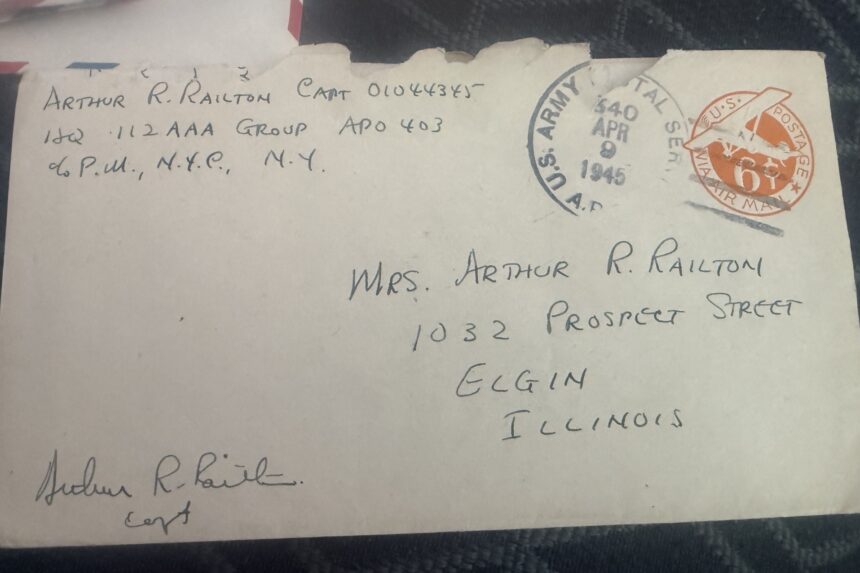
Neither of my late grandfathers talked much about their experiences serving in the U.S. Army during World War II. That reticence is a widely shared and entirely understandable trend for many people who take part in these always challenging and frequently traumatizing histories, but it’s also a frustrating one for those of us who love and want to learn more about these folks and their lives. So I was very excited to learn, from a thoughtful stranger who happened to discover them as part of an eBay purchase of assorted Word War II memorabilia, of the existence of five letters that my paternal grandfather sent home to his new wife (my paternal grandmother) during his nearly three years of wartime service in Europe.
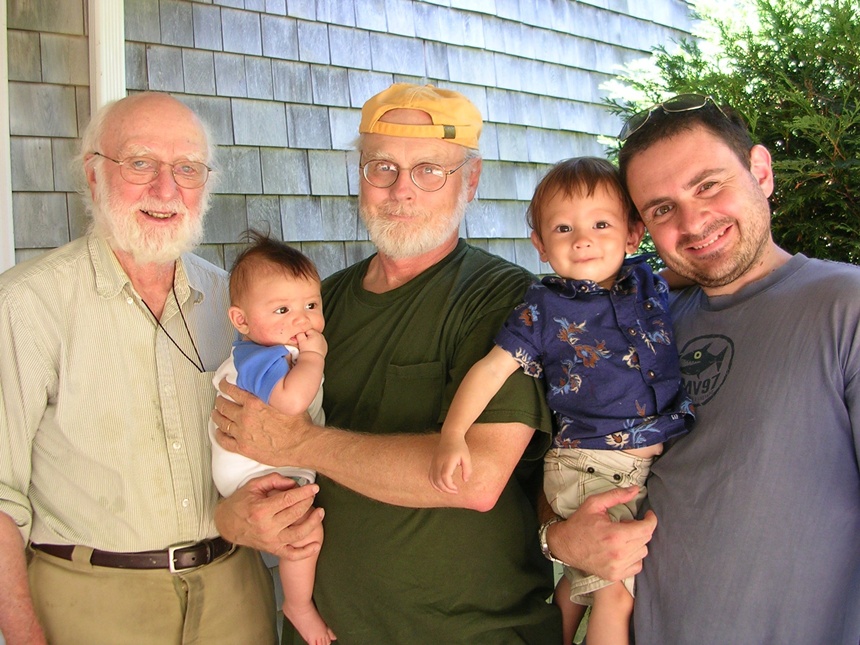
Arthur “Art” Railton (1915-2011) had met Marjorie “Marge” Marks (1918-2000) in the late 1930s, when they were both journalism students at the University of Iowa. The realities of the Great Depression initially separated the couple, as Art had to return to his childhood hometown of Salem, New Hampshire after graduation to find work in the local mills, while Marge moved back in with her parents in Elgin, Illinois. But Art was called up for military service in the first peacetime draft of 1941, and in early 1942, while he was stationed at Camp Devens in Massachusetts, Marge and her mother drove to New England to see him. Their relationship was rekindled, and the couple were married just after Art graduated from Officer Candidate School and just before he shipped to England in early 1943 for further training with the Third Army. Over the next two and a half years, they would exchange countless letters; most of them are tragically lost, but thanks to this gift from a generous stranger we now have five: three sent from that training camp in England (two from December 1943, one from May 1944); and two sent from Germany (in April and May 1945) where Art’s unit saw significant combat over the final year of the war.
Reading this small but precious treasure trove of primary sources offers an intimate window into the connection and love between this young couple, a picture of their relationship that will stay within the family. But the letters also reveal layers of wartime realities, 1940s details that likewise connect to stories from across military and American history. For this Memorial Day, I wanted to share a few of those takeaways from my grandfather’s letters.
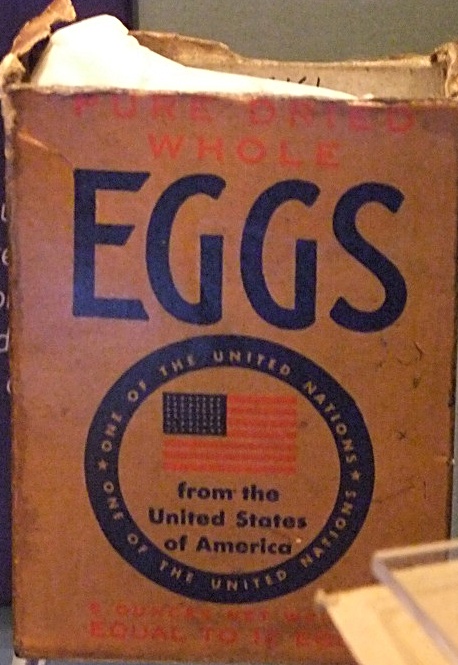
As you might expect, the letters sent from England focus on Art’s frustrations with his changed and evolving situation in this new place and fraught time. Many of those frustrations have to do with the challenges of trying to stay connected to home and Marge, such as the haphazard nature of mail sent and received through the Government Post Office. But even more telling are the details of the culinary situation that Art describes in his December 9, 1943, letter. He notes that “white bread is not obtainable here in England and has not been made since the war began,” adding, “You know how much I love good bread + rolls, and you can imagine how much I miss it.” Even worse is what he calls the “powdered egg situation”; of the “strange, unfamiliar substance” that results from this “entirely mechanical operation,” Art argues that “I am certain that a hen would not recognize it, and as for a comparison with the incomparable scrambled eggs which you prepare …, a comparison cannot be made.” In Art’s writing about both of these culinary details we see the harsh realities of wartime service but also the inevitable and particularly painful contrasts with the life that these young men had known at home with their loved ones.
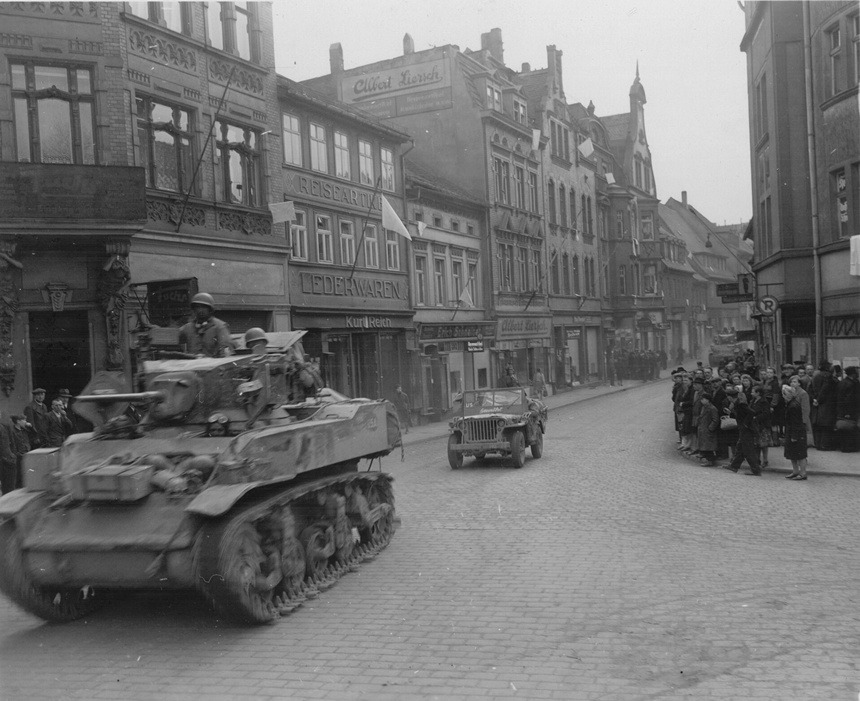
The Third Army joined the Western Front after the D-Day invasion in June 1944, seeing extensive combat in both France (such as at the Battle of the Bulge) and Germany before the war’s end. In his May 8, 1945, letter from Germany, Art reflects on how much those experiences have shifted his perspective: “This war is the most confusing affair I have ever seen. Previous to coming into combat I had a definite opinion of what war would be like and it was a clear (if innocent) picture. But now, after months of this combat … I am utterly bewildered.” Those confusions undoubtedly stem from Art’s personal experiences of combat (about which he talks here, as was the case in his life overall, very little), but he also notes the unexpected and striking ways that war affects and changes the broader communities it touches: “We enter a town and the kids stand along the streets waving enthusiastically. Women stand in front of memorials to men from the village killed by us and they wave cheerily. We move into a building and the occupants move out without apparent malice even tho’ the walls are lined with picture of menfolk in German uniforms! It’s as though the entire population has become so satiated with war and its horrors that the entry of the conquerors is a welcome sight.” Such details of how the experience of a war’s horrific realities can challenge its national and ideological allegiances comprise a moving reminder of what these kinds of first-hand perspectives can reveal about huge historical events.
Art’s April 8, 1945, letter from Germany connects us to another kind of first-hand experience of war: that of prisoners of war. He narrates a dinner with two “liberated British POWs,” a “pair who had been in captivity for almost five years!” In this letter to Marge, Art mostly focuses on a lighter side of their experiences: “the stories they told about the manner in which they out-witted [their captors] to get such information as news broadcasts were enlightening as well as humorous.” But we have to complement this letter with one of the only other wartime stories Art ever told, as part of a 2006 interview with the Martha’s Vineyard Gazette. He describes coming upon the Ohrdruf forced-labor camp (a sub-camp of the infamous Buchenwald concentration camp) just days after it had been abandoned by the Germans, and finding sites of in-progress mass killings and burials of the prisoners. “To see this total denial of the human spirit was just shocking to me,” Art remembered. That discovery took place on either April 4 or 5, just a few days before the dinner with the British POWs, but with a far different tone than Art takes in narrating that conversation; a reminder that even in primary sources such as these letters, there can be stories that go untold. On Memorial Day, we should try to remember and learn from all such stories of wartime service.
Become a Saturday Evening Post member and enjoy unlimited access. Subscribe now

Comments
Wonderful article Ben. He never wanted to talk about his experiences in war, but it’s amazing to come upon these letters. Thanks for sharing them.