In late 1911, an article in the Richmond Times-Dispatch noted disapprovingly that it cost 25 cents to visit Mount Vernon, the famed home of the nation’s first president, George Washington. Not long after, Emma Ball wrote to the paper to challenge this idea, arguing that the fee was necessary to help preserve this patriotic site. Ball, a great-great-grandniece of George Washington by marriage, explained to readers that Mount Vernon was privately owned, took no tax dollars, and relied on visit fees to maintain the home and its grounds. For more than half a century, by that point, the Mount Vernon Ladies Association had taken the lead in preserving the first president’s home and memory and educating Americans about his life.
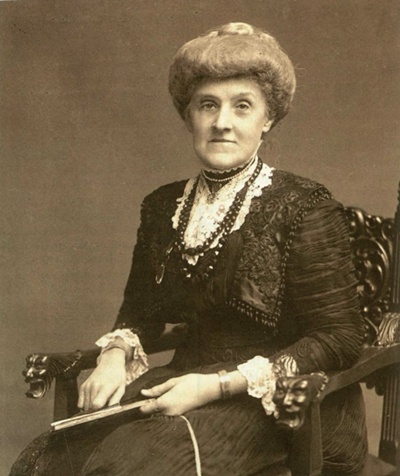
Since the 1850s, the Mount Vernon Ladies Association, or MVLA, has maintained a dual mission: to preserve the estate and “to educate visitors and people throughout the world about the life and legacies of George Washington.” The MVLA calls itself the “first national historic preservation organization,” and since 1860 has welcomed more than 96 million visitors to Mount Vernon. Key to their vision was the idea that Americans should not just read about their nation’s history, but stand in the places where history happened.
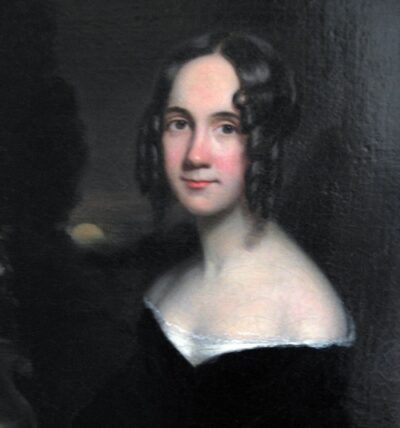
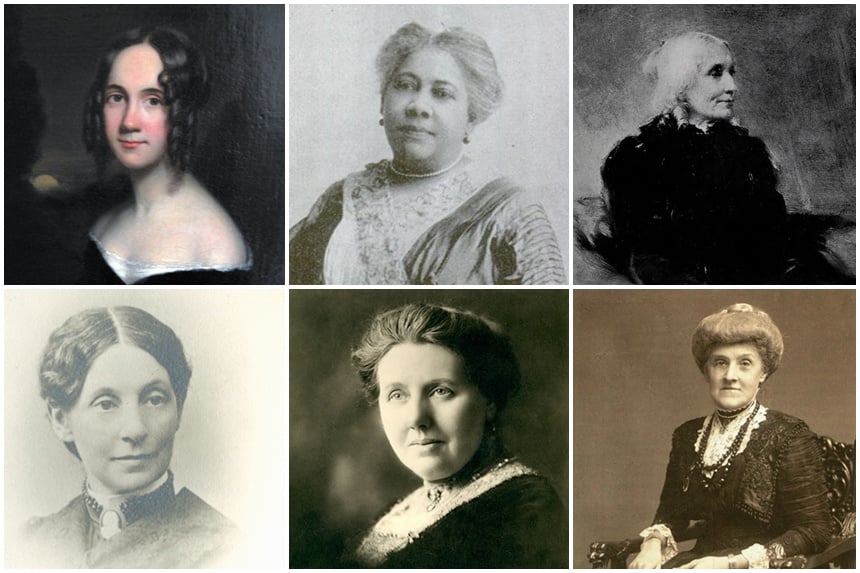
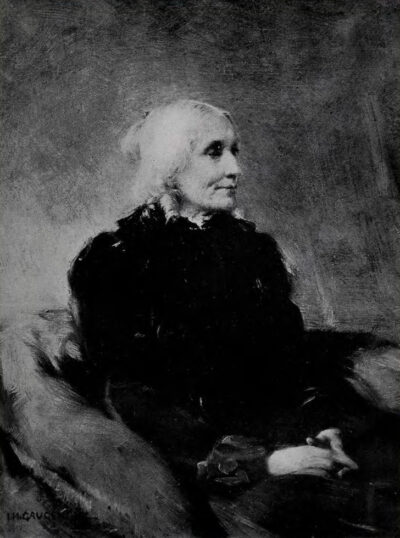
By 1911, then, the MVLA claimed a central role for American women as the preservers of the nation’s history. “Women,” Ball argued, “have accomplished what neither the United States government nor Virginia could do. Out of dilapidation and decay the home of Washington has been rescued…[here at Mount Vernon] rests this illustrious man reverently guarded by the women of the nation.” They built this idea on an earlier tradition dating back to at least 1840, when Sarah Josepha Hale suggested a fundraising effort for the Bunker Hill Monument’s ongoing construction. Other American women saw similar success in their historic preservation efforts: In the 1870s, Mary Hemenway provided funds that helped save Boston’s Old South Meeting House. By the end of the 19th century, women’s patriotic preservation had expanded to include the Daughters of the American Revolution (DAR) and the National Society of the Colonial Dames of America.
While these efforts focused on the nation’s patriotic past, other women argued for the importance of preserving a longer history. At the same time that Hemenway was sharing her fortune to preserve Boston’s Old South Meeting House, across the country, white Americans began noticing and exploring the ancient remains of Native American sites in southwestern Colorado. In 1882, Virginia McClurg, a recent Colorado transplant and writer for the New York Daily Graphic, became one of the first white women to visit the cliff dwellings in that area. Her visit ignited a decades-long quest to preserve what would become Mesa Verde National Park.
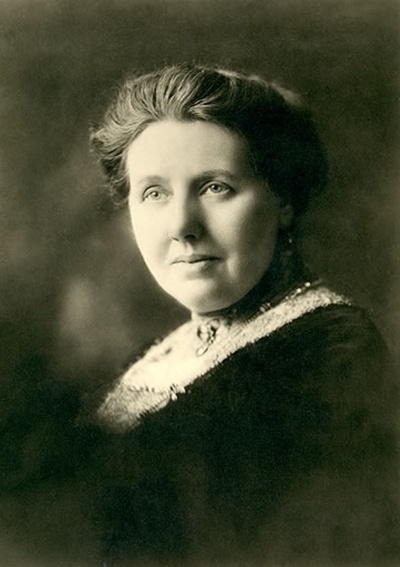
As part of that effort, McClurg became the head of the Colorado Cliff Dwellings Association when the organization formed in 1900, working alongside Lucy Peabody, who became a key leader in the years ahead. The group emphasized the importance of women’s work in preservation through the motto “Dux Femina Facti,” a line drawn from Virgil’s Aeneid, roughly translated as “feminine leadership will accomplish it.” As the organization, and Lucy Peabody in particular, worked to convince Congress to pass legislation making a national park, they also worked on the land itself, mapping the cliff dwellings, creating roads, and building shelter for one of the sites.
On April 13, 1906, the Mancos Times-Tribune reported “National Park Is Assured,” noting that Lucy Peabody had received a telegram confirming the Senate had passed legislation to create Mesa Verde National Park. Calling Peabody the “mother of Mesa Verde National Park,” the author noted that the news meant “the Cliff Dwellings of Colorado will be preserved for all time to come.”
Women’s efforts to preserve America’s past hinged on an argument: that these places and the people they represented mattered. Preserving Mount Vernon had invited little controversy; preserving ancient Indigenous structures took more work. By the turn of the twentieth century, it was clear that women had successfully claimed leadership in historic preservation, from revolutionary battlefields to ancient cliff dwellings. When Helen Pitts Douglass set out to preserve her husband Frederick Douglass’s Washington home after his death in 1895, she pushed that expansion further still, with a goal at once highly personal and public, a widow’s determination that neither the man she loved nor his role in the nation would be forgotten.
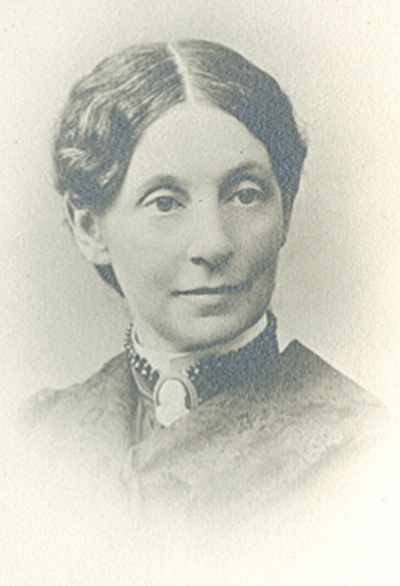
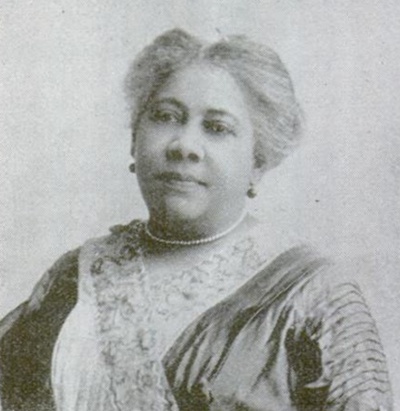
The Washington Evening Star noted the formation of the Frederick Douglass Memorial and Pilgrimage Association on July 27, 1896. The group intended to memorialize and commemorate Douglass each year, and “to encourage the people throughout the various states to make pilgrimages to the Douglass estate,” known as Cedar Hill. With Mrs. Douglass at its helm, the organization was composed entirely of women, including Harriet Tubman, and would meet annually alongside the National Association of Colored Women. In 1900, this became the Frederick Douglass Memorial and Historical Association, which continued Mrs. Douglass’s efforts after she died in 1903. In the years that followed, the group grew even closer with the National Association of Colored Women. Led by Mary Talbert between 1916 and 1921, the organization paid the remaining mortgage on Cedar Hill, leveraging publicity through the NAACP’s The Crisis Magazine to raise funds for that purpose. By 1918, the 100th anniversary of Frederick Douglass’s birth, Cedar Hill had been paid in full, with additional funds available to continue with upkeep and preservation efforts.
The tradition of women as stewards of American history has never stopped. Today that work has broadened further to include preserving the history of American women themselves. The National Park Service’s Travel Where Women Made History website links visitors to both national parks and locations on the National Register of Historic Places that tie to American women’s work. Similarly, the National Trust for Historic Preservation’s Where Women Made History initiative focuses on the ongoing work of historic preservation and education at women’s history sites across the country.
Unhidden Heroines: An Augmented Reality Experience (Uploaded to YouTube by Smithsonian American Women’s History Museum)
Although a physical building for the Smithsonian American Women’s History Museum does not yet exist, their website and digital initiatives seek new ways for Americans to learn about and research American women’s history. Their “Unhidden Heroines” augmented reality experience on the National Mall in Washington, D.C., launched in June 2026 and continues until the end of the year. It imagines preservation and education of women’s history in new ways, virtually placing women’s history alongside the more well-known monuments in the nation’s capital, writing women into what the museum calls the “monumental history” of the United States. At the heart of these efforts is the long-standing idea that Americans value their history more when they can see it and visit it, understanding their country in new ways and, hopefully, leaving with a desire to learn more.
Become a Saturday Evening Post member and enjoy unlimited access. Subscribe now