Chilled Fruit Soup
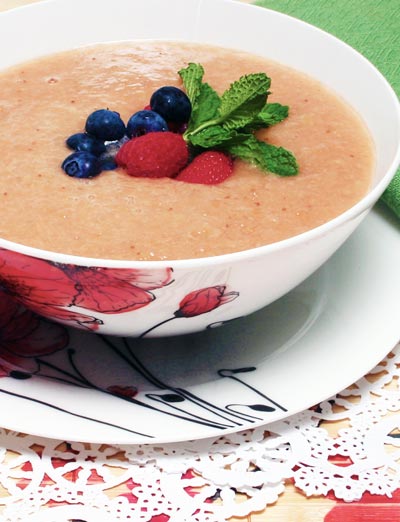
When I asked my neighbor Ann for her recipe, she pulled from her kitchen bookshelf the volume Middle Eastern Cooking from the classic Time-Life Foods of the World series published in the 1960s. Its editors label this soup as an Israeli dish, a surprise to me, as it does not seem Middle Eastern or even particularly Mediterranean. Since the recipe makes even more than the 8 to12 servings indicated, I have pared it down to serve six.
To prepare it quickly, I buy cubed melon and frozen strawberries. Plus, the frozen berries cost less, and I prefer applying the difference toward fresh raspberries and blueberries to garnish the soup and add textural contrast.
This soup keeps for a few days, but usually separates. So whisk it vigorously before serving leftovers.
Chilled Fruit Soup with Berries
(Makes 6 servings)
Ingredients
- 2 ½ cups diced ripe cantaloupe, about ½ melon
- 2 Braeburn or Gala apples, peeled, cored, and diced
- 1 cup green grapes
- ½ pound strawberries, halved, or ½ of a 10-ounce package frozen strawberries
- ¼ cup sugar
- 2 tablespoons fresh lemon juice
- 1 cup fresh blueberries, for garnish
- 1 cup fresh raspberries, for garnish
- 12 mint leaves, cut crosswise into thin strips for garnish
Directions
- In large saucepan, combine melon, apples, grapes, strawberries, sugar, and lemon juice. Add water. Bring to boil over medium-high heat. Cover, reduce heat, and simmer until fruit is very soft, 12-15 minutes. Uncover and set aside to cool for 15 minutes.
- Transfer contents of pot to blender. Wrap dish towel around top of blender. Firmly pressing down blender lid, whirl soup until smooth. It will look creamy. Doing this in 2 batches may be necessary.
- Pour soup into 1 large or 2 medium jars and let sit at room temperature until lukewarm. Refrigerate soup until well chilled, 6 hours to overnight. Just before serving, shake jar vigorously.
- Divide soup among 6 wide, shallow bowls. For garnish, divide blueberries, raspberries, and mint among the bowls. Serve immediately.
Nutrition Facts
Per serving
Calories: 140
Total fat: 0.5 g
Saturated fat: 0 g
Carbohydrate: 36 g
Fiber: 5 g
Protein: 2 g
Sodium: 15 mg
5 Videos for Cooking With Walnuts
Sure, a handful of walnuts is healthy. But don’t stop there. Watch some of our favorite foods get a nutritious makeover with walnuts from whole foods advocate Rebecca Katz, renowned cookbook author Mollie Katzen, and chef Joanne Weir of “Joanne Weir’s Cooking Confidence.”
1: Walnut-Blueberry Oatmeal Energy Bites (Recipe)
Keep these in the cookie jar for a quick pick-me-up at any time of day.
2: Orange Walnut Quinoa with Chickpeas and Mint (Recipe)
Jazz up this nutrient showstopper with cumin- and coriander-toasted walnuts.
3: Dark Leafy Greens with Caramelized Onion, Raisins, and Maple Walnuts (Recipe)
Rip off the rough spines of dark leafy greens and add sweetness for faster cooking (and easier eating).
4: Vegetable & Walnut Pizza (Recipe)
Fill your kitchen with the wonderful aroma of toasted walnuts.
5: Joanne Weir’s Walnut Salsa Verde Over Crispy Salmon (Recipe)
Create an extraordinary sauce from ordinary ingredients.
Practicing Mindfulness
Mark Matousek explores the growing popularity of Mindfulness-Based Stress Reduction, or MBSR, in “Time Out!” (September/October 2013). Learn more about MBSR in an interview with creator Jon Kabat-Zinn. Then, take a peek inside Google headquarters as he leads a session on mindfulness with the tech giant’s employees. For more help in mindfulness, see our “Top 10 Apps for Meditation.”
Mindfulness-Based Stress Reduction
A brief interview with Jon Kabat-Zinn.
Mindfulness with Jon Kabat-Zinn
Have you ever wanted to take a peek inside Google headquarters? You’re in luck! Watch Kabat-Zinn lead a session on mindfulness at the tech giant’s offices.
Mary McCartney’s Just Desserts: Plum and Pear Crumble
Crumble is delicious and I like to think of it as deceptively guilt-free. It packs a whopping fruity punch and is also very versatile. You can play around with the fruit combinations, using apples and blackberries instead, or berries, depending on what is in season. This dessert can be serve on its own, but is also great with custard, whipped cream, or ice cream.
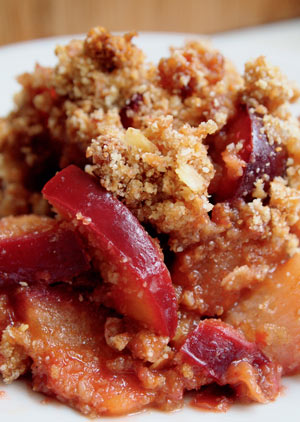
Plum and Pear Crumble
(Makes 4 servings)
Ingredients
For the filling:
- 8 ripe plums, cut in half and pitted
- 4 ripe but firm pears, cored and cut lengthwise into quarters
- ½ cup packed light brown sugar
- 1 teaspoon ground cinnamon
For the crumble:
- ⅔ cup all-purpose flour
- 1 cup rolled oats
- ½ cup ground almonds
- ¼ cup packed light brown sugar
- 7 tablespoons butter, chilled and cut into cubes
Directions
- Preheat the oven to 375°F.
- Cut sliced plums and pears into bite-sized pieces and put them into a medium baking dish (about 10 inches).
- Sprinkle the brown sugar and the cinnamon evenly over fruit and stir together well.
- To make the crumble, put flour, oats, ground almonds, and brown sugar into medium mixing bowl. Then add butter and gently rub these ingredients together using your fingertips, until mixture resembles coarse breadcrumbs.
- Scatter crumble evenly over prepared fruit in baking dish.
- Bake for 45 minutes, until topping is golden and crisp, and serve warm or at room temperature.
Photo of Mary McCartney : Photo © by Simon Aboud
Reprinted with permission from FOOD: Vegetarian Home Cooking © 2012 by Mary McCartney, Sterling Epicure, an imprint of Sterling Publishing Co., Inc. Photography by Mary McCartney
Gary Sinise Rocks for the Troops
“After rocketing to prominence as the wheelchair-bound Lieutenant Dan in Forrest Gump, the Academy Award-nominated actor suddenly found himself a leading advocate for wounded vets,” writes Hollywood reporter Jeanne Wolf of actor Gary Sinise (September/October 2013).
Not only has the busy actor formed the Gary Sinise Foundation to organize veterans programs, but he’s also tapped into his musical roots. Sinise entertains troops and raises funds with the Lt. Dan Band, whose motto is “Honor. Gratitude. Rock & Roll.”
Watch Sinise & the Lt. Dan Band performing live for the troops in the videos below. Plus, in an interview with 60 Minutes, Sinise reveals why he went to a small-town city council meeting on behalf of a wounded veteran.
Gary Sinise & the Lt. Dan Band at Brooke Army Medical Center, San Antonio
Gary Sinise & The Lt. Dan Band at Naval Medical Center, San Diego
Gary Sinise & the Lt. Dan Band travel to Kuwait
Gary Sinise on 60 Minutes
Watermelon Carvings
Watermelon carvings make for showpieces that are as amazing as they are delicious. Hone your carving skills with these five creative ideas shown in the National Watermelon Promotion Board videos below!
Watermelon Keg
You’ll be the life of the party with this functioning watermelon drink dispenser!
Watermelon Football Helmet
Perfect for tailgating at the Big Game (however you define it).
Watermelon Snowman
Surprise! Frosty has a watermelon cousin.
Watermelon Teapot
Sweet for showers, card parties, and afternoon teas.
Watermelon Shark
Just when you thought it was safe to get back in the water! Pool and beach parties will never be the same.
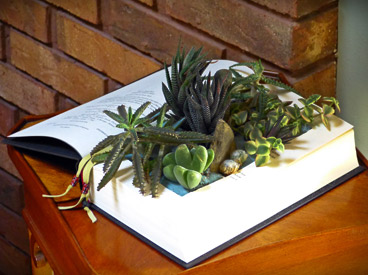
How to Make Your Own Cork Planters
When it comes to interior design, do you fall for “Classic Elegance” or swoon over “Modern Eclectic” designs? No matter what your style is, co-authors Kylee Baumle and Jenny Peterson of Indoor Plant Décor: The Design Stylebook for Houseplants show you how to match the right plants with your interiors. Every style listed in the book’s chapters comes with a list of pertinent plants, containers, and even step-by-step DIY projects.
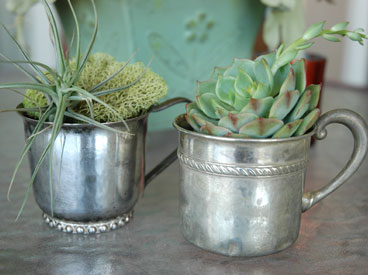
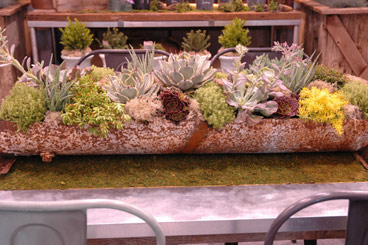
The cork planter tutorial in the video below is one of the book’s DIY projects. In the tutorial we used succulents, which author Baumle says are quite versatile in terms of style: “You can change their look just by changing the container you grow them in.” Find more tips on succulents (and photos) from Baumle and Peterson below.
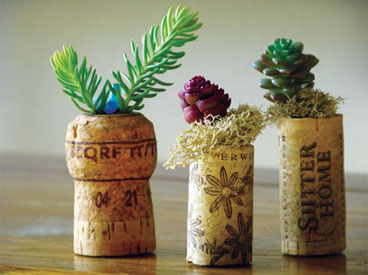
by Kylee Kylee Baumle and Jenny Peterson
After making the cork garden, we fell for the adorable succulents—hard. So, hoping to keep our tiny plants alive and strong, we asked the plant experts Kylee Baumle and Jenny Peterson, authors of Indoor Plant Decor
Post Editors: How do you know if a succulent needs more (or less) water?
Kylee Baumle: Since succulents generally store moisture in their ‘leaves,’ when you see wrinkling, it means they need more water. In severe cases of underwatering, they’ll shrivel and fall off. The fatter the leaves, the more water they store, and the longer they can go without watering. If you start to see yellowing or the leaves turn black, that may indicate that you’ve overwatered.
PE: What about sunshine?
KB: Most succulents like full sun, but some, such as the jade plant (Crassula ovata), like bright, indirect light. Too much sun may cause browning, calloused-like places on the leaves.
Jenny Peterson: I experiment with lots of succulents inside, and I pay attention when I see one of them reaching for light and getting spindly. They’ll put out new growth that is longer without having any fullness to it, so that’s my clue to move it to a brighter locale.
PE: When does a succulent need a bigger pot?
KB: Repot when you see the roots growing through drainage holes.
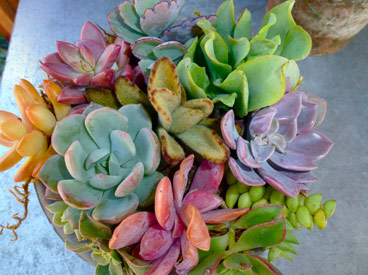
PE: If you’re putting several succulents into one pot, are there certain types of succulents that go together better than others?
KB: Most succulents will do fine placed together, but some are more tolerant of overwatering than others. Cacti, for example, are more sensitive to this and will experience root rot with too much water. Generally, if you like how they look together, then pot ’em up!
JP: I like to pair rounded, rosette forms (Echevaria, Aeonium) with succulents that trail, like Burro’s Tail (Sedum morganianum) or string of pearls (Senecio rowleyanus).
PE: Which succulents, if any, work best outdoors in your area?
KB: I’m in Ohio (Zone 5b/6a), and we can grow hens and chicks (Sempervivum); prickly pear cactus (Opuntia); and any number of sedums outside all year round. Any of the others can be grown outside in summer and brought inside for the winter.
JP: We can grow any succulent here in Austin, Texas (Zone 8b), but I make sure to give my outdoor succulents some afternoon shade. Our winters can be surprisingly cold here, too. So on the occasion when we expect a hard freeze, I cover mine up or bring them inside briefly.
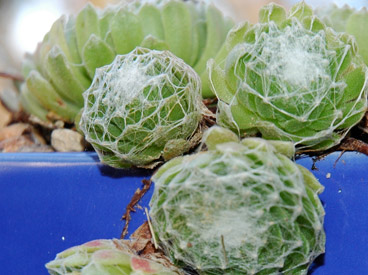
PE: What steps should be taken to move an indoor succulent outdoors?
KB: When moving your succulents outside for the summer, treat them as if they were new baby seedlings. They’ll need “hardening off” by placing them in a semi-shady area that doesn’t get that harsh afternoon sun for a week or two before exposing them to full sun. Make sure the succulents you have can take full sun though, before putting them there. There are a few that will be happier in morning sun and afternoon shade or an area that has dappled sunlight throughout the day.
PE: Which of the styles in Indoor Plant Décor best describes you and your home décor? And which succulents suit your style?
KB: The style I like the best isn’t necessarily what I have in my home. Most of us don’t get the opportunity to start out with all new furniture and when we marry, our furnishings and style many times are a blend of what each spouse has or likes. Personally, our home is Traditional Mix, but if I could start from scratch, it would be Modern Eclectic.
JP: My house is definitely Modern Eclectic. I love some vintage elements mixed up with more contemporary pieces, but everything needs to be warm and inviting. I don’t like to have anything “matching,” so collected pieces are perfect for me. As for succulents, I love black aeoniums – the dark foliage with the light green centers are offbeat but elegant.
PE: What is your favorite succulent, and what are your tips for caring for it?
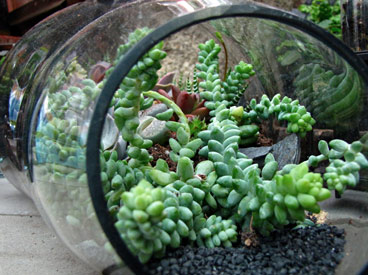
KB: My favorite succulent is the agave, which I have to grow as a houseplant because most of them aren’t hardy here. Their architectural form is classy and chic and they’re so easy to care for. Give them a bright window, make sure they’re planted in a well-draining medium in a pot with good drainage, and don’t overwater. I’d put them in the category of “no-care” plants, for the most part.
JP: I think I’d have to go with sedum. There are so many different types of sedum — ‘Blue Spruce’ looks like a tiny conifer, ‘Dragon’s Blood’ satisfies my need for some dark color, and ‘Americana’ is the easiest thing in the world to grow.
PE: And, finally, do you have any favorite plant or gardening jokes?
KB: You’ll be sorry you asked this! LOL! “What’s the difference between boogers and broccoli? Kids don’t eat broccoli.”
JP: Oh, Kylee, that is nasty! “Why do melons have fancy weddings? Because they cantaloupe.”

Kylee Baumle enjoys photographing gardens as much as she does tending to them. Her photos have been published in trade catalogs and garden magazines. She also writes for a number of gardening publications including Horticulture magazine, where she is also book review editor. Visit Kylee at her award-winning blog, Our Little Acre, where she writes and takes pictures of her growing experiences on her one-acre plot in rural Northwest Ohio.

Jenny Peterson is an Austin, Texas-based landscape designer and freelance writer specializing in xeriscaping and small urban spaces. Her design work has been featured in books, such as the vertical gardening book Garden Up! (Cool Springs Press) and Small-Space Container Gardening (Timber Press), and in gardening magazines. Jenny is a regional writer for Houzz.com and writes her blog, J Peterson Garden Design.
Check out Indoor Plant Decor: The Design Stylebook for Houseplants

Top 10 Apps for Meditation
Our nonstop, go-go-go culture doesn’t lend itself to moments of mindfulness. But even if you’re constantly on the go, these top 10 meditation apps make it easy to take a few minutes to reflect: on the bus, during your lunch break, or while you’re catching up on quiet time at home.
Meditation Apps for iOS

- The Smiling Mind
Developed by a team of psychologists, this app is modern meditation for children and adults. For the meditation novice (or those who find themselves easily distracted) this might be the best app to begin your journey into mindfulness. - Relax with Andrew Johnson Lite
Highly recommended as a sleep aid by its users, the guided meditation in this app helps you do exactly what its name implies: Relax. Even clinical hypnotherapist Andrew Johnson’s instructions are calming, accompanied by a soft, slow keyboard. - Mind
For the more experienced meditator, this meditation timer is as simple and beautiful as they come. Set it anywhere between 1 to 60 minutes, and then, as the screen reminds you, just relax and focus on your breathing. - Take a Break!
The guided meditations in this app come with plenty of options. Choose between a seven-minute work break or a 13-minute deep-stress reliever. Then select music, nature sounds, or silence to accompany the calm female voice that guides you through meditation. (The volume of the voice and the accompanying sounds can be adjusted separately.) - Omvana
Called the “Spotify of Meditation,” this app allows you to mix and match thousands of different guided meditations and ambient sounds. You can even record your voice on the app to create and mix your own personal meditations.
Meditation Apps for Android
- Dharma Meditation Trainer
This silent meditation app encourages you to spend five minutes a day in quiet reflection. Offering philosophical quotes for use as mantras or meditation phrases, a solid week of meditation helps you move up through 10 levels of partially-guided meditation. Timer and sound options are customizable. - Nature Sounds Relax and Sleep
Designed by Zodinplex, this app has 12 different recorded natural sounds that can be used for timed meditation or an alarm clock. The latter takes a bit of trouble to set up, though. - Meditation Helper
For the no-frills meditation practitioner, this silent app is a handy customizable timer with optional bells at the start, end, or every 15 minutes of your meditation time. No pictures, no nature sounds, just the sweet song of silence. - Relax Melodies: Sleep and Yoga
You might spend more time playing with this interactive app than you will meditating to it, but if you’re a music-oriented meditator it’s one of the best choices in free app offerings. Pre-loaded with 16 sounds, you can combine the tracks to personalize your zen style. Click piano, and then add an orchestra or the sound of rain. You can also download additional sounds and customize the timer for as much or as little time as you like.
Meditation Apps for iOS and Android
- Headspace-on-the-go
For the goal-oriented meditator, this app offers daily meditations to aid with focus, creativity, sleep, addiction, and more. Sign up for a free trial of 10-minute sessions for 10 days. Or pay a low monthly fee to access all 270 hours of guided mediation.
Apple and Fennel Salad

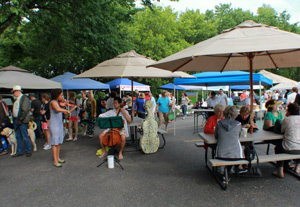
The freshness and flavor of local food allow some ingredients to nearly stand on their own. And simple combinations can pack a burst of complex flavors and textures.
Cook and culinary student Lisa Hanks was inspired to create this dish while walking around colorful Old Cheney Road Farmers’ Market in Lincoln, Nebraska. The featured ingredients, apples and fennel, are in season late summer and add a bright sweetness and crunch to the dish. The ingredients can be found at farmers markets across the United States.
Apple & Fennel Salad
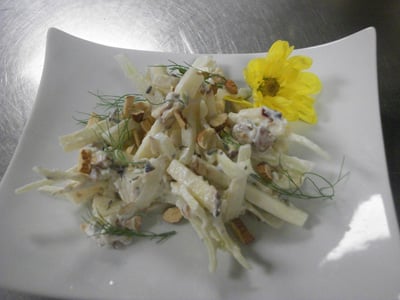
Ingredients
- 4–6 apples, medium diced
- 1 fennel bulb, medium diced
- 3 ounces red wine vinegar (just enough to coat apples and fennel)
- 1 sprig fresh lavender, leaves removed, finely chopped
- 1 ½ cups of English walnuts, chopped
- 8 ounces quark cheese*
- Salt and pepper to taste
*The cheese is soft, so it will coat the apples and form a binder that holds the salad together like mayo.
Directions
- Toss apples and fennel with red wine vinegar.
- Add remaining ingredients, and toss. Serve.
Black Students, White Schools
This is the third installment in our six-part series, “The Long March on Washington.” In part one, “It’s Our Country, Too,” we looked at the limited wartime opportunities for black Americans in the 1940s. In part two, “Black Neighbors, White Neighborhoods,” we covered integration in neighborhoods throughout the 1950s.
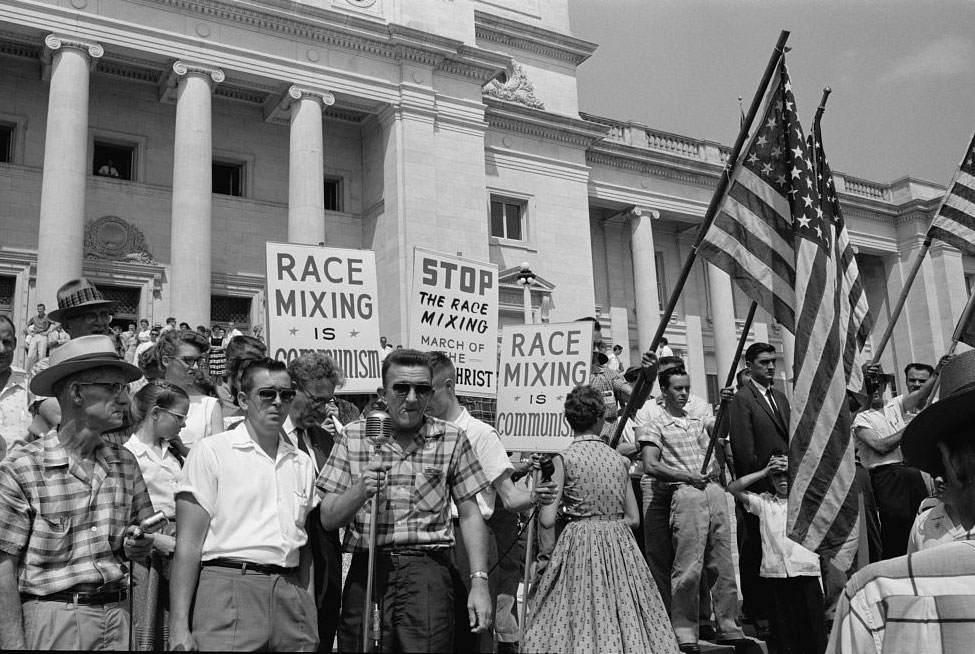
Black Americans might have hoped that the Supreme Court’s 1954 ruling in Brown v. Board of Education signaled the end of segregated schooling. But they soon learned not to hope for so much. Many states delayed or simply ignored the court’s order for “prompt and reasonable” integration of black students into white schools.
State defiance of federal law erupted in a bitter confrontation in 1957, at Little Rock, Arkansas. Seeking to comply with the Supreme Court, Little Rock’s school board developed a plan to integrate its all-white Central High School.
Unfortunately, as the superintendent of Little Rock schools later wrote in the Post, the plans to integrate black students were violently derailed by a combination of “organized bigotry, economic pressures, and selfish political scheming.”
In the five-part series “The Untold Story of Little Rock” (May-June 1959), Superintendent Virgil T. Blossom told how Arkansas Gov. Orval Faubus withdrew his support for the integration plans after he felt pressure from the state’s segregationists. By the time the school year had begun in September of 1957, Faubus was obstructing any attempt to introduce black students to white schools, which only encouraged the racists’ hopes of turning back integration. They redoubled their efforts, demanding further concessions from the school board as well as threatening violence against its members and their families.
Into this volatile situation stepped nine black students who bravely volunteered to enroll at Central, knowing the hostile reception that awaited them.
When Faubus heard of their intention, he ordered the state’s National Guard to keep black students off the school’s property. On the morning of September 4, wrote Superintendant Blossom, the first of these students, Elizabeth Eckford, approached the school, walking directly up to the line of guardsmen who closed ranks to block her way. She turned around, walked down the block and approached the line of guardsmen once more. “Again the guardsmen lining the sidewalk pressed together to block her path and she swerved to walk steadily down the line of troops, seeking an opening to the school grounds. She found none.”
At this point, a group of about 200 white adults saw her. They ran to block her path, surrounding her and screaming abuse and threats. The police and guardsman simply looked on impassively. “Trembling, but never losing her dignity, the Negro girl made a third vain effort to walk through the line of soldiers,” Blossom wrote. Realizing she couldn’t enter the school, she walked to a bus stop and silently waited while the crowd followed her pouring out insults and threats. When the bus came, she climbed aboard.
The Guard continued to keep black students out of Central High while a noisy mob surrounded the school shouting their defiance of integration, breaking into choruses of “Dixie,” and waving rebel flags. Then, on September 24, President Dwight Eisenhower decided he’d seen enough defiance of federal authority. He ordered the Army’s 101st Airborne Division to the city to replace the National Guard.
Each day for the next eight months, paratroopers escorted black students as they approached and left the school. At times, they even accompanied them in the school halls between classes. They regularly conducted school-wide bomb searches twice a day, and they kept the protestors in the street from slipping into the building.
Before the month was over, all nine black students had been admitted to Central and were attending classes, though continually taunted, threatened, shoved, and spat upon by white classmates.
The confrontation at Little Rock was the big story in the fall of 1957, both nationally and internationally. Blossom wrote, “A young American mountain climber at Gilgit, in Northwest Kashmir, reported there was ‘news about the Little Rock trouble on virtually every page’ of the newspapers and people repeatedly asked him whether ‘the United States really practices democracy as it tells us.’ Photographs and newspaper stories appeared on the front pages in virtually every city in Europe.” The Communist papers played up the story as much as possible, Blossom continued.
In his articles, Blossom was honest enough to admit he, personally, didn’t like the idea of integration. Yet, as school superintendant, he was determined to enforce the Supreme Court’s order, despite the opposition of Faubus and the threats from racists.
The Army continued enforcing integration until the school year ended in May. Before the next school year could begin, Faubus secured his support from Arkansas’ segregationists by ordering all four high schools in Little Rock to be closed.
Concluding his series of articles, Blossom felt the blame for Little Rock’s troubles shouldn’t have been placed solely on the opponents of integration: the demagogues, white supremacists, Klansmen, racist students, and freelance thugs that swarmed around the school. He believed the federal government was also responsible for the problems because it had enforced integration with the military. He agreed with a southern congressman who told him, “when the President sent the Army’s toughest troops with bayonets on their guns against unarmed white citizens, he made a mistake we will never forgive.” Like many of his contemporaries, he believed integration would only be achieved peacefully, slowly, and reasonably.
The federal government, it appeared, had no overall plan for protecting its black citizens’ civil rights. Meanwhile, segregationists were organizing their efforts to stall integration
Coming Next: “The Deep South Says, ‘Never.’”
Black Neighbors, White Neighborhoods
This is the second installment in our six-part series, “The Long March on Washington.” Click here to read part one, “It’s Our Country, Too,” where we look at the limited wartime opportunities for black Americans in the 1940s.
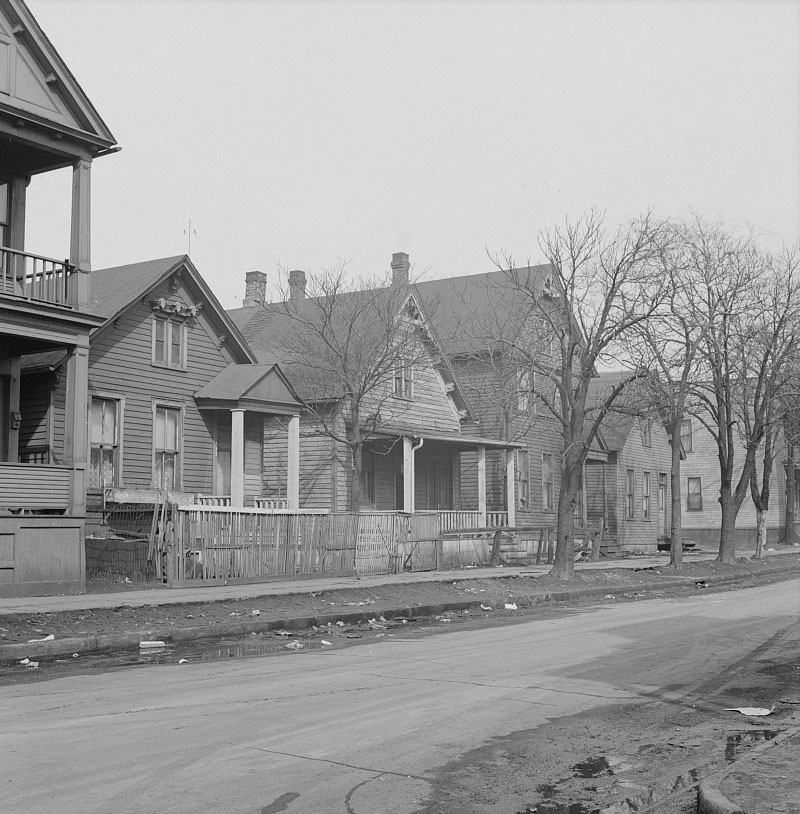
during the late 1940s. Photo courtesy Library of Congress.
World War II drew the American people together, inspiring them to work toward the single goal of defeating the Axis powers. But the unity wasn’t so great that it could end the nation’s racial division.
Even in the midst of this war, Detroit erupted in a race riot in 1943. The underlying cause was the vast number of black workers who had moved to the city, looking for good paying jobs in war plants. Between 1940 and 1950, Detroit’s population grew 13 percent, but the black population exploded with a 101 percent increase. However, these black workers were only allowed to live in overcrowded, impoverished neighborhoods. The rioting that began in June raged for three days and left 34 dead and 433 wounded.
Then years after the riot, Walter White, secretary of the NAACP, returned to Detroit to assess the state of race relations in the city (“How Detroit Fights Race Hatred,” July 18, 1953). He was cautiously encouraged by what he saw.
Until recently, he wrote, all-white neighborhoods had drawn up covenants that prohibited home sales to blacks, even though the Supreme Court had declared such covenants unconstitutional in 1948. So then, “agreements among real-estate dealers not to show, sell, or rent to Negroes took the place of covenants,” White said. Some mortgage companies and banks helped keep neighborhood segregated by refusing to lend money or grant mortgages to black homebuyers.
Yet slowly, grudgingly, a few all-white neighborhoods had yielded to black buyers. And residents discovered that their property value didn’t suddenly vanish when a black family moved onto the block. White was encouraged by the mayor’s office and police department pledging to protect the lives and property of blacks in any neighborhood. Furthermore, the city was beginning to recruit and train an integrated police force.
[Related article: “When a Negro Moves Next Door” by Ellsworth E. Rosen (April 4, 1959)]
But racial fear ran deep, and the limited advances of integration that White saw in Detroit made little headway against prejudice. In cities throughout the North and South, homeowners were panicking at the thought that black homeowners would leave their “colored” neighborhoods and move next door.
Such fears provoked mistrust, prejudice, and greed that, nine years later, were enriching real estate agents in Chicago known as blockbusters. In “Confessions of a Block-Buster” (July 14, 1962), an anonymous author described his work for the Post: “few white neighborhoods welcome Negroes who can afford to buy there; yet the need for homes for Negroes keeps growing. I assist in the solution of this problem. My function, which might be called a service industry, is to drive the whites from a block whether or not they want to go, then move in Negroes.”
The author was one of several blockbusters in the city who made money by exploiting the fear and prejudice of white homeowners. And the money was good. This unnamed author reported it offered him three sources of profit in his work. The first level of profit came when a panicked seller sold his house at a discount.
“You may believe your home is worth $15,000, for example. If I bust your block, I will expect to buy it for $12,000 cash. The odds are that eventually you will sell for that price, if not to me, then to another speculator.
“Within a few days comes profit No. 2: I advertise and sell it to a Negro not for $15,000, but for $18,000. Financing the deal myself, I will accept $500 to $1,500 down, with the remainder on contract. The easy-payment plan, I believe it is called—that is, $150 to $200 a month until the contract is fulfilled. When is that?
“This is profit No. 3, the big one. The contract is fulfilled when I have been paid principal and interest totaling $36,000.”
The blockbuster’s challenge was finding the first seller. To plant the seed of fear, a blockbusting real estate agent might hire blacks to cruise through the neighborhood or take regular strolls with their children down its sidewalks. Or blockbusters might place anonymous calls to a homeowner and simply say, “They’re coming!”
The author of the article said he didn’t resort to such tactics. He simply told a homeowner that blacks would eventually move into the neighborhood and he, as the real estate agent, was willing to pay cash immediately. When the first “sold” sign appeared on a front lawn, the rest of the neighborhood was easy. White homeowners were convinced that their property value had already begun to disappear.
But the blockbuster never told the sellers the whole truth. “If you and your white neighbors did not run, you probably would gain, rather than lose. More than four-fifths of the white neighborhoods into which Negroes move hold their own or enjoy an increase in value, according to a five-year Fund For The Republic study of 10,000 transactions in Northern interracial neighborhoods.
“But the myth that ‘Negroes lower property values’ persists—so whites run, and we block-busters clean up.”
The neighborhood was just one front on which the battle for integration was being fought. A far more bitter fight would be waged in the schoolhouse.
Coming Next: Integrating the Schools
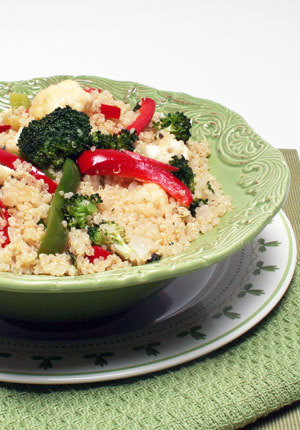
Quinoa with Cauliflower and Broccoli
Cauliflower and broccoli are cruciferous vegetables, which contain cancer protective glucosinolates such as indoles and isothiocyanates. Their four-petal flowers (in the shape of a cross or crucifer) are also good sources of vitamin C and the B vitamin folate. And the colorful bell peppers add their own nourishing goodness of vitamin C.
Make it a meal: Serve this dish by itself or add a portion of roasted chicken. Or a cucumber salad: Dice fresh cucumbers and thinly slice some onions. Add a few tomato wedges and top with a bit of extra virgin olive oil and freshly squeezed lemon juice. Just like that, lunch or dinner is served.
Quinoa with Cauliflower and Broccoli
(Makes 8 servings)
Ingredients
- 1 tablespoon extra virgin olive oil, divided
- 2 cups cauliflower florets
- 2 cups broccoli florets
- 1 medium green bell pepper, sliced into strips
- 1 medium red bell pepper, sliced into strips
- 1 cup chopped onion, divided
- 3 cloves garlic, minced
- 1 tablespoon fresh thyme, chopped medium (1 teaspoon dried may be substituted)
- 1 tablespoon fresh oregano, chopped medium (1 teaspoon dried may be substituted)
- 1 cup quinoa
- 2 cups reduced-sodium vegetable broth
- Salt and freshly ground black pepper
Directions
- In skillet, heat 2 teaspoons olive oil over medium-high heat. Add cauliflower, broccoli, peppers, ½ cup onion, and garlic. Sauté 5 minutes until vegetables start to soften. Stir in herbs and sauté 2 minutes. Remove from stovetop and set aside.
- In strainer, place quinoa and rinse thoroughly with cold water. Using your hand, swish quinoa under running water for 2 minutes to remove bitter natural coating. Drain and set aside.
- In medium saucepan, heat remaining teaspoon oil over medium-high heat. Add remaining onion. Sauté about 3 to 4 minutes. Add broth and quinoa. Increase heat to bring mixture to boil. Reduce heat to medium-low, cover, and simmer until quinoa is tender, about 20 minutes.
- Gently stir in vegetable mixture and combine well with quinoa. Season with salt and pepper to taste. Serve.
Nutrition Facts
Per serving
Calories: 120
Total fat: 3.5 g
Saturated fat: 0 g
Carbohydrate: 20 g
Fiber: 4 g
Protein: 5 g
Sodium: 50 mg
The Wooing of Dolores McDougal
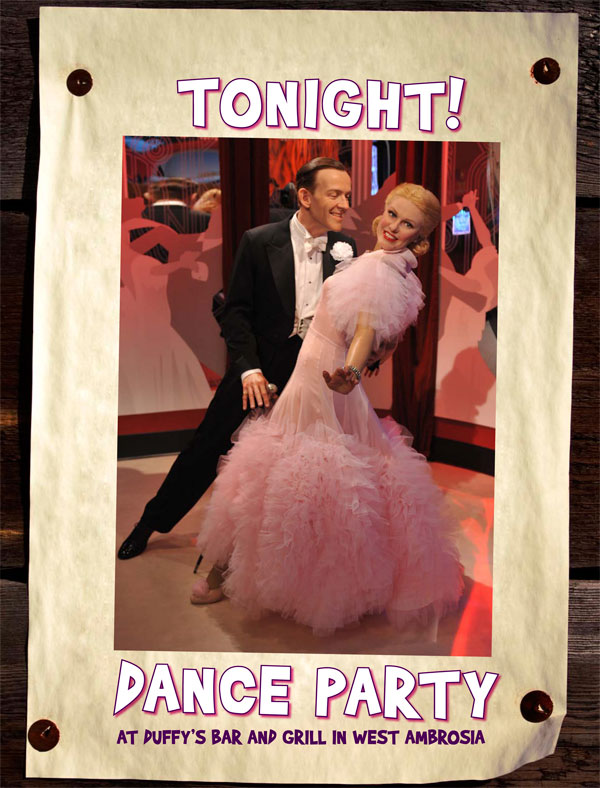
Dolores McDougal believed breaking wind was an act of God. She embraced this natural phenomenon with the full-blooded gusto worthy of divine gifts, openly sharing her odoriferous benedictions whenever the spirit moved her. Dolores’ zeal for her credo set the town biddies of West Ambrosia to tongue-wagging of the highest order.
“It’s a blessing she was orphaned at such a young age,” declared Mrs. Theodore F. Wanamaker. “Her parents would have died of mortification if they were alive.”
The rest of the West Ambrosia Ladies Auxiliary tsktsked sympathetically at this fate of cruel redundancy.
“She’s certain to end up an old maid,” Mrs. Wanamaker concluded.
Her fellow Auxiliary members all agreed, before moving on to their next order of business, the annual Bachelor Auction for the West Ambrosia Order of the Flower Pot.
Despite her glossy obsidian locks, va-va-voom cleavage, and legs that rivaled the best the Rockettes had to offer, Dolores’ commitment to natural gas had indeed cost her a few suitors, weak-willed souls unable to endure her regular assaults on their olfactory organs. On the other hand, her unorthodox bodily enthusiasm managed to secure her the reputation as the town’s Free Spirit, which, to Dolores, was worth a thousand men.
Along with her penchant for flatulence, Dolores had an absolute and abiding passion for dancing of all kinds—line-dancing, Zydeco, tango, clog, polka, disco, merengue, and even the Irish two-step. When there was a dance floor to be found, no amount of cajoling could keep Dolores away. The problem was once Dolores hit the dance floor, she cut loose with everything she had. Everything. At the first whiff of her redolent expulsions, the crowd parted like the Red Sea.
Dolores didn’t seem to give a rip, if you’ll pardon the expression. In fact, some amongst West Ambrosia’s upper crust claimed Dolores did it on purpose so she’d have more room for the carefree contortions and gymnastic gyrations she called dancing. Whatever the case, the fact remained, when Dolores was dancing, she had the spotlight all to herself. That is, until she met Alberto Ledbetter.
Alberto wasn’t much to look at—bald head and a face only a gnome could love. Though age had shrunk him from a respectable height of 5 feet 8 inches to something more suitable for a male gymnast, he still had the square shoulders, barrel chest, and bullfighter’s legs of his youth. What truly set Alberto apart; however, was his prowess on the dance floor. He didn’t just cut a rug; he wove a Persian tapestry. In his arms, every woman transformed into Ginger Rogers. The women of West Ambrosia loved him, and he loved them all back with his own special brand of chivalry. He considered it a point of honor to dance with every lady in the place, regardless of age, size, race, creed, or physical detriments. He was a democratic lothario.
The moment Alberto met Dolores quickly entered the annals of West Ambrosia legend. It was Saturday night at Duffy’s Bar and Grill, a local joint that drew clientele from every walk of life and stewed them into a veritable American ragout on its cozy dance floor. For West Ambrosians, Duffy’s defined “old school.” Ancient license plates and gas station signs dating back to the golden age of honky-tonk covered the walls. The men with the most wrinkles and the fewest hairs on their heads inevitably proved the best dance partners. Any customer under the age of 45 had a deep-seated love of swing dancing, foxtrot, bow ties, and zoot suits. Even the onion rings had vintage rust around the edges.
Like many owners of the local venues, Duffy had resorted to extreme measures to keep Dolores McDougal’s windy presence from invading his establishment. He posted a lookout half a mile down the road by the prize pay phone at the Terwilliger Grange. (The town council had declared the Grange pay phone a protected historic landmark on account of West Ambrosia’s notoriously bad cellphone service. There was even a brass plaque to commemorate this vaunted status.) Nineteen-year old Billy Kerpletsky was Duffy’s designated scout. Armed with a roll of quarters, Billy would stand on the corner by the Grange and keep an eye out for Dolores McDougal’s telltale silhouette against the neon glow of the commercial strip. At the first sign of her swaying hips, he’d duck inside the phone booth and call Duffy. Then the cry would ring out in the bar—“McDougal sighting!” Duffy would unplug the jukebox and shut down the master electrical switch while his patrons pulled the shades and blew out all the stubby candles on the tables. Everyone would sit there in the dark until Billy gave the all-clear. In exchange for Billy’s services, on $2 beer nights, Duffy turned a blind eye to the young rascal’s fuzzy Xeroxed fake ID.
In every other respect, the residents of West Ambrosia were known for their generosity of heart and friendly demeanor. But in this one area, their cruel exclusion of Dolores McDougal from terpsichorean revels, they had developed what could only be called a mean streak. This rankled Alberto Ledbetter. It disturbed his democratic ideals and sense of fair play.
“You’re all a bunch of hypocritical bullies,” he announced on that fateful night at Duffy’s.
It was early spring, just after Valentine’s Day, and the romantic mood in West Ambrosia had raised Alberto’s knightly graces to a fever pitch, conjuring visions in his mind of cheek-to-cheek waltzes, long-lost friendship rings, and leisurely picnics by the shores of Lake Bilgewater. In short, Alberto Ledbetter was contemplating monogamy.
“Hush!” whispered Suzette Pieswatter, Duffy’s youngest legal customer, from her hiding place in the corner. “Dolores will hear you.” Billy had sounded the alarm mere moments before, and darkness and secrecy had already descended on the bar.
Burly, bulldog-faced Floyd Flintswitch pshawed at her. “She’s half a block away yet.”
Suzette threw her hands in the air. “I’m just saying. She’s got ears like a greyhound.” While the validity of this comment on Dolores’ auditory appendages was questionable, nobody could argue that her sleek figure and long legs bore some resemblance to the dog in question.
‘It’s Our Country, Too’
We begin a new series on “The Long March on Washington” by looking at a 1940s article about wartime opportunities for black Americans.
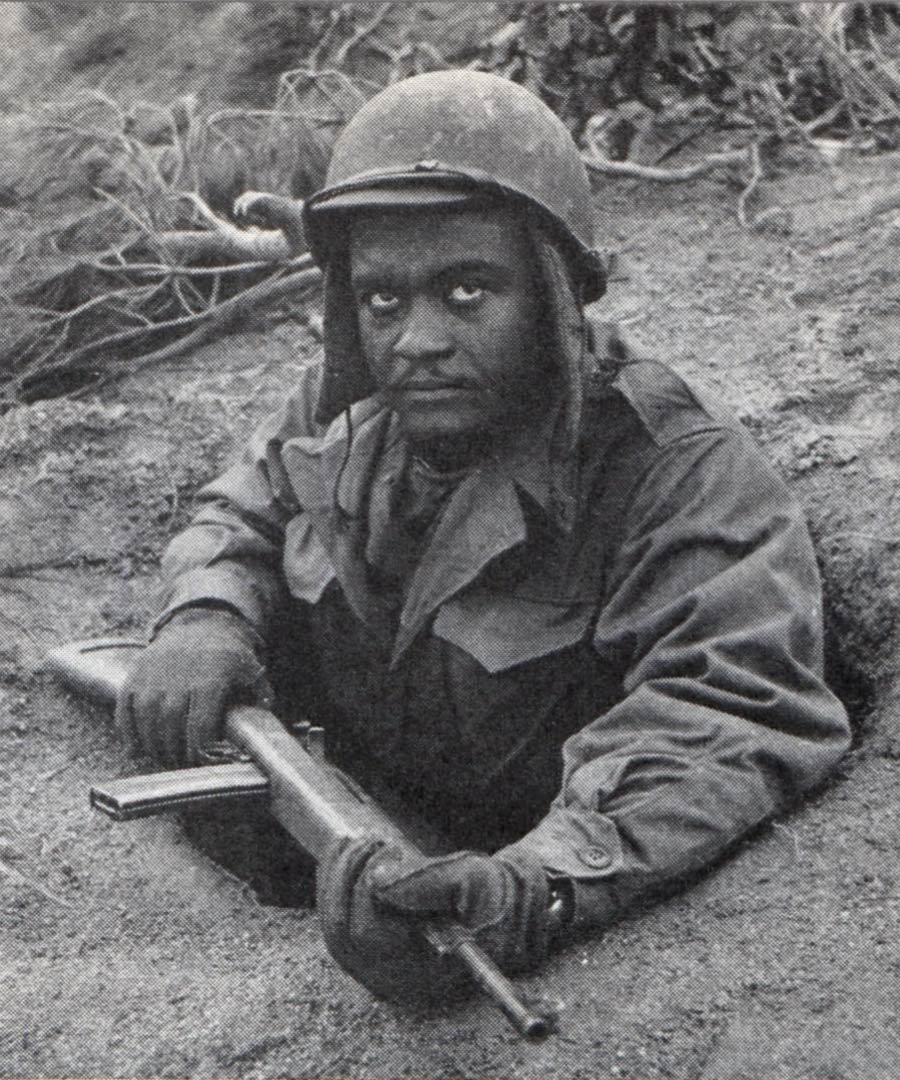
Popular history tells us that the March on Washington began on the morning of August 28, 1963, when more than 200,000 Americans gathered at the Washington Monument and progressed to the Lincoln Memorial.
But the March actually began 22 years earlier, as America was being drawn into World War II. To prepare its defenses, the government had brought back the draft and placed large orders for armaments with the nation’s manufacturers. Young men could choose to enlist with the service of their choice, or take advantage of lucrative defense work—if they were white. But few wartime opportunities existed for black men.
As Walter White, secretary of the NAACP, wrote in the Post, “The Negro insists upon doing his part, and the Army and Navy want none of him.”
White’s article, “It’s Our Country, Too” (December 14, 1940), cited numerous instances in which the military turned away qualified black men. For example, when a skilled black pilot applied to the Army Air Corps, he was flatly told by the recruiting officer, “There is no place for a Negro in the Air Corps.”
A black enlistee with a degree in pharmacology was told, “We’re not going to have any black pharmacists in the Army.” A black volunteer at a southern recruiting station was told it was for “whites only” and, when he questioned this policy, was savagely beaten before being thrown out onto the street.
At the time of his writing, White said, the regular Army had just five black officers. Three of them were chaplains. However, the Army readily accepted black men to serve as cooks, truck drivers, sanitation workers, and grooms in cavalry stables.
If a black man applied to the Navy, White said, he ran into even greater resistance. “Until [World War I] it was possible for Negroes in the Navy to attain the rank of petty officer. Nowadays, they are permitted to enlist only as menials. They can rise only to the position of officers’ cook or steward.” An assistant to the Secretary of the Navy wrote that this policy “was adopted to meet the best interests of the Navy and the country, [and] the men themselves.”
As for the marines of 1940, White wrote, “no Negro has ever served, either as an officer or an enlisted man, in the Marine Corps
Meanwhile, employment opportunities were opening up in factories that had received large government contracts to produce weapons. Black Americans found most of these opportunities closed to them. White reported that skilled black workmen found it impossible to gain employment in shipyards where unions only permitted hiring “members of the white race.”
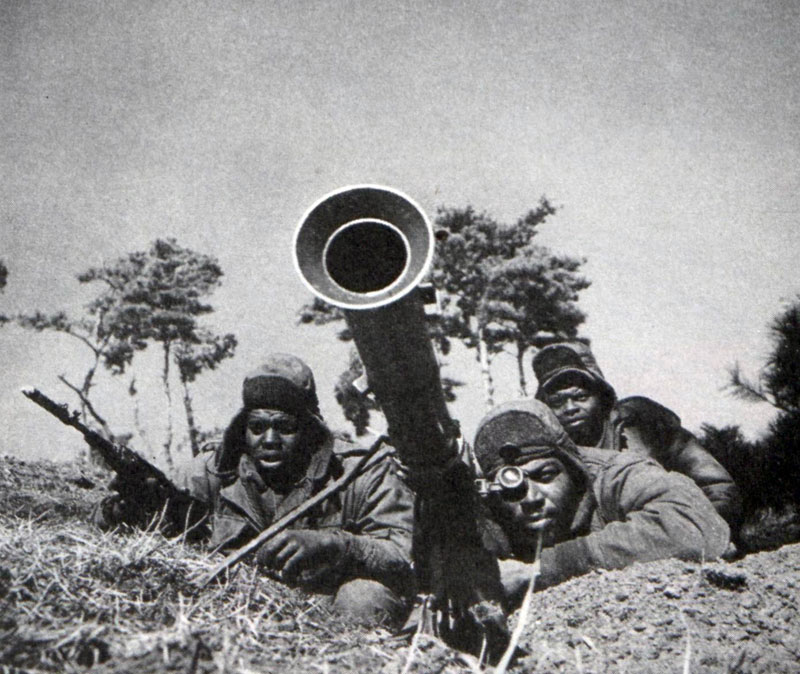
An airplane plant in Nashville, Tennessee, planned to employ more than 7,000 men, but a company representative told White, “I am not certain at the present time how many colored people will be employed in our plant. As far as I know, there will be very few. There possibly will be some porters and truckmen.”
Discrimination wasn’t only found in the South, however. White reported that an airplane manufacturer in New England told the federal employment offices that “Negro applicants should not be sent, and that if they were sent they would not be hired.”
In September of 1940, White and A. Philip Randolph, president of the Brotherhood of Sleeping Car Porters, met with President Franklin D. Roosevelt to find ways to end segregation in the military and industry. Roosevelt agreed to create more opportunities for black servicemen in every branch of the service, including combat units. But he felt he couldn’t integrate black and white soldiers in the same regiments.
Randolph pleaded for more opportunities for blacks in defense plants, but Roosevelt was reluctant to use his office to end discrimination. So, early in 1941, Randolph proposed staging a large-scale protest. Setting up a March on Washington Committee, with offices in 18 major cities, he planned to bring thousands of black Americans to the capital. They would march down Pennsylvania Avenue to bring attention to the discrimination in defense plants.
Now it was Roosevelt’s turn to need a favor; he asked Randolph to call off the march. The president felt the protest would diminish his efforts to build national unity for the impending war. In the end, Randolph called off the march after the president agreed to issue an executive order prohibiting discrimination in any plant with a federal defense contract.
The armed forces remained segregated for the duration of the war. Black men distinguished themselves in several infantry, cavalry, and artillery divisions, as well as two marine divisions and the 332d Fighter Group, the Tuskegee Airmen. Finally, in 1948, President Harry S. Truman ordered the military to integrate.
Randolph’s challenge marked the beginning of a new era in the struggle for civil rights. For the first time, a black leader had negotiated from a position of strength because thousands of black Americans were ready to support massed action.
Coming Next: Panic in White Neighborhoods
The Post Reports: The Long March on Washington
Fifty years ago, the hot topic in the Post was integration. We begin a series on the Post‘s civil rights reporting with original material from Martin Luther King Jr., James Meredith, Malcolm X, and other influential civil rights leaders and journalists.
The Rise of the Black Activists
By 1963, black Americans were taking control of the fight for civil rights. Read More »
The Deep South Says Never
In 1954, the White Citizens’ Councils began a campaign of intimidation to shut down the movement toward integration. Read More »

Black Students, White Schools
The Supreme Court ordered an end to segregated schooling, but the transition would not come easily. Read More »
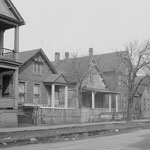
Black Neighbors, White Neighborhoods
Throughout the ‘50s, white homeowners were panicking at the thought of blacks moving into their neighborhoods. Read More »
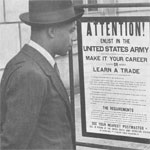
‘It’s Our Country, Too’
In 1940, civil rights activist and NAACP leader Walter White wrote a column for the Post examining how black Americans’ desire to serve their country was held back by government discrimination. Read More »
Massaged Kale Salad with Pears, Walnut, and Parmigiano-Reggiano
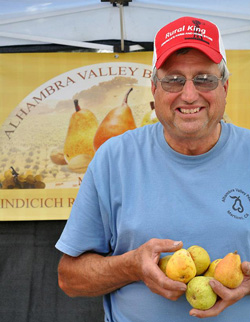
For this kale recipe we had the privilege of using French butter pears, an heirloom variety from Alhambra Valley Beef & Pears in Walnut Creek, California.
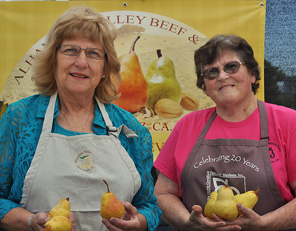
One reason we at Cookin’ the Market love this farm so much is because they practice dry farming methods, which basically means that the farmers don’t water their crops. As a result, the fruits are packed with sugars and aren’t diluted with excess water. Be sure to check out the dry farmed produce options at your local market.
[Daryl, left, and Helen and Judy, right, of Alhambra Valley Beef & Pears. Photos by Anna Buss.]
Massaged Kale Salad with Pears, Walnut, and Parmigiano-Reggiano
(Serves 4-6)
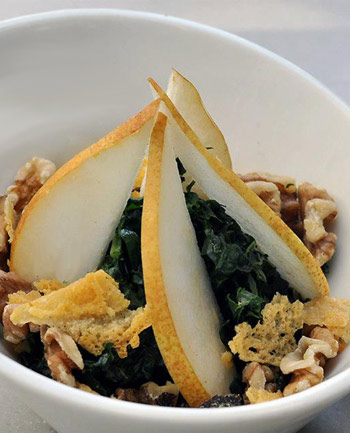
Ingredients
- 1 bunch dinosaur kale
- Salt and pepper to taste
- 2-3 tablespoons extra virgin olive oil
- Juice from ½ lemon
- 2 French butter pears
- ½ cup walnuts
- ¼ cup grated parmigiano-reggiano*
Directions
- Tear kale leaves away from stem. Stack leaves on cutting board largest to smallest and roll them up like a burrito. Cut rolled kale into a chiffonade (or finely cut ribbons).
- Set kale chiffonade in mixing bowl. Add dash of salt and pepper, and massage kale with hands. (Do this until kale is tender and turns a deeper shade of green.)
- Add just enough olive oil to coat greens and a splash of fresh lemon juice.
- Dice or slice the pear and disperse pieces among kale leaves. Chop walnuts and sprinkle them in as well. Garnish with parmigiano-reggiano.
- Taste. Correct. Serve.
*Chef’s recommendation: If you want to get extra fancy with your garnish you can serve this salad with parmesan-reggiano crisps. Bring a nonstick pan to medium-high heat, then lay thin layers of parmesan-reggiano in pan. When they begin to bubble, peel away with rubber spatula and flip. When bottoms become golden in color (about 30 seconds), remove from pan and let cool. Crumble over kale salad.
Recipe created by Mario Hernandez, program coordinator and market chef for Cookin’ the Market