Most Popular Articles of 2016
As 2016 draws to a close, we wanted to share our most popular articles published this year.
1. The Worst Presidential Election in U.S. History
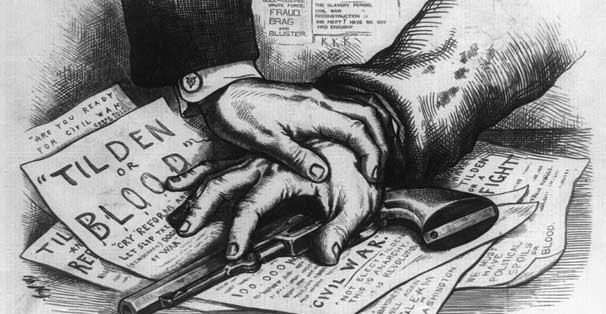
Read the Post’s response to the presidential election of 1876, which was ultimately decided in a secret, closed session among members of both parties just days before the inauguration.
2. People and Places: Garrison Keillor

Jeanne Wolf interviews Garrison Keillor on stepping down from A Prairie Home Companion and what comes next.
3. Truman and Trump: Explaining the Unexpected Winner
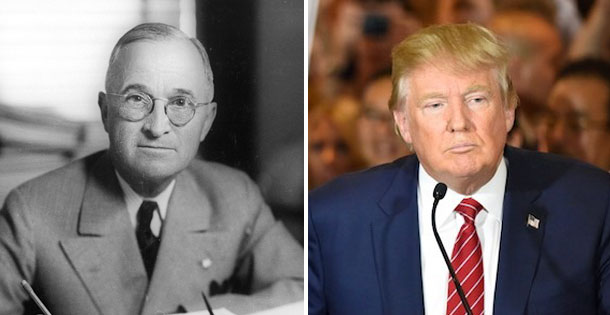
Donald Trump’s victory in the 2016 presidential election bears similarities to Harry S. Truman’s election in 1948, not only in the unexpected outcome but also in the analysis of how and why it happened.
4. Rachel Allen’s Irish Apple Cake
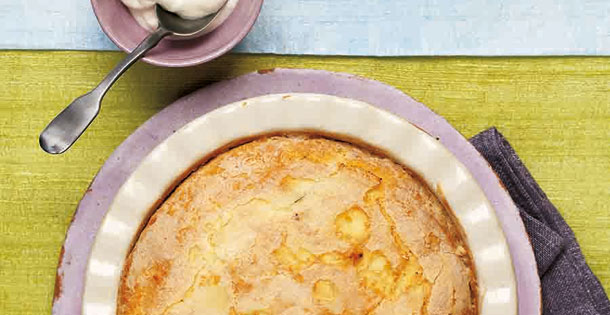
This delicious cake makes a wonderful alternative to more traditional holiday desserts, but it’s a treat any time of year.
5. The Funny Papers
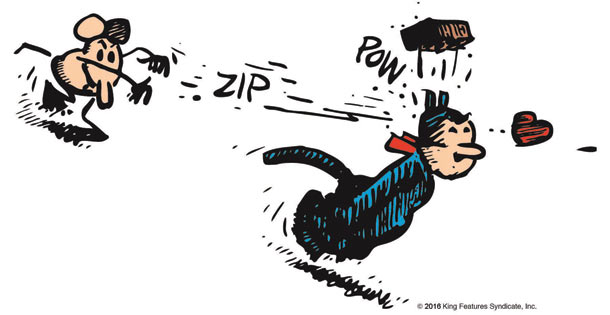
Newspapers may be in trouble, but the comic strip is alive and well — and flourishing online.
6. The New Marilyn Monroe
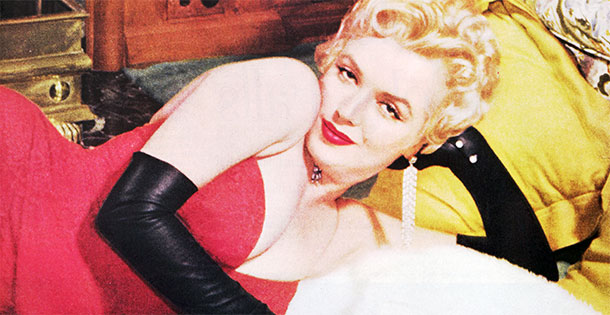
In 1956, Post editor Pete Martin wrote a surprisingly candid report on the Hollywood icon. He reveals things about the phenomenal blonde that even Marilyn herself didn’t know.
7. Crude Language on the Campaign Trail
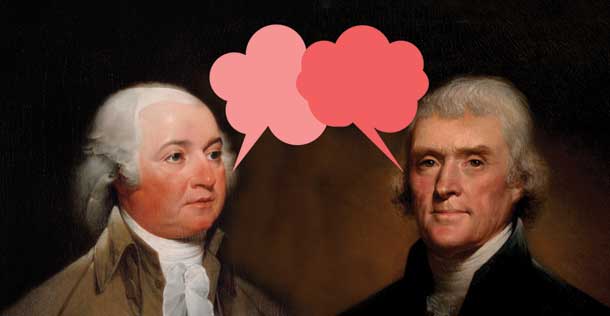
Think this year’s presidential campaign has been crass, coarse, and contentious? Campaigns in America have often been rough, with name-calling taking precedence over, and frequently obscuring, the issues of the day.
8. The Drug Epidemic That Is Killing Our Children

Parents who’ve lost children to opioid addiction are taking action, channeling their grief into getting the word out.
9. What Do Birds Do For Us?

Birds are pretty, sure, but increasing scientific evidence reveals that life would be pretty tough without them.
10. When The Chicago Cubs Fought Gods, Goats, and the Front Office
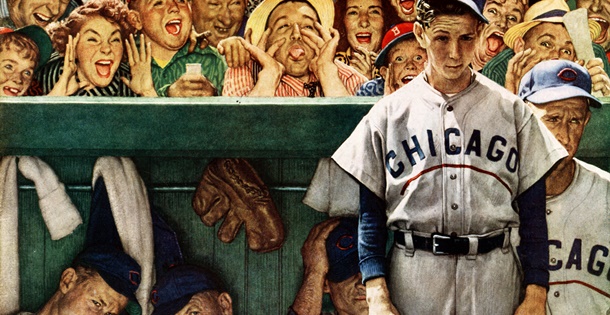
The Cubs waited 108 years between World Series wins. Was it because of a disinterested owner, an angry goat, or bad World Series karma? The article, “The Decline and Fall of the Cubs,” from the September 11, 1943 issue, raises similar questions.
News of the Week: Festivus, Zsa Zsa, and Fa-La-La-La-La La-La La-La
For the Rest of Us
It’s funny how a December 23 holiday from Seinfeld is now actually celebrated by people. Festivus (“A Festivus for the Rest of Us”) was a real celebration created by the family of one of the show’s writers, Dan O’Keefe. It was created around 1966 by O’Keefe’s father, and his son added to or changed some of the traditions for the episode. If you’d like to celebrate it, you’ll need a large metal pole instead of a tree (tinsel is distracting), you’ll need to perform several “Feats of Strength” with your family, such as wrestling, and you’ll also participate in an “Airing of Grievances” during holiday dinner, where you basically tell everyone how they’ve disappointed you over the year.
Just don’t argue about politics with your family this holiday season. There’s plenty of time for that starting on January 2.
RIP Zsa Zsa Gabor, Henry Heimlich, Dick Latessa, Gordon Hunt, and Kevin O’Morrison
Zsa Zsa Gabor was one of those celebrities who seemed to be famous just for being famous. But she was in a lot movies, too, such as Moulin Rouge, Touch of Evil, Arrivederci, Baby!, and the camp classic Queen of Outer Space. She was also in many TV shows — no, not Green Acres, that was her sister Eva — often playing herself, spoofing her role in the entertainment world. She seemed to get it.
Gabor passed away earlier this week at the age of 99 after many years of health problems.
This remains one of my favorite segments from The Late Show with David Letterman. He and Zsa Zsa spent the day visiting various fast food establishments when the show was visiting California back in the ’90s.
If you or someone you know has been saved from choking by the Heimlich Maneuver, the man to thank passed away this week at the age of 96. Henry Heimlich’s maneuver has been credited with saving the lives of over 100,000 people since its first use in 1974.
Dick Latessa won a Tony Award for Best Actor in a Featured Play (Musical) for his role as Wilbur Turnblad in the original production of Hairspray. He also appeared in several TV shows, including Mission: Impossible, Get Smart, Law & Order, True Blue, The Black Donnellys, Edge of Night, The Sopranos, and The Good Wife. He died Monday at the age of 87.
Gordon Hunt was actress Helen Hunt’s father and a true “man who could do anything” in Hollywood. He directed several episodes of various shows, including his daughter’s Mad About You, Frasier, Caroline in the City, and Coach, and was the sound/recording director for hundreds of cartoons, including The Smurfs. He was also an actor and wrote and produced several shows. Hunt passed away last weekend at the age of 87.
Kevin O’Morrison (sometimes known as Kenny O’Morrison) was another man who had his hand in just about everything. He was an actor known for various movies, from 1949’s film noir classic The Set-Up to Sleepless in Seattle, where he played Meg Ryan’s dad, as well as films like The Friends of Eddie Coyle and Funny Farm and TV shows like Lonesome Dove and Law & Order. He also wrote and produced several plays and wrote many novels. O’Morrison was 100 years old.
Scientists Have Found the Most Relaxing Song in the World
Oddly enough, it’s that “Christmas Song” by Alvin and the Chipmunks. ALVIN!
Okay, that’s not true. It’s actually “Weightless” by Marconi Union, an English ambient music band. Neuroscientists from Mindlab International studied the data and determined that the song dropped participants’ anxiety levels by 65 percent and helped with blood pressure levels, stress, and breathing.
You can judge for yourself. Here’s all 8 minutes of it:
And if that’s not enough, there’s actually a 10-hour version. You could put that on when you leave for work in the morning and it will still be playing when you get home at night.
Why? Why? No. No. None. Yup. Nope. 1947.
The Hollywood Reporter sat down with several veteran celebrities who are over the age of 90 and who have no plans to retire. Among the stars profiled are Betty White, Dick Van Dyke, Carl Reiner, Cloris Leachman, Don Rickles, Norman Lear, Marcia Nasatir, Stan Lee, and Norman Lloyd, who has been in a million things in his nine decades of work (you’ll remember him as Dr. Auschlander on St. Elsewhere and as the bad guy who falls from the Statue of Liberty in Alfred Hitchcock’s Saboteur). He’s still acting at 102!
But the interview getting the most press this week is the one with Jerry Lewis. Lewis doesn’t seem to be happy with all of the Hollywood Reporter people and equipment in his home, nor is he happy with the questions from the off-camera interviewer. And I have to say I agree with him on the latter complaint. The questions are rather inane, rattled off in a conveyer-belt-like fashion, so I’m on Team Jerry for this one.
A Christmas Quote
“I stopped believing in Santa Claus when I was six. Mother took me to see him in a department store and he asked for my autograph.”
—Shirley Temple
This Week in History
Ben Franklin’s Poor Richard’s Almanack Debuts (December 19, 1732)
The Almanack (or Almanac) was published yearly by Franklin (under the names Poor Richard or Richard Saunders) until 1758. The Internet Archive has the text from several editions of the publication.
On a related note, did you know that The Saturday Evening Post began as a weekly newspaper, printed on the same equipment that Franklin’s Pennsylvania Gazette was printed on?
General George Patton Dies (December 21, 1945)
The official cause of Patton’s death in Heidelberg, Germany, is pulmonary edema and congestive heart failure after a car accident paralyzed him from the neck down, but many authors and scholars think he may have been assassinated.
Howard Hughes Born (December 24, 1905)
The tycoon, film producer, aviation enthusiast, and ultimately reclusive Hughes is the subject of a movie in theaters right now, Rules Don’t Apply, in which he’s played by Warren Beatty.
Soon It Will Be Christmas Day
The few days before Christmas are always a mixture of excitement and craziness. You’re in the Christmas mood and the music is playing and there’s a chill in the air that makes it feel like the holidays and everyone is nicer to each other. But you’re also running around because you have to buy that one gift you really need, you have parties to get to and school events to attend, and you have this nagging feeling you’re forgetting something. The last thing you want to worry about is what food you’re going to serve on the big day and where you can get some good recipes for things you haven’t made before.
We can help. Here are some favorite holiday recipes from the editors of The Saturday Evening Post, including Minnesota Wild Rice Stuffing and Pancetta and Parm Brussels Sprouts. Or maybe you’d like some Stuffed Celery or Latkes. And for dessert, how about making these Pecan Snowballs or this ultimate Spiced Apple Pie from Curtis Stone?
I’ve been put in charge of the cheese and cracker tray again, so this year my cooking is going to consist of opening some boxes and slicing some cheddar.
* Merry Christmas and Happy Holidays from everyone here at The Saturday Evening Post! *
Next Week’s Holidays and Events
Hanukkah begins (December 24)
The Jewish celebration runs from sunset on Christmas Eve until nightfall on January 1.
Christmas (December 25)
Here’s a gallery of terrific Saturday Evening Post covers featuring Santa. I think my favorite might be Scott Gustafson’s cover from 1982, with Santa and his elves trying to figure out their computer (not much has changed). I also love this December 23, 1944 cover from Norman Rockwell. You can see Santa in that one too if you look closely.
And if you’re wondering when your favorite holiday special or movie will be on, here’s a complete list from Patch.
Boxing Day (December 26)
What exactly is Boxing Day and why is it celebrated? No, it has nothing to do with two guys punching each other in a ring.
An Interview with Margaret Guroff on How Bicycles Built Our Highways
 Margaret Guroff is the author of The Mechanical Horse: How the Bicycle Reshaped American Life (2016), from which her essay “How Bikes Built Our Highways” is adapted.
Ramona Whittaker: How did you become interested in bicycles and their impact on America’s highways?
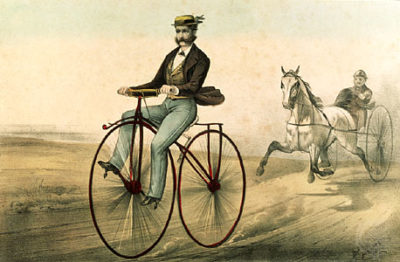
Margaret Guroff: I saw a brief mention in a history book about how cyclists were instrumental in getting U.S. roads paved in the 1890s. Until then, I hadn’t really been aware of bikes as existing before cars, and when I started to look into the role of the bicycle in American culture, I found its influence all over—not only in the Good Roads Movement, but in the auto industry, the invention of the airplane, the development of consumer culture. The bicycle also influenced the way women dressed and it empowered women during 1890s when they were getting together to advocate for the vote.
RW: The mode of transportation became a game changer?
MG: Exactly. On bicycles, young women could get around without chaperones — which had been frowned upon before — and they could get where they were going under their own steam. Bicycling also helped people understand that exercise was good for you — something many Americans didn’t believe before the bicycle. They thought that if you did something that made your heart rate rise, you would damage your heart. A lot of people really didn’t know that if you exercise, it makes you feel stronger. And many doctors thought that you were born with a certain amount of energy. When you spent it, that was it. Doctors were very likely — particularly as adults got older — to say, “You just have to sit down, just chill.”
RW: Was that true especially for women?
MG: Yes. Proper women wore corsets to help them carry all their clothing — which could add up to 25 pounds of skirts, dresses, and stuff. A corset helped distribute this weight up and down their torsos. But all that weight and the constriction of a corset made it likely that if they stood up or moved too fast, they would faint. This created an illusion that women were weak and shouldn’t exert themselves.
RW: How did the bicycle change women’s fashion, and how did the public react?
MG: Dress reforms were actually proposed in the middle of the 19th century. Women’s rights advocates Amelia Bloomer, Susan B. Anthony, and Elizabeth Cady Stanton all decided to wear Turkish-style flowing pants that were weren’t constraining or heavy but were still very modest. They thought it was a much healthier way for women to dress, and they were trying to set a trend. They eventually had to give it up, because they were being harassed. Critics called the outfit a “bloomer costume.” They’d yell at these women and even throw things at them. So, bloomers didn’t catch on in the 1850s. But when the bicycle became popular at the end of the 19th century, women realized they couldn’t ride in their long, flowing skirts, and some of them started wearing the bloomers that had been advocated 40 years earlier. These women also were mocked. It’s not like it was normal for women to wear pants in 1890. A story on the front page of a tabloid called the National Police Gazette in 1893 carried the headline “She Wore Trousers” as if it was shocking that a woman would do this in public. The difference was that even though women wearing bloomers in the 1890s were getting the same kind of harassment as Amelia Bloomer did in the 1850s, they had a new motivation. They were willing to put up with mockery to be able to ride bicycles. Within just a few years, there were so many women riding bicycles that it became much more acceptable to wear pants or shorter skirts to do so.
RW: Did bicycles offer women a new form of independence and sense of freedom?
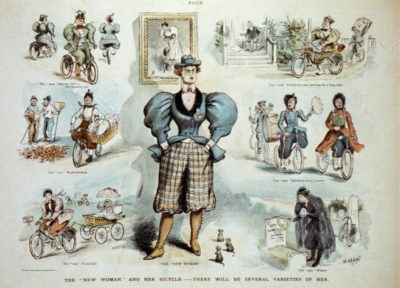 MG: Yes, it’s amazing. In 1896, Susan B. Anthony said, “Let me tell you what I think of bicycling. I think it has done more to emancipate women than anything else in the world. It gives women a feeling of freedom and self-reliance. I stand and rejoice every time I see a woman ride by on a wheel…the picture of free, untrammeled womanhood.” She saw clearly that the bicycle was motivating non-activists to take political action. They thought they were just having fun, but really were turning the culture upside down.
RW: What was one of the most surprising things you learned about the bicycle in your research?
MG: One of the coolest things I learned was about the Wright brothers. Everyone knows they were bicycle mechanics, but it always seemed to me a coincidence that bicycle mechanics invented the airplane. What I discovered by reading the work of historians like Tom Crouch, who wrote a great biography of the Wright brothers called The Bishop’s Boys, was that the bicycle gave the Wrights a crucial insight into how to keep an airplane aloft. Many inventors who were working on airplanes were trying to throw something in the air that would know how to go straight on its own. The Wright brothers went at it a different way. They realized that you don’t have to create a machine that knows on its own to go straight, because the pilots can be the brains of the machine. When you’re riding a bike, your body becomes one with the machine, and your sense of balance, and the unconscious corrections you make as you ride, are what balance the machine. The Wrights were able to take that same concept and put it in the air.
RW: Can you tell us more about the history of biking in America versus that of biking in Europe? Did bicycling affect other countries the same way it affected ours?
MG: Though a lot of developments were parallel, there were some interesting divergences. The main one came at the end of the 19th century. There had been a big 1890s bike boom in Europe as well as the U.S., but when that fad ended in the U.S., bike use really dropped off a cliff here. People without horses still rode them get to work or make deliveries, but they became absolutely unfashionable. Nobody rode them for fun. And this is years before the automobile became affordable for anyone other than the super rich. In order to keep the market for American bicycles going, bicycle manufacturers started targeting the youth market. They ended up making bicycles a childhood necessity, but they also made bikes seem like they were only for kids. As soon as you turned 16, you wouldn’t be caught dead on one, and no adult would ride one. That was very much an American phenomenon; it didn’t happen anywhere else as far as I’m aware, and it didn’t really start to turn around until the 1960s. There was a huge bike boom here in the 1970s, and by the 1980s, the United States started exporting styles, like the rugged mountain bike with straight handlebars that you could ride off-road. That was invented in the United States and caught on overseas.
RW: Would you say that biking in the U.S. today is as common as it is in Europe?
MG: It’s not, but in American cities, it can feel like it’s going in that direction. There are many more bike lanes than there were 10 years ago. There are many more people on bikes, including middle-aged people and young parents toting kids around. Where it’s safe to ride and people live near places they need to go, there is a mini-boom, though nationally, bike ridership is going down. Outside of the prosperous parts of cities, many people don’t live near their work, church, or shops, so bicycling is not practical for them. And in many parts of the country, roads are designed to allow cars to go as fast as possible, which makes them too dangerous for cyclists. And it’s no longer the case that every American kid has a bike, because a lot of kids don’t have a safe place to ride or don’t live close enough to the places they’d want to ride to.
RW: Are many people concerned about climate change biking to and from work?
MG: Riding your bike more is certainly one way you can reduce your carbon footprint. But it has to be practical for people. You have to get to work, you have to haul groceries, you have to get your kids to school. If you live in a place where it’s not possible to do those things on a bike or on foot or with public transit, you’re going to have to drive. Cities have a vested interest in making it easier for people to bicycle because bikes don’t pollute the air, they don’t cause wear and tear on the roads, they don’t create the same parking demands.
RW: Bikes are very popular on college campuses.
MG: Colleges are typically places where everything is closer together, so they’re easy to get around by bike. And most students who live on campus don’t have little kids that they need to provide transportation for, or jobs many miles away that they have to commute to. So bikes work well in that environment.
RW: If bicycles became a more popular form of transportation, where would they have the most impact? What would be the effect of more bicycles on the road?
 MG: That’s hard to say, because there are changes coming to traffic that could make the roads much safer for bikes and pedestrians, or much less safe. We know that we’re going to have autonomous cars soon. But how are they going to behave? Will they be well programmed and well-regulated to make traffic calmer and more logical, and make it safer for bikes? Or will they be out there like bumper cars, clipping anything that gets in their way? If the roads do become safer for bikes, you’ll see more of them — studies show that the safer it is to ride, the more people ride.
RW: What are the most bike-friendly cities in the U.S.?
MG: Brooklyn is one of the centers of biking in the country. Also Portland, Oregon, is huge for biking. Seattle is really good for biking. I work in D.C., which has one of the highest bike-commuting rates in the country. We have laws that are very helpful, such a leading pedestrian indicator law that gives pedestrians and bikes a few extra seconds to cross the street, so that they clear the intersection before traffic starts moving. It makes everybody safer and makes traffic move better. Chicago is supposed to be great and also Minneapolis, which is amazing to me because it’s so cold up there. But you can bike all winter long, you just have to have the right gear.
One really exciting thing that’s happening all over the country is the rise of bike-share systems. You use your credit card to check out a bike, go where you’re going, and check it back in. That’s an amenity that can make biking accessible to people who can’t necessarily use a bike as their main form of transportation. In New York, for example, if you live in one of the outer boroughs, you can take the subway into Manhattan for work, but then use a bikeshare bike to go across town for lunch or something. Bikeshares are turning American cities into places where you can bike on a whim, where you might not have wanted to or been able to before.
RW: Do you ride your bike to work, and what kind of bicycle do you own?
MG: Yes, I ride a green 1999 Jamis Aurora touring bike. I love it. I ride an hour to work — it’s about half an hour on a woodsy rails-to-trails path — and then across town through traffic. By the time I get to my desk, I feel like a hero.
Read Margaret Guroff’s essay, “How Bikes Built Our Highways,” which appears in the January/February 2016 issue of The Saturday Evening Post.
Meet the 2017 Great American Fiction Contest Prize Winners
Writers submitted more than 200 entries to the 2017 Great American Fiction Contest. Judging was tough — there were so many good stories! — but our panel of judges whittled the list down to the very best, and we are pleased to announce our winner: Myles McDonough! His short story, “Crack,” appears in the January/February 2017 issue of the Post, but you can read it online now.
Meet Myles and our five runner-up authors below. Their stories will be published weekly through the end of January.
Purchase the ebook collection to read all these and 10 more great stories not available online.
Are you a short story writer? The 2018 Great American Fiction Contest is now open for submissions. Enter by July 1, 2017.
Meet the Winner!
Myles McDonough
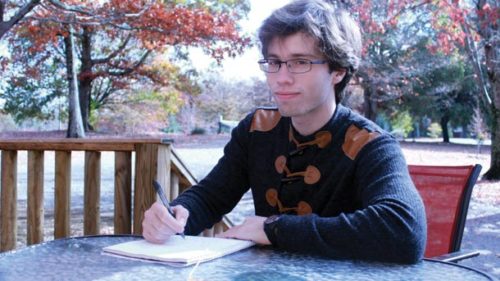
The email that arrived just as McDonough was exiting a fiction workshop caught him a bit off guard. His story “Crack” had taken first place in the Post’s 2017 Great American Fiction Contest, winning him a $500 prize and publication in the Post. “I’m thrilled and honored, and not entirely sure this is all real,” he says.
In “Crack,” McDonough captures the painful scars that two men — a chiropractor who has recently emigrated from Baghdad and a U.S. veteran who fought in the Iraq War — continue to endure. “It was important to convey the unique wants, needs, and beliefs of both men, wounded by the war in different ways,” says McDonough. “The conflicting nature of their individual traumas heightened the tension, and chiropractic treatment, which requires great trust between patient and practitioner, struck me as an ideal subject.”
Completing his B.A. in English from Harvard University in 2015, McDonough is currently a candidate for an M.F.A. in creative writing at the University of Tennessee, Knoxville. “Crack” is his first story published in any medium.
“In its detailing of a chance encounter between an Iraq-born chiropractor and an Iraq War veteran, ‘Crack’ makes it clear that you have to reopen some wounds so they can begin to heal,” noted guest judge and author Michael Knight. “Not only is this story luminously written, not only does it put the reader in a complicated emotional place, but a palpable tension bubbles seething up from within the story’s protagonist from the very first pages. The reader’s experience of living inside that tension as it mounts across the story feels at once dangerous and cathartic and deeply satisfying.”
Meet the Runners-Up
Joyce Barbagallo

TITLE: “The Awkwards”
STORY LINE: Hector had parlayed a gift for computing into a good yet unsatisfying gig at QVC. But just when he was ready to leave and start a new life, Elaine showed up.
BIO: First story published by a national magazine.
Christine Venzon

TITLE: “Artist in Residence”
STORY LINE: If Sean’s grades didn’t improve, his mother threatened to banish his fiddle to the closet. Claire came to help, but could a Northerner understand Creole traditions?
BIO: Published fiction in St. Anthony Messenger, Highlights for Children; 2014 Great American Fiction Contest runner-up.
James Reed

TITLE: “Long Past Time”
STORY LINE: With the news of his ex-mother-in-law’s death, a man faces disturbing questions about his failed marriage to a woman who had always seemed a stranger.
BIO: First short story published by a national consumer magazine; stories published in many literary magazines, including West Branch, The Gettysburg Review, Folio, and England’s Stand Magazine.
Mark Fabiano

TITLE: “Getting Home”
STORY LINE: How could Michael explain to his son that when you do nothing, bad things can happen, but also sometimes, even when you stand up and do all you can, things still can go bad?
BIO: Published short fiction in The Atlantic Monthly, Best New Writing, The Green Hills Literary Lantern, and The Long Story, among others. (For more, visit markfabiano.com.)
Steve Young

TITLE: “Sherry at the Knights of Columbus”
STORY LINE: Sherry’s musical talent had always been her calling card, but would her nerves betray her on the night of the parish’s annual talent contest?
BIO: First short story published by a national consumer magazine; stories published in literary magazines, including Falling Star Magazine, Carve, and Emrys.
This stories submitted to this year’s contest cover a wide range of topics, genres, and writing styles. You can read 16 of the best submissions — our winner, runners-up, and semifinalists — in an e-book, available on your favorite platforms for only $3.99. Order now at saturdayeveningpost.com/fiction-books.
WINNER
RUNNERS-UP
- “The Awkwards” by Joyce Barbagallo
- “Artist in Residence” by Christine Venzon
- “Long Past Time” by James Reed
- “Getting Home” by Mark Fabiano
- “Sherry at the Knights of Columbus” by Steve Young
Crack
“You can head out, Dolores,” said Doctor Omar Haddad. “I’ll lock up tonight.”
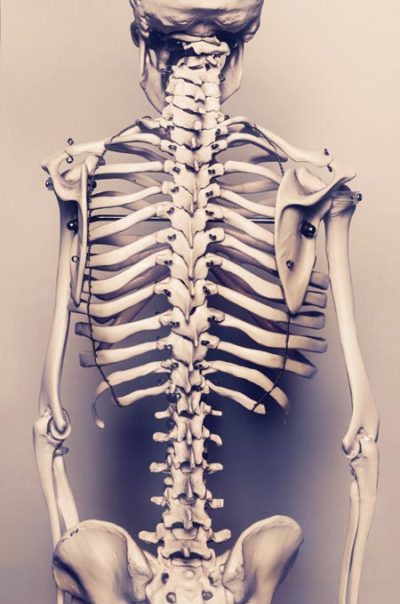
The little bell over the door jingled and the pneumatic hinge hissed as his secretary left the office for the strip mall parking lot. He straightened out the plastic model spine hanging from its thin silver stand. He covered the headrest on the adjusting table with a fresh stretch of white tissue paper. He flicked off the lights, first in the office, then in the waiting room; the fish tank in the corner glowed blue, humming in the coming dark. He passed the leaflet rack and the row of ergonomically sound chairs. Then, Omar pulled open the plate-glass front door and stepped outside.
Back in Baghdad, it would be 3:00 a.m. He would be sound asleep in bed, next to his wife, the window unit blowing cool air over their bodies if the power hadn’t been cut. Here, in Maryland, it was 7:00 p.m., and he was running late. All the other shops in the mini-mall were closed for the night, from the dry cleaner next door to the corner cafe on the other end of the strip. Only a few cars dotted the long, quiet parking lot. He fumbled the key ring from his pocket and held it up out of his shadow, into the fading light, looking for the squarish key that would lock the front door and let him go home. Mahreen was making the lemon chicken tonight; if he hurried, he could make it home just as she slid it out of the oven, steaming hot, the skin still crackling. He wiped his mouth on the back of his sleeve.
He caught a glimpse of himself in the glass door as he turned the key in the lock. He hadn’t eaten since breakfast, and his light face was even paler than usual. This country was taking his hair bit by bit, he was sure of it, exposing another few centimeters of wrinkled forehead every time he caught his reflection.
A car rolled up in front of the laundry. A heavy man in a brown suit levered himself with difficulty from the driver’s side door of a gray Ford Taurus. He struggled toward the office.
Omar groaned. He hated doing this to people. Still, his hours were posted on the website, weren’t they? And wasn’t he already quite generous, keeping the office open till seven? Omar put on his professional face and prepared to tell the man how to make an appointment.
“Thank God, I caught you,” said the big man, waving his hand in a wide arc over his head. He moved somewhere between a brisk walk and a jog.
“I’m sorry,” said Omar, “but the office closes at seven, and …” He noticed the angle of the man’s head. It was very much out of line, bent to the left and rotated just a bit off center. Omar took in the man’s rolled shoulders and remembered how he had struggled to get out of his car. His eyes were puffy, and the muscles on the sides of his head fluttered as he clenched his teeth. The man’s spine was a wreck. He would be in a lot of pain.
Omar’s stomach growled. He sighed and held open the door.
“Come on in,” he said.
The Americans had dropped leaflets first. They fluttered out of the air over Baghdad, tumbling and dipping on the hot currents. Omar drove the distance from the apartment to Lila’s school in three minutes — not the usual 15 — leaning on the horn the entire way. He scooped his daughter out of her desk and ran back toward the car.
“My crayons!” she cried. “I left my crayons!”
He passed a few of the other parents, each carrying or dragging a confused but happy child out of the building. Teachers leaned out of doors and windows, yelling at them to come back. Children still occupied most of the small desks at this point. The first bombs fell that night; the next morning, the schools were empty.
The patient’s name was Frank Harrison. He worked in insurance. Like the vast majority of Omar’s clients, Frank spent eight or more hours a day wedged behind a desk, hunched over a keyboard, wreaking havoc on his torso.
“And I’ll ask you to take a deep breath in,” said Omar. “And out.”
He moved his fingertips up and down Frank’s back, pressing in gently on vertebrae and ribs. Omar’s eyebrows shot upward as he surveyed the extent of the damage. Frank’s spine was riddled with subluxations, every other vertebra twisted out of line with its neighbor, clamping down on the delicate nerves leading out of the spinal column. The twisted bones were cutting off communication between his brain and his body. The office drone lifestyle could explain some of the misalignment, but not all of it — certainly not the degree of it. Omar would need to make a full adjustment.
“Listen,” said Frank, “I really appreciate you doing this, after hours and all.”
“Not at all,” said Omar. He thought of warm, liquid chicken fat, gold and glistening as it dripped from the brown tip of a wing. He saw it congealing in the bottom of the pan as precious seconds and heat ticked away. “Tell me about your back.”
“It’s an old injury,” said Frank. “The physical therapist down at the VA clinic can’t do a damn thing for me.”
“Ah, you’re a soldier, then?” said Omar. He pulled up a chart for Frank on the computer.
“First Marine,” said Frank, the pride in his voice barely muffled by the headrest. “I was in Baghdad. Saw them pull the statue down.”
Omar paused.
“Are you on leave?” he said.
“I wish,” said Frank. “Honorable discharge. IED threw me into a brick wall.” He chuckled. “Kicked my ass with a bomb made out of a flip phone and an old plastic juice bottle.”
Omar bit the inside of his cheek. Americans were often surprised, and occasionally alarmed, to learn that people from his country could, in fact, be white. And knew how to shave. Omar fell into this category. Frank was not the first American, or even the first patient, to mistake Omar for one of his own, and to offer unsolicited confidences about “those people” and what they did “over there.” These days, Omar no longer bothered to correct them; he certainly wasn’t going to waste more time on Frank than he’d already lost.
Lila had no fear of the bombs. She did not cover her ears and whimper at loud noises. She waited for Omar and Mahreen to get groggy in the early hours of the morning, when they loosened the tight grip which kept her pinned on the couch between their quivering bodies. Omar woke from a half-sleep to find her escaped from the protective circle of her parents’ arms, standing by the window, watching the red glow of a city in flames. She did not flinch at the chatter of gunfire. She did not duck at the rumble of the bombs, the growl from deep in a dragon’s throat. She put her tiny hand up to the windowpane. She felt the glass shake.
An explosion near the apartment startled Mahreen awake. She grabbed Lila’s wrist and yanked her back to the relative safety of the couch, yelling about flying shards of glass. The following morning, Lila lay on her stomach and drew big blooming rows of round orange flowers, bright against the background she shaded in black.
Frank was not the first American, or even the first patient, to mistake Omar for one of his own, and to offer unsolicited confidences about “those people” and what they did “over there.”
After a couple of weeks, the children in the apartment complex had managed to negotiate a half-hour of outdoor playtime in the afternoons, strictly in front of the building, under the eye of at least two parents. Omar shared his shift with Ali from the apartment upstairs.
“‘Committing suicide against the gates of Baghdad,’” said Ali, leaning over in his folding chair. “You heard the man. Sure, they can fly overhead, but they aren’t getting into the city anytime soon.”
Omar didn’t have the heart to tell Ali that the Information Minister’s most poetic announcements were often his least informative. He watched Lila sitting on the curb, apart from the other kids.
They played a tight game of tag in the hand-swept portion of street in front of their building. Lila sat cross-legged, crayons lined up neatly by her side, a piece of scrap wood from the burnt-out shop across the street serving as an easel. She bent over her work, biting her lip with baby teeth just beginning to come loose. Her orange crayon was a nub.
Omar heard the Republican Guard troops before he saw them. They were around the corner of the intersection to his left. Broken fragments of window glass popped beneath their tires and their boots. Men were yelling.
Ali heard them. He whistled through his teeth — Omar had never learned how — and the children in the street ran toward the front door. Lila remained on the curb. She was frantically scribbling the final details on her rendition of the blasted sedan lying on its side across the street.
“It’s time to go inside, Lila,” said Omar.
“But Daddy,” she said, still drawing, “I’m not d—”
She was drowned out by the belch of an engine to Omar’s right. He turned in time to see the long barrel of a tank poke its way out into the intersection. The treads kicked up the white dust of pulverized building material as the rest followed. Several men, guns in hand, kept pace on foot. The one closest to Omar bore a tattoo of an eagle on the side of his neck, in black ink. On his arm was an American flag.
Omar grabbed Lila by the arm and pulled. She cried out, grabbing at her box of crayons. He dragged her to the building as Ali waved them on, holding the front door open and staring at the
Americans in disbelief. In the street, the Republican Guard yelled at the Americans. The Americans yelled back. Lila twisted in his hand.
“Daddy!” she said. “My orange!” She held up the open box of crayons for him to see; they rattled around in the cardboard, one stick missing out of the 12.
“Later,” he said, yanking his daughter another step. “We need to get inside. Now.”
“Daddy!” she said, squirming even more. Of course she would choose to make a scene now. The shouting grew louder, more demanding. Omar saw raised guns, reflected in the pointed fragments of the broken shop windows. He heard the grinding of gears as the tank swiveled its turret.
Lila slipped her sweaty hand from his grip just as they lurched over the threshold into the lobby.
“Lila!” yelled Omar — for a moment, above all else, angry at his little girl for disobeying him. She ran out into the street, long hair flying back from her face. The nearest American dropped to one knee, raised his weapon, and took aim down the street.
Omar saw him pull the trigger.
One evening, years before Lila was born, Mahreen and Omar had taken a walk in Zawra Park. They sat on the grass together, and watched the clouds turn to pink, and talked about the future. They visited the big cats in the zoo. They were walking home when a man ripped Mahreen’s purse from her hands.
Omar chased the man, tackled him onto the sidewalk. He grabbed two of his fingers and yanked backward till they snapped in his fist. He would have done more had Mahreen not grabbed the back of his jacket and pulled him off. The thief ran away, clutching his hand to his chest.
Whenever Omar was having a bad day, he liked to remember the sound those fingers made. It always made him feel better.
He had Frank lie on his stomach. The man’s back was tangled in unyielding knots, like a pile of old, rotting fishnet. Omar turned on the Activator and applied its buzzing tip to the worst spots, grinding in with the massager when they refused to give. Frank groaned into the headrest as Omar worked the more difficult knots. When he’d pulverized the muscles into a workable slackness, he had Frank sit up.
“Okay, Mr. Harrison, I’m just going to put this here,” he said, crossing Frank’s left arm across the man’s chest. “And we’re going to lean back, breathing out …”
Omar wrapped his arms around Frank and guided him down onto the table. When Frank was lying flat, Omar shifted his body weight, squashing Frank’s torso beneath his own: a loud crack, and a sigh from Frank, and the first part of the adjustment was done.
“Pretty bad?” asked Frank, as Omar arranged his arms to repeat the process.
“Nothing that can’t be fixed, Mr. Harrison. And breathe out …”
Crack.
“That’s good,” said Frank. “Guess I got lucky. I’ve still got my legs, you know?”
“Breathe out,” said Omar.
Crack.
“Sounds rough.”
“No kidding,” said Frank. “Those first days, fighting the army, that wasn’t so bad. I mean, you expect to get shot at. You get trained for that.”
Crack.
“Later, though, after we took the city, when it all started going to hell …” He looked at Omar, who pretended to busy himself with a vertebra. “It was the people, Doc. Out in the streets. All those baggy clothes — they’d hide a bomb anywhere, put it on anybody.” He paused. “Saw some shit you wouldn’t believe.”
“Try me,” said Omar.
Frank started, his monologue interrupted.
“Aw, come on, Doc, you wouldn’t want to hear about any of that.”
“Whatever makes you comfortable, Mr. Harrison. Breathe out.”
Omar checked the clock on the wall. The hands, made to look like the arms of a well-aligned skeleton, indicated 7:40. He could still get home before Mahreen sealed the chicken in Tupperware for the night.
“All right, Mr. Harrison,” said Omar. “Go ahead and loosen your tie for me.” He’d be done once he adjusted Frank’s neck. Omar stood in his place behind Frank’s head, watching him bite his lip.
The man squirmed a bit on the adjusting table. Omar picked up his head in both hands as Frank opened his mouth.
“Okay. What you’ve got to understand …” said Frank.
“Try to relax, Mr. Harrison,” said Omar, gently rolling Frank’s head in his palms.
“Oh, right. Sorry,” he said. He took a deep breath in and let it out. Omar felt the neck tense as Frank set his jaw.
“You couldn’t trust any of them,” he said. “And I stand by that. I mean, how could you? They’d send out a woman with a basket over her arm, some vegetables on top to make it look like she’d just been to the market. Or God forbid, some kid is standing on the sidewalk, and her backpack looks a little heavy, and she runs out into the street and you’ve got maybe three seconds to make a call and — ACK! Damn, Doc!” Omar’s thumb was digging hard into Frank’s dokko, the acupressure point just behind his earlobe.
“Sorry, Mr. Harrison,” said Omar. “My finger slipped.” As Frank settled back down onto the table, Omar casually lifted aside his loosened collar with the backs of his fingers.
There was no eagle tattoo on the side of his neck.
“Anyway,” said Frank, “what I mean is, some days, it was them or us. And you do what you gotta do.”
No tattoo. Frank was not his man.
But really, Omar thought, feeling Frank’s pulse beneath his thumbs, he might as well be.
Four years after they left Baghdad and crossed an ocean, Mahreen came downstairs one night to find Omar staring at the picture of Lila hanging in the front hall. She sat in a swing at the very top of its long arc. She smiled up at the sky. A much younger Omar stood behind her, ready to push again. He smiled up at his daughter.
“She would have been 10 today,” said Omar. He didn’t turn from the picture. Mahreen stood with him until his fists relaxed back into hands.
Somewhere on the shelf behind the desk was a book detailing the history of hanging as a form of capital punishment. The book was a gift from Ali, who thought himself rather funny for giving such a thing to a chiropractor. Omar remembered reading one particular chapter devoted to the practice of hanging in England. Following an embarrassing series of failed hangings — including no less than three attempts to execute one John “Babbacombe” Lee — the British Home Office had actually published an instructive manual on the hanging process in 1888. The Official Table of Drops, as it was known, called for varying lengths of rope for each execution, dependent on the weight of the convict to be hanged. These lengths were calculated to ensure that the drop would be sufficient to fracture one or more of the vertebrae near the base of the skull, driving fragments of shattered bone into the spinal cord and killing the condemned man “instantly.” This prevented the unpleasant kicking and sputtering characteristic of death by suffocation, which would occur if the drop wasn’t long enough. Appropriately, a fracture to the second cervical vertebra, better known as the C2, is commonly referred to as a “hangman’s fracture.”
Such a fracture, or indeed any significant injury to the neck, required a great deal of force. Most often, Omar knew, such injuries were the result of car crashes or accidental falls. The Hollywood portrayal of beefy, gun-toting men sneaking up behind enemy henchmen and snapping their necks like celery sticks was just plain silly. Against a resisting, standing opponent, it would be effectively impossible to generate the force necessary to both snap the neck and drive a broken vertebra through the spinal cord. In such an arrangement, the body would follow the twist, protecting the neck from irreversible damage; meanwhile, the traumatized henchman would scream, drawing out swarms of his heavily armed friends. To get the proper leverage for such a technique, to keep the body still while twisting the neck beyond its normal range of motion, the opponent would have to be lying flat.
He would have to be very relaxed.
What if he screamed?
Well, what of it? Who was around to hear? The little mall was deserted.
They’d find the car. But then, it was parked in front of the laundry, wasn’t it? No reason to suspect him over anyone else in the mall. Nothing tying him to Frank.
The patient record — but he could delete it from the computer. He’d wipe the hard drive clean. Hell, he’d buy a brand-new hard drive. A new computer. He would refurbish the whole damn office, “lose” a few months’ worth of records in the process. They’d never know.
Lila’s class once hosted a career day, where all the parents came by and talked about their jobs. Lila led Omar around by the hand, showing him off to the other students.
“My daddy’s a chiropractor,” she said. “People’s bones get all mixed up, and they hurt. My daddy puts them back.”
Omar rolled Frank’s head in his hands, loosening up the tendons and ligaments in his neck. Frank exhaled, relaxing into the motion. His eyes lingered on a framed photograph on the far wall; it was the picture of Lila on the swing, brought over from the house years ago.
“That your little girl?” he said, pointing with a lazy finger.
“It’s an old photograph,” said Omar. He pressed his fingertips into the muscles, kneading out any lingering tension. He felt the meaty weight of Frank’s brain between his hands.
“She looks about my daughter’s age,” said Frank.
“Tell me about her,” said Omar. He placed his palms on either side of Frank’s skull. He took a deep, slow breath.
“She’s a little ball of crazy,” he said. “Runs everywhere, jumps on top of everything. And she sings. Kristi loves to sing.”
“Kristi,” said Omar.
“Some kid pushed her down on the playground the other day,” said Frank. “I wanted to give the little shit a taste of his own medicine. But I helped Kristi up instead.” He laughed, loud in the empty office. “She saw the same kid again the next day, and I had to hold her back.”
Omar stood behind Frank. He glanced at the smile on Frank’s lips. He looked at Lila in her swing. He heard her laugh, then remembered the way she shrieked and kicked her legs as she swung high above the playground. Always, she wanted to go higher. Never afraid. He remembered the feeling of her back beneath his hands as he pushed her again and again, harder and harder, up and up and up …
He held Frank’s head in his hands.
“And just breathe out for me, Mr. Harrison,” he said. Frank did. Omar twisted his hands. There was a loud crack.
Frank sighed.
“Thanks, Doc,” he said.
Omar unlocked the front door and found a Post-it from Mahreen hanging on the fridge; she’d gone over to the neighbors’ for her book club. He grabbed a fork from the drawer and took the chicken out of the fridge.
As he chewed, he thought back to that walk in Zawra Park, to the sound of the robber’s fingers as they snapped in his hand. He picked the chicken apart with his fork, breaking it into smaller and smaller pieces as he searched his brain for the details. He was surprised to find out that, after all these years, he could barely remember that sound at all.
He ate the chicken straight out of the Tupperware. It was cold, but it was still good.
The Post would like to extend special thanks to its staffers who helped with the selection of finalists, as well as to its distinguished panel of guest judges who shared their time and talents this year, including Ed Dwyer, Peter Bloch, Estelle Slon, Holly Miller, Michael Knight, and previous Great American Fiction Contest winners Lucy Bledsoe, Linda Davis, M. West Moss, and Celeste McMaster.
Meet Winning Author Myles McDonough as well as this year’s runners-up.
To enter our 2018 contest, visit saturdayeveningpost.com/fiction-contest.
Cover Gallery: Let It Snow!
The Saturday Evening Post loves a beautiful snowy day! (As long as we don’t have to drive anywhere. And it doesn’t turn to ice. And it’s not too cold. And it won’t last three more months. You get the idea.) Depending on your attitude toward frozen water, you’ll either love or loathe our cover gallery of winter fun, all from Post issues published before 1920.
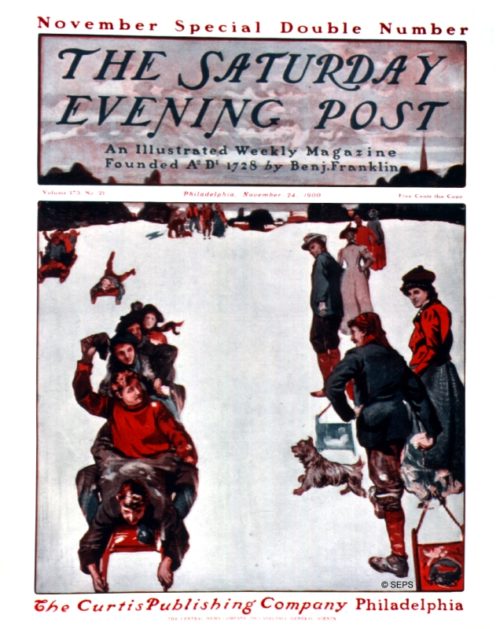
George Gibbs
November 24, 1900
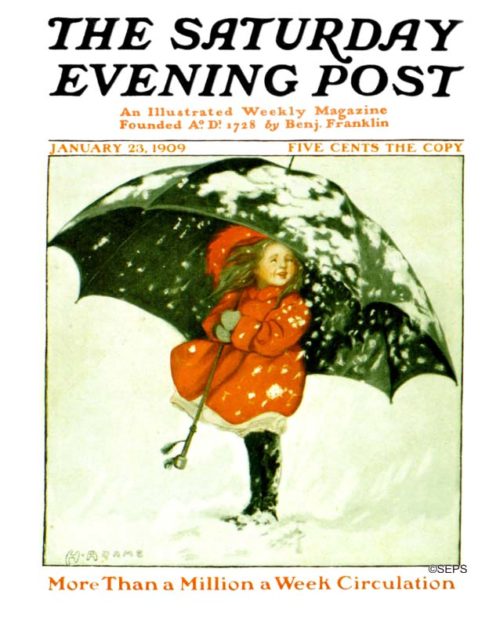
Henrietta Adams
January 23, 1909
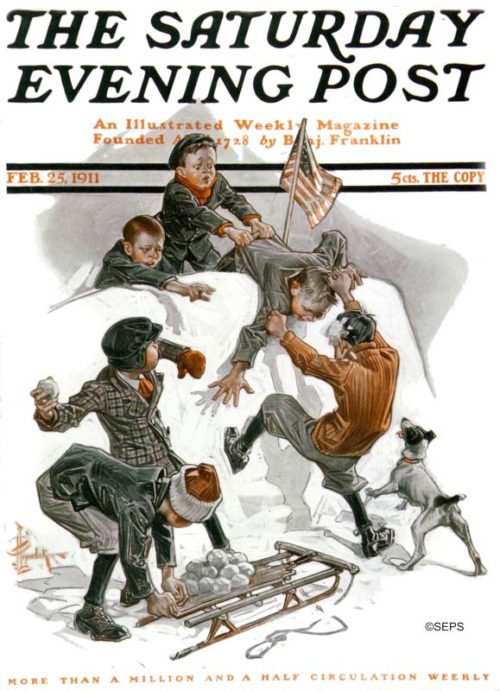
J. C. Leyendecker
February 25, 1911
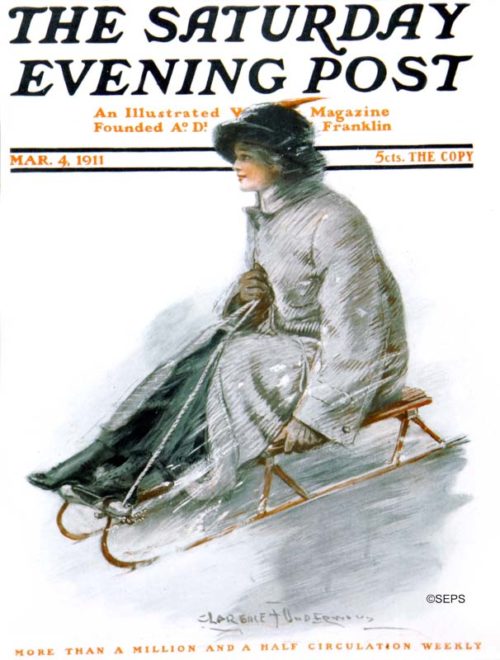
Clarence F. Underwood
March 4, 1911
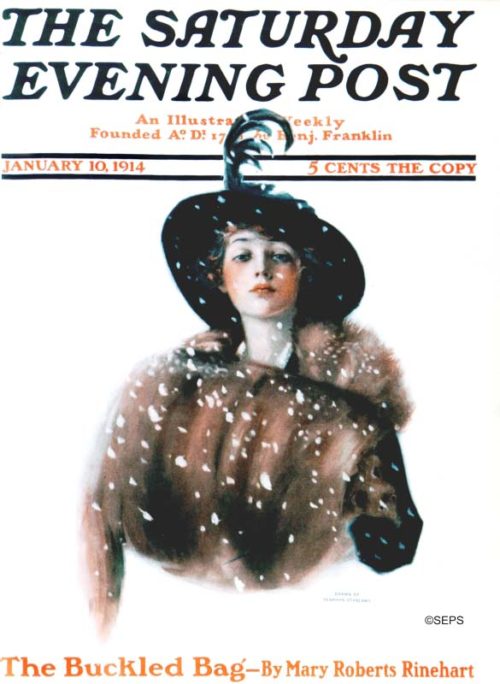
Penrhyn Stanlaws
January 10, 1914
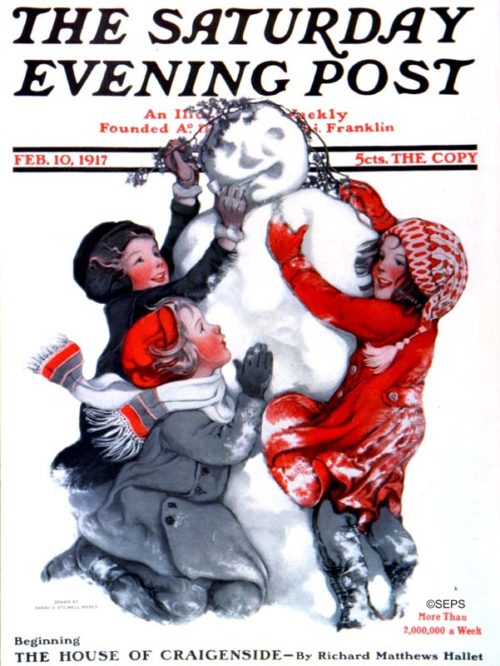
Sarah Stilwell-Weber
February 10, 1917
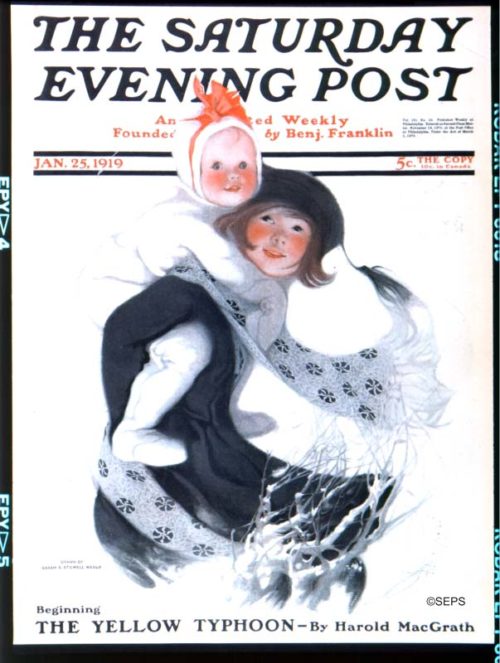
Sarah Stilwell-Weber
January 25, 1919
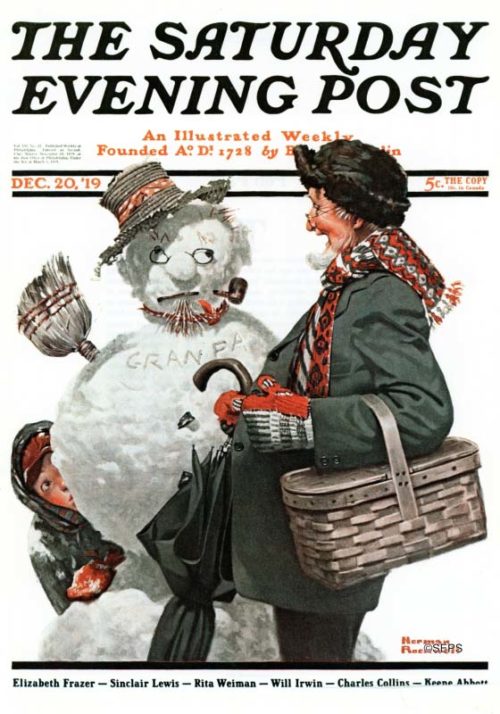
Norman Rockwell
December 20, 1919
75 Years Ago This Week: Defending The Right to Criticize in Times of Crisis
While the Post fully supported America’s war efforts after Pearl Harbor, it reserved the right to be critical of the administration.
Popular support for the war was very strong in December of 1941, and few Americans were publicly opposing it. But the Post had published several editorials that attacked how the Roosevelt administration was managing war finances and information about the conflict.
Because of this criticism, several readers were asking what gave the Post any right “to criticize the Administration, after having said it was the duty of all Americans to support their Government in war, whether they had been for it or against it before the fact.” The Post responded:
“To these we say, in the first place, that the Administration is not the Government—not yet. For all we know, the American Government may still be at war when this Administration is gone. We say to them, secondly, that loyalty to one’s Government in war is an American duty, and freedom to criticize one’s Government, even in war, is an American right.
“We have not surrendered that right—the right to criticize the Administration’s conduct of the war, the right to tell the truth as we believe it about the war, which is, after all, the people’s war because they will have to fight and pay for it; nor the right to say what we think about what is happening at the same time to the principles of free, representative, constitutional government, not necessarily on account of the war.
“If we have not that right, if every American citizen has not that right, what are we fighting for?”
The editorial ends with an admonishment that if we planned to confer FDR’s four freedoms upon other nations, we shouldn’t forget that they first belonged to us.
Curtis Stone’s Homemade-Chicken-Soup-Makes-Me-Feel-Better Soup
Homemade Chicken Soup Makes Me Feel Better

(Makes 8 servings)
- 1 4-pound whole chicken, rinsed and excess fat trimmed
- 8 cups water
- 1 bay leaf
- 1 fresh thyme sprig
- Zest (removed with a vegetable peeler) and juice of 1 lemon
- 1 medium onion, cut into large dice (about 1 ½ cups)
- 2 carrots, cut into large dice (about 1 ½ cups)
- 1 small kohlrabi, peeled and cut into large dice (about 1 cup)
- 1 small celery root, peeled and cut into large dice (about 2 cups)
- 1 white turnip, peeled and cut into large dice (about 2 cups)
- ¾ cup uncooked long-grain brown rice
- Kosher salt and freshly ground black pepper
- 2 tablespoons chopped fresh flat-leaf parsley
- Using a large sharp knife, cut the chicken into 8 pieces (2 drumsticks, 2 thighs, 2 wings, and 2 breasts). Reserve the carcass.
- Place chicken and carcass in heavy 8-quart pot. Add water, bay leaf, thyme, and lemon zest and bring water to simmer over medium-high heat, skimming off foam that rises to surface. Lower heat to medium-low and simmer gently for about 45 minutes, or until chicken is just cooked through.
- Using tongs, transfer chicken pieces to large bowl and set aside until cool enough to handle. Set broth aside.
- Remove chicken meat from bones and discard skin, bones, and cartilage. Coarsely shred meat into bite-sized pieces.
- Remove herbs, lemon zest, and chicken carcass from broth and discard. Add onion, carrots, kohlrabi, celery root, turnip, and rice to broth and simmer for about 22 minutes, or until vegetables are cooked through and rice is tender.
- Add cooked chicken and simmer for 5 minutes. Season to taste with salt and pepper.
- Stir in lemon juice and parsley. Ladle into bowls and serve.
Make-Ahead: The soup can be made up to three days ahead, cooled, covered, and refrigerated. Rewarm, covered, over medium heat, adding more broth if necessary.
Nutrition facts
Per serving
Calories: 241
Total Fat: 5 g
Saturated Fat: 1 g
Sodium: 428 mg
Carbohydrate: 22 g
Fiber: 3 g
Protein: 26 g
Diabetic Exchanges: ⅓ Starch, ½ Vegetable, 3 Lean meat
If you’re looking for more savory soup recipes for a cold day, Curtis Stone’s Creamy Celery Root Soup and Weeknight Navy Bean and Ham Soup, from our January/February 2017 issue, are sure to warm you up.
Let’s Have a Post-Christmas Vent Day
Last Christmas Eve, my wife sent me to the local supermarket to pick up something she’d forgotten to buy. The parking lot had one empty space, but I was in the holiday spirit, so signaled a woman to take it. She saw me in the dairy aisle and stopped to thank me for being so kind. I told her it was nothing. We chatted for a moment, wished one another a merry Christmas, and then I went on my way, feeling good about myself, basking in my altruism. Until it occurred to me later that if it had been December 26, I probably would have acted like I hadn’t seen her and taken the spot myself.
Several years ago, in preparation for a sermon I was giving at our church, I asked a number of people their favorite day of the year. Most everyone said Christmas. At one time, I would have said the same thing, but now December 25 has worn a bit thin for me — the crush of relatives, the pronounced jollity, the tension of gift-giving equity. Now my favorite day is December 26, when the next Christmas and its attendant pressures are beyond the horizon, hidden by the curve of Earth, out of sight. I can be nice only for so long, and by the 26th, I’m exhausted by benevolence and eager to be done with it.
“I wish it were Christmas all year long,” the woman in the dairy aisle told me. “Everyone’s so nice.”
I’m all for nice, but nice is a lot of work, and I’m not sure we can sustain it the whole year round without dire consequences. I have a theory about nice. Those people who go berserk and start shooting up places, when we talk with their neighbors to find out what they were like, always turn out to be nice people. “He was a nice guy. He always said hi to me, and once he even changed my flat tire.” I think the pressure of niceness got to them until they finally exploded. If they had released the steam gradually — an insult here, a snort of derision there — they would have maintained emotional equilibrium and been just fine. It was niceness that set them off.
My mother is the sweetest woman God ever made. But once a year or so, when I was growing up, she’d blast off from the launch pad and hit the moon. I could see it coming days away — the twitches, the tics — and always made sure to be far away when she finally blew. My father, on the other hand, let the pressure off each day, stomping around the house for 5 or 10 minutes, railing and ranting, releasing his bile, then afterward was sweetness and light.
None of us are so good that we can sustain a high level of decency all day every day. Not even the pope, who probably cusses under his breath now and then.
Indeed, the venting of ire might be so important, we should set aside one day a year, preferably December 26, when we are perfectly free, nay encouraged, to tell people how they’ve annoyed us during the past year. Since everyone has the day off after Christmas, those who don’t wish to vent or be vented upon can spend the day in bed. At the end of the day, we’ll either be well rested or unperturbed, ready to enter the new year with a fitting frame of mind.
I’m typically modest, but I know a good idea when I have one, and this one’s a doozy. Yes, holidays should be evenly distributed throughout the year, but Vent Day (that’s what I’m naming our new holiday, it being my invention) should follow Christmas Day as naturally and obviously as night follows day. We can take down the tree and put away the ornaments on the 27th. First, let’s air our grievances, vent our spleens, and clear the air.
And I’ll start by asking my wife why she sends me to the grocery store on the busiest day of the year to buy eggnog when no one in our family even likes it.
The Art of Mort Künstler
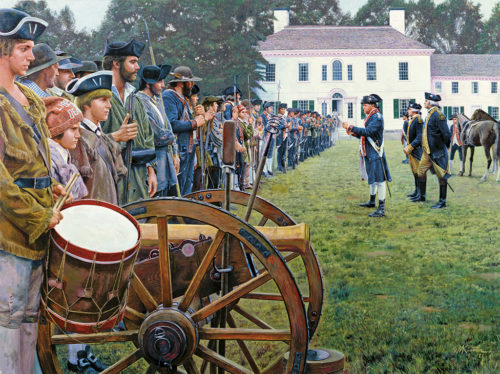
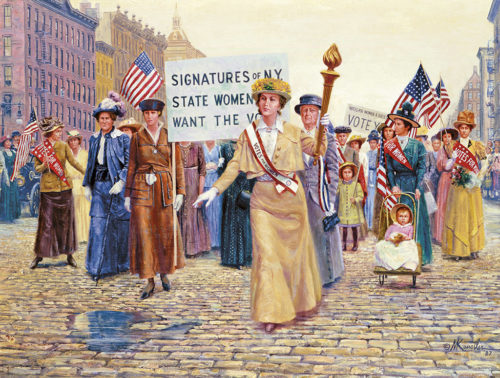
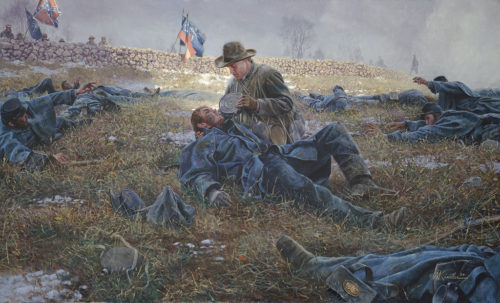
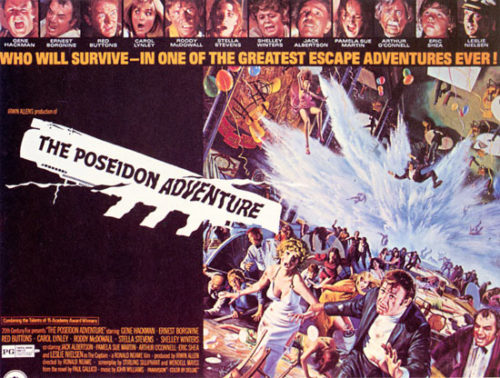
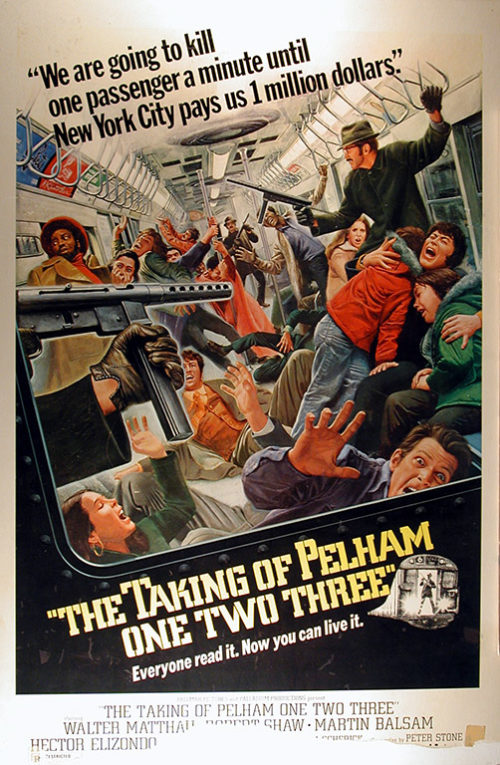
Born in Brooklyn in 1927, Mort Künstler’s artistic talent was recognized at an early age. After graduating from the Pratt Institute in 1950, he got his start professionally by illustrating men’s adventure magazines and pulp fiction covers. Those paintings — sometimes lurid, sometimes exciting, sometimes shocking — showed a knack for engaging the viewer with a visual story. That storytelling ability and his skill with a brush soon landed him more ambitious projects.
Today, Künstler is recognized as one of America’s greatest historical artists. His devotion to research and historical accuracy, especially in his well-known Civil War paintings, has set his work apart. Many of Künstler’s paintings that were, like Norman Rockwell’s, once considered “just illustrations” are now finding homes in fine art museums around the country.
The images below show just some of the genres of illustration in which Mort Künstler has left his mark. You can find out more about Künstler—and see more of his work—in the January/February 2017 issue of The Saturday Evening Post.
American History
Lafayette with Washington at Morristown
Suffragettes
The Civil War
The Bloody Angle
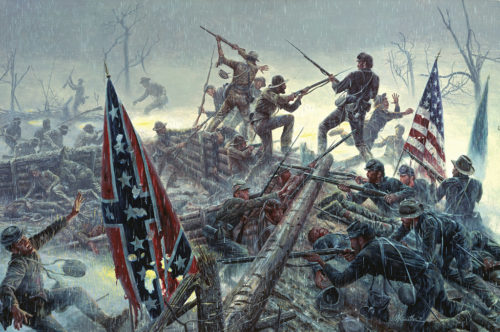
“Angel of Marye’s Heights”
Movie Posters
The Poseidon Adventure
The Taking of Pelham One Two Three
Advertisements
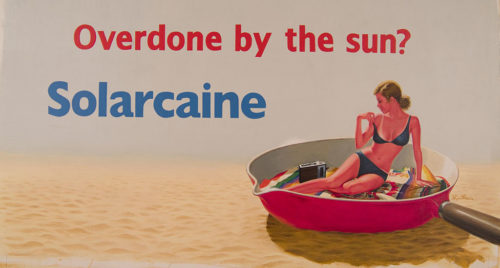
Solarcaine
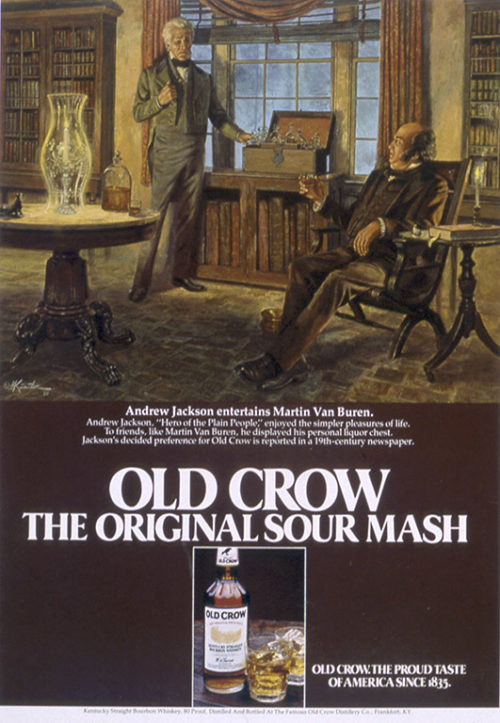
Old Crow
Men’s Adventure Stories
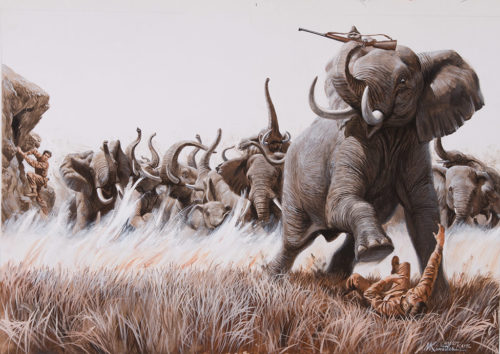
“Kill 3, on Elephants”
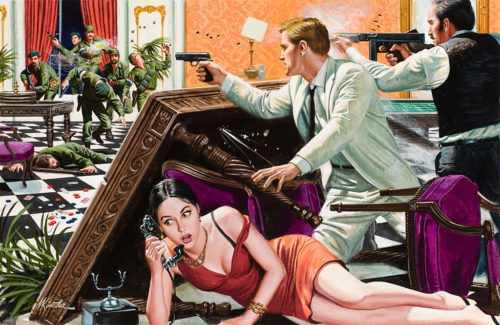
Trapped by Santo Domingo’s Kill-and-Loot Rebels
Political Figures
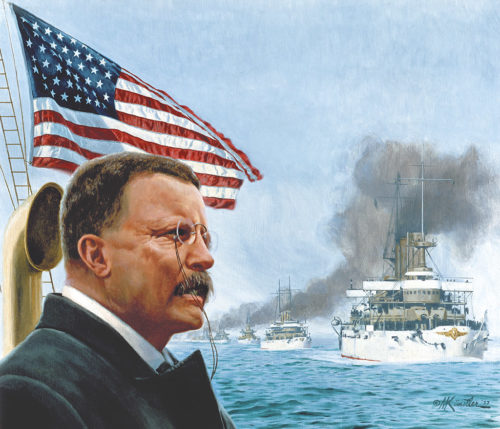
The Great White Fleet Sails
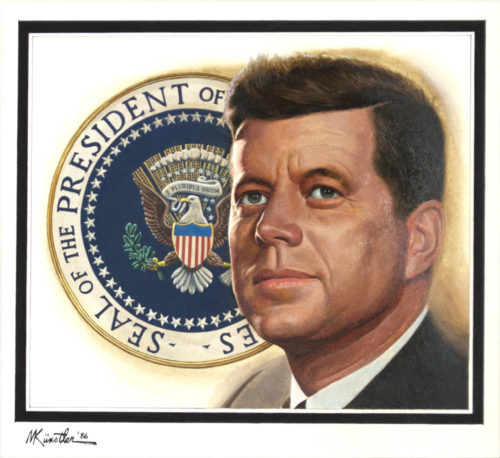
President John F. Kennedy
Crowd-sourced: Norman Rockwell’s Christmas at Chicago Union Station
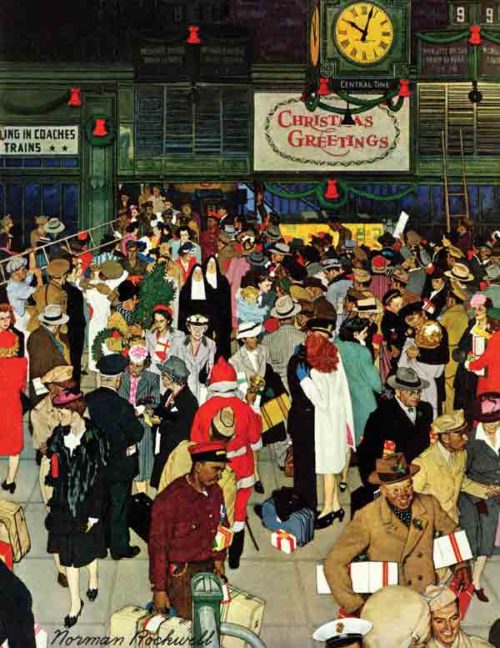
Union Train Station, Chicago, Christmas contains many of Norman Rockwell’s favorite themes — homecoming, reunions, sweethearts, and Christmas — and he wanted to get it just right.
In the planning phase, Rockwell scouted several train locales before choosing the Chicago and Northwestern railroad station. Always concerned with accuracy, the artist asked railroad officials how they planned to decorate for the holidays. They hadn’t decided yet, as Christmas was months away, so they told Rockwell to paint it as he wished and they’d decorate the station to match.
Among the shoppers, you’ll notice some servicemen in the crowd waiting to be reunited with their families. After photographing real servicemen for these scenes, Rockwell recruited women to pose kissing some of the soldiers. The red-haired woman in the foreground kissing an officer was discovered as she hurried through the station. Afterward, when Rockwell thanked her for posing for the kiss, she replied, “Not at all; sorry it wasn’t a time exposure.” Look closely and you’ll see Rockwell himself in the picture; he’s the man waving a folded paper in the upper right.
News of the Week: Best Books of the Year, the Whipped Cream Shortage, and the Search for a Good Fruit Cake
Great Reads
Every December, when the “best books” lists come out, I discover that I haven’t read any of the books that are picked. I’m always a year or two (or ten) behind when it comes to the big, hot books, if I read them at all. One of these days I’m going to read Jonathan Franzen’s 2001 novel The Corrections, I swear!
This year you’ll see a lot of books repeated on many of the lists, like the Saturday Evening Post list from the editors at Amazon, which includes Zadie Smith’s Swing Time, Michael Chabon’s Moonglow, and T.C. Boyle’s The Terranauts.
The New York Times’ top 10 list includes Colson Whitehead’s The Underground Railroad, Stefan Hertman’s War and Turpentine, and Ian McGuire’s The North Water. Bloomberg’s picks include The Course of Love by Alain de Botton, Chuck Klosterman’s But What If We’re Wrong? (hey, I read that one!), and Robert Gottlieb’s Avid Reader. NPR has an interesting list, with such books as Everybody’s Fool by Richard Russo, Commonweath by Ann Patchett, Where Am I Now? by Mara Wilson, and Ruth Franklin’s Shirley Jackson: A Rather Haunted Life. Over at USA Today they have a list of the best food and beverage books of the year, while The Washington Post picked the best mysteries and thrillers.
The one book I keep seeing mentioned as one of the best of the year is Hillbilly Elegy: A Memoir of a Family and Culture in Crisis by J.D. Vance. I’m going to pick that one up. And in addition to picking it up, I’ll even buy it.
There’s a Whipped Cream Shortage
In the grand scheme of things, a canned whipped cream shortage might not seem like the most important of scarcities, but the reason behind it is rather interesting.
There’s actually a shortage of nitrous oxide, used to make products such as Reddi-Wip, because of an explosion at Airgas’ Nitrous Oxide Corporation plant in Florida back in August. Whatever nitrous oxide remains has to be reserved for use at hospitals and other medical facilities. Some supermarket chains, such as Market Basket in New England, are telling customers that there may be a shortage of canned whipped cream for your pumpkin pie and other desserts this holiday season.
Maybe this is a good time for everyone to remember that before whipped topping shot out of a can, everyone bought Dream Whip. Yup, they still make it.
RIP Alan Thicke, Bernard Fox, Joseph Mascolo, Joan Carroll, and Cindy Stowell
Alan Thicke will be remembered for his role as the dad in the ’80s sitcom Growing Pains, of course, but he had an interesting career before and after that. He hosted his own talk show in his native Canada and tried to repeat that success in late night in 1983 with ABC’s Thicke of the Night, but with Johnny Carson as the competition, it didn’t last. He also co-wrote several songs, including the themes to Diff’rent Strokes, The Facts of Life, and other shows. In the ’60s and ’70s, he wrote for such series as The Paul Lynde Show, The Bobby Darin Show, The Richard Pryor Show, and Fernwood 2 Night. He recently made appearances on This Is Us and Fuller House.
Thicke passed away of a heart attack while playing hockey with his son Carter, who costarred with his dad on the E! reality series Unusually Thicke. He was 69.
Bernard Fox played Doctor Bombay on Bewitched and was in movies like Titanic, The Rescuers, and The Mummy, along with TV shows like Columbo, Murder, She Wrote, The Dick Van Dyke Show, The Andy Griffith Show, and … well, a gazillion others. He passed away Wednesday at the age of 89.
Joseph Mascolo played one of the great villains in soap opera history, Days of Our Lives’ Stefano DiMera, a role he played off and on for more than 30 years. He also made appearances on The Rockford Files, Lou Grant, Hill Street Blues, The Equalizer, It’s Garry Shandling’s Show, and movies like Jaws 2 and Sharky’s Machine. Mascolo was 87.
Joan Carroll was a child actress you might see on television this holiday season because Meet Me in St. Louis, the 1944 film she costarred in with Judy Garland, introduced the song “Have Yourself a Merry Little Christmas.” She was also in The Bells of St. Mary’s with Bing Crosby (she retired from the movies after that), Primrose Path, and several other films.
Carroll died on November 16 at the age of 85, but news of her death was just reported this week.
Cindy Stowell passed away from cancer on December 5, just a week before the episodes of Jeopardy she taped months ago aired. During filming, Stowell was in pain and suffering from a high fever (later discovered to be from a blood infection) and still beat the two other contestants to become champion. The show gave her a copy of the episode so she could watch it before she passed away at the much-too-young age of 41. Her friend, writer Jim Geraghty, has penned a nice tribute to Stowell.
Fred, Barney, Santa, and Peter
Last week we talked about the best Christmas songs, and the week before that I listed a few Christmas movies you might want to check out this month. Now let’s talk about that other art form, the TV commercial.
Maybe I’m nostalgic for an earlier time, but I love a lot of Christmas commercials. There’s the Staples ad where the dog gets wrapped up, the Fruity Pebbles spot with Fred, Barney, and Santa (Barney must be really cold because he has no shoes and he’s basically wearing a dress), and the Norelco ad where Santa rides down the hill on an electric razor.
But the ad below remains my favorite. Folgers used to run it every year, but they stopped a while back. I don’t know why they don’t run it every single year. At one point it was as much of an annual tradition as Charlie Brown buying the small tree and Clarence getting his wings:
This Week in History
Gone with the Wind Premieres (December 15, 1939)
The classic movie based on Margaret Mitchell’s novel and starring Clark Gable and Vivien Leigh premiered in Atlanta, Georgia. Here’s how MGM’s News of the Day covered the premiere.
Glenn Miller Disappears (December 15, 1944)
There has never been an official explanation as to what happened to the bandleader and two other men after Miller’s plane vanished over the English Channel, but many experts think he may have been accidentally bombed.
Wright Brothers First Flight (December 17, 1903)
It was Orville who took the controls of the first powered flight above a Kitty Hawk, North Carolina, beach. It lasted 12 seconds. Later that day, his brother Wilbur flew a distance of 852 feet in 59 seconds. Here’s Jeanne Wolf’s interview with David McCullough, author of last year’s number-one bestseller The Wright Brothers.
The 85th Annual Hollywood Christmas Parade
On the East Coast, you can see Santa at the Macy’s Thanksgiving Day Parade. On the West Coast, you can see him in the Hollywood Christmas Parade, along with Grand Marshal Olivia Newton-John, Dean Cain, Montel Williams, the stars of The Young and the Restless, Robert Wagner, and Erik Estrada. It was filmed at the end of November and airs tonight at 8 p.m. ET on The CW.
Is There Such a Thing as a Good Fruitcake?
At this point, fruit cake jokes are as clichéd as jokes about airline food and mothers-in-law. Nobody likes fruit cake! The same fruit cake has been floating around for years! I used the one I got as a door stop! But there must be a good recipe for fruit cake, right?
I think it’s the hard pieces of fruit in the cake that dooms it, but you can have fruit in our cake without adding those. This recipe from Allrecipes uses dried fruit instead of the usual candied stuff. Alton Brown is always looking for the best recipes, and he makes a fruit cake in this video that has received a lot of great reviews. But if you want a “cake” that has “fruit” in it but don’t necessarily want to have a fruit cake, how about Rachel Allen’s Irish Apple Cake?
I bet it would be great with some Dream Whip on it.
Next Week’s Holidays and Events
Tony Bennett Celebrates 90 Years (December 20)
The singer’s birthday was back on August 3, but NBC is celebrating the milestone Tuesday with the special Tony Bennett Celebrates 90: The Best is Yet to Come at 9 p.m. ET. There’s a theme to the night, as Michael Bublé Sings and Swings airs at 8 p.m.
Winter Solstice (December 21)
Wednesday is the day that the Northern Hemisphere experiences the shortest day and longest night of the year. It’s also the day everyone says, “Oh, I haven’t even started my Christmas shopping yet!”
The Payback Present
My brother is the lowest scum on the earth, no wait, lower than low. He’s a knuckle-dragging, thumb-sucking, nail-biting slimeball so subterranean worms don’t even dare to wiggle their way so far down!
I hate the little creep.
“Mom!” I paused, waiting for her to respond to my anguished cry. Nothing. Whatever happened to maternal instincts?
“Mom-m-m-m!” There, that ought to rouse her from whatever TV show was sucking her brains out.
The rapid click, click, click of heels approached. The backlit shape of my mother stood in the doorway. Both arms clutched the frame. Her legs ended in high heels and spread in a wide stance, as though bracing herself for the horrific sight in my room. Her silky dress still swirled and shifted from her race to the “Room of Doom,” as she called it.
Perhaps I should explain my mother first. Mom dresses, and I mean really dresses, fancy all the time. She read somewhere that how we present ourselves to the world not only reflects how we feel about ourselves but also somehow miraculously transforms how we are. We become what we want to be because our “ids” are idiots, and easily fooled.
I only understand my mom about half the time.
Plus, Mom’s always trying to lose 20 pounds and follows every dumb diet that rolls down the road. “Dress for success” was the latest in her bag of tricks for transforming her waistline.
“Jeffy, stop yelling. I’m not deaf, though that would have certain advantages in this household.” She slowly stepped forward, cautious. Mom has taken to staying out of my room, but occasionally snaps an annoyed “Clean up that pigsty” from the hallway.
“Look at what Bubba did!” I gestured toward the underwear drawer and raised outraged eyes to my, I assumed, horrified audience. This was my best impersonation of a television lawyer presenting evidence of an abominable crime to the shocked jury.
She cautiously approached the chest of drawers, her upper body leaning away from its gruesome contents. My outstretched finger pointed accusingly at the evidence.
My underwear drawer had become a bloody battlefield, but instead of red blood and spilled guts, chocolate pudding was splattered all over the place! The tighty-whities still aligned where they were supposed to be, on the left side of the drawer. The dark blues still lay folded where they should be, on the right side. The stupid prints, you know, bears and trucks and cute creatures and such, that underwear I stuffed in the back, piled under T-shirts too dingy and small to ever see the underside of my school clothes. I didn’t care about those. My tighty-whities and my big boy blues … that was different.
Maybe my room was a “disaster zone of epic proportions” (according to the folks), but I had put thought into the underwear drawer’s layout. And my brother had violated it with chocolate pudding!
“Oh, my …” Mom’s fingers flew to her mouth and hovered over her lips. Probably trying to keep in the harsh words my brother’s evil crime warranted.
“Bubba … Bubba … Michael Christopher! You march in here immediately, little boy!
Mom’s voice could carry farther than the other side of the solar system, if she really wanted to get our attention.
My little brother, Bubba, finally dragged himself to my room. I knew he was there, cowering behind the doorway, because I could hear his nasal breathing, sno-o-o-rt, sno-o-o-rt. First his left eye peeked around the doorframe, then his snotty nose with grubby finger stuffed up a nostril. Maybe digging for a quick last meal before we threw him into the dungeon for the rest of his life.
“Bubba …” Mom reached over and gently removed the finger from his nose.” Don’t do that, dear.” She pulled him into the room and placed him in front of the evidence of his foul deed. His eyes shifted to the left, to the right, then glared at me. One corner of his lips slipped up into a smile.
A grin … the little toad actually dared to smirk at me!
Visions of Bubba standing tied up before a crumbling brick wall popped into my head. Across the way, a firing squad of men lined up abreast, dressed in military blue, with bandoliers draped across their chests. Slowly, very slowly, the men raised their rifles and aimed at Bubba. The captain (who looked a lot like me) stood off to the side. His eyes squinted cruel and merciless (but just and fair). The captain raised his arm and gave the command, ready, aim …
“Would you care to explain yourself, Michael Christopher?” Mom’s toes were tapping. High heels can really punctuate a sentence.
Bubba studied the floor, rearranged his smirking face, and raised tragic and sorrowful eyes to our mother.
“I’m thorry.”
My brother always lisps when he wants to get out of trouble. Probably hoping it raises some protective parental impulse in our folks, so they don’t throw him out with the trash or feed him to the wolves. Which he deserves.
“Now, sweetie, being sorry isn’t enough. You have to really mean it. Apologize to your brother, please.”
Bubba turned back to me, the smirk gone, wiped out by the understanding that he was in big, big trouble. “I’m thorry, Jeffy.”
“Okay, sweetie, now go get me a bag and soap and some towels. You’re going to help Mommy clean up this mess.”
That’s it? The little moron says he’s sorry, helps clean up the repulsive mess, and then he’s off the hook?
“But, Mom …” I said, stepping forward, ready to plead my case before a jury that had obviously been tampered with, paid and purchased by the opposing side.
“Jeffy, your brother is sorry, and what’s done is done. Let’s all be forgiving, shall we? It’s almost Christmas. No grudges at Christmas. Remember the story …”
Here my mother’s voice faded into the same worn-out tale she retold every Christmas about forgiveness and redemption. I wanted to redeem my little brother, all right, to the Chinese, on the opposite side of the planet. I’ve heard their legal system is more brutal than ours, anyway.
I needed to plead my cause to a higher court, to someone who would recognize the unjustness.
* * *
“Your mother is right, son”
Dad banged a nail into his latest woodworking project, another bookcase. We had bookcases coming out of our ears. Mom kept hauling books home, hoping to turn us into irresistible scholarship bait for Harvard, Stanford, or MIT. Dad’s is more pragmatic and says the state university is a fine school, and almost affordable, if the whole family goes into hock until the next millennium.
“But, Dad, this isn’t fair! It’s just … wrong.”
“Son, I defer to your mother, in this instance. When you grow up, you’ll understand. We men get to make the big decisions, like whether to launch a manned mission to Mars, or reinvent the wheel. Your mother gets to make the smaller decisions, like where we live and what we do. It’s better that way.”
Dad reached behind a rusty saw blade and pulled out a pack of cigarettes. He struck a match on the grinder, lit a disgusting cancer stick, inhaled deeply, and blew a smoke ring toward the ceiling. His eyes narrowed as he searched the wooden beams overhead, concerned Mom could see him stealing a smoke through the sub-flooring.
“Don’t tell your mother.”
My father quit smoking a year ago. Supposedly. He still sneaks an occasional cigarette, and thinks my mom doesn’t know. He explains it away with, “You have to understand the stress, Jeffy. Quarterly reports are coming; the stockholders will be rattling their sabers.” I’ve been leaving pamphlets around the house, booklets extolling the virtues of a smoke-free lifestyle and the hazards of secondhand smoke on developing lungs.
So, it came to this. My creep of a little brother desecrated my underwear drawer and his crime called for payback. Payback may not be nice. It may not be pretty. But it certainly goes a long way toward evening the score. If I let Bubba get away with what he did, my life would be a misery from then on out. He would never give up. Never. Everything I owned, every toy I treasured, my little brother would consider it his own personal right to pick through and pillage.
This was war.
* * *
“Gee, Jeffy, that really stinks.” Spank bounced the basketball and threw it at the hoop. The ball hit the rim and blasted toward the kitchen window, but fortunately missed by one lucky inch.
“Oops.” Spank looked sheepish, then scrambled for the runaway ball and tossed it to Isaac.
Isaac bounced the ball to a point below the hoop, jumped, dunked the ball, and shot a fist upward. “Yes! I’m king of the world! Whoop, whoop, whoop!” Both of his skinny arms flailed about, pumping the air and punching invisible rivals.
“You can’t stand for this. You gotta do something,” Spank said.
“No kidding,” I said. “Do you have any bright ideas? Every plan I come up with is illegal or will get me grounded until I’m 40.”
Spank grabbed the ball from Isaac and bounced it, concentrating, his brow creased with the effort. “What are you giving the little creep for Christmas?”
“All Bubba can talk about is Gag, the Armored Transformer, which is supposed to change into 10 weapons of mass destruction and eight cars and trucks so powerful they’re guaranteed to eat up the world’s remaining gas reserves. Pop says the thing sounds like our minivan. I spent a whole month’s allowance to buy it for the annoying toad.”
“I got an idea,” said Spank. “Go get Gag.”
Spank’s plan was brilliant, genius, and diabolically devious. His twisted mind is at times useful for something besides avoiding homework.
I placed Gag, the Armored Transformer on an old faded lawn chair. We took turns spitting on Gag from varying distances. Isaac and his turbo-charged tongue won with a whopping flyer from 12 feet. Spank, not realizing the lack of substance a gas possesses, actually burped into Gag’s face. I held up my hand when he started to unzip his pants.
“Stop, no farts,” I said.
A pout creased Spank’s chubby cheeks. “Might lend a certain odor to the occasion?”
I crossed my arms. “Don’t be stupid.”
“Yeah, Spank,” said Isaac, “let’s keep it classy.”
We all started to giggle, bending double and poking each other, laughing over our magnificent plan. But then, the masterstroke. Spank ran home and brought back a special ingredient, itching powder from his brother’s magic kit. We wrapped Bubba’s excellent gift, and put it under the Christmas tree, hidden behind the almost certain shirts and sweaters my aunts always got us.
This was going to be a Christmas to remember.
* * *
Two days later, all the presents were wrapped and scattered under the tree, most of them draped with the same boring red-and-green wrapping we’d used for Bubba’s gift. Only one more day to payback!
Christmas Eve finally arrived. My folks overindulged in holiday cheer, us kids overindulged in candy, and then all escaped to bed to wait out the countdown.
You better believe I’m up early Christmas Day, shaking presents while the others slept. One, addressed to me, had the heft and size of the hockey skates I had been pleading for. Another present hid in the back, its covering ripped and crunched by careless and inept fingers. My name was scrawled on a handmade card. “To Jeffy, the best brother ever!”
Hoo boy.
I carefully undid the wrapping. Inside lay a story box, what my teacher called a diorama. It appeared to be some sort of battlefield. A little figure raised a sword over its plastic head, with the notation, “Jeffy, saving me!” Another figure held an even larger sword, with the note, “Me, saving my big brother!” The center of the diorama had two figures battling dragons and monsters and something that might have been Scooby Doo, with the notation, “Jeffy and Bubba, save the whole world!”
Gulp.
I had made a horrible mistake! Now I felt like scum, the lowest of the low. A single-celled organism so vile it would be kicked out of the petri dish by all the other single-celled organisms; a dirty dog so mangy even the fleas would pack their little flea duffle bags and jump ship; so slimy and contemptible that cockroaches would get up and scurry away if I sat down at their itty-bitty bug table.
I felt truly awful. But what to do?
The sound of morning rumbles and rustlings flowed from the bedrooms. Yawns and sighs fractured the night’s silence.
Desperate, I dug through the presents. Boxes flew left and right, tree ornaments rocked precariously on the bouncing branches. Ah-h-h, ha! Gotcha.
I grabbed Bubba’s supercharged present, dashed to the bathroom, and locked the door. After undoing the gift, I washed Gag, the Armored Transformer with soap and water, then buffed it with the disinfectant wipes Mom is always nagging us to use on the john, saying our aim is worse than a drunken Davy Crockett trying to sight in a warped blunderbuss. I tossed the old wrapping, jerry-rigged new wrapping, gave my hands a token wash, and raced to the tree, two steps ahead of my brother and parents! The present had barely flipped from my fingers to land under the tree, when giggling and good mornings erupted behind me.
It was the usual Christmas Day routine. Toys and discarded wrappings lay about, giving the living room a post-apocalyptic ambience. Mom flipped through the diet book I had gotten her, Melting the Fat Away with Mangos, Broccoli, and Bok Choy. Dad fooled with his new drill, chewing and smacking on the nicotine gum Mom had given him. My pamphlets with pictures of cancer-ravaged cadaver lungs lay on the table beside him. I tottered around the room in new hockey skates and Bubba made vroo-oo-mm, vroo-oo-mm noises while dive-bombing the cat with Gag.
“Say, Jeffy,” said Dad, “what did you wrap your brother’s present with? Looked like toilet paper and dental floss.”
I stopped, unsteady, but still upright. “Huh? Naw, just some old stuff I found in the attic.” I avoided Dad’s eyes.
My fingers stole up to my face and started to scratch. The subtle itch grew as the fingers probed. Soon, my hands were all over my face and crawling up both forearms as the heat spread and a vengeful itch ate at my skin.
Mom stood and stepped toward me, bending to examine my face. “Why, Jeffy, I do believe you have an allergic reaction to something. Your face is covered with hives.”
And so I spent that memorable Christmas soaking in a warm vinegar bath, being slathered with calamine lotion, and thinking about the day’s weird collision of events. There must be some lesson to be learned, or meaning to be mined.
But I sure don’t know what it is.
Can the Russians Ever Be Trusted?
Russian-American relations over the past century have swung freely between outright hostility to reluctant, suspicious friendship. We were allies, briefly, in the First World War until the Bolsheviks seized the government. We were enemies in the ‘20s and ‘30s while the Soviet Union was promoting communism in America.
Allies in World War II.
Enemies in the Cold War.
By the 1960s, relations had thawed enough for the U.S. and Russia to engage in cultural exchanges of goodwill ambassadors. Many Americans hoped that communicating with the West might lead the Russians to adopt some measure of democratic rule. A 1965 editorial in the Post stated, “It is hard to see who benefits by our shrinking from any contact with the Soviets.”
Then came 1968, when Russia sent its tanks into Prague to crush Czechoslovakia’s new, liberal government. The invasion wasn’t as brutal as Russia’s subjugation of Hungary in 1956, but it outraged Americans. The Post editors now asked, “Can Russians Ever Be Trusted?”
The duplicity and brutality of the Soviets, the Post noted, wasn’t based in ideology. After all, the Czech leader Alexander Dubcek claimed he was a loyal communist before he was deposed by the Russians. Soviet deception probably arose from a tradition of Russian governance.
Whether run by a czar, a General Secretary of the Communist party, or an elected president, Russian governments appear to have been driven by a simultaneous desire to expand their borders and a fear for their national security — two factors that make honest communication difficult.
The Post editors believed “the best hope for progress, therefore, lies not in exchanging accusations but in trying coolly to keep these areas of presumed national security as limited as possible, and to be ready to negotiate in all the many areas that lie beyond.”
Can the Russians Ever Be Trusted?
Saturday Evening Post Editorial
October 5, 1968[We recall] when Alexander Dubcek was mesmerizing the Russians with an incredible display of coolness, conviction and courage, when the Czech leader not only announced a program of unprecedented economic and political freedoms but persuaded the Russians not to interfere with Czech independence. Then, between August 3, when the Russians publicly agreed not to intervene, and August 21, when Soviet tanks rolled into Prague, something went terribly wrong. It may be a long time before we know for certain what that something was—some say the Czech experiment was having too great an effect on the rest of Eastern Europe; some say the Russians planned treachery from the beginning and simply needed a little time to carry it out. In any case, the freezing repression that our correspondent had reported in Moscow proved all too accurate an indication of what lay ahead for Dubcek and the Czechs. By their ruthless, lawless and completely immoral invasion of Czechoslovakia, the Soviets demonstrated once again that they cannot tolerate dissenting opinion, and they also demonstrated the dangerous frailty of all efforts to maintain a stable and peaceful relationship among nations.
It is easy for our more bloodthirsty hawks to see in the Soviet intervention a confirmation of the theory that no Communist can ever be trusted to keep his word, or even of the theory that the only good Communist is a dead Communist. But this would overlook the fact that Dubcek protested vehemently to the Russians that he was and is a loyal Communist, and that he had devoted much of his life to maintaining good relations between Czechoslovakia and Russia. Thus unless we accept the view that Communism is purely an ideological disguise for Soviet imperialism—a view that is still held by some conservatives—then it seems worth observing that the Russians acted more as Russians than as Communists.
To the Russians, Eastern Europe is above all else a buffer zone. It protects them from the feared and hated Germans, who, in their last encounter, inflicted on the Russians a toll of more than 20 million dead. From this strategic viewpoint, Czechoslovakia is a corridor that runs from the German frontier to the Russian frontier, and Russia must retain control of that corridor. And politically, if unrest in Czechoslovakia spreads to the rest of the buffer zone, then Russia’s national security is directly affected. It is surely significant that in the final settlement one of Moscow’s main conditions was the stationing of Soviet troops on Czechoslovakia’s German frontier.
There is little Communism in such reasoning, little ideology of any kind. It is simply the old-fashioned, might-makes-right reasoning by which the great powers have traditionally justified their application of military force. Simply because a nation is capable of enforcing its will on smaller neighbors, it comes to believe that it has an inalienable right to do so, and that it has a right to enlarge its territory indirectly by creating “buffer zones” and “spheres of influence.”
As a great military power, we naturally feel much the same way. The best analogy here is not our intervention in Vietnam, where, typically enough, the resistance of the Vietcong is eroding our original belief that we have a right to be there, but our intervention three years ago in the Dominican Republic. Confronted with a political crisis that we didn’t like, we simply marched in and imposed our own terms on the Dominicans— and publicly declared that we were completely within our rights. For that matter it probably never occurs to the average American that the Panama Canal is not “ours,” and that we occupy Guantanamo for very much the same reasons that Russia occupies its new outposts on the Czechs’ western frontier.
But the question is not whether the Russian invasion of Czechoslovakia was somehow justifiable— it was not. Nor whether the Russians broke their word—they did. The question is whether the Czech crisis means that we should all return to the militaristic postures of the Cold War. The answer, we believe, is that the Russians will use both force and deceit—much as we ourselves will—when they fear a threat to their essential national security. In this area the only purpose of negotiation is to deceive, since all great powers consider security more important than truth or morality or international law. The best hope for progress, therefore, lies not in exchanging accusations but in trying coolly to keep these areas of presumed national security as limited as possible, and to be ready to negotiate in all the many areas that lie beyond.
Featured image: Photograph of a Soviet tank in Prague, 1968 (Wikimedia Commons / public domain).

50 Years Ago This Week: Abolishing Poverty
This Post editorial by Stewart Alsop from 50 years ago visits a theme that is still a concern today: pervasive poverty, and how to solve it. Alsop examines — and then quickly rejects — the idea of a guaranteed basic income. The debate continues today. Some economists support this extensive safety net, and others dismiss it.
There is a lot Alsop got wrong: he hoped the “Vietnamese War” would end quickly (it didn’t), that public assistance would soon wind up in the ash can (it hasn’t), and that Lyndon Johnson was a cautious politician (he wasn’t). Whether he was right on the dangers of a guaranteed income are still being debated, and are unlikely to be acted upon anytime soon.
After Vietnam — Abolish Poverty?
By Stewart Alsop
Originally published December 17, 1966
WASHINGTON: It may seem foolishly early to be thinking about the end of the war in Vietnam, and what will come after it. But all wars end someday, and already the Government’s leading thinkers are thinking hard and long about the role of Government in the postwar period. To judge from the way they talk, they are thinking more and more seriously about an idea which at first sounds both madly extravagant and faintly ludicrous. The idea is to abolish poverty once and for all by putting a floor under the income of all American citizens. “The way to eliminate poverty is to give the poor people enough money so that they won’t be poor anymore.” says one Government thinker. “If the war ended, we could do that very easily with the money we’re now spending in Vietnam.” The official Government standard for poverty — a four-person, nonfarm family with an income of $3,130 or less per year — now applies to about 17 percent of the total U.S. population. To give these poor people “enough money so that they won’t be poor anymore” would cost somewhere between $12 billion and $15 billion a year — well under the $2 billion a month that Vietnam is now costing. For about two percent of the Gross National Product, in other words, poverty could be abolished in the United States. All American citizens, as a matter of right, would be entitled to a minimum, non-poverty income. And this is where the proposal begins to sound faintly ludicrous. For “all American citizens” would include the drunks and the drug addicts, as well as bad people, immoral people and just plain lazy people. At first blush, it seems wildly unlikely that any administration will risk a proposal that would reward the undeserving poor as well as the deserving poor. No politician wants to be accused of taxing honest citizens in order to subsidize worthless citizens in the purchase of booze or reefers.
And yet the idea of a national minimum-income guarantee is a perfectly serious idea all the same, which is already being seriously debated by serious men. As always in the Johnson Administration, those in official position are reluctant to be quoted by name for fear of infuriating the President. But there are plenty of men still in the Government who agree with such recently departed officials as Joseph Kershaw, provost of Williams College, and Prof. James Tobin of Yale. Kershaw was until recently chief economist with Sargent Shriver’s Office of Economic Opportunity, and Professor Tobin was formerly a member of the Council of Economic Advisers.
Kershaw says confidently that the minimum income guarantee is “the next great social advance…. In the long run it’s inevitable, it’s got to come.” In a recent magazine article which has attracted much attention among Government economists, Tobin argues with conviction that “the upper four-fifths of the nation can surely afford the two percent of Gross National Product which would bring the lowest fifth across the poverty line.”
The basic idea for a minimum-income guarantee was first put forward by Prof. Milton Friedman, who is the chief economic idea-man for — of all people — Barry Goldwater. Friedman called for a “negative income tax,” to be administered by the Internal Revenue Service, to take the place of all federally subsidized relief for the poor. Friedman must have been surprised, and possibly appalled, when his idea was seized upon, and enthusiastically elaborated, by liberal economists like Tobin.
Tobin gives this illustration of how the scheme might work: “The Internal Revenue Service pays the ‘taxpayer’ $400 per member of his family if the family has no income. This allowance is reduced by 33% cents for every dollar the family earns. . . . At an income of $1,200 per person the allowance becomes zero. . . . At some higher income . . . the present tax schedule applies.”
Tobin, Sargent Shriver and others who have interested themselves in the idea point out that although the scheme would cost a lot of money it would save a lot of money too. Direct public assistance to the poor — federal, state and local — now amounts to about $5.5 billion, and the trend is sharply up. The minimum-income guarantee, in theory at least, would consign the present immensely complex system to the ash can. Virtually all economists, left, right and center, seem to agree that the ash can is where that system belongs.
It is a bad system for several reasons. First, there is the “man in the house” rule. The Aid for Dependent Children program is the biggest of the federally subsidized plans. Under the program, as administered in most areas, aid can be provided to a family only if there is no employable male in the household. The result, as Tobin points out, is that “too often a father can provide for his children only by leaving both them and their mother.” He calls this incentive to the disintegration of family life “a piece of collective insanity.”
Moreover, the “means test” tends totally to kill all initiative. The idea of the means test is that a family will get public assistance only to the extent that it cannot pay its own way. In practice, the result is that a poor man who earns $1,000 toward the support of his family doesn’t profit by a penny, since the $1,000 is subtracted from his relief checks. Under the “negative income tax” system, he would keep part of every dollar he earned.
The means tests and other complicated bureaucratic requirements of the present system tend to turn the social workers who administer the programs, willy-nilly, into part-time spies and policemen. In Negro ghettos, hatred for the administrators of the relief programs is almost universal.
There are, of course, plenty of objections to the whole idea of a universal floor under incomes, quite aside from the vast cost. A program with a price tag of $12 billion to $15 billion might crowd out the “structural” programs — preschool education, job training, slum clearance and the like — which are designed to help the poor escape from poverty. “You’d be treating the symptoms of the disease,” says one critic of the idea, “while letting the disease itself get worse and worse.”
Enthusiasts for a minimum-income guarantee counter that a good doctor treats the symptoms as well as the disease. But the deepest and most instinctive opposition to the idea derives from “the Puritan ethic.” By the standards of conventional morality, it is just plain wrong that a man — especially a bad man or lazy man — should be paid money which he had done nothing to earn by the sweat of his brow. This is why, even to many who like the idea, it seems highly unlikely that Lyndon Johnson will ever buy it.
Lyndon Johnson will certainly not buy the idea while the Vietnamese war continues. He is a cautious politician, and he may never buy it, even if the war ends. But Lyndon Johnson is also a man very conscious of his place in history, and the President who abolished poverty in the United States would certainly occupy a rather capacious niche in his country’s history.
Dick Tracy and the Rise of Violent Entertainment
Back in 1931, when Dick Tracy first appeared in the Detroit Mirror, newspaper comics were either sitcoms or soap operas. Chester Gould’s chisel-chinned detective introduced a gritty, dangerous world to the “funny papers.”
Dick Tracy featured fantastic villains who were always defeated by the battered but unkillable Tracy. The comic strip’s most distinctive feature was its grotesque villains and graphic violence. Before Dick Tracy, characters in comic strips had been hurt, and sometimes shot, but rarely fatally, and never so graphically. But in Gould’s comic strips, detectives and criminals were shown being shot, beaten, and tortured. And death was freely administered to witnesses and innocent bystanders.
What kept the mayhem of Dick Tracy entertaining instead of vicious was its implausibility. The outrageous characters made it difficult to take the violence seriously.
Moreover, Americans in the 1930s were hungry to see justice delivered to criminals. Organized crime had quickly grown under Prohibition in the 1920s, and the law seemed unable to capture and convict bootleggers. At the same time, bank robberies were becoming a nearly daily occurrence in the Midwest.
Frustrated by the rising lawlessness of real life, Americans wanted to see grim justice delivered to extravagantly evil crooks. And so, as Robert M. Yoder notes, Gould’s “noncomic comic strip” was born.
In this article from 1949, Yoder tells how Gould got started and how he incorporated modern science and science fiction into his cops-and-robbers stories.
It is hard to convey how popular Dick Tracy was in its prime, when Americans opened their newspapers on the comics page to learn what had happened to characters like Pruneface, B.O. Plenty, Gravel Gertie, Flattop, and Vitamin Flintheart.
Featured image: Shutterstock