Boxing’s Great What-If: Jack Dempsey on the ‘Long Count’
Alternative sports histories are nearly as popular as the sports themselves. Fans love to consider (and argue over) the effects of the ultimately unknowable “what-ifs” of sports. For example:
The most intriguing what-ifs concern the alternative histories of a sport. For example:
- What if Boston hadn’t sold Babe Ruth to New York, or if Ruth had continued playing as a pitcher?
- What if Jackie Robinson had never been allowed to play in the whites-only major leagues? Or what if the racial barrier had been breached before World War II, and renowned white batters had faced black pitchers like the phenomenal Satchel Paige?
- What if basketball hadn’t lost Bill Walton or Penny Hardaway to injuries?
- What if Muhammad Ali hadn’t had his boxing license suspended for civil disobedience during his late 20s?
- What if Bill Buckner hadn’t missed that ground ball in the 1986 World Series?
One of the great never-to-be-settled what-ifs involves the 1927 Dempsey-Tunney heavyweight championship fight and the infamous “long count.” On September 22 of that year, more than 100,000 boxing fans crowded into Soldier Field to see Jack Dempsey try to win back his heavyweight title from Gene Tunney.
In round seven, eight rapid hits from Dempsey sent Tunney to the mat. Usually, Dempsey would stand over his fallen opponent, ready to beat him back down. But a new rule required boxers to go to a neutral corner before the referee would start counting their opponent out.
Forgetting this, Dempsey remained beside Tunney. The referee finally shoved Dempsey to a corner and only then began his count — nearly five seconds after Tunney fell. At count “nine,” Tunney rose to his feet. Those extra seconds became known as the “long count.” Tunney later claimed he could have regained his feet early in the count, but took the extra time to recover. And Dempsey said he had no reason to doubt him.
When fans read about the match in 1927, they believed Dempsey was robbed. Only when films of the contest were released in newsreels did Americans see that the count was not as long as they’d imagined. But some fans held onto the idea that, with a proper count, Dempsey would have won with a technical knock out.
Boxing aficionados continue to speculate about what might have been. In the Post four years later, one man with a unique perspective on the fight weighed in: Jack Dempsey himself. In “In This Corner,” although he recounts the fight and the events surrounding it, he hardly lays the controversy to rest. He does, however, take a broader, more pragmatic view of his life as a boxer and of that fight in particular.
In This Corner
by Jack Dempsey
Excerpted from an article originally published on August 29, 1931
Following my knockout victory over Jack Sharkey, Tex Rickard immediately propositioned me for another match with Gene Tunney.
“The old iron is hot again, Jack,” Tex said to me. “Now is the time to strike. This win over Jack Sharkey puts you right out front with Tunney himself. You laughed at me a few years ago when I told you that we would draw $1,000,000 with the Carpentier fight. Laugh at me now, if you dare, when I tell you we’ll draw at least $2,500,000 with you and Gene in the ring again.”
Who can know but that man who has lived through the experience what it means to wonder whether you are good or bad? I had every reason to feel I had been a great fighter. I hadn’t as yet had incontrovertible evidence that my day was gone. The old fighting heart and the old fighting instinct throbbed within me for expression. I hated the thought of anybody else in possession of my heavyweight championship. I reasoned the thing out very carefully in my own way; thought it out when I was alone at night with none to bother me.
There was one thing which seemed certain to me. That was that I would knock out any man I hit right. What if my legs had slowed up a trifle? What if the old zip and speed were gone from my bobbing and weaving? These things must essentially be offset by experience and by knowledge. I felt strong as an ox, and because most of my contests had been short, I had never really taken any serious beatings. Why, then, should I not gamble that at least once in 10 long rounds I could tap Gene Tunney on the chin, or under the heart, with a punch that would win me back the heavyweight championship of the world? There was no good reason to suppose such a thing unreasonable. I felt that I could hit Gene; felt that I could plan out a campaign of battle that sooner or later would bring him to me for that one lovely punch.
With this in mind, I considered the possibility of a $3,000,000 box office. Aside from the money that would establish Tunney and myself as the greatest financial figures boxing had ever produced, I was a comparatively rich young man when these problems presented themselves. I could have retired then as easily as I retired later, and lived on my income.
So it was not entirely money by which I was actuated. There was — and I do not say it sentimentally — an appreciation and a love for the sport of boxing which superseded in my calculations every financial angle. I think, perhaps, I was a big kid who had lost a toy and wanted to fight to get it back again. In any event, I told Tex Rickard to match us and I promised myself that I would give Gene Tunney a whole lot better fight than I had given him that rainy night in Philadelphia.
My contest with Jack Sharkey netted me almost $500,000 and, to put it in the jargon, I was sitting pretty, financially. There was nothing between me and retirement other than a determination on my part to satisfy that hankering wonderment as to my own condition. I knew perfectly well that I wasn’t 30 percent of the old Jack Dempsey the night I lost my heavyweight championship. On the other hand, I knew perfectly well that Gene Tunney was a fine fighter and a whole lot better than the public has ever given him credit for being. There lay the problem.
I knew that my win over Sharkey indicated that I was in fair physical condition. I felt that a good training siege would put me back in excellent condition. Furthermore, I was perfectly certain that when I was in condition, the man did not live who could box me 10 rounds without at some time or other being hit on a vital spot. I knew perfectly well, as I have said, that anyone I hit on a vital spot was very apt to be counted out. That was my bet on the Tunney fight at Chicago. I believed that the worst I had was a 50-50 chance to regain the championship, and that is exactly the right percentage for a great fight.
I went to Chicago to train. Leo Flynn once again took charge of my training and acted in the capacity of chief adviser. I think that most of the fellows who realized my condition before the first Tunney contest favored me to win over Tunney in the second. There were all sorts of rumors floating about my camp to the effect that the gamblers had everything set against me once again. This time I did not easily fall for those rumors.
No Fixers Wanted
I had been knocking around the $1,000,000 gates long enough to know that a good many shady things were attempted. But I also had seen enough of Gene Tunney to know that it was not in his mind or his heart to fake a championship prizefight. This absolute confidence in Gene gave me the greatest weapon I had to use against the fixers who later approached me.
It is not easy to sit here and write these details. I feel that I must do it, however, in justice to myself and in justice to Gene Tunney. I have often hoped, to be truthful about it, that Gene would write his life experiences. I certainly would like to read them and get the other side of our two contests. In my own relation of events, I have stated the absolute and simple truth just as closely as I know how. I know that Gene would do the same thing. Out of a contrast of the two stories a pretty situation ought to develop.
I positively was approached by people in Chicago. I was, in fact, told that for $100,000 I could win the heavyweight championship. I laughed in their faces for a good many reasons, the principal ones of which I am going to relate. They are so obvious and so indisputable that none can deny them.
First, I refused because I had planned a careful campaign against Gene Tunney and believed that I could beat him on the level. Second, I never would trust anybody who would take or give a bribe. Third, I have never faked a fight in my life and I never will. Fourth, even if I did lose my head and pay such a craven bribe, I knew nobody could fix Gene Tunney, and Gene Tunney was the man I had to fight. Next, despite the advice of some people who harassed Leo Flynn and myself, I felt that my coming contest with Gene was the last I ever would fight, win, lose or draw.
If I won, I planned to retire undefeated. If I lost, nothing more need be said. So I laughed in their faces when they made me this proposition.
The fight itself has hardly wilted sufficiently in the public memory to warrant a detailed description here. I went into the ring planning to work on Gene much after the fashion I had worked on Jack Sharkey in my last contest. In Tunney, however, I was fighting a better fighter than Sharkey. I do not wish to be unkind in that statement; I merely state the fact.
Down for the Long Count
No matter what happened, Gene remained as calm as a mill pond. At times, his machine-like perfection was maddening to me. That darting, straight left jab of his, coupled with an inside, straight right cross that had great jarring possibilities, sufficed to fill anybody’s evening with bouquets that were loaded with reverse English. Gene could fade away from an attack and at the same time hook a jarring left to the liver as well as any fighter who ever lived. So I did not fight him exactly as I had Sharkey. I took more precautions. I felt from my first experience with Tunney that he would draw the lead from me and counter. I planned my campaign entirely on that supposition. It worked out perfectly.
Just as I had planned, I finally got my shot at him. The rest is history. The fact that it is disputed history is of no vital importance at this moment. I have stated previously in my story what Tex Rickard said to me on the afternoon I boxed Georges Carpentier. He told me that I was the sort of a kid to whom things happened.
There are people like that, and I am confident that I am one of them. Even in my present activities, events can run along at a fight club in the even tenor of their way, show after show after show. But let me appear in the capacity of referee and the unusual happens. This has recently been true twice in Madison Square Garden at New York City. It was true the other night in Los Angeles. It seems to me to be true wherever I go. It certainly was true that night in the Chicago Stadium when I caught Gene Tunney in a corner of the ring and knocked him down for the historic “long count.”
If anyone thinks that I am here to express any opinion as to the merit of that “long count,” they have another think coming. All I have to say about that hectic contest is that I fought the best that I knew how to fight. I put into that battle everything that I could summon in the lexicon of physical equipment and experience. When I cornered Gene and knocked him down, I felt the exultance that came to me that July Fourth in Toledo when I won the championship from Jess Willard. Gene was down, and, boys, he had been hit! A look at the motion pictures of the battle will indicate just how many punches Gene absorbed as he toppled over there against the ropes.
I want to say something else in terminating my story. Gene Tunney, on the floor of that Chicago ring, showed the world more of the stuff of which a champion is made than he did in the entire fight at Philadelphia. I don’t think Gene even knows how to spell quit, and I don’t think he’ll ever learn how to spell it. He has the equipment and the heart of a champion. Had he not, he never would have got up off that ring floor in Chicago inside a hundred count.
All the way through that contest, I figured it a hard-fought and close one. After Gene had got up, following that knock-down, he gave a great exhibition of thinking under fire. I could not catch him for the rest of the round to land a finishing punch. But I kept right on trying in the next round, and as a result of my over-anxiety, Gene dropped me to my knees for a count of one.
It was a red-hot fight, and I don’t think anybody could criticize the performance of either of the contestants. Gene won the decision and remained heavyweight champion of the world. To say that I was not disappointed would be to tell a lie. I was disappointed. But once again I had collected a modest fortune for my efforts, and there was a good deal in my life to console me for the missing heavyweight championship.
After the Fight
There was a home and a wife in Hollywood. There was plenty of money in the bank to take care of me and the family I had caused so much worry in my younger days. There was the Firpo fight, the Carpentier fight, the Fulton fight, and several others which had marked the very peak of thrills for the boxing public. Of none of these need I ever be ashamed. After all, that man who wins a championship should be content. He should not expect to hold it over the hurdles of the onrushing years.
In my dressing room after the second Tunney contest, I was momentarily dejected. As is always the case with dressing rooms, a great many people I did not know managed to crowd in. I presume this is curiosity on their part, and it may be morbid curiosity. A fighter, in defeat or victory, is much like a monkey in a zoo to those who can get close to him. They want to look at your eyes and your ears to see how badly you may have been injured. They want to pick up a word here or a gesture there which, later on, they can relay, magnified, to their own little public.
I have always regarded these curious fans in a tolerant, even friendly way. They are, I presume, out of the great masses which support professional boxing. But I never had come to regard them seriously, nor did I ever expect to receive from one of them a perfect gem of philosophy. But I did.
It came from an emaciated chap weighing not more than 130 pounds, in high boots and an overcoat. I never will forget him. He had a hooked nose and sharp little eyes that winked incessantly under thin, scraggly eyebrows. He was smoking a cigarette when first I saw him, puffing a cigarette and looking intently at me.
I sat down on the edge of a rubbing table and my handlers began removing the bandages from my fists. The little chap wore a brown suit and shifted uneasily from foot to foot. He smoked jerkily at his cigarette, inhaling nervously and blowing the smoke upward so that it curled under the brim of a shabby, brown felt hat.
What’s a Championship?
I noticed, for no particular reason, that his fingernails were in deepest mourning about their tips. I grinned at him and winked. He took the gesture as a personal salutation which seemed, from his expression, to illuminate his life.
“Okay, Jack,” he called to me.
I grinned and winked again. Newspapermen crowded about, but they did not get between us. The little stranger saw to that. One of the newspapermen said:
“Jack, do you realize that Tunney was down for 17 seconds?”
“No,” I said. “I don’t know how long he was down.”
“Why didn’t you go to a neutral corner?” the newspaperman demanded.
“I meant to,” I admitted, “but there didn’t seem to be any hurry about it. The count had started and I thought it would continue.”
One of my seconds growled: “He’s still champion of the world, ain’t he? How many times do you have to count a guy out to win? Seventeen seconds!” Some other newspaperman spoke up, “It was only 14 seconds,” he said.
“Well,” my handler growled, “up till tonight, 10 seconds has always made a champion! I’m tellin’ you guys right now that, with the great majority of American boxin’ fans an’ with everybody who knows anythin’ about the prize ring, Gene Tunney got a decision tonight, but Jack Dempsey is the heavyweight champion of the world!”
“No, he ain’t either,” the newspaperman returned laconically. “They don’t reverse those decisions. If you had a kick to make, you should have pulled Jack out of the ring when it all happened. It’s too late now.”
“Not with the real fans who know the racket, it ain’t,” my overenthusiastic second insisted. “With them, Jack Dempsey is the heavyweight champion of the world. It’ll never be any other way.”
The newspapermen looked at me.
“What do you say about it, Jack?” they demanded.
I shrugged. “I’ve got nothing to say, boys. You saw what went on in there and you’re damned sight better judges than I am. I was too busy trying to fight. But don’t get this handler wrong. It’s his loyalty as much as his judgment that speaks.”
Suddenly a piping, unimportant voice rose from near at hand. I glanced up, and it was the fellow in the little brown suit with the shabby felt hat and the fuming cigarette.
“What the hell!” he exclaimed stridently. “What if he is champ, or what if he ain’t? He’s young, ain’t he? He’s got dough, ain’t he? He’s famous, ain’t he? I ask you, what the hell’s the champeenship of the world to a guy like that?”
So, from the great mass whose gift to me was fame and fortune, came finally a philosophical gem in the shape of unintentional advice. This little chap was right. I had my share of the fame and the fortune. I had lived down the things that once were held against me. I had been champion of the world, and I had been a fairly good one.
Suddenly the sun-washed shores of California looked awfully good to Jack Dempsey. I urged my handlers to hurry with their tasks that I might the sooner get to a telephone and talk with my wife. I thought again of what good old Bill Brennan had said when defeat overtook him in the person of myself. “That’s the fight racket.” Two cannot win a fight, and I’d had more than my just share of victories.
I looked again at the anemic little man in the brown suit. His sharp little eyes peered right straight back at me. While the others worked on me, I grinned again and winked at him. Whether he knew it or not, there was a world of appreciation in that final gesture.
For Dempsey’s full account, including his views of his first loss to Tunney in 1926, read “In This Corner” in full here.
In This Corner
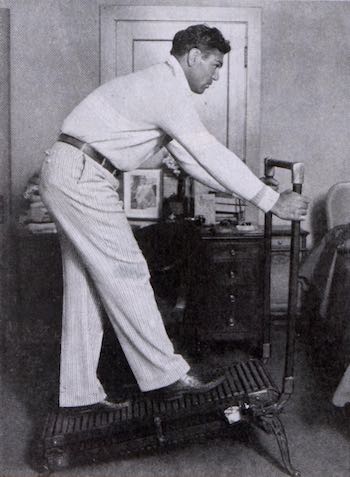
on a treadmill in his room .
Originally published August 29, 1931
Announcement of my match with Gene Tunney brought an immediate offer from a real-estate concern in Hendersonville, North Carolina. They were willing to pay me $1,000 a day for 30 days if I would train there. At first flash this struck me as an economical method of getting in my training for Tunney. I had just so much training to do anyway, and the idea of collecting $1,000 a day for it impressed me as essentially desirable. Accordingly, I went to Hendersonville.
In June preceding the Tunney fight, I underwent this change of climate and water. It had a very bad effect upon me. I contracted chills and fever, to which I always have been subject, and following that, had a series of boils which lasted virtually up to the time of the bout. Please do not understand this as an alibi for my loss of the title. If I had only my own story to tell here, I would make no mention of this condition. I do it, however, to spike the absolutely false rumors that I was drugged in my first contest with Gene.
Nothing was farther from the truth, and I welcome this opportunity to say so. Anything that will relieve my trainers and associates of the reflection such rumors cast upon them is a welcome thing to me. It is perfectly true that I was nothing like the old Dempsey that first time in the ring with Tunney. My trainers, however, cannot be blamed for this. I had been a sick man for weeks, and, had they not been great trainers, I never even could have stayed in the ring with Gene.
Beaten before Entering the Ring
There comes a time in the life of every athlete when that vital spark of youth dims in the shadows of advancing years. While I was training for the first Tunney fight, it came to me often that age had cast its shadow across my path. I did not believe that I was too old to fight, but I did know that I was quite unable to do road work as of old. When I was in the ring I was sluggish. Unable to shake off this apprehension, I became obsessed by it. I knew that I looked bad in the ring and I knew that I felt bad out of it. In the privacy of my own room, I used to ask myself if the final bell had rung for Jack Dempsey. I simply could not believe this and attributed my condition to my illness.
In the light of later events I realize now that Hendersonville itself had nothing to do with the illness which overtook me. It is a delightful place and I was among delightful people. There were, however, changes of water and climate which may have paved the way for the illness which overtook me.
But I must not get ahead of my story. So many things happened before I actually boxed Gene that I cannot in justice omit them from this narrative. First, I went to a place just outside Saratoga, New York, to train for the fight. Then I began to realize what Tex Rickard had meant when he told me not to pay any attention to propaganda in the East. From some source there developed a great furor against the Dempsey-Tunney fight. Many perfectly sincere people who had been misadvised about my attitude toward boxing Harry Wills claimed that we were making discriminations against the best of the contenders. No one seemed to give Gene Tunney much of a chance to defeat me, whereas many said that the Black Panther might turn the trick.
The New York State Boxing Commission more or less, apparently, shared this viewpoint, and Tex discovered that he would have great difficulty promoting my contest with Tunney in the state of New York. Naturally both Gene and I wanted it held in New York State, because we felt that the gate would be bigger there than anywhere else. Tex, however, never was caught without an ace up his sleeve. While his enemies sought to harass him in this big promotion, he calmly made arrangements to move the fight to Philadelphia and the Sesquicentennial Exposition. In this he really outguessed everybody.
While I was at Saratoga, Doc Kearns opened his now-famous legal fight against me. This he predicated on the contracts he had signed with Rickard in Chicago. The first I knew of it, he attached all the money I had in New York banks.
When it was decided that the fight would take place in Philadelphia, Rickard shifted my training camp to Atlantic City. Doc and his array of legal talent followed me so completely and so efficiently that every time I hit a punching bag I expected to see a summons drop out of it.
Actually I got to a point where I forgot all about Gene Tunney and the coming fight with him. I was involved in one of the hardest battles I ever had in fighting Jack Kearns. It seemed to me that I spent every day in court instead of in the training ring. Nervous strain, coupled with my weakened condition, led to a case of intestinal influenza which clung with the tenacity of a bulldog. To top this one, a sparring partner innocently presented me with a robust case of barber’s itch. The ensuing skin eruption gave sustenance to the rumor that I had been poisoned.
Finally, in desperation, I went to Tex Rickard with the hope of getting a postponement of the Tunney contest. I told Tex the flat truth. I was in no condition to fight and I could not get into condition. This was so obvious that even my training staff knew it. Under the circumstances, I am confident we would have postponed the fight, had it not been for the men from South Bend, Indiana, who were endeavoring to get an injunction to prevent the Dempsey-Tunney fight, on the score that they held a previous contract with me to fight Wills. Tex was just about as worried and upset as I was. It would have been folly to increase our woes by postponement of the fight.
Trying to Keep Dempsey Money for Dempsey
Again, Tex was terribly upset in his efforts to protect my money, as he had promised me at Fort Worth he would do. Every scheme we got for the protection of the funds seemed to us full of holes. We dared not put it in a local bank because of the fear that Kearns would find and attach it. Neither dared we wire the money to California, for exactly the same reason. To think of carrying such an enormous sum about the training camp impressed us as sheer idiocy because of the open invitation to gangsters and the dire results their appearance might provoke. Ultimately we schemed to wire the money to a bank in St. Louis, and so our plans remained set until, by the merest chance, we discovered that our enemies knew all about it and would attach the money the instant it landed in St. Louis.
Under my contract, I was not to receive any payment until after a satisfactory fight. Tex could not, therefore, pay me until the fight was over. What we finally did was to wire the money to Los Angeles, where my brother Joe was waiting for it. Something more than $800,000 was credited my account out there, with instructions to the bank not to release the money until they had Rickard’s telegraphic okeh to do so. Just between us, that’s the way I managed to get my payment for the first Tunney contest. Just as soon as the bank opened the morning after the fight, my brother Joe was there and the bank handed him a certified check.
I never had the faintest idea of winning that first contest with Gene Tunney, once I had got well enough into my training to know that I could not get into condition.
In this frame of mind, I answered the first bell there at Philadelphia. I went after Gene just like I went after Firpo, and very much the same thing happened, though Gene did not hit me as hard as Luis. I hooked a left, Gene side-stepped and crossed a beautiful right straight to my chin. The punch dazed me. That told me the story before the crowd sensed it. I remember thinking that either I was worse than I feared or Gene was a lot better than I thought. During that contest I was so bad that my seconds got to fighting among themselves in my corner. Each had a plan all his own, and I certainly could not fight three different fights.
Joining the Ranks of Ex-Champs
People do not realize what a beautiful exhibition of boxing Gene Tunney gave that dismal night in Philadelphia. He was master of every trick. His footwork was superb, his thinking perfect and he punched with the precision of a watch. I was licked and I knew I was licked.
After two or three rounds, I was fighting with one thought in mind only. That was to prevent a knockout. I wanted to go the limit and maybe get Gene some other time when I felt I could give him a better fight. Only one thing saved me in this. I discovered that Gene could counter beautifully, but either he would not or could not lead. This saved me.
I made my own fight, so lasting the limit. The rain bothered us both. I could not see and I had no doubt this slowed Gene up just as much. Had Gene but realized it, I was a ripe subject for a knockout punch had he forced the fighting. No doubt he was fighting with extreme care because he knew as well as I did that he could not lose the decision on points. He was too good a boxer for that. He fought wisely, but he fought carefully, and I was tremendously glad of it. I knew that night that I had no chance whatsoever to beat Gene Tunney. I knew that he was certain to defeat me. All I hoped for, all that I wanted and all that I achieved, was to avoid a knockout at his hands.
I have said before in this story that temperamentally I either tread the peaks or wallow in the depths. It seems to me, as I look back, that events always did exactly the same thing around me. It was a crushing thing for me to stand in that wet ring in Philadelphia and see the hand of Gene Tunney raised in token, not alone of his victory over me but of the heavyweight championship of the world.
It seemed to me at that moment that the heavyweight championship was mine — something which no one could take from me. In a hazy sense I realized that it was gone, yet I felt no different myself. There was a great void, suddenly, but my conception of it was limited.
Previous to the fight, I had contemplated the probability of losing the title and this, I think, carried me over that sad moment there in the ring at Philadelphia. My seconds were simply overcome. They could not grasp that Jack Dempsey, the invincible, had suddenly become vincible. I was beaten fairly and squarely and completely by Gene Tunney. A new heavyweight king had been crowned. Jack Dempsey became but a shadow cast against the wall along with Willard, Jack Johnson, Bob Fitzsimmons, Jim Jeffries, and those other names which forever shall ring down the corridor of pugilistic history.
Right then, when I was wallowing in the depths, events also wallowed with me. On the way out of the ring, there was considerable scrambling to get near me. In this rush of the spectators some woman was knocked down and trampled. She immediately brought suit against me for $50,000, claiming that I had struck her! That is an indication.
Tunney’s sharp, stinging right hand cut my eye somewhat and bothered my ear. I was sore and weak after the contest. Besides this, I felt no particular ill effects other than the loss of my heavyweight championship. Had I been a well man going into that ring, I am convinced that I would have tossed aside the boxing gloves forever, following my defeat. However, my illness convinced me that old age had not robbed me of the zip of days gone by. I had a lingering suspicion that if my condition had been right, I would have been the Dempsey of old. Because of this suspicion, I longed for a second chance at Gene.
Here I want to correct an error I made earlier in my story. I stated that following the loss of my championship to Gene at Philadelphia, I called upon him. This was in error. Gene called upon me. It was a gracious gesture on his part, and one I shall always appreciate. Then it was that he heard from me some advice which I think Gene will admit was good. As I spoke to him, I knew a sort of aching sense of loss because I no longer was champion, and an amazing sense of relief because of the very same fact. No more great lawsuits, no more summonses, no more arguments and legal affrays the substance of which, frankly, always was doubtful to me and the legal jargon of which left me in a state of confusion and disgust.
Estelle was on her way East and learned of my defeat en route. She came to me in Philadelphia.
“What happened, honey?” she asked.
“I forgot to duck, babe,” I answered.
That was all that was ever said between us about my defeat. We two spent a few days resting in Atlantic City, then went to New York for a day or two. Following a brief sojourn in the metropolis of the world, we returned to California. All this time there was that hankering wonderment in the back of my mind as to whether or not I really was washed up as a fighter.
Two or three months of rest out on the Pacific Coast may have softened me up physically, but they rested me mentally, and I overcame the effects of the influenza and boils. During this time I had ample opportunity to think things out for myself, and in my own way. As the ravages of illness disappeared, I began to feel something which might have been the old pep coming back into my muscles and bones. Let me say that I thoroughly enjoyed that period of inactivity so long as I needed it physically. Just as soon, however, as something of my old strength returned, the itching of my insteps once more asserted itself. I had to have action of some kind. Further, I had to satisfy that hankering wonderment in the back of my mind. Was I really washed up, or did I lose the championship because I had a tough break in meeting a great fighter when I was not in condition for the test? What possible answer was there to that question but another try at the good old game?
The Chance of a Comeback
Of course, I kept in touch with developments in the ring. I watched carefully the Sharkey-Wills fight and again the Sharkey-Maloney contest. I saw that Jack Sharkey was rapidly climbing to the top of the heavyweight division. I knew that he was a good, fast fighter, and his knockout victories over both Wills and Maloney marked him a dangerous contender.
In the meantime, Tex Rickard had got in touch with me and was beginning to suggest a comeback with some very good heavyweight. He intimated that if I could scale the barrier of a really good contender, I could step in again with Gene Tunney. Tex always maintained to me that I could beat Tunney. Probably, because he was a great promoter, he maintained to Gene that Gene could beat me. In any case, he would telephone me in Hollywood and keep the idea of another fight fermenting in my mind. He would constantly recall our talk in Philadelphia before I lost the championship.
“You know you were in no condition that night, Jack,” Tex would say. “You know we would have postponed the contest if it hadn’t been for those other things.”
Tex knew his onions. I was a fighter who simply could not resist the call of the ring. Added to this, I was a fighter who had lost the championship under conditions which, right or wrong, he believed to have been against him. Tex counted upon these things and kept after me with them, but I was sensible enough to want to be certain that my condition warranted another Tunney battle.
Without much ado, I went away to the ranch of a friend. There I buckled into the arduous business of chopping trees to see if I could round myself into shape. After a brief time down there, I became convinced that I could get back into condition. I wired Tex Rickard that I would accept a proposition to box Jack Sharkey. Tex immediately made me the proposition and I came East to train.
Once again I established myself near Saratoga. Tex Rickard had the vision of a second Dempsey-Tunney contest, and I was certain that he felt I could beat Jack Sharkey and Gene both. He more or less proved this when he came to me at the training camp and suggested that I have Leo P. Flynn as my adviser.
“You were in no condition at Philadelphia, Jack,” Tex told me. “You were worse than you had any right to be, well or sick. This time you can train without too much to distract you, and I want you to train right. Flynn is interested in this thing and he knows more about boxing than any man I can remember. Put yourself in his hands, Jack. Shoot the works on his judgment.”
I accepted that proposition just as it was submitted, and Leo P. Flynn took charge of my training. From the moment we began, he insisted that there was but one way to fight Jack Sharkey. That was to go out and punch, punch, punch until one of us dropped. Flynn had a theory that Jack could not take punishment to the body. He knew that Jack was fast as lightning and a good boxer. He knew that he was a great deal younger than I. We both knew that my legs were not what they once were, and I would have to be careful not to let Sharkey move me around the ring too much. But he had his theory and we staked everything on it.
I bet everything on the Flynn advice throughout the period of training and in the contest itself. We need not spend too much time, I think, in going over that contest with Jack Sharkey. It is too fresh in the minds of the fans. Jack certainly out-stepped me for the first five rounds. He peppered me with a good many punches, and at times, I must confess, had me wondering if someone weren’t throwing rocks at me from the gallery.
But he paid for it all by giving me shot after shot at his midsection. Throughout the battle I was content to let him pepper my head with his lefts and his rights, so long as I got my lefts and rights to his body. I presume, owing to the type of battle I offered, that Jack was way ahead on points at the close of the fifth round. But I was confident that if I could keep going long enough, I would drop him with those body blows.
Sharkey’s Costly Negligence
In the sixth round, I got to him pretty solidly to the body and I knew that he was feeling the punishment more than he wanted people to realize. That gave me a lot of encouragement. I went back to my corner at the end of the sixth and told Leo Flynn that I was going to knock Sharkey out.
“Just keep punching, Jack,” was all Leo would say to me. “Keep punching, big boy. He’ll fold up.”
At the start of the seventh round, I went methodically back at my job. No matter what happened, I would whale away at Sharkey’s midsection. Sometime during the earlier part of the round, he stepped back and claimed that I was hitting low. To the best of my knowledge and belief, I was not. But I will say this, I was hitting, and hitting hard. All I thought of while I was in there was to flay Mr. Sharkey’s body. Shortly after the first complaint, he turned to make another to the referee.
Perhaps I “copped a sneak” on Jack, but I certainly violated no rule of the prize ring. My feeling is that when a man reaches the point where he classes himself as a contender for the heavyweight championship, he must have the mental control, the poise, and the good sense to conduct himself in accordance with the rules. The rule states that out of a clinch he must defend himself at all times. As Sharkey turned away from me, I lifted a left hook from the body to the chin, and that was that. Mr. Sharkey went down and did not get up.
I knew during that Sharkey fight that I had not entirely come back to the condition I had enjoyed as champion. The old, hankering wonderment came to me again. I was a whole lot better against Sharkey than I had been against Gene Tunney at Philadelphia, but was I as good as I ever had been? Were those shadows which come suddenly out of the future and make of the present, the past, so to speak, really engulfing me? Was I getting old? Was I all through? Was the name Jack Dempsey to slip quietly but certainly into the archives rather than into the headlines?
A Chance to Regain Lost Laurels
I will admit that I was not sure.
Following my knockout victory over Jack Sharkey, Tex Rickard immediately propositioned me for another match with Gene Tunney.
“The old iron is hot again, Jack,” Tex said to me. “Now is the time to strike. This win over Jack Sharkey puts you right out front with Tunney himself. You laughed at me a few years ago when I told you that we would draw $1,000,000 with the Carpentier fight. Laugh at me now, if you dare, when I tell you we’ll draw at least $2,500,000 with you and Gene in the ring again.”
Who can know but that man who has lived through the experience, what it means to wonder whether you are good or bad? I had every reason to feel I had been a great fighter. I hadn’t as yet had incontrovertible evidence that my day was gone. The old fighting heart and the old fighting instinct throbbed within me for expression. I hated the thought of anybody else in possession of my heavyweight championship. I reasoned the thing out very carefully in my own way; thought it out when I was alone at night with none to bother me.
There was one thing which seemed certain to me. That was that I would knock out any man I hit right. What if my legs had slowed up a trifle? What if the old zip and speed were gone from my bobbing and weaving? These things must essentially be offset by experience and by knowledge. I felt strong as an ox, and because most of my contests had been short, I had never really taken any serious beatings. Why, then, should I not gamble that at least once in 10 long rounds, I could tap Gene Tunney on the chin, or under the heart, with a punch that would win me back the heavyweight championship of the world? There was no good reason to suppose such a thing unreasonable. I felt that I could hit Gene; felt that I could plan out a campaign of battle that sooner or later would bring him to me for that one lovely punch.
With this in mind, I considered the possibility of a $3,000,000 box office. Aside from the money that would establish Tunney and myself as the greatest financial figures boxing had ever produced, I was a comparatively rich young man when these problems presented themselves. I could have retired then as easily as I retired later, and lived on my income.
So it was not entirely money by which I was actuated. There was — and I do not say it sentimentally — an appreciation and a love for the sport of boxing which superseded in my calculations every financial angle. I think, perhaps, I was a big kid who had lost a toy and wanted to fight to get it back again. In any event, I told Tex Rickard to match us, and I promised myself that I would give Gene Tunney a whole lot better fight than I had given him that rainy night in Philadelphia.
My contest with Jack Sharkey netted me almost $500,000 and, to put it in the jargon, I was sitting pretty, financially. There was nothing between me and retirement other than a determination on my part to satisfy that hankering wonderment as to my own condition. I knew perfectly well that I wasn’t 30 percent of the old Jack Dempsey the night I lost my heavyweight championship. On the other hand, I knew perfectly well that Gene Tunney was a fine fighter and a whole lot better than the public has ever given him credit for being. There lay the problem.
I knew that my win over Sharkey indicated that I was in fair physical condition. I felt that a good training siege would put me back in excellent condition. Furthermore, I was perfectly certain that when I was in condition, the man did not live who could box me 10 rounds without at some time or other being hit on a vital spot. I knew perfectly well, as I have said, that anyone I hit on a vital spot was very apt to be counted out. That was my bet on the Tunney fight at Chicago. I believed that the worst I had was a 50-50 chance to regain the championship, and that is exactly the right percentage for a great fight.
I went to Chicago to train. Leo Flynn once again took charge of my training and acted in the capacity of chief adviser. I think that most of the fellows who realized my condition before the first Tunney contest favored me to win over Tunney in the second. There were all sorts of rumors floating about my camp to the effect that the gamblers had everything set against me once again. This time I did not easily fall for those rumors.
No Fixers Wanted
I had been knocking around the $1,000,000 gates long enough to know that a good many shady things were attempted. But I also had seen enough of Gene Tunney to know that it was not in his mind or his heart to fake a championship prizefight. This absolute confidence in Gene gave me the greatest weapon I had to use against the fixers who later approached me.
It is not easy to sit here and write these details. I feel that I must do it, however, in justice to myself and in justice to Gene Tunney. I have often hoped, to be truthful about it, that Gene would write his life experiences. I certainly would like to read them and get the other side of our two contests. In my own relation of events, I have stated the absolute and simple truth just as closely as I know how. I know that Gene would do the same thing. Out of a contrast of the two stories a pretty situation ought to develop.
I positively was approached by people in Chicago. I was, in fact, told that for $100,000, I could win the heavyweight championship. I laughed in their faces for a good many reasons, the principal ones of which I am going to relate. They are so obvious and so indisputable that none can deny them.
First, I refused because I had planned a careful campaign against Gene Tunney and believed that I could beat him on the level. Second, I never would trust anybody who would take or give a bribe. Third, I have never faked a fight in my life and I never will. Fourth, even if I did lose my head and pay such a craven bribe, I knew nobody could fix Gene Tunney, and Gene Tunney was the man I had to fight. Next, despite the advice of some people who harassed Leo Flynn and myself, I felt that my coming contest with Gene was the last I ever would fight, win, lose, or draw.
If I won, I planned to retire undefeated. If I lost, nothing more need be said. So I laughed in their faces when they made me this proposition.
The fight itself has hardly wilted sufficiently in the public memory to warrant a detailed description here. I went into the ring planning to work on Gene much after the fashion I had worked on Jack Sharkey in my last contest. In Tunney, however, I was fighting a better fighter than Sharkey. I do not wish to be unkind in that statement; I merely state the fact.
Down for the Long Count
No matter what happened, Gene remained as calm as a mill pond. At times, his machine-like perfection was maddening to me. That darting, straight left jab of his, coupled with an inside, straight right cross that had great jarring possibilities, sufficed to fill anybody’s evening with bouquets that were loaded with reverse English. Gene could fade away from an attack and at the same time hook a jarring left to the liver as well as any fighter who ever lived. So I did not fight him exactly as I had Sharkey. I took more precautions. I felt from my first experience with Tunney that he would draw the lead from me and counter. I planned my campaign entirely on that supposition. It worked out perfectly.
Just as I had planned, I finally got my shot at him. The rest is history. The fact that it is disputed history is of no vital importance at this moment. I have stated previously in my story what Tex Rickard said to me on the afternoon I boxed Georges Carpentier. He told me that I was the sort of a kid to whom things happened.
There are people like that, and I am confident that I am one of them. Even in my present activities, events can run along at a fight club in the even tenor of their way, show after show after show. But let me appear in the capacity of referee and the unusual happens. This has recently been true twice in Madison Square Garden at New York City. It was true the other night in Los Angeles. It seems to me to be true wherever I go. It certainly was true that night in the Chicago Stadium when I caught Gene Tunney in a corner of the ring and knocked him down for the historic “long count.”
If anyone thinks that I am here to express any opinion as to the merit of that “long count,” they have another think coming. All I have to say about that hectic contest is that I fought the best that I knew how to fight. I put into that battle everything that I could summon in the lexicon of physical equipment and experience. When I cornered Gene and knocked him down, I felt the exultance that came to me that July Fourth in Toledo when I won the championship from Jess Willard. Gene was down, and, boys, he had been hit! A look at the motion pictures of the battle will indicate just how many punches Gene absorbed as he toppled over there against the ropes.
I want to say something else in terminating my story. Gene Tunney, on the floor of that Chicago ring, showed the world more of the stuff of which a champion is made than he did in the entire fight at Philadelphia. I don’t think Gene even knows how to spell quit, and I don’t think he’ll ever learn how to spell it. He has the equipment and the heart of a champion. Had he not, he never would have got up off that ring floor in Chicago inside a hundred count.
All the way through that contest, I figured it a hard-fought and close one. After Gene had got up, following that knockdown, he gave a great exhibition of thinking under fire. I could not catch him for the rest of the round to land a finishing punch. But I kept right on trying in the next round, and as a result of my over-anxiety, Gene dropped me to my knees for a count of one.
It was a red-hot fight, and I don’t think anybody could criticize the performance of either of the contestants. Gene won the decision and remained heavyweight champion of the world. To say that I was not disappointed would be to tell a lie. I was disappointed. But once again I had collected a modest fortune for my efforts, and there was a good deal in my life to console me for the missing heavyweight championship.
After the Fight
There was a home and a wife in Hollywood. There was plenty of money in the bank to take care of me and the family I had caused so much worry in my younger days. There was the Firpo fight, the Carpentier fight, the Fulton fight, and several others which had marked the very peak of thrills for the boxing public. Of none of these need I ever be ashamed. After all, that man who wins a championship should be content. He should not expect to hold it over the hurdles of the onrushing years.
In my dressing room after the second Tunney contest, I was momentarily dejected. As is always the case with dressing rooms, a great many people I did not know managed to crowd in. I presume this is curiosity on their part, and it may be morbid curiosity. A fighter, in defeat or victory, is much like a monkey in a zoo to those who can get close to him. They want to look at your eyes and your ears to see how badly you may have been injured. They want to pick up a word here or a gesture there which, later on, they can relay, magnified, to their own little public.
I have always regarded these curious fans in a tolerant, even friendly way. They are, I presume, out of the great masses which support professional boxing. But I never had come to regard them seriously, nor did I ever expect to receive from one of them a perfect gem of philosophy. But I did.
It came from an emaciated chap weighing not more than a 130 pounds, in high boots and an overcoat. I never will forget him. He had a hooked nose and sharp little eyes that winked incessantly under thin, scraggly eyebrows. He was smoking a cigarette when first I saw him, puffing a cigarette and looking intently at me.
I sat down on the edge of a rubbing table, and my handlers began removing the bandages from my fists. The little chap wore a brown suit and shifted uneasily from foot to foot. He smoked jerkily at his cigarette, inhaling nervously and blowing the smoke upward so that it curled under the brim of a shabby, brown felt hat.
What’s a Championship?
I noticed, for no particular reason, that his finger nails were in deepest mourning about their tips. I grinned at him and winked. He took the gesture as a personal salutation which seemed, from his expression, to illuminate his life.
“Okeh, Jack,” he called to me.
I grinned and winked again. Newspapermen crowded about, but they did not get between us. The little stranger saw to that. One of the newspapermen said:
“Jack, do you realize that Tunney was down for 17 seconds?”
“No,” I said. “I don’t know how long he was down.”
“Why didn’t you go to a neutral corner?” the newspaperman demanded.
“I meant to,” I admitted, “but there didn’t seem to be any hurry about it. The count had started and I thought it would continue.”
One of my seconds growled: “He’s still champion of the world, ain’t he? How many times do you have to count a guy out to win? Seventeen seconds!”
Some other newspaperman spoke up, “It was only 14 seconds,” he said.
“Well,” my handler growled, “up till tonight, 10 seconds has always made a champion! I’m tellin’ you guys right now that, with the great majority of American boxin’ fans an’ with everybody who knows anythin’ about the prize ring, Gene Tunney got a decision tonight, but Jack Dempsey is the heavyweight champion of the world!”
“No, he ain’t either,” the newspaperman returned laconically. “ They don’t reverse those decisions. If you had a kick to make, you should have pulled Jack out of the ring when it all happened. It’s too late now.”
“Not with the real fans who know the racket, it ain’t,” my overenthusiastic second insisted. “With them, Jack Dempsey is the heavyweight champion of the world. It’ll never be any other way.”
The newspapermen looked at me.
“What do you say about it, Jack?” they demanded.
I shrugged. “I’ve got nothing to say, boys. You saw what went on in there and you’re damned sight better judges than I am. I was too busy trying to fight. But don’t get this handler wrong. It’s his loyalty as much as his judgment that speaks.”
Suddenly a piping, unimportant voice rose from near at hand. I glanced up, and it was the fellow in the little brown suit with the shabby felt hat and the fuming cigarette.
“What the hell!” he exclaimed stridently. “What if he is champ, or what if he ain’t? He’s young, ain’t he? He’s got dough, ain’t he? He’s famous, ain’t he? I ask you, what the hell’s the champeenship of the world to a guy like that?”
So, from the great mass whose gift to me was fame and fortune, came finally a philosophical gem in the shape of unintentional advice. This little chap was right. I had my share of the fame and the fortune. I had lived down the things that once were held against me. I had been champion of the world, and I had been a fairly good one.
Suddenly the sun-washed shores of California looked awfully good to Jack Dempsey. I urged my handlers to hurry with their tasks that I might the sooner get to a telephone and talk with my wife. I thought again of what good old Bill Brennan had said when defeat overtook him in the person of myself. “That’s the fight racket.” Two cannot win a fight, and I’d had more than my just share of victories.
I looked again at the anemic little man in the brown suit. His sharp little eyes peered right straight back at me. While the others worked on me, I grinned again and winked at him. Whether he knew it or not, there was a world of appreciation in that final gesture.
Bell!
Concluding notes by Charles Francis Coe:
So passeth a champion into retirement?
Jack Dempsey is in retirement just about as much as Mussolini. In the course of my own peregrinations I come in contact with a great many well-known people, but I have yet to meet a man whose personality so exactly befits the throngs as that of Jack Dempsey. I have, too, yet to meet a man for whom the throngs have such frank and outspoken admiration.
In order that I might gather firsthand the atmosphere which surrounds this boy in his present vocation, I barnstormed with him from coast to coast. I say without equivocation that he is the greatest and best influence in American boxing today. Many things have conspired to this end, but primarily it is Jack himself and his fondness for the profession which has meant so much to him.
A Sad Blow to Boxing
The retirement of Gene Tunney from professional boxing and his severance with all things having to do therewith was a sad blow to boxing. The continued presence of Jack Dempsey as an active force in the sport more or less offsets that. Wherever he referees, it is a safe gamble that the paid admissions double. I would not make that statement unless I was absolutely certain of my ground.
“It’s the old game itself, Sacker, that counts most,” Dempsey has said to me repeatedly. “All the bouts can’t be held in New York City, Chicago, or Los Angeles. There are little towns, too, and they have just as much right as the big ones. So I play them all.”
In Pottsville, Pennsylvania, an ordinary-run boxing show turned away hundreds the night that Jack Dempsey was there to referee. The very next night in Scranton, Pennsylvania, the huge armory there was jammed to capacity and in the main bout there had been a substitution. Ordinarily this would detract from the box-office receipts. Your prizefight fan is a discerning individual who knows records and keeps himself pretty well posted on what he wants to see. Substitutions at the last minute are fatal. This was not the case in Scranton. The armory was jammed. Dempsey was there!
Everywhere we went that day, throngs greeted us. I know that the ex-champion signed his name at least a thousand times. I know that the office of Mayor Fred K. Derby was jammed to capacity to greet him. I know that when Fred Derby was introduced in the ring that evening and, in turn, introduced your correspondent, I looked out upon a perfect sea of faces which were interested only in one thing — that was to meet and hear from Jack Dempsey.
I know that the home of E.J. Coleman in the exclusive residential section of the city looked like a veritable circus ground when it became known that Jack and I were guests there. I know that every boxer who appears on a fight bill when Dempsey is present finds it second nature to give to the last ounce of his energy and ability. Jack carries everything along. His energetic, pleasing personality, his understanding and tolerance of the endless throng, and his reputation make him absolute public property.
He Must Have His Little joke
In the telling of his own tale, he naturally has disclosed a good deal of his personality. The courage he showed throughout his ring career and his utter disregard of early discouragements speak for themselves. But there is another side to the lad which may not have been driven home. That is his absolutely boyish love of fun.
In Scranton, on the night to which I have referred, he was presented in the ring with a pen-and-ink sketch of himself by a noted local artist. In order that this event might be achieved with due pomp and ceremony, many illustrious persons were in attendance. During the preliminary bouts Jack and I sat together at the edge of the ring. He was the cynosure of thousands and thousands of eyes. Seated on his left on a raised platform was one of the judges who rendered decisions on the bouts. On the left of the judge sat Mayor Fred K. Derby. All this had little or no effect upon Jack.
I casually looked about to say something to him, and found him on his hands and knees, crawling under the edge of the ring. In something of amazement, I followed his movements and discovered that he was assiduously employed in sticking a paper match between the sole and the upper of Mayor Derby’s left shoe. Having arranged this to his satisfaction, I saw him ignite the match, then drawback to sit giggling beside me while watching the mayor’s face in gleeful anticipation.
When the authority of the match asserted itself in the life of his honor, Jack’s face was the absolute picture of innocence, and he appeared to be deeply engrossed in a conversation with me. The mayor glanced in our direction suspiciously, leaned around behind the back of the judge’s chair, and winked smilingly at me.
I said to Dempsey: “At least 2,000 people saw you do that to the mayor, Jack. Suppose he had failed to see the joke?”
“He wouldn’t,” Dempsey answered tersely.
“Some day,” I said, “you’ll pick the wrong one.”
“A bird who can’t see a joke on himself,” he laughed, “will never be big enough to bother you. Anyhow, I’ll take that chance. Smart folks, Socker, just keep smilin’ along. What would we all come to if we couldn’t laugh?”
Narcotics Anonymous: Addiction, the Post, and the Next 12 Steps
In 1941, the Post published Jack Alexander’s report “Alcoholics Anonymous,” the first bit of media attention the six-year-old program had received. In the weeks that followed, AA received an overwhelming number of inquiries, and AA tripled its membership within the next year. That Post article helped thousands of people find the help they needed to break their addiction.
In 1954, the Post hoped to repeat those results with Jerome Ellison’s “These Drug Addicts Cure One Another,” a report on Narcotics Anonymous, a 12-step program similar to AA. NA was a harder sell, both to the public and to those addicted to narcotics. Alcoholics might be reluctant to join a group and talk about their problems, but drug addicts were even more hesitant because the substances they abused were illegal. Speaking publicly about their addiction could incriminate themselves and others.
NA started slowly — when it was founded in 1953, only three participants showed up for the first meeting. But the results were undeniable, and word spread around. Reluctant or not, addicts in NA and other 12-step narcotics addiction groups were finding the help they needed and getting their lives back.
Although Ellison’s report, reprinted below, didn’t have the same immediate and astonishing effects as the earlier piece on Alcoholics Anonymous, it did help get the word out. Since then, NA has offered continued hope and improvement to addicts and has spread around the world. Now, 67,000 NA meetings in 139 countries are held every week.
For more information about Narcotics Anonymous or to find a meeting near you, visit na.org.
These Drug Addicts Cure One Another
By Jerome Ellison
Originally published August 7, 1954
Tom, a young musician just out of a job on a big-name dance band, was pouring out the story of his heroin addiction to a small gathering in a New York City YMCA. He told how he started three years ago, “fooling around for thrills, never dreaming to get a habit.” His band went on the road. One night in Philadelphia, he ran out of his drug and became so shaky he couldn’t play. It was the first the band management knew of his habit. He was promptly sent home.
“Music business is getting tough with junkies,” Tom said.
His audience was sympathetic. It was composed of former drug addicts who had found freedom from addiction. They met twice weekly to make this freedom secure, and worked to help other addicts achieve it. The New York group, founded in 1950 and called Narcotics Anonymous, is one of several which have been piling up evidence that the methods of Alcoholics Anonymous can help release people from other drugs than alcohol — drugs such as opium, heroin, morphine, and the barbiturates.
The groups enter a field where patients are many and cures few. The population addicted to opiates has been placed by competent but incompatible authorities at 60,000 and at 180,000. The Federal Bureau of Narcotics estimates that the traffic in illegal opium derivatives grosses $275,000,000 a year. About 1,000 people a month are arrested for violations of federal, state, or local laws regulating the opiates. Addiction to the barbiturates, it is believed, involves more people. There are some 1,500 known compounds of barbituric acid, some of them having pharmaceutical names and others street names such as yellow jacket, red devil, and goof ball.
Addicts work up to doses sufficient to kill a nonaddicted person or an addict with a lesser tolerance. In New York recently, three young addicts met and took equal portions of heroin. Two felt no unusual reaction; the third went into convulsions and in a few hours was dead. Many barbiturate users daily consume quantities which would be lethal to a normal person. Others have demonstrated an ability to use barbiturates for years, under medical supervision, without raising their consumption to dangerous levels.
The drug addict, like the alcoholic, has long been an enigma to those who want to help him. Real contact is most likely to be made, on a principle demonstrated with phenomenal success by Alcoholics Anonymous, by another addict. Does the prospect, writhing with shame, confess to pilfering from his wife’s purse to buy drugs? His sponsor once took his children’s lunch money. Did he steal the black bag of a loyal family doctor? As a ruse to flimflam druggists, his new friend once impersonated a doctor for several months. The NA member first shares his shame with the newcomer. Then he shares his hope and finally, sometimes, his recovery.
To date, the AA type of group therapy has been an effective ingredient of “cures” — the word as used here means no drugs for a year or more and an intent of permanent abstinence — in at least 200 cases. Some of these, including Dan, the founder of the New York group, had been pronounced medically hopeless. The “Narco” Group in the United States Public Health Service Hospital at Lexington, Kentucky, has a transient membership of about 80 men and women patients. The group mails a monthly newsletter, The Key, free to those who want it, currently a list of 500 names. Many of these are interested but nonaddicted friends. Most are “mail-order members” of the group — addicts who have left the hospital and been without drugs for periods ranging from a few weeks to several years. The HFD (Habit-Forming Drug) Group is a loosely affiliated fellowship of California ex-addicts who keep “clean” — the addict’s term for a state of abstinence — by attending Alcoholics Anonymous meetings with volunteer AA sponsors. The federal prison at Lorton, Virginia, has a prisoner group which attracts 30 men to its weekly meetings. Narcotics Anonymous in New York is the sole “free world” — outside-of-institution — group which conducts its own weekly open-to-the-public meetings in the AA tradition.
Today’s groups of former addicts mark the convergence of two historic narratives, one having to do with alcohol, the other with opium. References to the drug of the poppies go back to 4000 B.C. According to Homer, Helen of Troy used it in a beverage guaranteed to abolish care. Opium was employed to quiet noisy children as early as 1552 B.C. De Quincey and Coleridge are among the famous men to whom it brought disaster. In its dual role it appears today, through its derivatives, as the friend of man in surgery and his enemy in addiction.
The alcoholic strand of the story may be taken up in the Zurich office of the Swiss psychologist Carl Jung, one day late in 1933. At that time, the eminent doctor was obliged to impart an unpleasant bit of news to one of his patients, an American businessman who had come for help with a desperate drinking problem. After months of effort and repeated relapses, the doctor admitted that his treatment had been a failure.
“Is there, then,” the patient asked, “no hope?” Only if a profound religious experience were undergone, he was told. How, he wanted to know, could such an experience be had? It could not be obtained on order, the doctor said, but if one associated with religious-minded people for a while —
Narcotics Anonymous — AA’s Young Brother
The American interested himself in Frank Buchman’s Oxford Group, found sobriety, and told an inebriate friend of his experience. The friend sobered up and took the message to a former drinking partner, a New York stockbroker named Bill. Though he was an agnostic who had never had much use for religion, Bill sobered up. Late in 1935, while on a business trip to Akron, Ohio, he was struck by the thought that he wouldn’t be able to keep his sobriety unless he passed on the message. He sought out a heavy-drinking local surgeon named Bob and told him the story to date. They sat down and formulated a program for staying sober — a program featuring 12 Suggested Steps and called Alcoholics Anonymous. Bill devoted full time to carrying the AA message, and the news spread. The now-famous article by Jack Alexander in The Saturday Evening Post of March 1, 1941, made it nationally known, and by 1944 there were AA groups in the major cities.
In June of that year, an inebriate mining engineer whom we’ll call Houston “hit bottom” with his drinking in Montgomery, Alabama, and the local AAs dried him up. Houston gobbled the AA program and began helping other alcoholics. One of the drunks he worked with — a sales executive who can be called Harry — was involved not only with alcohol but also morphine. AA took care of the alcoholic factor, but left Harry’s drug habit unchanged. Interested and baffled, Houston watched his new friend struggle in his strange self-constructed trap. The opiate theme of the narrative now reappears. Harry’s pattern had been to get roaring drunk, take morphine to avoid a hangover, get drunk again, and take morphine again. Thus he became “hooked” — addicted. He drove through a red light one day and was stopped by a policeman. The officer found morphine and turned him over to the federal jurisdiction, with the result that Harry spent 27 months at Lexington, where both voluntary and involuntary patients are accommodated, as a prisoner. After his discharge, he met Houston and, through AA, found relief from the booze issue. The drug problem continued to plague him.
During this period, Houston, through one of those coincidences which AAs like to attribute to a Higher Power, was transferred by his employers to Frankfort, Kentucky, just a few miles from Lexington. “Harry’s troubles kept jumping through my brain,” Houston says. “I was convinced that the 12 Suggested Steps would work as well for drugs as for alcohol if conscientiously applied. One day I called on Dr. V.H. Vogel, the medical officer then in charge at Lexington. I told him of our work with Harry and offered to assist in starting a group in the hospital. Doctor Vogel accepted the offer, and on Feb. 16, 1947, the first meeting was held. Weekly meetings have been going on ever since.”
The Phenomenon of “Physical Dependence”
Some months later, in a strangely woven web of coincidence, Harry reappeared at “Narco” as a voluntary patient and began attending meetings. He was discharged, relapsed, and in a short time was back again. “This time,” he says, “it clicked.” He has now been free from both alcohol and drugs for more than five years. Twice he has returned to tell his story at meetings, in the AA tradition of passing on the good word.
In the fall of 1948 there arrived at Lexington an addict named Dan who had been there before. It was, in fact, his seventh trip; the doctors assumed that he’d continue his periodic visits until he died. This same Dan later founded the small but significant Narcotics Anonymous group in New York. Dan’s personal history is the story of an apparently incurable addict apparently cured.
An emotionally unsettled childhood is the rule among addicts, and Dan’s childhood follows the pattern. His mother died when he was three years old, his father when he was four. He was adopted by a spinster physician and spent his boyhood with his foster mother, a resident doctor in a Kansas City hospital, and with her relatives in Missouri and Illinois. When he was 16, he developed an ear ailment and was given opiates to relieve the pain. During and after an operation to correct the condition, he received frequent morphine injections. Enjoying the mood of easy, floating forgetfulness they induced, he malingered.
Living in a large hospital gave Dan opportunities to pilfer drugs, and for six months he managed to keep himself regularly supplied. An addict at the hospital had taught him to inject himself, so for a time he was able to recapture the mood at will. He was embarrassing his foster mother professionally, however, and though not yet acknowledging the fact to himself, was becoming known locally as an addict. Sources of drugs began to close up, and one day there was no morphine to be had. He went into an uncontrollable panic, which grew worse each hour.
There followed muscular cramps, diarrhea, a freely running nose, tears gushing from his eyes, and two sleepless, terror-filled days and nights. It was Dan’s first experience with the mysterious withdrawal sickness which is experienced sooner or later by every addict.
In one of the strangest phenomena known to medicine, the body adjusts to the invasion of certain drugs, altering its chemistry in a few weeks to a basis — called “physical dependence” — on which it can no longer function properly without the drug. How physical dependence differs from habit may be illustrated by imagining a habitual gum chewer deprived of gum. His unease would be due to the denial of habit. If he were denied gum and also water, on which he is physically dependent, he’d feel an increasingly painful craving called thirst. The drug addict’s craving is called the “abstinence syndrome,” or withdrawal sickness. In extreme cases it includes everything Dan experienced, plus hallucinations and convulsions. Withdrawal of opiates rarely causes the death of a healthy person; sudden cessation of barbiturates has been known to. The violent phase, which is usually over in two or three days, may under expert care be largely avoided. Physical dependence gradually diminishes, and ordinary habit, of the gum-chewing type, asserts itself.
This is the interval of greatest vulnerability, NA members say, to the addict’s inevitable good resolutions. He has formed the habit of using his drug when he feels low. If he breaks off medical supervision before he’s physically and mentally back to par, the temptation to relapse may be overwhelming. It is in this period, Dan says, that the addict most needs the kind of understanding he finds in N.A. If he yields to the call of habit, physical dependence is quickly re-established and his body calls for ever greater doses as the price of peace.
Dan went through the cycle dozens of times. Besides the half dozen withdrawals at Lexington, there were several at city and state institutions, and numerous attempts at self-withdrawal. He tried sudden and complete abstinence, the “ cold turkey “ method. He tried relieving the withdrawal pangs with alcohol, and found it only canceled out his ability to think, so he automatically returned to drugs. When he attempted withdrawal with barbiturates, he “just about went goofy.”
All this, however, was to come later; in his early 20s he had no intention of giving up the use of drugs. Haying been spotted as an addict in the Kansas City area, he sought fresh fields. He found a job as a salesman and traveled several Midwest states. The demands of his habit and his scrapes with the law made it hard to hold a job long. Drifting from one employment to another, he found himself, in the early 1930s, in Brooklyn.
His attempts at withdrawal resulted in several extended periods of abstinence, the longest of which was three years. When off drugs Dan was an able sales executive and a good provider. He married a Staten Island girl. They had a son. Dan continued to have short relapses, however. Each new one put a further strain on the family tie. For a time, to save money for drugs, he used slugs in the subway turnstiles going to and from work. He was spotted by a subway detective and spent two days in jail. A few months later he was caught passing a forged morphine prescription. As a result, he was among the first prisoner patients at the new United States Public Health Service Hospital for addicts at Lexington, when it was opened on May 28, 1935.
After a year there, he made a supreme effort to be rid of drugs for good. To keep away from the temptations offered by New York drug pushers, he found a job with a large Midwest dairy. He worked hard, saved his money, and sent for his family. By this time, however, it was too late; his wife refused to come, and a divorce action was begun. “Her rebuff gave me what I thought was a good excuse to go back on drugs,” Dan reports. After that, his deterioration accelerated. On his seventh trip to Lexington, in 1948, he was in a profound depression.
After a month of sullen silence, he began attending the group meetings, which were a new feature at the hospital since his last trip. “I still wouldn’t talk,” he reports, “but I did some listening. I was impressed by what Houston had to say. Harry came back one time and told us his story. For the first time, I began to pray. I was only praying that I would die, but at least it was prayer.” He did not die, nor did he recover. Within six months of his discharge he was found in possession of drugs and sent back to Lexington for a year—his eighth and, as it turned out, final trip.
“This time things were different,” he says. “Everything Houston and Harry had been saying suddenly made sense. There was a lawyer from a Southern city there at the time, and a Midwestern surgeon. They were in the same mood I was — disgusted with themselves and really ready to change. The three of us used to have long talks with Houston every Saturday morning, besides the regular meetings.” All three recently celebrated the fifth anniversary of their emancipation from the drug habit.
Dan, conscious of what seemed to him a miraculous change of attitude, returned to New York full of enthusiasm and hope. The 12th of the Suggested Steps was to pass on the message to others who needed help. He proposed to form the first outside-of-institution group and call it Narcotics Anonymous — NA. He contacted other Lexington alumni and suggested they start weekly meetings.
There were certain difficulties. Addicts are not outstandingly gregarious, and when all the excuses were in, only three — a house painter named Charlie, a barber named Henry, and a waiter we’ll call George — were on hand for the first meeting. There was uncertainty about where this would be; nobody, it seemed, wanted the addicts around. Besides, missionary or “12th step” work of the new group would be hampered by the law. When the AA member is on an errand of mercy, he can, if occasion warrants, administer appropriate “medicine” to stave off shakes or delirium long enough to talk a little sense into his prospect. If the NA member did so, he’d risk a long term in jail. Drug peddlers were not enthusiastic about the new venture. Rumors were circulated discrediting the group.
Out of the gloom, however, came unexpected rays of friendliness and help. The Salvation Army made room for meetings at its 46th Street cafeteria. Later the McBurney YMCA, on 23rd Street, offered a meeting room. Two doctors backed their oral support by sending patients to meetings. Two other doctors agreed to serve on an advisory board.
There were slips and backslidings. Meetings were sometimes marred by obstinacy and temper. But three of the original four remained faithful and the group slowly grew. Difficult matters of policy were worked out by trial and error. Some members once thought that a satisfactory withdrawal could be made at home. Some hard nights were endured and it was concluded that the doctors were right —for a proper drug withdrawal institutional care is necessary. Addicts are not admitted to meetings while using drugs. Newcomers are advised to make their withdrawal first, then come to NA and learn to live successfully without drugs.
Group statisticians estimate that 5,000 inquiries have been answered, constituting a heavy drain on the group’s treasury. Some 600 addicts have attended one or more meetings, 90 have attained effective living without drugs. One of these is a motion picture celebrity, now doing well on his own. One relapse after the first exposure to NA principles seems to have been about par, though a number have not found this necessary. “A key fact of which few addicts are aware,” Dan says, “is that once he’s been addicted, a person can never again take even one dose of any habit-forming drug, including alcohol and the barbiturates, without running into trouble.”
The weekly “open” — to the public — meetings are attended by 10 to 30 persons — addicts, their friends and families, and concerned outsiders. The room is small and, on Friday evenings when more than 25 turn up, crowded.
There is an interval of chitchat and visiting, and then, about 9:00, the secretary, a Brooklyn housewife, mother, and department-store cashier, opens the meeting. In this ceremony, all repeat the well-known prayer: “God grant me the serenity to accept the things I cannot change, the courage to change the things I can, and the wisdom to know the difference.” The secretary then introduces a leader — a member who presents the speakers and renders interlocutor’s comments from his own experience with a drugless life. The speakers — traditionally two in an evening — describe their adventures with drugs and with NA. In two months of meetings, I heard a score of these case histories. I also charted the progress of a newcomer, the young musician named Tom, whose first NA meeting coincided with my own first reportorial visit.
Within the undeviating certainties of addiction, individual histories reveal a wide assortment of personal variations. Harold, an optometrist, is a “medical” addict; he got his habit from the prescription pad of a doctor who was treating him for osteomyelitis. An outspoken advocate of psychotherapy for all, Harold absorbs a certain amount of ribbing as the group’s “psychiatry salesman.” Florence, the housewife-cashier-secretary, recently celebrated her first anniversary of freedom from morphine, which she first received 25 years ago in a prescription for the relief of menstrual cramps. Carl, an electrician, became interested in the effects of opium smoke 30 years ago, and reached a point where he could not function without his daily pipe. He eventually switched to heroin, and his troubles multiplied.
Manny, an executive in a high-pressure advertising agency, and Marian, a registered nurse with heavy administrative responsibilities, began using morphine to relieve fatigue. Don, Marian’s husband, regards alcohol as his main addictive drug, but had a bad brush with self-prescribed barbiturates before he came to AA and then, with Marian, to NA. Pat, another young advertising man, nearly died of poisoning from the barbiturates to which he had become heavily addicted. Harold and Carl have now been four years without drugs; Manny, three; Marian, Don, and Pat, one.
Perhaps a third of the membership are graduates of the teenage heroin fad which swept our larger cities a few years ago, and which still enjoys as much of a vogue as dope peddlers can promote among the present teenage population. Rita, an attractive daughter of Spanish-American Harlem, was one of the group’s first members. Along with a number of her classmates, she began by smoking marijuana cigarettes — a typical introduction to drugs — then took heroin “for thrills.” She used the drug four years, became desperately ill, went to Lexington, and has now been free of the habit four years. Fred, a war hero, became a heroin addict because he wanted friends. In the teenage gang to which he aspired, being hooked was a badge of distinction. He sought out the pusher who frequented the vicinity of his high school and got hooked. There followed seven miserable and dangerous years, two of them in combat and one in a veteran’s hospital. In December of 1953, he came to NA and, he says, “really found friends.”
Lawrence’s story is the happiest of all. He came to NA early in his first addiction, just out of high school, just married, thoroughly alarmed at discovering he was addicted, and desperately seeking a way out. NA friends recommended that he get “blue-grassed,” an arrangement by which a patient may commit himself under a local statute to remain at Lexington 135 days for what the doctors consider a really adequate treatment. He attended meetings in the hospital and more meetings when he got home. Now happy and grateful, he thanks NA. His boss recently presented him with a promotion; his wife recently presented him with a son.
Besides the Friday open meeting, there is a Tuesday closed meeting at the Y for addicts only. As a special dispensation, I was permitted to attend a closed meeting, the purpose of which is to discuss the daily application of the 12 steps.
The step under discussion the night I was there was No. 4: “Make a searching and fearless moral inventory of ourselves.” The point was raised as to whether this step might degenerate into self-recrimination and do more harm than good. Old-timers asserted that this was not its proper application. A life of drug addiction, they said, often built up an abnormal load of guilt and fear, which could become so oppressive as to threaten a relapse unless dealt with. When the addict used Step 4 honestly to face up to his past, guilt and fear diminished and he could make constructive plans for his future.
The Narco meetings at Lexington have borne other fruit. There was Charlie, the young GI from Washington, D.C., who once looted first-aid kits in the gun tubs of a Navy transport en route to the Philippines and took his first morphine out of sheer curiosity. After his Army discharge, his curiosity led him to heroin and several bad years; then to Lexington, where the Narco Group struck a spark. He heard about Dan’s work, went to New York to see him, and on his return to Washington looked around to see what he could do. He discovered that there was a concentration of addicts in the Federal penitentiary at Lorton, Virginia. Working with Alcoholics Anonymous, which already had meetings in the prison, he obtained permission to start a group like the one at Lexington. Now a year old, these meetings, called the Notrol Group — Lorton backward — attract the regular attendance of about 30 addicts. Washington has no free-world group, but Charlie helps a lot of addicts on an individual basis, steering them to AA meetings for doctrine.
Friendliness of ex-drug addicts with former devotees of alcohol sometimes occurs, though Bill, the same who figured so prominently in AA’s founding, says a fraternal attitude cannot be depended upon. The average AA, he says, would merely look blank if asked about drug addiction, and rightly reply that this specialty is outside his understanding. There are, however, a few AAs who have been addicted both to alcohol and to drugs, and these sometimes function as “bridge members.”
“If the addict substitutes the word ‘drugs’ whenever he hears ‘alcohol’ in the AA program, he’ll be helped,” Houston says. Many ex-addicts, in the larger population centers where meetings run to attendances of hundreds, attend AA meetings. The HFD (Habit-Forming Drug) Group, which is activated by an energetic ex-addict and ex-alcoholic of the Los Angeles area named Betty, has dozens of members, but no meetings of its own. Individual ex-addicts who are “making it” the AA way include a minister in a Southeastern state, a politician in the deep South, a motion-picture mogul in California, and an eminent surgeon of an eastern city. The roll call of ex-addict groups is small. There is the parent Narco Group, Addicts Anonymous; Narcotics Anonymous; the Notrol Group; and the HFD Group.
A frequent and relevant question asked by the casually interested is, “But I thought habit-forming drugs were illegal — where do they get the stuff?” The answer involves an interesting bit of history explaining how opiates came to be illegal. In the early 1800s, doctors used them freely to treat the innumerable ills then lumped under the heading “nervousness.” Hypodermic injection of morphine was introduced in 1856. By 1880, opium and morphine preparations were common drugstore items. An 1882 survey estimated that 1 percent of the population was addicted, and the public became alarmed. A wave of legislation swept the country, beginning in 1885 with an Ohio statute and culminating in the federal Harrison Narcotic Law of 1914. Immediately after the passage of this prohibitory law, prices of opium, morphine, and heroin soared. A fantastically profitable black market developed. Today, $3,000 worth of heroin purchased abroad brings $300,000 when finally cut, packaged, and sold in America.
Among the judges, social workers, and doctors with whom I talked there is a growing feeling that the Harrison Act needs to be re-examined. Dr. Hubert S. Howe, a former Columbia professor of neurology and authority on narcotics, says the statute, like the Volstead Act, “removed the traffic in narcotic drugs from lawful hands and gave it to criminals.” In an address before the New York State Medical Society, he asserted that the financial props could be knocked from the illegal industry by minor revisions of present laws and rulings, with no risk of addiction becoming more widespread. Doctor Howe proposes a system of regulation similar to that of the United Kingdom, which reports only 364 addicts.
Meanwhile the lot of those who become involved with what our British cousins rightly call “dangerous drugs” is grim. It is just slightly less grim than it might have been five years ago. Since then a few addicts have found a way back from the nightmare alleys of addiction to a normal life which may seem humdrum enough at times, but which when lost, then regained, is found to be a glory.
Heroin’s Devastation: A 100-Year-Old Problem That Won’t Go Away
Heroin was hailed as a wonder drug at the turn of the 20th century. First synthesized in England in 1874 and trademarked and sold commerically by the Bayer pharmaceutical company starting in 1898, the drug was aggressively marketed as a “non-addictive” painkiller and cough suppressant. It was even touted as a cure for morphine addiction. By 1899, Bayer was producing about a ton a year, but there were increasing reports of patients becoming addicted, and by 1913, Bayer withdrew Heroin from the market.
The Post began reporting on the problems of drug addiction beginning in the 1800s, observing as early as 1872 that it afflicted “all classes of society, from the lady of Fifth Avenue to John Chinaman of Baxter Street.”
An Exaltation of Consciousness
The word heroin is derived from the word hero, because when the drug was first discovered, it was observed that the person taking it, or to whom it was administered, experienced an exaltation of consciousness in which he imagined himself capable of heroic action. To him nothing seemed impossible. …
Chemists, alas, are not of necessity moralists or psychologists, and in their quest for substances to relieve human suffering often fail to look ahead to the possibility of increasing human misery or wrongdoing. In the case of heroin they summoned a genie from their bottle which defies both them and the forces of organized society to put it back. …
—“Heroin Heroes” by Rex. H. Lampman, September 20, 1924
Forget You Have a Son
I am the mother of a 19-year-old boy. To me, he is handsome, gifted, understanding — my whole world. Yesterday I was told, “Mrs. B., you’d better forget you have a son.” You see, my son is a drug addict. It has taken me three years to learn to face that fact and live with it. If my story helps some other parent, perhaps the telling will help me to sleep at night.
—“My Son Is a Dope Addict,” as told to Cameron Cornell, January 26, 1952
Drugs Are Everywhere
One of the most extraordinary aspects of the new suburban drug kick is the availability of the drugs themselves. “They’re like water,” said a teenage boy from suburban Los Angeles. “You don’t have any trouble getting them. You can practically figure every one of the kids in school who has something or can get it for you pretty quick.”
—“Dope Invades the Suburbs” by Robert P. Goldman, April 4, 1964
She Was from a Good Family
It was a typically shoddy Southern California beach motel, pseudo-Brasilia in architecture, and the paint was peeling from the door of Room No. 8. Inside, the police hoped, was a heroin addict they wanted. Al, a plainclothes cop, had a search warrant, and he nodded to the sullen motel owner, who opened the door with his passkey. A blonde girl in Capri pants was lying on the filth-strewn floor. She could not have been more than 14 years old. Her eyes were blank and her fingers clawed at the figures in the design of the linoleum. “I guess the hype got away,” Al said. The “hype,” police slang for a heroin addict, was a middle-aged man with whom the 14-year-old girl had been living. Just eight months before, I learned, the girl had been a normal, healthy high-school freshman from a good family — until a schoolmate introduced her to drugs. Now she began to tremble violently where she lay in a pool of her own sweat and vomit. Then her eyes closed. “Wiped out,” Al said.
—“The Thrill-Pill Menace” by Bill Davidson, December 4, 1965
News of the Week: Hugh O’Brian, Hand Soap, and the History of Uncle Sam
RIP Hugh O’Brian and Jon Polito
By ABC Television (eBay itemphoto frontphoto back) [Public domain], via Wikimedia Commons

If you watched any television in the past 35 years, you knew Jon Polito. He guest-starred on numerous shows, including Seinfeld (he was landlord in the episode where Kramer and Newman reverse their peepholes), Modern Family, Miami Vice, The Equalizer, NYPD Blue, Murder, She Wrote, and too many others to mention. He was also a regular on Crime Story, Ohara, and Homicide and appeared in such movies as Stuart Little, Highlander, The Tailor of Panama, and Big Eyes. He was also a common sight in Coen brothers movies, like The Big Lebowski, Barton Fink, The Hudsucker Proxy, The Man Who Wasn’t There, and Miller’s Crossing.
Polito passed away from cancer at the age of 65.
Mom Was Right: Just Use Regular Soap and Water
If you’re like me, you wash your hands a few times a day with antibacterial soap. Turns out, we’ve probably been fooling ourselves for the past few decades.
Not only do scientists say that antibacterial soaps aren’t any more effective than regular soaps, they might actually be harmful. The FDA is giving companies one year to get rid of products that contain triclosan and triclocarbon, along with 17 other antibacterial chemicals currently found in the soaps. Of course, most companies will just reformulate their products, so we probably won’t notice any difference unless we read the ingredient list.
Interestingly, the ban will not include antibacterial soaps used in hospitals.
Back to School!
This week marked the return of kids to school. Sorry kids!
Actually, some kids started school in August. As I mentioned last year, I can’t imagine doing that. It just wouldn’t feel right. When I was a kid in Massachusetts, we started school after Labor Day, and that is still true today.
Philip Gulley has a really nice piece about the kids going back to school — how the neighborhood is quieter when they’re back in class and how school has changed since he was a kid. And here’s a series of covers from The Saturday Evening Post and The Country Gentlemen that show how much dogs hate school.
A Worrrrrrrld of Pure Imagination
Last week, Gene Wilder passed away, and many publications and websites gave tributes. One of them was The New Yorker, which ran a Willy Wonka-themed cartoon that nobody understands. Slate actually came up with 38 things that are wrong with the cartoon.
Sure, the cartoon is easy to “get,” but it still doesn’t make any sense. Was the cartoonist on deadline and had to get something done quickly? It’s just odd and lame. I mean … dankyougene?!
This Week in History: Star Trek Debuts
Star Trek — or as it’s known in fandom, Star Trek: The Original Series — debuted on September 8, 1966. It was almost canceled after two seasons, but a fan campaign saved it and it lasted for one more season. Little did they know that it would lead to so many spinoffs, so many movies, so many comic books and action figures and conventions that are still going strong all these years later.
A new series, Star Trek: Discovery, will premiere on CBS’s All-Access streaming network in January 2017 (after debuting on the CBS broadcast network).
This Week In History: The United States Becomes “Uncle Sam” (September 7, 1813)
The nickname “Uncle Sam” has been used for a very long time, but how many people actually know how the U.S. got that moniker? No one is 100% sure, but evidence points to it being named after New York meat packer Samuel Wilson during the War of 1812. Then again, “Uncle Sam” is mentioned in the lyrics of the Revolutionary War-era song “Yankee Doodle,” though it’s not clear if those lyrics refer to the United States or to something else.
This Week in History: Japanese Bomb Oregon (September 9, 1942)
Yes, I’m as surprised as you are. I never thought the Japanese had bombed the continental United States during World War II, but it actually happened. A Japanese plane, piloted by Nobuo Fujita, dropped bombs in western Oregon in order to start major forest fires.
Fujita actually came back to Oregon several times, to plant trees and dedicate the spot where he dropped the bombs. His trip was paid for by donations in Brookings, Oregon, and later he paid for several residents to visit Japan.
Believe it or not, this wasn’t the only event in Oregon involving a Japanese bomb. In May of 1945, school children found a Japanese balloon in the woods, and as they were dragging it out, a bomb attached exploded, killing five students and their pregnant Sunday school teacher.
National Honey Month
I never think about honey. I never buy it and never really think about making anything with it. If I do consume honey, it’s from foods I buy that already have honey in them. It’s so sticky I hate using it.
But September is National Honey Month so don’t let my frustrations stop you from making these recipes! Here’s one for Grilled Peaches with Mascarpone and Honey, and here’s one with the intriguing name Zion Canyon Lavender Pound Cake.
That might make for a good afternoon snack when the kids get home from school. They’ll dankyou for it.
Next Week’s Holidays and Events
Patriot Day (September 11)
Where were you on 9/11/01? I was at a Barnes & Noble when someone asked me if I had heard what happened. I ran over to Sears and watched the TV coverage with several other shoppers.
POW/MIA Recognition Day (September 16)
This day honors people who were prisoners of war or are still missing in action.
Big Whopper Liar Day (September 17)
Hey, did I ever tell you about the time I created Star Trek?
An A–Z Guide of Awesome Wilderness Survival Techniques*
As written by Charlie Wilson — City Boy,
Office Worker, Allergy Sufferer
*Garnered from first-hand experience during his ill-fated wilderness expedition.
Angry Napping
If lost in the wilderness, never wander. I’d been on the trail an hour, alone, here in the wilderness, having been dropped off by Drake Tomahawk after a long quad ride into the depths of foreboding Slieve Gullion Forest Park. I’m an office intern and sent a quick text to Kimberly, the woman I had gone into the wild for, to prove my love. Looking up from the phone, I was lost. Embarrassed, angered, and fearful, I ran around searching for the trail. I got more lost. Unable to think straight, I found some nice moss and bedded down to take an angry nap.
Be Prepared
This is a trip of self-discovery into the endless Slieve Gullion mountainous forest. I have come here from the city to prove I am a man. Kimberly Clarke, relations manager at Synonym Call Centre (where I’m interning straight out of high school) will be well impressed when I return from conquering the wild.
Drake Tomahawk, grizzled proprietor of the Wilderness Preparedness Store, made me read — yawn — the 10 Basic Rules for Wilderness Survival. Scanning through the list, number 10 sort of made sense. Something about “being prepared.” Well, duh — obviously. That’s why I stocked up at the store. I’ve also seen Into the Wild on television. Most of it, anyway. Almost all of the first half, before I got distracted on my mobile phone. Anyway, that movie dude really knew how to live the life, hunting, eating berries, etcetera, etcetera. Preparation is key.
[Editor’s note: Charlie’s last words to Drake Tomahawk were that his story be told so as to inspire others to the betterment of their “poxy lives.” He thought his story “might be something that could be made into a film — because nobody reads anymore — something like Into the Wild but a true story, with a meaningful ending. No Hollywood bollocks.”]
Bear
Your mind is a liar and should never be trusted. I should have kept moving. Instead, I awoke to discover my backpack and supplies torn to pieces — bears! I’ve been robbed by bears. Now I keep hearing that nursery rhyme in my head: If you go down to the woods today, you’re sure for a big surprise. All my food is gone. Eaten. I’m starving, and I’m cranky. I’m lost. And I can’t get a signal on my mobile phone. Out of boredom, I resorted to playing Angry Birds. Bad idea because the battery’s dead now. Top of my practical survival list is Always bring spare mobile phone batteries.
[Editor’s note: There are no bears in Ireland.]
Berries
People used to be hunter-gatherers. They foraged their environment. But always remember, don’t eat something unless you know what it is, or you’re starving. I discovered blackbirds eating clumps of red berries. I’m bigger, so I shooed them away from my lunch. The berries tasted bitter. Needed some ketchup.
Check Your Kit
I had a tent, sleeping bag, pots, stove, and various sundries. I also had a Swiss army knife, the only survival item I brought with me from terrace house in Belfast. Also some iodine tablets to use … if I get cut, I suppose. And some wire wool — not sure what that’s for. Maybe insulation. I stuffed it in my trouser pockets. Found a battery too, not much use unless I find something out here in the forest that takes a 9-volt battery. Tomahawk ripped me off selling me useless stuff. I kept the battery anyway — that’s survival instinct for you — putting it in my pocket. The key to survival is you never know.
Getting back to nature, living off the land is going just bloody swimmingly so far. But maybe losing my food rations is the best start because now I’m having to survive on my wits alone. And in case of an emergency, I’ve seen pretty much every Chuck Norris film.
Diarrhea
Not sure what caused it. Could be I’m not used to the purity of this forest air. Have eaten some more of the red berries, which seem to have settled my stomach.
Direction
Always keep moving, stopping only to find shelter. I’m lost and there’s no way anybody will happen upon me accidentally. I will keep moving until it gets too dark to see. I have a map and compass (more on this later). High school taught me that learning is accomplished through fear, intimidation, and corporal punishment. I am periodically chastising and dead-arming myself. It is not working.
Ascertaining direction from the sun, moon, stars, wind, and plants is possible. But I don’t exactly know how to do this. So I will employ pure logic. The sun is always in my bedroom in the morning, on the left-hand side; this means that the sun rises on the left and sets to the right. Also, I know that moss only grows on the north side of trees.
Fire
How to make fire without matches. I saw an episode about a survival guy who was so hungry he ate earthworms. He also made fire by rubbing two sticks together. I found two sticks on the forest floor and rubbed them together vigorously. Friction starts fires. But it blistered my hands, making them impossible to close. At least I’m warm now.
I burned everything connected to my old life: my credit card, ATM card, National Insurance card, and driver’s license. I have become wild now. I kept my wallet (for my eventual return to civilization) and inside is a piece of paper with Kimberly Clarke’s phone number. She’ll come and collect me when I call, when I prove I am all man.
Gear and Garb
Drake Tomahawk made me waste an entire morning in his store trying on clothing and equipment. Total waste of time. Where’s my rifle? To go out into these woods, I should be protected from wild animals and wolves, as well as vampires. Where’s my crucifix, garlic, and holy water? With those items in my kitbag when I killed a bear/wolf/vampire, I could have seasoned, cooked, and eaten it, with plenty of holy water to drink.
Instead, all I got was a lousy tent, backpack, sleeping bag, and stove.
[Note to self, if a bear didn’t rob me, it was probably some feral ungulate, possibly now deranged on the high sodium content of my pre-packed rations. Be prepared for a repeat attack when it picks up my scent after dark.]
Godsend
Blackbirds circle above me, always cawing. It’s a godsend. Like an albatross. Anybody searching for me will see the birds from a distance. Funny how they keep staring at me with their beady black eyes. Probably still a little pissed at me for eating their berries earlier.
Grow-Out
Appearances are important. Develop a thick grow-out of beard. I haven’t shaved since my arrival in the wilderness. Although, I don’t need to shave much anyway. But my moustache is filling out nicely. In a few weeks, it might even connect to the hairs on my chin. Kimberly will be unable to resist this man-bear I’ve become.
Hot Pocket
Somehow the 9-volt battery in my pocket set fire to the wire wool in my pocket, and my trousers went entirely up in flames. Burned them right off me. I’m now naked from the waist down.
Part of all survival kits should be proper clothing appropriate to your wilderness environment, such as a waterproof jacket and fire-retardant trousers. And a warning on wire wool! In fact, all survival kits should contain wire wool and a 9-volt battery because they’re highly combustible. Wish I had known this before blistering my hands rubbing two sticks together.
Hunger
Do whatever is necessary to survive. I’m so hungry I could amputate my arm and eat it. Would I really miss my left bicep?
[Note to self, if I escape this hellish predicament, fabricate my A-Z guide to make me appear much more competent and manly.]
Knife
A Swiss army knife has all the blades and utensils required to survive. I have a saw, a fork, and a thing to remove stones from horses’ hooves.
Map
Knowing how to read a map and use a compass is essential. I really should learn how to read a map and use a compass.
Pizza
Everybody loves pizza. Even squirrels. I just fought a squirrel for a half-eaten slice of pepperoni pizza. The squirrel won.
Positivity
I remain positive that the crippling depression of my impending and inevitable demise will soon disappear.
Rain, Dew, and Condensation
I licked dew off a stone. I’m not proud of myself but I will do whatever is required to survive.
Safety
Survival depends on your ability to calmly withstand stress in emergency situations … what was that noise? A bear? Are there really bears in Ireland? Have decided to dig a series of punji pits to protect myself while sleeping. I placed sharpened sticks at the bottom of the pits. If any bears should fall in, then I’ll eat lordly well tonight. I am master of my environment.
Shelter
Shelter is important. I had never put up a tent before and after a couple of hours toil I succeeded, having just some useless metal spikes left over. Not too shabby for my first attempt. Then a gust of wind blew the tent over the edge into a steep ravine. It was dark, and there was no safe way to climb down and retrieve the tent.
Fortuitously, I have shelter already in the form of a punji pit. I climbed into the pit, slipped, and gashed my leg. I used my shirt to tie around the wound. I’m completely naked now, and it is getting ever colder and darker. A wolf howled.
Must remain vigilant and awake all night. Wish I could set tripwires and flares like Arnie in Predator.
Sky
Remember the old saying, “A red sun rises. Blood has been spilled this night.” Legolas, Woodland Realm elf.
Thirst
Dehydration is a killer. And I’m so very thirsty. The survival guy in that TV program, he drank his own urine. The worst part was having to pee upward — I almost drowned twice.
Thoughts
Lack of stimuli can bring about dark thoughts and hallucinations. I believe I can smell barbecued meats and can hear people talking, chatting, drinking. But it is not real. Just a mirage.
To survive in the wilderness, it’s important to ignore your instincts and repress all hallucinations. In fact, I can hear someone calling my name. To block it out, I jam my fingers in my ears and say La, la, la, la, I’m not listening until I’m hoarse.
Trails
Trails are excellent places to set snares or traps. I know this because, this morning after limping out of my punji pit shelter and taking the nearest trail, I got ensnared in one. Luckily the wire was only rated for a rabbit or rodent. I gnawed my way out.
Unexpected Surprises
I read somewhere that nobody dies from hypothermia — they die from not being properly prepared for extremely cold situations. Bollocks to that. It’s impossible to expect the unexpected, otherwise it would be an expectation. Duh. Have decided to run around to keep warm. First I need some energy, so I will eat more wild berries for sustenance.
Walking
Keep walking, eventually you will come to somewhere habitable with people who will help you escape the nightmarish wilderness. In fact, that’s why most people, like me, don’t live in the wilderness. Civilization has electricity and internet and paddy pizzas. So always keep walking, you will naturally keep a straight line.
Water
Never pass up water. Without water you die. I stumbled onto a pool of greenish water. Drank straight from it because I knew I might not be back this way again. I drank as much and as quickly as possible.
Zebra
I didn’t think Zebras were native to Ireland, but I’ve just seen one. I’m so very tired, so tired and cranky, I’m going to take an angry nap. Go sleepy sleep now. Zzzzzz & zzzzzzzzzzzzz & zzzzzzzzzzzzzzz.
—
Editor’s note: Charlie Wilson’s A-Z Guide is published verbatim, as he had requested. He has earned his title of City Boy, Office Worker, Allergy Sufferer.
In response to the accusations of misconduct leveled at Drake Tomahawk, he explained how he had warned Charlie from entering the forest park, and offered to enrol him as part of a scheduled camping trip leaving that evening, but “the boy just flat-out refused. He wanted to go into the wild. Kept saying that over and over again. Every time I spoke, he was on his mobile …”
Charlie was discovered wandering naked 10 yards away from the Wilderness Store.
“Exactly,” Drake replied. “Because that’s where I dropped him off. I left him in the backyard of the store, for his safety.”
Drake decided to give Charlie the full experience. He took him out into the forest, then returned to the rear of the store, leaving him to camp for the night. He had even called out to Charlie that evening, inviting him to join the campsite barbecue, but “the buck eejit had his fingers in his ears, going la, la, la.”
Drake, proprietor of the Wilderness Survival Store, had arranged to collect Charlie two days later, and was the person who discovered him, delirious and “totally starkers, bollock-naked.” He went on to state: “The boy had been outside for less than 24 hours. I don’t know how you lose all your clothes, set yourself on fire, and get pneumonia in such a short time …”
Drake took Charlie to the hospital, saving his life.
When 18-year-old Charlie awoke in the hospital, he was greeted by the love of his life 55-year-old Kimberly Clarke. Kimberly was the first person to attend Charlie’s hospital bedside because the only item of identification he had on his person was a scrap of paper inside his wallet with her telephone number. She “absolutely adores the rugged outdoors type” and seeing that Charlie had almost died wrestling a bear, a wolf, and a vampire (according to his account of events), she couldn’t help but fall in love with him. Up until this point she had thought him “pale and weedy, like something dragged though a ditch backwards.” They were immediately married by the hospital chaplain.
That evening, she took her new husband back to their mid-terrace house in Belfast to introduce to her children (28 and 30, both still living at home).
American Life after Pearl Harbor
To help us mark the upcoming 75th anniversary of the attack on Pearl Harbor, we asked you to share your memories and family stories of how life changed after the Japanese attack on Pearl Harbor. Here are the stories some of our readers have shared.
Do you have a memory or a family story you’d like to share about life after December 7, 1941? We’d love to hear it! Click here to find out how.
An Italian Cobbler in Hawaii
From Joe Pacific Jr.
On December 7, 1941, my dad, Joe Pacific Sr., was having breakfast in his house in Honolulu with my eleven-year-old half-sister when they heard the distant explosions. He had a house on his property that he rented out to an Army officer. On that December 7 morning, my dad went to the door of the rental house, knocked on it, and woke up the officer, saying, “Get up, you have a war to fight!”
Later that day, the government agents were at the door saying that they had to take my dad to the immigration station to “check his papers.” My dad had emigrated from Italy as a teenager. He learned how to repair shoes in the United States and worked as a shoe repair shop manager in New York City until the shop closed during the Great Depression in the early ’30s. Then he moved to Hawaii after seeing pictures of paradise in the theater. In Honolulu, he opened a shoe repair shop, Joe Pacific Shoe Repair, that is still in business with a new owner who kept the shop’s original name.
The government agents did more than just check my dad’s papers. During the war in Hawaii, citizens of German and Italian ancestry were rounded up and detained alongside the Japanese. They held him for three months, eventually moving him and other Italian, German, and Japanese detainees to a hastily constructed tent camp called Sand Island in the harbor of Honolulu. In fact, the first Japanese prisoner of war was held at the Sand Island Detention Center. The prisoner was a crewman from a midget sub that had been damaged on the day of the attack. My dad said that this POW kept burning his arms with cigarettes to try to kill himself, as it was a dishonor to be captured alive.
The Japs Were Poor Shots
From Barbara Holyoak
My uncle, Robert Morrison, was in the U.S. Navy and was stationed at Pearl Harbor. He was assigned to serve in the Navy postal department and was driving a postal truck at the time of the bombing. He picked up many of the wounded and transported them to safety. During the rescue mission, planes would swoop down on them, machine guns peppering bullets, forcing them to dash for shelter under the truck. He risked his life many times, but continued his mission to pick up and help the wounded to safety.
He said the Japs were poor shots. He was lucky.
Mistaken Identity
From Mildred Bailey
I am from Oahu, Honolulu and my daddy was in the Navy stationed at Pearl Harbor. We were taking him to his ship and just when we got to his gate to let him off, a Japanese plane flew over our heads — we were being attacked!
I was 5 years old and saw the big red sun on the plane wing.
Someone in the military police carried me under his arm, and the rest of my family ran to his jeep. We were rushed to a bomb shelter while bombs were dropping on the ships. I could see all the planes, fires, and damage starting.
We stayed in the bomb shelter for a long time and had to wear gas masks. When the all-clear signal blew, we left the shelter to see the damage and fires.
My daddy was safe!
When we got home, the military police were going from house to house rounding up the Japanese neighbors, where I was visiting my 5-year-old friend. The military police man asked my friend’s mother if I was her daughter, and since I wore a Japanese haircut, she said yes and I was taken with my friend and his family to a Japanese camp with barbed wire all around, into a camp house made like those the Germans used.
My family couldn’t find me when I didn’t return from my classmate’s home. They were told I was taken with the family to a camp during the Japanese round-up. My grandmother, aunt, and brothers had to get my birth record to prove that I was not Japanese.
I have not forgotten what I saw at Pearl Harbor. I am 80 years old now and the memories are still fresh today. I’m thankful that my family — my dad, uncles, and brothers — all survived.
Ragged Old Flag
From W. Neigh Gallagher
He fought on the beaches of Normandy and in the Battle of the Bulge to secure freedom for millions. His D-Day came on Saturday, October 8, 2016, when WWII vet Leon Wiseman died.
The men and women of the “Greatest Generation” are dying at 1,000 men and women a day. All are in their 90s and 100s now. Words like duty, honor, reverence, patriotism, loyalty, godliness, fidelity, and trustworthiness marked their lives.
Even in his later years, when blind, Leon recited to audiences (from heart) the words to Johnny Cash’s “Ragged Old Flag,” precious words memorializing the values he held dear.
Dad Got Serious
From Bright K. Newhouse Jr.
I was born in Fisher County, Texas, on April 11, 1931. On December 7, 1941, we were getting ready to go to church. We were listening to our radio on battery when the news came over the air waves: Pearl Harbor had been attacked by the Japanese. My dad got serious, and I knew it was important.
I will always remember that time for the rest of my life.
News in the Midwest
From Ellen Loken
On the first Sunday in December, my parents, sister, and I had finished eating supper, but remained at the table to listen to The Jack Benny Show. Halfway through the program, an announcer broke in to say that Pearl Harbor had been attacked.
My parents looked at each other. They had lived through World War I. Jean, 7, and I, 9, didn’t really understand at the time. On December 8, President Roosevelt declared war on Japan.
My dad became an air raid warden, though chances of enemy planes reaching north Minneapolis were nil.
Years later, while working and living in San Francisco, I became lifelong friends with a Japanese girl. She told me her family members had been truck farmers in Lodi, California; they were sent to a detention camp, and she had been born there.
A Neighbor Lost
From Nancy Lockwood
My mom, dad, younger brother, and I lived in Bedford, Ohio. I was 8 years old. It was a Sunday. I had been at church that morning. The big Philco radio in the living room relayed the message of the terrible bombing raid at Pearl Harbor.
The Leeks family lived next door. They had two older daughters, a son, Herbie, who was in the Navy, and a much younger daughter — 7-year-old Sally, who I played with. Herbie was stationed in Hawaii, and his parents spent a frantic day trying to find out if he was okay.
Monday was a school day, as was Tuesday when I walked home and saw a black car parked in front of the Leeks’ home. Two military men walked back to the car, and Sally ran out to tell me her brother had been killed on December 8 while he was helping repair the electric power in Honolulu.
My dad had been a member of the Ohio National Guard for most of my life. He had not been shipped to China the year before with most of the men in his unit because he had two children. They had been sent to help Chinese soldiers learn how to use American weapons as they resisted the Japanese army invading their country.
When December 7 happened, those guardsmen remaining became the home guard. For the duration of World War II, my dad monitored his assigned area of our town during blackout air raid drills. Every home quickly found ways to cover all the windows so no light could be seen by any potential bomber flying over the city, and lights inside were turned off. A flashlight or maybe a candle in a dark room was all we had to see by until the all-clear siren sounded.
Fear of being bombed, probably by German bombs, was constant. We played and went to school, but there was a sort of alert tension all the time. Few folks believed we could be reached by bombs so far from the Atlantic coast, but we were vigilant. After all, London had been bombed by V-2 bombers all the way from Germany. And the Cleveland area was where steel and tanks and planes were being made (and probably more stuff I didn’t know about).
Protecting Freedom Is a Family Business
From Mark Kintzley
Shortly before the Pearl Harbor attack on December 7, 1941, two of my mother’s five brothers (Bob and Louis Byron) had joined the Navy. They were both assigned to the repair ship USS Vestal.
My Uncle Louis narrated the attack on Pearl Harbor to one of his sons, who recorded the narration. At the time, Louis was long retired and in the late stages of Parkinson’s disease.
The USS Vestal was moored to the USS Arizona on Saturday, December 6, so that the crew could have an early start repairing it the following Monday. But that was not to happen as the Japanese attacked Oahu on Sunday, December 7.
After devastating the U.S. airplanes on the airfield, the Japanese attacked the ships in Pearl Harbor. The Arizona received the first bomb hit at shortly after 8 a.m. The bomb went through four decks and hit the munitions storage, which split the ship apart. It took only nine minutes to sink.
The blast from the Arizona sent the captain and many sailors flying into the waters. “Abandon ship!” was thought to have been announced. The Byron brothers had not heard such a command, so they remained aboard as the captain boarded and ordered those swimming toward shore to return to the Vestal.
The Vestal itself was bombed and strafed as the captain moored it to Aiea and repaired it quickly and then proceeded to assist other ships in need. The captain and crew saved other sailors and Marines who were thrown into the water. Captain Cassin Young would receive the Medal of Honor for his intense efforts and bravery. He would later die in service of his country.
My uncles helped pull many Marines and sailors from the oily and fiery fields. As far as I know, neither received awards for their heroism during the attack. Both were very hesitant to talk about their experiences at length until Louis relented to his son.
All five of my mother’s brothers served in the military — three in the Navy and two in the Army. As a 3-year-old in 1945, I recall my two uncles coming through the front door of our house in Fort Collins, Colorado. My parents commented that the hype was extraordinary during the times, and it was no different in our household as our heroes were streaming homeward throughout the country at the end of the war.
In my family of 14 siblings, six have served our country — two in the Army and three as Marine Corps. Many of our children have served (some in the Gulf War) or are now serving in the military, including every branch.
Saving Mops
From John Volpe
In March 1999, Newsweek ran a special issue about Americans at War, and part of it covered Pearl Harbor, for obvious reasons.
In that story was the story of Adam Czerwenka, who was stationed on the West Virginia. My uncle, Tony “Mops” Volpe, was on the West Virginia and had always thrilled the family with the story and how the events unfolded that morning. So I read with much interest the story of Mr. Czerwenka.
He had found a motorized launch and thrown it into the harbor to boat around and pick up men who had abandoned ship. This was a big part of uncle Tony’s story, and I was excited!
Tony had told us many times that he and many others had been sleeping when the bombing started. He had run up on deck with many others to see the inferno that was the Arizona, and the West Virginia was hit. They had to abandon ship. They jumped in the water and the water was COLD, he told us, which was hard to believe since it was in Hawaii.
Tony was not a good swimmer, but as fate would have it, some sailor came around in a motorized launch and pulled him and some others from the harbor. He saved Tony’s life!
For over a week, no one in the family knew if Tony had survived, due to the minimal communication with Hawaii at the time. It was a tense time, Dad would always tell us.
Anyway, I wrote to Newsweek to tell them this story and to ask that they pass along a BIG THANK YOU to Mr. Czerwenka. They did better than that … they helped me get in touch with him via email.
We had several email communications, but Mr. Czerwenka was in failing health. He had tried to find his roster book from the WEE VEE, as he called it, to locate Tony Volpe, but I did not hear back from him from my last email. I only thank God that he was at Pearl Harbor helping save Americans, and PROBABLY my uncle.
My uncle had passed away from a virus in 1995 that, oddly enough, he had picked up on a return trip to Pearl Harbor. But we still reminisce about his stories. And we have a postcard that he sent to my dad in December 1938 telling dad that he had been assigned to the West Virginia and was leaving Great Lakes Naval Base for San Diego right away.
The Last Ring Home
From Minter Dial II
My grandfather, Lt. Minter Dial (USN), was stationed in the Philippines in December 1941. In the early morning of December 8th, across the dateline, at 0410 hours, as captain of the USS Napa, he handwrote in the logbook the following words:
“Received word that hostilities with the Japanese Empire had started. M Dial”
The USS Napa was scuttled in March 1942 (the logbook was saved and is now stored at the National Archives). My grandfather was awarded the Navy Cross for bravery before the fall of Bataan and Corregidor, but was then taken prisoner by the Japanese for the following 2 1/2 years. He was killed in January 1945 after American dive-bombers hit the unmarked Enoura Maru hellship.
I was named after my grandfather and, for the last 25 years, have been researching his life and death. The end result is a new documentary and book, The Last Ring Home, that will be coming out in November 2016 (PBS affiliate stations MPT and WHYY).
On September 11, 2001, my office overlooked the World Trade Towers. When I saw with my own eyes the second airplane fly all the way down and into the South Tower, I remember very distinctly believing that I was experiencing “my Pearl Harbor.” Having been steeped in the history of WWII and having managed to meet 130 people who were friends of, served for, or knew my grandfather before he was killed, I experienced much of 9/11 through my grandfather’s spirit.
I may not have been around for Pearl Harbor, but my interviews of those who were there and of those who were in the service at the outbreak of WWII, along with the need to document my grandfather’s life have certainly given me a true sense of purpose and reminded me of the great privilege and freedom we have today thanks to their sacrifices.
Today, I am hoping that through this film and book, somehow my grandfather’s Annapolis ring, which was lost, found 17 years after my grandfather’s death, and then stolen, will be returned to my father.
We Interrupt This Movie …
From Mrs. R.G.S.
We lived in a small town north of Indianapolis. December 7, 1941, is a day I can clearly recall: I was 9 years old and up to that day, my life had been as routine as most everyone else’s was.
On rare occasions, my mother would attend a Sunday matinee movie — a break from her household duties, husband, and four children. This was one of those Sundays. She drove downtown to the movie, and wasn’t half an hour later that she was back home. She came inside and said, “Turn the radio on. They shut down the movie and turned the lights off and told all of us to go home. Japan had just declared war against the United States — they bombed Pearl Harbor!”
I could tell by the terror in my mother’s voice that this was something I’d never witnessed before.
My sister and brother and I sat on the floor around the radio and listened to all the reports that afternoon; it was so scary! War was something that we had never been concerned with before. I thought my whole family would be killed. (I was only 9 and it was all so weird to me.) We listened for hours, and then in the evening, President Roosevelt spoke to America — it was still very scary.
Our lives changed from that morning till the war was over nearly five years later.
Several of my uncles were drafted, as well as many young men from our town, who I knew but only because I saw them around town. Drives were held to gather scrap material for the war effort, including rubber, metal, etc.
Rationing items was another thing we did for the war effort. We had rationing of certain items — gasoline, sugar, chocolate, even the number of shoes you could buy.
Air raids were always taking place after dark; they were kinda scary. The loud sirens would blast away maybe monthly, and at that time we all had to turn off every light in every house. The air raid wardens would go up and down every street to make sure no lights were on. They even made people who smoked put out their cigarettes! Then in about 20 or 30 minutes the all-clear siren would come on. That was always eerie.
Something I clearly recall was the huge Flying Fortresses going overhead regularly. They were mammoth — it was amazing they could even get them in the air. You couldn’t take your eyes off of them! The sound they made was unforgettable.
The times were so different then: no TVs and no computers. People were taught to be polite. Everything was cheap, incomes were far lower than now. However, I survived and my family on each parent’s side did as well.
Blue-Star Siblings
From Robert Watson
It had been a perfect day for playing touch football at our local field. Following our routine, we quit late in the afternoon and headed to the local store to share cold Cokes that cost a nickel.
As we neared the store, a neighbor walked toward us yelling, “Have you heard the news?” He said that the Japanese had bombed our base at Pearl Harbor. Most of us had no idea where Pearl Harbor was.
There was immediate tacit agreement that we should go home to be with our families. When I reached my house, I discovered my older brothers and sisters (our parents had died several years earlier) huddled around the radio in the living room. We were soon told that President Roosevelt would address the nation. Within a matter of minutes FDR’s distinctive voice filled the airways reviewing the facts of this “dastardly” attack. Moreover, he went on to say that he would recommend that Congress declare war on Japan.
Life in America changed significantly for all of us. The very next week, Germany declared war on the United States. Local draft boards went into high gear. Within the next month, several of our neighbors were drafted. One of my brothers joined the Navy, as did two of his friends, to avoid being called up by the Army. Another brother got his “greetings” from the Army the following month. Young men were sent off to boot camps or naval bases for training before being sent into combat.
Locally formed volunteer civil defense organizations became very active. Since the prospect of enemy air raids was very real, periodic blackout drills became standard practice. Loud horns signaled the beginning of a drill that lasted about 30 minutes and ended when the all-clear signal sounded.
One night, during a drill, as our family sat somewhat nervously in the lighted living room, blackout shades tightly drawn, the doorbell rang. It was a local air raid warden who instructed my older brother rather sternly to extinguish our lights and get our shades adjusted before the next drill — there were cracks of light showing from the outside.
When I turned 14, I was able to acquire working papers and applied to Western Union for a job delivering telegrams. Following an on-the-spot interview with the manager, I was hired to start work the next day. It soon became evident that 98 percent of the telegrams I delivered were military related and contained one of three messages: that the veteran of the household was coming home, that a family member was missing in action, or the most dreaded news of all — that a family member had been killed in action. As I descended the stairs from recipients’ front doors, I often heard shouts of delight or anguished wails, depending on the telegram’s content.
Eventually, three “kids” (ages 19, 18, and 18) in our neighborhood made the ultimate sacrifice: Ray died in an airplane accident during his second month of training, Gordie was killed during the Normandy invasion, and Roger did not survive the Battle of the Bulge.
The war became the dominant theme of our daily lives. We not only kept track of family and relatives’ whereabouts but were always anxious about where they may end up when new orders came. Moreover, everyone tuned in to the nightly radio newscasts in order to keep abreast of the larger picture. In school, we participated in regular drills and were instructed to crouch beneath our desks when the alarm was sounded. I remained skeptical about how much protection that practice would provide should a real air raid occur.
When I turned 15 in 1943, I applied for work at General Electric, which at that time employed over 20,000 people in its Lynn plant alone. The grapevine had circulated the word that G.E. would hire a limited number of high school students. I started work the day after I applied, working from 3 to 8:30 p.m. five days a week. Through the summer months, we were scheduled for a full 40 hours per week and received 50 cents an hour, a very generous compensation at that time.
My work operating a machine was fussy and repetitious, and the foreman checked it regularly throughout our shift. We were never told what we were making but were aware that the product was integrated into a greater whole. We were instructed often not to talk about the work we did. There were, in fact, many signs throughout our building and the entire plant discouraging conversation about our “defense work.” Such signs as “Loose lips sink ships” were posted throughout the plant and were not to be taken lightly.
Schools, too, had to make adjustments for the war. It was common knowledge that G.E. employed many high school students, along with more and more women. As a consequence, teachers revised their lesson plans. Homework was cut drastically. In fact, only English teachers could issue an assignment for Monday nights; Tuesday was reserved for mathematics; Wednesday was for science; foreign language homework was for Thursdays; and last but not least, history was for Fridays. No lengthy compositions or papers were ever assigned to us during the war’s duration.
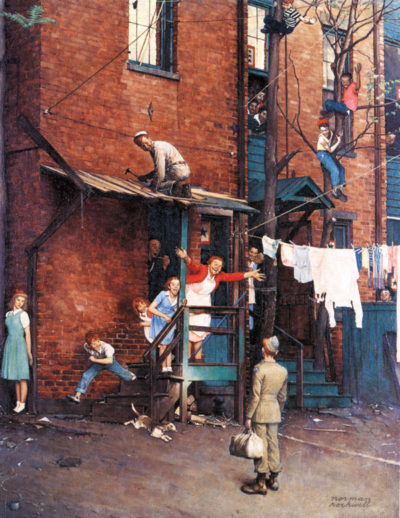
Later, in the fall of 1943, our Navy brother came home for a 10-day leave. When we first spotted him walking down the street toward our house, the three of us were struck by his physical appearance. There was not an ounce of fat on him, and he walked with a new spring in his step. He spent five of his nine nights on leave with the sweetheart he left behind. The rest of the time he visited with immediate family, relatives, and friends.
He was pleased that the used automobile he had purchased just before the war had begun still ran like a top. While he was away in the service, I had driven his car about 80 feet back and forth in our driveway every day to prevent the battery from going dead.
The day before my brother was to return to base, he informed me that he would like to go to the South Station by automobile — his. He proposed that he would drive and I would accompany him and drive the car home.
Somewhat startled by this, I informed him that I was still 15 years old and had no license.
“So what?” he said. “You know how to drive, don’t you?”
“Sure,” I answered. “But what if a policeman stops me?”
“Tell him what you’re doing and that it’s for the war effort,” he said. “He will probably pat you on the back and say, ‘Drive carefully.’”
Well, I did accompany my brother to South Station in his automobile, and I did drive back to Lynn without incident — though I was nervous the entire trip.
For the next couple of years, we kept track of the war’s various battles on land and sea. We were always alert to the possibility that eastern Massachusetts would be a target for bombing, given the knowledge of the important roles various industries now played in the war effort.
On the morning of August 7, 1945, as I rode to work with a neighbor and two women who also worked at G.E., the conversation was about the “super bomb” that the United States had dropped on Hiroshima the day before, though none of us knew the real devastation it had wrought. On August 9, we detonated another one over Nagasaki.
Five days later, President Truman announced Japan’s surrender and declared the following two days national holidays. This was explosive news! Church bells rang. Horns blew. People took to the streets, shouting, dancing, singing, eating, drinking beer, and hugging one another. The next day, the celebratory mood still prevailed at G.E. Mr. Foster, the personnel director who had hired me, informed me that I probably would be let go in about a month since the “boys” were coming home to their jobs. I told him I was happy to give up my job and welcome them back, especially my two brothers who made it.
Midwestern Concern
From Joan Jensen
I remember very well where I was when Pearl Harbor was struck by Japan! I was in church at Memorial Presbyterian in Cherokee, Indiana. I was born and raised in that nice Midwest town.
Our immediate concern was for my brother and his best friend who both attended the Naval Academy in Annapolis. Due to the tragedy, the cadets were pushed through in three years instead of four. They served on the battleship North Carolina.
I Remember
From Gene Delapenia
I remember December 7, 1941. It was Sunday morning in Claremont, California. Grandma was in the kitchen putting the roast in the oven so it would be ready when we came home from church. Momma was upstairs getting dressed while she listened to the radio. Grandpa was outside watering the winter vegetables, and I was sitting halfway up the staircase reading the Sunday comics when the news came on the radio: Pearl Harbor was being bombed. Momma was crying when she stumbled over me as she came down the stairs. My daddy was stationed on the U.S.S. Nevada, and it was one of the ships mentioned as having been torpedoed.
I remember later when my grandpa was an air raid warden. He would wake us up and we would go outside to watch the big searchlights slashing across the night sky. We would listen for the distant thunder of the planes as they flew in from the sea, never knowing who they might be.
I remember Grandma saving empty coffee cans full of leftover cooking fat and ends of soap for the war effort, and Captain America on the radio Saturday morning, urging us kids to save our pennies to buy war stamps. And how I would cut off cereal box tops so I could send away for my very own special decoder ring to catch spies.
I remember the news reels at the Saturday matinee, showing the refugees crowding the roads in Europe and Asia and how very lucky we were that the war was not here! I remember how our next-door neighbors suddenly had to move away, and I cried because my very best friend Amiko was not there to play with anymore.
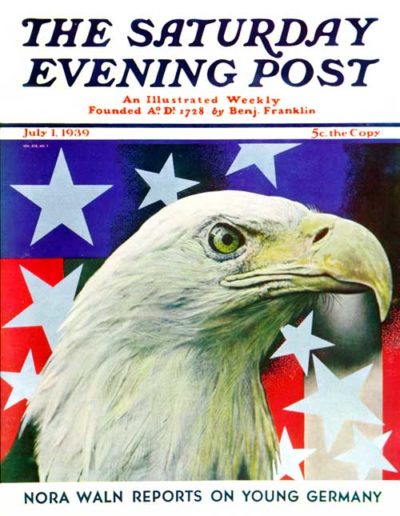
I remember when my daddy came home on shore leave. He would bring sailors from his ship with him so they could have a good home-cooked meal and some family life before they went out to sea again.
I remember my great-aunt Bess hanging the two gold stars in her front room window (two of her sons had been on the Arizona that day). And how my mother would get that stiff, scared look on her face when the doorbell would ring. And how relieved she would be when it wasn’t the boy from Western Union.
I remember my mother going to work on the night shift at the Lockheed Aircraft factory, building fighter planes. And how the ladies on the radio would sing “Bell Bottom Trousers, Coat of Navy Blue,” and I thought that song was just for me so I could sing about my daddy.
I remember when the war was over and everyone was dancing in the street, and my momma was fired from her job at Lockheed because the men were coming home and they didn’t need her anymore.
And it all started on December 7, 1941.
All Leaves Canceled!
From Gerald A. Edgar
My parents were both 22 when the “day of infamy” occurred.
Mom, a high school science teacher in Greenwood, Wisconsin, had come home for the weekend to visit her parents, and with her two sisters had attended a late church service that day. Afterward, as they drove into their driveway, a neighbor came running over to them, shouting, “Quick, get in your house and turn on the radio!” This being 1941, very few cars had radios, so indeed they raced into their home to hear the terrible news. Life changed VERY suddenly. Ultimately, Mom’s dad moved to Bremerton to paint ships at the Puget Sound Naval Shipyard, one sister became a nurse, the other a military plant worker, and Mom took on the duties of teaching meteorology to student pilots as a captain in the Civil Air Patrol.
Dad, on the other hand, had enlisted in the Army Air Corps a year before. He could see the proverbial handwriting on the wall and wanted his choice of service. Stationed at McDill Army Air Base in Tampa/St. Pete for ordnance training, he had a weekend pass that day. He was walking down a Tampa street when a jeep careered around a corner. An MP with a bullhorn kept shouting, “All leaves canceled, everyone return to base NOW!” So Dad, in uniform, boarded the next street car out to McDill, got off at the last stop, and started walking up to the main gate.
Normally there would be only one MP on duty, casually standing with a pistol on his hip, waving in any young man in uniform. This time there were two MPs standing erectly, each with Thompson submachine guns, who shouted, “Show us your ID!” So Dad promptly obliged and then asked, “What’s going on?”
Their reply? “Haven’t you heard, kid? The Japs just bombed Pearl!”
A few months later he was with the first American P-38 fighter plane group to be shipped to Australia. We were very concerned that would be the next invasion target for the Japanese as they had already bombed the north coast. Dad spent nearly three years in the Pacific, returning home as a 1st lieutenant.
Mom and Dad passed away just 3 and 4 years ago, respectively, so they knew full well of the 9/11 tragedy, but in their minds it paled in significance to that Sunday morning in December of ’41. Other memories faded, but never “that day of infamy.”
A Resting Point
From Emile C. Ott
My father joined the Army Signal Corps in 1914. He was assigned to Ft. Mommouth, New Jersey, during the 1930s, and I was born in 1932. In the late fall of 1939, we sailed from New York harbor on an army transport ship for a long voyage to Dad’s new assignment in Honolulu, Hawaii. In the fall of 1941, my father’s commanding officer in New Jersey was assigned command of the Presidio in San Francisco and offered Dad a promotion if he would cut short the Honolulu tour to run his office in San Francisco. He accepted, and we sailed to San Francisco a few weeks before December 7, 1941.
Soon after our arrival, our home provided a resting point for the wives and children of friends who had been evacuated and awaited transportation to their homes in the States. During this time, I sold The Saturday Evening Post by making house calls at the Presidio on Saturday morning, and I sold the early edition of the Sunday paper to wounded servicemen in the wards of Letterman General Hospital in the afternoon. What stands out in my memory was how kind these military people were to a kid with a load of magazines and papers on a Flexi (sled on wheels).
V-I-C-T-O-R-Y!
From Margie B. Bleier
When we heard that the Japanese had attacked Pearl Harbor, my parents talked and I worried. I feared they would bomb us, too.
Mother told me that there was water between us and the Japanese. The fact that I was only 2-1/2 and had never seen an ocean played a big part in my fear.
As I fretted over the possibility of being bombed, the war effort took shape, and long convoys of soldiers in various army vehicles drove slowly past our house toward Fort Benning, Georgia. I decided that I could boost the morale of the soldiers, so I waved for hours while the soldiers cheered and whistled as they rode pass me.
Since Dad was a welder. We moved to Savannah and later Jacksonville, where he helped build war ships. I saw the Atlantic. What a relief! Then Dad was drafted into the army. Everywhere we went there were housing shortages.
Pearl Harbor plunged our country into war, and Americans rose to the challenge. We made do without many things and felt close and patriotic. We children chanted, “V-I-C-T-O-R-Y,” and we were not talking about a ball game.
Where’s Bud?
From Mona Alice Lowery
“Where’s Bud? Where’s Bud?” That question kept repeating in my mind.
I was 16, a junior in high school, preparing to listen to the Sunday opera broadcast on the radio, when instead I heard President Roosevelt announce the bombing of Pearl Harbor. My sweetheart, James “Bud” Lowery had enlisted in the Naval Reserves the year before, at age 17. In May, his unit had been called to active service because of the national emergency. Now I knew he was aboard a refrigerated supply ship, but I did not know where.
Weeks later, I learned that on December 7, 1941, Bud’s ship, the USS Polaris, was safe at Guantanamo Bay, Cuba. On a break from loading supplies, he and his shipmates were playing softball and drinking beer. For almost four years after that, they would be busy carrying supplies through the Atlantic, the Mediterranean, and eventually, after the war ended in Europe, the Pacific.
At home, life changed for me, as well, After graduating high school in June 1943, I first took a job at the Red Cross in downtown Cleveland. Then I found a better job at Cleveland Welding in Lakewood, Ohio. From 4 p.m. to 2:30 a.m., six days a week, I inspected and packed 75-millimeter antiaircraft shells. The shells came hot off the assembly line, and it was my job to carefully feel their surfaces for any burrs that might cause them to misfire. To ensure that I did not miss any defects, I could not wear gloves during work. Eventually the hot metal wore away my fingerprints.
Years later, I realized the clanking of metal shells in the Quonset hut we worked in had taken a toll on my hearing. Today, I struggle to hear conversations, even with hearing aids.
Still, I felt I was doing my part while Bud was doing his. During the war, we helped each other despite long and difficult separations. After we married in 1944, I traveled by train to join him whenever his ship came in to port on the East or West coast. After the war, we enjoyed a long and happy marriage and his shipmates remained among his best friends for the rest of his life.
The Saturday Evening Post is honored to present a special collector’s edition marking the 75th anniversary of the attack on Pearl Harbor. Taken from the pages of the Post, this commemorative issue brings to life the “date which will live in infamy,” portraying a deeply divided nation that overnight united in a spirit of solidarity rarely seen before or since. Order your copy today at shopthepost.com.
Want to share your memories or family stories about life after Pearl Harbor? Click here to find out how.
Knittin’ for Britain
From Norine Johnson
On the afternoon of December 7, 1941, I boarded a city bus in downtown Savannah, Georgia, to return home. I was a junior in high school and had just completed my shift at the Bandbox Theatre, where I worked as a cashier in the evenings and on weekends.
There was very little activity as the bus traveled down Broughton Street, and I lazily enjoyed watching the strollers window shop at the large department stores and dress shops along the way. The stores were closed, of course, for in 1941, we did not shop on the Lord’s day.
The bus turned onto Abercorn Street, and other passengers began to board. As we left the downtown area, I noticed small groups of people standing about on street corners shaking their heads, shuffling their feet, and talking excitedly. Others were leaning out windows or huddled about on their porches and I realized that this was no ordinary Sunday afternoon. Suddenly, the bus jerked to a stop and an excited passenger jumped on shouting a sickening announcement: “The Japanese have bombed Pearl Harbor!”
A blanket of shocked silence quickly spread through the bus as the passengers mulled over this news and sifted through their private thoughts and concerns. Some began immediately to question the source: Where had he heard this? When did this happen? Were there casualties?
I was a teenager. My older brother was in the Marine Corps and he was home on a 30-day leave. His station was Pearl Harbor. I could hardly wait to leave that bus, and when at last it reached my corner, I jumped off and ran the half-block to the security of my home and family.
We spent the evening gathered around our radio, weeping, praying, touching, and talking. Gradually, we came out of our shock and as self-assurance was restored, we were confident that God and Franklin Delano Roosevelt could guide our nation through any adversity. After all, look how those two had handled the Great Depression.
On Monday, we listened to President Roosevelt’s stirring speech as he announced that the Congress of the United States had declared war on Japan. We knew little of the changes which were to take place in our lives and in our world.
My brother was ordered immediately to Camp Lejune where he was engaged in training others in jungle fighting. Within the year, he returned to the South Pacific, where he participated in bloody battles on Guam, Okinawa, and other islands. Once, we each received mail from him where he used the letters G-U-A-M in our address — a different letter for each family member — and this was his code to let us know where he was fighting. My mother cried. She thought her son was shell-shocked and had forgotten our names. I corresponded with my brother’s friends, and I still treasure some of the victory letters I received from them.
Back home, we busied ourselves with war-related activities. In Junior Red Cross, I was “knittin’ for Britain,” learning to roll bandages and to make beds using the hospital fold. In school I saw the male population drastically dwindle as young men closed their books and went into the military. At work, I watched Broughton Street change from a pleasant, slow-paced avenue for strollers to a busy hub-bub of lonely servicemen standing in long lines at theaters and restaurants, always cheerfully searching for a diversion from the unknown that lay ahead of them.
Our churches kept fellowship halls open, where pink-cheeked soldiers, sailors, and Marines were served coffee, sandwiches, and cakes made by our mothers with Karo syrup. We bought war bonds and we danced at the U.S.O. We stood in line to get ration coupons and we stood in line to spend them. Beef, sugar, soap, and chocolate were rare items to come by. There were no stockings, so we painted our legs with leg makeup. We were to learn later that it took many, many chocolate bars and nylons for our servicemen to barter their way through France and Italy.
Americans joked about shortages, we grieved over casualties, we saluted the flag, we prayed for victory and, along with Kate Smith, we sang “God Bless America.” Our confidence and trust were placed in God and in America and at no time did we ever doubt the outcome of the terrible war which was triggered at Pearl Harbor on December 7, 1941.
The Ultimate Sacrifice
From Lucille Bamberg
On December 7, 1941, a neighbor took his two daughters, my sister, and me to visit an elderly man who lived alone. When we returned home, my parents and my brother told us Pearl Harbor had been attacked. One of my brothers, who had not been long out of service, said he was going to reenlist to be with his friends. Our friends asked him not to, but he did anyway. Another brother was in the National Guard, and a third was in college — both of them decided to enlist as well. All three were in what was called “the Pacific Zone.”
The oldest and youngest brothers did not make it home. They gave their lives for their country. The third brother was removed from the danger zone and sent home. He later became the Veteran’s Administrator for our country. Those were sad times for our family, and when I visit their graves, I think about the sacrifice they, and my parents, made for their country.
Brothers in Arms
From Jean Stella
This event was a personal historical event in my family. It happened on my grandfather’s 53rd birthday. I was just 10 years old at the time. We lived on adjacent farms. My grandfather rushed over to tell us the news. He took the event as a personal affront and declared he would never celebrate another birthday.
In a family where birthdays were almost state occasions, that declaration impressed the seriousness of the news on my 10-year-old mind. The news of the bombing of Pearl Harbor didn’t register in my world.
In the following years, my grandfather’s son and two stepsons served in the military. Two of them served in the South Pacific. His son was in the Army Air Corps. He was unmarried and offered to be part of the Japanese Occupation so a man with a family could go home. My grandfather considered this as a fitting end to the December 7, 1941, event, but still did not overtly celebrate his birthday again.
No Place to Land
From Elaine Eagon
I started high school in September, but on December 7, 1941, the world came crashing down! Japan had attacked Pearl Harbor! My uncle, Merlin C. Huebner, one of my mother’s twin brothers, was in the Navy. He was in a ship which was bombed by the Japanese and was one of the few survivors of the attack. WE WERE AT WAR!
The Navy took over all the land on the south side of 24th Street there in North Chicago, so there was no more having lunch on the big rock in the woods. A fence went up, and Navy guards marched up and down inside the fence, day and night. Barracks were built in no time flat. I could hardly believe what was happening!
A small factory, Bartlett Engineering, opened up in North Carolina. My mother got a job there. She had never worn jeans before, but she wore them to work (actually, they were men’s denim work pants); I just couldn’t get over that as we were not even allowed to wear jeans or leggings in high school. We could wear them in the wintertime going to and from school, but never in school!
After the war, we learned that Barlett Engineering made components for the atomic bomb! My mother had never been told what the components she had been working on were for. My mother also used her teaching experience because, during the war, the supply of teachers had dwindled.
My dad got a job at Johns Manville in Waukegan and worked 12 hours a night; so he had to sleep during the day, and nobody had better wake him up! My dad’s normal sleep pattern was early to bed and early to rise, so working nights really fouled him up. He was a “bear!”
It seemed as if the war went on and on. My mother’s other twin brother, Marvin D. Huebner, went into the Air Force; he became a 1st lieutenant and flew cargo planes. He was in the South Pacific, and I remember him telling about going on a supply mission. The navigator told him to land, but there was no place to land his big plane. But the navigator again told him to land; so my uncle landed in a little tiny open spot. Of course, it was the wrong place. The navigator looked at his map again and found he had made some miscalculations; the problem then was how to get out. It was suggested that they remove some of their cargo to make the plane lighter but my uncle said, “No, we got in here and we will get out.” So my uncle maneuvered the plane somehow and took off, and successfully made it out of the jungle; and the supplies were properly delivered.
My cousin Eugene was over in Europe as part of the D-Day Invasion, June 6, 1944, on my sister Lila’s 14th birthday. And my dad’s best friend, Fred Nelson, and his wife, Hazel, had but one son — Sonny who was in the Army. They lived in Chicago, and would come out and visit now and then. Sonny was killed in the war; life was never the same for his parents again.
May 8, 1945, was V-E Day, Victory in Europe! and V-J Day, Victory in Japan, was September 2, 1945. There were celebrations in the streets and ticker-tape parades in larger cities, but my folks were very strict with us girls, so we only heard about them on the radio and read about them in the Waukegan newspaper.
Save the Last Dance for Me
From Henry Worthington
On Sunday evening, December 7, 1941, I was at an eighth-grade school dance out in the country, 15 miles west of Philadelphia.
Around 8:30 p.m., when things were winding down, a father came to pick up his daughter. He told us that the Japanese had bombed a place called Pearl Harbor in the Hawaiian Islands. I knew that the Hawaiian Islands were in the Pacific Ocean, so I and a couple other kids ran upstairs to a classroom where a big world map covered most of the wall. There it was, on the island of Oahu — a very big harbor.
I remember the next day, my father and two uncles listening to President Roosevelt’s famous speech on our old green metal cabinet Atwater Kent Radio. The radio stations kept playing that speech over and over all that following week — and everybody kept listening over and over again. Five years later, seven months after my 18th birthday, I was in the Mariana Islands — on Saipan — helping to close things down.
College Life
From Helen Wilson
Pearl Harbor happened during my freshman year at West Chester State Teachers College in West Chester, Pennsylvania. It caused lots of changes there. Men were drafted or enlisted for army duty. This resulted in some empty buildings on campus that were no longer needed for students. Eventually the U.S. government decided to use these buildings as an area to train soldiers to run an army post office. In those days, letters were the only means of communication for soldiers outside the U.S., so post offices were very important. The soldiers would spend eight weeks training and return to their camps; then another group would arrive to be trained.
I lived with a family in town, where I worked for my room and board while attending classes. On Sundays, I would go with them to church. One Sunday, four soldiers were ushered into the pew in front of ours. After the service, this family invited the soldiers to have Sunday dinner with them and they accepted. We hurried home to prepare dinner.
It was interesting to hear of their army life. We exchanged addresses with them. Only one continued to write to me; that was Sgt. Warren W. Wilson, who had spent most of his life on a farm in Randolph, Iowa. I was also raised on a farm, so we had some common interests. His army camp was in Camp Adair, Oregon, where he spent some 18 months.
In October of 1944 he was sent to New York prior to departing for Europe. There were delays, and when he received, a furlough he came to Pottstown, Pennsylvania, where I was teaching school. We were married in Reading on December 2, 1944. He was in Europe until end of war and received his discharge in Camp Gordon, Georgia.
After that, I resigned my teaching position. I came with him to his home in Randolph. He ran the hardware store here. We had been married nearly 60 years when he passed away in April 2003.
The Saturday Evening Post is honored to present a special collector’s edition commemorating the 75th anniversary of that infamous day. It features articles, editorials, eyewitness accounts, and art from the Post archive exactly as it was before and after the Pearl Harbor attack. Order your copy at shopthepost.com.
Want to share your memories or family stories about life after Pearl Harbor? Click here to find out how.
Wounded at Pearl Harbor
From Betty Rotramel
William “Bill” Rotramel was serving in the Army Air Force at Pearl Harbor, on December 7, 1941. Three years earlier, at age 21, he had enlisted in the Navy Reserves as he saw signs indicating the United States could be heading toward involvement in “a shooting war.” He wanted to have proper training and preparation if that were to happen. After enlisting in the Navy in 1938, he was transferred to the Army Air Force in January 1940.
At the time of the attack, Bill was assigned to a small army transport vessel named Haleakala (differing from the USS Haleakala built in the late ’50s). His vessel was docked at Pearl Harbor, moored between two larger ships. They were to lift anchor on Monday morning, December 8, heading out to the Christmas Islands, carrying a load of dynamite to be used in site preparation for construction. Bill had received a weekend pass, so was not on the vessel when the first wave of attack began.
So, on that fateful Sunday morning, having spent the night ashore with friends, Bill was standing near the kitchen window cooking breakfast prior to the first wave of attack. He commented to his friends, “They’re really putting on a show today.” All assumed this to be a sound of regular military exercises, which were common to the area, until a bullet ripped through the door, acutely jarring them into awareness that this was something serious. They were under attack! At this point, Bill’s sole mission was to get to the ship.
He recounts, “When we went outside the house, the air was already becoming thick with smoke, making it difficult to see exactly what was happening. The whole area was being strafed with bullets from Japanese planes. I remember running down the street toward the shipyard with another young man running beside me — I didn’t know him. A bullet struck and killed him instantly. When I got closer, I saw the mess hall had been heavily bombed. I began to help carry out the dead and wounded.” He said he would never forget the sight of that area in the aftermath of the first wave of attack.
By the time he reached the Haleakala, the next wave of the attack was coming more heavily on the large battleships. On Bill’s ship, the dynamite was sitting on deck and the holds were uncovered. Bill and another shipmate were moving large timbers to cover the holds when a shell struck near the center of the timber, splintering it in two. He said he was afraid to look down, as he feared his arm would not be there. Thankfully, he was still intact. Perhaps the larger vessels provided a measure of protection for their smaller vessel as they escaped with little damage overall. They actually departed the next morning, heading down to the islands as planned.
During the attack, Bill had been hit with shrapnel above his left hip. At the time, the shrapnel was not removed, but some weeks later the wounds became infected, so he had to have surgery to remove the shrapnel in a tent hospital on one of the islands in the South Pacific.
In the confusion of all the happenings subsequent to the attack, perhaps somewhere in the midst of his surgery and recovery, the army lost track of Bill’s paperwork and whereabouts. His paychecks stopped coming, and he discovered he was actually counted as deceased at one point. His family did not find out he was still alive until May of 1942. Subsequent to his recovery, Bill recounted that he was flown all over the South Pacific in his role in repairing radio equipment. He recalled some of the most dangerous times beyond that day at Pearl Harbor were experienced in Leyte and Guadalcanal areas, working with the Infantry radio operators. He said, “At night, men would infiltrate the enemy lines under cover of darkness and then return to report the enemy positions to the radio operators who would send the information on.” He considered those men as having the most dangerous jobs in the military.
Bill never received the medals, such as the Purple Heart, which would have come through his being wounded at Pearl Harbor. Later in life, there was an effort on the part of his children to have the medals awarded to him. Their inquiries yielded only one response, suggesting if the facility and surgeon could be identified, perhaps the incident could be explored further. Needless to say, this information was not going to be available! While this was disappointing to the family, Bill always said that he didn’t consider himself a hero. He said, “The heroes were the ones who didn’t make it home.”
Thankfully, Bill did make it home. After his time in the service, he met a young lady named Betty. They were married in 1952 and enjoyed the next 52 years together, being blessed with four children, who all surely considered their dad to be a hero.
No One Complained
From Sonia Schork
On December 7, 1941, we were at my girlfriend’s home in Wurtsboro, New York. We were 7. Descending the stairs, we saw our parents huddled around the radio, our mothers crying. We asked why, of course; “We are at war,” one of them said.
So began our conservation of paper at school, our lack of rubber erasers and bubble gum, our victory gremlins clubs to help the war efforts, our victory gardens, our picking milkweed pods to stuff life preservers since the [Southeast Asian] plants were no longer available due to Japanese occupation, our making of shoebox gifts of razors, tooth powder, candy bars, etc. for service men. Mom saved enough (rationed) sugar for our birthday cakes. We had few Sunday rides to save (rationed) gas and rubber tires. No one complained.
Dad and Mom moved to Newburgh, New York, as Dad (a retired-on-disability New York state trooper) got a job organizing and supervising a large civilian guard force for Stewart Field (then Army Air Corps) and West Point Military Academy — to free up military personnel. Mom cleaned in a parts warehouse at The Field. Grams took care of us at home.
Everyone, “for the duration,” listened to Pres. Roosevelt’s “Fireside Chats” on the radio, and everyone helped everyone in every way. I grew up during those years of sacrifice, caring, and work for our country. We had to win, and we did.
One day when the fire siren rang and rang, everyone came out into the streets, jumped, cheered, and fell in prayer on their knees, hugged and cried. It was over, at last.
Hello to Manzanar
From Judith Fujito
I am a third-generation Japanese American (sansei), so that means my parents were born in the United States; therefore, we are all American citizens by birth. They are second-generation (nisei). My grandparents were first-generation (issei) and born in Japan. The attack on Pearl Harbor had a life-changing effect on my entire family as my parents and grandparents lost everything we had as we, along with approximately 120,000 other Japanese Americans, were incarcerated in internment camps (basically POW camps) with very little warning. We could only take what possessions we could carry, and of course nothing that was considered illegal or dangerous, such as cameras or any type of Japanese souvenirs (especially swords or any type of weaponry).
The camps were put up hastily, and many Japanese Americans were initially taken to temporary housing, such as race tracks, and forced to live in horse stalls under squalid conditions. The food was substandard in the camps, and we had to live in barracks constructed with tar-paper roofs and had to contend with sand and wind coming in with very crowded quarters. Since I was only 2 years old, living in the camp was not as hard on me as on my parents and grandparents. We were taken to a camp in California called Manzanar, which was near Lone Pine close to Mount Whitney. It was extremely cold and windy, with snow in the winter and hot and dry air in the summer.
My husband and I have revisited Manzanar on three occasions, as it is now a national monument and has a fine interpretive center there as a living monument of what we went through during the War. It was a very hard time for my parents and grandparents as they had no idea how long we would be living in the camp and had to depend on the government for our survival. Our entire way of life had been totally uprooted, with our civil rights as U.S. citizens taken away from us. Although we had no allegiance to Japan or its people and their part in the War, we were persecuted because we were Japanese in physical appearance, and we felt, through racial bias, that we were being singled out as “the enemy.” We were frustrated and puzzled by the way we were treated by the U.S. government, as though we were enemies of the U.S. even though we were U.S. citizens!
It seems there are many American citizens today who are totally unaware of what happened to us Japanese Americans who were U.S. citizens during World War II; I think it is important for people to be made aware of what went on so this never unjustifiably happens to any minority group again.
A Welcoming Place
From Carol Cochran Higgins
My story begins prior to this historic date.
My parents were instrumental in setting up a satellite Sunday school from our church within a Japanese-American community on Mormon Island in Los Angeles harbor. This community consisted mostly of fishermen and employees of the local cannery. There were kids my age, young adults, and a few elderly. There were Halloween parties, Christmas programs, and social get-togethers. Mom started an English class for the older ladies. At home, my sister and I played house in our kimonos and Japanese “zori” sandals or flip-flops.
Then came Sunday, December 7, 1941. We had returned home from church on the island, and my aunt and uncle had come to visit. They brought me a gift for my eighth birthday. The radio was on with the appalling news of Pearl Harbor, and I remember the atmosphere of shock and sadness among the adults. Of course, I couldn’t realize how this was to affect all of our lives.
Our Japanese friends were sent away, pretty quickly, to a holding camp. At Santa Anita Race track, they were housed in jockey quarters, stables, and barracks. We would go visit on Sundays and have dinner with them in the cafeteria. Mrs. Arihara knitted sweaters for my sister and me while they were there before being sent to internment camps in Arkansas and Arizona. These were our friends.
Then, in early 1942, an Army Tent Camp was set up across the street. Mom woke us in the middle of the night and warned us not to turn on the lights. Army trucks, lots of Army trucks, were rolling in. In the next day or two there was a large camp of tents set up. It was a Barrage Balloon Battalion. The headquarters was located in a small white house on the corner of our street.
It didn’t take long for my parents to start befriending these young soldiers. Our home became a welcoming place for them. About 10 of the soldiers formed a band and set up practice in our living room. Our home had an enclosed front porch which was cordoned off to form a bedroom at one end for a couple of wives when they could visit.
That December, I celebrated my birthday with six soldiers as my guests. I still have the little heart necklace they gave me. A Christmas party was planned with young ladies from our church to be in attendance. Then there was an alert and all were confined to the base — so no party. Well, Mom marched up to headquarters to approach the commander and told him about the planned party and all these young men spending their first Christmas away from home and that it just wasn’t right. He pondered this a bit and then suggested, if she agreed, to have our house included in the parameters of the camp for 24 hours so they could go on with the party. It was done!
One day there was a phone call to Mom. The young GI on the phone said, “Mom, they left me. I’m in Palos Verde! We were on maneuvers in camouflage in the undergrowth, and when I went back, I couldn’t find them … the trucks were gone, they just left me! Can you come get me?” So, Mom piled us in the car and we headed out to the hills, picked him up, and returned him to base.
My parents kept in touch with both groups all through the war and for years afterward. Two Japanese families came to celebrate my parents’ 50th wedding anniversary in 1972. Soldiers identified themselves as “Army Son” and “Ex-Army Son” in letters to my parents up until my father’s death in 2003.
Many more wonderful instances come to mind, and I am so aware of the relationships I was privileged to have had. For the soldiers who gave up so much of their young lives and my Japanese friends who embraced the love of this country … they were just as American as my brother, sister, or myself, but were portrayed as a threat because of their physical appearance. All of us should take a close look at our intentions and acknowledge the human spirit in all of us.
I have many beautiful artifacts in my home — dolls, platters, and hand carved vases — that have brought me so much pleasure over the years and are a constant reminder of those friends from long ago who enriched our lives, and make me so thankful my home was a welcoming place for Japanese and GIs alike. I learned such valuable lessons that have lasted a lifetime.
Survivors
From Doris Chrastina
I received my second copy of The Saturday Evening Post and was surprised to see the picture of the West Virginia during the Pearl Harbor attack (Sept/Oct 2016, p. 34). The small motor launch was there to rescue the men in the water. One of them was my husband. He saved many men: leading them in the boat, taking them to the “mess” hall, stacking their bodies to be identified later.
He said everything was blacked out, and when the second wave of planes came in, they thought they would take over. He said that they could have, since the U.S. wasn’t prepared. I believe that God in His mercy spared us.
My late husband wasn’t one who wanted recognition, and it was some time later with the encouragement of family that he decided to write his story.
After we met and married, he had duty there (again), stationed at Barber’s Point Naval Air Station. He served 22 years in the Navy.
After the war, the surviving men formed groups all over the U.S. The survivors met once a month, wearing their “Pearl Harbor” caps. They were recognized during Memorial Day and Labor Day in parades. How thankful we are that because of so many sacrifices and lives given, we can live in a free country. My prayer is that we can continue to live in a free country; mostly for our children and grandchildren.
A Wedding Day
From Bernadette Cammerata
Pearl Harbor — who can ever forget that day? Not my family. December 7, 1941, was the day my sister Teresa got married. I remember it was a cold, sunny day in New York. As the Maid of Honor, I wore a blue dress and carried yellow mums. Two hours before the wedding, we heard that Pearl Harbor had been bombed.
“Where’s Pearl Harbor?” everybody asked.
Terry and Jack McKenna were married that afternoon at St. Peter and Paul Catholic Church in the Bronx. When Terry and Jack left, I went to the local movie house with the Best Man to see Sergeant York played by Gary Cooper.
The next day, my brother Bill enlisted in the Army Air Forces. Russell, a year later, went into the Navy. My sister Terry lived near St. Raymond Cemetery, and she could see it from her apartment. Terry didn’t like the view. Three months later, she was buried there, having died on an operating table. She was 21.
Forget Pearl Harbor? Never! Anybody who lived at that time will never forget. Wars leave an imprint on the heart. I’m 94. I hope to see my sister someday. John Adams wrote that he couldn’t conceive that God would make us to only live and die on this earth. I hope he’s right.
Stars in the Windows
From Beverly M. Johnson
On October 25, 1941, I became 10 years old. On December 7, I was playing with my cousin at her home when we heard from the radio that the Japanese had bombed Pearl Harbor — we were stunned, how horrible! We knew we had some of our soldiers in Europe fighting. Now we saw them going off to war in huge numbers.
Each household that sent a soldier off got a little banner with a star on it to hang in their window. If the family member was killed, they were given a banner with a gold star. We saw a lot of them around our town. When we learned of the Japanese attack and their brutality, a wave of indignation swept our country, and we were willing to do anything we could to help our soldiers and sailors. We were issued ration stamps for shoes, tires, sugar (as we could no longer get sugar from Hawaii and the Philippines). So many men and women had gone to work in the munitions plants, as President Roosevelt said we needed 60,000 airplanes in 1942 — twice that in 1943.
My brother-in-law, who was in the Navy, was sent to the Pacific to work on a drydock, a floating shipyard that repaired the huge ships and returned them to duty; 11 ships could be worked on at once. The CCC boys who were stationed in our town were recruited to build roads and air strips at air bases. German and Italian prisoners were sent to Idaho and housed in a sugar factory and sent out to work on the farms with military guards.
Children organized, and were called the National Junior Salvage Corps. We went from house to house looking for salvage metal. We grew victory gardens to provide us with food so that as much as possible could be sent to the military. We were much more patriotic then than we are now!
Barbed Wire Beach
From Pat Evan
I was 12 years old when Japan attacked Pearl Harbor. I was living on an acreage just outside Aberdeen, Washington. A friend and I had gone to a movie, and we learned about the attack when her parents picked us up. The news of war was frightening, and I was anxious to get home to the protective arms of my mother.
Home was relatively close to the ocean beach, which had been closed for recreation — even cordoned of with rolled barbed wire and made ready to be defended if necessary. Our two-lane highway was busy with convoys of trucks loaded with troops, tanks, and weaponry, the same highway where I boarded the bus for school every day. In addition to that, our area was designated for blackout over the nighttime hours. Local citizens became air raid wardens who enforced the order for all windows to be covered with black tar paper through the night.
Our air space covered a lightly populated area regularly used to train Air Force pilots. I often lay on the ground on my back to watch P38s going through their “dog fight” maneuvers. Of course, everyone in the country was issued ration stamps for sugar, meat, and gasoline. Sugar was a consideration in our area, with many garden plots of berry patches the ladies used for pies, jam, and jelly. Honey became a substitute for sugar in baking.
Since nylon was used for making parachutes, nylon stockings were not produced — rayon was an unsatisfactory substitute. I graduated from high school in 1946 and nylon stockings were in very short supply, even then. My mother stood in line for two hours to get a pair for me to wear at graduation (they had cotton feet and tops).
My brother and future husband both served in the Pacific, and my mother worked for a company manufacturing landing craft. It’s mind-boggling to think both my brother and husband might have been aboard one of those boats as they landed, facing battle for you and me.
A Front-Row Seat
From Virginia Gordy Baker
I was a 10-year-old girl who had a front-row seat to the attack on Pearl Harbor, December 7, 1941. We lived in Navy housing located between Hickam Field and Pearl Harbor. That morning, I was upstairs getting dressed for Sunday school. My father was in the living room sitting in his favorite chair and reading the paper while my mother was in the kitchen cooking breakfast when the electricity went off. We could hear popping noises from outside and see planes flying low over the houses. I got my father’s binoculars and, with my elbows propped up on the window ledge of my bedroom, I could see the planes flying low over the houses … so low I could see the faces of the pilots. The sky was full of puffs of black smoke from antiaircraft guns on the ground.
My father called up to me to get away from the window and come downstairs. He told us to stay inside and then left for his duty station at the Instrument Shop located on Ford Island. (He had been recalled to active duty on October 3 and was back in uniform the next time I saw him.)
My mother gave me my Christmas presents that morning because she wasn’t sure we’d be alive on Christmas. She was sitting in an armchair near the staircase, and I was sitting on her lap when we heard a crashing noise upstairs and a splintering of wood coming down the staircase behind us. All of a sudden, a long, bullet-shaped object landed at our feet and kept spinning around. My mother grabbed me and we ran out the back door because she was afraid it would explode. Nothing happened, and a neighbor came in to look at it. He picked it up and dropped it because it was still hot. He said it was an American tracer bullet from one of the planes dog-fighting overhead.
Later, we discovered its point of entry. It had come through the side of our second-story unit, through the headboard of my parent’s bed, which was up against the outside wall. It tore through the pillows and covers, hit the bedroom wall and ricocheted around the bathroom walls, down the staircase, and then landed on the living room floor at our feet.
We weren’t allowed out of the house after dark because we might have been shot by Marine sentries. Flashlights were permissible if covered with dark blue cellophane, which cut visibility along with light. It was just safer to stay inside. We were told to sleep on mattresses on the floor downstairs in case planes returned during the night to strafe the houses. For weeks after the attack, I had nightmares of Japanese soldiers parachuting to the ground. Needless to say, it was an unforgettable experience.
Amateur Hour Interrupted
From Jewell Haney
In 1941, it was a regular thing to do our Sunday afternoon on the farm. I was 14 years old, my little brothers 10 and 8 years, and with our parents we listened, on our battery powered radio, to Major Bowes Amateur Hour. On December 7, 1941, we went into the living room and turned the radio on to the Amateur Hour, and it was interrupted by “the Japanese have bombed Pearl Harbor.”
My little brother didn’t understand, and I was confused and not quite sure what had just happened, because I remembered that the men had saved their razor blades to send to Japan — and they had done this to us?
I’m 89 years old, my husband of 67 years passed in 2014, and was a veteran of WWII and served in the U.S. Navy.
We Donated Our Comic Books
From Carol Gallo McDaniel
My late husband Charles McDaniel served as a Marine in the South Pacific during the war. When Pearl Harbor was attacked on December 7, 1941, I was an 8-year-old child living in Yuma, Arizona. I don’t remember that day, so perhaps my parents shielded my young ears. I do remember when the two neighbor boys entered the war. Mike Gilliland was a paratrooper and was killed soon after he joined. His brother Ralph was drafted into the Army and died in battle shortly after Mike.
My memories of those early years included collecting foil from empty cigarette packages that had been dropped in the gutter on our street. We soon became aware that we could no longer buy Bazooka bubblegum as this treat went to the servicemen. We were no longer able to buy jacks because they were made of steel needed for the war effort. We donated our comic books to the paper drives. Once in a while our parents had to pull down all the window shades and turn out all the lights as a precaution.
My parents joined the Civil Air Patrol and began to watch the skies for enemy planes. Many things were rationed: gasoline, coffee, shoes, sugar, to name a few.
I Had Never Seen Him Cry
From Judy Steele
On December 7, 1941, I walked into the living room of my home in Pennsylvania to find my father crying. I was 6 years old and had never seen him cry. He and my mother were listening to the radio and had just heard the news of Japan’s attack on Pearl Harbor.
I stood mute — listening to their sobs. I knew, even as a 6-year-old, that the event was something awful.
We Set Aside Childish Things
From Howard Norlin
December 7, 1941, was a snowy winter Sunday, and six high school graduate couples were tobogganing in the beautiful winter snow in northern Minnesota when we heard the news on Dad’s ’36 Ford car radio. We then matured fast!
A Broadcast in Britain
From Frances Walsh
I am almost 96 years old, but I can clearly recall every moment on the night that we heard it. A group of us were in the living room in England, listening to the BBC 9 p.m. news, when the announcement came: “Pearl Harbor has been attacked.” A moment of shock ensued; then my husband —in uniform and on leave — said, “Oh, this will bring the Americans in with us!”
Friends Behind Barbed Wire
From William Drewes
I remember the bombing of Pearl Harbor like it was just yesterday. I was living in the small town of Arcadia, California, which is just east of Los Angeles, with my mother, father, and sister. Arcadia was a farming town, and most of the farmers were Japanese Americans. My best friend was Japanese American, as was my first girlfriend. The Japanese Americans were always very clean and hard-working individuals. They also were among the smartest in school and excelled in most sports they played.
Sunday morning, December 7, 1941, my mother and father were attending church services while my sister and I were listening to the radio. The radio station we were listening to broke in to report that our military and naval forces at Pearl Harbor were being bombed by the Japanese. I had no idea where Pearl Harbor was, but soon found out.
Then in the early part of 1942, the decision was made to round up all the Japanese Americans living on the West Coast of the U.S. and place them behind barbed wire in the parking lot of the Santa Anita race track, which was very close to where we lived. I can remember seeing my best friend when I rode my bike to the race track, and he asked me why were they placing us here, as we had done nothing wrong. That was the last time I saw my friend.
Packing the Churches
From Jean Rolf
My memories are vivid … like it wasn’t very long ago. I recall my teenage uncle came to our house. I was 14 years old. My parents were upset with his news that Pearl Harbor had been bombed! Those days before television, we got vivid news on the screen at the movie theater between the movies that were shown (there were usually two movies and a cartoon and news). I dreaded seeing the news of war in other countries. And now the U.S. would be in the war that was to be the big World War II.
My dad wanted to join the Army to do his part, as did so many young men. Dad was 35, and mom reminded him that their third child was due soon and he was not in line to be drafted. Dad took a second job — nights driving an auto repair truck.
Our citizens were willing to join the war effort, in the military or at home, in an effort to stop another country from taking over the U.S. Women joined the work force in ship yards in California. We had rationing of sugar and shoes, among other things that were limited. Also, people collected special things to help the war effort. My family attended a weekly evening prayer service at our church, and when the war began, I noticed the big increase in attendance at that church service as we prayed to end the war and bring our troops home safely. We had some black-out nights to prepare for the possibility of bombing on the home front. Fortunately, that never happened — war was always “overseas,” but fear was real!
I remember the joy of the summer day in 1945 when war was over. I was getting ready for my last year of high school as the U.S. rejoiced and prepared to recover from World War II. It was sad to have many of our military killed in action and others returned with injuries for life. The effects of war linger and are painful. May we always strive for peace.
A Child on the Church Lawn
From Katie Freeman Bullard
I was caught up doing the things 4-year-olds do in the nursery while one’s parents are attending the church service. The teachers stopped everything and herded us outside to the front lawn to find our parents. Everyone who should be in church was outside. I remember walking around the groups of people looking up to find my Daddy. I remember feeling out of place and unreal … everyone was upset and angry … even afraid… but were talking in hushed voices.
My family lived in central Nebraska. The small airport in Kearney mushroomed into a huge airbase, becoming the gathering place of soldiers being shipped to the Pacific theater.
America Honored Its Fallen
From Larry Estes
Every family was devastated on December 7, 1941, when the United States was attacked by the forces of evil and cowardice. However, our soldiers did not die in vain. Through respect, hard work, and dedication, American honored its fallen, and once again turned itself into the greatest nation on earth.
Fire on the Water
From Harold Hogan
I was in the National Youth Administration (NYA) in Marshall, Texas, where I learned the sheet metal trade. In August 1941, a job came open in Hawaii paying 75 cents an hour. Three other boys and I at the NYA applied and were accepted for the job at the Naval Yard in Hawaii.
Each day, a bus would come by and carry us to the Naval Yard, where we were assigned to work on ships or wherever else we were needed. We lived at the barracks for about two months, and then we moved up into the hills. On December 7, 1941, I was awakened by one of the men saying, “The Japs are bombing Pearl!” I couldn’t believe him, but when I looked out the window, I could see the fire and smoke and hear the bombing. We listened to the radio and where to report for work.
When we arrived at the yard, hundreds were going through the gates trying to get to the Naval Yard shop. Only a fence separated us from Hickam Field as the Japanese were bombing and strafing the people, planes, and buildings. Our boys were trying to return fire, but they couldn’t get to their guns. If the Japanese planes had made a pass over the gate where we were coming in, they could have killed hundreds. Our shop was about a mile from the gate, and as we ran to the shop, we could see that the Pennsylvania had been bombed. Fire was all in the water.
Inside the shop, we could not see anything, but we could hear the explosions and chaos of people running and screaming. We were not allowed to leave the shop area, so we could only imagine what was going on outside. We didn’t know if the Japanese were invading or if they were still bombing. When the shop doors were opened, our beautiful island had changed. Smoke filled the sky — debris everywhere — Hickam Field had planes smoking — airplane hangars gone — and men were cleaning the runway. We ran to the dock. We couldn’t believe our eyes — ships burning — many on their sides — others upside down. People were everywhere cleaning debris and removing bodies. We had to wait until they finished their work, and then our job of repairing damaged ships began. We started working 12 hours a day. Our crews were able to get most of the ships repaired to join the fleet and fight.
I continued working in the Naval Yard for the next few years. I enlisted in the Navy on the 12 of April 1944, but after I was sworn in, the commander told me he was leaving me at the shipyard. When I asked why, he told me I was more valuable to the war effort in my position at the Naval Yard than on a ship. He said he could take a man and make a sailor out of him in a month or two, but he couldn’t train him to do my job.
On the 22nd of September, 1945, I was discharged under honorable conditions as a ASV-6 USNR-SV. After Christmas in 1945, I boarded the Harrison (the same ship that brought me to Hawaii in 1941), and I came back home. How wonderful home and family looked to me.
A Terrible Scream
From Ernest Rush
In Duboistown, Pennsylvania, my trapping partner Lamont Eoute and I were skinning muskrats in the basement when a terrible scream upstairs scared us. Lamont’s mother was hysterical, screaming that her father stated that the yellow people would rule the world. We both served in the U.S. Navy during World War II.
The Story Must Be Told
From Julie (Ferguson) Anderson
Because our father, Richard F. Ferguson, survived the attack on Pearl Harbor, my siblings and I grew up hearing many stories of the conflict. He was passionate about sharing these stories of patriotism, heroics, heroes, and how America’s history was impacted that fateful day. Often, he said, “If the story isn’t told, all that history and loss of life will be lost.” So, he spoke at elementary schools, junior high schools, and high schools here in southwest Missouri; he was a frequent speaker at civic clubs and various organizations; and he wrote two books of prose and poetry concerning Pearl Harbor. Both books (Look Back Once More and Forget Pearl Harbor? … No Way!) were compilations of his experiences in Hawaii — its beauty, but also the ugliness of war and bloodshed.
Our father died November 7, 2008, at the Missouri Veteran’s Home in Mt. Vernon, Missouri. His memorial service was at 11:00 a.m., November 11 — Veteran’s Day. Thank you for the opportunity to share an important part of our father’s life.
Letters Home
From Joyce Keller
Sunday, December 7, 1941. How can it be 75 years ago, when it seems like yesterday? I was nearly 6 years old. My brother was in college. We got home from church, and I was in the backyard when I heard the radio on louder than usual. I went inside and Mother was standing in the kitchen crying. I was frightened to see her cry and clung to her legs. My father was silently standing by the radio, and I finally crawled up on his lap and he explained what had happened. Pearl Harbor was being bombed.
It was a long, sad, quiet day with the radio continually giving reports. My brother had been with his girlfriend’s family and was driving home. The next morning, my father, who was 42 and had been a Marine in World War I, went to town to re-enlist. They refused him, and mother was so relieved. My brother tried to enlist in the Marines but was colorblind, so they told him to join the Army or go home and eat carrots and come back! He joined the Army and was gone for over three years in Africa and France.
My father worked at the post office, and so every package we sent would be padded, and I would throw it against the basement wall and jump on it to see how sturdy it was. Every letter from my brother was read aloud, and my hundreds of questions were patiently answered.
75 years ago? No. Only yesterday.
Aboard the Ward
From Harriet Wood
My husband, Russell W. Wood, passed away in 1999. He was 18 years old when he joined the U.S. Navy. He served aboard the destroyer the Ward. He was one of the guys on the gun that sank the Jap sub that was trying to enter Pearl Harbor after calling the base; they did not believe the message. He would have been happy to hear they found the remains of the sub some years ago. The gun proudly sits in front of the capitol in St. Paul Minnesota today with a sign naming the guys that were serving on that ship. The Pearl Harbor museum has a nice display about his ship.
In the Shadow of War
From Marilyn Zielke
“J-E-L-L-O! – Welcome to the Jack Benny Hour.” My ear was glued to our tall floor radio at 6 pm on Dec 7, 1941. News interrupted the program. “Pearl Harbor was attacked by Japanese warplanes Sunday morning. Many people were killed, planes destroyed, and ships sunk. The president will speak…” I was 13 and old enough to understand this was serious and would affect our lives for a long time. After the first shocked seconds, I ran to the barn where my parents were doing chores after an afternoon of visiting an uncle, aunt, and cousins. The looks on my parents’ faces I remember to this day. I finished eighth grade in our rural school and went on to high school years overshadowed by war. In some ways life went on, but always the specter of war was part of every decision.
News of loved ones leaving for war, deaths, injuries, and missing soldiers came in our newspapers every day. That news and the news reels we saw along with the movies were delayed compared to our instant news today. Movies had war themes, whether serious or entertaining. There was a feeling of fear lurking as our prayers went up, wondering if we were to be overrun by German or Japanese soldiers. That fear remains somewhere in my memory today.
Sundays after church, my father spent the afternoons driving around selling war bonds. He could do this because we were farmers and had enough gas for our car. His work on the farm went on, along with [his participation in] farm organizations, the church, and as chairman of our school board. My parents grew their usual big garden. My mother continued to can vegetables and fruit. I think corn syrup took the place of sugar sometimes because sugar rationing made that a problem. Mother managed to buy enough flour to do her bread baking but complained of the quality sometimes.
Everything at school was done with the war as the background. The older boys knew they were graduating to military service. The year after the war, I started college with the veterans on the GI bill. It put new meaning to the phrase green frock! These people left as boys and returned as a new breed of men.
A Real-life Rosie the Riveter
From Clarice M. Grove
How well Pearl Harbor stays in memory! I was a young farm girl, just married November 20, 1941 —17 days — to a young fellow that had enlisted in the Air Force for one year! He was stationed at McChord Field in western Washington state. We lived in an apartment at Seattle, Washington. He was home for a weekend pass. We heard the news early Sunday morning, and he went back to the camp immediately — ALL LEAVES CANCELED.
A couple weeks later, I was hired and went to work at Plant 2 in South Seattle in the machine shop, on the Burr Bench. Two days later, I was moved to a “milling machine,” and before the week was over, I got moved to a large electric lathe, making “nuts and bolts.” I did that for over three years.
My husband Irl was getting his training and preparing for overseas service. Soon he left for the European Theatre of Operations with the 9th Air Force and spent over three years there during that horrible war. Five years passed before his discharge — a long and lonely time for a young girl away from her family.
I will be 96 on my next birthday. We were married 68 years. He was 93 years old when he died. We lost many relatives and dear friends during that war event. I am still living on the 10 acres we bought and built our home on, still raising Concord grapes, staying as active as I can.
An Arizona Survivor
From Robert Shroyer
My dad, Frank Shroyer, was a plank owner (a member of the original or first crew) on the USS Arizona. His brother-in-law, my mom’s brother, Eldon Reifert, was on the Arizona when it was bombed at Pearl Harbor. Eldon was a radioman who survived the bombing but soon after changed his rating to boatswain mate, as he didn’t want to be inside the ship anymore. He retired as a chief boatswain mate after 20+ years.
He and my dad used to say that dad was on the Arizona and put it in commission and Uncle Eldon was on it when it went out of commission.”
See the art, editorials, and reporting exactly as they were in the weeks before and after the attack on Pearl Harbor in The Saturday Evening Post’s special collector’s edition commemorating the 75th anniversary of the attack. Order your copy today at shopthepost.com.
If you would like to share your memories or family stories about how life changed after December 7, 1941, we would love to hear from you. Click here to find out how.
Run for the Hills!
From Sam Parnes
I am now 83 years old, was 8 years old “then.” My father was stationed at Hickam Field until October 1942. The following is my story I wrote for my family many years ago, a personal, handwritten story to be passed down to children, grandchildren, etc.
“THE JAPS ARE HERE!” this 8-year-old child, who didn’t know there was another side of mankind, shouted upon hearing the first blast of the attack on the fleet a few blocks away. My father — a master sergeant in the U.S. Air Corps — was reaching to remove the first waffle from the waffle iron on that Sunday morning, December 7, 1941. We were preparing to eat breakfast.
But how did an 8-year-old child know “The Japs are here!”? I can still hear myself shouting that exclamation, which changed my life, along with millions of others. How did I know? Maybe the fact that we drove to Pearl City on Saturday, December 6, to do our usual thing of buying meat at the Japanese Meat Market and getting our hair cut at the next-door Japanese Barber Shop. Both, along with other Japanese businesses — always open on Saturdays — had been closed. Maybe my father had said something that my paradise-laden mind didn’t register … until that first blast the following day.
That first blast was quickly followed by more blasts. The sound of low-flying aircraft joined the noise. We ran out to our front yard. Our trees were swaying violently because of the low-flying Japanese aircraft. Because of their open cockpits, we could easily see the pilots’ faces, their goggles and scarves as they passed by. As “interesting” as that was, we dashed back into our quarters and took positions in an interior hall. We learned later that the Japanese did not intend to bomb or strafe residential areas. Not much comfort would have been gained had we known that, because the early noises had become mixed with the noise of various Navy antiaircraft weapons. Everything fired into the air from the Navy fleet in the nearby harbor had to come down, without discriminating between residential and nonresidential.
My father and mother, on one hand, assured me we would be okay. On the other hand, they were not able to hide their fear from me. For eight years, I had trusted their protectiveness, but now …? They were adults, and they were scared. Why shouldn’t I be scared also?
There appeared to be, and it was confirmed later, two waves of aircraft during the almost three hours, with an almost-quiet time between. But realize that when that first wave pretty much stopped, we didn’t know a second wave was coming. We thought we had survived, only to have that second wave begin.
I don’t recall how we learned it was safe enough — not safe, just safe enough — to make a run for the hills. My father of course couldn’t leave the post. Sgt. Elmer and Marie Drier lived around the corner from us. They had one daughter, about my age and two teenage sons. One of the sons drove their car and we quickly arranged for the other son to drive our car (my mother did not drive). We said our frightful goodbyes to the husbands/fathers quickly and drove to the isolation of the mountains.
While we were still on Hickam, we drove past a quickly improvised .30 caliber machine gun emplacement. It appeared to be a bomb crater in which two soldiers had set up their machine gun. As we drove by, one man had ripped his own undershirt off and was using it as compression to stop the bleeding of the other man. Remember: “safe enough, not safe” to try to escape.
Between Hickam and Pearl City, the road is higher in elevation than Pearl Harbor, where the fleet was barely visible because of all the black smoke coming from so many sources. Having that advantage of elevation, we had a good but sorrowful view of the devastation. I have seen that view several times since in magazines or on TV. I can close my eyes and see it today. We proceeded on.
We saw a lineman quickly scampering down a roadside power pole. We then noticed a Japanese plane trailing smoke and in a steep angle — which is what the lineman had seen. The plane crashed. The lineman ran toward the crash, machete in hand. “Not safe, just safe enough.”
We eventually arrived at a headquarters, I suppose you would call it, for a pineapple or sugarcane plantation in the mountains, where several other women and children had previously arrived. Others continued to arrive. It was early afternoon. We did not have radio broadcast, but we did learn from latecomers that Japanese troops had landed on the island. Days — long days — later, we learned that was not true. Rumors!
We were taken by the people at the plantation to some buildings where we would spend the night. Everyone slept on the floor that night. My mother and I had a difference of opinion: I wanted to keep my pocketknife in my shoe next to me on the floor, so it would be easily accessible when the Japs burst through the door. Those Japs, we were told, had invaded the island. My mother thought it would be better for an 8-year-old boy not to pick a fight with several Japanese solders with various weapons.
The next day (maybe two days later?), all the women and children assembled at the plantation, and were taken to civilian families’ homes in Honolulu. My father came to visit us on about the second or third day there. Prior to that visit, we didn’t know anything about his well-being. He had been notified that we were okay and where we were, but seeing is believing. It was a joyful reunion.
We were allowed to return to Hickam after 10 days, during which the men of the post picked up bodies, body parts, and shell and bomb fragments and otherwise cleaned up the mess. Immediately after arriving at our quarters, I picked up a one-gallon Price Albert Tobacco can full of shrapnel from our front yard. My mother and I walked the three blocks to the harbor where we had enjoyed the tranquility so many times before. We got a close-up look at the twisted, burned remains of once-beautiful Navy ships, including those famous battleships. We saw a man’s arm floating in the water.
It was mid-December 1941 by then. I had my issued gas mask and steel helmet, adult size, which I was required to have with me at all times. There was an underground bomb shelter behind our quarters that had been dug during those 10 days. We had occasional drills to run to the bomb shelter. We continued to hear rumors of coming air attacks and even parachute drops. What happened to paradise?
Even with the perceived and rumored dangers, my father managed to arrange for my mother and me to remain with him at Hickam until the last of several dependent-filled ships left. That was March 1942. We got on the USS Wharton at the dock, said so long (not goodbye, we hoped), and sailed out of Pearl Harbor into the Pacific Ocean. We passed all of those familiar sites we had seen so many times from land: downtown Honolulu, Aloha Tower, the mountains, until Diamond Head eventually disappeared over the stern. What happened to paradise?
The ocean voyage took 16 days. We arrived in San Francisco and were “processed” and placed on a train bound for San Antonio. We were settled at last. My mother enrolled me in a nearby school. I was a curiosity to the students and the teachers, who asked questions about December 7. I had that feeling of being looked at and examined by fellow students and teachers. One very nice teacher gave me the standing permission to leave the classroom to go outside to cry whenever I wanted to. I did, often.
Born on That Day
From Marge Keohane
I was born on the morning of December 7, 1941. While I naturally have no recollection of the event, my mother always told of how with the birth of her two prior children, her hospital stay was 10 days or sometimes more. Because of the attack, new moms were made to get up and out of the hospital as soon as safely possible. This marked the beginning of a new protocol of getting healthy moms home within a few days after childbirth rather than the unsafe, unnecessary, and lengthy stays.
A Different Type of Baby Boom
From Beatrice W. Byrd
Sunday, December 7, 1941, I was a 13-year-old girl studying in my family’s living room in Union, Maine. My 36-year-old father, Harold Wentworth, was glued to the radio at the opposite end of the 24-foot room. When President Roosevelt’s “day of infamy” speech came on, our hearts froze. Dad had started his own business as a carpenter/contractor a short time before. War meant he could no longer obtain building materials. Needing steady employment to support Mother, myself, and two younger sisters, Vera and Phyllis, he took a job as a casket trimmer in our local casket factory. He also had to register for the draft.
The thought of leaving for war with no son to carry on the family name resulted, two years later, in the arrival of our youngest sister. She was born at home, and I kept my Dad company pacing the floor during her delivery. I never forgot Mother’s disappointment that the beautiful baby was not a boy. (My two sisters and I loved Sally!)
Two years later, as I was working in the kitchen for the summer in the town’s newest boys’ camp, I overheard a telephone call to our cook. At last, I had a brother! Dad promptly named him after himself. Three years later, I was home for Christmas weekend from my first permanent employment, when Mother delivered her final child, and our second brother, whom we three older girls persuaded our Dad to name Joel.
We three older girls adore our younger siblings. Mother declared she’d had to have the boys to keep us from fighting over Sally! I know if it hadn’t been for the war, we would never have had our precious younger siblings.
Blackouts and Searchlights
From Kathy Dart
My Nana told me stories of how they listened to FDR on the radio, and how every man in the neighborhood signed up to fight — her two sons, my dad and his brother, both served — and how they had “blackout curtains” (we lived in South Brooklyn, near the Navy Yard), and how they’d see the giant searchlights sweeping the skies at night, looking for enemy planes …
A Family in Service
From Betty Murphy
I was 12 years old. I was listening to the radio when we heard the news. I remember so much of those days. How we saved anything metal to get into the movies; how gas, coffee, shoes, and tires were all rationed. I had a brother in the Navy and two stepbrothers in the service. Six years later, I married a vet who had served in the South Pacific in the Army as an infantryman, received a Purple Heart and other awards. He passed away in 2004 at 83. I have the article about his unit that this magazine published many years ago, the unit known as the Deadeyes, the 96th Infantry. Thanks to all veterans who served and those who are still serving.
Gathered Around in Prayer
From Paul Van der Stelt
That was a terrible Sunday morning and our family gathered around in prayer. We were floored when they said 2,403 had died and 19 ships had either been sunk or damaged. It was 7:55 a.m. And, just as the president announced that day, it was certainly a day that was going to be absolutely remembered in infamy. … If my grandmother could have gotten a hold of the names of those 2,400 people that had died in Pearl Harbor, she would have prayed for every one of them, name by name. (You can listen to the entire interview with Paul Van der Stelt on SoundCloud here.)
Farming Communities Contribute
From Emeral Morrett
I was a farm boy, 10 years old. I had great uncles that served. Our schoolteacher kept us advised and had us do reports on the war. The rationing was not hard for farmers to deal with, except they had to monitor and cut back on gas for car and tractors. Us kids would enjoy the war updates included with the movies we would see on Friday or Saturday nights. I do remember helping dad supply rabbit hides for the war effort — used for gloves and pilot headgear liners, or that was what we were told. I remember bombers flying over towing gliders.
Personal Sacrifices
From Ruth Mcdermott
I was only 5 years old. I remember the president’s announcement on our radio. The entire room got quiet. I did not understand it at first. But I soon learned. I remember. The blackout curtains, the air raid wardens patrolling the neighborhood, the searchlights. The ration stamps to buy certain foods — butter, sugar, oil, that is if you could find it in the store. All goods made of metal were collected and melted down and used in the fight for our freedom. These men and women have made the ultimate sacrifice, their lives for our safety and freedom. Let’s not let them down. Freedom is ours. This is our country; let’s band together and make it safe and free again.
An Unexpected Birthday Present
From Chris Shimer
My dad always called 12/7/1941 his unexpected 20th “birthday present.” He was in the kitchen eating fresh-baked cookies his mother made him for his birthday when the radio announced the attack. He enlisted two days later and became a USAAF bombardier.
From the Court to the Battle
From R. Christian Anderson
My stepfather was Raymond D. Bowman, who was a survivor of the Pearl Harbor attack. He was an early member of the survivors association. He was in the Army and was about to play tennis when the planes flew overhead. While wearing his tennis outfit, he was manning a large gun and shooting at planes over the Army base. I heard his Pearl Harbor story many times growing up. At his funeral in 1991, he had mostly Navy buddies present, and a Marine Corps firing squad, recruited at the last minute, gave him the 21-gun salute.
Around the Family Radio
By John Feeley
I heard it on our huge RCA console radio. I was 3 years old. I had five uncles that went to war. All came home. Three in the Navy and two in the Army. On the same radio, we heard about V-E Day and V-J Day and even the death of President Roosevelt. I remember tacking blankets over the windows to keep lights from showing during blackouts. I remember ration stamps and meatless Tuesdays. I remember trying to read letters that the censors made look like lace. I remember hearing my friend tell about him being in the hospital in Pearl and watching his buddies go down with their ship in the Harbor. I remember a family friend who came back from the Pacific wounded by an enemy grenade loaded with Gillette razor parts. I remember going to the power company showroom for a rally, where entertainers sang patriotic songs. “When Johnny Comes Marching Home Again” had everyone crying.
Yes, I remember Pearl Harbor.
The Interrupted Sermon
From Willa Dean Reynolds
We were nearing the end of morning church services at First Baptist Church, Port Arthur, Texas. The minister was in full voice exhortations when we heard a newsboy outside the open windows calling an Extra. (“Extra, Extra, Read All About It!”) The preacher paused midsentence, then continued. An usher went out to buy a paper, walked it to the front to give to the now waiting minister. He announced sadly that Japanese bombs had fallen on Hawaii. (His son was a missionary in the Philippines.) After a lengthy prayer, the congregation was adjourned en masse to listen to the radio. All unattached boys and men were immediately eager to “join up.” I was 15.
The Maytag Man
From Frederick Larrison
Our family lived in Newton, Iowa, on the west side of town. My family was my dad, mom, younger brothers, and sister. Dad was working at the Maytag factory in 1941. That year on Sunday, December 7, we were sitting at the dinner table enjoying family time. As we were eating, Dad was listening to WHO radio news. All of a sudden, he exclaimed, “Those dirty bastards!” Mom was taken aback because Dad did not swear around us kids.
We said, “What happened?”
He said the Japs bombed Pearl Harbor and we were at war. He was upset, and Mom started crying. Then they told me what was going on in the world and why we were going to war. I was 5 years old at the time, and I’m 81 now, but I remember the time as if it were yesterday.
Dad was too old to be drafted, and he had a family, so he kept working at Maytag making war supplies instead of washing machines. He was also a volunteer air raid warden and had to check houses to make sure no lights were showing at night. Newton was considered a possible target because of Maytag making war supplies. We had war bond drives in town and collected metal of all kinds, including pots, pans, junk, and even tinfoil. Food and gas were rationed, and the Capitol Theater started showing a lot of war movies. There were a lot of patriotic events held in Newton. It seemed like everyone joined in the war effort.
We were at my grandparents’ home in Corydon, Iowa, when the Japs surrendered. There were parades and parties, and we celebrated with a family game of croquet.
On the Move for America
From Pat Howard
I was 5 years old, living in Centralia, Washington, with my parents and two sisters. My dad was 39 years old with three children, a minister at the Baptist church there, and we lived in the parsonage. I was just starting first grade.
We had gone out for ice cream, and dad had the radio on in the car. They announced the attack on Pearl Harbor, and that’s when my life changed. The military put out a call for chaplains. My dad resigned his church, moved us to Southern California to be near both of their families, and volunteered for the Army Air Force.
Shortly after that, Mom became pregnant. I don’t remember much of the training period or exactly when he actually enlisted. I know he was home for the birth of my sister.
Chaplains were assigned to a troop, and they were moved all over the country for training. Since we did not have a house, Mom followed Dad wherever they sent him. My parents packed bedding, clothes, and cookware in our four-door sedan.
I started in Laurel, Mississippi, where we lived on the third floor of a widow’s home. (That’s where we learned about discrimination.) After that we moved to Louisiana, where we lived on a pig farm. From there we moved to Tampa, Florida, but were warned not to go to the end of the street because of the alligators! From there we moved briefly to somewhere in West Texas, where we lived in a motel.
Many people would not rent to servicemen and their families because they were afraid they would not get paid (I guess).
From there we moved to Dinuba, California, where my mom’s parents lived. She rented a house about a block from them, and Dad went to the Hawaiian Islands. He was there for a couple of years and then was transferred to the Gilbert Islands until the end of the war.
After the signing of the peace treaty, he was sent to Japan for a period of time before being released from the service. He chose to go in the Air Force when the Air Force split from the Army.
The war impacted my life somewhat because of the constant moving and making new friends, only to be uprooted again. However, if that had not happened, I would not have met my husband during my senior year of high school.
A Pacific Feast
From Phil Gioia
My uncle was a crewmember on destroyer Shaw at Pearl Harbor. The entire front of the ship was blown off in the attack. Rebuilt, Shaw sailed again in 1942. He served on her all through the Pacific. In mid-1945, he was transferred to the battleship Missouri as a replacement, where he witnessed the Japanese surrender.
When I returned from my second tour in Vietnam I asked him about all those incredible experiences. His only reply was. “The chow was much better on the battleship.”
That World War II generation was a different species.
Evacuation from Puerto Rico
From Jean Lawson
My dad was already in the Navy, stationed in Puerto Rico on Dec 7, 1941.
Mother and my three older siblings were sent home in January, the ship full of military spouses and children while navigating the U.S. coastal waters with German submarines all around. Their captain said that if any other ship in the area were torpedoed, he would not be able to stop to render help as his mission was to get the wives and kids to New York.
Dad, of course, was gone the next four years. I was born in 1946 about 10 months after his return. So I suppose if not for the attack on Pearl Harbor and the resulting war, I probably would never have existed.
I suppose that goes for most of the rest of us baby boomers — and the changes we created would take a much different direction.
The Day That Changed Everything
From Gerald Burke
There aren’t many of us left who were living that day, but I am, and I remember it well. Franklin D. Roosevelt, president of the United States, called it in a radio speech the next day, “… a day that will live in infamy.”
Years later, my son-in-law asked me how my life would have progressed had Pearl Harbor not occurred, and I had to say I did not know. He had wondered if he would have ever met my daughter, a child not yet born.
But on that December 7, I knew that very soon I would be a member of the United States Armed Forces. It was a time that took some four years of my life, a time that probably changed my life forever. It hurried my marriage to the girl I loved, it ended my hopes of continuing in college, where I was studying journalism, and it moved me from the state of Idaho to California, then to North Carolina, then back to California, then to Oklahoma, then to England, France, and Germany.
In Germany, serving, with the rank of First Lieutenant, in a Combat Engineer Battalion, I defused booby traps and bombs, helped clear mine fields. And I did recon of roads, streets, routes through villages and towns, to serve forward-moving troops, then later to ease traffic coming west, traffic that included returning troops, and thousands of displaced people, liberated by the advancing allies.
Eventually WWII ended and I came home to the wife I left behind me. I searched for a job, and there were millions of us in the search, but I did find employment. The girl I married presented me with a son, and then a daughter (the one my son-in-law wondered about), then another daughter and two more sons.
But I will never forget that chilling day, December 7, 1941, when Pearl Harbor was bombed.
Order your copy of The Saturday Evening Post’s Pearl Harbor special collector’s edition, featuring articles, editorials, eyewitness accounts, photos, and art from the Post archive at shopthepost.com.
Police Unions, Then and Now: The Boston Police Strike of 1919
Controversies surrounding recent police shootings have angered the public, and both citizens and officials have demanded internal investigations, disciplinary actions, dismissal, or criminal charges for accused officers. In many cases, such actions have been blocked or rescinded by police unions, despite evidence of unethical to downright criminal behavior.
This has prompted attacks on the unions from liberals, progressives, libertarians, and conservatives alike. Critics claim police unions cover up criminal behavior, remove officers’ accountability, and prevent oversight by civilian authority — in effect supporting abuse by officers. A 2014 article in The Atlantic presents a damning list of incidents in which policemen, with the help of their unions, remained on the force despite actions that would have caused suspension or dismissal in any other profession.
Condemnation of police unions isn’t universal, though. Last month in The Week, Jeff Spross made a case for the unions. Police, he writes, are being watched with heightened vigilance even as they’re expected to fix social problems like drug addiction, gang violence, and poverty. Also, they have inherited the ill will of minorities from generations of racist policies by past government and police administrations.
Police unions were a touchy subject in 1919, too. After a disastrous police strike in Boston that year, Americans were largely against police unionization. But like today, there were two sides to the argument.
Police in Boston then made miserable wages: $1,100 a year — the equivalent of $15,760 today — less than a streetcar conductor. For this salary, they were expected to work up to 98 hours a week with no overtime pay and to buy their own uniforms. They lived in run-down, vermin-infested police stations, sleeping in beds shared with other officers. Fifteen years of appeals to improve conditions went nowhere.
When the police unionized in 1919, the police commissioner arrested 19 officers and charged them with disobeying orders. Despite urgings from a civilian advisory board and the governor to negotiate instead of punishing the officers, the commissioner fired all the men.
In retaliation, 1,117 patrolmen of Boston’s police department walked off the job at 5:45 p.m. on September 9. They left Boston streets protected by the remaining police officers, park police, and civilian volunteers.
Despite the commissioner’s assurances that the city had sufficient forces to maintain peace, chaos and looting quickly followed. When news spread across America, the nation was outraged, and public opinion turned squarely against the police. The strike was abandoned two days later, after Governor Coolidge ordered the National Guard into the city.
The commissioner fired all 1,117 patrolmen who walked out, to be replaced by American servicemen then returning from the war in Europe. The new policemen received the benefits the old officers had petitioned for, and the Boston police didn’t unionize again until 1965.
Post correspondent George Pattullo reported on the situation from the streets of Boston. Like many Americans, he had begun with a hostile attitude toward the unionized police. But, as you’ll read, he learned that the situation was more than a choice between right and wrong, and some officers were left with no option other than walking out.
The National Crisis in Boston
By George Pattullo
Excerpted from an article originally published on November 15, 1919
To the United States, the policemen’s strike came like a bolt from a clear sky, but in reality there was nothing sudden about it. It had been looming as a possibility for a month, and the causes leading to the impasse are of long standing. Until I investigated the situation, my voice was joined to the chorus of unqualified denunciation which was directed against the police from coast to coast; they were damned from every quarter of America, branded as deserters, traitors, and fit bedfellows for Trotsky. The condemnation was justified, but some of the denunciation was grossly unfair.
Nothing can excuse or palliate the offense of walking out and leaving a city unprotected, but intention counts both in law and morals and the police stoutly contend they hadn’t an inkling of what the consequences would be. They had real grievances, which experience had taught them were impossible of redress through the usual channels, and they thought only of those. They point to assurances given to the public by the commissioner that ample protection would be provided for the city in event of a strike and declare that they accepted these assurances at their face value. If so, the cops pulled a bone.
Two hundred and five members of the policemen’s union served in the Army during the world war; 89 were veterans of the trouble with Spain — to stigmatize men like those as traitors and cowardly deserters seems going it a bit strong. A statement from one of their number, who received the Croix de Guerre, gives their viewpoint. His name is Edward M. Kelleher, Division 15: “I have never been accused of disloyalty or lack of gameness before. Gameness is part of the policeman’s job.”
Passing the Buck of Responsibility
“You say our grievances could have been redressed. I know that. But they were not redressed in 15 years. Now the policeman’s pay has been raised and the stations are to be fixed; the hours even may be made better. But it took a strike to do it. I want to say that I joined the union because we could not get our grievances redressed or even listened to any other way.
“I didn’t want to strike and I don’t know any other man who did want to. I went out when 19 men were discharged by the commissioner because I and the others had elected them officers of the union. They were no more guilty than I was, and I wouldn’t be yellow enough to leave them to be the goats for all of us.
“I wouldn’t have gone on a strike if I had thought the city was undefended and there was going to be a riot. The papers said there were plenty of men to keep order and handle the crowd. The commissioner himself said so.”
However, the measure of their guilt is a matter of purely local concern. Nor has the country at large any special interest in the effort to fix the blame for failure to protect Boston adequately after the police went out. Debate over that point has frequently been of the knock-down-and-drag-out variety in The Hub. The mayor blames the police commissioner and Governor Coolidge; the commissioner has passed the buck to some of the metropolitan park police, who failed to obey orders; the governor and Samuel Gompers had a telegraphic tilt from which Gompers emerged a bad second; the union men assert that the strike could have been entirely averted and the policemen withdrawn from affiliation with the federation if Commissioner Curtis had indicated willingness to meet the men anywhere near halfway; the police feel they were deliberately jockeyed into an impossible position; and charges have been hurled that the whole affair was a frame-up by the capitalistic interests, which desired a showdown at a moment highly favorable to them. Indeed I heard numerous claims that influences were at work to make a test of strength at an opportune time on the general labor situation, entirely apart from the policemen’s union, with an eye to the impending steel strike. Such reports are characteristic of every trouble.
On every side they’ve been denouncing and calling names, and feeling has grown intensely bitter. The inevitable injection of politics into the trouble did not ease the rancor, and the issue livened the gubernatorial contest. Politics has a way of horning into every dispute and capitalizing it, and this is especially true of Boston, whose large population of Irish descent has furnished more politicians to the square yard than any other community in the United States.
Wherever blame may lie, two facts stand out baldly: The police abandoned their posts, and from 6:00 Tuesday night until 8:00 Wednesday morning, Boston remained without protection, a prey to marauding bands of hoodlums. Those occurrences speak for themselves — a grievous blunder was committed somewhere.
A very unusual situation exists there in regard to control of the police. For many years, the police commissioner has been appointed by the governor, an arrangement made during an earlier city administration which did not enjoy public confidence. Boston finds the money to pay the force, but the department is under state control. However, the consensus of opinion appears to be that the scheme worked very well.
The unionizing of policemen had been threatening for two years. Organizers of the I.W.W. stripe and the element in the American Federation of Labor belonging to the same school of thought discerned tremendous possibilities in the affiliation of police unions throughout the country with organized labor. It would give them control of a weapon frequently employed against labor in strikes; in an emergency, they could practically dominate the communities where the police were affiliated; they would have the country by the throat.
The Old Leaders Outvoted
Conservative leaders like Gompers saw all this, but saw also the dangers. They were not blind to the impossibility of winning anything against an aroused and united public, and they perceived clearly that if a police force should strike and leave a city defenseless, the entire American people would clamor for action. In such event, what chance would the federation stand with a sympathetic strike? And yet they would be bound to stick by their brothers. So the conservatives headed off the movement as long as they could. But the wild-eyed factions were persuaded they could throttle the public into granting labor’s demands — or at any rate they were not afraid to try, and they pressed for membership of police unions in the federation. Last June at the convention in Atlantic City, they triumphed. Against the better judgment of the old leaders, it was decided to grant charters to the police. And right there the radicals played hob.
By the time the Boston police had organized, the police forces of 20 cities already belonged to the federation — not without protests and some strenuous opposition from civic officials. But in the main, affiliation took place quietly, and the general public either did not know of it or remained in ignorance of its significance and the menace hanging over them.
The Boston union cannot complain they did not receive fair warning. They did it with their eyes open. As far back as June, 1918, the then police commissioner, Stephen O’Meara, issued a general order setting forth his objections to the organization of a union to be affiliated with the American Federation of Labor, of which there was talk. Commissioner Curtis repeated the warning on July 29 last, and on August 11 promulgated a rule. In this he pointed out it should be “apparent to any thinking person that the police department of this or any other city cannot fulfill its duty to the entire public if its members are subject to the direction of an organization existing outside the department,” and he forbade any member of the force joining any body which was affiliated with any organization outside the department except the Grand Army of the Republic, the United Spanish War Veterans, and the American Legion of World’s War Veterans…
It has always been the popular belief that a policeman’s job is a sinecure — that he has it pretty soft and easy, with fine pay, little to do and plenty of perquisites. Indeed the notion that policemen could possibly have grievances calling for drastic action roused derision everywhere; sympathy for the Boston cops was nonexistent except among their personal friends. Had anyone suggested to the average citizen that possibly they had a strong case and were not receiving fair treatment, he would have been hooted. The very mention of a cop suggested easy pickings.
Long Hours and Low Pay
But as Boston learned with a shock and to its deep humiliation, the police scale of pay was pitifully low and their hours longer than almost any class of labor. The minimum pay was round $21 a week, and the maximum — reached the sixth year — $31. Out of this, a policeman had to buy a complete uniform and equipment, which cost $207.
The wagon men worked 98 hours a week, the night men did a total of 83 hours a week, and the day men averaged round 73 hours. Pay ran from 21 to 28 cents an hour — and, of course, any sort of labor can command higher rates than those nowadays.
Also, conditions in several of the station houses were deplorable. In the dormitories, beds were used by two and three men in succession during a day and night without being remade.
“At Division Two,” declared John F. McInnes, president of the policemen’s union, “there is but one bathtub for 135 men and only four toilets. Bedbugs, rats, and other forms of vermin roam at will in Stations 9, 13, and 18.”
The police received no extra pay for overtime work. They had to attend every unusual event, like a parade, band concert, or large gathering, and they wanted that considered in their pay. They also objected to delivering unpaid tax bills when it was obviously the duty of a civilian employee, and complained of being forced to do the listing. They condemned the conditions under which civil-service examinations were held and objected to the commissioner reserving to himself the right to promote a man regardless of the showing made in competitive examination.
Those are a few of the grievances which the men assert they could not get redressed. They were news to Boston and gained lots of sympathy for the strikers — without, however, weakening one iota the conviction that the policemen had no right to affiliate with the American Federation of Labor and no right either in law or morals to go on strike. The Hub stands like Gibraltar on that issue.
Not an officer or sergeant of the force joined the union, being ineligible, and many a policeman who followed the crowd did so against his judgment and inclination. They were coerced. As always happens, the leather-lunged aggressive minority practically compelled the others to fall in line. I talked with a striking policeman who had been nine years on the force. He did not want to join the union in the first place, but he could not stand the ostracism which “scab” entails for a nonunion man and his wife and children; and though he was opposed to a strike, he could not leave the others in the lurch after they had decided to walk out.
“How many wanted to go on strike? Less than 50 percent, but a lot were led to vote that way because they didn’t want to desert the boys,” he said.
Another member of the force, who had been with it so many years that he could have retired on half pay in another seven months, joined the union virtually under compulsion, and once in it had to walk out when ordered. And now in his old age he is out of a job and without means of support. What’s more, it is doubtful if he could perform any work but that of a policeman, for when a man has put in many years on a police force, he is unfit for most other jobs. “I didn’t join the union at first,” he said. “But one day I went into the station house and opposite my name on the bulletin board somebody had written in red ink, ‘Scab.’ The kids at school yelled it at my children too. What is a man going to do?”
The Trouble-Making Minority
Well, the police formed their union and persuaded practically all the men of the force to join it. Charges were soon filed against 19 of them.
“At the request of counsel for the men,” says a statement from Commissioner Curtis, “I heard the cases myself instead of referring them to a trial board. The facts were undisputed. I found the men guilty and delayed imposing the finding, merely suspending them from duty.”
Threats of a strike if the members of the union under charges should be suspended were freely made before their cases came up for hearing. In view of the gravity of the prospect, Mayor Peters appointed a committee to investigate the trouble and act as mediators, and endless negotiation and argument and conferences followed. This committee did their utmost, but to no avail. Their executive committee succeeded in drawing up a plan to which the tacit consent of the policemen was given, but the commissioner could not see his way to accept it. The plan received Mayor Peters’ endorsement, and the committee which presented it was composed of well known Bostonians. Briefly, it provided that the policemen should give up affiliation with the American Federation of Labor but maintain a union within the department to deal with questions relating to hours and wages and physical conditions of work; called for an investigation of the police demands and grievances by a committee of three citizens, which should continue to act as a sort of court of arbitration; and stipulated that no member of the force should be discriminated against because of any previous affiliation with the American Federation of Labor — neither should there be any discrimination on the part of the policemen’s union against any member of the force because of refusal to join.
The main objection to the plan, of course, was that it gave immunity to the ringleaders in the unionization of the police. Anyhow, the commissioner would not agree to it; the 19 policemen were suspended; and after taking a vote, about 1,400 policemen made good their threat to strike.
Everybody knows what happened after that. The spectacle of Boston given over to lawless mobs shook the whole country. President Wilson denounced the strike as a crime against civilization, and Elihu Root told the National Security League: “What does the police strike in Boston mean? It means that the men who have been employed and taken their oaths to maintain order and suppress crime as the servants of all the people are refusing to perform that solemn duty unless they are permitted to become members of a great organization which contains perhaps 3 percent of the people. Now, if that is done that is the end — except for a revolution. Government cannot be maintained unless it has the power to use force. If the power to use force passes from the 97 percent of the whole people of the United States to this organization of 3 percent, the 97 percent are no longer a self-governing people.”
The whole country blazed into resentment. If policemen could join the American Federation of Labor and go on strike, leaving their communities helpless, where would unionization end? The police in a score of cities were watching the outcome. Already many fire departments were affiliated with the American Federation of Labor; what if they should strike too? What of sympathetic strikes? And if the police could owe allegiance to a union, why not the Army? Where would it all end? In soviet government? A night of rioting in Boston woke the United States to the real nature of the menace.
The Governor’s Reply
The bulk of organized labor disapproved of the cops’ action. Only the newer membership of the unions supported them and favored a sympathetic strike. And what about the federation? Gompers realized immediately that the policemen’s case was hopeless and sought to exert pressure to the end that the men might be taken back and all action against them suspended until after the labor conference in Washington in October. To this request Governor Coolidge of Massachusetts made a reply which struck a responsive chord in every corner of America and lifted him into national prominence overnight:
“The right of the police of Boston to affiliate has always been questioned, never granted, is now prohibited. The suggestion of President Wilson to Washington does not apply to Boston. There the police have remained on duty. Here the Policemen’s Union left their duty, an action which President Wilson characterized as a crime against civilization.
“Your assertion that the commissioner was wrong cannot justify the wrong of leaving the city unguarded. That furnished the opportunity, the criminal element furnished the action. There is no right to strike against the public safety by anybody, anywhere, any time.
“You ask that the public safety again be placed in the hands of these same policemen while they continue in disobedience to the laws of Massachusetts and in their refusal to obey the orders of the police department. Nineteen men have been tried and removed. Others having abandoned their duty, their places have under the law been declared vacant on the opinion of the attorney general. I can suggest no authority outside the courts to take further action.
“I wish to join and assist in taking a broad view of every situation. A grave responsibility rests on all of us. You can depend on me to support you in every legal action and sound policy. I am equally determined to defend the sovereignty of Massachusetts and to maintain the authority and jurisdiction over her public officers, where it has been placed by the constitution and laws of her people.”
I asked Governor Coolidge whether he thought the American Federation of Labor had advised or sanctioned the strike. “The federation has never advised a strike there was no hope of winning,” he replied cautiously.
I asked one of their counsel whether he had done so.
“No, I advised against it,” Mr. Vahey declared earnestly. “They had already affiliated with the federation before I was called in, but both Feeney and I urged them to give up their membership in it. We told them we could get more for them than they could through the federation. But they stuck. When their leaders were suspended the men had to stand by them.”
Mayor Peters had received assurances that ample protection for the city would be available in the event of a police strike. Consequently the tangle was left to the police commissioner, and statements from the department persuaded the public that the situation was well in hand. He had at his disposal all the sergeants and officers of the force; also a hundred men of the Metropolitan Park Police, an organization distinct from the Boston department.
Such was the official force the commissioner could count on, and it seemed adequate to him. For the protection of the banking houses and large business establishments of the city, bodies of guards had been organized privately, and these were supplemented by hundreds of volunteers who offered their services as patrolmen.
In fact, big business and the larger mercantile concerns had prepared fairly well for eventualities. But Boston hadn’t guessed a tenth of what those eventualities would be.
The police went out before 6:00 on a Tuesday night. Several hours later the scum of South Boston and the West and North End were on a rampage. Scollay Square, the district between Boylston and School streets, all along Washington and Tremont streets, echoed to the crash of glass as the mobs of rowdies and thieves looted where they willed.
The Shop-Window Raiders
A crowd of more than 5,000 persons gathered in the vicinity of Broadway in South Boston, and when charged by about 50 of the park police met them with a barrage of stones and sticks and bottles and eggs. The rioters rocked the streetcars and stoned some loyal patrolmen of D Street station who had declined to go on strike.
Long before midnight, the mobs held undisputed possession of the streets. With nobody to hinder, huge bands of hoodlums went prowling through the heart of the city, holding up any unlucky pedestrians who came their way and pillaging stores which caught their fancy. A swift kick on a plate-glass window, then a scramble for the spoils. …
A night of unbridled hoodlumism was followed by a day of rioting, of fights and thievery, accompanied by considerable property loss, assaults on women, and several casualties. The losses were much exaggerated in the press reports and probably did not exceed $50,000, for there was no organized looting. One of the youths charged in court with larceny of six shoes had the stolen property on him — and not a pair in the lot.
After grabbing some shoes or shirts, a boy would sell them to another member of the mob for 25 or 50 cents. And the novel sight was witnessed of rowdies gravely fitting stolen shoes to one another’s feet while they sat on the sidewalk.
Business concerns took steps to fortify their places against possible raids. Some shops became veritable arsenals. I saw one with barbed-wire entanglements across the entrances at night; wire and all metal trimmings round the door were charged with electricity. Windows were stoutly boarded. Inside a force of guards stood ready, with a system of alarms designed to meet any emergency, powerful arc lights to blind any intruders, and rifles, revolvers and riot guns available for instant use. To supplement these defenses they had a fire hose all set. It would have taken trained troops to storm the place.
For several days no goods were displayed in the windows or showcases of the principal stores. Retail trade was paralyzed. Owners of valuables stored them away in vaults or other safe places. It seems remarkable that no really high-priced stuff was looted the first night. Rich furs and dress goods, silks — all manner of articles which would tempt a professional thief with a knowledge of values — escaped. And they grabbed shoes and cheap jewelry and shirts and umbrellas!
Equally remarkable is it that there was no incendiarism — plenty of false alarms, but no fires. Boston began to speculate about a week later on what might have happened had booze been on sale in the city.
It would take too long to tell all that happened before order was restored, but as Bill Hamilton once remarked in an account of proceedings after a bum decision at a prize fight, “pantomime reigned.” Besides old families and men and women of culture and breeding, besides safe and sane business men, a conservative professional class, and a labor population which is substantial and self-respecting, Boston possesses in considerable numbers a red-necked type which is always eager for a fight and packs a wallop in either hand. And these gentry had free run of the city.
Things became so bad that troops were called out and the Massachusetts State Guard took over the policing under Brigadier General Samuel D. Parker. The mayor is empowered in case of tumult or riot to take over the police department, which Mr. Peters did on Wednesday morning. He called out that part of the State Guard living within the city limits, but their number being totally inadequate, it became necessary to call all the State Guard throughout the commonwealth. Authority for this action rested in the governor, and accordingly Mr. Coolidge took charge of the situation, reinvesting police authority in Commissioner Curtis and instructing him to obey only such orders as the governor might issue.
The State Guard is equivalent to the Home Guards and is composed of men who volunteered for duty to replace the National Guard when it was called into service during the war. Most of them are either above or below draft age or had disabilities which prevented their going into the Army, and they come from all walks of life. You can find wealthy men in the State Guard, and college professors, and boys just beginning to use a safety razor.
These troops were distributed about the city, with a strong force held in reserve for emergency. They patrolled the streets and did guard duty, kept everybody moving, permitted no sidewalk conversations and made scores of arrests. Also they killed a few who resisted the enforcement of law. In spite of their three-speed rifles — you have to cock them three times, but luckily there is no reverse — the State Guard proved themselves efficient troops and handled the troubles firmly.
Commissioner Curtis told me that crime dropped 50 percent below normal as soon as they brought in the soldiers to restore order. And I was able to see for myself the salutary effect the presence of the guard had on soapbox agitators and Bolshevik windjammers. They had been fond of street meetings, but evidently something told them that the time was not propitious for incendiary talk. You couldn’t have found a soapbox orator with a search warrant after the troops got on the job. …
No Jobs and No Union
Some sentiment has been created in Boston recently in regard to taking back the striking police. The argument is advanced that the city needs these trained men, and since the union is beaten and out of business and the police have learned their lesson and now have their hands up, punishment of the ringleaders ought to suffice. On the other hand, one can hear in Boston and all over the country that there should be no compromise — that by walking out the police vacated their jobs in a manner which prevents their reinstatement under the law, and if they were restored to duty what would be their attitude toward those who had remained faithful to their posts? What would be their attitude in case of trouble toward those unions which had voted them financial help in the crisis?
Whatever may happen to the ex-police, they surely started something. Losing all else, they now take cold comfort in the claim that their strike brought higher pay and better conditions for other police forces — a belated thought, which did not occur to them until they needed its solace. Discerning observers class the complete defeat of the Boston union as a lusty blow against the radical elements of labor. Round One went to the public — to law and order.
Read George Pattullo’s full, unedited article, “The National Crisis in Boston.”
The National Crisis in Boston
November 15, 1919
It became that instantly. For more than a year events had been shaping toward a showdown between the radical elements of organized labor and the American public, and the moment the Boston police walked out they precipitated the fight. Not that they intended to do so or even dreamed of the effect. To the police it was a local dispute, with purposes limited to betterment of their condition. They were far from wishing to bring on a conflict with public opinion. Indeed they hoped and confidently expected that public opinion would side with them. But circumstances carried the clash between the policemen and Commissioner Curtis into every city and town and hamlet in the United States; a mob of hoodlums elevated a local issue to a national crisis.
What happened in Boston on the night of September 9 woke the country with a jolt. Had no serious disorders occurred, probably the people of America would have viewed the policemen’s strike as merely another manifestation of organized labor’s ever-widening activities and bothered their heads very little about it. But a lawless rabble looting in the heart of Boston jarred like a blow in the face. The scales of indifference fell from their eyes; abruptly they realized the peril hanging over the Republic.
Seldom have all classes reacted so unanimously in peacetimes. They rallied in a day for a finish fight. It was no longer Boston’s affair alone, but the nation’s. Boston happened to be the standard bearer, as she has so often been in the past, but back of her stood the American public. It was hard on that stout old defender of liberty, but Boston never hesitated.
“If the radical crowd in organized labor gets away with this,” she said in her chaste fashion, “they can get away with moider.” And she girded herself for the fray.
In the nature of things it had to be a fight without compromise — and the public won. Never was a victory more complete. With defeat absolutely certain from the outset, the American Federation of Labor declined to lock horns over any such issue. They refused to sanction a general sympathetic strike to support a walkout which had never been approved by the older leaders of organized labor, and when the Central Labor Union declared its stand, the policemen’s union was finished. Without the federation they were powerless, and the federation had been obliged to let them down.
The Labor Camp Divided
Many observers see in the ignominious failure of the Boston strike a bad black eye for organized labor, but I would not call it that. It’s a lovely black eye for the elements which have been striving to stampede the federation, and for that very reason may prove of distinct service to the cause of labor. Every honest man ought to rejoice over it. But never lose sight of the fact that the federation did not approve of the strike. Whatever outside encouragement stimulated hopes in the policemen which could not be realized, it certainly did not come from the head of the American Federation of Labor or his friends. And the policemen’s union charter expressly forbade a strike.
Then who encouraged it? For it is reasonable to suppose that the police would not have dared a walkout without some sort of understanding that they would be backed by labor. Their counsel did not. James H. Vahey and his associate not only advised their clients strongly against a strike but urged them to give up affiliation with the American Federation of Labor. In spite of that — in spite of the provision against a strike in their charter — they walked out. Who egged them on?
The ultimate effect of this police strike will probably be to strengthen the hands of President Gompers and the more temperate leaders, against whom the radicals in the federation have been waging war for years. In fact, there is more to several recent labor disturbances than the usual dispute between capital and unionism. A lively fight has been going on inside the federation itself. Elements which formerly were identified with I.W.W. thought and aims procured a foothold in the American Federation of Labor and immediately came into conflict with the established leaders. Every minute since then they have sought by hook or crook to wrest control of organized labor from Gompers and his associates.
I have heard gentlemen who had no worries more poignant than their golf scores and the income tax assail Samuel Gompers with the peculiar venom we reserve for those who hit our pockets. To that class he is a dangerous demagogue, a near-Bolshevist, a menace to American institutions and dividends. On the other hand you hear the radicals charge that Gompers is the tool of capital and belongs among the reactionaries. And there you are! Score this to Gompers’ credit — during the war, he proved himself 100 per cent American.
The radicals would now oust him from the headship of the federation. They have nearly got the Old Man’s scalp on several occasions, too. While he was absent in Europe, they contrived to gain support for several things to which Gompers was opposed, and their power has grown so greatly with the deep discontent and socialistic ideas engendered by the war that Gompers has been obliged to acquiesce in a number of activities he would not have countenanced a moment in the days when his word was law to the unions.
On occasions the radicals have practically run away with the federation, and Gompers has been forced to sanction strikes which no man of common sense and judgment could conceivably approve. Now, nobody ever disputed Gompers’ common sense; consequently, it seems safe to assume that the disastrous failure of these frenzied efforts and the resultant loss of prestige to those responsible have been borne with a certain equanimity by the older leaders. There is an ancient saw to the effect that if you give a calf enough rope, it will hang itself.
To everybody but a Bostonian, it seems peculiarly fitting that The Hub should have been the battleground, for whenever in American history the drums beat to arms in defense of a principle, Boston has led the van. Bostonians think pretty well of themselves, but I doubt whether they have even a glimmering of the deep veneration in which the bulk of American citizens hold their city. This is especially true of rural America. To them and to the Middle West and West, Boston stands as a shrine to which pilgrimages are made when the crops bring good prices or the school board raises salaries.
The Home of Forward Thinking
Provincial Americans entertain a certain awe of a New Yorker because of his airy ways and city manners, but deep down in their hearts they know that under his veneer, the New Yorker is just as big a rough-neck as they are. But toward the Bostonian they feel a real respect as the possessor of a superior culture and finer grain. That this notion belongs in the category of silly national illusions doesn’t alter the fact of its existence.
Of course, New York and other places which are always in a hurry have been known to laugh at Boston, and they make her the butt of their vaudeville jokes. Often I have seen the ribald press get off paragraphs like this: “Why not make a test case by taking an obsolete city, say Boston, and let everybody and everything in it strike to a finish, and abide by the result?” But Boston never pays such no-account trash any attention. She goes her way serenely, secure in the knowledge that she is The Hub of the universe and the last word in culture and good breeding.
To be sure, she takes her time. Sometimes—sometimes — she seems just a leetle bit slow. That was the impression I got on revisiting Boston after an absence of 10 years. The city didn’t appear to have changed at all. Everything looked the same — only smaller. I dropped into a restaurant which some of us used to patronize on pay nights; the same waiters, the same bill of fare, the same orchestra — and as heaven is my witness, the same clam chowder! Mike, the waiter, wanted to know where I’d been keeping myself the last few days. He had changed his collar, otherwise I could detect no difference in Boston.
Yes, Boston moves slowly and is inclined to hold herself aloof — perhaps her most pressing need is to learn the United States — but if you take the trouble to trace any important civic movement or social-uplift plan or humanitarian campaign to its source, you will invariably find it in The Hub. She has generally led in forward thinking, just as Massachusetts has led in progressive legislation.
This is due to the caliber of her citizenship. Nowhere in America can you find proportionately such great numbers of business and professional men with a high sense of public duty. First impressions of Boston may be unfavorable. The visitor is apt to dislike the New England coldness. He may grow impatient of their woeful ignorance of the world beyond Jamaica Plain and chafe at a viewpoint which strikes him as narrow and hopelessly provincial. The complacence of Bostonian satisfaction with itself may excite levity in the barbarian bosom of a guy from Chicago, and the seriousness with which they take their proud old families of 1776 and 1913 frequently causes outsiders to exclaim, “This darned place is a trance.” But let anyone remain a year and he will end up with a profound respect and affection for Boston, its institutions and citizenship.
So much for the setting of the drama. In this rock-ribbed stronghold of American ideals an issue was forced which involved the very principles on which the Republic was founded. One would have thought that Boston would be the last place on earth the radicals would pick for a test of strength. The police assuredly showed rotten judgment. Imagine anybody or any group of men hoping to scare that New England breed into acquiescence! As well try to hurry them!
To the United States, the policemen’s strike came like a bolt from a clear sky, but in reality there was nothing sudden about it. It had been looming as a possibility for a month, and the causes leading to the impasse are of long standing. Until I investigated the situation, my voice was joined to the chorus of unqualified denunciation which was directed against the police from coast to coast; they were damned from every quarter of America, branded as deserters, traitors, and fit bedfellows for Trotsky. The condemnation was justified, but some of the denunciation was grossly unfair.
Nothing can excuse or palliate the offense of walking out and leaving a city unprotected, but intention counts both in law and morals and the police stoutly contend they hadn’t an inkling of what the consequences would be. They had real grievances, which experience had taught them were impossible of redress through the usual channels, and they thought only of those. They point to assurances given to the public by the commissioner that ample protection would be provided for the city in event of a strike and declare that they accepted these assurances at their face value. If so, the cops pulled a bone.
Two hundred and five members of the policemen’s union served in the Army during the world war; 89 were veterans of the trouble with Spain — to stigmatize men like those as traitors and cowardly deserters seems going it a bit strong. A statement from one of their number, who received the Croix de Guerre, gives their viewpoint. His name is Edward M. Kelleher, Division 15: “I have never been accused of disloyalty or lack of gameness before. Gameness is part of the policeman’s job.”
Passing the Buck of Responsibility
“You say our grievances could have been redressed. I know that. But they were not redressed in 15 years. Now the policeman’s pay has been raised and the stations are to be fixed; the hours even may be made better. But it took a strike to do it. I want to say that I joined the union because we could not get our grievances redressed or even listened to any other way.
“I didn’t want to strike and I don’t know any other man who did want to. I went out when 19 men were discharged by the commissioner because I and the others had elected them officers of the union. They were no more guilty than I was, and I wouldn’t be yellow enough to leave them to be the goats for all of us.
“I wouldn’t have gone on a strike if I had thought the city was undefended and there was going to be a riot. The papers said there were plenty of men to keep order and handle the crowd. The commissioner himself said so.”
However, the measure of their guilt is a matter of purely local concern. Nor has the country at large any special interest in the effort to fix the blame for failure to protect Boston adequately after the police went out. Debate over that point has frequently been of the knock-down-and-drag-out variety in The Hub. The mayor blames the police commissioner and Governor Coolidge; the commissioner has passed the buck to some of the metropolitan park police, who failed to obey orders; the governor and Samuel Gompers had a telegraphic tilt from which Gompers emerged a bad second; the union men assert that the strike could have been entirely averted and the policemen withdrawn from affiliation with the federation if Commissioner Curtis had indicated willingness to meet the men anywhere near halfway; the police feel they were deliberately jockeyed into an impossible position; and charges have been hurled that the whole affair was a frame-up by the capitalistic interests, which desired a showdown at a moment highly favorable to them. Indeed I heard numerous claims that influences were at work to make a test of strength at an opportune time on the general labor situation, entirely apart from the policemen’s union, with an eye to the impending steel strike. Such reports are characteristic of every trouble.
On every side they’ve been denouncing and calling names, and feeling has grown intensely bitter. The inevitable injection of politics into the trouble did not ease the rancor, and the issue livened the gubernatorial contest. Politics has a way of horning into every dispute and capitalizing it, and this is especially true of Boston, whose large population of Irish descent has furnished more politicians to the square yard than any other community in the United States.
Wherever blame may lie, two facts stand out baldly: The police abandoned their posts, and from 6:00 Tuesday night until 8:00 Wednesday morning, Boston remained without protection, a prey to marauding bands of hoodlums. Those occurrences speak for themselves — a grievous blunder was committed somewhere.
A very unusual situation exists there in regard to control of the police. For many years, the police commissioner has been appointed by the governor, an arrangement made during an earlier city administration which did not enjoy public confidence. Boston finds the money to pay the force, but the department is under state control. However, the consensus of opinion appears to be that the scheme worked very well.
The unionizing of policemen had been threatening for two years. Organizers of the I.W.W. stripe and the element in the American Federation of Labor belonging to the same school of thought discerned tremendous possibilities in the affiliation of police unions throughout the country with organized labor. It would give them control of a weapon frequently employed against labor in strikes; in an emergency, they could practically dominate the communities where the police were affiliated; they would have the country by the throat.
The Old Leaders Outvoted
Conservative leaders like Gompers saw all this, but saw also the dangers. They were not blind to the impossibility of winning anything against an aroused and united public, and they perceived clearly that if a police force should strike and leave a city defenseless, the entire American people would clamor for action. In such event, what chance would the federation stand with a sympathetic strike? And yet they would be bound to stick by their brothers. So the conservatives headed off the movement as long as they could. But the wild-eyed factions were persuaded they could throttle the public into granting labor’s demands — or at any rate they were not afraid to try, and they pressed for membership of police unions in the federation. Last June at the convention in Atlantic City, they triumphed. Against the better judgment of the old leaders, it was decided to grant charters to the police. And right there the radicals played hob.
By the time the Boston police had organized, the police forces of 20 cities already belonged to the federation — not without protests and some strenuous opposition from civic officials. But in the main, affiliation took place quietly, and the general public either did not know of it or remained in ignorance of its significance and the menace hanging over them.
The Boston union cannot complain they did not receive fair warning. They did it with their eyes open. As far back as June, 1918, the then police commissioner, Stephen O’Meara, issued a general order setting forth his objections to the organization of a union to be affiliated with the American Federation of Labor, of which there was talk. Commissioner Curtis repeated the warning on July 29 last, and on August 11 promulgated a rule. In this he pointed out it should be “apparent to any thinking person that the police department of this or any other city cannot fulfill its duty to the entire public if its members are subject to the direction of an organization existing outside the department,” and he forbade any member of the force joining any body which was affiliated with any organization outside the department except the Grand Army of the Republic, the United Spanish War Veterans, and the American Legion of World’s War Veterans.
To quote from his and Mr. O’Meara’s arguments: “Policemen are public officers. They have taken an oath of office. That oath requires them to carry out the law with strict impartiality, no matter what their personal feeling may be. Therefore it should be apparent that the men to whom the carrying out of these laws is entrusted should not be subject to the orders or dictation of any organization, no matter what, that comprises only one part of the general public.
“The police department exists for the impartial enforcement of the laws and the protection of persons and property under all conditions. Should its members incur obligations to an outside organization, they would be justly suspected of abandoning the impartial attitude which heretofore has vindicated their good faith against the complaints almost invariably made by both sides in many controversies.
“It is assumed erroneously that agents of an outside organization could obtain for the police advantages in pay and regulations. This is not a question of compelling a private employer to surrender a part of his profits.
“To suppose that an official would yield on points of pay or regulation to the arguments or threats of an outside organization, if the policemen themselves had failed to establish their case, would be to mark him as cowardly and unfit for his position.”
Despite the warnings and in the face of an order forbidding it and an increase of $200 in pay, the police went ahead with organizing their union. They justify their action by the failure of every other means to obtain redress of their grievances. A local organization known as the Boston Social Club had been in existence 14 years, but the police had been unable to win through it improvement in pay and conditions. They contended that this union of their own had fallen under the control of headquarters and was impotent to help them. Nor did they succeed much better with a grievance committee instituted by the present commission.
It has always been the popular belief that a policeman’s job is a sinecure — that he has it pretty soft and easy, with fine pay, little to do and plenty of perquisites. Indeed the notion that policemen could possibly have grievances calling for drastic action roused derision everywhere; sympathy for the Boston cops was nonexistent except among their personal friends. Had anyone suggested to the average citizen that possibly they had a strong case and were not receiving fair treatment, he would have been hooted. The very mention of a cop suggested easy pickings.
Long Hours and Low Pay
But as Boston learned with a shock and to its deep humiliation, the police scale of pay was pitifully low and their hours longer than almost any class of labor. The minimum pay was round $21 a week, and the maximum — reached the sixth year — $31. Out of this, a policeman had to buy a complete uniform and equipment, which cost $207.
The wagon men worked 98 hours a week, the night men did a total of 83 hours a week, and the day men averaged round 73 hours. Pay ran from 21 to 28 cents an hour — and, of course, any sort of labor can command higher rates than those nowadays.
Also, conditions in several of the station houses were deplorable. In the dormitories, beds were used by two and three men in succession during a day and night without being remade.
“At Division Two,” declared John F. McInnes, president of the policemen’s union, “there is but one bathtub for 135 men and only four toilets. Bedbugs, rats, and other forms of vermin roam at will in Stations 9, 13, and 18.”
The police received no extra pay for overtime work. They had to attend every unusual event, like a parade, band concert, or large gathering, and they wanted that considered in their pay. They also objected to delivering unpaid tax bills when it was obviously the duty of a civilian employee, and complained of being forced to do the listing. They condemned the conditions under which civil-service examinations were held and objected to the commissioner reserving to himself the right to promote a man regardless of the showing made in competitive examination.
Those are a few of the grievances which the men assert they could not get redressed. They were news to Boston and gained lots of sympathy for the strikers — without, however, weakening one iota the conviction that the policemen had no right to affiliate with the American Federation of Labor and no right either in law or morals to go on strike. The Hub stands like Gibraltar on that issue.
Not an officer or sergeant of the force joined the union, being ineligible, and many a policeman who followed the crowd did so against his judgment and inclination. They were coerced. As always happens, the leather-lunged aggressive minority practically compelled the others to fall in line. I talked with a striking policeman who had been nine years on the force. He did not want to join the union in the first place, but he could not stand the ostracism which “scab” entails for a nonunion man and his wife and children; and though he was opposed to a strike, he could not leave the others in the lurch after they had decided to walk out.
“How many wanted to go on strike? Less than 50 percent, but a lot were led to vote that way because they didn’t want to desert the boys,” he said.
Another member of the force, who had been with it so many years that he could have retired on half pay in another seven months, joined the union virtually under compulsion, and once in it had to walk out when ordered. And now in his old age he is out of a job and without means of support. What’s more, it is doubtful if he could perform any work but that of a policeman, for when a man has put in many years on a police force, he is unfit for most other jobs. “I didn’t join the union at first,” he said. “But one day I went into the station house and opposite my name on the bulletin board somebody had written in red ink, “Scab.” The kids at school yelled it at my children too. What is a man going to do?”
The Trouble-Making Minority
A minority jammed through unionization of the Boston police and a minority forced the strike, whatever the tally of votes may have showed. It is always the case. In New England less than 25 percent of organized labor is radical, according to those who ought to know. The percentage grows the farther west one goes, yet men who have studied the subject doubt whether 33 percent of the total membership of the American Federation of Labor belongs among the radicals; and organized labor constitutes only 3 percent — or less — of the population of the United States. In other words, about 1 percent of the American people is raising Hades for the other 99 percent and threatening to overturn the institutions in which they believe. It is the realization of this that makes the average citizen grow hot under the collar and sometimes long for command of a firing squad.
Well, the police formed their union and persuaded practically all the men of the force to join it. Charges were soon filed against 19 of them.
“At the request of counsel for the men,” says a statement from Commissioner Curtis, “I heard the cases myself instead of referring them to a trial board. The facts were undisputed. I found the men guilty and delayed imposing the finding, merely suspending them from duty. I did not discharge them because had I done so I would be without power to reinstate them at any time. Instead of taking the opportunity which was thus open to save their positions, the majority of the force deliberately deserted and abandoned their duty and the city which they had sworn to protect.”
Threats of a strike if the members of the union under charges should be suspended were freely made before their cases came up for hearing. In view of the gravity of the prospect, Mayor Peters appointed a committee to investigate the trouble and act as mediators, and endless negotiation and argument and conferences followed. This committee did their utmost, but to no avail. Their executive committee succeeded in drawing up a plan to which the tacit consent of the policemen was given, but the commissioner could not see his way to accept it. The plan received Mayor Peters’ endorsement, and the committee which presented it was composed of well known Bostonians —James J. Storrow, B. Preston Clarke, George E. Brock, P.A. O’Connell, James J. Phelan, A.C. Ratshesky, and F.S. Snyder. Briefly, it provided that the policemen should give up affiliation with the American Federation of Labor but maintain a union within the department to deal with questions relating to hours and wages and physical conditions of work; called for an investigation of the police demands and grievances by a committee of three citizens, which should continue to act as a sort of court of arbitration; and stipulated that no member of the force should be discriminated against because of any previous affiliation with the American Federation of Labor — neither should there be any discrimination on the part of the policemen’s union against any member of the force because of refusal to join.
The main objection to the plan, of course, was that it gave immunity to the ringleaders in the unionization of the police. Anyhow, the commissioner would not agree to it; the 19 policemen were suspended; and after taking a vote, about 1,400 policemen made good their threat to strike.
Everybody knows what happened after that. The spectacle of Boston given over to lawless mobs shook the whole country. President Wilson denounced the strike as a crime against civilization, and Elihu Root told the National Security League: “What does the police strike in Boston mean? It means that the men who have been employed and taken their oaths to maintain order and suppress crime as the servants of all the people are refusing to perform that solemn duty unless they are permitted to become members of a great organization which contains perhaps 3 percent of the people. Now, if that is done that is the end — except for a revolution. Government cannot be maintained unless it has the power to use force. If the power to use force passes from the 97 percent of the whole people of the United States to this organization of 3 percent, the 97 percent are no longer a self-governing people.”
The 97 percent were quick to take alarm — and up to date they give every indication of maintaining self-government! The whole country blazed into resentment. If policemen could join the American Federation of Labor and go on strike, leaving their communities helpless, where would unionization end? The police in a score of cities were watching the outcome. Already many fire departments were affiliated with the American Federation of Labor; what if they should strike too? What of sympathetic strikes? And if the police could owe allegiance to a union, why not the Army? Where would it all end? In soviet government? A night of rioting in Boston woke the United States to the real nature of the menace.
The Governor’s Reply
Even labor-union men condemned the walkout. They might uphold the right of the police to affiliate with the American Federation of Labor, but when the consequences endangered the safety of their own families and property and threatened to make them jobless through general demoralization of business, they realized that it was carrying the thing too far. Tying up the public was one thing; letting anarchy loose was another.
The bulk of organized labor disapproved of the cops’ action. Only the newer membership of the unions supported them and favored a sympathetic strike. As a lot of new members had been admitted into the union of the car men on the elevated, a ticklish situation was produced, but aside from this union and the telephone operators, who voted to strike, organized labor blew cold on the proposition.
And what about the federation? Gompers realized immediately that the policemen’s case was hopeless and sought to exert pressure to the end that the men might be taken back and all action against them suspended until after the labor conference in Washington in October. To this request Governor Coolidge of Massachusetts made a reply which struck a responsive chord in every corner of America and lifted him into national prominence overnight:
“The right of the police of Boston to affiliate has always been questioned, never granted, is now prohibited. The suggestion of President Wilson to Washington does not apply to Boston. There the police have remained on duty. Here the Policemen’s Union left their duty, an action which President Wilson characterized as a crime against civilization.
“Your assertion that the commissioner was wrong cannot justify the wrong of leaving the city unguarded. That furnished the opportunity, the criminal element furnished the action. There is no right to strike against the public safety by anybody, anywhere, any time.
“You ask that the public safety again be placed in the hands of these same policemen while they continue in disobedience to the laws of Massachusetts and in their refusal to obey the orders of the police department. Nineteen men have been tried and removed. Others having abandoned their duty, their places have under the law been declared vacant on the opinion of the attorney general. I can suggest no authority outside the courts to take further action.
“I wish to join and assist in taking a broad view of every situation. A grave responsibility rests on all of us. You can depend on me to support you in every legal action and sound policy. I am equally determined to defend the sovereignty of Massachusetts and to maintain the authority and jurisdiction over her public officers, where it has been placed by the constitution and laws of her people.”
I asked Governor Coolidge whether he thought the American Federation of Labor had advised or sanctioned the strike. “The federation has never advised a strike there was no hope of winning,” he replied cautiously.
I asked one of their counsel whether he had done so.
“No, I advised against it,” Mr. Vahey declared earnestly. “They had already affiliated with the federation before I was called in, but both Feeney and I urged them to give up their membership in it. We told them we could get more for them than they could through the federation. But they stuck. When their leaders were suspended the men had to stand by them.”
Mayor Peters had received assurances that ample protection for the city would be available in the event of a police strike. Consequently the tangle was left to the police commissioner, and statements from the department persuaded the public that the situation was well in hand. He had at his disposal all the sergeants and officers of the force; also a hundred men of the Metropolitan Park Police, an organization distinct from the Boston department.
Such was the official force the commissioner could count on, and it seemed adequate to him. For the protection of the banking houses and large business establishments of the city, bodies of guards had been organized privately, and these were supplemented by hundreds of volunteers who offered their services as patrolmen.
In fact big business and the larger mercantile concerns had prepared fairly well for eventualities. But Boston hadn’t guessed a tenth of what those eventualities would be.
The police went out before six o’clock on a Tuesday night. Several hours later the scum of South Boston and the West and North End were on a rampage. Scollay Square, the district between Boylston and School streets, all along Washington and Tremont streets, echoed to the crash of glass as the mobs of rowdies and thieves looted where they willed.
The Shop-Window Raiders
A crowd of more than 5,000 persons gathered in the vicinity of Broadway in South Boston, and when charged by about 50 of the park police met them with a barrage of stones and sticks and bottles and eggs. The rioters rocked the streetcars and stoned some loyal patrolmen of D Street station who had declined to go on strike.
Long before midnight, the mobs held undisputed possession of the streets. With nobody to hinder, huge bands of hoodlums went prowling through the heart of the city, holding up any unlucky pedestrians who came their way and pillaging stores which caught their fancy. A swift kick on a plate-glass window, then a scramble for the spoils.
“At about 12:30 we heard a far-off sound of smashing glass,” said a former newspaper editor, who was on guard at a fashionable specialty shop, “like the tinkle of a toy bell. After a while we saw a mass of people swing out of Avery or Mason Street into Tremont. There wasn’t any noise. They were walking along at a moderate pace — perhaps two miles an hour — and saying nothing. All of them were young — mere boys — averaging from 18 to 20 years, I should say. And they were entirely sober. We did not see a single drunk that night. There were no women, but a few waited on the other side of the road, perhaps out of curiosity. A large battered automobile was creeping along close to the curb.
“Suddenly came a crash of glass. They had demolished a window and were going after the stock inside. We could see them surrounding the store and hauling out stuff. A taxi or two, devoid of lights or numbers, stopped across the road and men inside them got their share of plunder. Quite a few taxis operated in this fashion during the night.
“Approaching us, the crowd left the sidewalk and took to the gutter and middle of the road. They slowed down opposite and we heard, ‘Let ’er go ! Let ’er go!’ However, no bricks were heaved. Somebody yelled, ‘Whatcha got in your hand, Jack?’ for we kept our hands in our pockets. I answered, ‘On your way!’ And after loitering a moment longer somebody cried, Ah, come on! He looks like a pretty good guy!’ And the whole mob drifted.
“Later 25 or 30 men came to us in groups of two and three. They all came for one purpose — to advise us to take our goods out of the windows and draw the curtains. They said they had followed the crowd to see the fun.
“Back came the battered automobile, too, and slowed down in front of the store. ‘Say, youse guys can thank Gawd you was in front of your place when the gang came.’
“The crowd acted without any set plan. At five in the morning I walked a mile along Washington Street and in the West End to see the havoc. I found the same sort of haphazard looting everywhere — one shop battered at this point and another close by, much richer in possibilities, unharmed. What the merchants and financial concerns feared was a quick rough-stuff job by a party of motorists. Cars without lights were scudding up and down all night; I saw one pass our place five times apparently scouting for chances.”
Crap Games on the Common
Crap games started early in the evening and were in full swing on the sacred soil of Boston Common before 7:00. Headquarters was on the paved walks across from the Park Street Church, the famous “Brimstone Corner” of other days. No police or patrols to bother them, the crap shooters displayed a total disregard of the throngs of spectators and pleaded for Big Dick and Little Phoebe according to their needs with the passionate earnestness they would have put into a game in the lane back of the garage.
And next day — oh, boy! Boston became a wide-open town for gamblers. Crap shooting everywhere; staid citizens stumbled over games en route to business, heard the click of the bones in the lobbies of their office buildings. There were even roulette wheels in operation in broad daylight in the open air. And they were not all pikers’ games by any means. In many a gathering men were shooting for $10 a throw.
An incident occurred at one of the games on the Common which is illuminating. A player of the tough-mug variety — one of those guys who talk out of the sides of their mouths — won $40 and became wishful to retire. Evidently he anticipated trouble in getting away with his roll, for he pulled a gun, and holding the money in one hand while he covered his companions with the weapon, backed slowly away. Once law and order are broken down there is no security even for those who did the wrecking.
A night of unbridled hoodlumism was followed by a day of rioting, of fights and thievery, accompanied by considerable property loss, assaults on women, and several casualties. The losses were much exaggerated in the press reports and probably did not exceed $50,000, for there was no organized looting. One of the youths charged in court with larceny of six shoes had the stolen property on him — and not a pair in the lot.
After grabbing some shoes or shirts, a boy would sell them to another member of the mob for 25 or 50 cents. And the novel sight was witnessed of rowdies gravely fitting stolen shoes to one another’s feet while they sat on the sidewalk.
Business concerns took steps to fortify their places against possible raids. Some shops became veritable arsenals. I saw one with barbed-wire entanglements across the entrances at night; wire and all metal trimmings round the door were charged with electricity. Windows were stoutly boarded. Inside a force of guards stood ready, with a system of alarms designed to meet any emergency, powerful arc lights to blind any intruders, and rifles, revolvers and riot guns available for instant use. To supplement these defenses they had a fire hose all set. It would have taken trained troops to storm the place.
For several days no goods were displayed in the windows or showcases of the principal stores. Retail trade was paralyzed. Owners of valuables stored them away in vaults or other safe places. It seems remarkable that no really high-priced stuff was looted the first night. Rich furs and dress goods, silks — all manner of articles which would tempt a professional thief with a knowledge of values — escaped. And they grabbed shoes and cheap jewelry and shirts and umbrellas!
Equally remarkable is it that there was no incendiarism — plenty of false alarms, but no fires. Boston began to speculate about a week later on what might have happened had booze been on sale in the city.
It would take too long to tell all that happened before order was restored, but as Bill Hamilton once remarked in an account of proceedings after a bum decision at a prize fight, “pantomime reigned.” Besides old families and men and women of culture and breeding, besides safe and sane business men, a conservative professional class, and a labor population which is substantial and self-respecting, Boston possesses in considerable numbers a red-necked type which is always eager for a fight and packs a wallop in either hand. And these gentry had free run of the city.
Things became so bad that troops were called out and the Massachusetts State Guard took over the policing under Brigadier General Samuel D. Parker. The mayor is empowered in case of tumult or riot to take over the police department, which Mr. Peters did on Wednesday morning. He called out that part of the State Guard living within the city limits, but their number being totally inadequate, it became necessary to call all the State Guard throughout the commonwealth. Authority for this action rested in the governor, and accordingly Mr. Coolidge took charge of the situation, reinvesting police authority in Commissioner Curtis and instructing him to obey only such orders as the governor might issue.
The State Guard is equivalent to the Home Guards and is composed of men who volunteered for duty to replace the National Guard when it was called into service during the war. Most of them are either above or below draft age or had disabilities which prevented their going into the Army, and they come from all walks of life. You can find wealthy men in the State Guard, and college professors, and boys just beginning to use a safety razor.
These troops were distributed about the city, with a strong force held in reserve for emergency. They patrolled the streets and did guard duty, kept everybody moving, permitted no sidewalk conversations and made scores of arrests. Also they killed a few who resisted the enforcement of law. In spite of their three-speed rifles — you have to cock them three times, but luckily there is no reverse — the State Guard proved themselves efficient troops and handled the troubles firmly.
The Cooper Street Riots
Commissioner Curtis told me that crime dropped 50 percent below normal as soon as they brought in the soldiers to restore order. And I was able to see for myself the salutary effect the presence of the guard had on soapbox agitators and Bolshevik windjammers. They had been fond of street meetings, but evidently something told them that the time was not propitious for incendiary talk. You couldn’t have found a soapbox orator with a search warrant after the troops got on the job.
Soldiers were quartered in Faneuil Hall, the Cradle of Liberty. But according to C.H. Eveleth, who was a schoolboy in Boston in 1863, it was not the first time the Cradle had been used for a barracks.
“In July, 1863, at the time of the Cooper Street riots,” he states, “the 45th Massachusetts Volunteer Militia, a regiment just returned from North Carolina, was quartered in Faneuil Hall for a few days. Police patrolled the streets, while at night Latin School boys watched at the bridges to Charlestown and Cambridge to open the draws if any riotous mob attempted to enter the city. The above is a fact from my personal knowledge.
“The 44th Regiment quartered in Boylston Hall and with the 45th were kept to be used in a body if the police could not do the work in the streets. The only fatalities were on Cooper Street, when Major Jones gave the mob grape and satisfaction on their attempting to seize the cannon of the 11th Massachusetts Battery, just back from a nine months’ tour of duty in Virginia.”
Meanwhile amateur traffic cops were working up a perspiration at every busy crossing. How those earnest volunteers did step to it! Being new to traffic regulation, they made 10 times more work of their tasks than the experienced policeman, but they handled the streams of traffic somehow and kept things rolling. I saw an aged, white-bearded citizen on duty at one crossing, a marine at another, a captain of infantry directing on Tremont Street, an automobile salesmen and other such plutocrats galore. Taken by and large, the citizenry of Boston can always be relied on to show a fine spirit
Reporters Not Popular
An amusing phase of the strike was the fashion in which the newspapers disappointed the police. The news writers of Boston organized a union, which became affiliated with the American Federation of Labor. In consequence, the police fondly believed they would receive the support of the press in their efforts to unionize, little knowing the extent of reportorial influence in a newspaper establishment. And when the Boston papers with practically one voice scored them unmercifully for their action, the policemen’s chagrin and resentment knew no bounds.
I saw their feeling manifested at a meeting of the “El” men in Fay Hall, called to consider the question of a sympathetic strike. To this the police were invited — the reporters, not. Indeed the gentleman who presided made it plain at the outset that no reporters were wanted. He cautioned everybody to examine everybody else’s card and make sure that no ringers or press representatives were present in the gathering. Then somebody in the smoke-filled hall, jammed to the last inch with breathless, coughing, perspiring humanity — some one of the 2,000 present raised a yell, “Mister President, there’s reporters listening out in the hall!”
“Throw ’em out! Throw ’em downstairs! Shut the door!” cried a babel of voices.
I began to suspect they didn’t want me there, and my chair in the back part of the hall grew stickily uncomfortable. However, the meeting went on and nobody paid me special attention. In about half an hour, the doorkeeper — seized perhaps with a faint recollection of the kind of admission card I had showed — suddenly gave tongue.
“Mister President!” he bellowed.
“What is it?”
“I have reason to b’lieve there’s a reporter at the back of this hall.”
Frenzied shouts to chuck him out and “Lemme at him” and “Fling the pup out the window” — and I had gone to that meeting with the friendliest sort of feelings! However, though I might be conspicuous at a Newport function, there is nothing in my appearance to make me an outstanding figure in a motormen’s gathering, so I let them yell and glare round, and in a minute or two the meeting got back into stride.
That is ever the way. My sympathies are always with the underdog, and often, after thinking over the way wage earners get gouged by profiteers and exploiters, and their real, their terrible grievances, I begin to see red and my heart goes out to the toilers. Then I go mixing with union men and my sympathy is chilled. They won’t let outsiders be friendly.
I have in my time attended labor meetings during which they dropped chairs down the fire escapes in the hope of beaning any newspaper reporters who might be lurking about. And I respectfully submit that labor’s attitude toward everybody not affiliated with them is marked by too evident hostility. They go on the assumption that the whole world is an enemy and treat the world on that basis. What hope of an amicable settlement of differences so long as this spirit rules?
If it could be banished and the old leather-head type of capitalist and employer painlessly removed by strangling or any equally effective method, a long step toward industrial peace would be achieved.
An astonishing thing about labor is its frequent stupidity in bulk. A union man who displays — as an individual — balance and intelligence of a high order will often turn into a shouting, blithering idiot in the tense atmosphere of a stormy meeting. He permits a brass-lunged orator who makes his living talking claptrap and spouting nonsense which would daze even the composers of national anthems — he allows these professional agitators to stampede him into action which his better judgment condemns. But then, the intelligence of the individual members of a crowd is always higher than their collective intelligence, and the noisy 10 percent of men of action overwhelm the 90 who think.
I recall conversing with a union man before a meeting some weeks ago who had eminently sound ideas. He thought that President Wilson ought to have remained at home to straighten out our numerous domestic problems instead of foolin’ round over in Europe with them Juggo-Slavs and such; and did I know that the fair-price lists printed in the newspapers every day were often higher than the prices the wife could get at the stores? In fact, I had formed an excellent opinion of his judgment when the speaker of the evening got up on his hind legs and started to talk, and my friend went loco.
Of all the old, stale, hell-hounds-of-capitalism buncombe I ever heard, his speech was about the worst. It wouldn’t have appealed to the reason of a normal child of 10. But it went big with the crowd, and to my unutterable dismay my acquaintance shouted and banged approval as loudly as the rest.
After that first night, the policemen were doomed. Aroused public opinion blazed up against them. Had every union in Boston decided to go on strike to help, still they would have lost. Had the whole power of the American Federation of Labor been thrown on their side, they would yet have been beaten.
No Jobs and No Union
But the federation had no intention of backing so hopeless a cause. It would have been suicidal. There was much talk of a general sympathetic strike — many threats, a deal of acrimonious debate, of charges and countercharges — but when the time arrived for action, the Central Labor Union approved the recommendation of its committee of 17 that no general strike should be called. Various unions voted financial assistance to the police, but, said President O’Donnell, “for reasons which the committee does not care to make public at this time, your committee is waiting to make sure of its ground in case it is forced to call for a general demonstration to back up the police in its fight and contentions. We don’t intend to give anybody a chance to say we have not used good judgment, as has been said of the policemen. They expect that labor will go out on a general strike tomorrow morning and precipitate rioting. In this they will be disappointed, as the committee and movement believe in law and order, and the committee has decided it is necessary to fight like the opposition, whose representatives spend 52 weeks of the year in preparing their plans to fight us.”
Thus did the policemen’s strike flatten out, flivver, perish as miserably as their bitterest critic could have desired. And now they’re out of jobs, without a union.
Some sentiment has been created in Boston recently in regard to taking back the striking police. The argument is advanced that the city needs these trained men, and since the union is beaten and out of business and the police have learned their lesson and now have their hands up, punishment of the ringleaders ought to suffice. On the other hand, one can hear in Boston and all over the country that there should be no compromise — that by walking out the police vacated their jobs in a manner which prevents their reinstatement under the law, and if they were restored to duty what would be their attitude toward those who had remained faithful to their posts? What would be their attitude in case of trouble toward those unions which had voted them financial help in the crisis?
Whatever may happen to the ex-police, they surely started something. Losing all else, they now take cold comfort in the claim that their strike brought higher pay and better conditions for other police forces — a belated thought, which did not occur to them until they needed its solace. Discerning observers class the complete defeat of the Boston union as a lusty blow against the radical elements of labor. Round One went to the public — to law and order.
The Other Prohibition: Opiate Addiction in the Roaring ’20s
For as long as the U.S. has been a nation, it’s had a substance-abuse problem. In its early years, Americans consumed staggering amounts of alcohol: from 5.8 gallons of pure alcohol per person in 1790 up to 7.1 gallons per year by 1830. The misery and waste caused by drunkenness prompted many Americans to beg for laws that would outlaw liquor.
But alcohol was just one addictive substance. Opium was widely used before the 20th century, and its drawbacks were not recognized early. Throughout the 19th century, opium was a common ingredient in patent medicines that relieved any pain or discomfort, from teething to kidney stones. Ben Franklin and Thomas Jefferson were both known to imbibe laudanum — a preparation of alcohol and opium — to ease pain in their later years. Morphine, an injectable form of opium, was developed in time to ease the suffering of wounded Civil War soldiers, in many cases leading to lifelong addiction.
As the century wore on, people began to notice the addictive and detrimental effects of this drug and, well before the Prohibition Era, started limiting its use. In 1875, San Francisco passed the first anti-drug law, banning opium parlors — though this was as much an anti-Chinese law as it was anti-drug.
By the 1900s, the abuse of opiates had become so widespread that the federal government intervened. Under the Food and Drug Act of 1906, patent medicine manufacturers were required to state if their wares contained opiates, cocaine, alcohol, or other intoxicants. In 1914, six years before prohibition of alcohol, the Harrison Narcotic Act regulated the production, import, and distribution of opium, even among doctors.
But as Judge William McAdoo reports, it was still a serious problem that occupied much of his efforts in the New York City courts in the early 1920s. With a wealth of experience dealing with addicts, he describes the realities of their lives, their habit, their character, and their chances for recovery.
We tend to think that booze was what made the ’20s roar, but drug abuse added to the frenzy of those times.
Narcotic Drug Addiction as It Really Is
William McAdoo
Excerpted from an article originally published on March 31, 1923
There is an almost unbroken line of statements from drug addicts among men that they began taking drugs at public dance halls and all-night or late-at-night resorts. Here is a young fellow who has worked at an honest employment all day. He has swallowed a hasty meal, dressed himself up, gone to meet his steady-company girl, and the couple have brought up at a ball or a dance that will continue during the night. As the hours go on he becomes intensely fatigued, but he notices how wide awake appear the rivals for the favors of the other sex. They are apparently quite fresh, and are dancing and drinking without any signs of physical exhaustion. One of these young fellows whom he knows takes him out into the hall and drawing out of his pocket a small vial of heroin tells him: “Take a snuff of this. It will brighten you up.” So far as he is concerned, that is the beginning of the road to ruin, physical, mental, and moral. The addicts positively assert that a week’s use of a drug is sufficient to form the habit. This young fellow now has brightened up from the effects of the stimulant. The sleepy feeling has rolled away like a fog before the breeze, all his faculties are alert. He takes another dose in the morning before going to work — and this lamp that lights the dismal way to the caverns of despair has to be kept constantly fed during the years to come.
Sometimes you shudder as you look up at a stalwart young fellow riding on a steel beam on the 20th or 30th story of a building under construction, or tossing and catching red-hot rivets thrown as far away as 30 or 40 feet from the fire. It would seem unbelievable that this man, suspended in midair, with so cool a head and steady a nerve, was a drug addict, but in my experiences here I have found a few such cases. And the same is true of jockeys who have ridden horses for big stakes at the great race courses of the country. They will tell you that so long as they can get a full supply of the drug they have a steady nerve for these dangerous occupations, but they will readily admit that should they not get doped up, as they call it, before they undertake some especially hazardous task, they would undoubtedly fail. The lamp must be fed, the wick trimmed, and the fire alive, or it is darkness and ashes.
There is one thing that makes drug addiction much more serious than drunkenness from alcoholic liquors. The drunkard cannot conceal his vice. He may drink in secret, but he is sure to be found suffering from the effects of his drinking. If he is married, his wife and children will discover his condition; if he is unmarried, his parents and the other members of the family will know about it; and all their combined efforts, as may be found in painful cases, will not prevent detection by friends and neighbors. But the addict may be taking the drug for years without its being known by his family or immediate friends. This fact is so well known that it often gives rise to very unjust suspicions against persons who are entirely free from the habit. Mental deterioration, eccentricities in behavior, loss of memory, a vacant stare in the eyes— all these will frequently be regarded by unfriendly persons as indications that a man is taking drugs, whereas all these appearances may be from quite other causes.
Pitiful Cases
This inability to detect the addict makes the vice eminently a secret one. The drunkard has difficulty in hiding his bottle, but the addict carries a vial not larger than the small finger of the hand. If he takes hypodermic injections, the needle is easily concealed. If he cannot get the needle, which is prohibited by law, he will puncture a hole in his flesh and insert the fluid from an innocent-looking eye dropper, savagely punching the hole big enough to insert the end of the blunt dropper.
Addiction, therefore, can be carried on so secretly that the addict becomes covert and illusive in his manner, suspicious, untruthful, deceptive. When needing the drug and without money to purchase it or lacking opportunity to get it, he is likely to resort to courses involving crime, and to cruel deception of those interested in him. This is one of the very unfortunate circumstances connected with drug addiction which makes the addict in many cases the potential criminal, and when a real one, much more desperate and dangerous than those persons who are normal and under no artificial stimulus to the commission of crime.
Are Drug Addictions Curable?
Away back in the old days when drug addiction was unknown and alcohol and drunkenness were prominently featured in press and on platform, what pathetic things used to be said about the callous and unsympathetic nature of the drunkard; how indifferent he was to appeals to any remnants he had left of self-respect, to his obligations to those dependent on him as father and husband. However correct this view of the drunkard may have been, its truth has certainly been demonstrated with regard to the addict, so secretive and cunning in obtaining the drug and administering it to himself. His moral deterioration is much more rapid than his physical decay. He will lie and steal to get the drug, and he has ceased in an alarming degree to regard all social obligations. I shall refer hereafter to how hard, callous, cruel, and indifferent the addict shows himself in the presence of the appeal of mother and father, wife and children.
In outward appearance and demeanor, he appears to be as stoical as [James Fenimore] Cooper pictured his red warriors facing death. Self-respect and hope are dead, and a cruel and dominant selfishness has taken their place. He must have the drug or he suffers tortures beyond description. Life means the drug. Existence without it is impossible. Under the influence of the drug, he is blind to all surroundings except those channels by which he can obtain it. He is deaf to all pleadings. No sympathies can hold him back when the narcotic demands are pulling him forward. …
Is there any standard treatment by which the addict can be cured? Is there any hope in medication or even in surgery? Speaking as a layman and only in the light of experience, I am compelled to say that, depending on medical treatment alone, I think there is none. I mean by that that I have never heard nor do I know of any prescription or any treatment by medication that can cure a drug addict. It is quite true that the acute symptoms and seemingly the desire for the drug will, under custodial care, disappear for the time, but in a great majority of cases, once freedom is gained, the drug addict goes back to its use. In weaning the drug addict from his addiction there are two different treatments known to those in charge of hospitals in which these patients are segregated, and very often a drug addict will come here and ask to be sent to a particular hospital because he prefers the sort of treatment at that institution to the other. The end of both treatments, is, of course, the same — to purge the system of the poison, alleviate the disease, take away the craving, and bring the patient back to normal conditions. …
Practically all addicts admit that the usual course is to return to the drug after treatment and that they know that it is lack of self-control and the condition of mind that drive them to it. I make it a rule to impress on the addict when he leaves the hospital that he must never on any occasion go with another addict. “Do not keep company with any other person who is an addict or whom you suspect of being one, even if he is your own brother or a member of your family.” When two addicts get together, their relapse is inevitable. Mental depression, physical suffering, financial distress, comparison of symptoms—and they both go back to the old remedy, which they look upon as opening the door to an artificial and easeful world. Their cares and sorrows are temporarily dropped, only to be added to like compound interest on an unpaid debt.
Federal and Local Laws
The first wave of popular excitement about drug addiction in New York occurred in 1913, and as is usual in such matters the public was aroused from indifference to apprehension and alarm. Legislation was hastily drawn and readily enacted.
First there was the Harrison Law — federal — and then in New York State, there were various enactments and the creation of a narcotic drug commission; special committees of the legislature were appointed to investigate the subject, a great deal of testimony was taken and modifications of the amendments to the existing laws were made. Finally all were expunged from the statute book in 1920, leaving at this writing only the ordinance of the city of New York covering the subject, and now there is an organized effort to restore state legislation.
All the state enactments were restrictive as to use, and punitive. They allowed the doctor to prescribe for the ambulatory case — a person who goes to a doctor and gets a prescription for a drug and uses it without personal supervision by a physician or anyone else is called an ambulatory case — but they compelled the doctor and the druggist to keep strict records of prescriptions and sales. They made possession without a doctor’s prescription a crime. They compelled the reporting of cases to the Board of Health. They made provision for the institutions where addicts could be committed for treatment. They provided for the punishment of dealers and peddlers. I think they did not go to the root of the evil, but I am not condemning them. As for the present New York City ordinance, we could not very well get on without it.
Last year Congress appropriated $6 million to enforce prohibition against alcohol. The Treasury Department is now earnestly requesting that it be given sufficient money to enforce the Miller Act — that is, the drug-control law. It seems to me, considering this evil, that the enforcement of the Miller Act is certainly, without making comparisons, of vast importance to this country. As I understand it, up to this time no appropriation has been made to enforce the Miller Act.
Having taken part in many public discussions by doctors and laymen, representatives of organizations and individuals on this question of drug addiction and the treatment of addicts, I became convinced that if we are to go to the root of the evil, so far as the law is concerned, it must be by way of federal legislation.
The federal law, known as the Harrison Act, passed in 1914, aimed chiefly at controlling the sale and distribution of narcotic drugs within the United States and required of druggists and physicians that they should make returns of their actions with reference to these drugs on blanks furnished to them. Practically it was intended that the doctor should act in good faith as to the diagnosis and prescribe professionally in decreasing doses, and not merely cater to the craving of the addict; and that the sales by the druggist should be strictly inspected and accounted for.
Following this, New York enacted a law somewhat on the same lines and providing for a narcotic-drug commission. After this law was repealed, the health commissioner of New York City, having large legislative powers under the charter, called together a committee, of which I was a member, to formulate enactments covering the situation, to be added to the Sanitary Code, and these were the pertinent questions in connection therewith:
Can a drug addict be cured by getting prescriptions from a physician to be filled by a druggist while the addict is at large and without any custodial supervision?
Is it absolutely necessary, in order to undertake the cure and reformation of the drug addict, that he should be put in some institution under supervisory direction and custodial authority?
Conscienceless Physicians
Considering that at present most of the addicts — of the poor and working type, at least — buy their drugs from peddlers selling smuggled stuff, is this condition more dangerous than if the addicts resorted to certain types of conscienceless physicians with unrestricted liberty in prescribing? If the physicians were unrestricted in prescribing, would the addicts not get at the drug stores an article more potent than the smuggled stuff and for less money, and would this not really increase the number of addicts?
Before that committee, a sharp line of professional opinion was exhibited by those physicians who were backed by official action of the American Medical Association, that a physician should only administer narcotic drugs and not prescribe them, against those who favored prescription and hospital treatment, private and otherwise.
The federal district attorney for New York presented the case of one physician who issued thousands of prescriptions during one year to drug addicts, evading the law with deliberate cunning, and who had reaped a fortune from this cruel and conscienceless practice. Of course men like him are not representative of the medical profession, but they were sufficient in number in New York to make it easy for any addict to get as much of the drug as he wanted. In one case prescriptions were kept in bundles ready for use, just as it is alleged they are now kept for the sale of alcoholic drinks.
The average addict who came to this office was obliged to get about four prescriptions a week, the doctor limiting the supply to about the amount the addict would use in two days. The prices for the prescriptions ranged from 50 cents to $2 or more. An addict came in here one cold winter day, without an overcoat and devoid of underclothing, who was getting prescriptions from one of these rascally doctors and spending all his wages as a mechanic, amounting to about $28 a week, and even more, for the drug. When I asked him why he did not buy himself some clothing, he told me that he had begged the prescribing doctor to give him prescriptions for at least two weeks in advance and reduce the rates so that he might get clothing suited to the season, and that the doctor had brutally refused to do so, taking the last cent this man had.
The ambulatory case can go to the doctor and get a prescription for the drug and use it, and then under another name he can go to another doctor, and so on; and I see no reason why under such a system he cannot accumulate even more of the drug than he needs for his own personal use. From the very nature of the case the patient requires constant professional supervision, and, above all, moral aid and encouragement.
Questions of Policy
With all this contention and debate and clashing of professional interests and the opposition of the big manufacturing, commercial, and distributing agencies who produce and sell the drugs, the subject became involved, and a Babel-like confusion of tongues ensued. The lay public, alarmed at the dangerously menacing situation, was naturally anxious to arrive at some conclusion as to what was the proper course to take.
Then, too, the question of prohibition with reference to alcoholic liquors became a stumbling block. Zealous prohibitionists believed that calling attention to drug addiction and asking for federal restrictive measures were attempts to divert public attention from that which they believe to be the only evil or at least the most important one. Some of them seemed to believe that the Wets were drawing a red herring over the trail in the talk about drug addiction’s being an evil equal to alcoholism. As a matter of fact, there is more hope for the reformation and regeneration of a drunkard than of a drug addict. Addicts who were barkeepers told me that they never took, nor had any inclination to take, a drink of alcoholic liquor, even when constantly handling it.
The health commissioner of New York finally adopted as part of the Sanitary Code the law that now obtains in this city with reference to drug addiction. It is in many features in line with the former state law, was very carefully drawn, and seems to answer the purpose for which it was intended. Violations of this code are punishable by fine and imprisonment. It prohibits the possession, sale, and distribution of cocaine or opium or any of their derivatives of Cannabis indica or Cannabis sativa or any of their derivatives, except under conditions set forth in the ordinance; and provides also that any addict may, on his or her own complaint, be committed to a hospital or other institution maintained by the city of New York; or to any correction or charitable institution maintaining a hospital in which drug addiction is treated; or to any private hospital, sanatorium, or institution authorized for the treatment of disease or inebriety; and that the addicts shall not make any false statements in obtaining prescriptions.
Out of all this welter of discussion, disagreement and clashing of counter interests I long ago became convinced, as I have said, that the remedy lies through federal legislation and a more sane and practical treatment of the addict.
The weakness of the original Harrison Act lay in the fact that it did not control importations and exportations. The law, in order to be effective, should check the incoming and the outgoing of opium and its derivatives. To that end the law known as the Miller Act went into effect in 1922. This, in my judgment, is the most important and effective legislation as yet on the statute books of either nation or state, but will no doubt require amendment as weaknesses may develop. Anyone who is interested in this subject will find a report on this law when pending, Sixty-seventh Congress, Second Session, H. R. Report 852.
The Drug Epidemic That Is Killing Our Children
In the middle-class neighborhood on the east side of Columbus, Ohio, where Myles Schoonover grew up, the kids smoked weed and drank. But while Myles was growing up, he knew no one who did heroin. He and his younger brother, Matt, went to a private Christian high school in a Columbus suburb. Their father, Paul Schoonover, co-owns an insurance agency. Ellen Schoonover, their mother, is a stay-at-home mom and part-time consultant.
Myles partied, but found it easy to bear down and focus. He went off to a Christian university in Tennessee in 2005 and was away from home for most of Matt’s adolescence. Matt had attention deficit hyperactivity disorder, and schoolwork came harder to him. He started partying — smoking pot and drinking — about his junior year in high school.
The two brothers got to know each other again when Matt joined Myles at college for his freshman year in 2009. His parents were never sure when exactly Matt began using pills that by then were all over central Ohio and Tennessee. But that year, Myles saw that pills were already a big part of Matt’s life.
Matt hoped school would be a new beginning. It wasn’t. Instead, he accumulated a crew of friends who lacked basic skills and motivation. They slept on Myles’ sofa. Myles ended up cooking for them. For a while he did his brother’s laundry because Matt could wear the same clothes for weeks on end. Matt, at six feet six and burly, was a caring fellow with a soft side. Yet the pills seemed to keep him in a fog.
At year’s end, Matt returned home to live with his parents, where he seemed to have lost the aimlessness he displayed in college. He dressed neatly and worked full-time at catering companies. But by the time he moved home, his parents later realized, he had become a functional addict, using opiate prescription painkillers, and Percocet above all. From there, he moved eventually to OxyContin.
In early 2012, his parents found out. They were worried, but the pills Matt had been abusing were pharmaceuticals prescribed by a doctor. They weren’t some street drug that you could die from, or so they believed. They took him to a doctor, who prescribed a weeklong home detoxification, using blood pressure and sleep medicine to calm the symptoms of opiate withdrawal.
He relapsed a short time later. Unable to afford street OxyContin, Matt at some point switched to the black tar heroin that had saturated the Columbus market. Looking back later, his parents believe this had happened months before they knew of his addiction. But in April 2012, Matt tearfully admitted his heroin problem to his parents. Stunned, they got him into a treatment center.
After three weeks of rehab, Matt came home on May 10, 2012, and with that, his parents felt the nightmare was over. The next day, they bought him a new battery for his car and a new cellphone.
He set off to a Narcotics Anonymous meeting, then a golf date with friends. He was supposed to call his father after the NA meeting.
His parents waited all day for the call. That night, a policeman knocked on their door.
More than 800 people attended Matt’s funeral. He was 21 when he overdosed on black tar heroin.
In the months after Matt died, Paul and Ellen Schoonover were struck by all they didn’t know. First, the pills: Doctors prescribed them, so how could they lead to heroin and death? People who lived in tents under overpasses used heroin. Matt grew up in the best neighborhoods, attended a Christian private school and a prominent church. He’d admitted his addiction, sought help, and received the best residential drug treatment in Columbus. Why wasn’t that enough?
But across America, thousands of people like Matt Schoonover were dying. Auto fatalities had been the leading cause of accidental death for decades until this. Now most of the fatal overdoses were from opiates: prescription painkillers or heroin. If deaths were the measurement, this wave of opiate abuse was the worst drug scourge to ever hit the country.
This epidemic involved more users and far more death than the crack plague of the 1990s or the heroin plague in the 1970s, but it was happening quietly. Kids were dying in the Rust Belt of Ohio and the Bible Belt of Tennessee. Some of the worst of it was in Charlotte’s best country club enclaves. It was in Mission Viejo and Simi Valley in suburban Southern California, and in Indianapolis, Salt Lake, and Albuquerque, in Oregon and Minnesota and Oklahoma and Alabama. For each of the thousands who died every year, many hundreds more were addicted.
Via pills, heroin had entered the mainstream. The new addicts were football players and cheerleaders; football was almost a gateway to opiate addiction. Wounded soldiers returned from Afghanistan hooked on pain pills and died in America. Kids got hooked in college and died there. Some of these addicts were from rough corners of rural Appalachia. But many more were from the U.S. middle class. They lived in communities where the driveways were clean, the cars were new, and the shopping centers attracted congregations of Starbucks, Home Depot, CVS, and Applebee’s. They were the daughters of preachers, the sons of cops and doctors, the children of contractors and teachers and business owners and bankers.
And almost every one was white.
Children of the most privileged group in the wealthiest country in the history of the world were getting hooked and dying in almost epidemic numbers from substances meant to, of all things, numb pain. “What pain?” a South Carolina cop asked rhetorically one afternoon as we toured the fine neighborhoods south of Charlotte, where he arrested kids for pills and heroin.
Crime was at historic lows, drug overdose deaths at record highs. A happy façade covered a disturbing reality. “We’ve never seen anything move this fast,” Ed Hughes, at the Drug Counseling Center in Portsmouth, Ohio, told me. Silence, he thought, was a huge part of the story.
Kids were coming to the center from across Ohio. Many, he said, grew up coddled, bored, and unprepared for life’s hazards and difficulties. They’d grown up amid the consumerist boom that began in the mid-1990s. Parenting was changing then, too, Hughes believed. “Spoiled rich kid” syndrome seeped into America’s middle classes. Parents shielded their kids from complications and hardships and praised them for minor accomplishments — all as they had less time for their kids.
“You only develop self-esteem one way, and that’s through accomplishment,” Hughes said. “You have a lot of kids who have everything and look good, but they don’t have any self-esteem. You see 20-somethings: They have a nice car, money in their pocket, and they got a cellphone … a big-screen TV. I ask them, ‘Where the hell did all that stuff come from? You’re a student.’ ‘My mom and dad gave it to me.’ … And you put opiate addiction in the middle of that?”
Hughes knew families as addicted to rescuing their children as their kids were addicted to dope. This, too, was an epidemic, Hughes believed. “I’ve got 40-year-olds who act like 22-year-olds because their families are so enmeshed in rescuing them. The parents are giving them a place to live, giving them money, taking care of things, worrying about them, and calling me trying to get them into treatment. I try to tell parents it’s real important to say no, but say no way back when they’re young.”
Most of these parents were products, as I am, of the 1970s, when heroin was considered the most vile back-alley drug. How could they now tell their neighbors that the child to whom they had given everything was a prostitute who expired while shooting up in a car outside a Burger King? Shamed and horrified by the stigma, many could not, and did not.
Opiate use in medicine had been destigmatized by doctors who crusaded against pain. But there were no prestigious crusaders against the addiction that too often resulted from overuse of these pills. That task fell to parents of dead kids, like Wayne Campbell, a barrel-chested guy with the personality of the football coach he was part-time.
Wayne’s oldest son, Tyler, had played football. He was a safety for the Division I University of Akron Zips. In 2009, the school opened a 30,000-seat football stadium, a monument to corporate America in sports. If ever the Division I school needed a good year from its team, 2009 was it.
Instead, the team disintegrated under the pressure to win and the weight of pills.

(John Kuntz/The Plain Dealer)
The Zips’ star quarterback that year, Chris Jacquemain, grew addicted to OxyContin after suffering a separated shoulder. He began stealing and was expelled from the team early in the season, then left school. Jacquemain’s life spiraled down. He died of a heroin overdose two years later.
Something like that happened to Wayne’s son, Tyler. A walk-on and an eager and aggressive safety, Tyler Campbell was prescribed 60 Percocets after shoulder surgery following the 2008 season. He was given no instructions about the drug and how to use it. Nor was it clear that he needed that many pills to recover from the surgery. Doctors told Wayne it was the usual postsurgical prescription. It seemed to Wayne that doctors wanted to make sure patients didn’t return quickly, so they prescribed a lot. That was part of the problem, he figured.
Wayne spoke later with Jeremy Bruce, a wide receiver on the team, who provided a glimpse of the team unraveling that year. The coaches and trainers, Bruce said, felt pressured to field a winning team as the school opened its new stadium. After the games, some of the trainers pulled out a large jar and handed out oxycodone and hydrocodone pills — as many as a dozen to each player. Later in the week, a doctor would write players prescriptions for opiate painkillers and send student aides to the pharmacy to fill them. “I was on pain pills that whole season — hydrocodone or oxycodone. I was given narcotics after every single game, and it wasn’t recorded. It was like they were handing out candy,” Bruce told me.
One problem the team faced was a steep drop-off in talent from the first to the second string, Bruce said. As first-stringers got hurt and second-stringers couldn’t fill in, he said, “it’s a snowball effect because of the pressure and the stress just to get those [first-stringers] back on the field. I think that’s where the narcotics came into play, and that’s why it was handed out so easily — the stress and the pressure to win right now.”
J.D. Brookhart, the team’s head coach that year, said that he knew nothing of the extent of opiate dependence on the team that Bruce describes. “That wasn’t the case, that we knew of,” he said. “I don’t think it was anything that anybody thought was anything rampant at all. Not from the level I was at. It’s not like trainers or coaches had any authorization [to prescribe pills]. These pills were ordered by doctors.”
Injuries were the team’s overriding issue that season, Brookhart told me from his home in Texas, where he has retired from coaching. Some 24 players missed eight or more games apiece due to injuries that year; this included two of Jacquemain’s three backups, he said.
By the end of the 2009 season, the Akron Zips football team was a poster squad for America’s opiate epidemic. Not only was Jacquemain dismissed for issues related to his addiction, but as the season wore on and the injuries mounted, Bruce said, “I would say 15 to 17 kids had a problem. It seems that most who had an addiction problem had an extensive problem with injuries as well.”
Toward the end of the season, he said, players had learned to hit up teammates who had just had surgery, knowing they would have bottles full of pills. Meanwhile, a dealer from off campus sold to the players, visiting before practice sometimes, fronting players pills and being paid from the monthly rent and food allowance that came with their scholarships.
The Zips inaugurated the new stadium with only three wins. The coaching staff would be fired at season’s end, but the effect of the season lingered on.
Among the team’s weaknesses was the size of its defensive line. The problem was felt acutely at Tyler Campbell’s position, safety. Running backs often broke through the defensive line and linebackers. It too often fell to safeties to make tackles. Against a monstrous Wisconsin team, the first game of the 2008 season, with a scholarship now and starting his first collegiate game, Tyler for one week was the nation’s leader in tackles, with 18 — an exploit that coaches attributed to his hard work and perseverance.
His stats, though, highlighted the team’s weakness. When a safety is making that many tackles, Bruce said, “there is a serious problem. [Opposing running backs] should never get to the secondary that many times.”
As the season went on, Tyler injured his shoulder. His body never fully healed, and he had surgery after the season. Team doctors could give Wayne no records of what Tyler was given after games. But those first 60 post-surgery Percocets following the 2008 season seem to have begun his addiction. By the next season, unbeknownst to those close to him, Tyler had transitioned to OxyContin.
Tyler’s 2009 season was spotty. He played 11 games but made only 31 tackles, and grew secretive and distant, which teammates and family attributed to his play on the field. In the spring of 2010, his grades dropping and his behavior moody, Tyler was sent home. Over the next year, he was in rehab twice and relapsed. At some point, he switched to heroin.
In June 2011, his parents put him in an expensive rehab center in Cleveland. Thirty days later, he drove home with his mother, clean, optimistic, and wanting to become a counselor. The next morning, she found him dead in his bedroom of an overdose of black tar heroin from Columbus — likely hidden in his room from before he entered rehab, Wayne believes.
With a solid reputation in Pickerington, Tyler’s family had kept his addiction a secret. But when he died, Wayne told his wife, “Let’s open it up. Come out and be honest.”
The obituary urged mourners to donate money to a drug prevention group. Fifteen hundred people attended the memorial. As they consoled him, Wayne was struck by how many murmured in his ear, “We’ve got the same problem at home.”
Two weeks later, Wayne met with fathers who wanted to do something in his son’s memory. He knew few of them, but learned that several also had addicted kids. That marked a moment of clarity for Wayne Campbell. “When Tyler died, it lifted the lid,” he said. “We thought it was our dirty little secret. I thought he was the only one. Then I realized this is bigger than Tyler.”
From that grew a nonprofit called Tyler’s Light. By the time I met Wayne Campbell, Tyler’s Light had become his life’s work. He spoke regularly to schools about opiates, showing a video of white middle-class addicts, one of whom was a judge’s daughter.
About a year after Wayne Campbell formed Tyler’s Light, Paul Schoonover called. Could he and his wife, Ellen, help in any way? Schoonover asked. It had been a few months since Matt had died.
At Matt’s funeral, Paul had told hundreds of mourners how Matt had died. About the pill use, the OxyContin, then the heroin. He told them how through all this, Matt led a normal suburban life; he played tennis and golf. Most of his friends were goal driven and making plans. Matt had goals, but had trouble following through to accomplish them. Still, he was working and part of the family. He never dressed shabbily, and though he ran out of cash quickly, he never stole from his parents. His bedroom door was always open. He never looked like what his parents imagined an addict to be. Yet all the while, it appeared, he led a dual life.
“Was I seeing what I only wanted to see?” said Ellen later. “I might have been.”
(Craig Holman/The Columbus Dispatch)
The Schoonovers, like the Campbells, once thought addiction a moral failing. But they now understood it as a physical addiction, a disease. They, too, had thought rehabilitation would fix their son. Now they saw relapse was all but inevitable, and that something like two years of treatment and abstinence, followed by a lifetime of 12-step meetings, were needed for recovery.
After kicking opiates, “it takes two years for your dopamine receptors to start working naturally,” Paul said. “Nobody told us that. We thought he was fixed because he was coming out of rehab. Kids aren’t fixed. It takes years of clean living to the point where they may — they may — have a chance. This is a lifelong battle. Had we known, we would never have let Matt alone those first few vulnerable days after rehab. We let him go alone that afternoon to Narcotics Anonymous his first day out of rehab. He had his new clothes on. He looked good. He was then going to play golf with his friend. Instead of making a right turn to go to the meeting, he made a left turn and he’s buying drugs and dying.
“When you start into drugs, your emotional development gets stunted. Matt was 21, but he was at the maturity level of middle-teen years. Drugs take away that ability to act emotionally mature. The drug becomes your god.”
The Schoonovers choose to channel their grief into getting the word out. Too many parents were as lost as they’d been.
So Paul called Wayne Campbell and Tyler’s Light, hoping to use Matt’s story to sound the alarm and prepare parents for what awaited them.
“There was so much evil in all of this,” said Ellen Schoonover. “We will turn that into something good. We can embrace it and find meaning from Matt’s death.”
News of the Week: 5 Rockwell Paintings, 1 Howard Johnson’s, and 11 Herbs and Spices
Norman Rockwell on Tour
© SEPS.
They’re not the originals, but it’s great to see that quality copies of five classic Norman Rockwell works will be on display at several federal courthouses in Massachusetts this fall.
Copies of “Four Freedoms” and “Golden Rule” will be on display at federal courthouses in Boston, Springfield, and Worcester. The paintings will first be displayed in Boston on September 23, and then in Springfield on October 6 and in Worcester on October 11.
This year marks the 75th anniversary of President Franklin Roosevelt’s “Four Freedoms” speech, which inspired Rockwell to create that series of paintings. In the speech, FDR talked about the freedoms everyone should have: Freedom of Speech, Freedom of Worship, Freedom from Want, and Freedom from Fear.
We should update that list with a fifth: Freedom from the Kardashians.
The Solo Hojo
Back in July of 2015, I told you about the last two remaining Howard Johnson’s. Come next week, there will only be one left.
The Howard Johnson’s in Bangor, Maine, is closing forever next Tuesday. That means that there’s only one Hojo’s left, in Lake George, New York. Let’s hope that somehow, some way, that location is able to stay open forever. I’m sick of iconic things closing or going away or changing.
RIP Gene Wilder, Jeanne Martin, and Marvin Kaplan
To put it bluntly, Gene Wilder was one of the funniest men in the movies. He was in a bunch of classic comedies, including Young Frankenstein, Blazing Saddles, The Producers, and Silver Streak. He also gave one of the all-time great performances in Willy Wonka and the Chocolate Factory, which I think I’ve seen approximately 40 times.
Wilder passed away at the age of 83 of complications from Alzheimer’s. Mel Brooks paid tribute to his friend on Twitter:
Gene Wilder-One of the truly great talents of our time. He blessed every film we did with his magic & he blessed me with his friendship.
— Mel Brooks (@MelBrooks) August 29, 2016
Wilder passed away with his family holding his hand, listening to “Somewhere Over The Rainbow.”
Just a few weeks after her son Ricci died, Jeanne Martin has passed away at the age of 89. She was the ex-wife of Dean Martin (Jerry Lewis was the best man at their 1949 wedding) and had a career as a model.
Marvin Kaplan did a lot of TV shows and movies, and I guess a lot of us will remember him as one of the gas station attendants (along with Arnold Stang) who gets into a big fight with Jonathan Winters in It’s A Mad, Mad, Mad, Mad World. He was also the voice of Choo-Choo on Top Cat and was a regular on the TV series Alice. Other movies he appeared in include Adam’s Rib, The Nutty Professor, and Freaky Friday, and he appeared in TV shows like I Dream of Jeannie, My Three Sons, ER, Becker, and MacGyver.
Kaplan passed away late last week at the age of 89.
11 Herbs and Spices
Was the secret “11 herbs and spices” recipe for Kentucky Fried Chicken just published in The Chicago Tribune?
That’s what people are asking after reporter Jay Jones met with Sanders’ nephew Joe Ledington during a trip to the Harland Sanders Cafe and Museum in Corbin, Kentucky. Ledington showed Jones a family scrapbook that had a piece of paper inside that seems to have the complete recipe.
Ledington later told Jones that he now felt bad about showing the recipe. It’s not in his uncle’s handwriting, but he swears the recipe is authentic because he used to help his uncle mix the spices when he was a kid.
Of course, officials at KFC say the recipe is not authentic. The Chicago Tribune did a taste test with KFC they bought, and here are the results.
Here’s Colonel Sanders on a 1963 episode of What’s My Line? It’s rather confusing because by this time there were already 600 Kentucky Fried Chicken locations. Wasn’t his name and/or appearance known by people in 1963?
Maybe that fame came a few years later.
New Books
In addition to the nonfiction and fiction picks in the new issue of The Saturday Evening Post, here are a few other new books that might be worth your time:
Whistlestop, by John Dickerson
The host of CBS’s Face the Nation has a ridiculously entertaining look at important moments from election years past. The perfect thing to read during this crazy 2016 election, because you’ll learn that some rather interesting things happened in past elections, too.
Best. State. Ever. A Florida Man Defends His Homeland, by Dave Barry
Florida gets a bad rap — often from Dave Barry himself — but in his book he attempts to defend the Sunshine State. (Available September 6.)
She Made Me Laugh: My Friend Nora Ephron, by Richard Cohen
The Washington Post columnist writes a love letter to his close friend. He calls it a “third-person memoir,” and it includes interviews with Tom Hanks, Mike Nichols, Meryl Streep, and many others. (Available September 6.)
The French Chef in America, by Alex Prud’homme
The co-author of the Julia Child biography My Life in France follows up with a sort-of part 2, where he talks about Child’s success on television and how she changed the world of cooking. (Available October 4.)
Young Frankenstein: The Story of the Making of the Film, by Mel Brooks
It’s odd timing, but to celebrate the life of Gene Wilder, you could pick up this book that goes behind the scenes. (Available October 18.)
This Week in History: VJ (Victory Over Japan) Day, 1945
It’s celebrated on August 15 in the United Kingdom, because that was the day of the official surrender by Japan, but it’s officially celebrated in the United States on September 2, the day the surrender agreement was signed.
This Week In History: The Death of Princess Diana, August 31, 1997
The night Princess Diana died I was watching MSNBC. I went to bed but woke up a couple of hours later and decided to turn on the TV again for some reason. That’s when I saw anchor Brian Williams announce her death to viewers.
September is National Rice Month
Like a lot of people, I make a lot of rice in the fall and winter. So I guess it’s good that September kicks things off as National Rice Month.
Here’s a recipe for Chicken Rice Roger, one of the great recipes in my favorite cookbook, Peg Bracken’s The I Hate To Cook Book. And here’s one for Red Rice Stuffing with Dried Fruit. We should include a recipe for classic arancini (or rice balls), and here’s a video where Martha Stewart shows you how to make the perfect white rice. That’s right, PERFECT! Because it’s Martha Stewart.
Next Week’s Holidays and Events
Newspaper Carrier Day (September 4)
It’s celebrated on a Sunday this year, but even if you don’t get a paper on Sunday, make sure you give your carrier a little something extra this week. It will surprise him or her, and you’ll also be supporting print!
Labor Day (September 5)
Was it McGuire or Maguire who came up with the idea for the holiday?
NFL season starts (September 8)
The Carolina Panthers play the Denver Broncos in the first game of the season, which airs on NBC at 8:30 p.m. Here’s the full schedule.
Fighting the Fear of Presidential Assassination
A presidential assassination is a tragedy that burns itself into the memories of a generation. Most Americans who were alive in 1963 can tell you exactly where they were when they heard about John F. Kennedy’s assassination. And it was the same for Lincoln’s death: In the 1890s, federal interviewers found that elderly citizens could still remember exactly what they were doing when they heard the news of Lincoln’s assassination.
The specter of presidential assassination lingers in the back of the American mind, but a recent comment about “second-amendment people” has brought it to the fore. Many Americans are now pondering the question of how far we should go — or, put another way, what we are willing to give up — to protect the life of our president. The following article provides one perspective from over a century ago.
President William McKinley was shot on September 6, 1901, while making a public appearance in Buffalo, New York. He died of gangrene on September 14. America’s citizens, concerned for the safety and protection of their chief executive officer, were weighing the question of presidential safety versus public access. Some even advocated the complete removal of the president from public venues.
While America was still recovering from this disaster — while McKinley’s assassin, Leon Czolgosz, was still waiting in prison for his execution day — McKinley’s predecessor, Grover Cleveland, offered Post readers his viewpoint on why it’s so important for the public to have access to the president, more important even than the threat of assassination.
The Safety of the President
By Grover Cleveland
Excerpted from an article originally published on October 5, 1901
It is suggested that the safety of the president can be much increased by curtailing his accessibility to the public. It is even said that the custom which has always permitted the people large latitude in meeting and greeting their chief executive, by taking him by the hand, is absurdly dangerous.
A radical diminution of the popular enjoyment of those privileges would be much more difficult of accomplishment than at first blush is apparent. The relations between all the decent people of the land and the president are very close. On the part of the people this situation is the outgrowth of their feeling that they have a more direct proprietary interest in the presidential office than in any other instrumentality of their government. They have determined by their united and simultaneous suffrages who the president shall be. In his high office they regard him as the representative of their sovereignty and self-government; and, as the administrator of laws made for their welfare and advantage, they look upon him as their near friend — alive to their needs and anxious for their prosperity and happiness. Closely allied to these sentiments and perhaps directly resulting from them there is an immensely strong band of attachment between all good citizens and their president which, though difficult to define, is nevertheless unmistakably real and distinctively American. In the minds of all law-abiding people, excepting an insignificant minority whose love of country is selfish or who make party scheming an occupation, this attachment overreaches party affiliations and crowds out of memory the exciting incidents of party strife. It may be said to rest upon a feeling of sincere and generous goodfellowship or comradeship which includes the idea that, though the president has been clothed with high honor by his fellow-countrymen, he is still one of the people, that he still needs their support and approbation, and that he is still in sympathy with them in every condition of their daily life.
This attachment and affection of our plain and honest people for their president is not only manifested by their desire to see, hear, and greet him, but these kindly sentiments are stimulated and strengthened by every indulgence of this desire. When danger is charged against this indulgence, let us remember that, while only one of our three presidential assassinations can be in any way related to a public opportunity for the people to greet the president, such opportunity has in many millions of honest hearts rekindled wholesome Americanism, and made more deep and warm patriotic impulse. Against one miscreant who, with a desperate foolhardiness that can hardly be again anticipated, has through access to the head of our nation accomplished a murderous purpose, we should not forget the countless numbers of those who in the privilege of like access would prevent such accomplishment with their lives. All things considered, it is a serious question, even at a time when all are aroused to the need of better protection of the president, whether a serious limitation of the people’s public access to him is justified as either necessary or effective.
It is not amiss to add that in discussing the curtailment of the privileges long accorded to the public in this regard, the president himself must be reckoned with. We shall never have a president who is not fond of the great mass of his countrymen and who is not willing to trust them. His close contact with them is inspiring and encouraging. Their friendly greeting and hearty grasp of his hand, with no favors to ask and no selfish cause to urge, bring pleasant relief from official perplexities and annoying importunities. The people have enjoyed a generous access to their president for more than a hundred years. Weighing the remote chance of harm against the benefit and gratification of such access both to himself and the people, it can hardly be predicted that a project for its abolition would be sanctioned by any incumbents of the presidential office.
It is by no means intended to suggest that this access should be unregulated and entirely free from all precaution. Those charged with care for the president on such occasions should never in the least degree tolerate the idea that there can be a harmless person of unsound mind; nor should they relax their watch for such persons and for all others that may properly be suspected of a liability to do harm. Every doubtful case should be determined on the side of safety, and all suspicious movements or conduct should challenge prompt and effective caution. Such precautions can be taken quietly and unostentatiously. It may be safely said, however, that among the millions interested in having such precautions for presidential safety adopted, the president himself will be the least anxious concerning them. This will always be so.
A serious and thorough consideration of the peril which has so shockingly broken in upon the peace of our national life would be incomplete in its lesson and warning if it failed to lead to an honest self-examination and a frank inquiry whether there are not causes other than anarchistic teachings, and perhaps near our own doors, whose tendency, to say the least, is in the wrong direction. Have not some of our public journals, under the guise of wholesome criticism of official conduct, descended to such mendacious and scandalous personal abuse as might well suggest hatred of those holding public place? Has not the ridicule of the coarse and indecent cartoon indicated to those of low instincts that no respect is due to official station? Have not lying accusations on the stump and even in the halls of Congress, charging executive dishonesty, given a hint to those of warped judgment and weak intellect that the president is an enemy to the well-being of the people?
Many good men who are tearful now, and who sincerely mourn the cruel murder of a kindly, faithful, and honest president, have perhaps from partisan feeling or through heedless disregard of responsibility supported and encouraged such things. They may recall it now and realize the fact that the agents of assassination are incited to their work by suggestion, and this suggestion need not necessarily be confined to the dark councils of anarchy.
Not the least among the safeguards against presidential peril is that which would follow a revival of genuine American love for fairness, decency, and unsensational truth.
Bill Murray Wants to Play

Courtesy Netflix
You are standing on a corner in New York City, waiting to cross the street. Lost in thought, you aren’t paying much attention to the world around you. Suddenly, a man puts his hands over your eyes and says, “Guess who?”
Nobody’s played this game with you since elementary school. It would be alarming, except that the voice is familiar. You can’t quite place the speaker, but you’re pretty sure he’s a friend.
You whip around and see, much to your surprise … international film star Bill Murray. He is taller than you expected, and his shirt is wrinkled. You sputter, groping for words, unable to process the unlikelihood of this situation. Bill grins, leans in close, and quietly says, “No one will ever believe you.”
Variations on this story began to circulate widely around 2010. Sometimes it happened in New York, sometimes in Austin, Texas, or Charleston, South Carolina. Sometimes Bill wasn’t blindfolding people with his fingers — instead, he was stealing a french fry off somebody’s plate or grabbing a handful of popcorn from a stranger at a movie theater. But the punch line was always the same, underscoring that this encounter was an eruption of surrealism on an otherwise ordinary day, meant to be enjoyed for a few flickering moments: “No one will ever believe you.”
For years, it was unclear whether this was something that Bill Murray actually did, as part of a personal campaign to make the world a better, odder place, or whether it was an urban legend that had grown large enough to have its own zip code. Asked point blank about it in a magazine interview, Bill artfully managed not to unravel the mystery. “I’ve heard about that from a lot of people,” he said. “A lot of people. I don’t know what to say. There’s probably a really appropriate thing to say. Something exactly and just perfectly right.” Bill considered the rhetorical tightrope he was walking, and then he smiled: “But, by God, it sounds crazy, doesn’t it? Just so crazy and unlikely and unusual?”
Back to School
The neighborhood kids are back in school, and productivity is in the air. The little boy next door, Charlie, who knocks on our door and asks for a popsicle, has been red-shirted. He was due to start kindergarten this fall, but his parents held him back, which pleases me. He’s good company for one so young, conversant on a variety of topics, plus has the good sense to know when it’s time to go home, a quality lacking in some adults I know. Like most blessings, Charlie was a surprise. His parents believed their child-bearing years were past; then along came Charlie, to their amazement and our delight. We wanted another child in our lives, and there’s no kid more enjoyable than one you can send home at suppertime.
It’s quiet with the neighborhood children back in school. My wife is with them, manning the library, toting the barge of literacy and healing the twin diseases of sloth and ignorance. My dalliance with formal education ended 24 years ago, but I still feel a delicious rush of freedom each September, the way a convict must feel the day he is escorted to the prison gate and released. I am a fan of knowledge, but have always pulled against the traces of mandatory learning, preferring the self-directed variety.
There is a grimness to education these days, with legislators daily checking its pulse, scanning for tumors, and examining its entrails. I could not bear to be a teacher, having to earn the approval of our nation’s dimmest species — the common politician. Mrs. Conley, my fourth-grade teacher, would not have tolerated this vulgar intrusion into the sacred chapel of her classroom, and I look for our educators to organize any day now, throw off their shackles, and send the politicians packing.
I watch the children stand at the bus stop up the hill from our home. I hear the bus before I see it, slowing to make the corner at our house, its tires humping over the curb, into our yard, then back over the hump and into the street, up the hill past three houses before stopping at the curb. The children step onto the bus with a lightness I never felt as a child on my way to school. I saw a documentary once of coal miners entering a black and joyless hole to begin their day’s labor, and it reminded me of every day I spent at school.
Charlie’s mother works as a nurse twice a week, and Charlie spends those days with his 87-year-old great-grandmother, who sets aside time each day for “school.” She teaches him the alphabet and a dab of math and then sits him on her lap and reads a story. I don’t know what he does after that. He might rot his mind on television for all I know, but I do know the word school has a pleasant association for him, and he can’t wait to go.
My granddaughter is not yet two, but I’ve already told my son and daughter-in-law, both of whom work, that she can ride the bus to our house after school. She will have just been with my wife in the library, and then the baton will be passed to me.
We’ll start with milk and cookies and then chew on her day, her reporting the triumphs and tragedies, me listening¸ giving grandfatherly nods in all the right places. We’ll lace up our boots and go for a hike in Mrs. Blanton’s woods across the road from our house, making our way to the creek, watching for deer, keeping an eye peeled for the bald eagle that has made its home a few miles up creek. I’ve seen it three times now, working the creek in search of supper. In the deep pools, we’ll watch the waterbugs dance across the surface. We’ll skip rocks, throwing sidearm — three, four, five skips — and then head home past the Helbigs’ pasture, stopping to watch the horses chomping the grass down to dirt.
There are all sorts of things one must learn, only some of which are taught in school.
May/June 2016 Limerick Laughs Winner and Runners-up
The boy really never was sicker,
’Cause Grampa was not one to bicker.
When he begged for a puff:
“Take 10 since you’re tough!
And here, taste my hundred-proof liquor!”
Congratulations to Rebekah Hoeft of Redford, Michigan! For her outstanding limerick, she wins $25 and our gratitude for this funny and entertaining poem describing Harold Anderson’s Sick of Smoking (above). If you’d like to enter the Limerick Laughs Contest for our next issue of The Saturday Evening Post, submit your limerick through our online entry form.
Rebekah’s limerick wasn’t the only one we liked. In nor particular order, here are some of our other favorite contest entries:
A lit pipe, a boy, and his pup
Were out in “the bush,” hiding up.
Boy took a deep toke
Of that tobacco smoke
And fell down as his dinner came up.
—William Fountain, Carlsbad, California
This young lad with an early desire
To try out Granddad’s burley ‘n’ briar
Took only one puff
And deemed it enough
To cause him to surely expire!
—Clarice Piantedosi, Attleboro, Massachusetts
“Little Boy Blue,” just thirteen,
Part man and part boy — in between —
Thought just for a joke
He’d puff on pipe smoke,
And now he is “Little Boy Green!”
—Cheryl Burney, Royal Oak Michigan
Doctors have charged me a fee,
Saying naps will revitalize me.
It’s advice that seems sound,
So henceforth I’ll be found
Every afternoon — prone to agree.
—Paul Richards, Peoria, Illinois
‘What happened to my buddy Luke?’
Thought trusty ol’ pal, Marmaduke.
‘I want to get close,
But something smells gross.
Not the smoke — my pal reeks of puke.’
—Edward Perley, Downingtown, Pennsylvania
After consulting his dog “Lucky Charm,”
He surmised, ‘what the heck could it harm?’
The laddie got ripe
After puffing his pipe,
And he tripped without leaving the farm.
—C.T. Carney, Knoxville, Tennessee
Oh, what I would give to redo
My last couple moments or two?
For sure no more smoking,
And I am not joking,
Because down here, I don’t like the view.
—Norma Wilt, Cincinnati, Ohio
Here lies a naughty young snipe
Who decided to swipe daddy’s pipe.
Off to smoke it he went;
Now he doth repent,
And the tears from his cheeks he doth wipe.
—Brandi King, Riverdale, Michigan
I hadn’t tried smoking as yet.
Some puffs would be great — I would bet!
But then things spun around,
And I fell on the ground!
So next time — an e-cigarette!
—Brian Federico, Clyde, New York