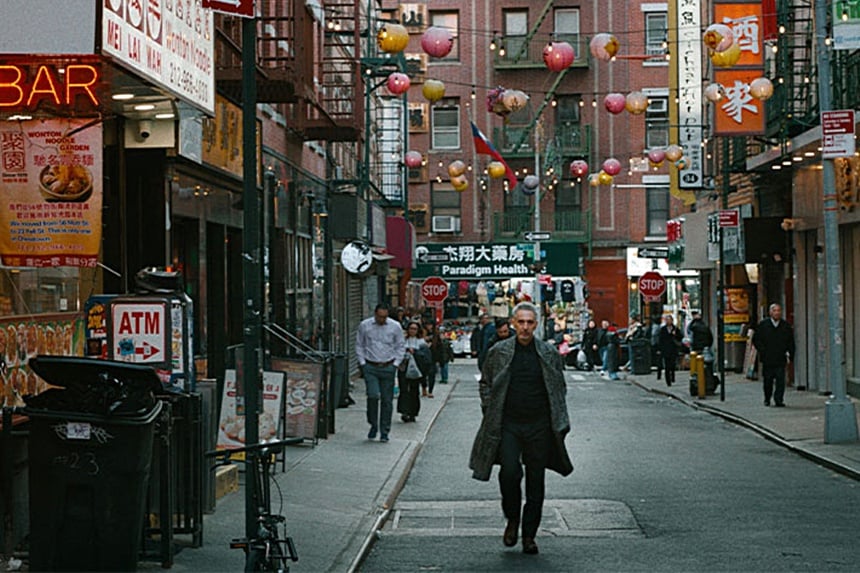
The Only Living Pickpocket in New York
⭐️ ⭐️ ⭐️ ⭐️
Rating: R
Run Time: 1 hour 28 minutes
Stars: John Turturro, Steve Buscemi, Giancarlo Esposito, Jamie Lee Curtis
Writer/Director: Noah Segan
Reviewed at the Toronto International Film Festival
Harry is very good at what he does. And what Harry does is distract already-harried New Yorkers with one hand while, with the other, relieving them of their wallets, jewelry, and sundry valuables.
Ordinarily, Harry’s marks don’t know what hit them until, at a restaurant or in a shop, they reach for their billfold and find it missing. Or they’ll glance at their wrist and notice it’s naked. They’ll retrace their steps, they’ll tear the cushions off their couches, they’ll frantically call the last place they bought something.
But it’s useless: What they’re looking for is right now either sitting in a New York City waste can, emptied of its cash, or sitting in the glass case of a less-than-legit pawn shop.
And Harry is at home. Counting his money.
It’s hard to imagine anyone other than John Turturro, the quintessential quirky New Yorker, playing Harry in this gently nerve-jangling character study, written and directed by fellow New Yorker Noah Segan. Slinking along the sidewalks of Brooklyn, head on a swivel, constantly on the lookout for his next mark, Harry seems to embody the lyrics of that old Glenn Frey song, “You Were Born in the City,” concrete under his feet, a man of the street.
But these days, pickings are getting a little thin: People seldom have money in their wallets anymore, and even the nicest-looking watch or jewelry will more than likely turn out to be a cheap knockoff. Still, Harry brings his daily pickings to his understanding but quality-conscious pawn broker, Ben – played with offhanded charm by Steve Buscemi who, when you think about it, was probably born to play an understanding but quality-conscious pawn broker.
Aside from Ben, Harry has almost no true friends – unless you count, ironically, NYPD Det. Warren (Giancarlo Esposito, best remembered as Breaking Bad’s Chicken Man), a cop who has clearly busted Harry more than once yet who is undeniably fond of his old nemesis.
And then there’s Rosie, Harry’s beloved wife. Rosie is the one constant in Harry’s life – largely in a tragic way: She suffered a massive stroke a few years back, and now lives in a catatonic state. Every evening, Harry picks her up at a daycare facility, then literally picks her up and carries her to their modest walk-up apartment, where he dotes on her with fervent devotion.
Harry’s life follows this humdrum pattern until one night when he inadvertently steals something from absolutely, positively, the wrong guy: a mobbed-up young punk name Dylan (Will Price). Suddenly, New York’s coolest customer is sitting on a very, very hot seat.
The ensuing desperate hunt to recover the stolen goods takes Harry on a wild course from one end of the city to the other, encountering friends and strangers, helpful and not, along the way.
Writer/director Segan clearly has affection for his characters, but it is New York City that’s his true love: Every street scene throbs with the thrum of traffic; the subway sways and groans like a subterranean pirate ship; the needle-like towers thrust upward, completing the circuit between an impossibly clear sky to the grit-grinding streets below. Segan has taken care to give all five of New York City’s boroughs meaningful scenes – even including usually neglected Staten Island, where Harry pulls one final, masterful switcheroo on the mother of all mobsters, played with exhausted, wistful resolve by a mesmerizing Jamie Lee Curtis.
The final, extended shot belongs to cinematographer Sam Levy (Frances Ha, Lady Bird). It’s an impossibly telescoped, 8-minute dusk view of lower Manhattan, seen across The Narrows from a patch of Staten Island riverfront. The sky darkens, ferries and tugboats churn through the purple water. On the soundtrack, as the credits roll across this vista, Manhattan’s longtime official troubadour, Bobby Short, sings Cole Porter’s “I Happen to Like New York” (I don’t want to go to Heaven/I don’t want to go to Hell/I happen to like New York).
The city, we understand, keeps its distance while beckoning us ever closer. It’s at once impersonal and intimate. Like Harry. Like his pawnbroker. And like his wife, the beautiful woman with the vacant stare.
Become a Saturday Evening Post member and enjoy unlimited access. Subscribe now