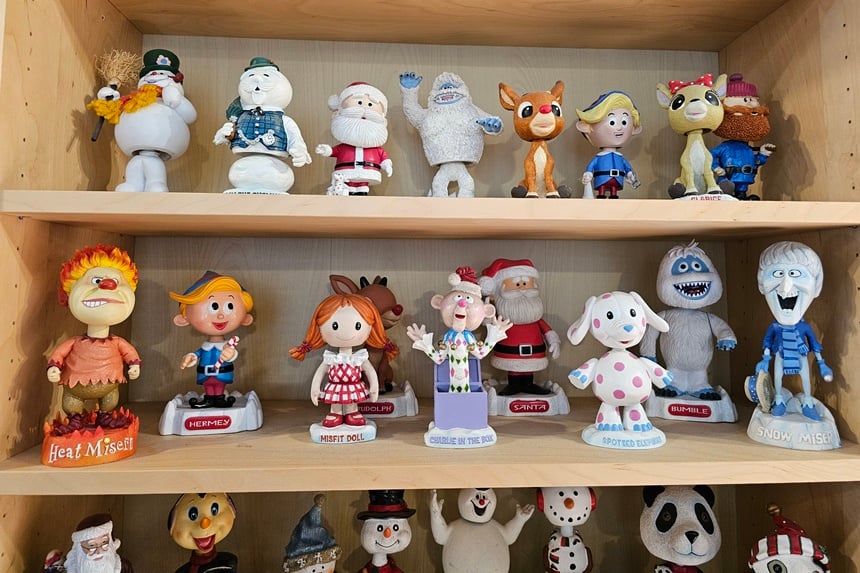
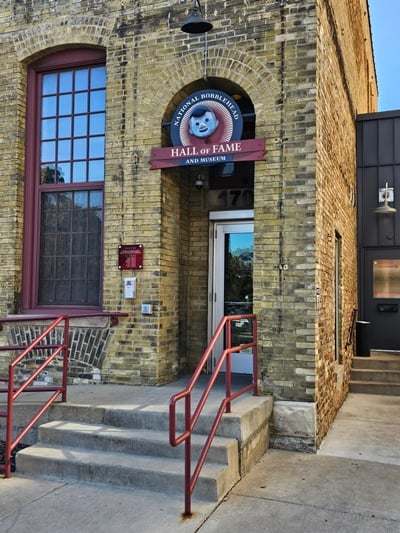
Nearly 11,000 bobbleheads — collectible figures with oversized heads attached to their bodies usually by a spring — greet visitors as they enter the National Bobblehead Hall of Fame and Museum, located on the floor above a coffee shop in Milwaukee. Several catch my attention at the top of the stairs: Hillary Clinton in a black pantsuit, the Planet Hollywood mascot, and Gene Simmons in full KISS makeup. Behind the front desk, Taylor Swift stands between Split, the Savannah Bananas’ mascot, and a dancing Santa holding a cola.
Sports icons dominate the entrance, though. Three-time Stanley Cup winner Jonathan Toews stands ready to play in his University of North Dakota uniform, a helmetless Brett Favre prepares to throw the football he holds, and Bucky Badger, the University of Wisconsin’s mascot, poses on the 40-yard line. As a mascot, Bucky isn’t very different from Rocko, the bobblehead that started it all.
From Hobby to Museum
Phil Sklar, museum co-founder and CEO, says his interest in bobbleheads began in 2003 when his college roommate, Brad Novak, brought back a promotional bobblehead from the Rockford RiverHawks, the minor league Illinois baseball team where he worked. That bobblehead of the team’s mascot, Rocko, inspired them to choose the games they attended based on whether the team was giving away promotional bobbleheads that day.
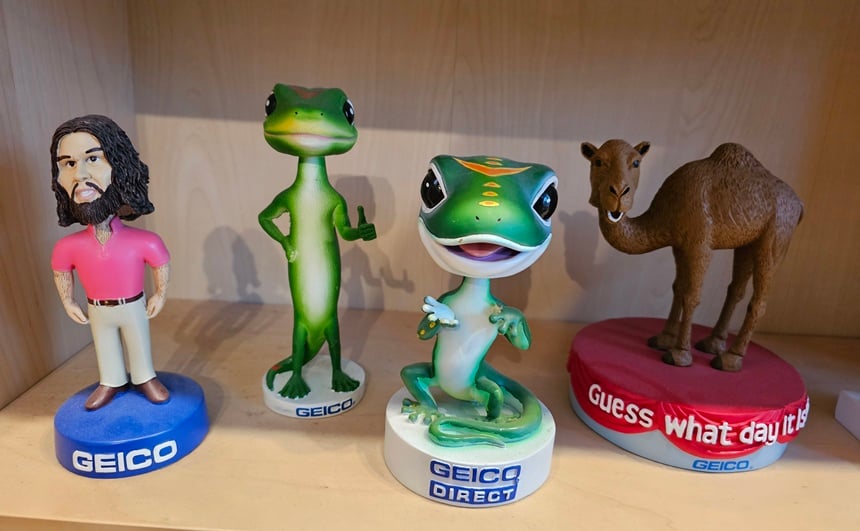
At first, they stuck to local games — mostly Brewers, Bucks, Admirals, and Waves — with a few Chicago teams thrown into the mix. They would keep one of the free bobbleheads for themselves and sell any others on eBay for extra cash. But as they could afford to, they ranged further out, attempting to visit all the Major League Baseball stadiums. Along the way, they collected local bobbleheads from thrift shops and antique stores.
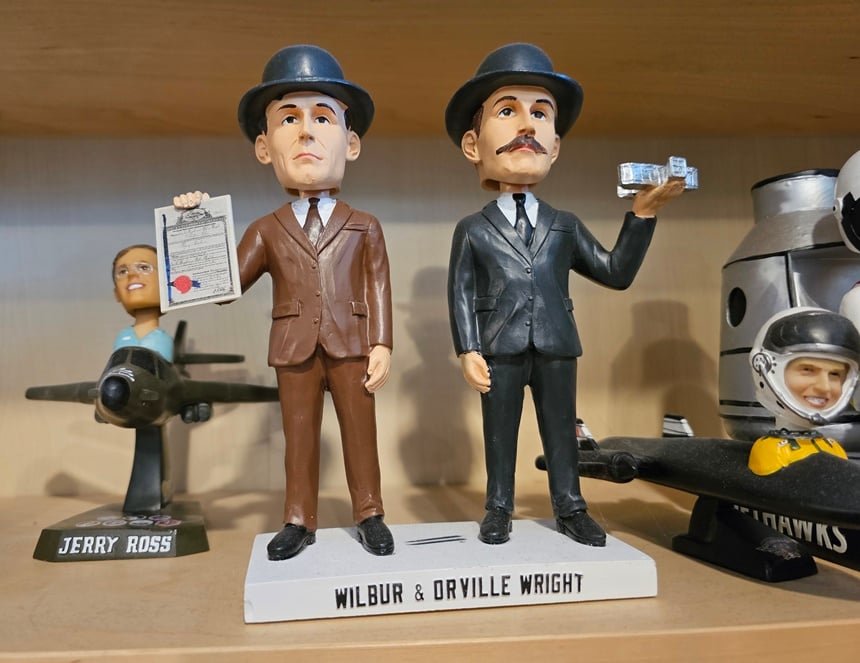
By 2013, they had 3,000 of the nodding figures and a storage problem. Sklar says that’s when he and Novak decided to open a museum. Today, the National Bobblehead Hall of Fame and Museum remains the only such entity dedicated to the figures.
As soon as they announced their plans, people began reaching out with offers to donate or sell their bobbleheads. One of those offers came from a retiring dealer from Indiana with 1,500 Funko brand bobbleheads. Because Funko focuses on pop culture icons, his bobbleheads added variety to their collection and increased the headcount from 3,000 to 4,500.
“He gave us a really good deal on them, looking back on it,” Sklar says. “There were a lot of rare and one-of-a-kind bobbleheads.”
Most of them are on display at the museum, although a few may be in storage since the entire collection totals 20,000 today. Sklar and Novak hope to draw from those in storage to create standalone displays in Milwaukee and traveling exhibitions someday.
Bobbleheads 101
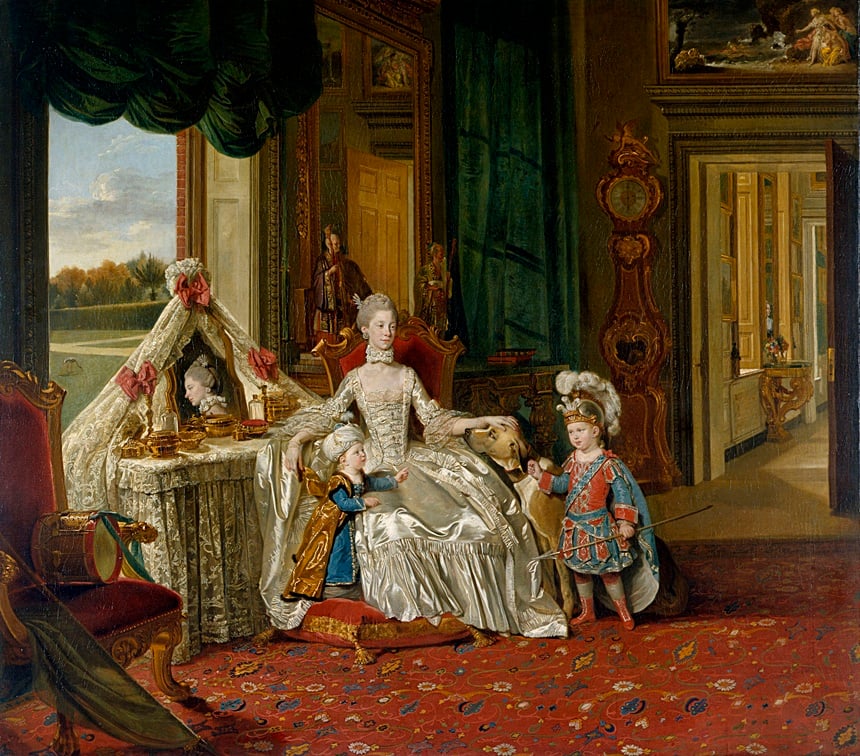
No one quite knows where bobbleheads came from or when. A 1765 painting by Johan Zoffany depicts Queen Charlotte in Buckingham Palace with two plaster “nodding head” figures on a table behind her. A timeline at the museum notes that her son, King George IV, collected the figures that were mostly produced in Canton, sparking interest in them throughout England, Europe, and America.
Germany began producing ceramic animal toys with spring-connected heads called “nodders” in the mid-1800s, but within a few decades, even their popularity had declined.
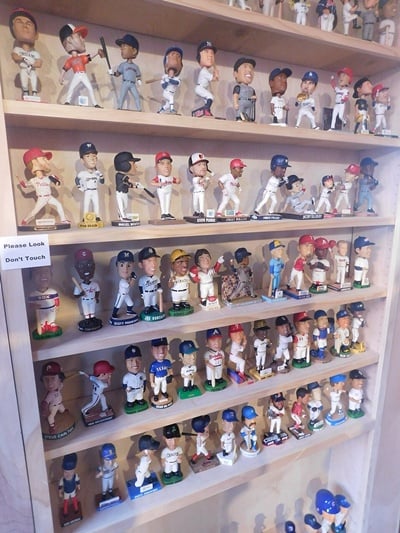
That all changed in 1960 when MLB produced papier-mache bobbleheads of generic players for each team. The following year, the league introduced player specific bobbleheads, and fans could collect Mickey Mantle, Willie Mays, and Roberto Clemente. Before long, non-sports figures filtered into the market, including one of the most valuable, a set of Beatles bobbleheads manufactured in 1964.
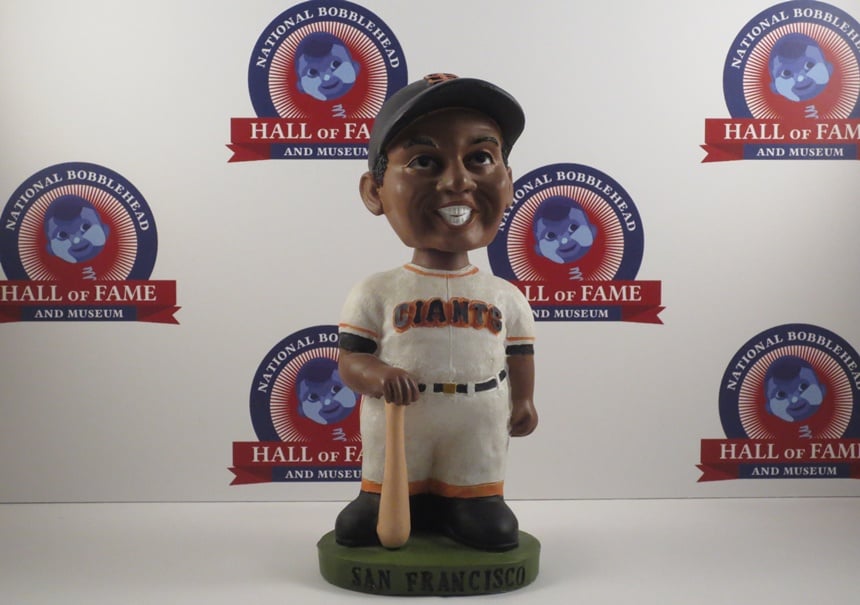
Enthusiasm for bobbleheads faded again in the 1970s but resurged in 1999 when the San Francisco Giants handed out 35,000 free Willie Mays bobbleheads to celebrate the 40th anniversary of Candlestick Park. The success of that giveaway prompted other teams, like the Rockford Riverhawks in 2003, to distribute their own promotional bobbleheads.
Since then, bobbleheads have grown in popularity and value. Professional sports appraiser Michael Osaky says their value depends on the player, team, and condition. Some, like the
George Costanza bobbleheads that the New York Yankees give away, can sell for up to $500. However, most bobbleheads are valued at under $50.
The Museum’s Bobbleheads
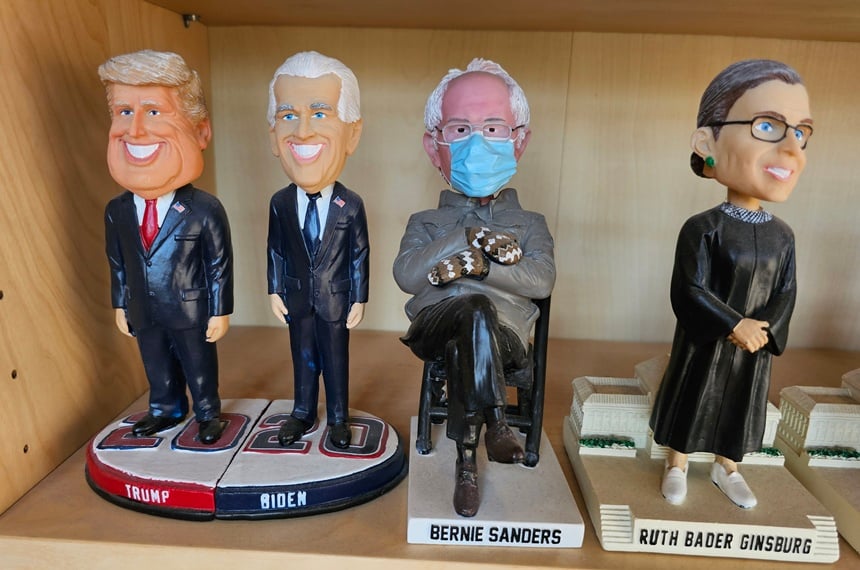
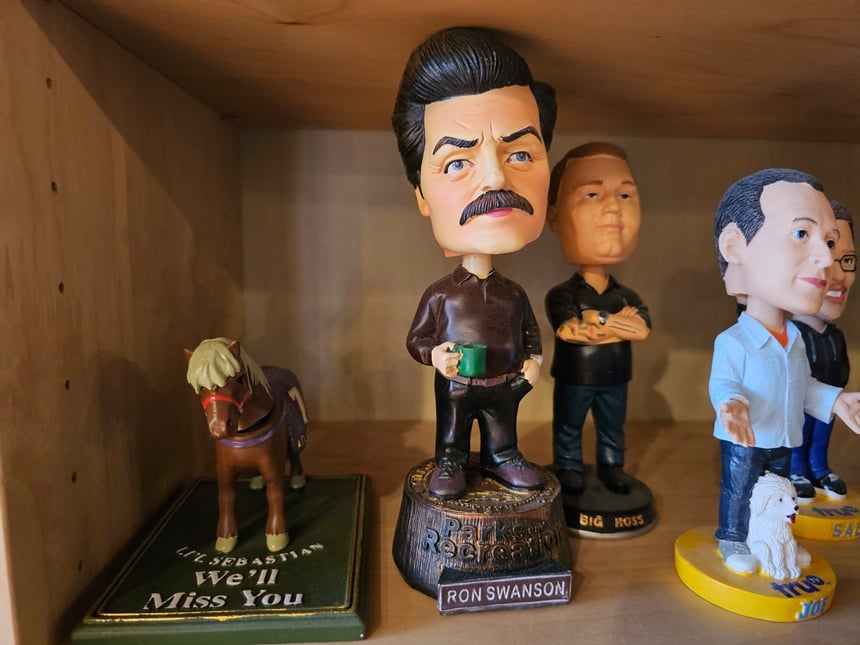
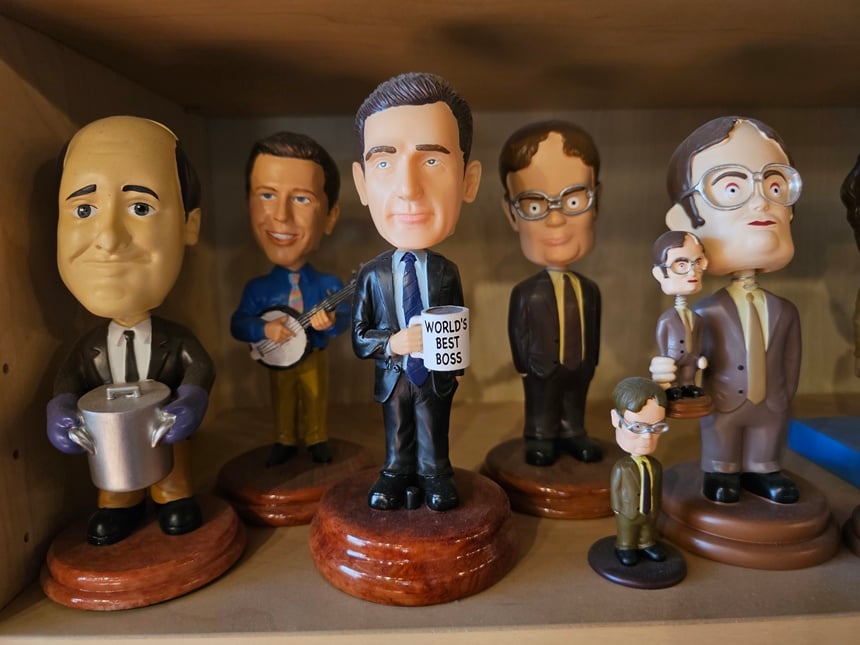
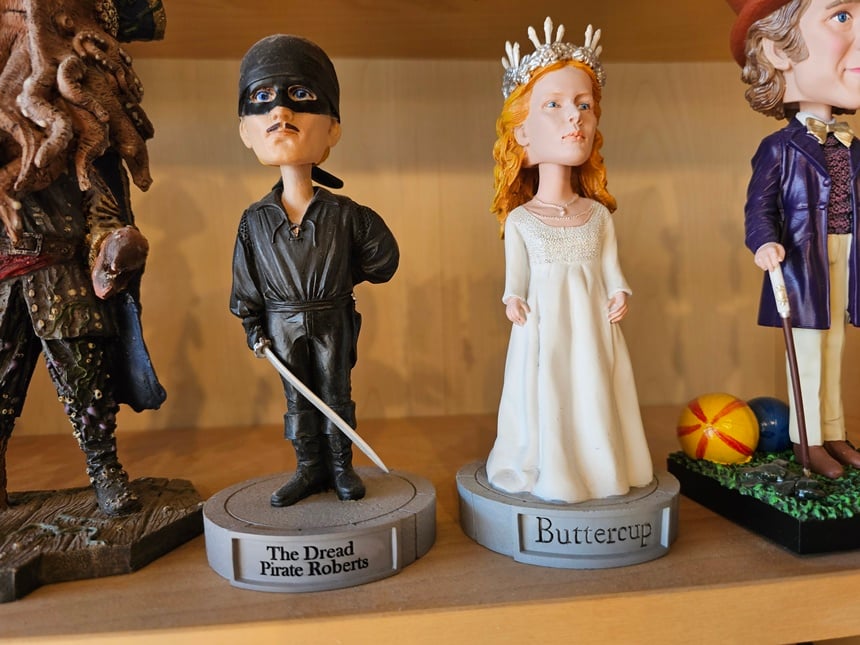
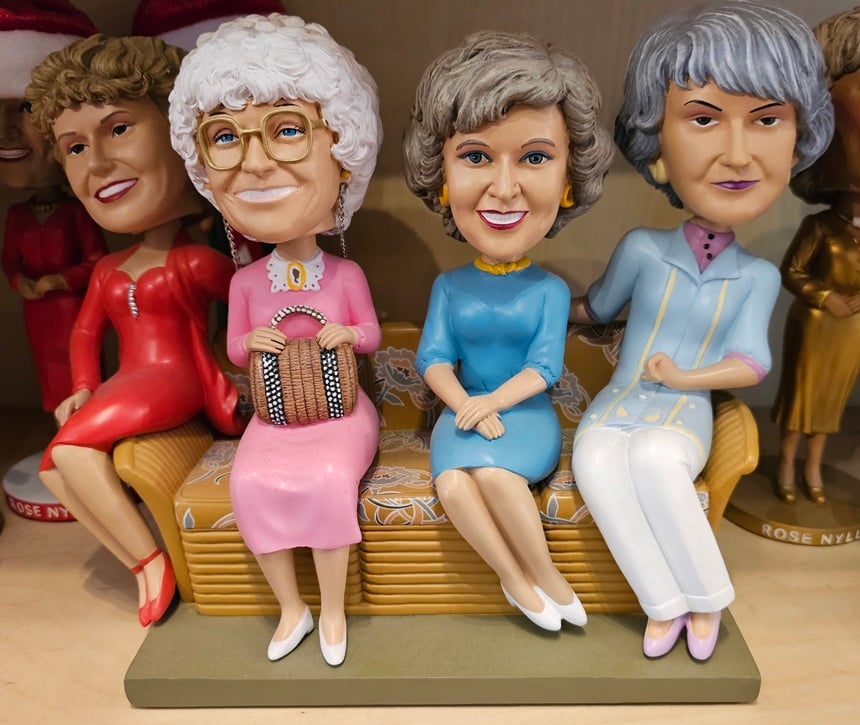
The National Bobblehead Hall of Fame and Museum groups its collection into themes such as sports, musicians, historical figures, animals, TV characters, and movie stars. In one section, Colonel Sanders of Kentucky Fried Chicken fame stands beside the McDonald’s Hamburglar. In another, Senator Bernie Sanders — knitted gloves on his hands and a mask on his face — sits in a chair next to a standing Ruth Bader Ginsburg bobblehead. Around the corner, there’s a nodding Ron Swanson and a Li’l Sebastian, both inspired by Parks and Recreation.
Sklar says his favorite is a bobblehead he and Novak commissioned of their friend, University of Wisconsin–Milwaukee manager and “superfan” Michael Poll. Although finding a bobblehead company to work with was a challenge, they enjoyed the process so much that they continue to work with the company to produce their own line of bobbleheads, which they sell in the gift shop and online.
Museum visitors can even post their recommendations for future bobbleheads on a wall at the back of the museum. Thanks to those suggestions, you’ll soon be able to purchase Teletubbies and Inspector Gadget bobbleheads and search for them on display in the museum.
“They’re just fun and a fun way to honor your favorite — you fill in the blank — team, character, person,” Skar says.
Next March, the museum will honor another set of bobbleheads that have special meaning for Milwaukee. That’s when the museum will replace the previous World Series winner, the Los Angeles Dodgers, with the current champion, the Milwaukee Brewers. (The museum does the same for the National Football League, National Basketball Association, and National Hockey League titleholders.)
Sklar says the museum gets a mix of sports fans, bobblehead collectors, and people who just want something fun and unique to do, and while some breeze through because they have limited time, he often hears from people who’ve spent hours in the museum that they still didn’t see it all.
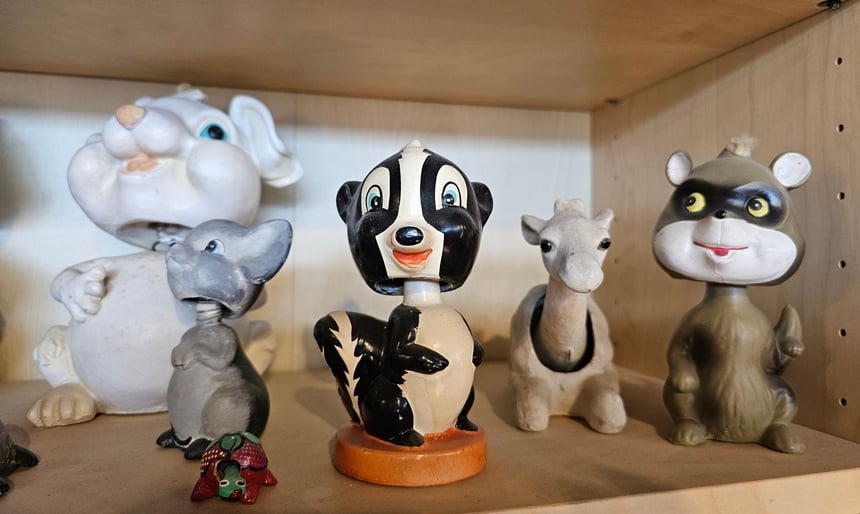
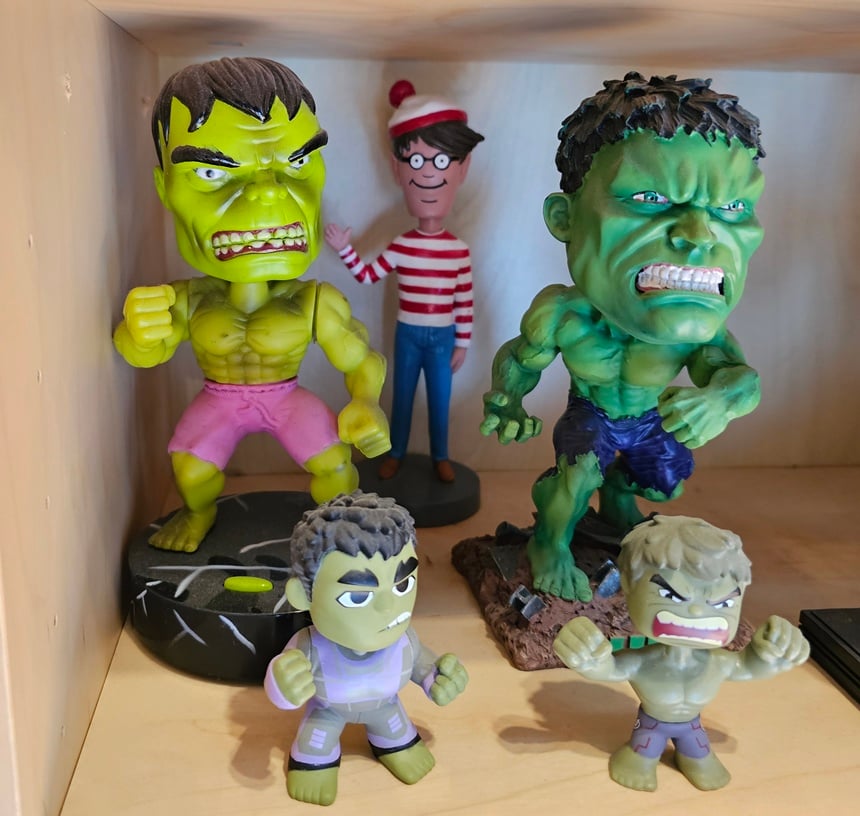
I can see why. The National Bobblehead Hall of Fame and Museum is a place you can easily lose yourself for hours, searching for your heroes and favorite characters. While you do, keep an eye out for the Where’s Waldo bobblehead. He’s hiding on the shelves somewhere among the 11,000 others.
Become a Saturday Evening Post member and enjoy unlimited access. Subscribe now