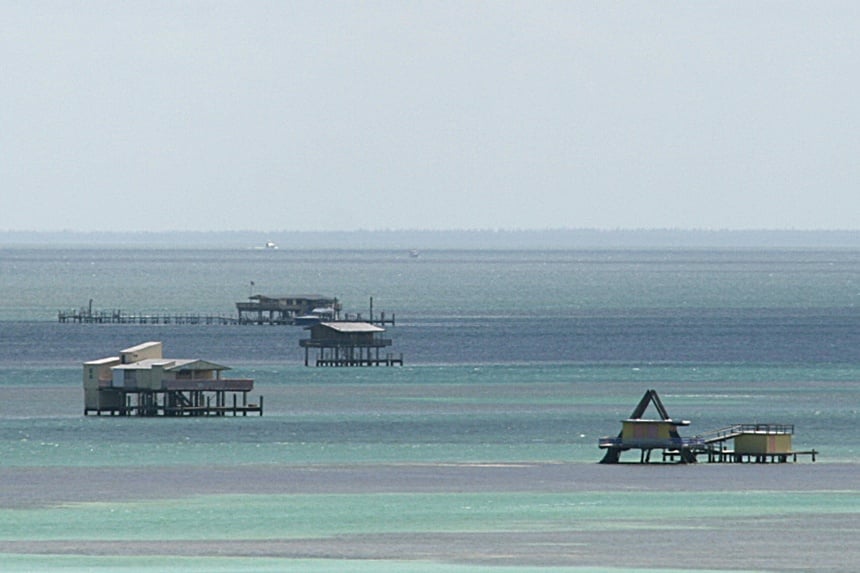
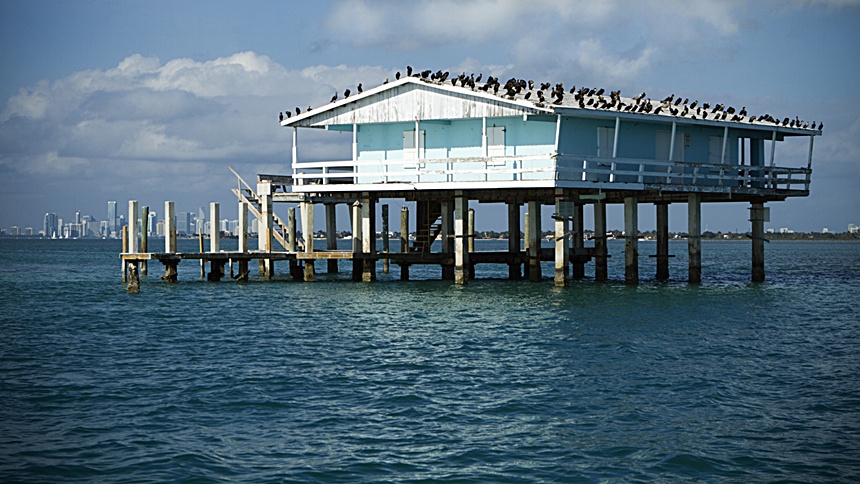
Leave the shores of Miami, Florida, by boat off the coast of Key Biscayne, and you’ll see peculiar structures sticking out from the water. These pastel-hued buildings are a disappearing reminder of the city’s wildest days, when they were party pads and membership clubs for well-to-do residents.
A Prohibition-Era Hideaway
The first of these rustic fishing shacks, called Stiltsville, may have been constructed in the 1920s, where they likely moonlit as bases for rumrunners and gambling operations. Al Capone may have also had ties to Stiltsville, since he had a house on nearby Palm Island.
One of the earliest known Stiltsville residents was Captain Eddie “Crawfish” Walker, who sold bait, beer, and other essentials to fishermen in the 1930s before powerboats were the norm. You could also get a good meal there, specifically his famous “chilau,” a crawfish chowder that gave him his nickname.
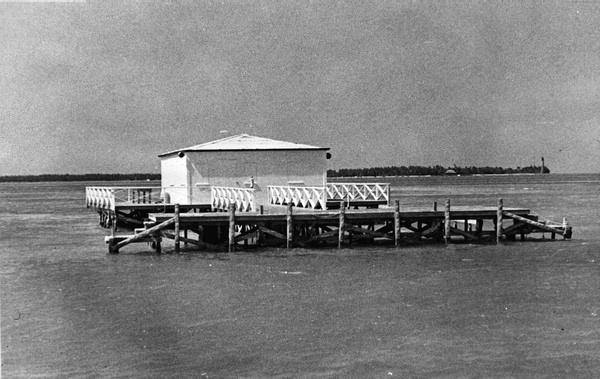
Before long, Walker’s place wasn’t the only one set up in the bay; others were lured by the lack of building codes and property taxes, plus unrivaled access to nature. It attracted not just humble fishermen, but also notable Miami residents like Judge Frank Knuck, who neighbors referred to as the “Mayor of Stiltsville,” as well as Governor LeRoy Collins, who would make the trip down from Tallahassee. Ted Kennedy had his bachelor party here.
Party Pads on the Open Water
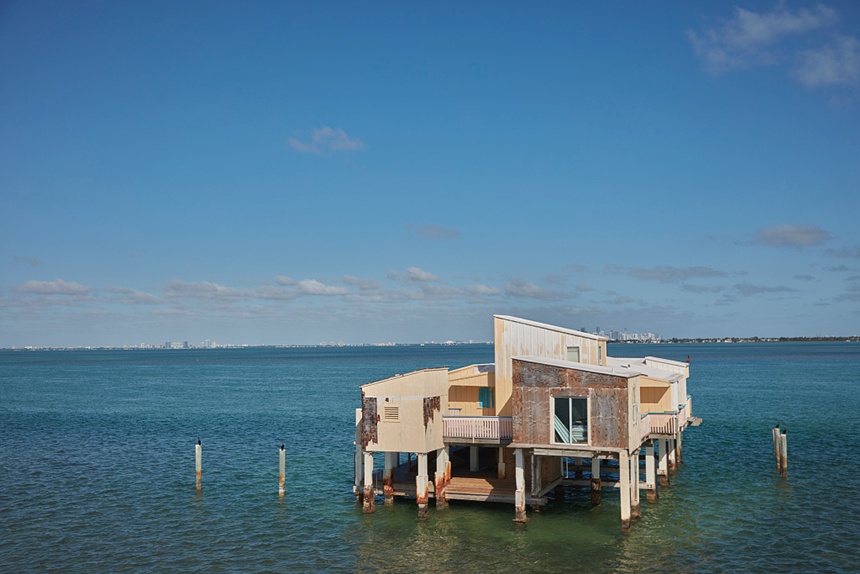
The homes took on the personalities of their owners, since these were considered “campsites” under the law, and neighbors could visit by “barge hopping” among the houses. What’s now known as the “Baldwin House” was designed by noted architect Gail Baldwin and was featured in a 1972 issue of House Beautiful, with images of its artist-painted hurricane shutters and sculptures inside.
In 1940, Commodore Edwin Turner, a former whiskey salesman, spent $40,000 building a home on barge pilings and dubbed it the Quarterdeck Club, which later appeared in a 1941 issue of Life magazine. The private members club had electricity and all the bells and whistles, including a wharf for arriving guests, a dining room, and a bar, with the all-important refrigeration, for a $150 fee.
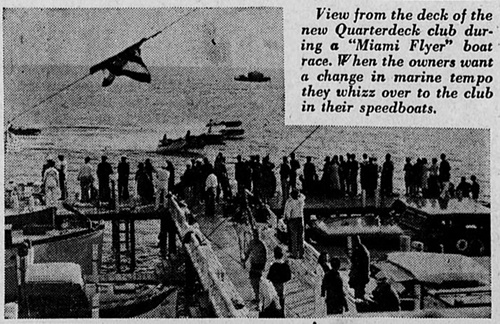
In 1950, hotelman Warren Freeman purchased the club and tried to bring it some legitimacy as a lounge and restaurant, but not long after, it was damaged by a hurricane. In the mid-1950s, it was the site of a police raid that made headlines when a party thrown by the chamber of commerce featured gambling and “lewd material.” It finally closed in 1961 after being destroyed by fire.
The Power Boat Club was a blue-collar worker’s hangout, also a membership club. The Swan and the Calvert Club were also hangouts on stilts, but it was the Bikini Club that gained national attention for giving free drinks to women in bikinis… or less. Owner Harry Churchville was no stranger to the State Beverage Department and was shut down for its lack of a liquor license and for unlicensed fishing from the grounded yacht.
Overwater Landmarks in Peril
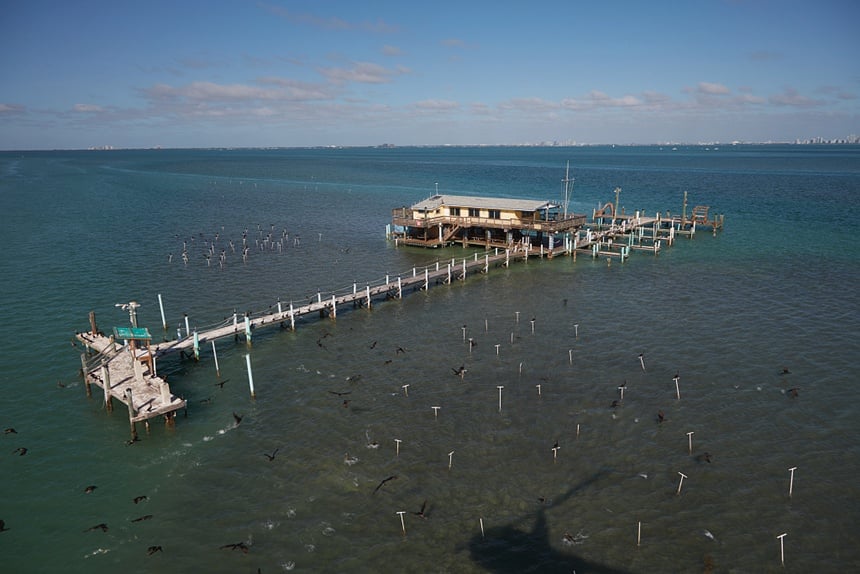
At its peak, Stiltsville had 27 structures set on the sandy flats, but a succession of hurricanes in the 1960s wiped out many of them. They continued to be passed down through families like the Pennekamps, who are responsible for protected lands throughout South Florida including the Everglades. In 1976, the first discussions began about terminating leases on the community.
When the waters surrounding them became part of Key Biscayne National Park in 1985, their futures were uncertain. One building collapsed with 150 partygoers inside in June 1992, and a few months later Hurricane Andrew destroyed even more homes, leaving only ones rebuilt after the wildest days of Stiltsville were over. The remaining locals were told they had to move by 1999. But in 2003, an agreement was made to protect the Stiltsville homes through a trust.
A New Chapter for Stiltsville
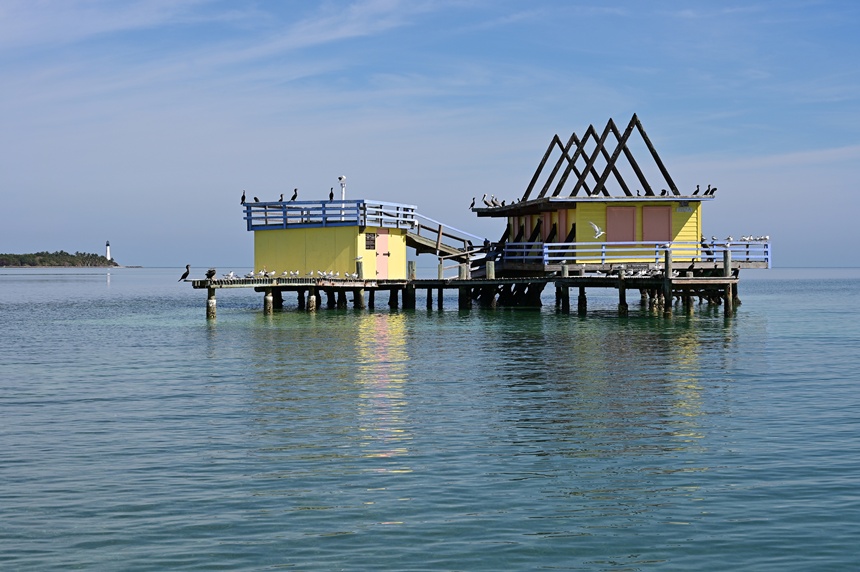
Today, there are six homes still remaining. The LeShaw House, once owned by Judge Knuck, was destroyed in a 2021 fire. The Miami Springs Power Boat Club still cares for the group’s private clubhouse, hosting scout troops and community events. The rest, including the Baldwin House, are still managed jointly by the lessees and the Stiltsville Trust, which handles the permits for the occasional events that take place there. Otherwise, travelers can see the structures from the outside by zodiac boat tours and spot two “Space Invader” mosaic installations from the French artist Invader.
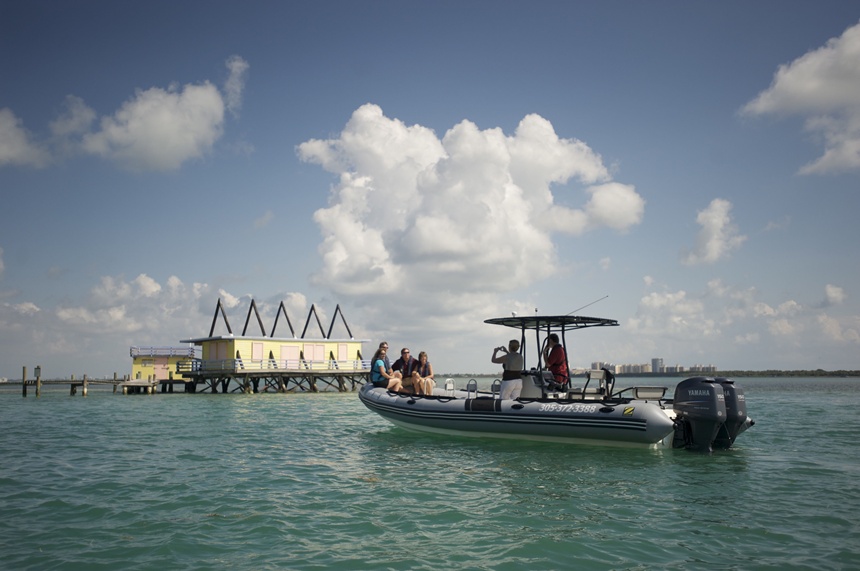
Despite the many changes of this aquatic escape, the legacy continues, with the structures appearing in several Carl Hiassen books and in several movies and television shows like the series Dexter. The wildest stories from Stiltsville’s history may be in the past — and not fit to print — but remain in the treasured memories of generations of Floridians.
Become a Saturday Evening Post member and enjoy unlimited access. Subscribe now