—1979—
By fourth grade, Rusty Dalton had been accused of three things he hadn’t done: stealing Mrs. Hanley’s stapler, setting off a cherry bomb behind the cafeteria, and teaching Louie Portico to say “dickhead” in French.
What he had done was draw a dead ringer of Mrs. Hanley as a mastodon in sensible shoes and glasses — that got him labeled “troubled.” Teachers never appreciated his artistry.
So, when Laurel Farrow showed up in Room 12, complete with glossy blonde curls, monogrammed cardigans, and perfect posture, Rusty was predisposed to hate her.
“She’s from Georgia,” Mrs. Hanley breathlessly announced, like they’d just been gifted a baton twirler from heaven.
Laurel smiled at the class with the strained brightness of someone who practiced in the mirror. This wasn’t the first time he’d seen her. Rusty had watched her family move in two days prior. He lived on Windswept Way too — across the street and two houses down — one of dozens of new developments popping up all over Las Vegas. Everybody was from somewhere else, gambling on a fresh start in a subdivision where the sagebrush still outnumbered the people.
Rusty didn’t hate Laurel because she was pretty and smart. Those were forgivable offenses. But he did hate the way she walked through Annie Oakley Elementary like she’d been issued instructions — perfectly prepared to be the solution to any problem.
That winter, the spelling bee proved it.
Rusty didn’t care about the spelling bee. Rusty didn’t care about anything. His mother made him participate because “People need to see you can do something besides screw up.”
Rude. Rusty could do lots of things. He could draw. He could name all 50 states and their capitals. One thing he couldn’t do was figure out why accomplishments needed to come with a medal ceremony at the end.
Laurel? Probably born with a sash and crown. She earnestly spelled chrysanthemum and silhouette without blinking, saying “thank you ma’am” at the end of each round with a slight Southern drawl and that careful smile.
When she won, the room burst into applause so loud you’d have thought she’d cured polio.
Mrs. Hanley punished Rusty for muttering “kiss ass” under his breath by making him sit next to Laurel at lunch. “Perhaps you’ll learn some manners.”
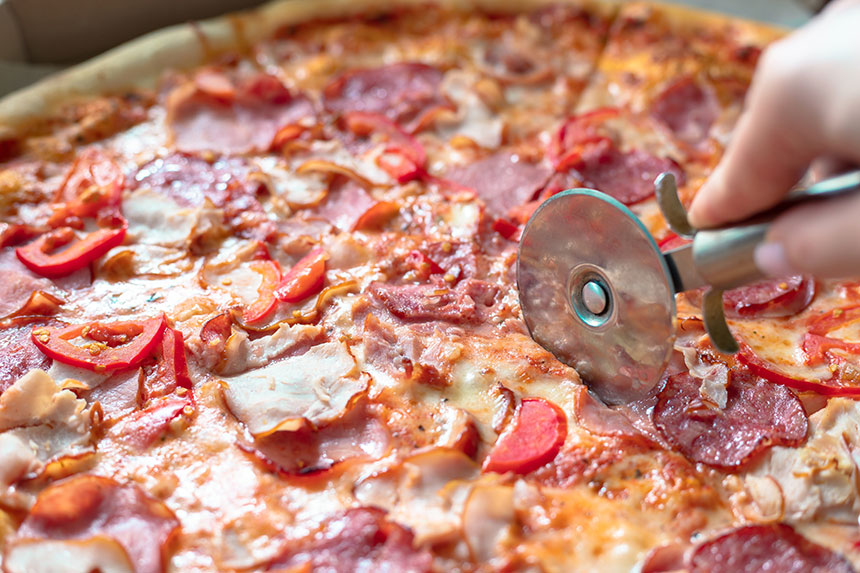
He stared at the square slice of pizza on his plate, swimming in grease and slathered in rubbery cheese.
Laurel straightened her tray. “Did you really call me a kiss a-s-s?”
“No, I called you a class act.”
“You’re not very nice.”
“You’re not very humble.”
“Winners don’t have to be.”
He took a savage bite of pepperoni. “Congratulations.”
Her face softened. “Did you see my mom? How happy she looked?”
It would be hard not to notice Mrs. Farrow, head covered in a scarf, thin frame propped up against the back wall. Mrs. Farrow was the topic of lots of hushed conversations on Windswept Way.
That poor woman.
How long does she have?
“Oh,” Rusty said.
Laurel looked at him. “What?”
“Nothing.”
Around them, kids traded pudding cups and yelled across tables, but Rusty and Laurel ate silently.
“This pizza is gross,” Laurel said finally.
“Yeah.”
“Not as gross as you.”
He looked at her then and saw her for who she was, another scared kid playacting at perfect. “Kiss ass.”
She smiled. But this one looked different. Open. Maybe a little lopsided.
After that, Rusty didn’t hate her quite so much.
—1987—
By junior year, Laurel had mastered three key life skills: saying the right thing, wearing the right thing, and monitoring her mother’s medication schedule. She’d learned the easiest way to stay golden was to keep polishing.
Junior Class President. Homecoming Princess. A member of the Key Club and National Honor Society. Teachers adored her. Boys orbited around her. If she wore a sweater on Friday, at least three girls would be wearing it the following Monday.
At home, she cleaned the kitchen without being asked, ferried her little brother to and from baseball practice, and learned how to say things like “The doctor sounded optimistic” with conviction to her relatives back home.
Being perfect was exhausting.
One Friday night in October, she ended up at King’s Pizza with three football players, two cheerleaders and the fixed smile of a girl with bigger fish to fry. King’s was where the popular kids went after games. It was also where Rusty worked.
He lounged behind the counter in a faded red apron, dark hair tumbling over his eyes — 100% long limbs and bad attitude.
“Well, if it isn’t Junior Miss Nevada Kiss-ass.”
Laurel hated the way her stomach fluttered when he spoke to her like that. Like she was a real person, not a porcelain doll on a shelf.
“Hello, Future Felon.”
Julie Franklin — who walked through life pretending to be the mean girl in a John Hughes movie — leaned over the counter. “You look like white trash, and you smell like it, too.”
Rusty’s face didn’t change, but Laurel felt it — the tiny, imperceptible shift when the world collectively put you in your place. She let her anger flash, just that once. “Shut up, Julie.”
“I was kidding.”
“No, you weren’t.”
Rusty looked at Laurel, and for half a second, she forgot how to breathe.
Later, after everyone had taken the party to the parking lot, Laurel snuck out to the alley where Rusty was breaking down boxes.
“You didn’t have to do that,” he said.
“Yes, I did.”
He tossed a flattened cardboard box onto the stack. “Your friends seem delightful.”
“They’re not my friends.”
“I didn’t know enemies traveled in packs.”
“Just because you’re standing in the middle of a group, that doesn’t make you a part of it.”
“I’d rather stand alone.”
“I’m always alone Rusty, even when I’m not.”
The quarterback called her name, and Laurel left Rusty to his tasks.
She woke up to pebbles pelting her window at 3 a.m. Rusty stood below her window holding a pizza box. The desert night had turned cold. Sprinklers sputtered over thirsty lawns.
Rusty stage whispered, “You hungry?”
They sat cross-legged on her lawn under a charcoal sky.
Laurel ate with one hand and hugged her knees with the other. “You ever think about leaving?”
“Only all the time.”
“What would you do?”
“Something big.”
“At least you have a plan.”
He bumped her shoulder with his. “I don’t know. Maybe own my own business. Make enough money so cheerleaders don’t call me white trash.”
“Just because people say something, that doesn’t make it true.”
“People say you hung the moon.”
“And I’ve never once let them see the ladder.”
The words hung in the space between them.
After a while she said, “I’m scared.”
“Your mom?”
She nodded.
Cancer had taken up residence in their house years ago. It sat at the dinner table. It slept on the sofa.
“Sometimes I think things would be easier if Mom died. I’m the worst person in the world.”
“You’re the best person I know.”
The space between them seemed to shrink. He was staring at her. She was staring at him. All of a sudden the world felt impossibly small.
Then, her parents’ bedroom light came on, shining an unwelcome spotlight on the front yard. “Jesus, it’s five. Mom needs her meds. I gotta go.”
“See ya, Junior Miss Kiss-ass.”
“Not if I see you first, Jailbird.”
Neither of them ever mentioned the almost-kiss.
But Laurel thought about it for years.
—1996—
Since they were kids, the families on Windswept Way took turns hosting Thanksgiving dinner. The year Laurel’s mom died, it was the Farrows’ turn. No one expected them to actually do it, but Laurel insisted. She flew in from her fancy new job in Atlanta with a meal plan and delusions of grandeur.
Rusty knew things had gone sideways before he even got out of his truck.
For one thing, there was smoke.
For another, she was standing barefoot in the driveway wearing a sweater dress and oven mitts, looking like a deranged Stepford Wife.
By then, Rusty owned King’s Pizza. It wasn’t the bikinis-and-Lamborghinis empire he’d fantasized about, but it was his — he had the business loans and prematurely graying hair to prove it.
He was grateful for the six Royal Deluxe pizzas riding shotgun.
Laurel stared at him. “How did you know?”
“I could smell the failure three blocks away.”
“Happy Thanksgiving,” she said, smiling weakly.
The kitchen looked like a war zone. Half-thawed turkey. Incinerated dinner rolls. A saucepan overflowing with something that might have once been gravy. Laurel’s brother was opening windows while her dad pretended all of this was perfectly normal.
“Rusty!” her dad hollered. “Good to see you, son!”
“I brought carbs.”
Laurel leaned both hands on the counter and closed her eyes. “I had one job.”
“You probably had twelve jobs,” Rusty said. “Because you insisted on doing everything yourself.”
Laurel was still the same girl pretending to be perfect, hoping no one would notice that she wasn’t. And Rusty was still the only one who never needed or wanted her to be.
After everyone had devoured the pizza and the families had settled into their annual arguments about football, Rusty escaped to the patio. Laurel joined him eventually, two beers in hand.
“Thought you might need one,” she said, handing him a bottle.
“At least you got the beverages right.”
“Could you not rub it in?”
“It really wasn’t that bad. It’s good to see you sweat a little.”
“Mom loved Thanksgiving. She managed to do all this half-dead and I can’t even manage to mash a single potato. I just wanted Thanksgiving to be…” Her voice trailed off.
“Perfect?” Rusty leaned against the railing. “When are you gonna let that go?”
She nursed her beer, ignoring his question. “You ever wonder what would’ve happened if we’d kissed that night.”
Rusty stayed quiet, trying to figure out the right thing to say. Finally, he answered into the darkness. “Only all the time.”
The silence between them changed shape.
Then her brother hollered from the kitchen, “The dishes aren’t washing themselves, Laurel!”
“Showtime.” Before she went inside, she touched his wrist. Just once. “Good night, Rusty.”
As he drove away, Rusty realized that — for the first time — he was hungry for something more than success. He came back Friday morning with flowers and the best intentions, but Laurel was gone — she’d caught the first flight back to Atlanta.
—2013—
Laurel stepped on the scale the morning of her 25th high school reunion. She’d gained 30 pounds since her glory days — divorce had a way of doing that to you. Her first thought was to blow the reunion off.
Something about being back in her childhood home took Laurel back to her days as a poised little girl with a painted-on smile. Frankly, she’d spent too much money on therapy over the years to put herself through that gauntlet again. But there was also a not-so-little part of her that wanted to show everyone that who she was now was good enough.
She put on her favorite dress and headed to the reunion. All the usual suspects were there, but she found herself scanning the room for the only person she really wanted to see. She felt the air escape her lungs when she saw him alone at the bar. She’d recognize those long limbs and that bad attitude anywhere.
“Well,” Laurel said, sliding onto the stool beside him, “look what the cat dragged in. Congrats on finally making parole!”
He glanced over and smiled. “Junior Miss Kiss-ass, is this the interview portion of the competition?”
“I dunno. Are sarcastic comments going to be your talent?”
“I think you know the answer to that.”
They quickly escaped to a back table with two beers and a plate of some pretentious fig and prosciutto flatbread pizza.
All around them, their classmates hugged and humble-bragged their way through the past two-and-a-half decades. Laurel and Rusty were only concerned with each other.
He was divorced. Three kids. Two ex-wives. Five King’s Pizza locations throughout the valley. Laurel had twin daughters and a marketing career that seemed permanently stalled.
“I was surprised about your divorce. Ted always seemed like a nice guy.”
“His girlfriend certainly thought so.”
“Jesus, Laurel, I’m sorry.”
“At least I’m not pretending to be perfect anymore.”
“You look,” he searched for the right word. “Happy.”
“I am. I really am.”
Hours slipped by. Every time somebody approached their table to reminisce, they smiled politely until the person finally took the hint.
“Remember when everyone thought we hated each other?” Laurel asked.
“I did hate you.”
“No, you didn’t.”
“No,” he admitted. “I didn’t.”
She looked at him across the table — the same eyes, the same mouth. There were more lines now, more history. But Rusty had become exactly what he was always supposed to be. Not famous, not flashy. Solid. Funny. Fully himself.
“I should’ve kissed you,” he said.
Laurel set down her beer. “I’ve only been waiting since 1979.”
Music thumped faintly from the ballroom.
Laurel leaned in. “This is going to sound crazy.”
“I’m listening.”
“I got offered a job out here. I didn’t plan on taking it, but the girls are going off to college. I’m thinking it might be time to blow up my life.”
Rusty didn’t answer right away. He just looked at her with an expression so naked it made her heart flutter.
She reached across the table. He met her halfway.
No fireworks. Just them.
“Come with me,” he said.
“Where?”
“For better pizza. I own the best place in town, remember?”
—2026—
Rusty was stretched out on the sofa, watching animated fish sing about the power of family.
Laurel sat beside him — one grandbaby asleep on her chest, another using her leg as a footrest. There were empty pizza boxes on the coffee table, sippy cups everywhere, and a plastic tiara perched on top of an animatronic dinosaur wedged between them.
Their house was loud, chaotic, and messy. Kids in and out. Exes occasionally civil. A half-dozen grandkids constantly underfoot. Holidays required spreadsheets, folding tables, and weeks of complex negotiations. A whole dysfunctional blended tribe stitched together like the craziest of quilts.
When the credits rolled, all the grandkids were asleep in a heap of limbs and pizza crumbs. The house finally went quiet.
Laurel smiled at him in that same crooked way she had over cafeteria pizza at Annie Oakley Elementary.
“Whatcha thinking?” she whispered.
He looked around the room. At the pizza boxes. At the kids. At the detritus of a family that arrived not in some grand cinematic flourish but slowly and after decades of fits and starts.
“How lucky I am. You?”
“That life couldn’t get any more perfect.”
Outside, Vegas glittered the way it always had — loud, tacky, fresh starts hinging on bad odds.
Inside, Rusty sat in the dark with his golden girl, their grandkids, and the last cold piece of King’s Pizza.
Any way you sliced it, he’d hit the jackpot.
Become a Saturday Evening Post member and enjoy unlimited access. Subscribe now



Comments
I enjoyed this slice of Vegas, of how we evolve and yet stay who we are over time.