Fall
The trees are a riot of oranges and reds set against an impossible blue sky, and this would be a perfect October afternoon except my husband just told me he’s dying.
“Pancreatic cancer,” he says. “I’ve got six months, Eleanor. Maybe a year.”
I sit down in the dead leaves, right in the middle of the trail. The scent of decay is almost enough to make me sick. For a moment, my brain is blessedly empty. A faint breeze rustles through the trees. A bluejay calls. Then Ian sits beside me, and the thoughts all come too fast.
“It’s a mistake. You can’t be sick. You eat right; you play tennis twice a week.” My words tumble out in a rush, my voice breaks. I dig my fingers into the dirt to steady myself. “We’ll get a second opinion.”
“Yesterday’s appointment was the second opinion, sweetheart. It’s not a mistake.” He picks up an orange maple leaf, twirls it by its stem. It’s beautiful. It’s perfect.
It’s dead.
I am sick then. I crawl off the trail and vomit in the bushes. Ian follows. He holds my hair with one hand, rubs my back with the other.
“Shhh,” he whispers as I retch. “It’s going to be okay.”
When there’s nothing left to come up, I sit back, close my eyes, and try to catch my breath.
This isn’t real, this can’t be real, a childish voice chants in my mind. But the breeze tugs at my hair, and a dog barks in the distance, and a sharp stone digs unpleasantly into my thigh, and I know that it is real. All of it.
“There must be treatment options,” I say at last. “Chemo. Surgery. Something. You’ll fight this.”
He shakes his head. “No treatment.”
Ian has been by my side for more than 30 years. He’s my husband, my partner in all things. He’s my best friend. We’re supposed to have years ahead of us. Decades.
“Surely the doctor said—”
Ian puts a finger to my lips, gentle as a falling leaf. “He said that it’s my choice.”
I push his hand away, more roughly than I mean to. Ian always has a plan. Always. He’s scaring me. “You have to do something.”
“I’m going to do lots of things,” he says. “But first, I’m going to quit my job.”
After all these years as a portfolio manager, preaching patience, discipline, and saving for later, the job is as much a part of him as our marriage.
But I don’t have time to make sense of this. He pulls out a piece of paper, creased from repeated folding, points to the row of numbers, and begins rattling off the names of bank accounts and investments.
How many times have I heard him speak with a client just like this? I barely hear a word he says, but I get lost in the familiar tone of his voice: strong, confident, and completely in control.
“Our retirement fund is quite healthy,” he’s saying. “And there’s my life insurance policy, of course. You won’t have to worry about money.”
We had planned so carefully for our future. We were going to travel, maybe buy a boat. And Ian had promised me we’d finally take those ballroom dancing lessons I’d wanted for so long.
We were going to do so many things.
Thinking about growing old without any of that, without Ian beside me, makes it hard to breathe. I choke on leaf mold and grief, and at last, the tears come.
Winter
I wake up, momentarily disoriented in the still-dark room. Wind whistles along the eaves, ice pellets rattle against the windows, and the bed beside me is empty and cold. I squint at my watch. It’s just past 6 a.m.
Scraps of dream linger, teasing me: sunlight reflecting on water, the smell of chlorine, the sound of Ian’s laughter. I roll over, pull the blanket tighter around me, and reach for sleep. I want to go back.
But sleep is chased away by Duke Ellington’s rambunctious brass section, courtesy of Ian’s state-of-the-art stereo.
As I stumble downstairs, the music grows louder. I hope the neighbors can’t hear it; they’ll think we’re running a nightclub.
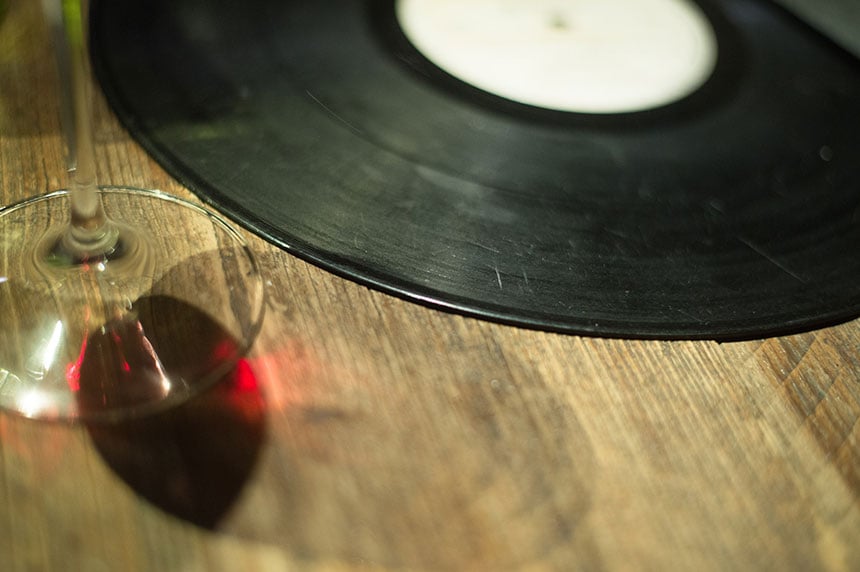
I find Ian sitting at the kitchen table in his bathrobe, swaying to the music and sipping red wine out of our best crystal. He grins at me as he tops up his glass.
“Want some?” He raises his voice to be heard over the music. “It’s quite good.”
“Is that the Borello?” I ask. Of all the things to worry about, this should be the least. But it’s small, concrete. Something I can hold onto.
Ian cups an ear, smiles, and shrugs. “Can’t hear you!”
I cross the room and twist a knob, silencing the music, and repeat myself. “Is that the ’98 Borello?”
He nods, takes a sip, and lets it sit in his mouth for a moment with his eyes closed. Then he swallows, sighs, smiles. “It sure is.”
“That’s a pretty expensive bottle. Is this a special occasion?” I gesture to the dirty dishes in our sink, to the unmopped floor.
“Life is a special occasion, sweetheart. There is no later. There is only now.”
Once upon a time, this carefree recklessness might have seemed alarming. These days, nothing Ian does surprises me.
“Now happens to be six o’clock in the morning,” I reply, pointing at the clock. “This whole ‘gentleman of leisure’ thing you have going on is wonderful, but some of us have responsibilities.”
Ian jumps up from his chair, flips the music back on. A sudden blast of trumpets makes me flinch. He just laughs and pulls me into his arms.
He sings along with the record, crooning into my ear, slurring the words a little. His breath is sharp and sour.
My stomach twists into an icy knot and I pull free. “I’m going back to bed. Please, Ian. No more music.”
He shrugs, picks up his glass and the half-empty bottle, then heads for his study. “The record’s over anyway, and my canvas awaits,” he calls over his shoulder. “Join me if you change your mind. Maybe I’ll try painting you.”
I want to shout at him, tell him to stop treating this like a vacation, like a joke. Instead, I clench my teeth and silently watch him go.
What responsibilities do I have now, anyway, besides taking care of him? There are no more dinner parties to host or vacations to plan, no more dress shirts to iron or thank-you notes to write. No more golf tournaments or charity galas …
There is only Ian. And for Ian, there is only now.
Spring
Outside, the world is awakening, green and new. The sun grows stronger, the days get longer, and the air smells fresh and clean. This used to be Ian’s favorite season. Mine too.
When spring came, I’d spend hours outdoors, watching our garden come alive, admiring the crocuses, daffodils, and tulips as they bloomed in turn. I’d drag out the patio furniture, setting up lounge chairs by the pool, eagerly awaiting opening day.
And Ian, restless after a long winter, would haul his golf clubs out to the car, grinning like a boy. He’d once told me that he loved the sound of a club whistling through the air and making contact with that little white ball more than just about anything else.
Spring is an insult this year, all that aliveness going on outside is just a cruel reminder of the slow decay taking place within our home.
Ian barely picks at his food now. Even his favorites can’t tempt him, and I’ve tried them all, from pot roast to pancakes. His appetite is nonexistent these days, and lately, even the simple act of chewing drains him.
He naps often but never seems to wake up feeling rested. His cheekbones have grown sharper, his eyes appear larger, and his body diminishes day by day, curling in on itself.
Friends, business acquaintances, and golf partners once visited often, but they don’t come by anymore.
“They’re just jealous,” Ian jokes. “I’m free to do as I please. Those poor suckers have to work for a living.”
I smile but say nothing, just give him his pills and watch as he swallows them, one by one. His hand trembles as he lifts the glass of water to his lips, and I reach out to steady it.
I don’t mind the lack of visitors. People don’t know what to say to someone who’s dying, and all those awkward conversations exhausted me. Besides, the house, sadly neglected, has grown shabby over the winter. I’d be mortified to let anyone inside.
“This place needs a good cleaning,” I say, running a finger through the layer of dust coating the coffee table. “I should deal with that today.”
“Leave it,” he says. “Who cares?”
I open my mouth to say, I do. But suddenly, I realize that I actually don’t. Not anymore.
“What shall we do today?” I say instead.
He asks me to read to him. “Hemingway. The Old Man and the Sea,” he says. “It’s on the bookshelf in my study.”
I give his shoulder a gentle squeeze and go to fetch it.
Ian’s study is a large room at the back of the house. I try to remember the last time he was in here. A month ago? Two?
The drapes are closed, and his desk stands in shadow. For a moment, I can see him sitting there, working late like he did so many nights, his hair disheveled and the top button of his shirt undone. His shoulders are so broad; his spine is so straight.
“Oh, Ian,” I whisper. This horrible disease has already taken so much from us, and the loss has only just begun.
My eyes blur with tears. I wipe them away with my sleeve, and when I look again, there’s nothing there but a desk and an empty chair.
I close my eyes, focus on my breath, and fight to regain my composure. After a minute, I cross the room and tug open the drapes, letting the late-morning sun in.
The bookshelf runs the length of one wall. It’s packed from floor to ceiling with textbooks, biographies, and various volumes on economics, philosophy, and law. But there’s one small section of fiction, and that’s where I find the Hemingway.
I’d expected a fresh copy, spine uncracked. A gift from a client perhaps, or something picked up at an airport in an optimistic moment. Instead, I find a familiar, dog-eared paperback wedged in among newer volumes.
I pull it from the shelf, flip it open, and find Ian’s name printed in neat block letters on the inside cover. I run my fingers over the faded ink and wonder what happened to my copy.
Ian and I met at university. He sat beside me in American Literature, and before long, we were debating the merits of Faulkner, Fitzgerald, and Steinbeck (my favorites) versus Hemingway (his). And somewhere along the way, we fell in love.
“I can’t believe you hung onto this all these years,” I say when I return to the living room with the book in my hand.
Ian smiles, shrugs. “I always meant to reread it,” he says. “And now I will.”
I get him settled on the sofa, open to the first page, and begin.
I read all afternoon, stopping now and then to check on Ian or sip some water. Finally, I reach the last page and close the book.
“‘A man can be destroyed but not defeated,’” he quotes, voice thick with morphine and pain. “I’ve always loved that line.”
I kiss his cheek. “But you are neither, my love.”
Ian doesn’t answer, just closes his eyes. I listen for the next breath, but it doesn’t come.
I sit with him for a while in silence. My mind empties. There are things I’m supposed to do, but I can’t remember what they are.
Outside, a cardinal calls to its mate. The sound rips through me, eviscerates me. The dam breaks then, and the tears come.
Summer
My grief blooms alongside the roses in my overgrown garden, but it does not diminish when the petals curl and the color fades. And my pain, like the late-summer sun, just burns brighter.
I avoid the parts of our house that hold the loudest memories. I sleep in the spare room now, on a bed that doesn’t know the shape of us, and the door to his study has stayed shut since the day that he died.
Our lawyer called and left a voicemail the week after the funeral. He’s called several times since then, but I never pick up.
“There are things that need doing, Eleanor,” he said in the last message. “I know it’s hard, but it’s time.”
“I’m not ready,” I whisper, staring at the study door. “I can’t do this.”
But Ian’s crumpled list detailing our finances also includes instructions: documents to gather, forms to fill out, people to call. And everything I need is in there. I take a deep breath and turn the knob.
His study is just as he left it: a terrible, half-done watercolor on an easel by the window; several jigsaw puzzles, completed throughout the winter then returned to their boxes and piled in the corner; a stack of vinyl records by the stereo, the jazz greats that Ian spent so much time with this past year.
The room still smells like him, his soap and his shaving cream and his shoe polish, but also paint, pencil shavings, and medicine.
While Ian was dying, our neighbors whispered from their side of the fence. They thought he was doing it wrong. For a while, so did I.
Ian lived out his life the way he wanted, doing as he pleased. That confused people. Scared them. They were looking for a tragedy, but Ian wouldn’t give it to them.
I wipe the tears away, then open his desk to search for the necessary documents. Instead, I find a handwritten list with NOW OR NEVER scrawled across the top.
There are several items, most of them are ticked off. Drink the Borello. Learn to paint …
Only one item remains unchecked and incomplete, likely a late addition, judging by the shaky printing: Skinny-dip in our pool.
For a minute, I feel relieved. Thank god he hadn’t gotten around to that one. What would the neighbors have said about that? But sadness quickly crowds out relief. It’s such a simple thing to want, and Ian never had the chance to do it.
I strip off my clothes on the way to the sliding door that opens onto our backyard. Outside, the water in our pool shimmers in the sunlight.
I hesitate, but only for a moment. “There is only now,” I murmur. Then I open the door and, naked, step outside.
Become a Saturday Evening Post member and enjoy unlimited access. Subscribe now

Comments
Excellent story, Ms. Haldane. A difficult topic to write about, but you’ve done so here in a masterful, wonderful way. We have to go on despite our sadness, and Eleanor does. The ending was a bit of a surprise, but showed just that. You’re a terrific writer, and hopefully we’ll see another story for the Post online. Thank you very much, and Happy Holidays.