My mother sat across the kitchen table from me, a cup of black coffee in front of her, lukewarm now because she’d been crying for the last 15 minutes. I had tried to calm her, but it was the kind of cry that had to run its course, a spell of inconsolable sobbing that tapered off into a quiet weeping.
She’d finally steadied herself and lit a cigarette. She took a long drag and exhaled into the chandelier above, brass with miniature lampshades that I remember at one time had been white but were now stained yellow. The smoke floated upward and aged the little lampshades a little bit more.
“He’s going to come, isn’t he?” she asked.
My brother, Darren. Today was his voluntary surrender date. He was always looking for something easy, even if it meant working hard to find a way to stay outside the lines. But his last scheme had gotten him into serious, felony-level trouble. He had worked his way up to the customer service desk at a Home Depot, where he couldn’t resist issuing phony returns on customer accounts. In less than a month, he stole over $11,000 in false refunds. Enough for a two-year sentence, which was scheduled to begin at noon today.
“I talked to him last night. He said he’d be here,” I said. I glanced at my watch. It was 8:45, and he was 15 minutes late.
“What time did he say he’d be here?” she asked. She wiped away the last of her tears and took another puff of her cigarette.
“Soon,” I said.
She held the cigarette between her fingers, unmoving now, staring out the window with an absent, unfocused gaze. Looking but not watching, as if listening to some silent anthem.
“Two years,” she said and turned to me. “That was the best you could do, right?”
I nodded. Not really a question. I had explained the reasons for the plea before, but I knew she wanted to hear them again. “He would have been convicted in 15 minutes, and he was facing up to ten years. They had everything on him.”
“You’re sure?”
I took a sip of my coffee and stared out the window that gave me a view of the driveway. Still no Darren. “I got him as good a deal as he could have hoped for.”
She seemed to ponder that for a while. “Thank you,” she finally said.
The kitchen table we were sitting at was small, just big enough to seat four comfortably, and full of the scratches and stains going back to my childhood. But even though we were so close together, the room had an empty feeling.
Then I saw a car pull into the driveway and stop. The rear passenger door opened and Darren got out; he stood there for a moment, looking at me through the window while the driver backed up the driveway to the street. When my mother saw me staring out the window, she quickly turned around in her chair.
“Oh, thank God!” she said and watched Darren as he walked up to the door and entered.
She sat very still, as if in disbelief that he had actually shown up. Then she quickly stood and hugged him, kissed him on the cheek, and hugged him again. I went to the coffeemaker and poured him a cup. When I got back to the table, she and Darren were sitting next to each other, and she was holding his hand. I set the cup down before him.
“Oh,” she said. “Oh, Darren, I can’t believe this.”
“Can’t either, mom,” he said.
“You must listen to them in there,” she said. “Anthony told me you could be out as soon as nine months, you know that?”
“He’s explained it to me. I know,” Darren said. He freed his hand from our mother’s grasp and glanced at me, but his eyes didn’t meet mine. Then he took a sip of his coffee and fished his wallet from his front pocket. He took out his license and handed it to me.
Darren was three years my junior. He had a youthful face and thin build and could pass for his mid-20s even though he was 35. He wore a polo shirt, jeans, and tennis shoes and, but for his phone and his wallet, he had nothing else on him.
In my jacket I had an envelope with a list of contacts to give to the intake officials at Fulton County Jail, along with the sentencing order and other reporting papers. I took the envelope out and handed it to Darren. He put his license in the envelope and handed it back to me.
“Nine months,” my mother said again. “You’re going to get out early for me, aren’t you?”
Darren glanced at my mother and then smiled in a shy, quiet way. “I’ll try,” he said.
“Don’t try, promise.”
“I’ll try, Mom. I can’t promise.”
I slipped the envelope back into the inside pocket of my jacket. We still had to drive down to Atlanta. There was plenty of time, but I wasn’t leaving anything to the bad luck that followed Darren around.
“We need to get going,” I said. “Last thing we need is to be stuck outside the loop because of traffic.”
My mother looked at me then, staring upward as she remained seated, an expression of sudden terror on her face.
“I want more time with him,” she said. “He just got here.” She took his hand in hers again, and this time Darren did not pull away.
I nodded toward my car in the driveway. “I’ll wait outside. But we’ve got to go soon. Five minutes, okay?”
I went outside and stood against my car, watching them in silence through the window. My mother did most of the talking. She held Darren’s right hand while he picked at the scratches and divots in the old table with his other hand, nodding as she spoke, rarely looking at her. After a couple of minutes, she pulled his hand toward her and pressed it against her chest and spoke quickly, her head nodding with every syllable. He looked at her then, his brow furrowed, and said something.
They stood and hugged, and she kissed him on the cheek once more and left the kitchen, as if in a hurry. Darren came out and gently shut the door and held onto the door handle, momentarily still. Then he walked to my car and said, “Let’s get this over with.”
* * *
The traffic was light going into Atlanta, which put me at ease, as it was the only thing that was beyond my control for the morning. Darren, on the other hand, grew agitated as we approached the city.
He leaned forward and placed his face in his hands. “Two damn years,” he said, his words muffled by his palms cupped over his mouth. “Can you believe that? Two years for 11 grand. That’s not even minimum wage.”
He balled his hands into fists and slammed them down on his thighs. I said nothing, keeping my eye on the traffic.
“Hey!” Darren suddenly yelled. “This is bullshit, you know that, right?”
I did a slow count to five and then spoke. “It’s not bullshit. You had priors and stole a lot of money.” Then I looked at him. “You’re getting what you deserve.”
His right knee started shaking. “You too,” he said. “Unbelievable. It’s like you aren’t even worried about me.”
In front of me a sea of red taillights erupted. Traffic suddenly slowed down and I had to press hard on my brakes to avoid hitting the car in front of me. We came to a dead stop, and when I looked over at Darren, both his hands were on the dashboard.
“I’ve represented lots of people who have done time,” I said. I spoke calmly, slowly. “You’ll be fine.”
I believed what I said, and as we sat in a dead stop on the highway, surrounded by cars full of people on their way to do far more mundane errands, I could see that Darren finally believed me, too. His shoulders slackened, and he leaned back into the headrest.
“Okay,” he said, and let out a long breath.
Behind me, a car honked. I looked up. Traffic was moving again, so I stepped lightly on the accelerator.
“Sorry I couldn’t pay you for all this,” Darren said. “I know you did it more for Mom than me. But thanks, anyway.”
“I did it for both of you. For all of us.”
We didn’t speak for the next several miles. As we made our way farther into the city, the traffic got heavier, and we just stared at the cars in front of us. I was thankful for the quiet.
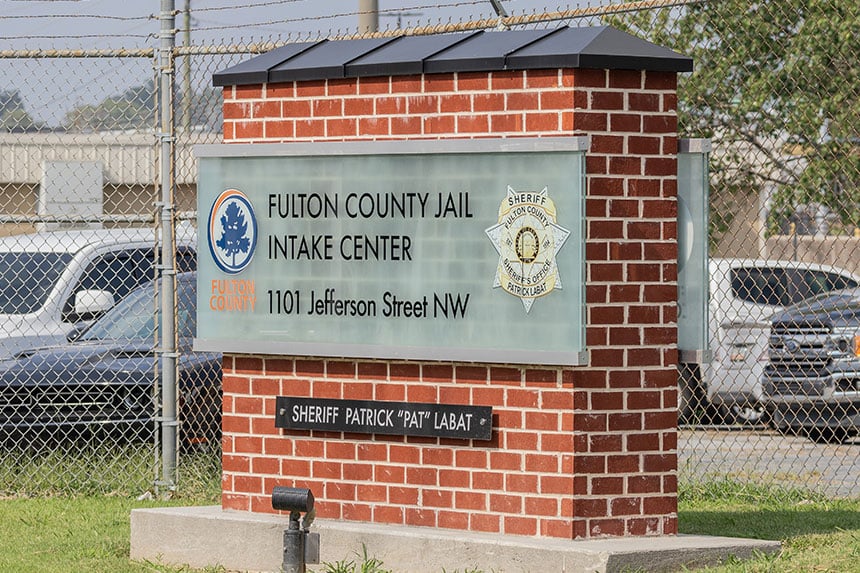
I took the exit by Georgia Tech. He’d been ordered to surrender at the Fulton County Jail, a large, ugly building with pinwheel-like housing towers extending outward from a square, blocky core, in odd juxtaposition to the university a few miles away. Dozens of students were walking around the campus as I drove by, on my way to the jail where my brother would begin his incarceration. Surrounded by the promise of youth, they seemed in a different world. I wondered how someone like my brother could fall so low, could make an endless series of bad decisions, could never manage to right himself, little by little, over the years, ignoring or not seeing the opportunities to leave the bad choices behind and move forward.
Darren was staring out the window when he suddenly started rubbing the bridge of his nose, as if trying to stifle a sneeze. He took a deep breath and said, “Say, how’s it with Jess?” He kept his head turned away from me, facing the window, as he spoke.
Jess was my wife. “Fine,” I said.
“No, I mean, with having kids. You two still trying?”
I didn’t answer right away. Jess and I had been trying for over five years. She’d had three miscarriages. Somewhere inside of me, I knew we would never have children, but she had yet to give up.
I looked over at Darren. He was still staring out the window. “Still trying,” I said.
We stopped at a crosswalk and he watched students carrying backpacks walk in front of us. “That’s too bad. You guys should have kids. It isn’t fair.”
“It’s okay,” I said.
“Would she quit work if you have one?”
I laughed. Jess was a surgical oncologist. “No. I’d quit work.”
Darren looked at me then. “You serious?”
“She makes a lot more than me. But we haven’t talked about that. We need to have one first.”
“Yeah. Yeah, that’s right, I guess.”
Then he slapped his hands on the dashboard, drumming to the beat of a song only he could hear. “Hey! What if I get out in just over nine months, and you guys have a baby right then? Wouldn’t that be something? Me, an uncle? Man, that would be something to look forward to.”
I clenched my jaw for just a second. Darren didn’t seem to notice. “That would be something.”
The light changed and the crosswalk cleared, and we started moving again. “Get busy tonight!” Darren said, and then laughed. He drummed the dashboard again, harder, laughing like a man who laughed only because there was nothing else for him to do. “Get busy, Tony! Tonight you and Jess can make me an uncle!”
I wanted to get away from Darren then, to separate myself from him, to just be done with him. “Stop,” I said.
He leaned forward and tapped his forehead with his fingertips to the same rhythm he had drummed on the dashboard. “Sorry,” he said. “Things are just popping in and out of my head all of the sudden.”
“Don’t go manic right now. We’re almost there.”
“What I was trying to say was that you, you and Jess, that is, you’d make good parents. I hope it happens for you. That’s all I meant.”
“I hope one day we find out.”
“I think it’s innate, don’t you?”
I glanced at Darren and then looked forward again. “What is?”
“Parenting. You can buy books on how to be a parent, you know, but I think you just know once the baby arrives. Like it’s already inside you.”
“I don’t know about that.”
“I do. I think that’s the way a lot of things are. The way people tend to act. Like we’re programmed or something. You, for instance. You always made the right choices. Me, I didn’t have anyone to rewire me.”
“Darren—”
“It’s true!” he said. His eyelids were red now, his sclera bloodshot, and the blue of his irises seemed empty of the liveliness that dwelled there just moments before. He was looking at me like a man who knew there was nothing I could do for him.
“When this is over,” I said, “you’ll get back on your feet. Then you can hold it together. Show up for work, pay your bills, it’s not that hard.”
“You’ll be a good dad,” he said, almost in a whisper. “You’ll be able to give your kid what I didn’t have.”
We drove the last mile to the jailhouse in silence. The parking lot was nearly full when we arrived, but I found a space near the entrance and parked. Darren was staring at the jailhouse from his passenger window. Rising up from behind the bricked entry stood the housing towers, six on each side of the central block, with rows of narrow, rectangular windows.
“Christ,” he said. “Christ, here we are.”
I looked at my watch. We still had an hour before noon, but waiting wouldn’t do either of us any good. “Let’s go,” I said. I got out of the car, walked over to his door, and opened it. “Come on, brother.”
He stared past me, looking at the building. Then he unbuckled his seatbelt and got out of the car.
I had previously told him what to expect, but I went over the intake process again as we walked toward the entrance, mostly just to keep him calm. “This isn’t a hotel. They’re going to tell you what to do, and you damn well better listen to them and do it, because when you listen to them, things will go smoothly. Once they verify it’s you, you’ll be cuffed, taken back for prints and a mugshot, and they’ll bag your belongings and put you in prison scrubs.”
“Okay.” His voice was calm and flat, but I kept talking.
“You’ll be bussed down to Jackson for diagnostic classification. That’s maximum security, but they do it for everyone. They’ll do a psych eval on you, and then decide where to place you. Don’t bullshit the psych eval. Given that you’re a nonviolent felon, you’ll end up at either a medium- or low-security facility.”
It was the same buck-up speech I’d given to other clients whom I’d accompanied during surrender, and I timed it so I finished just as we passed under the “FULTON COUNTY JAIL” block lettering of the entryway. There was nothing else to say then.
At the main desk, I told a fit, muscular officer that Darren was there to surrender and that I was his attorney. Darren handed the officer the envelope with his surrender order and driver’s license. The officer said nothing while he typed on a keyboard and looked at a computer screen. He looked at Darren’s license and at Darren, then he picked up the phone and pressed a line.
“Intake team for prisoner surrender,” he said in a strangely disinterested way.
The officer at the desk glanced at Darren once more, and then continued typing on the keyboard while looking intently at the screen. About 30 seconds later there was a loud buzzing sound and a thick metal door to the lobby swung open. Two police officers walked through the doorway. The officer at the desk pointed at Darren and said, “Darren Ellis, prisoner.”
“Turn around and place your hands behind your back,” one of the officers said while reaching for a pair of handcuffs.
I stepped away, toward the entry.
Darren’s back was to me, and for a moment he tried to turn his head toward me but stopped when one of the officers gripped him by the upper arm and the other locked the cuffs in place. Again the loud buzzer sounded, and the officers, now on either side of my handcuffed brother and holding him by his arms, took him toward the doorway.
Darren looked back at me, craning his neck so that he could at least see me in his peripheral vision. In his profile I saw it then, a shame and sadness tempered only by the bewilderment that what was happening was actually happening. I lifted my chin up, maybe to give him some hope, I’m not sure, but he didn’t acknowledge the gesture and turned and looked at the doorway that he would soon pass through.
* * *
After leaving the jail, I drove back to see my mother; I felt uneasy about how we’d left so abruptly earlier and I wanted to check on her. Near the end of the drive, Jess called me.
I answered after the first ring. “Hey,” I said.
“No complications?” she asked. She was speaking in surgery mode. I could picture her standing outside the scrub room between procedures, maybe leaning against the wall, away from her team, trying to steal some privacy. I smiled for the first time that day.
“It went well. No issues. I’m going back to see Mom now, sit with her a bit.”
“I can’t imagine how she must be feeling,” she said. “And what about you?”
“I think …” I said and then went quiet.
“You think what?” she said after a moment.
“I think I’d been preparing for this for a long time. That’s all.”
“I get it,” she said.
“I’ll let you go.”
“I have a few minutes, it’s okay.”
I was turning into my mother’s development. “Thanks, but I just need to think for a bit. Love you.”
“Okay,” she said. “Love you, too.”
I was steeping in the mess that was my family, and talking to Jess would only pull me back into that sane, calm world that as a child I believed existed only in fiction. And when I saw my mother looking out the window as I pulled into the driveway, I knew I needed to stay in this mess just a little while longer.
She was sitting at the table when I came inside. Smoking again.
I sat down beside her, in the same chair Darren had been sitting in a few hours ago.
“Sorry about the smoke,” she said. “I’d been free of them for over ten years until I found out the prosecutor was looking for jail time.” She set the cigarette in the ashtray and rubbed her eyes. She had been crying again. “Three months later, it’s like I never quit. Habit is as bad as it always was.”
Usually my mother had the television on or had music playing. But today the house was quiet, and I could hear her every breath, every sniffle, every swallow.
“I thought he was on the right track, finally,” she said. “He’d been working for several years, paying his own way, staying out of trouble.”
She took the cigarette from the ashtray and stared at it, took a long puff and exhaled, and then looked at me. “Jesus, Anthony, is this ever going to end with him? Are we ever going to know peace?”
I placed my hand on her forearm and squeezed gently. She smiled. She looked very tired.
“Why did you become a lawyer?” she asked.
I blinked, surprised. “It’s been 18 years since I told you I was going to law school, and you finally ask now?”
She had that faraway look on her face again, as if staring through me, holding her cigarette up just inches from her mouth. After a moment, she stubbed the cigarette out in the ashtray.
“Well?” she said.
I could have responded with a common platitude, something about helping others who can’t help themselves, the intellectual challenge, or just the money. But she would have known. “I suppose I was tired of the chaos. I wanted to learn about structure and consequences. The law seemed to offer that.”
“And here you are. Back in the chaos.”
“Back in the chaos.”
She nodded, bit down on the side of her lower lip. “I’m proud of what you’ve accomplished,” she finally said. “I spent years building him up because I thought he needed it. But I didn’t with you. You had what you needed. Inside, anyway. Not from me.”
She stared at me then, her eyes on mine, and she did not turn away. “Whenever something positive for him happened, I’d tell you. Ever since he started getting into trouble when you were kids. Maybe you thought I was proud of him and not you. But it wasn’t that. I think I was just pretending to have hope. I think maybe I was looking for hope from you, too. I shouldn’t have done that. A parent shouldn’t ask that of a child.”
“It’s all right.”
“No, it’s not. I ignored all of the good things that happened to you. College, law school, starting your own firm. And most of all, Jess. Oh, I was so happy for you. But I was afraid he’d think I was comparing his failures to your successes. So it just became habit to not dwell on them. I thought it would help him, but I think I just pushed you away.”
What does a son say when a mother confesses to him? I didn’t know, so I went to the coffeemaker and started a pot, and came back to the table and sat down and waited for the coffee to brew. My mother looked like a woman suddenly abandoned, looking for someone, even though I was right beside her.
I took her hand in mine.
“Tell me more,” I said.
She stared at my hand holding hers while she spoke. “I loved being home with you boys.”
Her eyes started tearing, and she swallowed deeply. “But when your father died, I had to go back to work. It wasn’t easy. I still had my looks and men would hit on me then. I was still mourning, and I just wanted to be with you boys. That’s all I wanted then. Just to go to work, be left alone, and come home to you.”
Even now, her almond-shaped eyes complemented her delicate jaw line in a way that gave her a natural, almost effortless dignity. I had never thought of her beauty as a burden.
“I’m sorry,” I said.
“I would plead with God that I would be able to provide for both of you. On my knees, trying to make deals with him while I waited for the next paycheck. I would do it at night, after you two went to bed, so you wouldn’t see me. Wouldn’t see your mother on her knees.”
I closed my eyes and turned my head away from her.
She squeezed my hand. “But I did provide,” she said, quietly. “I did.”
“It went so quickly,” she continued. “And by the time I was ready to move forward, well, Darren. It’s hard to start a relationship when you don’t know where your son is most of the time, don’t know if he’s at school or out getting stoned or arrested. Not knowing if he’s going to be alive in a year, or in prison.”
She looked at the kitchen, and then to the living room, as if recalling scenes from our past. “I was so happy to be a mother, at first. I thought I was good at it. But maybe I wasn’t.”
I stood and bent over and kissed her on the forehead. “You were, and are, a wonderful mother.”
I poured us each a cup of coffee and came back to the table.
“What was it like for you?” she asked.
Her eyes darted away from me, and her face flushed slightly.
Telling certain people you love them can be very easy. It is such a simple act when your feelings are true. But I cannot recall the last time I told my brother that I love him, and as I looked at my mother, I realized why. My love for him is the one thing that is mine to give, and I fear that once revealed, he will try to take it for himself, like he has with everything else in his life.
In our own different ways, we had both surrendered to Darren. Despite his abuses, his selfishness, and the pain he had caused us, we would both love him until we were no longer of this earth.
I took a sip of coffee. It was rich and warm. I took her hand again. Then I leaned forward, kept her hand in mine, and I smiled. “I was there, with you, all the time.”
Become a Saturday Evening Post member and enjoy unlimited access. Subscribe now