Doctor’s Note: Pregnancy Brain
In a recent neuroanatomy study published in Nature Neuroscience, University of California Irvine neurobiologist Dr. Liz Chrastil underwent 26 brain MRI scans before, during, and after her pregnancy. This study is unique due to the large number of scans on a single subject. Older studies typically only did a few MRIs per subject, whereas this study obtained multiple scans before conception, during all three trimesters of pregnancy, and up to two years after childbirth. This allowed researchers to make detailed comparisons between timepoints and also correlate with estrogen and progesterone levels seen on bloodwork.
So, what did the study find? First, let’s explain the types of measurements they took. The researchers used MRI to measure the volume of gray and white matter, as well as the white matter microstructural integrity, across dozens of regions throughout the brain. Gray matter contains neuron cell bodies whereas white matter contains nerve tracts. You can think of them as being like circuit boards and wires, respectively. White matter integrity is a measure of how easily fluid moves along white matter tracts. Gray matter volume and white matter integrity don’t always correlate with cognitive performance, just as stuffing more parts into a computer doesn’t guarantee it will run faster. But large changes in brain anatomy indicate the presence of an underlying biological process, such as brain maturation in adolescence, or neurodegenerative disorders later in life.
The Nature Neuroscience study showed rapid structural changes during pregnancy in multiple areas throughout the brain, far exceeding the day-to-day brain changes in non-pregnant controls. There were large decreases in gray matter volume (GMV) across most of the brain, with an average of -4 percent GMV by the end of pregnancy. These changes partially reversed after childbirth, but GMV remained lower than baseline at two years afterward, affecting the vast majority of the brain. The only region that increased in volume during and after pregnancy was the limbic system, which is linked to emotion, motivation, memory, and behavior. At the same time, there were large increases in white matter microstructural integrity early in pregnancy, which reverted back to normal shortly after childbirth.
What does this mean? Are pregnancy-related reductions in gray matter volume a bad thing? Could they be the cause of “mommy brain,” postpartum depression, or other maladies? Well, Dr. Chrastil said that she did not experience “mommy brain” or any other complications. Decreasing the volume of gray matter doesn’t mean decreasing neurocognitive function — similar volume reductions occur during normal puberty. It’s believed that these cortical thinning events reflect fine-tuning and synaptic pruning of neurons. Combined with the rapid rise and fall of white matter integrity, it appears that these brain anatomy changes occur as part of a large-scale remodeling of the brain. So, it’s no wonder that pregnant women experience so many emotional and cognitive changes.
The greatest limitation of the study was that it only had a single subject, so we don’t know if other pregnant women show the same brain patterns as Dr. Chrastil. It’s plausible that the brain doesn’t change as much during a second or third pregnancy compared to the first. It’s likely that these brain changes are different in women who are pregnant at a younger age, are pregnant with twins or multiplets, who deliver prematurely, or deliver via C-section.
Co-author Dr. Laura Pritschet called the study a “proof of concept.” The UC Irvine neurobiology research group is already enrolling more women in brain imaging studies, with the goal of being able to compare image sets between healthy and unhealthy pregnancies. This could shed more light on pregnancy-related brain disorders such as postpartum depression, and how to prevent or treat them. Understanding how female sex hormones affect the brain could also bolster the research and treatment of menstrual- and menopause-related illnesses.
This study generates more questions than answers, but it is an important first step toward understanding how pregnancy and childbirth affect the human brain.
10 Unusual Objects Related to Presidents and Elections
The Smithsonian Institution in Washington, D.C. was formally established on August 10, 1845, and over the years has amassed more than 157 million items across 21 museums and galleries. The Smithsonian National Museum of American History houses artifacts related to national elections and the presidency. We offer a look at some of the most unusual.
All images courtesy of The Smithsonian Institution unless otherwise noted
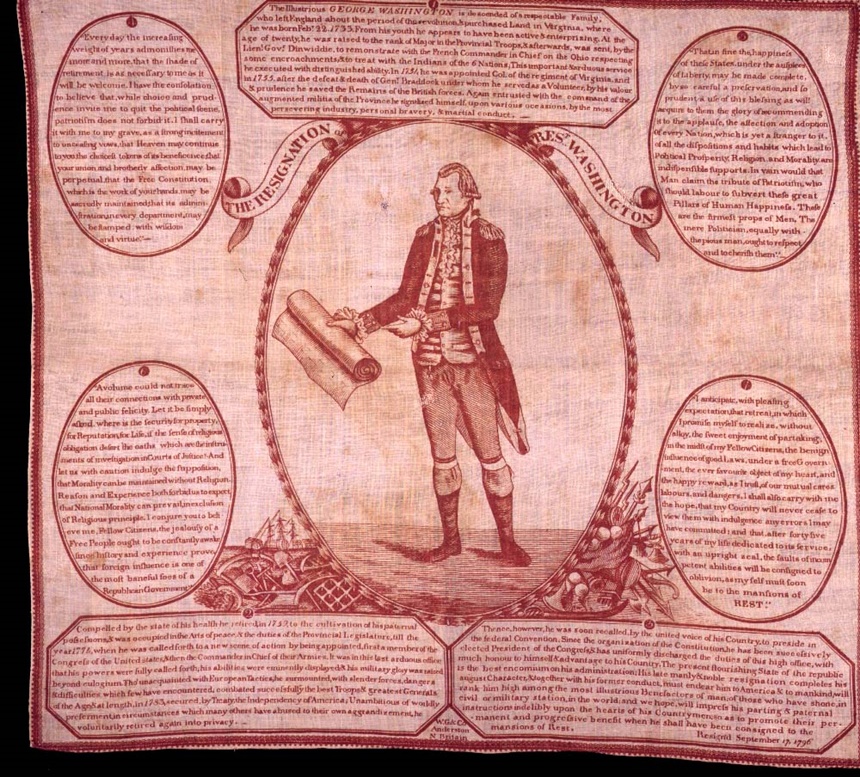
1. Bandana Featuring Excerpts from George Washington’s Farewell Address
In which Washington encouraged all Americans to put aside regional and party divisions in support of the newly formed republic. Observed Washington, “Your Union ought to be considered as a main prop of your liberty, the love of the one ought to endear you to the preservation of the other.”
2. Presidential Hair Cabinet
John Varden, keeper of collections for the National Institute for the Promotion of Science at the U.S. Patent Office, began collecting locks of hair from prominent individuals in 1850 and quickly amassed a collection that included presidents, senators, artists, and other luminaries. Varden’s presidential hair collection includes strands from George Washington and Franklin Pierce.

3. Cast of Lincoln’s Face and Hands
Abraham Lincoln was selected as the Republican candidate for president on May 18, 1860. Two days later, Lincoln sat for a plaster casting of his hands by Chicago artist Leonard Volk, who had created a plaster cast of Lincoln’s face a month earlier. Lincoln’s right hand was still swollen from shaking hundreds of hands at the Republican Party Convention, so he cut off a small piece of broom handle to steady his hand in the mold, which Volk included in the resulting cast. In 1886, Volk’s son sold the casts of Lincoln’s face and hands to a group that planned to have renowned sculptor Augustus Saint-Gaudens make a limited set of replicas. Two years later, the group presented Volk’s original plaster casts of Lincoln’s hands and face, along with bronze replicas created by Saint-Gaudens, to the U.S. government for preservation. The donation was made on the condition that “the original casts should never be tampered with.”

4. William McKinley/William Jennings Bryan Soap Figures
The presidential election of 1896, between Republican William McKinley and Democrat William Jennings Bryan, was one for the ages. Emotions ran high, and campaign items for both sides numbered more than 2,000. Among the most unusual were these “soap babies” of the two candidates, which included a tag promoting each candidate’s policies. Sadly, soap babies never caught on as an election gimmick because people thought they looked too much like babies in coffins.

5. Teddy Bear Inspired by Theodore Roosevelt
Roosevelt was an outdoorsman, and proud of it. But when presented with an opportunity to shoot a bear that had been chained to a tree, he refused, calling it unsportsmanlike. That moment inspired a 1902 editorial cartoon by Clifford Berryman, which in turn inspired the Ideal Toy Company to create the very first teddy bear. The story about the chained bear served Roosevelt well, portraying him as both masculine and compassionate.


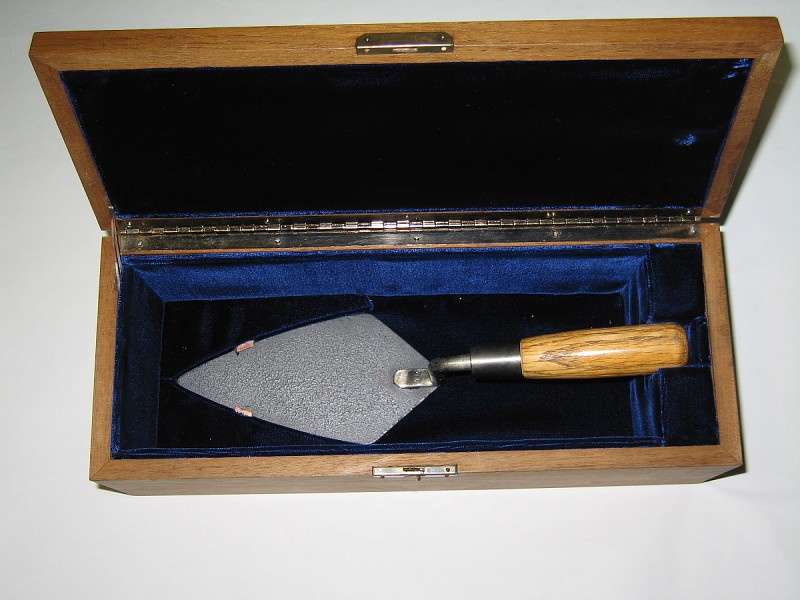
6. Dwight Eisenhower’s Uranium Trowel
On November 8, 1957, President Dwight Eisenhower participated in the dedication of the U.S. Atomic Energy Commission’s headquarters building in Germantown, Maryland. Eisenhower and other attending dignitaries were given special trowels, some of which contained radioactive elements. Specifically, the blades were uranium from the world’s first nuclear reactor, the ferrule and stem were zirconium from the assembly of the USS Nautilus, the first nuclear-powered submarine, and the handle was crafted out of wood from the west stands of Stagg Field at The University of Chicago, where the first human-made nuclear reaction was achieved on December 2, 1942. To calm Secret Service concerns over radiation safety, the uranium trowels were replaced with silver-plated trowels for the dedication ceremony.
7. John F. Kennedy Inaugural Parade Periscope
The inauguration of John F. Kennedy on January 20, 1961, heralded a bright new age for the country. Though it was a bitter 22 degrees Fahrenheit the day of Kennedy’s inauguration, huge crowds turned out for the festivities. To help people in the back better view the parade, special cardboard periscopes reading “JACK” and “Souvenir of Washington D.C. Inaugural” were distributed to spectators. The periscopes, when you can find them, are now coveted collectibles.

8. Lyndon B. Johnson Dart Game
Many political items are made to promote a particular politician or party, while an equal number serve to demonstrate disapproval. Such was the case with this 1967 dart game, which features Lyndon Johnson’s face at the target. The game typified public opposition to Johnson’s escalation of the war in Vietnam.

9. Nixon and Mao Ping-Pong Paddles
It was huge news when Richard Nixon traveled to the People’s Republic of China in 1972 to open full diplomatic relations with the communist nation. Prior to his visit, Nixon arranged a series of table-tennis matches between Chinese and American players, which the press referred to as “Ping-Pong diplomacy.” These commemorative paddles, featuring the faces of Nixon and Mao, illustrate the importance of those preliminary ping-pong matches in bringing the U.S. and China together.

10. Bottle of W Ketchup
George W. Bush’s opponent in the 2004 presidential race was Sen. John Kerry, whose wife, Teresa Heinz, was related to the Heinz family, which manufactured ketchup and other food products. A group of New York City Republicans didn’t want their presidential candidate seen using ketchup manufactured by his opponent’s family, so they created W Ketchup, which bore the slogan: “You don’t support Democrats. Why should your ketchup?” The condiment was sold primarily online, and ceased production in 2015.

Is There Anything Good to Say About Tariffs?
Tariffs, which are taxes on imported goods and services, were once the government’s only source of revenue.
It was supplanted by income taxes, which were first collected in 1913. Then, after World War II, 23 nations signed the General Agreement on Tariffs and Trade (GATT) to reduce tariffs and promote international trade. Between 1947 and 1993, these agreements reduced average tariffs on the world’s industrial goods from 40 percent of their market value to less than 5 percent.
But tariffs were revived in 2018-19 when President Trump imposed them on goods from China. Washing machines, solar panels, steel, aluminum, and a billion dollars of other goods were affected. For the most part, the Trump tariffs were kept in place by the Biden administration, though modified in 2023.
What Is the Purpose of Tariffs?
Tariffs are intended to raise revenue for the U.S. from other nations’ exports.
They’re also intended to protect domestic industries by raising the cost of competitive imports.
Lastly, they can exert political leverage over another country, pressuring them to reduce their imports or lower their own tariffs. The Trump tariffs were meant as retaliation for China’s unfair trade practices and theft of U.S. intellectual property. It was also hoped they’d help correct the trade imbalance: As of 2018, America had purchased $376 billion more goods from China than China had purchased from us.
As of March of 2024, the tariffs have brought in revenues of $233 billion.
The Drawbacks of Tariffs
Retaliation
Ideally, tariffs are intended to protect domestic manufacturers from cheaper alternatives imported from countries with cheaper labor, more abundant resources, or more advanced manufacturing.
But tariffs can operate in both directions. A tariff imposed by the U.S. on an imported good can lead to retaliation from exporting nations. For example, to give a competitive edge to domestic car makers, the U.S. has imposed a 2.5 percent tariff on automobiles imported from the European Union. The EU has retaliated by putting a 10 percent tariff on all cars from the U.S.
Minimal Revenue
The tariffs haven’t been particularly beneficial to the Treasury. By 2020, U.S. tariffs on Chinese goods had risen from 5 percent to 20 percent, a large enough increase to be considered a “trade war.” But the import duties collected raised the amount of federal revenue from tariffs only from 1 percent to 2 percent.
There’s also the problem of scale. The $80 billion raised on import duties in 2023 sounds impressive until you realize that it represents only 2 percent of the $4.44 trillion in federal tax revenue.
Consumers, seeing tariff-increased prices on imports, will purchase a less expensive alternative, which translates into even lower tariff-raised revenues.
Even more revenue is sucked away by subsidies. When the U.S. raised tariffs, China, Mexico, and the European Union retaliated with their own tariffs on U.S. agricultural products. To aid farmers, the government paid out significant subsidies. By 2020, the Treasury had accumulated $66 billion from the China tariffs and paid out $61 billion in bailouts to farmers, with the government retaining only .08 percent of the tariff revenues.
Indirect Taxes
The biggest objection to tariffs is that they are, in effect, a sales tax on Americans because importers of foreign goods typically pass on the added cost to their customers.
In a perfect world, a foreign company would respond to a tariff by lowering the price of its exports by an equal amount. For instance, the exporter of shoes who faces a new duty of six percent would lower the price so that, as far as the consumer is concerned, the cost of the shoes (the lower cost plus the tariff) is the same as the cost before the tariff was imposed.
Unfortunately, in our imperfect world, the exporter does not reduce the price of their goods. They ship their shoes to the American importer, who may pay the tariff, but more often will pass it on to consumers. And price tags will now reflect the price of the shoes plus the added cost of the tariff.
Do Tariffs Help or Hurt?
Opponents of the tariffs predicted that they’d hurt domestic industries and impede growth, but the numbers don’t support this. In 2018, the Trump administration imposed tariffs on solar cells and panels from overseas. These tariffs were kept in place by President Biden and extended for four years. Yet the construction of solar arrays supporting utilities was up in the third quarter of 2023 and showing a 107 percent increase over the previous year.
Meanwhile, the price of solar panels has dropped steadily, not because of tariffs but because of overproduction in China. Overproduction of other tariffed imports from China has also reduced their prices, according to the Coalition for a Prosperous America.
And the Inflation Reduction Act has encouraged investing in domestic production of solar modules, freeing us from total reliance on foreign manufacturers.
Industry Week notes that tariffs on washing machines raised prices only temporarily. The same is true for steel, which is now showing signs of increased production here in the U.S. And China’s ban on some agricultural products grown in America was eventually reversed. China is buying more American soy than ever.
Tariffs can still have a large impact on markets, but markets can grow despite them. Given a vibrant global economy, exporting nations work through or around them to keep growing.
The Coonskin Cap
North Carolina 1948.
Granddaddy Potts liked to claim that the ghost of Daniel Boone roamed the mountains as he had in life. If a hunter wasn’t scared of haints, the mountain man’s spirit could inhabit his body and guide him.
Eight-year-old Sue Bee Potts prayed that Daniel Boone would hop into her skinny frame and make her the mightiest hunter on Black Mountain. Granddaddy had taught her to catch rabbits in wicker snares, but he was old and sad and spent most days tending his cornfield.
One day, the farmer took Sue Bee out to the barn and opened a wooden box. He removed a coonskin cap with a striped tail and settled it over the child’s straight brown hair. Her daddy had worn the fur when he was a little boy, he told her. Holding the magic of the mountains, the coonskin cap had allowed young John Potts to carry Daniel Boone’s soul inside him.
Sue Bee wore the cap day and night, only taking it off for her Saturday bath on the back porch. It wasn’t long before she sensed a strange power flowing into her bones. The little girl felt strong enough to wrestle a bear and coil a snake into a rug. Granddaddy was delighted. Mama was not.
“Preacher says it’s a mortal sin, you telling that child she’s possessed by Daniel Boone,” Virginia Potts told her father-in-law. “She snuck out of Sunday School and ran off into the woods, said Daniel Boone was gonna show her how to catch a crow with her bare hands. You throw that coonskin cap away.”
Granddaddy spat out his tobacco chaw. “Now you wait a doggone minute —”
“No, you wait. You done got that girl breaking the Sabbath and believing a haint’s living in her breast.”
“Ain’t no harm in her believing such.”
She held up her callused hand. “There’s harm in you making her out to be something she ain’t, Mr. Potts. She tramps the woods like a renegade and ignores her schooling. The teacher says she ain’t doing her letters. Spends all her time gaping out the window, pining to go hunting. I want better for her. I want her book-learned and God-fearing. I want her fit to live down in Raleigh when she’s growed, where folks ain’t a superstitious ignoramus.” Virginia had nearly finished the eighth grade in Raleigh before she married John Potts and moved to Granddaddy’s farm on Black Mountain. She thought she knew everything that could be known because she was educated and could throw around big words.
Muttering, he stalked out to the barn to feed the ox and repair a brace on the plow handle.
What was the harm in his granddaughter fancying she could host Daniel Boone like her daddy had when he was little? Her enthusiasm lessened the pain of John’s death, almost like he had his boy back. She looked exactly like John in that coonskin cap, toting home rabbits she’d snared.
Last year, Sue Bee’s daddy had gotten cut in two at the sawmill in Asheville. This was the first time she’d smiled since that awful day in June. He’d be damned if he would discourage her.
The day before Sue Bee’s ninth birthday, Granddaddy walked 15 miles to Asheville and traded a sack of seed corn for a battered pellet rifle. He carved DANIEL BOONE into the plain wooden stock and headed back up the mountain.
The next morning, he found Sue Bee in the pasture, trimming the hooves on their small herd of goats.
“Look what I come across yesterday, sugar. Daniel Boone’s very own rifle. Reckon the birthday girl might hunt rabbits with something better than a willow twig snare?”
Speechless, Sue Bee took the gun out of his gnarly hands. He pushed her hair up under her coonskin cap. Since this was a special occasion, he let her skip school. They spent half the morning plinking tin cans off the split-rail fence.
Sue Bee forgot all about the cans when Granddaddy spied a small timber rattler curled around a fence post. It looked like an easy target.
“Aim right behind the head, sugar, like if you was to hit it with a hoe.”
Sue Bee missed it twice before she struck it. Thrilled, she ran to the dead snake. Granddaddy caught her before she could pick it up.
“See them eyes? They got a gleam in ’em. He’s got a headache, but he ain’t dead. Like I used to tell your daddy, don’t never go grabbing a serpent till you know it’s kilt.”
He mashed its skull with his boot heel and then let Sue Bee cut off the head and three-button rattle with her daddy’s pocketknife.
“A wounded snake’s as dangerous as a mountain panther,” he warned. “Don’t never turn your back on one. You shoot it, you make dang sure it’s dead. And like I’ve told you many a time, don’t never stick your paw where you can’t see what you’re reaching for.”
“No sir, I won’t.” Hoping another rattler would show up for target practice, she was barely listening.
The old farmer held up the rough-scaled carcass. “He’s kindly puny, but there’s enough meat on him for dinner.”
Sue Bee’s mouth watered. There was nothing finer than rattlesnake meat pan-fried with okra. Using either his hoe or the revolver he’d carried in the First World War, Granddaddy had killed dozens in the rocky hills. Sue Bee kept a cigar box of rattles under her bed. Tickled at the prospect of adding her own trophy to the collection, she stashed the small rattle in the bib pocket of her overalls.
Granddaddy studied her, thinking she was like John in more ways than just looks. She was inclined to be reckless, and in the hills, that could get you killed. Maybe he was the reckless one. But that smile … Lordamercy, he wasn’t about to take away that smile.
Still, he needed to make sure she understood the danger. “Another thing, sugar, don’t go messing with no big rattlers. You stay off from them. And don’t shoot no animals big enough to take you down. Nothing bigger’n a possum, y’hear?”
“Yessir, Granddaddy.”
“You sewanee?”
She crossed her heart and spat over her left shoulder. “Yessir.”
Granddaddy gestured at the snake’s head. Sue Bee knew what to do. She dug a hole, flipped the head into it with a stick, and tamped down the dirt. It was dangerous to leave any part of a venomous snake for the buzzards. Its mate would come after you.
“And here’s something you got to know, something the goldarn preacher will tell you not to believe.” He paused to stuff a fresh chaw between his cheek and gum. “Critters got souls like me and you, even poison snakes. You got to respect ’em, give thanks for the fruit of their bodies. Daniel Boone didn’t hunt for the sake of killing. He hunted to feed his family.”
“Like me when I catch a rabbit.”
She watched for his cloudy old eyes to light up, but he remained solemn. “A gun’s a sight more powerful than a snare. That coonskin cap allows Boone’s soul to guide and protect you. You gotta be worthy of it. Your daddy always was.”
Her eyes big, she touched the fur cap reverently. He laid his hand on her thin shoulder. “Remember the frontier code, Sue Bee Potts. You don’t never kill for sport. Never.”
The next morning, Sue Bee was the first pupil to arrive at the Baptist Church that the tiny mountain community used for a schoolhouse. She eyeballed the crows flapping around in the pines and wondered if she could hit one. Granddaddy didn’t know she’d carried the pellet gun to school for show-and-tell. The weapon had given her confidence as she walked the shadowy trail down the hill. She could feel Daniel Boone’s heart beating alongside hers.
Nudging her coonskin cap to a jaunty angle, she ran her fingers over his name on the gun stock. She thought about his soul inside her. She would do him proud. Her dead daddy, too. And Granddaddy Potts. She aimed to be the best hunter he’d ever heard tell of, even better than her daddy had been.
When the other children arrived, she showed them the signature on the stock. Riley Green curled his lip. “That ain’t Dan’l Boone’s rifle. And you ain’t no kind of shot, you scrawny girl. Bet you don’t even know which end of the barrel the bullet flies out of.”
She bowed up like a bobcat. “Yeah? You put your tongue in your pocket and watch this.”
Sue Bee pumped up the gun and started firing into the belfry. She pinged the church bell five or six times before Miss Hoyt ran out and got her by the ear. The teacher switched her bare legs, wrote a note to her mama, and sent her home.
Sue Bee trudged up the long trail and saw her mama scrubbing clothes in the washtub. Her thick, wavy hair had come loose from the bun. Sweat soaked her worn blue dress and flowered apron. She looked old and tired. Sue Bee’s heart gave a tug. Mama hadn’t smiled since Daddy died. She wasn’t fixing to smile now.
Sidling over like she was stalking a squirrel, Sue Bee handed her the note. Virginia scanned it, let out a holler, and yanked off the coonskin cap.
“I’m gonna lick the livin’ lard out of you, missy,” she yelled. “You ain’t Daniel Boone and I ain’t having you shooting up the church.”
“But I didn’t—”
“You hush your mouth and go churn me some butter.” She grabbed Ol’ Hickory and switched Sue Bee all the way to the kitchen.
Granddaddy heard the ruckus and came running. He took the switch out of his daughter-in-law’s hand. “Leave the gal alone.”
Virginia angrily told him what Sue Bee had done. “You carry that gun back to town before somebody gets kilt.”
“Ain’t nobody getting kilt, and she’s keeping the gun. Hell, I’ll pay her two bits to head on back and shoot the pull rope in half, and another two bits to roll the damn bell into the creek.”
“You ain’t serious.”
“If I’m lying, I’m dying. That bell wakes me every Sunday morning, the only day I got to rest. I’d sell my soul for a chance to take Ol’ Hickory to the seat of the preacher’s britches.”
She stabbed her finger at his face. “You old heathen, I might of knowed you’d take up against the Lord’s Anointed.”
“Anointed, my eye.” He set his mouth in a grim line, remembering the funeral sermon. The preacher said they ought to be proud that John was saved and had gone to a better place. Granddaddy didn’t want John in a better place. He wanted him here.
“You ain’t got no respect for the Lord nor me, either,” Virginia said. “Sue Bee’s done latched onto your ungodly ways. And you let her play hooky yesterday, too. You ought to be ashamed of yourself, Mr. Potts.”
While they were fussing, Sue Bee snatched her cap on, grabbed the rifle off the table, and hightailed it. She heard her mama shouting but she ran too fast for the words to catch up. A kid wasn’t responsible for what she didn’t hear. She was chalking a clean slate.
At the edge of the woods, a doe stepped out and sniffed the air. Sue Bee was downwind. Moving at snail speed, she eased the rifle to her shoulder. The pellet gun was no match for the big animal, but she squeezed off a round, anyway. The pellet missed wide right. The doe leaped sideways and bounded into the woods. Determined to track her, Sue Bee searched the shadows for hoofprints and broken twigs. There was no sign she’d been there.
Deer are like ghosts, Daddy had always told her. Able to come and go without a trace.
Thinking of Daddy made her chest tight and her eyes burn. The last time she’d seen him alive, he and Granddaddy were carrying home a buck tied to a pole. Granddaddy walked taller back then, and his eyes glowed. She wanted to see that light again. Someday, she would bring home a deer.
Glimpsing a squirrel cutting twigs, she drew a bead on it. Just as she squeezed the trigger, something slithered across her bare foot. Thinking it was a rattler, she jumped and missed the shot. She was relieved to see a black racer scoot into the poison ivy.
A minute later, she surprised a cottontail rabbit nibbling wild strawberries. Before she could get the gun off her shoulder, the critter bounced away. She shot into the bushes but knew she’d missed.
“Drat it to blazes!” She sat down and cussed some more.
“Stalk hunting ain’t like setting snares,” someone whispered in her ear. “You’ve got to quit tromping the woods like a bear in brambles.”
She snatched around expecting to see Granddaddy. Nobody there. It had to be Daniel Boone’s spirit advising her.
Holding the gun at the ready, she began moving through the woods as she’d never done before, heel-to-toe, heel-to-toe, almost soundless in the dry leaves. She could hardly feel her feet on the ground. It was like her head was attached to someone else’s body.
A possum was perched on a branch. She eased the gun up to her shoulder. PING! The animal toppled out of the tree and hit the ground. Sue Bee didn’t know if the shot or the fall had killed it, but she thanked Daniel Boone for his assistance. She remembered to thank the possum, too. When Mama boiled it with a mess of collards, she would understand about the rifle. Granddaddy’s eyes would shine and he’d say she was John Potts made over.
A raccoon twice the size of the possum trundled out of the bushes. Ignoring Granddaddy’s warning against shooting big critters, she fired and nicked his ear. Snarling, he came after her. Sue Bee dropped the gun and swung into the late possum’s tree just ahead of his teeth. He growled and then ran off with the dead possum.
She threw a stick at his back. “You danged old bandit, I’d like to make me a doormat out of your mangy hide. You ain’t nothing but a stupid—”
A gust of cold wind blew her coonskin cap off. Her words stuck in her craw. Sure that Daniel Boone was chastising her, she climbed down from the tree. Not only had she made a careless shot, but she’d insulted the critter. Empty-handed and ashamed, she walked home.
That evening, Sue Bee ate her collards and cornbread in silence. Although Granddaddy didn’t ask about the hunt, she sensed he knew what she’d done. She resolved to heed the frontier code from now on. No more disobeying Granddaddy and shooting big animals. No more disrespecting their immortal souls. She touched the coonskin cap and hoped Daniel Boone would forgive her.
As part of her penance, Sue Bee tried to pay attention to Miss Hoyt in class. She soon tired of the enterprise and dropped her chalk slate down the well during recess. What was the use in learning geography when she already knew every inch of Black Mountain? Why did she need American history when Granddaddy often told her about fighting in the Great War? And why read The Adventures of Tom Sawyer when she could read animal signs and moon phases? And arithmetic was a waste of time for a girl who could estimate how much salt it took to put up game for the winter.
Besides, staring at the schoolroom walls gave her too much time to think about Daddy, and thinking about him made her chest hurt. She didn’t tell Miss Hoyt, who always sent for Dr. Thompson when her pupils got sick. He didn’t have anything that would help, anyway. Not even her mama’s root medicine worked on a broken heart. If the coonskin cap couldn’t mend her, nothing could. Best to keep her pain locked inside her soul where nobody could see it.
When summer came, Sue Bee began staying outside from daylight till the pink of evening. The spirit of Daniel Boone permeated every bone in her body. His deep voice resonated in her mind. She could now walk as silently as a bobcat. She brought home small game for supper nearly every night. She once shot a turkey hen out from under the nose of the wary old tom. Granddaddy compared her to John Potts and didn’t seem quite so sad anymore.
Sue Bee took to sleeping in the barn so she could slip off without her mama’s interference. When Virginia tried to corner her one morning to make her do chores, Granddaddy caught his daughter-in-law by the apron strings. “Leave her be. She’s hunting to feed the family.”
“She’s hunting for trouble, running the hills like a wild animal. She snuck out of Sunday School again and shot crows behind the church. Helen Smith’s boy, Wayne, told her the government’s paying a 20-cent bounty for crow legs.”
“Damnation, that ain’t bad pay. How many’d she get?”
Virginia broke red on him. “You listen to me, Mr. Potts, my daughter’s transformed into somebody I don’t recognize. She’s been witched. I sewanee, sometimes I hear a man’s voice coming out of her mouth. It’s your fault, inviting the devil to possess my baby’s soul.”
“Daniel Boone ain’t the devil.”
She reared back and punched him square in the chest. “This ain’t all about the haint. It’s about you and John Potts. You can’t bring your son back by molding Sue Bee into his image.”
“Now you wait a consarned second —”
“She’d do anything to make you proud of her.”
“I am proud of her.”
“Because she’s like her daddy.”
“Dadburnit, woman, it’s ’cause I want her to smile again. Ain’t I giving her something to live for?”
“Live for? They’ll be carrying her home on a door one day, just like John.”
Listening from the bushes below the window, Sue Bee remembered Daddy’s mangled body lying cold and still on the door. He’d been clearing a jam at the sawmill in Asheville when his cant hook lost its bite on the log. He was thrown headfirst into the huge blade. Sue Bee wished her mama would hush. Comparing the living to the dead put a curse on them.
Glimpsing the top of her coonskin cap, Granddaddy hollered, “Don’t pay her no mind, sugar. Ain’t nothing can harm frontiersmen like Daniel Boone and you.”
Virginia threw her apron over her face and rushed out of the kitchen.
Sue Bee felt bad for upsetting her. Maybe she should fish the broom and churn dasher out of the well where she’d thrown them. But Mama was wrong about Granddaddy only being proud of her because of his son. Sue Bee would show her it wasn’t so.
She shouldered her rifle and marched into the woods.
After stalking for an hour without seeing a single critter, she headed to the pasture. Their big red ox was grazing with the goats. She spied two diamondback rattlers sunbathing on a boulder near the split-rail fence. The larger one had a head like a corn sheller and a dozen buttons on its tail.
Sue Bee coveted the rattle. It would be the biggest one in her cigar box. Her stomach growled as she thought of fried rattlesnake meat for supper.
Granddaddy had warned her to keep away from big snakes, but the pair was close to the animals. Besides, she could punch through their hides if she shot them pointblank.
She catfooted through the high grass and aimed at the smaller snake’s nose. Pow! It coiled up, its rattle singing like a hornet’s nest. Sue Bee shot it again. It flipped onto its back.
The big snake woke up hissing like a punctured truck tire. She pushed her cap off her sweaty brow so she could see it better. “I aim to get your rattle, you stinkin’ ugly rascal.”
She shot it in the neck. It struck at her and recoiled for another try. Dancing out of reach, she pumped pellets into its thick body until it lay still. She heard the smaller snake rattling and realized it was still alive. Granddaddy had warned her never to turn her back on a wounded snake. She ran over and popped it until it went belly-up.
Sue Bee laughed. “That’ll learn you to try sneaking up on me, you nasty scalawag. You ain’t so sassy now, are you?”
She looked around for the big diamondback. Gone. Her heart jumping, she warily began pressing the grass aside with the rifle barrel. There was no trace of the wounded viper. She figured it had slipped under the boulder to die. No way could she get the rattle she craved.
Disappointed and angry, she cut the head and the rattle off the smaller snake. She slung the carcass over the fence and shoved the rattle in her bib pocket. As she started to dig a hole for the head, a cottontail rabbit hopped onto a stump 30 feet away.
Sue Bee had never made a shot that long. If she succeeded, Granddaddy would be proud of her for her own self, not because she was John Potts’s girl. And Mama would realize she wasn’t cut out to churn butter.
Forgetting the wounded snake, she crouched behind the boulder. The rabbit twitched his nose. Sue Bee steadied the rifle on the boulder, put the iron sights on him, and squeezed off a round. He screamed and took off through the grass, his tail bobbing like a boll of cotton.
Whooping, she dashed after him. The rabbit’s screams set her blood boiling with fearsome delight. This wasn’t about making Granddaddy proud or putting meat on the table. This was the thrill of taking a life for sport.
The cottontail disappeared into a hole by a pine tree. Hoping to flush him out, she shoved the gun barrel into the hole. No reaction. She figured he was holding his breath until she gave up the hunt. It made her mad.
She poked the barrel deeper, but the rabbit didn’t flush. Growling in frustration, she pumped two rounds into the hole. “Come on out, you motheaten varmint. Ain’t no use hiding.”
Cold wind blew the coonskin cap halfway off her head. What is it you’re craving, child?
Her blood instantly cooled. Why had the ghost asked her that, and in such a tone?
She struggled for words to justify herself. This wasn’t like the day she’d wounded the raccoon. She wasn’t mean and careless. She wanted to feed her family, that’s all. He had hankered for the same thing when he was alive, hadn’t he?
“Mr. Boone, I aim to be a mighty hunter like you,” she whispered. “I don’t crave to grow up and move to Raleigh. Granddaddy says you moved every time you saw smoke from another cabin. You wouldn’t appreciate me leaving the mountain and carrying you down there in my cap, would you? I mean, all of them city folks …”
When she heard only the wind in the pines, she figured she’d convinced him. Laying the rifle aside, she flopped down on her belly and tried to see into the hole. If she couldn’t flush the rabbit, she wouldn’t be able to prove her marksmanship to Granddaddy.
She adjusted the coonskin cap and eased her hand into the hole. Nothing. Aggravated, she jammed her arm elbow-deep into the earth.
A flaming ball of barbed wire grabbed her hand. It wasn’t the rabbit.
She could see the bloody carcass of the rattler she’d killed on the fence. Its head lay under it, and she had its rattle in her bib pocket. Its wounded mate must have hidden in the hole. It had eaten the rabbit and was now trying to eat her.
“Mr. Boone, save me!”
The ghost didn’t answer. Her heart pounded out the rhythm: you’re gonna die, you’re gonna die.
She screamed for Granddaddy, but the farmhouse was half a mile away. She pulled with all her might. It was like trying to yank up an oak tree. The diamondback was one big mass of muscle and fangs.
It dragged her into the hole up to her shoulder. The venom burned a trail up her arm. When the poison reached her heart, she would die.
Nothing like this had ever happened to Daniel Boone. Maybe his spirit wasn’t inside her anymore. He would have to hop into another body. Hers was fixing to die.
I ain’t worthy of the coonskin cap, she thought. I mocked the rattlers. I shot the rabbit for sport. I disrespected Daniel Boone. Granddaddy, too. And Mama and Miss Hoyt. They’re gonna carry me home on a door like Daddy.
“What the blazes are you up to, young ’un?” Granddaddy was climbing over the fence.
“Rattlesnake’s got me. It won’t turn me loose. It’s poisoning me.”
Granddaddy accidentally swallowed his chaw. He caught her by the straps of her overalls and yanked. Its black eyes glittering, a snake as thick as a mule’s leg emerged with Sue Bee’s hand in its mouth. Blood ran everywhere. Granddaddy had to stomp its tail and pop its skull with his walking stick to make it turn loose. Sue Bee screamed until she passed out.
She woke up in bed. Mama was bathing her hand in a bucket of cold well water. Dr. Thompson was drawing up thick white medicine in a glass syringe. Sue Bee was too weak to fight when her mama turned her over. The doctor stuck the burning needle in her backside.
“Did they carry me home on a door, Mama?” she whispered through a throat swollen with poison.
In the year since John Potts’ death, her mama had only said “I love you” a couple of times. It was like her heart died the same day her husband’s stopped beating. So when she laid her hand on her daughter’s brow and whispered those strange words, Sue Bee knew she was a goner. She felt poison sloshing around in her heart. She heard heavenly angels singing.
“How long I got, Mama? How long tlil Daniel Boone’s spirit drifts off and I ain’t here no more?”
“Shh, baby, don’t talk like that. I ain’t gonna let you go nowhere.”
She settled the coonskin cap on Sue Bee’s head. The doctor swabbed her hand with mercurochrome and wrapped it in a white cloth.
“That penicillin shot will fix her, Miz Potts. Keep her hand elevated. She’ll be all right in a day or two. She’s lucky it wasn’t a venomous snake.”
Sue Bee bolted up in bed. “It wasn’t no poison snake?”
Dr. Thompson cocked his head. “You mean a gal who thinks she’s Daniel Boone don’t know one snake from another?”
Granddaddy walked in. “Sugar, it was a pine snake. Ain’t nobody’s ever come close to dying of a pine snake bite.”
Tears running down his weathered face, he looked at Virginia and offered a smile. She started to cry. He pulled her against his side and together they hugged Sue Bee.
The next trade day, Granddaddy walked Sue Bee down to Asheville. He swapped Daniel Boone’s pellet rifle for a butter churn dasher and a child-sized broom. He traded a sack of corn for a blue hair bow and wool stockings for Mama, and a chalk slate and a toy milk truck for Sue Bee.
The old man squatted down and looked at her. He slowly removed her coonskin cap and studied it. Sue Bee held her breath, wondering what he was fixing to do. He threw the cap onto the dirt road.
Swallowing hard, he stroked the fading bite marks on her hand. “I’ve got to humbly beg your pardon, Sue Bee. Your mama’s, too.”
Perplexed, she gazed at him.
“It’s time I set the spirit of John Potts free. Daniel Boone’s, too. Let ’em fly up yonder to abide. I ain’t gon’ look backwards no more. I aim to spend what’s left of my days looking forwards with my granddaughter. Ain’t nobody I’m prouder of. You don’t need to be nobody but Sue Bee Potts. You and your mama are all I need the rest of my life.”
Sue Bee felt a swelling in her chest. Something as cool and soft as cotton drifted out of the top of her head. Clad in buckskin and furs and holding a long rifle over his shoulder, Daniel Boone shimmered in the air above them. A gauzy figure swam into focus beside the great hunter. John Potts smiled down at his daughter and his daddy.
The coonskin cap stirred on the dusty road, and then wafted into the air. It settled on John’s head. He smiled at Daniel Boone, and then the haints rose into the cloudy sky and disappeared. Granddaddy lifted his gnarled hand in farewell.
Sue Bee’s chest tightened as though it would explode with grief, but then it released, leaving her insides light and airy. Her little family was all she needed. She took her beloved granddaddy’s hand and started the long walk home to her mama waiting on the mountain.
News of the Week: Tupperware Troubles, Mad Magazine, and Yes, Virginia, There Is a Santa Claus
When You Lock in Freshness, You Set Yourself Free
I can’t remember the last time I bought Tupperware, but I still feel rather sad that the company has filed for bankruptcy.
Don’t people store leftovers and other things in plastic containers anymore? I’m a single guy and not really a “keep food in containers in the fridge” type of person.
Well, many people do, but many of them are using other brands, some of which are cheaper knockoffs of the original and easier to find. The company says that what were once strengths for the company – direct sales and Tupperware parties – became weaknesses, and that they got into the retail store/online game way too late.
They’re trying to stay in business while they look for someone to buy the company, but said they are closing the last Tupperware plant in South Carolina and laying off the plant’s employees.
Did you know that Tupperware still has thousands of employees around the world and hundreds of thousands of independent sales reps that sell the products?
I don’t know why they wouldn’t find a buyer. It’s one of the most recognizable brand names, and some smart people in business could really do something with it. Maybe new owners could create a team of online “Tupperware influencers,” or maybe rename the job of selling the product a “side hustle.” That seems to be a popular thing now, side hustles.
Mad Magazine at the Rockwell Museum
We told you about this back in June, but this week CBS Sunday Morning’s David Pogue went to the Norman Rockwell Museum in Stockbridge, Massachusetts to check out the Mad exhibit, which runs until October 27.
Uploaded to YouTube by CBS Sunday Morning
Wait … How Many New Movies?
It’s the most wonderful time of the year! Well, if you consider October part of Christmas, which Hallmark Channel obviously does.
That’s when their new Christmas movies start. But they have to start that early because this year they have 47 – yes, 47! – new holiday films to binge. That’s a lot of tinsel and cookies. They turn these things out faster than Little Debbie makes those Santa-shaped brownies.
This year there’s also a new reality show titled Finding Mr. Christmas, where 10 hunks (their word, not mine) live in a house and compete to be the winner. The last man standing gets a starring role opposite Jessica Lowndes in the Christmas movie Happy Howlidays.
I’m guessing there’s a dog in it.
Is Time Travel Real?
The answer is no, but that doesn’t stop many believing in it.
There are YouTube videos and various publications online that post stories about time travelers popping up in old photos. Oh look, that woman is talking on an iPhone 80 years ago! Wait, that guy looks like he’s dressed in modern clothes in the 1920s! It’s amazing how many stories there are like this.
The latest: People think this 1941 photo shows a kid with an iPad. Forget the fact that it looks more like a binder or notebook than an iPad (and also forget the fact that if it was an iPad, what OS or network would he be using in 1941?); people want to believe (or maybe they’re gullible).
I’m more impressed at how the kids in the photo are dressed.
If I could go back in time I’d go back to last year and make sure I didn’t say anything negative about the new CBS reboot of Matlock. I watched it and it’s really good! And the first episode has an incredible plot twist at the end that takes the show in an unexpected direction.
Taylor Swift Songs Sung by a Crooner
Have you heard of Matt Dusk? He’s a singer in the style of Sinatra/Bublé who has released a bunch of great albums over the years. But what would it sound like if someone like Dusk sang a Taylor Swift song? Well, it would sound like this.
RIP Kathryn Crosby, Jay J. Armes, Barbara Leigh-Hunt, Valarie D’Elia, David Graham, Roger Palm, Mercury Morris, Adrian Bailey, and Michael Loewenstein
Speaking of crooners, Kathryn Crosby was the wife of Bing Crosby and (as Kathryn Grant) an actress who appeared in such films as The 7th Voyage of Sinbad, The Phenix City Story, Anatomy of a Murder, The Big Circus, and The Brothers Rico. She also appeared on Bing’s Christmas specials with their kids. She died last week at the age of 90.
Jay J. Armes – real name Julian Armas – lost both of his hands in an accident at the age of 11 but went on to become an internationally known private eye and actor. He even had his own action figure (which I owned as a kid). He died last week at the age of 92.
Barbara Leigh-Hunt appeared in such movies as Frenzy, Billy Elliot, and Vanity Fair as well as several British TV shows. She died earlier this month at the age of 88.
Valarie D’Elia was a veteran travel reporter. She died earlier this month at the age of 64.
David Graham was a voice actor who worked on such shows as Peppa Pig, Doctor Who, Thunderbirds, Stingray, Supercar, and Fireball XL5. He died last week at the age of 99.
Roger Palm was one of the drummers for ABBA in the 1970s. He played on “Dancing Queen” and “Mamma Mia.” He died last week at the age of 75.
Mercury Morris was a star running back on the Miami Dolphins’ undefeated 1972 team. He died last week at the age of 77.
Adrian Bailey was a Broadway actor who appeared on stage in Smokey Joe’s Cafe, Sophisticated Ladies, Jelly’s Last Jam, Kiss of the Spider Woman, and other musicals and plays, as well as the movies The Wiz and The Josephine Baker Story. He died Sunday at the age of 67.
Michael Loewenstein designed the original set for the Siskel & Ebert movie review show, as well as the sets for other PBS shows including Soundstage and Kukla, Fran, and Ollie. He died last month at the age of 90.
This Week in History
“Yes, Virginia, There Is a Santa Claus” Editorial (September 21, 1897)
I’m not sure why The Sun ran this editorial in September. Then again, I’m not sure why Hallmark Channel shows Christmas movies in October. Anyway, it was written in response to a letter by eight-year-old Virginia O’Hanlon. The original letter was returned to the family; it was appraised on Antiques Roadshow and is now worth almost $50,000.
By the way, O’Hanlon’s cousin was George O’Hanlon, the voice of this guy.
Perry Mason Premieres (September 21, 1957)
The first episode to air was “The Case of the Restless Redhead,” but that wasn’t the first one filmed. The pilot episode was actually “The Case of the Moth-Eaten Mink” (you can tell it was the first because Raymond Burr’s hair looks different and the show feels different too), but they decided to air the other one first and keep “Moth-Eaten Mink” until the 13th episode.
Many of the stories from Perry Mason episodes were originally published in the Post.
This Week in Saturday Evening Post History: McGregor Sweaters (September 25, 1948)

It’s fall and it’s getting cooler, so I’m declaring that sweater season has officially begun.
Fall Recipes
Summer food is boring. All those salads and “light” meals. Fall is when things really start to come alive, eating-wise. So, here’s a list of cold weather-ish recipes for you to try.
Curtis Stone’s Beef Stew and Southern Biscuits
Bon Appétit’s Creamy Pumpkin Pasta
Food Network’s Skillet Rosemary Chicken
The Pioneer Woman’s Chili Mac and Cheese
Smitten Kitchen’s Mom’s Apple Cake
Curtis Stone’s Banana Bread with Lots of Toasted Walnuts
I like my banana bread without walnuts, but if you like them, there are a lot.
Next Week’s Holidays and Events
Ask a Stupid Question Day (September 28)
There’s a saying that goes, “There’s no such thing as a stupid question,” but I think we all know that’s not true.
Vice Presidential Debate (October 1)
The debate between J.D. Vance and Tim Walz airs on all of the usual networks at 9 p.m. Hey, maybe the moderator will ask them a stupid question!
In a Word: Getting Vamped Up
Senior managing editor and logophile Andy Hollandbeck reveals the sometimes surprising roots of common English words and phrases. Remember: Etymology tells us where a word comes from, but not what it means today.
The word vamp has two main senses, with two very different histories.
The sense of vamp as “a seductive and manipulative woman” burst into popularity with the 1915 movie A Fool There Was, in which Theda Bara portrays a man-stealer and -ruiner billed as “The Vampire” — though she wasn’t of the blood-sucking, mirror-avoiding, garlic-intolerant type. The shortening vamp began to appear with some regularity after the premiere of this silent film that made Bara a star.
This wasn’t the first occurrence of vampire to mean “seductress,” though — the movie was based on a Porter Emerson Browne novel of the same name, which itself was based on “The Vampire,” a poem written by Rudyard Kipling in 1897 (the same year Bram Stoker’s Dracula was first published). Regardless, this points to this vamp’s history as a shortening of vampire, a word used in English as far back as 1732. English borrowed the word from French, which borrowed it from German, which acquired the word from one of several possible Eastern European cultures.
Vamp also has a musical sense that comes from live theater. To vamp is to repeat a section of music an unspecified number of times until the rest of the troupe is ready to continue. A band or accompanist might vamp for a number of reasons, for example: to allow the main performer to converse with the audience without stopping the music, to give a performer time to change costumes backstage, or to build anticipation for the appearance of a performer.
This type of vamp (which can also describe the repeated section of music itself) dates to the late 18th century, and it has nothing to do with mythical creatures. Instead, it starts with shoes.
About a millennium ago, Parisian cobblers and their customers referred to the part of a shoe or stocking that covers the top and front of the foot as the avant-pié, which is a straightforward description: It begins with the same avant we find in avant garde; it means “in front of, before.” Pié is French for “foot.” Avant-pié is the “fore-foot.”
Given French pronunciation and English articles, it’s easy to see how, when it came to the north side of the English Channel, avant-pié became a vaumpé in Anglo-French. By the mid-17th century, that part of the shoe was just a vamp in English.
The word was also used as a verb: To vamp meant “to replace the vamp of a shoe.” But we English speakers like to impose order on our words — when something is being done for a second or third time (that is, being redone), we like that re- prefix to make it clear. So by the middle of the 19th century, you might go to a cobbler not only to resole a shoe, but to revamp it as well.
The metaphorical use of revamp as “renovate” or “reassess and alter” has grown (and the shoe repair industry shrunk) so much in the intervening years that the word’s link to footwear has nearly disappeared. Vamp is still used among shoe makers and ballet dancers, though.
But how did this piece of cobbler jargon find a home in music? That is not as clear. Perhaps the earliest form of vamping was something done by an accompanist and a dancer (who would put their vamps to work) to fill time and silence while the main act prepares. Or maybe it evolved from the idea of keeping an audience’s toes tapping (that is, keeping their vamps moving). We may never know.
Review: The Wild Robot — Movies for the Rest of Us with Bill Newcott
The Wild Robot
⭐️ ⭐️ ⭐️ ⭐️
Rating: PG
Run Time: 1 hour 41 minutes
Stars: Lupita Nyong’o, Pedro Pascal
Writer/Director: Chris Sanders (From Peter Brown’s book series)
Reviewed at the Toronto International Film Festival
Big studio animation at its best, Dreamworks’ The Wild Robot references classic cartoons ranging from Bambi to The Iron Giant to offer a thrilling, thoughtful, thoroughly absorbing experience.
Grownups will love it; kids and grandkids will love it — and, unlike too many animated films, which approach dissociative personality disorder as they separately pander to both grownups and children, they’ll all love it for the very same reasons.
The Wild Robot wastes no time getting started: A robot (sweetly voiced by Lupita Nyong’o) washes ashore on a remote island and immediately finds herself at odds with the flesh-and-blood animal residents. Soon, she takes custody of an egg, which hatches a gosling, which immediately adopts the robot as its mother.
Since it is apparently the law that all 21st century cartoons must include a consciousness-raising premise, you could probably write the script from here: The robot will learn motherhood transcends genetics (and even life form), and the entire forest will learn a valuable lesson in cooperation, no matter if you’re a predator or prey.
Finally, you can bet your admission price that, before the final fade-out, someone will say something that approximates: “Families come in all kinds!”
So now that we’ve got that out of the way, we can focus on the visual and aural charms of The Wild Robot, a film that demonstrates a Hollywood truth that has held since Walt Disney unleashed The Seven Dwarfs: how comfortable it can be to place yourself in the hands of a studio that has been here before and done it as well as anybody.
I’ve still not quite forgiven Dreamworks Animation for pioneering the regrettable tendency of latter-day cartoons to infuse their scripts with soon-stale pop references and cheap-laugh scatological innuendo. Dreamworks’ cartoons have always looked great, but they’ve frequently seemed self-consciously raucous (and not in a good, anarchic Looney Tunes way). The Wild Robot foregoes jokiness for genuine emotion, offering an engaging story in an environment as rich as Disney at its most lavish.
More purely than any other film genre, animation reflects the vision of a director — in this case, Chris Sanders, a guy who, as writer, director, and animator, has been associated with some of the most distinctive cartoons of the past 30-plus years, including Beauty and the Beast, The Lion King, Lilo & Stitch and How to Train Your Dragon. The Wild Robot marks a natural progression from those earlier films, one in which the appealingly designed characters are matched by an environment that seems positively alive with crashing water, waving trees, and weather so masterfully rendered we can almost feel the whisper of a soft breeze and the pounding of torrential rainfall.
The Wild Robot’s island — thankfully, not a typical Madagascar-like tropical paradise but a pine-choked northern wilderness — is a place where we’d consider hanging out even if the robot never showed up. But the character provides nearly as many visual rewards as her surroundings do. With a big, round torso and a soccer ball-like head, the robot — who goes by the nickname Roz — can clamber up cliffs and leap across tree stump-strewn trails thanks to some delightfully adaptive arms and legs that instantaneously expand, retract, and adopt all manner of shapes, depending on the task at hand.
Designed as a household helpmate — and part of a doomed robot shipment that fell off a swamped freighter — Roz is programmed to determine her owners’ needs and then devise ways to fulfill them. Emerging from her crate, Roz presumes the island’s furry and feathered creatures are her new clients and, in a fantastically imaginative sequence, sits perfectly still for what seems like a year or two, patiently listening to each and every animal, learning their “languages.” When Roz finally rises to her feet, she can communicate fluently in native tongues from bird to bear.
As animals and robot become increasingly accustomed to — and fond of — each other, all is well. But after some time, the humans who built Roz come looking for her, and deep inside her circuits, the instinct to stay with her friends clicks into action.
Nyong’o calibrates nicely the challenging task of voicing a robot with a dawning sense of emotion, as if your phone’s Siri is slowly becoming genuinely concerned that you haven’t called your mother. Pedro Pascal infuses a fox named Fink with friendly chatter, and you’ll recognize the familiar tones of Bill Nighy as an old goose, Ving Rhames as a hawk, and Mark Hamill as a grizzly bear (who, in the film’s one slip into sentimental pandering, vows never to eat his new animal friends).
Best of all, the film — based on a series of books by Peter Brown — doesn’t settle for a typical cartoon storybook ending. Bittersweet at best, the fade-out honestly earns its tearful smiles.
What We’re Reading
When they’re not bringing you stories from around the nation, the editors at the Post are always reading. Here are some of the books they’re enjoying this summer:

Language City
by Ross Perlin
With more than 700 languages spoken among its denizens, New York City is likely the most linguistically diverse area in the history of the world. Major languages spoken by millions are represented there, but so are numerous tongues at risk of disappearing — some of them known only by a dozen or so elders living in the Big Apple. NYC could be seen as a place where languages come to die, but the Endangered Language Alliance sees things differently. Packed with history, data, and personal stories, Language City outlines how the ELA brings together linguists, language activists, native speakers, teachers, and learners to create dictionaries, grammars, podcasts, and children’s books in an effort to preserve languages that might otherwise be lost forever. A great read for lovers of language and history.
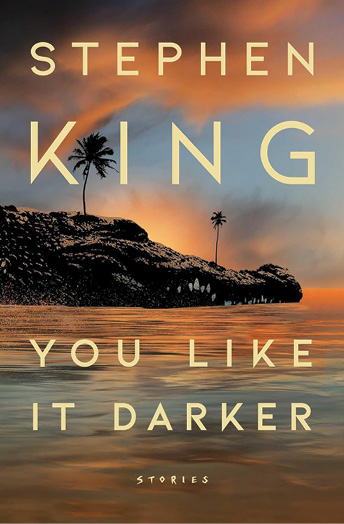
You Like It Darker
by Stephen King
Throughout his 50 years of penning bestselling novels, Stephen King has always found time for shorter fiction. His first collection in nine years, You Like It Darker — comprising five novellas and seven short stories — returns to familiar themes and a very familiar novel. Through his Dark Tower series and recurring use of fictional towns like Castle Rock and Derry, King has established his own connected universe. Take Lloyd Sunderland and his dog Laurie; they appear in the novella Rattlesnakes — which revisits Vic Trenton from Cujo — but get their own tale in “Laurie.” There, King evokes the weightier aspects of aging while exploring the bonds we share with our pets. The set is unlikely to move the unconverted, but King’s devotion to short-form fiction and his ongoing ability to scare the bejesus out of readers make it worth your time.
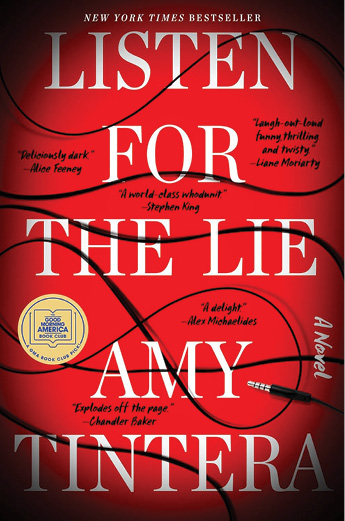 Listen for the Lie
by Amy Tintera
Hit true-crime podcast “Listen for the Lie” has just dropped its new episode, and all eyes are back on Lucy Chase — the prime suspect of her best friend Savvy’s murder. Found disoriented and covered in Savvy’s blood, Lucy has never been able to recall anything from that night. The whole town still believes her to be a murderer, though without solid evidence, Lucy has never been charged. Now podcast host Ben Owens hopes to uncover what really happened five years ago, and Lucy returns home to face her past. Tintera deftly weaves in humor to balance out the dark twists, which keeps Lucy relatable and intriguing. As she encounters her ex-husband, former friends, and parents who think she is guilty, can Lucy quiet the voice that keeps telling her to kill?
This article is featured in the September/October 2024 issue of The Saturday Evening Post. Subscribe to the magazine for more art, inspiring stories, fiction, humor, and features from our archives.
The Time is Ripe for Cooking with Apples
The Stones love when the air gets a bit crisp because that means apple season is around the corner. We head to the apple orchards near the foothills in San Bernadino to pick our fill.
I always tell the boys to find apples that are firm and crisp to the touch, free of bruises or blemishes. Whether on the counter or in the refrigerator, it’s best to store apples away from other fruit as they promote the ripening of neighboring produce. Keep them in their own bowl, paper bag, or crisper bin.
From salads to dessert, from raw to baked, apples are incredibly versatile. Like anything else, choosing an apple variety is a matter of preference, but I find Braeburn, Granny Smith, and Golden Delicious varieties the most versatile for cooking and baking. They have just what I’m looking for in terms of texture and balance of tart and sweetness.
Pork and apples are a classic combination and make for a perfect autumnal supper. Sweet potatoes have a texture like an apple and are so nutritious, it just gives the dish a little something extra. To achieve a perfect sear of your pork chop, start with a hot pan and make sure your proteins are free of any excess moisture.
There’s nothing quite like a bowl of piping hot Cast-Iron Apple Crumble on a chilly autumn day. What nobody will tell you about crumble is that it’s one of the easiest desserts to make. The key to a delicious crumble is great fruit — whatever is in season.
Seared Pork Chops with Roasted Apples and Sweet Potatoes
(Makes 4 servings)
4 boneless pork chops, ½-inch thick
1 pound sweet potatoes, peeled and cut into 2-inch pieces
2 fresh sage leaves, finely chopped
2 ½ tablespoons olive oil, divided
2 Fuji apples, cored and each cut lengthwise into 8 wedges
¾ cup apple cider or juice
1 tablespoon Dijon mustard
1 tablespoon unsalted butter
Remove pork from refrigerator and let stand at room temperature while oven preheats. Preheat oven to 500°F. Place large rimmed baking sheet in oven and heat until very hot, about 10 minutes.
In large bowl, toss sweet potatoes, sage, and 1 tablespoon oil to coat. Season with salt and pepper. Using pot holders, remove hot baking sheet from oven and spread potatoes over it. Roast for about 8 minutes, or until potatoes begin to brown. Toss apples with ½ tablespoon of oil to coat. Add apples to pan of roasted potatoes and continue to roast for about 10 minutes longer, or until potatoes are nicely caramelized and apples are tender.
Meanwhile, season pork with salt and pepper. Heat large heavy skillet over medium-high heat. Add remaining 1 tablespoon of oil, and then add chops. Cook for about 4 minutes per side, or until golden brown and barely pink inside. Transfer to platter (reserving oil in skillet) and let stand for 5 minutes.
Pour off all but 1 teaspoon of oil from skillet, leaving brown bits in pan. Return pan to medium-low heat, add apple cider, and bring to simmer, scraping up brown bits with wooden spoon. Whisk in mustard and simmer for about 2 minutes to reduce liquid slightly. Remove from heat and whisk in butter to lightly thicken sauce. Season to taste with salt and pepper.
Divide apple/potato mixture among four dinner plates. Place pork chops alongside mixture on each plate. Drizzle with pan sauce and serve.
Per serving
Calories: 392
Total Fat: 15 g
Saturated Fat: 4 g
Sodium: 569 mg
Carbohydrate: 39 g
Fiber: 5 g
Protein: 25 g
Diabetic Exchanges: 3 lean meat, 1.5 starch, 0.75 fruit, 2 fat

Cast-Iron Apple Cinnamon Crumble
(Makes 8 servings)
¾ cup plus 2 tablespoons
all-purpose flour, divided
¾ cup old-fashioned oats
½ cup granulated sugar
½ teaspoon fine sea salt,
divided
½ cup (1 stick) chilled unsalted
butter, cut into pieces
2/3 cup packed light brown sugar
1 teaspoon ground cinnamon
3 Gala or Braeburn apples,
cored and cut into ½-inch
wedges
3 Granny Smith apples, cored
and cut into ½-inch wedges
2 Golden Delicious apples,
cored and cut into ½-inch
wedges
Vanilla ice cream, for serving
(optional)
Position rack in center of oven. Preheat oven to 350°F.
In chilled medium bowl, mix ¾ cup flour, oats, granulated sugar, and ¼ teaspoon of salt to blend. Using your fingers, rub butter into flour mixture until moist clumps form. Freeze topping for about 10 minutes, or until firm.
Meanwhile, in large bowl, whisk brown sugar, remaining 2 tablespoons of flour, cinnamon, and remaining ¼ teaspoon of salt together. Add apple wedges and toss to coat. Transfer apple filling to a 10-inch cast-iron skillet, mounding it above skillet rim. If you don’t have a cast-iron skillet, you can use a 10-inch-diameter sauté pan or deep-dish pie dish. Sprinkle crumble topping evenly over apple filling. Filling and topping will be domed in skillet, but will cook down throughout baking.
Place skillet on baking sheet lined with aluminum foil to catch any juices that bubble over. Bake for about 1 hour and 15 minutes, or until topping is golden brown and filling is bubbling. Let crumble cool for about 10 minutes. Spoon crumble into bowls and serve warm with ice cream, if desired.
Make Ahead: Crumble topping can be made up to 1 day ahead, covered and refrigerated or frozen up to 1 month. Baked crumble is best served warm, but will keep for up to 1 day, covered and at room temperature.
Per serving
Calories: 399
Total Fat: 12 g
Saturated Fat: 7 g
Sodium: 127 mg
Carbohydrate: 74 g
Fiber: 3 g
Protein: 3 g
Diabetic Exchanges: 3 starch, 2 fruit, 2 fat
Add a little Mexican flair to your meal with Curtis Stone’s Baked Chimichangas with Cilantro-Lime Cream. Find the recipe at saturdayeveningpost.com/chimi.
Reprinted from What’s for Dinner? by Curtis Stone. Copyright © 2013 by Curtis Stone. Excerpted with permission of Ballantine Books, a division of Random House LLC. All Rights Reserved.
This article is featured in the September/October 2024 issue of The Saturday Evening Post. Subscribe to the magazine for more art, inspiring stories, fiction, humor, and features from our archives.
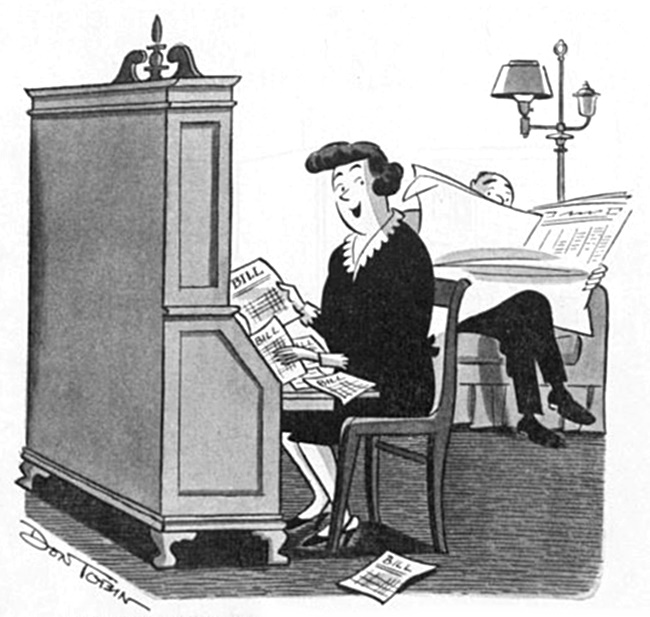
Cartoons: Bills, Bills, Bills
Want even more laughs? Subscribe to the magazine for cartoons, art, inspiring stories, fiction, humor, and features from our archives.
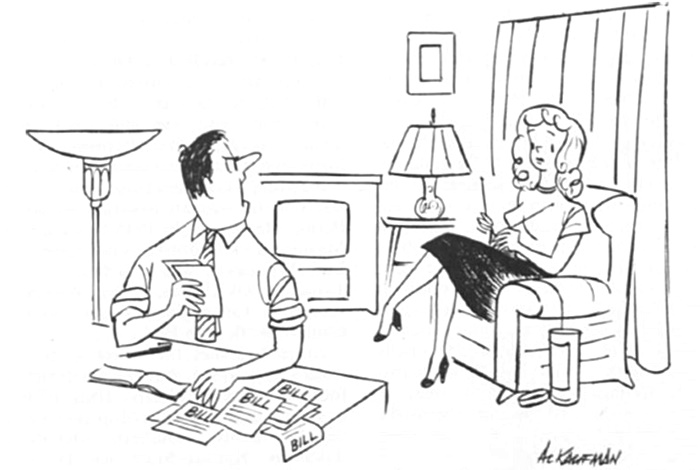
Al Kaufman
November 3, 1956
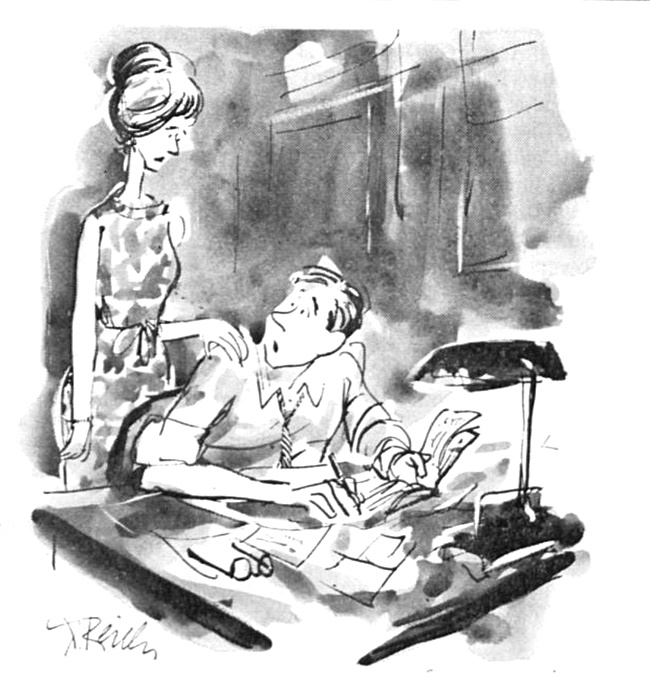
Donald Reilly
September 25, 1965
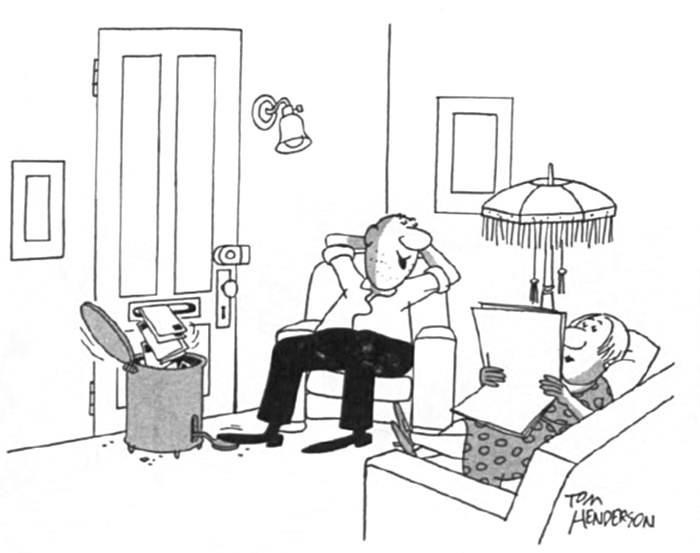
Tom Henderson
August 31, 1957

Chon Day
May 4, 1957
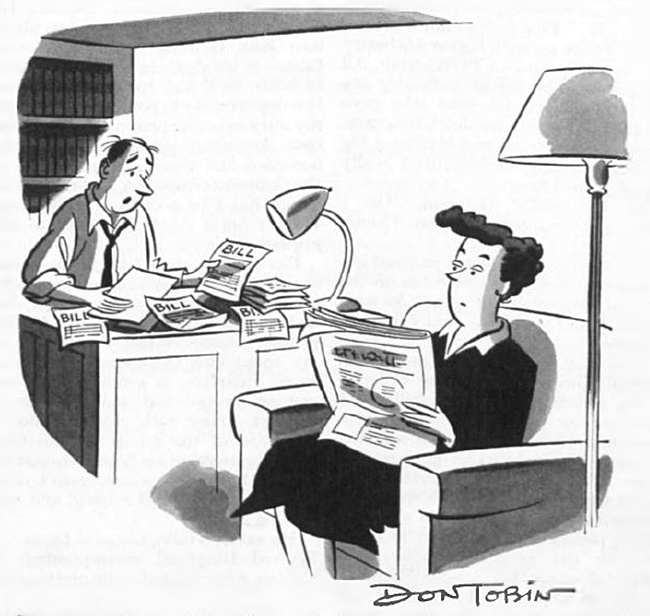
Don Tobin
February 20, 1954
Don Tobin
December 6, 1952

Frank O’Neal
April 7, 1951
Want even more laughs? Subscribe to the magazine for cartoons, art, inspiring stories, fiction, humor, and features from our archives.
Our Better Nature: Taking Care of Your Late Harvest Tomatoes and Squash
As the season’s end approaches, how we harvest the last precious tomatoes, squash, and other vegetables can have a big impact on their quality, taste, and storage life. Whether our garden is a few containers on a balcony or a vast veggie patch that feeds a family, we’re all keen to save the last bit of bounty that we’ve worked so hard for. Yet some of the harvest practices we’ve gleaned from family or friends can work against us.
Tomatoes
One widespread fallacy is that the sun makes tomatoes red. I wonder if this idea began with British colonists, who first raised the crop here around 1710. Perhaps they thought, “Blimey, the sun reddens me skin, so it should work for tomatoes.” Who knows? I recall how my Irish mother, who burns lobster-red after about three seconds in full sun, used to line up tomatoes on our windowsill to ripen at the close of the season.
Or maybe the notion stems from the fact we’re told that tomatoes should have at least eight hours of full sun per day to thrive. Well, tomato plants need that much light, but intense sun on the fruits can lead to sunscald, which creates bad spots that must be cut away and reduces flavor as well.
While sunshine on his shoulders made John Denver happy, too much sun is one of the causes of green shoulder on tomatoes, where they get red except for the tops, which stay hard and green (or sometimes yellow). Certain varieties are more prone than others to this condition. To my knowledge, no gardener has ever gotten green shoulder.
Too much sun hinders the production of tomatoes’ main red pigment, called lycopene, and we want as much of this stuff as possible. For one thing, it makes our tomatoes look just gorgeous. Lycopene also has major health benefits. According to the National Institutes of Health, it strengthens the cardiac system, reduces inflammation, and helps promote good sleep, among lots of other perks.
When the danger of frost looms, bring in all your green tomatoes except the smallest ones. Very small fruits are usually not mature enough to ripen properly. They’re still great for making green tomato relish or other recipes, though.
Wrap each tomato in newsprint or brown paper, and spread them out on baking sheets at room temperature. The reason for covering them is to trap ethylene gas. Ethylene, released in tiny amounts by the seeds, promotes the ripening of tomatoes and other fruits. It’s also flammable. But don’t worry; your tomatoes won’t explode. I promise.
Check inside the paper wrapping every three to five days to see how your post-harvest crop is coming along and weed out the occasional spoiled fruit. To speed up the pace of ripening, put a few apples among your tomatoes – apples are like ethylene factories, and the extra gas will hasten the process. If you’d prefer to slow things down, unwrap some tomatoes and set them on the counter, away from direct sun as well as other fruits. In northern New York State where I used to live, this method allowed me to enjoy ripe, garden-grown tomatoes long after freezing weather had set in.
Squash
An unfortunate thing about pumpkins and other winter squash is that they appear to come with handles. Their stems are a handy size, often curved in an ergonomically pleasing way that invite us to grab on. However, those “handles” can pull away from the fruits when we do this, especially if they’re heavy. Always support pumpkins from underneath. They develop a thick rind when mature; this protects them from decay organisms. If their stem breaks off, the resulting blemish is a freeway for microbes to enter and turn the parts we like to eat into mush.
The number one consideration with pumpkins and other winter squash is to get them indoors before a hard frost – anything at or below 28° F (-2°C). A hard frost will shorten their storage life dramatically. Covering the garden at night is an option if only a light frost is predicted, but it’s taking a gamble.
If you want pumpkins and other squash to keep for a long time, it’s important to “cure” them to fully harden their skin. Follow this link for details, as some squash need different temperatures to cure properly. Once hardened off, they should ideally be stored at around 65° F, but never below 50, and between 60 and 70 percent humidity.
Under good conditions, acorn squash usually last five to eight weeks. Pie pumpkins typically keep for three to four months, while Hubbards and butternuts can go beyond six months. Depending on the growing conditions and how careful I was in curing my butternut squash, they frequently lasted into the following summer, and a friend had a Hubbard that kept for an entire year. But I admit its flavor was past its “best by” date.
A New Generation Stewards America’s Lighthouses
When America’s last Coast Guard lighthouse keeper hung up her old-fashioned bonnet last year, the movement marked the end of an era. Sally Snowman, who was 72 when she retired in December, had cared for the 308-year-old Boston Light, which is perched on Boston Harbor’s Little Brewster Island, since 2003. Sometimes she donned homemade, 18th-century garb for her work, which included offering public tours of the rocky, wind-strafed island — more utilitarian moods found her zipped into a Coast Guard–issued jumpsuit instead. For 15 years of her tenure, she lived year-round in the island’s 1884 Light Station Keeper’s Quarters, at times riding out whiteout blizzards and fierce storms that raked the two-acre scrap of land with 20-foot waves.
“I say I have salt water in my veins, and not blood,” says Snowman. “I’ve had a connection to lighthouses since I was yea high to a caterpillar, growing up in Boston Harbor.” Though the Boston Light was fully automated in 1998, congressional law stipulated that the landmark, which was the very first light station established in colonial America, remain manned. The verb doesn’t quite fit Snowman, who was both the first and the last female keeper of Boston Light. She will not be replaced. “Will I miss it?” Snowman asks. “Yes, I will.”

If Snowman’s retirement is the poignant coda to lighthouse keeping by the U.S. Coast Guard, it comes amid a transformation of the country’s coastlines that’s been unfolding for decades. Though lighthouses remain essential navigational aids for boaters, they no longer require the live-in keepers who tended lamps and rowed to aid boaters caught in deadly squalls. And so, from Michigan beaches to Maine’s scatter-shot bays, government-owned lighthouses are going to a new generation of keepers. Since 2002, in a program run by the General Services Administration in collaboration with the U.S. Coast Guard and the National Park Service, more than 150 lighthouses have been sold off or given away to nonprofits, friends associations, and private citizens.
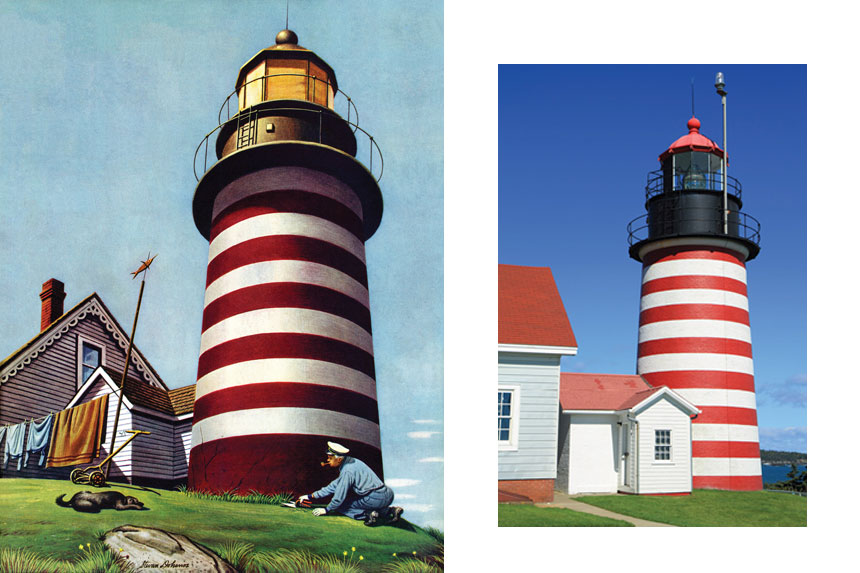
Government sales are not unusual in themselves — you can buy all sorts of things from the feds. A recent scroll through the GSA’s online auction site presented opportunities to bid on a 1985 fixed-wing Cessna airplane, a five-piece cookware set of unknown vintage, or a diesel generator spray-painted with sylvan camouflage. Lighthouses are different. Unlike used pots, historic light stations don’t simply go to the highest bidder. That’s because the National Historic Lighthouse Preservation Act of 2000, an amendment of the 1966 National Historic Preservation Act, directed the GSA to seek the best possible stewards for federally owned historic light stations up for disposal, holding a competitive application process before sending the lighthouse to a public sale.
The result is a changing of the guard at American lighthouses and an unusually collaborative inter-agency program that has drawn passionate amateurs and organizations dedicated to preservation of maritime heritage. “One of the goals of the National Historic Lighthouse Preservation Act was to promote the preservation and cultural and educational use of these lights, to kind of pass on that history,” says John Kelly, director of the New England region for the GSA. “We have a whole new generation of lighthouse folks coming up.”

If plenty of would-be lighthouse keepers are eager to step into the breach left by the Coast Guard, perhaps it’s because the signal lights still tug at something enduring in the America spirit. Lighthouses remain some of the country’s most beloved landmarks. Avid road trippers zip along coastlines toting sightseeing “passports” from the United States Lighthouse Society, filling up the books with stamps from hundreds of participating lighthouses. Lighthouses grace children’s books and jigsaw puzzles, and have been a favorite subject for American artists, including the painter Edward Hopper, whose depiction of the lighthouse at Two Lights in Cape Elizabeth, Maine, has all the bittersweet glow of childhood’s endless summer afternoons. Post cover artists Mead Schaeffer and Stevan Dohanos painted lighthouses, too, and from the candy-striped West Quoddy Light to the Cape Cod dunes, their saturated midcentury images are rich with nostalgia.
“People have long appreciated lighthouses. In popular culture, they’re often settings for romantic sorts of novels, you know, sea captains on the stormy coasts,” says Susan Tamulevich, director of the New London Maritime Society. They have a sparkle absent from other maritime infrastructure. “It’s not like people are writing about buoys or shipping channels — those have not inspired literature and the arts,” Tamulevich says.
The nonprofit organization that she heads, which is based in New London, Connecticut, is dedicated to preserving the heritage of a region formed by the sea. It has also become a habitué of the lighthouse scene. NLMS adopted the city’s octagonal 1801 Harbor Lighthouse in 2009 through the GSA program; then, in 2013, it took on the 1878 Race Rock Light, a stout little island signal that warns ships away from a dangerous reef on Long Island Sound. Two years later came the brick-red Second Empire–style New London Ledge Light, and an application for a fourth lighthouse is pending. The NLMS offers boat tours of its two island lights, and visits to the mainland Harbor Lighthouse by appointment. That means Tamulevich has had plenty of time to reflect on the American enthusiasm for lighthouses. “For centuries people traveled, by and large, on the water,” she says. “Anything that helped with safety had great significance to people.”
Picture it: the sea voyage, the foggy night, a coastline where a snug harbor’s safe haven lies a compass-twitch away from the rocky shoals. Every lighthouse has a distinctive pattern of flashes — a code any local seafarer would know by heart — so spotting one offered an instant orientation, and, with any luck, a signal that home was near. Even as we’ve turned to journeys by land and air, Tamulevich thinks, lighthouses’ consoling blink has lingered in our country’s collective memory. “I’ll quote what a Frenchman visiting our lighthouse once said: that they are, to America, what castles are to Europe,” she says.
Come July, nostalgia for lighthouses hits a high. For most of us, though, it’s a seasonal fling — we snap some photos on vacation, buy a few postcards, then tuck our lighthouse passports away, along with the beach chairs and pails, until summer returns. That is not how it works for Nick Korstad, a serial lighthouse owner and current president of the American Lighthouse Foundation.
“I don’t know if it was a past life, or what brought it upon me — by fifth or sixth grade I just really liked lighthouses, and it just became an obsession,” Korstad says. He bought his first lighthouse, Chesapeake Bay’s Wolf Trap Light, at a GSA auction in 2005. Korstad then spent three years, from 2010 to 2013, restoring the 1881 Borden Flats Lighthouse, a pert, red-and-white-striped “sparkplug” light that sits where Massachusetts’ Taunton River meets an arm of Narragansett Bay. He turned the historic landmark into a bed and breakfast, where the “overnight keepers program” sells out months in advance.

Korstad relishes the challenges of historic lighthouse restoration. He strives for period-appropriate wooden windows, sources special mortar to match vintage bricks, and reglazes glass in lantern rooms each year. “Construction of these properties was not with modern tools,” he says. “You are trying to keep the house historically accurate — you don’t want to take away stuff and replace it with something new unless it’s vital.” The stakes go beyond his personal dedication to caretaking. The enthusiasm that lighthouses inspire often extends to the surrounding community and visitors, he says. Landmarks come with an audience; if you screw things up, they’ll notice.
He also warns the lighthouse-curious that historic restorations of the structures often run three or four times over initial project estimates. Buying them is an expensive habit. But what is passion for, if not shouting down that sort of good sense? Since buying the Borden Flats Lighthouse, he’s light-hopped around the United States, making purchases on Lake Huron, the Connecticut coast, and Michigan’s Upper Peninsula; his next project is the Browns Head Lighthouse on the mid-coast Maine island of Vinalhaven.
Korstad isn’t alone in his lifelong romance with lighthouses, but even more casual buyers are susceptible to their charms. “I wasn’t one of those lighthouse fanatics,” says Sheila Consaul, who bought the 1925 Fairport Harbor West Lighthouse at the mouth of Ohio’s Fairpoint River in 2011, following a GSA auction. “I was just looking for a summer home, and I happened to hear that the government was auctioning off lighthouses.” Her mind was more on relaxation than renovation, she says: “What I was picturing was something on the lake, beautiful views, sailboats, birds flying, being at the beach — and it turned out that way! I’m sitting in the lighthouse right now, and it’s an absolutely spectacular day.”

Still, Consaul’s well-earned calm comes after years of work. “Nobody lived in this building from the 1940s until I moved in,” Consaul explains. Plaster hung from the walls; every door was missing, as was anything light enough to pry up and carry off. The lighthouse is on the beach, a half-mile from the nearest road. Everything she needs, from a gallon of milk to a new mattress, must be lugged over sand dunes or come by boat. The big stuff arrives via barge equipped with a crane.
Though Consaul may not have started as a lighthouse fanatic, she now savors her piece of American maritime heritage, and sometimes chats with other lighthouse keepers across the U.S. “It’s just the beauty of it, the beauty and the history,” she says. To reach its perch on the edge of the Fairport River, her lighthouse traveled across Lake Erie by ship from a factory in Buffalo, New York. The original cast-iron staircase is intact; so are the wooden windows and tiled floors. Each year on June 9, to mark the date when the lighthouse first shone, Consaul holds an open house and invites the community into her summer home. Sometimes, GSA handovers result in more public access, not less. “People who lived here, who stared at the lighthouse their entire lives, never got to see the inside,” she says. “Being part of that community is really important for me.”
Consaul is not alone among owners with ideals of accessibility; and her light, maintained during occasional visits from the Coast Guard, still guides boaters safely by, as do hundreds of lighthouses across the United States.
So what did we lose when Sally Snowman left her post at Boston Light? Our most nostalgic lighthouse reveries conjure a time that’s already long gone, when keepers trimmed midnight wicks and pointed their spyglasses out to sea; in her way, Snowman sat vigil for that era. And yet the new generation of lighthouse-keepers still speaks, as Snowman does, of stewardship, of caretaking an American legacy for those yet to come. Boston Light has been sold to an as-yet-undisclosed buyer. They plan to open Little Brewster Island to public tours once more, Snowman told me.
For its former keeper, the lighthouse is a living entity. She prays for it — several times a day — and welcomes the thought of visitors returning to Little Brewster Island, the two-acre kingdom she once roamed in ankle-length skirts. For now, on shore, she’s giving talks and doing some writing. She teaches Kundalini yoga four days a week. She practices Reiki, and plays a handmade drum made from buffalo skin. Perhaps decades spent gazing out to sea taught her its knack for embracing change. “The ocean is constantly changing,” she says. “As the sun goes from east to west, as clouds come over, as storms come through — it’s never, ever the same twice.”
Jen Rose Smith has written for the Washington Post, CNN Travel, Condé Nast Traveler, AFAR, Rolling Stone, USA Today, and Outside Online and is the author of six travel guidebooks to Vermont and New England. For more, visit jenrosesmith.com.
This article is featured in the September/October 2024 issue of The Saturday Evening Post. Subscribe to the magazine for more art, inspiring stories, fiction, humor, and features from our archives.
Considering History: Anti-Immigrant Myths Have Been Strikingly Consistent — and Consistently Wrong
This series by American studies professor Ben Railton explores the connections between America’s past and present.
As the 2024 presidential campaign moves into its final six weeks, anti-immigrant rhetoric has become a particularly prominent feature. Donald Trump has relied on such rhetoric since he launched his first campaign in 2015. But in recent weeks he and his running mate J.D. Vance have significantly ramped up their anti-immigrant stance, with a focus — as illustrated by Trump’s reference to it during the recent presidential debate — on thoroughly debunked stories of Haitian Americans in an Ohio town “eating the dogs” and “eating the cats.”
Stories of immigrants eating disgusting or dangerous foods have been part of xenophobic narratives for centuries, and have remained quite similar across many different time periods and communities (cats have been in particularly frequent danger). That’s just one of a number of strikingly consistent myths that have cropped up again and again among those advancing these anti-immigrant narratives. Here I’ll take a look at a few examples of those fabrications, along with alternative perspectives that reveal how consistently wrong those myths have been.
One of the most common anti-immigrant myths has been that these arrivals are seeking to remake the entire United States in the image of their own culture, one explicitly defined in this perspective as lesser than that of the U.S. In 1755, Ben Franklin made that case against German immigrants to his adopted home of Pennsylvania, wondering, “Why should Pennsylvania, founded by the English, become a Colony of Aliens, who will shortly be so numerous as to Germanize us instead of our Anglifying them, and will never adopt our Language or Customs, any more than they can acquire our Complexion.” Franklin went even further with his attacks, characterizing these German immigrants as “generally of the most ignorant Stupid Sort of their own Nation,” and worrying that these lesser arrivals would “soon outnumber us.”
By his final years of life in the immediate aftermath of the American Revolution, however, Franklin had not only realized that he was entirely mistaken about that German American community in Pennsylvania, but was also involved in steps to help them become even more fully supported within that new state. In 1787, just three years before he passed away, Franklin was serving as President of the Council of Pennsylvania and was instrumental in the Assembly’s chartering of a new college in Lancaster, one focused on educating German Americans and dedicated “to promoting an accurate knowledge of the German and English languages,” making it the first bilingual college in the nation. Franklin also gave 200 pounds to the institution, twice as much as any other initial donor, and it was named Franklin College in his honor.
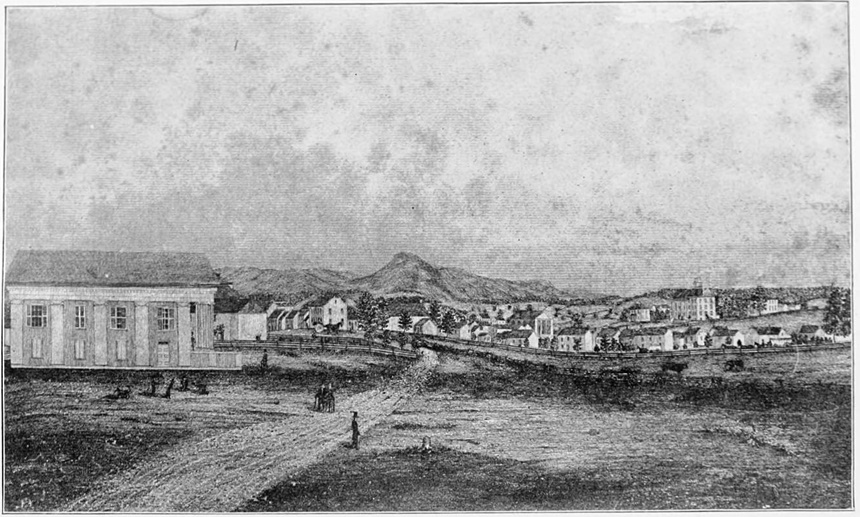

A century later, Chinese Americans had become a central target for anti-immigrant attacks. One of the most prominent purveyors of those narratives was Supreme Court Justice John Marshall Harlan, who is widely known for his courageous dissent in Plessy v. Ferguson (1896) but who in that same dissent called the Chinese “a race so different from our own that we do not permit those belonging to it to become citizens of the United States.” Two years later, Harlan would deliver a public lecture that went even further, arguing that “this is a race utterly foreign to us and never will assimilate with us.” Another of the most consistent anti-immigrant myths is that these arrivals are too distinct from “Americans” (however that ambiguous community is defined in each instance) and will never be able to be part of this community.
Yet a famous Chinese American contemporary of Harlan’s made precisely the opposite case, arguing for an authentic and multilayered Chinese American identity and using legal and political means to fight for that community’s equal standing in the U.S. The journalist and activist Wong Chin Foo (1847-1898), who was born in China but naturalized as a U.S. citizen in the 1870s, published an 1887 column — in The Chinese American newspaper he had founded four years earlier — entitled “Why Am I a Heathen?,” arguing for traditional Chinese religious beliefs as part of his American identity. And at the same time he fought to extend American democracy and rights to the Chinese American community, including his 1884 founding of the nation’s first association of Chinese voters and his role in the 1892 creation of the Chinese Equal Rights League.
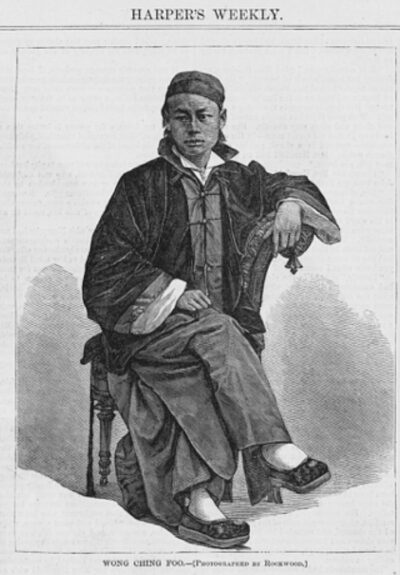

Anti-immigrant myths haven’t just portrayed these communities as outside of and different from those in the United States, however. They have also consistently depicted immigrants as threats to the nation and their fellow Americans (the “real Americans” in this narrative). In the first few decades of the 20th century, with the U.S. occupying the Philippines after the Spanish American War, Filipino immigrants to America became a focus for these xenophobic fears of threatening arrivals. In one telling 1936 court case featuring a Filipino young man over whom two white girls had fought, San Francisco Municipal Court Judge Sylvain Lazarus ruled “This is a deplorable situation…It is a dreadful thing when these Filipinos, scarcely more than savages, come to work for practically nothing, and obtain the society of these girls.” Such sentiments led to the creation of laws like the 1935 Filipino Repatriation Act, which sought to return hundreds of thousands of Filipino Americans to the Philippines.

Yet over these same decades, Filipino Americans contributed heroically to the U.S., fighting for their fellow Americans on a number of fronts. They did so through military service, as illustrated by West Point graduate and WWI and WWII hero Vicente Lim. They did so through community organizing and activism, as realized by labor leader Pablo Manlapit. And they did so in a particularly striking way during the 1918-20 Influenza Epidemic, as U.S. Navy veteran Agripino Jaucian, his nurse wife Florence, and the members of the Filipino Association of Philadelphia Inc. (FAAPI) that the couple had founded a few years later provided free medical supplies and treatment to Philadelphia residents affected by that deadly pandemic.
_at_West_Point_in_1914.png)
Far from recognizing such heroic contributions, xenophobic narratives have consistently sought to define immigrants as criminals, even going so far as to characterize their very presence in the United States as a criminal violation. That’s particularly ironic when it comes to arrivals who are seeking asylum in the U.S., and even more ironic still when they do so due to unstable or dangerous conditions in their home nation that the U.S. helped create. There’s no immigrant community of whom that’s more true than Haitian Americans, whose nation has seen a century of U.S. invasions, occupations, and interference and yet who have found themselves time and again denied asylum, treated as dangerous criminals for the very act of coming to America.
In an even more ironic twist, the U.S. Attorney who will be prosecuting accused presidential assassin Ryan Routh is Markenzy Lapointe, a groundbreaking legal advocate throughout his inspiring career — and the first Haitian-born U.S. Attorney.
Women’s Work: Philadelphia, the Young Ladies’ Academy, and a Small Degree of Liberty for 18th Century Women
In the spring and summer of 1787, Philadelphia was abuzz with exciting new ideas and possibilities for the future, as a group of men — including George Washington, James Madison, and Benjamin Franklin — met to shape a new nation at the Constitutional Convention.
But other new ideas were crackling throughout Philadelphia. On April 2, 1787, an advertisement in the Philadelphia Independent Gazetteer offered something new for audiences. “A Lady Proposes to Read a Course of LECTURES on Language, Eloquence, Poetry, Taste, and Criticism,” the ad began. Subscribers could pay one dollar for a ticket to five lectures. That spring, Eliza Harriot became the first woman in the nation to lecture to public audiences.
As Harriot prepared her lectures, the city filled with new arrivals for the Constitutional Convention. On May 18, Philadelphia doyenne Mary White Morris took a group of female friends and General George Washington to hear Harriot’s lecture on elocution. Morris and her husband had become good friends with the Washingtons during the American Revolution. Now, the two men had both been named delegates for the Constitutional Convention, expected to begin any day, once enough delegates arrived.


The matter of government was not the only thing on peoples’ minds that year. Some Americans were starting to consider ways to improve life for disenfranchised people within the nation. In Philadelphia, the Free African Society had formed in April, devoted to the prospect of supporting people recently freed from enslavement. Dr. Benjamin Rush created the Philadelphia Society for Alleviating the Miseries of Public Prisons, the nation’s first reform effort focused on the incarcerated. And then there was Harriot’s lecture series, which became a prelude to larger discussions about what women should be and do.
Women in Philadelphia had long shaped discussions about the new nation. When the Continental Congress met in Philadelphia in the 1770s, many of those delegates found themselves at the home of Elizabeth Powel and her husband Samuel. Elizabeth Powel’s events were known as intellectual and political spaces. There, guests spoke and debated about political issues, the new nation, and philosophy.
After the War of Independence, the Powel home continued to see guests like John and Abigail Adams, physician Benjamin Rush, George and Martha Washington, and the Marquis de Lafayette. Powel exchanged letters with George Washington regularly. He came to view her as someone whose advice he trusted. In late 1792, Powel counseled the president that he should stay in office for a second term, which he did.
Other well-known women of the time included Anne Willing Bingham (Elizabeth Powel’s niece) and Elizabeth Graeme Fergusson, a poet whose gatherings included other writers and figures like Dr. Rush. Women in late 18th century Philadelphia lived in a place where they had space to think and converse. This was particularly true for women of a certain social class, who had the time to do so, as well as the political and economic connections.

It was in the spaces where society and politics met that the men and women connected on more than just domestic issues. Men conversed with women like Elizabeth Powel and Mary Morris; Washington would, in the years ahead, correspond with Eliza Harriot as well.
While the delegates of the Constitutional Convention pursued one patriotic project, another was also just beginning. On Monday, June 4, 1787, the same day the Constitutional Convention delegates were debating the size of the executive branch, half a mile away a man named John Poor established the Young Ladies’ Academy of Philadelphia.

This would be an institution for young ladies of privilege, a space to cultivate women like Elizabeth Powel. Dr. Benjamin Rush (who, among his many other activities, was also a signer of the Declaration of Independence), made that connection explicit on July 28, 1787. That day, he dedicated a speech at the Young Ladies’ Academy to Elizabeth Powel. It was a speech that would have a long life, partially titled “Thoughts upon Female Education:”
A philosopher once said, “let me make all the ballads of a country and I care not who makes its laws.” He might with more propriety have said, let the ladies of a country be educated properly, and they will not only make and administer its laws, but form its manners and character. It would require a lively imagination to describe, or even to comprehend, the happiness of a country where knowledge and virtue were generally diffused among the female sex.
In 1792, the state of Pennsylvania granted the Young Ladies’ Academy a charter. This gave it government recognition, a seal of approval something like state accreditation today. It did not come with funding, even though the state gave money to the boys’ schools it chartered. While other girls’ schools would open in Philadelphia in the years that followed, Pennsylvania did not grant charters to any additional girls’ schools until 1829.


The inaugural class of 100 students at the Young Ladies’ Academy came from all over the young country, as well as from Nova Scotia and the West Indies. Classes included reading, writing, grammar, and math, but also history, rhetoric, and geography. Dr. Rush taught the first chemistry course in the nation for women, with seven lectures on general chemistry principles and five more on how to apply those in the home. Education at the Young Ladies’ Academy was both aspirational and practical.
While the Young Ladies’ Academy of Philadelphia did not educate all women, those who studied there received a new type of education that many saw as important. Schools for young women opened across the United States between the 1790s and the 1820s. While not all had access to such schools, their existence shows that some Americans were becoming deeply invested in the idea of educating young women.
On December 18, 1794, student Ann Harker delivered the salutary oration at the Young Ladies’ Academy’s commencement exercises. Speaking in part on the subject of women’s education, she argued, “In this age of reason, then, we are not to be surprised, if women have taken advantage of that small degree of liberty which they still possess, and converted their talents to the public utility.”
Her classmate Ann Negus delivered the valedictory address that day, striking a similar note. Negus saw a connection between patriotism and the education she received. Speaking to the board, classmates, families, and First Lady Martha Washington, Negus argued that educating young women was good for women and their nation. “The real patriot shows regard for his country [by executing] those measures which he conceives really conducive to the welfare of mankind….This seminary, in particular, has furnished society with some of its brightest ornaments.” The act of creating a school for young ladies, she emphasized, was patriotic itself, and fitting in such a changing age.
The events of the Constitutional Convention and the creation of the United States Constitution tend to take center stage in the story of 1787. Yet even as the 55 men came and went during their five months of deliberation, theirs were not the only voices shaping the nation. Eliza Harriot’s lectures found a home in Philadelphia because it was a community where women’s voices and ideas mattered. The opening of the Young Ladies’ Academy became successful because of the community around it. The summer of 1787 fostered not only the ideas of a new nation, but new ideas of what women’s lives could become in that nation.
News of the Week: Supermoon, Sam Spade, and Did Sinatra Really Sing at a High School?
When the Moon Hits Your Eye, Like a Big Pizza Pie
We had a Supermoon late Tuesday/early Wednesday. It’s also called a Blood Harvest Moon. And just to make things more interesting it was also a partial eclipse (but it wasn’t a total eclipse of the heart).
USA Today has some great photos from all around the world, and here are more from the BBC.
The Return of the Maltese Falcon
Max Allan Collins – a talented, prolific writer who has written some great novels including Road to Perdition and the Nathan Heller series and some Mike Hammer novels started but never finished by his friend Mickey Spillane – has been tapped to write The Return of the Maltese Falcon, a sequel to the classic novel by Dashiell Hammett, which enters the public domain in January 2026. It will be published by Hard Case Crime.
A Frank Sinatra Mystery Solved
Writer Chris Dalla Riva had heard the family story for years: Frank Sinatra sang at his grandmother’s high school in the 1940s! But was it true? It was something that she and other family members had said for years, but there wasn’t any actual evidence, and maybe memories can be faulty. Would he have really sung at a high school after becoming a professional singer? But it nagged at him and he wanted an answer, so he decided to do an investigation, and the results are fascinating.
So, did Sinatra sing at his grandmother’s school? Well, you’re going to have to read it all to find the answer to that. It’s an engaging read. It’s like a celebrity profile mixed with a true-life mystery story and pop culture history, and it’s one of the best things I’ve read all year.
Farmer Jack Realized That Big Yellow Quilts Were Expensive
That’s not a news report on the state of the economy, it’s a pangram, a sentence that contains every letter in the alphabet. The one you probably know is “The quick brown fox jumps over the lazy dog,” which many people use when learning to type. Here are 26 more, and hey, here are still more. Amaze your friends!
Headline of the Week
(Oh, I hope the same is true of tea.)
RIP Tito Jackson, Nelson DeMille, J.D. Souther, David Handelman, Chad McQueen, Tommy Cash, Peter Renaday, and Michaela Mabinty DePrince
With his brothers Michael, Jermaine, Jackie, and Marlon, Tito Jackson was a member of The Jackson 5, known for such hits as “ABC,” “I Want You Back,” “Dancing Machine,” “The Love You Save,” and “I’ll Be There.” He died Sunday at the age of 70.
Nelson DeMille was the best-selling author of such action-suspense novels as The General’s Daughter, Up Country, Word of Honor, and The Cuban Affair. He died Tuesday at the age of 81.
J.D. Souther co-wrote some of the biggest songs for the Eagles, including “Heartache Tonight,” “New Kid in Town,” and “The Best of My Love.” He also co-wrote songs for James Taylor (including their duet “Her Town Too”), Linda Ronstadt, and Bonnie Raitt, produced many albums for others, released several solo albums, and was even an actor. He died Tuesday at the age of 78.
Uploaded to YouTube by James Taylor
David Handelman was a writer for Aaron Sorkin’s shows, including The West Wing, Sports Night, Studio 60 on the Sunset Strip, and The Newsroom. He also wrote for One Tree Hill and Nashville, was a contributor to publications like Rolling Stone and the New York Times, and was a producer/writer for CNN’s Smerconish. He died last month at the age of 63.
Chad McQueen appeared in such movies as the first two Karate Kid films and Fever Pitch. He was the son of Steve McQueen. He died last week at the age of 63.
Tommy Cash was a country singer and the brother of Johnny Cash. He died last week at the age of 84.
Peter Renaday was a voice actor who worked on an amazing number of animated shows, video games, and theme park attractions. He died last week at the age of 89.
Michaela Mabinty DePrince was an acclaimed ballet dancer. She died last week at the age of 29.
This Week in History
President McKinley Dies (September 14, 1901)
He was shot on September 6 while making a public appearance in Buffalo, New York and died of gangrene two weeks later.
My Mother the Car Premieres (September 14, 1965)
This sitcom was about a mother who dies and comes back as a car and communicates with her son through the radio. YES, THIS WAS THE ACTUAL PREMISE. It lasted one season and is generally regarded as one of the worst shows of all-time.
This Week in Saturday Evening Post History: Packard Cars (September 16, 1950)

No idea if this car was a mother or a father.
Monday Is Great American Pot Pie Day
Pot pie is one of those things I’ve never made myself. In fact, now that I think of it, I haven’t even bought a pot pie at the supermarket in a long time either. Now where can I find some recipes if I wanted to make my own?
Right here on this site, actually! Like these Individual Chicken Pot Pies from America’s Test Kitchen or this Healthy Chicken Pot Pie (from the Trim & Terrific Diabetic Cooking cookbook).
Away from this site, Good Dinner Mom has a recipe for a Beef Pot Pie, Aida Mollenkamp has a Vegetarian Pot Pie, and Food Network has this Turkey Pot Pie.
Next Week’s Holidays and Events
Fall Begins (September 22)
Pot pies just feel like an autumn meal, don’t they? For me, this day is right up there with Christmas. It officially starts at 8:44 a.m. ET. (I’ve seen some sources say it’s 8:43 a.m., but let’s not argue about a minute.)
Hobbit Day (September 22)
No, this isn’t the birthday of writer J.R.R. Tolkien. It’s actually the birthday of Frodo and Bilbo Baggins.
Movies for the Rest of Us with Bill Newcott: Whiplash Returns to the Big Screen After a Decade
See all videos and articles in Movies for Rest of Us.