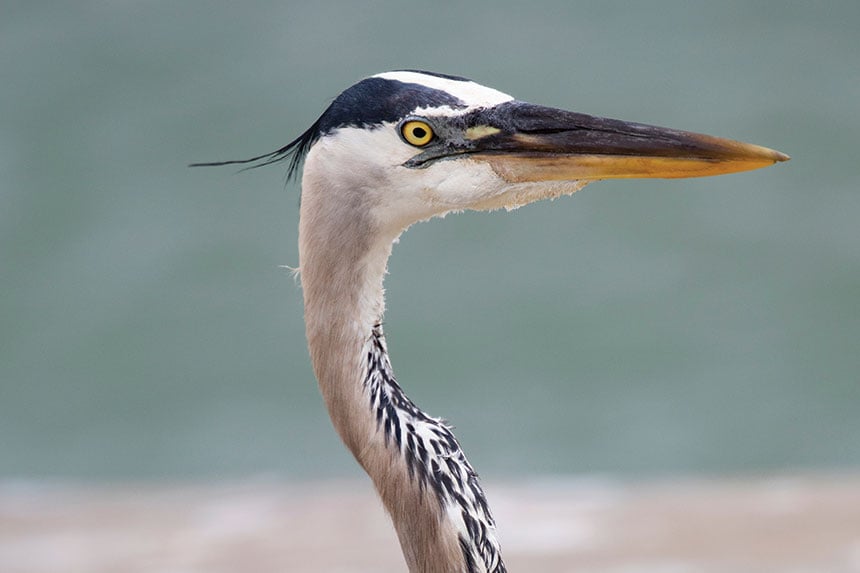
At first glance, there’s a shadow, a sudden movement hidden behind willow branches, a blur. My binoculars spring upward, enhancing my focus from modest naked-eye vision to 10x magnification. My brain, culling four decades of experience, rapidly inputs data: habitat, time of year, behavior, and vocalization. My target pops out, if for a second. “Hooded warbler!” I call to my brother John a few yards away.
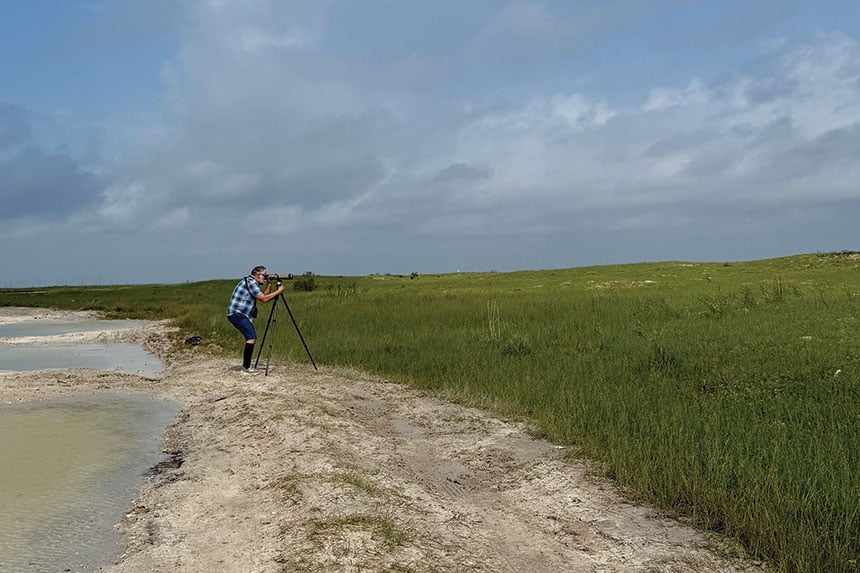
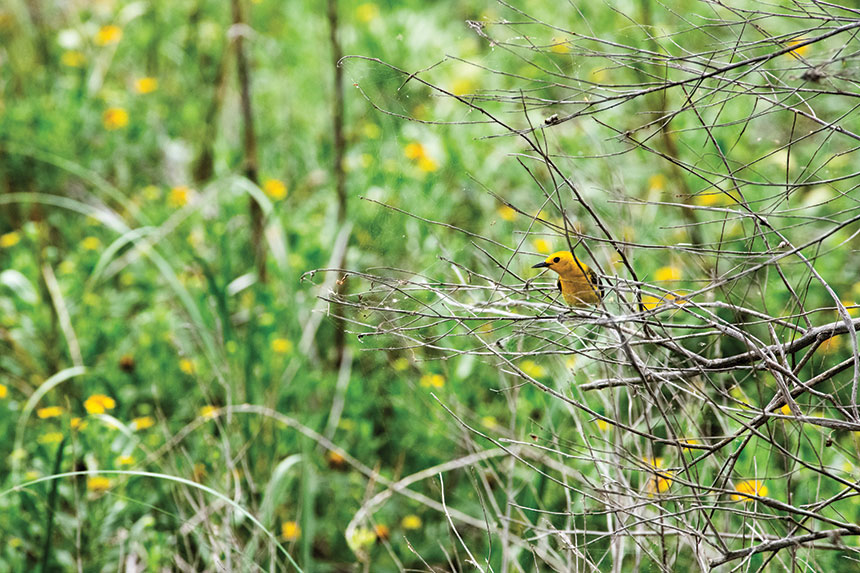
“Wow, isn’t he beautiful?” sings John, as the warbler skips upon a bare branch that hovers 14 inches above a gently flowing creek in Blucher Park, Corpus Christi, one of the numerous habitats we’ll survey during our three days birding in South Texas.
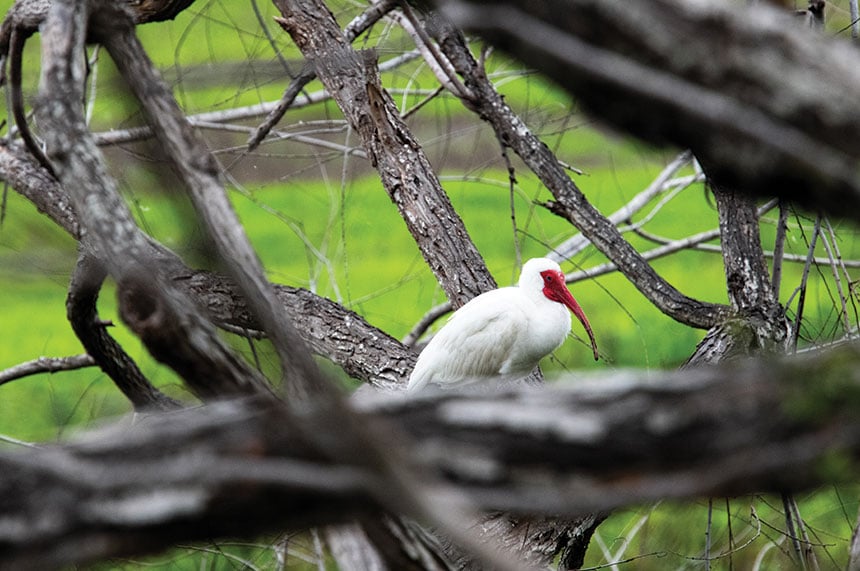
We’ve traveled to Corpus Christi and Port Aransas to observe the spring bird migration. As the first familiar habitat to rest and refuel for birds that fly for upwards of 18 hours over the Gulf of Mexico, this coastal region is arguably the premier birding “hot spot” in North America, especially during migration when over 250 species have been seen over a weekend. Coastal deciduous trees often fill with colorful songbirds, mudflats teem with shorebirds, and raptors soar in the sky.
If the spring migration dazzles, the fall migration can be daunting, but no less fun. The plumage of autumn migrants often becomes duller before they fly south. Golden plovers shun their resplendent coat, chestnut-sided warblers eschew their chestnut sides, and Bonaparte’s gulls stow their black hoods in favor of pure white cowls.
Bird migration has captivated the curious for at least 3,000 years, when Polynesians noted the coming and going of many species across the Pacific Ocean. In 400 B.C., Aristotle published the first ornithological text, History of Animals. He believed songbirds and swallows transmogrified into other species and flew into the Mediterranean Sea to hibernate in the muddy seafloor.
As preposterous as the great philosopher’s hypothesis may appear today, how else to explain their seasonal absence and reappearance? Even if he’d received records from Africa, the same birds observers cited there were likely dull in color, unlike the vibrantly plumaged individuals that nested in Greece.
Magical migration mysteries persist. The arctic tern travels over 55,000 miles annually, circumnavigating the Earth from Antarctica to the Arctic and back again. At least they rest. Bar-tailed godwits migrate upwards of 7,500 miles without stopping. Perhaps most impressive, fledgling passerines and shorebirds, having hatched only weeks prior, migrate south well before the adults take flight, “flying blind” for thousands of miles. And, like Aristotle before them, contemporary scientists can’t fully explain how they do it.
Such migration trivia elicited gasps from students in the ornithology classes I taught at a Seattle Montessori middle school in the early aughts. John, a biology professor, still wows his students with anecdotes such as that hummingbirds are the only avian species that rarely turn back when facing a storm.
“The interest in birding among my undergraduates has grown exponentially in recent years,” he says. “My ornithology classes fill immediately, a sign, I think, of how Gen Z is beginning to turn away from the digital onslaught in favor of analog experiences. I’ve recently had two students enroll who said their therapist suggested birdwatching as one antidote for their anxiety.”
John’s interest in all things avian took a similar flight. After a failed first year of college in Maine, he felt grounded, aimless, and depressed back home in Rochester, New York. His best friend invited him to look for birds in the Braddock Bay Wildlife Management Area.
“My first thought was, ‘Are you nuts?! It’s December, freezing cold and snowy outside,’” John recalls. “But something clicked when we followed a mixed-foraging flock of chickadees and titmice as they worked their way through the barren broadleaf woodland. I don’t know if it was their movement, the chase, or the fresh air, but I felt exhilarated. My students often express a similar feeling today.”
Smitten, John learned about Cornell’s famous Lab of Ornithology, completed a series of prerequisites, and enrolled as an undergraduate. He then pursued graduate studies in bioacoustics and secured a tenure-track position at Western Washington University’s Fairhaven College of Interdisciplinary Studies, where he has taught for almost 30 years.
I, too, had tried and failed to matriculate at a small New England college. I eventually departed the Connecticut College green for the psychedelic labyrinth of a Grateful Dead tour. I spent off days between concerts in the woods looking for birds, a pastime that turned passionate after I swiped my mom’s binoculars during a short visit home. I eventually enrolled at The Evergreen State College, where I designed my own Avian Ecology major.
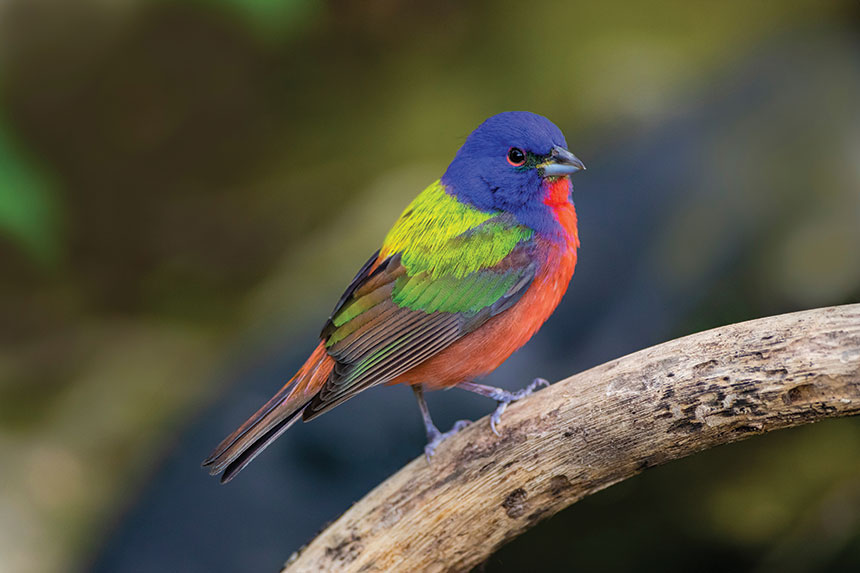
People come to birding in many ways. For some, it’s the “gotcha bird,” a species that, because of plumage or behavior, closes its talons around you and won’t let go. My gotcha bird was the painted bunting, sparrow-sized and festooned with a blue head, red breast, and green back, a vibrantly feathered tie-dye so stunning it appeared on the cover of my first field guide, a Golden Guide to birds. I didn’t see a live painted bunting until ten years later.
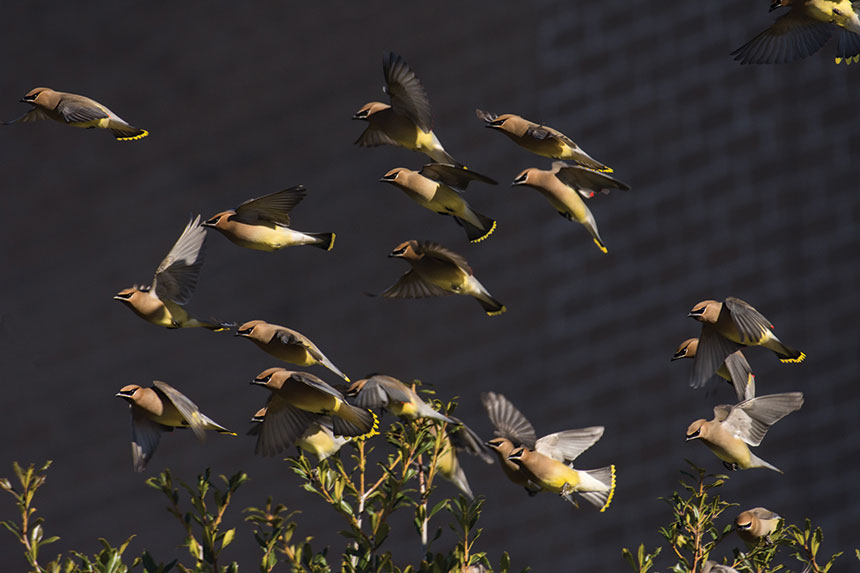
John’s gotcha bird was an entire flock, specifically 150 cedar waxwings, a crested migrant that sports a sleek black mask and is infamous for getting tipsy on fermented berries in the fall.
“I couldn’t believe I had never seen them before,” he says. “But that’s often how it goes with birds, you only see them when you look.”
John often waxes metaphysical when discussing the role birds play in his life — someone who, like many field biologists, prefers the company of animals to people.
“I transcend to a different plane when I’m with birds,” he explains. “I’ve studied their language for so long that I can tell when they’re discussing food, family, or other topics. I feel I depart the human world entirely, which is just fine with me, especially these days.”
Other birders are drawn to the competitive sport of “listing,” compiling species seen in various settings (county, country, etc.) and time spans (day, year, life), often with the intensity a professional athlete devotes to her training. We met Steve, a microbiology researcher from a Midwestern university, at the Leonabelle Turnbull Nature Preserve in Port Aransas. He was in Texas for two days to get (lister jargon for “see”) a golden-cheeked warbler and an aplomado falcon.
“I need them for my year list,” he stated. He’d be off to Arizona the following weekend to get a couple of hummingbird species.
Steve was birding with Elizabeth, among the most intense and talented birders we’ve ever met. Elizabeth peppered her conversation with rapid-fire callouts of chirps, cheeps, and song at a dizzying pace.
“Birding suits — indigo bunting in the top of the tree — my — yellow-throated warbler in the brush — ADD very well,” she flitted. “It’s constant multitasking — northern parula just off the ground — and the people I guide appreciate — black-chinned hummer on the tip of that branch — me for it, when most people don’t.”
John and I both listed for many years. Now, the thought of waking at 2 a.m. to drive from Ithaca to Virginia to pursue a rumor concerning a Eurasian curlew is beyond me. Back then, tea- and doughnut-fueled bird-driven road trips were as fun as knocking out 65 of 72 Dead shows in a year.
I don’t ascend to John’s avian-centric plane, but the birding muscle memory never fades. “Black and white over here, John,” I call when another “east coast” warbler appears.
John roamed Ithaca’s hardwood forests seeking songbirds for 16 years. Much as we both love living in the Pacific Northwest, our dozen or so warbler species pale in comparison to the three dozen East Coast species. Both east and west coast birds can be seen in South Texas, a rare convergence of the Pacific and Central Flyways.
The Leonabelle Turnbell Birding Center is one of several hot spots. A copse of ten trees is the main draw, a leafy strand that lures tired songbirds like Narcissus to his watery reflection. I meet one birder, massive telephoto lens in hand, who waits at the nearby picnic table most days.
“Sit here and they will come,” she declares as she fires off scores of photos, chasing a northern parula through the understory.
Green oases — pockets of nature in surprising locales — provide shelter and food for birds; they also offer the best viewing opportunities for birders. Blucher Park lies in a largely abandoned industrial zone in downtown Corpus Christi, a patch of vegetation transected by a murky creek. And the birds love it.
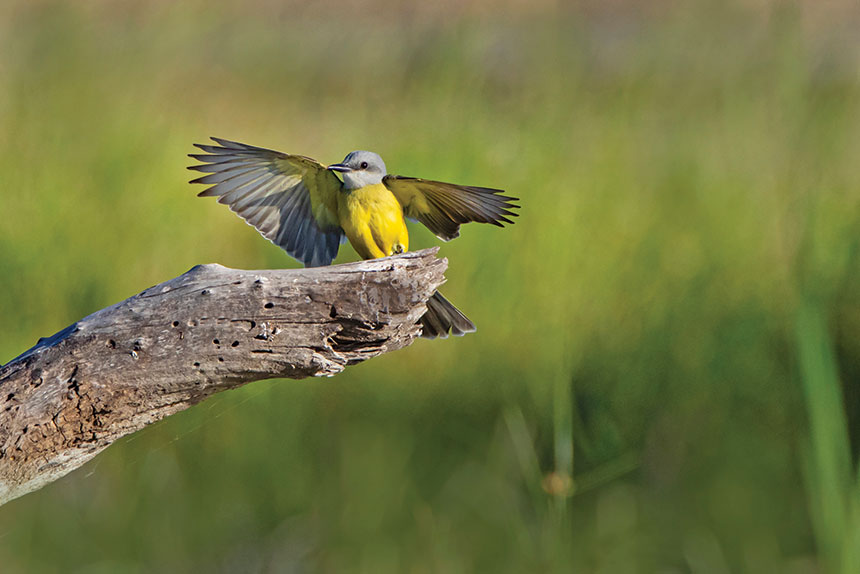
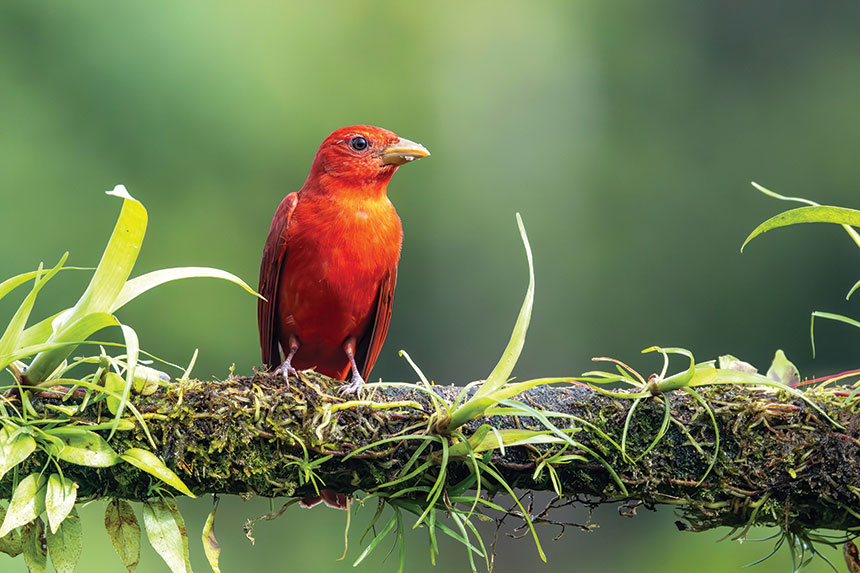
We settle under a mulberry tree just coming into fruit, a favorite arboreal café for the hooded, Baltimore, and orchard orioles we spy. A summer tanager — the only completely red bird in North America — ascends to the topmost branch. The willow-shrouded stream bank receives northern and Louisiana waterthrushes, the latter distinguished from the former by only a wider and whiter eyebrow. A raccoon-masked common yellowthroat sings from the bramble; a Couch’s kingbird, a large, yellow flycatcher, commutes among outward-facing branches to perform its loud, raspy song that sounds like that tone-deaf kid in the grammar school choir.
We hear, but don’t see, several other species by using the Cornell Lab of Ornithology’s Merlin app, the “song to species” technology most responsible for the surge in casual birding. (It’s available for free on the App Store and Google Play.) Soon, Steve and Elizabeth appear. (Birders shadow each other like mountain lions stalk mule deer.) Elizabeth’s acute ear renders Merlin superfluous.
We can’t leave Corpus Christi without pursuing the city’s most famous avian resident: a cattle tyrant. This South American flycatcher is the only individual ever observed in North America, having blown in about two years ago. It’s preferred local territory: a large, blue dumpster’s environs in a downtown parking lot.
Three other birders with long lenses at the ready have gathered beneath a light pole when we arrive. After 20 hapless minutes, I leave to replenish my tea at a nearby bakery.
“Crai, come back, quick,” John shouts. I pivot to behold the prized cattle tyrant perched, as advertised, on the dumpster fence. It soon descends to the ground, then disappears beneath the receptacle.
“Man, imagine that, a ground-feeding flycatcher,” sighs John, ever the ornithologist.
The cattle tyrant is labeled a “vagrant,” an individual bird that appears far away from its common habitat. Vagrants are the Fabergé eggs of birding — species so outlandish that listers will fly across continents to see them.
Most vagrants appear after weather events, especially tropical storms and hurricanes. Birders also track cold fronts in hopes of predicting a fabled “migration fallout” when scores of species hunker down to replenish after heavy rains and headwinds.
I once traveled to Grand Isle, Louisiana, where a spring fallout produced 143 species, including 84 “lifers”— species I’d never seen before. As the date scrawled in the margins of my weathered National Geographic Field Guide to the Birds of North America indicates, April 18, 1988, remains the greatest birding day of my life.
Coincidentally, John and I saw 84 species on our South Texas trip, including two lifers — the cattle tyrant and, on the last day, the aplomado falcon perched on a nesting platform installed to aid the threatened raptor’s recovery. Our total count wasn’t that impressive; others posted twice as many species on eBird, Cornell’s free mobile bird-sighting database, over the same dates. Yet spending three days wandering the habitats of South Texas with my brother ranks above even a dumpster-loving tyrant on my life list.
Crai S. Bower is an award-winning writer and photographer who contributes travel and lifestyle articles and images to numerous publications, including Condé Nast Traveler, Explore, and Bloomberg Pursuits. Learn more at FlowingStreamMedia.net.
This article is featured in the July/August 2026 issue of The Saturday Evening Post.
Become a Saturday Evening Post member and enjoy unlimited access. Subscribe now