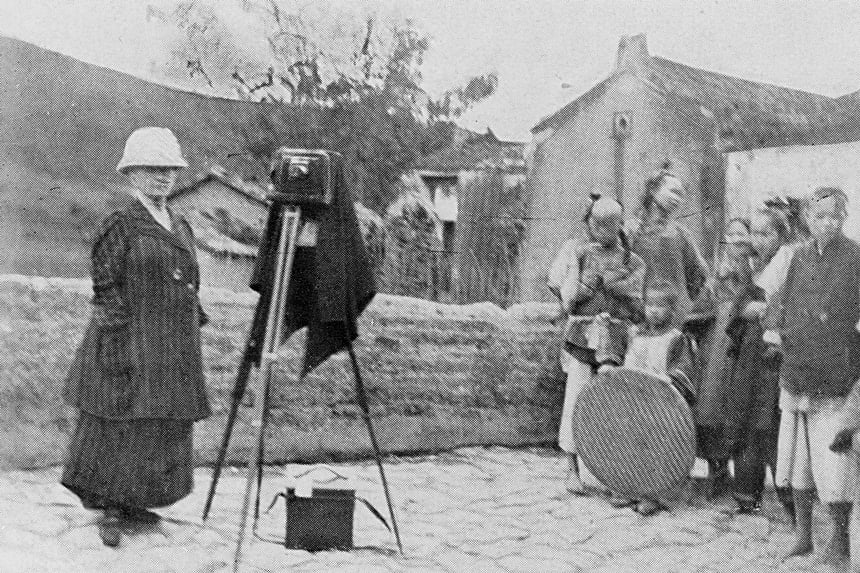
At the height of the fusty Victorian era, respectable women were expected to stay home, tend children, and keep house — not ride alone through the wilderness, climb volcanoes, or fend off grizzly bears. Apparently, Isabella Bird never received the message.
Over the course of her remarkable life, the British traveler made her way by horseback, camel, mule, and steamer across mountains, deserts, and little-known kingdoms. Yet for all the miles she traveled, she remains best known for one extraordinary journey: an 800-mile horseback trek through the Colorado Rockies, where she slept in primitive cabins, endured blizzards, and befriended a one-eyed outlaw known as Rocky Mountain Jim. Her account of the journey, A Lady’s Life in the Rocky Mountains (1879), became a classic of travel literature.
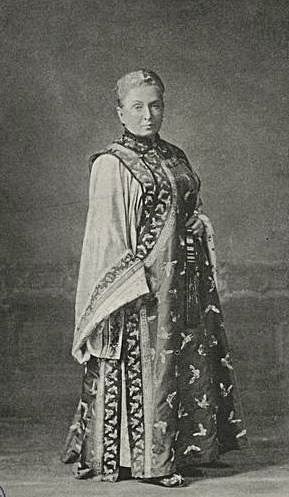
The greatest obstacle, however, was not Victorian convention or harsh travel conditions. It was Bird herself. Sickly from childhood, she seemed an unlikely candidate to venture beyond England, let alone across the world’s most remote frontiers. A doctor’s desperate prescription would change everything.
A Frail Beginning
Isabella Lucy Bird was born in 1831 in Boroughbridge, Yorkshire, the eldest daughter of the Rev. Edward Bird, an Anglican clergyman, and Dora Lawon Bird. Her father nurtured her curiosity by taking her on rides through the English countryside, “showing her the wayside plants, crops, animals, farmhouses, cottages, and features of the landscape,” as Jo Woolf wrote for the Royal Scottish Geographical Society. Those excursions helped cultivate the keen powers of observation later evident in her travel writing. At just 16, she wrote a pamphlet on free trade and protectionism that was privately printed the following year.
But Bird’s health remained fragile. Plagued by a childhood of headaches, insomnia, nervous exhaustion, and severe pain in her back, she underwent surgery at 18 to remove a fibrous tumor near her spine. As Anna Stoddart later wrote in The Life of Isabella Bird (1906), she remained “subject to long periods of suffering.”
Eventually, “her doctors advised a sea voyage in hopes of restoring her health,” Stoddart wrote.
The Travel Cure
At age 22 in 1854, Bird followed her doctor’s advice, boarding a ship across the Atlantic to visit relatives in Canada and the United States — a more difficult voyage than anticipated. During a violent storm, “a wave, striking the ship, threw me against a projecting beam,” she wrote in her first published book, The Englishwoman in America (1856), “cutting my head severely and stunning me.” Finally reaching Portland, Maine, the ordeal only fueled her adventurous spirit. As she stepped ashore, she “felt that a new era of my existence had begun.”
In the following months, Bird traveled widely through Canada and the United States, recording her observations in letters that became The Englishwoman in America.
Back in Britain, however, her ailments returned. The pattern would repeat itself for the rest of her life. At home, she often became exhausted, depressed, and bedridden; abroad she could ride for hours, sleep on bare floors, withstand brutal weather, and endure hardships that would test the hardiest explorer. According to academic author and researcher Elizabeth McAdams, Bird herself acknowledged that travel revived her, writing that she had first traveled because her physician ordered it and that she continued “largely on that ground.” After her death in 1904, the Edinburgh Medical Journal summed up the paradox perfectly, calling her the “Invalid at Home and the Samson Abroad.”
A Lady in the Rockies
In 1872, Bird traveled first to Australia and then to Hawaii (then called the Sandwich Islands), where she rode horseback across lava fields and climbed the volcanoes Mauna Loa and Hualālai.
Then she sailed for America.
Bird arrived in Colorado in 1873, drawn partly by reports that the dry mountain air might restore her strength. The territory, however, was still a rough frontier — a “dangerous ‘bandit country’ of pioneers and fur trappers,” as Jo Woolf wrote for the Royal Scottish Geographical Society. Rather than remain comfortable in Denver or Colorado Springs, she resolved to “plunge boldly into Colorado,” determined to reach the remote valley of Estes Park.
After a difficult journey over mountain roads, she found exactly what she had been searching for: “I have just dropped into the very place I have been seeking but in everything it exceeds my dreams,” she wrote in one of her letters to her sister, Henrietta, which became the basis for A Lady’s Life in the Rocky Mountains. “There is health on every breath of air.” Her home in Estes Park was a “log cabin, raised on six posts, all to myself … and a small lake close to it.”
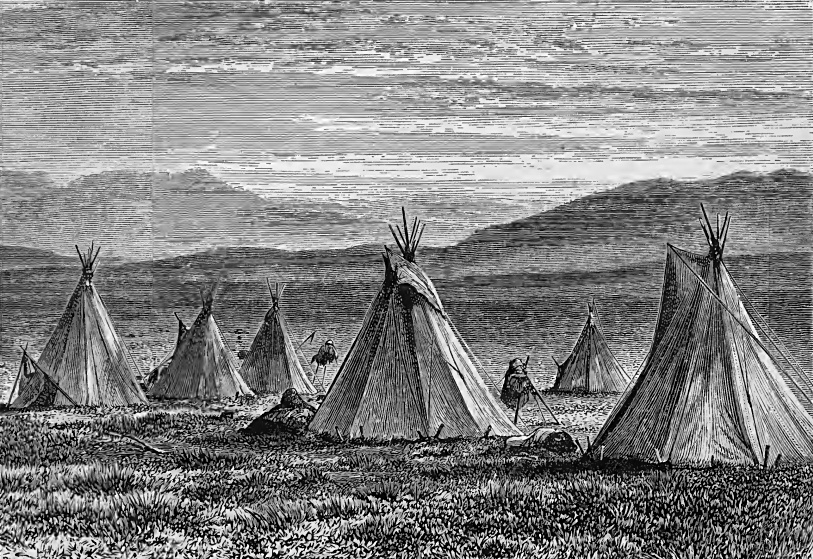
Over the following months, Bird disappeared into the Rockies. She rode more than 800 miles — not sidesaddle, but astride in her practical Hawaiian riding dress — a “half-fitting jacket, a skirt reaching to the ankles, and full Turkish trousers gathered into frills which fall over the boots,” she described. She forded icy streams, climbed snowbound passes, and slept in lonely cabins, venturing into country few Victorian women — or men, for that matter — would have dared enter.
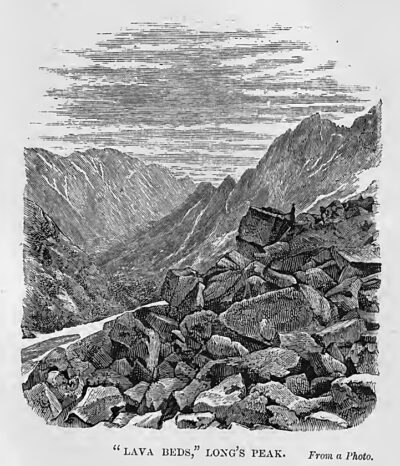
Her greatest adventure was climbing 14,259-foot Longs Peak with the one-eyed mountain man Jim Nugent — better known as Rocky Mountain Jim — and two young English surveyors. The climb demanded scrambling over precipices, icy ledges, and enormous boulders. Bird later confessed that at times she “could neither climb, crawl, nor walk,” and that Rocky Mountain Jim “dragged me up, like a bale of goods, by sheer force of muscle.”
Though notorious for his drinking and violence, Jim also possessed a poetic streak that fascinated Bird. She later wrote of him: “Of his genius and chivalry to women there does not appear to be any doubt; but he is a desperate character, and is subject to ‘ugly fits.’” Seven months after their climb, Jim was shot and killed in a dispute with a neighbor.
The letters she wrote to Henrietta during her Colorado journey were collected and published in 1879 as A Lady’s Life in the Rocky Mountains. Rich in sharply observed landscapes, unforgettable frontier characters, dry wit, the book was widely praised and established her as one of the Victorian era’s leading travel writers.
The Wider World
Travel gradually transformed the way Bird thought about life. “Surely one advantage of travelling,” she reflected after her first great voyage, “is … it intensifies tenfold one’s appreciation of the good at home.” The woman who had first crossed the Atlantic on her physician’s advice increasingly sought journeys that tested her endurance and resourcefulness. With each expedition, she returned more confident than before — and soon found herself planning the next.
Back in England in early 1880, grief over her sister Henrietta’s death finally persuaded Bird to accept the long-standing proposal of Dr. John Bishop, a Scottish surgeon who had courted her for years. They married the following year — “the bride was in deep mourning and there were no wedding guests,” Stoddart observed — but the happiness proved brief. Bishop died just five years later, leaving Isabella heartbroken but financially independent. No one would have blamed her for settling quietly into retirement. Instead, at 55, she packed her bags once again.
Her next journeys carried her into the Himalaya and the Tibetan borderlands. There she secured land from the Maharaja of Kashmir for a hospital honoring her late husband. The expedition proved far more dangerous than expected. In Among the Tibetans (1894),Isabella recounted how her armed guide, Usman Shah, had been terrorizing villages along the route. When they finally reached Leh, he was arrested as a wanted murderer.
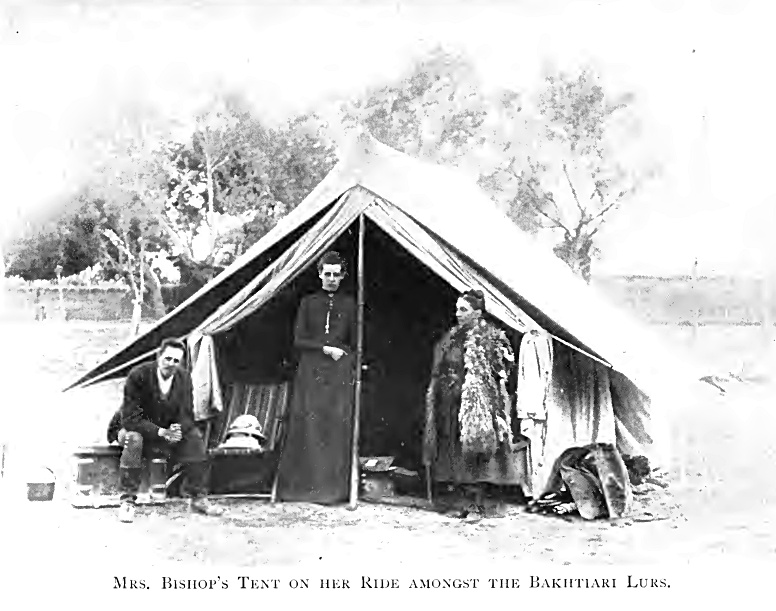
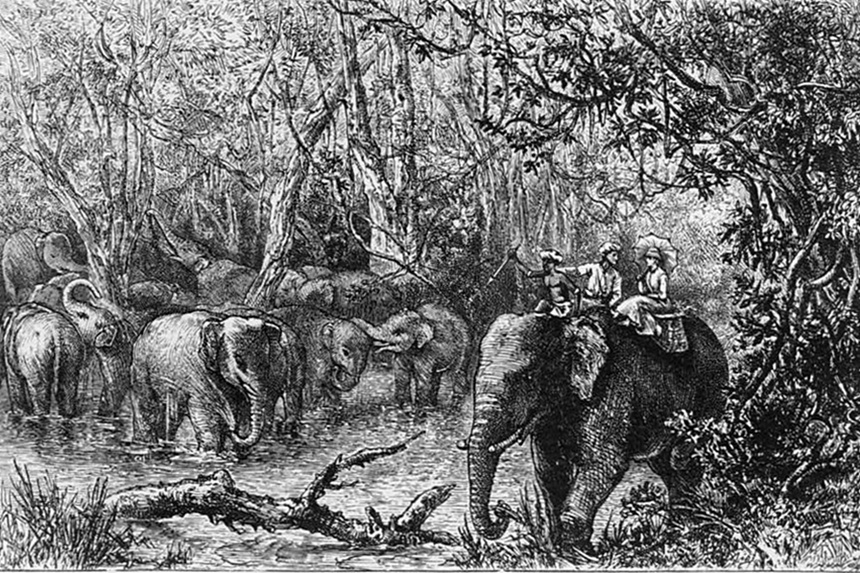
Returning to Britain between expeditions to lecture and write, she earned a reputation as one of the Victorian era’s most celebrated travelers. By 1892, the traditionally male Royal Geographical Society elected her one of its first women Fellows, an acknowledgment of achievements that had become impossible to overlook. She died at home in 1904 while planning yet another journey to China.
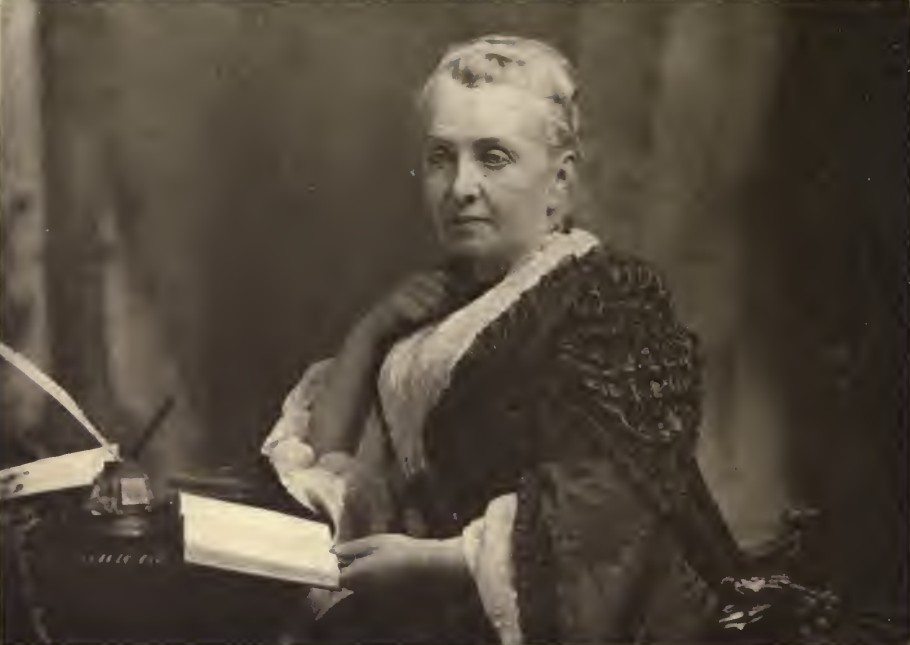
The prescription that began as a cure became a calling. Looking back on a lifetime of travel, Isabella offered perhaps the best summary herself, in Unbeaten Tracks of Japan (1880): “A traveller must buy his own experience.” Few travelers ever paid more willingly.
Become a Saturday Evening Post member and enjoy unlimited access. Subscribe now
Comments
Isabella Bird was nothing short of astonishing in all she accomplished, not only as a woman, but just as a person with many health limitations that (by all logic) would have prevented anyone else from all she did! Her travels. filled with travails, showed her persistent determination in the face of serious adversity. Even with all that she lived to 83; itself no small feat back then otherwise.