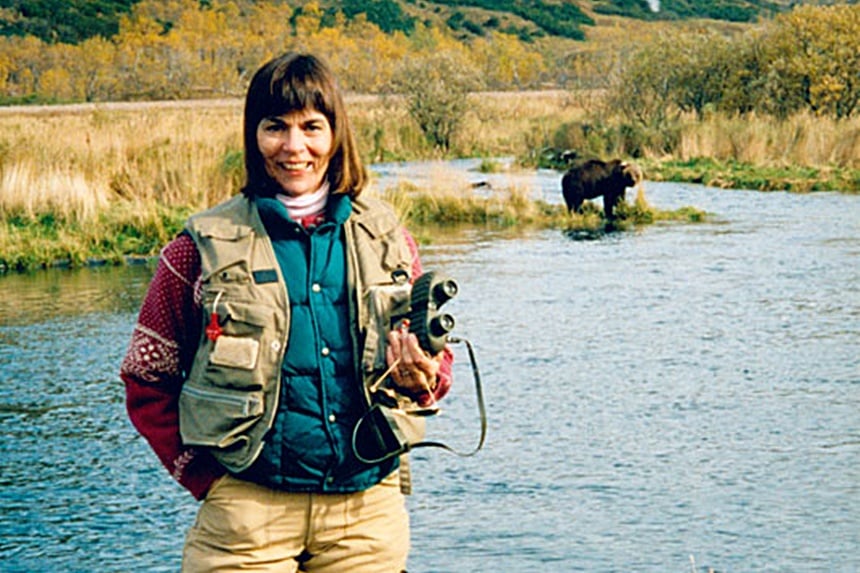
On a bitter January morning in 1995, Yellowstone’s Lamar Valley lay hushed beneath a blanket of snow. Mollie Beattie, the first woman to lead the U.S. Fish and Wildlife Service, shouldered one end of a steel crate and hauled it 50 yards up a hillside. Inside, a Canadian gray wolf known as Wolf #5 waited in the dark, one of 14 wolves introduced to Yellowstone that winter after the species had been hunted out of the park nearly 70 years before.
Beattie set down the crate “in a moment of gratitude to all those who had worked for twenty years to get this far,” she later recalled in The Wolves of Yellowstone. “Then I put a finger up to one of the ventilation holes in the box and felt the gray fur and a little rib underneath.” An overwhelming sense of rightness swept over her. The wolves belonged here.
It marked a moment in a career that had taken her from the forests of Vermont to the highest levels of American wildlife conservation — and a turning point in the fight to restore wolves to the American West.
A Woman of the Woods
Born in Glen Cove, New York, in 1947, Mollie Beattie followed an unconventional path into conservation. She earned degrees in philosophy, forestry, and public administration, combining a love of nature with an understanding of science and government.
With her husband, Rick Schwolsky, she carved out a homestead on 142 acres near Grafton, Vermont. They built a solar-heated house surrounded by beech and maple trees. Black bears occasionally raided her beehives. As Representative George Miller stated in his tribute to her, her home was “part animal shelter, part clinic — home to lame deer, birds with broken legs and raccoons that had become dependent on her largess.”
A former Outward Bound instructor, Beattie knew the wilderness firsthand. But she also recognized that protecting it required political resolve. After rising through Vermont’s natural-resource agencies, she was appointed director of the Fish and Wildlife Service by President Bill Clinton in 1993.
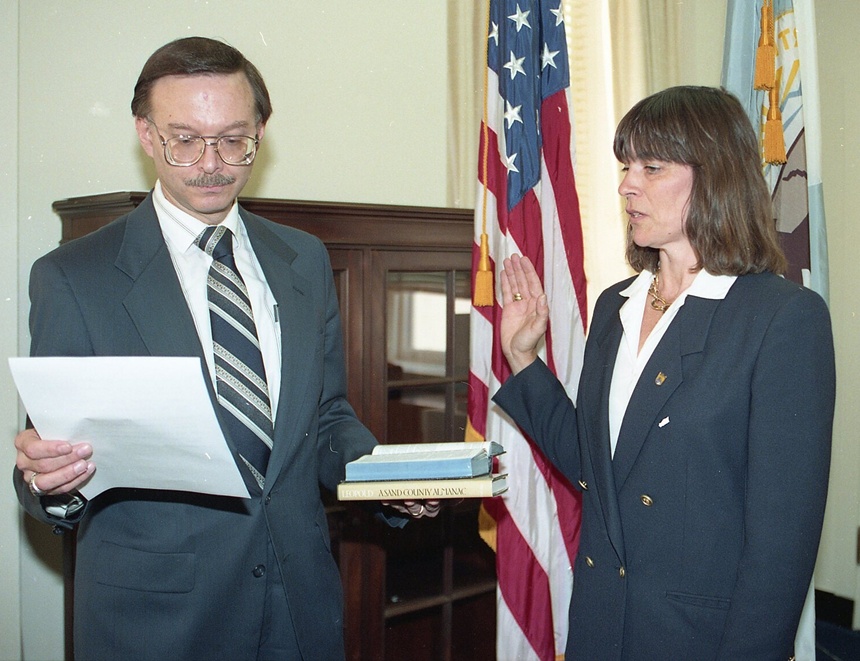
Among the challenges she inherited was one of the most contentious issues in American wildlife conservation: whether wolves should once again roam Yellowstone.
The Long Road Back
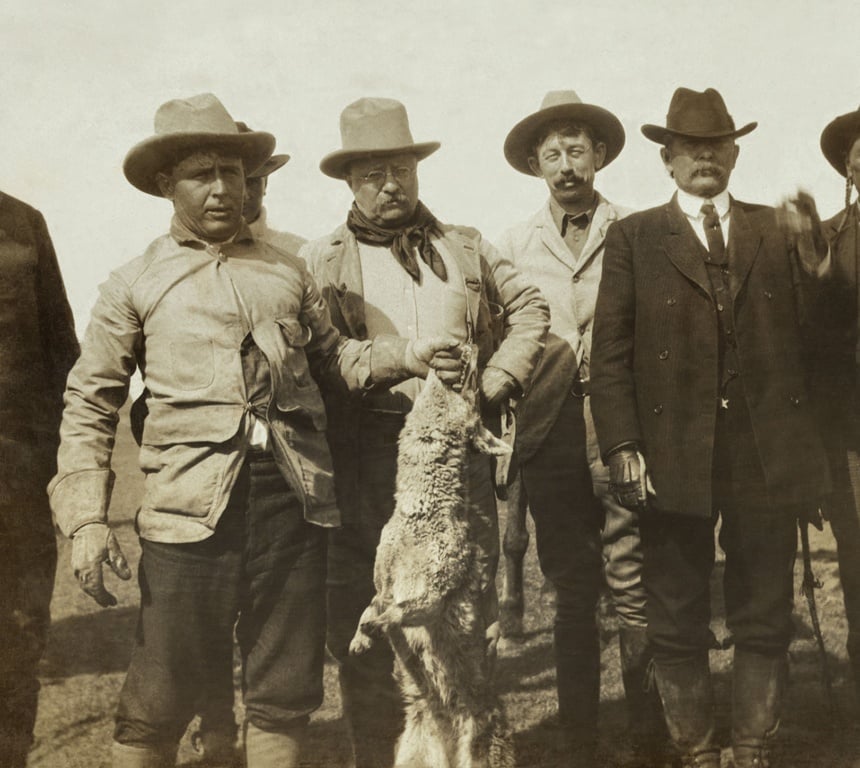
Across America’s West, wolves had been eradicated deliberately, with government backing. Ranchers feared livestock losses, hunters saw competitors for game, and federal predator-control programs pursued wolves relentlessly. Even President Theodore Roosevelt, a champion of wilderness, called the gray wolf the “beast of waste and desolation” in his book, Hunting the Grisly and Other Sketches. By 1926, Yellowstone’s last known pack had been eliminated.
The consequences took decades to understand. Scientists came to recognize the importance of large predators to healthy ecosystems, and restoring wolves promised to reestablish a missing link in the food web. But reversing decades of government policy — and generations of deeply held beliefs — would prove far more difficult than recognizing the ecological need.
That was the challenge facing Beattie. She did not originate the reintroduction effort. Scientists and conservationists had spent decades laying the groundwork. But as director, she championed their cause and helped steer the controversial proposal toward reality.
She was already defending the Endangered Species Act against efforts to weaken it, earning respect across political divides. Representative Don Young, an Alaska Republican who frequently opposed her, called her “a straight shooter who earned the respect of all of us in Congress.”
In ranch country around Yellowstone, though, opposition to wolves was deeply personal, and it went beyond livestock. Ed Bangs, the agency’s wolf recovery coordinator, understood that reintroduction challenged generations of Western tradition. As he later observed, it raised an uncomfortable question: “So are you telling me my grandfather was wrong?”
The path forward required compromise. Under Beattie’s leadership, the agency moved forward with a plan to introduce Canadian wolves as an “experimental population,” giving wildlife managers greater flexibility to deal with wolves that killed livestock. Despite fierce opposition, the environmental impact study drew more than 160,000 comments, and in June 1994 Interior Secretary Bruce Babbitt approved the plan.
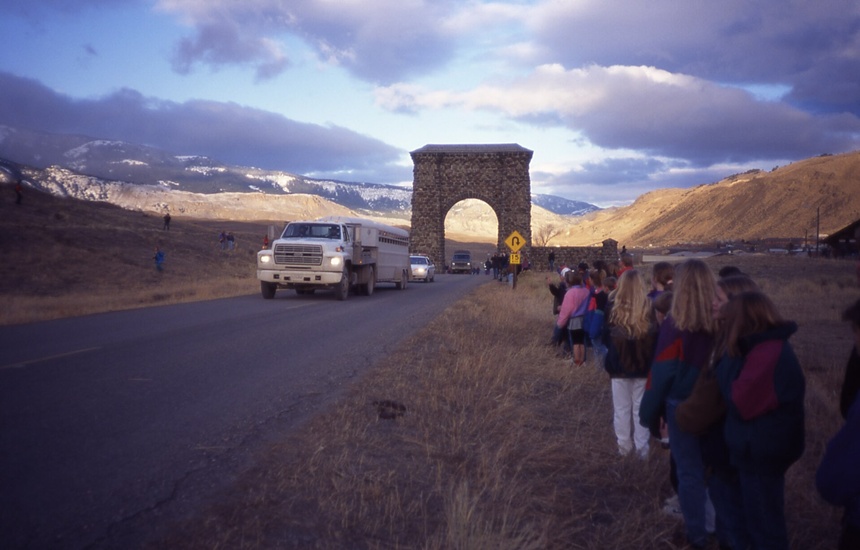
When the first wolves arrived in Yellowstone in January 1995, a last-minute federal court order temporarily delayed their release. Meanwhile, ranchers’ fears arrived with them. Montana rancher Chris Bakwin was blunt. “Wolves kill cows,” he told the Associated Press. Ranchers were allowed to shoot a wolf if they could prove it attacked their livestock, but Bakwin was not reassured. “Sometimes we don’t find one that’s missing until the fall when we gather them back in. I can’t be sitting out there 24 hours a day, waiting for a wolf to come.”
Beattie saw the moment differently. “It’s going to be wolf heaven if we can just get them out of purgatory,” she told the Spokesman Review before the wolves were subsequently released, gesturing toward the wildlife-rich Lamar Valley.
In the years that followed their release, Yellowstone’s ecosystem began to change. The National Park Service acknowledges that wolves contributed to declining elk numbers, even as hunting, other predators, and other factors also played roles. Their kills fed ravens and grizzly bears, and coyotes declined in some territories. Scientists still argue over how far the effects traveled: whether wolves also frightened elk away from young aspen and willow, or whether simply having fewer elk explains the regrowth. Whatever the case, the wolves had reclaimed their place in Yellowstone’s intricate web of life.
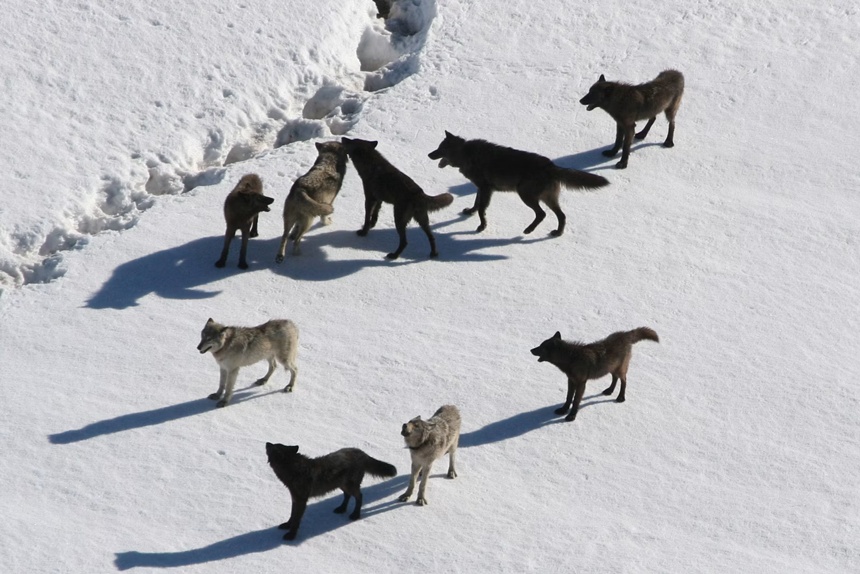
But the story of Wolf #5 was only beginning.
Mollie’s Wolves
Known to researchers as 5F, the female became the founding matriarch of the Crystal Creek Pack. But freedom initially proved daunting. As reported in the Yellowstone Wolf Project’s annual report, the wolves refused to leave when the gate of their acclimation pen was opened. A camera recorded #5 approaching the opening six times in 20 minutes before retreating. Eventually, the pack ventured into the Lamar Valley.
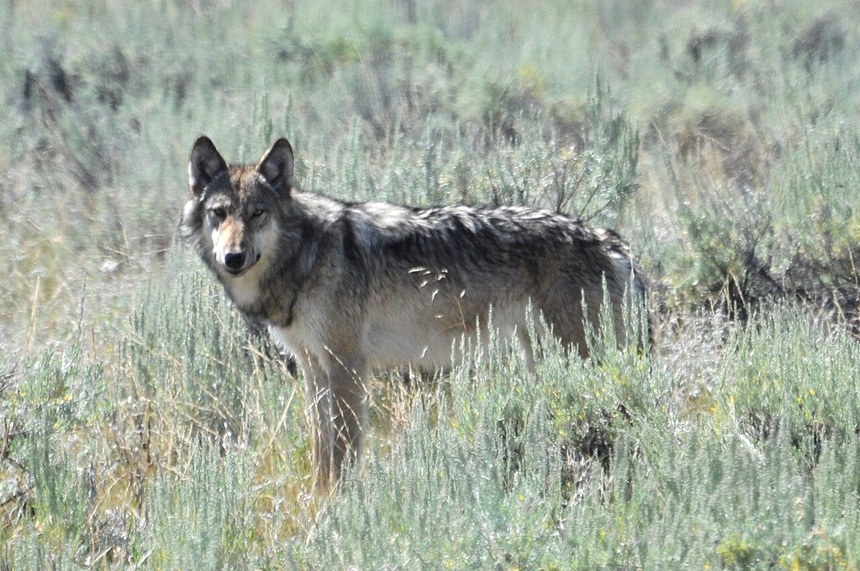
Their early years were tumultuous. In 1996, the rival Druid Peak pack attacked, killing #5’s mate and likely her pups and leaving her badly injured. She and another surviving wolf, Wolf #6, fled to remote Pelican Valley, where their pack adapted to hunting formidable bison when elk migrated elsewhere.
By 2000, #5 was aging and struggling to keep up. “It was not uncommon to locate her alone,” reported the Yellowstone Wolf Project. Eventually, #5 disappeared, her fate unknown. Beattie had not lived to see the wolf’s final years. She died of brain cancer on June 27, 1996, at age 49, less than 18 months after carrying Wolf #5 up that snowy hillside. In 2000, the Crystal Creek Pack was renamed Mollie’s Pack.
Beattie’s death brought tributes from across the political spectrum. President Clinton mourned the loss of “one of its great spirits.” Congress subsequently named approximately eight million acres of wilderness within Alaska’s Arctic National Wildlife Refuge in her honor — a fitting tribute to a woman who believed that wild places deserved protection for their own sake.
Yet her most poignant memorial remained alive in Yellowstone.
The Unfinished Fight
Today, Mollie’s Pack is Yellowstone’s longest-continuing wolf-pack lineage from the original reintroduction. But its future is far from assured.
Wolves that leave the park lose its protection. In summer 2026, the pack, then numbering five adults and five pups, established territory in the Absaroka Range, just outside Yellowstone, and the move drew threats from hunters and urgent calls for protection.
When Wyoming’s wolf-hunting season opened in September, renowned wildlife photographer Thomas D. Mangelsen was among those urging officials to spare the pack. “The park boundaries and trophy hunt boundaries are invisible to the wolves,” he warned. Within five days, hunters had filled the area’s four-wolf quota. None of the wolves killed belonged to Mollie’s Pack, which by then had largely returned to the park to the huge relief of many.
Three decades after Mollie Beattie helped carry Wolf #5 up that wintry mountainside, the pack that traces its origins to that pioneering wolf still roams Yellowstone and the surrounding wilderness. But Beattie’s legacy was never about saving a single wolf or even a single pack. It was about restoring a missing piece of nature’s intricate web — and recognizing humanity’s responsibility to protect it. The wolves had returned. Keeping them — and the ecosystems they help sustain — thriving in the wild would require the same determination Beattie had shown, now entrusted to the generations that follow.
Become a Saturday Evening Post member and enjoy unlimited access. Subscribe now





Comments
While we don’t have any wolves around here we have coyotes and they kill livestock and pets. Foxes kill chickens. In a rural area we don’t take too kindly of this. We take our rifles, take aim, and kill them every chance we have. No questions asked. Period. If the wolves were to inhabit our area, the same rules would exist for them. Bleeding hearts that support bringing in wildlife that infringes on our rural way of life is not welcome in our area.