Under the weight of a half-moon, I guide Elvis along the edge of forest nestled between the Black Sea and rolling sand dunes. I reach into a pack that’s slung around his hump and pull my knife. Ever since narrowly escaping the massacre in Istanbul last year, I’ve been on borrowed time. The extremist groups are becoming more attuned to “hush weddings,” and though being gay in Turkey isn’t technically illegal, violence and the use of morality laws to persecute have always been the norm.
Before crossing into the lush greenery, I give Elvis’s side a deep scratch and look back at the hoofprints that pepper the sand — we aren’t being followed. About five years ago, after moving from my village to Istanbul, I traded every lira I had for Elvis. Though camels have fallen out of favor in Turkey’s larger cities, I knew I could deliver more packages by hanging sacks from his back and avoiding traffic. Elvis also turned out to be a tourist attraction, with foreigners paying for selfies.
After crossing the footbridge, oil lamps begin to reveal themselves. With their cupped shades painted black, the orange hue is barely detectable. When I arrive at the tenth one, I follow the instructions and wait. To the north, the Black Sea is like a chalice cradling an ocean of blood. Though I can’t gauge the drop-off to the west, I’m sure the cliff in the distance is high enough to kill a man and his camel. The Turkish landscape is always tempting the mentally unstable with easy options for offing themselves.
Listening intently, I sense a dissonance between my ears; the right is attuned to the lapping of the sea, while the other — exposed to the silent dunes — is sealed with a cork. Then from the front, the unmistakable click of a gun being cocked fills both ears.
“Introduce yourself,” a gruff voice says.
“Zills, the performer.” I give my stage name, the Turkish word for finger cymbals.
“The belly dancer?”
I nod.
“Get off the camel.” He’s still a voice in the dark, but now I can see the weapon. “Show me your bags.” He steps out from behind the tree wearing a hooded cloak.
I reach around Elvis’s hump, disconnect my satchel, and tilt the opening. While he sifts, the zills jingle like gold coins instead of worthless discs of brass. I adjust my dark outer layer, then attempt to hide my blue eyeshadow and fake lashes by pulling my hat down. Like most impoverished Turks, a lifetime of malnutrition has given me a slight figure. Though I identify as male, when my hair is down, I can be anyone a partner wants.
“Do you have any weapons?” he asks.
“Just my knife.”
“Guns?”
“No.”
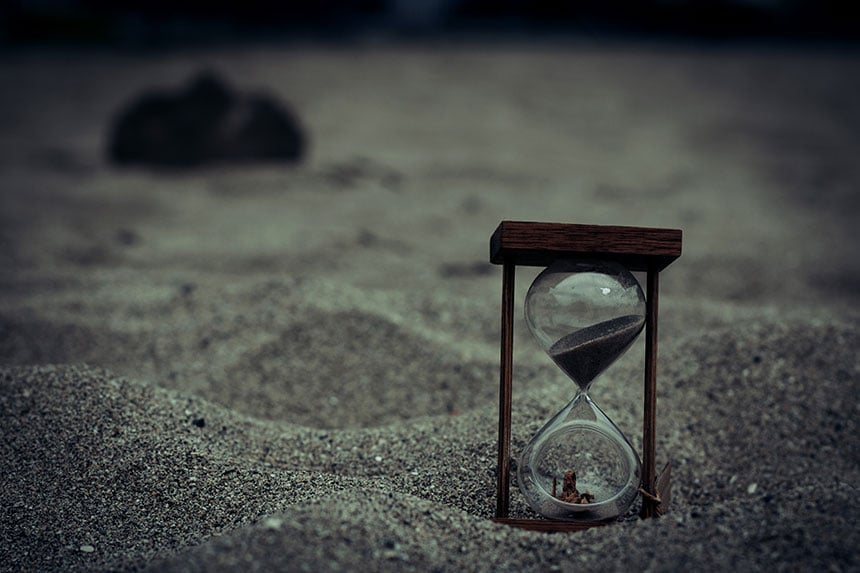
“You can keep the knife, just in case. But the camel stays.” He gives me a quick frisk, then guides us to an area where the light of the moon doesn’t penetrate. The beads of my bismillah necklace radiate against my skin, encouraging heightened caution. Memories of the Istanbul massacre creep in. I was on stage enjoying my set when the chatter of machine guns sounded outside the venue. The warning shots gave me enough time to escape through a maze of hallways and out a back door. Half the men were murdered, including the grooms. Ever since, I’ve felt stuck inside an hourglass, with every hush wedding I perform at causing the sand to inch higher. Tonight, if the pay is true, I’ll abandon Turkey forever.
My guide stops, causing pangs of anxiety to ripple across my chest. He looks around before lifting a sod-covered trapdoor. It opens like the mouth of a crypt ready to entomb me.
“Push through the door at the end of the tunnel and ask for Nuri,” he clasps my hand. “May your night be prosperous.”
“Inshallah.”
I follow the lamps toward the sound of music and laughter. The smell of cumin seeds mixed with coffee beans begins to cover the scent of damp clay. It reminds me of my Ana, how every dish she ever made was rich with cumin. After dinner she would brew coffee and offer to read my fortune. From a young age I loved the ritual of inverting the small cup over the saucer and waiting to hear the story solidified in the grinds.
I was 16 the last time I allowed Ana to read my fortune. The story didn’t start like it usually did, with me at a party and surrounded by friends. Instead, she saw the shape of a worm, which meant I was holding a dangerous secret. Then a crescent, and a big, bursting heart were revealed. She said I would fall in love with a boy.
After that, Ana began concealing a portion of our profits. We were always keeping secrets from Baba, little things like how much we sold at the market or how many men she flirted with to make a sale, so this new one wasn’t difficult to hide. Years later, Ana revealed the ultimate secret: the money was for my escape. She wanted me to go to Canada.
But I had a boyfriend, Altan, and couldn’t bear the thought of being without him in a foreign country where I barely spoke the language. After pooling our money, there wasn’t enough to float both of us. Since Altan had a better grasp on English, we sent him first. He’d get one of those high-paying Canadian jobs we’d heard so much about, and in the meantime, I’d work more underground events. It was a good plan until we learned Altan’s education wasn’t recognized in North America. Then the massacre hit, and gay men put their love on hold, afraid to follow through with hush weddings.
A familiar whine bleeds through the door. I open it slowly and walk into a doomsday bunker that’s no larger than the deep end of a backyard swimming pool. Every surface holding the cube together is concrete. I follow the men’s gaze through a fog of hookah smoke and find the cigar-box-sized stage in the corner. A performer is playing an acoustic baglama and singing at the top of their vocal range. Like most traditional Turkish singers, they sound as though they are mercilessly wallowing over a life-altering event. There’s no amp, microphone, or electricity. The place is a tomb, overflowing with candles, ready to cremate every single one of us should things go sideways.
“Zills?” A person extends a hand. “Merhaba, I’m Nuri. It’s nice to finally meet you. This is my husband, Vecdi.” They are both dressed in traditional wear: baggy, tapered trousers coupled with red vests that are hemmed with gold threading.
Vecdi clasps my hand and holds it to his forehead as he bows. His jawline, sharp as a garden trowel, is accentuated with a pencil-thin beard. He hands me a stemless wine glass and pours from a decanter just as the crowd stands to applaud the musician’s final number.
“Come, get set up,” Nuri says, pulling me to the stage, near where the food is. “Eat as much as you’d like; it won’t keep all night.” He waves a hand across a spread of dolmades, halva, and kebabs. My eyes stick to the honey-covered walnuts and phyllo layers of the baklavas. But my midriff needs to be limber.
“As discussed, I require 50 percent before performing,” I say to Nuri.
He hands me an envelope from his inner vest pocket. “We’ve heard gracious things about you. I don’t have any doubts about the quality of your show.”
Being known in the underground world carries risks, but it allows me to command higher pay. I make more in one night than my parents did in an entire month. I turn toward the corner and count. It’s full payment upfront, without haggling.
“Is there a rear escape hatch?” I ask Nuri, looking at the ceiling.
He shakes his head.
Eager to engage the audience, I take my sack around and encourage them to pick a pair of zills. I’m all smiles and charm while seeking out suspicious behavior. Everyone is resolute and maintains eye contact.
I plug my phone into the portable speaker and select a playlist with a long, slow build, then step behind the curtain to remove my outer layer, revealing a beaded tank top and jockstrap. My black ringlets are kept in place with a crown. The bedlah is complete after adding a flowing chiffon skirt and hip belt.
When the shim-de-shim-de of the music picks up, I push a leg through the curtain and hear whoops of approval. I emerge waggling my hips and snapping zills like I’m plucking fruit flies. As I get deeper into the routine and showcase my best moves, wadded liras start to rain down. For the crescendo, I shake my ass and extend my hands until they touch the ceiling and hold until the song fades.
When the next number starts, a man in an oversized sweater enters the bunker, putting me on high alert. His hair looks knotted, like a crocheted throw reaching for the small of his back. Before finding a seat, he takes out a cigarette and places it between his lips, instigating a clasped hand to reach for him. A lighter sparks, illuminating his face and revealing a bulbous nose that’s been carved from a block of feta. The last time I saw him was at the Istanbul massacre.
That night he didn’t show any joy for the grooms or take part in the toasts. I kept wondering why he’d bothered to attend. He held his head low and constantly checked his phone like he was waiting for a trigger. I’ve thought about him since, pondering if he had anything to do with the sabotage.
I continue my set, sneaking quick glances as he finds a seat. He holds the cigarette like a soldier would — or someone who is used to hiding in the shadows — inside a cupped hand so the cherry can’t be detected. His other hand walks across his chest like he’s trying to locate something beneath the sweater — a weapon, or worse, the explode button of a suicide vest. Fidgety people in confined spaces make me nervous.
Stepping off the stage, I decide to highlight the presence of the mystery man by dancing at his side. Ignoring me, he swirls the ember of his cigarette in the ashtray. I undo my belt, inciting a rise from the crowd, and wrap it around his shoulders. Moving into his lap, I pinky brush the side of his face like I’m halving him with a sword. Just as I’m about to reach his chest, he grabs my wrist and pushes me. He pops another Marlboro, then reaches into the side pocket of his cargo pants and pulls out a gun.
Desperate to reunite with Altan, I lunge for the weapon. The chair teeters and we balance just long enough to read the confusion on his face, then tumble to the ground. The gun rests on the floor, where it becomes obvious that it isn’t a weapon. As the man I tackled rolls over, his sweater pushes up, exposing his bulletproof vest. The music hits a lull. I would usually perform a zills solo, but make a joke instead, “I can’t stand a man who refuses my advances!”
Apologizing, I help him to his feet and hand over the gun. He pulls the trigger, causing a flame to spout from the barrel.
I attempt to draw attention from my gaffe by tearing off my skirt and crown and dancing back to the stage in just a tank top and jockstrap. The audience — still gracious — continues to throw tips. Most of them are trapped in straight relationships, afraid to be themselves. Even if for the briefest of moments, they have permission to love any version of me they wish.
Eager to call Altan and give him the good news, I slip away without congratulating the grooms again. On my way to find Elvis, I’m startled by a silhouette sitting on a log with a bulletproof vest at their side.
“I recognize you from Istanbul,” he says. “The way you hightailed it out of the venue before anyone knew what was happening, I’ve often wondered if you had something to do with the murders.” The contents of his wine bottle slosh with each sip.
“I thought the same about you when I saw that oversized sweater — I was certain you were smuggling in a bomb.”
“I haven’t been out after dark in almost a year. Even with this on,” he looks at the vest, “I couldn’t make it an hour. You dance like you’re unaffected by Istanbul.”
“Everyone who survived that night carries it with them.” I reach for his hand. If I weren’t about to start a new life elsewhere, I would help this man. “We’ve got to stay strong.”
A head pokes out from the trapdoor. “Ilhan? The grooms are going to speak, are you coming?”
I turn to find Elvis and ready him for the return trek. As we walk, there’s an extra sway in his step. The sandy scenery is on repeat, and I imagine we’re moving in place as the earth rotates beneath Elvis’s hooves. It’s an entire hour before my phone regains service. Wanting to feel connected, I dismount, remove my desert boots, and dig my feet into the cool sand.
“Merhaba?” Altan says, choked with sleep. His Turkish changes by the day now. Instead of speaking from the back of his mouth, the words fall from the tip of his tongue like he’s letting go of our language.
“Altush! I’ve done it!” I shout, “I have enough for a plane ticket!” I hear a groan in the background. “Altush?”
“Hello?” he repeats.
“It’s me, Cem.” The wind swirls and sand begins to cover my feet, working its way up to my ankles.
“Who’s calling?” a man in the background asks. It’s a Canadian voice, one that has no business being near his phone at that hour.
The steely air grips my heart, causing a misfire.
“Allan, who’s it?” the Canadian asks again.
“Wrong number …” Altan’s voice thins before ending the call.
The phone slips from my hand and thumps against the sand. I stomp it with my bare heels until it’s buried then fall to my knees. The half-moon dims behind a fold of cloud and the dunes begin to roll like a tsunami; the hourglass quickens. I drag my hand through the sand, scribbling a large and ominous worm shape. Beneath I add a crescent and a big bursting heart. As the tsunami closes in, I lean back and start sifting my arms and legs, creating an angel. I dig deeper, gripping fistfuls of sand and brace for impact.
Become a Saturday Evening Post member and enjoy unlimited access. Subscribe now


Comments
I did not appreciate the SEP’s selection of this week’s fiction short story. It is not up to your high standards for journalism. I have come to expect more from the Saturday Evening Post.