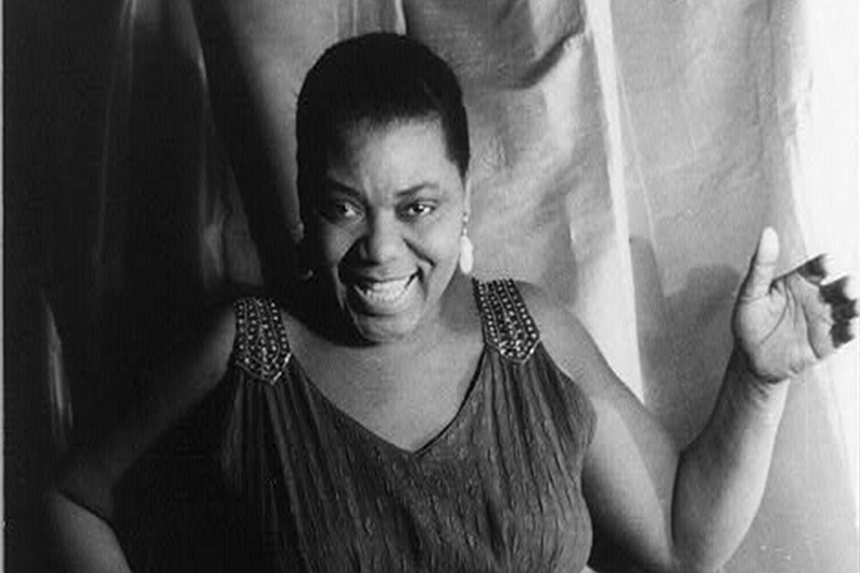
In the 1920s, Bessie Smith reigned in the Black entertainment world as the Empress of Blues. Fans packed theaters to standing-room-only capacity to hear her sing, and those without seats filled the street outside waiting for the second show. At the height of her career, she earned $2,000 per week (nearly $38,000 per week today) and recorded with the likes of Louis Armstrong and Duke Ellington.
Yet, for decades, she lay in an unmarked grave in Philadelphia, and even though most people recognize the women she inspired — such as Billie Holiday, Ella Fitzgerald, and Janis Joplin — many don’t know Smith. The reason for that is simple: timing.
Street Performer
Long before Smith stepped into a recording studio, traveled the South in her own train car, or faced down the Ku Klux Klan, she began life as an orphan in Chattanooga, Tennessee. Her father, a laborer and part-time preacher, died not long after her 1894 birth; her mother, a laundress, died before her ninth birthday. The children still living at home, including Smith, moved in with their oldest sister, Viola.
To help offset expenses, Smith began singing and dancing in front of the White Elephant Saloon, accompanied by her brother, Andrew, on guitar. Michelle R. Scott, a history professor at the University of Maryland, Baltimore County (UMBC), says that at the time, Chattanooga’s music scene rivaled Memphis’s and boasted upcoming stars like vocalists Lovie Austin and Roland Hayes. Smith would have learned songs and dances from the other performers and honed her skills during these years.
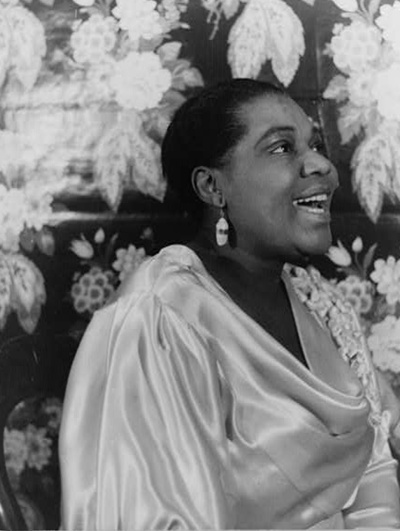
The Bessie Smith Cultural Center in Chattanooga tells the story of The Big 9 historic Black neighborhood where Smith sang and pays homage to the singer’s career.
In 1912, Smith’s brother, Clarence, arranged for her to audition for the Moses Stokes Traveling Show, where he worked as master of ceremonies. Although the show hired her as a chorus girl, she quickly became one of its singers, alongside Gertrude “Ma” Rainey.
Not much is known about her next decade other than she left the Moses Stokes to tour with the Theater Owners’ Booking Association, another major Black vaudeville circuit. Within no time, Smith had become a vaudeville star
Rising Star
Blues was the key to Smith’s success. The musical genre evolved primarily out of work songs, field hollers, and minstrel show music in the rural South. It was raw and mournful, characterized by themes of hard times and cheating lovers, and Smith grew up singing the genre.
Chris Albertson, author of Bessie, describes Smith’s voice as “commanding” and so powerful she didn’t need amplification. But her true gift was her ability to inject heart-felt emotion into her songs as few others could — a growled word here, a tearful sigh there. These two qualities caught the attention of Columbia Records.
Prior to 1920, record companies didn’t produce Black music because they believed Black listeners couldn’t afford records. However, that year, Okeh Records took a chance on blues singer Mamie Smith (no relation) and released Crazy Blues. Not only was it the first commercial recording by a Black artist, but Crazy Blues proved Black listeners would buy Black music.
Out to build its own “race catalog,” Columbia Records approached Smith to record Downhearted Blues. The February 1923 song became such a hit that Columbia signed her to a one-year contract, which it renewed every year with varying terms through 1929. (Her 1924 contract made her the highest-paid Black artist up to that time.)
Bessie Smith – Down Hearted Blues (Uploaded to YouTube by BessieSmithVEVO)
In total, Smith recorded 154 songs for Columbia, including her most famous, Backwater Blues in 1927 and Nobody Knows You When You’re Down and Out in 1929. She was so popular during these six years that she wore sunglasses as a disguise in public (which rarely worked) and carried hundreds of dollars in a carpenter’s apron she wore underneath her dress.
Bessie Smith – Nobody Knows You When You’re Down and Out (Official Audio)(Uploaded to YouTube by BessieSmithVEVO)
Headlining Act
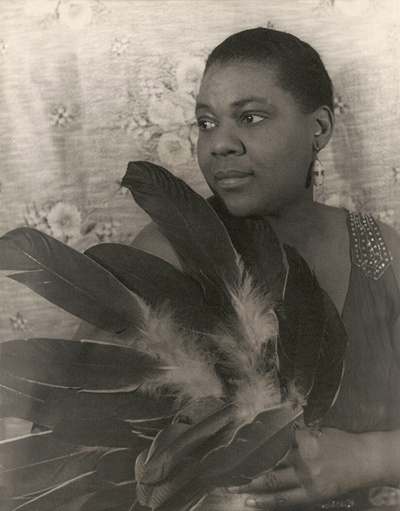
Well before her recording contract, Smith headlined her own show with a troupe of musicians and chorus girls. Now, the show became even more elaborate with 40 costumed dancers and Broadway-style backdrops. Smith herself wore massive headdresses and heavily sequined gowns, but audiences also appreciated her talent on stage as a storyteller, comedian, and actor.
An article in the February 16, 1924, issue of Music Trades reported that the size of her crowds seemed “to be limited only by the sitting and standing room of the houses in which she appears.” However, her sold-out performances weren’t the only reason she made headlines.
Smith drank heavily — something Prohibition hadn’t impacted because she only drank homemade alcohol (she claimed alcohol from labeled bottles made her sick) — and she was a “mean drunk,” according to Albertson. Hot tempered even when sober, she’d go toe-to-toe with anyone, man or woman, regardless of race. Those fights sometimes led to her arrest overnight or worse.
One example occurred in 1925, following a performance at the Liberty Theater in Chattanooga when Smith punched a man who insisted she dance with him. Furious, the man waited outside and stabbed her in the stomach as she left. Smith allegedly chased him three blocks with the knife still in her before collapsing. Scott says that while Smith did get stabbed, those promoting her tour embellished the stabbing to distract fans from the fact that she was drinking in a bar during Prohibition.
On the other hand, few dispute that Smith actually stood up to the Klan even though no one can pinpoint the exact date or the place it happened. According to accounts, one of her musicians stepped outside to cool off during a sweltering tent show and saw a half dozen Klansmen pulling up tent stakes. Rushing back inside, he met Smith as she came offstage. Not one to back down, she gathered a few men — who abandoned her as soon as they saw the hoods and robes — and confronted them.
Her niece, Ruby Walker, who had joined the troupe, told Albertson that Smith, hand on her hip, cried out to the Klansmen, “What the f**k you think you’re doin’? I’ll get the whole damn tent out here if I have to. You just pick up those sheets and run!”
They did.
Wife and Mother
Her personal life made matters worse. Smith met James Gee in 1922 and married him the following year. The two had little in common and fought often over Smith’s drinking and their mutual unfaithfulness.
Trying to save her marriage, Smith adopted the six-year-old son of one of her chorus girl’s relatives and named him James Gee, Jr. But rather than being flattered, Gee became angry because Smith moved three of her sisters to Philadelphia to help raise the boy. The martial problems intensified, as did Smith’s drinking.
Albertson writes that Gee, a teetotaler, would often show up unannounced, and if he caught her drinking or discovered her with another man (or woman), their argument would turn violent. Not surprisingly, Smith would go to great lengths to avoid discovery, once even throwing herself down a flight of stairs to substantiate her claim that she’d been in a car accident.
Smith had other concerns, too. As early as 1925, public interest in the blues began to wane. Although she still packed theaters, blues record sales steadily declined, and as they did, Columbia reduced her pay. Eventually, they ended her contract altogether in 1929.
Around this time, Smith tried first to expand her career into Broadway, but even though critics applauded her performance in the musical comedy, Pansy, the show failed. Then, in 1929, she starred in St. Louis Blues, a 17-minute film about a woman who catches her man cheating. It is her only onscreen performance.
Bessie Smith – St.Louis Blues (1929) (Uploaded to YouTube by vintage video clips)
In the midst of these rough times, one bright moment came when she reconnected with Chicago club owner Richard Morgan after parting with Gee. Morgan, a bootlegger who became her manager, provided Smith with a more stable relationship and financial support when she needed it.
Reinventing Herself
With the blues out, Smith tried to reinvent herself musically in the 1930s, experimenting with raunchy songs like Kitchen Man before seeking more mainstream material. In 1933, she recorded her last four records for Okeh Records. She finished the last recording, I’m Down in the Dumps, on a Friday; on that Monday, Billie Holiday laid her first track in the same studio.
Bessie Smith – My Kitchen Man (Uploaded to YouTube by novonine)
Over the next two years, Holiday’s career took off while Smith’s floundered. Then, in 1935, Holiday became ill and had to cancel a performance at Connie’s Inn. Smith replaced her, performing Tin Pan Alley songs set to a swing beat. The audience loved it.
Steadily, Smith began rebuilding her career based on a mix of these songs and the ones that made her famous. Although she hadn’t scored another recording contract yet, she had a full touring schedule again.
Early in the morning of October 4, 1937, while on tour, she convinced Morgan to drive her from Memphis to her next show in Darling, Tennessee. As he rounded a corner, he realized too late how slow the truck was moving in front of him. Morgan swerved and simultaneously hit his brakes, causing the Packard to flip on its side and skid along the road.
The impact shattered every bone in Smith’s right elbow and broke her ribs. Contrary to rumors that later circulated, she was never taken to a whites-only hospital and denied treatment; the ambulance drover her straight to the Clarksdale hospital for Black patients, and she died later that morning from internal injuries.
Her Legacy
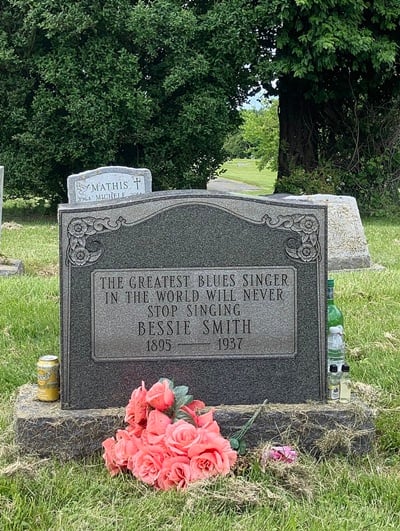
More than 7,000 people attended her funeral in Philadelphia, and then the world forgot her for several decades. Scott says timing played a big part in that. The next generation of singers had access to better audio equipment, so their records sounded better. They appeared in movies and went on USO tours. Not to mention, their careers ended 30 or 40 years after Smith’s did.
But Smith had a bit of a resurgence in the late 1960s and early 1970s when the rock world turned to early blues for inspiration. As a result, Columbia re-released her music and, upon learning that Smith was buried in an unmarked grave, tried to generate some good publicity by contacting one of their biggest recording stars and avid Smith fan to purchase a headstone. Janis Joplin was happy to contribute and joined one of Smith’s former employees in the purchase.
Since then, Smith was inducted into the Rock & Roll Hall of Fame in 1989 and appeared on a U.S. postage stamp in 1994. After several failed attempts, her story finally became a movie in 2015 when HBO made Bessie, starring Queen Latifah. Still, many people have never heard of her.
Trailer for Bessie (Uploaded to YouTube by HBO)
Scott says modern students in her Black music class have a hard time grasping how significant Smith is. Beyond inspiring female vocal powerhouses like Joplin, Holiday, Ella Fitzgerald, and Mahalia Jackson, she paved the way for Black recording artists, especially female artists. Smith wrote songs, she created elaborate shows, and she earned her own money at a time when few women did.
When Beyoncé puts on a show today, Scott tells her students, she is able to do so because Smith did it 100 years ago.
Become a Saturday Evening Post member and enjoy unlimited access. Subscribe now


Comments
Bessie Smith had never been forgotten. It was not a publicity stunt from Columbia Records to mark her unmarked grave. Janis Joplin, who was the most celebrated singer of her time, idolized Bessie Smith, spoke of her influence constantly, and was with Chris Albertson as he began working on issuing Bessie Smith’s complete recordings. She contributed to Bessie Smith’s tombstone out of respect and did not attend the ceremony, so as to not take away from the memorial to Bessie Smith.
Even though it’s been quite a few years since I kept up with it, as far as I know Chattanooga stills celebrate the Bessie Smith Strut in her memory downtown. Someone from there can please correct me if that isn’t still the case.