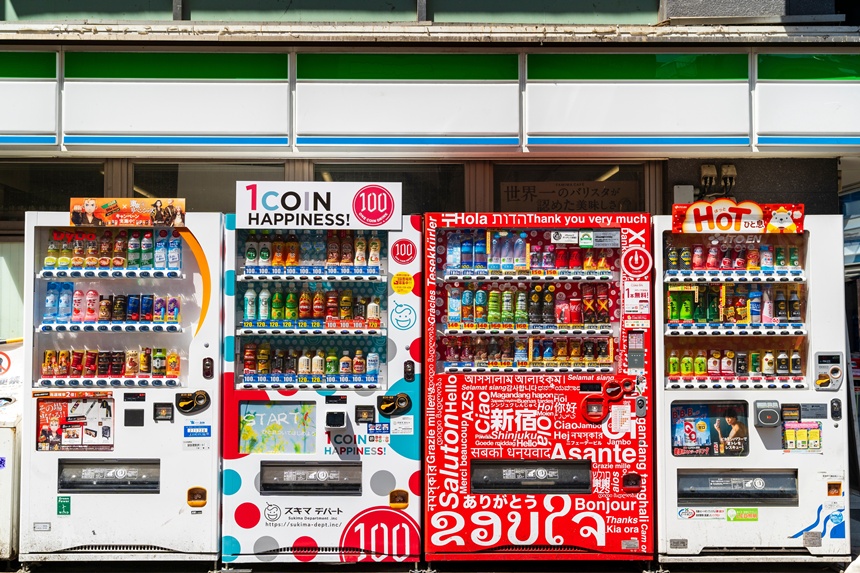
Today, vending machines are an ordinary sight in offices, hospitals, subway stations, and other high-traffic locations, offering everything from snacks and drinks to fresh meals with the tap of a card. But the idea of purchasing a product without interacting with a seller is far from modern.
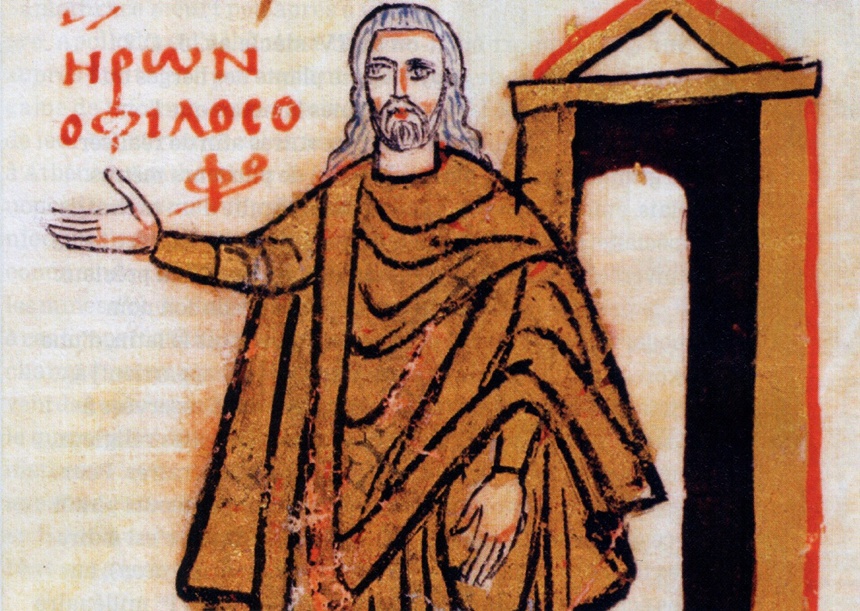
The first known automated dispensing device was designed in Roman Egypt — an imperial province that served as an economic powerhouse for the Roman Empire from 30 BCE to 642 CE — by a Greek engineer and mathematician named Hero of Alexandria. The automated device served as a tool to ration goods and prevent theft without requiring regulation by a temple attendant.
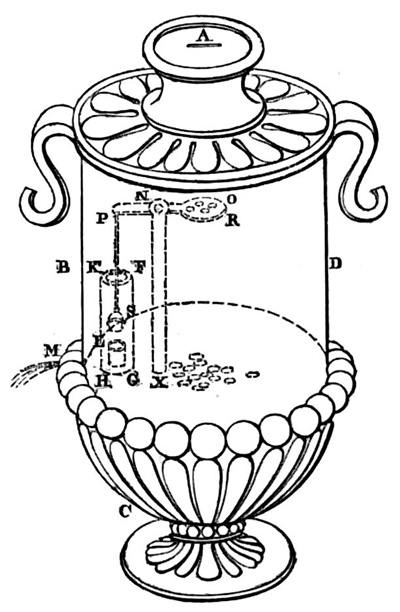
Heron’s coin-operated machine was intended to distribute holy water in Egyptian temples using a balance-and-lever mechanism. When someone dropped a coin into a slot at the top of the machine, it landed on a small metal plate attached to a lever. The weight of the coin pulled the lever down, which in turn pulled open a valve connected to a sealed water container and allowed water to flow from the spout. As the plate tilted from the weight and the coin slid off into a collection box, a counterweight snapped the lever back into place, closing the valve and stopping the water flow until the next coin was inserted.
Vending machine technology did not advance until centuries after his invention. Hero’s works, compiled in his book Pneumatica, were not widely reintroduced or translated in Europe until the Renaissance. Medieval Europe also relied heavily on barter, local markets, and feudal labor; therefore, there were not enough standard coins in circulation to make automated machines practical. It was not until 1615 England that vending machines began appearing in pubs and taverns to sell snuff and tobacco. However, the design was less complex than Hero’s. By inserting a coin, the box fully opened and customers were able to take out as much tobacco as they wanted without regulation. Another small-scale use of automated machines was in 1822, when a publisher named Richard Carlile used a newspaper-dispensing machine to circulate banned political texts to avoid face-to-face sales.
In 1883, English inventor Percival Everitt patented a commercial vending machine for postcards, envelopes, and stationery, which appeared in locations such as railway stations and post offices. Sweetmeat Automatic Delivery Company, formed in 1887, became the first business dedicated to installing and operating vending machines.
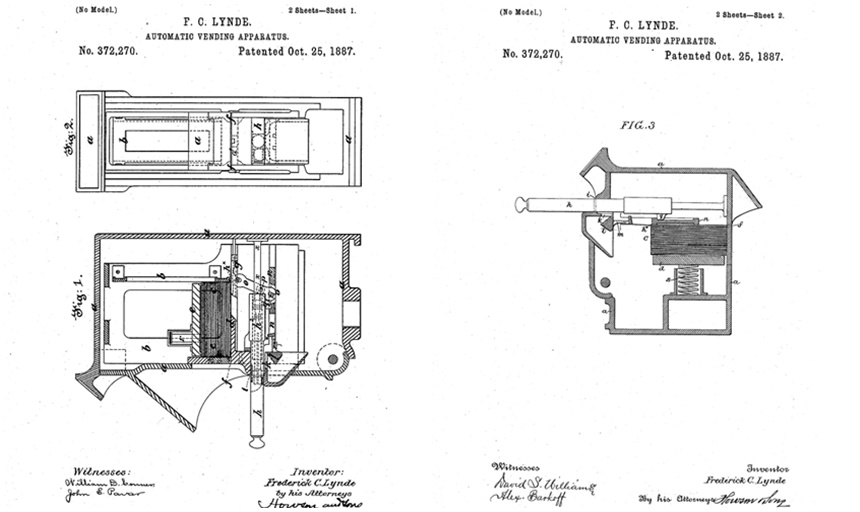
The invention came to the United States in 1886 when inventor Frederick C. Lynde patented a vending machine used to sell postcards. However, the first successful vending operation in America was started in 1888 by Thomas Adams. Through the Adams Gum Company, the inventor installed gum vending machines on New York City railway platforms.
Vending machines continued to grow more widespread through the 20th century. In 1926, the American inventor William Rowe invented the cigarette vending machine, which were popular until the 1980s, when health groups began pushing stricter laws regarding smoking restrictions for minors. Candy became another common product sold through vending machines due to its long shelf life and high profit margins. In 1907, the first gumball machine was introduced by the Pulver Manufacturing Company, gaining immediate commercial success.

Soda vending machines emerged as a new technology in the early 1900s, dispensing up to ten distinct flavors of the beverage. The drinks were poured into a glass or tin cup provided by the vendor. Due to health concerns, some vendors began placing buckets of water next to the machines for customers to rinse the cup before using it. When demand grew for bottled soft drinks, manufacturers experimented with methods to keep beverages cold and accessible in automated machines, eventually introducing the Glascock Brothers Coca-Cola vending machine in 1928. When Coca-Cola introduced 12-ounce cans to the market in the 1960s, vending machine manufacturers created dispensing mechanisms to accommodate smaller cans instead of glass bottles.
Vending then expanded from pre-packaged items to freshly prepared products. In 1946, Rudd-Melikian Inc. — an American manufacturing company founded by engineers K. Cyrus Melikian and Lloyd K. Rudd — built the first coffee vending machine. After two years, the company reported $2 million in earnings and an annual $100,000 investment in research for improving the quality of their invention.
Profile of Rudd-Melikian, Inc., a Philadelphia business that manufactured coffee vending machines (Uploaded to YouTube by Hagley Museum and Library)
By the 1950s vending machines had the reliable internal cooling system necessary to sell items that required refrigeration, including fresh dairy, sandwiches, and frozen meals.
In the early 20th century, vending machines primarily accepted coins. Therefore, products had to be inexpensive enough to be purchased with limited change. Throughout the 1960s and 1970s, electronics companies introduced optical and magnetic bill-scanning technology that allowed machines to accept paper currency. Accepting dollar bills allowed machines to sell more expensive products such as groceries and tickets.
In 1985, vending machines began accepting credit cards due to advancements in telemetry. The technology allowed customers to purchase more products conveniently and reduced the problem of faulty machines taking money but not dispensing the product. In 2024, 71 percent of all vending machine transactions in the U.S. were cashless, with cashless customers spending 37 percent more per transaction compared to cash users. Over time, touchscreens, wireless communication between machines and cell phones, and facial recognition software have been incorporated into vending machines to make payment without cash or credit cards a possibility.
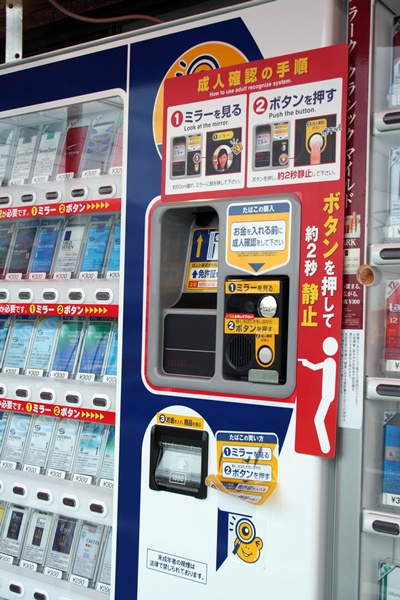
Today, vending machines dispense more than soda and candy, offering luxury foods, fresh groceries, and other unexpected items. The Beverly Hills Caviar Automated Boutique has vending machines that sell caviar throughout the Los Angeles area. Japan loves its vending machines, where you can buy everything from edible insects to custom phone cases. In 2025, a non-profit in New York City called Change Food established a free vending machine that provides fresh produce, eggs, and other grocery items to those in need.
In 2024, the U.S. retail vending machine market size was estimated at $21.9 billion and is projected to reach $30.27 billion. From their ancient beginnings as holy-water dispensers to today’s machines offering everything from snacks to frozen meals, vending machines have evolved into a convenient part of everyday American life.
Become a Saturday Evening Post member and enjoy unlimited access. Subscribe now


.jpg)

Comments
Definitely a fascinating report on what I honestly thought was a post-Civil War, industrial revolution invention, going back (only) to the late 1800’s. The earliest versions go back centuries with technological refinements improving as time went on. The fact the concept goes so far back shows the need for them obviously did as well.
Even in 30 BCE to 642 CE, customer service was dying.