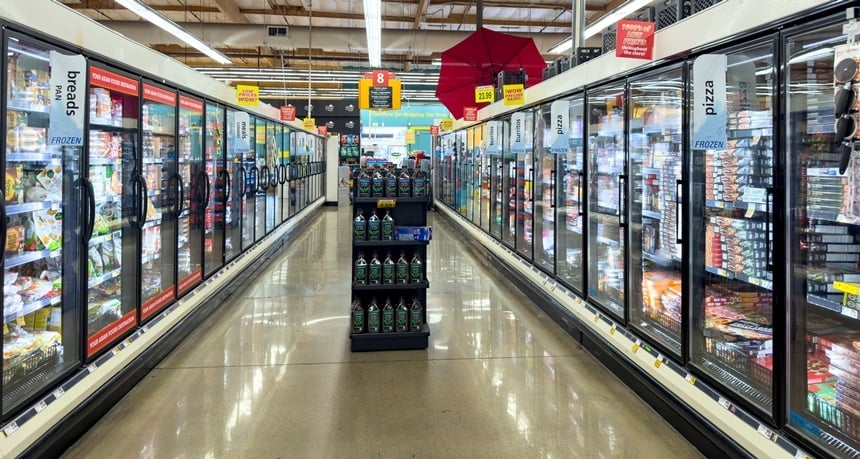
When walking through the frozen food aisle of almost any American grocery store, you’ll find hundreds of options lining the freezer cases — bags of vegetables and fruit, pizzas, seafood, ice cream, complete meals, international dishes, and desserts. What was once a small section devoted to a handful of frozen vegetables has become one of the largest and most diverse departments in the supermarket.
The frozen foods that millions of Americans rely on today are the result of centuries of experimentation in food preservation, decades of technological innovation, and one inventor’s observation of how Arctic fishermen froze their catch in the frigid Canadian wilderness.
Freezing as a method of food preservation goes back thousands of years. During the Zhou Dynasty in ancient China, natural ice was harvested in winter and stored in underground ice cellars to preserve food. In 400 BC, Persians developed an evaporative cooler structure called Yakhchāl — Persian for “ice pit” — where they stored food during hot summers.

Interest in freezing food began to grow in Europe in the 18th century, leading to more advancements. In 1750, Scottish professor William Cullen developed the first artificial refrigeration concept by using a pump to create a partial vacuum over a container of diethyl ether, which boiled rapidly and absorbed enough heat from its surroundings to freeze water into ice. While his invention did not become a commercial device, it still laid the foundation for other inventors in the future. American inventor Oliver Evans designed the first closed vapor-compression refrigeration system in 1805. Even Benjamin Franklin was experimenting with methods of evaporating liquids for refrigeration.
In 1861, Enoch Piper was the first to patent a method of freezing whole fish using a salt-and-ice mixture, but his technique lacked the speed and widespread scalability. While slow freezing remained common up until the early 1900s, the method created large ice crystals that melted when food was defrosted, negatively impacting the food’s flavor and texture.
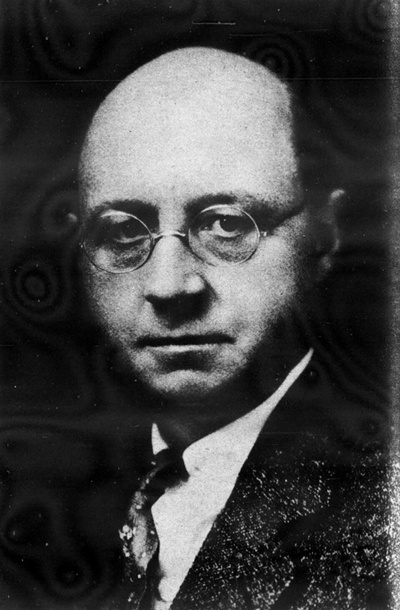
It wasn’t until 1924 that American inventor and entrepreneur Clarence Birdseye developed the frozen foods we know today. While working as a naturalist in Northern Canada in the 1910s, Birdseye observed Inuit fishermen and discovered that freshly-caught fish froze instantly when pulled out of water in sub-zero Arctic air. Unlike mushy slow-frozen foods, the rapidly frozen fish tasted fresh after being thawed and cooked months later.
In 1920, Birdseye began experimenting with quick-freezing food and developed two distinct methods. In the first technique, the package was held between two metal belts chilled with a calcium chloride solution. The second technique was to hold packaged food under pressure between two hollow metal plates cooled by the evaporation of ammonia. With this method, meat could be frozen in about 90 minutes, while fruits and vegetables took about 30 minutes. He also packed food in uniform, waxed cardboard cartons in order to achieve even freezing throughout.
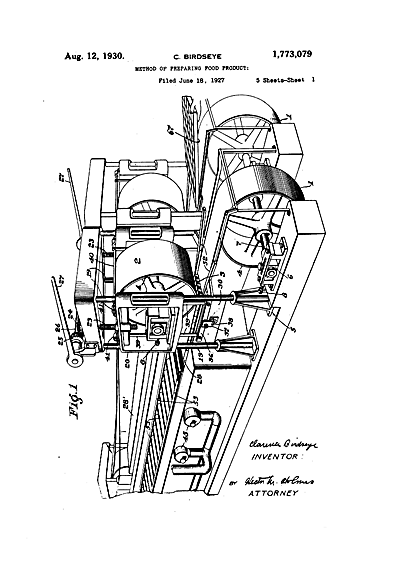
Birdseye Seafoods, Inc. was founded in 1922 to process and sell chilled fish fillets. In 1924, the company expanded and reorganized into the General Seafood Corporation. Shortly after receiving a patent for his invention in 1930, Birdseye began introducing quick-frozen foods to consumers.
Even though the technology was effective, frozen foods were far from becoming staples in the American diet. Some consumers remained skeptical due to the problems with old slow-freezing methods, such as the poor quality and occasional bacterial contamination. One way Birdseye solved this issue was through blanching, which involved briefly scalding vegetables in boiling water or steam followed by a rapid ice-water bath to lock in color, flavor, and nutrients by stopping enzyme activity.
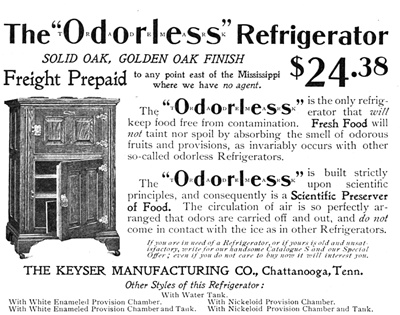
Another setback was the lack of proper storage in American homes. While the first electric refrigerator for home use was invented in 1913, most families still relied on iceboxes not suited for preserving frozen foods. During the late ’30s, however, lower prices and safer cooling gases led to a jump in the number of households with refrigerators from 8 percent to 44 percent. By the end of the 1930s, 150 million pounds of frozen Birdseye foods were sold annually.
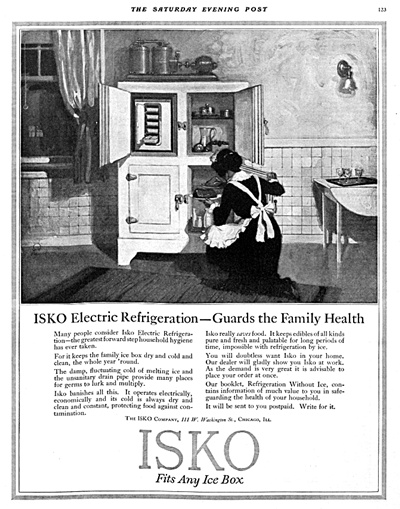
Retailers also had trouble displaying frozen products because freezer cases were costly. To improve store infrastructure for quick-frozen foods, General Foods introduced low-cost, self-contained retail freezer cabinets. Invented by Birdseye himself, these display units allowed grocery retailers to safely store and showcase quick-frozen foods to consumers. In 1944, Birdseye also began leasing refrigerated boxcars in order to distribute frozen food on a wider scale.
During World War II, several factors contributed to the growing popularity of frozen foods. The U.S. government redirected tin toward military munitions, creating a shortage of canned goods, while frozen foods required fewer ration points than canned alternatives, making them more accessible to families. At the same time, as millions of men fought overseas and women entered industrial and civic jobs outside the home, the demand for quick and convenient meal preparation increased dramatically.
In 1944, “Strato-Plates” — meals that were reheated on planes — was manufactured by Maxson Food Systems, Inc., often containing meat, vegetables, and potatoes in separate compartments of a plastic plate. Five years later, Albert and Meyer Bernstein organized Frozen Dinners, Inc. in 1949, selling over 2 million meals by 1954. One company, however, helped turn frozen meals into an integral part of the American diet.
When the food brand C.A. Swanson & Sons was left with over 520,000 pounds of leftover Thanksgiving turkey in 1953, they began brainstorming for solutions. Inspired by pre-prepared food served on airplanes, Swanson salesman Gerry Thomas came up with a product that revolutionized the frozen meal industry. The company bought 5,000 aluminum trays and created the first TV dinner — sliced turkey with cornbread dressing and gravy, peas, and sweet potatoes priced at 98 cents. To promote this new product, Swanson launched magazine and newspaper advertising campaigns emphasizing the convenience of frozen meals. As a result, TV dinners became an instant success, selling more than 10 million units in 1954.
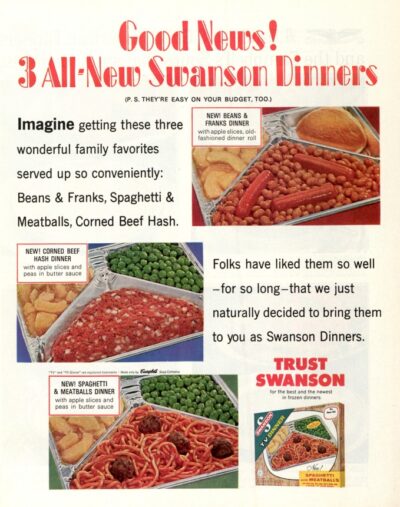
The rise of ready-to-heat meals also led to broader changes in how American families ate. Without the extensive labor involved in meal preparation, it became possible for individuals in the same household to eat different meals on the same day. It also turned mealtime — a structured ritual that served as the main anchor for reuniting the household — into a more flexible and individualized part of the day. The rapid spread of television during the 1950s also changed dining habits, as many families began eating in front of the TV and not at dinner tables.
By the 1960s and ’70s, frozen foods had become a permanent fixture in American kitchens. Manufacturers rapidly expanded their offerings, introducing products such as frozen pizzas, French fries, fish sticks, onion rings, casseroles, and a range of desserts. Companies also introduced healthier options like Weight Watchers frozen meals. As international cuisines grew in popularity, brands expanded into frozen Chinese dishes, stir-fry vegetable blends, rice dishes, and other globally inspired meals.
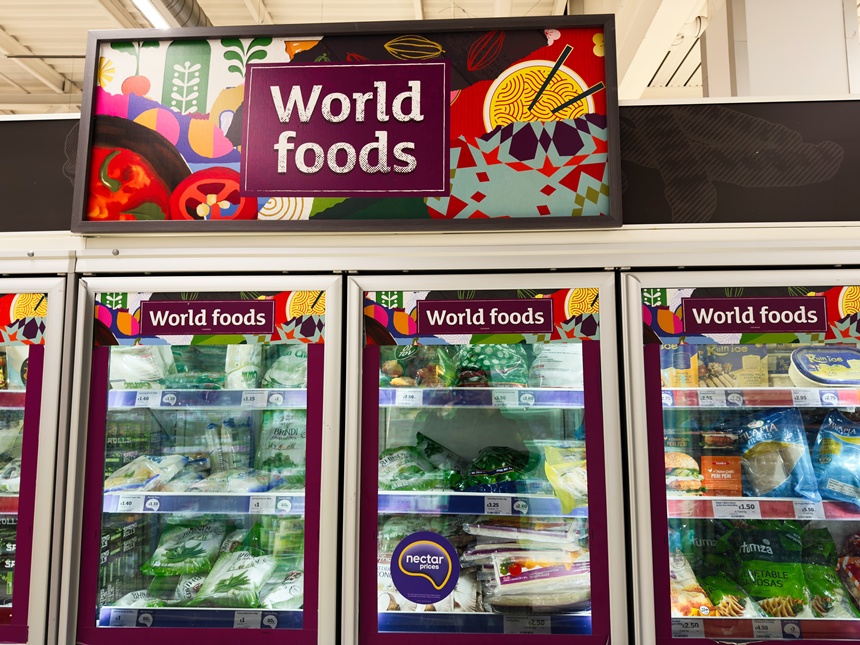
Today, over 40 percent of shoppers use frozen food products every few days or daily. Not only do these meal options help save time and money, but they are also one way families reduce their food waste because they have a longer shelf-life and are easier to portion. What began as a practical solution to keeping food fresh has become an indispensable part of everyday life, making nutritious, convenient, and diverse foods available to millions of American households.
Become a Saturday Evening Post member and enjoy unlimited access. Subscribe now



Comments
Fascinating article on the history of frozen foods. It was well researched presented a chronological look at how frozen foods have evolved. This high school student really has a flair for writing.