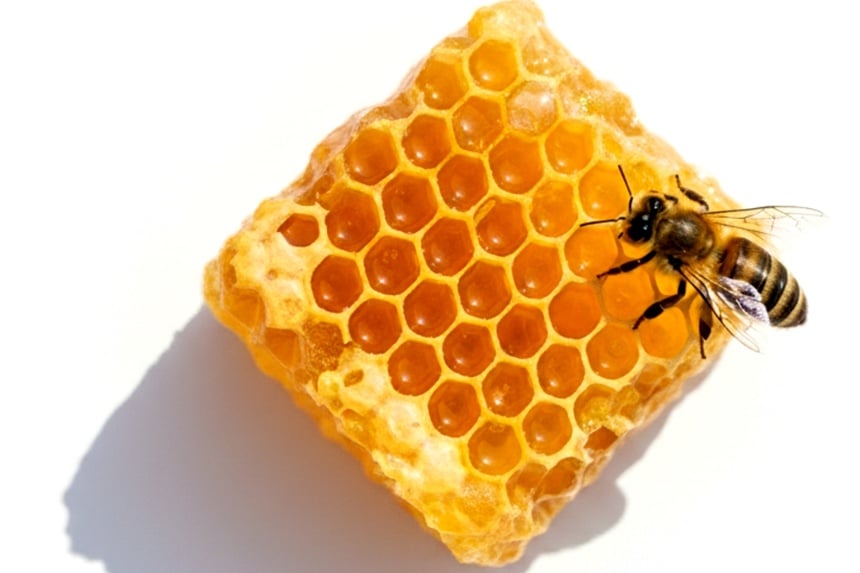
“I tell people the beauty you see in nature is the beauty you taste in honey. Think for a moment about seasons in our life.”
– Joel Klose, Beekeeper
Growing up, I preferred honey in my tea. This stuck with me into college, where I roomed with someone who was studying food science. This is where I learned the real power of this everyday pantry item: its historic significance, health benefits, and environmental importance. My conversations with Katy at the kitchen table opened a door (or in her case, a beaded curtain) to the importance of this little insect good.
It was over 10,000 years ago that humans observed wild bees and decided to try the hive’s sweet golden liquid. This sweetness surpassed that of fruit, the closest thing to confection at the time; honey became an important element in both cuisine and medicine. We see evidence of this in cave paintings spanning from Spain to Egypt.
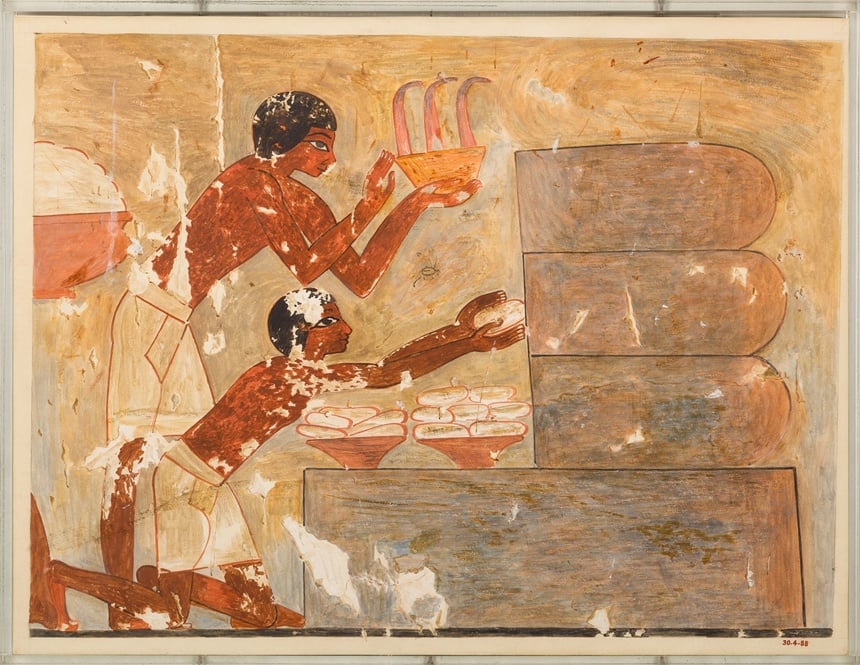
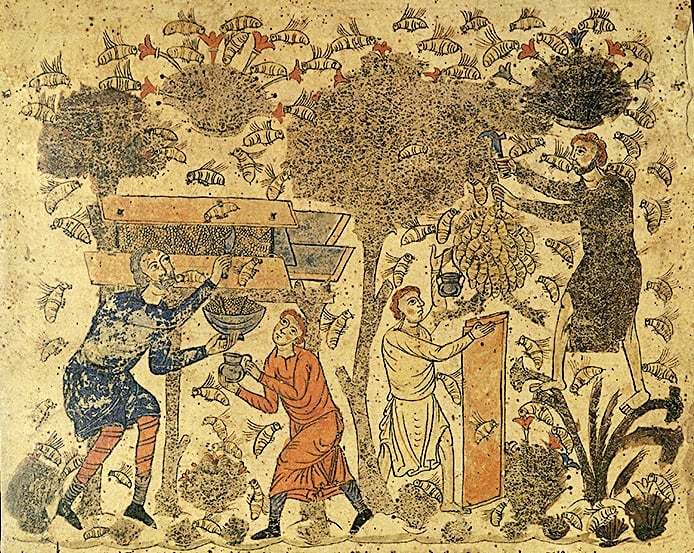
The University of Guelph in Canada, where the Honey Bee Research Centre lives, tells us a bit more. People began by keeping bees in hollow logs, clay pots, and straw baskets across Europe, Asia, and Africa.
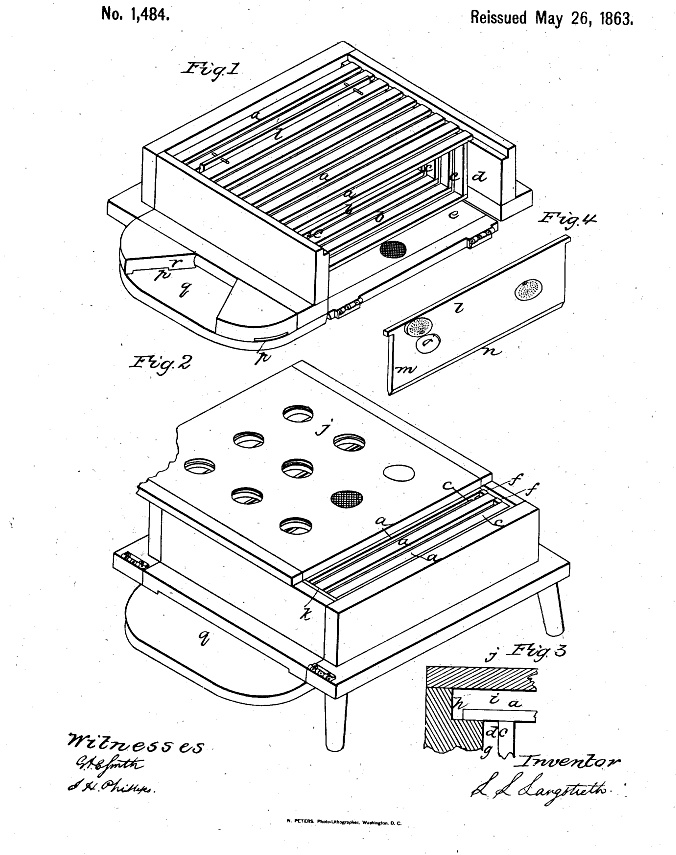
Honey bee husbandry continued to advance throughout the 1500s to the 1800s, but it wasn’t until 1852 that the removable frame hive was created by Lorenzo L. Langstroth. He then patented his version in the US. This innovation then allowed beekeepers to work more easily with their bees and eliminated the need to damage the hive to harvest honey or inspect the colony itself. Langstroth is now known as the “father of modern beekeeping.”
Our ancestors didn’t just use this golden magic as a sweetener, but also as a healer. According to History,com, honey was applied to wounds, as its natural antibacterial qualities help prevent infection, while its viscosity would protect the wound and promote healing. Sumerian medical texts mention honey in treatments for eye infections and ear conditions, sometimes combined with other ingredients like milk or plant extracts and taken orally for stomach issues and as a general tonic. The National Library of Medicine reports that honey has been shown to inhibit around 60 species of bacteria, as well as some fungi and viruses. Its antioxidants, which come from compounds such as phenolics, peptides, organic acids, and enzymes, may also help in a variety of diseases. Honey has been used to treat gastrointestinal, cardiovascular, inflammatory, and even some cancer-related conditions. In other words, honey’s healing properties still have a place in medicine today.
Not only is honey a medical marvel, its taste makes it an essential part of our meals, from everyday dining to fancier occasions. Honey is considered one of the founding foods of the Americas, though the kind of bee and honey changed over time due to the introduction of different species to different regions and countries. Today we can see honey take on various recipes beyond just a simple sweetener. Honey has recently been gaining popularity in the form of hot honey, a new favorite I share with my foodie friends by the slice of pizza in the East Village. This love of honey has made many start to recognize the impact these insect creators have on other parts of our lives besides consumption; bees are critical to a healthy environment too.
Documentaries like Netflix’s The Vanishing of the Bees and the National Geographic show The Secret Life of Bees helped grow interest in the lives and plight of bees. As many know, when animals and insects pick up pollen from plants like flowers and spread it, they help plants, including many of the crops we rely on for food, reproduce. While many living things pollinate, insects, particularly bees, are among the most important pollinators. Yet human activity is disrupting this essential process through habitat destruction, intensive farming, and, most notably, air pollution. Research from Penn State University shows that air pollutants can interact with the scent molecules released by plants that bees rely on to locate food. These altered scents can send bees mixed signals, disrupting the bees’ ability to forage and, in turn, making pollination more difficult.
Protecting Pollinators – Air pollution’s effect on bees (Uploaded to YouTube by UN Environment Programme)
For beekeepers, this conversation is hardly new. At my neighborhood farmers’ market, Joel Klose, proprietor of Finger Lakes Beekeeping, puts the ongoing crisis into perspective: “In the early 2000s we had a combination of imported parasites and disease that came into the country that caused what scientists have dubbed CCD [Colony Collapse Disorder]. We all experience the annual loss of millions of bees, our beloved partners, and work to rebuild the next year. The attitude that everything on this good green earth is not a miracle but a commodity to be bought and sold to the highest bidder.”
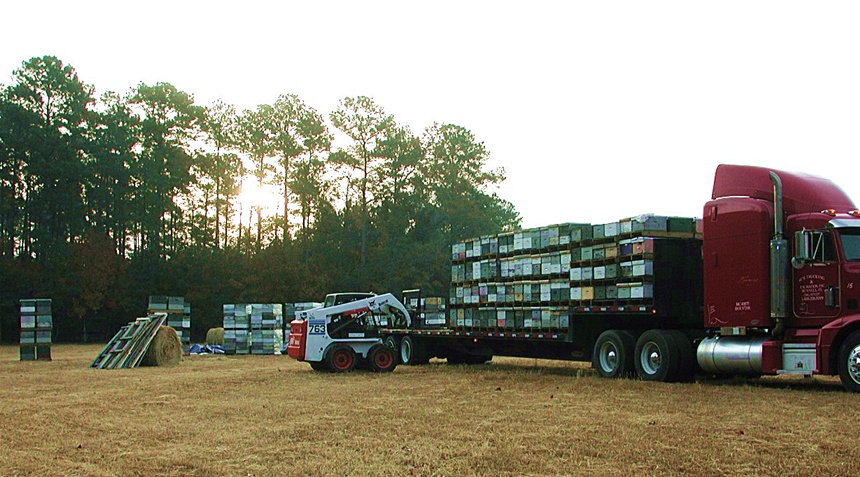
And the threats continue to evolve: “[In] the past couple of years, the onset of Canadian wildfire smoke has greatly impacted hives, as when bees are exposed to smoke, they instinctively gorge on honey in preparation to flee a hive,” Klose says. Needless to say, this isn’t just about the bees.
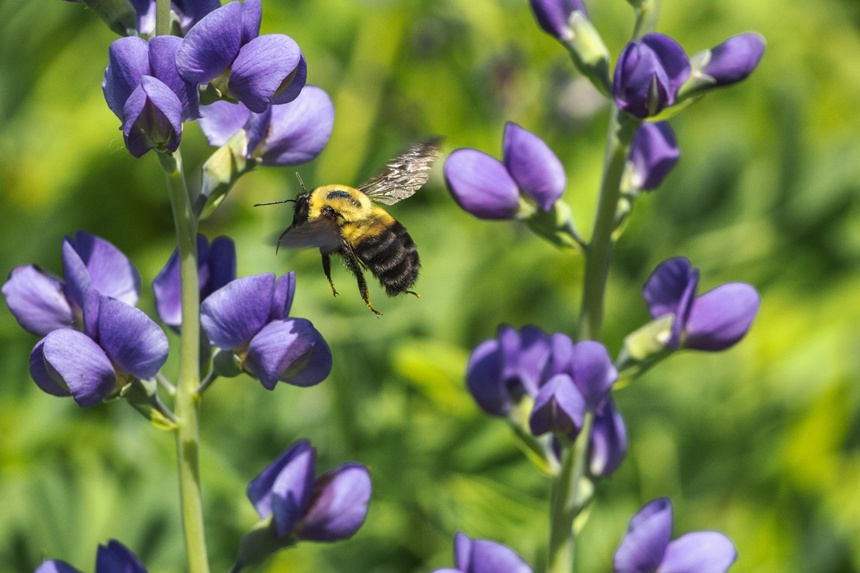
There are thousands of native bee species in America, along with many other pollinating insects including butterflies, moths, and beetles; many fruit, vegetable, and wildflower species depend on their pollination. According to USDA, pollination contributes more than $18 billion in value to U.S. crop production, while honey bees are the primary pollinator for more than 100 assorted crops. A drop in pollination could drastically impact our own food industry, and we are already seeing the effects of losing this natural process. In a recent 2025 report, more than 60 percent of commercial beekeeping colonies had been lost since the previous summer; that’s about 1.7 million colonies. Initiatives like Bring Back the Pollinators are helping to counteract the effect; but of course, that takes time. Some are choosing to do their party by creating their own personal pollination garden.
Twenty years after my college roommate and I drank our honeyed tea, far away from the little campus apartment on Vine St., I start my mornings with a yogurt bowl filled with fruit and topped with a hefty serving of local honey. I keep thinking about something Klose said:
People don’t realize how tolerant and gentle these creatures are and how dedicated they are to each other and their next generations. Their ability to do and clearly feel so many things is incredible when you consider the size of their brain. Something greater than what we understand is happening here, some magic of the universe we see and feel when we hear the sound of wind in the pines, water in the stream, and their gentle harmonic hum when we open a hive. The aroma and sound coming from a hive is a dreamy experience that never fades.”
So much to think about in such a little kitchen container.
Become a Saturday Evening Post member and enjoy unlimited access. Subscribe now




Comments
(I was once given a gift of honey collected from the Black Forest by a deckhand on a Russian ship. His grandfather was still collecting it, from early childhood. That was 25 years ago.)
I started using honey back when I lived on a commune in 1969-70. To this day I use local honey, after reading all the material I could find about the benefits of honey. I love supporting our local growers here in the Finger Lakes.
In the article it mentions hollow logs where honey would be kept. I remember my Granddaddy and I finding a downed log in the woods behind my house and he & I (more so he) used a hand held smoker to keep the bees away so we could rob the honey. I would not trade anything for that experience. Oh, and the honey was great. It truly is one of the best sweeteners and foods one can consume.
I have a friend who has a son which is a beekeeper. He tells me honey from different parts of the country have differences. I’ll take my Alabama, Georgia, North Carolina, or Tennessee Honey any day.