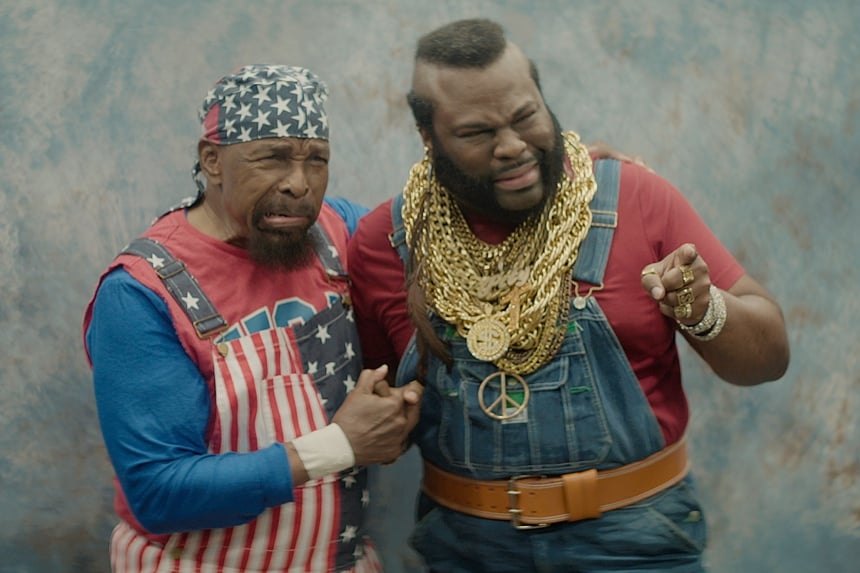
Mr. T: I Pity the Fool
⭐️ ⭐️ ⭐️ ⭐️
TV Rating: TV-MA
Director: Scott Weintrob
Streaming on Netflix
There’s no need to formally introduce you to Laurence Tureaud, because I guarantee that you already know him. Tureaud was, without dispute, among the most readily identifiable faces of the late 20th century. His name was iconic. His words were plastered on billboards from coast to coast. More kids pretended to be Laurence Tureaud than astronauts.
And because you’ve no doubt already read the headline to this review, I’ll not belabor it: Laurence Tureaud, born and raised in the projects of Chicago, former nightclub bouncer and bodyguard, became known to the world as the one and only Mr. T.
This breezily efficient documentary, featuring interviews with present-day Mr. T himself (Never just “T” – the “Mr.” remains mandatory) and offering a wealth of vintage clips, traces what remains among the unlikeliest rags-to-riches stories of our time.
As director Scott Weintrob races through Mr. T’s childhood in the Chicago projects, most striking is how, well, normal young Laurence appears in his high school sports photos. To provide for his mother (and to get out of the projects), he takes work as a bouncer, where his physical agility and imposing presence land him spots on two TV competitions: America’s Toughest Bouncer and The Games People Play.
Among the millions getting their first taste of Mr. T on TV was Sylvester Stallone, at that moment writing the script for Rocky III. And presto: Mr. T is in Hollywood, costarring with America’s biggest star in the year’s most anticipated movie. (It was Stallone who first penned the line, “I pity the fool,” which would become Mr. T’s eternal catchphrase.)
From there, the film recounts Mr. T’s ascendancy at breakneck pace, often cleverly using clips from the Saturday morning Mister T cartoon series to illustrate anecdotes. In a particularly striking Late Night with David Letterman interview, Mr. T patiently explains the significance of his iconography: Having experienced the effects of racism, he changed his name so that the first thing anyone ever said in addressing him was “Mr.” His distinctive haircut was not a mohawk, as many assumed, but a nod to Mandinka warriors of Africa, whom he had first seen in an issue of National Geographic magazine. And his flamboyant use of gold chains was not a boastful display of wealth so much as a direct comment on the iron chains his ancestors were forced to wear.
For all its rollercoaster narrative (and the film admittedly leaves out a good deal of the star’s story), Mr. T: I Pity the Fool seems most intent on introducing us to Mr. T today, active in his Christian church, interacting with friends in his neighborhood, and attending Fan Fests, where generations of enthusiasts, some wiping tears from their eyes, seem overwhelmed to be in the presence of one of the most indelible characters American popular culture ever produced.
There is, today, in septuagenarian Mr. T a humility the younger version might have considered unseemly. Career turns and cancer have a way of doing that to you. But at 74, the man has lost not a bit of the intensity that put him head-to-head with Stallone and carried him through multiple seasons of The A-Team. (There’s a fun visit from his old TV costar Dirk “Face” Benedict, with whom Mr. T shares laughing recollections of the series’ supposed headliner, George Peppard, who was famously furious about Mr. T’s white-hot popularity.)
There are reports that Mr. T is less than happy with this telling of his story; largely due to the inclusion of a former agent and the implication that his career suffered due to a series of poor decisions. In an era when celebs shamelessly produce their own biographical documentaries and dictate the narratives (Sly Stallone among them), it’s refreshing to know director Weintrob stuck to his guns even with his subject’s disapproval.
On the other hand, even now, I’m not sure I’d want Mr. T mad at me.
Become a Saturday Evening Post member and enjoy unlimited access. Subscribe now



Comments
I don’t think it’s very cool that Weintrob disrespected Mr T’s wishes when producing this film. The one thing I know to be factual is George Peppard thought he was due popularity since he was a veteran start when the A Team was in production. He was jealous of Mr T’s popularity especially when he wrestled at Wrestlemania III.