Senior managing editor and logophile Andy Hollandbeck reveals the sometimes surprising roots of common English words and phrases. Remember: Etymology tells us where a word comes from, but not what it means today.
All along the Mediterranean coast grows a pleasant-smelling plant that for centuries has found its way into both perfumes and cooking. Its proximity to the sea is perhaps why it came to be called, in Latin, ros marinus, literally “dew of the sea.” This became, in Anglo-French, rosmarine; then, during the Middle English period, folk etymology took hold of it.
Folk etymology is a process by which speakers alter a word they do not entirely understand so that it resembles words or word parts that they do understand. An uncommon word gets re-created from common words. Technical and scientific jargon sometimes gets altered in this way, but often it’s foreign words that are transformed. Folk etymology is how the Spanish cucaracha became cockroach, how the Cree otchek became woodchuck, and how the Anglo-French creveis became crayfish.
So it was with rosmarine: In this foreign word, English speakers heard rose and Mary, so that’s what they called it. By the end of the 14th century, English speakers had begun calling the plant rose-marie or, to use the more modern spelling, rosemary.
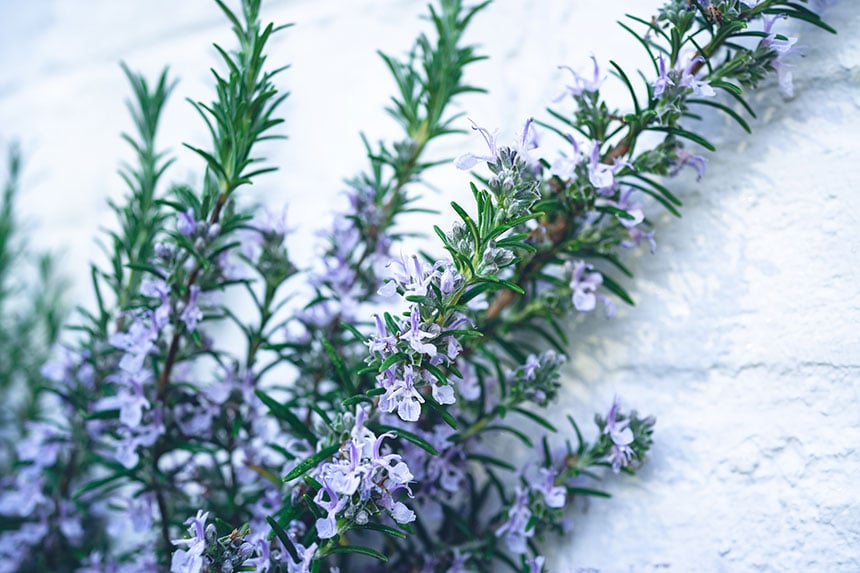
The transformation was probably helped along by the plant’s lore in the Catholic Church (the land of rosaries, it’s worth noting) and its connection to the Virgin Mary. First, Mary was already sometimes referred to as the “Mystical Rose,” so a connection between rose and Mary was already there. Second, there is a story that, while fleeing Egypt, Mary once laid her damp cloak across a rosemary bush to dry, thus granting the herb a sacredness. In one version of the story, the plant’s flowers even absorbed the color of Mary’s cloak, and that’s why rosemary flowers are bluish-purple.
Rosemary has long been associated with memory, and recent studies are actually beginning to support the idea; researchers are finding a beneficial connection between rosemary and cognitive health and memory, though the results are far from conclusive. In ancient times, mourners wore rosemary and the deceased were buried with it in the hopes that it would help the living remember the dead. (Its pleasant scent probably also helped mask the odor of decay.)
Become a Saturday Evening Post member and enjoy unlimited access. Subscribe now



Comments
Thanks for this look at the beautiful scented and named, rosemary. It’s interesting how it came from the word ‘rosmarine’. I can see how the ‘n’ got overlooked, or rather, under heard. It probably happens more frequently than we realize. Santa Barbara and Santa Clarita (for examples) are pronounced ‘Sanna Barbara’ and ‘Sanna Clarita’ all the time, deleting the ‘t’.