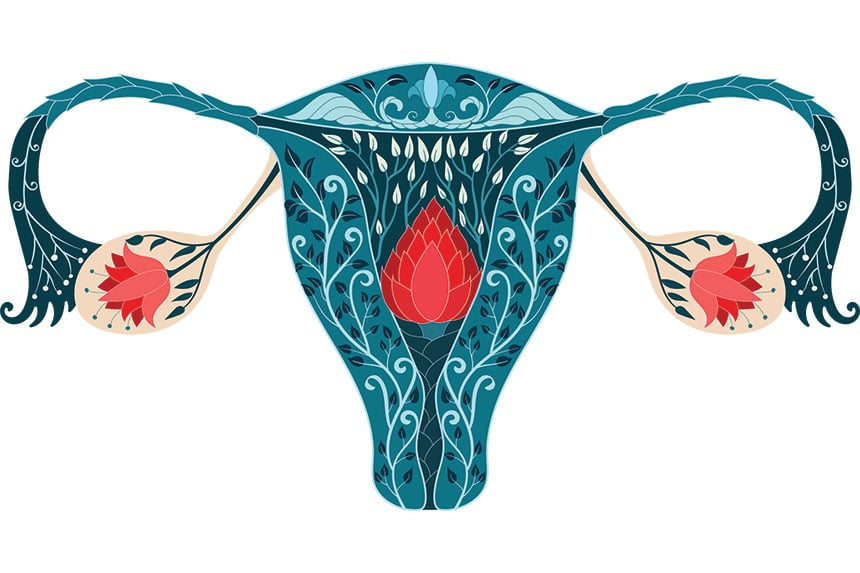
Hysteria, broadly speaking, is a psychological state in which a person or group of people act irregularly or uncontrollably from a sense of overwhelming emotion — often fear. Hysteria finds, at its base, the Greek hystera “womb, uterus” — the very thing that is removed during hysterectomy. Why the uterus?
Ancient Greek physicians (a bunch of men) believed that the uterus could physically detach itself inside a woman’s body and go wandering around, crashing into other organs and causing all sort of problems, like fainting, over-excitement, and irrational behaviors of all sorts. Some of these physicians noticed that it was more prevalent among widows, which gave them an idea of what caused it: The womb went wandering from a lack of male seed. In some cases, sex was prescribed as a cure.
The second-century A.D. physician Galen understood that the wandering womb hypothesis was poppycock. He even recognized a type of hysteria in men, though he, too, thought it was caused by lack of sex. (Where does one fill that prescription anyway?)
These physicians all believed that hysteria was a physical ailment, not a psychological one, and that it was linked to a bit of anatomy unique to women. Greek ideas of biology influenced medicine throughout Europe for centuries (like, for example, the balancing of the body’s humors), so the link between uncontrollable women and their wombs persisted for centuries.
The words hysteric, hysterics, and hysterical arrived in the English language in or by the 17th century; hysteria as a medical diagnosis didn’t arrive until the 18th century, and by then it had become a dumping ground for all sorts of behaviors by women that male doctors couldn’t otherwise diagnose. Mood swings? Hysteria. Unexplained insomnia or headaches? Hysteria. Lack of sexual desire, or too much sexual desire? Hysteria. Jess Zafarris at Useless Etymology notes that the mid-19th-century neurologist George Miller Beard published a 75-page list of possible symptoms of hysteria … and claimed it was still incomplete.
Progress in gynecology, neurology, and psychology and increasing numbers of women entering the sciences narrowed the scope of hysteria somewhat during the 19th century; by the start of the 20th century, hysteria was almost exclusively diagnosed as — no surprise here — a sexual dysfunction.
A growing understanding of human biology and psychology continually narrowed the scope of hysteria in the 20th century until in 1980, it was removed from the Diagnostic and Statistical Manual of Mental Disorders (DSM). That means doctors no longer diagnose a disorder as hysteria; it has been replaced by dozens of more focused and better-understood conditions, such as PTSD, depression, and sex addiction.
But the word lives on outside of the medical profession, to refer to large-scale social disruptions — so-called mass hysteria — and uncontrollable laughter (once a symptom of hysteria).
And there are still those who use the word as a catch-all term for the behaviors of women that they cannot understand or control.
Become a Saturday Evening Post member and enjoy unlimited access. Subscribe now