It’s not particularly difficult to talk me into an adventure. Tell me there is a trail down into a canyon, and my first thought is probably going to be, “Hell, why not?” This is not always the best instinct. I have enough experience to know curiosity and good judgment don’t always go hand in hand.
So I stopped when I saw this photograph.
Two young women in Harvey Girl uniforms are grinning from atop enormous slabs of rock at the Grand Canyon. One is perched across the gap with her legs stretched out in front of her, her dark skirt spread over the stone; the other stands just behind her, looking toward the camera. They are dressed for a dining room, not a climbing adventure, and the whole thing has the unmistakable feel of two young women who have found something fun to do when they aren’t working. Maybe even something they weren’t supposed to be doing. It’s a picture that makes you want more information, to know these women, and to be privy to the rest of the story.
The photograph dates to 1915. The Arizona Memory Project calls it a “prank image,” which somehow makes it even better.
The image stayed with me as I went about my day in the Grand Canyon. As I hiked, my mind kept going back to the women in the picture. Who were they and what had their lives been like more than 100 years ago, in this place that’s probably changed comparatively little from the rest of the world? Old photographs are kind of a cool mystery like that. You see a slice of someone’s life, like a little moment suspended in time.
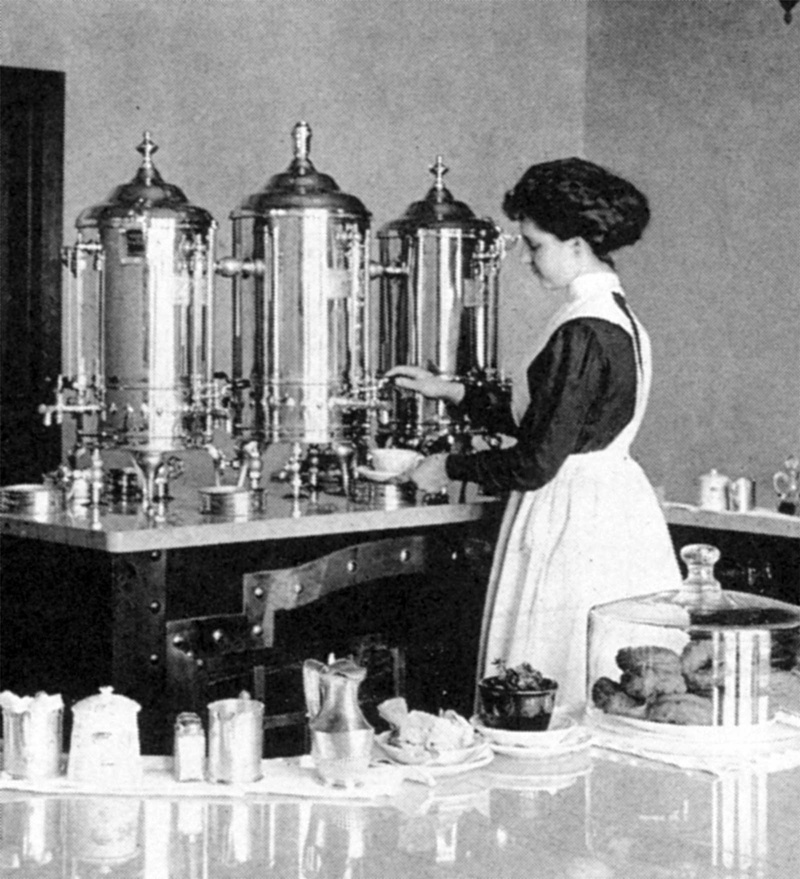
It also made me think about how easily women disappear behind the image we have made of the Harvey Girls. We know the uniforms, the rules, and the carefully curated wholesome notion of young women who went west to work as waitresses in Fred Harvey’s restaurants. But real women stood behind the uniforms and the images. They had their own reasons for leaving home, their own thoughts about what came next and, apparently, their own ideas about what to do with an afternoon at the Grand Canyon.
Women have always been adventurous. What was different back then was what it meant for a young woman to leave home, travel across the West, and make a life somewhere else. The Harvey Girls weren’t unusual for wanting to see what lay beyond the lives they came from. They were unusual because they had found one way a young woman could legitimately and respectably go looking for it.
The Harvey Girl Was a Carefully Constructed Image
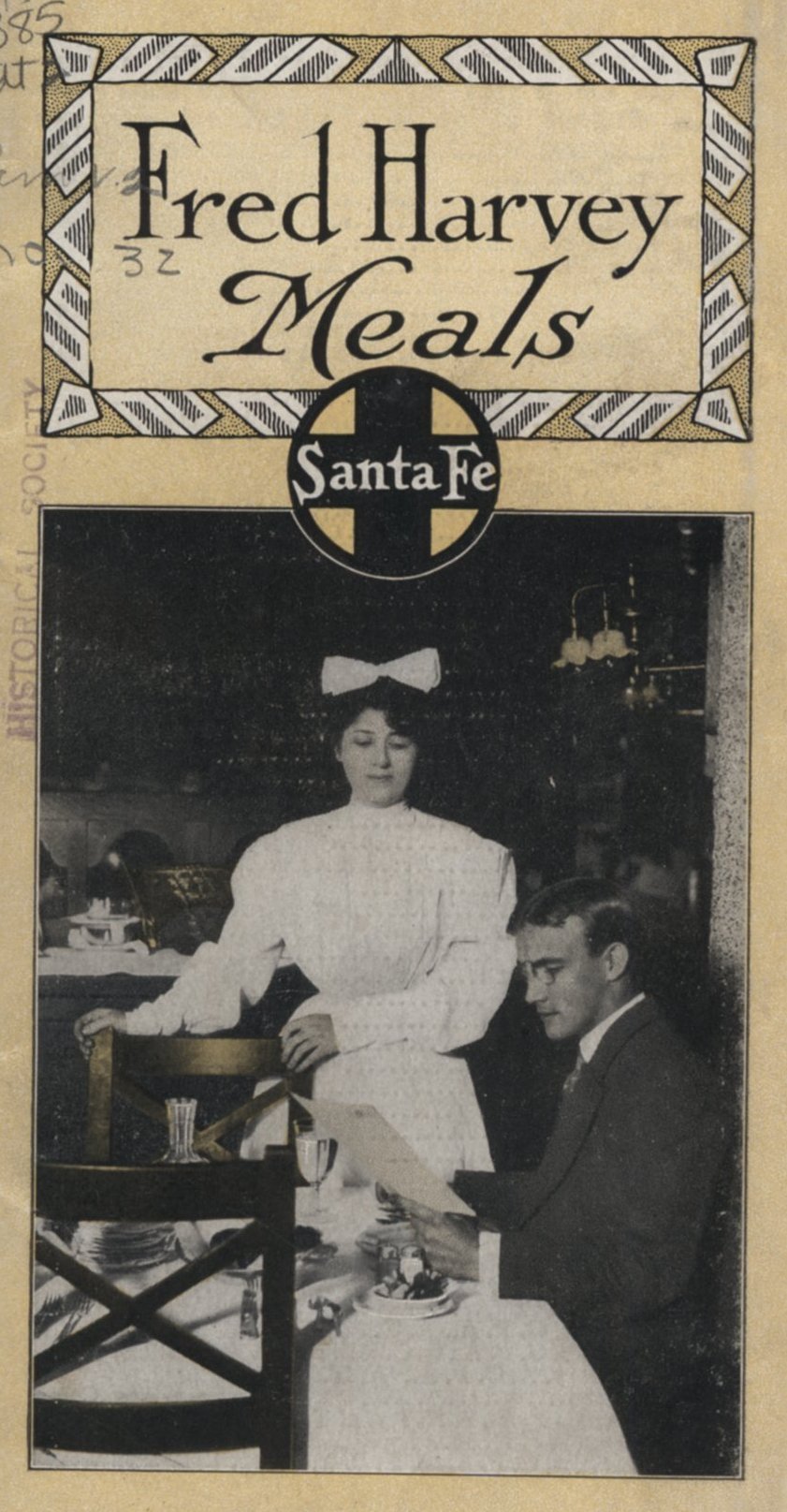
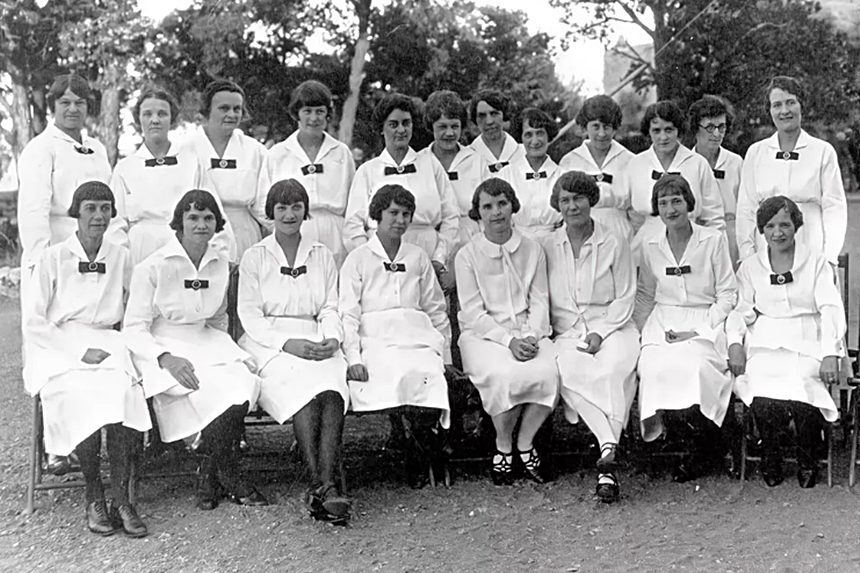
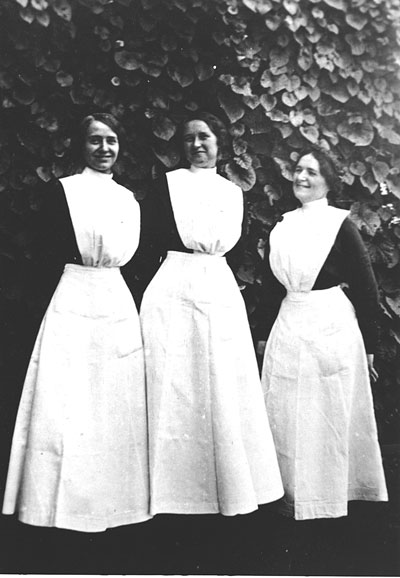
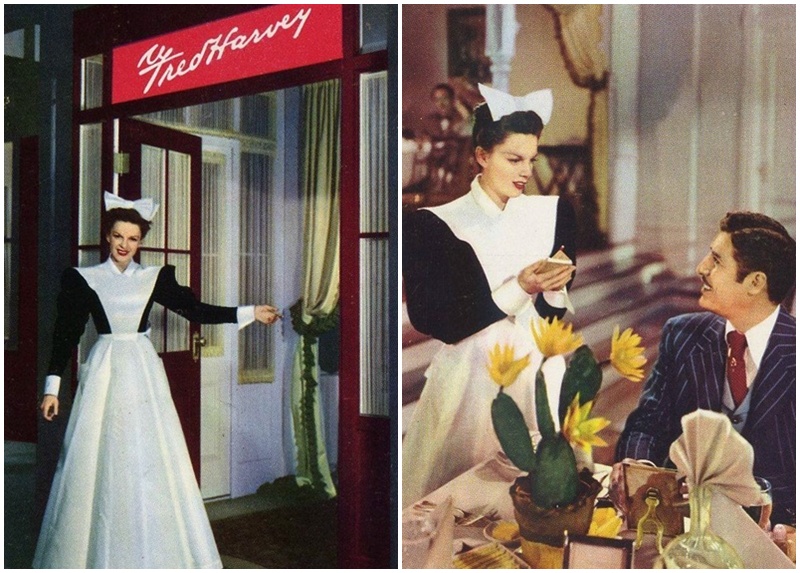
The Harvey Girls looked the way they did for a reason. Fred Harvey’s restaurants along the Santa Fe Railway were built around refinement and order, and the young women who worked in them were expected to uphold that image. Their uniforms were prescribed down to the details — black-and-white dresses, long skirts, black stockings, white collars, and hair tied up in a net with a crisp white bow — and the rules extended well beyond their appearance. Harvey Girls lived in company housing, answered to a house mother, and had a 10 p.m. curfew. Their contracts also governed their personal lives; marriage, for example, could mean forfeiting the contract and part of their pay.
That sounds restrictive now, and it was. But there was another side to the bargain that is easy to miss when we look at the Harvey Girls primarily as a carefully managed workforce. The company also offered young women something that could be hard to find elsewhere: a way to leave home, travel to another part of the country, earn their own money, and live among people they had never known.
For some, becoming a Harvey Girl was a job. For others, it was a chance to see what life looked like beyond the limits of home.
Some Girls Were Looking for a Way Out
Arizona teenager Edna Mae Hansen Turner ran away from home at 13. Somewhere around Winslow or Holbrook, she found work as a Harvey Girl.
Her grandson, Brandon Turner, Curator of Artifacts for the Mohave County Historical Society, which operates the Arizona Route 66 Museum in Kingman, told me his grandmother had been trying to pass as older. She wore makeup and smoked cigarettes, convinced that she had figured out how to blend in with adult women. “I thought I had everyone fooled,” she told him.
The Harvey Girl uniform exposed the ruse. Makeup was prohibited, and one of the women working there pulled Edna aside. They knew she was a child, she told her, and although they weren’t going to turn her in, eventually someone would figure it out. The other women told Edna she needed to start looking for other arrangements, which she eventually did. She found a family to stay with, got a job, and eventually met Turner’s grandfather. Her time as a Harvey Girl is a little bit of a mystery to her family.
Turner believes Edna worked as a Harvey Girl for about a year, possibly at La Posada in Winslow. There are pictures of Harvey Girls in the museum that is currently housed in the old depot, but Edna said she never remembered having her photograph taken in uniform. She didn’t leave behind a detailed account of her Harvey Girl years; what survived was the story she chose to tell because it had become a lesson about “not always being able to BS your way through a situation.” Sometimes, as in Edna’s case, it worked for a while, but her teaching point was not to rely on that to get through life.
There were likely many more stories like Edna’s. While some young women were running toward excitement, others were running from something.
The Women Were More Complicated Than the Uniform
The Harvey Girls have become such an established part of American folklore that it can be difficult to see them as individual women.
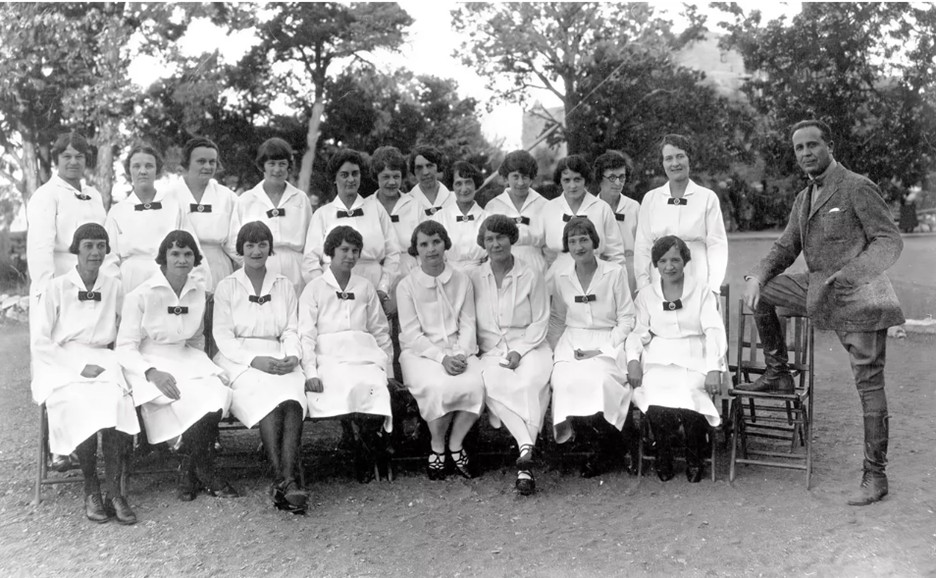
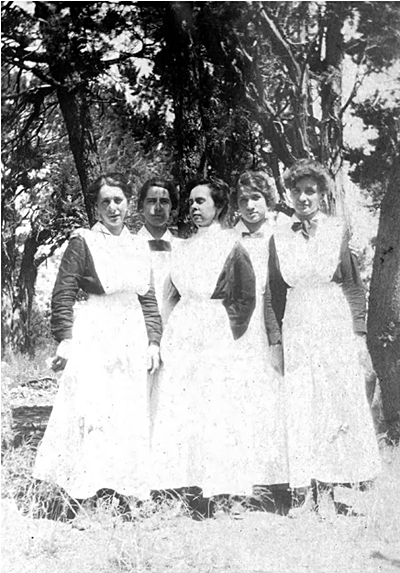
The uniform makes that especially easy. Put a group of young women in the same black-and-white dresses, give them the same white collars and hairnets, line them up for a photograph, and they begin to look less like individuals and more like a single character: the Harvey Girl.
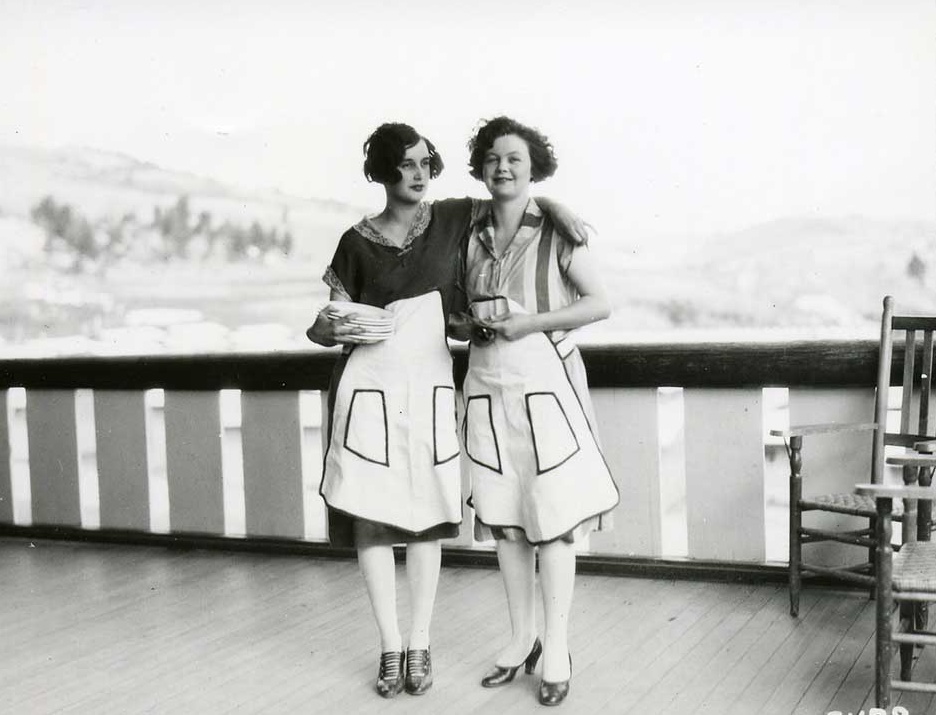
But a few of the surviving photographs lift the curtain a little. Not the publicity shots designed to present the Harvey Girls as a brand, but the glimpses of their lives when nobody seems to be asking them to look like anything in particular. They remind us that some pretty badass women wore those uniforms, even if most of their stories have disappeared.
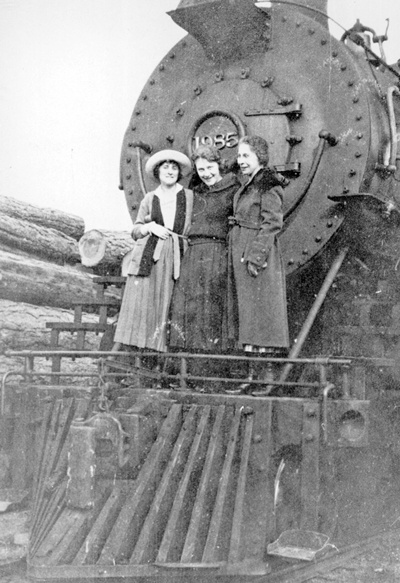
The little snippets of off-the-clock Harvey Girl life make you wish, just a little, that Instagram existed in 1915.
A trio of laughing girls in Winslow, throwing snowballs.
Standing on the corner, smiling and eating an apple with a young man, perhaps a beau, at her side.
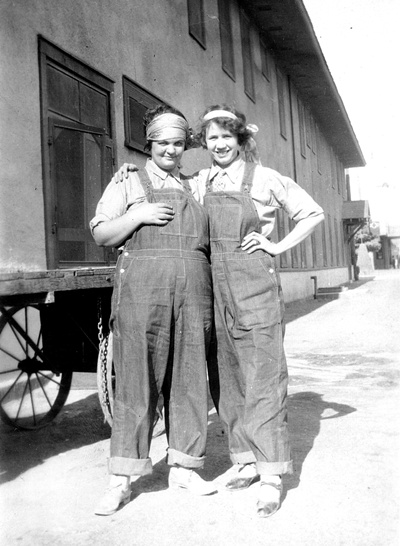
Pausing for a photo with a friend while wearing the decidedly un-Harvey Girl attire: overalls.
And then there is the photograph at the Grand Canyon. Whatever was happening immediately before or after the shutter clicked, the women in it look as though they had a life outside the role they had been hired to play.
Adventure Has Never Been a New Idea for Women
Look at an old photograph of a woman from the early 20th century — long skirt, high collar, hair pinned up — and it is easy to imagine that she lived a life defined mostly by convention. Then consider what it meant for a young woman to sign on as a Harvey Girl.
She left home and went west to work in places she had never seen, often hundreds of miles from the people who knew her. When she arrived, there was no easy way to text home, and even having a telephone in the house wasn’t universal. In 1920, only about 35 percent of U.S. households had one.
For a respectable young woman of the era, leaving home to work hundreds of miles away was a significant departure from the life that was probably expected of her. The women who became Harvey Girls did it for different reasons. Some sought independence or a chance to see more of the country. Others may have been looking for work, a fresh start or, in Edna’s case, simply a way out.
For some women, the opportunity was also economic. Yesterday’s America notes that Harvey Girls could earn as much as $25 a month plus room and board, allowing them to save money or send it home to their families; for women previously expected to become wives and mothers, earning a wage of their own could change what was possible.
That doesn’t mean women of the past were inherently braver than women today. It means the circumstances were different. The distance between a young woman and the life she had known could be much harder to bridge.
And there was an important catch. The Harvey system made leaving home socially acceptable, but it didn’t mean a young woman suddenly had complete control over her life. She had a job and a place to live, but she also had a uniform, a curfew, a house mother, and rules governing how she looked and behaved. The railroad could take a young woman farther from home than she had ever been, while the Harvey system imposed its own boundaries around what she could do when she arrived.
What We Don’t Know Is Part of the Story
By the time I became curious about the Harvey Girls, many of the women who could have answered my questions were gone.
I wish I’d been curious about them 40 years earlier.
I might have been able to sit down with a former Harvey Girl and ask what she remembered about the girls she worked with, if (or more likely how) she broke the rules, what she did when she wasn’t working, or what she thought when she first saw the Grand Canyon. I might have talked to someone who had heard those stories firsthand and remembered them.
Instead, I have photographs and fragments. And curiosity which feels a little like a yearning.
That is how history can work. The people disappear, and the images remain. In 1946, Judy Garland put the Harvey Girls on the big screen, helping cement the image that many of us still recognize today.
Turner knows little about his grandmother’s year as a Harvey Girl. For other Harvey Girls, even those fragments are gone.
Look Again at the Harvey Girl
The photograph in Bright Angel Lodge is what changed the way I think about the Harvey Girls.
Two young women climbing rocks. Who knows why? Maybe someone dared them to do it, or maybe someone with a camera told them to climb up there and pose. Maybe just because the rocks were there and they could.
The photograph survived. Whatever they were laughing about, wherever they went next and whatever became of them did not.
Maybe that is the part worth remembering.
The Harvey Girl was an image. The women were something else entirely.
Become a Saturday Evening Post member and enjoy unlimited access. Subscribe now