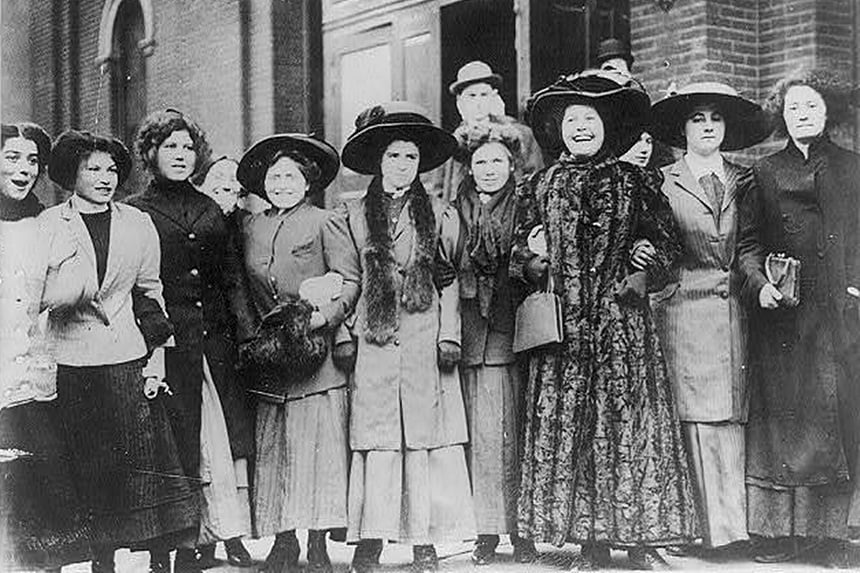
Things often look impossible to achieve until they happen. But 117 years ago, on November 23, 1909, what was deemed impossible changed the course of the American labor movement. When more than 20,000 garment workers, most of them young women, walked out of their workplaces, they not only proved that women could organize but also that they were a political power to be reckoned with.
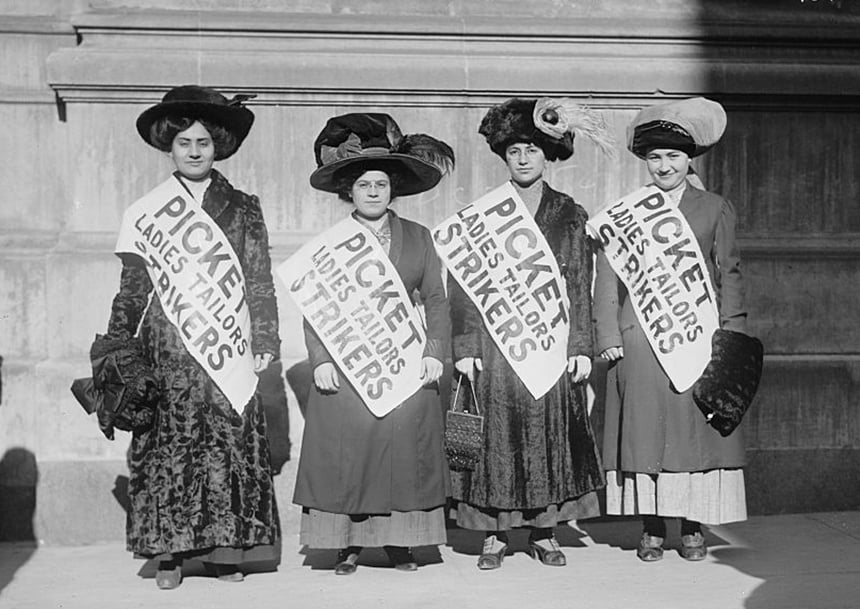
The 11-week-long strike, which came to be known as the “Uprising of the 20,000,” was the largest strike by women to date in American history. Led by young activists such as Clara Lemlich and Rose Schneiderman, strikers fought for better wages and working conditions. But they also demanded an end to the pervasive sexual harassment in the shops and for access to dressing rooms with mirrors and hooks on the walls, so they could protect their precious clothing during the workday.
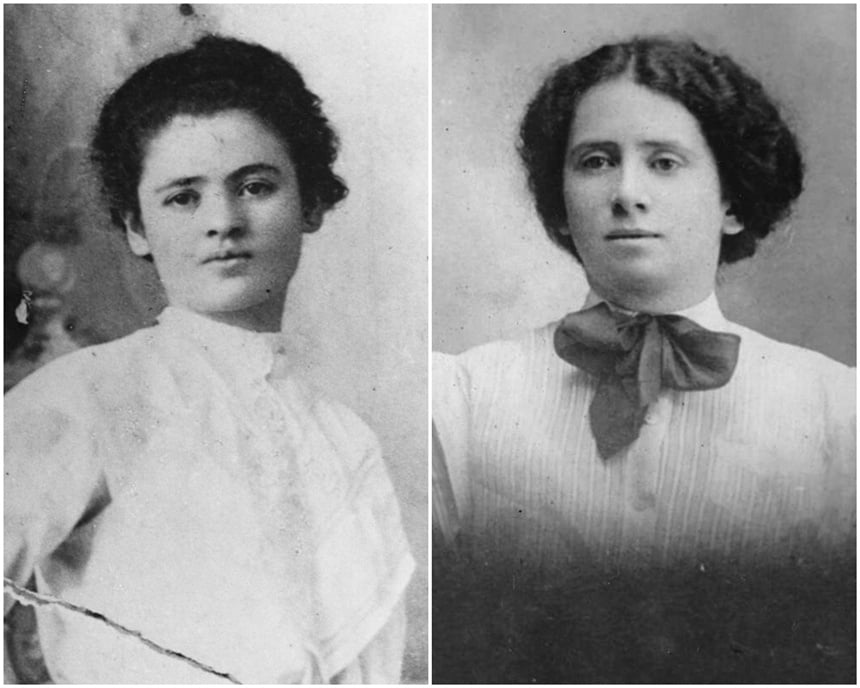
Promoting what historian Annelise Orleck defines as “Industrial Feminism,” Lemlich and her peers represented a strain of working-class activism that went beyond the shop floor to include an emphasis on gender equality and solidarity. For them, workers’ rights meant fighting for both “bread and roses”— better wages and hours — but also their right to enjoy fashion and beautiful things. “We’re human, all of us girls, and we’re young. We like new hats as well as any other young women. Why shouldn’t we?” Lemlich argued.
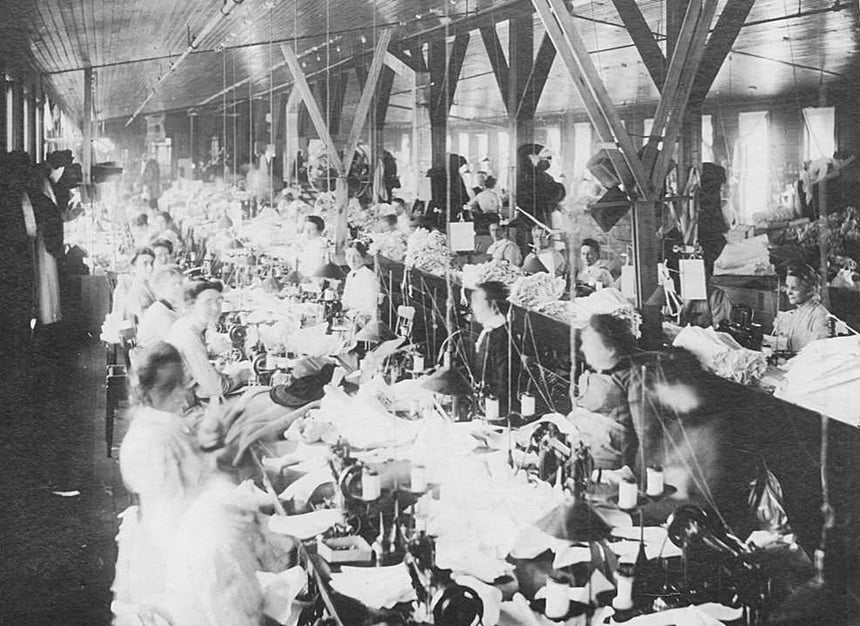
Despite being only 23 years old, Lemlich was a seasoned organizer and a member of the International Ladies’ Garment Workers Union (ILGWU) Local 25’s executive committee. Believing that as women and as workers, women like her should have a voice in politics, Lemlich was not afraid to defy the male union leadership, whom she saw as too timid. On November 22, 1909, during a meeting at Cooper Union, Lemlich stood up, demanded to speak, and in Yiddish called for a general strike. “I am a working girl,” she proclaimed. “I am tired of listening to speakers who talk in general terms . . . I offer a resolution that a general strike be declared now,” she declared as the crowd cheered.
Enduring cold weather and police brutality, the women strikers were determined to gain respect as workers, as women, and as Americans, using fashion and fashionability as a political tool to achieve their cause.
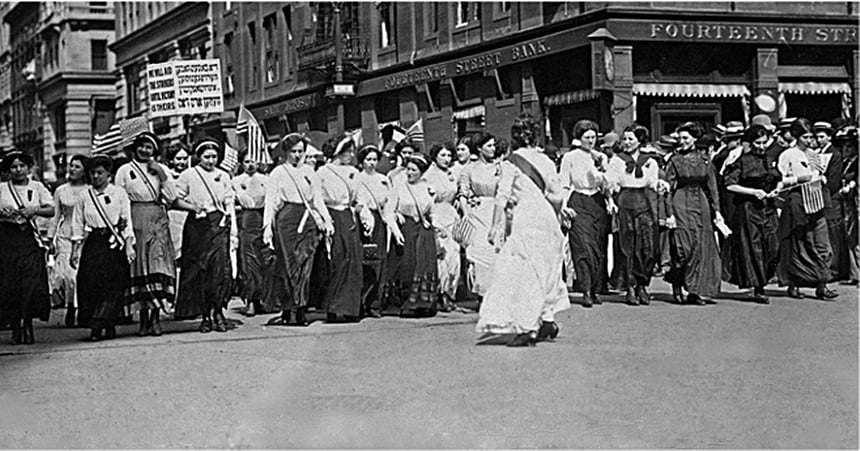
As both makers and consumers of shirtwaists, a fashionable style that came to define the modern woman, strikers were aware of the power of clothes to convey their message, and they embraced it as a badge of pride and protest. When they picketed the streets wearing their best clothes, strikers framed fashionability as political right, signaling their independence and agency as they demanded to be taken seriously and make their voices heard.
Yet, the popularity of the shirtwaist also enabled cross-class solidarity among women. As a New York Times article commented, “The factory girl makes shirtwaists and the college girl wears them, and when they first walked Broadway arm in arm as pickets . . . the public does not know and cannot distinguish the college girl who is walking up and down the sidewalk with almost every group of pickets.” With fashion blurring distinctions between the women workers and their middle-class allies, strikers could imagine themselves as influential political subjects that could gain the public’s support.
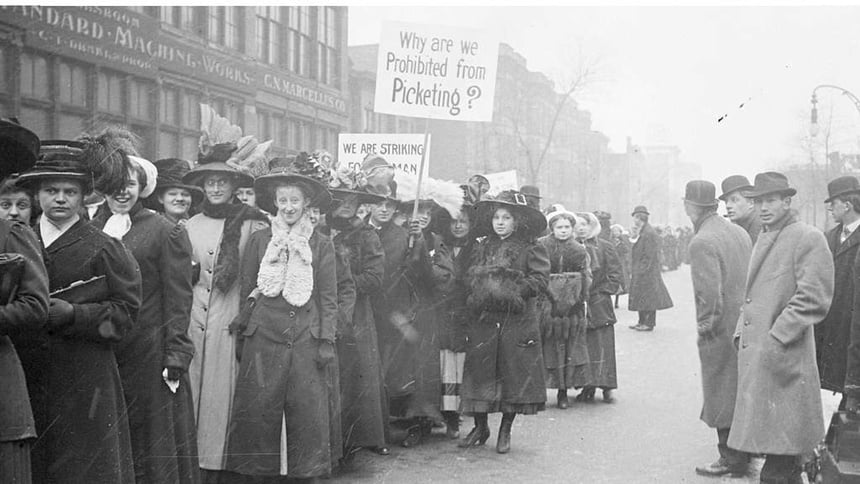
As picketers delivered pamphlets, participated in protests, and articulated their demands, they changed the perception of the woman worker, demonstrating that radical politics and labor struggles were not disconnected from fashionable appearance and discourse.
By the end of the strike, Lemlich and her fellow workers were able to win concessions from factory owners for most of their demands and turned Local 25 of the ILGWU into one of the most influential unions in the country, changing for the better the lives of millions of workers like themselves. The strike galvanized a surge in women’s political activism, setting a wave of strikes all over the country between 1909 and 1915.
In what would have been impossible only a few years prior, the Uprising of the 20,000 turned what was considered a disorganized, passive, and compliant workforce into a united political power.
While workers won better wages and shorter working hours, their demands for safety and gender equality fell short, especially with the Triangle Shirtwaist Factory, one of the few employers who refused to recognize the union. Only 13 months after the end of the strike, on March 25, 1911, the horrifying repercussions of their refusal was made evident in the Triangle Shirtwaist Fire, which cost the lives of 146 workers, mostly Jewish and Italian immigrant women.
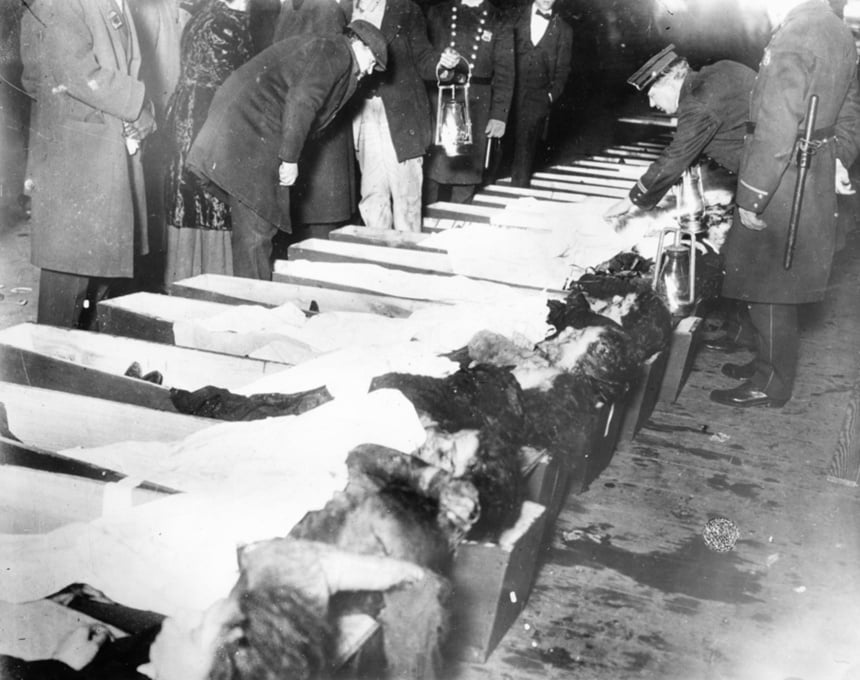
Lemlich and Schneiderman, who knew many of the Triangle victims, used the event to galvanize the public into action. In the years following Triangle Fire, Lemlich continued to fight for women’s and workers’ rights, organizing for woman’s suffrage, consumer rights, and social justice.
“If you want to do something, do something,” Lemlich exclaimed in an interview years later, reminding us that even at the age of 23, without many resources, young women could change the world.
Become a Saturday Evening Post member and enjoy unlimited access. Subscribe now