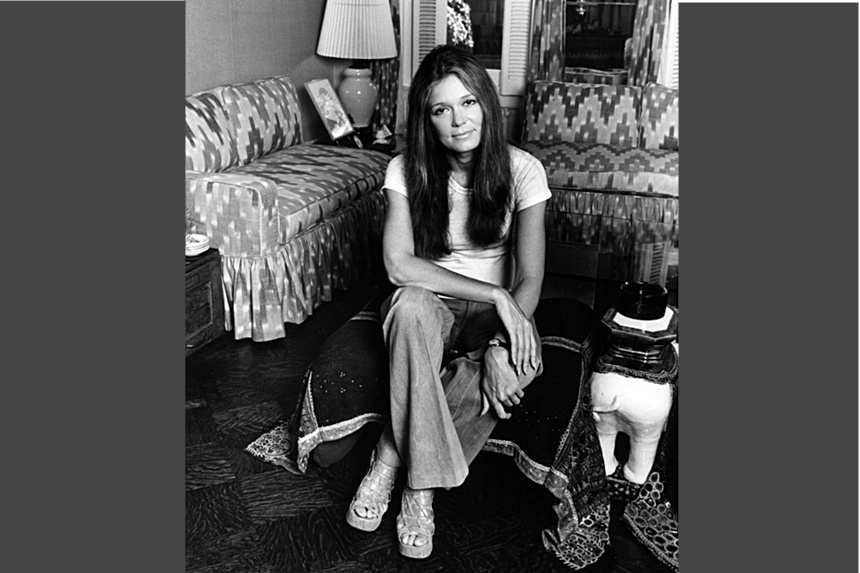
Gloria Steinem, who passed away last month at age 92, was not only a renowned feminist trailblazer who fought for women’s equality and reproductive rights, but also a fashion icon.
Steinem’s love and enjoyment of fashion were not at odds with her feminism. For her, clothing and appearance were never just a frivolous endeavor but part of her politics and her activism, and she understood and used the power of clothes to advance the causes she believed in.
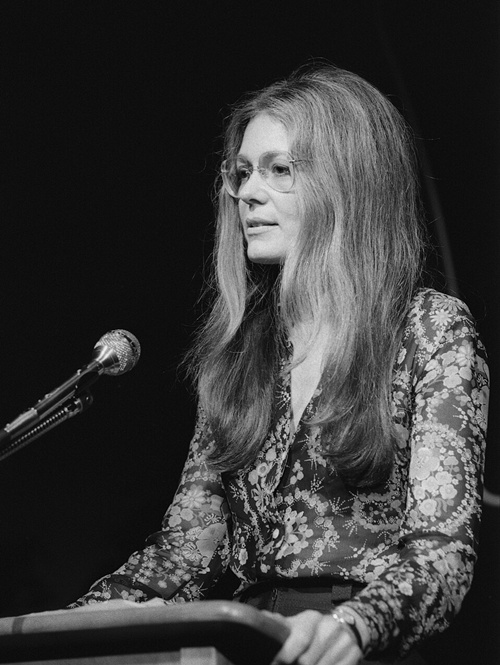
Early in her career as a journalist, Steinem went undercover as a Playboy Bunny, changing her appearance to get people to pay attention to the things she said. “Clothing should be totally aesthetic or practical in a just society,” she explained in Ms. magazine about her approach to fashion, “but at the moment and for some time to come, it has tactical implications.” Always aware of her public image, she knew how to dress to gain political influence, both playing into and subverting traditional notions of beauty.
Steinem’s appearance emphasized that one doesn’t need to reject fashion and femininity to be a feminist, visually contrasting much of the anti-feminist propaganda at the time that claimed that all feminists were “ugly.” Although at first she opted for miniskirts and more traditional feminine accessories, even when shifting to jeans, turtlenecks, and T-shirts, she still projected a youthful, sexy, and unapologetic appearance that offered an attractive (and unthreatening) model for the women’s liberation movement.
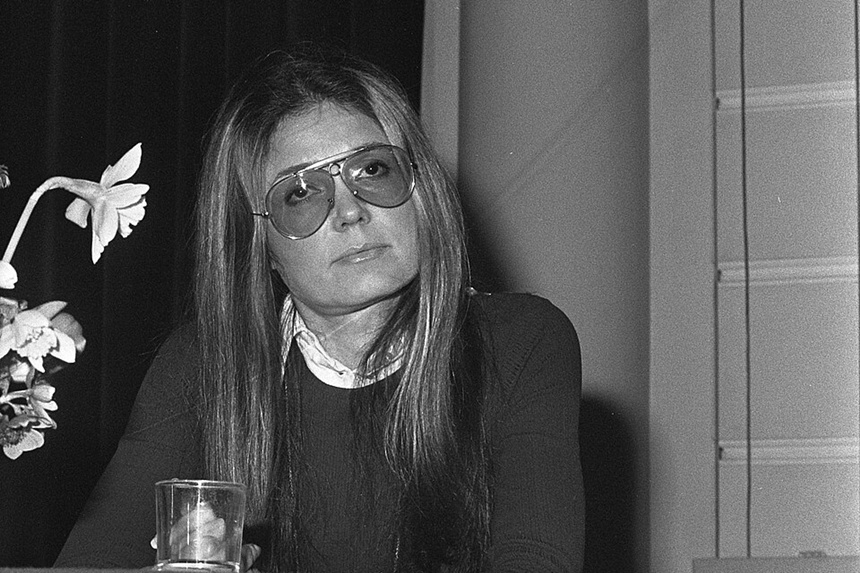
The press certainly embraced her glamourous image. Between 1971 and 1974, Steinem appeared on the covers of People, McCall’s and Newsweek, the latter named her “The New Woman.” Her signature look of long blonde hair with highlighted stripes parted in the middle and tinted aviation glasses soon became a fashion trend among young women who found both her appearance and her politics appealing.
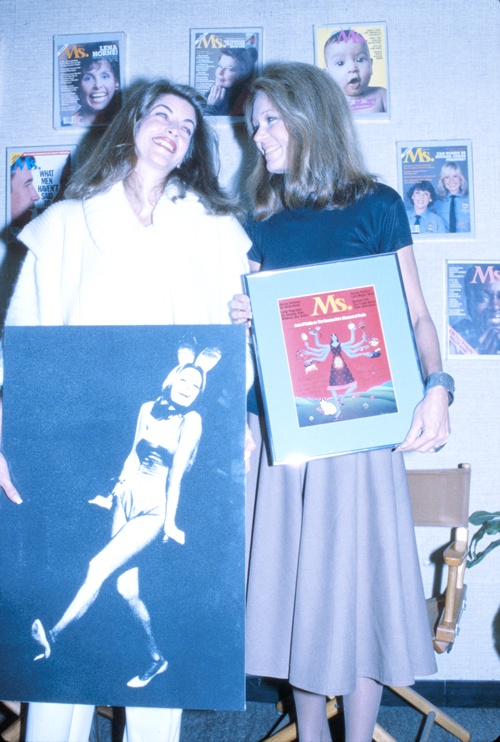
While fashion became central to Steinem’s messaging and mainstreaming of feminism, she was also not afraid to challenge traditional customs of beauty and femininity. The preview issue of Ms., the magazine she cofounded in 1972, did not depict a model as was the convention at the time but an illustration of a blue goddess representing the ideal of the multitasking woman with a baby in her belly and eight arms, showing the constant juggle of modern femininity.

Steinem’s popularity made her one of the most recognizable feminists in the world. But as she became the “face of feminism,” she also made sure to provide the space (and the spotlight) to those who shared her politics but not her look, pointing to the diversity of the movement and the people in it. In one of the most iconic photographs of her, she is depicted alongside the activist Dorothy Pitman-Hughes, both facing the camera raising their fists in a Black Panther salute. Although different in look, their identical tight-fitting turtlenecks and posture offered a powerful image of women’s solidarity and dedication to equal rights.
Both Steinem’s appearance and her politics continued to be a source of inspiration, especially as a new generation of feminists took the public stage. In 2006, Bust magazine featured a fashion spread of “looks inspired by fashionable feminist” with a model mimicking Steinem’s style with modern pieces available for purchase. And in 2023 designer Michael Kors directly referenced Steinem in his fall collection that was dedicated to the 1970s styles of microminis, low-slung belts, and big jewelry.
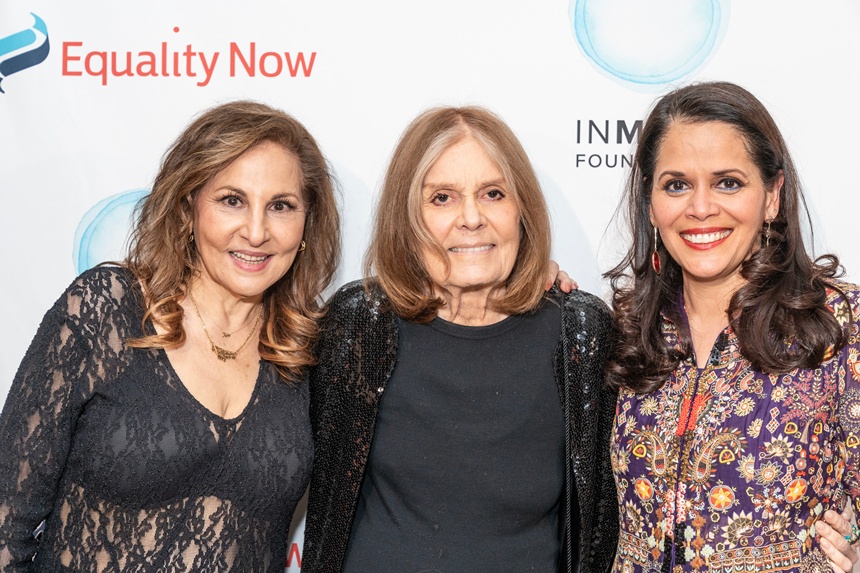
While at times Steinem’s fashion sense caused some to question her dedication to the cause, she was adamant about providing women the right to choose and make their own decisions — whether it was their fashion, their lifestyle, or their bodies — and not be criticized for it. “Fashion . . . means being unique and finding oneself,” she said in the 2011 HBO documentary Gloria: In her Own Words. Steinem showed the world that you can be a feminist without giving up on your femininity, and that you can be a fashionista and still be taken seriously.
Trailer for Gloria: In her Own Words (Uploaded to YouTube by HBODocs)
Earlier this year, Steinem auctioned some of her favorite items to support her foundation. Through this action she hoped that people will find meaning in her fashion choices. Indeed, more than anything, it is this spirit of choice and rebellion that are Steinem’s main fashion legacies. She showed that fashion can be a tool of joy and self-expression but also of protest and activism. Among the rich legacy and history that she has left behind, her sense of style and use of fashion remind us that in the end, we all “choose to dress ourselves. . . for freedom.”
Steinem certainly did.
Become a Saturday Evening Post member and enjoy unlimited access. Subscribe now