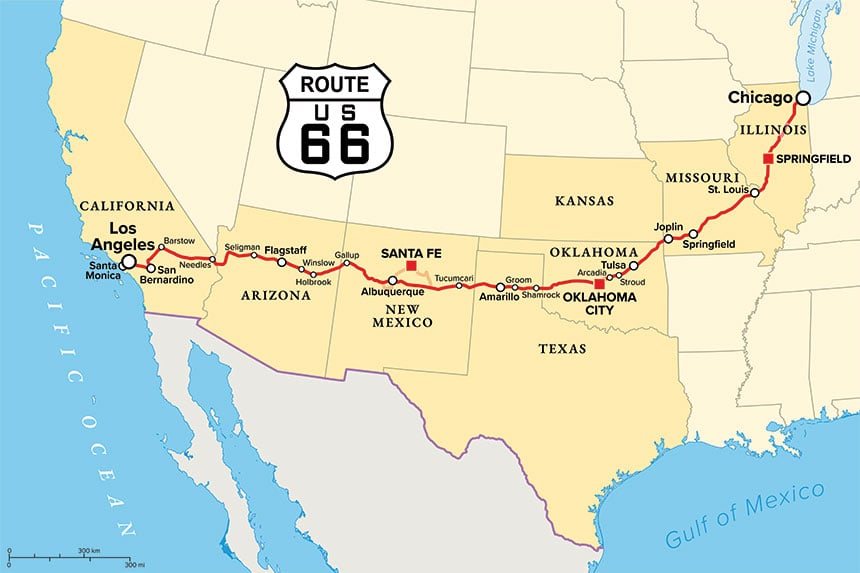
In November 1925, the Bureau of Public Roads unveiled plans for America’s first federal highway system. Twenty-two routes would crisscross the nation, according to the plan, a network of highways pieced together largely from existing roads. The central and western states were slated to receive a new U.S. Highway 60, which would stretch from Chicago to Los Angeles through Illinois, Missouri, Kansas, Oklahoma, Texas, New Mexico, Arizona, and California.
All eight states loved the idea. But, they asked, could we have a different number?
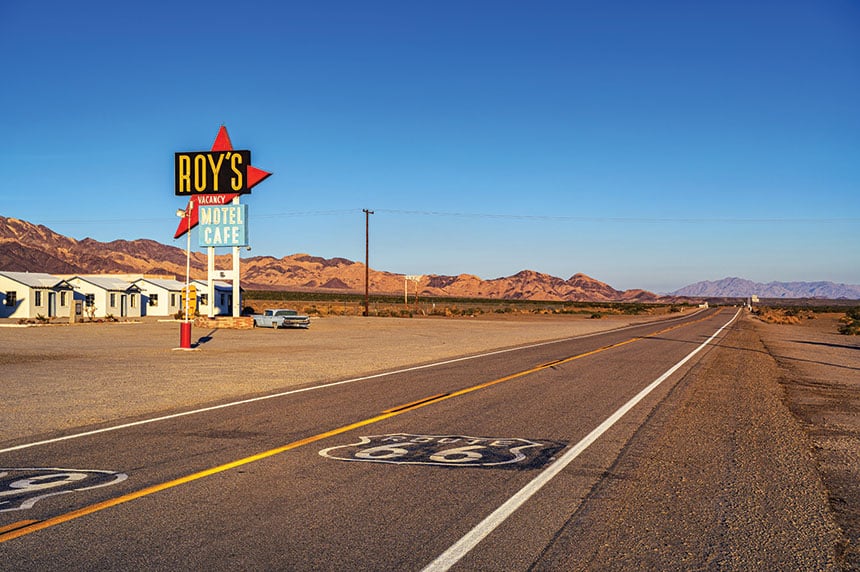
Washington acquiesced to the states’ appeal, based on complicated logic and aesthetics, and on November 11, 1926, U.S. Highway 66 was born. The roadway that would eventually become known as Route 66 wasn’t intended as a migration route. The founders didn’t christen the highway the “Mother Road” or “Main Street of America,” much less a place where travelers might get their kicks.
But Route 66 became all those things and more over the last 100 years: a time capsule of early 20th-century America; a scenic road trip destination; and, ultimately, one of the world’s most famous highways.
Planners of America’s new highway system anticipated that the new highway grid would eventually support the nation’s fledgling automobile industry, improve commerce between American cities and states, and encourage the economic development of isolated rural areas. Local developers quickly began marketing the new highway.
“This is the shortest, best, and most scenic route from Chicago through St. Louis to Los Angeles,” declared Cyrus Avery. The Tulsa businessman was founder of and advocate for the U.S. Highway 66 Association, a promotional organization launched alongside its namesake highway and one aimed at increasing western road traffic. “I challenge anyone to show a road of equal length that traverses more scenery, more agricultural wealth, and more mineral wealth than does U.S. 66.” U.S. Highway 66, Avery predicted, would become the “Main Street of America.”
Only a few years later, the twin tragedies of the Great Depression and the Dust Bowl descended upon mid-America, and the new highway took on new importance.
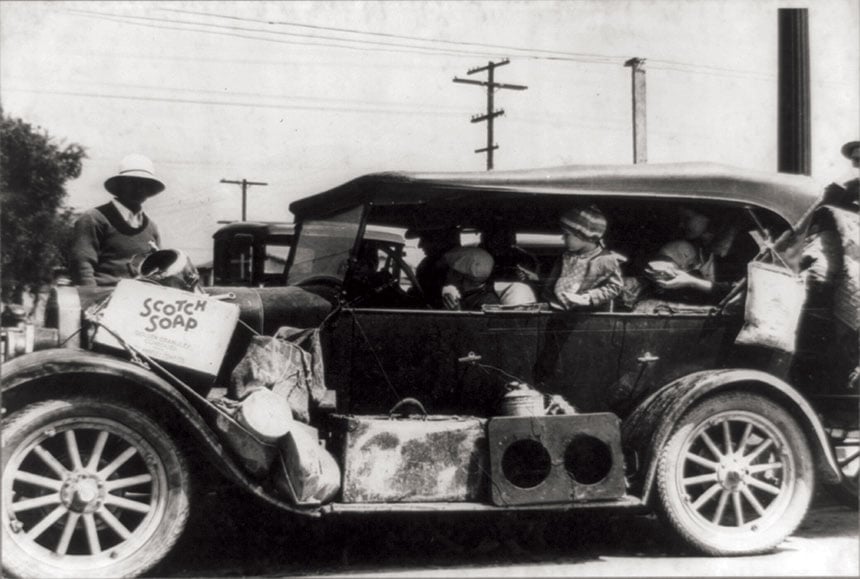
“Highway 66 is the main migrant road,” wrote John Steinbeck in The Grapes of Wrath. In his Pulitzer Prize-winning epic of the Dust Bowl, Steinbeck followed the fictional Joad family and countless others who escaped the Great Plains to California by way of the 2,400-mile roadway.
“66 — the long concrete path across the country, waving gently up and down on the map,” was Steinbeck’s description. “66 is the Mother Road.”
While the destitution of the 1930s led thousands of Kansans, Oklahomans, and Texans to follow Highway 66 as an evacuation route, others along the roadway found a new source of income. Fuel station owners and automotive repair shops serviced the many vehicles journeying west to California’s greener pastures. Roadside diners opened their doors, promising hot meals just like Mother used to make (perhaps because Mother was back in the kitchen cooking them). And small motels popped up offering humble but comfortable rooms.
As the Great Depression led to America’s involvement in World War II, servicemen utilized Highway 66 as a military transport corridor. Still other Americans headed west along the same route to work in West Coast defense plants. All of them needed hot meals and a place to spend the night, and a new array of business opportunities sprung up along the road.
It was the post-WWII economic boom that truly transformed Route 66 into a long and winding tourist attraction. Registered automobiles in the U.S. skyrocketed from an estimated 25.8 million in 1945 to 52.1 million in 1955. Americans were eager to enjoy their new wealth, their new wheels, and the freedom both implied. Route 66 promised the road trip Americans dreamed of.
Gone were the dreary victims of the Dust Bowl. Carloads of carefree middle-class families took their place, moms, dads, and kids packed into vehicles with gleaming chrome and tailfins. Entrepreneurs along the route did their best to lure the vacationers in.
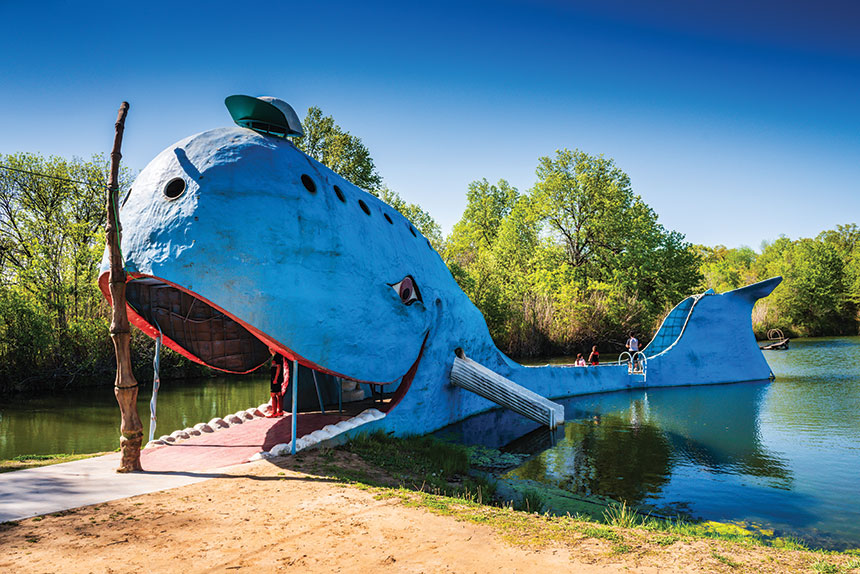
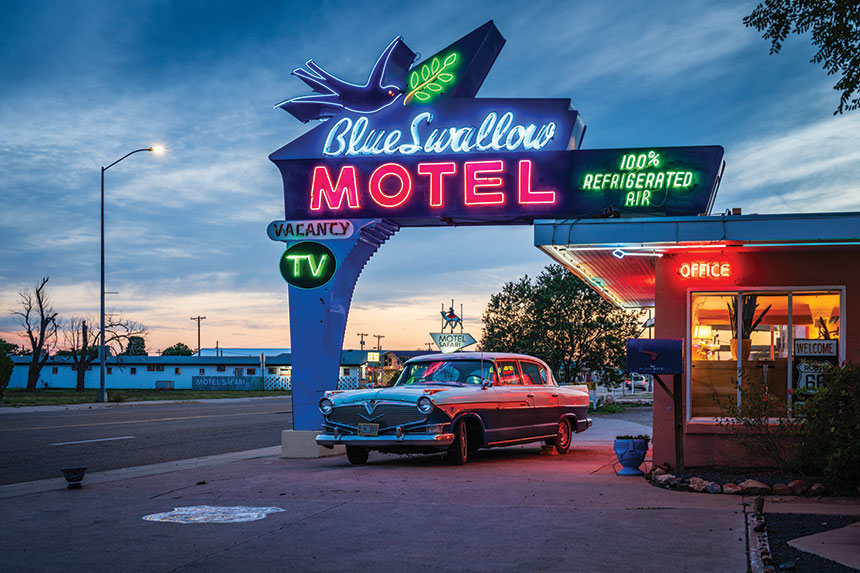
Motels like Boots Court in Carthage, Missouri, the Blue Swallow in Tucumcari, New Mexico, El Rancho in Gallup, New Mexico, and the Wigwam Motel in San Bernardino, California, drew attention with flashy neon signs and imagery that touted the region’s cowboy, Native, and Latin American roots.
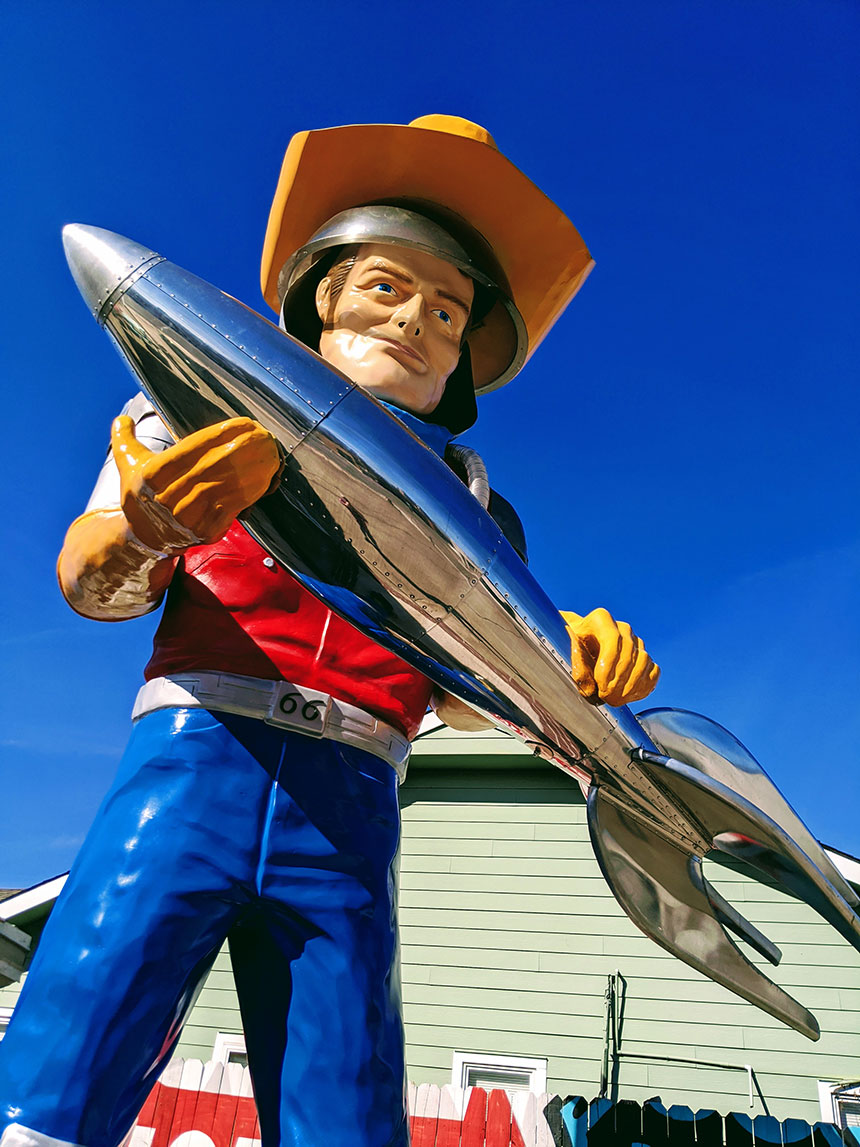
Still other businesses attracted travelers with towering statues: 20- and 30-foot-tall spacemen, cowboys, and dinosaurs collectively called “Muffler Men” for the characters’ tendency toward displaying auto parts in their giant outstretched hands. The oversized advertising tools helped business owners stand out in an ever-growing field of roadside attractions.
“For me, these crazy giants are just part of Route 66,” says Mary Beth Babcock. The owner of three Route 66 businesses in Tulsa — Buck Atom’s Cosmic Curios, Meadow Gold Mack’s, and Buck’s Vintage — Babcock became so enamored of the original 1960s Mack the Lumberjack occupying her property that she commissioned two more: Buck Atom, a space cowboy, and Stella, his space cowgirl sidekick, were added in 2019 and 2024, respectively.
“Seeing these attractions does encourage people to come in, and maybe they’ll buy something from my stores,” says Babcock. “But it’s also part of the fun of the adventure of traveling Chicago to L.A. and making memories along the way.”
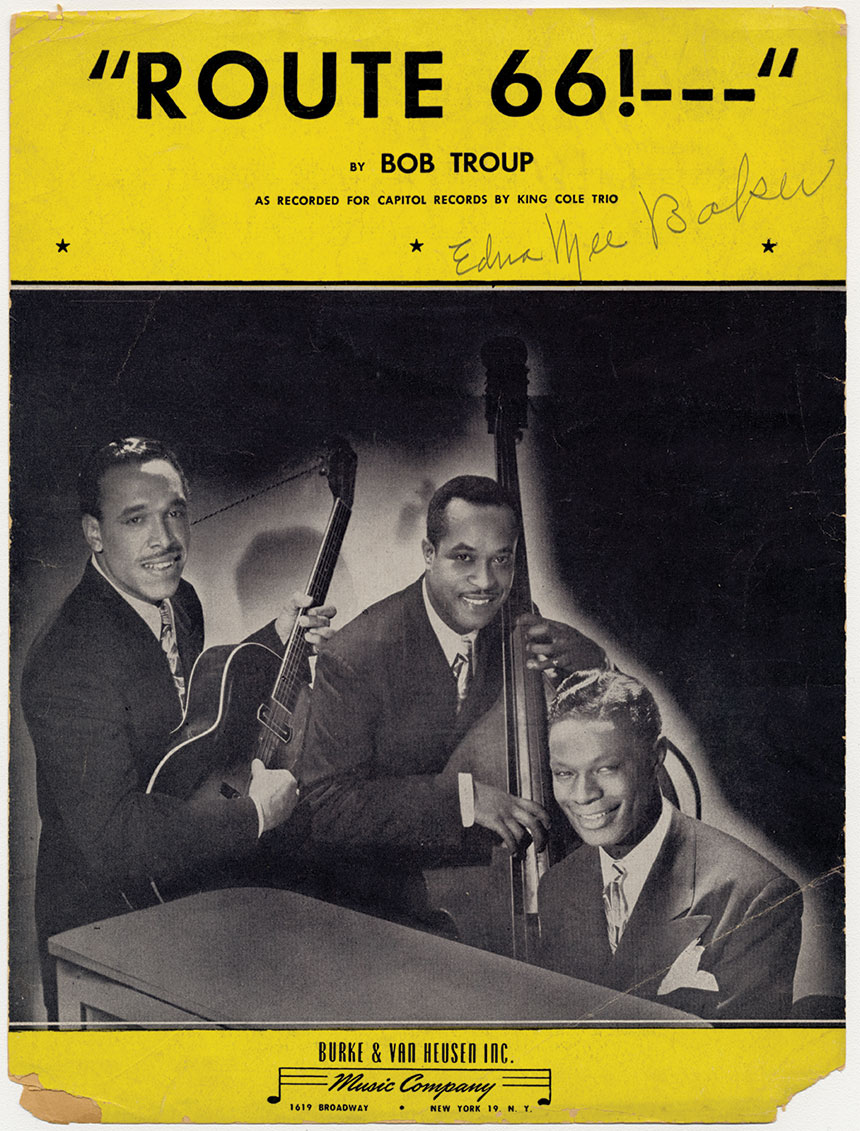
In the mid-1940s, Bobby and Cynthia Troup headed out on their own Route 66 adventure. Their 1941 Buick was loaded with luggage and Bobby’s dreams of making it big in Hollywood as a songwriter. En route to California, Troup became convinced that a road tripping song might be his entrée into the business. After a little word play, Cynthia came up with the catchy phrase, “Get Your Kicks on Route 66.”
Troup loved the title and fleshed out the song that would not only cement the roadway’s legacy but transform its name. U.S. Highway 66 would forever be known as Route 66.
“Route 66” was most famously recorded by Nat King Cole in 1946. But the song remained popular for decades. Bing Crosby and the Andrews Sisters covered the hit later in 1946. They were followed by Chuck Berry (1961), The Rolling Stones (1964), and Depeche Mode (1987). Most recently, John Mayer introduced the song to a new generation as part of the soundtrack for Disney’s 2006 animated film Cars.
In 1960, the television show Route 66 premiered, further catapulting the highway into the American psyche. The CBS adventure crime drama featured two young men, Tod and Buz, who drove a Corvette convertible between towns ostensibly along Route 66. The series ran for four seasons and featured a lineup of heavyweight guest stars such as Rod Steiger, Robert Redford, Suzanne Pleshette, William Shatner, and Joan Crawford.
Ironically, embedded within the success of Route 66 were the seeds of its eventual demise. The independent gas stations, motels, and family diners that catered to postwar travelers were as unique as the small towns they occupied. They were also completely lacking in standardization.
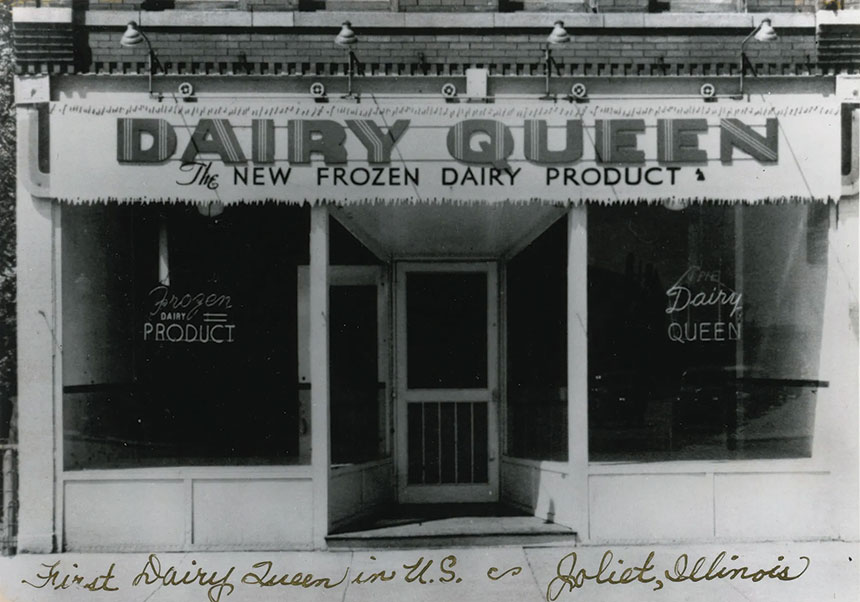
Sensing still another opportunity, chain businesses began to sprout up along the highway. The world’s first Dairy Queen opened along Route 66 in Joliet, Illinois. The world’s first Steak ‘n Shake was located on Route 66 in Normal, Illinois. The world’s first McDonald’s got its start as a barbecue drive-in along Route 66 in San Bernardino. And the world’s first Ramada Inn welcomed customers along Route 66 in Flagstaff, Arizona. Travelers found the predictability of these franchises refreshing, if also perhaps less interesting.
But it was the heavy traffic and congestion associated with Route 66 and other roads of the federal highway system that finally led the Eisenhower administration to launch an upgrade in 1956. Eisenhower sought a faster, safer road network, one with fewer entrances and exits and unencumbered by roadside spectacles and tchotchke shops.
Five new interstates (I-55, I-44, I-40, I-15, and I-10) replaced Route 66 over the next 30 years, in some cases swallowing up sections of the former road, in some cases paralleling it, and in still others abandoning the historic roadway altogether. In 1984, in Arizona, I-40 bypassed the last remaining section of Route 66. The federal government officially decommissioned the old highway in 1985.
Since then, because of its nostalgic character, a host of local and state Route 66 associations have worked to preserve the remnants of the highway and its roadside attractions. In 1999 the federal government created the National Park Service Route 66 Corridor Preservation Program to protect the most significant historic resources along the route.
Rick Antonson, a native of Vancouver, set out to travel every remaining stretch of the original Route 66, from Chicago to the end of the road in Santa Monica, in 2012. It wasn’t easy. Antonson writes of numerous occasions when the original route proved elusive in his book, Route 66 Still Kicks: Driving America’s Main Street, first published in 2012 and updated in 2026 for the highway’s centennial.
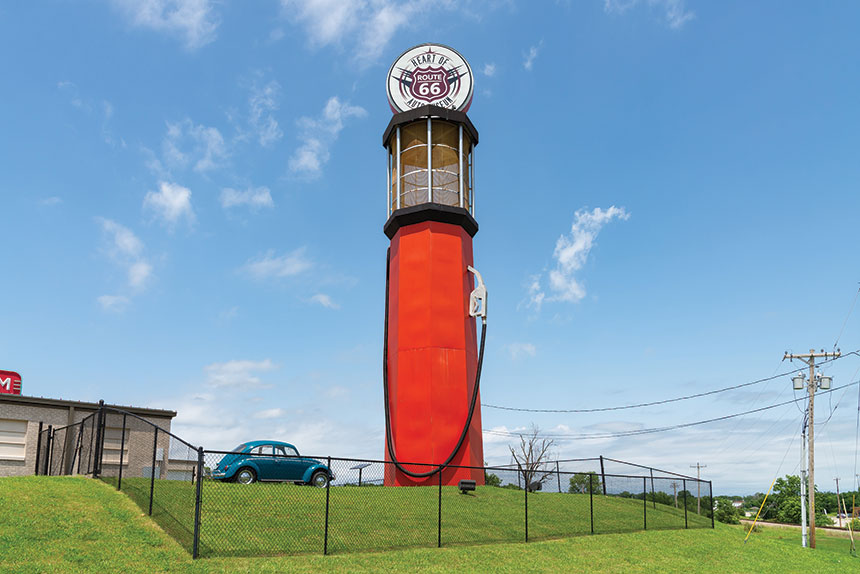
“While older maps pinpoint remote places barely accessible, GPS technology provides more confident routing,” says Antonson. “Thankfully, there are increased visual markers to remind drivers they are on the right road, Route 66 — not lost, as so often happened with my travel companion.”
The roadway’s 100th anniversary motivated communities along the historic highway to improve signage identifying the original route. But an easy, efficient journey isn’t generally what a Route 66 road tripper is looking for.
“It is possible to drive from Chicago to Los Angeles in three days on the interstate. You just need to get up each morning and chase the pavement,” says Antonson. Instead, he and his friend decided to seek out the little-used, sometimes abandoned and even forgotten pieces of the roadway. “We aimed for the remnants and dead ends of 66 for no reason other than that they are dead ends — and were once of magical importance. Although today these fragments are often overgrown by weeds, they are compass points to the past.”
Likewise, Henry Nowakowski set out to experience the essence of the roadway when he traveled Route 66 on a solo motorcycle trip in 2022. Traveling eastward from his home in West Los Angeles, Nowakowski followed the original route wherever possible, taking three weeks to complete his journey, staying at iconic, independently owned motels, and eating at mom-and-pop diners.
“On a motorcycle, you get tired,” says Nowakowski. “You get sunburned, you run into rain or snow. So early on, I thought to heck with trying to stay on a regimented schedule. I think what I’m going to do is, I’ll ride, see how far I get each day. I even rode a couple of gravel road sections.” His goal on the ride was not to make time, but to experience the quintessential Route 66.
Foreigners traveling Route 66 are taken not only with the lore of the famous highway and its century-old Americana, but with the diversity and immensity of the landscapes along the way.
“We’ve had visitors from Europe, from New Zealand, Australia, India,” says Richard Holmes, co-founder of the Heart of Route 66 Auto Museum in Sapulpa, Oklahoma. The museum, which is adding 5,000 square feet of exhibit space this year, houses dozens of classic cars as well as maps and memorabilia from Route 66. “We’ve even had visitors from Siberia, and the Route 66 Club of Tokyo. Many are impressed by the great expanse of the Midwest and West,” he says. “If they come from Belgium or England, they just can’t imagine how big this landscape is until they see it for themselves.”
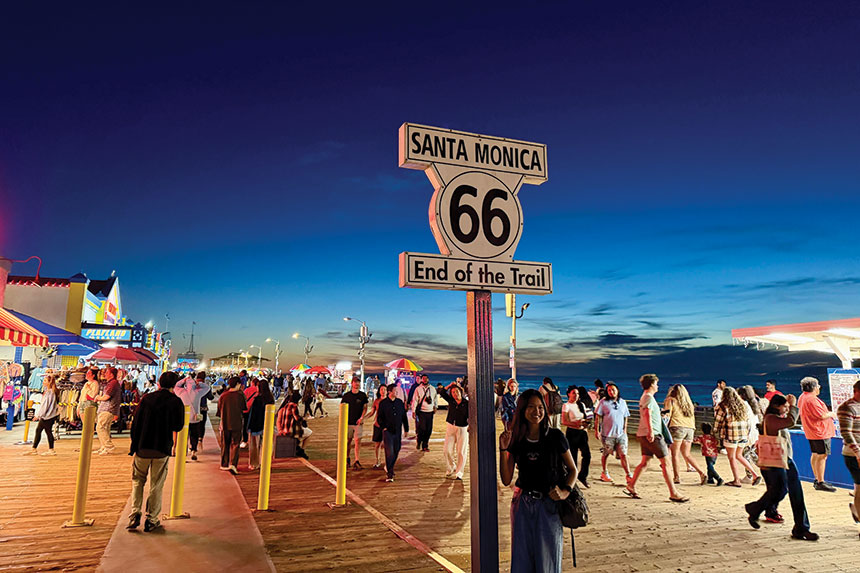
Both Antonson and Nowakowski found the slower pace well suited to exploring the numerous attractions along Route 66, from small-town diners to museums and curio shops and even those abandoned, rutty sections of original roadway. The relaxed schedule also allowed time for conversation.
Despite the rich sense of history, the independent diners, the towering roadside statues, and the broad vistas, Rick Antonson thinks the real pleasure to be found along Route 66 lies in personal encounters.
“You ask me whether there’s a special place and I think it’s the people,” says Antonson. “I think that’s what Route 66 means internationally. It’s a drive, but it’s a drive that takes you cheek by jowl with Americans, and that’s a lovely thing.”
Route 66 at the Movies
The Mother Road doesn’t just get you places; it has served as both inspiration and setting for a number of popular films.
The Grapes of Wrath
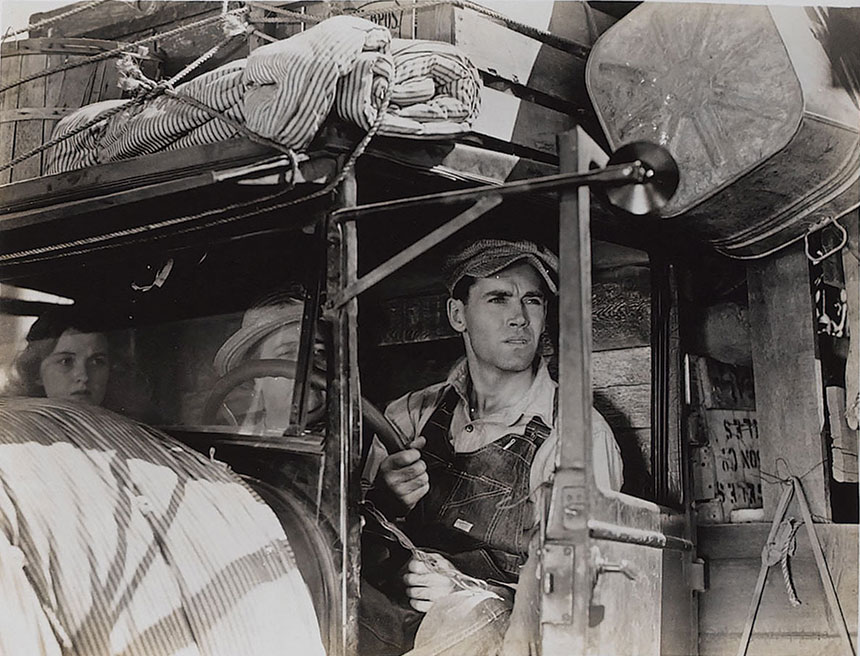
John Ford’s beloved adaptation of John Steinbeck’s novel charts the journey of the Joad family as they leave Oklahoma with the hope of finding better prospects in California. Henry Fonda was nominated for Best Actor, Ford won Best Director, and Jane Darwell took Best Supporting Actress for her turn as Ma Joad.
Easy Rider
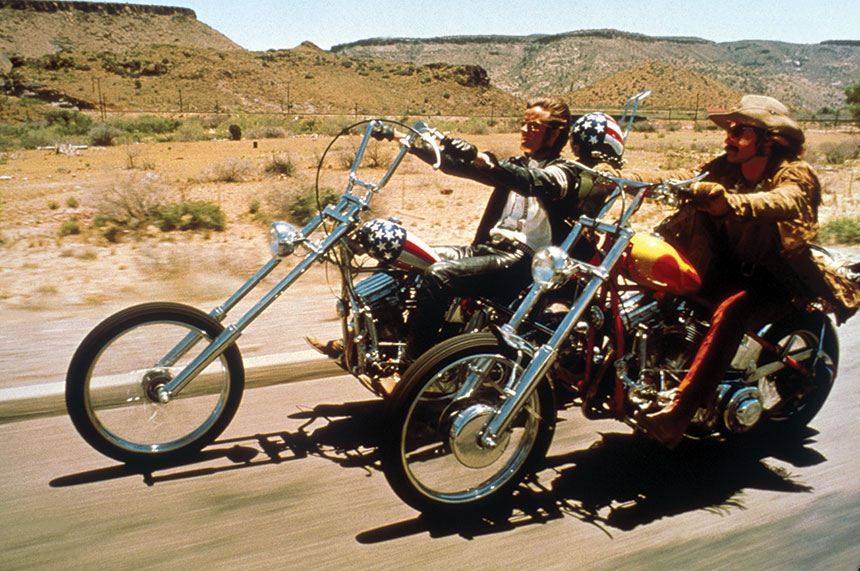
Henry Fonda’s son Peter co-wrote and starred in this counterculture classic. Wyatt, aka Captain America (Fonda), and Billy (director Dennis Hopper) began their cinematic journey cross the Colorado River on old Route 66 during the film’s opening.
National Lampoon’s Vacation
Although the Griswold family doesn’t exclusively travel Route 66 in the film, they hit some highlights along the way. John Hughes’ screenplay was inspired by a family vacation that he recalled in his short story “Vacation ’58,” which ran in the Lampoon.
Thelma and Louise
While the route described by the characters in the film is more or less fictional, the location and visuals in the film certainly carry the spirit of Route 66. Directed by Sir Ridley Scott, who boasts one of the most diverse résumés in movies, the film depicts the titular characters (Geena Davis and Susan Sarandon) on the run after Louise fatally shoots a man assaulting Thelma. Their road trip comes to a definitive end at the Grand Canyon.
Cars
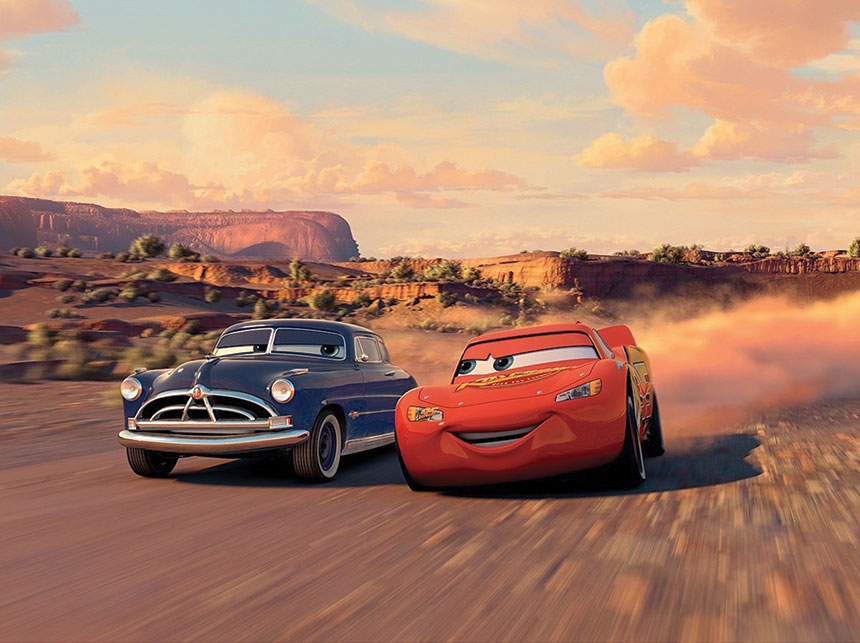
Disney/Pixar’s franchise-starter began with Lightning McQueen getting lost and stumbling across Radiator Springs, a tiny town off of Route 66. While the main plot is about Lightning getting back for the Piston Cup, the subtext is all about the vanishing of once vital towns and tourist attractions along the famous roadway. The film’s connection to the Mother Road is reinforced by the inclusion of John Mayer’s version of “(Get Your Kicks on) Route 66.”
Route 66: The Main Street of America
Directed by John Paget, this feature-length documentary looks at the Route’s storied history. The film takes viewers on a 2,400-mile trip on the road from Chicago to Santa Monica. It serves as a showcase for attractions along the way, but also introduces the audience to real people who make a living from or are affected by the famous highway.
Amy S. Eckert is a travel journalist and author whose work has appeared in numerous publications, including The New York Times, National Geographic, Food & Wine, and AFAR. For more, visit amyeckert.com.
This article is featured in the November/December 2026 issue of The Saturday Evening Post.
Become a Saturday Evening Post member and enjoy unlimited access. Subscribe now